
Toledo Lucas County Library steps up with community partnerships
TOLEDO — Public libraries offer recordings, newspapers, magazines—and of course, books. The Toledo Lucas County Public Library goes one step further.
Make that two.
“We’re taking advantage of the public infrastructure we have—our buildings, 20 strong across the county—to make not only our services available, but also other important health and social services available to the public,” said Allison Fiscus, the library system’s adult services coordinator.
That’s the first step further. What drove the library to take that step was fallout from the 2020 pandemic.
“In the wake of COVID, people were coming to the library with needs that we couldn’t fix,” Fiscus said. “Then we thought we’d act as a substantial referral service. We looked at the library buildings as community partners to help.”
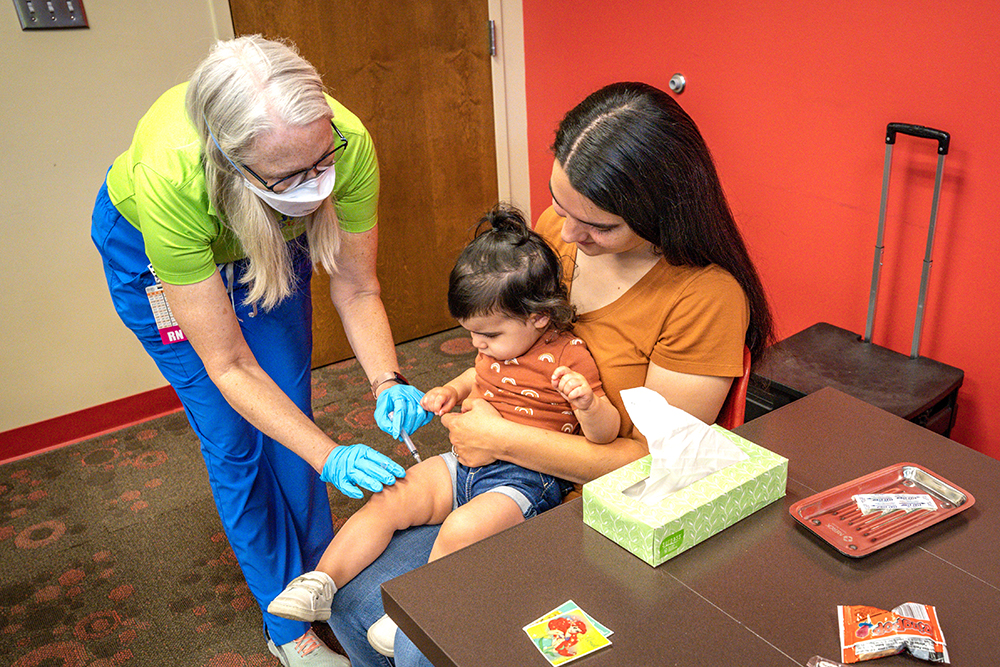
Fiscus said the library launched its first partnership with Mercy Health Community Nurses in 2022. The nurses set up in a handful of library locations to check blood sugar and cholesterol and administer flu shots on a monthly basis, then expanded it to be in more than half of the system’s sites.
“The first indication that this model would be successful was that the Mercy nurses reported double the amount of vaccinations given to the public because of the connection to the library. That’s a 100-percent increase,” Fiscus said.
From that one health agency, the partnership with others has snowballed, she said. “Every week we develop new community partners. We vet each of those and see how it fits with existing library services. Sometimes it’s a class, sometimes it’s a tabling opportunity. For me, the most exciting aspect is the health services we bring directly to people through our locations.”
The vetting process is the focus of the second step in what the library system offers: Trust.
“We live in a time when there’s a lot of mistrust in institutions,” Fiscus said. “The library has held the community’s trust for a long time. We want to essentially lend that trust to the partners who want to connect with people, and telling people you can trust these agencies to get the services you need.”
The library system has partnerships with more than 30 health and social service organizations and agencies.
“We have guiding principles when pursuing partnership with health-care providers,” she added. “We look at what are the more pressing health-care concerns.”
For example, she said a partnership was reached last year with Equitas Health, a regional nonprofit that serves the health-care needs of the LGBTQ+ community. Its representatives are at the Main, Reynolds Corners, Lagrange and Mott libraries monthly.
“An exciting partnership that we launched this year,” Fiscus said, “is Solace Health and Wellness, sponsored by UToledo Health. We positioned it at the Mott branch, which is in the area of our county that sees the greatest maternal mortality rates.”
Erin Martin, Solace’s executive director, said from 9:30 a.m. to 12:30 p.m. on the fourth Saturday of the month, she conducts free childbirth classes there. The partnership began in January.
“It’s been going really well,” Martin said. “The classes have been full—up to five couples, a good size, with a lot of hands-on techniques. The feedback has been great. The people are grateful.
“Health is one of the best ways to improve the community,” Martin continued. “Sometimes that gets overlooked. To me, it’s about making this accessible.”
She said partnering with the library system is good because “having knowledge empowers people, and it improves these [pregnancy] outcomes.”
As for social services, Fiscus said one of the most successful partnerships is with the United Way of Greater Toledo’s 211 program. Its representatives are at the Main Library every Tuesday and first Friday of each month to help people by referring them to the right agencies – 211 refers to the phone number a person can call for help, similar to dialing 911.
“It’s a great partnership,” said Sandra De Steno, 211 director. “It’s a great place to get in front of the clients we serve.” De Steno said 211 is accessible through its website and by phone, but not through walk-ins at its headquarters.
“This partnership has been pretty vital over the last two years,” said Emily Matthews, 211 program manager. “We are able to catch a lot of people who would slip through the cracks because they don’t have phones. It’s important to see the people we talk to, and it creates more trust in the community. They understand that we live here and care about the community. That is so important. We’re trying to meet people where they’re at.”

Fiscus said a new partnership has been developed with Advocates for Basic Legal Equality (ABLE), Inc., focusing on kindergarten through Grade 12 education issues.
With the current concerns about ongoing funding of libraries, Fiscus said, “I can’t speak for our partners, but from the library side, we do not charge the partners to be in our spaces, and we do not pay them. We’re just capitalizing on the infrastructure we’re stewards of. It happens regardless of the funding level.”
The infrastructure is more than a collection of books, materials, and now agencies. “I was at the library the other day,” De Steno recalled, “speaking with a woman who stopped by our table and said when she was homeless, the library was one of the safest places she could be. She could study and have quiet and safety and know no one would disturb her. It’s good when we can bring out services to the library and we’re able to make sure people have that safety.”
More information is available here.
Adult Education
Partners:
● Owens Community College
● Penta Career Center
● Read for Literacy
● TRIO
● United Way 211
Services available:
GED program referrals
Completing/processing college applications
Completing FAFSA applications
Student loan default resolution
Financial literacy training
Career exploration
ESOL classes
Food Help
Partners:
Maumee Senior Center |Connecting Kids to Meals | United Way 211
Health services
Partners:
Ohio Department of Health Breast and Cervical Cancer Project (BCCP)
State of Ohio
American Heart Association
Equitas Health
CareNet
Mercy Health Community Health Navigators
Mercy Health Community Nurses
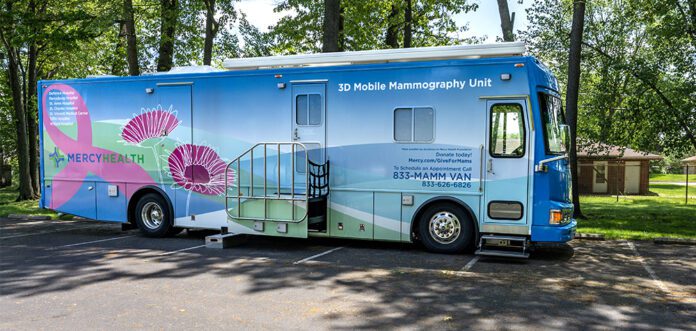
Mercy Health Mobile Mammography Unit
Project DAWN (Deaths Avoided with Naloxone)
Ronald McDonald Care Mobile
Toledo Lucas County Health Department
United Way 211
UToledo Health Mobile Health Unit
Harbor Behavioral Health
YWCA
Legal Help
Partners:
Hospice of Northwest Ohio | Advocates for Basic Legal Equality (ABLE) | United Way 211
Social Services
Partners:
Cherry Street Mission
Goodwill Industries
Maumee Valley Habitat for Humanity
Northwest Ohio Pathways HUB
NeighborWorks® Toledo Region (NTR)
United Way 211
Republicans weigh in on Senate Bill 1
TOLEDO — Senate Bill 1, or the Enact Advance Ohio Higher Education Act, is scheduled to take effect on June 27 after passing in February. The sweeping legislation, sponsored by Sen. Jerry C. Cirino, aims to overhaul policies on public college campuses across the state.
A central provision of the bill is the elimination of diversity, equity and inclusion (DEI) initiatives at Ohio universities. According to the legislation, this includes the closure of DEI offices, using DEI-based job descriptions, and a ban on new institutional scholarships based on DEI criteria.
Ohio State Rep. Josh Williams, (R-Sylvania Twp.), says that existing scholarships will be honored for current recipients.

“The main point of Senate Bill 1 was to allow intellectual diversity and freedom of speech for students on college campuses,” Williams said. “We saw universities and professors attempting to require students to adopt a certain viewpoint and espouse that viewpoint in order to maintain academic excellence at a university.”
According to the Workforce and Higher Education Committee website, which contains students’ testimonies of Senate Bill 1, there were many students who felt discriminated against in Ohio universities, including Miami University senior Spencer Mandzak.
“Mandatory DEI training sessions often focus on teaching students and faculty that systemic oppression defines most human interactions, even when no clear evidence of discrimination exists,” stated Mandzak in his testimony. Mandzak, a senior public administrator major and history minor, is the program director of the College Republicans of America.
Students and faculty are sometimes encouraged to identify themselves and others primarily through the lens of race, gender, or sexuality rather than as individuals with unique thoughts, talents and experiences.
Spencer Mandzak | Miami University senior
Williams says that this bill is not to be confused with limiting free speech, but rather allowing students to reach their own conclusion about controversial beliefs. The bill classifies “controversial beliefs” as topics subject to political dispute, and it names climate policies, immigration policy, abortion, marriage, electoral politics and DEI policies as examples on Page 11. Faculty are required to allow open discussion of these topics, according to Section D(1), Page 14 of the legislation, so long as they express intellectual diversity.
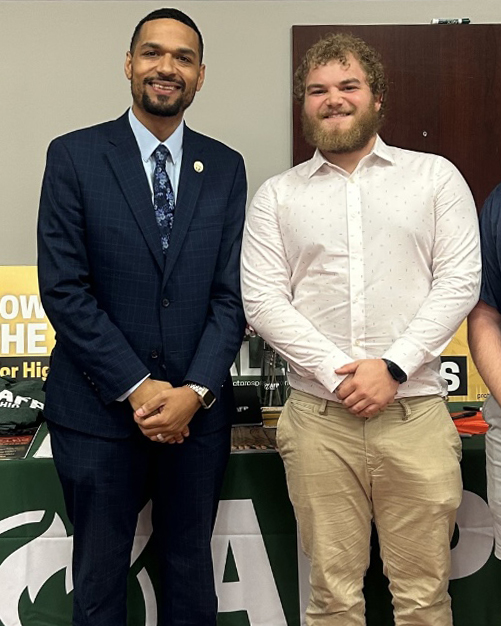
Chase Gillson, president of the University of Toledo College Republicans, says this bill allows students to receive justice and report political discrimination. Like Williams, he mentions that this bill will promote less indoctrination.
“There’s just too much room for the vast majority of university staff being one political party to discriminate against one student,” Gillson says. “The discrimination aspect seems to get a little more out of hand.”
While banning DEI initiatives, the bill also prohibits all policies designed explicitly to segregate faculty, students or staff based on race, ethnicity, gender and religion.
“You can’t make a Black-only graduation ceremony,” Williams said. “You can’t make a woman-only graduation ceremony. The universities are public; that means they’re a state agency, so the state is not allowed to discriminate based on race, gender, sex.”
The bill also mentions new requirements for education and curriculum: Students must take a civics course requirement based on the American economic system and capitalism, syllabi must be posted online for public access, and low-enrollment undergraduate degree programs should be eliminated (Page 20, Section C).
University professors, as well as public employees, would be also prohibited from striking, according to Page 36.
“I don’t think you should be able to strike to advocate for your working conditions,” Williams said. “We have other groups that are prohibited from striking, as well: Police, fire, emergency services, things that are considered essential governmental functions.”
The bill also reduces trustee terms from nine to six years (Page 25); mandates five-year cost summaries to be sent to the state (Page 22); and limits academic partnerships with China (Section E, Page 21).
“China is an openly hostile adversarial country,” Williams said as he continued to discuss a case of Chinese professors that allegedly attempted to bring an agricultural bio-weapon to destroy American crops. He also spoke about an alleged law that China enforces Chinese nationals to assist the Chinese Communist Party in espionage.
“So, with constant evidence of the Chinese government trying to influence and gain control within the United States, like buying farm land all over the nation, near military bases, and gaining our information to advance their own technologies, it just makes sense for us to have some safeguards to slow down that process in a responsible way.”
According to AP News, the Chinese professors were accused of shipping biological material into the U.S. for use at the University of Michigan on June 3. Senate Bill 1 was passed in February of 2025, making no correlation to this case.
“Federal authorities, so far, have not alleged that the scientists had a plan to unleash the fungus somewhere. Fusarium graminearum is already prevalent in the U.S. — particularly in the east and Upper Midwest — and scientists have been studying it for decades.” According to AP News.
The Toledo Free Press also looked into whether or not Chinese nationals must assist the Chinese Communist Party in espionage, and found that this is a misunderstood claim.
Under China’s National Intelligence Law, particularly Article 7, all Chinese citizens and organizations are legally required to “support, assist, and cooperate with national intelligence efforts” when asked by the government.
This doesn’t mean every Chinese national is actively engaged in espionage.
When asked about enforcement of Senate Bill 1, Williams said he was unsure of specific penalties for noncompliance.
“I don’t think there was any mechanism. I would have to look at the bill to see if there was any reduction in state share of instruction,” Williams said. “Right now we just require them to comply with state law in a week.”
If constituents would like to read students’ testimonies of being “required to adopt certain viewpoints,” they can look up “Workforce and Higher Education Committee,” go to the “meetings” tab, and click “Sub. S. B. No. 1.” The meeting on March 19 contains proponents’ testimonies.
House Bill 250: Ohio schools K-12 prepare for new cell phone policy

TOLEDO — A statewide cell phone policy known as House Bill 250 is set to take effect in Ohio public schools K-12 no later than July. The law requires every public district to implement an official policy limiting student cell phone use during school hours.
While the bill mandates limitations, it does not propose a total ban. According to Division (D) of the legislation, districts are not required to prohibit all cell phone use entirely. The bill was sponsored by former Rep. Jessica Miranda (D-Forest Park), Rep. Tracy Richardson (R-Marysville), and Sen. Andrew Brenner (R-Delaware). The bill passed unanimously in both the Ohio Senate and House of Representatives.
Gov. Mike DeWine signed the bill in May 2024, though he has also expressed support for a more restrictive proposal, Senate Bill 158, sponsored by Sen. Jane Timken (R-Canton), which would prohibit all student cell phone use during the instructional day. Both pieces of legislation reference the Rehabilitation Act of 1973, which allows use of electronic devices for educational or health-related needs, including for students with IEPs or 504 plans.
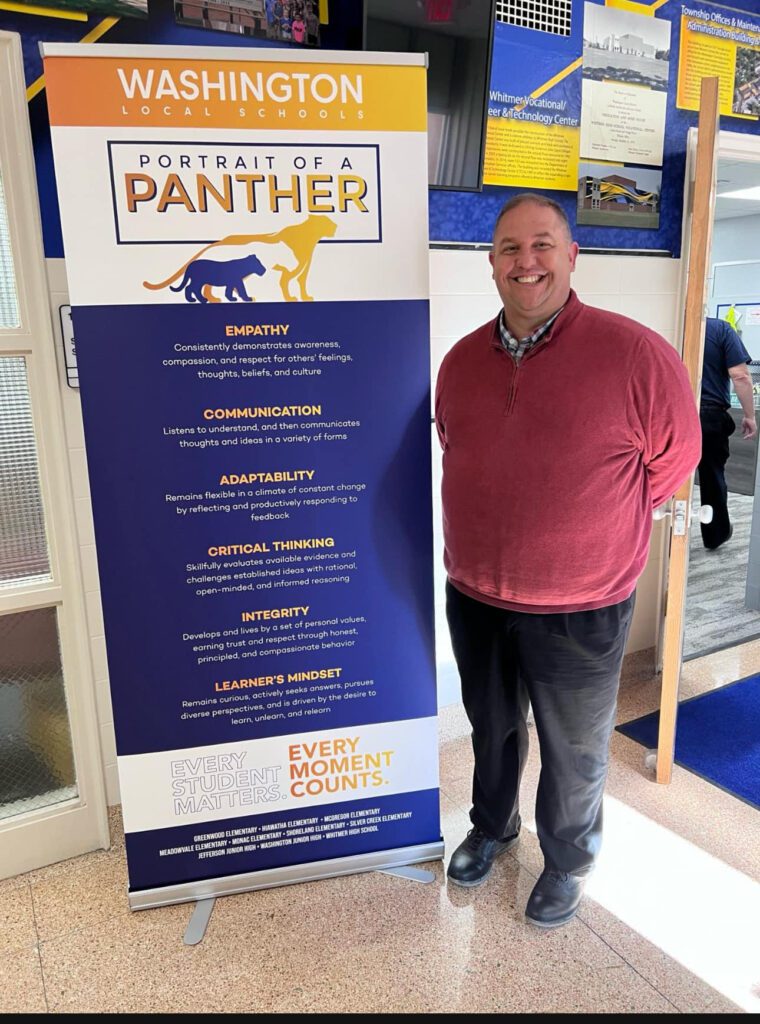
At Whitmer High School, principal Jerry Bell said the new law aligns with longstanding practices at the school.
“We certainly feel that it has benefited our students, not just academically but socially, as well,” Bell said. “We have seen students who were able to focus more and engage with their peers around them.”
He added that Whitmer’s current policy allows students to carry phones but keeps them “off and away” during class, which gives students the opportunity to learn how to be responsible with their cell phones.
“Removing them entirely, as Senate Bill 158 proposes, would decrease our opportunity to do that,” Bell said. “Even though phones are a distraction, I believe that with guidance, students can be responsible stewards of technology and also learn to prioritize their education.”
Mostafa Gamal, a 2022 Whitmer graduate, recalls the policy in place during his time at the school.
“I remember some classes where I had to put my phone away,” Gamal said, noting that whether or not phones should be allowed depends on the situation.
During his first year, Gamal used a translation app to support his English learning in class.
“90 percent of the teachers used to respect me for it,” he said. “If I say, ‘No, phones cannot be allowed,’ what about the international students, for example? How are they going to use Google Translate?”
Gamal expressed concerns over the stricter Senate bill, citing safety and communication in emergencies.
“There are so many points that you’re gonna have to have your phone with you at that moment,” he said. “I’m not gonna wait until the school calls my mom. No, I need to call my parents so they can do something about it.”
Parent Angela Mikolajczyk, whose child currently attends Whitmer, said the school’s current approach is reasonable.
“It’s not a horrible thing; it’s not like they aren’t allowed to bring them in the building,” Mikolajczyk said. “As an adult, when you are at work, you’re not on your phone. Kids can go through class without being on their phone, too.”
She added that banning cell phones entirely would be “a completely different story.”

Wood County Museum copes with cuts
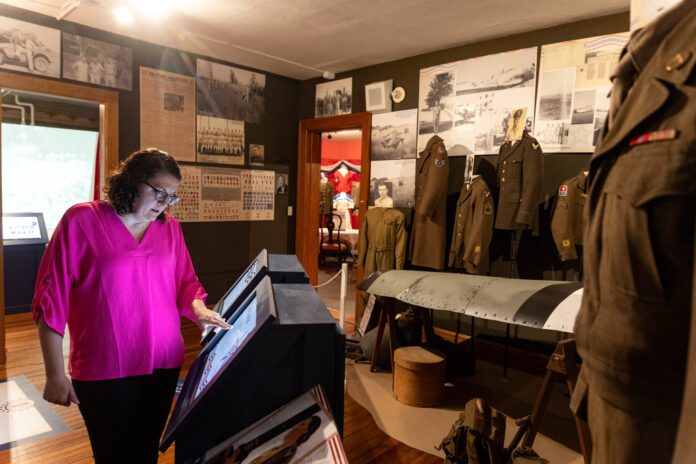
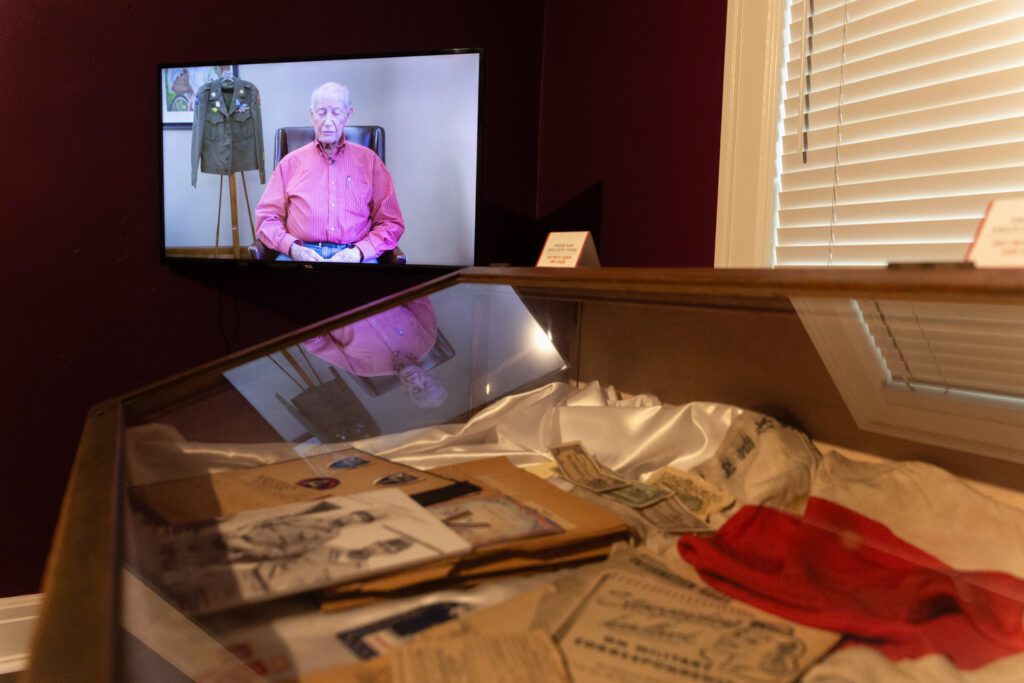
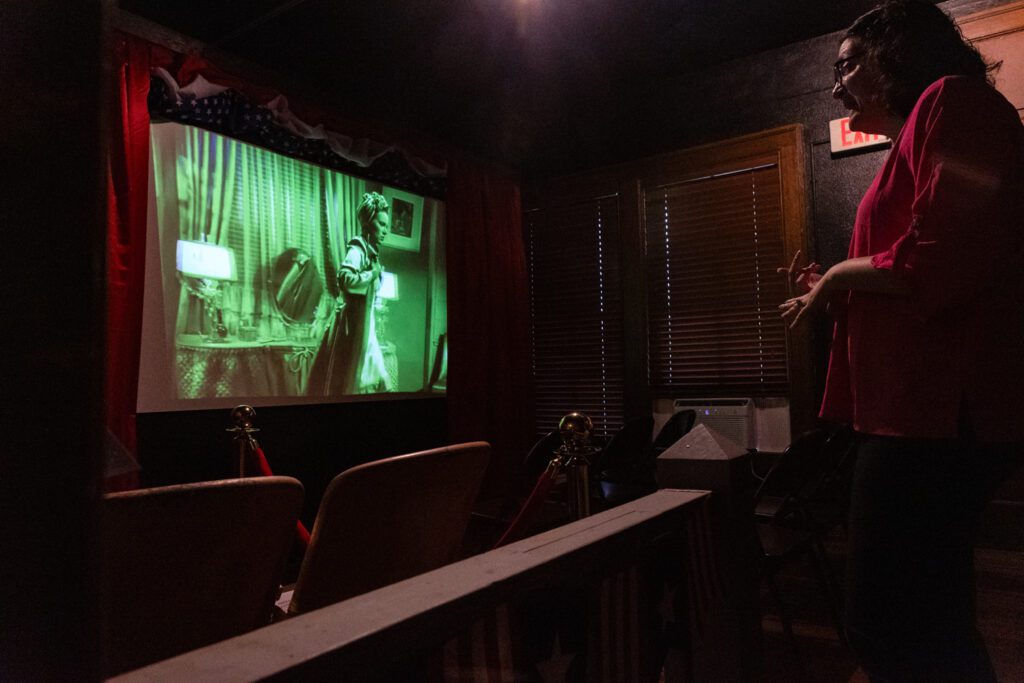
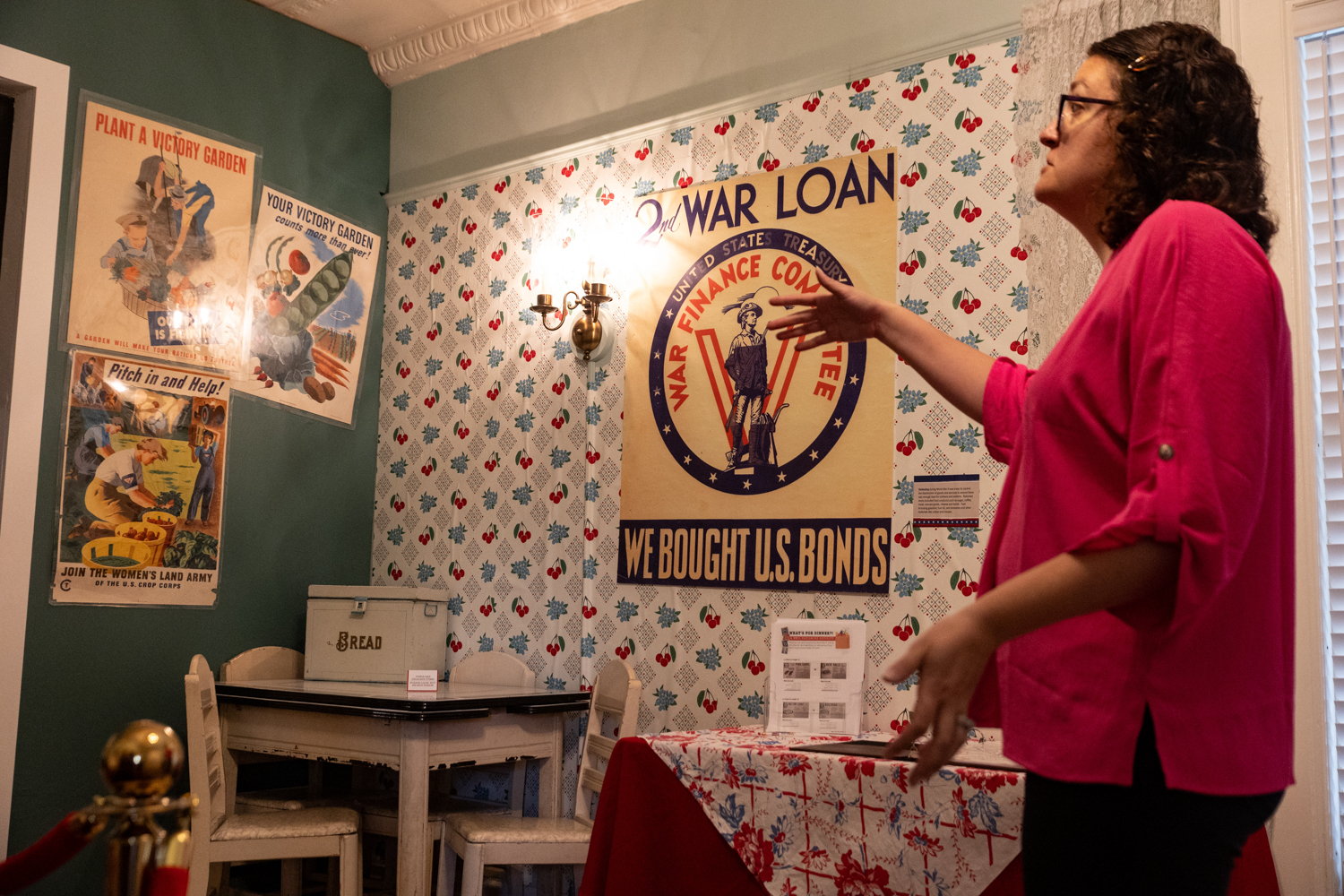
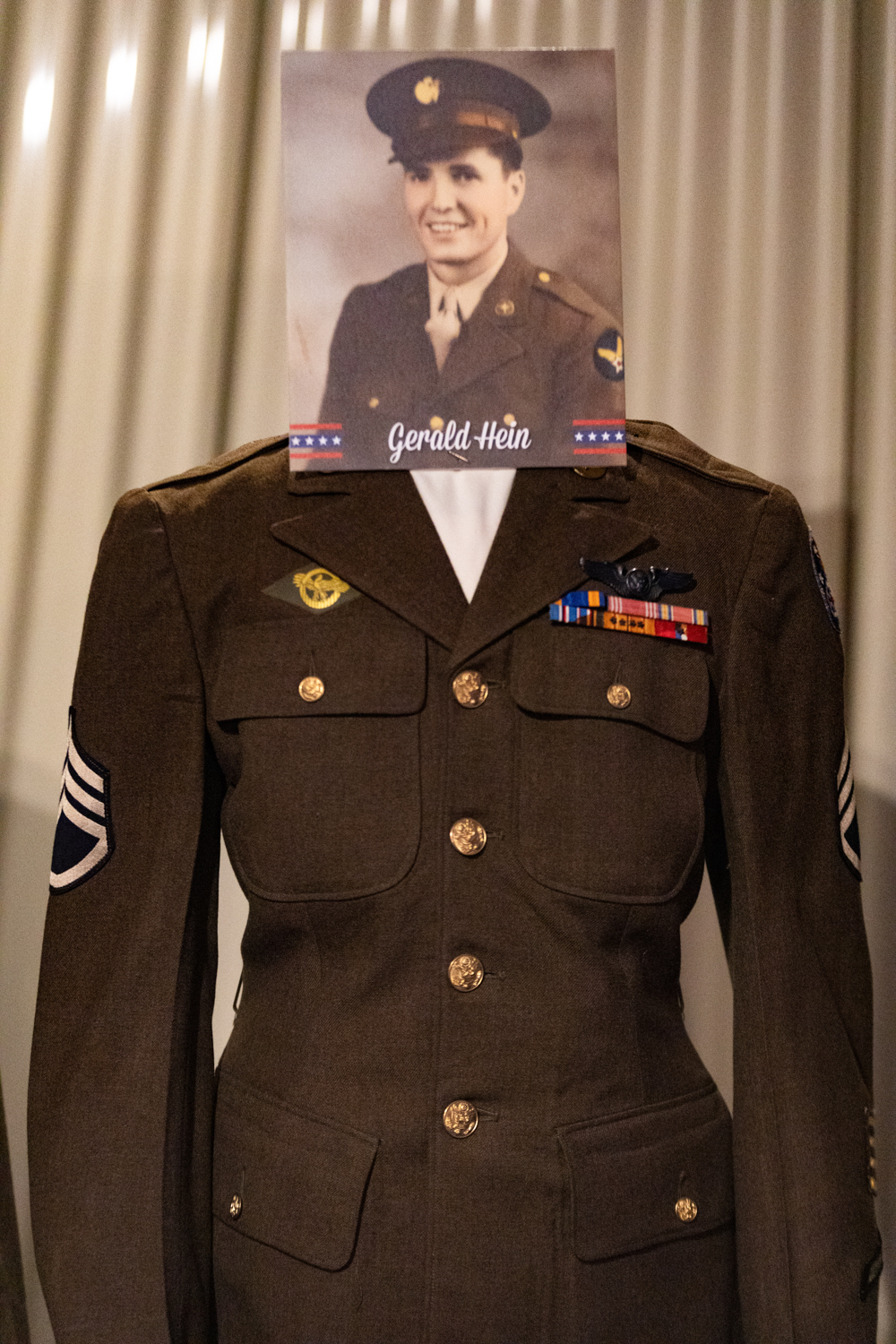
BOWLING GREEN – Military uniforms, projected films and photographs from the ’30s and ’40s transport visitors to another time as they enter the Wood County Museum.
Originally built in 1868, the museum stands as the “recognized guardian” of Wood County’s past since 1975, when it was officially deemed a museum after being decommissioned as an infirmary.

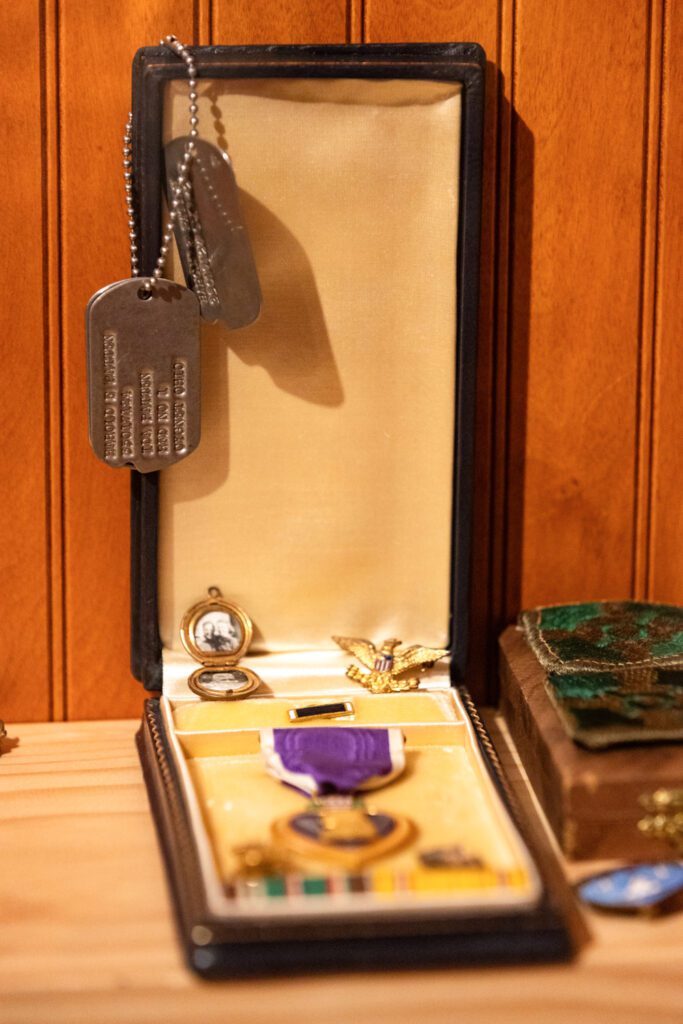
About every two years the historical building takes on another time period or theme, as the staff prepare different programs or exhibits. Right now, the exhibit on display is called We’ll Meet Again: Remembering World War II, but the road to remembering has been a bit more complicated for this one.
“When the museum does a larger exhibit, we usually write a grant to Ohio Humanities to help with paying for the exhibit,” said Annette Wells, who directs the Wood County Museum. “It usually covers about half [of the expenses], and then we basically come up with the other half.
“A whole new exhibit for us would usually cost maybe 40 to $50,000.”
Towards the end of last year, Ohio Humanities, a nonprofit that supports the Ohio stories with grants and programs, awarded the Wood County Museum with a grant. The initial ask from the museum was for about $20,000.
With expected cuts from the Trump administration and an anticipated government shutdown at the beginning of 2025, Ohio Humanities only awarded the museum with $16,000.
“And then, life changed in 2025,” said David Merkowitz, director of grants, programs and operations for Ohio Humanities.
“Either April 2 or April 3, we got a letter, along with essentially all other NEH [National Endowment for the Humanities] grantees across the country, that they had canceled our grants immediately and completely,” he said.
Any given year, Ohio Humanities receives somewhere between $300,000-$500,000 from NEH, but Ohio Humanities has not received that money.
“We really don’t know what’s going on,” Merkowitz said.
Because of the absence of funds, Ohio Humanities has let a number of grants awarded at the end of 2024 into 2025 go unfulfilled, including the Wood County Museum’s WWII exhibition.
“Then they said, ‘We’re sorry, we did award you. We accepted your proposal but we don’t have the money because it got cut away from us.’ Even though it was approved by Congress, it got cut,” Wells said, remembering the moment she was told the museum might be on the hook for $16,000.
But the funding structure from NEH to Ohio Humanities is rippling through the state’s humanities organizations.
“We had awarded 10 grants we were unable to follow through with,” Merkowitz said, acknowledging that generally they would have awarded 40-50 grants by now.
Instead, Ohio Humanities has been focusing on alternative operations and keeping what programs they can.
But much of this starts with the NEH, created with the blessing of Lyndon B. Johnson in 1965 through the signing of the National Foundation on the Arts and the Humanities Act.
Twelve points in Section 2 of the Act make clear the importance of arts and humanities in perpetuating democracy, world leadership for the United States and for the education and benefit of “the people of the United States.”
In light of the stated benefits from the 1965 law, the National Endowment for the Arts (NEA) and NEH were founded and funded.
More recently, “They [Congress] essentially passed a bill that funded everything at 2024 levels, which meant that NEH should have been funded,” Merkowitz said, but, unfortunately, Ohio Humanities did not receive the funding they generally have come to expect through NEH.
The defunding of NEH and its inability to fulfill already awarded grants has led to lawsuits against the Department of Government Efficiency (DOGE) and NEH, most notably a class action lawsuit led by three organizations: American Historical Association (AHA), the Modern Language Association (MLA) and the American Council of Learned Societies (ACLS).
On the ACLS’s website, the organization explained the lawsuit that was filed on May 1.
“The NEH’s recent actions and the administration’s refusal to distribute funds appropriated by Congress violate the law in multiple ways: They fail to provide reasoning for the NEH’s actions; disregard the constitutional separation of powers; and, by refusing to spend appropriations as legally required, ignore the Impoundment Control Act of 1974.”
A version of the same statement is available on the other two organizations’ websites, as well.
In the meantime, out in Bowling Green and amidst the cornfields, the Wood County Museum needed help to complete their exhibit.
“So we went to the Wood County commissioners and told them the situation, and they said that they would loan us the $16,000,” said Wells.
The commissioners have not yet decided whether the $16,000 the museum received will be a gift or a loan.
“We’re disappointed that they [Ohio Humanities] made a commitment to the Historical Museum and then were not able to follow through with that,” said Doris Herringshaw, Wood County commissioner. “It makes it tough for us because we did not plan just to spend that extra $16,000 on the museum.
“It just wasn’t part of the budget…and there’s a lot of other precedents it might set if we do just give it as a gift. So, there are just lots of questions we have to ask before we actually commit to it.”
In light of these realities, Wells has chosen to treat the money as a loan, even if the money ends up being gifted.
“So, we’re going to try and recoup some of those funds from the events that the museum does during the year,” Wells noted.
The museum does a yearly auction they hope will bring in a little more than usual, and they will be pushing their monthly Music at the Museum events and other paid activities at the museum.
“We’re hoping, but also we might be able to pull a little bit out of our endowment that we have, as well, to help to cover some of those costs.”
Although most nonprofit structures have endowments, part of those funds work in perpetuity, accruing interest, so pulling too much from the endowment could have negative consequences for the museum in the future.
But going forward, the museum is unsure if it will be able to meet its general rotation of one main exhibit switched out every two years. “In other words, the exhibit might be up for longer. I’m not sure, either that or we might take it down, but we might not be able to replace it with anything at the end of 2026,” Wells said.
Ohio Humanities, like the museum, has received some unanticipated funds to cover some of the money that did not trickle down from NEH. The Mellon Foundation has given each state’s humanities council $200,000 to help keep those organizations afloat, and, so far, the museum and Ohio Humanities said they haven’t had to lay-off anyone. But the National Endowment for the Humanities has had 65 percent of their employees fired by DOGE.
With major cuts being made on the federal level, Herringshaw said, “We’re keeping an eye on everything,” and that commissioners were trying to manage the county as responsibly as possible so any cuts wouldn’t be felt by residents.
“The bottom line is that we get what we get, and we have to live within our budget.”





National Great Lakes Museum ready to display new pilothouse

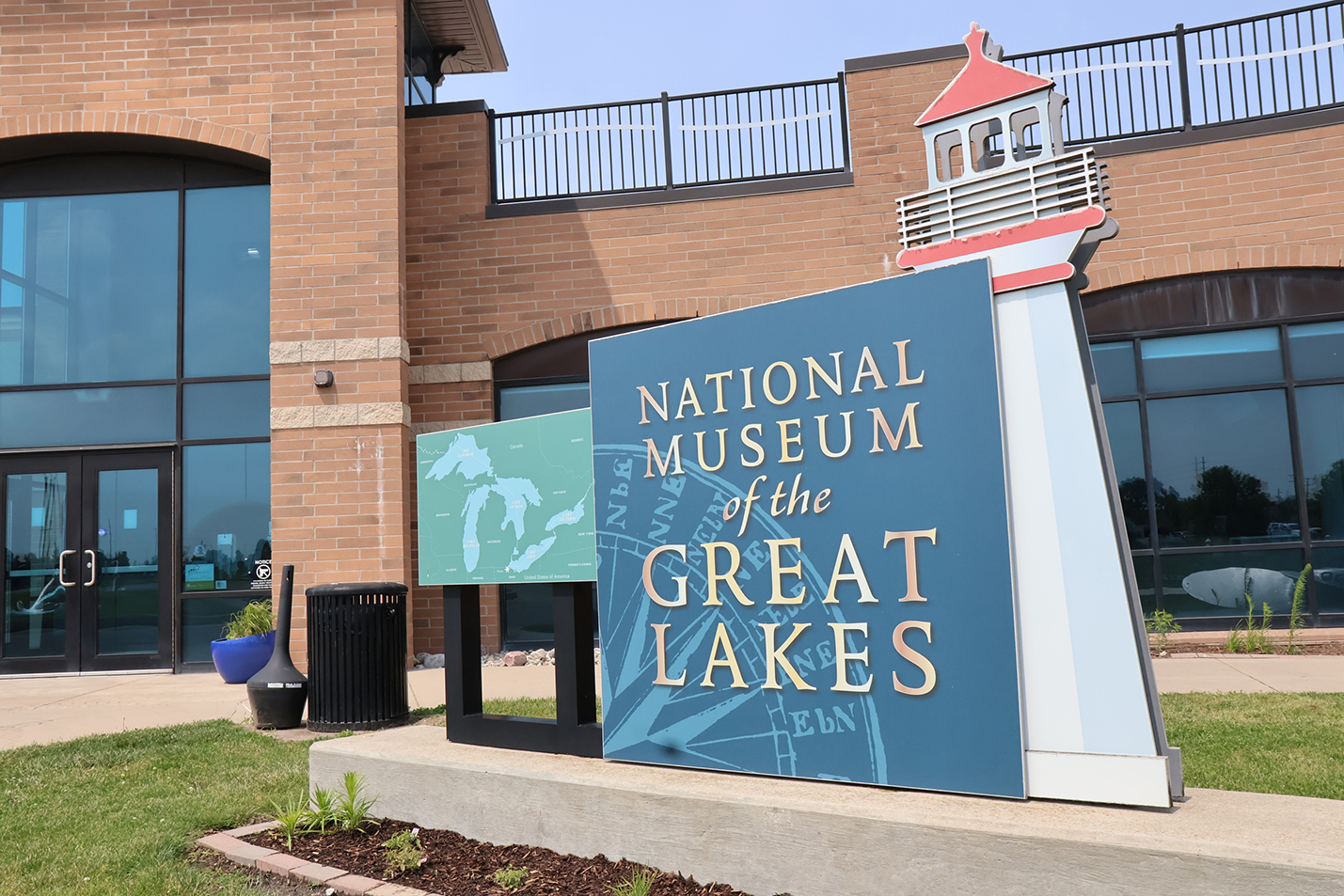
TOLEDO— A major expansion to the National Museum of the Great Lakes (NMGL) is expected to boost attendance, expand its educational reach and increase visitor accessibility for the institution.
The museum’s $5.5 million Second Wave project also serves to advance a larger vision for the NMGL, and, by proximity, Toledo. When it opens on June 28, it’s expected to become the gathering place for Great Lakes conversations concerning everything from history to tourism and environmental issues to industry.
“There are a million different conversations happening on the Great Lakes, and Toledo is very centrally located,” said Kate Fineske, NMGL executive director. “We know our space is only one small space, but we are the only National Museum of the Great Lakes, and why not convene the conversations that are happening?”
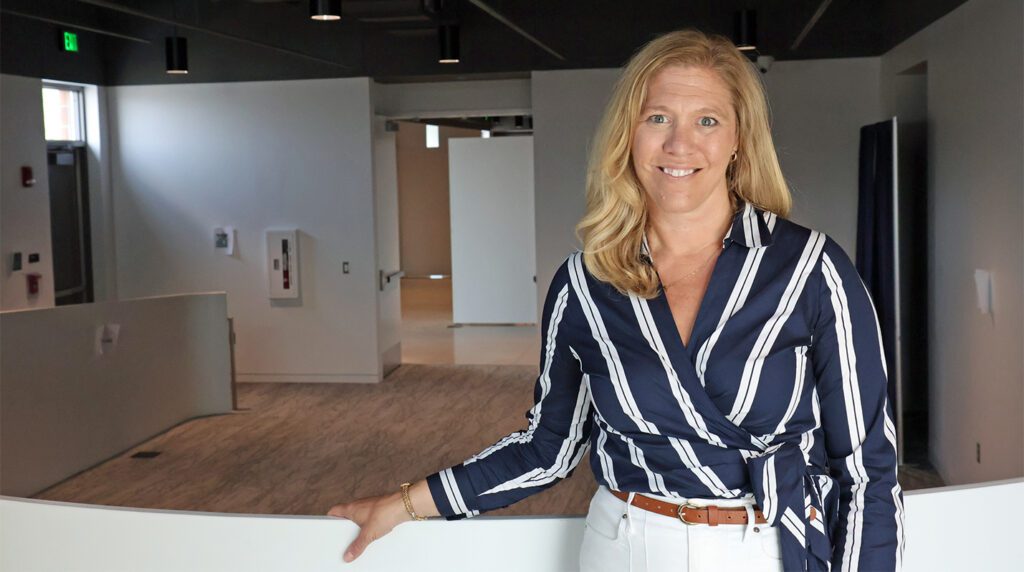
While she estimated there are about 100 maritime museums on the Great Lakes, Fineske noted the NMGL is unique because it’s the only one covering the entire scope of U.S. and Canadian history revolving around all five Great Lakes.
NMGL traces its origins to 1945, when the newly-formed Great Lakes Historical Society published the first issue of its Inland Seas journal. In 1953, the Society opened a museum in Vermilion, Ohio, which relocated to the east bank of the Maumee River in Toledo 11 years ago.
The museum saw dramatic visitor growth following the move, and has welcomed 225,000 visitors from more than 30 countries and 50 states since 2014. When phase two of neighboring Glass City Metropark opened in June 2023, annual visitation jumped by 46 percent.
“We continue to see that visitation rise,” Fineske added. She said the museum’s strategic plan set a goal to double annual visits from 30,000 to 60,000 people over the next five years.
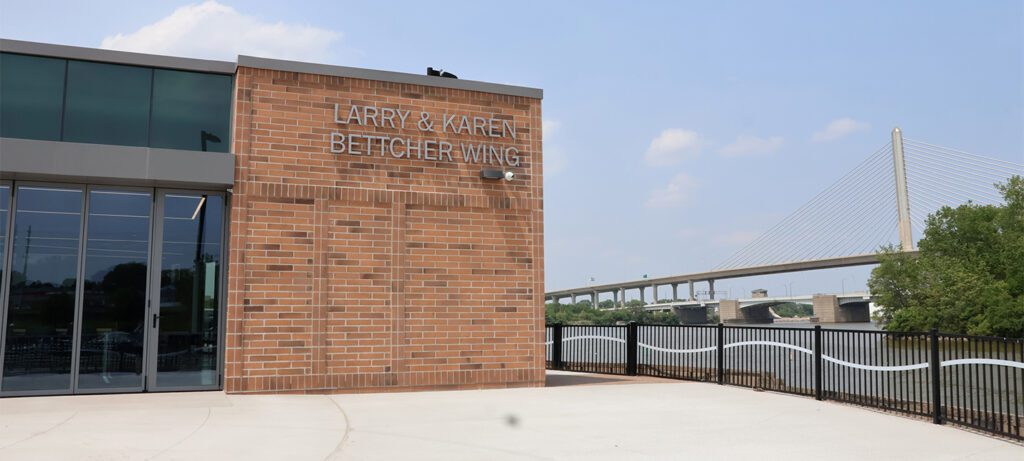
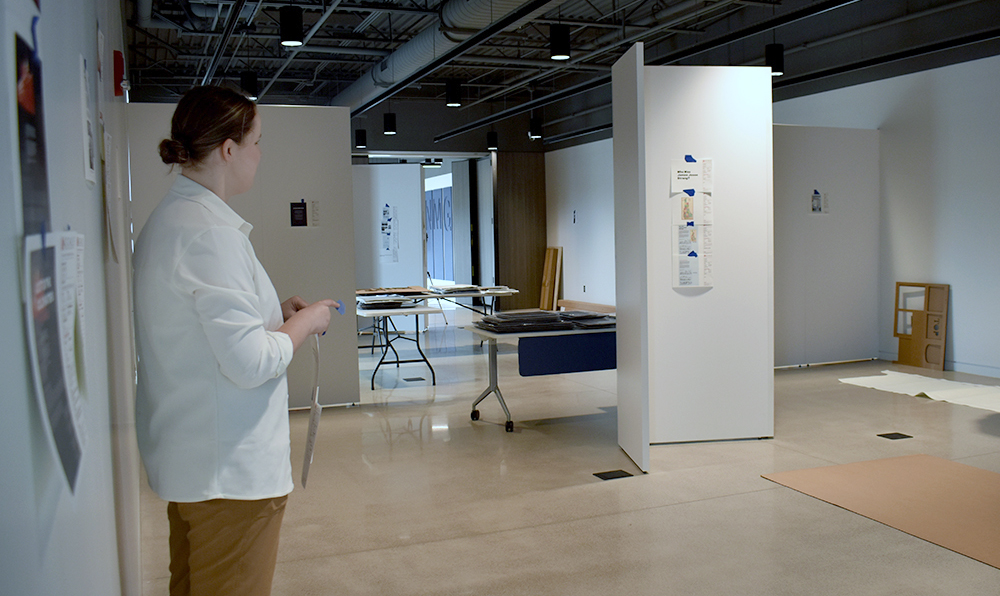
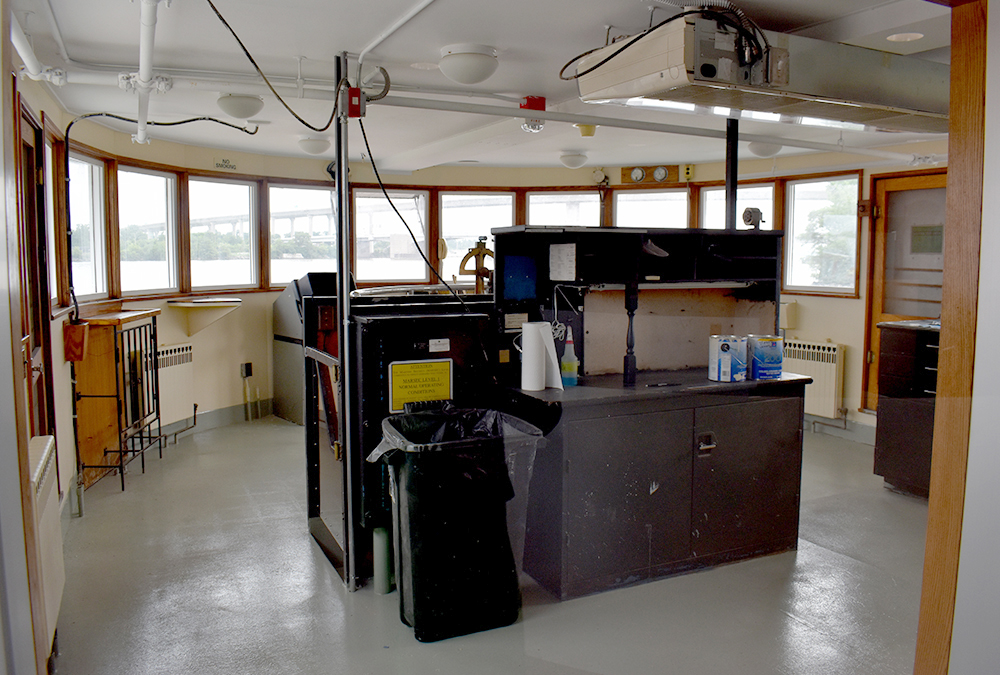
The Second Wave expansion is expected to play a key role in advancing that goal. The 5,000-square-foot Larry and Karen Bettcher Wing includes the Great Lakes Community Education Center, expanded offices to accommodate a growing staff and permanent, and temporary exhibit galleries. The new wing is anchored by the pilothouse of the St. Marys Challenger, thought to be the longest operating bulk carrier in world history.
The St. Marys Challenger went into shipyard in October 2013 to be converted to a tug barge. In 2015, the NMGL acquired the pilothouse of the 108-year-old freighter.
Even though the museum had just opened in Toledo at the time, the pilothouse acquisition was “the seed” of knowing something would need to be done eventually to put it on display, according to Carrie Sowden, director of archaeology and research.
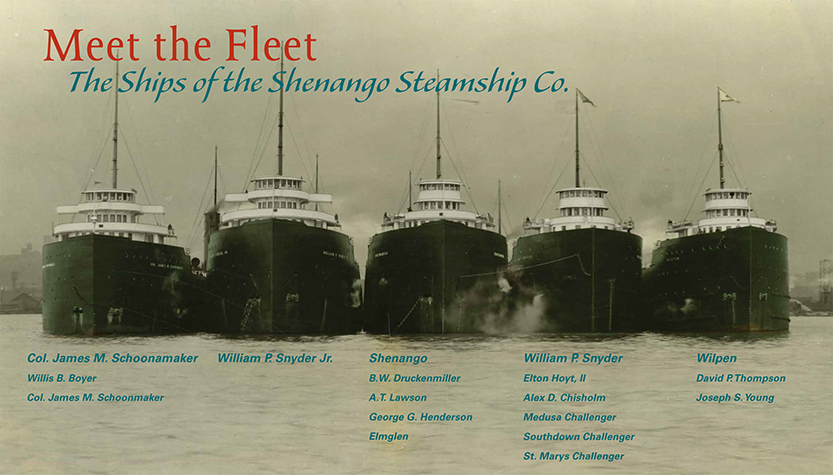
Offering a sweeping view of the river from its windows, the pilothouse was placed to give visitors the feeling of steering the ship. Unlike the Museum Tug Ohio and the Col. James M. Schoonmaker docked outside, the pilothouse will be open year round and is fully accessible by ramp from inside the new wing. It is being restored to represent a more contemporary time period than the Schoonmaker.
New exhibits, new stories
Sowden noted the Second Wave expansion allows the museum to tell stories they haven’t been able to share before.
A new permanent exhibit, “Every Boat Tells Our Story,” features the Bob Sellers Model Collection and celebrates the craftsmanship and legacy of Great Lakes vessels.
“What we’re trying to do is tell personal stories; tell stories that hopefully people can see themselves in, maybe see their ancestors in, see something and find a way to connect,” said Sowden.
A 1,400-square-foot temporary gallery is meant to encourage regular return visits. Some exhibits will be locally curated while others are expected to be traveling exhibits.
“Dark Waters: True Crime and Mystery on the Great Lakes” is the first temporary exhibit, curated by director emeritus Chris Gillcrist.
“We’re telling a bunch of different tales across the Great Lakes of unsolved mystery, murder and mayhem,” said Fineske.
While she acknowledges not everyone is fully entrenched in maritime history, Fineske predicts the true crime twist will resonate with a wide audience. The exhibit explores mysteries, such as strange disappearances at sea, shipwrecks, like the Eastland Disaster on the Chicago River, and infamous crimes including the unsolved Torso Murders in Cleveland and the St. Valentine’s Day Massacre in Chicago. It will run through Halloween.
Making history accessible for all
Fineske said the artifacts on the main exhibit floor only represent about 10 percent of the museum’s collection. The NMGL just finished moving everything to Toledo from Vermilion at the beginning of this year, aided by an $18,000 grant from the Ohio History Connection.
Fundraising for the Second Wave expansion kicked off at the end of 2020 with a million dollar match pledge from Larry and Karen Bettcher. Fineske said they met that target and also received $1.1 million in capital funds from the State of Ohio over three different budgets for the project. The Toledo-Lucas County Port Authority provided a grant of $25,000 and a loan of $125,000 to aid in construction of the concrete pad beneath the pilothouse.
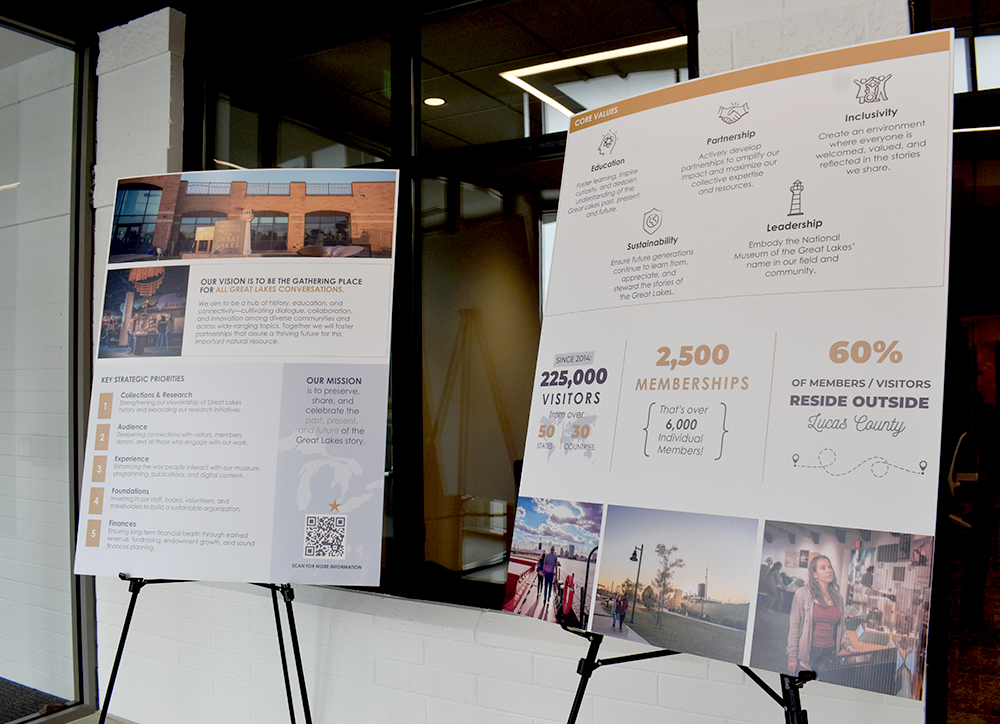
The museum does not receive any local, state or federal funds to cover its annual operating budget, which has steadily climbed from $300,000 in Vermilion to nearly $1.7 million this year. Along with endowments, donations and grants, NMGL relies heavily on earned revenue from memberships, admissions, rentals and museum store sales. “Everything gets put completely back into its mission,” said Fineske.
While the museum charges admission to sustain its operations, it also offers free community days throughout the year and participates in Museums for All, a program that allows people receiving food assistance to gain free or reduced museum admission.
“We work really hard to make sure everyone has access to the space,” said Fineske.
“Education is at the core of everything we do here,” she added. “It’s really important in order to ensure the sustainability of the museum that we’re engaging the next generation of Great Lakes history enthusiasts.”
Saturday, June 28, from 10 a.m. - 5 p.m. is the public grand opening of the Second Wave expansion at the National Museum of the Great Lakes. Experience the new Larry & Karen Bettcher Wing and get an inside look at the new Alex & Marilyn Cook Leadership Center.

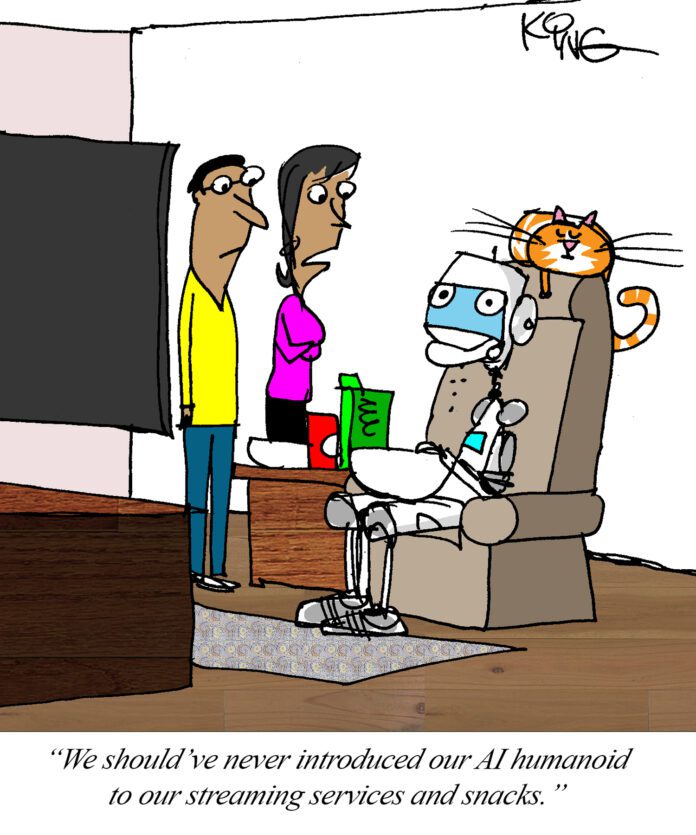
Sylvania’s Main St. in Phase 1

How surrounding businesses are faring with construction
SYLVANIA – Main Street in Sylvania is typically peaceful, with visitors strolling up and down to enjoy the restaurants, retail establishments and community events.
But if you’ve visited recently, you may have noticed that the street is currently in a state of upheaval due to construction. Main Street is being revitalized for the first time in over 40 years.
According to the City of Sylvania website, talks for this project began in August 2022 during a stakeholder meeting for the Downtown Transportation Improvements Project. The revitalization is expected to last until 2026. Construction is still in phase one, the longest phase, which will see most of the construction work.
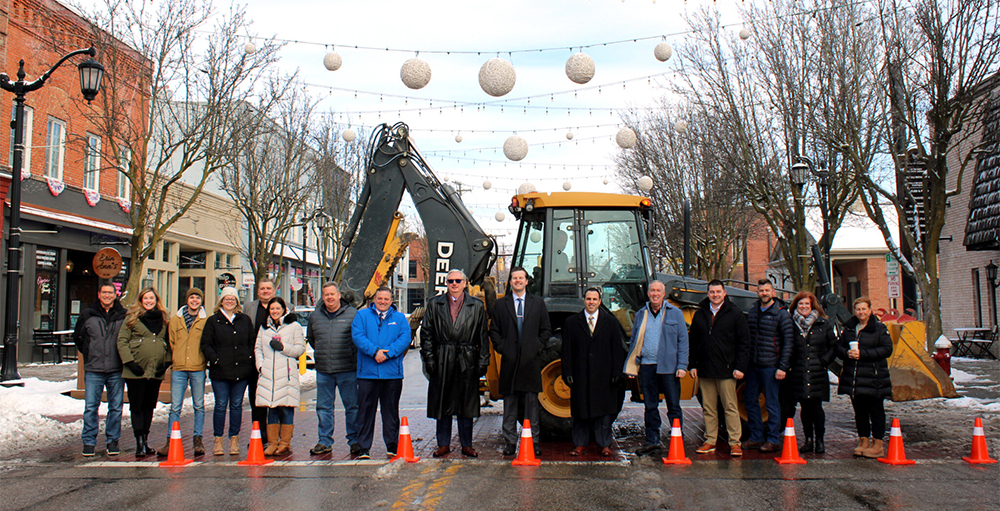
Phase one, expected to be completed this fall, is organized into four stages. A newsletter provided by the Sylvania Area Chamber of Commerce broke down the four stages.
Stage 1: Focuses on Main Street (East Side) construction from Maplewood Avenue to Erie Street, and Maplewood Avenue (North Side) construction from Main Street to Summit Street.
Timeline: Feb. 20 until spring 2025
Work Being Done:
- Removal of the traffic signal at the intersection of Main Street and Maplewood Avenue
- Installation of stop signs
- Pavement and curb excavation for the installation of a new waterline
- Sidewalk removal for new water service connections
- Sanitary Sewer Improvements
- Preliminary driving paving course
Stage 2: Focuses on Main Street (East Side) from Monroe Street to Maplewood Avenue
Estimated Timeline: Spring 2025 to mid-summer 2025
Work Being Done:
- Pavement and curb excavation for installation of new waterline
- Sanitary sewer improvements
- Installation of a new storm sewer
- Sidewalk removal for new water service connections and sewer connections
- Installation of new sidewalk, curb, pavers, planters and lighting
- Preliminary drivable paving course
Stage 3: Focuses on Main Street (West Lane) construction from Monroe Street to Maplewood Avenue
Estimated Timeline: Mid-summer 2025 until fall 2025
Work Being Done:
- Removal and installation of sidewalk pavement, curb, pavers, planters, and lighting
Stage 4: Focuses on Main Street from Monroe Street to Maplewood Avenue, and Maplewood Avenue from Main Street to Summit Street
Estimated Timeline: Fall 2025 – fall 2025
Work Being Done:
- Final paving course
- Final pavement striping
- Final signage installation
- Final landscaping
Phase one will also see the burial of power lines; phase two will include all of Main Street between Maplewood Avenue and Erie Street and all of Maplewood Avenue between Main Street and Summit Street.
Most of the work done in 2026 will be a beautification process, including the addition of more seating areas and making the street more walkable for the city’s elderly community.
Inevitably, an operation of this magnitude will have an impact on businesses. Cars can only drive northbound on the westside lane. Walking on the sidewalk is less enjoyable due to construction dust and noise. Some businesses have seen a decline in customers as a result.
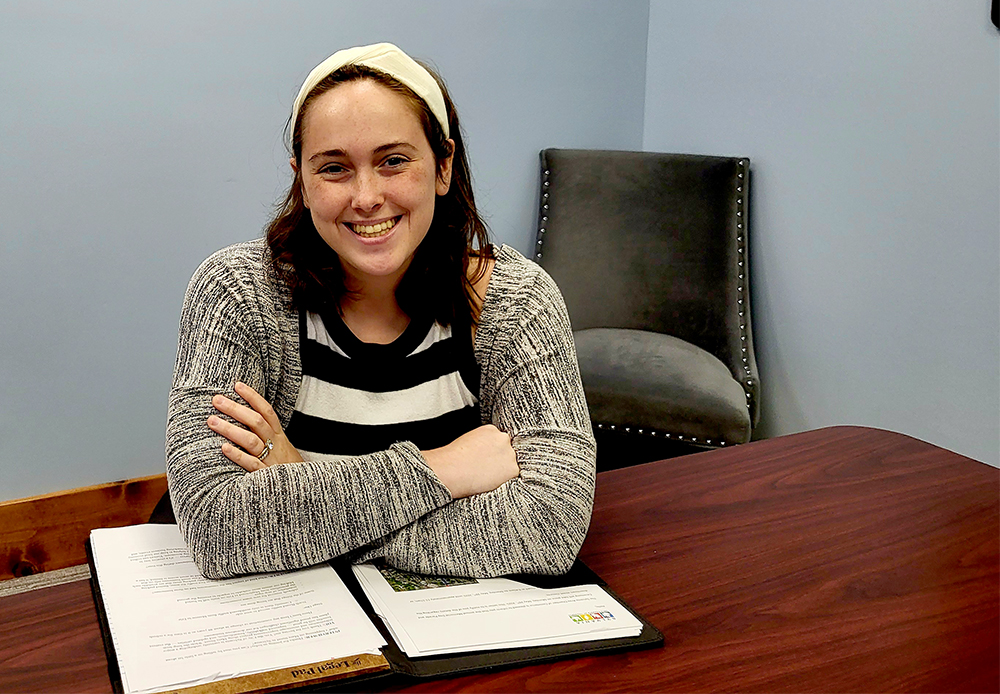
“We’ve heard both positive comments and some hardships as well,” explained Natalie McDonald, marketing manager at Sylvania Chamber of Commerce. She said businesses have been more positive about the process than expected.
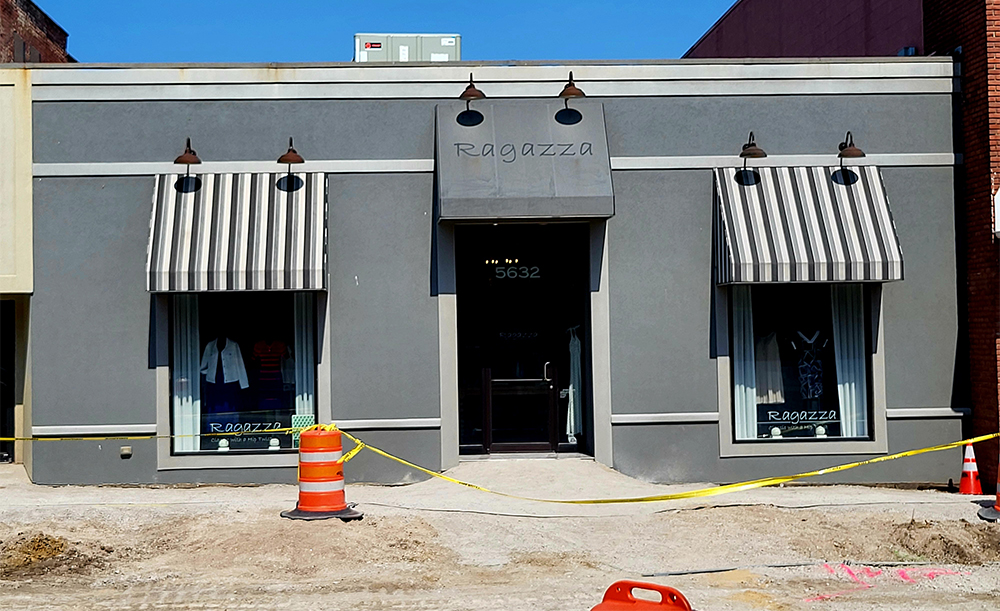
She also said that some businesses have worked together to overcome these setbacks. The examples she gave were Beautiful Blooms working with Upside Brewing, and Ragazza holding a Sip & Strut Through the Dust event at Inside the Five’s outdoor patio.
The chamber of Commerce serves as the point of contact when businesses have questions or concerns about the construction. McDonald says she always does her best to handle those concerns.
“I might not know the answer to what’s going on in a certain place at a certain time, but I know who to ask and I know who to get that contact information, and then the city reaches out within that day.”
Natalie McDonald
She said the Commerce tells them, “I hear you. Let me address this with the people who are in charge of this construction project.”
She also advises that “if you have an event or you have something, share it with us. We’ll share it with the community because we have a reach of over 13,000 just on our Facebook; we want to share with the community and get that out there.”
To keep citizens informed, the Sylvania Chamber website has a page titled Sylvania Strong. Businesses receive a weekly newsletter, The Road Ahead, while visitors can sign up for Path to Progress, a biweekly newsletter. They also post regularly on social media.
William Sanford, director of Economic Development, said that the downtown Sylvania Main Street construction project costs $4.4 million. The city is using approximately $1.5 million from the American Recovery Rescue Plan Funding and the balance from funds in their water and sewer accounts, Ohio Public Works Commission funds and the City’s capital improvement fund.
Businesses weigh in
J & G Pizza Palace has served Italian and Greek Food in Downtown Sylvania for over 50 years. It has been run by the Dallas family since 1979.

Owner Mark Dallas said he has noticed a decline in revenue since construction started. Though he did not have exact figures available, he noted the restaurant is not as busy as it should be, as the street is more difficult to navigate and the parking lot is more difficult to access.
“I think a lot of older people have difficulty with navigating to get in; everything’s open, but some people, you know, the older people, struggle sometimes,” he said.
Dallas said business was much worse when construction first began, but credits the city for adapting. The city originally had signs that led people to believe the street was closed, but that changed quickly. He said the street was a ghost town before local groups had the city change the signs.
Dallas says it is an inconvenience now, but looks forward to the finished product.
“It may cause a little discomfort now, but when it’s all finished, it’s going to be nice, it’s going to be exciting, people are really going to like it. There’s going to be no curbs.”
He continued, “With all the functions down here, there’s going to be extra seating out here, so it’s just that you’ve got to go through the pain now…I believe we’ll make it up with people coming down to enjoy down here a little bit.”
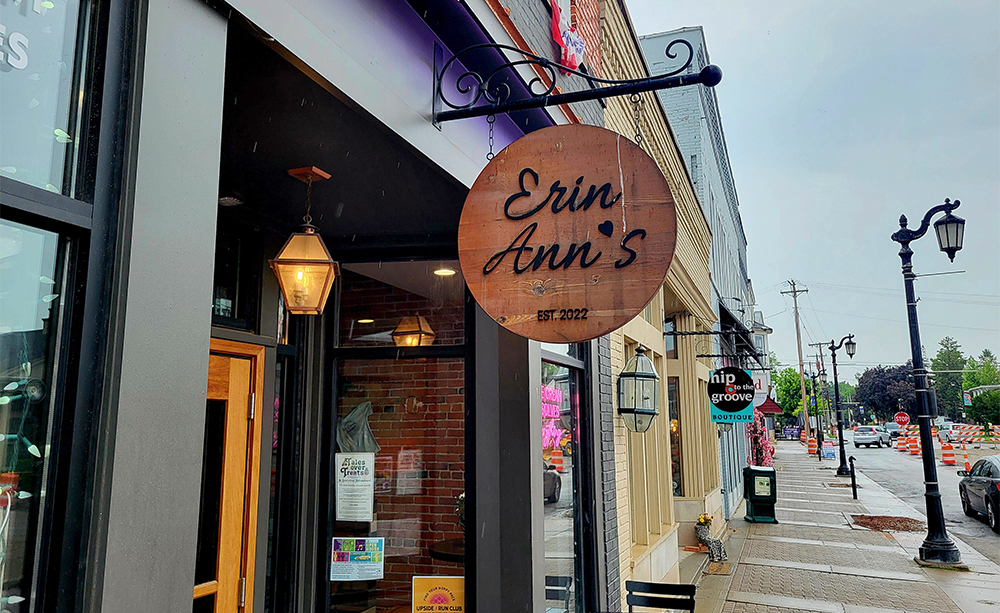
Erin Ann’s is a much newer business on the west side of Main Street. Founded in 2022, the shop features gluten and dairy-free ice cream, smoothies and more.
Scott Stampflmeier owns the store, and said business has not been affected by the construction. In fact, sales are up compared to last year. He acknowledged that this may change once construction moves to the west side.
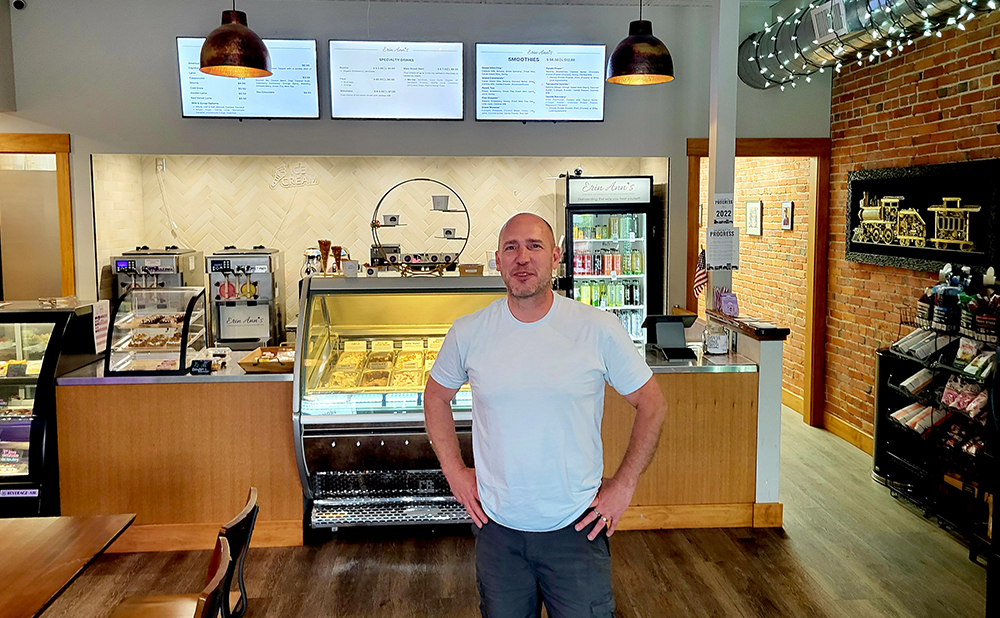
Stampflmeier said he interacts with chamber members regularly in the parking lot, and his wife, Erin Stampflmeier, receives emails from them. Like Dallas, he believes business will improve once construction is finished.
“I think it’s going to change a lot because right now people see us better with all the stuff that’s [been] taken down. There were a lot of trees and everything and it actually kind of blocked the view. A lot of people didn’t even know we’re here. They see us now.”
McDonald believes the construction will have a positive impact on the community
“I think it will really bring the community together, and I know that we’ve tried our best to make this an outward community project,” she said. “They already have Redbird First Fridays downtown, and I just think it’s gonna amplify those events.”
Lucas County launches TickTracker
Field researchers, local residents help monitor local tick species
LUCAS COUNTY — Though they’re only about the size of a poppy seed, ticks can cause weeks, months or even years of illness, and they are once again on the move in Northwest Ohio as spring turns to summer.
While the number of Lyme Disease cases continues to climb year after year in Ohio and nationwide, Lucas County health officials said they are still seeing relatively low cases.
But with warm weather, the risk is still far from zero. Local agencies are ramping up efforts to track, test and teach prevention, and residents are encouraged to take precautions now, before tick season reaches its summer peak.
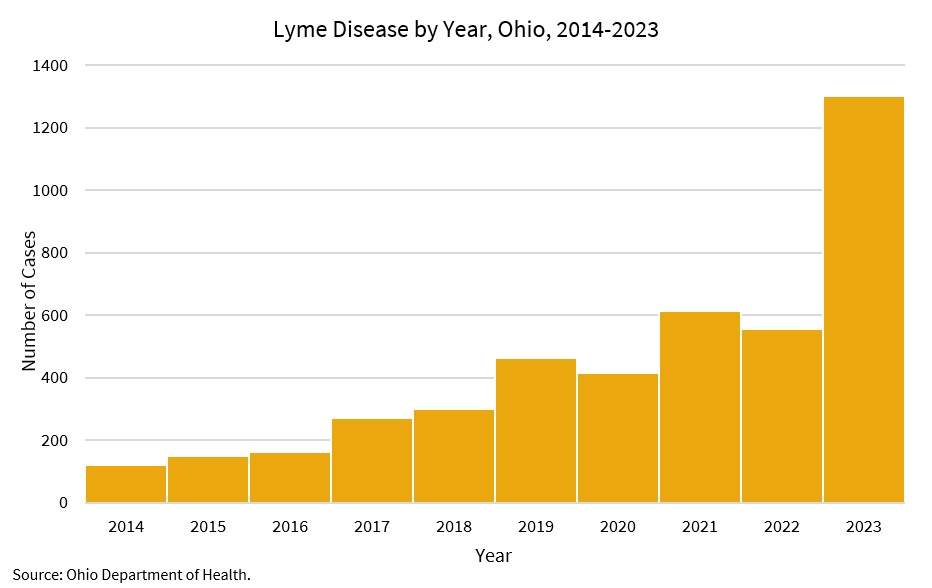
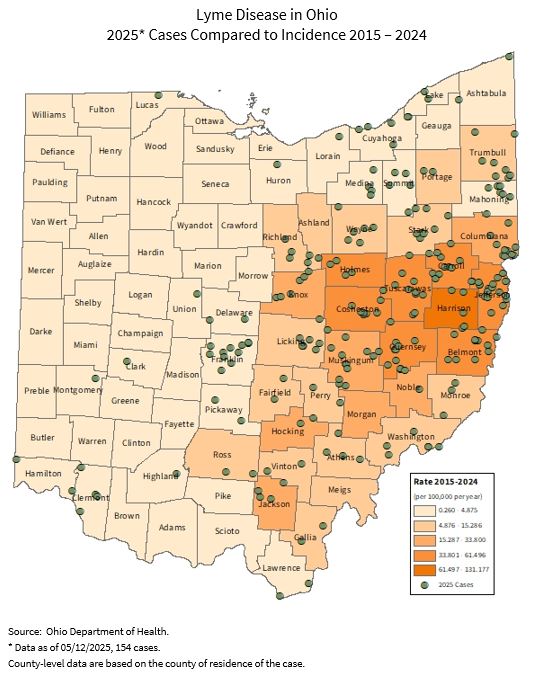
Cases of Lyme disease, an infection transmitted through the bite of infected ticks, have increased steadily across Ohio over the past decade, jumping from fewer than 200 in 2014 to more than 1,300 in 2023, according to the Ohio Department of Health. But while the state as a whole sees a steady climb, Lucas County has reported fewer than 10 confirmed cases per year for the past five years, according to Maria Bibish, an epidemiologist with the Toledo-Lucas County Health Department.
As an epidemiologist, Bibish does surveillance for infectious diseases. Her job is to track and monitor these diseases by following up on cases once they are confirmed. This includes when and where the individual may have been exposed, what symptoms they have, whether they’ve traveled and what treatment they’re receiving.
She clarified that the health department does not test ticks or diagnose illness, but they follow up on confirmed cases to help track the spread and educate the community.
Bibish cautioned against complacency. “Just because a case is reported here doesn’t mean it was acquired here,” she said, referencing the Ohio Department of Health Lyme Disease in Ohio map. “That means they are a resident of those areas, so you see here in Lucas County? Maybe they got bitten by the tick in a different state.”
That’s where the Toledo Area Sanitary District comes in. In March 2025, TASD launched the Lucas County TickTracker program—an initiative designed to monitor local tick species and test them for disease, something that had never been done systematically in Northwest Ohio before.
TickTracker aims to build a long-overdue baseline of tick activity in the region. “Because of the rise in tick populations and tick-borne diseases in Ohio, the Toledo Area Sanitary District has begun actively monitoring tick species in Lucas County through forms of active and passive surveillance,” said Hannah Alanis, tick program coordinator at the Toledo Area Sanitary District.
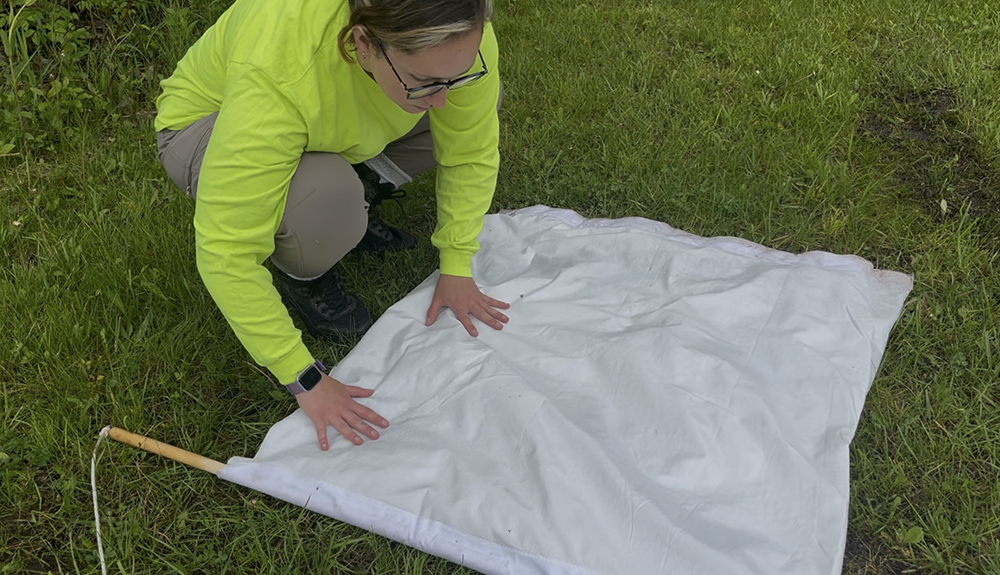
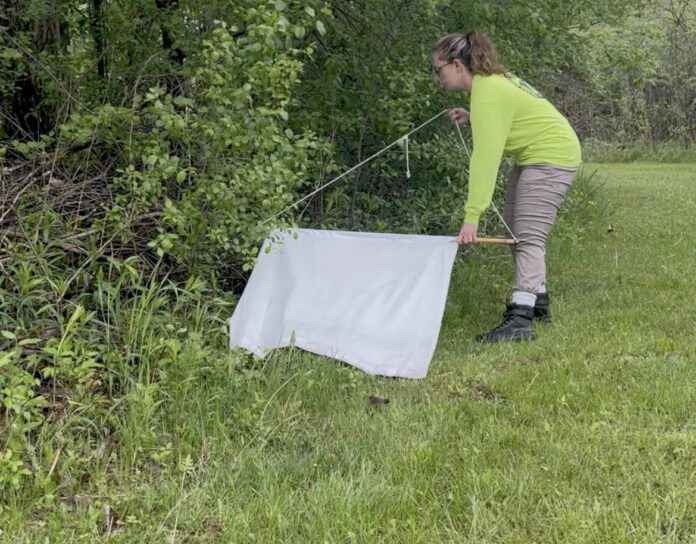
Using field methods, like dragging white cloths through brush to collect ticks and accepting tick samples from residents, TASD has already begun to identify trends. In just the first few months of the program, the team has tested 224 American dog ticks—none of which tested positive for disease—and 42 blacklegged ticks, also known as deer ticks. Of those, nine tested positive for the bacteria that causes Lyme disease.
According to TASD, deer ticks are becoming more prevalent in this area, commonly living in leaf litter where they will then emerge and climb onto nearby brush to find a host. Deer ticks can also be found along woodlines, forested areas and trail edges in wooded environments, Alanis noted.
The TickTracker program isn’t limited to field researchers. Local residents are playing an important role in helping the Toledo Area Sanitary District better understand tick activity across Lucas County. TASD encourages anyone who finds a tick on themselves, their child or a pet to submit the specimen for identification and potential testing.
To participate, residents can submit found ticks online at toledomosquito.org/ticks. If you want to submit it for testing, place the tick in a sealed bag or clean pill bottle, label it with the date and location it was found, and either drop it off at TASD headquarters or request a pickup.
While testing results are not intended for medical use, each submission helps fill in critical gaps in regional data. “People in the community have been very receptive to the program,” Alanis said. “Most folks have had their own experience with ticks, on themselves, their children or pets, so they’re enthusiastic about contributing to the research.”
TASD also uses public data to pinpoint areas with high tick activity and identify potential changes in species distribution over time.
While tick testing and tracking is critical for research, prevention remains the most effective defense against tick-borne illness. That’s why the Toledo-Lucas County Health Department is ramping up public outreach, especially as more residents head outdoors.
“Summer is coming. Some people, they just have to be really careful when they go hiking or walking,” Bibish said.
The Toledo-Lucas County Health Department’s advises the following precautions:
- Avoid tall grass and stick to the center of trails, especially in wooded or brushy areas.
- Wear light-colored, long-sleeve clothing with pants tucked into socks to make it harder for ticks to latch on and easier to spot them if they do.
- Use EPA-registered insect repellents, and shower within two hours of being outdoors to help wash off any unattached ticks.
Tick checks are also critical. “Check behind your ears, your belly button, your knees, your waist, also your children,” Bibish said. “And if you have any pets, like dogs, before bringing them inside, also check their coats, because they can have ticks.”
Tick prevention is just as important for pets. Ticks can transmit diseases to both animals and humans, and pets that carry ticks indoors increase the risk of infection for the whole household, according to Lindsay Johnson, veterinary operations manager at West Toledo Animal Hospital.
Veterinarians recommend daily tick checks on pets, especially after outdoor activity. If you find a tick, remove it promptly using fine-tipped tweezers and steady pressure. Be sure to remove the head. “A lot of times, not all of the head is removed,” Johnson said. For furry friends with darker or thicker hair, individuals may have to feel for little bumps where the ticks may not be visible.
Many clinics recommend year-round tick prevention products, such as Credelio or Quattro. It is also important to consult a veterinarian to determine the best strategy for your pet, especially in higher-risk areas, like wooded trails or tall grass.
“Doesn’t matter the breed or age,” Johnson said. “It’s an environmental risk.”
Symptoms of tick-borne illness in pets can be delayed and hard to detect. Pet owners should watch for shifting leg lameness, swelling to the joints, anemia, nausea, vomiting and diarrhea. “They can become deadly if left untreated,” Johnson said.
“The number one thing we want people to understand,” Johnson warned, “is that tick-borne illness is a zoonotic disease, meaning it can be passed onto humans from the tick brought in by the dog or cat.”
For more information on tick prevention or to submit a tick, visit toledomosquito.org/ticks.