Home Blog Page 59

Donation bins: Charity or profit?

0

TOLEDO — Cons, confusion and—in one case—connections to a cult are among the reasons Toledo-area charities say they want a crackdown on donation bins that siphon money away from their missions.

Goodwill Industries of Northwest Ohio, a nonprofit 501c3 organization, is leading the charge, concerned that for-profit companies are using donation-style bins that most people associate with local charities to mislead well-intentioned people.

“It’s unfortunate because they think they’re helping people here and sometimes they’re not,” Goodwill vice president Tim Kravolic said. He oversees the organization’s thrift shop operation in Toledo.

It is on Goodwill’s radar nationwide as the number of look-alike boxes grows, Kravolic said.

This year, Ohio began requiring that collection bins include contact information for the organization benefitting from donations, as well as the bin’s owner if that bin is owned by a separate company on behalf of that organization. That company must also register with the Ohio attorney general’s office.

But Ohio’s law does not require “charitable organization” to be a registered, tax-exempt 501(c)(3), as long as its purpose is related to doing some kind of good, with examples like educational, public health and environmental conservation.

In a parking lot along Alexis Road, three bright blue bins advertise a “clothing and shoes collection drop bin” above spray-painted graffiti. The front of the bins encourages people to recycle with a list of items accepted here. 

At the very bottom in the smallest of all the text, “Green Recycling of Michigan is not a 501(c)(3) organization.”

“We’re keeping things from going to landfills. We’re just a recycling company,” said Ali Moussa, operations director for Green Recycling. Including those two in West Toledo, the Detroit-based company operates more than one thousand bins.

The company sends these textiles overseas to “third-world countries,” Moussa said. It rents the space from property owners, marketing it as a “turn-key” funding source for nonprofits with parking lot space to spare. 

Planet Aid bins on King Rd. and West Bancroft St. in Toledo. (TFP Photo/Lori King)

While absent from the West Toledo bins, the company’s website shows bins marked “help our community,” though it suggests the rent—not the clothing and shoes—stay local.

That kind of ambiguity—or worse, intentional deception—industry-wide hurts the community, Kralovic said.

“People come up to me on a regular basis and they’ll say, ‘Hey, I took some clothes and dropped them off at one of your Goodwill bins,’” Kravolic said. But when he asks the bin’s location, he often realizes it was not one of theirs.

Jim Peniston is the store committee chairman for the St. Vincent de Paul Society in Toledo. When they found their new location on Airport Highway, one of the first things he did was ask the property owner to remove other bins from the parking lot.

“Unless I see a charity name on it, they’re being run by for-profit companies that are taking those materials and turning it into profit and putting that in their pocket,” Peniston said.

“I know what I could do with that stuff” if people donated it to St. Vincent de Paul instead, Peniston said. “That’s upsetting to me.”

Kravolic and others at Goodwill shared their concerns with some Toledo City Council members.

Initially, the discussion focused on possible legislation—but legislation already exists, driven by illegal dumping concerns a decade ago. Toledo law requires bin owners to register with the city, and, unlike the state law, they are required to be a nonprofit corporation.

“I think it is an enforcement issue,” council member At-Large George Sarantou said. “So, like anything, you’ve got to have the personnel, and you’ve got to have the time to go around and enforce that.”

“Anything legal, or asking a property owner to put a bin there, or a permit process, I go through,” Moussa said of his recycling company and its Toledo bins. 

“[The property owners] get their rent from me. I have agreements. I’ll get a permit from the city,” he said.

The City of Sylvania and the Village of Whitehouse have laws similar to Toledo’s, including the registration requirement. The City of Rossford bans them.

Kralovic said Goodwill would support a full ban on any donation bins in Toledo—even theirs. 

Sarantou said enforcement is the right step and he does not see the need for a full ban. Legal precedent could nix the idea.

Planet Aid, a large bin-based charity headquartered in Maryland, sued the City of St. Johns, Mich. over its ban in 2014. Ultimately, the case was settled when the 6th Circuit U.S. Court of Appeals determined the company was “likely to succeed” in proving the ban violated its First Amendment right of protected speech.

Despite being registered as a nonprofit, Planet Aid is not what it seems, Kralovic said. 

The organization, which has 19 locations in Toledo and one in Temperance, Mich., also identifies itself as a textile recycling company, part of the lucrative overseas clothing trade.

The proceeds fund “locally led community development programs” around the world, according to its website.

But CharityWatch, recognized as the most in-depth charity watchdog group, gives Planet Aid as an “F” after its finding misleading accounting led the charity to claim to the IRS that 74 percent of its expenses were used for those programs when it was actually only 7 percent.

An investigative report by the Center for Investigative Reporting found the charity is deceiving people into believing it is more charitable than it actually is. And in a bizarre turn, its parent organization is considered a cult—and is tied to “one of the most wanted men in Denmark,” Danish media reported.

Mogens Amdi Peterson founded the Teachers Group, the international umbrella organization that Planet Aid – and slews of other charities—operate under.  A Danish court found him guilty of tax evasion and embezzlement in 2013—even though they had no idea where he was.

Former employees have told reporters they had to trade freedom, part of their own paycheck and contact with their friends and family to be part of the group.

When investigators tracked Peterson down in Mexico, even Denmark’s prime minister asked Mexican authorities to extradite. They refused

Now in his late 70s – he and other organization leadership are reportedly free and clear in a multi-million dollar, seaside compound.

Planet Aid did not respond to multiple requests for comment.

“At the best, it’s not transparent where their funds are going,” Kralovic said. “Yes, they are very much a for-profit trying to pretend to be a nonprofit and not much has changed” since that report came out in 2016, he noted.

Goodwill participates in that overseas trade, referring to it as “salvage.” If clothing won’t sell here, it’s shipped there. He said the difference is that Goodwill accounts for what happens to it when it gets there, while other companies may simply be shipping clothes to a landfill thousands of miles away.

Plus, local employees are paid to prepare Goodwill’s shipments, providing jobs to people who may otherwise be unemployed or dependent on others, Kralovic said.

Moussa emphasized that his Green Recycling provides jobs, too.

“So the 50 workers that I have—I just tell them to go home?” he said. “Do I shut my business down so Goodwill can be happy?”

“People who want to recycle or donate—people know how to read, right?” Moussa said. “People know what they’re doing when they give this stuff away, right?”

Kralovic wants people to “know who you’re donating to and understand the mission of whatever organization that you decide to donate.”

“I know why they’re trying to chase the dollar, but I can sleep well at night,” he said.

Local church hosts free lead testing

0
Vibe Carswell, 7, doesn’t shy away from watching every step of the finger-poke lead testing process as lead case manager Gloria Smith explains the next step. (TFP Photo/Barrett Dorner)

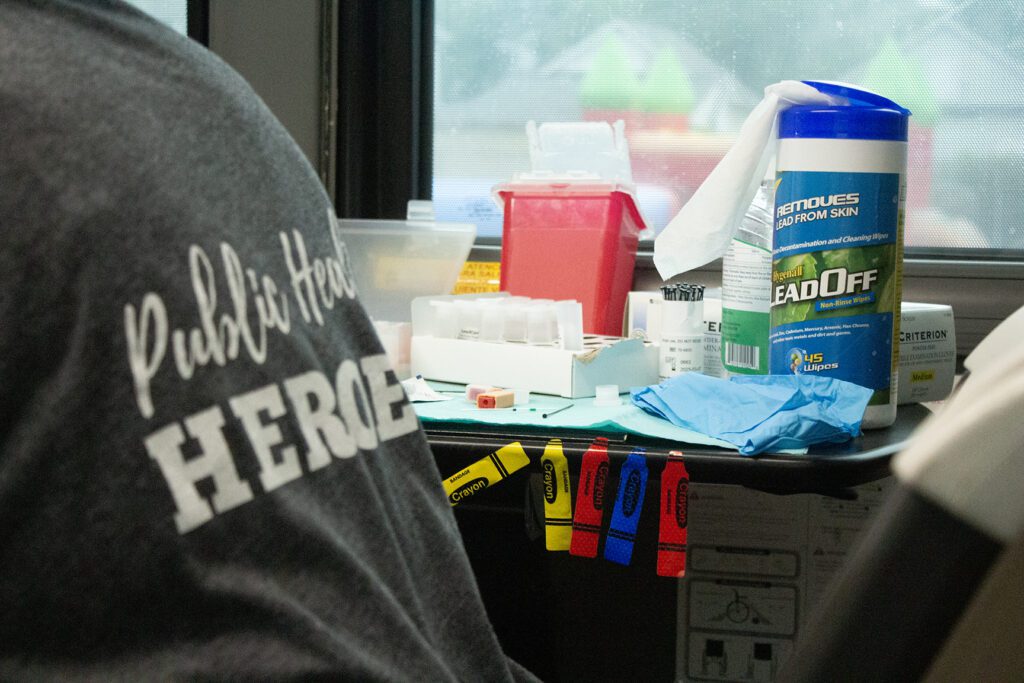
TOLEDO – Free lead testing events – like the one held at the Indiana Avenue Missionary Baptist Church June 13 – aims to make it convenient and fun to address the serious health risk, organizers said.

Bounce houses, a food truck and family-oriented vendors help make it feel more like a fun day out as opposed to a trip to the doctor’s office.

Toledoan Arselia Ruiz brought her two children, Aaryn, 4, and Alesanera, 7, to the testing site at the church. They already get tests at their annual pediatrician appointment, but she’s worried about the time in between.

“I’m worried they’ll get a hold of it,” she said. The home she rents was built before 1978, meaning lead paint was likely used. She’s nervous her kids will find peeling paint or chips. 

“I have to watch my kids like a hawk,” she said.

“African Americans and the Latino community” are falling through the cracks in the lead crisis, associate preacher C. Jerome Graham said, adding that it comes down to either a lack of awareness or a lack of availability. Their church saw the need to do something different to address those gaps.

According to the Toledo Lucas County Health Department (TLCHD), lead exposure can affect nearly every system in the body. Because lead exposure often occurs with no obvious symptoms, it frequently goes unrecognized.

Lead case manager Gloria Smith administers a finger-post test for lead. (TFP Photo/Barrett Dorner)

In a mobile clinic in the church’s parking lot, registered nurse Gloria Smith administered the finger-poke test – similar to a blood sugar check. Smith is also the lead case manager for the Toledo Lucas County Health Department (TLCHD).

“At any given time, there are 3,400 children with lead poisoning in Lucas County,” she said, stressing each syllable of the statistic she is working to lower.

“This is convenient, this is portable,” Graham said. “This goes to the people and makes it accessible to the people where they live at, as opposed to people having to leave their comfort zone.”

As stated by the Ohio Health Department, lead is a metal that occurs naturally in the environment, but most of it comes from human activities, such as manufacturing and mining. In the past, lead was used in gasoline, paint, metals, bullets and batteries. Lead has many hazardous health effects, and been banned or significantly reduced in these products.

Lead testing information is available at toledoleadsafe.com.

Local film honors Black heritage

0
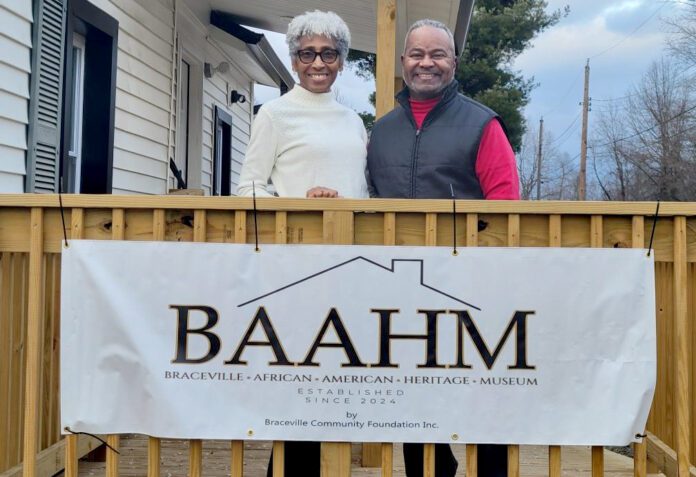
Gwen Shavers, left, and her husband Terry Shavers stand on the porch of the Braceville African American Heritage Museum, which used to be Earnie Shavers’ house. (Courtesy Terry Shavers)

TOLEDO – Before there was a documentary, there were voices—soft, unrecorded, almost lost.

Elders in a rural Ohio town gathered in churches and kitchens, passing down stories of Olympic trials, steel mill shifts and cross-country train rides. Now, History Forgotten and Now for All to See brings those voices to Toledo for a Juneteenth screening that asks, “What do we lose when we don’t listen?”

It is not every day that a small Ohio town of fewer than 100 families lays claim to Olympians, university deans, heavyweight champions and civil rights pioneers. But Braceville, Ohio did. This community-made documentary shining a light on this town’s legacy will screen at Heatherdowns Branch Library on Saturday, June 21, at 2:30 p.m. Admission is free.

A story rooted in memory

The film began not as a professional project, but as an act of preservation. In 2016, Gwen and Terry Shavers started recording interviews with senior members of their church after realizing the community’s history might disappear if no one documented it.

“We thought, ‘Boy, this treasure is going to be gone shortly,’” Gwen Shavers recalled. “So, we decided to video them.”

Though neither had any filmmaking experience, the couple set out to capture stories of migration, family and legacy—many of which they had grown up hearing themselves, as Terry Shavers noted. The result is a tender glimpse into a rural Black community built on resilience and generations of connection.

“I always thought I’m a very boring person and I live a boring life.” Gwen Shavers said. “But it’s the little things we do every day—the routine, daily things of life— that other people can relate to that makes things interesting and exciting.”

(Courtesy Photo)

Braceville’s legacy

Located in Trumbull County, Braceville was once home to a thriving African American community built by families who migrated from the Jim Crow South in search of industrial jobs and safer futures. Despite its small size, the town produced an Olympian, university deans and boxing legend Earnie Shavers, who fought Muhammad Ali and Larry Holmes. One resident even ran track against Jesse Owens; another fought Joe Louis … twice.

The Shavers family helped restore the first house Earnie Shavers’ family lived in when they arrived in Braceville. Today, it stands as a local museum. “There’s a lot of good stories, and most of the families have similar stories to tell,” Terry Shavers said.

From local treasure to Toledo screening

The film is coming to the Glass City thanks to Daniel Mason, a Cleveland-area film editor. He used AI-assisted restoration tools to help elevate the amateur footage into a presentable documentary.

Mason was introduced to Toledo organizer Colette Córdova, who saw something special in the project.

“She’s the one that said, ‘Oh, we would love to have this up here,’” Gwen Shavers said. “ I think it was very kind of her to see some value in it, to want it to be shown in her neighborhood. We’re very honored.”

Toledo’s screening also holds regional significance. After Newton Steel—the factory that once anchored Braceville—opened a second location in Monroe, Mich., many families followed the work north and settled in Monroe, Toledo and Detroit.

“Monroe is like a sister community to Braceville,” said Terry Shavers. “There are quite a few people in the Toledo and Monroe area who are interested, too, so we thought it would be a good match.”

Lessons for the next generation

While the film looks to the past, its purpose is firmly rooted in the future. “We were really just trying to preserve our history,” Terry Shavers said. “If we don’t talk—if we don’t get these older folks to share their stories—it’s all just going to be lost.”

That spirit of preservation and accessibility is what Gwen Shavers hopes resonates with audiences in Toledo.

A lot of cultures don’t really know what the other culture is like. It just gives people a little glimpse into the lives of a small community and what it was like when we were growing up.

Gwen Shavers

The couple hopes the documentary not only shares their community’s story but encourages more people to see the value in their own.

“We didn’t even realize how people came to little places and built communities—how they were resilient, and against all odds.” Gwen Shavers said. “And that is something that might help our country nowadays, if we had that same type of resilience and unity rather than the division that we have today.”

The documentary will be at the Heatherdowns Branch Library on Saturday, June 21, at 2:30 p.m. Doors open at 2 p.m.
(Courtesy Photos)

(Courtesy Photos)

Inside Toledo City Council: June 17 | Rocky Ridge LLC debate continues

0
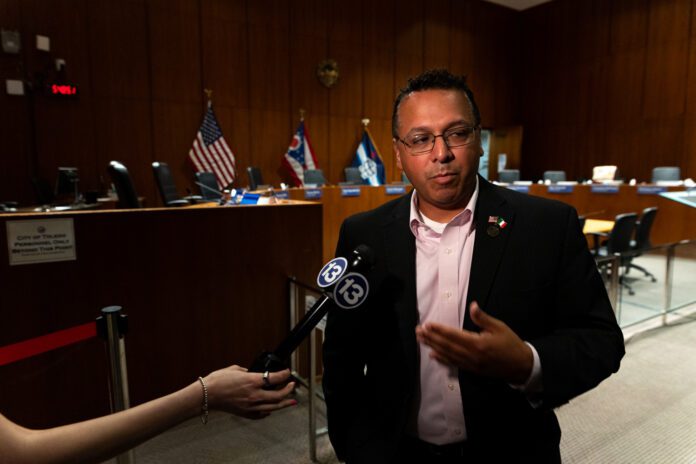
Adam Martinez, Toledo City Council member (District 2), speaks with press after the meeting. He referred to the circumstances surrounding the ordinances as “pay-to-play.” (TFP Photo/Stephen Zenner)

TOLEDO – During this Tuesday’s meeting, Toledo City Council Member Adam Martinez (District 2) had a few choice words on Rocky Ridge rezoning, and petitioned his fellow council members to vote on the ordinances then and there instead of holding them until the next council meeting in a month. 

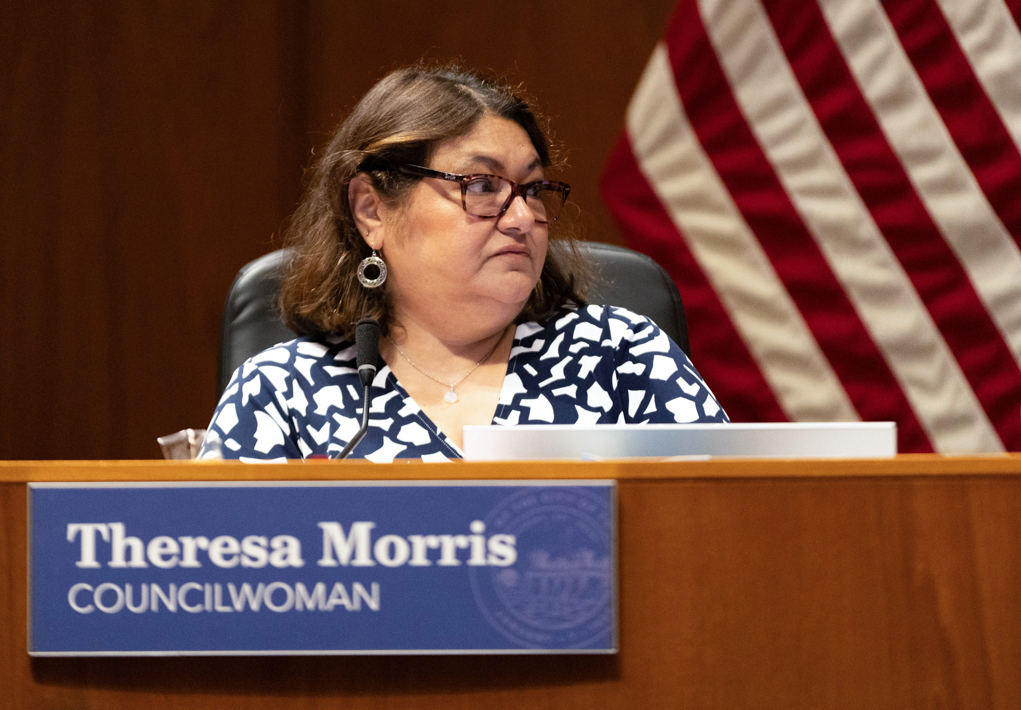
At the very beginning of the legislative session for this week’s meeting, council member Theresa Morris (District 6), as chair of the planning and zoning commission, opted to hold three ordinances for the next meeting. 

Council member Theresa Morris reacts to other council members’ reactions to a comment by’ Adam Martinez about ‘pay to play.’ (TFP Photo/Stephen Zenner)

Ordinances 223-25, 224-25 and 225-25 would rezone areas around Byrne Road and Angola Road for industrial use, putting the mining efforts of Rocky Ridge Development LLC close to local residential zoning. 

At the last City Council meeting, on June 3, Council Member Mac Driscoll (At-Large) made a successful motion to hold the three ordinances so council members would have more time to understand three concerns surrounding the rezoning:

  1. The concern of dust from the mining 
  2. The reuse of the site after mining
  3. And the environmental impacts of mining.  

At this past Tuesday’s meeting, Martinez interrupted the motion to hold the ordinances for a second time, and mentioned his desire to vote on 224-25 and 225-25, if not all three.

“We should need to vote on this, one way or the other,” Martinez resolved. “There are significant concerns about the environment, about the community impact. You know, the residents of the neighborhood have been very vocal about this.”

Roberto Torres, a Toledo City mayoral candidate, speaks with Jason McKown, a resident near the proposed zoning changes, during a Toledo City Council meeting. TFP Photo/Stephen Zenner)
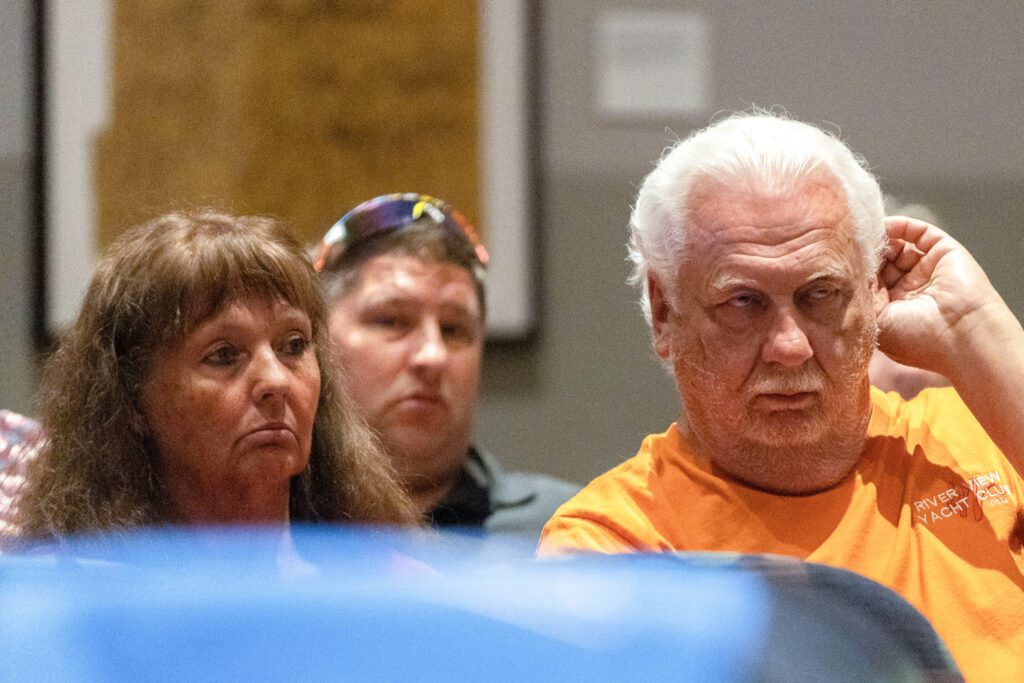
Kathy and Bill Hoag, who own a number of properties close to the rezoning in ordinances 223-25, 224-25 and 225-25, sit in and listen during a Toledo City Council Meeting. (TFP Photo/Stephen Zenner)

For the past number of weeks, Toledo mayoral candidate Roberto Torres has led a group of Toledoans from around the area affected by the rezoning to petition the industrial activity happening near Byrne and Angola. Hundreds of signatures and a few residents who could come to the meetings in person are hoping to have the ordinances voted down.

Bill Hoag, who owns a number of properties near the areas for rezoning, said at the June 3 council meeting that he was frustrated with the hold on the vote.

This week, Hoag returned with his wife, who echoed his frustration. 

“At some point we need a resolution to the issue,” said Kathy Hoag. “We can’t just keep kicking the can down the road.

At some point they have to make a decision. They have everything in front of them. The residents have voiced their concerns. They have all the maps, everything that they have needed to make a decision. And we can’t keep delaying it.

Kathy Hoag

But Toledo city council members did delay the vote on all three ordinances, even after Martinez pushed council for a vote, ruffling some feathers in the process. 

“I have concerns about the oversight of the administration and how we even got to this point,” Martinez said before a slow vote on holding the ordinances was initiated. “I have ethical concerns about the former director that is now the CEO. There’s just a lot going on here, and something just doesn’t smell right.”

Part of what Martinez referenced was published the day before in the Monday issue of The Blade, where it was highlighted that Ed Moore, the former director of public utilities for the City of Toledo, retired in April of 2024 only to take up the managing director position for Rocky Ridge LLC. 

Before Moore retired, he signed a contract with Rocky Ridge on behalf of the city in 2023, which allowed Rocky Ridge to remove spent lime from 4004 Angola Road, one of the areas up for rezoning, and that is still not zoned correctly. 

However the remark by Martinez that seemed to offend his fellow council members was as follows: “We wouldn’t do this for anybody else, and I’m kind of over the pay-to-play politics.”

Pay-to-play is the same language used to describe the three Toledo city council members who were arrested in 2020, convicted of taking bribes in 2023 and sentenced to prison time.

Council member Sam Melden (District 5) immediately responded by saying that the council holds things often “if we have more questions.” 

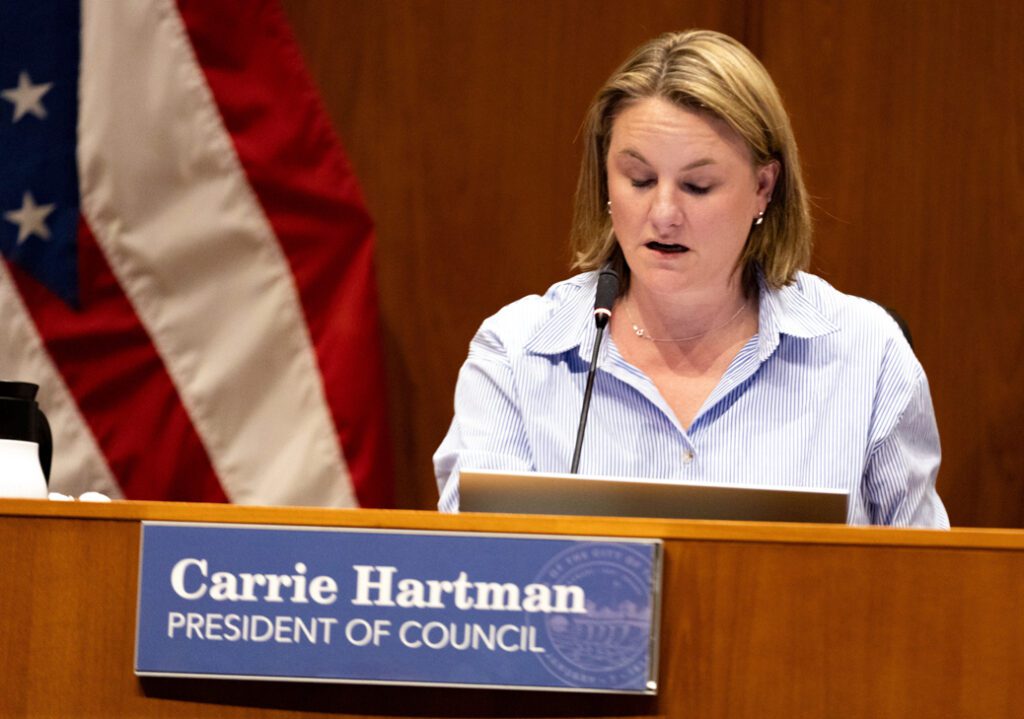
Visible disgust was on the face of the Toledo City Council president Carrie Hartman in reaction to Martinez’s mention of “pay-to-play politics,” before she organized the motions to hold the ordinances. 

Carrie Hartman reacts to comments made by Adam Martinez, referring to the environments around the rezoning proposed in ordinances 223-25, 224-25 and 225-25 as “pay-to-play.”(TFP Photo/Stephen Zenner)

Martinez was the only council member to vote in favor of voting on the ordinances that day. 

Torres commented on Martinez’s statements. “Council members wouldn’t make those statements without information to lead to that conclusion.”

When the ordinances were in committee, the plan commission did not recommend these three rezoning ordinances for passage, which means the council requires nine votes to pass the ordinances. 

When closing the session, Martinez ended his remarks by saying, “I’ve spoken enough today.”

Which prompted an, “I agree,” from council member Cerssandra McPherson (At-Large), who seemed surprised she said the words out loud. 

Council members erupted in laughter around McPherson until council member John Hobbs III (District 1), representative for the areas in question for rezoning, broke up the laughter, telling his colleagues, “It’s not funny.” Hobbs had previously recommended all three ordinances for passage. 

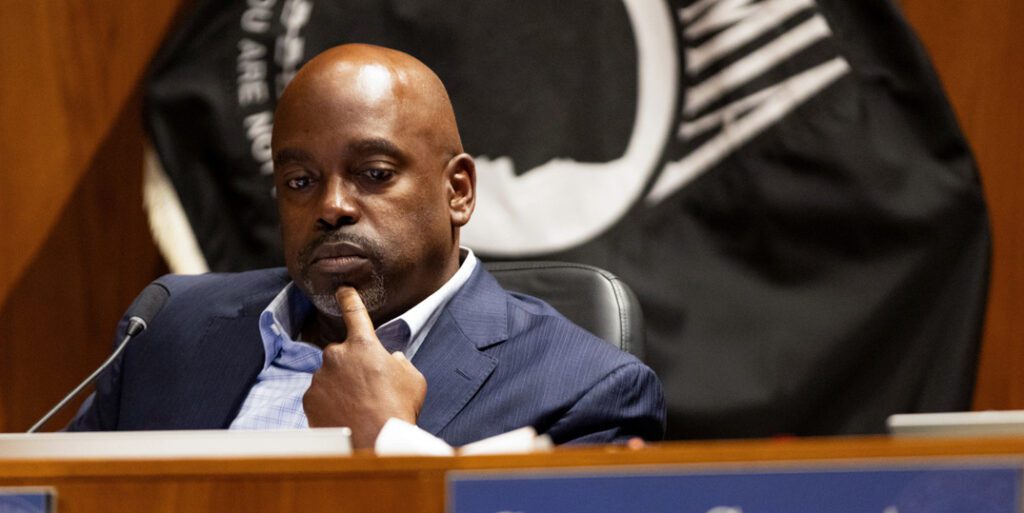
John Hobbs III listens to fellow council member Adam Martinez talk about Rocky Ridge. (TFP Photo/Stephen Zenner)

Council member Nick Komives (At-Large) recommended in his closing remarks that Martinez “rescind” his earlier “pay-to-play” comment, and, after the meeting adjourned, many council members immediately left the council chambers, visibly emotional about how the meeting went. 

Morris and Martinez stayed behind to address the press about the eventful meeting.

“It sounded like the applicant was going to change what they were sending to us, and they had a chance to talk to some of the members, but they didn’t have a chance to talk to all of the members,” Morris said about her decision to hold the ordinances until the next meeting. 

According to Morris, the applicant, Rocky Ridge LLC, changed the rezoning request at 2 p.m., two hours before the council met at 4 p.m. Summarily Morris said the request changed from multiple properties requesting a zoning change down to just the 4004 Angola Road property requesting a zoning change. 

“When members don’t have all of the information and don’t don’t receive it equally, we need to make sure that all of the members have as much information when they decide to cast a vote,” she said. 

Emphasizing the seriousness of the zone change, Morris said, “It’s a big change.”

Residents continue to complain about mining, but Morris said, “I haven’t seen anything formally that has come to us for the committee,” concerning a cease and desist to Rocky Ridge. 

When asked about the strange nature of a company mining on land not zoned for mining, Morris said the city needed to do a better job enforcing its agreements.

After Morris addressed the press, Martinez explained his comment. “So, clearly, that hit a nerve at this council.

“Four people went to jail because of pay-to-play politics. I technically wasn’t referring to anyone on council, but it’s been kind of one of those situations where things just don’t add up,” he said, and downplayed the seriousness of the pay-to-play reference saying it was “off the cuff.”

“I have no thoughts that this…any of my colleagues are involved in anything unscrupulous, but this whole situation smells funny.

“We had a lot of county involvement. We had a lot of pressure on both sides to make a decision one way or the other. So I was more venting my frustration on all of the pressure. So again, not geared towards anyone, but it is what it is.”

As far as the day-of changes to the proposed zone change, Martinez said they didn’t matter to him, and that the proposal was basically the same. 

“There’s been no substantive penalties for operating illegally from the administration,” he continued. “There’s been no punitive, at least I’m not aware of, issues for falsely signing documentation, getting, obtaining a state license from the state.

“So this just all smells funny. I can understand an ‘oops,’ but ‘oops, oops, oops, oops’ and then five years later, still, nothing is done, and you want to expand it all of a sudden. Unfortunately, it’s a little too late.

“I am really grateful that Ed Moore is now there [at Rocky Ridge LLC], but I have ethical concerns, because he was the former director of water.”

Martinez said he would not rescind his earlier comment, while apologizing if it offended anyone. 

“We work for the people,” he said. “We don’t work for businesses. We don’t work for the mayor’s administration. We work for our residents of our community.”

Other city council business:

  • Paris Waites, 18, of Central Catholic High School, was commended for winning the 57th Annual Debutante Cotillion Award and being crowned Miss Debutante 2025. Wilma D. Brown, Cotillion general chairman and former President of the Toledo City Council, was commended for her role in establishing and running the 57th Annual Debutante Cotillion.
Paris Waites, 18, of Central Catholic High School, is acknowledged for winning the 57th Annual Debutante Cotillion Award and being crowned Miss Debutante 2025.(TFP Photo/Stephen Zenner)
Wilma D. Brown, Cotillion general chairman and former president of the Toledo City Council, is commended during the meeting for her role in establishing and running the 57th Annual Debutante Cotillion. (TFP Photo/Stephen Zenner)

Toledo SEIU Local 1 janitors march for better pay, safer conditions

0
SEIU Local 1 janitors union march in the Toledo Juneteenth Parade on June 14. Courtesy Photo/Camilo Villa)

TOLEDO — Long after the last employee shuts down their computer and the lights flicker off for the night, the work is just beginning.

Inside Toledo’s high-rise offices and public buildings at night, vacuums hum down empty hallways. Mop water sloshes against bucket rims. The air is thick, stale and warm. Air conditioning typically shuts off when tenants go home, so the night shift sweats through it.

They clean the messes no one sees—or cares to see—that are left behind. They disinfect bathrooms, polish glass, scrub floors, sweep salt, haul trash. Their fingerprints are wiped away before anyone notices they were even there.

SEIU Local 1 janitors Philip Rudolph, from left, and Nadine Larde, march in the parade. (Courtesy Photo/Camilo Villa)

Janitors, like Nadine Larde, are deep into their shifts before the Glass City wakes up.

“It consists of a lot of work—a lot of sweeping, dusting, mopping. You know, some buff, wax and strip floors…and the mirrors and the glass and the doors,” said Larde, an SEIU Local 1 member who works for Holland Building Services, and serves as a union steward and bargaining committee member. “And dusting…a lot of dusting takes place.”

But last Saturday, their work—and their worth—were brought to light as they took to the streets during the daytime.

Joined by Congresswoman Marcy Kaptur and Ohio representatives Michele Grim and Erika White, more than 100 SEIU Local 1 janitors marched through downtown Toledo in the city’s Juneteenth Parade on June 14, not just to celebrate Black freedom, but to demand better pay, safer working conditions and long-overdue respect.

Ohio Rep. Michele Grim, (center in purple jacket), Philip Rudolph, center, and Congresswoman Marcy Kaptur, center right, pose for a photo during the Toledo Juneteenth Parade. (Courtesy Photo/Camilo Villa)
SEIU Local 1 union members march to make their voices heard. (Courtesy Photo/Camilo Villa)

With their current contract set to expire in July, union members are preparing for tense negotiations, and they’re making their voices heard.

“We represented with Juneteenth the freedom, and also for liberty, and also, for the Union,” Larde said of the march. “It’s not that they’re trying to take from the business owners, but they [Local 1 workers] want to live. They want to be able to take care of their children, their home and different things.”

For SEIU Local 1, participating in the Juneteenth Parade was a deliberate choice.

“Our members live in the communities where everybody else is,” said Yanela Sims, SEIU Local 1’s Ohio state director and recording secretary. “They have jobs, but they’re also people outside of work.”

SEIU Local 1 member Yanela Sims, left, and her fellow union members march in the parade. (Courtesy Photo/Camilo Villa)

Sims said participating in community events like the Juneteenth Parade helps members share their message and break the invisibility that often surrounds night-shift workers.

“It allows our members to communicate that they’re not just the invisible workers that come in at night and make everything clean and tidy. No one ever sees them or hears their perspective,” she said.

While Juneteenth commemorates the end of slavery in the United States, the federal holiday remains relevant to today’s labor struggles—especially for Black workers, who make up the majority of Local 1 janitors in Toledo, according to union representative Camilo Villa.

They’re an integral part of ensuring that workspaces are clean, tidy and safe. But if there’s a mess in the building, you’ll know.

Yanela Sims | SEIU Local 1’s Ohio state director and recording secretary

“They’re an integral part of ensuring that workspaces are clean, tidy and safe,” Sims said. “But if there’s a mess in the building, you’ll know.”

And yet, Sims added, their needs are too often overlooked. In many buildings, air conditioning is shut off after tenants leave, often leaving janitors to clean in stifling heat. 

“If it’s not safe for your tenants to work in the heat, then it shouldn’t be safe for our members, either,” she said.

The janitors clean some of the region’s most high-profile buildings—corporate offices, hospitals, manufacturing sites—but many still earn less than $15 an hour.

SEIU Local 1 represents more than 400 janitors in Toledo and Northwest Ohio. They clean buildings most residents pass by or work in every day, such as One Seagate, ProMedica buildings or Owens Corning. Though they are essential to keeping the city running, many work behind the scenes and under subcontracted conditions.

“All of them work for janitorial contractors, not for those companies,” Villa explained. One of SEIU’s key messages during this contract cycle is that employers—not just contractors—must ensure their buildings are staffed by workers who are paid a fair wage.

“For a lot of these people, this is their only source of income,” Villa added.

Many SEIU Local 1 members rely entirely on janitorial work to support their families, sometimes holding multiple part-time cleaning jobs or sharing the workload with a spouse. For some, it is a second career taken up later in life; others balance caregiving responsibilities during the day before heading to work at night. 

One longtime member, Villa noted, has worked as a janitor for 47 years. A military veteran who was deployed to Iraq during his time in the reserves, he returned to the same building he’s cleaned for two decades, still making under $15 an hour.

For Larde, the story is personal. A 14-year cancer survivor, she spends her time off recovering from the physical toll of the job. “I basically try to rest up so that I can go to work for next week, “ she said. “I do spend time out in the yard or what have you. Sometimes I go and see my daughter that lives in Michigan.”

With their current contract set to expire in July, SEIU Local 1 janitors say they are entering negotiations with a clear message: Their work is essential, and it is time it was treated that way.

After years of being overlooked, the union workers say they’re ready to be heard, not just at the bargaining table, but by the communities they serve every day.

SEIU Local 1 union organizer and former janitor Dericka Mays, with bull horn, joins the march. Courtesy Photo/Camilo Villa)

Don Lee: JuneTeenth Awareness

0

Juneteenth – or June 19 – marks the day in 1865 when Union troops, led by
General Gordon Granger, arrived in Galveston, Texas, with news that slavery had officially ended.


Juneteenth: Local ways to celebrate

0

TOLEDO – Juneteenth – or June 19 – marks the day in 1865 when Union troops, led by
General Gordon Granger, arrived in Galveston, Texas, with news that slavery had officially ended.

This came two and a half years after President Abraham Lincoln issued the Emancipation Proclamation. Lincoln declared in the 1863 proclamation “that all persons held as slaves” within the rebellious states “are, and henceforward shall be free.”

More than 250,000 African Americans in Texas joined almost 3.5 million of those who were already freed in other parts of the country as Union forces advanced through the South and enforced emancipation. Though Lincoln’s proclamation had laid the foundation, freedom arrived unevenly and was often long delayed.

Juneteenth, also known as Freedom Day or Black Independence Day, represents the final large-scale emancipation of enslaved people in the United States, a turning point that has been celebrated for generations as a day of liberation, resilience and remembrance.

Still, not everyone was freed, even on Juneteenth. Enslaved people in Union-loyal states, like Kentucky and Delaware, remained until the ratification of the 13th Amendment in December 1865. And even after abolition, many Black Americans continued to face systemic racism, segregation and violence.

Despite its heavy historical weight, Juneteenth has always been marked by joy. It is a celebration of survival and culture—of family, food, music and pride. Communities across the country gather to honor the past and uplift the future through cookouts, parades, concerts, education and storytelling. In 2021, Juneteenth was officially recognized as a federal holiday.

In Toledo, Juneteenth is celebrated through events that bring together residents, organizers, artists and educators. We’ve compiled a list of events for those who want to join in.

Thursday, June 19

Toledo Museum of Art Campus | 11 a.m.–5 p.m.

Music, performances and activities make up this year’s celebration at TMA, including live jazz, R&B/neo-soul and electric guitar sets in the galleries, along with a magician, interactive art experiences, and family-friendly programming throughout the museum.

There will also be yoga, a sound bath, storytelling, gallery drawing, and a LocalEyes tour with a Toledo artist. Food trucks will be present all day at the FREE event.

Glass City Pavilion and Event Lawn | 3:30-9 p.m.

Live entertainment, food trucks, games and other activities will be taking place at the Glass City Pavilion at this FREE cultural festival.

Glass City Metropark | Kids run begins at 5:30 p.m. / Adult run begins at 6 p.m.

Juneteenth 2.5 Miles for Freedom Run

Bring the kids for a free 1K run at Glass City Metropark! Cost for adults: 2.5 mile – $12; TRRC members get a $2 discount taken at checkout.

Club Evolution | 6 – 11 p.m. Doors open at 4 p.m.

Juneteenth Freedom Day Celebration

Take in live performances by Vteala Fields, LaBiche and other performers at this open mic night. $18. Tickets on Eventbrite.

Friday, June 20

Maumee Indoor Theater | Doors open at 3 p.m. / Show starts at 3:30 p.m.

Attend a recital by Famed Studios called Coming to America, an exploration of the immigrant experience and our country’s diversity. Kids: $12. Adults: $24. Tickets available on Eventbrite.

Saturday, June 21

The Pinnacle | Doors open at 10:30 a.m.

Honor 2025 scholarship recipients with the Alpha Kappa Alpha Sorority, Incorporated® – Zeta Alpha Omega Chapter at an elegant Juneteenth Brunch and Silent Auction. There will be a live performance by Distant Cousinz, food, and dancing. Cost for admission: $71. Tickets available on Eventbrite.


Woodville mayor, former football player wins Mayors’ Cup

0
Woodville Mayor Ty Tracy is the winner of the Italian Bowl Mayors’ Cup held on Saturday at St. Francis de Sales High School. (Allyson Ritchey/TFP)

TOLEDO – Woodville Mayor Ty Tracy played several positions for the Cardinal Stritch High School football team back in the day.

Surprisingly, quarterback was not one of them.

Tracy, 51, a 1992 grad, showed off his pass catching, punting and passing accuracy skills by winning all three events en route to taking first place at the second Italian Bowl XLIV Mayors’ Cup competition on Saturday at St. Francis de Sales High School.

Oregon Mayor Mike Seferian watches Ty Tracy throw the ball. (TFP Photo/Allyson Ritchey)

“I think I can compete well,” Tracy confidently said after the event. “I have a little bit of a football background, but I didn’t have a lot of expectations today. I haven’t thrown a football in about five years, but I play in a 50-and-over softball league in Walbridge and that keeps my arm loose.”

The Mayors’ Cup is one of several fun events leading up to the Italian Bowl XLIV, which will be played Saturday, June 28 at 3 p.m. at the University of Toledo’s Glass Bowl.

Tracy was one of eight mayors to compete in this year’s Mayors’ Cup. The other mayors were Wade Kapszukiewicz of Toledo; Mike Seferian of Oregon; Mark Frye of Sylvania; Melvin Sprauer of Clay Center; Edward Schimmel of Northwood; Timothy Pedro of Waterville; and Don Walters of Cuyahoga Falls.

Mayors, from left: Ty Tracy, Don Walters, Edward Schimmel, Melvin Sprauer, Wade Kapszukiewicz, Mike Seferian, Mark Frye and Timothy Pedro pose with a football at the end of the competition. (Allyson Ritchey/TFP)

The first Cup event was in 2023.

“I know Mike Seferian, and I knew he won two years ago,” Tracy said, who earned 150 points.

Seferian, 67, did, in fact, win the inaugural Mayors’ Cup trophy, but this year he finished second to Tracy, who outscored him by 41 points. Walters was third with 106, and Kapszukiewicz and Frye tied for fourth with 85.

“I’m here to have fun and try to win each event,” said Seferian, a 1975 Clay High School grad. “Two years ago, two days before this event, Wade called our city manager in Oregon to invite me to compete. I didn’t know I was competing until the day before, but I was in decent shape, so I thought at least I wouldn’t embarrass myself.”

Oregon Mayor Mike Seferian, mayor of Oregon, catches and runs with a football. (Allyson Ritchey/TFP)

Seferian looked especially impressive in the pass catching and passing accuracy skills competitions. He showed off a strong, accurate arm, tossing tight spirals to a stationary receiver from 25 yards. Seferian scored 100 points during the timed competition.

Tracy, a left-hander, followed Seferian and went last, also showing off a strong arm and pinpoint accuracy to score 130 points, the top score in the passing accuracy event.

Kapszukiewicz, 52, who like the other mayors said he did not specifically train for this year’s events, took third place in the 2023 Mayors’ Cup.

“I was in first after the throwing competition,” he said, “but I got a big head and thought I would coast to victory. I just got worse with every skill. I’m in better shape this year.”

Kapszukiewicz does look much different than two years ago, when he took third in the Mayors’ Cup. The 1990 St. Francis de Sales grad said he has lost 100 pounds simply by riding his bike daily.

“I bike 15-20 miles every day,” he said. “I went for 5,000 miles last year and I enjoy it. It doesn’t feel like work.”

Toledo Mayor Wade Kapszukiewicz kicks a football at The Mayors’ Cup. (Allyson Ritchey/TFP)

Frye, 61, who grew up in Pennsylvania, admitted he hadn’t picked up a football “in 20 years, since my son was 12.” Frye said Italian Bowl XLIV will be “great” and “phenomenal.”

“It’s showing off the level of competition in a sport that’s growing around the world,” Frye said. “I’m looking forward to the game and the activities.”

The Italian Bowl showcases the two best teams competing for the Italian Football League (IFL) championship. On July 1, 2023, the IFL championship was played on American soil for the first time in 40 years. The Parma Panthers defeated defending champion Firenze Guelfi for the Italian Bowl XLII title in front of an estimated 10,000 fans at the UToledo Glass Bowl.

“The Italian Bowl is fun,” Kapszukiewicz said. “It’s a little different, and it’s unique and quirky. Cities like Los Angeles, New York and Chicago have built-in advantages. Cities like ours…it’s not often you get hundreds of fans and tourists from Italy coming here and shopping in our stores and eating in our restaurants.

“The players are thrilled to be here. To them, this might be like their Rose Bowl. To play for a championship in the sport they love – they’re thrilled.”

For more information and ticket information on Italian Bowl XLIV, which will be televised live on BCSN, visit theitalianbowlusa.com.

Oregon Mayor Michael Seferian, from left, chats with Sylvania Mayor Mark Frye and Waterville Mayor Timothy Pedro.

Edward Schimmel.

Mayors and volunteers walk toward the end zone to start the competition.

Don Walters, mayor of Cuyahoga Falls.

Toledo Mayor Wade Kapszukiewicz.

Wade Kapszukiewicz picks up a football.

Sylvania Mayor Mark Frye.

Northwood Mayor Edward Schimmel.

Clay Center Mayor Melvin Sprauer.

Waterville Mayor Timothy Pedro.

The Cocoon: Helping survivors of domestic, sexual violence

0

BOWLING GREEN – Since 2005, The Cocoon has seen a lot of pain come through its doors, but also a lot of healing.

So, to celebrate the successes and mark its service, Wood County’s only emergency shelter and advocacy agency for survivors of domestic and sexual violence will have a special 20th Anniversary Kickoff Reception on Tuesday, June 17, at 10:30 a.m. at the Wood County Courthouse at 1 Courthouse Square.

Staff, community members and dignitaries will reflect on The Cocoon’s impact since it welcomed its first survivor on June 14, 2005. The event, free and open to the public, will honor local leaders who have championed The Cocoon’s mission.

“We are really excited to embark on our 20th year,” exclaimed Kathy Mull, The Cocoon’s executive director. “What started as a small emergency shelter is now providing comprehensive services to both sexual and domestic violence survivors.”

Through its base in Bowling Green, The Cocoon provides help to domestic violence victims in Wood County: It’s service in regard to sexual violence is wider – to the counties of Ottawa, Sandusky, Seneca and Wood.

When The Cocoon began – under the name The Cocoon Shelter – there was only one paid staff member. Mull said today there are 21 on staff to provide 24/7 coverage. They field phone calls to the nonprofit’s hotline (419-373-1730, option 2) and provide services to help survivors rebuild their lives.

In 2024, The Cocoon served 837 survivors, the majority of whom were women and children, although there were some males who sought help. “They come from all backgrounds,” Mull said.

In its 20 years, The Cocoon has supported more than 8,000 survivors on their path to safety, healing and justice.

“What’s exciting and impactful for us,” Mull said of The Cocoon’s longevity, “is that it’s come about through community support and listening to the voices of survivors.”

Through listening to those voices, The Cocoon has launched five programs over the past two and a half years:

  • Youth advocacy program, reaching out to young people who experience or witness domestic violence in their homes.
  • Housing program to find affordable residences for survivors.
  • Criminal justice program to ensure a seamless process in the legal system from law enforcement involvement to adjudication.
  • In-house medical program, in which a physician comes to the shelter to provide non-emergency medical care to survivors staying there.
  • Champions of Change program, which trains and encourages local businesses and organizations to create safe spaces to support survivors, and to send a no-tolerance message to their employees to affirm respect for those in need.

Aside from these, The Cocoon has launched a program specifically to address human trafficking. “We’ve seen about a 25 percent increase of human trafficking survivors stay in our shelter,” Mull said.

She noted that the COVID-19 pandemic brought about the largest need for The Cocoon’s services, which included dealing with a higher level of violence. “Still today, survivors report those high levels, with more instances of strangulation and traumatic brain injuries. That continues to make our services more critical than ever.”

“Our biggest need,” she emphasized, “is to continue to spread awareness. We want to create communities that won’t tolerate domestic and sexual violence. We are going to continue to provide services for survivors as long as they need them.”

All The Cocoon’s services are at no cost to survivors, which means another big need is financial support, she said.

Along that line, The Cocoon has scheduled the following ticketed fundraising events and free celebration events:

“We’re definitely making headway,” Mull said. The stigma of reporting domestic and sexual violence has lessened. “Survivors know this is a safe place where they can disclose what happened.”


More openness is needed. To eradicate these forms of violence, Mull said, “we have to be comfortable to talk about it and to stop blaming the victim. The more we reduce the stigma, the more we create opportunities for survivors.”

More details are available at thecocoon.org.