Field researchers, local residents help monitor local tick species
LUCAS COUNTY — Though they’re only about the size of a poppy seed, ticks can cause weeks, months or even years of illness, and they are once again on the move in Northwest Ohio as spring turns to summer.
While the number of Lyme Disease cases continues to climb year after year in Ohio and nationwide, Lucas County health officials said they are still seeing relatively low cases.
But with warm weather, the risk is still far from zero. Local agencies are ramping up efforts to track, test and teach prevention, and residents are encouraged to take precautions now, before tick season reaches its summer peak.
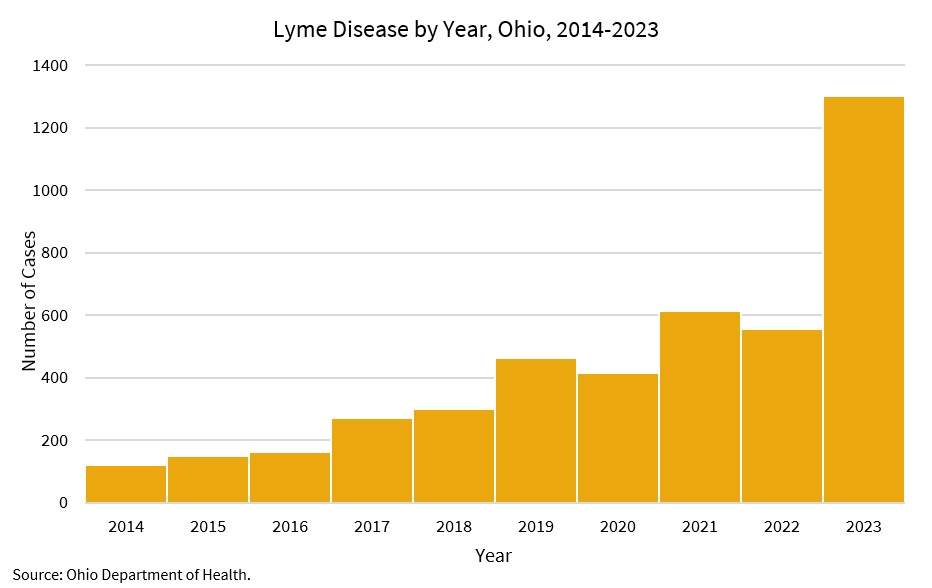
Cases of Lyme disease, an infection transmitted through the bite of infected ticks, have increased steadily across Ohio over the past decade, jumping from fewer than 200 in 2014 to more than 1,300 in 2023, according to the Ohio Department of Health. But while the state as a whole sees a steady climb, Lucas County has reported fewer than 10 confirmed cases per year for the past five years, according to Maria Bibish, an epidemiologist with the Toledo-Lucas County Health Department.
As an epidemiologist, Bibish does surveillance for infectious diseases. Her job is to track and monitor these diseases by following up on cases once they are confirmed. This includes when and where the individual may have been exposed, what symptoms they have, whether they’ve traveled and what treatment they’re receiving.
She clarified that the health department does not test ticks or diagnose illness, but they follow up on confirmed cases to help track the spread and educate the community.
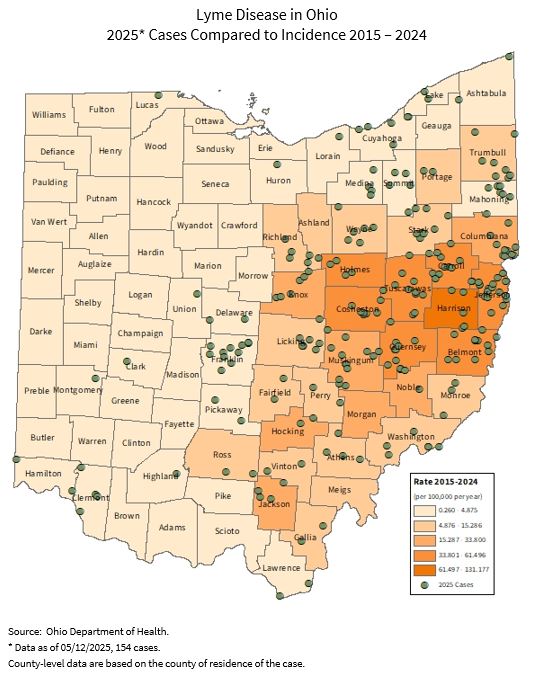
Bibish cautioned against complacency. “Just because a case is reported here doesn’t mean it was acquired here,” she said, referencing the Ohio Department of Health Lyme Disease in Ohio map. “That means they are a resident of those areas, so you see here in Lucas County? Maybe they got bitten by the tick in a different state.”
That’s where the Toledo Area Sanitary District comes in. In March 2025, TASD launched the Lucas County TickTracker program—an initiative designed to monitor local tick species and test them for disease, something that had never been done systematically in Northwest Ohio before.
TickTracker aims to build a long-overdue baseline of tick activity in the region. “Because of the rise in tick populations and tick-borne diseases in Ohio, the Toledo Area Sanitary District has begun actively monitoring tick species in Lucas County through forms of active and passive surveillance,” said Hannah Alanis, tick program coordinator at the Toledo Area Sanitary District.
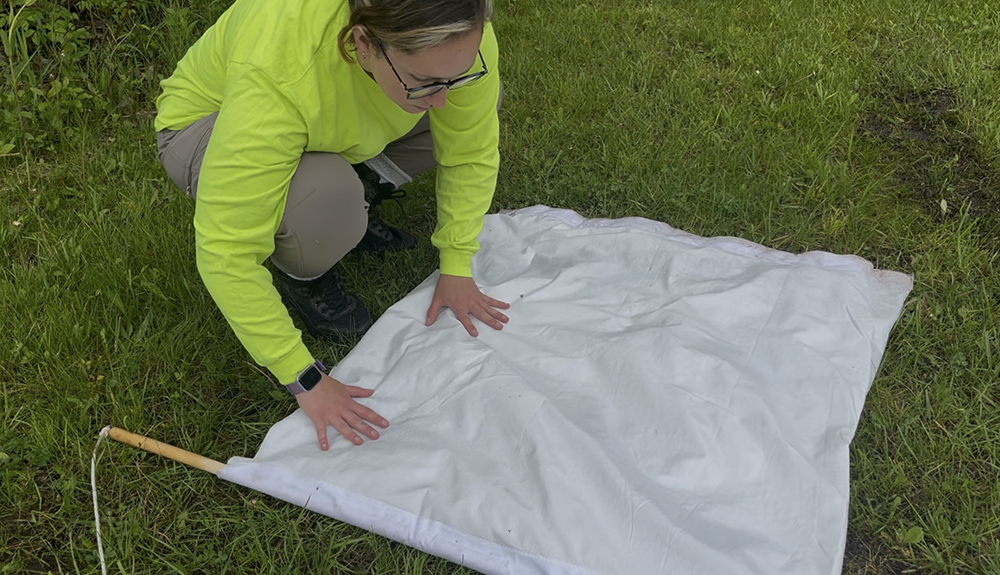
Using field methods, like dragging white cloths through brush to collect ticks and accepting tick samples from residents, TASD has already begun to identify trends. In just the first few months of the program, the team has tested 224 American dog ticks—none of which tested positive for disease—and 42 blacklegged ticks, also known as deer ticks. Of those, nine tested positive for the bacteria that causes Lyme disease.
According to TASD, deer ticks are becoming more prevalent in this area, commonly living in leaf litter where they will then emerge and climb onto nearby brush to find a host. Deer ticks can also be found along woodlines, forested areas and trail edges in wooded environments, Alanis noted.
The TickTracker program isn’t limited to field researchers. Local residents are playing an important role in helping the Toledo Area Sanitary District better understand tick activity across Lucas County. TASD encourages anyone who finds a tick on themselves, their child or a pet to submit the specimen for identification and potential testing.
To participate, residents can submit found ticks online at toledomosquito.org/ticks. If you want to submit it for testing, place the tick in a sealed bag or clean pill bottle, label it with the date and location it was found, and either drop it off at TASD headquarters or request a pickup.
While testing results are not intended for medical use, each submission helps fill in critical gaps in regional data. “People in the community have been very receptive to the program,” Alanis said. “Most folks have had their own experience with ticks, on themselves, their children or pets, so they’re enthusiastic about contributing to the research.”
TASD also uses public data to pinpoint areas with high tick activity and identify potential changes in species distribution over time.
While tick testing and tracking is critical for research, prevention remains the most effective defense against tick-borne illness. That’s why the Toledo-Lucas County Health Department is ramping up public outreach, especially as more residents head outdoors.
“Summer is coming. Some people, they just have to be really careful when they go hiking or walking,” Bibish said.
The Toledo-Lucas County Health Department’s advises the following precautions:
- Avoid tall grass and stick to the center of trails, especially in wooded or brushy areas.
- Wear light-colored, long-sleeve clothing with pants tucked into socks to make it harder for ticks to latch on and easier to spot them if they do.
- Use EPA-registered insect repellents, and shower within two hours of being outdoors to help wash off any unattached ticks.
Tick checks are also critical. “Check behind your ears, your belly button, your knees, your waist, also your children,” Bibish said. “And if you have any pets, like dogs, before bringing them inside, also check their coats, because they can have ticks.”
Tick prevention is just as important for pets. Ticks can transmit diseases to both animals and humans, and pets that carry ticks indoors increase the risk of infection for the whole household, according to Lindsay Johnson, veterinary operations manager at West Toledo Animal Hospital.
Veterinarians recommend daily tick checks on pets, especially after outdoor activity. If you find a tick, remove it promptly using fine-tipped tweezers and steady pressure. Be sure to remove the head. “A lot of times, not all of the head is removed,” Johnson said. For furry friends with darker or thicker hair, individuals may have to feel for little bumps where the ticks may not be visible.
Many clinics recommend year-round tick prevention products, such as Credelio or Quattro. It is also important to consult a veterinarian to determine the best strategy for your pet, especially in higher-risk areas, like wooded trails or tall grass.
“Doesn’t matter the breed or age,” Johnson said. “It’s an environmental risk.”
Symptoms of tick-borne illness in pets can be delayed and hard to detect. Pet owners should watch for shifting leg lameness, swelling to the joints, anemia, nausea, vomiting and diarrhea. “They can become deadly if left untreated,” Johnson said.
“The number one thing we want people to understand,” Johnson warned, “is that tick-borne illness is a zoonotic disease, meaning it can be passed onto humans from the tick brought in by the dog or cat.”
For more information on tick prevention or to submit a tick, visit toledomosquito.org/ticks.