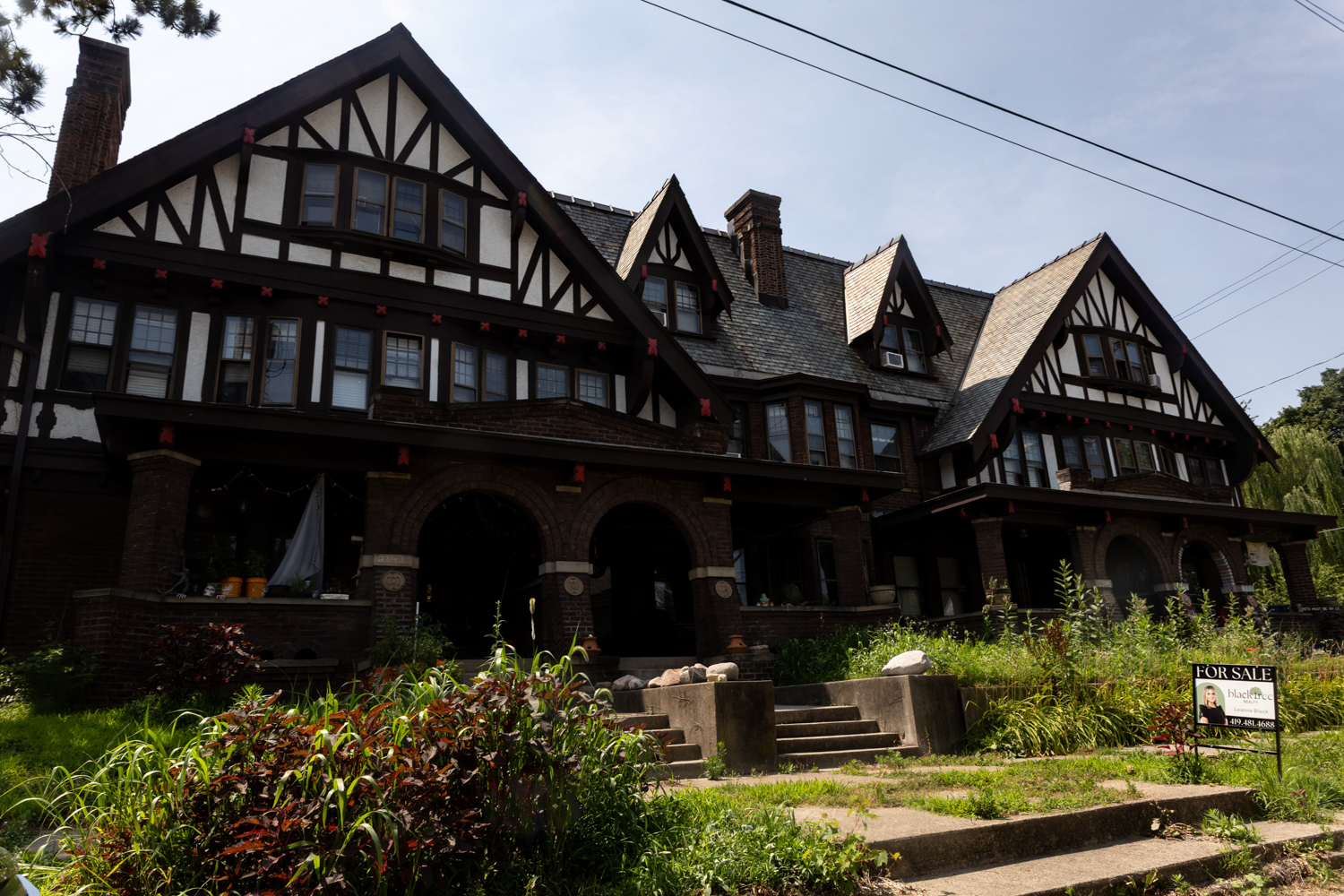

TOLEDO – Millions of dollars in Old West End properties were put up for sale mid-summer, drawing confusion and questions from the neighborhood.
In a Facebook post by Leanne “Tresize” Black, an agent and owner of Blacktree Realty, she advertised properties to be sold as part of grouped packages. One package included nine separate properties for $1.7 million, and another had five properties for $3.4 million.
All 14 properties are/were owned by landlord David A. Miller and his wife Diane Reynolds-Miller, who had split them up between separate companies Number One Old West, Ltd. through Number Six Old West, Ltd.
“You can say that I’m selling because of my health,” Miller said, when the Toledo Free Press ran into him working on one of his properties.
Slightly out of breath, Miller was holding a small canister of oxygen, and commented that he had lost help managing the properties recently, his health was declining and that he was selling all of his properties.
“Steps are my enemy,” he said. “And I got a lot of three story buildings.”

Tenants reaction
Anxiety around the sales seemed to be in-part because of the abruptness, and lack of notice the tenants had about the sales.
Tenant Katie Bartlett said she found out the building she lived in was for sale when “literally the for-sale sign” appeared. “I texted the neighbors below us, and I was like, ‘Did you see the sign?’”
Comments on the now-deleted Facebook post by Black said the social media post was how some tenants had found out the building they lived in was being sold.
Bartlett was less concerned because, she said, “It looked like they were trying to have them bundled,” and the properties would likely change hands with another landlord.
Not everyone shared Bartlett’s confidence, including her mother.
“I honestly, I freaked out because well, at first— I’m sure they’re not going to sell right away, but the more I thought about it, I didn’t know where I was going to go,” said Paula Bartlett, Katie’s mother, who lives separately in the Old West End, in another of Miller’s duplexes.
This same fear extended to the tenants of a different landlord represented by Blacktree Realty, Ben Randall, who put two of his properties on the market, as a bundle, around the same time.
16 multi-unit properties changing hands in the same area introduced, at the very least, an amount of perceived instability to the neighborhood following a tragic shooting at the Old West End Festival (OWEF) and a new set of lead-safe regulations that landlords in the Old West End needed to come into compliance with by December 2025 or the end of June 2026, depending on property location within the neighborhood.
Black, on behalf of Miller and Randall, said the landlords were retiring, and pushed back against the commotion and the online discourse. “Both of these guys have worked on these properties and kept them in great shape for a long time, and I think that they deserve to retire without the community bashing them for it,” she said.
When asked about not giving notice to tenants about the sales, she said, “I would say that’s fairly common, especially if we’re doing something like the way that we did this, where there’s no showings without an accepted offer.”

Affordability
Multiple tenants from both Miller and Randall’s properties mentioned they thought the sales would mean higher rents for them, a concern in this economy.
Black maintained that leases carry over between landlords, but also mentioned, “At the end of the day, property taxes have gone up, water’s gone up, and most of those properties, the landlord’s paying for water, cost of materials to upkeep, landscaping. All of those things have gone up as well.”
Miller had Bartlett sign an initial one-year-lease, but then moved over to a month-to-month lease, which allowed flexibility to both parties to end their lease within a month’s notice.
“So since 2020, it’s been month-to-month,” Paula Bartlett said, emphasizing that her residence could change in a fairly short amount of time with a new owner. “I figured if things sold, and some corporation— management company took it over, I would be kicked out.”
Northwest Ohio Realtors cited a study by Rentometer, a company that provides data for investors, that showed rent in Toledo had gone up 43 percent between 2021 and 2025.
“Our unit was $1,000, and now it’s $1,150. It was $875 before that,” said Alyx Kendzierski, a tenant living in one of Randall’s properties for over a decade. “So in the last two years, he has increased it pretty significantly.”
With the sale of these properties, Kendzierski is worried the rent increases will only continue.
“I am fearful for what this means for broader affordability within the Old West End.”

Get the lead out
One of the factors that is thought to be contributing to the rising rents and potentially to the packaged property sales is a 2025 Toledo ordinance dealing with lead remediation.
“I think what I would like to do is disclose to the tenants how much of their rent is for lead compliance, and I think it’s going to wind up being about 100 bucks a month,” said Dan Finkel, a landlord in the Old West End and member of the Old West End Association.
Since 2016 the City of Toledo has attempted to regulate lead in rental properties, but has been met with legal challenges up until early 2025, when the Ohio Supreme Court refused to hear an appeal, upholding the city’s ability to regulate lead in rental properties.
March of 2025 saw the passage of a new ordinance, O-167-25, which changed some procedural and enforcement aspects of the previous ordinances from 2016 and 2020 along with some administrative tweaks.
At its core, all three ordinances stipulated that all 1-4 unit rental properties built before 1978 need a lead-safe certification.

Until 2025, the lead ordinance was not enforced, pending the previous legal challenges, but now that the city has the go-ahead, O-167-25 dictated a phased compliance structure from 2025 to 2029.
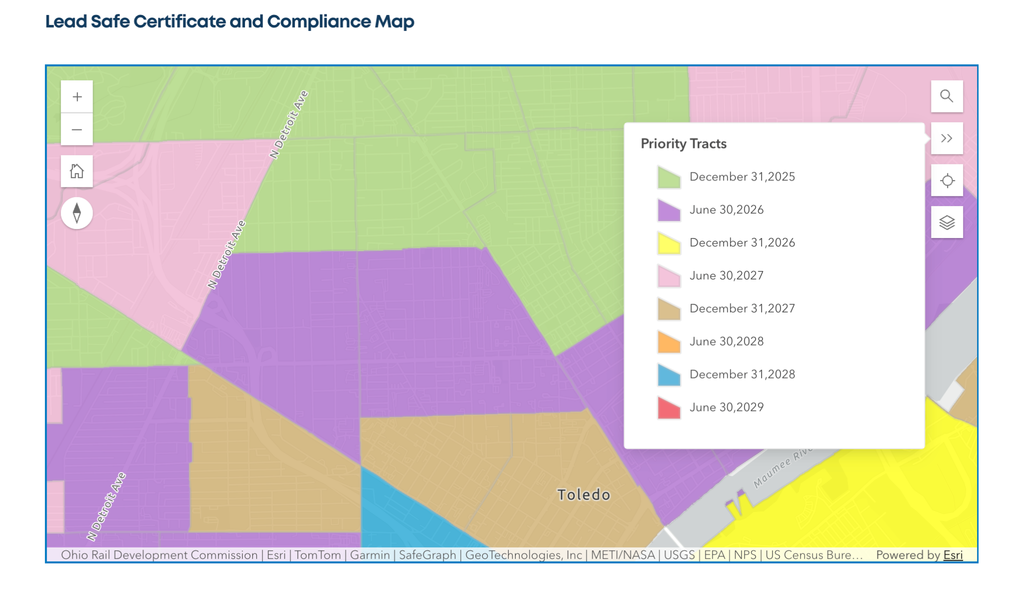
The first part of this structure dictated some properties within the Old West End come into compliance with lead certification by Dec. 31, 2025, but the bulk of the properties being sold now were part of the area in phase two, deemed to come into compliance at the end of June 2026.
“The easiest thing you can do to get into lead compliance is to just remove your wood siding and put on vinyl. That’s the fastest, easiest way to do it, but you can’t do that in the Old West End, Westmoreland, Vistula districts,” said Mac Driscoll, Toledo City Council Member At-Large, during the agenda review before the passage of the lead ordinance in April 2025. “That’s against our code; the design guidelines are important [for historic districts].”
“To come into compliance would be challenging. What I would hate to see is housing units coming off-line,” he said, sharing reservations about how the ordinance might have an adverse affect on Toledo neighborhoods, specifically historical ones.
Monica Smith, the lead safe coordinator for the City of Toledo, estimated during the Toledo City Council agenda review that 85 percent of Toledo’s housing stock was built before 1978, and therefore originally painted with lead paint, and that the average cost to come into compliance per landlord would be around $12,000.
According to Smith’s data, there are 28,796 rental units in Toledo that need to come into lead compliance, with several thousand coming into compliance every six months with each new phase of the ordinance.
“The areas that are priority, they have the highest number of children that tested to have elevated lead levels, and so those are those first-phase individuals,” she said. “On any given day, approximately 3,500 children in Lucas County have elevated lead levels.”
Furthermore, Smith emphasized that the majority of those children were within the City of Toledo.
The United States Code outlawed the use of lead paint in residences after the Consumer Product Safety Commission “…found that there is an unreasonable risk of lead poisoning in children associated with lead content of over 0.06 percent in paints and coatings to which children have access…”
A unanimous vote by Toledo City Council Members expressed the need to bring rental units into lead compliance, but Council Members George Sarantou (At-Large) and Adam Martinez (District 2) asked questions concerning funding options for landlords to come into compliance.
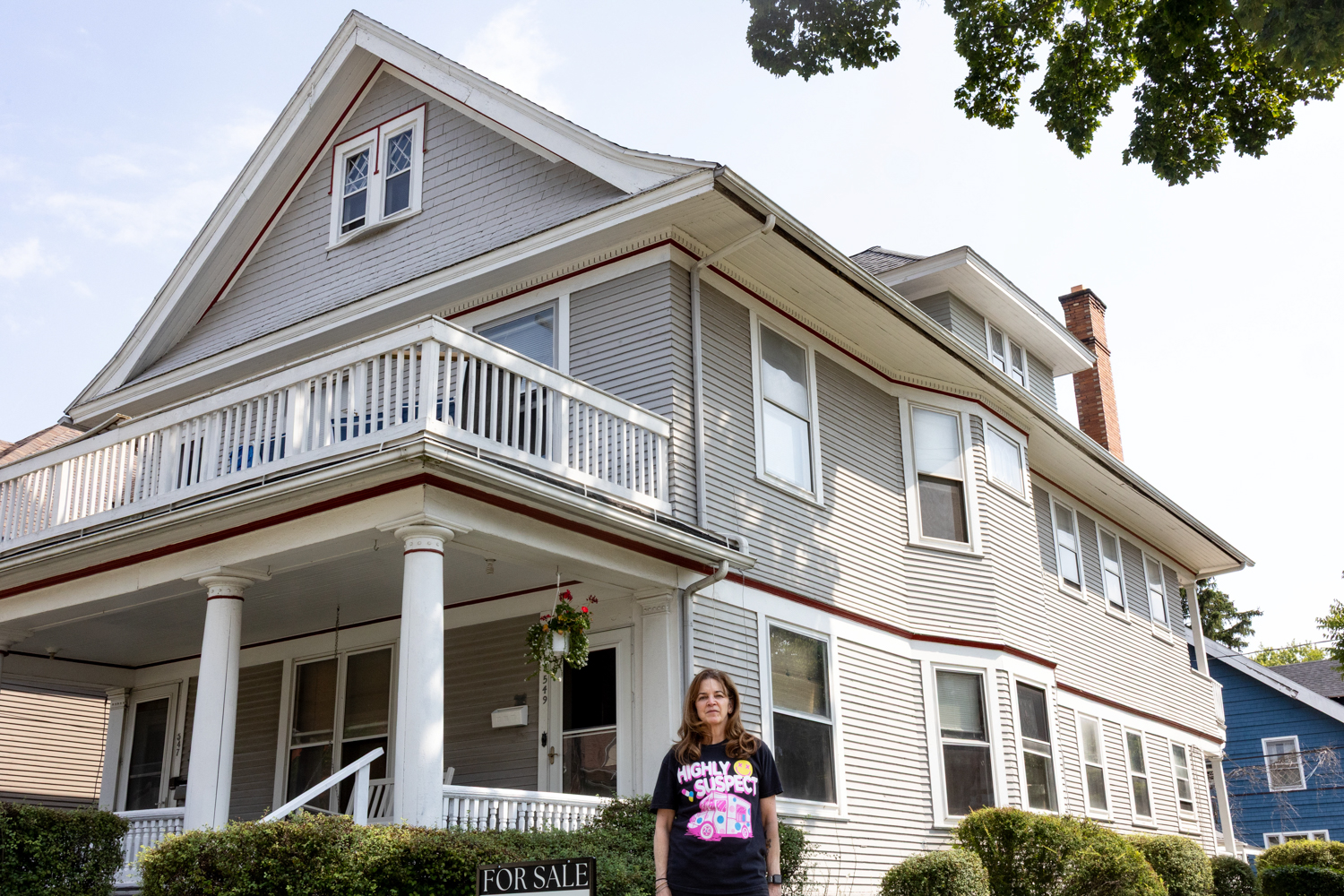
“It’s not going to be cheap, so we need a robust private sector grantsmanship to do this. We need a robust administrative and education structure to do the outreach and to do the enforcement. So we’re thinking about all of the different pieces to this,” said Rosalyn Clemens, the Chief of Housing and Neighborhood Sustainability for the City of Toledo.
“Up to $30,000 for lead-based paint hazard control,” is advertised on the city of Toledo’s website, with different stipulations for owner-occupants vs landlord/tenant applications.
Unfortunately, Finkel did not think he would qualify for grants from the government, and posted the following message to the Old West End Facebook page.
“After spending over 20K painting I failed my lead inspection with two dust wipes, one in the upper unit and one in the lower unit. I will paint and clean again because I am in too deep at this point but at the end of the 5 year certificate I am removing the two 3 bedroom 2 bathroom units as rentals and mothballing them for personal use since personal use does not require the inspection (I wish it did). Someday when I have the money to replace the windows (there are over 50 historic windows) I might rent it again,” he wrote.
When the Toledo Free Press spoke with Finkel he said, “It might actually have turned out to be 22 or 23 [$22,000 or $23,000 in costs] when all was said and done, but yes, it was tens of thousands of dollars to paint things.”
Fortunately, about a month after the Facebook post, Finkel re-tested and passed the lead certification for his rental property.
“But in any case, what I’m worried about is that every five years I’m going to spend $20,000 painting the place,” he said.
According to Finkel, the area he had the most trouble with were the windows in his rental property.
“All you have to do is operate a window once or twice, and it knocks lead dust back down into the trough.”
“It’s not like you can put really thick paint on the windows; they’ll become inoperable. They won’t work anymore,” Finkel said.
“The house will never be safe, unless I replace all the windows,” he said, and clarified that vinyl windows would not be an option in the historic district. “I have to do nice, historic windows.” He estimated he had about 50 windows in the home. “I’m going to spend $125,000 putting windows in a building that’s worth [$]175[K],” he said.
Even so, Finkel has received his certificate, and has been declared lead-safe for the next five years.
But as cited earlier, it may cause his rents to rise, and at the end of four years, he’ll have to reassess the cost of making a historic property rentable.
“Do I make money? The answer is no,” he said. “With that lead ordinance, I probably break even on the property.”
Along with the fiscal calculation comes another about enforcement, where Finkel said he’s seen properties right across from his with flaking paint. Admittedly, since Finkel failed his first attempt at a certification, he passed beyond the June deadline, and he’s unsure of how the courts will process homes in noncompliance.
“I want my property to be nice, and I want it to be safe for kids,” Finkel said. “Those are two things that are important to me, but you can’t ignore the economics of it. And it’s just overwhelming.”
Breaking bundles
A few weeks after the properties went on the market, Katie Bartlett got a call from her landlord.
“He just called me randomly and asked if Drew, my husband, and I would be interested in buying,” she said. Initially, Bartlett thought Miller was asking for an offer on the bundled properties, something she wasn’t interested in.
When asked why the properties were being sold in a bundle, Black offered two reasons for putting them on the market in that way.
“We did that so that the tenants are not bothered with people that are looky-loos or don’t have a true offer in mind.”
The other reason: It’s “a little bit easier for the seller.”
“If you have 14 properties under contract with 14 different people, that’s 14 inspections, that’s 14 appraisals, that’s 14 contracts, 14 closings, and it’s just a lot for any one person to try and keep track of.”
Luckily for Bartlett, Miller wasn’t married to the idea of selling all his properties in one go.
“He is willing to split the smaller properties, I think if the price was right, he probably would consider splitting the larger properties too,” Black said.
After a little while, Bartlett and her mother put together a plan to buy her mother’s duplex together.
“This works out perfectly,” Paula Bartlett said.
Unfortunately, with this arrangement, the tenant above Paula is forced into what Paula feared. “The upstairs neighbor, theirs [their lease] ends October 31. So they were told it wasn’t being renewed.”
Now, Bartlett and her mother have the property under contract, diffusing at least one worry for the community: that these historic homes would go to an out-of-town investor who would deliver a lesser degree of stewardship.
In reaction to concerns about out-of-town buyers, Black said, “I guess my suggestion would be, if someone from the neighborhood is that concerned about it, maybe they should put up their own money and buy them from him.”
And that’s what some of the residents of the Grenwick, a quadriplex owned by Randall, are attempting to do: buy the 20-bed, 8-bath, 12,975 square-foot-property priced at $680,000, but also bundled with another property.
“We are working on setting up a housing cooperative,” Kendzierski said. “We are working with folks who are already involved in some out in Bloomington, Indiana.”
Kendzierski said they were likely to form an LLC or a nonprofit, and then their group of tenants would pool their resources to buy the property collectively.
Individuals with varying degrees of buy-in to the idea have reached out to Kendzierski, and they said the group is still in the planning stages of the idea.
Black confirmed that the group had reached out to her, but hadn’t received an offer for any of the properties.