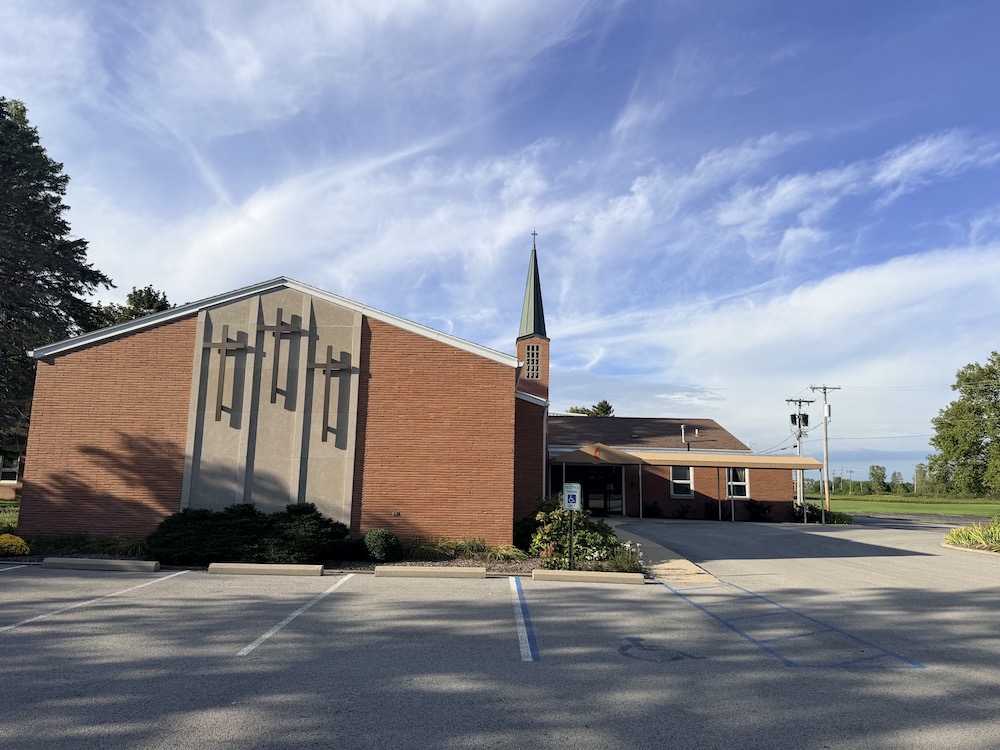
Hope United Methodist Church is asking Anthony Wayne-area residents to help imagine what its next chapter could look like – not only for the congregation, but for the wider community.
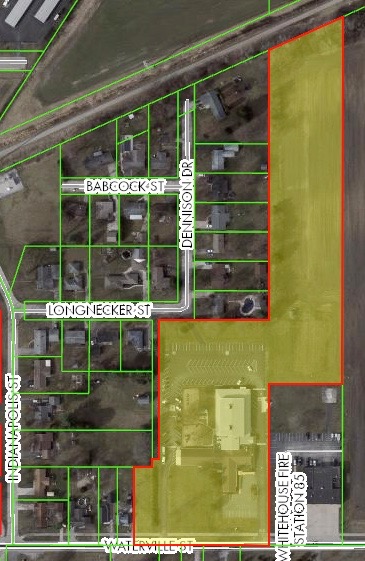
During an Oct. 8-10 Anthony Wayne Community Charrette, Hope will invite neighbors, civic leaders, nonprofit partners and local organizations to help identify needs and explore possibilities for the church’s existing campus and five acres of adjacent undeveloped land in Whitehouse.
“We want to do something new and good for the community,” said Pastor Warren Clifton, explaining that the charrette process was intentionally selected in order to get input from throughout the AW area.
A charrette is an intensive, collaborative planning process that brings together community members, organizations, leaders and design professionals to listen carefully, identify shared needs, generate practical ideas, and develop a vision for action, he said. The charrette will begin with listening: What does the Anthony Wayne community need? Which needs are already being met well? Where are the gaps? And what role, if any, could Hope’s campus play?
“We do not want to begin with a predetermined answer,” Clifton said. “It could involve space for older adults, support for food access, recreation, gathering or something we have not yet imagined. We want to listen, learn and have that conversation together.”
Holly Madill, PhD, the director of the National Charrette Institute from Michigan State University, works with many organizations, including the U.S. Navy. She’s always surprised at the ideas that come out of the process.
“There is something about bringing people together in this way that unleashes creativity and possibility to explore ideas we hadn’t thought of or ideas used in ways we hadn’t thought of,” said Madill, who will facilitate the charrette. The Buehrer Group will translate the input from the workshop into preliminary concepts and a planning framework.
The charrette begins with a Thursday, Oct. 8 community workshop, held from 6:30 to 8 p.m. at the church, 10610 Waterville St. in Whitehouse. The Buehrer Group will take ideas from the workshop and refine them into several alternatives, which will be presented during an open house on Friday, Oct. 9 from 7 to 8:30 p.m. in the church’s gymnasium. Participants will have an opportunity to review the concepts, respond and provide additional feedback. Further refinements will be presented during a review session on Saturday, Oct. 10 from 3 to 4:30 p.m. in the church’s sanctuary.
Those interested in participating do not need to be members of the church or have any design or planning experience.
“Their lived experiences are all the expertise that we need,” Clifton said.
Serving the community has been at the heart of Hope since it opened its campus in 1956, and the spaces have transformed to meet those needs, including children and families, recreation, service, fellowship, learning and community organizations. The charrette invites everyone to imagine what the community could be, then explore how Hope’s property, facilities, ministries and partnerships might contribute to that future, Clifton explained.
In the weeks leading up to the charrette, Madill has been having conversations with community leaders, to gain insight in how to structure the process. In the past month, Hope has also been paving the way for open conversation by hosting Julie Carter, director of faith formation and lay ministries for the Western Ohio Conference of the United Methodist Church, for Fear + Less Conversations.
“It’s all about the fears that stifle conversations, and how we engage in conversation with each other on a daily basis,” Carter said.
The five fears that get in the way of speaking opening and honestly including: fear of the unknown, fear of strangers, fear of appearing ignorant, fear of oppressive systems and fear of ‘plopping’ – of throwing an idea out that gets no response, she said.
To help participants get over those fears, Carter asks them to ask themselves hard questions, such as: Who am I? Who is my neighbor? Why am I here? And what is my legacy? She also gives out homework, like, “Go out in the community and talk to people you don’t usually talk to.”
In the six years that Carter has been leading these conversations, she’s found that many of her students have learned to stop and listen to what the other person is saying instead of immediately formulating an answer.
“It’s about being present in the conversation in the moment,” she said.
No matter what the outcome of the charrette process, Carter said she hopes Fear + Less and the community conversations held during the charrette days will foster relationships in a country where a loneliness epidemic seems to be growing. Clifton agrees.
“At Hope, we are undertaking this process because we want to discern how our church can serve the people and neighborhoods of the Anthony Wayne community more faithfully,” Clifton said. “That means listening especially for the needs of neighbors who may be isolated, grieving, caring for family members, facing financial pressure, experiencing food or housing insecurity, living with illness, or simply lacking a place to belong.”