TOLEDO — A statewide cell phone policy known as House Bill 250 is set to take effect in Ohio public schools K-12 no later than July. The law requires every public district to implement an official policy limiting student cell phone use during school hours.
While the bill mandates limitations, it does not propose a total ban. According to Division (D) of the legislation, districts are not required to prohibit all cell phone use entirely. The bill was sponsored by former Rep. Jessica Miranda (D-Forest Park), Rep. Tracy Richardson (R-Marysville), and Sen. Andrew Brenner (R-Delaware). The bill passed unanimously in both the Ohio Senate and House of Representatives.
Gov. Mike DeWine signed the bill in May 2024, though he has also expressed support for a more restrictive proposal, Senate Bill 158, sponsored by Sen. Jane Timken (R-Canton), which would prohibit all student cell phone use during the instructional day. Both pieces of legislation reference the Rehabilitation Act of 1973, which allows use of electronic devices for educational or health-related needs, including for students with IEPs or 504 plans.
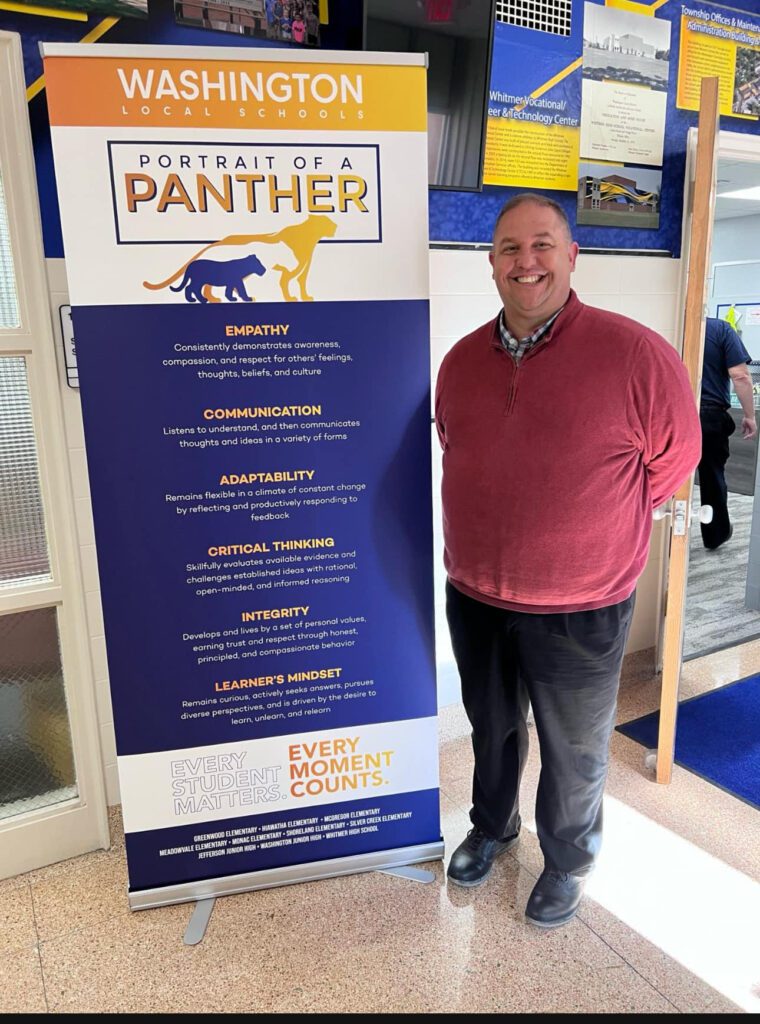
At Whitmer High School, principal Jerry Bell said the new law aligns with longstanding practices at the school.
“We certainly feel that it has benefited our students, not just academically but socially, as well,” Bell said. “We have seen students who were able to focus more and engage with their peers around them.”
He added that Whitmer’s current policy allows students to carry phones but keeps them “off and away” during class, which gives students the opportunity to learn how to be responsible with their cell phones.
“Removing them entirely, as Senate Bill 158 proposes, would decrease our opportunity to do that,” Bell said. “Even though phones are a distraction, I believe that with guidance, students can be responsible stewards of technology and also learn to prioritize their education.”
Mostafa Gamal, a 2022 Whitmer graduate, recalls the policy in place during his time at the school.
“I remember some classes where I had to put my phone away,” Gamal said, noting that whether or not phones should be allowed depends on the situation.
During his first year, Gamal used a translation app to support his English learning in class.
“90 percent of the teachers used to respect me for it,” he said. “If I say, ‘No, phones cannot be allowed,’ what about the international students, for example? How are they going to use Google Translate?”
Gamal expressed concerns over the stricter Senate bill, citing safety and communication in emergencies.
“There are so many points that you’re gonna have to have your phone with you at that moment,” he said. “I’m not gonna wait until the school calls my mom. No, I need to call my parents so they can do something about it.”
Parent Angela Mikolajczyk, whose child currently attends Whitmer, said the school’s current approach is reasonable.
“It’s not a horrible thing; it’s not like they aren’t allowed to bring them in the building,” Mikolajczyk said. “As an adult, when you are at work, you’re not on your phone. Kids can go through class without being on their phone, too.”
She added that banning cell phones entirely would be “a completely different story.”