TOLEDO – According to Dr. Jian-Ting Zhang and Dr. Imran Ali—esteemed medical researchers and professors at the University of Toledo—northwest Ohio is underserved in medical care. For a variety of health problems, patients in the Toledo area are struggling to get the medical answers that they need.
That’s why the University of Toledo medical team wanted to make a change, ultimately forming the Northwest Ohio Cancer Research Institute. Dr. Zhang—the director of the Northwest Ohio Research Institute—shares the variety of health problems that are plaguing the Toledo area.
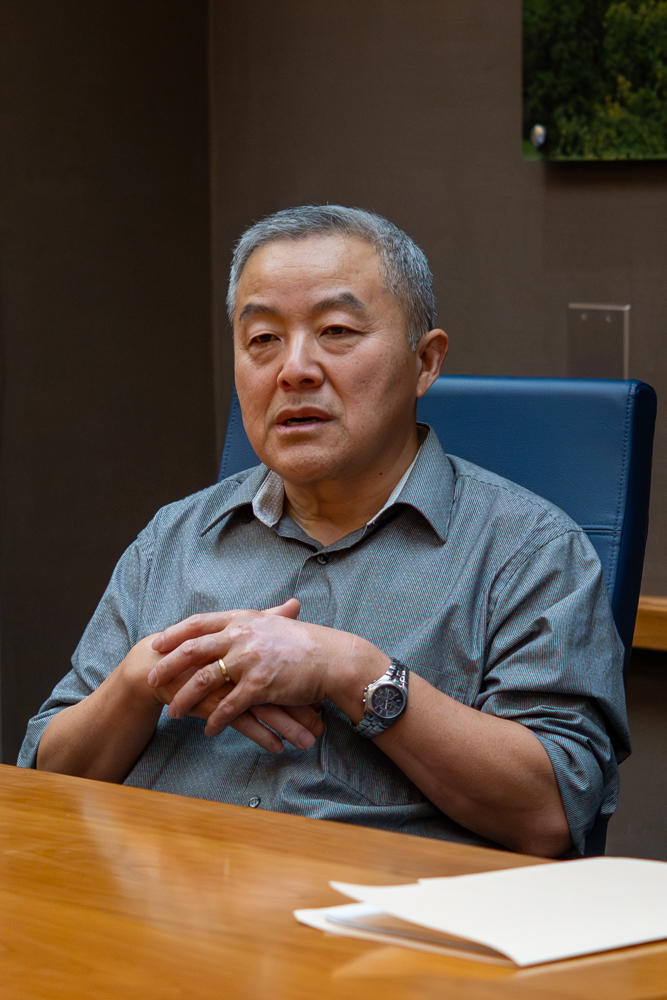
“Whether you look at cancer or you look at heart disease, people are not receiving the service that they need. We recently had the Lucas County Health Commissioner come and share his report with us, and some of those markers are well below the national average for outcomes.”
In light of this deficit in care, Dr. Zhang emphasizes the need for interdisciplinary perspectives when facilitating new medical research. With the program only being approved this past December, Dr. Zhang is working to further develop his previous work: drug resistance in the context of chemotherapy.
“In my previous work, we were able to discover another drug that targets the enzyme that resists breast cancer chemotherapy. So, I brought my research here and said, ‘If I can do it, anyone can.’”
The Northwest Ohio Cancer Research Institute was granted $13 million to distribute among multiple colleges at the University of Toledo. With these funds, the college of pharmacy, engineering, natural sciences, and mathematics (to name a few) will make Dr. Zhang’s breast cancer research more tangible for the Toledo area. Faculty, professors, staff, and medical students within the University of Toledo’s circle will all collaborate to bring this research to patients in the area.
Promedica Hospital is also contributing to the program’s beginnings. Dr. Zhang noted that multiple physicians are a part of the advisory board for the institute.
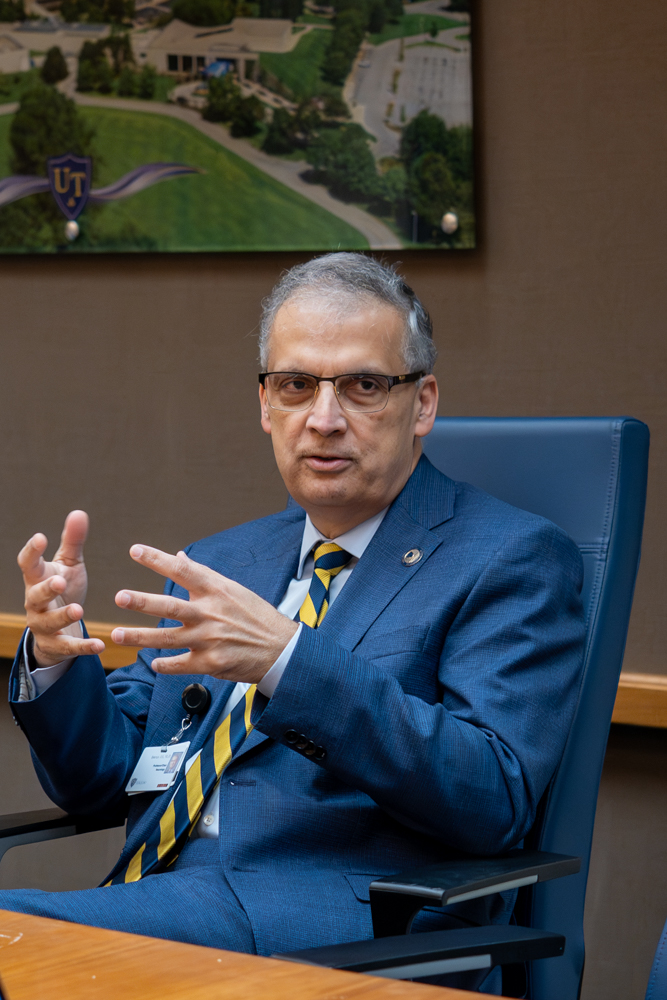
“We have three physicians working on our advisory board, and we have three other physicians taking part in the institute as well. They will help with our tangible, clinical work. We research; they see patients; They will be the hands-on part of the project.”
The hands-on labor, also known as “bench-to-bedside” work, fosters breakthroughs in drug prevention, diagnoses, and other medical treatments.
“Whatever we do as scientists in the laboratory (‘on the bench’) gets translated into bedside care.”
Medical research of this caliber takes time and resources, which is why both Dr. Ali and Dr. Zhang want to advocate for this institute on a communal level. Not only will there be clinical breakthroughs with this research over time, but the economy will also benefit.
“This is a work in progress,” Dr. Ali says. “We are not sure where we will be in a year; however, being an advocate for the university and the institute, as well as our researchers and clinical faculty, will help. This is a University for Toledo, not just a University of Toledo.”