Home Blog Page 64

National Great Lakes Museum ready to display new pilothouse

0
Anchoring the NMGL’s expansion project is the pilothouse of the St. Marys Challenger. The pilothouse was removed from the 108-year-old freighter after it was converted to a tug barge in 2013. (TFP Photo/Laurie Bertke)

TOLEDO— A major expansion to the National Museum of the Great Lakes (NMGL) is expected to boost attendance, expand its educational reach and increase visitor accessibility for the institution.

The museum’s $5.5 million Second Wave project also serves to advance a larger vision for the NMGL, and, by proximity, Toledo. When it opens on June 28, it’s expected to become the gathering place for Great Lakes conversations concerning everything from history to tourism and environmental issues to industry. 

“There are a million different conversations happening on the Great Lakes, and Toledo is very centrally located,” said Kate Fineske, NMGL executive director. “We know our space is only one small space, but we are the only National Museum of the Great Lakes, and why not convene the conversations that are happening?”

NMGL executive director Kate Fineske. (TFP Photo/Laurie Bertke)

While she estimated there are about 100 maritime museums on the Great Lakes, Fineske noted the NMGL is unique because it’s the only one covering the entire scope of U.S. and Canadian history revolving around all five Great Lakes.  

NMGL traces its origins to 1945, when the newly-formed Great Lakes Historical Society published the first issue of its Inland Seas journal. In 1953, the Society opened a museum in Vermilion, Ohio, which relocated to the east bank of the Maumee River in Toledo 11 years ago. 

The museum saw dramatic visitor growth following the move, and has welcomed 225,000 visitors from more than 30 countries and 50 states since 2014. When phase two of neighboring Glass City Metropark opened in June 2023, annual visitation jumped by 46 percent.  

“We continue to see that visitation rise,” Fineske added. She said the museum’s strategic plan set a goal to double annual visits from 30,000 to 60,000 people over the next five years.

Opening June 28, the National Museum of the Great Lake’s $5.5 million, 5000-square-foot Second Wave expansion includes the pilothouse of the St. Marys Challenger. (TFP Photo/Laurie Bertke)

The Second Wave expansion is expected to play a key role in advancing that goal. The 5,000-square-foot Larry and Karen Bettcher Wing includes the Great Lakes Community Education Center, expanded offices to accommodate a growing staff and permanent, and temporary exhibit galleries. The new wing is anchored by the pilothouse of the St. Marys Challenger, thought to be the longest operating bulk carrier in world history.

Carrie Sowden. (Courtesy Photo)

The St. Marys Challenger went into shipyard in October 2013 to be converted to a tug barge. In 2015, the NMGL acquired the pilothouse of the 108-year-old freighter.

Even though the museum had just opened in Toledo at the time, the pilothouse acquisition was “the seed” of knowing something would need to be done eventually to put it on display, according to Carrie Sowden, director of archaeology and research.

Offering a sweeping view of the river from its windows, the pilothouse was placed to give visitors the feeling of steering the ship. Unlike the Museum Tug Ohio and the Col. James M. Schoonmaker docked outside, the pilothouse will be open year round and is fully accessible by ramp from inside the new wing. It is being restored to represent a more contemporary time period than the Schoonmaker.

New exhibits, new stories

Sowden noted the Second Wave expansion allows the museum to tell stories they haven’t been able to share before. 

A new permanent exhibit, “Every Boat Tells Our Story,” features the Bob Sellers Model Collection and celebrates the craftsmanship and legacy of Great Lakes vessels.
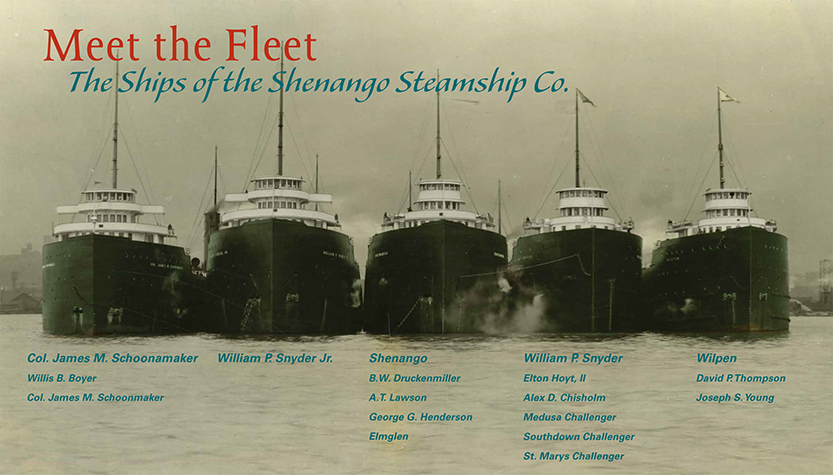
“What we’re trying to do is tell personal stories; tell stories that hopefully people can see themselves in, maybe see their ancestors in, see something and find a way to connect,” said Sowden. 

A 1,400-square-foot temporary gallery is meant to encourage regular return visits. Some exhibits will be locally curated while others are expected to be traveling exhibits. 

“Dark Waters: True Crime and Mystery on the Great Lakes” is the first temporary exhibit, curated by director emeritus Chris Gillcrist.

“We’re telling a bunch of different tales across the Great Lakes of unsolved mystery, murder and mayhem,” said Fineske. 

While she acknowledges not everyone is fully entrenched in maritime history, Fineske predicts the true crime twist will resonate with a wide audience. The exhibit explores mysteries, such as strange disappearances at sea, shipwrecks, like the Eastland Disaster on the Chicago River, and infamous crimes including the unsolved Torso Murders in Cleveland and the St. Valentine’s Day Massacre in Chicago. It will run through Halloween. 

Making history accessible for all

Fineske said the artifacts on the main exhibit floor only represent about 10 percent of the museum’s collection. The NMGL just finished moving everything to Toledo from Vermilion at the beginning of this year, aided by an $18,000 grant from the Ohio History Connection.

Fundraising for the Second Wave expansion kicked off at the end of 2020 with a million dollar match pledge from Larry and Karen Bettcher. Fineske said they met that target and also received $1.1 million in capital funds from the State of Ohio over three different budgets for the project. The Toledo-Lucas County Port Authority provided a grant of $25,000 and a loan of $125,000 to aid in construction of the concrete pad beneath the pilothouse. 

The National Museum of the Great Lakes is aiming to become the gathering place for Great Lakes conversations. (TFP Photo/Allyson Ritchey)

The museum does not receive any local, state or federal funds to cover its annual operating budget, which has steadily climbed from $300,000 in Vermilion to nearly $1.7 million this year. Along with endowments, donations and grants, NMGL relies heavily on earned revenue from memberships, admissions, rentals and museum store sales. “Everything gets put completely back into its mission,” said Fineske.

Lexi Quinlivan, marketing and graphic design specialist at the museum, helps prepare the exhibits. (TFP Photo/Allyson Ritchey)

While the museum charges admission to sustain its operations, it also offers free community days throughout the year and participates in Museums for All, a program that allows people receiving food assistance to gain free or reduced museum admission.

“We work really hard to make sure everyone has access to the space,” said Fineske.

“Education is at the core of everything we do here,” she added. “It’s really important in order to ensure the sustainability of the museum that we’re engaging the next generation of Great Lakes history enthusiasts.”

Saturday, June 28, from 10 a.m. - 5 p.m. is the public grand opening of the Second Wave expansion at the National Museum of the Great Lakes. Experience the new Larry & Karen Bettcher Wing and get an inside look at the new Alex & Marilyn Cook Leadership Center.
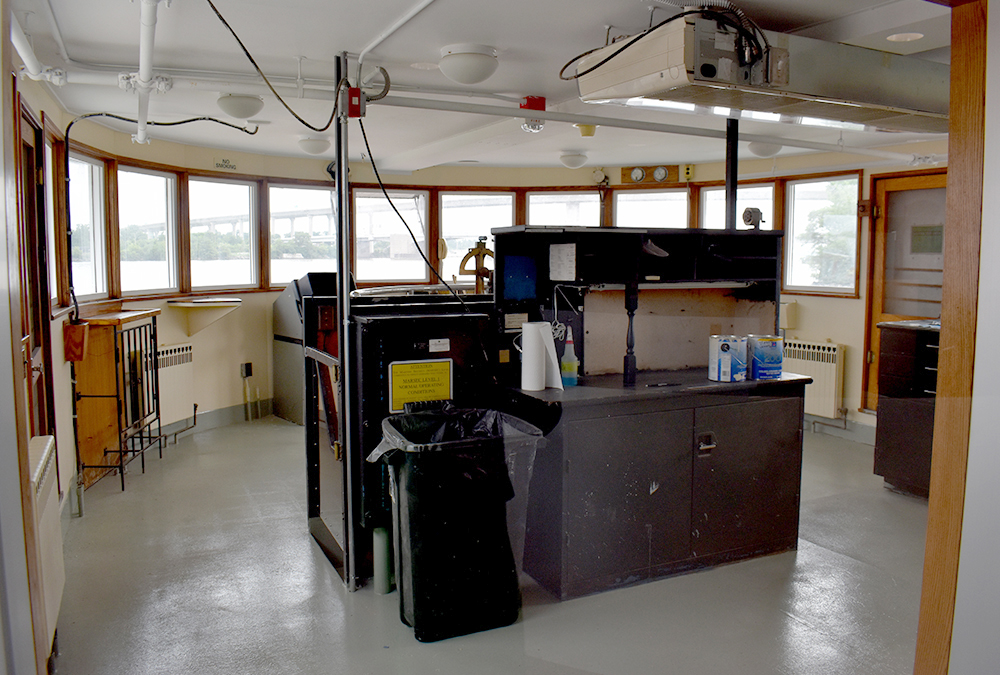
The St. Marys Challenger pilothouse. (TFP Photo/Allyson Ritchey)

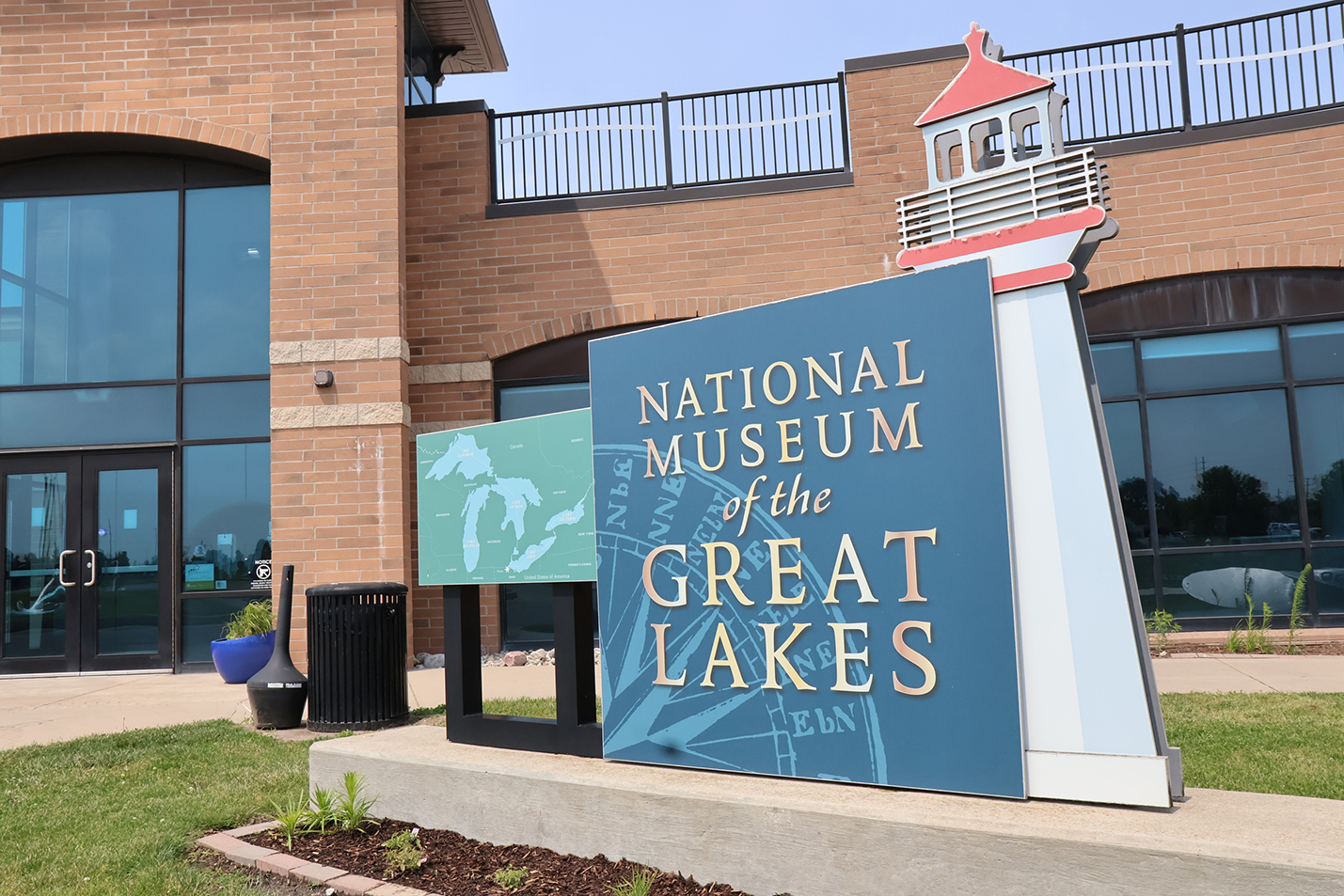
The National Museum of the Great Lakes moved to Toledo from Vermilion, Ohio, in 2024. (TFP Photo/Laurie Bertke)

The Col. James M. Schoonmaker is open for tours May to October. (TFP Photo/Allyson Ritchey)

Jerry King: Ai Humanoid

0

Sylvania’s Main St. in Phase 1

0
J&G Pizza Palace. (TFP Photo/Steven Bieber)

How surrounding businesses are faring with construction

SYLVANIA – Main Street in Sylvania is typically peaceful, with visitors strolling up and down to enjoy the restaurants, retail establishments and community events.

But if you’ve visited recently, you may have noticed that the street is currently in a state of upheaval due to construction. Main Street is being revitalized for the first time in over 40 years.

According to the City of Sylvania website, talks for this project began in August 2022 during a stakeholder meeting for the Downtown Transportation Improvements Project. The revitalization is expected to last until 2026. Construction is still in phase one, the longest phase, which will see most of the construction work. 

Ground breaking ceremony taken on Feb. 12. From left: Joe Shaw and Tiffany Bosch; Tristen Turkopp and Samantha Ayres; Darrell Wachowiak; Jennifer Cummins; Todd Woodard; Shawn Murphy; Mayor Mark Frye; Patrick Richardson; Marcus Hansen; Brian McCann; Eric Barnes; Ben Malczeewski; Suzy Crawford; and Gail Stansley.(Courtesy Photo)

Phase one, expected to be completed this fall, is organized into four stages. A newsletter provided by the Sylvania Area Chamber of Commerce broke down the four stages.

Stage 1: Focuses on Main Street (East Side) construction from Maplewood Avenue to Erie Street, and Maplewood Avenue (North Side) construction from Main Street to Summit Street.

Timeline: Feb. 20 until spring 2025

Work Being Done:

  • Removal of the traffic signal at the intersection of Main Street and Maplewood Avenue
  • Installation of stop signs
  • Pavement and curb excavation for the installation of a new waterline
  • Sidewalk removal for new water service connections
  • Sanitary Sewer Improvements
  • Preliminary driving paving course

 Stage 2:  Focuses on Main Street (East Side) from Monroe Street to Maplewood Avenue

Estimated Timeline: Spring 2025 to mid-summer 2025

Work Being Done:

  • Pavement and curb excavation for installation of new waterline
  • Sanitary sewer improvements
  • Installation of a new storm sewer
  • Sidewalk removal for new water service connections and sewer connections
  • Installation of new sidewalk, curb, pavers, planters and lighting
  • Preliminary drivable paving course

Stage 3: Focuses on Main Street (West Lane) construction from Monroe Street to Maplewood Avenue

Estimated Timeline: Mid-summer 2025 until fall 2025

Work Being Done:

  • Removal and installation of sidewalk pavement, curb, pavers, planters, and lighting

Stage 4: Focuses on Main Street from Monroe Street to Maplewood Avenue, and Maplewood Avenue from Main Street to Summit Street

Estimated Timeline: Fall 2025 – fall 2025

Work Being Done:

  • Final paving course
  • Final pavement striping
  • Final signage installation
  • Final landscaping

Phase one will also see the burial of power lines; phase two will include all of Main Street between Maplewood Avenue and Erie Street and all of Maplewood Avenue between Main Street and Summit Street.

Most of the work done in 2026 will be a beautification process, including the addition of more seating areas and making the street more walkable for the city’s elderly community. 

Inevitably, an operation of this magnitude will have an impact on businesses. Cars can only drive northbound on the westside lane. Walking on the sidewalk is less enjoyable due to construction dust and noise. Some businesses have seen a decline in customers as a result.  

Natalie McDonald. (TFP Photo/Steven Bieber)

“We’ve heard both positive comments and some hardships as well,” explained Natalie McDonald, marketing manager at Sylvania Chamber of Commerce. She said businesses have been more positive about the process than expected. 

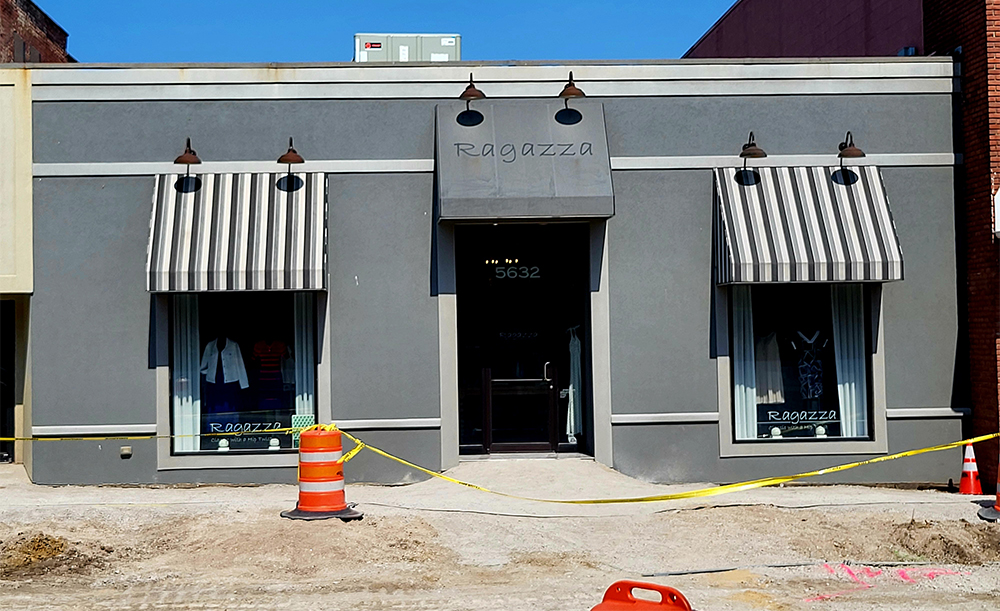
She also said that some businesses have worked together to overcome these setbacks. The examples she gave were Beautiful Blooms working with Upside Brewing, and Ragazza holding a Sip & Strut Through the Dust event at Inside the Five’s outdoor patio. 

The chamber of Commerce serves as the point of contact when businesses have questions or concerns about the construction. McDonald says she always does her best to handle those concerns. 

“I might not know the answer to what’s going on in a certain place at a certain time, but I know who to ask and I know who to get that contact information, and then the city reaches out within that day.”

Natalie McDonald

She said the Commerce tells them, “I hear you. Let me address this with the people who are in charge of this construction project.”

She also advises that “if you have an event or you have something, share it with us. We’ll share it with the community because we have a reach of over 13,000 just on our Facebook; we want to share with the community and get that out there.”

To keep citizens informed, the Sylvania Chamber website has a page titled Sylvania Strong. Businesses receive a weekly newsletter, The Road Ahead, while visitors can sign up for Path to Progress, a biweekly newsletter. They also post regularly on social media.

William Sanford, director of Economic Development, said that the downtown Sylvania Main Street construction project costs $4.4 million. The city is using approximately $1.5 million from the American Recovery Rescue Plan Funding and the balance from funds in their water and sewer accounts, Ohio Public Works Commission funds and the City’s capital improvement fund.

Businesses weigh in

J & G Pizza Palace has served Italian and Greek Food in Downtown Sylvania for over 50 years. It has been run by the Dallas family since 1979. 

Mark Dallas, owner of J&G’s. (TFP Photo/Steven Bieber)

Owner Mark Dallas said he has noticed a decline in revenue since construction started. Though he did not have exact figures available, he noted the restaurant is not as busy as it should be, as the street is more difficult to navigate and the parking lot is more difficult to access. 

“I think a lot of older people have difficulty with navigating to get in; everything’s open, but some people, you know, the older people, struggle sometimes,” he said.

Dallas said business was much worse when construction first began, but credits the city for adapting. The city originally had signs that led people to believe the street was closed, but that changed quickly. He said the street was a ghost town before local groups had the city change the signs. 

Dallas says it is an inconvenience now, but looks forward to the finished product.

“It may cause a little discomfort now, but when it’s all finished, it’s going to be nice, it’s going to be exciting, people are really going to like it. There’s going to be no curbs.”

He continued, “With all the functions down here, there’s going to be extra seating out here, so it’s just that you’ve got to go through the pain now…I believe we’ll make it up with people coming down to enjoy down here a little bit.”

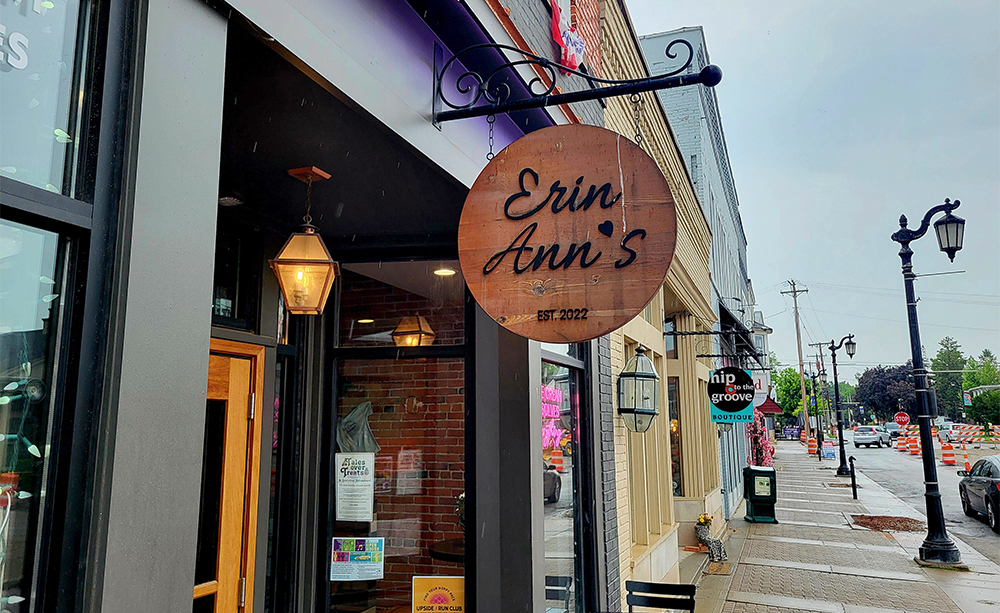
Erin Ann’s. (TFP Photo/Steven Bieber)

Erin Ann’s is a much newer business on the west side of Main Street. Founded in 2022, the shop features gluten and dairy-free ice cream, smoothies and more.

Scott Stampflmeier owns the store, and said business has not been affected by the construction. In fact, sales are up compared to last year. He acknowledged that this may change once construction moves to the west side. 

Scott Stampflmeier. (TFP Photo/Steven Bieber)

Stampflmeier said he interacts with chamber members regularly in the parking lot, and his wife, Erin Stampflmeier, receives emails from them. Like Dallas, he believes business will improve once construction is finished.

“I think it’s going to change a lot because right now people see us better with all the stuff that’s [been] taken down. There were a lot of trees and everything and it actually kind of blocked the view. A lot of people didn’t even know we’re here. They see us now.”

McDonald believes the construction will have a positive impact on the community

“I think it will really bring the community together, and I know that we’ve tried our best to make this an outward community project,” she said. “They already have Redbird First Fridays downtown, and I just think it’s gonna amplify those events.”

Ragazza. (TFP Photo/Steven Bieber)

Lucas County launches TickTracker

0
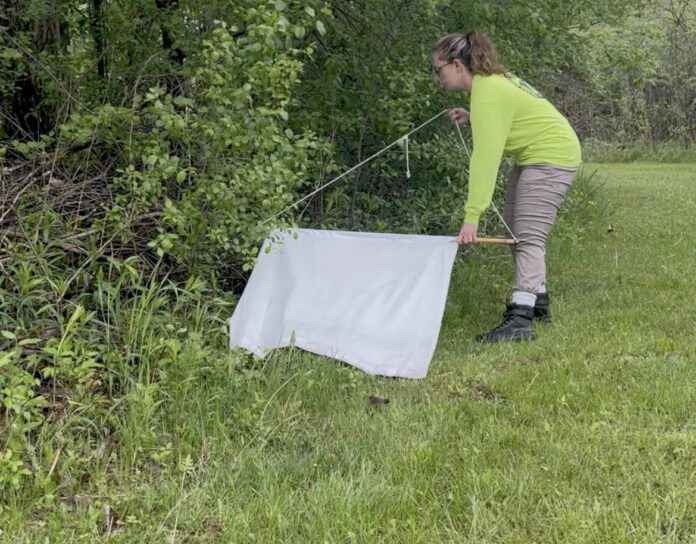
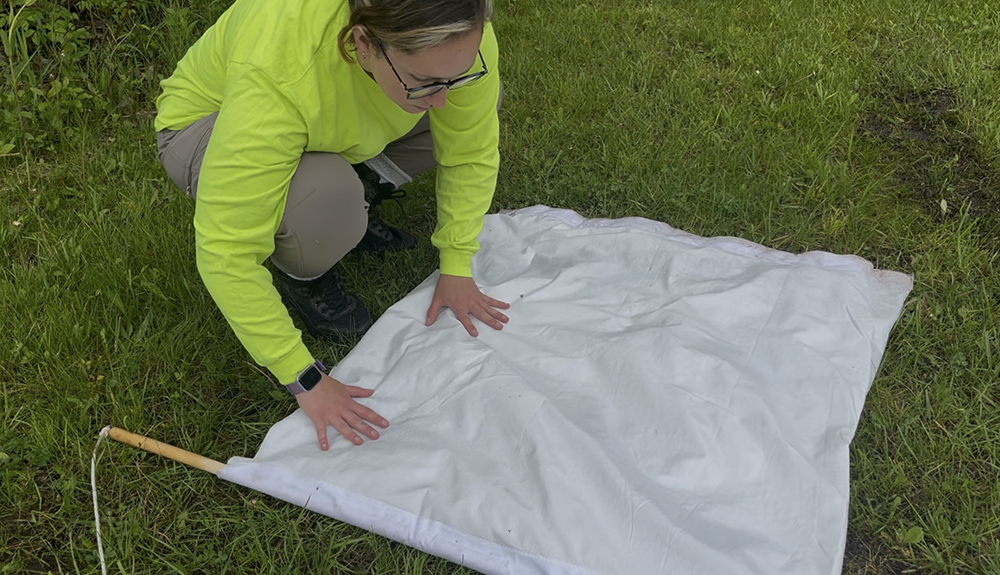
Hannah Alanis conducts tick drags in various outdoor recreational acres throughout Lucas County. (Courtesy Photo/Hannah Alanis)

Field researchers, local residents help monitor local tick species

LUCAS COUNTY — Though they’re only about the size of a poppy seed, ticks can cause weeks, months or even years of illness, and they are once again on the move in Northwest Ohio as spring turns to summer.

While the number of Lyme Disease cases continues to climb year after year in Ohio and nationwide, Lucas County health officials said they are still seeing relatively low cases.

But with warm weather, the risk is still far from zero. Local agencies are ramping up efforts to track, test and teach prevention, and residents are encouraged to take precautions now, before tick season reaches its summer peak.

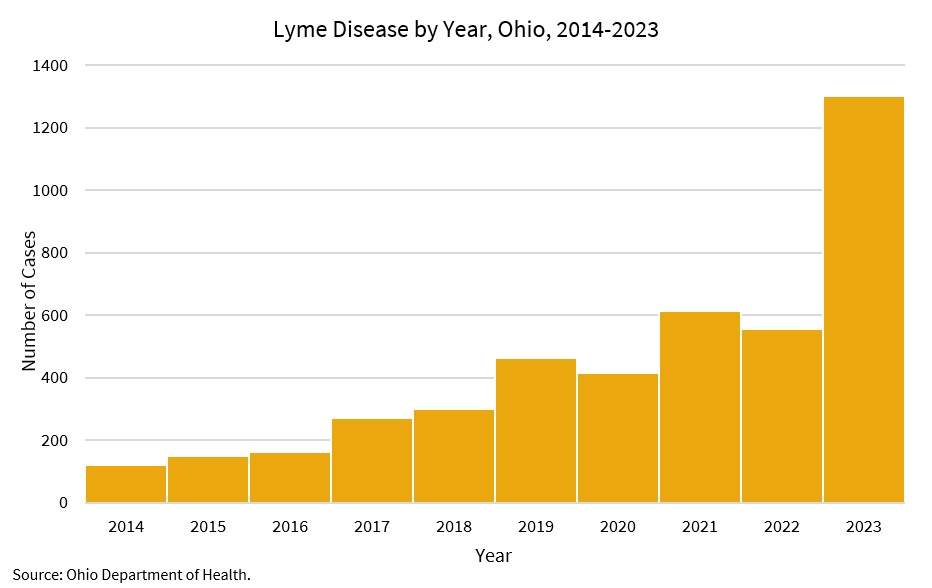
Cases of Lyme disease, an infection transmitted through the bite of infected ticks, have increased steadily across Ohio over the past decade, jumping from fewer than 200 in 2014 to more than 1,300 in 2023, according to the Ohio Department of Health. But while the state as a whole sees a steady climb, Lucas County has reported fewer than 10 confirmed cases per year for the past five years, according to Maria Bibish, an epidemiologist with the Toledo-Lucas County Health Department.

As an epidemiologist, Bibish does surveillance for infectious diseases. Her job is to track and monitor these diseases by following up on cases once they are confirmed. This includes when and where the individual may have been exposed, what symptoms they have, whether they’ve traveled and what treatment they’re receiving.

She clarified that the health department does not test ticks or diagnose illness, but they follow up on confirmed cases to help track the spread and educate the community.

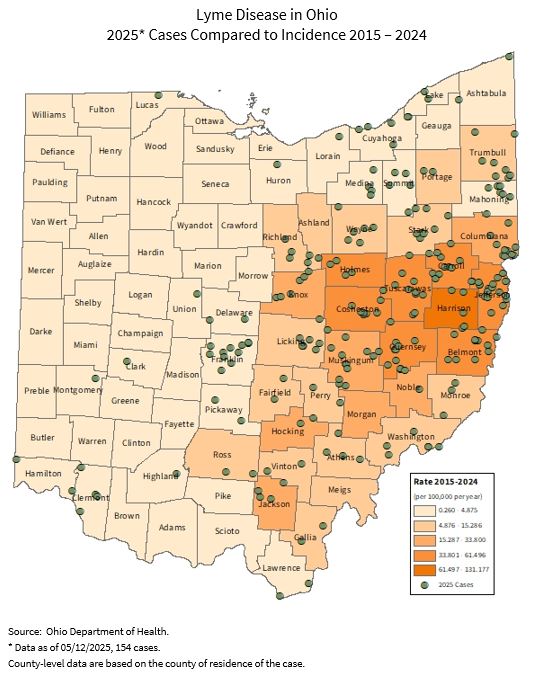
Bibish cautioned against complacency. “Just because a case is reported here doesn’t mean it was acquired here,” she said, referencing the Ohio Department of Health Lyme Disease in Ohio map. “That means they are a resident of those areas, so you see here in Lucas County? Maybe they got bitten by the tick in a different state.” 

That’s where the Toledo Area Sanitary District comes in. In March 2025, TASD launched the Lucas County TickTracker program—an initiative designed to monitor local tick species and test them for disease, something that had never been done systematically in Northwest Ohio before.

TickTracker aims to build a long-overdue baseline of tick activity in the region. “Because of the rise in tick populations and tick-borne diseases in Ohio, the Toledo Area Sanitary District has begun actively monitoring tick species in Lucas County through forms of active and passive surveillance,” said Hannah Alanis, tick program coordinator at the Toledo Area Sanitary District. 

Alanis inspects the fabric for any ticks that were picked up by the drag cloth. (Courtesy Hannah Alanis)

Using field methods, like dragging white cloths through brush to collect ticks and accepting tick samples from residents, TASD has already begun to identify trends. In just the first few months of the program, the team has tested 224 American dog ticks—none of which tested positive for disease—and 42 blacklegged ticks, also known as deer ticks. Of those, nine tested positive for the bacteria that causes Lyme disease.

According to TASD, deer ticks are becoming more prevalent in this area, commonly living in leaf litter where they will then emerge and climb onto nearby brush to find a host. Deer ticks can also be found along woodlines, forested areas and trail edges in wooded environments, Alanis noted. 

The TickTracker program isn’t limited to field researchers. Local residents are playing an important role in helping the Toledo Area Sanitary District better understand tick activity across Lucas County. TASD encourages anyone who finds a tick on themselves, their child or a pet to submit the specimen for identification and potential testing.

To participate, residents can submit found ticks online at toledomosquito.org/ticks. If you want to submit it for testing, place the tick in a sealed bag or clean pill bottle, label it with the date and location it was found, and either drop it off at TASD headquarters or request a pickup. 

While testing results are not intended for medical use, each submission helps fill in critical gaps in regional data. “People in the community have been very receptive to the program,” Alanis said. “Most folks have had their own experience with ticks, on themselves, their children or pets, so they’re enthusiastic about contributing to the research.”

TASD also uses public data to pinpoint areas with high tick activity and identify potential changes in species distribution over time.

This map shows reported Lyme disease cases across Ohio counties as of May 12, 2025. The darker the shade, the higher the incidence compared to the 2015-2024 average. As of this date, 154 cases have been reported statewide. (Source: Ohio Department of Health)

While tick testing and tracking is critical for research, prevention remains the most effective defense against tick-borne illness. That’s why the Toledo-Lucas County Health Department is ramping up public outreach, especially as more residents head outdoors.

“Summer is coming. Some people, they just have to be really careful when they go hiking or walking,” Bibish said. 

The Toledo-Lucas County Health Department’s advises the following precautions: 

  • Avoid tall grass and stick to the center of trails, especially in wooded or brushy areas. 
  • Wear light-colored, long-sleeve clothing with pants tucked into socks to make it harder for ticks to latch on and easier to spot them if they do. 
  • Use EPA-registered insect repellents, and shower within two hours of being outdoors to help wash off any unattached ticks.

Tick checks are also critical. “Check behind your ears, your belly button, your knees, your waist, also your children,” Bibish said. “And if you have any pets, like dogs, before bringing them inside, also check their coats, because they can have ticks.”

Tick prevention is just as important for pets. Ticks can transmit diseases to both animals and humans, and pets that carry ticks indoors increase the risk of infection for the whole household, according to Lindsay Johnson, veterinary operations manager at West Toledo Animal Hospital.

Veterinarians recommend daily tick checks on pets, especially after outdoor activity. If you find a tick, remove it promptly using fine-tipped tweezers and steady pressure. Be sure to remove the head. “A lot of times, not all of the head is removed,” Johnson said. For furry friends with darker or thicker hair, individuals may have to feel for little bumps where the ticks may not be visible.

Many clinics recommend year-round tick prevention products, such as Credelio or Quattro. It is also important to consult a veterinarian to determine the best strategy for your pet, especially in higher-risk areas, like wooded trails or tall grass.

“Doesn’t matter the breed or age,” Johnson said. “It’s an environmental risk.” 

Symptoms of tick-borne illness in pets can be delayed and hard to detect. Pet owners should watch for shifting leg lameness, swelling to the joints, anemia, nausea, vomiting and diarrhea. “They can become deadly if left untreated,” Johnson said.

“The number one thing we want people to understand,” Johnson warned, “is that tick-borne illness is a zoonotic disease, meaning it can be passed onto humans from the tick brought in by the dog or cat.”

For more information on tick prevention or to submit a tick, visit toledomosquito.org/ticks.

Donation bins: Charity or profit?

0

TOLEDO — Cons, confusion and—in one case—connections to a cult are among the reasons Toledo-area charities say they want a crackdown on donation bins that siphon money away from their missions.

Goodwill Industries of Northwest Ohio, a nonprofit 501c3 organization, is leading the charge, concerned that for-profit companies are using donation-style bins that most people associate with local charities to mislead well-intentioned people.

“It’s unfortunate because they think they’re helping people here and sometimes they’re not,” Goodwill vice president Tim Kravolic said. He oversees the organization’s thrift shop operation in Toledo.

It is on Goodwill’s radar nationwide as the number of look-alike boxes grows, Kravolic said.

This year, Ohio began requiring that collection bins include contact information for the organization benefitting from donations, as well as the bin’s owner if that bin is owned by a separate company on behalf of that organization. That company must also register with the Ohio attorney general’s office.

But Ohio’s law does not require “charitable organization” to be a registered, tax-exempt 501(c)(3), as long as its purpose is related to doing some kind of good, with examples like educational, public health and environmental conservation.

In a parking lot along Alexis Road, three bright blue bins advertise a “clothing and shoes collection drop bin” above spray-painted graffiti. The front of the bins encourages people to recycle with a list of items accepted here. 

At the very bottom in the smallest of all the text, “Green Recycling of Michigan is not a 501(c)(3) organization.”

“We’re keeping things from going to landfills. We’re just a recycling company,” said Ali Moussa, operations director for Green Recycling. Including those two in West Toledo, the Detroit-based company operates more than one thousand bins.

The company sends these textiles overseas to “third-world countries,” Moussa said. It rents the space from property owners, marketing it as a “turn-key” funding source for nonprofits with parking lot space to spare. 

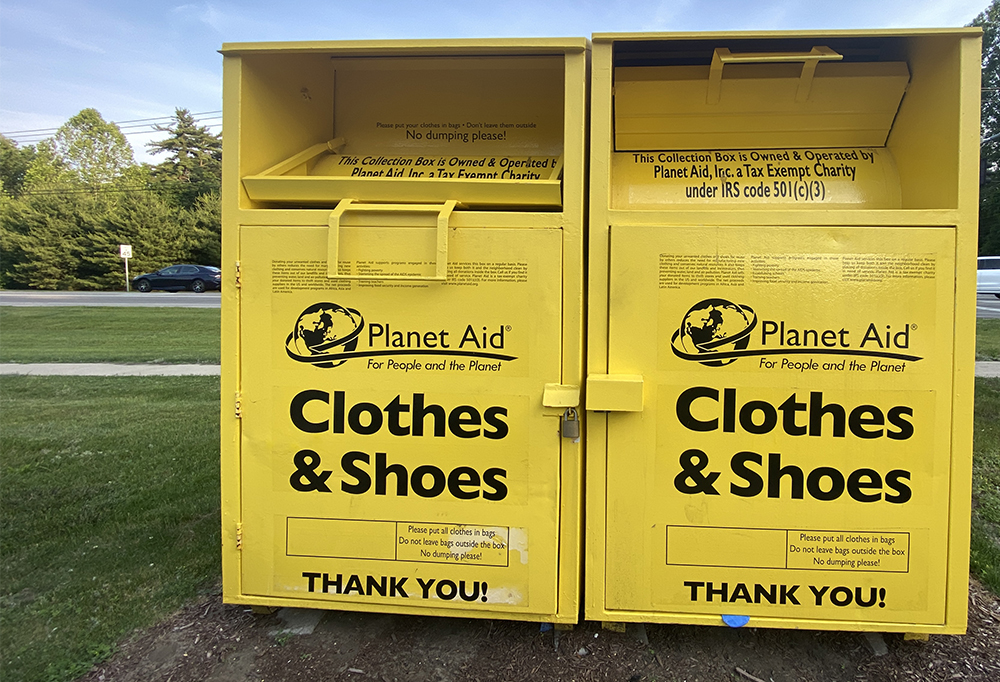
Planet Aid bins on King Rd. and West Bancroft St. in Toledo. (TFP Photo/Lori King)

While absent from the West Toledo bins, the company’s website shows bins marked “help our community,” though it suggests the rent—not the clothing and shoes—stay local.

That kind of ambiguity—or worse, intentional deception—industry-wide hurts the community, Kralovic said.

“People come up to me on a regular basis and they’ll say, ‘Hey, I took some clothes and dropped them off at one of your Goodwill bins,’” Kravolic said. But when he asks the bin’s location, he often realizes it was not one of theirs.

Jim Peniston is the store committee chairman for the St. Vincent de Paul Society in Toledo. When they found their new location on Airport Highway, one of the first things he did was ask the property owner to remove other bins from the parking lot.

“Unless I see a charity name on it, they’re being run by for-profit companies that are taking those materials and turning it into profit and putting that in their pocket,” Peniston said.

“I know what I could do with that stuff” if people donated it to St. Vincent de Paul instead, Peniston said. “That’s upsetting to me.”

Kravolic and others at Goodwill shared their concerns with some Toledo City Council members.

Initially, the discussion focused on possible legislation—but legislation already exists, driven by illegal dumping concerns a decade ago. Toledo law requires bin owners to register with the city, and, unlike the state law, they are required to be a nonprofit corporation.

“I think it is an enforcement issue,” council member At-Large George Sarantou said. “So, like anything, you’ve got to have the personnel, and you’ve got to have the time to go around and enforce that.”

“Anything legal, or asking a property owner to put a bin there, or a permit process, I go through,” Moussa said of his recycling company and its Toledo bins. 

“[The property owners] get their rent from me. I have agreements. I’ll get a permit from the city,” he said.

The City of Sylvania and the Village of Whitehouse have laws similar to Toledo’s, including the registration requirement. The City of Rossford bans them.

Kralovic said Goodwill would support a full ban on any donation bins in Toledo—even theirs. 

Sarantou said enforcement is the right step and he does not see the need for a full ban. Legal precedent could nix the idea.

Planet Aid, a large bin-based charity headquartered in Maryland, sued the City of St. Johns, Mich. over its ban in 2014. Ultimately, the case was settled when the 6th Circuit U.S. Court of Appeals determined the company was “likely to succeed” in proving the ban violated its First Amendment right of protected speech.

Despite being registered as a nonprofit, Planet Aid is not what it seems, Kralovic said. 

The organization, which has 19 locations in Toledo and one in Temperance, Mich., also identifies itself as a textile recycling company, part of the lucrative overseas clothing trade.

The proceeds fund “locally led community development programs” around the world, according to its website.

But CharityWatch, recognized as the most in-depth charity watchdog group, gives Planet Aid as an “F” after its finding misleading accounting led the charity to claim to the IRS that 74 percent of its expenses were used for those programs when it was actually only 7 percent.

An investigative report by the Center for Investigative Reporting found the charity is deceiving people into believing it is more charitable than it actually is. And in a bizarre turn, its parent organization is considered a cult—and is tied to “one of the most wanted men in Denmark,” Danish media reported.

Mogens Amdi Peterson founded the Teachers Group, the international umbrella organization that Planet Aid – and slews of other charities—operate under.  A Danish court found him guilty of tax evasion and embezzlement in 2013—even though they had no idea where he was.

Former employees have told reporters they had to trade freedom, part of their own paycheck and contact with their friends and family to be part of the group.

When investigators tracked Peterson down in Mexico, even Denmark’s prime minister asked Mexican authorities to extradite. They refused

Now in his late 70s – he and other organization leadership are reportedly free and clear in a multi-million dollar, seaside compound.

Planet Aid did not respond to multiple requests for comment.

“At the best, it’s not transparent where their funds are going,” Kralovic said. “Yes, they are very much a for-profit trying to pretend to be a nonprofit and not much has changed” since that report came out in 2016, he noted.

Goodwill participates in that overseas trade, referring to it as “salvage.” If clothing won’t sell here, it’s shipped there. He said the difference is that Goodwill accounts for what happens to it when it gets there, while other companies may simply be shipping clothes to a landfill thousands of miles away.

Plus, local employees are paid to prepare Goodwill’s shipments, providing jobs to people who may otherwise be unemployed or dependent on others, Kralovic said.

Moussa emphasized that his Green Recycling provides jobs, too.

“So the 50 workers that I have—I just tell them to go home?” he said. “Do I shut my business down so Goodwill can be happy?”

“People who want to recycle or donate—people know how to read, right?” Moussa said. “People know what they’re doing when they give this stuff away, right?”

Kralovic wants people to “know who you’re donating to and understand the mission of whatever organization that you decide to donate.”

“I know why they’re trying to chase the dollar, but I can sleep well at night,” he said.

Local church hosts free lead testing

0
Vibe Carswell, 7, doesn’t shy away from watching every step of the finger-poke lead testing process as lead case manager Gloria Smith explains the next step. (TFP Photo/Barrett Dorner)

TOLEDO – Free lead testing events – like the one held at the Indiana Avenue Missionary Baptist Church June 13 – aims to make it convenient and fun to address the serious health risk, organizers said.

Bounce houses, a food truck and family-oriented vendors help make it feel more like a fun day out as opposed to a trip to the doctor’s office.

Toledoan Arselia Ruiz brought her two children, Aaryn, 4, and Alesanera, 7, to the testing site at the church. They already get tests at their annual pediatrician appointment, but she’s worried about the time in between.

“I’m worried they’ll get a hold of it,” she said. The home she rents was built before 1978, meaning lead paint was likely used. She’s nervous her kids will find peeling paint or chips. 

“I have to watch my kids like a hawk,” she said.

“African Americans and the Latino community” are falling through the cracks in the lead crisis, associate preacher C. Jerome Graham said, adding that it comes down to either a lack of awareness or a lack of availability. Their church saw the need to do something different to address those gaps.

According to the Toledo Lucas County Health Department (TLCHD), lead exposure can affect nearly every system in the body. Because lead exposure often occurs with no obvious symptoms, it frequently goes unrecognized.

Lead case manager Gloria Smith administers a finger-post test for lead. (TFP Photo/Barrett Dorner)

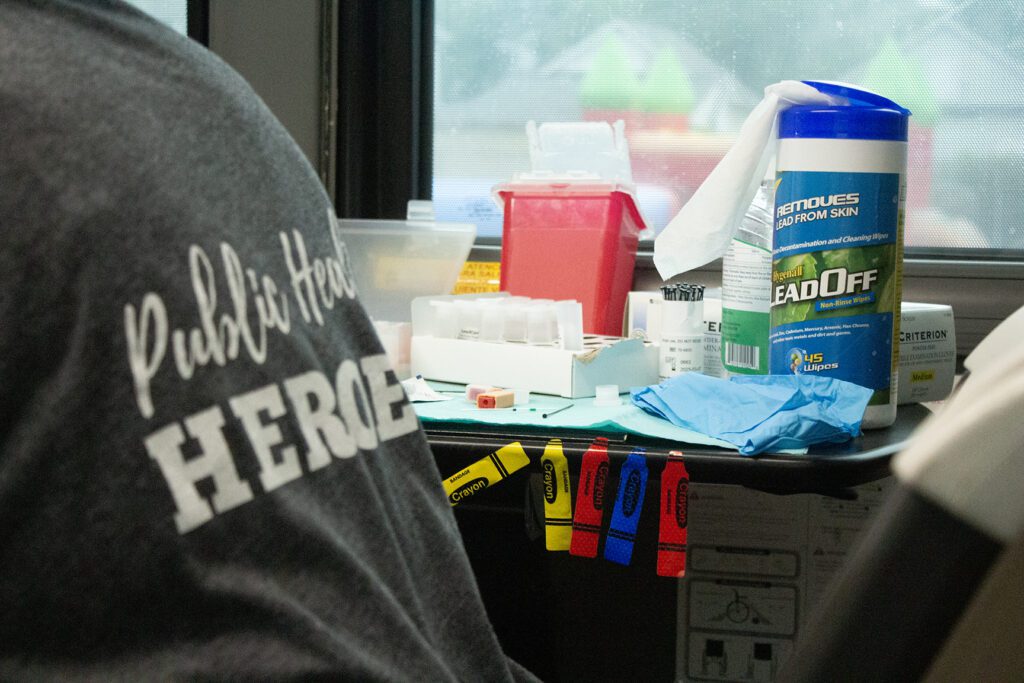
In a mobile clinic in the church’s parking lot, registered nurse Gloria Smith administered the finger-poke test – similar to a blood sugar check. Smith is also the lead case manager for the Toledo Lucas County Health Department (TLCHD).

“At any given time, there are 3,400 children with lead poisoning in Lucas County,” she said, stressing each syllable of the statistic she is working to lower.

“This is convenient, this is portable,” Graham said. “This goes to the people and makes it accessible to the people where they live at, as opposed to people having to leave their comfort zone.”

As stated by the Ohio Health Department, lead is a metal that occurs naturally in the environment, but most of it comes from human activities, such as manufacturing and mining. In the past, lead was used in gasoline, paint, metals, bullets and batteries. Lead has many hazardous health effects, and been banned or significantly reduced in these products.

Lead testing information is available at toledoleadsafe.com.

Local film honors Black heritage

0
Gwen Shavers, left, and her husband Terry Shavers stand on the porch of the Braceville African American Heritage Museum, which used to be Earnie Shavers’ house. (Courtesy Terry Shavers)

TOLEDO – Before there was a documentary, there were voices—soft, unrecorded, almost lost.

Elders in a rural Ohio town gathered in churches and kitchens, passing down stories of Olympic trials, steel mill shifts and cross-country train rides. Now, History Forgotten and Now for All to See brings those voices to Toledo for a Juneteenth screening that asks, “What do we lose when we don’t listen?”

It is not every day that a small Ohio town of fewer than 100 families lays claim to Olympians, university deans, heavyweight champions and civil rights pioneers. But Braceville, Ohio did. This community-made documentary shining a light on this town’s legacy will screen at Heatherdowns Branch Library on Saturday, June 21, at 2:30 p.m. Admission is free.

A story rooted in memory

The film began not as a professional project, but as an act of preservation. In 2016, Gwen and Terry Shavers started recording interviews with senior members of their church after realizing the community’s history might disappear if no one documented it.

“We thought, ‘Boy, this treasure is going to be gone shortly,’” Gwen Shavers recalled. “So, we decided to video them.”

Though neither had any filmmaking experience, the couple set out to capture stories of migration, family and legacy—many of which they had grown up hearing themselves, as Terry Shavers noted. The result is a tender glimpse into a rural Black community built on resilience and generations of connection.

“I always thought I’m a very boring person and I live a boring life.” Gwen Shavers said. “But it’s the little things we do every day—the routine, daily things of life— that other people can relate to that makes things interesting and exciting.”

(Courtesy Photo)

Braceville’s legacy

Located in Trumbull County, Braceville was once home to a thriving African American community built by families who migrated from the Jim Crow South in search of industrial jobs and safer futures. Despite its small size, the town produced an Olympian, university deans and boxing legend Earnie Shavers, who fought Muhammad Ali and Larry Holmes. One resident even ran track against Jesse Owens; another fought Joe Louis … twice.

The Shavers family helped restore the first house Earnie Shavers’ family lived in when they arrived in Braceville. Today, it stands as a local museum. “There’s a lot of good stories, and most of the families have similar stories to tell,” Terry Shavers said.

From local treasure to Toledo screening

The film is coming to the Glass City thanks to Daniel Mason, a Cleveland-area film editor. He used AI-assisted restoration tools to help elevate the amateur footage into a presentable documentary.

Mason was introduced to Toledo organizer Colette Córdova, who saw something special in the project.

“She’s the one that said, ‘Oh, we would love to have this up here,’” Gwen Shavers said. “ I think it was very kind of her to see some value in it, to want it to be shown in her neighborhood. We’re very honored.”

Toledo’s screening also holds regional significance. After Newton Steel—the factory that once anchored Braceville—opened a second location in Monroe, Mich., many families followed the work north and settled in Monroe, Toledo and Detroit.

“Monroe is like a sister community to Braceville,” said Terry Shavers. “There are quite a few people in the Toledo and Monroe area who are interested, too, so we thought it would be a good match.”

Lessons for the next generation

While the film looks to the past, its purpose is firmly rooted in the future. “We were really just trying to preserve our history,” Terry Shavers said. “If we don’t talk—if we don’t get these older folks to share their stories—it’s all just going to be lost.”

That spirit of preservation and accessibility is what Gwen Shavers hopes resonates with audiences in Toledo.

A lot of cultures don’t really know what the other culture is like. It just gives people a little glimpse into the lives of a small community and what it was like when we were growing up.

Gwen Shavers

The couple hopes the documentary not only shares their community’s story but encourages more people to see the value in their own.

“We didn’t even realize how people came to little places and built communities—how they were resilient, and against all odds.” Gwen Shavers said. “And that is something that might help our country nowadays, if we had that same type of resilience and unity rather than the division that we have today.”

The documentary will be at the Heatherdowns Branch Library on Saturday, June 21, at 2:30 p.m. Doors open at 2 p.m.
(Courtesy Photos)

(Courtesy Photos)

Inside Toledo City Council: June 17 | Rocky Ridge LLC debate continues

0
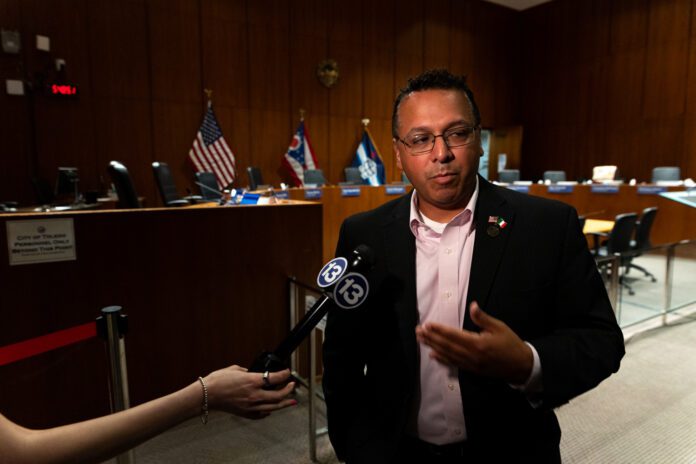
Adam Martinez, Toledo City Council member (District 2), speaks with press after the meeting. He referred to the circumstances surrounding the ordinances as “pay-to-play.” (TFP Photo/Stephen Zenner)

TOLEDO – During this Tuesday’s meeting, Toledo City Council Member Adam Martinez (District 2) had a few choice words on Rocky Ridge rezoning, and petitioned his fellow council members to vote on the ordinances then and there instead of holding them until the next council meeting in a month. 

At the very beginning of the legislative session for this week’s meeting, council member Theresa Morris (District 6), as chair of the planning and zoning commission, opted to hold three ordinances for the next meeting. 

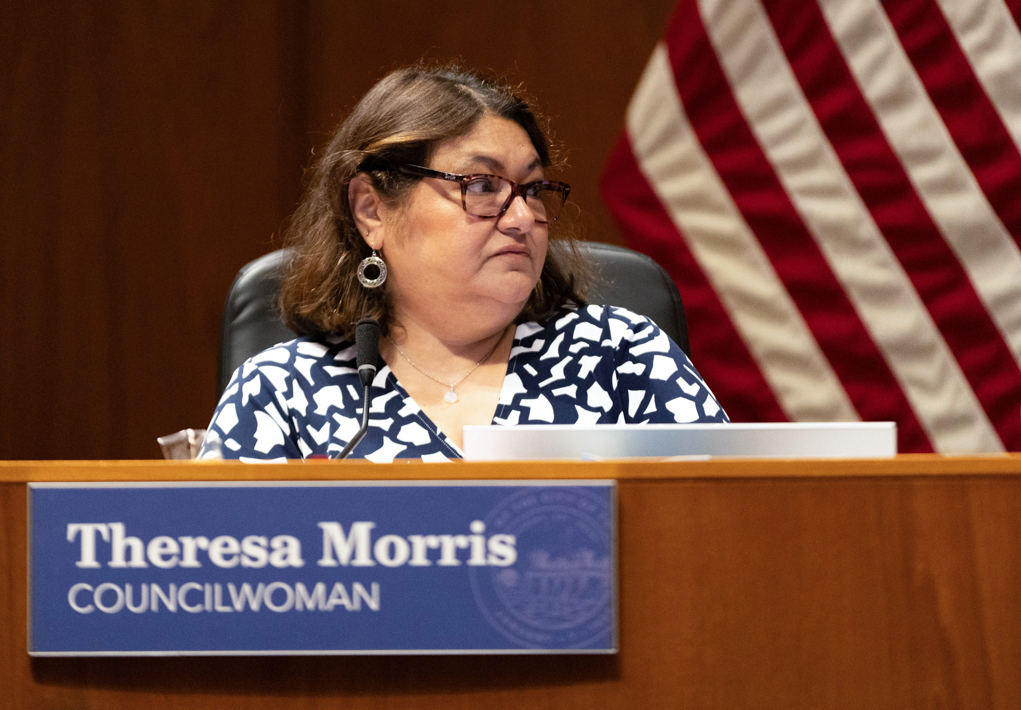
Council member Theresa Morris reacts to other council members’ reactions to a comment by’ Adam Martinez about ‘pay to play.’ (TFP Photo/Stephen Zenner)

Ordinances 223-25, 224-25 and 225-25 would rezone areas around Byrne Road and Angola Road for industrial use, putting the mining efforts of Rocky Ridge Development LLC close to local residential zoning. 

At the last City Council meeting, on June 3, Council Member Mac Driscoll (At-Large) made a successful motion to hold the three ordinances so council members would have more time to understand three concerns surrounding the rezoning:

  1. The concern of dust from the mining 
  2. The reuse of the site after mining
  3. And the environmental impacts of mining.  

At this past Tuesday’s meeting, Martinez interrupted the motion to hold the ordinances for a second time, and mentioned his desire to vote on 224-25 and 225-25, if not all three.

“We should need to vote on this, one way or the other,” Martinez resolved. “There are significant concerns about the environment, about the community impact. You know, the residents of the neighborhood have been very vocal about this.”

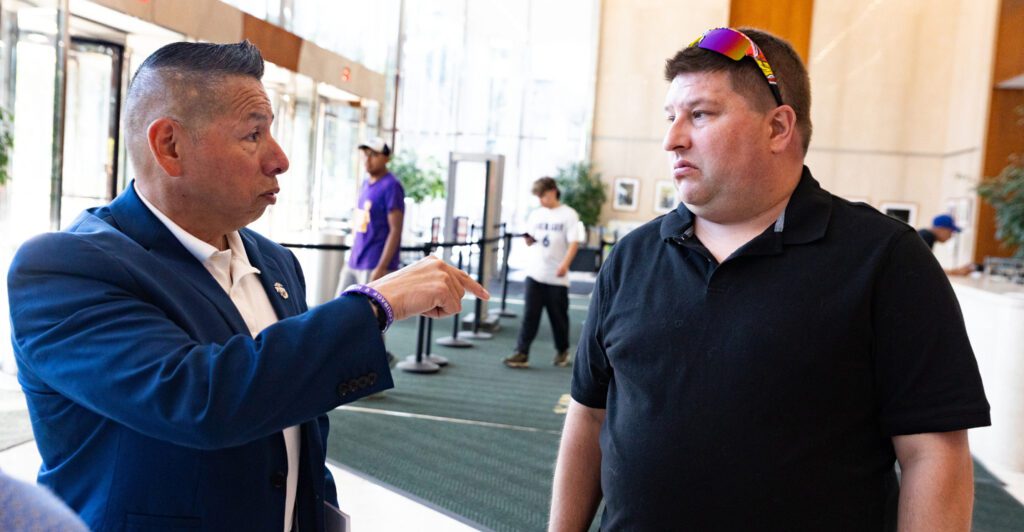
Roberto Torres, a Toledo City mayoral candidate, speaks with Jason McKown, a resident near the proposed zoning changes, during a Toledo City Council meeting. TFP Photo/Stephen Zenner)
Kathy and Bill Hoag, who own a number of properties close to the rezoning in ordinances 223-25, 224-25 and 225-25, sit in and listen during a Toledo City Council Meeting. (TFP Photo/Stephen Zenner)

For the past number of weeks, Toledo mayoral candidate Roberto Torres has led a group of Toledoans from around the area affected by the rezoning to petition the industrial activity happening near Byrne and Angola. Hundreds of signatures and a few residents who could come to the meetings in person are hoping to have the ordinances voted down.

Bill Hoag, who owns a number of properties near the areas for rezoning, said at the June 3 council meeting that he was frustrated with the hold on the vote.

This week, Hoag returned with his wife, who echoed his frustration. 

“At some point we need a resolution to the issue,” said Kathy Hoag. “We can’t just keep kicking the can down the road.

At some point they have to make a decision. They have everything in front of them. The residents have voiced their concerns. They have all the maps, everything that they have needed to make a decision. And we can’t keep delaying it.

Kathy Hoag

But Toledo city council members did delay the vote on all three ordinances, even after Martinez pushed council for a vote, ruffling some feathers in the process. 

“I have concerns about the oversight of the administration and how we even got to this point,” Martinez said before a slow vote on holding the ordinances was initiated. “I have ethical concerns about the former director that is now the CEO. There’s just a lot going on here, and something just doesn’t smell right.”

Part of what Martinez referenced was published the day before in the Monday issue of The Blade, where it was highlighted that Ed Moore, the former director of public utilities for the City of Toledo, retired in April of 2024 only to take up the managing director position for Rocky Ridge LLC. 

Before Moore retired, he signed a contract with Rocky Ridge on behalf of the city in 2023, which allowed Rocky Ridge to remove spent lime from 4004 Angola Road, one of the areas up for rezoning, and that is still not zoned correctly. 

However the remark by Martinez that seemed to offend his fellow council members was as follows: “We wouldn’t do this for anybody else, and I’m kind of over the pay-to-play politics.”

Pay-to-play is the same language used to describe the three Toledo city council members who were arrested in 2020, convicted of taking bribes in 2023 and sentenced to prison time.

Council member Sam Melden (District 5) immediately responded by saying that the council holds things often “if we have more questions.” 

Visible disgust was on the face of the Toledo City Council president Carrie Hartman in reaction to Martinez’s mention of “pay-to-play politics,” before she organized the motions to hold the ordinances. 

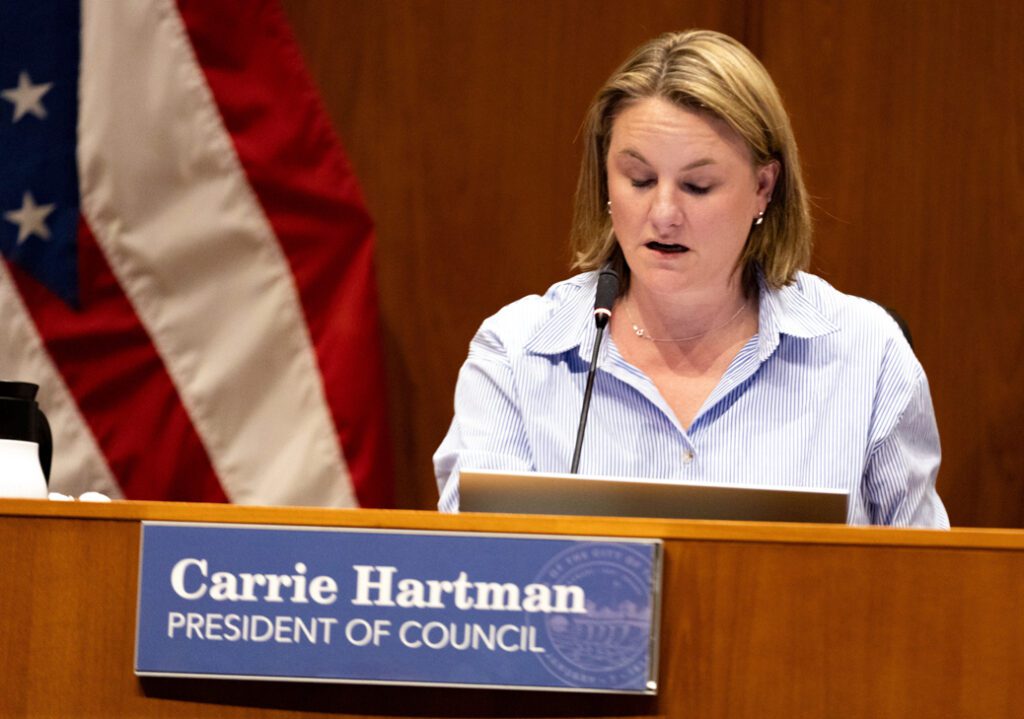
Carrie Hartman reacts to comments made by Adam Martinez, referring to the environments around the rezoning proposed in ordinances 223-25, 224-25 and 225-25 as “pay-to-play.”(TFP Photo/Stephen Zenner)

Martinez was the only council member to vote in favor of voting on the ordinances that day. 

Torres commented on Martinez’s statements. “Council members wouldn’t make those statements without information to lead to that conclusion.”

When the ordinances were in committee, the plan commission did not recommend these three rezoning ordinances for passage, which means the council requires nine votes to pass the ordinances. 

When closing the session, Martinez ended his remarks by saying, “I’ve spoken enough today.”

Which prompted an, “I agree,” from council member Cerssandra McPherson (At-Large), who seemed surprised she said the words out loud. 

Council members erupted in laughter around McPherson until council member John Hobbs III (District 1), representative for the areas in question for rezoning, broke up the laughter, telling his colleagues, “It’s not funny.” Hobbs had previously recommended all three ordinances for passage. 

John Hobbs III listens to fellow council member Adam Martinez talk about Rocky Ridge. (TFP Photo/Stephen Zenner)

Council member Nick Komives (At-Large) recommended in his closing remarks that Martinez “rescind” his earlier “pay-to-play” comment, and, after the meeting adjourned, many council members immediately left the council chambers, visibly emotional about how the meeting went. 

Morris and Martinez stayed behind to address the press about the eventful meeting.

“It sounded like the applicant was going to change what they were sending to us, and they had a chance to talk to some of the members, but they didn’t have a chance to talk to all of the members,” Morris said about her decision to hold the ordinances until the next meeting. 

According to Morris, the applicant, Rocky Ridge LLC, changed the rezoning request at 2 p.m., two hours before the council met at 4 p.m. Summarily Morris said the request changed from multiple properties requesting a zoning change down to just the 4004 Angola Road property requesting a zoning change. 

“When members don’t have all of the information and don’t don’t receive it equally, we need to make sure that all of the members have as much information when they decide to cast a vote,” she said. 

Emphasizing the seriousness of the zone change, Morris said, “It’s a big change.”

Residents continue to complain about mining, but Morris said, “I haven’t seen anything formally that has come to us for the committee,” concerning a cease and desist to Rocky Ridge. 

When asked about the strange nature of a company mining on land not zoned for mining, Morris said the city needed to do a better job enforcing its agreements.

After Morris addressed the press, Martinez explained his comment. “So, clearly, that hit a nerve at this council.

“Four people went to jail because of pay-to-play politics. I technically wasn’t referring to anyone on council, but it’s been kind of one of those situations where things just don’t add up,” he said, and downplayed the seriousness of the pay-to-play reference saying it was “off the cuff.”

“I have no thoughts that this…any of my colleagues are involved in anything unscrupulous, but this whole situation smells funny.

“We had a lot of county involvement. We had a lot of pressure on both sides to make a decision one way or the other. So I was more venting my frustration on all of the pressure. So again, not geared towards anyone, but it is what it is.”

As far as the day-of changes to the proposed zone change, Martinez said they didn’t matter to him, and that the proposal was basically the same. 

“There’s been no substantive penalties for operating illegally from the administration,” he continued. “There’s been no punitive, at least I’m not aware of, issues for falsely signing documentation, getting, obtaining a state license from the state.

“So this just all smells funny. I can understand an ‘oops,’ but ‘oops, oops, oops, oops’ and then five years later, still, nothing is done, and you want to expand it all of a sudden. Unfortunately, it’s a little too late.

“I am really grateful that Ed Moore is now there [at Rocky Ridge LLC], but I have ethical concerns, because he was the former director of water.”

Martinez said he would not rescind his earlier comment, while apologizing if it offended anyone. 

“We work for the people,” he said. “We don’t work for businesses. We don’t work for the mayor’s administration. We work for our residents of our community.”

Other city council business:

  • Paris Waites, 18, of Central Catholic High School, was commended for winning the 57th Annual Debutante Cotillion Award and being crowned Miss Debutante 2025. Wilma D. Brown, Cotillion general chairman and former President of the Toledo City Council, was commended for her role in establishing and running the 57th Annual Debutante Cotillion.
Paris Waites, 18, of Central Catholic High School, is acknowledged for winning the 57th Annual Debutante Cotillion Award and being crowned Miss Debutante 2025.(TFP Photo/Stephen Zenner)
Wilma D. Brown, Cotillion general chairman and former president of the Toledo City Council, is commended during the meeting for her role in establishing and running the 57th Annual Debutante Cotillion. (TFP Photo/Stephen Zenner)

Toledo SEIU Local 1 janitors march for better pay, safer conditions

0
SEIU Local 1 janitors union march in the Toledo Juneteenth Parade on June 14. Courtesy Photo/Camilo Villa)

TOLEDO — Long after the last employee shuts down their computer and the lights flicker off for the night, the work is just beginning.

Inside Toledo’s high-rise offices and public buildings at night, vacuums hum down empty hallways. Mop water sloshes against bucket rims. The air is thick, stale and warm. Air conditioning typically shuts off when tenants go home, so the night shift sweats through it.

They clean the messes no one sees—or cares to see—that are left behind. They disinfect bathrooms, polish glass, scrub floors, sweep salt, haul trash. Their fingerprints are wiped away before anyone notices they were even there.

SEIU Local 1 janitors Philip Rudolph, from left, and Nadine Larde, march in the parade. (Courtesy Photo/Camilo Villa)

Janitors, like Nadine Larde, are deep into their shifts before the Glass City wakes up.

“It consists of a lot of work—a lot of sweeping, dusting, mopping. You know, some buff, wax and strip floors…and the mirrors and the glass and the doors,” said Larde, an SEIU Local 1 member who works for Holland Building Services, and serves as a union steward and bargaining committee member. “And dusting…a lot of dusting takes place.”

But last Saturday, their work—and their worth—were brought to light as they took to the streets during the daytime.

Joined by Congresswoman Marcy Kaptur and Ohio representatives Michele Grim and Erika White, more than 100 SEIU Local 1 janitors marched through downtown Toledo in the city’s Juneteenth Parade on June 14, not just to celebrate Black freedom, but to demand better pay, safer working conditions and long-overdue respect.

Ohio Rep. Michele Grim, (center in purple jacket), Philip Rudolph, center, and Congresswoman Marcy Kaptur, center right, pose for a photo during the Toledo Juneteenth Parade. (Courtesy Photo/Camilo Villa)
SEIU Local 1 union members march to make their voices heard. (Courtesy Photo/Camilo Villa)

With their current contract set to expire in July, union members are preparing for tense negotiations, and they’re making their voices heard.

“We represented with Juneteenth the freedom, and also for liberty, and also, for the Union,” Larde said of the march. “It’s not that they’re trying to take from the business owners, but they [Local 1 workers] want to live. They want to be able to take care of their children, their home and different things.”

For SEIU Local 1, participating in the Juneteenth Parade was a deliberate choice.

“Our members live in the communities where everybody else is,” said Yanela Sims, SEIU Local 1’s Ohio state director and recording secretary. “They have jobs, but they’re also people outside of work.”

SEIU Local 1 member Yanela Sims, left, and her fellow union members march in the parade. (Courtesy Photo/Camilo Villa)

Sims said participating in community events like the Juneteenth Parade helps members share their message and break the invisibility that often surrounds night-shift workers.

“It allows our members to communicate that they’re not just the invisible workers that come in at night and make everything clean and tidy. No one ever sees them or hears their perspective,” she said.

While Juneteenth commemorates the end of slavery in the United States, the federal holiday remains relevant to today’s labor struggles—especially for Black workers, who make up the majority of Local 1 janitors in Toledo, according to union representative Camilo Villa.

They’re an integral part of ensuring that workspaces are clean, tidy and safe. But if there’s a mess in the building, you’ll know.

Yanela Sims | SEIU Local 1’s Ohio state director and recording secretary

“They’re an integral part of ensuring that workspaces are clean, tidy and safe,” Sims said. “But if there’s a mess in the building, you’ll know.”

And yet, Sims added, their needs are too often overlooked. In many buildings, air conditioning is shut off after tenants leave, often leaving janitors to clean in stifling heat. 

“If it’s not safe for your tenants to work in the heat, then it shouldn’t be safe for our members, either,” she said.

The janitors clean some of the region’s most high-profile buildings—corporate offices, hospitals, manufacturing sites—but many still earn less than $15 an hour.

SEIU Local 1 represents more than 400 janitors in Toledo and Northwest Ohio. They clean buildings most residents pass by or work in every day, such as One Seagate, ProMedica buildings or Owens Corning. Though they are essential to keeping the city running, many work behind the scenes and under subcontracted conditions.

“All of them work for janitorial contractors, not for those companies,” Villa explained. One of SEIU’s key messages during this contract cycle is that employers—not just contractors—must ensure their buildings are staffed by workers who are paid a fair wage.

“For a lot of these people, this is their only source of income,” Villa added.

Many SEIU Local 1 members rely entirely on janitorial work to support their families, sometimes holding multiple part-time cleaning jobs or sharing the workload with a spouse. For some, it is a second career taken up later in life; others balance caregiving responsibilities during the day before heading to work at night. 

One longtime member, Villa noted, has worked as a janitor for 47 years. A military veteran who was deployed to Iraq during his time in the reserves, he returned to the same building he’s cleaned for two decades, still making under $15 an hour.

For Larde, the story is personal. A 14-year cancer survivor, she spends her time off recovering from the physical toll of the job. “I basically try to rest up so that I can go to work for next week, “ she said. “I do spend time out in the yard or what have you. Sometimes I go and see my daughter that lives in Michigan.”

With their current contract set to expire in July, SEIU Local 1 janitors say they are entering negotiations with a clear message: Their work is essential, and it is time it was treated that way.

After years of being overlooked, the union workers say they’re ready to be heard, not just at the bargaining table, but by the communities they serve every day.

SEIU Local 1 union organizer and former janitor Dericka Mays, with bull horn, joins the march. Courtesy Photo/Camilo Villa)

Don Lee: JuneTeenth Awareness

0

Juneteenth – or June 19 – marks the day in 1865 when Union troops, led by
General Gordon Granger, arrived in Galveston, Texas, with news that slavery had officially ended.