Home Blog Page 41

Lucas County electricity rates are rising

0
Mark Frye, the the president of Palmer Energy Company and the consultant consultant for the Northwest Ohio Aggregation Coalition, talks about rising electricity costs after a Lucas County Commissioners meeting inside the Lucas County Commissioners’ Hearing Room inside 1 Government Center in Toledo on Tuesday, Oct. 7, 2025. (TFP photo by Stephen Zenner)

LUCAS COUNTY – “The old deal was 6.3 cents a kilowatt hour,” said Mark Frye, the president of Palmer Energy Company and the consultant for the Northwest Ohio Aggregation Coalition, pointing out the differences between electricity rates at a Lucas County Commissioners meeting on Oct. 7. “The new deal is at 9.75 [cents per kilowatt hour], so it’s about 3.3 cents.”

3.3 cents per kilowatt hour may not make a whole lot of sense on its face, but Frye explained that “an average customer uses about 9,000 kilowatt hours a year.” For the average customer, that extra 3.3 cents per kilowatt hour will turn into “$250 to $300 a year. So it’s not nothing. This is real.”

The “new deal” for the Northwest Ohio Aggregation Coalition is only for one year, while the previous deal spanned three years. Frye explained that the set rate was agreed upon at a good time, saving Lucas County and its residents roughly $70 million compared to the wholesale market rate. Unfortunately, he said, the deal securing that rate ended in May 2025. 

Frye said the price jump was because of a number of conditions concerning the energy market and infrastructure, and pointed, in dressed down terms, to a stagnant market jolted by the new demand caused by artificial intelligence (AI). 

“Artificial Intelligence is augmenting and will eventually create productivity, but the unfortunate reality is they’re also massive consumers of electricity, those data centers,” he said.  

Over the past 18 years, Frye said there was about 3 percent growth in demand for electricity. Starting in 2023, data centers started to strain the electrical grid in the area, which had not needed to increase its capacity in a major way for over a decade. 

That is no longer the case. 

“A single data center, a large AI data center, will consume more electricity than the entire Lucas County would consume on an annualized basis…the refineries, the Jeep plant, everybody,” Frye said. “So think of it, you have one data center connected only to Davis-Besse [Nuclear Power Station], and it’s gonna’ take all of the electricity just from that power plant.” 

New forms of renewable energy, like wind and solar power are on their way Frye said, but by their very nature are intermittent. “The wind isn’t always blowing, and the sun’s not always shining,” he said. On the other hand, the data center usage is 24/7. 

According to Frye, the market did not anticipate how quickly the energy demand from AI became reality. Microsoft has paid $1.5 billion to restart Three Mile Island, a nuclear power plant in Pennsylvania, for their data center needs, and Frye anticipates the Palisades Nuclear Plant in Michigan to be up and running soon. 

Coal, he said, was not a viable option due to the destruction of coal plants, and due to air pollution restraints. Realistically, Frye said the energy for data centers is likely to come from natural gas. 

Because of this, he said companies building data centers are looking for areas along natural gas pipelines; Lucas County has many.

“Unless we are all willing to put our cellphones in a shredder…we are going to need to respond to this in a productive way,” he said. Regardless of where the data centers are built, the energy costs will affect Lucas County regionally and nationally, even if the centers are not specifically in Toledo, Maumee, or elsewhere in our region. 

In the future, Frye expects the data centers to create their own power plants, but for the next 2-5 years, he told the Commissioners that electric costs will be more of a burden on consumers as infrastructure and the amount of electricity is strained. 

Since the data centers will inevitably strain the electric infrastructure, incurring costs on everyone, Frye said it was probably a better option to get the creators of data centers to invest in the community via jobs by allowing companies to build data centers in Lucas County. 

There are more minute details Frye went into with the limitations of the electrical grid, as it moves from a hub and spoke, centralized system, to more of a decentralized system, where renewables can easily connect. But overall, he said that for the next 10-15 years, consumers should expect to pay more for electricity than they have previously. 

Lucas County Commissioner Pete Gerken summed up the presentation for those who get their power from the county, calling it a “perfect storm,” and saying they’re “waiting for the field to play out a little bit,” before signing a longer contract with electricity suppliers.   

Gerken called the present time, a “waiting period,” and said, “I think your bills are going to be difficult for a while,” likening the current electricity market to high interest rates.  

“The point is, it’s not the fault of the aggregator,” Gerken said, and Frye agreed with him as counsel for the aggregator. 

Once again agreeing with Frye, Gerken said Lucas County should take advantage of data centers. “They’re here,” he said. “We should take advantage of it. They’re paying for this infrastructure.”

While construction jobs and a limited number of upkeep jobs will be created by data centers, there have been downsides in regards to environmental costs and strains on resources, specifically fresh water.

Toledo Mayor Wade Kapszukiewicz, does not believe data centers will pop up in the city of Toledo proper, because there is not enough space for what developers are requiring for those types of projects.

“There’s power lines here, there’s natural gas pipelines here, we’ve got lots of labor available, lots of great construction companies…we can build data centers up here,” Frye said about the region/county. Already there is a data center being built in Bowling Green, Ohio, and plans for one in Oregon, Ohio are being discussed. 

In other County business:

Item 2. Commissioners proclaimed Oct. 9 Children’s Environmental Health Day. 

Children’s Environmental Health (CEH) Day was created by the Children’s Environmental Health Network, and the proclamation was presented by Ben Pushka, an executive assistant to the Lucas County Commissioners.
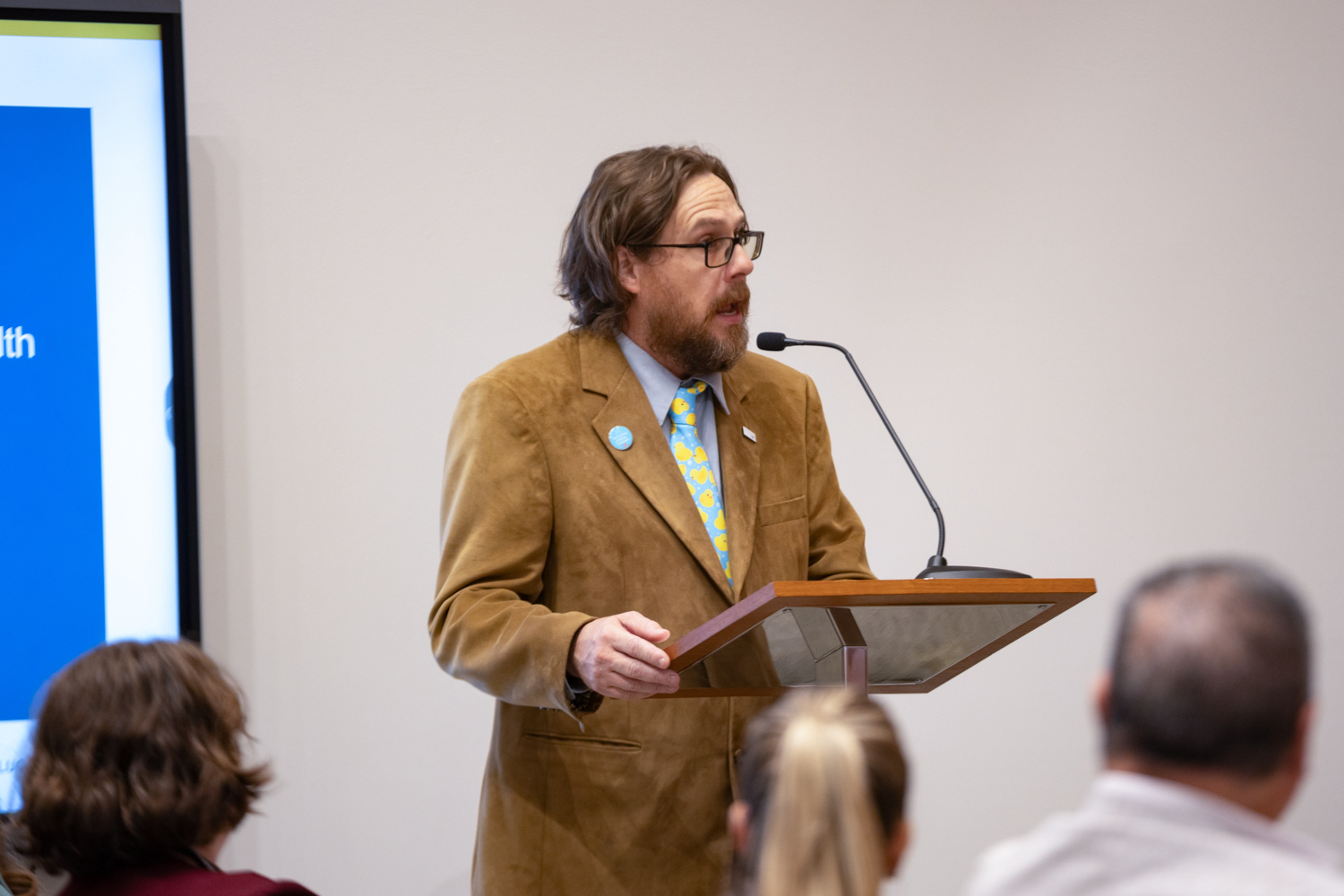
Ben Pushka, the executive assistant to the Lucas County Commissioners, talks about Children’s Environmental Health Day during a Lucas County Commissioners meeting. (TFP photo by Stephen Zenner)

The day is meant to highlight the vulnerability of children to an array of toxic materials from lead paint to plastics. Included with the commissioner’s proclamation/resolution were a few informational handouts provided by Toledo-Lucas County. 

Item 3. Permission to Accept Cost of Living Increase to Community Corrections Act

Ashley Richardson, the director of the Lucas County Adult Probation Department, asked for permission to receive a grant for $249,834 more than the county generally receives from the Ohio Department of Rehabilitation and Correction. The total amount of the grant was $3,643,122.

Richardson said this was the first cost of living increase the county had received for these funds in about 20 years. 

Item 4. Title: Acceptance of Funds from Ohio Secretary of State, Frank LaRose, 2025 Voter

Registration Data Integrity Grant in the Amount of $4300 to Cover Expenses Associated with Implementation of Directive 2025-52

The acceptance of these funds was approved. 

Lavera Scott, the director of the Lucas County Board of Elections, said the funding would cover the implementation of new software to secure elections in Lucas County, and that an additional $12,000 would be needed to complete the full security protocol required by the state. 

These updates, passed in 2023, require the board of elections to link with the Department of Homeland Security, the Social Security Administration and the Bureau of Motor Vehicles. 

Item 5. The county renewed their $56,701.70 contract with EverBridge, which provides the countywide emergency notification system.

Item 6. The county approved the Biennial Prevention, Retention and Contingency (PRC) Plan beginning Oct. 1, 2025 for Lucas County Department of Job & Family Services. 

The contracts and services in the plan must be individually approved by the Lucas County Commissioners, but the approved plan provides an outline of services provided to the state. 

Item 7. September Then and Now Certificates were approved. 

A list of various day-to-day charges associated with running the county for the month of September. 

Item 8. Approved “Increase Super Blanket Purchase Orders”

Similar to item 7, item 8 requires that “…expenditures requests meet one or more of the required categories of accountant, architect, attorney at law, physician, professional engineer, construction project manager, consultant, surveyor, or appraiser by or on behalf of the subdivision or contracting authority; fuel oil, gasoline, food items, roadway materials, and utilities; and any purchases exempt from competitive bidding under section 125.04 of the Revised Code…”

Item 9. Approved the Adoption of the 2025-2029 Ohio Workforce Area #9 (Lucas County) Workforce Development Strategic Plan Adopted by the Lucas County Workforce Development Board on Aug. 20, 2025.

Item 10

The Coroner’s Office presented their budget before the commissioners, and asked for a 2.59 percent increase to their budget, roughly an additional $85,000. The county budget director noted that the Coroner’s Office is projected to be slightly under budget this year. 

Tom Blomquist, the Lucas County Coroner, said he tried to keep things as flat as possible, as per the request from the commissioners. 

It’s a 6-string thing: An Evening with Jeff Daniels

0
Jeff Daniels, known for his acting career, is also an accomplished singer-songwriter.(Photo courtesy of Jeffdaniels.com)

TOLEDO – Had he not been so successful as an actor, Jeff Daniels could always have found a job with his family’s business, the Chelsea Lumber Co. in Chelsea, Mich.

But as everyone knows, his acting career took off and he never needed a backup plan. That didn’t keep him from pursuing some formidable side hustles, including playwright and singer-songwriter.

“Much as I love acting, I don’t do it every day,” Daniels explains on his website. “The only thing I do every day, the only thing I want to do, the only thing I have to do, is play my acoustic guitar.”

He’ll be coming to Toledo to sing, play guitar, and tell stories in a show titled “An Evening with Jeff Daniels” at the Valentine Theatre on Nov. 22.

Daniels, 70, began playing guitar after moving from Michigan to New York to pursue an acting career.

“Back in ’76, I bought a Guild D-40, tossed it into the backseat of a beat-up Buick and chased a dream,” Daniels says. “I had no idea I was bringing along my best friend. The one I would need, the one I would turn to, the one I would rely on. And now, decades later, the one who knows what I’m all about.”

Nowadays, he plays Martin-brand guitars including a model made to his preferences, the Martin OM Jeff Daniels Signature Edition. His collection includes vintage Martins from the 1920s and 1930s, and he’s been known to strum a cigar-box guitar on tour.

He has recorded seven albums, including his latest, Alive and Well Enough. The wryly titled album, like earlier releases such as Grandfather’s Hat and Live and Unplugged, showcases Daniels’ unique blend of humor, commentary, and romantic love songs, all driven by his nimble guitar work. 

Jeff Daniels, who lives in Chelsea, Mich., said playing the guitar is the only thing has has to do every day.(Courtesy photo, c2007 Bobby Alcott Photography)

Daniels doesn’t hold back in his lyrics, letting his thoughts and feelings flow freely on tunes such as “Trumpty Dumpty Blues,” which he said he wrote as a preemptive reply to the president if he were ever the target of a presidential hate Tweet (none so far, he adds); “Jesus Was a Stoner,” explaining that “it doesn’t take much research to realize that it’s a distinct possibility,” and “Al Kaline,” an ode to his childhood hero after the Detroit Tigers’ Hall-of-Famer died in 2020.

Daniels made his film debut in 1981 in Ragtime and has shown his versatility playing roles in 70 movies including Terms of Endearment (1983), The Purple Rose of Cairo (1985), The Squid and the Whale (2005), Steve Jobs (2015), and the iconic comedy Dumb and Dumber (1994).

He won an Emmy for Outstanding Lead Actor in a Drama Series in 2013 for playing TV news anchor Will McAvoy in the series The Newsroom, and performed the role of Atticus Finch in To Kill a Mockingbird during a year-long run on Broadway. 

Daniels also is an accomplished playwright, with 20 full-length plays presented at The Purple Rose Theatre, including the current production of Norma & Wanda. The theater was built in 1991 using materials from Chelsea Lumber. 

(Photo courtesy of Jeffdaniels.com)

Daniels still serves as artistic director of the theatre, and will direct the next play, Richard Johnson’s The Classic King, which is set to premiere on Jan. 29

He bought a house on Cavanaugh Lake, on the outskirts of Chelsea (population: 5,306) in 1986, leaving New York and skipping Hollywood, preferring to raise his children in the Midwest. “It’s where your roots are deepest that you grow the most,” he says.

Daniels told a People Magazine reporter that, even when he was a proven box-office star, he never trusted fame. “I never bought it. I knew how fleeting it was and I didn’t trust it for a second, so I moved to Michigan.”

Beyond the headlines: A film screening of To Kill a War Machine

0

TOLEDO- The Palestinian film To Kill a War Machine will be shown in the McMaster Center located at the Toledo Lucas County Public Library on Tuesday, Oct. 28 from 6-8 p.m.

Amjad Doumani, founder of Media Decompression Collective (MDC), said he decided to show this film because, even though people have spoken extensively about Palestine, the U.S. government is not doing the will of the people. 

“First, the genocide is everywhere on social media. It’s not talked about too much in the mainstream media, and if it is talked about, it’s talked about from a Zionist perspective, not really telling the real, hard truth about what’s going on,” Doumani said. 

The film follows activists from Palestine Action, a British direct action group, as they raid Elbit Systems, a factory located in London, where bombs and weapons are made to be sent to Israel. 

Doumani said he contacted the directors of the film, and they gave him permission to show it to the public. 

“This film is banned in the U.K., and I keep up with the news and I heard about this, so I contacted the directors. And I said, ‘Well, it’s banned in England, but it’s not banned in the U.S. We’d like to show it.’ And they said, ‘You have our blessing and permission to show it in the U.S.,” he said. 

Amjad Doumani, founder of the Media Decompression Collective, speaks during a panel discussion after the screening of “No Other Land,” a film by an Israel/Palestinian group of directors highlighting the ethnic cleansing of Palestinians in the West Bank. That film was shown during Memorial Day Weekend, 2025. (TFP Photo/Stephen Zenner)

There will be a Q&A session at the end of the screening. 

Cindy Matthews will make opening remarks and Zach Dempster will be updating the status of Palestine Action; both individuals are part of MDC.

“We are a non-hierarchical organization,” said Doumani. “We don’t believe in titles or positions; everyone is equal.” 

He said he hopes people will be more informed when watching this film. 

“What we [MDC] hope people will take take away from it is that people do have the power to affect change, and we want to empower the people to know that they can take things into their own hands, even knowing they may be against the law, that these laws that they’re breaking are worth breaking. Because the bigger law that’s been broken is the genocide happening,” Doumani said. 

The screening of To Kill a War Machine is free and open to the public. 

Local leaders respond to questions about data centers

0
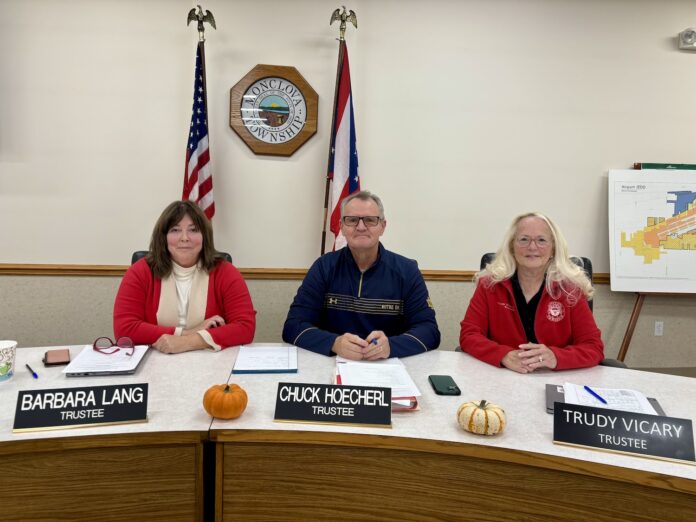
Monclova Township Trustees (from left) Barbara Lang, Chuck Hoecherl and Trudy Vicary fielded questions about data centers during their Oct. 20 meeting. (AWFP photo by Karen Gerhardinger)

MONCLOVA TOWNSHIP – Normally, public attendance during the twice-a-month Monclova Township trustees’ meetings is pretty sparse. But on Oct. 20, more than a dozen residents arrived with one intent: to ask about the potential of a data center being built on Black Road, west of the Shops at Fallen Timbers.

Ryan Bauman, Ron Loeffler, Adam Nelson, Debbie Stevens-Laux and Justin Zemanski were among the residents asking why the trustees approved a text amendment to allow data centers, whether plans are in place for a data center, and how the township’s sometimes rocky relationship with the City of Maumee could impact control over such a project.

Monclova, Waterville, Waterville Township and Whitehouse leaders are receiving emails, phone calls, social media call-outs and requests for public records regarding data centers. This summer, word began to spread about how the Lucas County Economic Development Department (LCEDD) and Regional Growth Partnership (RGP) are working with area communities to identify properties that have potential for handling a data center.

Southwest Lucas County has the most potential because of its available land and access to the Nexus Gas Transmission pipeline and water. Another key factor is appropriate zoning – which is currently in place for Monclova Township, Waterville and Waterville Township.

“At this time, Monclova Township does not have any applications before us regarding any data centers,” Hoecherl said, adding that LCDED director Matt Heyrman told him that morning that, so far, no offers have been made on land anywhere in the Anthony Wayne area for a data center.

Frustrated by the spread of “disinformation and false rumors” online about Monclova Township’s involvement with the LCEDD and data centers, Hoecherl began the public comments portion of the meeting by reading a statement approved by fellow trustees Barbara Lang and Trudy Vicary.

“I would like to challenge the people who post anonymously on social media and accuse public officials of taking kickbacks and bribes from corporate interests,” Hoecherl said. “I would encourage you to get out from behind your keyboard and come to a meeting and be a productive part of the community, versus throwing out libelous and false accusations.”

Stevens-Laux, who is running for one of two Monclova Township trustees’ positions, was in the audience on Oct. 20, asking the trustees why they “opened the door” to data centers and agreed to add data centers in agriculturally-zoned land with a conditional use permit.

“We like to work with our partners in the county. We thought this offered the township the most protection,” Lang said, noting that as other possible uses arise, like solar and wind farms, the township reviews options for regulation. 

After a public hearing on March 31, the board adopted that language to protect the township’s interests, she said. No one in the audience spoke at the public meeting to oppose that move.

A conditional use permit allows the township to regulate aspects of a project by imposing conditions beyond normal zoning regulations, such as on building height, setbacks, landscaping, lighting and sound, explained zoning administrator Eric Wagner. If those conditions are not acceptable to the applicant, the project might not go forward, he said.

If the township does receive an application for a data center, Wagner would review the site plan and forward it to the fire chief and county departments for review before the Board of Zoning Appeals (BZA) were to hold a public hearing to hear testimony and make a decision.

The BZA is a group of appointed residents, including Jeffrey Ballmer, Darrel Limes, Michelle Ross, Keith Stewart and Doug Stanton. Loeffler said he hoped the BZA members do their homework before an application is made by a data center. Zemanski voiced concern that unelected officials would make a decision on behalf of the township’s 15,000-plus residents, including the hundreds who live within a mile of Black Road.

Bauman, who owns Karnick on Black and also lives in the township, asked how trustees would work with the City of Maumee if a data center was proposed for property on both sides of Black Road, west of the Shops at Fallen Timbers. The land east of Black was annexed by Maumee and planned for a housing development, but that fell through earlier this year as Isaac Land Investment backed out of a sale to the developer.

“Would our BZA only have a voice in the portion of the project in our township, and the city only have their voice in the portion of the project in the city?” he asked.

Hoecherl said while the township and Maumee have had challenges over the years, he believes the two entities would be able to negotiate. He also noted that the township is always working to fight off annexation of township land by its neighbors. 

Andy Nelson came to his first Monclova Township meeting with plenty of questions, and a suggestion: enact a moratorium on data centers to give the community more time to get answers.

“I think there is a lot of support for a moratorium – if you worry about public opinion,” Nelson said.

On Monday, Oct. 27, Waterville City Council is expected to discuss a proposed moratorium during its 7:30 p.m. meeting. While the council voted 4-2 in September to allow data centers in M-1 Manufacturing zoned areas, Council Member Wayne Wagner has pushed to reopen the issue and look at a moratorium on data centers.

On Wednesday, Oct. 29, Waterville Township trustees are moving their 6:30 p.m. meeting next door to Waterville First Presbyterian Church to handle an expected crowd with questions about data centers.

“I will update residents on why we are where we are today, what we know, and allow them an opportunity to talk,” Waterville Township Trustee Julie Theroux told the township’s Zoning Commission during their Oct. 20 meeting.

The township, like Monclova, approved a text amendment to its zoning resolution to allow data centers in Agriculturally-zoned land with a conditional use permit. The township has also hired a Columbus law firm to represent their interests if a data center application is received.

In a candid discussion with the Zoning Commission, which includes RGP employee and township resident Bill Burkett, Theroux admitted that she has her own concerns about the impact of a data center on the township, or – if the township turns down a request – the possibility that a land owner might apply to annex their property into neighboring Whitehouse or Waterville in order to sell their land at a high dollar figure.

“There’s no plan to respond to, so we don’t know who would potentially be impacted,” Burkett said, explaining that the county and RGP are just looking at properties that might have potential to pitch to a data center developer. “Nothing has been proposed.”

As part of its research, the county did conduct a study to see how to deliver enough water for a potential data center in Waterville Township, Burkett said. A line from Monclova would be too expensive, and Waterville’s use of Bowling Green water wouldn’t be enough, but a line from Whitehouse – which gets its water from the City of Toledo – would be a viable option.

Whitehouse does not have the space or the zoning to allow a data center within village limits, Whitehouse Mayor Rich Bingham stated during the Oct. 21 Whitehouse Village Council meeting.

“I’m getting several requests for information regarding data centers. The village has no room for a data center. We’re not considering a data center here. It’s not coming to the village of Whitehouse. Our zoning doesn’t allow it. We don’t have 1,000 acres to put one here. We cannot control what Waterville Township does,” Bingham said. 

Realizing that so many residents have questions about the impact of data centers, including on the environment, utilities, health, and property values, Heyrman is working on assembling experts in each area to answer questions in a public forum for mid-November, but said nailing down a large venue has been a challenge. He expects to have a date set within the week.

Mitch Albom Twice book tour hits Toledo Library

0
TOLEDO - OCTOBER 13: Stacks of Mitch Albom’s latest book Twice, which is a story about a man who can redo any moment in his life, at a cost, are ready to be autographed at the sold-out Authors! event on October 13, 2025 at the McMaster Family Center for Lifelong Learning at the Toledo Lucas County Main Library in Toledo. (TFP photo by Scott W. Grau)

TOLEDO – Mitch Albom, an internationally renowned bestselling author, journalist, broadcaster, humanitarian, and more was the guest speaker at the Toledo Lucas County Library’s Author! event last week.

An attendee holds a copy of Mitch Albom’s latest book. (TFP photo by Scott W. Grau)

Albom, who has written syndicated column for the Detroit Free Press since 1985, talked about his latest book, Twice, to a sold-out crowd in the McMaster Family Center for Lifelong Learning in the Main Library on Oct. 13.

Twice is a story about Alfie Logan, who possesses the magical ability to get a second chance at everything. He can undo any moment and live it again. The one catch: he must accept the consequences of his second try—for better or worse.

Albom not only discussed his latest book; he also talked about his life as a humanitarian.   

In 2006, he founded the nonprofit SAY Detroit, which provides pathways to success for Detroiters in need through major health, housing and education initiatives. He also founded a dessert shop, Detroit Water Ice Factory, and a gourmet popcorn line, Brown Bag Popcorn, to help fund it. 

Albom operates Have Faith Haiti, a home and school for impoverished children and orphans in Port-au-Prince, Haiti.  

Mitch Albom(TFP photo by Scott W. Grau)

Albom’s books have collectively sold 42 million copies worldwide; have been published in 51 territories and in 48 languages around the world; and have been made into Emmy Award-winning and critically-acclaimed television movies. 

The Toledo Lucas County Library’s Authors! program brings best-selling novelists, entertainers, and emerging literary talents to Toledo to talk about their creative process and the inspiration behind each work. 

An fan, Pam, presents her autographed copy of Twice by Mitch Albom. (TFP photo by Scott Grau)
(TFP photo by Scott Grau)

Lucas County leadership rally against loss of SNAP benefits

0
Elgin Rogers, the Ohio House of Representatives, representative from Ohio’s 44th district, speaks of the importance of voting in leaders who understand the difficulties of the people inside the Lucas County Commissioners’ Hearing Room inside 1 Government Center in Toledo on Monday, Oct. 20, 2025. (TFP photo by Stephen Zenner)

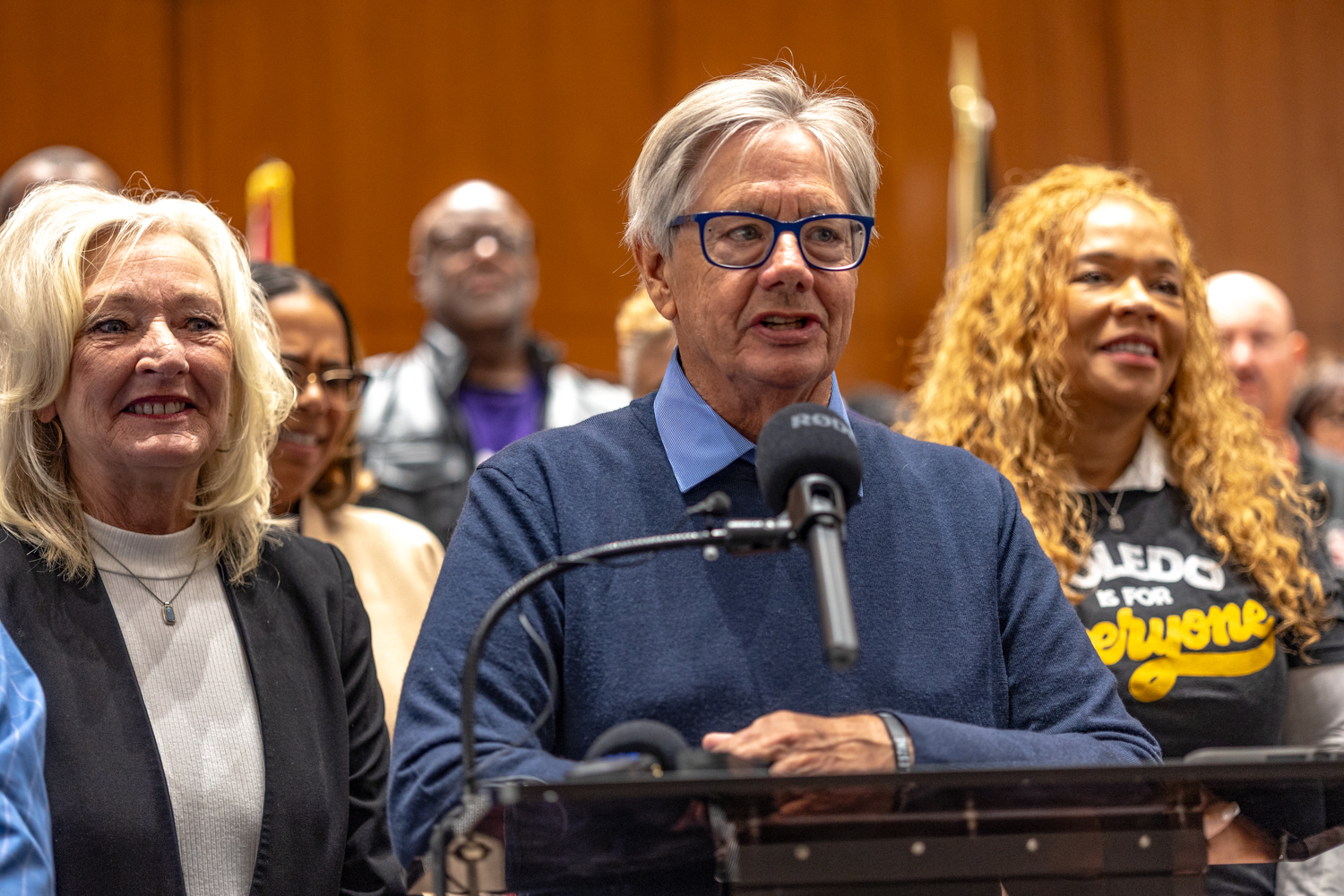
TOLEDO – The Commissioners’ hearing room at 1 Government Center was packed Monday morning, Oct. 20, as local Democratic leadership from all stations of government came to speak about the elimination of Supplemental Nutrition Assistance Program (SNAP) benefits on Nov. 1.

Lucas County Commissioner Lisa Sobecki led the discussion.

“On October 10, the USDA put out a memo to all 50 states that come November 1, 42 million individuals across the United States will not be receiving their food stamps due to the government shutdown,” she said.

“They have said, ‘We have no more money to feed our families in the United States.’”

Sobecki’s frustration at the prospect of losing SNAP was palpable.

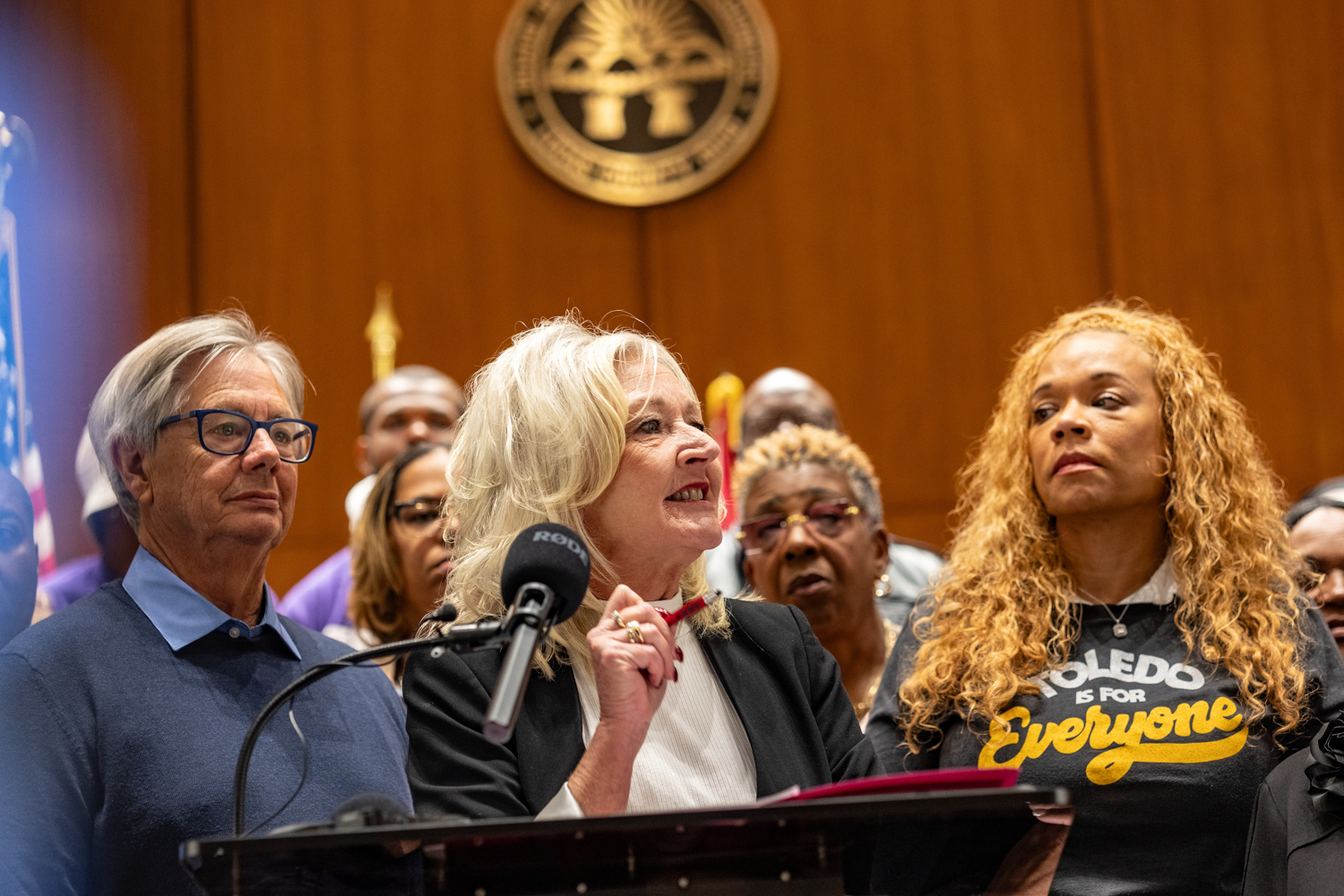
Lucas County Commissioner Lisa Sobecki starts off a press conference where they talk about how the federal government shutdown will affect local SNAP benefits starting Nov. 1. (TFP photo by Stephen Zenner)

The immediate declaration was preceded by a roll call of all the organizations and representatives in the room including: Connecting Kids to Meals, the Seagate Food Bank, Toledo Federation of Teachers (TFT), The Movement, Toledo Area Progressives (TAP), Communication Workers of America (CWA), United Way, United Auto Workers, Mercy Health and the National Association for The Advancement of Colored People (NAACP).  

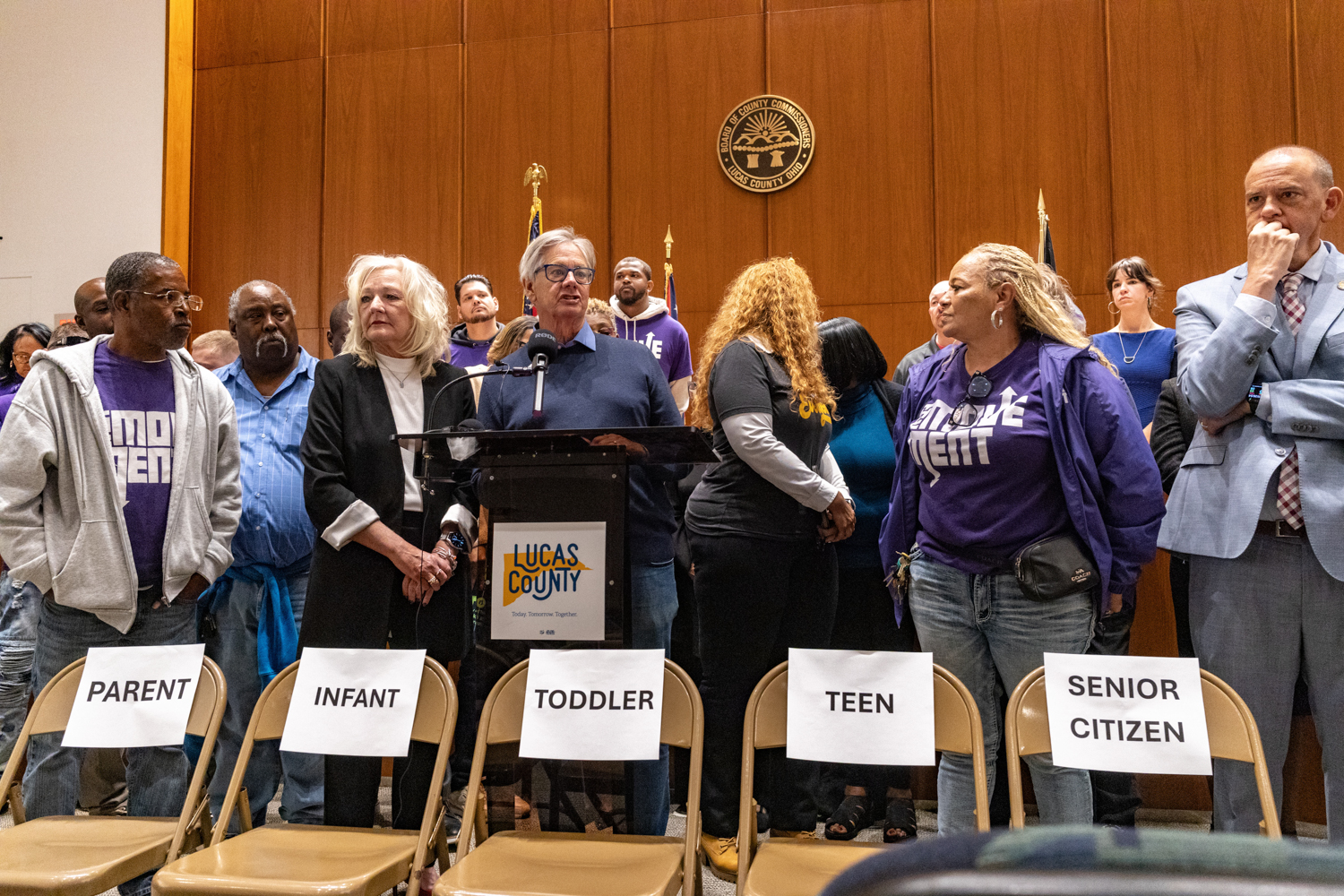
“This is about feeding our community!” Sobecki said with a tremor. Five empty metal folding chairs labeled: Parent, Infant, Toddler, Teen and Senior Citizen, were displayed before the crowd of representatives and organizations, as they spoke about the effects of losing SNAP benefits. 

According to Commissioner Sobecki, 17 percent of Lucas County residents will be affected by losing SNAP benefits, which she said came out to about 72,000 households and over 30,000 children. 

The last time the government shutdown was in December 2018 to January 2019. Sobecki said she was working as a case worker at the time and saw firsthand what it was like when the state of Ohio provided only a portion of people’s benefits. This time, she advocated for the full portion of people’s benefits to be provided for by the State of Ohio. 

“What we are asking here today is [that] the state of Ohio dip into their Stabilization Fund – as you all might know, that’s the rainy day fund – the rainy day fund that has not dropped one raindrop on anyone in the State of Ohio, when we have been in need,” Sobecki declared.

Five empty metal folding chairs labeled: Parent, Infant, Toddler, Teen and Senior Citizen, were displayed before the crowd of representatives and organizations, as they spoke about the effects of losing SNAP benefits. (TFP photo by Stephen Zenner)

HB 502

Back in 2023, Ohio Gov. Mike DeWine and Lt. Governor Jon Husted announced the Ohio Budget Stabilization Fund. This “rainy day” fund was at its largest in the state’s history at $3.5 billion.

Already in process, Ohio House Bill (HB) 502 was introduced by Latyna M. Humphrey, state rep for the Ohio House of Representatives from District 2, Columbus, Ohio, on Oct. 7 of this year, roughly a week after the federal government shutdown began on Oct. 1. 

Ohio HB 502 seeks “to continue to fund the SNAP, TANF [Temporary Assistance for Needy Families], and WIC [Special Supplemental Nutrition Program for Women, Infants, and Children] programs,” through the Budget Stabilization Fund, “up to the balance in the Budget Stabilization Fund.”

The bill is in its preliminary stages, in the Ohio House committee, and has not passed the house yet. While in committee, the bill may be amended, but in order to secure funding, the House bill must pass the Ohio House, the Ohio Senate and be signed by Governor DeWine. 

Shutdown

Sobecki capped her remarks with “I’m mad as hell!” and said this wasn’t a Republican or Democrat issue, but instead a matter of acknowledging the humanity of Ohioans.

Firing off, but at a somewhat lower intensity, Lucas County Commissioner Pete Gerken placed blame directly on Republicans. 

“Let’s not get this twisted, and I’m going to disagree,” he said. “This is political.”

“Know that the current administration has a shutdown because they don’t want to provide health care for people in the long run,” Gerken said. “That’s why we’re here.” 

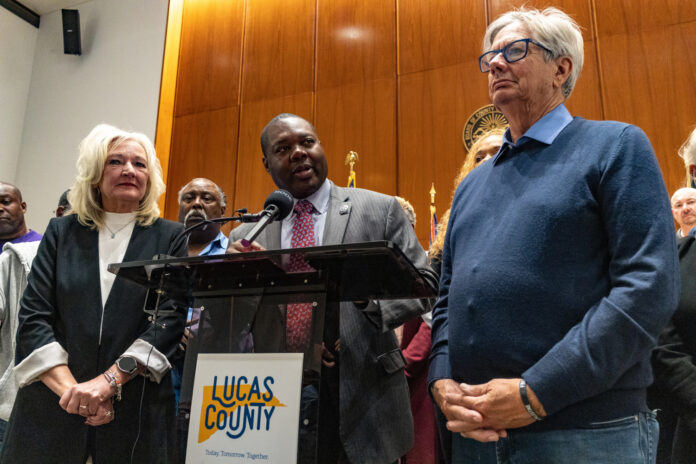
Pete Gerken, Lucas County Commissioner, speaks about the cruelty of federal Republicans, with Lisa Sobecki, Lucas County Commissioner, to the left and Erika White, Ohio House of Representatives, representative for Ohio’s 41st District. (TFP photo by Stephen Zenner)

Republicans have expressly blamed Democrats for the government shutdown, while Democrats say they will not reopen the government until health insurance subsidies, stripped by the One Big Beautiful Bill Act, are restored.

Monday was the 11th failed attempt to reopen the government, but even with Republicans controlling the executive branch, and with majorities in the House and the Senate, they are still dependent on Senate Democrats to pass the funding bill to reopen the government. 

Gerken called the actions of Republicans “cruel,” “targeted” and “intentional,” to “inflict as much pain and as much suffering on our communities that they can in hopes that something will break.”

“Don’t say that we are all right,” he said. “We are not all right when 31,000 kids are going to go hungry, potentially for Thanksgiving.”

To fill the need left by lapsing SNAP benefits, Gerken said the cost would be $13.1 million in Lucas County. “We can’t do that. There’s not one organization here that can do that.”

When the County found out about the loss of SNAP, they put together the press conference on Monday morning to get the word out first and foremost, but also to demand support from the state of Ohio. 

The line

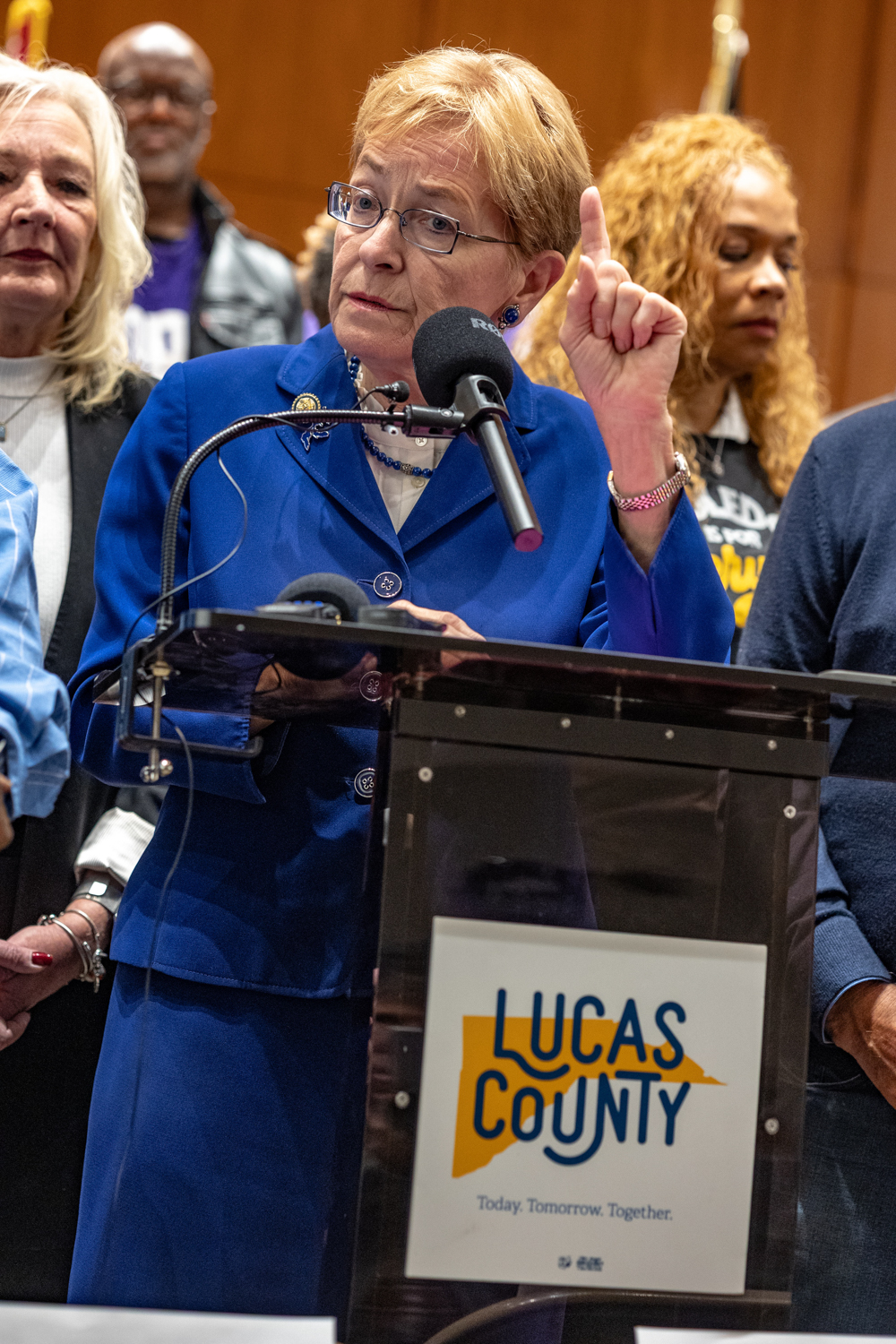
“The President of the United States said that when all these programs would be cut, the states would take care of it,” said Marcy Kaptur, representative for Ohio’s 9th congressional district. “So number one, it’s important that you are pleading to the state, but I doubt that the state will help.”

“It’s millions of dollars,” Kaptur said of the soon to hit gap left by the United States Department of Agriculture (USDA) subsidies for families. 

Marcy Kaptur, United States Representative for Ohio’s 9th congressional district, talks about the effects of the Trump administration, The Big Beautiful Bill and now the government shutdown, on working class people. (TFP photo by Stephen Zenner)

And then she laid into the point of contention between the two parties. 

“What happened in the spring was a bill passed that the president of our country called the Big Beautiful Bill. I called it the Billionaire Bonanza Bill,” she said, and explained how the bill is expected to add three to five trillion dollars to the national debt, the extent of the tax cuts for wealthy individuals and the expected additional cost to individuals by waning healthcare subsidies. 

“If their income is about $80,000 a year…they will probably pay $1,250 more a month, up to $1,500 more a month, almost over $10,000 to $15,000 a year more, because the president wants to kill that program,” Kaptur said.

“Every single one of the hospitals we have here in our region depends on federal Medicare and Medicaid funds to keep their bottom line balanced.”

“The public is beginning to catch on that the price of everything is going up,” she said in context of the new tariffs rolled out by President Donald Trump

“A lot of people have excess wealth, including many of the leaders of this country, and they have no idea what it is like to eke out a living in the working class,” she said. 

Kaptur closed her time by saying, “I believe we need a peace march all across this country, of religious leaders from every single faith expression, and what we need to fight for is the humane treatment of the American people, to raise people’s conscience.”

Rally

Each speaker after Kaptur echoed similar sentiments as stated before, but with their own emphasis. 

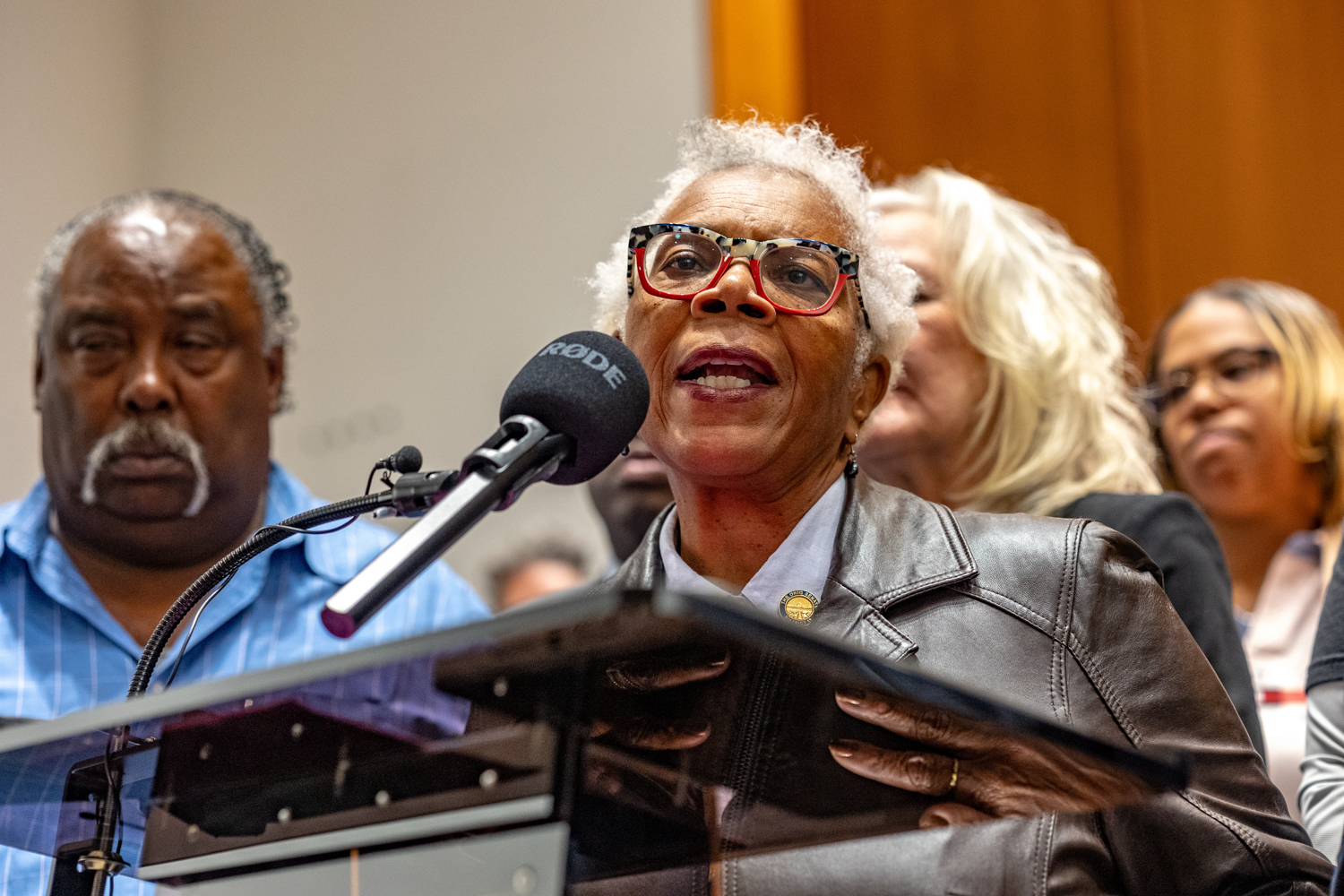
Ohio State Senator Paula Hicks-Hudson, rallied with conviction, said, “If our taxes go in, they should come back out for the betterment of all of us. Not for the what I call ‘the one-percenter,’ not for those who have billions of dollars, who don’t worry about lights, gas, food, gasoline in their cars getting to and from work.”

Paula Hicks-Hudson, Senator for the Ohio State Legislature from the 11th district of Ohio, speaks on the effect of the government shutdown the loss of SNAP benefits. (TFP photo by Stephen Zenner)

She highlighted Ohio H.B. 502, and said, “We’re talking about the working poor, we are talking about children, we are talking about our elders,” when asking for money from the “Rainy Day Fund.”

“And there is no excuse under the sun, none whatsoever, for us not to stand up and to do what we need to do in order to make sure that they are taken care of.”

Elgin Rogers, the Ohio House Representative for Ohio’s 44th district, followed Hicks Hudson, and emphasized the need to “Get out and vote.” 

“We need good elected leaders coming to the table to make sure that our people don’t go without food,” he said. 

Erika White, Ohio House of Representatives, representative for Ohio’s 41st District, speaks of this being the eleventh hour for helping low income people who might lose their SNAP benefits come Nov. 1. (TFP photo by Stephen Zenner)

Erika White, the Ohio House Representative for 41st district, echoed similar details. 

“I just want to say we’re 11, 11, 11,” she said. “We have 11 days to the 11th month, before people are in the eleventh hour, where they’re not going to have what they need.”

“When the federal government stalls, local communities are forced to carry the weight,” she said. “When the federal government shuts down, the needs don’t disappear; they show up at your local food bank, your local clinic and your local schools.”

After some of the rallying rhetoric, Ohio House Representative for Ohio’s 43rd district, Michele Grim, spoke briefly on the practicality of the Ohio legislature, asking the public to reach out to their representatives, and also the chair of the agriculture committee, Roy Klopfenstein, and the vice chair, Jonathan Newman, to hasten the passage of the bill. 

“This is a crisis on our hands, and we need to make sure that we hear this bill quickly, we get it out of committee quickly, and we get it on the floor,” she said.

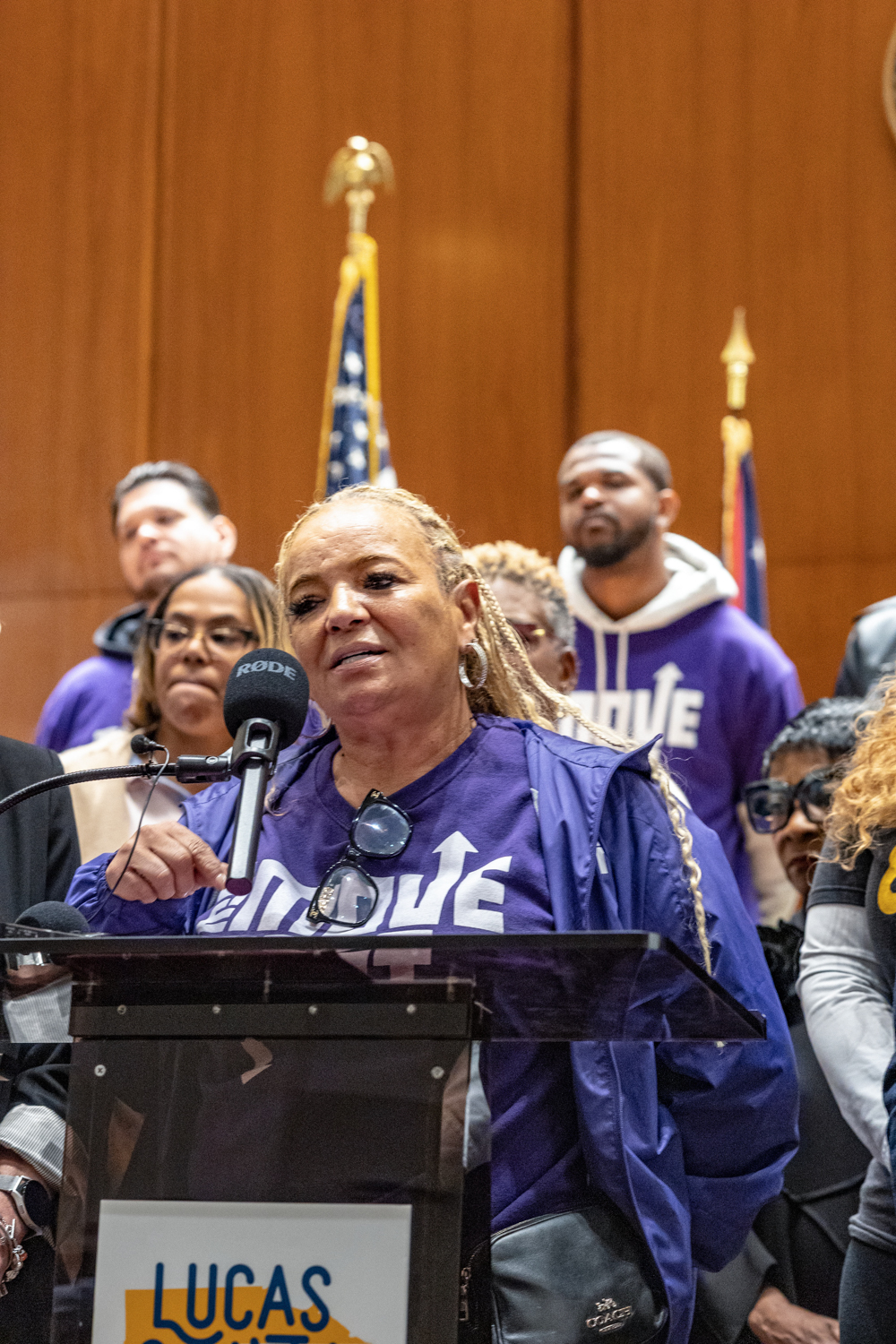
Tina Butts, the founder of the community oriented organization The Movement speaks of the resolve the community has to feed its people, even after potentially losing SNAP benefits due to the federal government shutdown. (TFP photo by Stephen Zenner)

Wade Kapszukiewicz, the Mayor of Toledo, and Vanice Williams, Toledo City Council Member for District 4, both spoke of the need at hand, and then handed the mic over to Tina Butts, the founder of neighborhood organization The Movement

With a different tone, Butts spoke, not as a representative, but as someone impacted by the cuts. “We’re gonna’ feed our babies at whatever cost,” she said. And then encouraged the crowd who had come with The Movement to action.

“We’re gonna’ do whatever it takes to feed our kids,” she said in the closing statement of the conference.

Former City Council Member endorses Ed Beczynski

0

Not long after the Blarney Irish Pub opened in 2006 in downtown Toledo, I met Ed Beczynski. I can’t recall the circumstance that put us in a conversation, probably because I was a newly elected City Council member. But I do remember walking away from our chat with the distinct impression that Toledo needs more folks like Ed to revitalize the downtown area after years of disinvestment. 

By that time, Ed had already established himself as pioneering entrepreneur, a real risk taker, a player in the game of the renaissance of downtown Toledo. After a successful start with a restaurant called Eddy B’s in 1996, Ed opened Focaccia’s Deli on Summit St. in 2001 in the former HCR Manor Care (now the Summit Center) across from the OI Building (now the 5/3 Bank Building). 

I found myself gravitating back to the Blarney in the hopes of additional encounters with Ed to learn more about how he was able to navigate through the challenges that plague most business owners in starting and successfully maintaining a business in Toledo.  In subsequent conversations with Ed, I learned that Ed had help along the way, particularly from Jim Murray, President of Toledo Edison, who provided Ed with support and encouragement, but most of all sound business advice. 

In appreciation, Ed was so grateful he named a menu item in honor of Jim, the Murray Steak Salad, which was Jim’s go-to meal at the Blarney during the many mentoring meetings he had with Ed.  Additionally, when Ed expanded the Blarney, in gratitude after Jim’s passing, Ed named the new addition the Murray Room. For its dedication and grand opening, Ed mentioned that Jim’s spouse, Kay was a long-time follower of city politics and asked Ed to see if he could get the former and current mayors of Toledo to attend the dedication and ribbon cutting.  Ed called me to assist in this regard and after a few phone calls Donna Owens, Carty Finkbeiner, Mike Bell, Paula Hicks-Hudson and Wade Kapszukiewicz were all in attendance.

The ease it took to secure the attendance by all of Toledo’s mayors was a tribute to the hard work and effort that businesspersons like Jim and Ed played in the success of the revitalization downtown Toledo. 

The Murray Room went on to become a popular meeting spot for round-table discussions among Toledo’s movers and shakers on issues affecting our community. Ed was there for these discussions and was able to gather an appreciation for what it takes to build the consensus to move a community forward on complex issues.

In 2022, Ed was called upon to assist the Market on the Green, located at Madison and 17th Streets, using his business acumen. ProMedica, as part of their community outreach, took on the task of identifying the social determinants for poor health and quickly discovered that poor nutrition was a primary factor. 

The area was a “food desert,” meaning there were no nearby options to obtain healthy food choices. After operating for awhile, the Market was in need of some of assistance with their business model to become more financially stable. Ed was called upon to provide the business assistance necessary to effect a financial turnaround.

Ed, as one of the ever-growing number of downtown residents, heard the lament about the lack of a downtown grocery. Rather than complain about the problem, Ed decided to do something about it. Ed will be opening a grocery in the former Okun Produce building (across from the Mud Hens Stadium) at 33 N. Huron by spring-summer of 2026. A project like this had been talked about for a long time. Ed’s response: fulfill the need, make it happen.

Ed was raised in south Toledo in a modest home on Dunham Street off Detroit Ave. near the railroad overpass. One of eight siblings (all sisters), Ed was a proud TPS student, graduating from Burroughs Elementary and Bowsher High School. 

Ed enlisted in the US Air Force and served his country as an aircraft mechanic. Both prior to and after his military service, Ed worked in the restaurant business, doing everything from bussing tables and washing dishes to cooking in the kitchen. Hard work and dedication to his craft paid off and Ed went on to become the successful entrepreneur he is today. Ed demonstrates what it takes to be successful and I am confident he can put those same skills to work as an At-Large City Councilman.

Several months ago, I got a call from Ed. He mentioned that he was thinking of running for an at-large seat on Toledo City Council. He said he was pulling back from his restaurant businesses a little and felt a desire to give what he had been taught back to the City. He told me all the things he had learned in his business experiences could be used to help guide the entire city. He asked me if I thought he had what it takes to make a good City Council person. Without hesitation I said, “Absolutely!” 

Listening to what people want and need and finding a way to put those aspirations into action are skills Ed has developed and is now ready to share with his fellow citizens. Ed is exactly who we need to help lead our City.  He possesses the rare combination of being well suited (based on his business experiences) and willing (to take on an often thankless job) to represent us on Toledo City Council. Ed will be a true civil servant for Toledo.

Please join me in voting for Ed Beczynski for Toledo City Council At-Large.

AW Voter’s Guide: Three incoming Whitehouse council members

0
(TFP photo by Karen Gerhardinger)

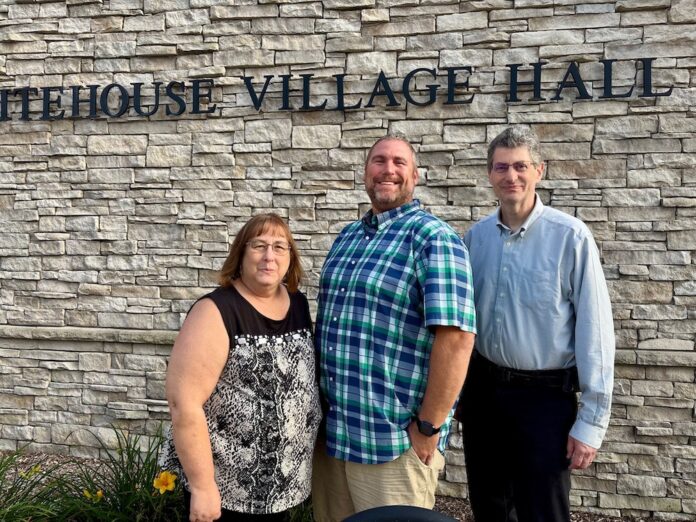
WHITEHOUSE – Louann Artiaga, Joe Bublick and Steve Fine are running unopposed for three positions on Whitehouse Village Council. 

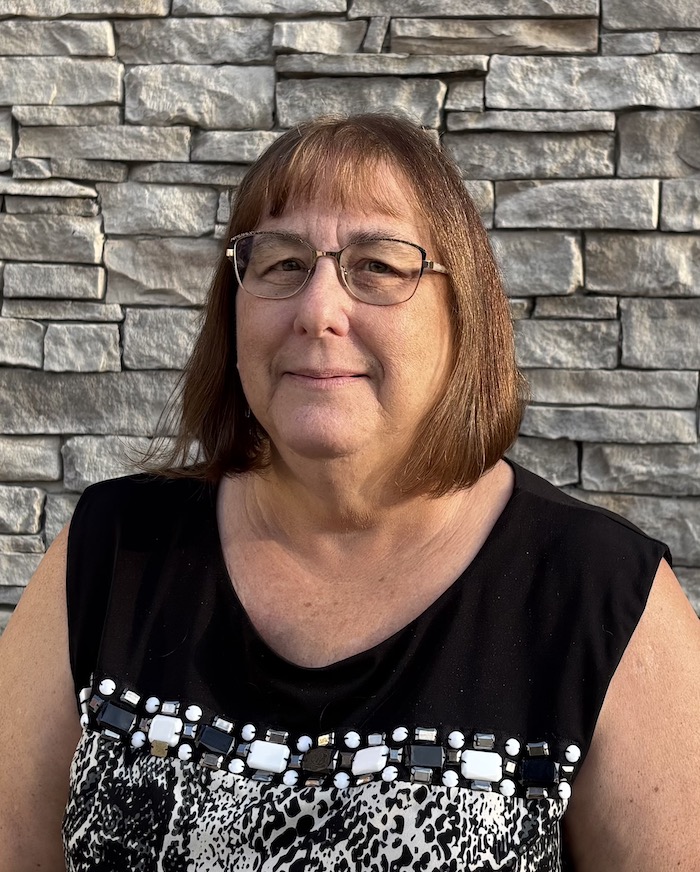
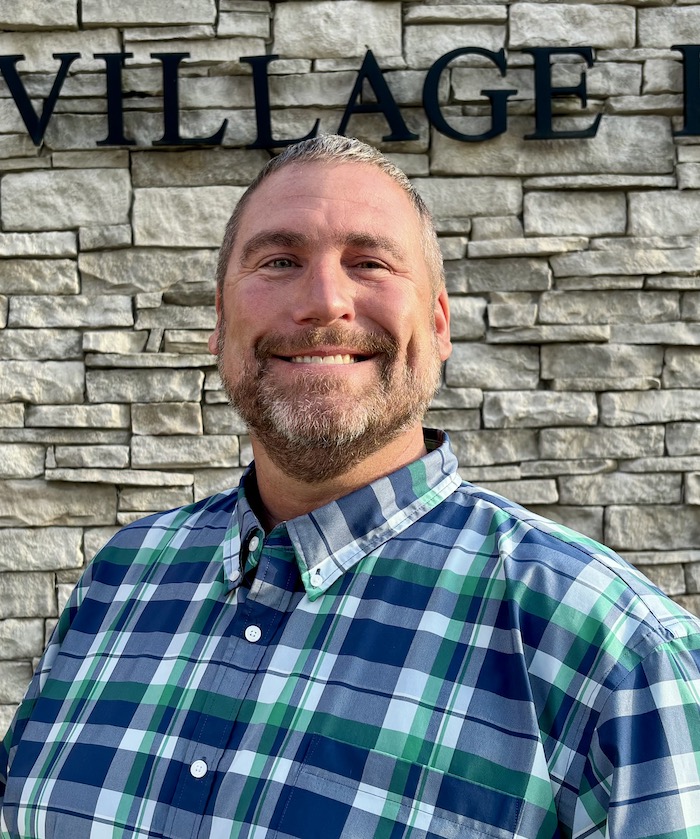
(TFP photos by Karen Gerhardinger)

Artiaga was first appointed to fill a vacancy in April 2012 and has won re-election since. Fine was appointed to Council in January 2024 and is seeking his first full term in office. Bublick was edged out in the 2023 election and is looking forward to serving on council. The Anthony Wayne Free Press asked the three candidates to share their thoughts on goals, challenges and how to maintain open lines of communication.

All three rank economic development as a top priority for the next four years.

“The goal is to attract appropriate new businesses to the area, resulting in more jobs, new choices for residents and additional tax revenue to help cover growth in the village’s costs,” Fine said. “I think it’s important for the village to focus on maintaining and enhancing its infrastructure and attracting appropriate new business.”

Whitehouse has gained a lot of attention over the last decade, and people want to live and work in the village, Artiaga and Bublick added.

“Currently we have businesses that would like to move here but we have no space for them to go. In the current economic climate, businesses want move-in ready buildings. We have little or no options at this time,” Artiaga said.

Bublick, who operates his construction business from his home and truck, said he loves living and working in Whitehouse and knows that others want to do the same. While residents want restaurants and shopping, Bublick said the public needs to be more open to other types of business ideas as well. 

“To survive, we need growth. We can’t be a community that puts up walls,” he said.

In addition to working with small businesses to open up in town, Bublick’s goals include improving the parks, investigating the idea of a dog park, and supporting the police and fire departments.

“The police are interested in getting Flock cameras. We depend on the police and fire so heavily. We need to make sure they have the newest equipment. They’re responsible for protecting our homes,” he said.

While the Veteran’s Memorial Park made its debut in 2019, Artiaga – who was integral in raising funds for the project – wants to continue with updates to the park.

“I am currently involved in a project that would put a QR code in the park so people can hear actual stories about the different wars and the soldiers who lost their lives in the various conflicts,” she said. 

Continued updates to the Whitehouse Park shelter house are also on her wish list. Her goal is to make the renovated building useable year-round, not just in the warmer months. And lastly, Artiaga has been working with Mayor Rich Bingham to create a community center. While the Toledo-Lucas County Public Library is open to the idea of including space for a senior center in its new Whitehouse Library plans, Hope United Methodist Church is hosting a Saturday morning Senior Connection program to fill the gap.

During his short term in office, Fine – who retired after a career that included software engineer, chief information officer and head of an atmospheric science laboratory – dove into researching options for electrical aggregation for the village. Council and the voters have since approved the use of such a program.

“We are now waiting for a good time to lock in electric rates before completing the last steps required to provide electricity to customers,” Fine explained, adding that one of his goals is to work on the initial rollout of the program and to provide annual updates to rates. “We hope this will help lower electricity costs for many residents.”

Fine and Artiaga both plan to continue working with Council and staff for improve the village’s financial planning process. One of the biggest challenges is maintaining the same level of service to residents without raising taxes, said Artiaga, who opposes increasing taxes or eliminating income tax credits without voter approval.

“As the village grows, it becomes increasingly harder to maintain services in our bedroom community. We need business that will contribute to our tax base,” she said.

On Saturday, Nov. 8 from 8:30 to 10:30 a.m., council members will be at Copper Press Roastery to welcome community input. This is one of several ways that the village excels at reaching out to residents, Bublick said.

During his career, Fine said he worked with colleagues and partners to build consensus on how to overcome complex challenges. He plans to continue using those skills on council – utilizing multiple approaches to keep up with constituent perspectives. When the village did a comprehensive resident survey last year, he helped summarize the data for Council and the public. He also works with staff to provide clear explanations of ballot issues. And he regularly joins the mayor and council at public events to welcome resident discussion.

“I have also suggested that the village publish a periodic newsletter, and will continue working towards establishing that,” he said, noting that many residents in the survey listed that as an ideal form of communication.

All three note that they are open to ideas and input in order to represent citizens. Artiaga encourages citizens to attend meetings, coffee meet-ups and contact council members to share ideas. The village’s website and Access Whitehouse app also contain information about current events, meetings and finances.

The website, whitehouseoh.gov, also includes details about three charter amendments on the ballot: two deal with term limits for council members and the mayor, and the third regards the powers of the mayor.

AW Voter’s Guide: Board Members Kyle Miller and Mike Stamm

0
(TFP photo by Karen Gerhardinger)

ANTHONY WAYNE – Anthony Wayne Board of Education members Kyle Miller and Mike Stamm are running unopposed for two four-year terms. Miller was elected in 2021 while Stamm was elected in 2023 to an unexpired, two-year term. 

The Anthony Wayne Free Press asked the two to weigh in on accomplishments, challenges and goals for the board in the coming four years – including the immediate task of selecting a new board member to replace Shellie McKnight, who is departing at the end of the year. 

“We have the responsibility to move forward the right way,” Miller said of the process to select McKnight’s replacement. “Every applicant will be given equal consideration. Our priority is selecting someone who will help guide our district forward and someone the community can rally behind.”

In addition to selecting a new board member, the district will also need to hire a new treasurer and superintendent during the next four years, Stamm said, referring to the upcoming retirements of treasurer Kerri Johnson and superintendent Kevin Herman.

“Those are decisions that will shape the future of our district for years to come,” Stamm said, adding thAT the board also needs to create a clear plan for what the district should look like going forward.

“I want our community’s values to guide the future of Anthony Wayne so we can continue to be a district that families can be proud to call home.”

Miller acknowledged that the district has faced challenges, including community division.

“I believe we can move past that division and unite around our shared goal of having our students succeed,” Miller said.

Bullying also remains a top concern, and while Miller said some progress has been made during his first term, there is always more to do. 

“We cannot eliminate it entirely, but we can continue improving our policies and practices to better protect and support students,” he said.

One of the biggest challenges facing all school districts is when parents don’t stay engaged, Stamm said.

“Schools work best when families are involved and supportive of both their children and the district. When parents are engaged, teachers also feel more supported and appreciated, which makes a huge difference in the classroom,” he said.

Both note that the district always faces financial challenges as well, with rising costs and uncertain state funding.

“There are always uncertainties, but with this board and our exceptional administration, I have full confidence we will navigate challenges wisely and responsibly,” Miller said.

Both men said they have learned a lot during their time on the board and will use that knowledge moving forward.

“I first ran to make sure our schools follow the values of our community and to help rebuild trust between families and the district,” Stamm said. “I think we’ve made progress, but there is still more work to do. Parents’ rights matter, and I want to continue making sure families have a strong voice in the decisions that affect their children.”

Miller said he’s learned the power of listening to everyone in the district, including parents, students, staff and community members – who all bring unique perspectives and ideas.

“Truly listening makes us stronger. It helps shape the discussions I bring back to fellow board members and our administration, and it ensures that the decisions we make reflect the voices of the people we serve,” Miller said.

Both men said they will make it a priority to listen to all voices, regardless of political affiliation or political viewpoint.

“Every concern and perspective matters, because every voice in our community matters. That commitment will remain at the heart of how I serve,” Miller said.

While not everyone will agree with every decision, that’s part of living in a great community, said Stamm, noting that he will listen to everyone and make the best decision for the entire district.

“Even when we don’t agree, people should feel they were heard and respected. That’s the kind of leadership our community deserves,” Stamm added.

Applications for the open board position, which has two years remaining from January 1, 2026 through December 31, 2027, are due on Monday, Nov. 3. The district’s website, anthonywayneschools.org, has an online application available. McKnight’s successor will be named during the Monday, Dec. 8 board meeting and sworn in during the first meeting in January.