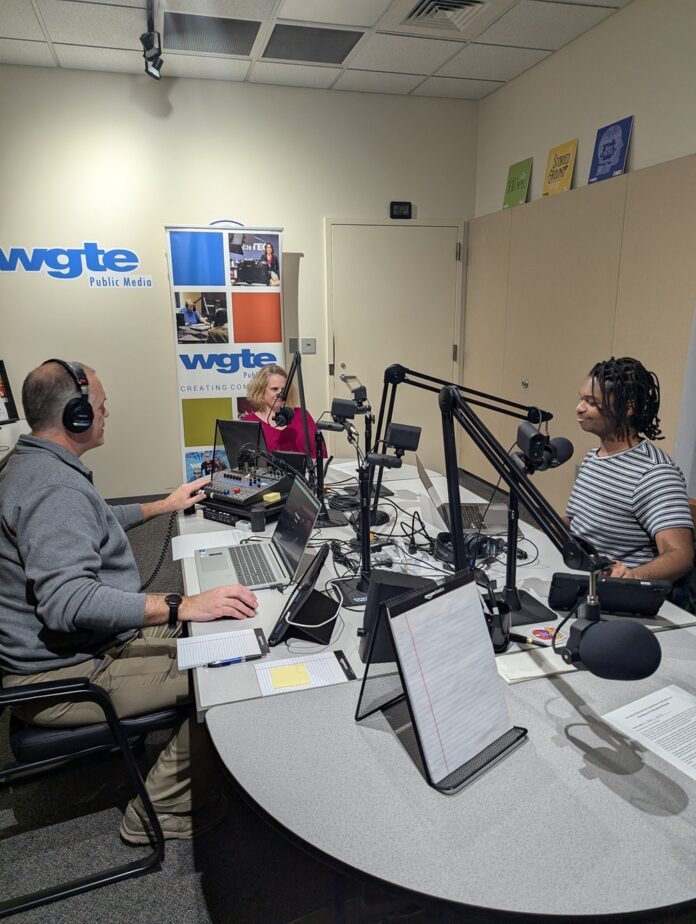
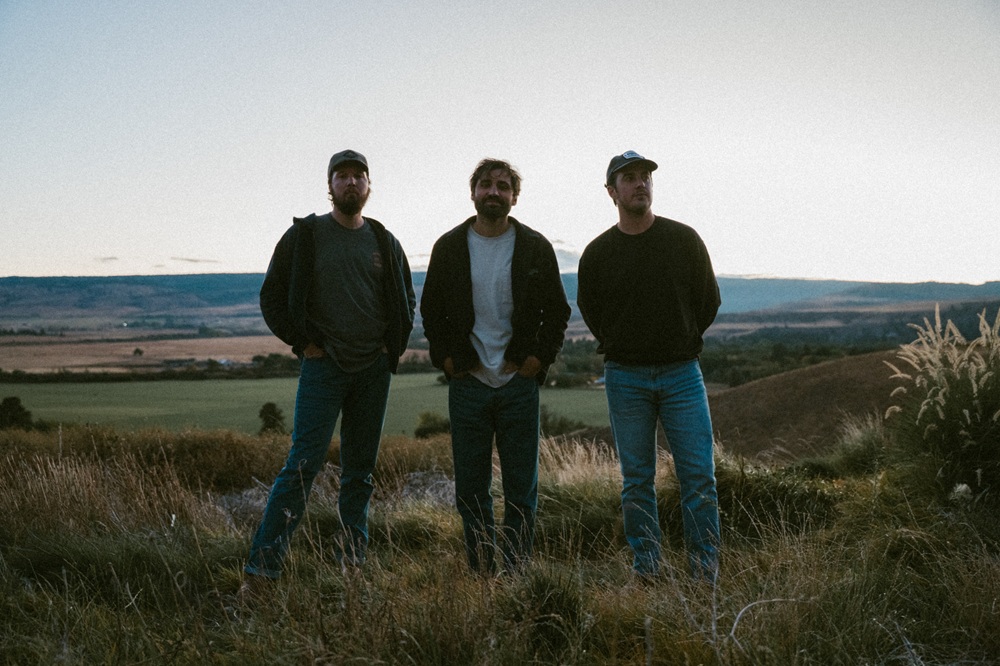
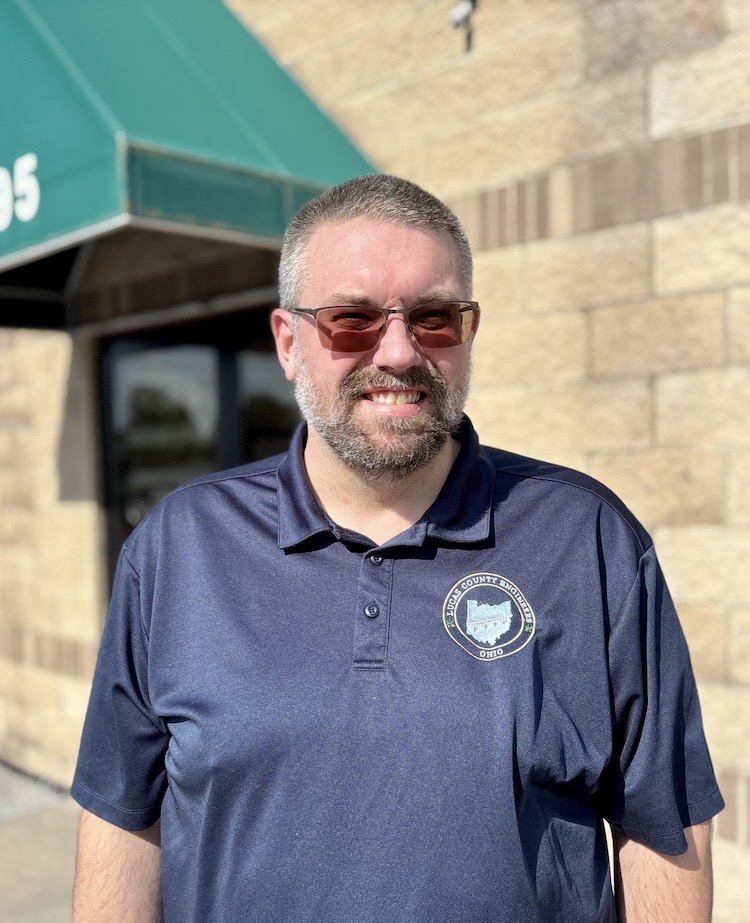
Toledo Works, a program on The Local Thread, is hosted by Jaden Jefferson (far right). He interviews Kate McGuckin from the Toledo WIC program for the first episode as producer Chris Peiffer records the episode. Toledo Works is the program by the Toledo Free Press. (TFP photo by Erin Holden)
TOLEDO- In January of this year, WGTE Public Media launched a series called The Local Thread, a project that details the work of various organizations in the Toledo area. The project is formatted as a podcast/radio show that empowers local people and local media — including La Prensa, The Sojourner’s Truth, and the Toledo Free Press — to tell their stories. The shows affiliated with The Local Thread were airing on weeknights from 7 – 8 p.m, and they have been successful in their mission to unite the voices of Toledo.
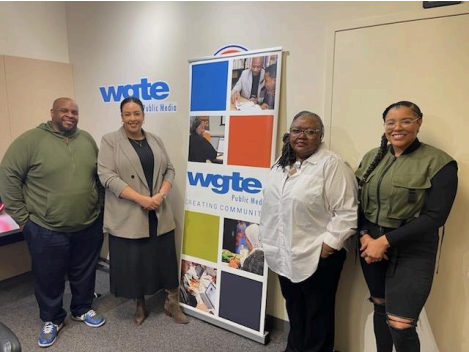
Marcus Harrison (far left) and interviewees in front of the WGTE Public Media poster after a podcast recording for The Local Thread. (Courtesy photo)
Marcus Harrison — the director of communications and marketing at WGTE Public Media — said that The Local Thread has caught the attention of a significant number of people over the past few months.
“All of the programs have engaged a good number of people within their respective content. This was the goal of the entire project. The good thing is, each program offers something different from equally important pockets of the community.”
While the diversity of conversation has been pivotal for The Local Thread’s success, Harrisonemphasized that the way the project has been marketed to consumers cannot go unmentioned.
“By utilizing YouTube shorts and social media clips, we offer snippets of each podcast recording for potential listeners to consume, with the hope that they go on to listen to the full podcast. Since The Local Thread began, we have definitely seen growth in overall listenership and engagement of this series.”
WGTE Public Media has helped local papers expand their reach. Fletcher Word — the owner and publisher of The Sojourner’s Truth newspaper — explained that The Local Thread’s decision to talk with his team has improved audience engagement. Word’s paper highlights the Black community in Toledo, focusing on topics including government, health, education, and social events. The paper is available in both print and online.
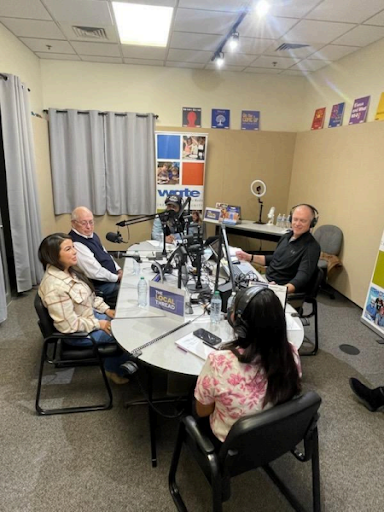
Chris Peiffer (far right) records a podcast with the team from La Prensa. (Courtesy photo)
“We believe that this has been a successful experience for the paper, for the staff and for the guests we have had the chance to interview on air. We have received much feedback from listeners who have also enjoyed the show.”
The Local Thread has connected Toledoans and others in northwest Ohio, but Harrison noted that WGTE has plans for expanding the program to broader audiences in the future.
“We would love to expand The Local Thread to feature other organizations that reach a wide range of people… We are open to discussing further partnerships with other entities as long as it makes sense. We all have a story to tell, and it is our job to engage the public with timely information and topics.”
Harrison added that without listening to what Toledoans desire out of their media, The Local Thread would not have prospered.
“WGTE’s plan for improving The Local Thread involves listening to the public as well as our partners. We believe listening is the most important aspect to any type of improvement. We will continue to work with like-minded organizations that are willing to utilize our platform for getting their message out there to the local community.”
Listeners can find all of the Local Thread programs, including Toledo Works (the show produced by the Toledo Free Press) here.
A Larger Blue Flag Iris in the Oak Openings region. (Photo by Art Weber, nature photographer for Metroparks Toledo)
As the spring season marches on and the woodland canopy fills with leaves shading the forest floor, our wildflowers are responding with sort of a migration, too.
Many of our woodland wildflowers have already had their days, exploding with blooms in April and May.
As late spring and summer take hold, it’s time for the wildflowers along our waterways, wet and dry meadows, and prairies to start showing off.
Shown here is the showy bloom of larger blue flag, a member of the iris family that, though it’s a wildflower, resembles a garden iris. Look for it in late May in our marshes and open wet areas, blooming atop sword-like leaves as much as three feet tall. This image was captured in the Oak Openings Region.
The variety of wildflowers to be seen along our region’s roadsides and nature trails is truly amazing. The colorful parade of blooms that started with the first warm days of spring will keep changing and pleasing us well into the fall.
Oliver Hazard performed to a packed Third Street in downtown Waterville in 2025. The annual Oliver Hazard Day, returning on August 15, is one of several live music events slated for the Anthony Wayne area this summer. (AWFP photo by Karen Gerhardinger)
Get ready for a summer full of music in the Anthony Wayne area. Waterville and Whitehouse are hosting several outdoor music events, so no need to fill up the tank – just put on your dancing shoes!
The Chris Shutters Band will kick off the Whitehouse Summer Concert Series on Thursday, May 21 at 6 p.m. (AWFP photo by Karen Gerhardinger)
Thursday, May 21
Whitehouse launches its summer concert series with the Chris Shutters Band in Whitehouse Park, with live music, food trucks, vendors and a designated beverage area for 21 and older. The evening begins at 5 p.m., with music at 6 p.m. The event is free. Bring a lawn chair or blanket.
Athens Wheeler will take the stage in the Conrad Park Pavilion on Tuesday, June 9 at 5:30 p.n. for the Anthony Wayne Area Arts Commission’s first Eats & Beats Food Truck Tuesday. (Courtesy photo)
Tuesday, June 9
Athens Wheeler takes the stage for the first Eats & Beats Food Truck Tuesday, 5:30 to 8 p.m. in Conrad Park. Hosted by the Anthony Wayne Area Arts Commission, the free events feature food trucks, kids activities and crafts, and live music in the pavilion. Bring a blanket or lawn chair. Bring the kids or grandkids to enjoy the playground, music and activities.
June 11-13
Baja Fog will perform in the beer garden at Whitehouse Cherry Fest on Thursday, June 11 beginning at 6:30 p.m. (Courtesy photo)
The 43rd annual Whitehouse Cherry Fest, June 11-13 in downtown Whitehouse, will feature live music on several stages throughout the three-day festival. Tickets to shows in the beer tent are $5, while pavilion shows are free. Seating is available for both stages.
Thursday, June 11
Baja Fog takes the stage in the beer garden at 6:30 p.m., followed by the Justin Marchand Band at 8 p.m.
Grit and Glass will perform on Thursday, June 18 at 6:00 p.m. in Whitehouse Park. (Courtesy photo)
Thursday, June 18
Country band Grit and Glass takes the stage at the Whitehouse Park Pavilion at 6 p.m. as the second in the village’s summer concert series. The fun begins at 5 p.m. with food trucks, vendors and a designated beverage area for 21 and older. The event is free, but bring a lawn chair or blanket to enjoy the show.
Tuesday, July 14
Hit & Run, a Waterville-based band that blends jazz and alternative rock, will perform as part of a special Eats & Beats in conjunction with The America 250 – Waterville Committee’s Kids Dig History event. Area organizations will set up booths with educational and fun activities for kids (and adults) to explore history, with guides in historical attire. The music, food trucks and activities will be in Waterville’s Conrad Park from 5:30 to 8 p.m.
Hit & Run will perform at 5:30 p.m. on Tuesday, July 14 at Conrad Park in Waterville. (Courtesy photo)
Thursday, July 16
Abbigale Rose & The Highlights finish off the free Whitehouse summer concert series, held in Whitehouse Park beginning at 5 p.m. with food trucks, vendors and a designated beverage area for 21 and older. Abbigale takes the stage at 6 p.m. Bring a lawn chair or blanket for this free event.
Abbigale Rose & The Highlights will perform at 6 p.m. on Thursday, July 16 in Whitehouse Park. (Courtesy photo)
Saturday, July 25
The Anthony Wayne Area Rotary Club is hosting its 11th annual Blues, Brews and Brats festival in downtown Waterville, on Third Street and Farnsworth Road. Gates open at 5:30 p.m. and music begins at 6 p.m. Tickets are $25 for three great acts, including Mud Morganfield, the eldest son of blues great Muddy Waters. Toronto-based Bywater Call is a powerhouse seven-piece Southern soul, roots rock outfit. Fans will also enjoy a Toledo Rhythm and Blues All Star show featuring The Good, The Bad and The Blues, Bobby G, Sisters of Thunder and Ramona Collins. Bring a lawn chair. The event benefits Rotary programs including scholarships for high school students. For information, visit awarotarybbb.com.
Tuesday, August 11
The finale of the Eats & Beats events at Conrad Park in Waterville will feature Pop’s Garage, a five-piece top 40 dance party band. Bring a chair or plan on dancing. Enjoy food trucks, kids activities and crafts, as well as vendors. The event will be held from 5:30 to 8 p.m.
Saturday, August 15
Waterville’s own indie-folk band Oliver Hazard has been touring the globe and releasing new music, but is returning to town for a day filled with music. In addition to Oliver Hazard, bands in the lineup include Briscoe, Tors and Olive Klug. Jon Zenz will do some vinyl spinning. And Tayler Meinen will complete a mural during the festival. Doors open at 4:15 p.m. on S. Third St. in downtown Waterville. For ticket information, visit oliverhazardday.com.
Oliver Hazard is back in town for the Oliver Hazard Day indie-folk festival in downtown Waterville on Saturday, August 15. Visit oliverhazardday.com for the band lineup and ticket information. (Courtesy photo)DJ Jon Zenz will spin vinyl during Oliver Hazard Day. (AWFP photo by Karen Gerhardinger)
The Valhalla subdivision is one of 24 communities in Monclova Township with plats that are not under the Lucas County stormwater permit. Monclova Township trustees are considering adding these plat to the permit, in order to be prepared if an issue arises. (AWFP photo by Karen Gerhardinger)
MONCLOVA TOWNSHIP – In the 24 Monclova Township subdivisions not currently under a county drainage maintenance plan, when a retention pond is overflowing or a pipe is blocked, questions often arise as to who is responsible for fixing it.
So township trustees invited Lucas County Engineer Mike Pniewski to their May 4 meeting to explain.
Monclova Township is among the nine townships covered under the county’s stormwater permit – which ensures that best management practices are used to remove pollutants and sedimentation from entering the natural waterways. Keeping a stormwater retention pond maintained is vital to preventing issues, Pniewski said.
Lucas County Engineer Mike Pniewski attended the May 4 Monclova Township trustees’ meeting to explain the process, and reason behind joining the county’s stormwater permit. (AWFP photo by Karen Gerhardinger)
Many developments built before 2012 have homeowners associations (HOAs) that hold the permit, and the responsibility, for maintaining those facilities, Pniewski said. So any work necessary to keep water flowing falls on the HOA and its residents.
“So I live in my subdivision and my HOA is in charge of all the pond maintenance. The pond might have fish and boats, but they’re really stormwater ponds,” said Trustee Barbara Lang.
Pniewski agreed, noting that even ponds that look recreational are primarily built to control stormwater. If a pond is overflowing or flooding, the first call should be to the HOA to find out why it’s not being maintained.
“Some HOAs are very engaged, like Waterside. There are people and board members who are very knowledgeable,” Pniewski said. “Others are not, and people call us to ask who is responsible, so it becomes an education on how it works.”
When the county or township gets a call about flooding, it’s usually as a result of a clogged pipe, improperly maintained pond or homeowners filling in swales that are meant to keep the yard draining properly. Typically a subdivision has a back yard drain for every three parcels, with an easement for crews to access to do maintenance.
If the HOA doesn’t know how, or fails to maintain it, the county can step in to fix the problem, and place the cost for that maintenance on the residents’ tax bill. All it takes is one benefitting property owner to petition the county to have the neighborhood be part of the county’s permit. The township, which owns the roadways in these subdivisions, can petition the Lucas County Commissioners.
“I’m always of the opinion that it’s better for the government to have the ability to step in and help the residents. Without the petition, we don’t have the ability to do that,” Pniewski said.
Even with the petition in place, the HOA can still handle their own maintenance or hire someone to do it. The benefit of being under petition is that if the HOA is not meeting those best management practices and the residents are suffering from the impact of a lack of care for those facilities, the county is then permitted to step in to help.
Lucas County stormwater supervisor Matt McFadden provided a list of the subdivisions with plats that are not under a county drainage maintenance plan. Some include just a small group of homes that are not typically considered a subdivision, such as Oak Shade Acres on LaPlante Road or Sager Woods on Whitehouse Spencer. Others are more noticeable, including Brandywine, Blystone Valley and Crosscreek Woods, Hidden Ridge, Keystone Business Park, the Quarry, Stonebrooke Farms and Valhalla.
If interested, the township could file a petition with the commissioners, which would consider information presented by the Lucas County Engineer, including photos and statements from property owners affected by the lack of maintenance. Once the petition is filed, there are a series of hearings on the with the Lucas County Commissioners.
First, a virtual view of the facilities followed by a public hearing would be held for others to weigh in. After the hearing, the county engineer would determine how potential future maintenance assessments would be partitioned between property owners. A final hearing would then be held to confirm the petition. After the petition is approved, the county would follow up by inspecting each petitioned property annually to ensure compliance. If work is required for maintenance to keep in compliance with the stormwater permit, the HOA would first be contacted to perform maintenance. If not performed, the county could then perform the repairs with the cost assessed to residents.
The trustees discussed how to move forward, with Lang suggesting that a special meeting would be idea in order to not blindside residents in those subdivisions. Trustee Chuck Hoecherl asked whether the Lucas County Commissioners could host a hearing at the township to make it easier for residents to attend, as commissioner meetings are held downtown on weekdays.
Moving forward with putting these communities under the county permit makes sense, Lang said.
“When something goes wrong, we should be prepared to take care of it,” she said.
During the meeting, the board also:
-Welcomed new administrator Mike Hampton, whose first day on the job was May 1.
-Heard Hampton say that the chief inspector for the county engineer’s office set a start date for the Monclova Road and Albon Road roundabout construction at June 1 – pushed back due to First Energy’s need to relocate utilities. Hampton has resolved concerns about first responder access during the construction, with a pathway for emergency vehicles only. Once this construction is finished – in about 30 to 45 days – work will begin on a second roundabout in front of Monclova Primary School at Waterville Monclova and Monclova roads.
-Thanked Lamar Advertising for allowing the township to use the bottom portion of a billboard sign on U.S. 20 near Strayer Road to install a “Welcome to Monclova Township” sign at no cost. Trustee Hoecherl said that Yarder Manufacturing has two static billboards on its property along I-475/U.S. 23 that it is planning to replace with a digital billboard, and the township could utilize it for messaging on events or safety issues.
-Agreed to purchase a new server from TrioTech for $15,825 to replace a 2016 server that is running out of space.
-Set a public hearing for the 2027 budget during the Monday, June 15 meeting.
-Heard resident Risa Sindel question Lang and Fiscal Officer Gavin Pike about any meetings they might have had about data centers. Sindel also asked Lang to resign, citing a lack of trust. Lang said she would not step down but urged residents to speak with her if they had concerns.
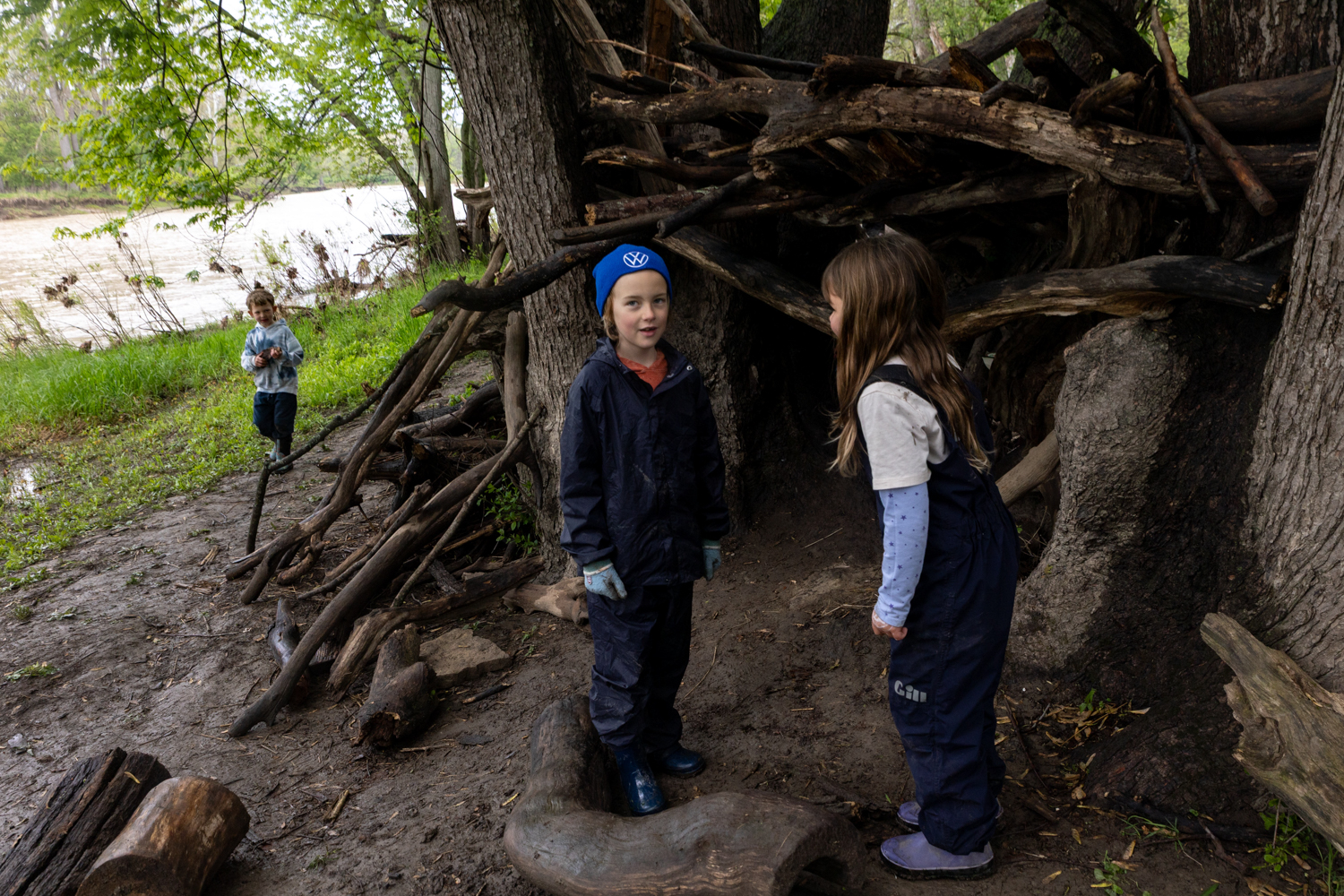
Leo and Gia put branches into the shelter they are building during a Forest Time Kindergarten session at Side Cut Metropark in Maumee. (TFP photo by Stephen Zenner)
TOLEDO – Huddled in a circle at Side Cut Metropark, a score of children and three adults loosely plan their next five hours together in the park.
“Fridays is our forest school group, and they never not want to come,” Lauren Sells said of her son Parker, 10, and daughter Paisley, 8.
Sells never saw herself homeschooling, but opted for it after learning her son was often confined to a bench in a formal school setting for his hyperactivity.
“It was just like a really big red flag for me,” she said. “Why in kindergarten, for two-and-a-half hours a day, is he sitting on the bench constantly?”
Norah, 6, plays in the mud. (TFP photo by Stephen Zenner)
Questions like these led Sells to opt for more alternative approaches to learning, including home school, a Wednesday “Wild and Free” group, and a Friday Forest School group.
For Sells, these changes provided a consistent community for her kids and time outside, something essential for her son.
“He is his best self outside, daily. I mean, he asks to go outside,” she said.
An unexpected journey
Building shelters, playing in puddles and finding worms are nostalgic parts of childhood, but most people wouldn’t equate those memories with a school curriculum.
At Forest Time Kindergarten, Sherri Dauer is trying to change how parents and children approach learning.
“They’re more curious when they’re discovering something on their own, and if they’re allowed space and time and a little bit of quiet to figure it out,” Dauer said. “Their curiosity will drive them further if they want more information, and then they’re able to retain it a whole lot longer.”
Sherri Dauer, the founder of Forest Time Kindergarten, guides kids through their morning circle where kids do group exercises and go over the structure of the day. (TFP photo by Stephen Zenner)
Dauer, a mother and grandmother, was no newcomer to supervising children.
“I was a paraprofessional through Perrysburg schools, and my whole life, I was either a volunteer with children or Sunday school teacher, Girl Scout leader, those kind of things,” Dauer said.
But when she became a grandmother, she noticed something missing for her granddaughter, “so the focus was on what we were doing with my 3-year-old.”
The newest generation just wasn’t getting the same experiences she and her daughter had growing up.
“They don’t have enough time to play and [don’t] have a lot of time to get bored,” she said.
And while play and boredom may not seem like the most important parts of life, Dauer could tell something important was getting lost in the 21st century.
Quinn watches Jadyn eat Jello, while Finn holds a magnifying glass. (TFP photo by Stephen Zenner)
According to Dauer, kids were not being given opportunities to test their own competency, they were not being taught skills giving them independence, and instead were being pulled away from regulating their bodies and trusting themselves.
“I think a lot of parents are too busy. Kids, especially in the last 10 years, have a lot more access to screen time and a lot more access to being carted around to 10 different activities,” she said describing a general busyness that has distracted parents from passing on the basic skills of being human.
“I wanted to be able to take children out in the forest, and really let them climb on things and explore,” she said.
Following that urge, Dauer looked at some formal approaches to teaching kids what they might learn in the natural world.
“It’s called the Association of Nature-Based Educators (ANBE),” she said. Dauer went on to get three levels of certification in ANBE teaching practices.
Dauer said a lot of the first certification revolved around keeping kids alive in nature, as a supervisor. But a lot of what she had in mind was letting kids figure things out on their own.
There wasn’t anything in northwest Ohio that mirrored what Dauer was trying to do, so in 2018 she opened her own program, Forest Time Kindergarten.
Isla holds a bunch of worms in her hand during a Forest Time Kindergarten session. (TFP photo by Stephen Zenner)
Forest School
“[Forest School] is a long-term program that supports play, exploration and supported risk taking,” from theForest School Association.
Eight years on from its start, Dauer’s kindergarten operates Tuesdays through Fridays, teaching kids ages 3-13 years-old with six staff members.
“Our parents trusted us to be outside, but they also taught us how to be outside,” Dauer said. In this same manner, her school teaches kids to be unafraid of being in nature, including rain and snow, with a few caveats for dangerous circumstances. But the school does not shy away from getting kids layered up in less than optimal conditions.
Required readings for teachers include There Is No Such Thing As Bad Weather by Linda McGurk and Balanced and Barefoot by Angela Hanscom, two books that emphasize the benefits of free outdoor play for children.
Miles stands on top of shelter at Side Cut Metropark. (TFP photo by Stephen Zenner)
The facilitated groups of school children break off into self-directed activities, where kids are encouraged to lean on their own ability, their peers and older children, with teachers only intervening after exhausting their other resources for ability and knowledge.
When the Toledo Free Press observed a Friday session, kids built a fire in wet conditions, worked on building a shelter made from found branches, rolled in the mud, built their own cantilever, looked at a specimen through a microscope, took photographs, collected water samples and went on a hike.
Leo, 5, and Matilda, 5, play in mud and collect water. (TFP photo by Stephen Zenner)
Opportunities for lessons under this school of thought are as diverse and seemingly random as a 5-year-old might be.
Open-ended play is learning, according to Dauer. “If they find it or discover it or figure it out, they’re going to learn more about whatever that is, much more than if we were just to hand them a book or a lesson, because they figured it out in their time when they were ready,” Dauer said.
When asked what the kids learned throughout the day Dauer said, “Leadership, problem solving, patience, following through…like if we tell one child to tell another child [something], and they’re able to tell it completely, then we know that first child has learned it.” Then she continued the list: “Boundaries, self control, self regulation, compassion, empathy.”
Much of the teaching practice deals with kids learning emotional intelligence, connecting with themselves, connecting with others and their surroundings, but there are practical skills and take-aways too.
Isla enjoys a snack break. (TFP photo by Stephen Zenner)
“We teach four-year-olds how to sew…how to mend things they use. The older kids will use an ax to chop wood. We start out with vegetable peelers for the little ones…so that they can they start by scraping pieces of wood, just taking the bark off. And then they can graduate to potatoes and carrots,” she said.
“The older kids have learned how to make a fire from scratch by using flint and steel, and they tend to the fire, and then they make lunch or soup for the younger kids.”
From the free-form self-direction to applicable skills, “They go from being such a tiny human being full of wonder to, ‘Wow! Look at some of the stuff I know, and I’m more independent, and I can feed myself, I can build a fire and take care of myself,’” Dauer said.
One of the teachers at the school, Victoria Devitt, used to teach preschool, but turned to the Forest Time Kindergarten as a more natural learning environment for kids in that age bracket.
“I feel like before, I was kind of by the book, just following the curriculum,” Devitt said about her time in a traditional preschool. “It was just more forced and more stressful, whereas here I get to observe what the children want to do and want to learn…and it just feels like they learn better that way.”
There are themes for different weeks, but Devitt said the curriculums are more suggestive. “Instead of just like teaching the ABCs or teaching the numbers, we do it outside with natural items and things like that. Just seems to work better,”
Forest Time Kindergarten is entertaining the idea of a program for adults and is accepting students for their summer session:
Short days, Tuesday and Thursday 9 a.m. to noon.Longer days, Wednesday and Friday 9 a.m. to 2 p.m. Learn more here.
Kids break for lunch during a Forest Time Kindergarten session. (TFP photo by Stephen Zenner)Sherri Dauer, the founder of Forest Time Kindergarten, manages a bathroom break. (TFP photo by Stephen Zenner)Leo, Miles and Gia, 7, play around a shelter they constructed. (TFP photo by Stephen Zenner)
Waterville Township trustees are asking their Zoning Commission to review proposed changes to the zoning resolution to establish an M-3 district for data centers - a move they say will provide more control. A special meeting is set for Tuesday, May 12 at 7 p.m. See watervilletownship.com for updates. (AWFP photo by Karen Gerhardinger)
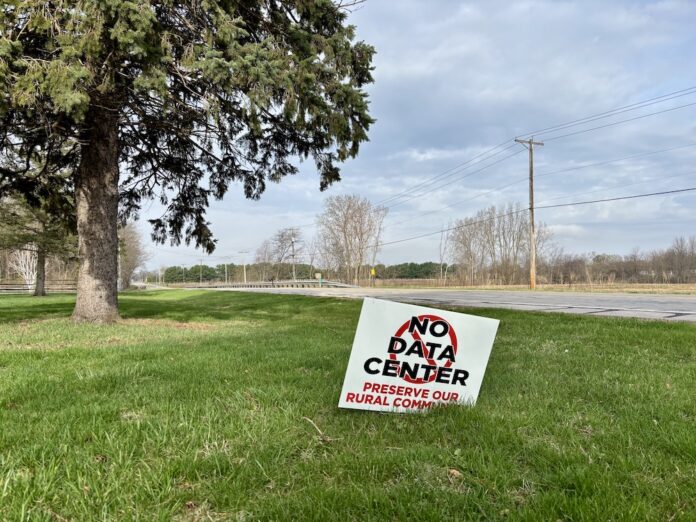
Data centers – and the possibility of one locating on 1,000 to 1,400 acres in Waterville Township – dominated the conversation during two township meetings this week.
Waterville Township
During a May 5 special meeting, Waterville Township trustees agreed to ask the township zoning commission to meet on Tuesday, May 12 at 7 p.m. to consider adopting an amendment to the zoning code. That amendment would establish an M-3 campus industrial district, amend M-1 and M-2 industrial district regulations, add industrial tier classification standards and adopt related provisions.
While the Anthony Wayne Free Press was not present during that May 5 meeting, the township provided a copy of the 65-page document that outlines all of the definitions and provisions that the zoning commission members will need to review and discuss. Members of the Data Center Advisory Committee (DCAC) are expected to be in attendance as well.
The materials for the meeting, which include recommendations from Columbus law firm Brosius, Johnson and Griggs, will be posted at watervilletownship.com by the end of the week – along with any updates on the meeting location.
In a press release posted on the township’s Facebook page following the May 5 meeting, the trustees say the proposed zoning resolution is designed to “strengthen local control, protect residents, preserve the township’s rural and agricultural character, and ensure that any future large-scale data center or high-impact industrial campus faces a full and transparent zoning process.”
The township currently allows data centers in agriculturally zoned land with a conditional use permit (CUP), but in December 2025, trustees adopted a 12-month moratorium on data centers in order to form the DCAC, hire legal advice and look at other options.
In the press release, the trustees stated that the new M-3 Campus Industrial District will address large-scale, high-impact industrial development, including projects with major power, water, infrastructure, traffic, lighting, noise, stormwater and emergency-service demands.
“The resolution does not rezone any property to M-3 and does not approve any data center or industrial project. Instead, it creates stronger rules before any future project can be considered,” according to the press release.
“It is about making sure high-impact development cannot use a weak or inappropriate zoning pathway to enter agricultural land without the level of public review, technical scrutiny, and resident involvement these projects require.”
The press release also goes on to state the the conditional use permit process is not adequate protection for residents.
“A conditional-use permit process can make a use eligible within an existing zoning district so long as certain criteria are met. For a project as large and infrastructure-intensive as a data center, that is the wrong framework. It can reduce the issue to a narrower administrative review rather than requiring the broader zoning decision that a project of this scale deserves.”
Applying a zoning district such as M-3 to a specific property would require a separate zoning map amendment process. Ohio law provides public hearing procedures for township zoning amendments, and adopted township zoning amendments may be subject to referendum if statutory petition requirements are met.
“A conditional-use pathway can make it easier for data centers to move forward. A zoning-map amendment gives the community a stronger process, a clearer public record, and, where Ohio law allows, the possibility of referendum review by the voters,” trustees said.
The trustees emphasized that the proposed resolution is a text amendment only. It creates the M-3 zoning classification and related standards, but it does not apply M-3 zoning to any property. Any request to apply M-3 zoning to a specific parcel would require a separate zoning map amendment, public hearings, review under the township’s comprehensive plan, and compliance with Ohio zoning procedures.
“We are not approving any project,” the trustees said. “We are not rezoning land. We are putting protections in place so that if a major project is ever proposed, the Township and its residents are not stuck with an inadequate process.”
The goal is to fast-track changes to the resolution through the township and county in order to have them in place by mid-July.
Providence Township
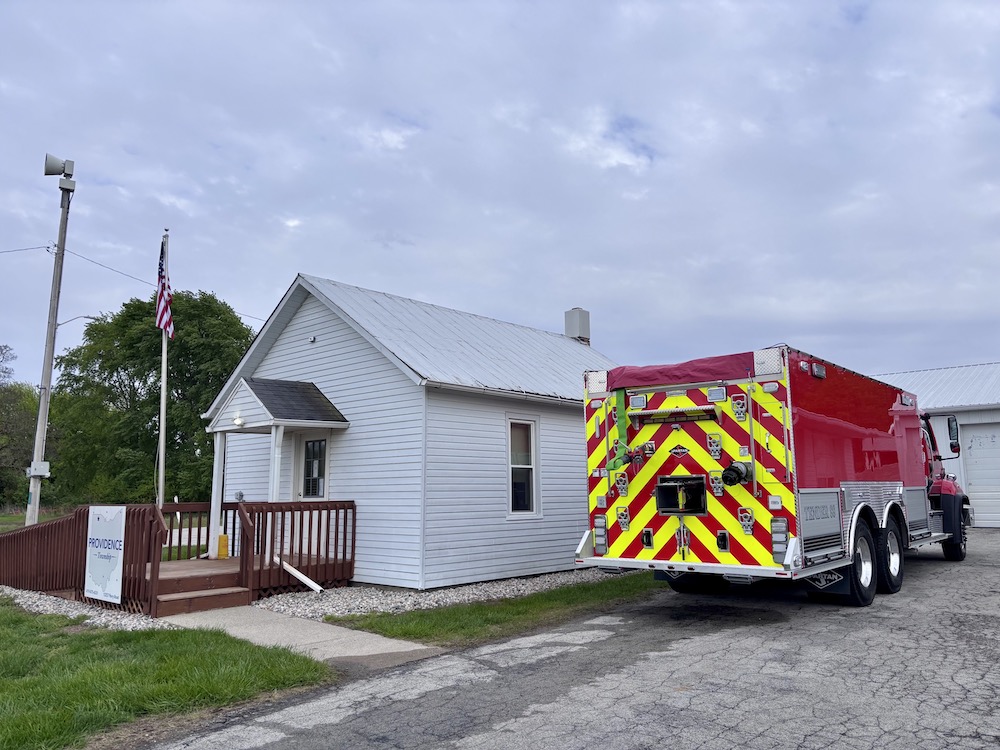
Providence Township trustees agreed during their May 6 meeting to contact attorneys that are assisting Waterville Township to update its zoning resolution. The goal is to put in place protections around data centers. (AWFP photo by Karen Gerhardinger)
Providence Township trustees are considering hiring the same attorneys as Waterville Township, in order to update its zoning resolution regarding data centers.
During the May 6 meeting, Zoning Inspector Jim Fischer – who serves in the same role for Waterville Township – told trustees of the changes that Waterville Township is considering. This comes as the Providence Township Zoning Commission nears the end of a months-long review of its zoning book. Commission Chair Jim Stang said the goal was to present it during public meetings for adoption within the next few months. However, with word that Waterville Township is looking at adding an M-3 designation, Fischer, Stang and the trustees agreed to seek additional guidance first.
Many of the zoning regulations in the township zoning resolution mirror those of Waterville Township, but Providence Township has different zoning overlay districts and fewer zoning designations, Fischer said. Making changes to the book will require having someone with expertise on where in the book to make changes. That’s why he suggested that trustees consider contacting the attorneys used by Waterville Township. Trustees authorized solicitor David Chamberlain to move forward.
“The goal is to make sure we have language in the book before someone like Apple comes forward and says they’re pulling a permit for a data center,” Fischer said.
The possibility of a data center in either township has Providence Township residents worried.
Resident Sara Smith asked the trustees to share how they feel about data centers.
“I don’t see any benefit,” said Trustee Steve Kendall.
Trustee Lee Bialecki said he doesn’t like the idea of taking away farmland. And Trustee Jeremiah Floyd said he’s worried about the possible drain on resources.
Schadel Road resident Jeff Rice urged trustees to get the word out to make sure that residents get their wells tested early, in order to show any impact a data center – either in or adjacent to the township – has on water flow and quality, in order to hold the developer accountable.
Rice brought up concerns about the impact on the fire/EMS services, air quality and wildlife, including bald eagles and rare plants or animals.
“I’ve been doing a lot of reading. There’s a lot of good information, and I’m sure there’s a lot of misinformation, but I think we can all agree that a data center in our township or Waterville Township is not a good thing for our community,” Rice said.
Rice got a call from someone recently who asked if he’d be interested in selling his home. Rice replied, “Sure, for $1 million,” then hung up. (*Note: the first posting of this story stated that Rice was offered $1 million, which is incorrect. This draft has been updated after Rice reached out to AWFP regarding a necessary correction).
“I hung up. We bought out here so we could retire – our forever home. We weren’t expecting it to be a data center,” Rice said.
“We are doing everything we can to be as prepared as much as we can. We’ll see what happens on the other side of the township line,” Kendall said.
Two pedestrian hybrid beacons, such as this one in front of the Toledo Museum of Art, will be installed in Whitehouse along S.R. 64 in 2028, thanks to an Ohio Department of Transportation grant awarded to the village. (Courtesy Photo/Ohio Department of Transportation)
WHITEHOUSE – With concerns about pedestrians and cyclists crossing S.R. 64 – especially after an injury accident last summer – Whitehouse applied for Ohio Department of Transportation funding to install pedestrian hybrid beacons (PHB) in two locations.
During the May 5 Whitehouse Village Council meeting, Public Service Director Mike Hill shared that ODOT awarded the village a grant that will cover 90 percent of the $417,000 cost to install these signals where S.R. 64 (Waterville Street) meets Whitehouse Square Boulevard and the multi-use path in front of the Whitehouse Library.
Both intersections currently have flashing yellow beacons that can be activated at the press of a button, but motorists only need to stop if someone is already in the crosswalk. This has caused confusion, for both those using the crosswalk and motorists, despite an educational campaign by the police department last year.
“I think that the PHB is going to eliminate a lot of driver and pedestrian confusion,” said Police Chief Allan Baer. The current yellow-only flashers are helpful, but we have had some close calls and near misses due to uncertainty as to ‘right of way.’ The proposed PHB should make crossing S.R. 64 much safer for pedestrians, cyclists and vehicle operators.”
With the PHB, two red lenses are set above a single yellow lens. These lenses remain dark until a pedestrian pushes the call button to activate the beacon, which initiates a yellow to red lighting sequence of flashing, then steady lights to direct motorists to slow, and then come to a stop for a solid red light. This provides a right-of-way for pedestrians to enter the crosswalk and safely cross the roadway before the lights go dark again.
According to ODOT, 74 percent of pedestrian fatalities occur at non-intersection locations, and vehicle speeds are often a major contributing factor. In both locations, the speed limit is 45 mph. The average daily use of S.R. 64 in that stretch is 8,300 vehicles per day, according to 2025 data from ODOT.
Once the new signals are installed in 2028, the existing flashing signals placed in those intersections will be saved for use in other areas of the village, Hill said.
During the meeting, council also:
-Thanked Whitehouse Chief Operations Officer Josh Hartbarger for his 25 years with the village, beginning as a volunteer firefighter. Hartbarger was named the new administrator for the City of Maumee, and his last day working for Whitehouse is June 1. Hartbarger thanked the village and the many mentors who helped him throughout the years.
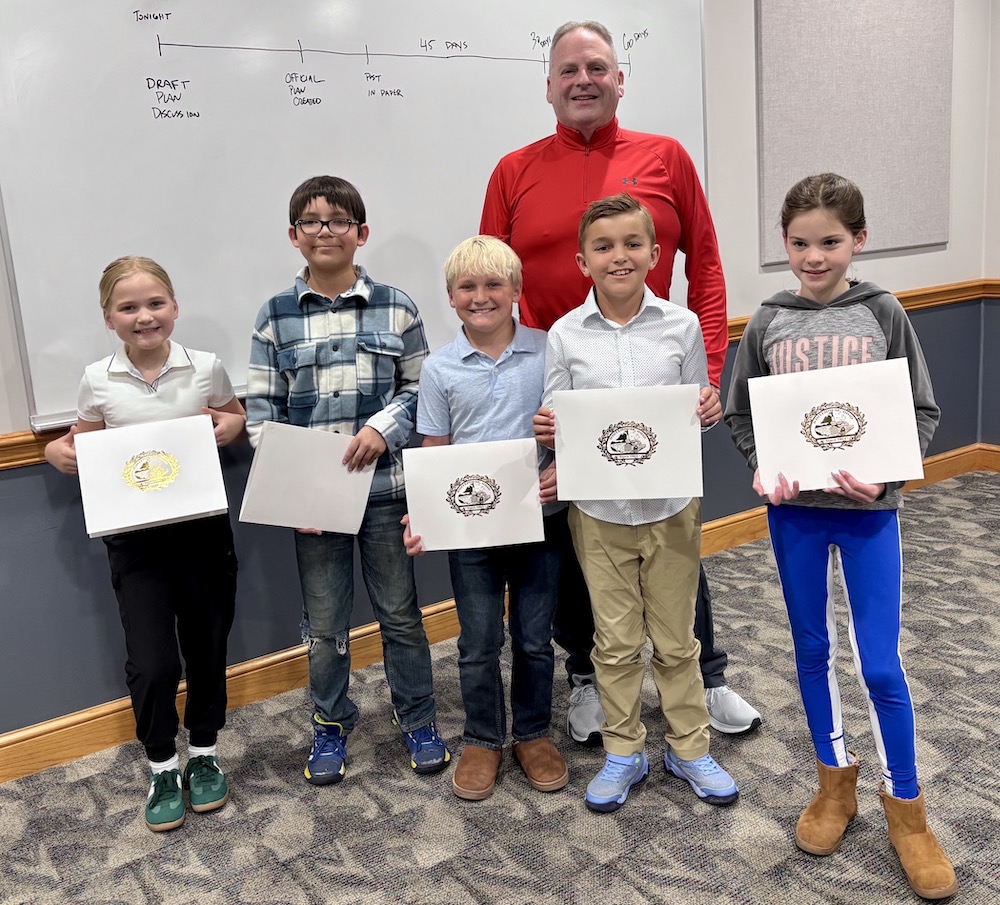
Whitehouse Mayor Rich Bingham welcomes Whitehouse Primary School kid mayor (from left) Addison Kozek and council members Linkin Rusch, Tyson McGill, Ashton Villhauer and Nora Lindsay to the May 5 meeting. (AWFP photo by Karen Gerhardinger)
-Congratulated the members of the Whitehouse Primary School Kid Council, including Mayor Addison Kozek and council members Nora Lindsay, Tyson McGill, Linkin Rusch and Ashton Villhauer. The students will represent their peers during a May 15 Kid Council meeting at the school with Whitehouse Village Council members. Judge Daniel Hazard will swear in the council members, who will select a design for flags to hang throughout the village.
-Approved the use of village streets for The Distinguished Gentleman’s Ride, a worldwide motorcycle event in which riders dress in classic, dapper attire and ride vintage style bikes, on Sunday, May 17 from 10:30 a.m. to 12:30 p.m. The ride raises funds for the Movember Foundation, which raises awareness of men’s health issues, such as prostate cancer, testicular cancer, and men’s suicide, said David Ludwig, owner of Ludwig Clock and Watch Repair.
-Learned that the Anthony Wayne Community Chamber of Commerce is hosting a farmers market on Sundays from 1 to 4 p.m. between June 14 and August 30. In addition to produce, the market will feature artisans and vendors, all set up in the Whitehouse Park pavilion, said organizer Stephanie Phillips.
-Appointed Joe Urenovitch to the Spencer Township Joint Economic Development Zone Board. He is an attorney with an office in Whitehouse.
-Listened to Mayor Rich Bingham share how he met with representatives of the Sister Cities program during a recent event in Toledo. He asked if Council would be in favor of exploring having a sister city for the village, and, if so, which continent or country they would be interested in.
The program strengthens business ties and enhances cultural learning, he noted. Law director Kevin Heban said that cities or villages named Whitehouse exist in Jamaica, Malaysia, South Africa and other countries. Bingham said he would ask a representative to come to a meeting to answer questions.
-Heard Public Works Director Hill say that he spoke with ARS about options for canceling trash pickup on windy days. ARS advised that any resident who wished to delay pickup could call and ask to leave extra trash out the following week.
-Learned that the AW Senior Connection program is working with Maumee Senior Center on partnering for programming. The center offers meals each Friday at Waterville Branch Library. The center will offer a sign-up event for the Ohio Department of Aging’s Senior Farmers Market Nutrition Program on Wednesday, May 13 from 10 a.m. to noon in village hall.
-Heard that Cherry Fest is June 11-13 and council members, along with Kid Council and mayor, will be on a float during the Saturday parade.
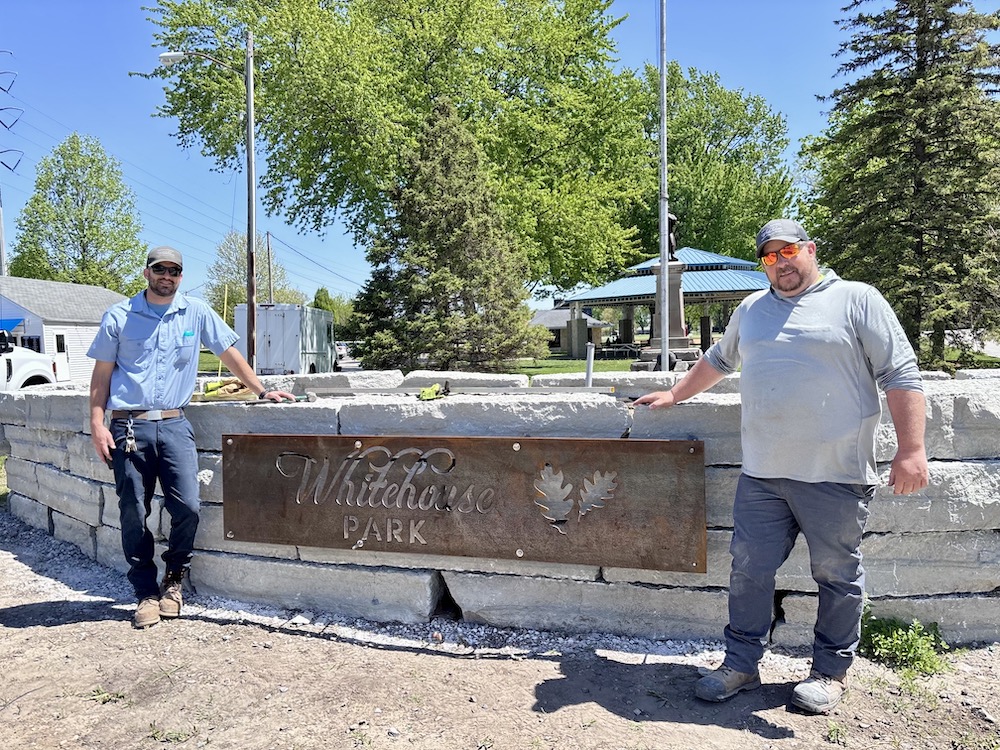
Public Works Supervisor Jordan Connor and worker James Forrest finished installing the etched metal sign on a new entryway to Whitehouse Park on May 4. (AWFP photo by Karen Gerhardinger)
-Learned that the etched metal Whitehouse sign was placed at the park on May 4.
-Heard that the fire department has provided CPR training to 52 citizens so far this year.
-Listened to Council Member Carrie Tuohy ask that the mayor and council president share with all council members any information from meetings they have outside of council.
-Heard Cuncil Member Dave Riggenbach ask for details on the process for filling the chief operations officer’s position.
-Welcomed FalconForge AI representative Brandon Elliott, who shared how his company is working with area communities to prepare for HB 96 compliance and manage its cybersecurity.
The Anthony Wayne Free Press – a new online newspaper covering local businesses, government, schools, events, organizations, and community issues in the Anthony Wayne area as part of the nonprofit Toledo Free Press – is publishing a printed commemorative edition marking the 250th anniversary of the United States of America.
We are running stories on local festivities, area civic organizations, local historical societies, and the significance of Gen. Anthony Wayne, as well as a series of community member-authored perspectives on the five freedoms guaranteed in the First Amendment. Copies will be available for free around the AW community as well as published online.
We also would like to run essays submitted by young people in our area, including students from Anthony Wayne Schools, local homeschool students, and AW-area residents attending area parochial schools, academies, or online schools. The topics are:
What does it mean to be an American and how is that reflected in our local area?
What will our local community look like in another 50, 100, or 250 years from now?
The best essay on each topic from each grade/age category will be featured in the printed edition; others selected would run online at anthonywaynefreepress.com.
Grade/age categories are, by the end of June 2026:
Middle/Junior High (approx. ages 10-14)
High School (approx. ages 14-19)
Deadline is May 22, 2026. Target length is 500-600 words; essays will be lightly edited for newspaper publication. Submissions should include: topic question, author’s full name, age, grade level, school/homeschool, address, and parent contact phone number and email address. Only student name, grade/age, school, and town will be published.
Send completed essays with above information to Rebecca Conklin Kleiboemer, Trustee, Toledo Free Press Board of Directors, at [email protected]. Questions? Call/text Rebecca at 419-429-9152.
4K: Ohio Primary Results | May 6, 2026 - 4K: Ohio Political Insight | March 11, 2026
TOLEDO — Ohio’s May primary election is now behind us, kickstarting what will be months of campaigning ahead of November’s general election. While a number of important issues and races were on the ballot, here are five contests that’ll be worth keeping an eye on into November.
Race 1: Ohio’s 9th Congressional District
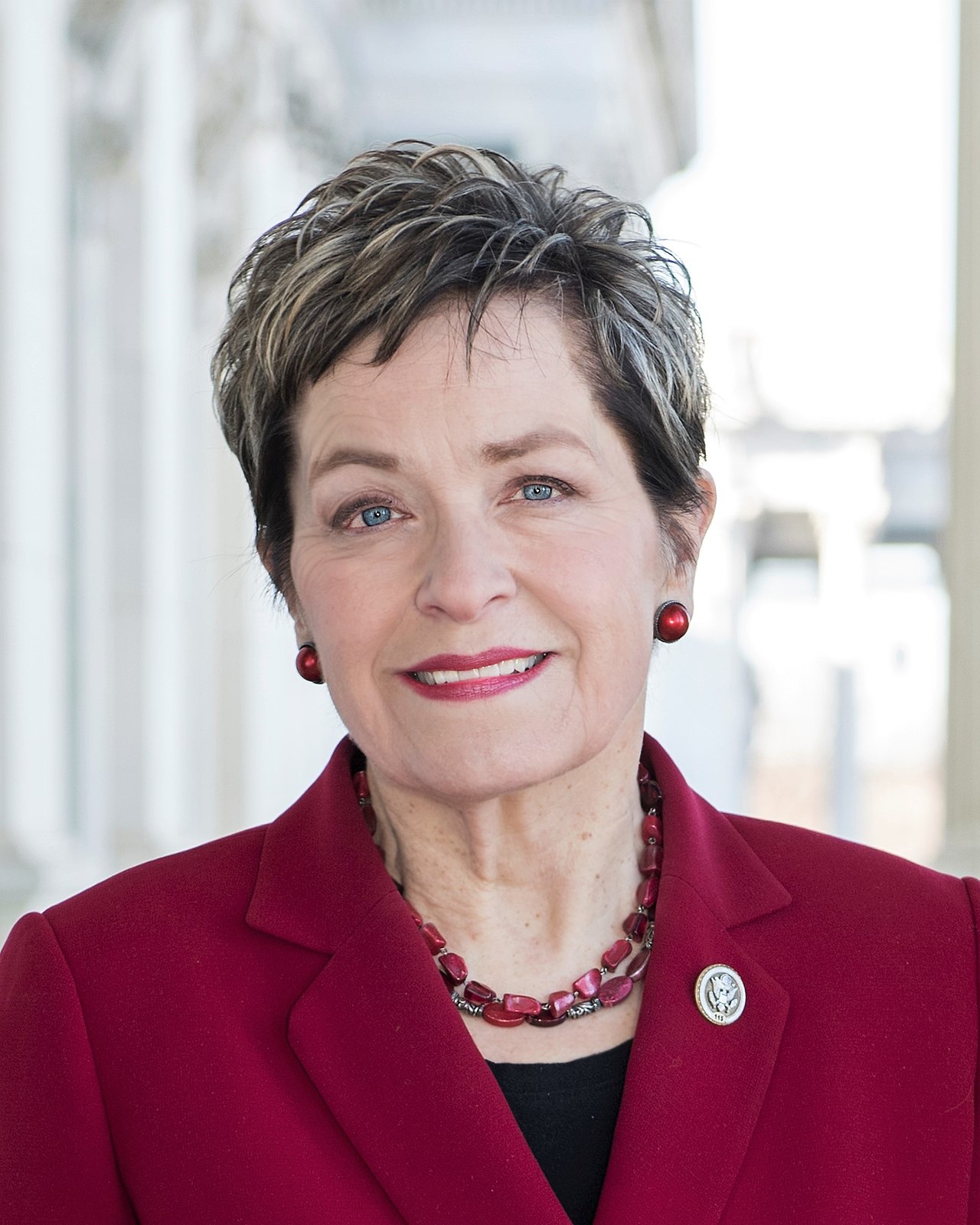
Marcy Kaptur, who currently represents Ohio’s 9th Congressional District, ran unopposed in the May 2026 primary.
Ohio’s 9th Congressional District is currently represented by Rep. Marcy Kaptur (D-Toledo). While she ran unopposed in the Democratic primary, the field of challengers in the Republican primary was vast. It included Sylvania-area State Representative Josh Williams, former state representative and ex-Waterville Mayor Derek Merrin, former deputy director of Immigration and Customs Enforcement (ICE) Madison Sheahan, veteran Alea Nadeem, and Anthony Campbell.
Ultimately, Merrin prevailed, winning with just over 44 percent of the vote. Williams came in second, Sheahan third, Nadeem fourth, and Campbell fifth. Merrin’s win in the GOP primary sets up a rematch against Rep. Kaptur, who he lost to by just 2,382 in November of 2024.
Republican and former Waterville Mayor Derek Merrin won in Ohio’s May primary, so he will go up against Kaptur in the November 2026 election for Ohio’s 9th Congressional District.
While the Republican at the top of the ticket back then, Donald Trump, managed to carry the district by nearly seven points, that “red wave” year simply wasn’t enough to carry Merrin to victory. However, last year, Ohio had its legally-required mid-decade redistricting process, in which the 9th was redrawn to have an even stronger Republican advantage than it did in 2024.
While Kaptur’s climb is steep, in a district that would have voted for President Trump by just over 11 points in 2024, The Cook Political Report rates this race a “toss up.” A key reason for Kaptur’s resilience has been the strength of her name recognition, connection to voters who would otherwise view Democrats unfavorably, as well as — in the case of her 2024 victory — strong support in the cities of Toledo, Fremont, and Sandusky. Kaptur’s new district no longer includes Fremont, though a strong showing in the Toledo & Sandusky areas could put her over the line once again.
Race 2: Secretary of State
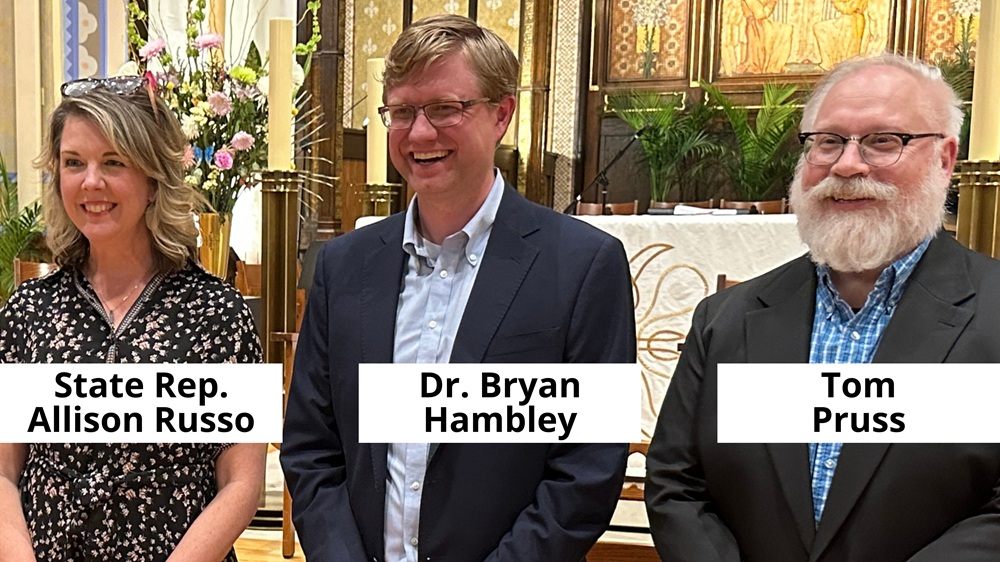
Secretary of State Candidates (TFP photo by Jaden Jefferson)
Also on Tuesday: the Democratic and Republican primaries in the race for Ohio Secretary of State. On the Democratic side, State Representative Allison Russo (D-Upper Arlington) faced a primary challenge from Dr. Bryan Hambley, a Southwest Ohio oncologist. While on the Republican side, Ohio Treasurer Robert Sprague faced a primary challenge from veteran Marcell Stribch. Unofficial results show Russo will face Sprague in November. Tom Pruss is running as the Libertarian nominee.
Race 3: Attorney General
In the Democratic primary for Ohio Attorney General, attorney John Kulewicz defeated former state representative Elliot Forhan. Kulewicz will go on to face RepublicanKeith Faber, who currently serves as state auditor, in November.
Amy Acton is the democratic nominee for Ohio governor. (Courtesy photo)
Race 4: Governor
Dr. Amy Acton, Youngstown native and former director of the Ohio Department of Health, faced no Democratic primary challenger. She advances to face Republican entrepreneur Vivek Ramaswamy in November. Ramaswamy, a Cincinnati native, handily won the Republican nomination. He faced a primary challenge from Casey Putsch.
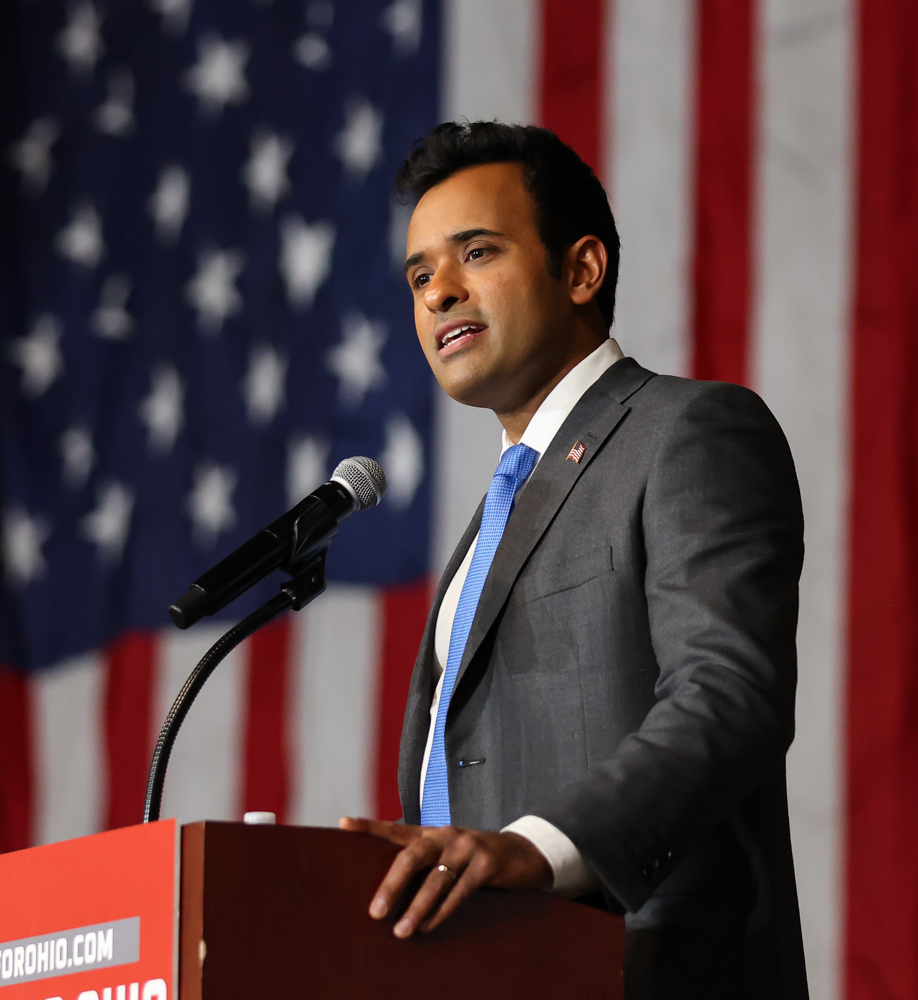
Republican gubernatorial candidate Vivek Ramaswamy walks to the podium during a campaign stop in Toledo in 2025. Ramaswamy won the May primary and will face Democrat Dr. Amy Acton in the November 2026 election for Ohio governor. (TFP Photo/Scott W. Grau)
Race 5: U.S. Senate
Sherrod Brown won the democratic primary and will face Republican Senator Jon Husted in November. (Official U.S. Senate photo by Rebecca Hammel)
In the Democratic primary, Sherrod Brown, who represented Ohio in the U.S. Senate from 2006-2024, easily defeated his primary challenger, Ron Kincaid. Brown goes on to face Republican Senator Jon Husted in November.
Husted, Ohio’s former lieutenant governor, was appointed to the senate seat by Governor Mike DeWine, as JD Vance’s replacement, upon his election to the vice presidency. Brown lost his 2024 reelection bid to Republican Bernie Moreno by just 3.6 points. The close result suggests Brown was unable to overcome the “Trump wave” of 2024, which gives some Democrats confidence his fortunes will be better this year, as Trump won’t be on the ballot.
Republican candidate to represent Ohio in the U.S. Senate, Jon Husted. (Courtesy photo)
The Context: Democrats need to flip four seats in the U.S. Senate in order to gain a majority in the chamber. One of the party’s most likely paths to doing that requires flipping one of Ohio’s, which is why the Democratic-aligned Senate Majority PAC is committing $40 million to support Brown’s campaign. In comparison, the Republican-aligned Senate Leadership Fund is providing $79 million to back Husted’s campaign.
A magnolia warbler at Magee Marsh. (Photo by Metroparks Toledo nature photographer Art Weber)
It’s an especially exciting time to be out and about in Metroparks Toledo and other premier natural areas of our region. It’s time to welcome the huge numbers and varieties of warblers that will pass through on their way to more northern breeding territories. Some will remain here to raise their young, while others belong to a group known as the overflight, warblers and other species that come a bit further north than they prefer and will head southward.
Serious birders understandably get carried away looking for the rarities, but in truth, many of the most colorful warblers are fairly common. That’s what this Wild Side is all about.