Home Blog Page 22

Whitehouse COO named as new Maumee administrator

0
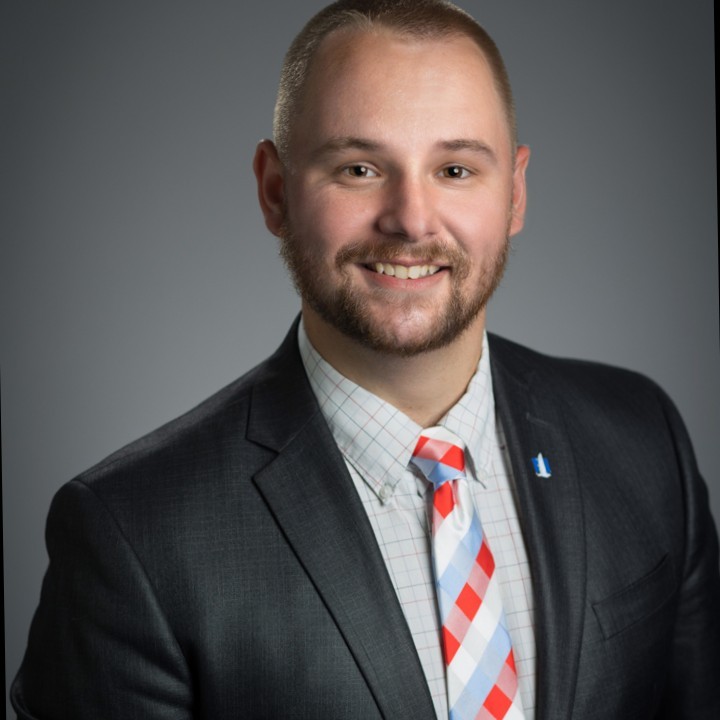
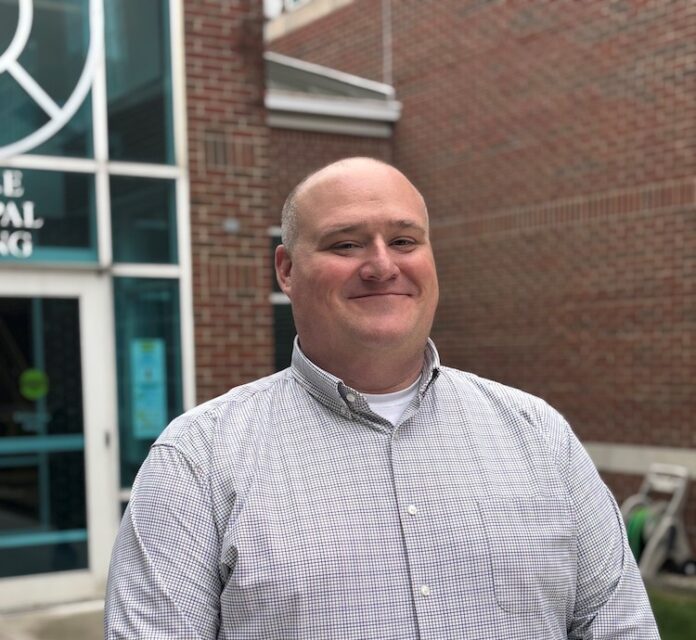
Joshua Hartbarger, who has served as Whitehouse COO, will be the city administrator and public safety director for the City of Maumee. (Courtesy photo)

MAUMEE – After more than two decades of leadership with the village of Whitehouse, Josh Hartbarger is ready for the next chapter – as city administrator and public safety director for the City of Maumee.

“Mr. Hartbarger has extensive experience in public safety, leadership and public administration, and will be an asset to the city of Maumee,” Maumee Mayor Chelsea Ziss stated in her May 1 letter of recommendation to City Council, which approved Hartbarger’s hiring during its May 4 meeting.

In that role, Hartbarger will supervise the chief building official, fire chief and police chief, oversee the director of public services and director of finance, and report to the mayor and council. His annual pay is set at $147,385.56.

Hartbarger grew up in the Whitehouse community, but he also spent plenty of time in Maumee, where his mom ran a day care facility on River Road.

“I fondly remember going to Penguin Palace on hot summer days. Some of my best childhood memories were in the great city of Maumee,” Hartbarger said. 

In addition, his first full-time job was with his father’s distributorship business in Arrowhead Park.

“Maumee has wonderful and diverse residential and commercial areas, all while maintaining the small town charm. I’ve always been drawn to this community and see a great future ahead for Maumee,” he said, noting that he feels grateful to have the opportunity to be a part of its growth.

An Anthony Wayne High School Class of 2000 graduate, Hartbarger was named to the Anthony Wayne Alumni Association Hall of Fame in 2024. After graduation, he earned an associate degree in government and political science from Owens Community College, a bachelor’s degree in fire administration from Bowling Green State University, and a master’s degree in public health from Ohio University. 

While working on his associate’s degree, Hartbarger joined the Whitehouse Fire Department as a volunteer firefighter, eventually becoming a paramedic and certified trainer. In 2006, he served at the McMurdo Station in Antarctica as a fire lieutenant, returning to Whitehouse to become the department’s fire inspector, then deputy chief and finally, fire chief.  

During his tenure as fire chief, Hartbarger collaborated with Waterville Fire Chief Doug Meyer to create a unique solution to problems both departments were facing, including funding and staffing. The results was the W-3 Co-op to pool resources while serving the residents of Waterville, Waterville Township and Whitehouse. The co-op earned Hartbarger and Meyer the Ohio Fire Chiefs Association Foundation Award in 2022.

“The lasting effects it will have and seeing Whitehouse Chief Jason Francis and Chief Meyer carry the torch and make it better has been fulfilling,” he said of the co-op. 

In 2023 he was named chief operating officer for the village – a newly created position during an administrative restructuring. In that role, he oversees the operations and activities of all the departments, handles municipal matters for the village at large, and represents the village with businesses and civic organizations. With IT and cybersecurity knowledge, Hartbarger ensures the village’s network safety. And, working with the mayor and administrator, he collaborates on multiple projects, including economic development.

“I’m leaving a great position but know the next person will make it theirs and take it further. I’m grateful for the opportunity to have served the residents of Whitehouse. I will miss the employee and leadership team of Whitehouse, but I am ready for the next chapter with Maumee,” he said.

While Maumee is triple the size of Whitehouse, Hartbarger said the residents all share one commonality – an expectation for excellent services. He plans to approach his new role with the same calm and steady manner that he has with the village, relying on top-notch directors and employees to solve challenges creatively as a team.

His first priority as he enters his new office is to listen.

“It’s imperative for administrators to listen to residents, businesses and employees. Especially for the new guy coming in, I don’t know what I don’t know, and the only way to solve this is making the time to listen and learn,” Hartbarger said. “In this process, I’ve met some amazingly talented directors. They need to be supported and empowered to do the job they love to do. And, I’ll be working with and supporting the goals and objectives of the mayor and council.”

Maumee is in a unique position for growth, Hartbarger said, with a phenomenal business park and areas that other communities probably envy. 

“Positioning Maumee to be ready for responsible and right economic growth is an amazing opportunity,” he said.

Throughout the years, Hartbarger has developed relationships with leaders in other communities, and he sees opportunities for collaboration with neighbors, the county and the state. 

“These relationships lead to opportunities that wouldn’t be available without collaboration and communication,” he said, noting that his focus will also be on expanding and retaining existing businesses. “Being visible and engaging in the current business community can assist in that. Sometimes just being present for a conversation can spark ideas and connections that present opportunities.”

After Dr. Patrick Burtch‘s retirement from the position in August 2025, the city formed a committee that includes administration, council members and citizens. Hartbarger was among 38 applicants for the position. Over the past few months, he’s interviewed multiple times with the committee.

He will be joined by another new hire in Maumee: new Urban Planning Manager Dana Reising, who brings decades of experience from the City of Toledo in sustainable development, zoning and community planning. She will be responsible for planning and zoning services with a heavy focus on economic and community development.

As he prepares to take the helm on June 1, Hartbarger will turn in his notice to Whitehouse Village Council.

“I’m leaving a great position, but I know the next person will make it theirs and take it further,” he said. 

Hartbarger is married to Nikki, and together they are raising two daughters: Valerie and Josie.

 Ostrich Towne anchors Vistula neighborhood

0
A colorful mural at Ostrich Towne. (Courtesy photo)

The development is a festive revival that brings new tenants

TOLEDO – Toledo is famously known as the Glass City, and its pro baseball team is the Mud Hens. Now, there’s a new, catchy moniker distinguishing the city: Ostrich Towne.

Breathing new life into the Vistula Historic District is the mixed-use development that after a fitful start is taking off running like its namesake. An ostrich is the world’s largest bird – flightless yet fast. 

The development’s name comes from a longtime street named Ostrich Lane that the city vacated, and now is the common space for restaurants, shops, and offices, with adjacent apartments.

And while an ostrich is speedy, the pace of the development hasn’t been. In fact, it’s been deliberately slow.

“Rather than a rush to tenancy,” said Cheryl Hardy, who handles public relations for Ostrich Towne, “the developers have taken their time to get the right tenants. For the neighborhood, and the future of Vistula, it’s just the right tenant mix. It’s all local. Every single one that has a business here works in that business.”

Hardy, with experience in multi-use developments, added, “Whenever you bring a development in and take over a historic property, there’s always that question: ‘How is that going to work?’ In this case, it works so well. They’ve taken the time to get the right tenants, they’ve not rushed, and they’re working to offer some different residential options in and around. It’s been such a good mix.”

Molly’s Irish Pub, one of the tenants in Ostrich Towne. (Courtesy photo)

The tenants: 

*Riverside Barbecue, featuring central Texas barbecue and Southern comfort food.

*Molly’s Irish Pub, with live music and authentic Irish drinks.

*The Power Bar, with wellness-focused shakes.

*Restore 419, historic restoration and construction experts.

*DBD Studios, luxury salon suites and event space.

*One of Each Wine, a wine bar for varied tastes and budgets (coming soon), and

*Nemsys, an IT support and cybersecurity business – and the genesis of Ostrich Towne.

“Nemsys is the original reason why we came to this spot,” said Joe Nachtrab of the Northaven Development Group. Owned by his son and his son’s business partner, Nemsys moved into the former Westminster Presbyterian Church at Superior and Locust streets in early 2019. 

The building, dating to 1874, had long since closed as a church. The Toledo Catholic Diocese took over the building to be the center of its Catholic Youth Organization basketball league until 2002. 

The decision to base Nemsys at the Vistula landmark was “to really do something special for Toledo,” Nachtrab said. “This is our giveback to Toledo for the years and years of support. The original intent was to redevelop Vistula and create an entertainment, apartment campus.”

Nachtrab, who became involved as a managing member of the project with his son and business partner in late 2022, said the development hit difficult times during COVID-19 and a legal dispute with a general manager. 

Those delays and problems were overcome, and now, under the direction of Toledo Metropolitan Development LLC, Ostrich Towne is off and running. Per its website: “Ostrich Towne is a collection of updated warehouse spaces offering contemporary retail, office, and loft-style interiors. With flexible layouts and custom build-outs, we can create one-of-a-kind spaces to meet your vision — from restaurants and galleries to boutiques and creative workspaces.”

Bingo night at Ostrich Lane. (Courtesy photo)

Ostrich Towne offers indoor and outdoor venues for meetings or just plain fun, including bingo on Thursday nights. The common space that is the vacated Ostrich Lane between the buildings has a canopy of lights for a festival feel. 

Parking is free and plentiful. “Parking is never going to be an issue,” Nachtrab said.

Not readily apparent but an important component of the development is housing. There are 11 apartment units available, mostly with two bedrooms, but some with one and another with three. “We completely redid the second floor of a building on Locust Street, and we’ve purchased two apartment buildings adjacent to Nemsys,” Nachtrab said.

The development’s name comes from a longtime street named Ostrich Lane that the city vacated, and now is the common space for restaurants, shops, and offices, with adjacent apartments. (Courtesy photo)

The future will follow what’s worked so far: finding the right tenants. Nachtrab said there’s about 40 percent of leasing space available in the 75,000 square-foot development. Other plans are to continue the residential buildup.

Another highlight for the near future comes courtesy of Metroparks Toledo. Work will begin this summer on extending the Glass City Riverwalk, on the south bank of the Maumee River, to connect with the Vistula neighborhood, on the north bank, by way of a trail on the Martin Luther King, Jr., Bridge. There also are plans for a Vistula Metropark.

“The timing is hitting just right because of Riverwalk and momentum downtown,” Hardy said. “Vistula is starting to get extra attention. I like the way it’s coming together.”

“This is a good thing,” Nachtrab said of Ostrich Towne. “And it’s just beginning.”

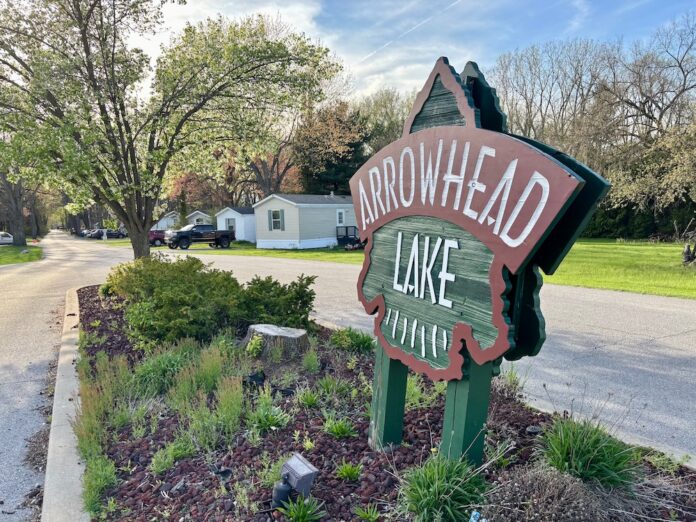
Zoning inspector reports on Arrowhead Lake

0
Swanton Township zoning inspector Ben Mooney is following up on zoning violations at Arrowhead Lake Mobile Home Park. (AWFP photo by Karen Gerhardinger)

SWANTON TOWNSHIP – When Ben Mooney took the position of zoning inspector for Swanton Township last month, he knew about one big project he needed to tackle: addressing multiple zoning violations at Arrowhead Lake Mobile Home Park, as outlined in a December 2025 letter from his predecessor, Kim Middleton.

For his first report to the Swanton Township trustees during their April 14 meeting, Mooney shared that he met with the park’s manager, Colton Reed.

“We had a productive meeting. I let him know that I’m not out there to drop the hammer, but we need to see some progress,” Mooney said, referring to issues with blight, trees and vacant homes. “Clear communication would probably solve some of the problems. His upper management needs to reach out.”

The morning of the meeting, the vice president of maintenance contacted Mooney, and they discussed the company’s plans to hook up to city water, but she was unaware of plans for connecting to city septic. 

“I did speak frankly with her, and said that when I pull in and see homes with moss and green and discoloration, it looks unkempt,” Mooney said. “They’re losing people when they come in to look to buy. They don’t even [stay to] go through the application process.”

He learned that the company is going through the court process of clearing the titles of abandoned homes, but that takes time and money to file. Once ownership goes back to the park, these can be demolished.

As far as trees, Reed said arborists have been on site to evaluate. Some can be addressed, but others are too close to the lake. Toledo Edison will need to get involved with other trees. Funding may also be an issue. Reed told Mooney that any resident who wants to report a problem tree needs to fill out a formal written complaint with “liability tree list” on it. This should be dropped off to the office. 

Because Reed is in charge of four mobile home parks, he is only on site three times a week. In the meantime, he is getting ready for an inspection. 

While the park residents await city water, the current system has continued to have issues and the owners have been cited by the EPA for not providing residents with the minimum amount of bottled water. 

“They are trying to keep the water potable. That’s taken a lot of their money. They are going to spend a lot hooking up to city water, but it will help,” Mooney said. “I will continue to go in and document all the parcels, blight, trees and take a bunch of pictures and take a bunch of notes. “

Trustees did contact the Lucas County prosecutor about what can be done, since the park owners failed to take action within 30 days of that December 30 violation letter.

One option would be for the township to hire someone to correct the blight issues, and then put it the cost on the county’s taxes as an assessment, Trustee Mike Nowicki said. 

“We are doing everything we can legally do,” Nowicki said.

Resident Marc Hawkins has been at the park for 14 years and shared his frustration about having his water bill and rent raised again, and promises to correct issues go unmet.

“A lot would be better if they would sit down with residents,” he said.

Nowicki said he was glad that at least Mooney has been able to open lines of communication – something that hasn’t happened before. 

During the meeting, the board also:

-Learned that trustees are investigating options for fire coverage, as a contract with Whitehouse is set to expire and the renewal reflects the increased costs that department is incurring. The last time voters approved levies was in 2001, Trustee Matt Beil said. The 1.4 mill fire levy brought in $106,998.13 in 2025, and the 1-mill EMS levy collected $76,427 last year.

-Heard that all draft minutes from meetings will be posted on the website within a few days of each meeting. The website is being updated with new features and to be ADA-compliant.

-Agreed to open a township Facebook page to post information about meetings, alerts and other township information. Comments on the page will be turned off. Trustees approved a social media policy.

-Approved a policy to pay $150 a year for maintenance workers to buy steel-toe boots.

-Agreed to pay $32,450 to the Lucas County Engineer for the 2026 residential assessment for Swan Creek Watershed ditch maintenance. 

-Discussed the Board of Zoning Appeals, which has not met in at least four years. This group meets if a zoning commission decision is challenged. Fiscal Officer Mindy Curry said she couldn’t find any notes or minutes in the records about the group, so trustees agreed to post openings for the BZA to see who is interested in being on the board.

-Agreed to hire Dawn Sanderson as legal counsel, at a rate of $190 for an attorney and $90 an hour for assistant work. 

-Agreed to join the Swanton Area Chamber of Commerce.

-Heard an update from FalconForge AI founder John Crisp on work they are doing for the township to meet the requirements of House Bill 96, anew state cybersecurity law, which goes into effect July 1. Trustees also agreed to hire TrioTech of Whitehouse to manage IT for the township for $184 a month.

-Listened to Springfield Township Fire Chief Jon Ziehr share that the department responded to 24 calls in the northern half of the township in March, including 15 EMS and nine fire-related, especially due to high winds. The fire department is now fully staffed with the addition of seven new part-timers, bringing the total to 82. Whitehouse Fire covers the southern half of the township.

-Heard Curry say that she contacted Norfolk Southern about the $13,500 per year that the township receives for economic development – an agreement made when the railway closed off Scott Road and made 2.5 acres inaccessible. Curry learned that the company only pays if invoiced by the township, and that wasn’t done for the last three years.

-Discussed the value of the Ohio Township Association and the Lucas County Township Association in providing valuable information, and agreed to renew membership.

-Listened to Beil say that the improperly placed 25 mph signs on Reed Road were removed, and the county engineer could conduct a traffic study for Reed between Girdham and Waterville Swanton roads to determine the proper speed limit. He also noted that horse crossing signs in the same area are now missing, and a police report will be filed.

-Heard Mooney say that he is working with a Reed Road resident, the county prosecutor’s office and the Michigan secretary of state to determine how to remove a boat that was placed in the yard by another person years ago, then left abandoned. The boat can’t be donated because it doesn’t have a title.

-Discussed the zoning for 12656 Airport Highway, which was grandfathered through to be a mixed use with residential and C-2 in order to run an auto sales and service shop. The current owner is running a C-4 zoned business that involves heavy equipment for sale and vehicles, with lights on and semi trucks running overnight. Mooney is working with the county and the business owner to resolve the issue.

-Listened to Trustee Bill Anderson outline options for software that could be used to digitize burial records going back to 1836 – making them available for those doing research on family history. Currently the records are on notecards in boxes and in books. Anderson said he gets calls daily from people seeking information about the cemetery.

BGSU grad & professor find innovative ways to optimize crops

0
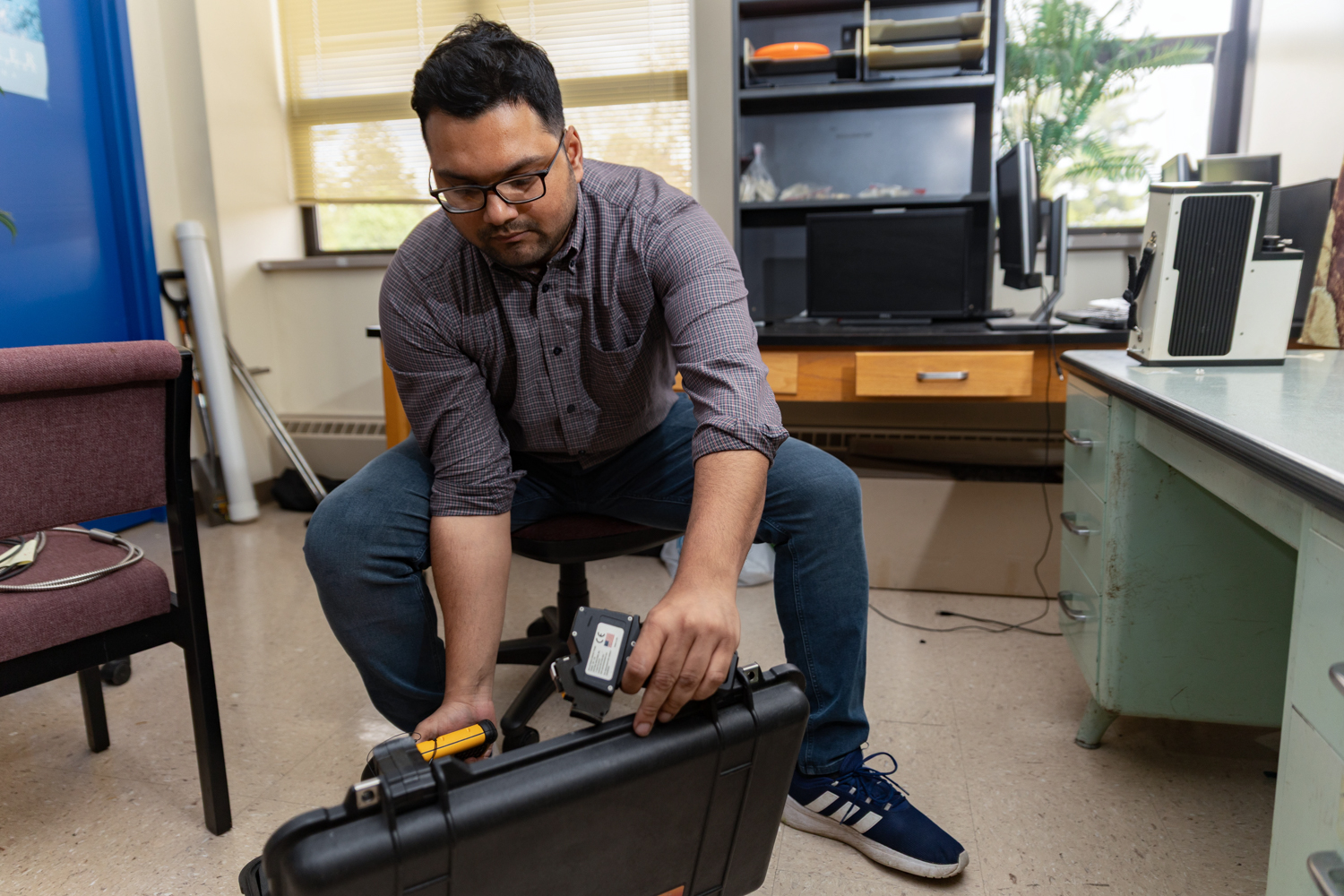
Anita Simic Milas, PhD, professor at the School of Earth, Environment and Society at Bowling Green State University (BGSU), stands with her student, Mir Md Tasnim Alam, a BGSU former grad student in the computer lab at Overman Hall on April 28. Through the use of satellites and drones, Alam was able to provide data on key agricultural factors, particularly nitrogen levels. (TFP photo by Stephen Zenner)

Local researchers boost farm efficiency through satellite data and AI

BOWLING GREEN – A local research scientist and his former professor have taken a project that began in academia and developed it into real-world applications that can help farmers.

Mir Md Tasnim Alam of Perrysburg said the research he did for his master’s thesis at Bowling Green State University involved designing systems that combine satellite and drone imagery, direct measurements of crops, and geospatial analytics to provide data on key agricultural factors, particularly nitrogen levels.

The research yielded precise real-world information in a timely matter that can help farmers optimize their usage of fertilizers and other chemicals — improving agricultural production and profitability while also reducing potential environmental harm, Alam said in an interview.

Mir Md Tasnim Alam pulls out GPS tools. (TFP photo by Stephen Zenner)

“My goal was to derive chlorophyll, nitrogen, and phosphorus levels of the corn from space,” Alam said. “What do farmers usually do? They take a leaf from their corn plant, send that leaf to the chemical lab to be analyzed, and then get the results.” 

It takes time for the labs to analyze the plant and determine if it has enough nutrients or if more fertilizer or other chemicals are needed. And the data is limited because the sample size is so small. 

That’s why Alam was inspired to devise a way to provide faster, more precise analyses of the crops. 

Sending a leaf to a lab “takes a lot of time and you can’t tell much from one single leaf,” he said. “If you have a huge agricultural land, you’d have to go check leaves everywhere, and that is not an efficient process.” 

Anita Simic Milas, PhD in her office at Overman Hall on BGSU’s Main Campus. One of Milas’ graduate students, Mir Md Tasnim Alam, published his masters thesis, which uses satellite and drone technology to help farmers produce better yields. (TFP photo by Stephen Zenner)

Satellites and drones, by contrast, are able to photograph large agricultural areas, and, using specialized equipment such as near-infrared imaging, provide a wide range of precise data quickly and efficiently, according to Alam and his former professor, Dr. Anita Simic Milas of BGSU’s School of Earth, Environment and Society.

“These data sources can capture subtle changes in plant health, including estimating key crop properties like chlorophyll, nitrogen, and phosphorus,” said Milas, who oversaw and collaborated with Alam on the research. 

“[Alam] also incorporated newer data products, such as satellite embeddings available through platforms like Google Earth Engine — compressed, AI-generated representations of satellite data that combine large amounts of optical and radar (SAR) information into a consistent set of features,” she said.

Alam noted that the human eye can see only three basic colors – red, green, and blue and their various combinations — but satellites can provide 217 bands of color that can show specific levels of chlorophyll, nitrogen and phosphorus for crops in each section of a large agricultural field.

Mir Md Tasnim Alam shows a bag of plant samples taken from across a crop yield to determine the levels of chemicals in the crops so farmers can better monitor their crops. (TFP photo by Stephen Zenner)

Alam, who now works for Perrysburg-based Satelytics Inc., said he spent a lot of time, including his summer break, researching his thesis for a master’s degree in geology, in collaboration with Dr. Milas.

“What makes Mir’s work stand out is that it brings together several types of data, each telling a different part of the story about a field,” Milas said by email. “Instead of relying on just one type of satellite sensor, he used a combination of satellite imagery with different properties — ranging from multispectral to more advanced hyperspectral data — along with drone observations collected closer to the ground.”

Alam said they applied advanced mathematics and field data, advanced statistics, machine learning and deep learning to the satellite and drone images to produce specific nutrition values for different pixel images.

“In the final result of our modeling,” Alam said, “we got an image with each pixel’s value of chlorophyll, nitrogen, and phosphorus.”

Milas said their research can provide specific, timely, and practical information for farmers.

“These data sources can capture subtle changes in plant health, including estimating key crop properties like chlorophyll, nitrogen, and phosphorus,” she said. “(Alam) also incorporated newer data products, such as satellite embeddings available through platforms like Google Earth Engine — compressed, AI-generated representations of satellite data that combine large amounts of optical and radar [SAR] information into a consistent set of features.”

(TFP photo by Stephen Zenner)

The information enables farmers to identify which areas of their land are in need of more tillage, more herbicides, more pesticides, or other factors to optimize their yields.

It also helps them avoid using too much fertilizer, which reduces the potential for chemical runoff that has been linked to harmful algal blooms in Lake Erie and its watershed.

Alam, who earned bachelor’s and master’s degrees in geology in his home country of Bangladesh before moving to Bowling Green, pointed out that knowing where to use and not use herbicides, fertilizers, and pesticides can be a substantial cost saving for farmers.

Milas said Alam went to great lengths to make sure his academic research could be used by real-world farmers.

“Mir was the one who really drove the work forward. He took that foundation and turned it into a functioning system with real-world applications. None of this would have come together without his ability, work ethic and efficiency. It was a true collaboration, but one where he showed exceptional initiative and follow-through,” Milas said.

Waterville to add 15 mph limit on shared-use paths

0
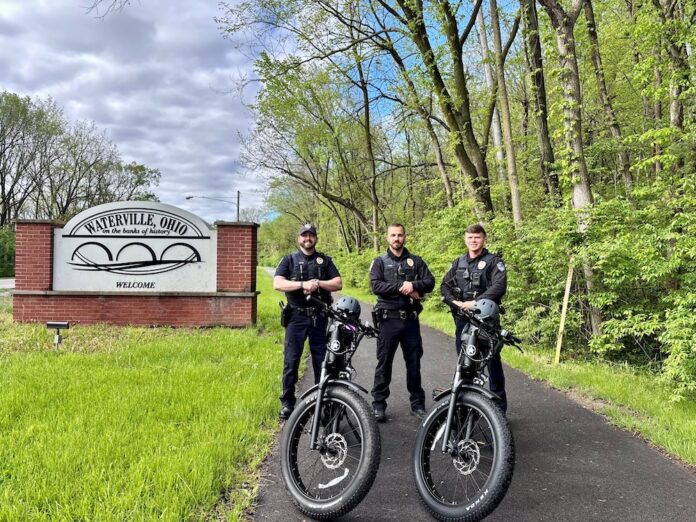
Waterville is considering adding a 15 mph speed limit on all shared use paths to address concerns about e-bikes and speeding. Waterville Police has two e-bikes that are used for patrolling the city. Pictured are officers (from left) Wyatt Saylor, Austin Gunn and Zach Schmiltz. (AWFP photo by Karen Gerhardinger)

WATERVILLE – With the increased presence – and speeds – of e-bikes on shared-use paths, Waterville City Council will decide on whether to enact a speed limit of 15 mph.

Council held the first of three readings on an ordinance during its April 27 meeting, when Administrator Jon Gochenour shared that the city has received complaints about motorized e-bikes.

“Setting a standard speed limit will ensure the safety of all residents using the shared-use path system, which was originally designed for use by walkers, joggers and bicyclists, not motorized vehicles,” he said. “The speed limit would apply to all shared-use path users including conventional bicycles and scooters.”

E-bikes are classified in three categories. Class 1 and 2 e-bikes reach speeds of up to 20 mph and are permitted on shared use paths, according to Ohio Revised Code (ORC). Class 3 e-bikes are prohibited on the paths and – because they reach speeds of up to 28 mph – require the operator to be at least 16 years old and to wear a protective helmet. 

“Due to the weight and potential speed of an e-bike, a collision with a pedestrian has the potential to cause a significant injury,” Gochenour said. “Setting a standard speed limit will ensure the safety of all residents using the shared use path system.”

Police Chief Joe Valvano said the officers’ primary objective will be to educate and inform path users if they observe a speed infraction or cyclist operating an e-bike recklessly. While radar or laser enforcement will not be conducted regularly, he expects that some e-bike speeds will be picked up on paths that run adjacent to roadways. 

“We intend to install and document speed limit signage so that enforcement can be applied when necessary—particularly in cases involving excessive speed or reckless operation by shared-use path users, including e-bike riders,” Valvano said.

“If we are unable to obtain a radar reading of a cyclist who is speeding recklessly, we will not issue a speeding citation, consistent with the same standards applied to motorists. However, if a rider is clearly traveling well above the speed limit, officers will make contact and provide educational materials. In the event of an accident on a shared-use path, a rider may be cited for reckless operation.”

The goal, Valvano said, is to maintain positive interactions with residents while appropriately addressing violations. In cases of repeated or habitual noncompliance, or when a rider’s behavior poses a safety risk, enforcement may escalate to the issuance of a citation.

“We encourage all users to enjoy the shared-use paths as intended, while exercising good judgment and respecting others by following proper path etiquette,” he said.

During the April 27 meeting, council also:

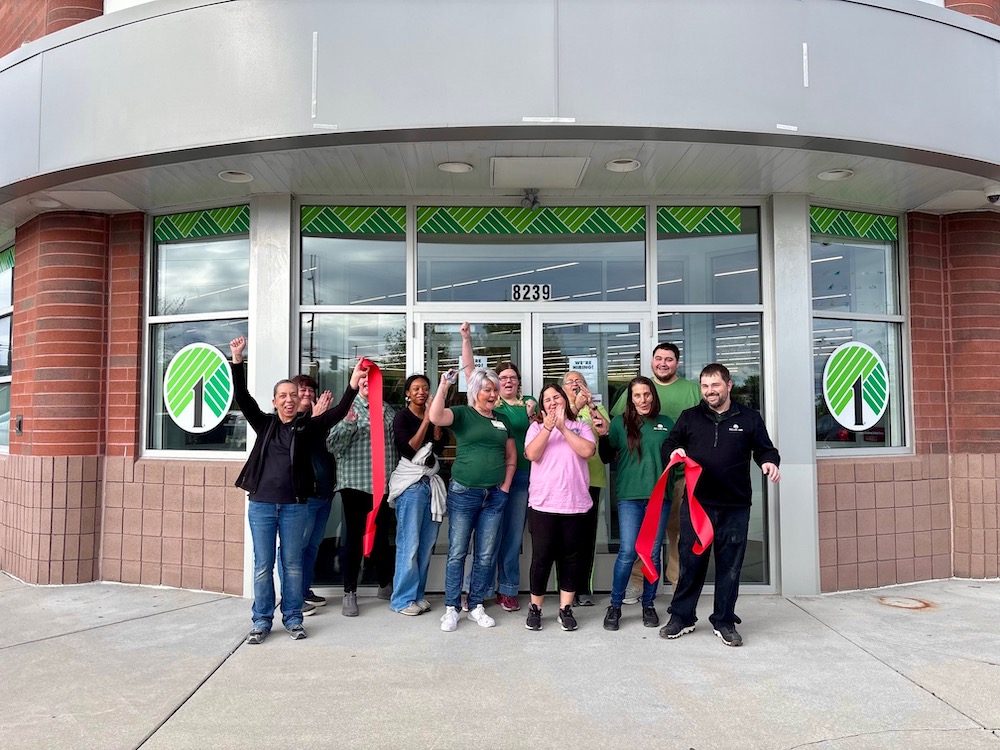
Dollar Tree staff cut the ribbon on the new store prior to opening on April 30. (AWFP photo by Karen Gerhardinger)

-Invited the public to an April 30 ribbon cutting at the new Dollar Tree store, at the corner of Michigan and Waterville Monclova.

-Heard Council Member Wayne Wagner note that the six-month moratorium on data centers ends in early June. “It was never my intention to ban smaller data centers,” he said, referring to edge data centers that are smaller, distributed facilities placed physically closer to the end users or the devices generating data. Wagner said he would like to see changes in zoning that would govern data centers – such as distance from residential properties and hours for construction. “I think we can make improvements to the existing zoning and still allow data centers of a certain size.”

Mayor Tim Pedro said he would like to discuss options during the May 11 meeting.

-Heard that council might hold a special meeting on Monday, May 4 at 4:30 p.m.

-Welcomed Anthony Wayne High School student Taylor Hankins, who was attending the meeting to learn about governmental branches and fiscal policies.

-Learned that the city plans to replace or level 268 sidewalk panels and install 16 new ADA compliant ramps. A bid opening is scheduled May 5 for the $100,000 project, for which the city has a $90,000 grant. Council Member Mary Duncan said she’s been contacted by residents about specific sections of sidewalk that may be delayed on replacement because of the need to do sewer repairs before the sidewalk can be done.

-Heard that the city ended March with a $13.2 million balance and that income tax collections were up 3.25 percent for the month.

-Learned that Waterville Police collected 40 pounds of over-the-counter and prescription drugs during the most recent Drug Take Back day, bringing the total for the year so far at 130 pounds. A deposit box for unwanted medications is located in the police department lobby.

-Heard that Safety City will be held June 22-26 at Waterville Primary School for incoming kindergarteners. Registration forms are available at the city offices or at waterville.org.

-Read a letter from a resident thanking the police officers who responded to his home during a crisis situation. The resident thanked the officers for the care and compassion expressed in a difficult time.

-Heard an update on the ISO inspection of the fire department. Fire Chief Doug Meyer said he expects the rating to be the same or better than previously. The results will be shared in November.

-Heard that the annual fishing derby will be held on Saturday, August 29. Registration forms are available on the web site.

-Learned that the city is purchasing brackets and hanging baskets for flowers to be placed on the poles on Farnsworth Road. Next year the city will expand the hanging flowers to include Third Street and possibly other areas of downtown.

-Learned that the Waterville Library will host a 100th birthday celebration on Saturday, June 6 from 11 a.m. to 3 p.m.

-Approved, in a third and final reading, the transfer of two pieces of city owned property  – at 6730 and 6824 Anthony Wayne Trail – to the Waterville Community Improvement Corporation. The WCIC will market it for sale for residential development. These properties are off Choctaw Drive and zoned agricultural. Any development would require a rezoning process that will include the Planning Commission and city council, as well as public hearings.

-Passed a resolution to purchase two aerial drones and related equipment from Ohio Drone Repair of Akron for $44,000. The city received a $40,000 donation from Waterville Community Foundation for the drones, which will be used by fire, police and public works departments.

-Approved the transfer of $725,000 from the General Fund to the 5-year Capital Fund to cover the cost of the former Sunoco station at 300 Farnsworth Road, since it was not included in the 2025 budget.

Dollar Tree hosted a ribbon cutting on Thursday, April 30 for its new store at the corner of S.R. 64 and Waterville-Monclova Road in Waterville.

Among the first customers at Dollar Tree are Providence Township residents Ashley Huber and her son, Harvey. (AWFP photo by Karen Gerhardinger)

Let’s get crafty: Local art classes for adults

0
Pexels photo by Vitaly Gariev.

TOLEDO – Whether you are looking for a new hobby or to improve your existing artistic skills, there are plenty of businesses and organizations in the Toledo area that offer art classes for adults. We’ve curated a list of places where you can find workshops to get crafty, along with all the information you need to find the right class for you. 

Toledo Museum of Art 

A museum visitor views the sculptures on display at the TMA Glass Pavilion. The museum hosts glass art workshops, jewelry casting, glassblowing and jewelry fabrication, among many other classes. (Courtesy photo)

2445 Monroe St. 
419-255-8000 
Price: $23 to $1,055 per class 

The Toledo Museum of Art offers many classes and workshops for adults that range from beginner to advanced. The museum has glass art workshops, jewelry casting, glassblowing and jewelry fabrication. Prices can differ for members versus non-members. Adults can apply for and earn scholarships from the museum that will cover 100 percent of their registration fee for most classes. Some classes allow a combination of kids and adults. Visit the Toledo Museum of Art’s website for more information. 

Vod’s Here, Sewing & Crafting Emporium 

Attendees at a sewing workshop showing off their zippered pouches at Vod’s. (Courtesy photo)

5800 Monroe St., Building D, Unit 2 
567-343-1133 
Price: $10 to $125 per class 

Vod’s has upcoming workshops from April through June. There are multiple sessions offered for each class, and age recommendations vary, with the lowest being ages 10 and up. Vod’s has workshops for crochet, knitting, embroidery, needle felting and beeswax food wraps. Materials are provided for all workshops, with the exception of the BYO Crafty Hangs.

For the majority of the workshops, no previous experience is required. Visit Vod’s website for more information. 

Handmade Toledo 

Handmade Toledo. (TFP photo by London Dennie)

1717 Adams St.
419-214-1717
Price: $0 to $80 per class 

Handmade Toledo is offering seven different workshops from now until June 20. Age varies, with the lowest being ages 8 and up. Community members can sign up for workshops such as ethereal life drawing with The Contaminator Crew, hand-building mugs with charmed ceramics and DIY after dark. Materials are provided for each workshop, and all skill levels are welcome, except for the ethereal life drawing workshop. Visit Handmade Toledo’s website for more information. 

Huron Street Studios 

Items made from a date night glassblowing workshop at Huron Street Studios. (Courtesy photo)

23 N Huron St.
419-262-5501 
Glass Workshop: $60 to $475 per class 
Pottery Workshop: $85 to $250 per class 

Huron Street Studios offers both glassblowing and pottery classes. Glass and pottery workshops are different in age and price, depending on the workshop booked. Workshops such as small group, public and date night are offered for glassblowing. There are pottery workshops such as wheel throwing, a six-week course and date night. Visit Huron Street Studios’ website for more information. 

577 Foundation

577 Foundation in Perrysburg. (TFP photo by London Dennie)

577 E. Front St. 
419-874-4174  

The 577 Foundation offers classes for pottery, fiber arts and studio arts. Pottery classes are for adults 18 years and older, while the other classes are for ages 16 and up. Community members can register for classes such as stained glass workshops, adult pottery and knitting or crocheting. Some classes require prerequisites before moving on to the next. Visit the 577 Foundation’s website for more information. 

Toledo Lucas County Public Library 

Toledo Lucas County Public Library, Main branch, downtown Toledo. (TFP photo by London Dennie)

325 Michigan St. 
419-259-5200 
FREE

TLCPL is offering adult classes up to July 11. There are many classes to choose from, and anyone who is a beginner or experienced crafter is welcome. Adults can sign up for classes such as altered bookmaking, a knitting and crocheting club, a planter pot workshop and resin tile coasters. To register, adults must have a library card. Visit the Toledo Public Library’s website for more information.

Toledo Free Press Voter’s Guide: Alea Nadeem runs for District 9

0

In this podcast episode, Jaden Jefferson speaks with Alea Nadeem, a Republican candidate for Ohio’s 9th Congressional District, as part of the Toledo Free Press Voter’s Guide. This interview is a part of our May Primary coverage for 2026.

Nadeem’s political experience

2023-Present: 150th Security Forces Commander for the United States Department of Air Force in Albuquerque, New Mexico

2023: Senate Appropriations Liaison for the United States Department of Air Force in Washington, D.C.

2023-2025: Director of DoorKeepers for the United States Senate Sergeant at Arms in Washington, D.C.

2021-2023: Policy Advisor for the Executive Office of the President in the Washington, D.C. and Baltimore area

2021: Congressional Budget & Appropriations Liaison for the United States Air Force in Washington, D.C.

2018-2021: Air Force Women’s Initiative Team Chair for the United States Air Force in the Pentagon

2020-2021: Defense Fellow for the United States Senate in Washington, D.C.

Learn more about Nadeem and the other candidates here.

Whitehouse approves rezoning

0
Waterville Meadows South.

WHITEHOUSE – With a 4-2 vote, Whitehouse Village Council approved rezoning 37.99 acres at 11320 Archbold Whitehouse Rd. from S-1 Suburban to R-2 on April 21.

Council members Louann Artiaga, Joe Bublick, Steve Fine and Dave Riggenbach approved the zoning change, while council members Carrie Tuohy and Larry Yunker voted against the change.

Developer Charlie Grass of Artisan Craftbuilt Homes plans to build 80 homes in Country Meadows South.

During the past three council meetings, residents have shared concerns on the impact that the development might have on traffic on nearby Oakbrook Drive, Waterville Street and Centerville Street, as well as the schools.

After hearing Mark O’Neil, Craig Whitman and Jeff Heany speak about motorists speeding down Oakbrook and the potential of additional cars on Waterville and Centerville Streets, Council agreed to look into options for speed reduction, such as speed bumps and radar signs.

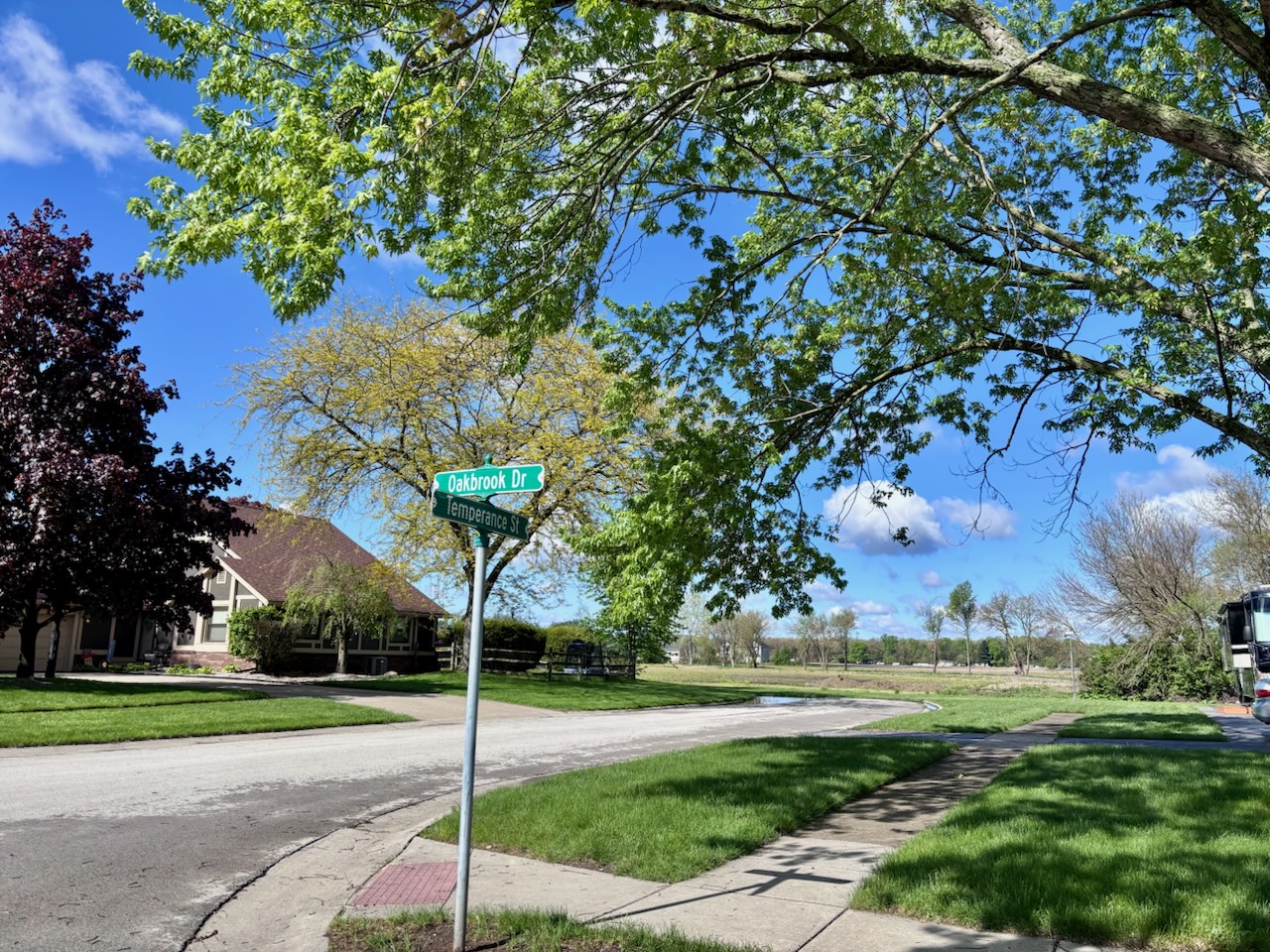
The corner of Oakbrook Drive and Temperance Street. (AWFP photo by Karen Gerhardinger)

“This is the first time I’ve received a complaint of speed on Oakbrook,” said Police Chief Allan Baer, adding that he will look into options for monitoring or reducing speed. “Anyone with a traffic complaint can call or email us and we will have an officer out there.”

The rezoning is just the first step for Grass, who will submit a design for the subdivision for approval by the village’s Planning Commission, which will make a recommendation to council for final approval. Public comment will be welcomed during both meetings.

During the meeting, council also:

-Approved the summer concert series to be held in Whitehouse Park on Thursdays May 21, June 18 and July 16 from 5 to 8 p.m. 

-Approved the use of Whitehouse Park and village streets for the annual Cherry Festival, hosted by the new Anthony Wayne Community Chamber of Commerce June 11-13.  

-Heard that council is discussing a Designated Outdoor Recreation Area (DORA) for the downtown area. This will be among the questions posed to residents in an upcoming survey.

-Heard Baer say that he is working with the school and community on how to regulate e-bikes. Patrols may be stepped up to address safety concerns. Other options will be presented soon.

-Heard Baer say that the Anthony Wayne High School staff, students and law enforcement worked together flawlessly in handling an April 17 bomb threat at the school. After a thorough search, the threat was determined to not be real.

-Approved Fire Chief Jason Francis’ plans for adding a medic unit, and learned that staff is testing cardiac heart monitors.  

-Set the summer meeting schedule to include council meetings on Tuesdays June 2, July 7 and Aug. 4, and Committee of the Whole meetings on June 9 and Aug. 11. Council discussed the option of changing the meeting start time in the future, in order to accommodate staff who stay following working, but agreed to keep the time at 6:30 p.m.

-Proclaimed Wednesday, April 29 as Arbor Day in the village. Whitehouse Primary third-graders will plant trees at the park at 1:30 p.m. that day.

-Heard that the Tree Commission selected resident Matt Marria as a new member.

-Approved an agreement with the Ohio Department of Transportation to resurface portions of SR 295 in the village. The work began on April 27 and will last 11 days, with SR 295 closed between Midway and Centerville during that time.

-Heard that the Fallen Timbers Union Cemetery District will hold its annual meeting of all three entities – Waterville, Waterville Township and Whitehouse – at Waterville City Council Chambers on Monday, May 11 at 6:30 p.m.

-Approved the use of Veterans Memorial Park for the Whitehouse American Legion to hold its Memorial Day service on Monday, May 25 at 10 a.m.

Toledo Works: Toledo’s Mental Health

0

Episode 13 of Toledo Works

For our season finale of Toledo Works, host Erin Holden focuses on mental health. She speaks to Lucas County Children’s Services Manager of Family Services Tionna Jackson, followed by the organization’s executive director, Randy Muth. The episode closes with doctoral candidate Courtney Kenworthy, who works with clients at the University of Toledo Psychology Clinic.

Everywhere in Toledo, you’ll find people who play a role in making our city tick – from hospitals and factories to restaurants and art galleries – and behind every person is a story. Our program, Toledo Works, highlights those stories from workers’ firsthand accounts. Each week, Toledo Free Press hosts Jaden Jefferson and Stephen Zenner focus on a different topic within the Toledo workforce, exploring their day-to-day challenges and triumphs.

Toledo Free Press Voter’s Guide 2026: May Primary

0

*Created with our media partner, WTOL11. Find their original article here.

The May 5 primary election is almost here, so we are covering what you need to know prior to voting. Early voting has already begun, as you can learn more about in Jaden Jefferson‘s story, “Ohio’s 2026 Primary Election: 3 things to know.” Below is a list of statewide races, along with races and issues specific to Lucas County.

This is a primary election, meaning voters do not choose between all parties in the same race like in a general election. Instead, voters pick from candidates within the same party and the winner advances to the general election in November. 

Additionally, TFP has included links to stories that get into more detail about the candidates and local issues. This resource will be updated regularly as we interview more of the candidates.

Statewide primary candidates

Governor and Lieutenant Governor (Vote for 1)

Amy Acton and David Pepper (Democratic) – Acton for Governor and Pepper for Lieutenant Governor are the only options on the Democratic ballot. Learn more Acton and Pepper here.

Don Kissick and James L. Mills (Libertarian)

Travis Jon Vought and Christy Jo Orr (Libertarian – Write-In)

Learn more about the Libertarian candidates here.

Heather Hill and Stuart Moats (Republican) – WITHDRAWN
* Ohio governor candidate Heather Hill was disqualified on Wednesday, April 22 after Moats dropped out as her running mate. Read the full report by WTOL11 here.

Casey Putsch and Kimberly C. Georgeton (Republican)

Vivek Ramaswamy and Robert A. McColley (Republican)

For more details on all of the Republican candidates, check out Stephen Zenner’s article here.

U.S. Senator (Vote for 1)

Learn more about all of the U.S. Senator candidates in Stephen Zenner’s story, “TFP Voter’s Guide 2026: May Primary, U.S. Senator.”

Sherrod Brown (Democratic)

Sherrod Brown. (Official U.S. Senate photo by Rebecca Hammel)

Ron Kincaid (Democratic)

Ron Kincaid.

Jeffrey M. Kanter (Libertarian)

William B. Redpath (Libertarian)

Bill Redpath

Jon Husted (Republican)

Jon Husted

Attorney General (Vote for 1)

• Elliot Forhan (Democratic)

• John J. Kulewicz (Democratic)

• Keith Faber (Republican)

Auditor of State (Vote for 1)

• Annette Blackwell (Democratic)

• Frank LaRose (Republican)

• Aiden Michael Jeffery (Libertarian – Write-In)

Secretary of State (Vote for 1)

Secretary of State Candidates (TFP photo by Jaden Jefferson)

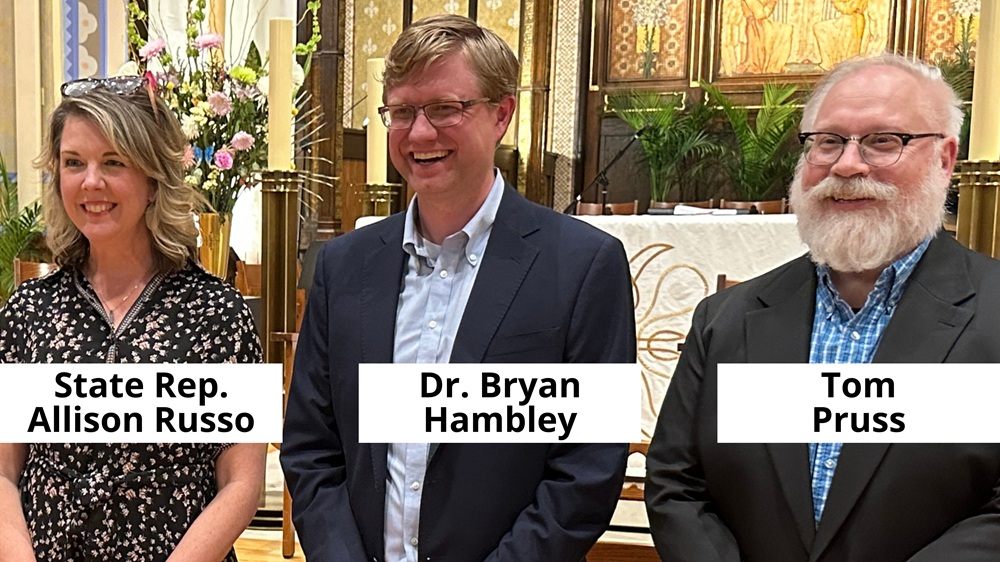
• Bryan Hambley (Democratic)

• Allison Russo (Democratic)

• Tom Pruss (Libertarian)

• Robert Sprague (Republican)

• Marcell Strbich (Republican)

To learn more about some of the secretary of state candidates, read Jaden Jefferson’s coverage of a League of Women Voters event in which Bryan Hambley, Allison Russo, and Tom Pruss attended. Read it here. Readers can find a one-on-one interview with Robert Sprague below. All of these candidates have been contacted for interviews.

Treasurer of State (Vote for 1)

• Seth Walsh (Democratic)

• Jay Edwards (Republican)

• Kristina D. Roegner (Republican)

Justice of the Ohio Supreme Court (Term commencing Jan. 1, 2027) (Vote for 1)

• Marilyn Zayas (Democratic)

• Daniel R. Hawkins (Republican)

Justice of the Ohio Supreme Court (Term commencing Jan. 2, 2027) (Vote for 1)

• Jennifer Brunner (Democratic)

• Andrew King (Republican)

• Jill Lanzinger (Republican)

• Ronald Lewis (Republican)

• Colleen O’Donnell (Republican)

Note: There are no statewide issues during the May 5 primary election. Some races, school district and local issues may appear in multiple counties due to overlapping boundaries.

LUCAS COUNTY

• CONTESTED RACES

U.S. Representative – 9th District (Vote for 1)

To find more detailed information on all of the candidates below, check out Stephen Zenner’s article, “TFP Voter’s Guide 2026: May Primary, 9th Congressional District.”

Marcy Kaptur (Democratic)

Marcy Kaptur

Matthew Althaus (Libertarian)

Matthew Althaus

David Edward Gedert (Libertarian)

David Gedert

Anthony Bruce Campbell (Republican)

Anthony Campbell

Derek Merrin (Republican)

Derek Merrin

Alea Nadeem (Republican)

Alea Nadeem

Madison Sheahan (Republican)

Madison Sheahan

• Josh Williams (Republican)

Josh Williams

State Senator – 11th District (Vote for 1)

• Paula Hicks-Hudson (Democratic)

• Kenneth W. Sharp (Libertarian)

• James Nowak (Republican)

State Representative – 41st District (Vote for 1)

• Ian Chamberlain (Republican)

• Erika White (Democratic – Write-In)

• William Patrick Watkins (Libertarian – Write-In)

State Representative – 42nd District (Vote for 1)

• Elgin Rogers Jr. (Democratic)

• Robert McMahon (Republican – Write-In)

State Representative – 43rd District (Vote for 1)

• Michele Grim (Democratic)

• Zach Hall (Libertarian)

• David Karmol (Republican)

• Kristi Kille (Republican)

State Representative – 44th District (Vote for 1)
TFP’s story by Jaden Jefferson, “Election 2026: School funding, property taxes, & data centers” includes interviews with all three of the candidates below:

• David J. Fournier (Democratic)

• John W. Rozic (Republican)

• Edward L. Schimmel (Republican)

Court of Common Pleas – Domestic Relations (Vote for 1)

• Lisa D. McGowan (Republican)

• Nedal Adya (Democratic – Write-In)

Court of Common Pleas – Probate (Vote for 1)

• Tom Puffenberger (Democratic)

• Shelly Kennedy (Republican)

Court of Appeals – 6th District (Vote for 1)

• Myron C. Duhart (Democratic)

• Michael R. Goulding (Republican)

• CJ Kamm (Republican)

Lucas County Commissioner (Vote for 1)

• Lisa A. Sobecki (Democratic)

• Brenden Johnson (Libertarian – Write-In)

• Laura Brown (Republican – Write-In)

Lucas County Auditor (Vote for 1)

• Katie Moline (Democratic)

• Carolyn Munn (Republican – Write-In)

• ISSUES

Full ballot language can be viewed at this link based on precinct. Ballot issues are summarized below:

Springfield Local School District (Proposed tax levy, additional, 3.9 mills, continuing): Current expenses.

Sylvania City School District (Proposed tax levy, additional, 7.9 mills, continuing): Current expenses.

Otsego Local School District (Proposed income tax, additional, .25%, 5 years commencing 2027): Current expenses.

Evergreen Local School District (Proposed income tax, renewal, .25%, 5 years commencing 2028): Current expenses.

Lucas County (Proposed tax levy, additional, .8 mill, 5 years commencing 2026): 911 and public safety communications system.

Lucas County (Proposed tax levy, additional, .9 mill, 10 years commencing 2026): Zoological park services and facilities.

More details on these two Lucas County issues can be found in Stephen Zenner’s story, “Toledo Free Press Voter’s Guide 2026:2 Issues for all in Lucas County.”

Village of Swanton (Proposed tax levy, additional, 1.5 mills, 5 years commencing 2026): Parks and recreational facilities and programs.

Richfield Township (Proposed tax levy, additional, 1.75 mills, 3 years commencing 2026): Fire protection and emergency services.

Sample ballots are available at this link.