The sidewalk on Monroe Street near Fifth Third Field. Toledo Free Press Photo by Michael S. Miller
Mud Hens season is in full swing, with thousands of people walking Downtown to see a game and visit a restaurant or pub. And as we report on the growth of the Warehouse District this issue, what a terrible time to mark up the surrounding sidewalks with what is tantamount to graffiti.
.
Along the sidewalks on Monroe Street near Huron Street, outside the offices of Toledo Free Press and in front of the restaurants and businesses by Fifth Third Field, the locations of underground utility and cable lines are marked in bright orange, red and blue paint. Not a light chalky paint or substance that will fade in a week or two, but heavy, dark paint that stains the sidewalks for months upon months.
At this point in time, the locations of cables and lines and pipes must be well documented. I understand the safety concerns, but there has to be a better way to mark these lines than pretending Jackson Pollock works for a contractor. Is there no database where these lines are stored? They can’t use GPS or ground-penetrating radar? The city installed beautiful bricks along the sidewalk and now they are tagged with lines and directions.
We spend our time and our money to live and work here; this is our front yard. Power washing won’t take the paint off and you could get fined or arrested should you try.This mess was made by USIC Locating services. A USIC representative said the paint can be washed off with hot water and will fade within a few weeks, but there are lines on the street itself that have been tread upon by thousands of tires and you can still see them clearly.
My friend Bill Kline at The Blarney said, “The paint they’re using seems to be permanent. There are types of paint that are temporary, and it doesn’t seem like they’re using those. It just looks terrible. It just looks bad. They spent money on those new bricks, and now they’re covered in paint. I think that if they could find something more temporary, it wouldn’t be so much of a problem. Who knows when they’ll come out here to dig? They could do a little bit better job of managing when those are marked. It’s unsightly.”
Doug Stephens, commissioner of the city’s Division of Engineering Services, said about the spray paint, “We know it happens. Sometimes we don’t like that some of the pavement get marked up, but ultimately it should dissipate and be gone. We understand that utilities are required to mark that up under the Ohio Utilities Protection Service.”
Between the city, the Downtown Toledo Improvement District and my fellow Downtown business owners, there needs to be a discussion to keep this unnecessary mess from staining our sidewalks when we should be at our cleanest and most presentable.
Thomas F. Pounds is president and publisher of Toledo Free Press. Contact him at [email protected].
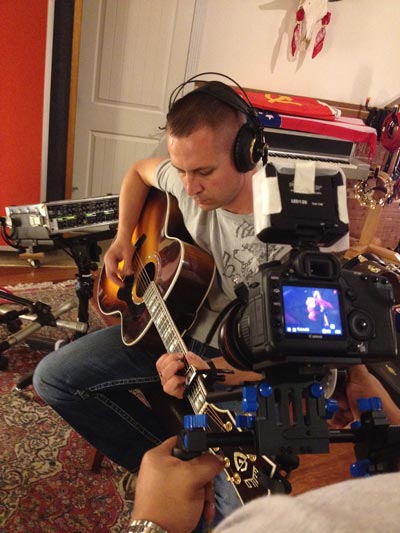
Toledoan Matt Stake wrote and recorded two songs for the CD. Photo courtesy Larry Meyer
Music can be a powerful motivator for veterans. A guitar is one of the few nonessential items allowed in a war zone, so occasional evening gatherings spent listening to original songs are considered a treasure to many soldiers stationed across the globe.
Toledoan Matt Stake wrote and recorded two songs for the CD. Photo courtesy Larry Meyer
The strength gained from music is what led to the creation of Operation Encore by U.S. Air Force veterans Rob Raymond, Chris Kurek and Erik Brine. Brine said they had many reasons for founding the organization, but the main goal was to showcase veteran talent.
“We were trying to provide a venue and opportunity for veteran singers and songwriters who can make original music to collaborate and share their experiences and their stories with the larger veteran population and the public,” Brine said.
Brine, a presidential management fellow at the Office of Management and Budget in Washington, D.C., said the overwhelming support from the veteran community inspired them to donate a portion of their future proceeds to other organizations.
“We know there are a lot of veterans organizations out there, over 52,000 now,” Brine said. “A lot of them are great, some of them are not so great. We want to highlight the ones we think are especially good. That’s just one small way we think we can give back.”
The funds will be divided amongst organizations like the Dog Tag Bakery, the American Legion and Student Veterans of America.
Toledoan Matt Stake, member of the Ohio Air National Guard, performs two original tracks on the CD. Stakes said he hopes the CD shows the population how musically gifted his fellow veterans are.
“You’re usually pretty limited when you go to some of these places,” Stake said. “One of the things you can take is an acoustic guitar. The biggest thing is we wanted to share great music for the world and get recognition for some of the talented, great folks that are out there.”
Stake and 10 other musicians recently gathered at a house in Phoenix to work on Operation Encore with Brine, Kurek and Raymond.
“Between music sessions and doing interviews for a documentary, we would do live shows every night,” Stake said. “No one wanted to leave because you had 13 people sitting in this living room with mandolins and acoustic guitars and acoustic bass guitars. It was amazing.”
Stake described a similar scene he often encountered while deployed in the Middle East: officers in their downtime gathered in a common space or around water pallets, pulling out their guitars and singing from their hearts.
Erik Brine, Chris Kurek and Rob Raymond of Operation Encore. Photo Courtesy Larry Meyer
Brine said music was a powerful motivator for him.
“Music played a big part in my life and served a big role for me, whether I was getting myself psyched up to fly into a combat zone or when I was just deployed,” Brine said. “Any time you’re deployed, time stands still. You get lonely. Music always helped me feel better, helped me feel closer to home and felt like I was there for a reason.”
Stake said he finds songwriting inspiration when he is away from his wife.
“When I write it’s about missing my wife or something like that,” Stake said. “One of the songs was written when I went down to New Orleans, when I was down on Bourbon Street. The signature drink was called ‘hand grenade.’ I was sitting down there, the sun was shining, I was looking at Lake Pontchartrain and I was thinking, ‘This is awesome.’ The only thing missing was my wife.”
Stake said a running joke between him and his wife is that, because he is an F-16 maintenance officer and a pilot for small six-wing aircrafts, he would probably get lost if he flew the larger planes on his own. He reflects this sort of experience within his songs.
Stake said each track on the CD touched him, but his two favorites were Raymond’s “Slipping Bonds” and Stephen Covell’s “Sand Hills to Sandals.” Covell’s piece brought tears to Stake’s eyes, and for that reason, Stake said he will not listen to Covell’s other track until he is emotionally prepared.
Since 1970, LGBT communities all over the world celebrate June as Gay Pride Month to commemorate the Stonewall Riots of 1969 that sparked the gay rights movement in America. We come together as one alongside our allies to educate and celebrate love, acceptance and diversity of the lesbian, gay, bisexual and transgender community.
As you come out and celebrate, don’t forget the struggles and strife those before us have endured as they strove for our equality, acceptance and legal rights. We have come a long way in the 45 years since the Stonewall Riots but we still have a long way to go.
Here is a list of gay pride events in the tri-state area that run from late May all the way into September. Happy Gay Pride Month, everyone!
6th Annual TransOhio Trans & Ally Symposium: May 30-June 1. This three-day symposium at Ohio State University in Columbus includes over 40 educational and supportive workshops related to the transgender community including health care, surgery, schooling, safety, relationships and youth issues. www.TransOhio.wordpress.com
Cincinnati Pride: May 30-31. The 40th Cincinnati Pride Festival and Parade is the oldest in the state. Come out and celebrate four decades of pride with a pub crawl, parade, live entertainment, fireworks display and family fun zone at Sawyer Point. www.Cincinnatipride.org.
Ferndale Pride: May 31. The 4th Annual Pride Street Festival in downtown Ferndale, Michigan, will host a 5K rainbow run, live entertainment, drag shows, LGBT vendors, dance stage and more. www.FerndalePride.com
Bowling Green Lavender Women Picnic: June 5. This event will be held at the Bowling Green City Park in the Stone Shelter House, rain or shine, from 5:30 p.m. until dusk. Bring a dish to share, family and friends. (419) 410-4310
Detroit Pride: June 7-8. Motor City Pride celebrates 43 years with a parade and festival on the riverfront at Hart Plaza in downtown Detroit. Events include a commitment ceremony, family picnic, dance pavilions, live entertainment and so much more. www.MotorCityPride.org
Youngstown Pride: June 7. The 6th Annual Pride Festival and Parade will host live entertainment, door prizes, a beer tent, arcade games, puppet shows for kids and family fun. Downtown on Central Square from noon until 9 p.m. www.PrideYoungstown.org.
Bowling Green Pride Picnic: June 14. The 2nd Annual Bowling Green Pride Picnic will be held at the Bowling Green City Park in the Kiwanis shelter house from 11 a.m. until 4 p.m. Bring a dish to share and your friends, family and pride.
Cedar Point Gay Day: June 15. An annual tradition for decades, the LGBT community invades Cedar Point on Father’s Day. This event is neither endorsed nor denied by the park and all are welcome. www.CedarPoint.com The after-hours party continues at Sandusky’s only gay bar, Crowbar, 206 W. Water St. www.SanduskyCrowbar.com.
Columbus Pride: June 20-21. The state’s largest pride celebration marks 33 years in Columbus. A two-day event filled with a huge parade, festival, pride brunch, Jaeger Run for Pride 5K, fashion show and live entertainment including Crystal Bowersox. Downtown Columbus at Goodale Park on the riverfront.www.ColumbusPride.org.
Cleveland Pride: June 28. The 26th annual Cleveland Pride Parade, Rally and Festival will take place at Voinovich Park. www.ClevelandPride.org.
Detroit African-American Pride: July 22-27. The 19th Hotter Than July celebration is the United States’ second oldest African-American LGBT social justic rally. Six days packed with a film festival, boat rides, youth summit, workshops, picnics, candlelight vigil and more. www.hotterthanjuly.org.
Fort Wayne Pride: July 25-26.The 18th Fort Wayne Pride Festival will host workshops, live entertainment, vendors, a beer tent, tournaments, kid space and family fun. Held in downtown Fort Wayne at Headwaters Park. www.FWPride.org.
Gay Games 9: Aug. 9-16. Cleveland will host the 9th International Gay Games with over 35 sports and cultural events. Join the festivals, ceremonies, performances, parties and more as 30,000-plus people, including 11,000 participants, are expected to invade northeast Ohio for the world’s largest diverse sporting and cultural event. www.GG9CLE.com.
Toledo Pride: Aug. 22-24. The 5th Annual Toledo Pride weekend kicks off Friday, Aug. 22, with Pride Night Glo 5K and 1-mile fun run, walk and roll at 8:30 p.m. at the University of Toledo main campus. Saturday is the main day with the Pride Parade and Festival in Downtown Toledo at Promenade Park with live entertainment, food and drink, over 60 LGBT vendors, boat rides and community networking. Sunday, Aug. 24, wraps up the events with a Sunday Fun Day geared toward family activities including an ice cream social, picnic, face-painting, games with prizes and more. www.ToledoPride.com.
Kings Island Pride Night: Sept. 5. For the 18th year, Kings Island in Cincinnati will host this annual fundraiser for the Gay and Lesbian Community Center of Greater Cincinnati. Live entertainment, drag queens and free parking. www.cincyglbt.com/pride-night.
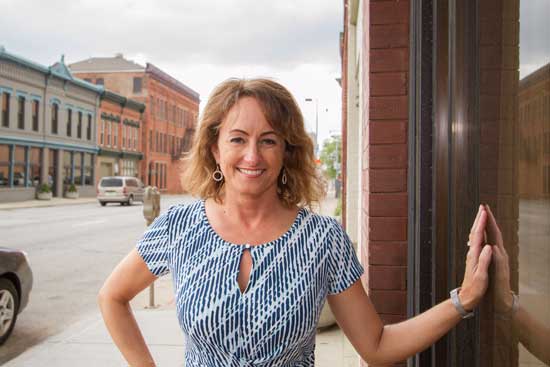
Diane Keil-Hipp is president of the Toledo Warehouse District Association. Toledo Free Press photo and cover photo by Christie Materni
“If you don’t think Downtown Toledo has sex appeal, then drive around Levis Commons or Easton and ask yourself, ‘Aren’t they making a pretend Warehouse District?’”
Diane Keil-Hipp is president of the Toledo Warehouse District Association. Toledo Free Press photo and cover photo by Christie Materni
Hugh Grefe, executive director of the Local Initiatives Support Corporation, spoke at a May 27 event recognizing May as National Historic Preservation Month. He speaks for a growing Downtown community that has witnessed revitalization in the area’s economic and social life over the past few decades.
The Warehouse District grew out of a 19th-century community called Port Lawrence that was founded near the Maumee River. By 1823, it comprised two log warehouses and a few houses at the corner of Monroe and Summit streets, according to the Toledo Warehouse District Association (TWDA).
Today, it boasts more than 700 residents, 60 new businesses and has become the choice location for the future plans of several local giants, including the Toledo Mud Hens and ProMedica.
The Warehouse District encompasses 44 blocks, with its northern border at Monroe Street. More than 40 of its mostly 19th-century buildings have been renovated into new hotspots thanks to the “heart, blood and tears” of the community, according to TWDA President Diane Keil-Hipp.
“When you walk on the same floors as people did 100 years ago, there’s something really special about it,” Keil-Hipp said.
“We’re part of their legacy and we have an obligation to preserve their heritage. Preserving these buildings is like making a greater statement that there is larger context for people’s lives.”
Keil-Hipp, who works Downtown, said witnessing the renovation of these buildings and the revitalization of business life “has been something really cool to watch.”
“The best thing about the Warehouse District is how it happened one by one as individual investors saw opportunities,” she said. “That’s why it’s so sustainable — people are personally invested in these buildings. It’s not government just coming in and overhauling everything block by block.”
TWDA is an entirely volunteer-based nonprofit that advocates on behalf of its approximately 60 members, who have privately invested in the Warehouse District, either as business owners or residents.
“We’re all about resurgence living,” said Kathy Steingraber, former TWDA director.
“We’re sending a strong message to college graduates: You can have it all here in Downtown Toledo, you don’t have to live in New York City.”
TWDA collects dues from its members to pay for promotions and websites, Facebook advertising and some neighborhood events.
It also secured a role in the Overlay document that Toledo City Council passed in January, which requires anyone who wants to renovate a building to “run their plans through the architectural review committee for approval,” Keil-Hipp said.
“You can’t be the suburb of nothing,” said architect Paul Sullivan, a member of that review committee. “We’ve redeveloped Downtown in a methodical, sensitive manner. There’s real power in preservation. It’s crucial to keep our heritage intact for many reasons, not the least of which is the quality of life we share. There’s a meaning to the story we have down here.”
Sullivan also said that historic preservation is about sustainability and choosing the “green option.” Every time a small Downtown building is demolished, it negates the efforts of recycling 1.34 million aluminum cans.
Keil-Hipp said TWDA’s vision since the 1990s for the Warehouse District has in part been to “return to a truly urban neighborhood that encourages a harmonious blend of residential, commercial, retail and service components (and) to create an environment to work, live and visit that is unlike any other.
“When I read that statement today, I think, ‘We’re here. We really did it,’” she said.
When there were seven
Downtown in 1988, there was no Fifth Third Field or St. Clair Village — or much of anything except a host of vacant buildings in disrepair.
That’s when native Toledoan Bob Seyfang bought the Bakery Building, a 1900 construction that his grandfather used to own.
“I came home one day and my wife told me our house was sold and we were moving Downtown. We had 13 weeks,” Seyfang said. “But we saw the potential. It was a risk all right, but we knew what we wanted and we just waded into it.”
Seyfang and his wife were the sixth and seventh of only seven people living in the Warehouse District in 1989.
Seyfang operated his architectural firm from the Bakery Building’s first floor for the next 10 years.
“We had so many economic slowdowns but it didn’t matter because our vision was strong and we knew it would happen,” Seyfang said. “That’s not to say I didn’t lose a few night’s sleep over this, but it’s a slow, evolving thing. When the economy was good, things were good and when it wasn’t, things weren’t. That’s how it goes.”
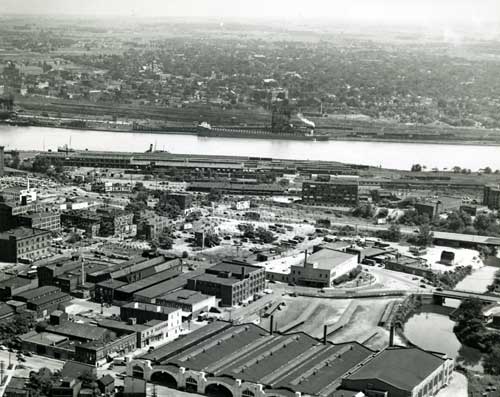
Warehouse District, 1950, courtesy of the Toledo-Lucas County Public Library, obtained from http://images2.toledolibrary.org/.
Renovating the Bakery Building was a seven-year project for the Seyfangs, partly because of its “pretty rough shape” and also because the three-story space boasts eight residential units, five commercial units and indoor parking.
“In the ’20s and ’30s, Downtown was run by numerous CEOs of locally owned businesses. They were benevolent dictators in a lot of ways,” Seyfang said. “They loved the city, put roots down here with their families, and could raise $15 million amongst themselves for a project no problem. That’s all gone now.”
Seyfang stressed the importance of “thinking ahead” if local residents want Toledo’s Warehouse District to continue growing.
“Remember what we had in the past, but move forward with it,” Seyfang said. “That’s what young people are doing. Hopefully every one of them will have the same happy story that we do.”
He said Downtown will need to maintain a strong business retention network, encourage its young people to start investing money in the area and consider new construction projects, not just renovation of older buildings.
“We also need to start thinking beyond the Warehouse District because we can’t grow this neighborhood forever,” Seyfang said. “But we can help other districts by sharing our story. We can also tell them that we’ve created something unique for Toledo — and they should come and enjoy it.”
Living Downtown
Today there are more than 700 people living in the Warehouse District and the number continues to grow. TWDA member Richard Rideout moved to South St. Clair Street nearly 12 years ago and said he is proud to be part of the growing Downtown population.
“People ask me about moving to the suburbs and I break out in hives. Not really, but you know what I mean,” Rideout said. “To me it offered a blank slate, an opportunity to do something different. I like the concept of living close to work. I don’t want to waste time commuting every day.”
When Rideout bought his building, the entire third floor — where he now resides — was totally vacant except for a “collection of dirt, odds and ends, and windows totally covered in plywood.” But he doesn’t regret the decision at all.
“I love my home and I feel much safer walking around Downtown than Franklin Park Mall,” Rideout said. “Keep looking for the Warehouse District to grow at a much more rapid pace than what it’s done in the last 10 years. In fact, I’m going to guess our residency will double in the next five to 10 years.”
Valerie Garforth said she remembers exactly what the “wasteland” of the Warehouse District was like when she and her husband came to Toledo in 1998.
“Every year since, something wonderful has happened Downtown,” she said.
Garforth does not live in the Warehouse District, but owns two apartment units Downtown where she rents about 50 spaces.
“We bought these as investments and they lost value with the economic downturn,” Garforth said. “However, they’re picking up again and we manage to rent them continuously without vacancies.”
A native of Brussels, Garforth said she hopes to see the Warehouse District “take off” the way downtowns in Europe have.
“Brussels is very middle class, a smaller version of Paris really. The apartments are there, restaurants around the corner, supermarkets, parks, an exercise circuit — just everything,” Garforth said. “I’m used to the idea that people can live in a close urban environment quite happily together.”
Garforth said “a real turnaround” for Downtown would be if the retail stores came back to the area and people with disposable income could shop and have a place to wander around.
“We used to live in Minneapolis where there’s a thriving downtown and department stores connected with skyways,” Garforth said. “People leave their office buildings for lunch and its like being in a greenhouse. That’s my dream for Toledo.”
Working Downtown
In less than three decades, the Warehouse District has welcomed 60 new businesses and seen a 111 percent spike in real estate value compared to an average 5 percent increase in real estate value in Lucas County.
Ron Novak, owner of Downtown Latté for four years and a resident of the Warehouse District for eight years, said he really enjoys living and working in the area.
“The biggest difference I’ve noticed from working Downtown is the diversity of people,” Novak said. “I see businesspeople, retirees, families and artists. You don’t get that anywhere else in Toledo.”
Like Novak, Audrey Ackerman was really impressed by the growth of the Downtown area. Ackerman, who recently opened Floral Pursuit, Downtown’s only flower shop, nixed her plans to work from home when she saw a vacant space in St. Clair Village.
“You can definitely see the city opening up and it’s crazy to be part of all these people trying to make it grow,” Ackerman said. “I’ve met so many people who are showing that there are things to do here in Toledo. You just have to explore, go out and not be afraid to walk around.”
Steingraber, a landlord at St. Clair Village, said she thinks younger people like Novak and Ackerman are the future of the Warehouse District.
“I love all the young people coming in. I try to give them as much support as I possibly can,” Steingraber said.
Steingraber helped develop Erie Street Market and Libbey Glass before turning to a section of St. Clair Street.
“We’ve been 100 percent leased 98 percent of the time. Let me tell you, Downtown Toledo is thriving,” Steingraber said.
In addition to the emergent economic recovery story, Downtown businesses have the added advantage of being part of a tight-knit community that has members who invest in each other.
Jules Webster, owner of The Art Supply Dep?, said the Warehouse District has always been a community, but “it’s growing leaps and bounds.”
“We refer our customers to a lot of businesses close by and they do the same for us,” she said. “There’s still a lot of available spaces and room for growth. We’re all looking forward to see where this goes.”
Webster said that the character of her renovated building on South St. Clair Street draws people from around the area to her art store.
“We appreciate the old architecture and tradition instead of the newer construction and strip malls that don’t have an inspiring style,” Webster said. “I would definitely say it adds to the business. People who come are often willing to travel more than 30 or 45 minutes. They’re enchanted by the development of these older buildings.”
Mud Hens President and General Manager Joe Napoli said with the flurry of commercial activity, payroll in the Warehouse District averaged about $12 million last year, “up from virtually nothing.”
“We’re headed in the right direction. Your community gets measured by a lot of aspects, including its urban core,” Napoli said. “We’re close to that tipping point where this is going to become a very special place to live and work.”
Future plans
The Mud Hens’ Downtown development project, Hensville, and the relocation of ProMedica’s corporate offices to Downtown are “catalyst projects” that will spark a “wildfire of new growth” in the Warehouse District, Steingraber said.
The Mud Hens plan to transform two or three 19th-century buildings on South St. Clair Street that have been vacant for more than 30 years into an entertainment district called Hensville.
“We’ll do street festivals, food, music concerts, arts — whatever the community would support,” Napoli said. “Hensville’s an $18 million to $21 million investment that’s part of the entire dynamic of living and working Downtown.”
Napoli said Downtown Toledo already attracts 800,000 people to its streets annually and he expects to see an extra 100,000 to 125,000 people visit Downtown once Hensville is fully operational.
“It would be easier and less expensive to knock the buildings down, but Joe [Napoli] is dedicated to preserving the fabric of the neighborhood,” said architect Tom Porter, who is working on the Hensville project. “I think too many people just come in and knock buildings down. There are some things you just can’t duplicate.”
ProMedica agrees with the Mud Hens’ philosophy for urban development.
The company is “very serious” about relocating its corporate offices for 700 employees to the old steam plant adjacent to the Key Bank building on Summit Street across from Promenade Park, said Robin Whitney, ProMedica vice president of property acquisition and development.
“The steam building is a historic brick, beautiful structure and we are committed to making this move work,” she said. “Anything we can do to promote more people coming Downtown is a great win for our city.”
ProMedica’s spike in its number of employees over the past few years has forced it to buy and lease several buildings in Toledo, scattering its corporate offices throughout the city.
“We don’t feel like it’s efficient to be so spread out,” Whitney said. “We want to consolidate everyone into one space because if you’re working closer to people, then you’re more collaborative. Toledo is our community and it’s important to have a vibrant Downtown. We want to be part of the revitalization.”
ProMedica has not established an official timeline for the move because it depends on its ability to receive historic and new market tax credits. However, its “optimistic timeline” would be to break ground next summer and complete the renovation project in 2016.
“What we’re doing is helping revitalize that office component,” Whitney said. “Maybe our moving Downtown will spark interest for other companies to want to move their office spaces. Once that happens, Toledo will have all the components of a revitalized Downtown: residential, dining and entertainment, and office and business. That will be a picture of real success.”
Alyna Hinsch of Fremont on her wedding day, wearing her heirloom dress, with husband Corey and her parents Paul and Yvette Rash. Photo by Corrine Turner / Courtesy Alyna Hinsch.
When Alyna Hinsch of Fremont walked down the aisle last month, her something old and something new were wrapped up in one piece — her wedding dress, which had once belonged to her husband’s late mother.
Alyna Hinsch of Fremont on her wedding day, wearing her heirloom dress, with husband Corey and her parents Paul and Yvette Rash. Photo by Corrine Turner / Courtesy Alyna Hinsch.
“When I was thinking about what kind of dress I wanted, I knew I wanted something different and unique that nobody else would have,” said Alyna, 25, who married Corey Hinsch, 24, on April 26 in Port Clinton. “My father-in-law offered me the old dress and then I got the idea to transform it into a new dress.”
Alyna’s father Paul Rash, whose mother taught him to sew as a boy, did the alterations. He stripped the dress to its original bodice and then rebuilt it into his daughter’s dream dress, trading the puffy sleeves and high neckline for an A-line style with a sweetheart neckline.
“Everyone thought the dress looked beautiful and were very touched that I used the old dress,” Alyna said. “They thought that it was awesome we were able to change it to something different while still using elements of the old dress. I thought it was amazing that my dad was able to do it. I loved how it turned out.”
Corey’s mom, Carol Hinsch, died not long after the couple started dating.
“I only got to meet her a few times, but everyone that knew her always talks about how nice of a person she was and very caring,” Alyna said.
Corey said it meant a lot to him that Alyna wore the dress.
“It was very special,” he said. “It made me feel like my mom was there.”
Alyna in her mother-in-law’s original dress. Photo Courtesy Alyna Hinsch.
Alyna’s advice to other brides looking to wear an heirloom gown is to make sure they allow enough time for alterations. It took her dad about a month, finishing the week of the wedding.
“I was worried it wouldn’t be done in time. I was having dreams that it came down to the last minute before the wedding and it wasn’t done. But my dad was confident he could get it done and he did,” she said.
Amanda Taylor, 23, of Genoa isn’t engaged yet, but already knows she wants to wear her mom’s dress — minus the puffy sleeves — for her wedding someday.
“It would help us save money to start our lives without spending hundreds if not thousands on a dress,” Taylor said. “I’ve never been one to plan ahead as a little girl, but that is worth thinking about to me now.”
At least four of her mom’s cousins and friends have also worn the dress, but without altering it.
“I can tell how excited she gets when she tells me the stories of their wedding days wearing it,” Taylor said. “I imagine on my wedding day it will be even more special.
“I look at my mom’s marriage and want what they have. Being kind of superstitious, I see it like a good luck charm. We will probably bawl our eyes out. I think it will be cool for my dad too, to see me all grown up in my mom’s dress.”
Taylor does plan to change for the reception.
“I would hate to get something on it later!” she said.
Phyllis Sheets, owner of My Shop on Rugby Drive, an alterations and upscale resale shop in South Toledo, said nostalgia, not cost savings, is the main reason to wear an heirloom dress.
“Every dress is unique, but most of the time they could have bought a dress for what it costs [to make the alterations],” said Sheets, who has worked as a seamstress for more than 40 years. “It’s not necessarily going to save you money.”
The most common changes are to sleeves and necklines, Sheets said.
Lisa Boyd of East Toledo turned her wedding dress into ring bearer pillows and garter belts for her three daughters, Melissa Kepler, 24, of Curtice who married in 2010, Melanie Minnick, 27, of Oregon, who married in 2012, and Kelli Patay, 21, of Toledo, who is planning a wedding for 2015.
“In her opinion, the dress was just collecting dust and to take the material and use it for the pillows and garter belts was a unique way to recycle the dress,” Minnick said.
“They were originally made for Melissa, but Kelli’s and mine were made at the same time, too. For me, my wedding colors were added with ribbon later to personalize it. It was really creative and a great way to incorporate the ‘something old’ into my wedding day.”
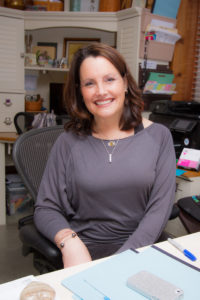
Brooke Lauber-Cobb, founder and owner of Bee for the Day. Toledo Free Press Photo by Christie Materni
Whether it’s a last-minute vendor cancellation, broken-down limo, guest with an uninvited plus-one or red wine stain on the bride’s white dress, Bee for the Day owner Brooke Lauber-Cobb and her team of 16 “bees” have the experience to quickly solve any wedding emergency.
Brooke Lauber-Cobb, founder and owner of Bee for the Day. Toledo Free Press Photo by Christie Materni
The Archbold native has been in the wedding coordinating business for 20 years.
“I like the anonymity of being the person who takes care of problems behind the scenes,” Lauber-Cobb said. “The feeling of accomplishment you get when you solve a problem and no one else even knows you’ve done it. It’s such a rush.”
For most of her career, Lauber-Cobb has held a day job, building her wedding planning business on the side by word of mouth, but about four years ago, she started operating Bee for the Day full time. Her past experience includes political and nonprofit fundraising and event planning, catering, waitressing, 9-1-1 operator and the criminal justice field.
“I’ve always been in problem-solving positions and in the service industry,” she said. “We really try to stay ahead of any problem that’s going to come up. We want to be your problem-solving people.”
Bee for the Day is the only local company that specializes solely in wedding planning, Lauber-Cobb said. Day-of coordination is the most popular service. Bees can also accompany clients to vendor meetings, offer vendor recommendations, look over contracts, tweak invitation wording and more. Bee for the Day also collects information from each vendor and organizes all the schedules into one master schedule.
“We say we wear black and stay in the back,” said coordinator Heather Bertz, who has been with Bee for the Day for seven years. “If we can stay behind the scenes and let everybody think ‘Oh my gosh, Susie and her mom planned the most amazing event and it just went off without a hitch,’ that’s our ultimate goal.”
The average cost of Bee for the Day services is $1,500 to $2,500, said Lauber-Cobb, who bills by the hour rather than offers packages so that couples can more easily customize the service to their needs.
“The biggest false statement about wedding planners is that you can’t afford one,” Lauber-Cobb said. “Honestly, I think you can’t afford not to.”
Bertz said it’s satisfying when a client — often the father of a bride trying to reign in a budget — admits the expense was worth it.
“My favorite part of the night is when dad comes up to me and says, ‘I thought my wife was crazy for hiring you, but I am so glad you were here to spend the day with us. You were the best money I ever spent,’” Bertz said.
Satisfied customers
Marybeth Monaghan Hughes of San Diego and her mom Randi Monaghan of Toledo hired Bee for the Day, on the recommendation of a family friend, to help coordinate Hughes’ Dec. 14 wedding in Toledo.
The three Bee for the Day coordinators who worked the wedding were unobtrusive yet available, Hughes said.
“I wasn’t ever walking around and bumped into them, but it seemed like throughout the evening, the second I felt I needed anything, one of them was right there ready to help,” Hughes said. “Plus, they work with wedding professionals all the time and it was nice to have an extra advocate on my side when there were questions or issues.”
The bees averted a food allergy crisis, took charge of a vendor issue, fixed a problematic bustle and had dry socks ready for the groomsmen after a snowball fight photo op. They also dismantled and loaded all the reception centerpieces into the family’s vehicles — even brushing the snow off the cars, warming them up and turning them to face the exit, Hughes said.
“It was absolutely worth it,” Hughes said. “They exceeded expectations for sure. I’m sure both of my sisters will be using them for their weddings when they get to that point.”
Monaghan agreed, saying the bees made it so she and her husband could enjoy the reception.
“My husband … said it was the best money they spent,” Monaghan said, laughing. “Instead of having to check on every little detail, we were able to enjoy our party. I told my husband it was almost like attending someone else’s wedding. I’m sure we could have managed the day without her, but it wouldn’t have been nearly as enjoyable or run as smoothly.”
Business expansion
Bee for the Day is based in Perrysburg, but coordinators will travel anywhere. The company has done weddings in Columbus, Chicago, Las Vegas, Hawaii and more. The business coordinated 50 weddings in 2012 and 75 in 2013, with a limit of five weddings per weekend.
Lauber-Cobb’s business is growing in other ways as well. Two years ago, she launched sister company Bee at Ease, which specializes in “life celebrations,” such as funerals, bridal and baby showers, graduations, birthday and anniversary parties and bar/bat mitzvahs.
“It’s the same as planning a wedding, but it’s in a shorter period of time,” Lauber-Cobb said. “People have the same sense of worry and frustration and are out of their element. To be able to pull everything together and take care of things in an immediate fashion, we can offer a sense of assistance where you may not have known you needed it. We can offer the peace of mind that everything is going to go well.”
There is also a Bee for the Day office in Dallas, which started a former Toledo employee moved to Texas and opened her own business there.
When hiring a wedding coordinator, Lauber-Cobb recommended looking for someone experienced, enthusiastic and calm under pressure.
“I don’t want anyone to think my job is not fun. It is fun. But there’s a lot of stress and it’s more than going to parties and dressing nice,” Lauber-Cobb said. “There’s a lot of work to it too.”
But Lauber-Cobb and Bertz both thrive on helping families pull off the perfect event.
“I think people are surprised by how much they rely on us and how much we offer them that they didn’t expect,” Lauber-Cobb said. “My favorite line is when someone says to me, ‘I couldn’t have done this without you’ I always say, ‘You could have, but I’m glad you didn’t because it would have been a lot more stressful.’”
When I found out a certain guest was coming to the Newsradio 1370 WSPD “Eye on Your Weekend” studio on May 16, I will admit to being as nervous as I have ever been in advance of a show. Panel member Irene Alby revealed that it was a possibility that Linda Jefferson — the legend of Toledo women’s football, no, the legend of Toledo football, full stop — might appear on our show. Then, when word came that she would definitely be there, the knot in my stomach intensified.
I had no firsthand experience of Jefferson’s incredible feats on the gridiron. When the Toledo Troopers of the National Women’s Football League (NWFL) had the last of its seemingly impossible string of undefeated seasons in 1977, I had barely been born. But I had stories. My father told me of Jefferson and her team’s exploits years later, spinning tales of how dominant and incredible Jefferson was on the gridiron.
It wasn’t until a few years ago that I started looking up Jefferson’s stats and story myself. I was astonished. However incredible my father’s stories had made Jefferson’s on-field career sound, the reality was even more remarkable. In her first season, she ran for over 1,300 yards and 32 touchdowns. She would always seem to find a hole, always finding a way to score. Over the next four years, she would average 14.4 yards per carry. That’s impossible, right? No one could rack up such numbers.
Yet she did. She was the star of a team that would dominate the NWFL, racking up five — five! — undefeated seasons. In a row. Jefferson was the story of Toledo athletics in the 1970s. She was named the first “Woman Athlete of the Year” by WomenSports magazine in 1975. She was inducted into the Semi-Pro Football Hall of Fame in 2002 — the first African American woman to receive that honor.
Reading these records, these accolades, made me determined to do an interview with her. I had to know the stories behind the numbers. I tried in 2010 to track her down for a Toledo Free Press interview, but ran into dead ends.
The failure disappointed me more than most any missed opportunity I’ve had in my time with the paper. When a cover story written by Chris Schmidbauer appeared in 2011, detailing her life, career and work at the Jefferson Center’s Toledo Head Start program, I was as envious as it was possible to be.
And now, the opportunity was here. A movie is being made based upon the story of the Troopers and its heralded halfback, titled “Perfect Season.” (Understating it, to be sure, seeing as how the team had five of them. In a row.) Directed by Toledo native Brett Leonard, creator of sci-fi films like “The Lawnmower Man” and “Virtuosity,” and co-written by Guy Stout, the son of team coach Bill, the film will bring the largely forgotten tale of the Troopers to a whole new generation.
Leonard and Stout were also there that Friday morning to discuss the film. But the star — like always — was Jefferson herself. When I walked in and saw her there, it took more courage than I thought to introduce myself. As the show started, I was grateful that our opening segment was on Jam City — it took my mind off my nerves.
Then when the Jefferson segment began, all nerves flew away. She was as down-to-earth and humble as it is possible to imagine. Asked about her legacy on the field, she insisted repeatedly that it was a team effort — she couldn’t have done it without her fellow Troopers. It was always about “us.” Never her. And she was funny as hell, to boot.
When the segment was over, I finally confessed my passion for her story to Jefferson, telling her of my father’s tales of her accomplishments. I admitted that I had tried to track her down for a story — contacting the Semi-Pro Hall of Fame, exhaustively searching on Google and elsewhere, even seeking out old newspaper clippings — with no luck.
Jefferson smiled at me and said, “Well, did you ever try looking in the phone book?”
That’s No. 48. Always finding a way to score on you.
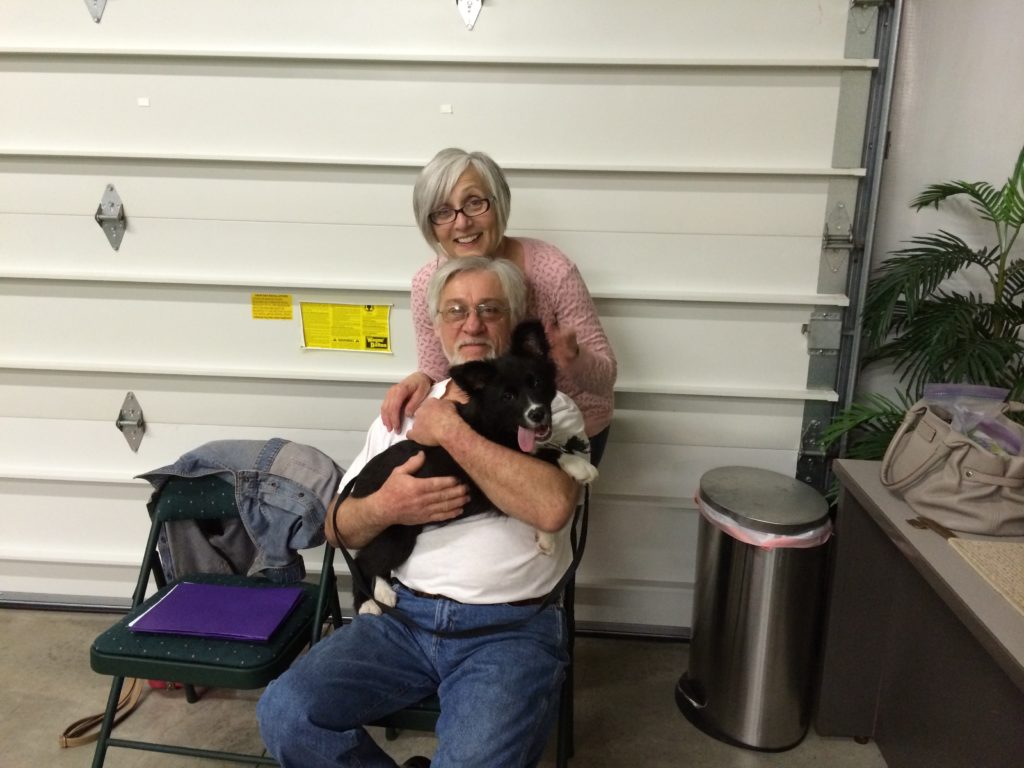
Joe and Cindy Vincent with their border collie, Trixie. Photo courtesy Tina Ferner.
When Tina Ferner got her first dog, he had some behavioral problems that limited what they could do together. Even when she tried to take him to classes, Clifford reacted negatively to the other dogs, and some trainers would expel the pair from the class.
But from those different classes, Ferner learned the techniques she now uses in her own Holland-based dog-training business, Canine Karma.
“I found a technique that worked really well with him — using treats, body language, communication,” Ferner said. “Body language is huge. I teach my clients how to listen to their dog, so they can respond appropriately. Often that solves the problems.”
Since Canine Karma first began classes in September, Ferner said she aims to give dogs a voice.
“One of the benefits of training is better communication,” Ferner said. “You get that bond even closer, and it’s helpful for the owner, it’s helpful for the dog. And then you can take them places, so you don’t have a nutcase running around. It enhances the quality of life for the dog and for the person.”
Ferner said just as Clifford was her inspiration for dog training, he was also her inspiration for another program at Canine Karma, called End of Life, for dog owners struggling with the loss of a pet or the decision to euthanize. Ferner offers a guide and a group class, with social worker Sue Carter, to help owners cope with the loss.
“I came from the human hospice care end of things,” Ferner said. “I worked there for 20 years, working with cancer patients and hospice patients, so for me, end of life care is really big. I wanted to provide comfort for my poor dog, and there wasn’t anything around, so I put it together myself.”
In September, Ferner, Carter and a social worker with Ohio State University Veterinary Medical Center will host a conference called “When Love Is Not Enough,” which will examine difficult decisions pet owners have to make.
Joe and Cindy Vincent with their border collie, Trixie. Photo courtesy Tina Ferner.
“It’s difficult for people to talk about it, [but] when you’re prepared and think about it, it makes the process easier,” Ferner said.
Canine Karma offers classes for all ages of dogs, starting with Puppy Right Start Preschool.
“It gets puppies ready for a lot of socialization,” Ferner said. “We do a mock vet visit, so they get poked and prodded. I have different textures for them to walk on. I’ll play some sounds. I’ll even play some thunderstorm sounds, so they get used to that. We have people in different costumes. Just a lot of new experiences.”
Cindy Vincent brought her puppy, Trixie, to puppy preschool.
“Tina pays a lot of attention to details and the things to look at in your dog’s behavior,” Vincent said. “I never thought to look at some things. Because those were pointed out to us we recognized things in our dog. That’s essential in setting the dog up for success.”
There’s also the S.T.A.R. Puppy Program, which teaches behavior to puppies younger than 1 year old. For beginner dogs or graduated puppies, Building the Bond teaches skills and tricks, after which the Canine Good Citizen class teaches dogs to be well-behaved and teaches clients responsible ownership.
Ferner said being able to simply go to a park with a previously reactive (or aggressive) dog can be empowering. Vincent said she experienced this with one of her older dogs, Mazie.
“Through Tina, we were able to take her for walks through the park, or have people come to the house,” Vincent said. “It’s just made having a dog a more enjoyable experience.”
Ferner also has a protocol for dogs that are timid and afraid of their environment, other dogs and people.
Scott Chapman took his dog, Duke, to private lessons at Canine Karma because he had behavioral issues with guarding his food.
By using rewards, and with other techniques, Chapman said he’s seen improvement in Duke’s behavior.
“I like to think that we have something from puppyhood to death and everything in between,” Ferner said.
Beyond dealing with pets and their owners, Ferner teaches yoga. Combining these two interests, Ferner will host an event called Down Dog for a Cause on July 19. All proceeds from the yoga class will go to the Toledo Area Humane Society.
This week has been filled with a lot of emotion, and I
really appreciate all the messages I’ve gotten from former listeners of my
show. One in particular stood out to me
and it reminded me how I could turn this bad luck into a lesson for my kids.
I was getting out of my 3-year-olds bed after she finally
fell asleep for the night, when my phone notified me of a Facebook
message. It was from a former listener
named Angi. After she stated her
displeasure for my departure, she offered me a job. Not a job in radio, but a job as a loan
officer. Through listening to the show,
Angi knew that I had no experience or desire to work in that field, but as
someone that cared about my well-being, she wanted to extend the offer just in
case I was in need.
I was very moved by the offer, and even though it was
awesome, I had to decline her offer; and here’s why.
When I was growing up, I would get home from school and my
mother would be there, usually getting ready to leave for work as a waitress. She always had a look of disappointment on
her face, and quite often would throw out comments like, “I have to go into
that rat hole again.” I remember quite
vividly how badly my mother hated her job.
I remember asking her why she didn’t do something else and
she always told me that it was because she didn’t do well in school, and she
wasn’t that smart. Those excuses didn’t
last too long, because I soon found out that my mother was too afraid to fail
at whatever she would try, so she wouldn’t try anything new. She left me with the horrible message, “You
can’t fail at something if you never try.”
How sad.
It was right around that time that I put all of this
together in a promise I made to myself.
I promised that I would find whatever passions I had in my life and pursue
those as my career. I figured that if I
did something that moved me, I would never really go to “work.” We’ve all heard the old saying, “do something
you love for a living and you’ll never work a day in your life.” Well, that was my plan.
I knew that I loved planes and anything that had anything to
do with them so I put that on my list. I
also loved sports, and loved anything that had to do with music
production.
To make a very long story short, my enlistment in the Navy
to become a pilot and my career as a professional beach volleyball player were
both cut short because of injuries.
Again I looked to my list and found music.
I entered college (again) for music production. I wanted to remix and arrange music. In the process of doing that I found radio,
and it matched my personality so well I fell in love. Being a radio host was now the new thing I
wanted to do…and it only took three other careers before I found the one I
would settle on. Are you reading
mom?
Radio is something that you have to love in order to do it. Every time I would get new interns I would
tell them that they should only do this if they love it. The industry is so hurtful that if you don’t
have a thick skin and a passion for it, it will spit you out and laugh as it’s
happening.
Just under two-weeks ago I was hurt by the industry again,
and this time it hurt my family pretty badly.
I moved my family to a new city, fought to make my way onto a show that
was as dysfunctional and emotionally rocked as it possibly could be and earned
my spot. I was promised longevity and
had it torn up in my face, only to be left jobless. Wow…I should run. But I won’t.
I love this industry, and unless I find the industry doesn’t
want me, I’ll continue to love it. I
love getting messages from people I don’t even know, but they feel like they
know me. They care so much about me and
my family that they want to offer me a career job, and we’ve never even
met. Even though that is awesome, it’s
only obvious when something really bad happens; and that’s okay.
I would rather go through what I’m going through right now
than live the life my mother lived. I am
not afraid to fail. I am not afraid to
try new things that could lead to my failing, either. I would much rather chase what I love and
fail than live a life filled with misery.
That is a lesson I really believe my children need to learn by
example.
I also want to make it clear that if radio turns out to be
something I can’t do anymore because there’s an issue providing for my family,
then it is I that will end the relationship.
Nothing is more important than your family, and you always do what you
have to for them. If I have to leave
radio behind, then I’ll have to teach my kids the lesson about how you always
have a backup plan in case your first one fails.
Staying awake for 24 hours is the equivalent of having a blood alcohol level of 0.1, which exceeds Ohio’s 0.08 legal driving limit.
According to Dr. Michael Neeb, the director of Mercy Sleep Disorders Program, sparse sleep destroys brain cells on a nightly basis and makes people less productive during the day.
Neeb will share his more than 30 years of experience in sleep medicine during a free educational lecture titled “Running on Empty: The Importance of Sleep” at 7 p.m. June 9 at Way Public Library, 101 E. Indiana Ave., in Perrysburg.
“I fell into the sleep world by accident,” said Neeb, who has a doctorate in clinical psychology. “Back in the 1980s, sleep was really starting to take off as a respected medical discipline. I’ve been fortunate to ride that wave. Getting a healthy amount of sleep makes a huge difference in your quality of life.”
Neeb hopes that his presentation will persuade people to start sleeping seven to nine hours every night.
“Why is it that I have to convince people to sleep more? It’s a fairly enjoyable activity and yet we all continually shortchange ourselves on how much sleep we’re getting,” Neeb said. “I’m here to suggest why that’s not a smart move.”
According to Neeb, sleep disorders may cause a number of health issues, including high blood pressure, weight gain and obesity, fatigue and depression.
“From a personal perspective, I’ve become very aware of how eight hours of sleep affects the clarity of my thinking and ability to speak clearly compared to six hours of sleep,” Neeb said. “I have been focused quite a bit over the last few years dealing with the issue of how sleepiness and sleep disorders affect us.”
Various psychological, medical, genetic and environmental factors create the circumstances for the more than 80 existing sleep disorders. Insomnia, the United States’ most common sleeping disorder, burdens 15-20 percent of the population with the challenge of falling or staying asleep.
Indicators of a sleep disorder include snoring, losing focus at work, having trouble waking up in the morning and sleeping in on the weekends.
“If you snore, then you should have it checked out,” Neeb said. “People laugh snoring off and it becomes funny. Sometimes snoring is snoring. However, many times snoring is just the tip of the iceberg and it needs attention.”
Snoring is the chief sign of sleep apnea, the most common disorder that sleep centers observe. Sleep apnea occurs when air supply gets cut off between the lungs and brain, causing the sleeper’s body to jolt awake during the night.
To prevent sleep disorders, Neeb encourages people to eat well, exercise, minimize stress, unwind for two to three hours before bedtime and establish a regular sleeping schedule.
“The biggest thing I can suggest is to pick a bedtime and stick to it every day of the week,” Neeb said. “Your body needs to know when it’s time to go to sleep and when it’s time to get up.”
Neeb’s lecture on the importance of sleep is part of a larger partnership between Way Public Library and Mercy. The two organizations have co-sponsored health-related lectures since May 2013.
“The library itself is not just about books anymore,” said Lisa Richard, program coordinator at Way Public Library. “We consider ourselves a community center. It was a natural fit to partner with Mercy once they broke ground with the new ER in Perrysburg. We utilize their expertise to offer programs that benefit our community.”
These educational programs at Way provide information, entertainment and “a little something” for people to think about when making decisions down the road, according to Richard.
In addition to Neeb’s lecture, Mercy health professionals will be at the event to administer free blood pressure screenings for interested attendees from 6:30-8 p.m.
“Perrysburg is a community that we hold near and dear to our heart,” said Kathy Valtin, marketing and communications manager at Mercy. “We want folks to know that we would like to partner with them for their overall health needs — not just be with them when they’re sick.”
The library expects to continue its partnership with Mercy for many years to come, Richard said. “Running on Empty: The Importance of Sleep” will be the eighth health-related presentation that Mercy and Way have co-sponsored together over the past year.
“If the people of Toledo all got seven to nine hours of sleep per night, I believe we would be a much healthier and happier city,” Neeb said. “I believe we would have less cardiac conditions and less car accidents on the road from lousy driving. I suspect we’d be more tolerant of others and more productive in the workplace. That’s what consistent sleep has to offer you.”