Home Blog Page 197

Miller: Wounded warriors

0

On June 1, I awoke with a sore left knee and a right hamstring that protested even the slightest movement.  I do not believe I will ever be so grateful to be strained and in low-grade pain.

.

.

The day before, I shared a field with the Wounded Warrior Amputee Softball Team, armed forces veterans who sacrificed arms, legs, hands, feet and untold other elements of their lives in the service of our country. Aching muscles were an embarrassing complaint compared to the prosthetics those men must use every day.

The Wounded Warriors played three games May 31 at Ned Skeldon Stadium, raising more than $18,000 during their time here.

The group’s core effort consists of three missions: “To raise awareness and enlist the public’s aid for the needs of injured service members, to help injured service members aid and assist each other, and to provide unique, direct programs and services to meet the needs of injured service members.” These are men like Zachary “Beef” Briseno, a Marine who lost both legs below the knee in Iraq and yet still plays softball, hunts, lifts weights and coaches his son’s baseball team. Men like Kyle Earl, a Marine whose right hand was amputated during service in Iraq but who still plays hockey, football and softball. Men like Matias Ferreira, a Marine who lost both legs below the knee in Iraq and yet skydives, dances, snowboards and bikes.

These are men who redefine concepts like toughness, perseverance and grace.

I never played organized baseball or softball growing up. I did play on the NASA softball team during a summer in Washington, D.C., but was smart enough to not swing for the fences when playing against the IRS and Department of the Treasury teams.

PHOTOS: Click here for a gallery of photos from the game

But when Newsradio 1370 WSPD’s Fred LeFebvre asked for volunteers to form a media team to play the Wounded Warriors, there was no way I was going to say no. We all knew going in we were signing up for a probable ass-kicking, and not one of us hesitated.

The Wounded Warriors beat the Metro Police/Firefighters team in extra innings but then lost to the Allshred Services/Pacesetter Property Management tournament team, which left them tired but determined to whoop on some local “celebrities.” Close to 30 of us assembled, with no practice, to form our team, managed by Al Seeger. There were a number of former Detroit Tigers serving as our ringers (Stan Clarke, Tom Matchick, Mickey Stanley, Dave Rozema, Jon Worden, Milt Wilcox and Willie Horton as well as former Cleveland Indian and 1980 American League Rookie of the Year Joe Charboneau), but I was most excited to meet football legend Chuck Ealey, the University of Toledo and Canadian Football League quarterback who never lost a football game during his career. Ealey was friendly and accommodating, a true pleasure to meet. I was less impressed with some of the former pros, a couple of whom spoke about the women on our team like we were in a 1972 locker room.

Among the many media people on the team were WSPD morning show producers Don Zellers and Adam Ragle, and Joe Thompson and Tori Carmen of NBC 24. Ragle and I had been talking for weeks about our relative lack of softball skills and how we just wanted to get through the game without major injury to body or pride.

The pregame ceremonies included a home run hitting demonstration, an appearance by veteran Matthew Drake, an honor guard and a medley of military anthems danced to by the Off Broadway Dance Company, decked out in red-white-and-blue-spangled vests. The national anthem was beautifully performed by Yvonne Ramos, who contributed to our 2012 Make-A-Wish holiday CD; her rendition was so powerful and moving, each of the Wounded Warriors lined up to hug her with thanks, even as the last echoes of her vocals faded from the stadium.

The game started with the first few innings played by our Tigers ringers, who jumped out to a several-run lead. But any illusions we had of competing were dashed when the media members and celebrities took over. I had carefully watched the first few innings, during which not one hit came anywhere near third base, so that was the position I covered. The umpire there greeted me with, “Taking the hot corner, are you?” to which I responded, “No, I am third base. If I had known they called it the hot corner, I’d have stayed in the dugout.”

The Wounded Warriors did things on prosthetics I would not have dreamed of doing in my athletic prime. As an offensive lineman for the Libbey High School Cowboys in the mid-1980s, I was about force, not finesse. These men ran, rolled and hustled with a purpose that inspired awe and respect in vast measures.

Nothing came my way that inning, though I did manage to catch one ball Zellers threw my way. It was actually kind of rolling to a stop in front of me as I set my borrowed glove down before it. I was still excited enough to show the umpire, as if I had made a deciding catch in a World Series Game 7, prompting someone in the stands to heckle my glee, but I did not care; of all the possible embarrassing fielding outcomes, none transpired.

“Hammer” Ragle led off the next inning and slapped a single into right field, so there was a man on first as I approached the plate. I took a few quick swings and tried to remember coaching advice I had seen in baseball movies. The only thing I could think of was Kevin Costner’s line in “Bull Durham” about “long, slow, deep, soft, wet kisses that last three days,” which wasn’t relevant and didn’t help. The first pitch arced in low and hit the dirt right in front of me, an obvious ball. I stepped out of the batter’s box and then took my “stance” waiting for the next pitch.

I swung, connected, and the ball sailed over the pitcher’s head, a line drive single to center field. I did my best imitation of running to first base, absolutely soaring to get a hit.

It was one of the three greatest athletic moments of my life, the others being a 1985 senior high school football game against St. John’s (no Jesuit in the name then) and the  session that led to the conception of my first son.

The joy lasted until I realized just how far away second base looked. Radio personality Sid Siddall was up next, and he hit a single that scored Ragle and allowed me to lumber to second base. It was then that I first thought I might actually have a chance to score a run. With my little boys and wife in the stands cheering me on, it was a tantalizing and previously unconsidered chance at glory. But Zellers took the plate and his contact with the ball sent it straight toward third base. I tried, though, barreling as fast as I could, pushing my protesting legs.

Predictably, I was outplayed by a catcher with one arm and a baseman with two prosthetic legs.

I went back to the dugout happy and fist-bumped Ragle on our achievement, which I know, in the presence of the Wounded Warriors, was pathetic, but we were still happy. In fact, when Zellers asked me if I was going back on the field, I declined, ostensibly so someone else could take a turn, but primarily because why mess up a .1000 career batting average? Zellers, by the way, took the hot corner and played like an all-star, making catches and throws so good that the Warriors-supporting crowd booed him.

The Wounded Warriors beat us 19-11, and as we lined up for the postgame attaboys, I thanked every one of them for their service. The games raised $18,000 and some much-needed attention for a tremendously compelling cause. Plus, I got a hit!

So, yes, I was sore the next morning, but I have legs to be sore, and after seeing what the Wounded Warriors have sacrificed for you and me, that soreness was a blessing of perspective to be treasured.

Michael S. Miller is editor in chief of Toledo Free Press and news director of Newsradio 1370 WSPD. Email him at [email protected].
Local business aims to create sustainable food, jobs

0
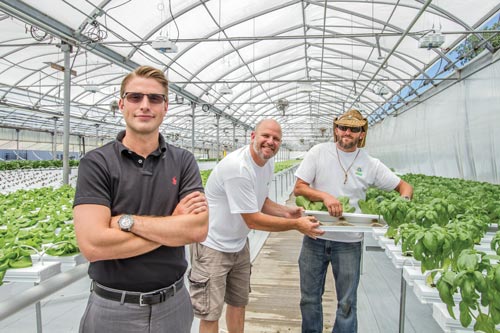
From left, Sustainable Local Foods CEO Nicholas Bloom and lead growers Danny Taylor and Bryan Ellis. Toledo Free Press photo and cover photo by Christie Materni

Ninety-eight percent of produce consumed by Toledoans comes from more than 1,800 miles away. Meanwhile, the city has an unemployment rate of  5.7 percent.

From left, Sustainable Local Foods CEO Nicholas Bloom and lead growers Danny Taylor and Bryan Ellis.Toledo Free Press photo and cover photo by Christie Materni

When Toledo resident Jim Bloom worked in vocational rehabilitation, assisting in job searches for those who needed it, he realized Toledo-grown produce was an area with huge potential for job growth.

Traditional farming — growing plants in soil and using sunlight for photosynthesis — had one big limitation in creating sustainable, profit-producing crops in Ohio: winter.

Of the states in the continental United States, Ohio receives among the least amount of sunlight in winter months, Bloom said, and even greenhouses are energy-inefficient.

“I discovered that the one huge growth area was food production, if it could be done right,” Bloom said. “For four years, I’ve been researching the best ways to do this and how to do this. What I wanted to be done in other cities was being done in the Netherlands, and I wanted to know what they’re doing in the Netherlands that we’re not doing here.”

After researching the technology used in Europe and the Middle East, Bloom found a way to modify the energy technology for use in the U.S. He started Sustainable Local Foods in 2012 and set up shop on Hill Avenue.

Mayor D. Michael Collins, who was recently introduced to the mission and technology of Sustainable Local Foods, said the company can offer hope and opportunity to the community.

“I’m a firm believer that this is a new venture for this area in the agricultural industry,” Collins said. “I see it as a potential business niche to complement all the other things that are going on here. The science and the technology provides the growth of produce 365 days a year. When you figure our position in the marketplace, I could very easily see us gravitating [toward becoming] a major supplier to this corridor of the United States. From a business niche standpoint, this is just the beginning. It’s another footprint in Northwest Ohio; it’s a huge opportunity for business growth.”

By adapting the technology used in other countries, Sustainable Local Foods aims to produce 150 jobs in the Toledo area in the next five years. Each half-acre of growing space requires 167 hours of work each week, which means Toledoans can buy locally and organically while supporting Toledo workers.

Sunless, soilless growth

With LED lights specifically designed to induce photosynthesis and narrow, white trays that hold the plants in a constant stream of water and nutrients, the indoor gardens of Sustainable Local Foods look incredibly futuristic.

The method of growing plants in a stream of nutrients, but without soil, is known as hydroponics. The water with nutrients flows through the trays, the plants soak up the nutrients and water, and the excess water flows to a barrel below. Not only are the gardens of Sustainable Local Foods energy-efficient, they are also efficient with other resources, said lead grower Bryan Ellis.

By using hydroponics, Ellis said, they can use less water and keep a consistent amount of nutrients flowing to the plants. Hydroponics uses an eighth of the water that would be used in a typical, soil-based garden.

“Each one of these trays has this cute little thing dripping nutrients, a very light flow of nutrients, through the system,” Ellis said. “It flows slightly downhill to a drain in the back, all the way down the 200 feet down this garden.”

The nutrients are split up into two barrels with a control system that allows the growers to decide how much nutrient-rich water the plants receive.

Each row of lettuce is planted a week apart. Heads of lettuce are spread out from the smallest to largest, growing larger and larger down the row.

The garden can produce 3,000 heads of lettuce a week, many of which go to local stores.

One of the major problems Bloom said he faced was adapting the energy systems used in the Netherlands. However, by using the energy-efficient LED lights, the plants can photosynthesize, even inside.

Lead grower Danny Taylor said the lights produce red, blue and white rays of light, all of which are in the spectrum of light the plants need to grow best.

“Those lights are LED; they’re very energy-efficient,” Ellis said. “They allow us to do this year-round, so we can grow lettuce in the middle of winter.

“We could grow these crops without any natural light at all,” Taylor said. “We’ll actually be doing that in the not-too-distant future because it’s such a heat-sensitive crop. If we could get ourselves into an insulated situation, provide all the plants’ needs with the LED lighting, then we could basically produce a perfect crop every time. Eliminate all the environmental factors that are different every day, the amount of sun and the amount of light.”

The crops at Sustainable Local Foods are all cold crops, which means they do best at cooler temperatures than other plants. Each garden has a temperature control system, used to ensure the gardens will not get too warm. Because the Toledo garden at 3901 Hill Ave. is in a greenhouse, not entirely shielded from light, the plants receive more nutrients during the hours when the sun is hottest.

Even inside, plants can develop biological problems and diseases, but Sustainable Local Foods grows organically and does not use any chemical pesticides on its plants.

“We use organic pesticides such as ladybugs,” Ellis said. “That is what we refer to as our IMP, which is integrated pest management. We rely on critters that eat other critters. So for every problem, there’s a solution that’s natural that doesn’t require us spraying.”

Their main type of lettuce is a natural hybrid product called buttercrunch lettuce, developed purposely for indoor growth. But it is not genetically modified, Taylor said, because genetically modified lettuce does not exist. In addition to the buttercrunch lettuce, they grow basil and romaine lettuce and will add tomatoes next month.

Sustainable Local Foods CEO Nicholas Bloom said the business plans on opening three more organic, indoor gardens as soon as the buildings are secured.

Sustainable jobs, incomes

The garden is set up in a greenhouse, but Jim Bloom said because greenhouses are not energy-efficient, they hope to have completely indoor gardens in the future. Each half-acre garden requires three full-time and three part-time workers.  Sustainable Local Foods is quickly expanding, and Ellis said the company aims to increase its growing space by a half acre every month.

“We’re a for-profit corporation,” Bloom said. “We want to be an efficient, affordable food producer, to grow in market share, to create more jobs in the city in areas that need revitalization. We want people to live in areas that they choose to live in. We’ll only place gardens in areas that have a bus line, so people who don’t have an opportunity for transportation can get to work, people who have been incarcerated, veterans with PTSD, and those in need of jobs.”

While applicants with a college education would not be excluded, a degree is not required, Taylor said.

“The fact is, even though this is reasonably high-tech, with time and effort and good training, people without a college education could actually run a system like this,” Taylor said.

Jim Bloom, Nicholas Bloom, Taylor, and Ellis all said the real mission of Sustainable Local Foods is not, in fact, food, but bringing jobs and hope to the community.

“We’re a for-profit company that acts like a nonprofit,” Ellis said. “So that’s what’s very unique about this. We hire individuals who might have barriers to employment and we start them out above living wage. So our starting pay is $11 an hour.”

The mission and motto of Sustainable Local Foods is to provide “food, opportunities and hope.”

“We also want to provide opportunities for people to own their own growing space,” Taylor said. “If people have the aptitude and the desire, we can actually help finance a place like this, and their family could run that place. We could sell the produce, and teach them how to run the place effectively. We’ll tell them, ‘If you can grow this, this and this for us, we’ll take it all and sell it.’”

If a family owned a garden like this, Taylor said, they could earn about $40,000 each year. By selling all the produce, the cost of technology is quickly recouped.

The produce grown in Toledo is mainly sold at the Toledo Farmers’ Market in Downtown and other area farmers markets. It is also used by many local restaurants, including Swig in Perrysburg, Ellis said.

“We try to keep our produce in Toledo,” Taylor said. “We’re selling some of what we grow in Detroit, but really, we don’t want to do that. We want to sell everything we grow in Toledo in Toledo, and basically we’ve got a Detroit market.”

“But we want our Detroit team to grow for Detroit,” Ellis said. “We want sustainable local food to be exactly that in every city that it’s in. We want it to supply its own community, help its own community, and hire from its own community. I like to think of it less as distribution of produce and more like distribution of opportunity.”

Training youth

Taylor, like Jim Bloom, was previously involved in a field with goals similar of Sustainable Local Foods. He worked in urban missions in Brisbane, Australia, and came to the United States to study hydroponics. He said he and his wife felt God was calling them back to the United States to serve.

“What I thought would take me five years to get set up took me no time at all,” Taylor said. “Jim [Bloom] had already been working on it for about that much time.”

In April, Alan Halterman joined the Sustainable Local Foods team as a grower. Halterman studied in the urban agriculture program at Owens Community College.

“They just ended the [urban agriculture] program,” Halterman said. “It’s very sad news. Everyone’s pretty disappointed with that. With all the new jobs coming up in the industry, we need more graduates, but the closest place you can go is Ohio State, Michigan or Hocking. That’s too far away for people who have a job.”

To train youth in agriculture, Sustainable Local Foods works heavily with the Lucas County Youth Treatment Center (YTC) and the Toledo juvenile courts. Ellis said many of the youth that work with them have either come through the YTC program, which works with adjudicated youth to help them re-enter society and the workforce, or are court appointed.

“Our response would be to create an educational program here connected with the work that we’re doing with the juvenile courts, etc.,” Taylor said. “You don’t need a degree to do this, but education is necessary. We have graduates like Alan, like Bryan. I have a certificate in aquaponics, but between the three of us, we should be able to pull something together.”

Halterman said Jose Soto and Derek Hawkins, who was one of the first employees, are two of the youth who have come through Sustainable Local Foods’ training and are now an indispensable part of the team.

“They’re actually brought up through the YTC program from Toledo GROWs,” Halterman said. “So they’re youth born and raised around here. They were kind of reintroduced to society through gardening. Jose and Derek are shining stars of that program. They’ve come out and now they’re leaders in the community and are leading other groups that they were once a part of.”

Hawkins shared his story of being a juvenile in the CITE program (Community Integration for Training and Employment), as he placed new plants in white nutrient trays. He began working with Toledo GROWs, an outreach program at the Toledo Botanical Garden, where he came into contact with Ellis and Soto. When Toledo GROWs started reducing their number of workers, Hawkins ended up at Sustainable Local Foods.

“Toledo GROWs opened my eyes to a lot of things and taught me a lot about agriculture,” Hawkins said. “I love this type of field, greenhouse, farming. I love the people that come around. I just love the feel, it has a homey feel to it.”

Madeenah Robinson, another young worker, was home-schooled and just graduated from high school. She began training through the Youth Empowerment Program at United North and began her work at Sustainable Local Foods less than a week later.

“It’s been a good experience,” Robinson said, as she planted seeds. “We plant and seed and harvest and you have to make sure that the water’s good. You have to clean up, but really that’s not my specialty. There’s a lot of things I like about it.”

While Robinson doesn’t plan on staying in agriculture permanently, she said she would enjoy doing something like it again.

Ellis said the thing young workers talk about most is how the plants always look different, and that they really take pride in the work that they do.

“There’s a lot of people I used to work with that now work here,” Hawkins said. “It’s really not a workplace; it’s a family.”

Taylor and Ellis called each other brothers as they shared their passion for Sustainable Local Foods.

“There’s a need for charity, but it’s not the answer,” Taylor said. “In the short term, we need people to have food, have jobs, but in the long term, we need to create opportunities for them to be empowered.”

Pounds: Bladenfreude

0

“The Toledo Blade has developed plans to close its facility located at 541 North Superior Street, Toledo, OH 43660. The entire facility will be closed, and it presently is anticipated that this shutdown will be permanent. Consistent with these plans, employment separations are expected to begin on or about August 1, 2014 or during the 14-day period thereafter. Approximately 131 employees currently are expected to be separated from employment. Bumping rights are not available for affected employees. Some of the affected employees are represented by a labor organization.”

— Letter from Block Communications Inc. to Toledo Mayor D. Michael Collins

.

.

The May 30 news that The Blade plans to close its Downtown production facility and lay off at least 131 employees led to a slew of people asking Toledo Free Press employees if the daily newspaper’s misfortune was good news for Toledo Free Press or brought us any satisfaction.

The answer to both questions is a resounding no.

Just when Downtown, through investments by ProMedica and the efforts of areas such as the Warehouse District, is starting to grow and thrive, the loss of 131 Blade jobs is a setback for Downtown, the city and our region. That is a lot of people no longer driving, parking, working, eating, spending money and paying taxes Downtown. There is no joy, no schadenfreude in that.

Toledo Free Press’ well-documented problems with Block Communications and its ongoing lawsuit against us do not jaundice us to its workers and employees. We recognize the difference between institutional managerial bullying and the working people on Superior Street.

Some of the public reaction to The Blade’s bad news is of interest to those who believe that one reaps what one sows, but again, there is no gain for Toledo Free Press when a Downtown employer, struggling to survive financially, has to cut so deep into its workforce and eliminate so many jobs.

The continuing failure of daily paid print newspapers to evolve with new information standards has led to some markets having no newspaper watchdog to protect its interests. While we continue to fight against Block Communications in court, we wish to make it clear we do not take any joy or satisfaction in seeing its workforce continue to dwindle; the cost to our city is too high to seek any silver lining.

Thomas F. Pounds is president and publisher of Toledo Free Press. Contact him at [email protected].

UT student Evan Matheney to attend 9/11 hearings at Gitmo

0
University of Toledo Law Student Evan Matheney will attend the 9/11 trials in Cuba. Toledo Free Press photo by Christie Materni

Nineteen nongovernmental organizations have been granted “observer status” on an Office of Military Commissions list that defines the coterie of Americans who can travel to Guantanamo Bay, Cuba, and watch the upcoming military commissions hearings. The University of Toledo is on that list. And a 23-year-old UT law student is about to become one of the few Americans who will ever sit in the same room as a Guantanamo detainee. Evan Matheney will be a military commissions hearings observer at the U.S. Naval Base in Guantanamo Bay, Cuba, from June 14-21.

University of Toledo Law Student Evan Matheney will attend the 9/11 trials in Cuba. Toledo Free Press photo by Christie Materni

Matheney said he believes he will attend the trial of Khalid Sheikh Mohammed (KSM), who was identified as “the principal architect of the 9/11 attacks” by The 9/11 Commission Report.

“I was super excited when I first found out that I could go because it’s a big honor,” Matheney said. “I view it like going to the Nuremberg Trials after World War II. For the rest of my life I can say that I got to attend the historic 9/11 hearings.”

Matheney said he feels “personally intrigued” by the story of Daniel Pearl, an Israeli-American journalist who was captured by al-Qaida in Pakistan. During a 2007 military hearing, Mohammed stated that he had personally beheaded Pearl five years before.

“KSM is proud, not remorseful. Of all the people in Guantanamo, he deserves to be in there,” Matheney said. “It’s hard to grasp someone being responsible for the deaths of thousands of people.”

Matheney was nominated to be an “observer” at the hearings by his former UT professor, Ben Davis. Davis attended the American Bar Association’s annual meeting in August 2012 where he met U.S. Army Brig. Gen. Mark Martins, chief prosecutor for the Office of Military Commissions.

“I tried to be a straight shooter with him,” Davis said. “I’m just an ordinary citizen who has been looking at this situation and I felt like he should hear someone challenge him on a few things in a heartfelt way.”

Davis said he had “enormous respect” for Martins as a lawyer, but was concerned about the number of legal precedents being determined by allowing the Supreme Court to decide that only certain provisions of the U.S. Constitution apply in Guantanamo.

“I told Gen. Martins that this is a bulls*** process and I don’t want him to get played,” Davis said. “We don’t know where the U.S. Constitution applies, yet these lawyers are citing all these federal and state criminal cases to build their respective cases. Those were all decided within the context of the U.S. Constitution. So are these really precedents or just an informal, interesting thing?”

Following their discussion, Martins told Davis that he was “welcome to come to Gitmo and see the hearings for himself.” Two weeks later, Davis decided to accept Martins’ invitation.

Following Martins’ endorsement, the Office of Military Commissions promptly added UT to the exclusive list of organizations with “observer status” at the hearings. Davis, who could simply always nominate himself as UT’s representative to Guantanamo, has instead sent about 10 of his UT students for a week each.

“This is a learning experience for them,” Davis said. “The defense council and sometimes the prosecution will meet with observers and encourage them to ask any question they want. “That’s an incredible opportunity.”

Linda Amrou, a third-year law student, was the third person from UT to visit Guantanamo Bay via the nomination of Davis. She went for a week in October 2013.

“I’m a Muslim American woman who wears a headscarf, so going down there was particularly important not only for me but for all Muslim Americans,” Amrou said. “We are part of the fabric of this nation so what happened on 9/11 affected us just like it affected your neighbor.”

Amrou said she feels “really excited” for Matheney to discuss what he observes in Guantanamo with the prosecution, defense council and representatives from other nongovernmental organizations.

“Talking to them is single-handedly the best part of the trip,” Amrou said. “These people aren’t a second source of information — they deal with the detainees day in and day out. They told us very bluntly and openly about their experiences and that was extremely important and eye-opening for me.”

Like Davis, Amrou expressed concerns about the legal precedents that are being set every day in Guantanamo and their implications for the future of American law.

“No matter what your politics are, no one can truly understand what’s going on down there unless they’re able to witness it firsthand. We’re callous and removed,” Amrou said. “We know what’s happening on a pretty superficial basis, but because it’s not in our face day to day we don’t understand the impact on our justice system. When we’re there, we can’t deny it.”

Matheney said he and his fellow law students frequently discuss the implications for U.S. law should the 9/11 hearings “translate” into the American court system.

“The scariest thing about Guantanamo Bay is how they’re making up rules of a military tribunal as they go along,” Matheney said. “Lawyers are scared about what the precedents being set mean for all of us here at home.”

Davis said he remembers sitting in the observer box at a trial during his January 2013 trip to Guantanamo. The box’s monitor feed suddenly went blank. Forty seconds later it flashed back on. Sometimes the judge will press a button to delay the box’s monitor so that observers do not hear classified information. However, the judge had not pressed the monitor control button.

“That’s when I realized things are worse than I thought they were,” Davis said. “One of the intelligence agencies has a link to the monitor and they control the censorship on classified information, too. So the military judge really isn’t in charge of his own courtroom. That’s something to think about. Who are the actors off screen and what are their roles in these court proceedings?”

Davis said he remembers sympathizing with the reaction of the judge, who seemed “shocked and angry” that this intervention would happen in a U.S. courtroom.

Like all observers, Matheney will adhere to the daily instructions of a military handler regarding where he is allowed to go, who he is allowed to talk to and what he is allowed to photograph or discuss.

“I’m happy for him because this is such a positive and unique historical experience,” said Kendra Matheney, Evan’s mother. “It seems to encompass everything that he’s interested in — the legal system, human rights and politics. There is that nervous aspect when your kids travel anywhere but it sounds pretty safe to me because he’ll be on a U.S. naval base.”

Matheney said his classmates have told him that Guantanamo is “super Americanized,” complete with an ice cream parlor, shopping center, fast food and a gift shop where you can buy an ‘It doesn’t Gitmo better than this’ T-shirt.

“It’s been described to me as one of the most stark lines between heaven and hell,” Matheney said. “You can look one direction and see a tropical paradise with beautiful beaches and forests. But it’s a harsh dichotomy because 20 feet away is Camp X-Ray, where some of the worst human rights violators have walked.”

Matheney will pay for his transportation to and from Andrews Air Force Base in Maryland where observers fly out together. However, the U.S. Department of Defense will pay for the rest of his trip, including flights. After returning to the United States, Matheney has the option to write a one-credit research paper about some aspect of his experience.

“I want to give it a fair shake,” Matheney said. “I want to give my country the benefit of the doubt. I want to believe we are good people at heart, that we have the world’s best interests at heart and that we are hopefully setting good precedents. “We’ll see.”

Trinity Episcopal Church to host June 1 concert with restored bells

0

The music of the Trinity Episcopal Church bells will soon fill the church’s Downtown plaza once again. The church, 316 Adams, plans to hold a concert using its restored bells at 4:30 p.m. June 1.

Kipp Cortez, a graduate student instructor in carillon at the University of Michigan, will play the bells. Anyone interested can listen for free from Adams Street or the Trinity Plaza.

“We’re starting at 3:30 p.m. with an informal reception on the plaza of Trinity Church for church members and people who were donors,” said church member Wayne North, who led the restoration effort. “Then, at 4:30, the concert will start. Cortez will be playing from a keyboard, which will be inside the main entrance, but the place to listen to them from is the outside.”

Old West End prepping for annual festival

0

June has arrived, which means it’s time for summer and the 43rd annual Historic Old West End (OWE) Festival, set for June 7 and 8.

People eager to partake in the festivities can visit the beer and entertainment garden from 6-11 p.m. June 6 at the Agnes Reynolds Jackson Arboretum at the corner of Delaware and Robinwood avenues.

The official kickoff to the festival is the King Wamba Carnival Parade at 10 a.m. June 7. The tradition of the King Wamba parade started 105 years ago so local dignitaries could welcome guests from sister city Toledo, Spain, said OWE Festival committe member Josh Thurston. It was dropped at some point and then picked up again in the late 2000s, he said.

The parade’s grand marshals will-be the firefighters of Toledo Fire and Rescue Station No. 17.

Letters to the Editor, Jun. 1, 2014

0

Teacher disappointed with Lee

TO THE EDITOR:

I received the May 25 issue of Toledo Free Press and was immediately disheartened by the first inside page. I am greatly disappointed in the cartoon by Don Lee because it is disrespectful to all who believe in the field of education. Making light of the horrible situation of a teacher inappropriately placing her hands on a child is incredibly rude and distasteful.

While I believe in our First Amendment rights and value others’ opinions, I also believe that some topics are reprehensible enough that a “satirical” cartoon is unnecessary. I have taught for 10 years now, and I am very proud of being a teacher. I would never hit or push a child and I would never support someone who did. Not only do you make light of a teacher doing this, you added characters with the words “bullies” and “gangz” in the background, as if teachers do not fight these two giant issues every single day. Bullying is a bigger issue than most people understand or care to admit — how insensitive of you to sarcastically include it in your cartoon.

Mr. Lee, I went to your Facebook page to see if there was more to this cartoon/ story than meets the eye. With the picture is this description: “… I had fair-to-good teachers for the most part, but there was one POS in particular and this cartoon is dedicated to her.”

I am sorry that you can only say you had fair-to-good teachers in your life and I am sorry that a teacher treated you so badly. As a teacher who still bears the scars of middle-school bullying, I understand that those feelings run deep. Instead of further perpetuating the negativity, why not use your presence to do something good? Support education, support students, support anything to be positive — rather than create sarcastic cartoons that are a slap in the face of real teachers everywhere.

Bonnie Garrett
fourth-grade teacher, Toledo

Don Lee replies:

“Ms. Garrett errs in one major point. I did not do the cartoon to, in her
words, ‘make light’ of the situation. I did it to fight a reprehensible situation
with the editorial cartoonist’s weapons of ridicule and contempt. To call criticism
of thuggish behavior a ‘slap in the face’ to all good teachers is to stand in
solidarity with the thuggishness. Is that what a teacher ought to want to do?

I hope not.”

Contact Don Lee on Twitter @DonLeeCartoons

Local entrepreneur transforms barn into new venue The Stables

0
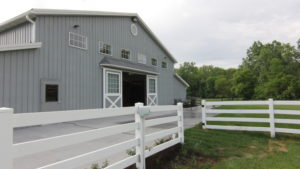
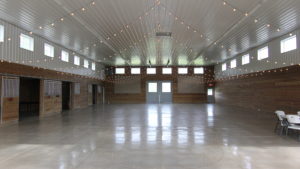
The Stables is a new wedding venue in Whitehouse. Toledo Free Press photo by Kim Sanchez

Many brides plan their weddings with a theme. Some pick a flashy night at the casino. Others opt for the elegant Cinderella story. For brides with a more down-home personality, a night at a classic barn is the fantasy.

Area brides with the latter vision are in luck. Duke Wheeler, owner of Wheeler Farms, recently purchased and opened The Stables, which he calls an ideal location for brides who want a classic outdoor venue. The property is located on Obee Road in Whitehouse and can accommodate up to 320 people.

The Stables is a new wedding venue in Whitehouse. Toledo Free Press photo by Kim Sanchez

Christy Geha, Wheeler’s daughter and manager of The Stables, describes the location as “natural and rustic.” Wheeler said he agrees and appreciates the forest setting surrounding the old blue barn.

“Out the west side you’re looking at Oak Openings, which is a very beautiful, natural setting,” Wheeler said. “We have Swan Creek meandering through the property and about 8 acres of land with the grass blowing in the wind. It’s mostly natural. We’re just trying to care for it and restore it to a beautiful stable, as it was once before.”

Wheeler said he’d rarely visited the site before making the purchase four months ago, but he enjoyed looking onto the property from his business next door.

“I always admired it from the street because [the former owners] took good care of it,” Wheeler said. “There’s a lot of white fence and it looked so clean. It’s just a pretty place.”

Wheeler said he hopes brides will appreciate the beauty of an evening at The Stables. He said celebrating at the outdoor venue can really make an event special.

“You can stand on the property, whether on the front, back, sides and you look out and you just see nature,” Wheeler said. “The sunsets out the west side are just beautiful. You can just admire what God’s created, and I think that’s the most beautiful thing.”

The first wedding at The Stables will take place May 31. Toledo Free Press photo by Kim Sanchez

According to Geha, Wheeler decided to purchase the land when it went on the market because he worried a potential new owner’s intended use for the property would not be in line with his own family-friendly business model.

“It was going up for sale and he had heard that it might become a shooting range,” Geha said. “Once he heard that, he was concerned because it was right by The Butterfly House and corn maze.”

Geha said family entertainment and education are key components of Wheeler’s business strategy. Though this new venture is not education-focused like some of their previous projects, she hopes the entertainment factor still exists.

“We just want to have celebrations,” Geha said. “My parents are very into family-oriented activities and they thought this beautiful, rustic setting would be perfect for celebrating any type of event.”

Geha said her family hopes to incorporate the Whitehouse community and its businesses to make The Stables a popular location for all kinds of celebrations.

“When people rent The Stables for gatherings and celebrations, we hope our guests will consider using local bakers, florists, restaurants, caterers and bands,” Geha said.

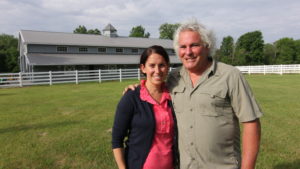
Property manager Christy Geha, left, with her father, property owner Duke Wheeler. Toledo Free Press Photo by Kim Sanchez

Geha said the venue places no restrictions on food and decor.

“They can bring in their own caterers. They can bring in their own decorations,” Geha said. “There are a lot of benefits to offering off-site catering there. You have the whole gamut of companies to choose from.”

Wheeler said when people leave The Stables, they should feel “they came to a place that’s beautiful, well cared for, and a relaxed, positive family atmosphere.”

The first wedding at The Stables will take place May 31, and Geha said they have started to take reservations for 2014-15.

Wheeler said anyone interested in booking an event, whether a wedding, graduation party, a fundraiser or more, should come out and look at The Stables.

“Any organization that has an idea for an event they would like to have, come and visit,” Wheeler said. “We’re very flexible on what they can do there. And, with their imagination, they can create a beautiful event.”

Wheeler said he hopes any couple that chooses The Stables for their big day appreciates the care his family takes in maintaining the land and the property.

“I’d just like to see families get married there, start off the relationship in a natural environment and create some happiness,” Wheeler said.

For more information or to book an event, call (419) 872-1731 or email [email protected]

Eventista: First impressions

0

It’s said that first impressions are everything. The same can be said for love at first sight. So why is the wedding invitation — the first impression guests receive — becoming substandard?

Craig,-BrittanyAs a planner and an occasional wedding guest, I can understand both sides of the playing field. I know many couples have budget concerns and that often one of their first ideas is to cut cost on invitations. On the other hand, as a guest looking forward to a fun night out, there is nothing more disappointing than flimsy card stock, a rushed handwritten address and Scriptina font. There, I said it. Scriptina font. Don’t do it.

“They just end up tossing it anyway” — I can’t tell you how many times I’ve heard that. But actually, the wedding invitation often gets hung in the kitchen or tucked into a daily planner. It’s looked at repeatedly with anticipation. As stationery designer Kim Collins of Fiddle Stix Boutique at Levis Commons says, “The wedding invitation sets the tone for the entire event and helps give the guests an idea of what to expect. If a bride is having a gorgeous, extravagant wedding but sends something that looks less than impressive … guests are not going to anticipate something as extraordinary as they should.”

Beautiful is more affordable than you think. “Brides and grooms do not have to skimp on these details; they just need to find the right fit,” said Kelly Henry, stationery designer and owner of UpperCase Designs in Toledo. Thanks to sites like Pinterest, brides can find a plethora of ideas. But by working with a local stationery designer, you can make that “pin” come to fruition. For an invite with a lot of color go for digital printing versus off-set printing, suggests Henry. Referring guests to a wedding website for more information cuts down on clutter and costs, Collins suggests. Postcard response cards are another cost-saving tip. By working with a local designer, you can give that postcard a unique, upscale look that will compensate for its ease and convenience.

What’s felt in the hand is just as important as what’s seen by the eye. Oftentimes invitations ordered online use a lighter weight of card stock. Always request to see and feel a sample. Lighter stock in both the invite and the envelope do not mail well. They are often eaten up by the postage machines and arrive to your guests torn or marked. One way to avoid this is to also handstamp each of your invites at the post office. While you’re there, double check to make sure you have enough postage on your envelopes, if you haven’t done so already. Always bring a completely assembled invite when buying stamps.

Carrying consistent fonts, colors and design for your wedding programs, escort cards, menus, table numbers and signage gives the event an overall appearance that is more memorable and enjoyable. But don’t be afraid to assemble these items yourself. “This takes a little bit more time for the bride, but it saves on the cost of the vendor’s assembly process,” Collins said.

The wedding invitation is one of the most traditional parts about a wedding, but you can still have a little fun while being socially appropriate. One way to do this is with the RSVPs. “One of the most requested RSVP responses is, ‘We’ll dance if you play this song.’ Newlyweds want to see their guests out on the dance floor having a great time. One of my favorites is ‘We’ll have to miss all the fun’ and ‘We’ll be there to dance and dine,’” Henry said.

Finally, don’t forget the attention to detail when it comes to addressing your invitations. “The smallest of details really stand out throughout the entire event, starting with the invitations!” Collins said. Calligraphy is the most popular way of addressing envelopes. If you cannot afford hand-addressed calligraphy, opt for having a stationery designer print the addresses on the envelopes with a font that matches the invitation suite, suggests Henry. Then dress it with beautiful stamps. Buy a collection of vintage stamps on Etsy and include four to five different kinds in your color scheme to reach your required postage.

The wedding invitation doesn’t have to be a budget-bleeder. And it doesn’t have to be dull to be affordable. With a little personal style and attention to detail, you will be sure to excite your guests!

Brittany Craig is the principal event designer and coordinator for Crowning Celebrations. She specializes in weddings and social celebrations. Follow her at www.crowningcelebrations.com.

Lily Tomlin to sock it to Ann Arbor for June 14 show

0
Lily Tomlin, photo by Greg Gorman

It’s not every day that the party to whom you are speaking is Lily Tomlin.

One ringy-dingy and she was on the line.

Lily Tomlin, photo by Greg Gorman

The comic reminisced about character building, which began when she was growing up in Detroit.

“In the old apartment, there were so many different kinds of people. Some were very educated, and some were totally not educated. Some were really political; some were radical, conservative, apolitical. It’s dazzling when you get to be with and get to see a lot of really disparate humanity,” she said.

“I was mad to get inside every apartment. I used to say I played the room; whatever they were doing, I threw myself right into it so I wouldn’t seem out of place.”

Listening to Tomlin talk is like eating cotton candy — sweetly addictive. That fast-paced patter hints at the speed of her creative mind.

“We all shared the same backyard, so there was a lot of community there, too. And I was forever putting on a show and imitating the neighbors and my family,” she said during a call from her Los Angeles home.

“I’d imitate my father coming home from drinking on the weekend and not be able to hang up his clothes and make them stay on the hanger,” she recalled. “I would add magic to my show. I would dance the ballet. I would tell jokes I saw on television. I would wear my mother’s robe like an evening dress. … It was just a mélange of all that.”

She laughed and added, “Detroit is my touchstone; it’s where I got so much of whatever it is I am.”

What isn’t Tomlin? The comedic legend is known for an array of characters — Ernestine, the snooty, snorting telephone operator; Edith Ann, the precocious 5-year-old in the giant rocking chair; Lucille the rubber freak; Trudy, the bag lady. She’s also a Grammy Award winner for her comedy album, “This Is a Recording,” a two-time Tony Award winner for “The Search for Signs of Intelligent Life in the Universe” and a lifetime achievement honor. As an actress she received an Oscar nomination for her supporting role in “Nashville” and starred in “9 to 5,” “The Incredible Shrinking Woman,” “All of Me” and “A Prairie Home Companion.” She’s a six-time Emmy Award recipient whose television work includes “The Magic School Bus,” “Murphy Brown,” “The West Wing” and “Malibu Country.”

Millions met Tomlin in 1969 when she joined the cast of “Rowan & Martin’s Laugh-In.”

“I didn’t go in until the third season. The show was a huge hit,” she said.

No pressure.

“When I took Ernestine to the show, I had never seen her on tape; I’d only done her in my act, so it was the first time I got to dress her,” Tomlin said.

“I go into the costume room and Ernestine’s outfit was almost hanging there! It was providential,” she said. “First, I see this ’40s blouse with puffy sleeves, a nice simple, white business-like blouse. Then that salmon skirt was there and big black patent-leather belt.”

Ernestine was at the switchboard in October, but the show didn’t air until December, Tomlin said.

“That night [the show] went on the air and I tell you, on Tuesday morning, she was a star. It was phenomenal. … She’s still immensely popular in that age group that’s ever been exposed to ‘Laugh-In.’ ”

Tomlin will bring Ernestine and others to an 8 p.m. June 14 performance at the University of Michigan’s Hill Auditorium in Ann Arbor. Tickets range from $35 to $55. The show is part of the Ann Arbor Summer Festival, A2SF.org.

“It’s my form of stand-up, like on my back porch except I don’t do magic tricks anymore — although I could,” she joked. “It’s character-driven; it’s very informal. And I use video to sort of satirize myself and to give some comedic history about the character.”

Soon she will revisit the past and team up with “9 to 5” co-star Jane Fonda for a Netflix comedy, “Grace and Frankie,” set for release in 2015.

“The starting date is getting closer and closer, so you get more and more nervous because you have so many choices to make about your character,” Tomlin said. “I start thinking: How am I going to embody Frankie? How can I make her unique? How can I make her just the right melding of stuff?”

Finding the right mix in love hasn’t been a problem since she met writer Jane Wagner in 1971; the two married last year.

The recipient of the Mark Twain Prize for American Humor would love to return to Broadway.

“I’ve spent all the years after [‘The Search for Signs of Intelligent Life in the Universe’] trying to get [Wagner] to write a new play. Some writers are compulsive; they just have to write. Jane doesn’t have that problem,” Tomlin said and laughed.