






TOLEDO— The gathering had all the vibes of a traditional church picnic. Guests mingled, greeting old friends with hugs while eagerly introducing themselves to strangers and sharing animated conversations over hot dogs, potluck sides and cold drinks under a park shelter at Glass City Metropark.
What made this annual picnic the Multifaith Council of Northwest Ohio (MFC) hosted in August unique was that those attending represented a cross section of religious traditions rather than one faith community. Members of the group share a commitment to cultivating friendships and finding common ground in shared values.
“What I like about the mission is that you see the unity in diversity. And that is one of the central tenants of my faith,” said Dipti Vyas, a member of the Hindu Temple of Toledo who serves as vice-chair of the MFC board. That ability is something Vyas said she feels is needed now more than ever, at a time in the country where more emphasis is often placed on differences.
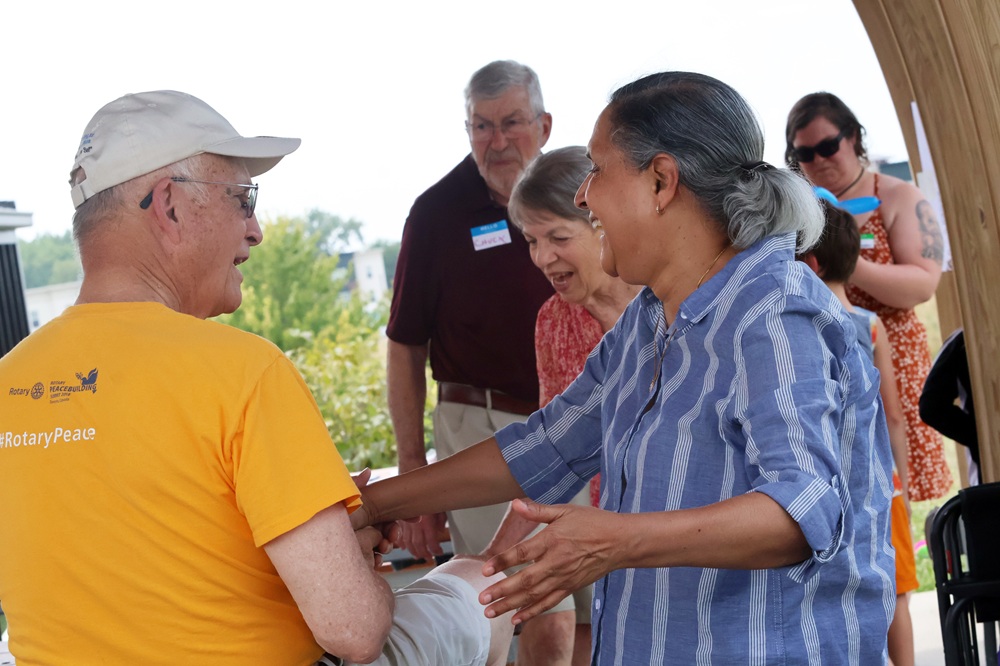
Brother Washington Muhummad, a member of the Nation of Islam and the MFC’s advisory board, echoed that sentiment.
“As we live in a divisive world, the MFC has taken the counter approach that we’re not going to hate, we’re not going to exclude, we’re not going to believe the lies that are told to us about our neighbors,” he said. “And we’re going to fearlessly organize events based in peace, not based in religious dogma.”
Gesturing at the people chatting at picnic tables around him, Muhummad said members of the MFC put their “petty differences” aside to celebrate and appreciate humanity and hopefully take their experiences into other avenues of their lives.
“No one here is an evangelizer,” Muhummad added. “No one here is trying to convert somebody. You’d be hard pressed to find an ugly religious debate here.”
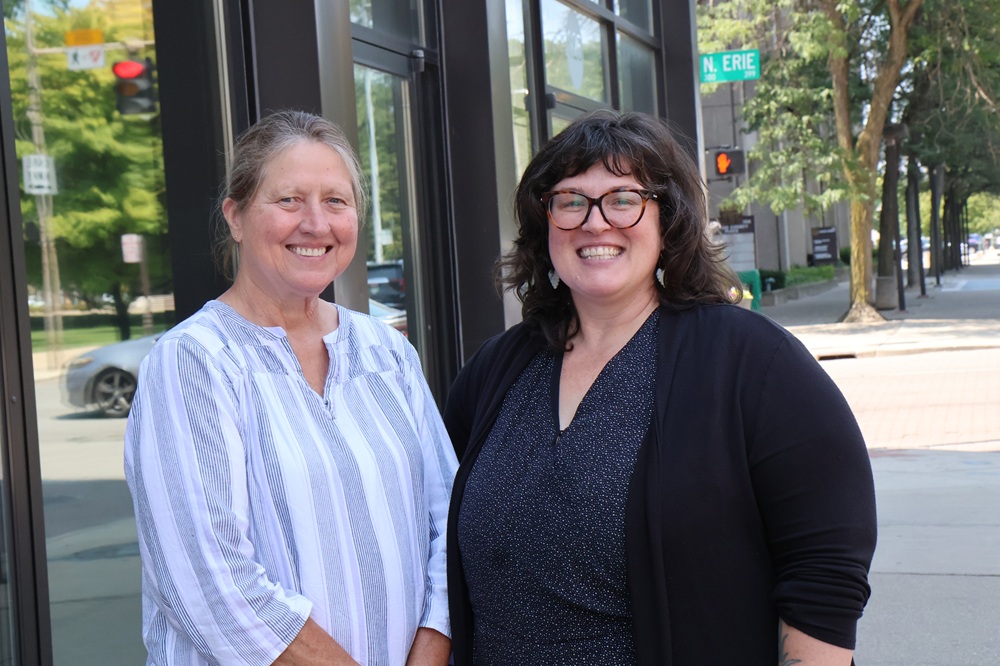
No proselytizing is an important rule of the MFC. “You cannot come to Multifaith Council and try to convert somebody else to your religion,” said Angie Fitzpatrick, MFC program manager. “We are here to share our own unique path, and we share it because we believe that all of our paths have value. No path is greater than another path or better than another path. And we share it to understand each other better, not to convert.”
Creating bonds of respect and friendship
Founded in 2001 amidst a wave of Islamophobia that followed 9/11, the MFC was incorporated as a nonprofit in 2003. The group has about 230 members and counts among them Christians, Muslims, Jews, Hindus, Buddhists, Sikhs, Sufis, Baháʼís, Unitarians, pagans and practitioners of Native American spiritual traditions. It also welcomes agnostics, atheists and seekers who do not claim a spiritual tradition of their own.
Leadership is predominantly driven by lay people and almost everyone involved with the group is a volunteer. Programming mostly revolves around education and service, and the council has sponsored prayer events, Habitat for Humanity builds, and men’s and women’s groups to develop friendships among people of different faiths.
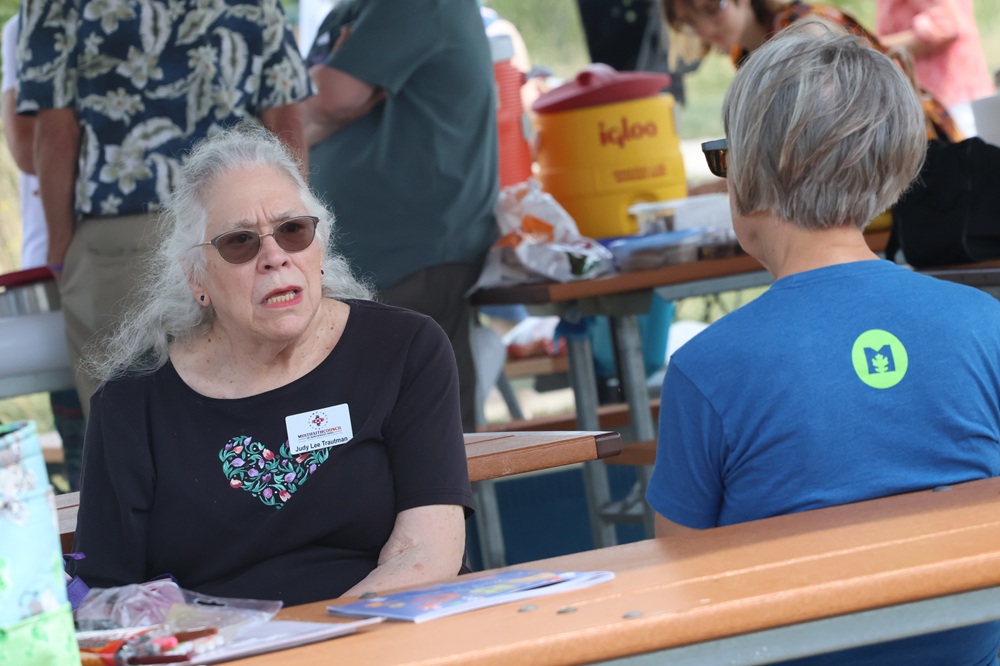
Judy Trautman, who co-founded the MFC with her late husband, Woody Trautman, said the original vision was to create bonds of respect and friendship among diverse faiths in order to work for the community. “It’s almost familial,” she said.
“We’re so lucky in this area, we have so many faiths,” Trautman added. “We learn so much from each other. It’s the best kind of education because people are engaged and are together.”
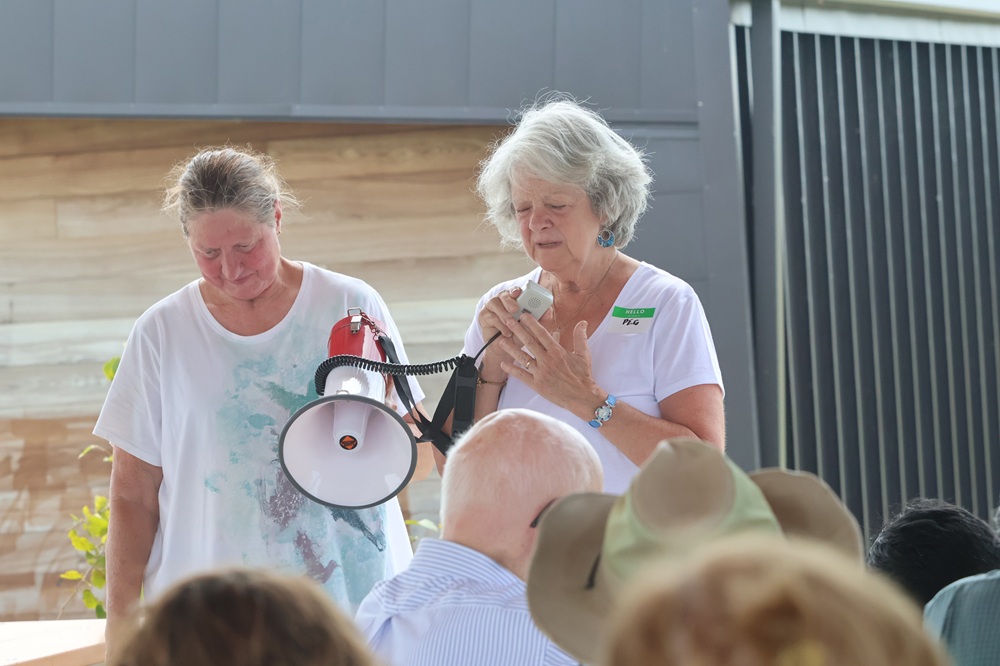
For many years, the MFC has hosted a multifaith prayer service known as Blessings of Diversity, where representatives from various faith traditions share sacred writings, music and poetry around a different theme each month. The next service is to be held Sept. 21 at 6 p.m. as a local observance of the International Day of Peace, and will include local representatives from 10 different religions.
Lauraine Carpenter first got involved as a musician at the Blessings of Diversity services about 10 years ago at the invitation of Trautman. Her experiences there have been among the most enriching and educational for her.
“So many different religions share so many core values. And that’s not to say that we’re all the same. We’re not. We have our differences and they’re important,” said Carpenter, who took over as board chair for MFC about two years ago. “But when you go to a Blessings of Diversity service and you hear everyone’s perspective on love or on service or any topic, we’re so similar in our souls, in our hearts. And it brings us comfort. It brings us security, safety. It makes us feel like we can breathe. And that’s worth so much.”
Planning for the future
The council has been in a period of transition since Trautman stepped down from leadership about two years ago due to health issues. She remains involved in an advisory role but said she doesn’t want to stymie fresh ideas. “I think we probably do need some new approaches,” she added.
Fitzpatrick recently came on board to help lead the MFC through a strategic planning process to reevaluate the MFC’s mission and vision and assess where they can make the most impact in light of the current religious landscape.
“I think she’s doing the right things, in that she’s really asking people where they want us to go as a council,” said Trautman.
With a background in higher education programming that included gender equity, social justice and diversity, equity and inclusion work, Fitzpatrick brings an interesting lens to the task.
Raised as an evangelical Christian, she said she left the Southern Baptist Church at age 18 because she disagreed with its teachings around people of other religions and people who were LGBTQ.
Despite those differences of opinion, she still expressed appreciation for the church community she experienced as a child and fondly recalled hanging out with other kids at Vacation Bible School and Sunday potlucks with watermelon, casseroles and iced tea.
“There’s something about the community of church that you can’t really find in other places. It’s a really unique, special thing. And that’s, I think, what makes it heartbreaking when people realize, ‘our values aren’t as aligned as I thought they were,’” she said.
She now describes herself as an agnostic who is “still in discovery mode,” and most recently began attending a Unitarian Universalist church. .
“I’ve been meeting more and more people — Christian, Muslim, Jewish, people of all faiths who are so welcoming. And I think that’s what the Multifaith Council represents, is people of all faiths who believe that regardless of your personal faith or spiritual journey, you have a place in this community,” said Fitzpatrick. “So it kind of feels like a spiritual home for me, too.”
When the MFC kicked off its strategic planning process with an all-member meeting in July, Fitzpatrick said some of the shared values that came up included compassion, diversity, inclusion, service and peace.
Those same values were at the heart of the council from the beginning, but Fitzpatrick said they are now looking at examples of activities other interfaith organizations are doing to reevaluate how they can respond to the current needs of Northwest Ohio.
Longtime council members expressed a desire to find new ways to engage younger generations.
“Woody was way ahead of his time because he always said ‘all faiths and none,’” said Trautman. “We have a growing number of young people who don’t identify with a particular tradition, but they call themselves spiritual.”
One of the statistics that most surprised Fitzpatrick from a recent Pew Research Center Religious Landscape Study was that 44 percent of 18-to-29-year-olds are religiously unaffiliated, compared to 22 percent of people ages 50 to 64. “That’s a massive difference,” she said.
Fitzpatrick noted that faith still ranked among the top five values across all age groups, though the place of it shifts between the generations. She was surprised to see faith ranks so high while church attendance continues to decline.
“One of the things that I’m interested in finding out through our strategic planning process is why aren’t people my age going to church, at least here in the Toledo area?” said Fitzpatrick, who at 44 describes herself as an older Millennial. “And if they are looking for some kind of spiritual home or spiritual community, could the Multifaith Council in fact provide that space?”
She suggested the MFC could play a role as a facilitator for helping people explore different churches, temples, mosques, synagogues and faith traditions.
“I think this organization is a wonderful space for people of all ages to celebrate the diversity of faiths in our community and to even explore their own spiritual path,” she added.







 is committed to cultivating friendships and finding common ground in shared values. )