WATERVILLE – When Kokosing arrives sometime after July 6 to begin working on the Roche de Boeuf Interurban Bridge, expect to see more scalpel than sledgehammer, said Ohio Department of Transportation District 2 Deputy Director Pat McColley.
“They will be demolishing it more like a surgeon than coming in and beating the thing down,” McColley explained during a June 26 open house at Farnsworth Metropark.
For several years, ODOT has been looking for a solution to deal with the 118-year-old bridge, and sought bids for a total demolition that was set to begin last year – until Gov. Mike DeWine granted a one-year extension for Save the Bridge Association (STBA) and the city of Waterville could come up with a plan.
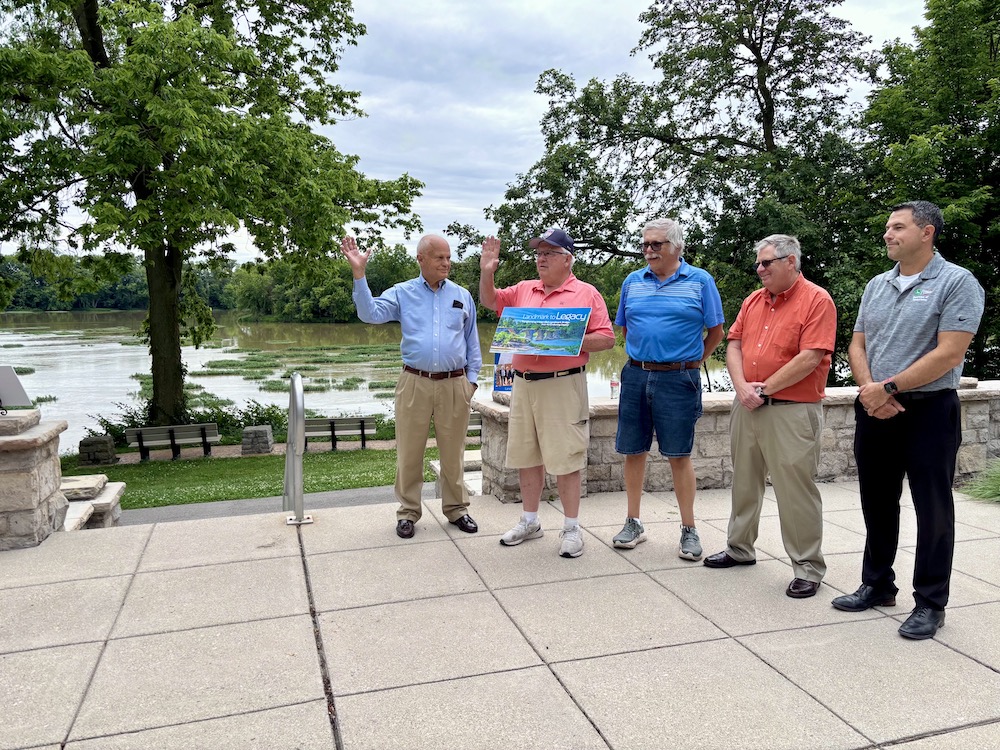
During a six-week period this spring, that plan gelled, thanks to new information from historic bridge engineer Bill Vermes on how to carefully remove just the parts that are failing – the spandrel walls and earthen fill – and stabilize the structure for future use.
On June 8, City Council unanimously approved the purchase of the bridge from the state, which in turn will take the $4 million set aside for removal and have Kokosing do the selective demolition work.
“I don’t know that it’s been done anywhere in the nation,” McColley said, adding that he’s confident in Kokosing and the expertise they bring.
Step one will be installing a causeway on the Lucas County half of the river, using stone from the nearby quarry. The top layer of dirt will be removed from the bridge, then the causeway will be flipped to the Wood County side. Once there, workers will remove the dirt, and the spandrel walls, which need to fall onto the causeway itself. Then work will flip back over to the Lucas County side for a second layer of dirt to be removed, along with the spandrels.
“We have to remove the layers of dirt on the tap carefully and watch to make sure we’re not unbalancing the arches,” McColley said, noting that engineers want to make sure that the lateral load of the arches isn’t affected during the process.
Most of the work will be done from the Waterville side, but an access road might be placed on the Wood County side, as the city now owns the 100-foot-wide right of way that was once a trolley line that connected along Forst Road.
“I’m very happy, personally and professionally, that we have a realistic, practical solution, so that we can preserve a major piece of history and everyone is walking away happy,” McColley said.
“We’re not out of the woods yet. Something could happen, and if it does, it would be a total demolition,” he added. “But I’m very hopeful and optimistic.”
Once complete, what will remain are the piers and arches, and STBA will begin raising funds to install a pedestrian and bike bridge on top of the arches but putting the weight onto the piers, which are embedded in three feet of bedrock. Waterville Mayor Tim Pedro said he’s already getting offers of donations toward that project, which is estimated at $6-7 million.
“We’ve got a lot of work in front of us. Do we have every answer? Do we have every question? No, but we got a chance to save the bridge,” Pedro said. “Now we can plan.”
Rex Childers, a STBA member and historian, said he can see how the new pedestrian and bike bridge will provide opportunities for sharing the stories of more than just Gen. Anthony Wayne, who had Fort Deposit built near the rapids just before the Battle of Fallen Timbers.
The Miami tribe had a village that straddled the rapids that run under the bridge, and they guarded the Roche de Boeuf island in the middle. That rock, which was partially destroyed during construction of the trolley line, served as a sacred and functional place where the Shawnee, Delaware, Wyandotte, Ojibwe and Potawatomi tribes to come settle disputes.
“I think we will have a great opportunity to share a different story – about the Native Americans who lost their land,” Childers said.
Frank Butwin, secretary for the Maumee Valley Heritage Corridor, which collaborates with organizations to advocate and preserve resources with cultural, heritage and recreational value, said he’s excited to see what’s next for the bridge.
“We need to preserve and promote this so we can attract people to get on it, go across it and have it be part of a trail system,” Butwin said. “This could add more commerce to the area. We want to bring people not just from northwest Ohio but different states.”
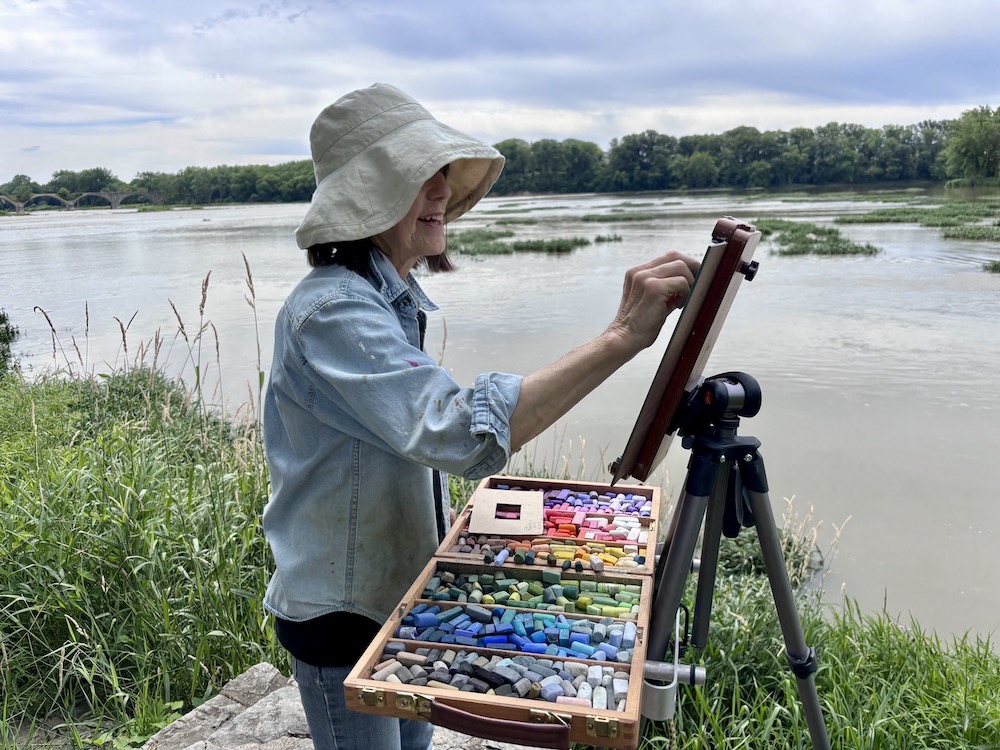
Among the guests stopping into the Roche de Bouf Shelterhouse on June 26 was retired Waterville third-grade teacher Pollie Miller, who for 18 years took her students on a walk through history in the downtown area.
“I’m thrilled it’s going to be saved. History is important. I’m glad to see so many people on board to make this happen,” Miller said, noting that she’s thankful that Vermes came to Waterville several times to show that the bridge could be saved. “He really made a difference in the outcome.”
Richard Hagy said he likes the plans he sees for the bridge’s future.
“It will be a great walkway across there,” he said, motioning to the bridge.
Waterville Historical Society member Merle Wilhelm noted that saving the bridge will have another benefit.
“It would be terrible if the city of Waterville had to change their logo to the other bridge,” he laughed.