







In the early 2000s, as the Anthony Wayne area was rapidly growing, a small group gathered around an idea: forming an organization to support existing youth sporting groups and expanding those offerings so that all kids would have an opportunity to get out and play.
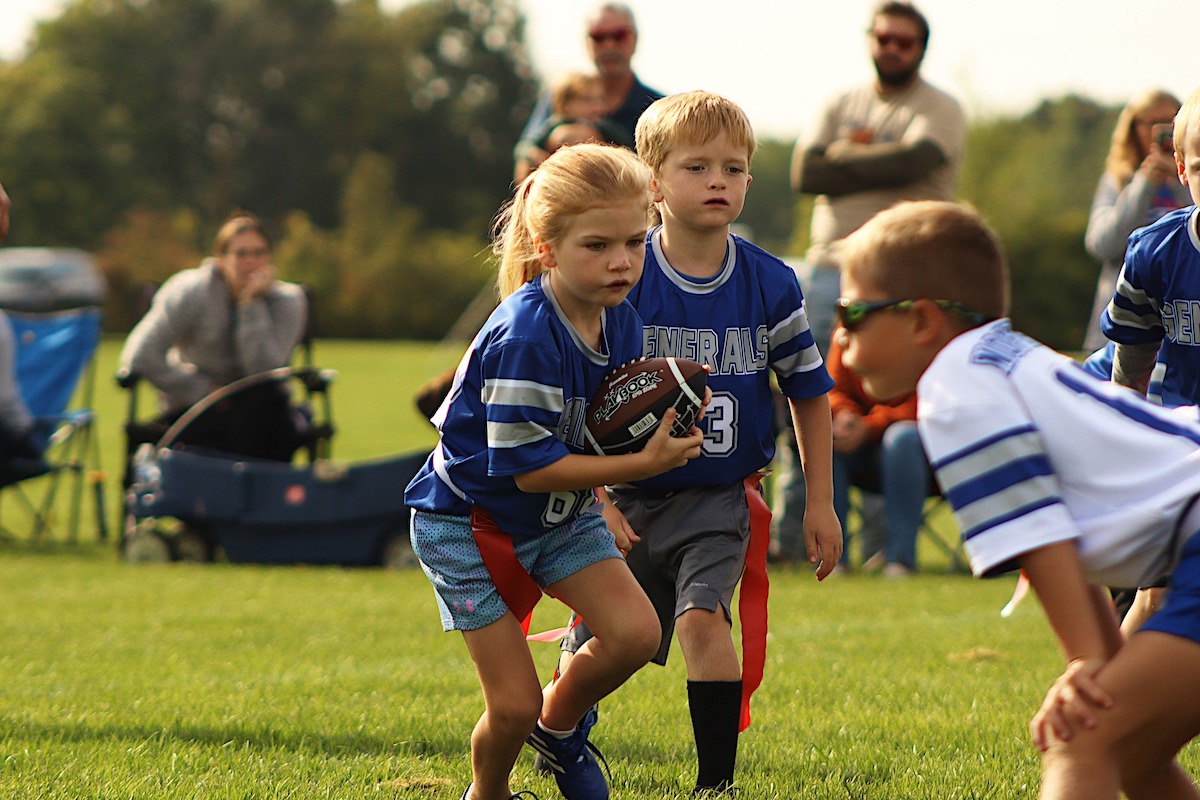
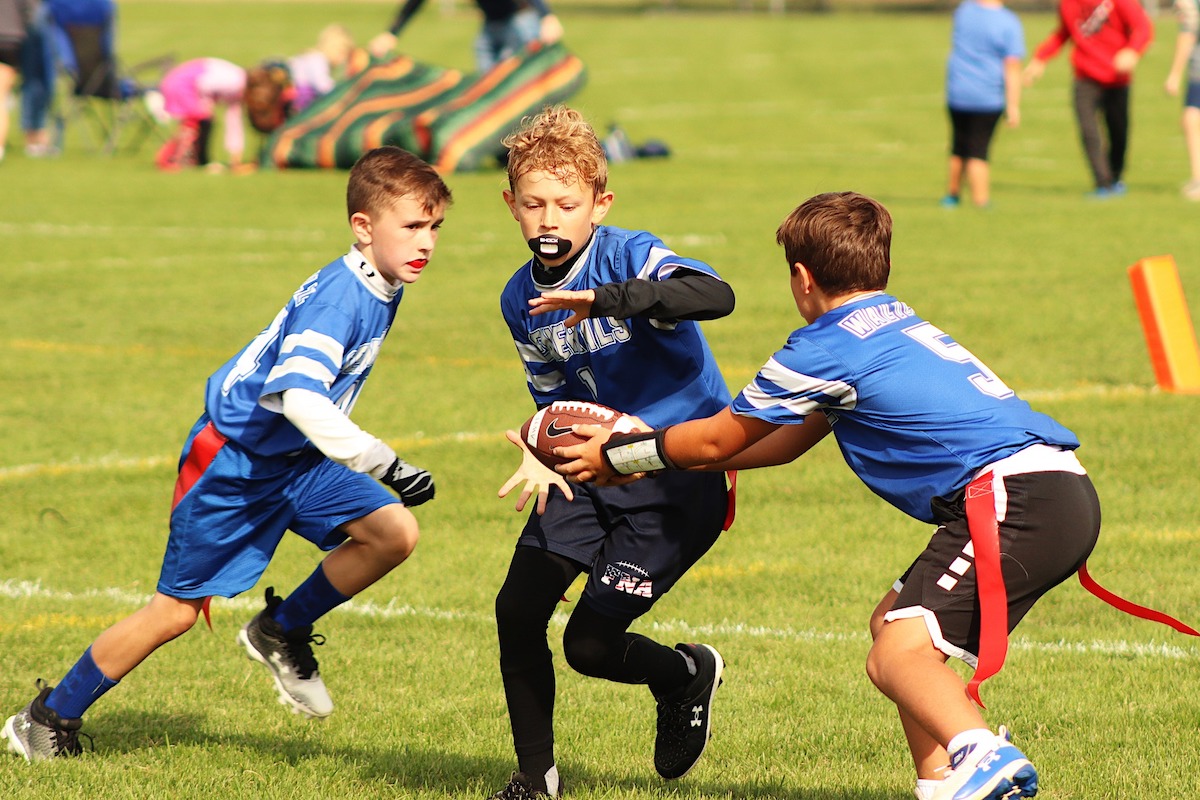
Now, 20 years after its 2006 formation, the Anthony Wayne Youth Foundation (AWYF) offers 17 different activities on fields and in gyms throughout the area, serving over 1,200 families a year, without taxpayer funding.

“To see what it’s grown into today is beyond what our vision was,” said AWYF Founder Todd Frendt. “It warms my heart.”
As a coach and board member for the Anthony Wayne Youth Soccer League (AWYSL) in the early 2000s, Frendt noticed that the soccer league and other youth sports organizations were experiencing some of the same challenges: managing a nonprofit, recruiting and training coaches, finding places to practice or hold games, and funding it all with player fees.
“From a business standpoint, we looked at what we could do to provide administrative assistance so coaches could do what they love: teach kids,” Frendt recalled.
Initially, Par Ricketts and Cal Whewell worked to pass a tax levy to create the Anthony Wayne Area Recreation District, modeled after Sylvania’s Pacesetter Park model, with the intention of providing outdoor recreation space to the community.
After back-to-back levy failures in 2003 and 2004, Frendt joined the picture with a core group of individuals representing each local organization and took a different approach: creating a nonprofit organization that united the Anthony Wayne Youth Soccer League (AWYSL), Anthony Wayne United Soccer Club (AWUSC), Anthony Wayne Youth Football League (AWYFL), Anthony Wayne Area Baseball Softball Association (AWABSA) and Anthony Wayne Junior Generals Baseball Club (AWJRGBC).
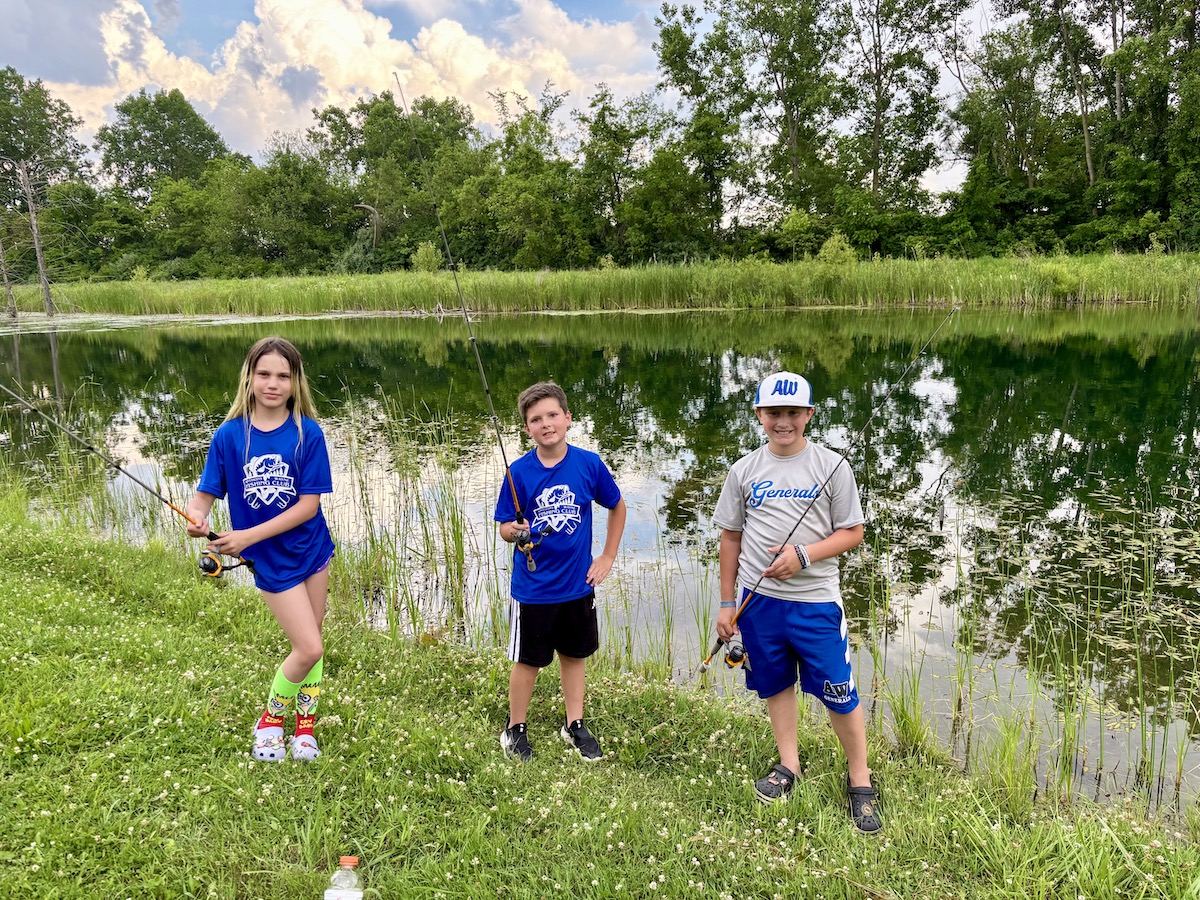
Today, the AWYF encompasses these original five activities, plus basketball, cheer, fishing, inclusive sports, lacrosse, off-season training, rugby, ski/snowboard, tennis and volleyball.
“Our job is to get as many kids out and doing some sort of physical activity as possible – whether it’s travel or rec,” said Taylor Kervin, who became the nonprofit’s full-time executive director in 2021.
She was 13 in 2006 when the AWYF was formed, and was heavily involved: not only playing soccer and basketball but mowing the practice fields at Blue Creek, working the concession stands and setting up basketball games. After earning undergraduate and master’s degrees in athletic training, and working for Toledo Public Schools and St. Francis de Sales, Kervin gained a broader perspective on just how much AWYF impacts youth and the community.
“Seeing all the other schools, I realized that what we have out here is special,” Kervin said, noting that often in other districts, students could join high school teams with little or no prior sports experience. “It was shocking to see these kids starting later and not having the opportunities that we give these kids. It made me love and respect this even more.”
While the goal of the AWYF is not to serve as a feeder to high school sports, that’s certainly been a byproduct. Lori Williams, one of the original AWYF board members, is the high school girls’ soccer coach. The youth soccer programs have been pivotal in shaping the success of the high school program, she believes.
“Many of our players start their journey in the Anthony Wayne recreation program, where they first discover their love for soccer, before growing further through Anthony Wayne United Soccer Club,” she said. “The benefits of these programs extend far beyond just technical skills. By the time our players reach high school, they come equipped with years of coaching, an understanding of the game, and, perhaps more importantly, strong connections with teammates.”
“The success of our high school program is built on the solid foundation laid by the recreation and club teams over the last 20-plus years. We are genuinely grateful for the many dedicated volunteers, coaches and families who have poured their time and energy into nurturing not only skilled soccer players but also remarkable young individuals.”
Chris Chisholm, treasurer for the AWYF, first got involved when his daughter, Alaina, was playing rec basketball. In 2015, he received an email at the end of the season stating that unless someone stepped up to join the board, the program might not be able to continue next year. So, he joined the basketball league’s board, then stepped into the AWYF treasurer position in 2018.
“I’m a big proponent of sports and what it teaches kids: teamwork, a common goal, celebrating success and navigating defeat and disappointment,” Chisholm said.
Another benefit of a district-wide organization is that it brings kids from all the communities together on one team, he noted. Sometimes parents want to create teams with the same friend groups year after year, but Chisholm explained that teams are designed to provide parity in terms of skill levels, and in bringing kids together who might not otherwise meet until at least middle school.
Landon Heeres, whose teens Silas and Eliana are homeschooled, noted that the AWYF was a leader in welcoming homeschoolers even before public schools permitted them on teams. His wife, Emily, was homeschooled but played softball and other sports through AWYF when she was growing up.
“We love the community coming together and cheering on the players at our local venues like Blue Creek. Youth sports have the potential to bring out the best in a community,” Landon said.
With the growth in the number of AWYF activities, the numbers of participants has grown as well, and that poses a challenge: finding enough practice and game space. While Anthony Wayne Local Schools allows youth teams to utilize school gymnasiums and outdoor spaces, the school teams get first priority in facility scheduling, Kervin said.
“It’s a constant discussion of what the future looks like, and what can we do for more space,” she said.
Unlike Pacesetter Park in Sylvania, or the Wauseon recreational facilities, AWYF does not receive any taxpayer dollars or funding from the school district. Instead, families pay a yearly membership fee, plus a fee for each activity. Grants and fundraising events – like the “golf inning” at XGolf Toledo every winter and the purse bingo at The Stables every spring – help raise funds to cover the organization’s areas of greatest needs and to keep costs low for families.
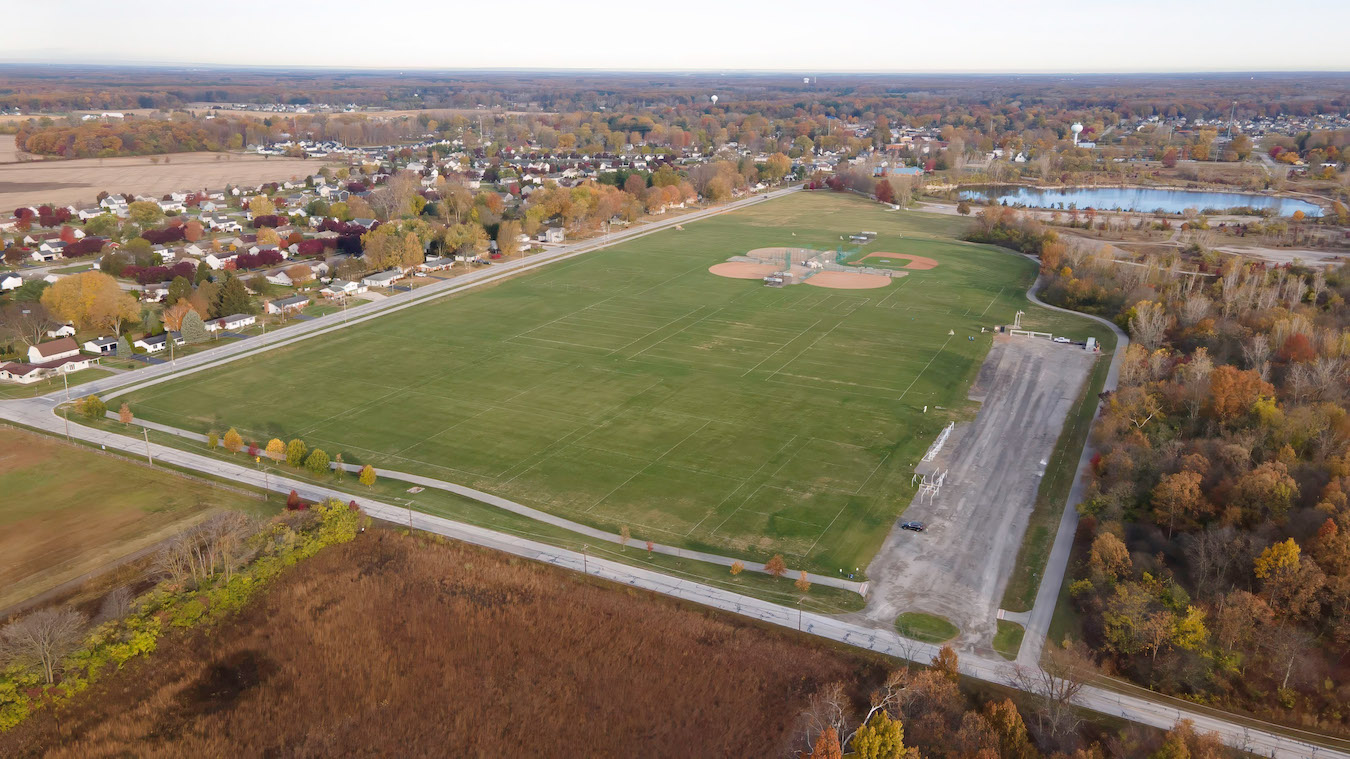
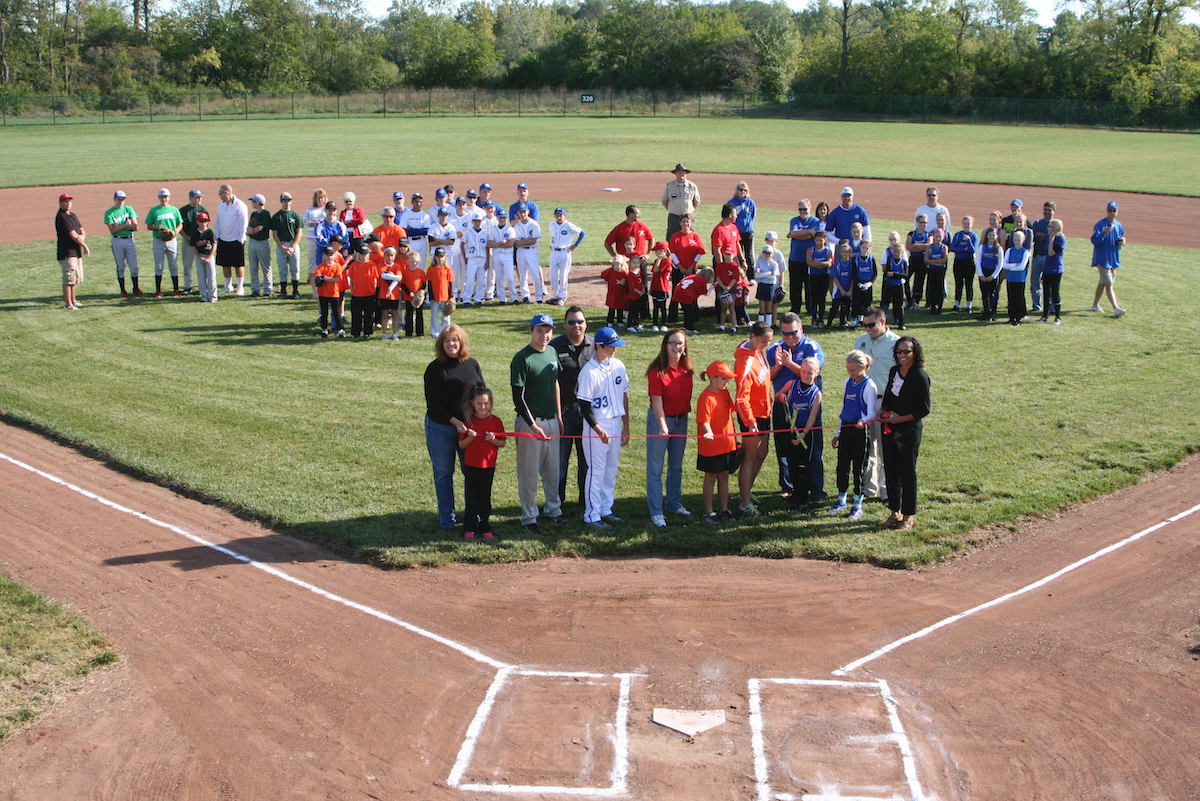
The AWYF has a long-term lease agreement with Metroparks Toledo to utilize the fields at Blue Creek Metropark, but must invest its own money in upgrades and maintenance. The Blue Creek Recreation Area (BCRA), as the fields are known, was once part of Nona France Quarry, and later owned by the village of Whitehouse. The Operating Engineers used the area for training future operators, who removed rocks and leveled the grounds. But it was a $675,000 grant from the White Paper Committee of Ohio that provided the initial boost to prepare the land for future field development, a process that took three years.
That included bringing in 250 truckloads of dirt to grade the fields, adding drainage tiles, a well and sprinklers, and electrical conduit to plan for future restrooms and other facilities that have yet to be built.
“People were asking us where the money was going, because they didn’t see any goals or backstops,” Frendt recalled. “It was all underground work. Then in 2012 we built the baseball fields.”
Jeff Schwerer joined the AWYF after retiring as a teacher and athletic director for Anthony Wayne Local Schools. He serves as the field service manager. Initially, he was asked to get the four baseball fields at Blue Creek and Tom Allen Field behind Whitehouse Inn prepped for games. Now he and a team take care of 35 acres at BCRA and Tom Allen Field, and assist with local community fields including the two softball fields at Whitehouse Park, two ball fields at Monclova Community Park and two at Keener Park. They not only prepare the baseball and softball fields but mow grass at Blue Creek and paint the soccer, lacrosse and football fields.
“Prior to us doing that, the coaches had to do it all,” he said of the volunteer coaches, who are often parents with full-time day jobs. “If they had a game at 5 p.m., they’d have to show up at 4 pm. It’s not always easy.”
Behind the scenes, there are a lot of working parts, Kervin said. And some are details that parents often don’t think about, such as insurance. Jake McVicker of Savage McVicker Associates handles the three different policies that cover AWYF, including coverage for the coaches, volunteers and medical practice. Every time a travel team hits the road, that requires additional insurance, he noted.
Kervin focuses on operations, logistics, back-end support, field usage, contracts, legal, bookkeeping and taxes. Olivia Hanifan, the development and partnerships coordinator, joined the team in June and focuses on AWYF and activity fundraising, sponsorships, and donations, as well as community partnerships.
Administrative Assistant Sam Whitmore manages coaching credentials, registrations, field scheduling, and support to families and volunteers. The AWYF ensures that all volunteers have background checks to ensure high safety standards for the kids, Kervin said. And having all the activities on one website, with one scheduling app, streamlines communications and signups so those volunteer coaches can just show up and do their job, she added.
Often Kervin will hear concerns about affordability, and about 30 of the 1,200 families that participate each year take advantage of an opportunity to sell raffle tickets to cover their fees. Some of the activities offer scholarships to help families, and the Anthony Wayne Neighborhood Bridges program also links families in need with community members willing to help out with costs.
“We’re running as lean as we possibly can,” Kervin said, noting that 92 percent of the income goes back into programming.
Long term, the AWYF would like to add restroom facilities at BCRA, as well as a maintenance storage area so that equipment currently housed under a tarp in a fenced-in area can be kept out of the elements, Chisholm said.
Another goal is to expand the offerings for youth sports, so all the activities are available for K-12, Kervin said, explaining that currently rec soccer and boys rec basketball are the only activities for all grade levels.
“We want to keep kids involved as much as possible,” she said.
For the kids who do participate in AWYF activities, the benefits are obvious. Silas Heeres, now 16, started playing soccer at a young age.
“I’ve made a lot of friends, and it also gave me a good foundation to continue playing the game that I love at a higher level,” Silas said.
This summer, Silas organized a summer soccer program every Friday morning for anyone who showed up. He also continues to referee soccer games while his sister, 13-year-old Eliana, has played several sports over the years.
“It’s been fun. It helped me get better at sports that I like, especially flag football and basketball,” Eliana said. “It definitely helped me make a travel flag football team and now I’m playing basketball for Anthony Wayne Junior High.”
She has fond memories of winning the Junior Generals basketball championship her fifth grade year, and credits coaches Andy and Jackie Szymanski for making it “super fun.”
For Kervin, hearing these positive reviews shows her just how much AWYF is making a difference in the community, and she’s thankful for the volunteer coaches, volunteer board members, community partners, and most importantly, the families who have been a part of making it a success for the past 20 years.
For Frendt, his goal for the next 20 years would be to see more kids involved, buildings completed, additional sports programs, and acreage for future facilities to serve the community. But for now, he has the joy of seeing his granddaughter, Charleigh, playing soccer.
“Seeing her out there – it’s special,” he said.
For information about the AWYF, visit awyf.sportngin.com.
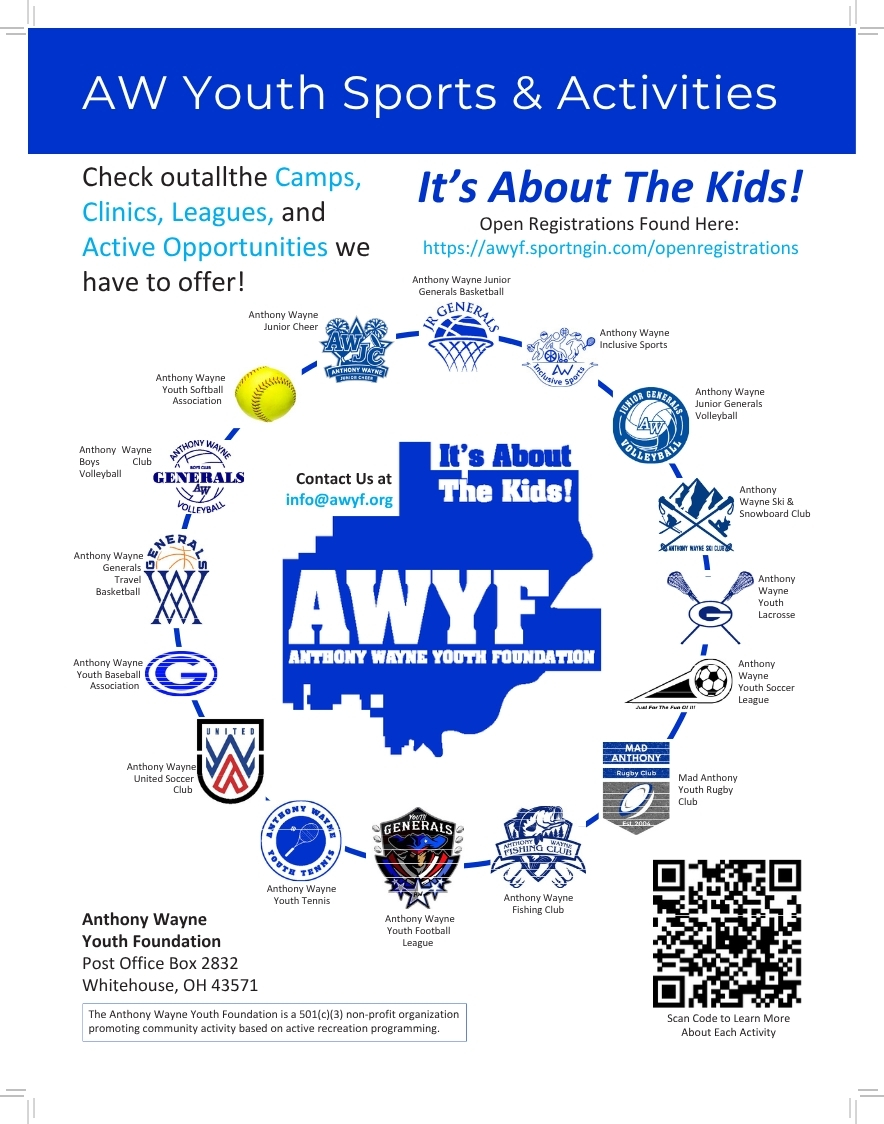



 offers 17 different activities throughout the area.)