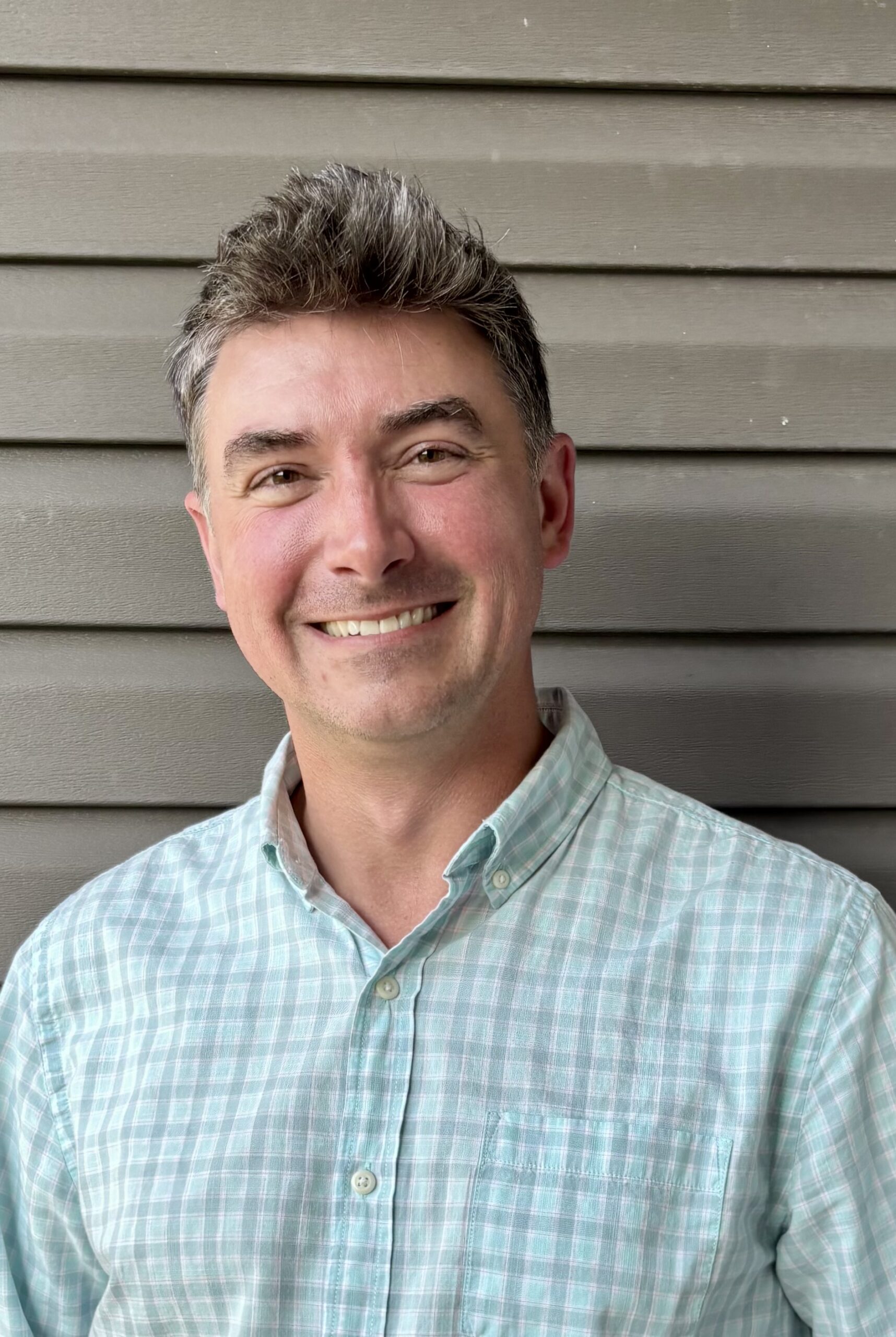
As he tours Ohio House District 44, attending festivals and knocking on doors, Democratic candidate Dave Fournier hears many of the same concerns: the rising costs of groceries, gas, utilities, health care and property taxes, and frustration that politicians are giving tax breaks to rich companies while working families are feeling the squeeze.
“The big topic now is affordability,” said Fournier, an attorney and lifelong resident of northwest Ohio. “People are feeling the pain in their wallets. People are aware that more cuts are coming from that One Big Beautiful Bill that were delayed until after the mid-terms.”
When the enhanced subsidies expired for the Affordable Care Act, 700,000 Ohioans dropped out, and while the healthy population rolls the dice and opts not to pay in, the ones with the most health care needs remain, driving prices up, he said.
“Taxpayer funds should be used to lower premiums and prescription costs. We need to protect rural hospitals and access to care, not finance corporate bailouts and sports stadiums,” Fournier said, referring to the $600 million that Ohio invested into a new Cleveland Browns stadium.
Data centers continue to be a hot topic, especially in areas where farmland is available. Fournier said his goal is to halt construction on new data centers until several criteria are met. First is to eliminate tax breaks and incentives while requiring that companies make significant payments to the local tax fund that supports schools, libraries, parks and emergency services. Republicans have cut funding for local governments and schools, which need breathing room to provide quality education and economic development instead of signing NDAs and rushing through data centers, he said.
“There are better, more transparent ways to do economic development than under pressing financial circumstances,” he said.
Second, is to require data centers to produce their own power, off the grid, in order to not increase local electric costs, and to use a closed-loop cooling system that uses minimal water.
“Everyone is upset about utilities. I think a lot of what is compounding that is data center discussions. Everyone tells me what their electric bill is. They’re worried about a data center coming in and seeing that already painful number going up even more,” Fournier said, adding that data centers are not paying their fair share of the utilities they are using.
Data center developers also need to pay for their own infrastructure, and submit to having ongoing, independent environmental monitoring to ensure compliance. Fournier added that he also believes such developments should be steered toward brownfield sites rather than on quality farmland.
“No one wants to live next to one,” he said. “There are concerns about rolling blackouts, water quality and fracking.”
As the parents of three children, including two who are Anthony Wayne Local Schools’ students, Fournier and his wife, Sarah, began attending school board meetings a few years ago.
“I saw that the district was being asked to do more with less from the state,” he said.
He also learned about private school vouchers work. A family of four earning $145,000 a year or less can receive a $6,166 scholarship for K-8 students and $8,408 for grades 9-12. Those earning more can still receive a portion of the funding.
“I’m opposed to universal eligibility for private school vouchers while the state underfunds public schools, which educate 90 percent of Ohio students,” Fournier said. “Ohio has been underfunding public schools by $2.7 billion and yet put $2.4 billion into vouchers.
“People realize the schools are receiving less from the state, so schools have no choice but to come back and ask taxpayers for more. The vast majority of Ed Choice vouchers go to those who were already sending their kids to private schools. You lay that out, and people are salty.”
Fournier recently wrote an editorial about the impact of cuts to the Local Government fund – a portion of the state tax revenue that is shared with municipalities, townships and counties.
“Those dollars helped support police, fire, EMS, roads and other essential services,” he wrote. “Then Republican leaders in Columbus cut the state’s share from 3.68 percent to roughly half that amount. They also eliminated other sources of local revenue, shifting more responsibility and more of the cost onto local taxpayers.”
The voucher spending, the school funding gap, and the Local Government Fund cuts all end up in the same place, he said.
“When the state stops paying its share, the cost doesn’t disappear. It comes back as a school levy or a safety levy. Then the same people who made the cuts blame local officials for asking,” Fournier said.
Among the other topics that Fournier hears about from constituents are Flock Safety cameras and e-bikes.
“In general, I oppose unrestricted mass surveillance – I think the potential for abuse is huge. That said, we give away a lot of information,” Fournier said, noting that everyone carries a cellphone with GPS trackers. “The problem is the lack of regulation. It’s like AI – the legislature hasn’t kept up and put guardrails in place. I would support a moratorium on Flock until the legislature has a chance to study the issue. I think there’s a balance between legitimate use for law enforcement purposes versus giving unrestricted access to anyone who pays a subscription.”
E-bikes also need further study, in terms of safety and traffic implications, Fournier said. Living in Whitehouse, he’s heard from many in the community about it, and knows that Whitehouse Police and other local departments are working to put parameters in place.
“We’ve got kids zipping around neighborhoods and parks at dangerous speeds. I’ve seen near misses with pedestrians,” he said.
Fournier said his goal as a representative is to be an advocate for his constituents on a variety of topics, and especially for working families.
“I’ve been knocking on doors and having really good conversations with people who have a different letter behind their name,” he said.
Fournier grew up in a Republican, anti-union household, but as he worked in the courtroom after earning his J.D. from the University of Toledo Law School, he began seeing things differently.
“That whole ‘pull yourself up by your bootstraps’ mentality rings hollow,” he said.
Fournier doesn’t consider himself a traditional Democrat, and thinks the far left and far right don’t represent the majority of voters. He’s met a lot of people who share his democratic values and don’t like the direction the country is going, he said.
He’s found a shared concern that there is too much money in politics, that special interests have too much say, and that gerrymandering is diluting votes and insulating legislators from voters who are being impacted by their decisions.
“I think if you have enough face time and meet people in person, you can bridge the divide. I have no problem working across the aisle on how to expand access to health care and how to address expensive health care. I keep telling people that I want to make politics boring again. I want to make things better for people.”