Jaden Jefferson spoke with both Tom Pruss (Libertarian) and Allison Russo (Democrat) about their run for Ohio Secretary of State. You can find more information on candidates here in our most recent voter’s guide from the May 2026 primary, though a more current guide with all the remaining candidates is forthcoming.
After the May 5 primary election, Jaden sat down with Tom Pruss, the Libertarian nominee for Ohio Secretary of State.
In this one-on-one interview, Pruss discusses his experiences as a third-party candidate, redistricting, the role of advanced technology in the secretary of state’s office, how he’d respond to potential federal intervention in the state’s elections, if elected, and more.
Jaden spoke to State Rep. Allison Russo (D-Upper Arlington), the Democratic nominee for Ohio Secretary of State, following the May 5 primary election.
In this one-on-one interview, Rep. Russo offers her perspective on election accessibility, increasing voter turnout, Ohio’s redistricting process, how she’d approach the process of crafting ballot language, if elected, and more.
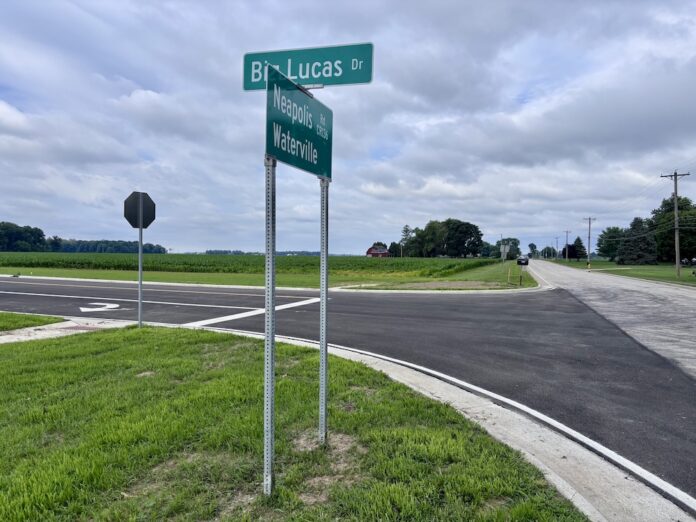
The Toledo-Lucas County Port Authority just completed infrastructure improvements to 48 acres of land in the city along Neapolis-Waterville Road as an expansion of the Farnsworth Industrial Park. Now the port is petition to annex another 48 acres from the township into the city, just west of the existing site. (AWFP photo by Stephen Zenner)
WATERVILLE TOWNSHIP – Waterville Township received notification that the Toledo-Lucas County Port Authority has applied to annex 48 acres on Neapolis-Waterville Road out of the township and into the City of Waterville.
The two parcels are just west of 48 acres of land in the city that the Port purchased and completed improvements on this year – including the construction of the 1,800-foot Big Lucas Drive, and the installation of a retention pond and all utilities. The land, an extension of Farnsworth Industrial Park, is being marketed on the Port’s website for industrial development.
The land is in the annexable zone per the township’s agreement with the city, Trustee Toby Miller said during the June 24 trustees’ meeting.
“Is there a data center going in somewhere?” asked Cari Arellano, who lives on Farnsworth Road across from the industrial park.
Miller said that he’s heard that the property owners who were contacted about a possible data center development in the township are now hearing that interest has cooled due to opposition to such projects, but that the trustees are continuing to put new zoning rules in place in the event that another developer comes along. However, the land proposed for annexation is not among the properties being targeted for a data center, commented Waterville Council Member Mary Duncan, who was in the audience.
“We already have businesses that want to be there, and they have nothing to do with data centers. They want utilities,” she said.
Resident Terry Beam asked about progress in annexation talks with Whitehouse, after two property owners – one on Finzel Road south of S.R. 64 and another at the northeast corner of Texas/Whitehouse-Spencer and Winslow – petitioned for annexation into the village earlier this year. The township and village have a longstanding agreement on areas that are “red zones” that don’t allow annexation. Miller said talks are underway, but it’s likely that the Winslow property will be declined and the Finzel property accepted, as it’s sandwiched by other village properties.
“We have a tentative agreement,” Miller said, adding that trustees would discuss the matter in executive session.
During the meeting, the trustees also:
-Heard that the Lucas County Planning Commission made no recommendation in its review of a proposed 67-page amendment to the zoning resolution, and that the next step will be for the township Zoning Commission to review the language governing data centers during its July 20 meeting.
-Agreed to obtain general liability insurance to cover work done by Amish workers hired to restore the 1911 barn at the corner of Dutch and Waterville Monclova road. The township purchased the property and will have the workers install aluminum siding on the barn, which will be used to store equipment. Work is expected to begin the week of July 20.
-Approved a resolution stating that trustees and zoning officials will not sign any non-disclosure agreements. While Miller said it’s already illegal to sign an NDA, the resolution is an effort to show transparency.
-Agreed to hire a part-time seasonal worker to mow township roadsides and property using equipment purchased by the township. The position will not include benefits.
-Heard Police Chief Kevin Smith say that he’s had people ask him whether the township has any Flock cameras. While one is located in the county outside of the township and one is located in Waterville, the township does not have any.
-Welcomed 2025 Anthony Wayne graduate Marissa Galton, who – because of taking college classes while still in high school – is now a junior majoring in criminal justice at the University of Cincinnati. She is an intern with the police department this summer.
-Heard Miller say that Nexus has updated the contact information on its website with correct phone numbers to call if residents have questions about the Moosman Road compressor station or the pipeline. He was also advised that Nexus will now notify the township of planned “blowdowns” that clear the lines but cause a lot of noise.
-Listened to Russ Schifferly ask about utilities being placed along township roads. Trustee Kyle Hertzfeld said it is a new ATT fiber optic line that is being run all over the county.
-Heard Schifferly ask about whether there are any regulations on what type of items can be stored outside of self storage facilities, and about lighting regulations. Zoning Inspector Jim Fischer said he would drive by Greenlock Storage to look at the light. The items placed outside of the Dutch Road Storage are likely spools of fiber optic cable.
TOLEDO – If a movie were to be made of FilmToledo, it might be called Miracle on Madison Avenue or Home At Last.
That’s because the nonprofit, after years of trying to establish itself as the go-to agency to promote making movies in the greater Glass City, is moving into its own brick-and-mortar office space.
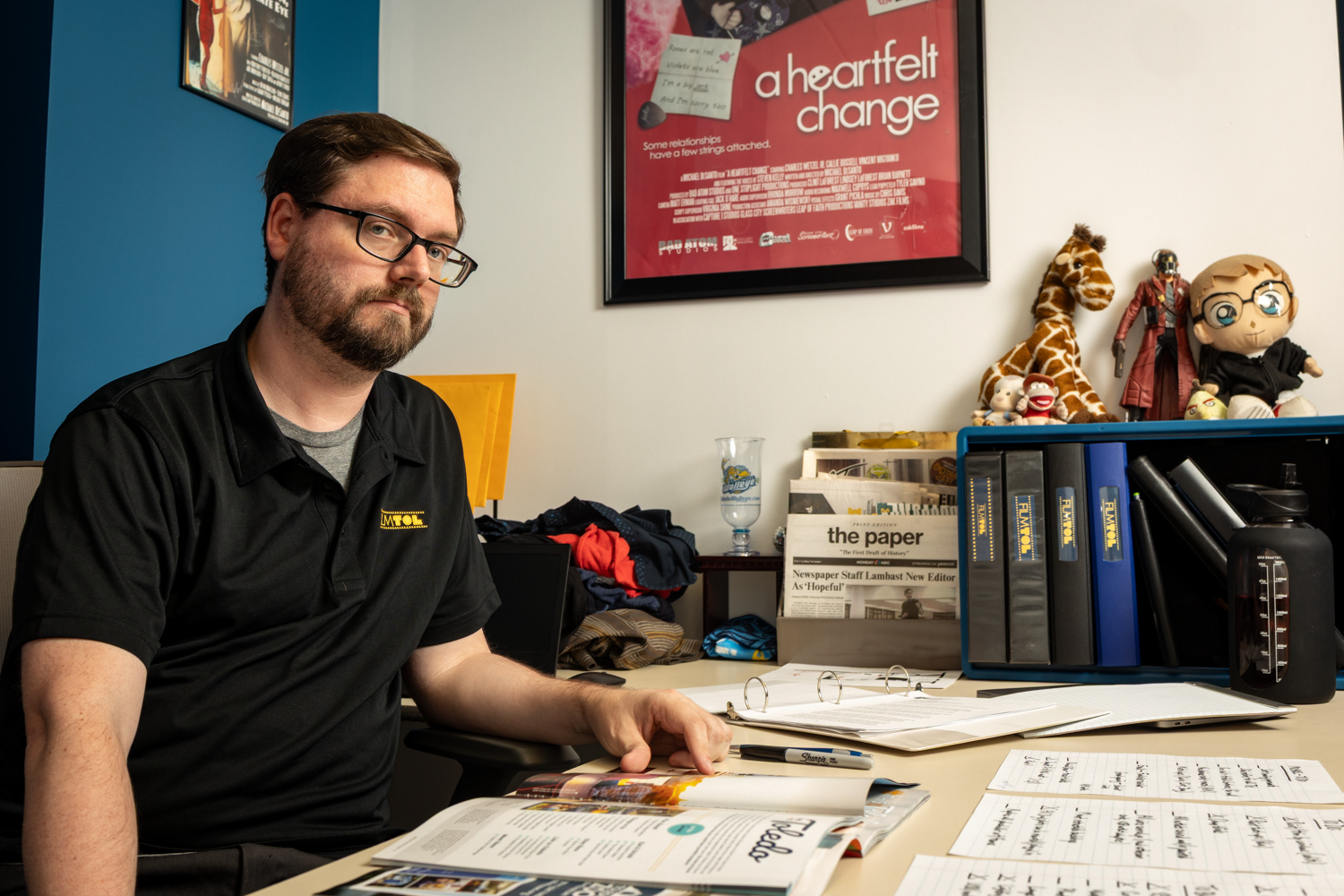
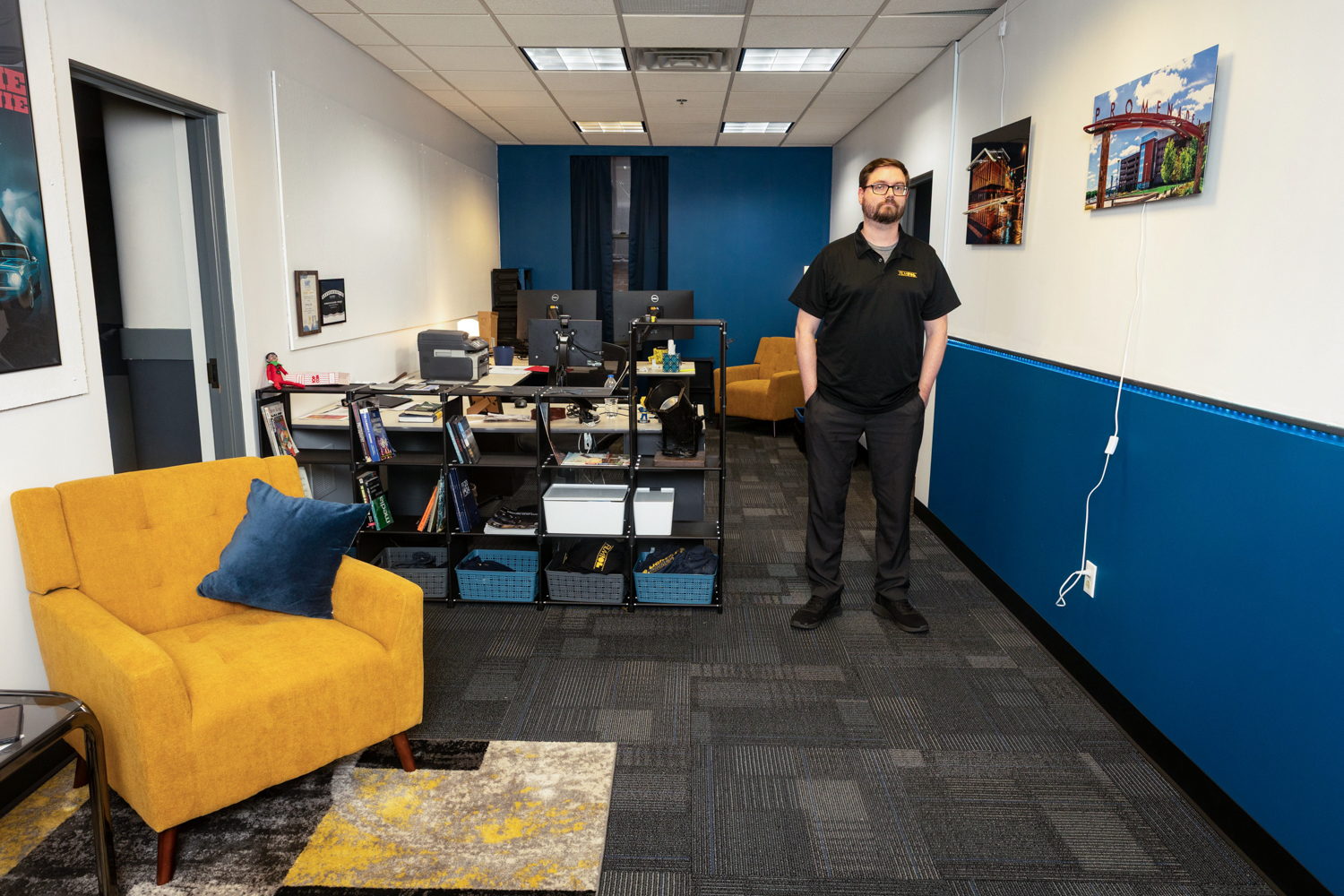
Michael DeSanto, president of FilmToledo, at the nonprofit’s new physical headquarters at Suite 201, 500 Madison Ave. (The Gardner Building) in downtown Toledo. (TFP photo by Stephen Zenner)
“We’ve been looking for a space to call our own,” said Michael DeSanto, FilmToledo’s executive director. FilmToledo, staffed by volunteers who have day jobs, has been operating out of shared spaces in the city and using other venues, like libraries, for workshops and activities. “This came about by necessity. Now we can be in one centralized location.”
That location is the historic Gardner Building at the corner of Madison Avenue and Superior Street downtown. FilmToledo’s offices are on the second floor; their neighbors in the 130-year-old-plus building, which is on the National Register of Historic Places and was home to the Toledo Museum of Art from 1901 to 1903, are art galleries (and the Toledo Free Press).
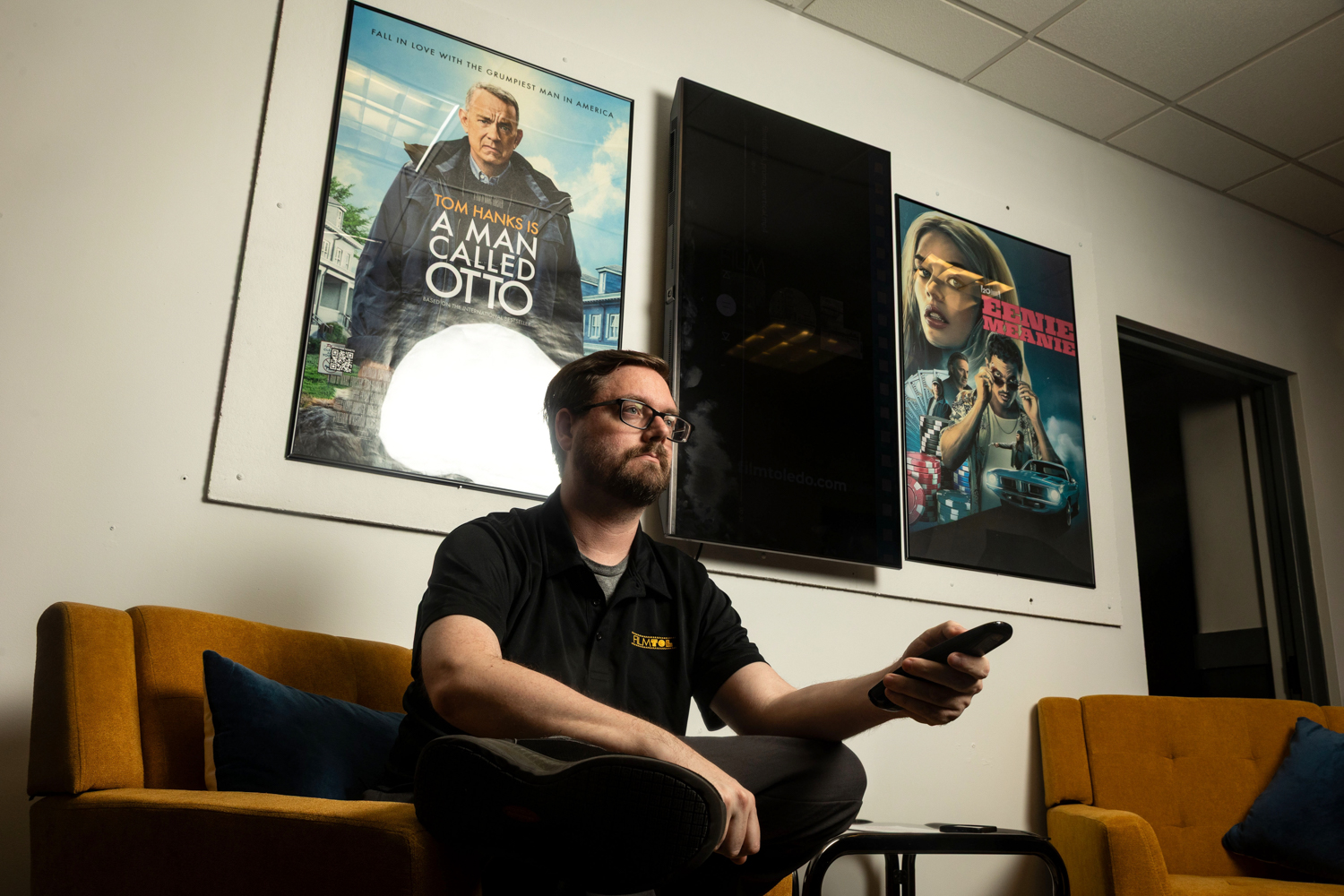
“We have two main goals,” DeSanto said. “Attract more film productions, and educate and train people in the film industry.” (TFP photo by Stephen Zenner)
FilmToledo is relatively new. Formed in 2018 as a film commission representing Toledo and 17 counties in northwest Ohio, its progress stalled during the pandemic, then by the film industry’s writers and actors strikes. Life in the film community ground to a halt, DeSanto said. But lately, he added, film activity is on a roll.
And with that upswing, FilmToledo is poised to perform its mission. “We have two main goals,” DeSanto said. “Attract more film productions, and educate and train people in the film industry. We’re an economic development organization. I like to tell people we’re the boring side of film. We’re more about crew training, not the acting side.”
FilmToledo is a resource for local filmmakers. “It’s a tight-knit community,” DeSanto said. The nonprofit conducts quarterly mixers and other networking events. (TFP photo by Stephen Zenner)
The training is done through workshops; for example, one is about being a production assistant, which is an entry-level position on a film set. Another is about being a first assistant director, the next level up. Another is about on-set etiquette, for background actors who’ve not been in a production before.
“We’re the business side of film,” DeSanto said. To that end, the nonprofit arranges for locations, crew, vendors, and support services, and communicates with government agencies to secure permits for use of property for filming.
Vendors include hotels, caterers, tent and sanitation rentals, security, and local police and fire departments to block streets.
FilmToledo also is a resource for local filmmakers. “It’s a tight-knit community,” DeSanto said. The nonprofit conducts quarterly mixers and other networking events.
Its role in economic development is recognized and welcomed. “We’re excited to see FilmToledo continue to grow and develop as an organization,” said Lance Woodworth, president and CEO of Destination Toledo, the not-for-profit agency that markets Toledo. “Having a dedicated film commission with a knowledgeable team is quite valuable as Toledo strengthens its place in the film and television industry.”
Woodworth added, “In recent years, projects like Eenie Meenie [a streaming-service film] and The Paper [a situation comedy on Peacock] choosing Toledo for parts of their filming or storyline have helped raise the city’s profile.
“FilmToledo has played an important role in making that possible by helping productions get what they need and ensuring they have a great experience doing business in the Glass City.”
FilmToledo is in a fundraising drive to finish renovations to its offices to have a proper grand opening. Its website – filmtoledo.com – includes a “donate” button and a link to its merchandise site. (TFP photo by Stephen Zenner)
“Toledo isn’t known as a film town,” DeSanto said. “That’s something we’ve been working on for years, to build the infrastructure we need.”
Toledo is behind other Ohio commissions in Cleveland, Columbus, and Dayton, which are well-established. “We’re playing catch-up to build up our industry. That’s been our goal. We’re trying to bring more film productions here so that people can build a career here and not have to travel around the country.”
DeSanto added, “We’re not getting paid by donors or film companies. It’s the community that supports us.” The organization is in a fundraising drive to finish renovations to its offices to have a proper grand opening. Its website – filmtoledo.com – includes a “donate” button and a link to its merchandise site.
In short – if a movie were to be made of FilmToledo – it’s ending would be: To be continued…
FilmToledo will have a ribbon-cutting ceremony to mark the opening of its offices, Suite 201, on Monday, July 20.
Originally published by Jessica Molina of La Prensa. Find the article here.
“911 services would put you on hold,” was how Lisa Sobecki chose to illustrate opponents’ concerns about the proposed Ax the Tax amendment. Reduced access to fire and emergency services, library closures, township governments potentially going under, and schools no longer having enough funds to pay staff are among the possible consequences if the Ax the Tax Property Tax proposal were to go into effect, according to opponents.
Opponents argue that these potential consequences could significantly impact everyday life. So, how did the Ax the Tax petition gain so much attention?
La Prensa contributor Jessica Molina. (Courtesy photo)
The Property Tax constitutional amendment started as a “Save Our Seniors” campaign led by Brian Massie. Massie shared that owning private property is how citizens gain or inherit wealth. Yet, while his mortgage was paid off, he was still required to pay an increasing property tax on a fixed income. In fact, his property taxes increased 40 percent over the past ten years. He felt like the government was putting his earned wealth at risk by continuing to tax him.
Massie set out to learn more about property taxes and how they were calculated. He started by learning more about mills, the mill floor, and other concepts that typically have taxpayers going cross-eyed and giving up in overwhelm.
As he continued to research property taxes, he learned that his county was using a third-party appraiser for the sexennial reevaluation process. He asked the appraiser how property values were calculated. According to Massie, the appraiser would not disclose how homes were appraised because the formula was proprietary information. Massie took this interaction as evidence that public funds were being used in a way he felt was not accountable to the taxpayer.
Massie began meeting with elected officials. He scheduled meetings at the statehouse and even rented a room there in an attempt to draw more legislators into the conversation. He consistently came away disappointed, often meeting with young staffers instead of the legislators he sought. In response to the lack of engagement from lawmakers, Massie recalled a politician telling him that the government tends to “protect itself and grow,” while legislators focus primarily on “protecting themselves and getting reelected.”
It was then clear to Massie that he was not going to be able to influence legislators through traditional channels. So, he became part of an effort to rewrite the Ohio Constitution through a citizen-led amendment.
The Property Tax Amendment currently circulating through the “Ax the Tax” petition aims to rewrite the way Ohio uses property taxes. More specifically, it would abolish taxes on real property and prohibit any future taxes on real property.
While the proposal may sound attractive to taxpayers, opponents warn that eliminating property taxes could come at a significant cost. A community panel hosted by the Alliance of Northwest Ohio Public Service Advocates included researchers, data analysts, attorneys, farmers, local officials, and public servants. Collectively, the panel argued that property taxes need reform, but not a complete overhaul. According to panelists, a full elimination would be detrimental to everyday public services.
To communicate the potential lasting effects, panelists shared information from their respective fields. Panelists from the Ohio Farm Bureau argued that farmland could become more vulnerable to development if current CAUV-related tax protections disappear. Sobecki shared that Lucas County could lose approximately $20 million from its budget if the amendment passed. Melissa Petrea explained that townships could lose the majority of their funding. A common concern among panelists was that eliminating property taxes would likely lead to significant increases in income or sales taxes, which some feared could push residents and consumers out of Ohio.
Despite strongly opposing the amendment, several panelists acknowledged that Ohio’s current school funding system is heavily dependent on property taxes and in need of reform. Panelists shared that approximately two-thirds of property taxes go toward schools. Ohio’s school funding system has previously been ruled unconstitutional by the Ohio Supreme Court, in part because of inequities tied to its dependence on property taxes. Panelists argued this concern is compounded by the fact that approximately $1.6 billion goes toward charter schools, which they said account for more than half of the F grades issued by the Ohio Department of Education and Workforce. While panelists expressed concern about the current structure of school funding, they argued that completely abolishing property taxes would create even greater instability for public education.
Surprisingly, Massie raised similar concerns about the current structure of public education in Ohio. He argued that the state has too many school districts and administrative costs, while student proficiency rates continue to struggle. He specifically pointed to concerns surrounding Third Grade Reading Guarantee proficiency as evidence that the current funding system is not producing the outcomes taxpayers expect.
Despite their disagreements, both sides expressed frustration with Ohio’s current funding model. However, if Ax the Tax passes, where will the government get the money from? That answer remains unclear. Any replacement funding model would require action from state lawmakers.
Panelists emphasized that lawmakers should already be working across party lines to develop more equitable and sustainable funding solutions, rather than allowing the issue to become politically polarized. Meanwhile, Massie’s movement appears to be rooted in a similar frustration: the belief that lawmakers have failed to seriously address rising property taxes and housing affordability concerns.
If the proposal passes this November, the Ax the Tax amendment would go into effect Jan. 1, 2027. From that date forward, institutions that rely on property taxes would no longer be able to collect new property tax revenue. According to Massie, because property taxes operate in arrears, meaning 2026 property taxes fund 2027 budgets, legislators would effectively have at least one year to develop a replacement funding model. Massie also suggested that legal challenges could potentially delay implementation of the amendment while lawmakers work toward alternative funding solutions.
Ohio allows citizens to bypass the legislature and attempt to amend the constitution directly through petition signatures. The Ax the Tax campaign plans to release an update in mid-June announcing whether it secured enough signatures to qualify for the November ballot.
El debate sobre los impuestos de propiedad en Ohio muestra que muchas personas están frustradas con el sistema actual
Por Jessica Molina
“Los servicios del 911 te pondrían en espera,” fue la manera en que Lisa Sobecki explicó las preocupaciones sobre la propuesta Ax the Tax. Menos acceso a servicios de bomberos y emergencias, cierres de bibliotecas, problemas económicos para los townships y escuelas sin suficiente dinero para pagar a sus empleados son algunas de las preocupaciones mencionadas por quienes están en contra de la propuesta.
Quienes están en contra dicen que estas posibles consecuencias podrían afectar mucho la vida de todos los días. Entonces, ¿cómo ganó tanta atención la petición Ax the Tax?
La propuesta comenzó como una campaña llamada “Save Our Seniors” (“Salvemos a nuestros adultos mayores”), liderada por Brian Massie. Massie explicó que tener una casa o propiedad es una manera en que muchas familias construyen riqueza y ayudan a futuras generaciones. Sin embargo, aunque ya había terminado de pagar su casa, seguía teniendo que pagar impuestos de propiedad cada vez más altos con un ingreso fijo. De hecho, sus impuestos aumentaron un 40% en los últimos diez años. Él sentía que el gobierno estaba poniendo en riesgo lo que había logrado con años de trabajo.
Massie comenzó a aprender más sobre los impuestos de propiedad y cómo se calculan. Empezó investigando temas como los “mills”, el “mill floor” y otros conceptos que, según él, terminan confundiendo a muchas personas.
Mientras seguía investigando, descubrió que su condado estaba usando una empresa externa para reevaluar propiedades. Él preguntó cómo calculaban el valor de las casas. Según Massie, la empresa no quiso explicar el método porque la fórmula era información privada de la compañía. Massie tomó esta situación como una señal de que el dinero público se estaba usando de una manera que, según él, no era transparente para las personas que pagan impuestos.
Massie comenzó a reunirse con políticos. Programó reuniones en la legislatura estatal e incluso rentó un salón para intentar atraer a más legisladores a la conversación. Según contó, muchas veces terminaba reuniéndose con asistentes jóvenes en lugar de los legisladores que quería conocer. También recordó que un político le dijo que el gobierno tiende a “protegerse y crecer”, mientras que muchos legisladores se enfocan principalmente en “protegerse y reelegirse”.
Fue entonces cuando Massie decidió formar parte del esfuerzo para cambiar la Constitución de Ohio mediante una propuesta creada por ciudadanos.
La propuesta Ax the Tax busca cambiar completamente la manera en que Ohio usa los impuestos de propiedad. Más específicamente, eliminaría los impuestos sobre bienes raíces y prohibiría futuros impuestos sobre propiedades.
Aunque la propuesta puede sonar atractiva para muchas personas, quienes están en contra advierten que eliminar los impuestos de propiedad podría traer consecuencias importantes. Un panel comunitario organizado por la Alliance of Northwest Ohio Public Service Advocates reunió a investigadores, analistas de datos, abogados, agricultores, funcionarios locales y trabajadores del servicio público. En general, el panel coincidió en que los impuestos de propiedad necesitan cambios, pero no una eliminación completa. Según los participantes, eliminar completamente estos impuestos afectaría seriamente los servicios públicos.
Para explicar los posibles impactos, los panelistas compartieron ejemplos desde sus distintas áreas. Representantes del Ohio Farm Bureau dijeron que las tierras agrícolas podrían quedar más vulnerables a proyectos de construcción si desaparecen ciertas protecciones actuales. Lisa Sobecki comentó que el condado de Lucas podría perder aproximadamente $20 millones de su presupuesto si la propuesta se aprueba. Melissa Petrea explicó que los townships podrían perder la mayor parte de su financiamiento. Otra preocupación común fue que eliminar los impuestos de propiedad probablemente llevaría a aumentos importantes en impuestos sobre ingresos o ventas, algo que algunos creen podría hacer que personas y consumidores abandonen Ohio.
Aunque muchos panelistas se opusieron fuertemente a la propuesta, también reconocieron que el sistema actual de financiamiento escolar en Ohio depende demasiado de los impuestos de propiedad y necesita cambios. Explicaron que aproximadamente dos tercios de esos impuestos van a las escuelas. Además, recordaron que la Corte Suprema de Ohio anteriormente declaró inconstitucional el sistema de financiamiento escolar del estado, en parte por las desigualdades relacionadas con esa dependencia de los impuestos de propiedad.
Los panelistas también argumentaron que la situación se complica porque aproximadamente $1.6 mil millones se destinan a escuelas charter, las cuales, según ellos, representan más de la mitad de las calificaciones “F” emitidas por el Departamento de Educación y Fuerza Laboral de Ohio. Aunque reconocieron problemas en el sistema actual, afirmaron que eliminar completamente los impuestos de propiedad generaría aún más inestabilidad para la educación pública.
Massie también expresó preocupaciones similares sobre el sistema educativo actual. Él argumentó que Ohio tiene demasiados distritos escolares y demasiados costos administrativos, mientras que los niveles de rendimiento estudiantil continúan bajos. También señaló preocupaciones relacionadas con la prueba de lectura de tercer grado como evidencia de que el sistema actual no está dando los resultados que las personas esperan.
A pesar de sus diferencias, ambos lados expresaron frustración con el modelo actual de financiamiento en Ohio. Sin embargo, si Ax the Tax llega a aprobarse, ¿de dónde saldrá el dinero para financiar al gobierno? Esa respuesta todavía no está clara. Cualquier nuevo modelo de financiamiento requeriría acción de los legisladores estatales.
Los panelistas enfatizaron que los legisladores deberían trabajar juntos entre partidos políticos para desarrollar soluciones más justas y sostenibles, en lugar de convertir el tema en una batalla política. Mientras tanto, el movimiento de Massie también parece surgir de una frustración similar: la creencia de que los legisladores no han abordado seriamente el aumento de impuestos de propiedad ni los problemas de vivienda asequible.
Si la propuesta se aprueba este noviembre, entraría en vigor el 1 de enero de 2027. Desde ese momento, las instituciones que dependen de los impuestos de propiedad ya no podrían recaudar nuevos ingresos provenientes de esos impuestos. Según Massie, debido a que los impuestos de propiedad funcionan “en atraso”, los impuestos cobrados en 2026 financian los presupuestos de 2027. Eso, según él, daría aproximadamente un año para desarrollar otro modelo de financiamiento. También señaló que posibles desafíos legales podrían retrasar la implementación mientras los legisladores buscan soluciones alternativas.
Ohio permite que los ciudadanos intenten modificar la Constitución directamente mediante peticiones y recolección de firmas. La campaña Ax the Tax planea dar una actualización a mediados de junio para informar si lograron suficientes firmas para aparecer en la boleta de noviembre.
Para más información sobre Ax the Tax: axohtax.com
Work on removing the dirt fill and spandrel walls on the 118-year-old Roche de Boeuf Interurban Bridge will begin after July 6. The first step will be installing a causeway on the Lucas County side, to begin carefully removing dirt. (AWFP photo by Karen Gerhardinger)
WATERVILLE – When Kokosing arrives sometime after July 6 to begin working on the Roche de Boeuf Interurban Bridge, expect to see more scalpel than sledgehammer, said Ohio Department of Transportation District 2 Deputy Director Pat McColley.
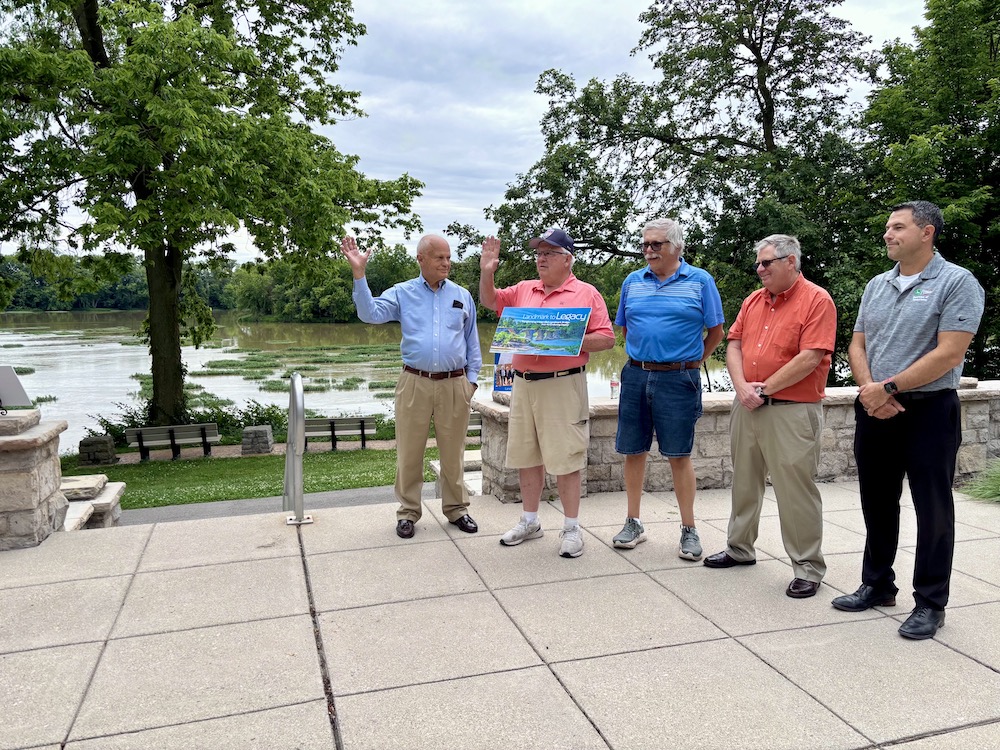
“They will be demolishing it more like a surgeon than coming in and beating the thing down,” McColley explained during a June 26 open house at Farnsworth Metropark.
For several years, ODOT has been looking for a solution to deal with the 118-year-old bridge, and sought bids for a total demolition that was set to begin last year – until Gov. Mike DeWine granted a one-year extension for Save the Bridge Association (STBA) and the city of Waterville could come up with a plan.
Gathering at the Roche de Bout Shelterhouse at Farnsworth Metropark on June 26, Waterville Mayor Tim Pedro (second from left) talks about the mission to safe the historic bridge and those who joined those efforts including (from left) Save the Bridge Association members John Wasserman, John Pautz II, Rex Childers and Ohio Department of Transportation District 2 Deputy Director Pat McColley. (AWFP photo by Karen Gerhardinger)
During a six-week period this spring, that plan gelled, thanks to new information from historic bridge engineer Bill Vermes on how to carefully remove just the parts that are failing – the spandrel walls and earthen fill – and stabilize the structure for future use.
On June 8, City Council unanimously approved the purchase of the bridge from the state, which in turn will take the $4 million set aside for removal and have Kokosing do the selective demolition work.
“I don’t know that it’s been done anywhere in the nation,” McColley said, adding that he’s confident in Kokosing and the expertise they bring.
Step one will be installing a causeway on the Lucas County half of the river, using stone from the nearby quarry. The top layer of dirt will be removed from the bridge, then the causeway will be flipped to the Wood County side. Once there, workers will remove the dirt, and the spandrel walls, which need to fall onto the causeway itself. Then work will flip back over to the Lucas County side for a second layer of dirt to be removed, along with the spandrels.
“We have to remove the layers of dirt on the tap carefully and watch to make sure we’re not unbalancing the arches,” McColley said, noting that engineers want to make sure that the lateral load of the arches isn’t affected during the process.
Most of the work will be done from the Waterville side, but an access road might be placed on the Wood County side, as the city now owns the 100-foot-wide right of way that was once a trolley line that connected along Forst Road.
“I’m very happy, personally and professionally, that we have a realistic, practical solution, so that we can preserve a major piece of history and everyone is walking away happy,” McColley said.
“We’re not out of the woods yet. Something could happen, and if it does, it would be a total demolition,” he added. “But I’m very hopeful and optimistic.”
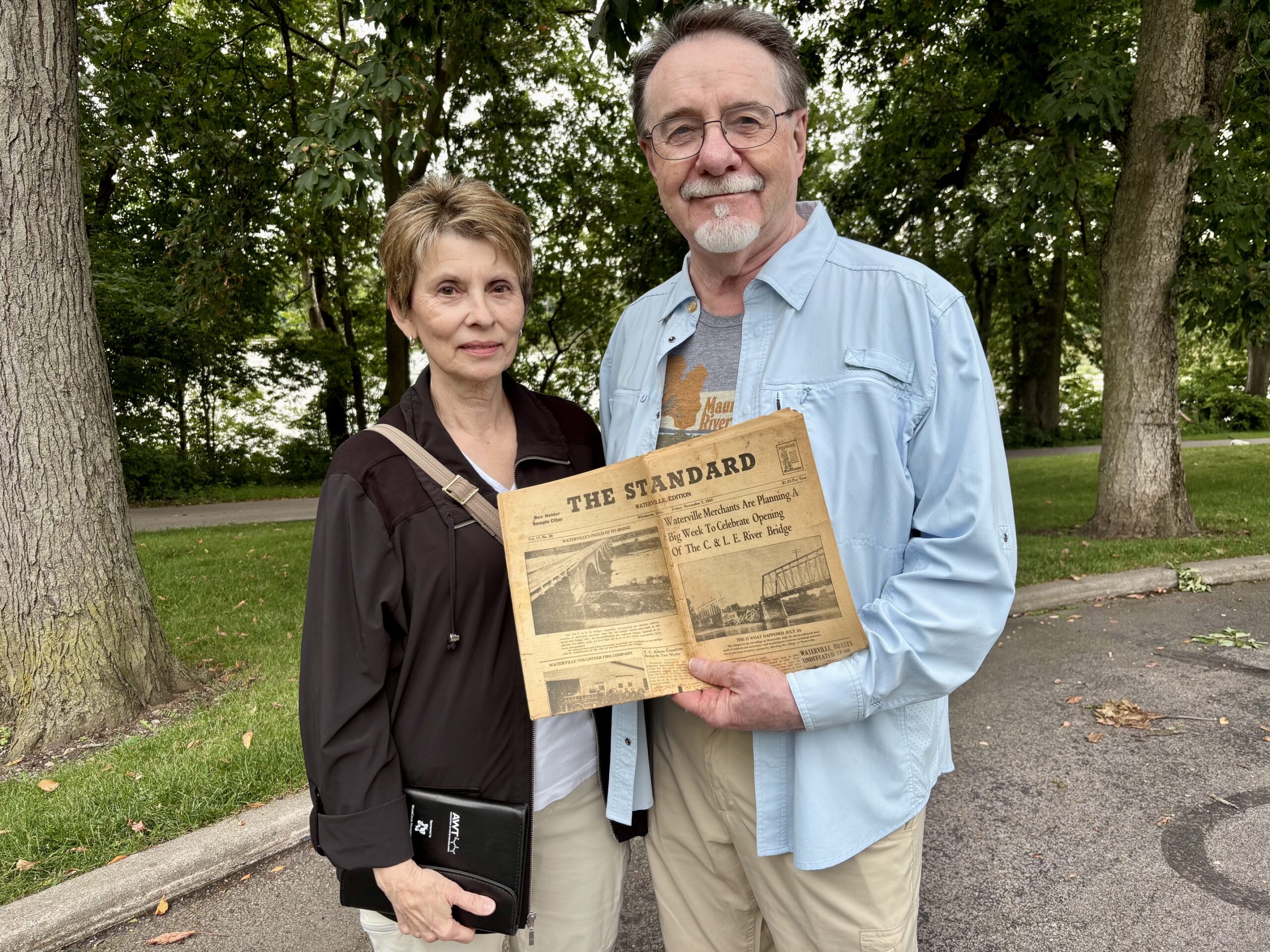
Paula and Steve Lauer arrived at the June 27 gathering with a November 7, 1941 copy of The Standard that described how the Roche de Boeuf Interurban Bridge was used temporarily for automotive use after a section of the Waterville bridge collapsed in July 1941 from a truck accident. (AWFP photo by Karen Gerhardinger)
Once complete, what will remain are the piers and arches, and STBA will begin raising funds to install a pedestrian and bike bridge on top of the arches but putting the weight onto the piers, which are embedded in three feet of bedrock. Waterville Mayor Tim Pedro said he’s already getting offers of donations toward that project, which is estimated at $6-7 million.
“We’ve got a lot of work in front of us. Do we have every answer? Do we have every question? No, but we got a chance to save the bridge,” Pedro said. “Now we can plan.”
Rex Childers, a STBA member and historian, said he can see how the new pedestrian and bike bridge will provide opportunities for sharing the stories of more than just Gen. Anthony Wayne, who had Fort Deposit built near the rapids just before the Battle of Fallen Timbers.
Bill Coder and Rebecca Jaessing stopped by to see the plans for the bridge. Coder was an assistant scoutmaster for Troop 95 in 1972 and took the Scouts on an overnight trip to Farnsworth – including holding a church service atop the bridge. (AWFP photo by Karen Gerhardinger)
The Miami tribe had a village that straddled the rapids that run under the bridge, and they guarded the Roche de Boeuf island in the middle. That rock, which was partially destroyed during construction of the trolley line, served as a sacred and functional place where the Shawnee, Delaware, Wyandotte, Ojibwe and Potawatomi tribes to come settle disputes.
“I think we will have a great opportunity to share a different story – about the Native Americans who lost their land,” Childers said.
Frank Butwin, secretary for the Maumee Valley Heritage Corridor, which collaborates with organizations to advocate and preserve resources with cultural, heritage and recreational value, said he’s excited to see what’s next for the bridge.
“We need to preserve and promote this so we can attract people to get on it, go across it and have it be part of a trail system,” Butwin said. “This could add more commerce to the area. We want to bring people not just from northwest Ohio but different states.”
Artist Teri Utz Bersée uses pure pigments to capture a scene of the Maumee River. (AWFP photo by Karen Gerhardinger)
Among the guests stopping into the Roche de Bouf Shelterhouse on June 26 was retired Waterville third-grade teacher Pollie Miller, who for 18 years took her students on a walk through history in the downtown area.
“I’m thrilled it’s going to be saved. History is important. I’m glad to see so many people on board to make this happen,” Miller said, noting that she’s thankful that Vermes came to Waterville several times to show that the bridge could be saved. “He really made a difference in the outcome.”
Richard Hagy said he likes the plans he sees for the bridge’s future.
“It will be a great walkway across there,” he said, motioning to the bridge.
Waterville Historical Society member Merle Wilhelm noted that saving the bridge will have another benefit.
“It would be terrible if the city of Waterville had to change their logo to the other bridge,” he laughed.
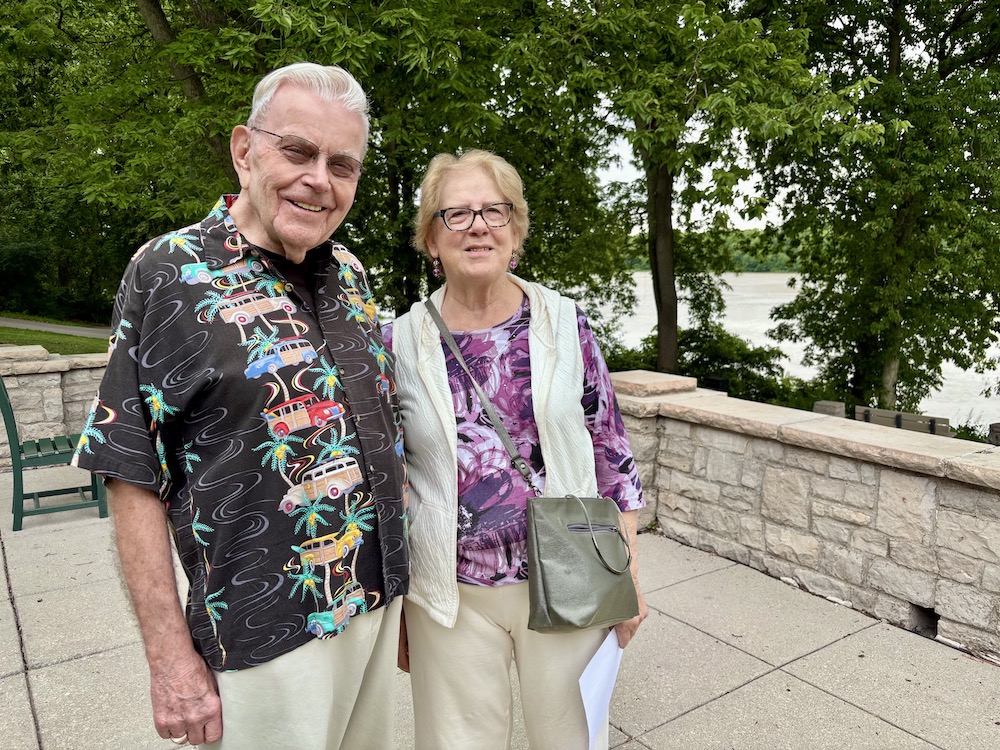
Among the visitors to the June 26 open house were (from left) RIchard Nagy, Pollie Miller, Dan Miller and Merle Wilhelm. (AWFP photo by Karen Gerhardinger)
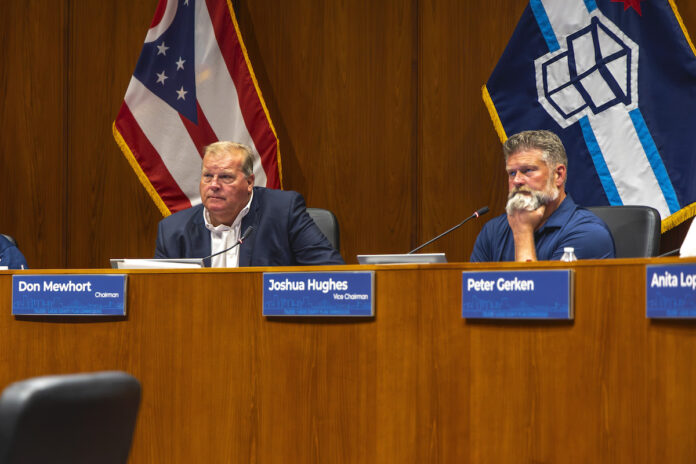
Lucas County Planning Commission members Don Mewhort and Joshua Hughes listen to testimony from Waterville Township trustee Toby Miller about proposed zoning text amendments governing data centers on June 24. (AWFP photo by Gaven Hafner)
WATERVILLE TOWNSHIP – A 67-page amendment to the Waterville Township zoning resolution – one that would change how large developments like data centers are handled – was passed back to the township by the Lucas County Plan Commission with no recommendations.
“Go in with your eyes wide open,” commission member and Lucas County Engineer Mike Pniewski said during the June 24 meeting. “As long as you understand the risks…god speed.”
The township forwarded the proposed amendments to the county last month. The amendments include the creation of an M-3 Campus Industrial District zoning designation and changes to the existing M-1 and M-2 industrial district regulations, adding tiered classification standards, and provisions related to phasing, development agreements, financial assurance, decommissioning and more.
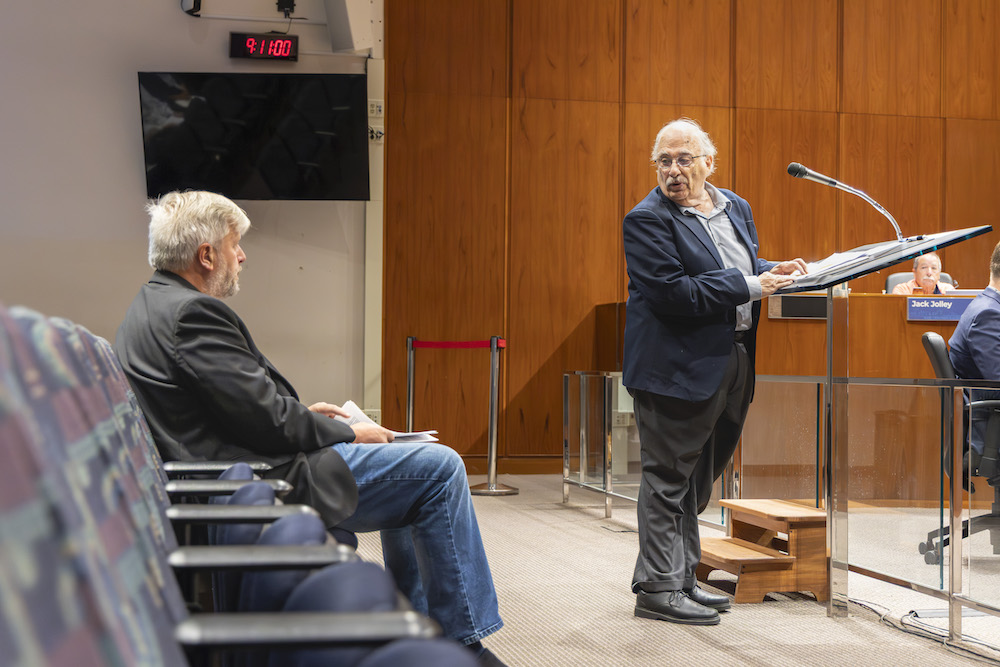
Assistant Lucas County Prosecutor John Borell, at the podium, asks a question of Waterville Township trustee Toby Miller. (AWFP photo by Gaven Hafner)
Normally, the county planning staff would review the information and make a recommendation to the LCPC – either to approve with or without conditions, or deny, based on concerns. This time, however, the staff made an unusual “no recommendation” on its detailed report, mostly because Assistant Prosecuting Attorney John Borell has “significant concerns,” said Lisa Cottrell, LCPC director.
“It’s difficult to reconcile some of the provisions with the township zoning,” Borell told the commissioners. “I’m not going to say they’re not all enforceable. I’ve just not seen anything like this before. I would be a lot more comfortable if this was a conditional use, not a zoning change. Large portions of it are questionable. It’s data centers, so it’s a whole new ball game.”
Borell said he gives the township credit for trying to do something to control not only data centers but larger industrial-type developments.
“I know they’re in a hurry, and I understand why,” Borell said. “But this is such a new area that you don’t know with certainty what a court would do with it.”
Borell suggested that the county planning commission postpone any recommendations for 30 to 60 days to allow more time for review.
While Waterville Township Trustee Toby Miller said he understands Borell’s concerns – many of which were addressed in a six-page report earlier in the week – he said the trustees are in a hurry to get something in place before a large scale data center applies for a permit. The township trustees enacted a one-year moratorium on December 17, but Miller said that offers little protection from big tech developers.
“We’re trying to put this through because time is short for us,” said Miller, explaining that landowners have been approached by developers looking for a site for a large data center.
“We have counsel reviewing this. We believe the entities interested in the property out there are not going to wait until December. They don’t see our moratorium as an obstacle. If we have an applicant come in…they will be grandfathered in under our current zoning book, which is woefully inadequate.”
The changes to the zoning resolution came out of input from a Data Center Advisory Committee and the Columbus law firm of Brosius, Johnson and Griggs LLC, which has experience in representing clients facing large developers, Miller said.
Among the amendments under consideration would be to change the current requirement that a developer apply for a conditional use permit in A-Agricultural districts. Because a conditional use permit is an administrative process, it is not subject to referendum by the citizens. The text amendment would require a developer to apply for an M-1, M-2 or M-3 zoning change, depending on size. A zoning change is considered a legislative action and could be contested by citizens with a referendum.
Another concern addressed in the text amendment is the process. A conditional use permit would be decided by the Board of Zoning Appeals, which is made up of appointed members, while a zoning change requires approval from the three elected trustees. Kyle Hertzfeld has stated that he will not vote on the matter because of a perceived conflict of interest. That leaves the decision to Miller and Trustee Julie Theroux.
Miller said a 30- to 60-day delay would push changes to the zoning resolution back by six to eight months, but that he would be open to viable suggestions from the commission members and community in the time before the township Zoning Commission meets on July 20. He also noted that he would continue to work with Borell and Cottrell.
County Commissioner Anita Lopez suggested the township continue to work with outside counsel, but to use caution as any litigation from a developer could be costly.
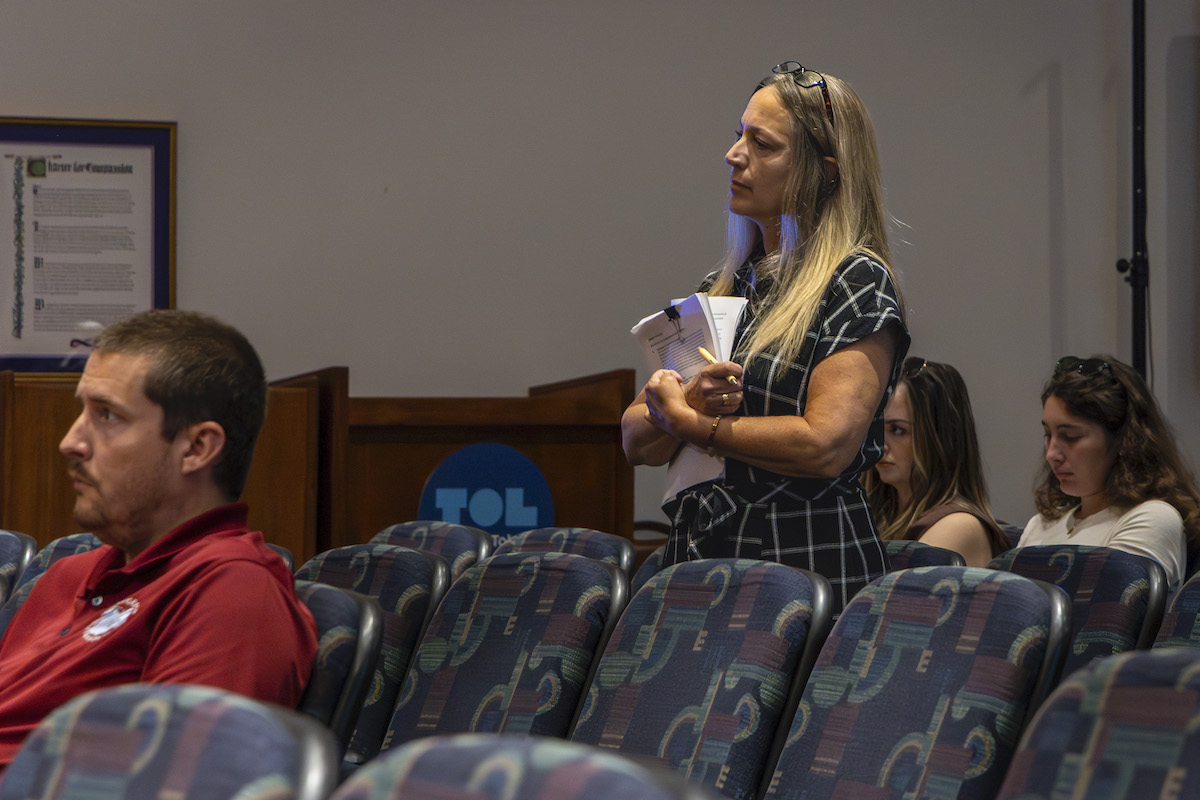
Waterville Township resident Karen Schneider, a former trustee, asks the LCPC to consider a 30-day delay in making any recommendation to the township on the zoning resolution changes. (AWFP photo by Gaven Hafner)
LCPC member Don Mewhort said it makes sense to send the matter back to the township, and moved to close the meeting, but resident and former township Trustee Karen Schneider stood up and asked for an opportunity to speak. She urged the commission to enact a 30-day delay, because she respects the expertise of Borell and the planning staff. She shared concerns about litigation from a data center developer possibly bankrupting the township, which doesn’t have deep pockets.
“Everything about this feels fast,” Schneider said, adding that the goal should be to protect the residents, not accommodate a schedule by trustees to push things through.
Schneider also noted that the change in zoning would open up the township to other large developments.
The commission then closed the meeting, until Risa Sindel urged them to reopen and allow time for comments from audience members who had signed up to speak. She then spoke about the detrimental impacts of data centers on water, the electrical grid, loss of farmland and lowered property values. Leatra Harper of Bowling Green spoke about a title 5 gas plant going in the Meta facility in Middletown Township, and urged the commission to look into how these impact the environment and health.
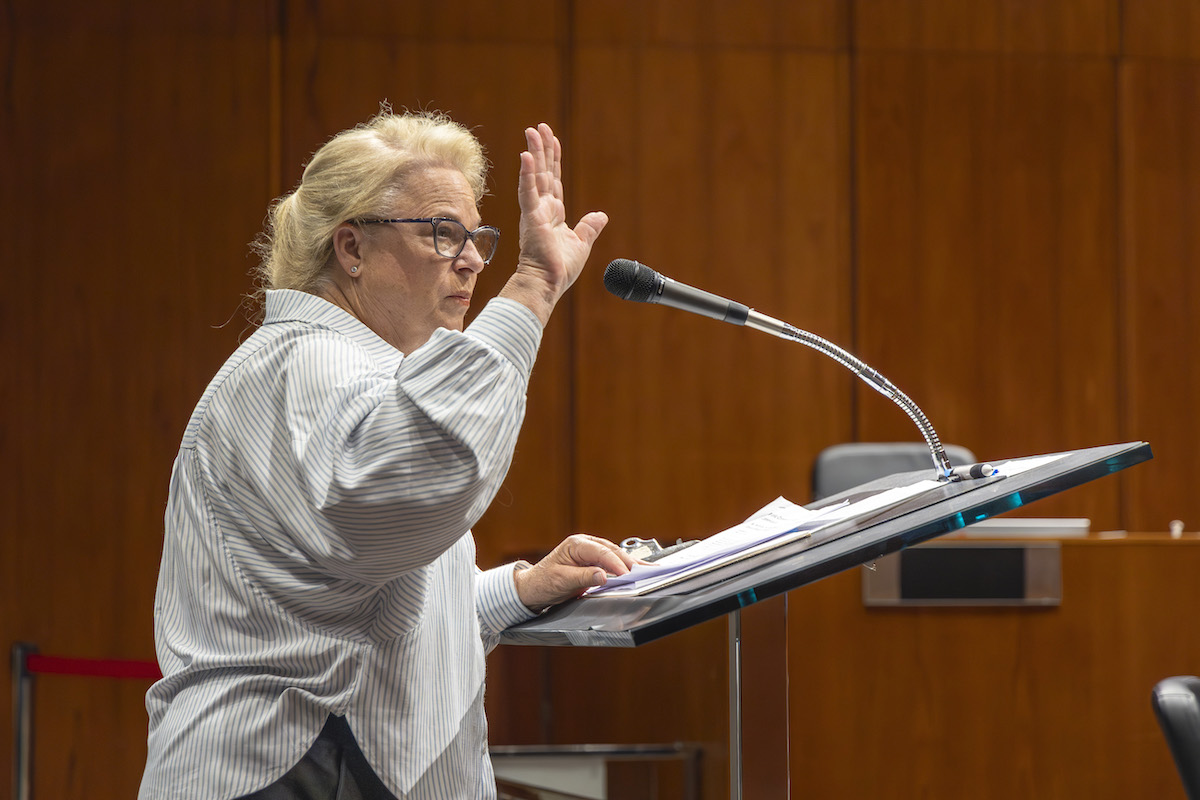
Lyn Cox takes an oath before speaking to the LCPC about her concerns with proposed changes to the township zoning resolution. (AWFP photo by Gaven Hafner)
Lyn Cox said she’s concerned that the tiers proposed in the amendment would be misused and give developers an opportunity to apply for a lower-tier use but then later expand to a higher-use facility without the same oversight. She cited several other concerns about the text amendments, providing in writing to the commissioners.
Cox also noted that Miller resides near land that is being eyed for a data center; that he organized an “exclusive” data center committee; and that he works for AI Logistics, which she said is a field with direct commercial interest in the expansion of data center infrastructure and AI computing capacity in the region.
While Miller acknowledged his work in the industry, he countered that he is not in favor of a data center in his back yard – which is one proposed location for a possible data center.
The commissioners agreed to punt the issue back to the township without further delay.
After the meeting, several residents cornered Miller, who set up an open time at the township hall later that afternoon, for those who wanted to suggest viable changes to the text amendments. One person showed up.
The next step is for the township Zoning Commission to review the proposed text amendments – which are posted on the township website – during the commission’s Monday, July 20 7 p.m. meeting. The Zoning Commission will then make a recommendation for the trustees to make a final decision, possibly as soon as their July 22 meeting, which begins at 6:30 p.m.
The proposed resolution is a text amendment only. It creates the M-3 zoning classification and related standards, but it does not apply M-3 zoning to any property. Any request to apply M-3 zoning to a specific parcel would require a separate zoning map amendment, public hearings, review under the township’s comprehensive plan, and compliance with Ohio zoning procedures.
A helicopter hovers above the power lines near Neowash and Schadel roads in Providence Township on June 16. (AWFP photo by Karen Gerhardinger)
PROVIDENCE TOWNSHIP – Before Patton Road, between Yawberg and S.R. 295, gets repaved later this summer, one underlying issue will need to be resolved: standing water at the intersection of Patton and Yawberg.
During the June 17 Providence Township trustees’ meeting, farmer Keith Hannewald asked for help in his months-long effort to solve the issue of standing water in the fields near the intersection. He’s spoken with the county stormwater engineer, who found old maps showing placement of some field tiles and recommended that Hannewald work with trustees to find a solution. The maps show a five-inch clay tile, but trustees agree that not all tiles have been included on maps over the decades, and agreed with Hannewald’s assertion that a 5-inch clay tile can’t drain 30 acres.
“It behooves us to move that water away from the road. It’s low on both sides,” said Trustee Steve Kendall.
After Hannewald’s discussion with Trustees Kendall, Lee Bialecki and Jeremiah Floyd, along with Road Supervisor Kevin Keifer, the trustees agreed that allowing water to seep in under the road bed would erode the new pavement, and asked Keifer to get quotes for the catch basin work to be paid for by the township.
During the meeting, the trustees also:
-Heard Zoning Inspector Jim Fischer say that he issued permits for both a new home and accessory building for 12617 Archbold-Whitehouse Rd.
-Learned from Fischer that a representative of the Division of Alcohol, Tobacco and Firearms (ATF) asked for verification that 13710 S. River Rd. is zoned appropriately for the owner to sell and repair firearms. Fischer advised that the property is in the unzoned area of the township.
-Discussed how to deal with clearing out the ditch at Yawberg and Box roads, which is the deepest in the township. It also has poison hemlock growing on a tree.
-Heard that someone mowed over two full garbage bags dumped on Yawberg between Neowash and Perry roads.
-Asked Keifer to get quotes on repaving the cemetery driveway.
Katherine Eboch will be sworn in as Rotary District 6600 governor on June 26. (AWFP photo by Karen Gerhardinger)
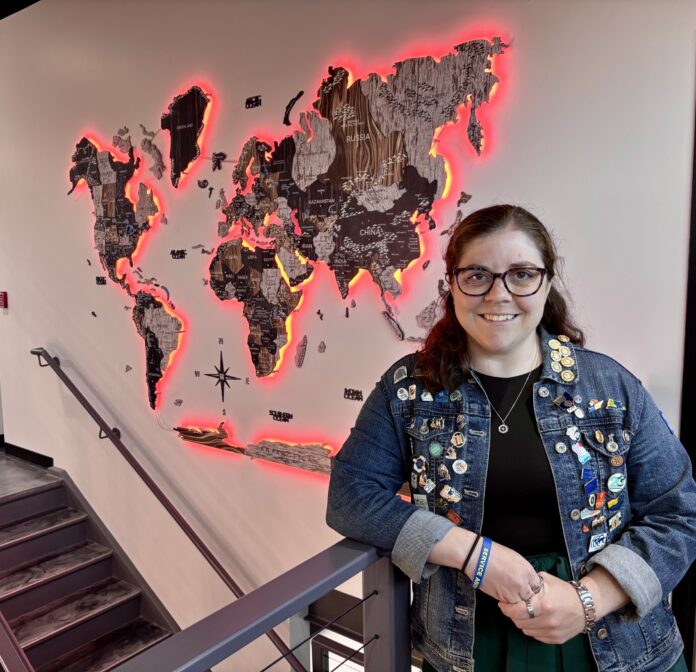
Wearing her trademark jean jacket filled with hundreds of pins from Rotary Clubs around the world, 35-year-old Katherine Eboch is set to be sworn in as governor of Rotary District 6600 on June 26 – making her the youngest in the state and possibly the world. And, in January, she’ll represent her home Anthony Wayne Area Rotary Club and the district as she rides on the Rotary Rose Parade float.
“I’m honored to represent and work for a cause that helps so many people around the world,” she said.
Leading the district’s 2,800 members of 58 clubs in the 24-county region requires not just superb organizational and motivational skills, but the assistance of the small but growing Anthony Wayne Area Rotary Club – whose members will raise funds to cover travel expenses. Eboch is also counting on guidance from AWARC member Deb Cheney, who previously served as a district governor.
Eboch’s leadership skills were first put to the test in 2005, when she was one of three eighth-graders to join a new Maumee High School Interact Club. She credits Dr. Greg Smith, who was superintendent of Maumee City Schools at the time, for Maumee Rotary Club’s decision to launch a new Interact Club, which introduces teens to Rotary’s “Service Above Self” mantra through hands-on projects.
Rotary has given her many opportunities to hone her leadership skills in a safe environment before leading others in her profession, she said. Over the past two decades, Eboch has been involved in Rotary clubs in Toledo, Bowling Green and Hartford, Conn. and served as president of the AWARC and Nashville Sunset Club.
For those unfamiliar with Rotary, Eboch describes it as a service organization founded at the local level with networking and fellowship among community members who do service projects locally and globally, often teaming up with existing nonprofits.
“Networking, projects and friendships – those are the three pieces of why I hope people will get involved,” she said. “It’s super impactful that there are those opportunities of service projects and exposure to so many cool nonprofit agencies and organizations from different clubs.”
It was through Rotary that she learned about the nonprofit organization Soles4Souls, which creates opportunities for people through shoes and clothing. She now serves as the vice president of information technology for the nonprofit.
But her first career was in theater. While earning her BFA in theater from Carnegie Mellon University, and then while producing live shows across the country for five years, Eboch didn’t have much time for Rotary, because of evening and weekend preparation and performances. So when she returned to Ohio to earn her MBA from Bowling Green State University, she immediately joined the Bowling Green Rotary Club. Now a resident of South Toledo, Eboch opted for the AWARC because it holds meetings on Monday evenings instead of during lunchtime – which makes it hard to get away from work.
As district governor, Eboch will be traveling to plenty of lunchtime meetings, but this time she has an assist.
“My dad is going to be my chauffer,” she laughed, explaining that she’ll be able to work remotely while he’s driving her around the district to speak to each club.
As district governor, Eboch has several goals. The first is to encourage the launch of new clubs, including in areas where clubs used to exist. She also wants Rotarians to share with their employers and employees the ideas of Rotary, such as the 4-Way Test, which states, “In all the things we think, say and do: Is it the truth? Is it fair to all concerned? Will it build goodwill and better friendships? Will it be beneficial to all concerned?”
“We want to make sure we’re putting Rotary to work where we work,” she said. “Are we talking to each other about our business? Are we using the 4-way test in our business decisions?”
Another focus is on networking and mentoring, she said, recalling the benefit of receiving advice from fellow Rotarians when she was among the youngest in many clubs.
Having found her love for Rotary in high school, Eboch is a big proponent of Interact.
“I love getting the kids started in Rotary. It’s cool to keep the momentum going,” Eboch said.
The Rotary Youth Exchange gives students ages 15 to 18 – with a sponsoring Rotary club – and opportunity to spend a year abroad with another Rotary family.
“It’s so exciting to see them go out and experience life abroad. It’s open to any student with a Rotary Club willing to sponsor them,” she said, noting that applications are due this summer.
Rotary International has seven areas of focus: peace building and conflict prevention; disease prevention and treatment; water, sanitation and hygiene; maternal and child health; basic education and literacy; community economic development; and the environment. Polio has long been an international push, and while not as prevalent, still hasn’t been eradicated.
Each club has its own focus for service as well. In northwest Ohio, several clubs have teamed up on projects to keep the Great Lakes Watershed clean. Supporting national and international projects is also a priority, such as funding latrines and wells in other countries.
In addition to its local, regional and international projects, AWARC is aiming to raise $100,000 for a centennial project to celebrate its 100th anniversary. Eboch is bringing together the centennial committee to make a decision and work on fundraising.
One of AWARC’s biggest fundraisers is the Blues, Brews and Brats – in which thousands of people come to downtown Waterville on the last Saturday of July to enjoy national and regional blues artists, bratwurst, brews and lots of hospitality by Rotarians from throughout the district.
As a Rotarian, Eboch has attended Rotary International conventions, including in Atlanta, Calgary, Singapore and Toronto.
“It’s a chance to meet Rotary friends all over the world, and engage in trainings and other events,” she said.
While out on official Rotary business, Eboch often wears her trademark jean jacket covered with pins. While it now weighs over eight pounds, Eboch said she wouldn’t attend an event without it.
“It’s a great icebreaker while standing in line,” she said. “We may start out as strangers but be friends at the end.”
John Kulewicz is a Democrat running to be Ohio’s next attorney general. In this one-on-one interview with Political Reporter Jaden Jefferson, Kulewicz discusses how he’d approach protecting Ohioans’ money, combating public corruption, and the many concerns surrounding A.I. data centers. He also provides his perspective on the death penalty, following Republican Gov. Mike DeWine‘s call to abolish it in Ohio.
TOLEDO – Opening your own business or medical practice can be daunting.
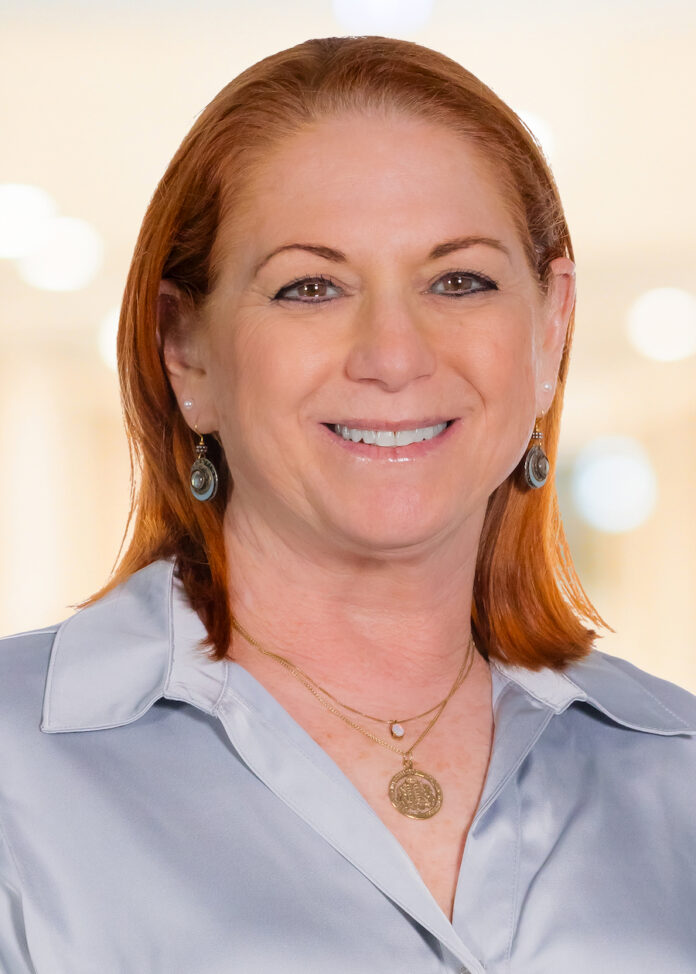
Dr. Susan Federman, a board-certified family medicine physician, opened an MDVIP-affiliated practice at 3425 Executive Parkway, Suite 117, in the Westgate Village area on March 31.
“It was terrifying,” Dr. Federman said, half tongue-in-cheek. “Having to learn another computer system…I figure I could make someone a darn good secretary. There are a lot of applications, paperwork, and government agencies, and it’s mildly terrifying hoping you fill out all of the forms correctly.”
One of Dr. Federman’s favorite pastimes: spending time with her grandkids. (Courtesy photo)
MDVIP-affiliated practices offer a solution to frustrations that many patients experience with traditional primary care, including long waits for an appointment, rushed visits and difficulty getting all of their concerns addressed.
By maintaining a smaller practice size, Dr. Federman is able to spend more time with each patient and provide proactive, prevention-focused medicine.
Dr. Federman, a native of Rochester, N.Y., has one employee and medical assistant – Swanton native Lindsay Albright.
“She is extremely talented,” Dr. Federman said. “She functions as an MA and office manager. I met Lindsay in a former practice and we have been together 13 years.”
Dr. Federman, who has lived in Toledo since 1984, earned her medical degree from the University of Toledo College of Medicine and Life Sciences (formerly the Medical College of Ohio) and completed her internship and Family Medicine residency at the WW Knight Family Medicine Center in Toledo. She has been an MD for 38 years.
She is also certified by the American Board of Family Medicine and maintains affiliation with ProMedica Toledo Hospital.
Dr. Federman (above) scuba diving. (Courtesy photo)
“My dad was a doctor and my mom was a nurse,” Dr. Federman said. “My mom’s brother was a doctor, and my maternal grandfather was a doctor. Since I was around 6, that’s what I wanted to do. My grandfather was a really big influence in my life. Before I graduated from med school, he sat me down and said, ‘If you’re in a room with a patient, that person should be the most important person in the world to you.’”
MDVIP stands for a national network of primary care physicians that operates on a membership-based, concierge medicine model. It emphasizes preventive care, wellness programs and a highly personalized doctor-patient relationship.
Today, the MDVIP network includes more than 1,400 physicians and 430,000-plus members across the country.
“I have patients who want to be with me who are invested in preventative healthcare, and MDVIP allows me the time and the tools to try to do that as best I can,” Dr. Federman said. “I know my patients, they know me, and we know what we expect from each other.”
Dr. Federman takes part in some underwater meditation. (Courtesy photo)
She added that the MDVIP model allows her to be able to practice medicine the way she was trained “without trying to do the high volume that other practices want to do.”
“A lot of my patients have been with me for decades,” Dr. Federman said. “They know my kids, I know their kids. I know the family and it’s good continuity of care. Because I do know them, I know what they are saying, what they are not saying and what they should be saying. To me, it’s so gratifying when I can work with someone and they listen to me, and we can improve their health and they actually feel better. That’s incredibly cool.”
Dr. Federman and her husband, Doug, have been married 39 years and have six children and three grandchildren “with another one on the way.” Dr. Federman enjoys scuba diving, swimming, riding horses, hiking and kayaking.
Dr. Federman’s office hours are Monday, Tuesday and Thursday from 8 a.m. to 5 p.m. and Friday from 8 a.m. to noon. She said she can also be contacted directly when she’s not in the office. Learn more about Dr. Federman’s practice or schedule an appointment here.