TOLEDO — Senate Bill 1, or the Enact Advance Ohio Higher Education Act, is scheduled to take effect on June 27 after passing in February. The sweeping legislation, sponsored by Sen. Jerry C. Cirino, aims to overhaul policies on public college campuses across the state.
A central provision of the bill is the elimination of diversity, equity and inclusion (DEI) initiatives at Ohio universities. According to the legislation, this includes the closure of DEI offices, using DEI-based job descriptions, and a ban on new institutional scholarships based on DEI criteria.
Ohio State Rep. Josh Williams, (R-Sylvania Twp.), says that existing scholarships will be honored for current recipients.
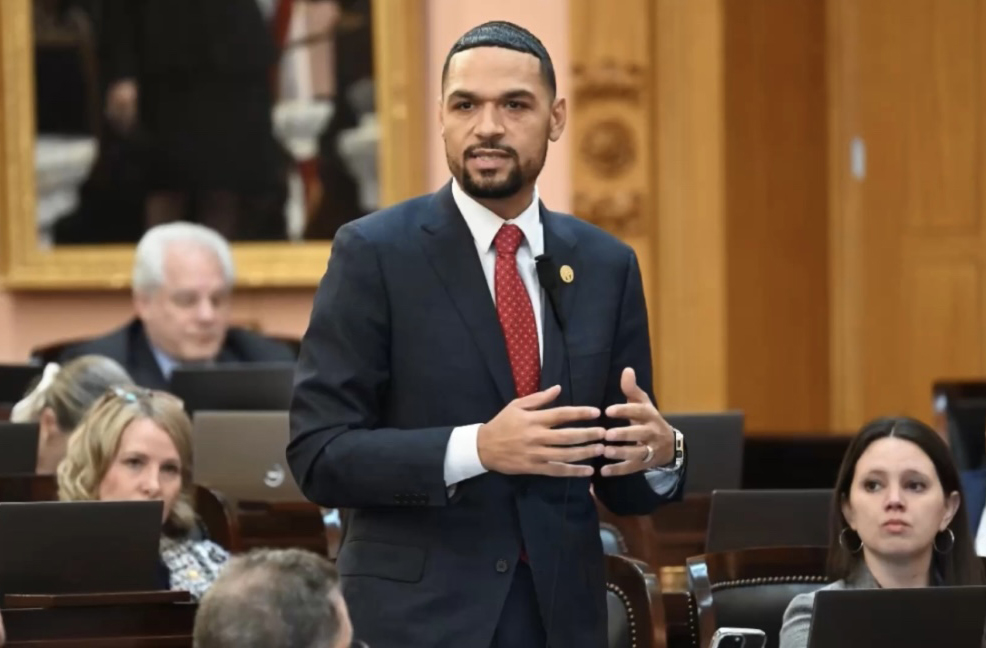
“The main point of Senate Bill 1 was to allow intellectual diversity and freedom of speech for students on college campuses,” Williams said. “We saw universities and professors attempting to require students to adopt a certain viewpoint and espouse that viewpoint in order to maintain academic excellence at a university.”
According to the Workforce and Higher Education Committee website, which contains students’ testimonies of Senate Bill 1, there were many students who felt discriminated against in Ohio universities, including Miami University senior Spencer Mandzak.
“Mandatory DEI training sessions often focus on teaching students and faculty that systemic oppression defines most human interactions, even when no clear evidence of discrimination exists,” stated Mandzak in his testimony. Mandzak, a senior public administrator major and history minor, is the program director of the College Republicans of America.
Students and faculty are sometimes encouraged to identify themselves and others primarily through the lens of race, gender, or sexuality rather than as individuals with unique thoughts, talents and experiences.
Spencer Mandzak | Miami University senior
Williams says that this bill is not to be confused with limiting free speech, but rather allowing students to reach their own conclusion about controversial beliefs. The bill classifies “controversial beliefs” as topics subject to political dispute, and it names climate policies, immigration policy, abortion, marriage, electoral politics and DEI policies as examples on Page 11. Faculty are required to allow open discussion of these topics, according to Section D(1), Page 14 of the legislation, so long as they express intellectual diversity.
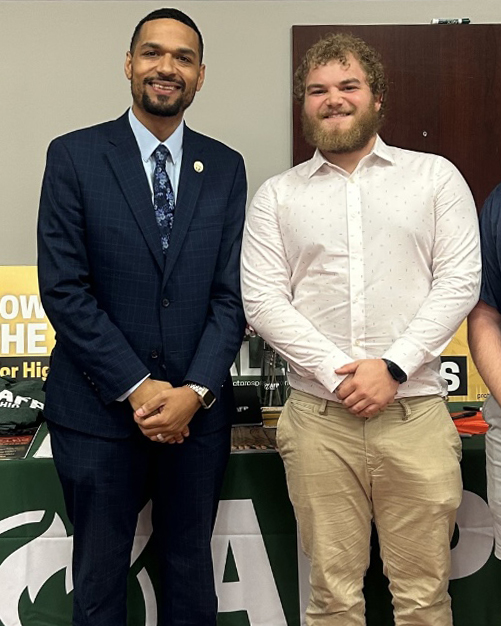
Chase Gillson, president of the University of Toledo College Republicans, says this bill allows students to receive justice and report political discrimination. Like Williams, he mentions that this bill will promote less indoctrination.
“There’s just too much room for the vast majority of university staff being one political party to discriminate against one student,” Gillson says. “The discrimination aspect seems to get a little more out of hand.”
While banning DEI initiatives, the bill also prohibits all policies designed explicitly to segregate faculty, students or staff based on race, ethnicity, gender and religion.
“You can’t make a Black-only graduation ceremony,” Williams said. “You can’t make a woman-only graduation ceremony. The universities are public; that means they’re a state agency, so the state is not allowed to discriminate based on race, gender, sex.”
The bill also mentions new requirements for education and curriculum: Students must take a civics course requirement based on the American economic system and capitalism, syllabi must be posted online for public access, and low-enrollment undergraduate degree programs should be eliminated (Page 20, Section C).
University professors, as well as public employees, would be also prohibited from striking, according to Page 36.
“I don’t think you should be able to strike to advocate for your working conditions,” Williams said. “We have other groups that are prohibited from striking, as well: Police, fire, emergency services, things that are considered essential governmental functions.”
The bill also reduces trustee terms from nine to six years (Page 25); mandates five-year cost summaries to be sent to the state (Page 22); and limits academic partnerships with China (Section E, Page 21).
“China is an openly hostile adversarial country,” Williams said as he continued to discuss a case of Chinese professors that allegedly attempted to bring an agricultural bio-weapon to destroy American crops. He also spoke about an alleged law that China enforces Chinese nationals to assist the Chinese Communist Party in espionage.
“So, with constant evidence of the Chinese government trying to influence and gain control within the United States, like buying farm land all over the nation, near military bases, and gaining our information to advance their own technologies, it just makes sense for us to have some safeguards to slow down that process in a responsible way.”
According to AP News, the Chinese professors were accused of shipping biological material into the U.S. for use at the University of Michigan on June 3. Senate Bill 1 was passed in February of 2025, making no correlation to this case.
“Federal authorities, so far, have not alleged that the scientists had a plan to unleash the fungus somewhere. Fusarium graminearum is already prevalent in the U.S. — particularly in the east and Upper Midwest — and scientists have been studying it for decades.” According to AP News.
The Toledo Free Press also looked into whether or not Chinese nationals must assist the Chinese Communist Party in espionage, and found that this is a misunderstood claim.
Under China’s National Intelligence Law, particularly Article 7, all Chinese citizens and organizations are legally required to “support, assist, and cooperate with national intelligence efforts” when asked by the government.
This doesn’t mean every Chinese national is actively engaged in espionage.
When asked about enforcement of Senate Bill 1, Williams said he was unsure of specific penalties for noncompliance.
“I don’t think there was any mechanism. I would have to look at the bill to see if there was any reduction in state share of instruction,” Williams said. “Right now we just require them to comply with state law in a week.”
If constituents would like to read students’ testimonies of being “required to adopt certain viewpoints,” they can look up “Workforce and Higher Education Committee,” go to the “meetings” tab, and click “Sub. S. B. No. 1.” The meeting on March 19 contains proponents’ testimonies.