TOLEDO — Public libraries offer recordings, newspapers, magazines—and of course, books. The Toledo Lucas County Public Library goes one step further.
Make that two.
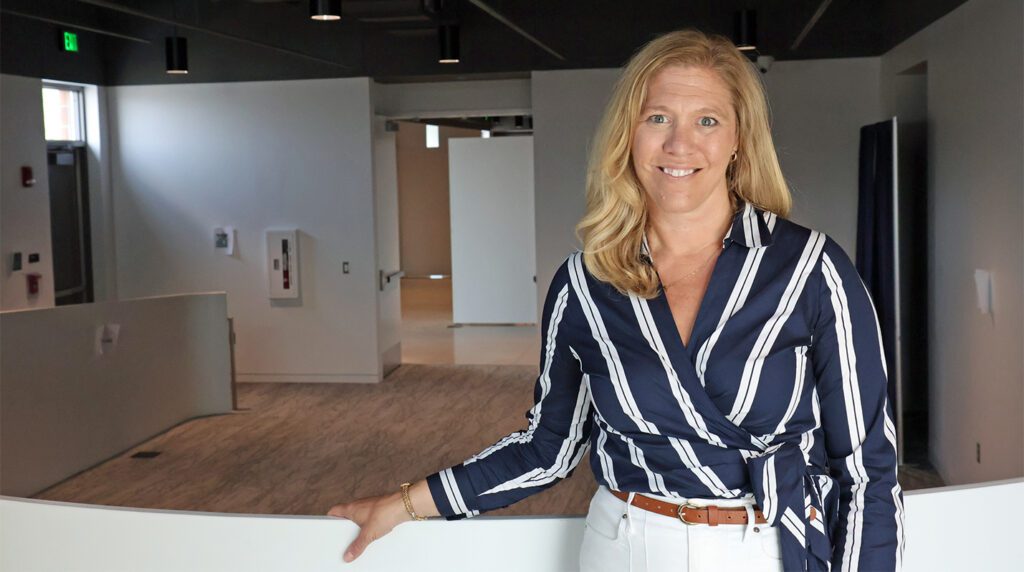
“We’re taking advantage of the public infrastructure we have—our buildings, 20 strong across the county—to make not only our services available, but also other important health and social services available to the public,” said Allison Fiscus, the library system’s adult services coordinator.
That’s the first step further. What drove the library to take that step was fallout from the 2020 pandemic.
“In the wake of COVID, people were coming to the library with needs that we couldn’t fix,” Fiscus said. “Then we thought we’d act as a substantial referral service. We looked at the library buildings as community partners to help.”
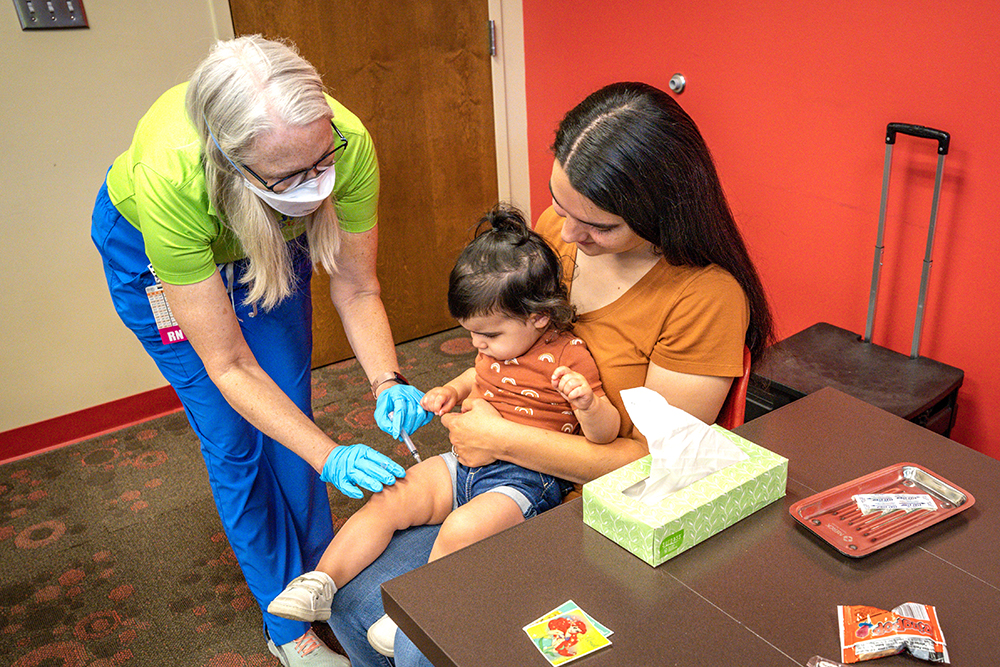
Fiscus said the library launched its first partnership with Mercy Health Community Nurses in 2022. The nurses set up in a handful of library locations to check blood sugar and cholesterol and administer flu shots on a monthly basis, then expanded it to be in more than half of the system’s sites.
“The first indication that this model would be successful was that the Mercy nurses reported double the amount of vaccinations given to the public because of the connection to the library. That’s a 100-percent increase,” Fiscus said.
From that one health agency, the partnership with others has snowballed, she said. “Every week we develop new community partners. We vet each of those and see how it fits with existing library services. Sometimes it’s a class, sometimes it’s a tabling opportunity. For me, the most exciting aspect is the health services we bring directly to people through our locations.”
The vetting process is the focus of the second step in what the library system offers: Trust.
“We live in a time when there’s a lot of mistrust in institutions,” Fiscus said. “The library has held the community’s trust for a long time. We want to essentially lend that trust to the partners who want to connect with people, and telling people you can trust these agencies to get the services you need.”
The library system has partnerships with more than 30 health and social service organizations and agencies.
“We have guiding principles when pursuing partnership with health-care providers,” she added. “We look at what are the more pressing health-care concerns.”
For example, she said a partnership was reached last year with Equitas Health, a regional nonprofit that serves the health-care needs of the LGBTQ+ community. Its representatives are at the Main, Reynolds Corners, Lagrange and Mott libraries monthly.
“An exciting partnership that we launched this year,” Fiscus said, “is Solace Health and Wellness, sponsored by UToledo Health. We positioned it at the Mott branch, which is in the area of our county that sees the greatest maternal mortality rates.”
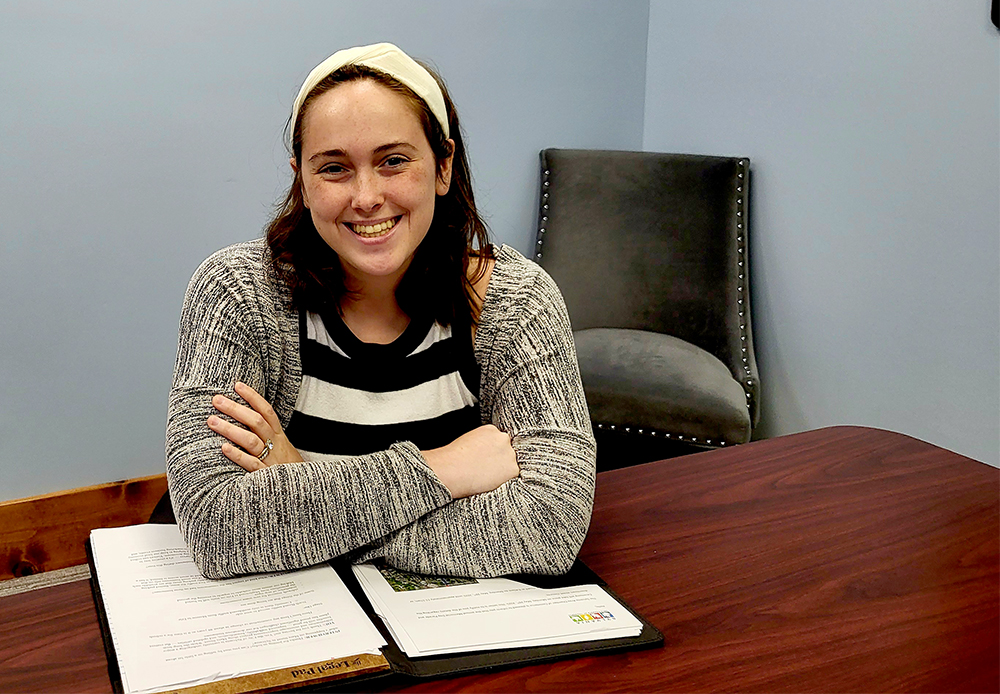
Erin Martin, Solace’s executive director, said from 9:30 a.m. to 12:30 p.m. on the fourth Saturday of the month, she conducts free childbirth classes there. The partnership began in January.
“It’s been going really well,” Martin said. “The classes have been full—up to five couples, a good size, with a lot of hands-on techniques. The feedback has been great. The people are grateful.
“Health is one of the best ways to improve the community,” Martin continued. “Sometimes that gets overlooked. To me, it’s about making this accessible.”
She said partnering with the library system is good because “having knowledge empowers people, and it improves these [pregnancy] outcomes.”
As for social services, Fiscus said one of the most successful partnerships is with the United Way of Greater Toledo’s 211 program. Its representatives are at the Main Library every Tuesday and first Friday of each month to help people by referring them to the right agencies – 211 refers to the phone number a person can call for help, similar to dialing 911.
“It’s a great partnership,” said Sandra De Steno, 211 director. “It’s a great place to get in front of the clients we serve.” De Steno said 211 is accessible through its website and by phone, but not through walk-ins at its headquarters.
“This partnership has been pretty vital over the last two years,” said Emily Matthews, 211 program manager. “We are able to catch a lot of people who would slip through the cracks because they don’t have phones. It’s important to see the people we talk to, and it creates more trust in the community. They understand that we live here and care about the community. That is so important. We’re trying to meet people where they’re at.”

Fiscus said a new partnership has been developed with Advocates for Basic Legal Equality (ABLE), Inc., focusing on kindergarten through Grade 12 education issues.
With the current concerns about ongoing funding of libraries, Fiscus said, “I can’t speak for our partners, but from the library side, we do not charge the partners to be in our spaces, and we do not pay them. We’re just capitalizing on the infrastructure we’re stewards of. It happens regardless of the funding level.”
The infrastructure is more than a collection of books, materials, and now agencies. “I was at the library the other day,” De Steno recalled, “speaking with a woman who stopped by our table and said when she was homeless, the library was one of the safest places she could be. She could study and have quiet and safety and know no one would disturb her. It’s good when we can bring out services to the library and we’re able to make sure people have that safety.”
More information is available here.
Adult Education
Partners:
● Owens Community College
● Penta Career Center
● Read for Literacy
● TRIO
● United Way 211
Services available:
GED program referrals
Completing/processing college applications
Completing FAFSA applications
Student loan default resolution
Financial literacy training
Career exploration
ESOL classes
Food Help
Partners:
Maumee Senior Center |Connecting Kids to Meals | United Way 211
Health services
Partners:
Ohio Department of Health Breast and Cervical Cancer Project (BCCP)
State of Ohio
American Heart Association
Equitas Health
CareNet
Mercy Health Community Health Navigators
Mercy Health Community Nurses
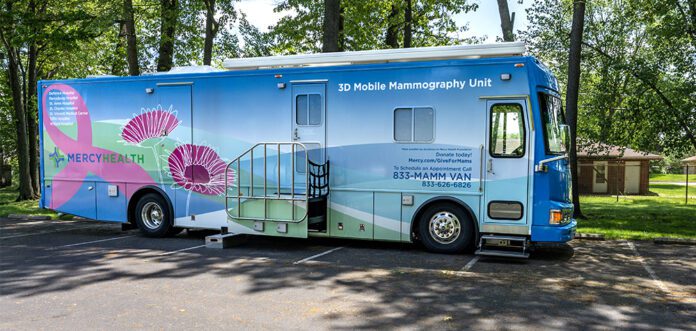
Mercy Health Mobile Mammography Unit
Project DAWN (Deaths Avoided with Naloxone)
Ronald McDonald Care Mobile
Toledo Lucas County Health Department
United Way 211
UToledo Health Mobile Health Unit
Harbor Behavioral Health
YWCA
Legal Help
Partners:
Hospice of Northwest Ohio | Advocates for Basic Legal Equality (ABLE) | United Way 211
Social Services
Partners:
Cherry Street Mission
Goodwill Industries
Maumee Valley Habitat for Humanity
Northwest Ohio Pathways HUB
NeighborWorks® Toledo Region (NTR)
United Way 211