



Toledo Tech Loft: Convergence of collaboration, innovation

TOLEDO – Toledo’s path towards revitalization has not been a straight line, and in the wake of the infamous Bitwise Industries’ fraud scheme, other leaders in Toledo have pivoted to make good on promises unkept to the city.
“My efforts right now are to get people on the sidewalks like we used to have, and I’m trying to get bodies down here and get energy and activity,” noted businessman David Ball.
“I own a lot of property down here,” he said, referring to downtown. “I bought my first building in downtown Toledo in 1985. This September 3 will be 40 years ago.”
Since the first acquisition Ball made in his 20s, he’s grown his real estate in downtown significantly, owning the Ohio Building, among others.
“I am from Toledo. I’m based in Toledo. I’m passionate about Toledo.”
Ball kept his plan to revitalize the city simple.
“There’s a few ways that I think make the most sense to do it. One is tech, because I think they’re [tech professionals are] creative people. And the other is the arts,” he said with a matter-of-fact confidence.
So, when Bitwise announced their $38 million investment to renovate the Jefferson Center to make Toledo a viable tech hub, Ball pitched in with his own money to create a makeshift office space for the company in one of his properties at 336 N. Superior Street.
“I spent a half a million bucks building that for Bitwise, knowing that when they leave, I would have great space that I would attempt to bring in a tech company to backfill the space and do something really good for downtown,” he said.
Unfortunately, Bitwise fell through, and the hope that the Fresno-based company would be able to energize Toledo towards a viable technology-based job market disappeared after the infamous scheme.

Before Bitwise was known in Toledo, “we were doing a thing called Code City,” said Chris Eischen, a local entrepreneur.
Code City began meeting at Rustbelt Coffee, at 119 N. Ontario Street, and ran from late 2016 up until the advent of the pandemic with, “bootcamps, intense immersives, workshops and TedTalk® style conferences that condense a wealth of information, tools and genius insight into a relatively short time span,” according to their Facebook page.
The URL CodeCity.Co, which appears on their branded videos and promos, no longer exists.
According to Eischen, “the pandemic kind of shut that down,” which can be corroborated by the online list of speakers. 2019 seemed to be a pretty active summer for the collaborative group, and Code City even posted in 2021 saying, “Still here. brb” without a continued response afterward.
Without an active tech-based, entrepreneurial community in Toledo, Eischen began to search for a way to cultivate a tech following of his own in Toledo, and he found an ally in Ball.
“He put a bunch of money into renovating the space for Bitwise, and really wanted to see it get utilized for that [tech],” said Eischen.
After Bitwise’s founders faced prison time for fraud, Eischen and Ball put together a plan for the downtown space, already curated for a tech company.
“He had kind of the same vision as I had for this building,” Ball said. “So after some conversation about it, I said, ‘All right, I’ll make you a deal. Let’s see if we can build some traction in the tech world in our downtown. And the commitment that I’ll make is: I will cover all the overhead and space and everything for one year.’”
November 1, 2024 was the official launch date for the new tech company, Toledo Tech Loft, with a soft launch in August. Ball agreed to pay the expenses for one year’s use of the space to get the Tech Loft off the ground.
“I made that commitment of about $300,000 to support the tech world, to see if we can get some traction; to get some bodies into downtown that are creative, smart people,” Ball said.
Today, the Loft has 40 members, with the largest buy-in coming from a local integrated marketing communications agency, Hanson Inc., who has their employees meetup at the Tech Loft once a week.

“We help clients with their web infrastructure creation, building management, taking care of their websites,” said Hanson founder and CEO Steve Hanson.
Hanson has used the Tech Loft as a hybrid remote working space since October 2024, but used to occupy 17,000 square feet of office space at the Tower on the Maumee.
Then the pandemic helped Hanson innovate. “We found out very quickly that remote was a very good way to work.”
But as people returned to the office, Hanson still wanted to offer a space to build company culture and relationships, settling on the Tech Loft, specifically for its location in downtown.
“Previously I didn’t have ‘real’ relationships,” said Ronni Gschwind, a new front-end developer for Hanson Inc., who said she didn’t have in-person interactions at her previous remote work job.

The hybrid work method set by Hanson, blending remote and in-person work, seemed to set a better rhythm for Gschwind.
“People actually cared a bit more,” than in a fully remote scenario, Gschwind said, and added that it’s been nice to go to lunch with her coworkers when they come in to work on Tuesdays.
The Loft’s environment is set up for community, with board games on the side of the main room and an open floor layout.
Individuals and companies are invited to interact organically, and periodically Eischen invites speakers from multiple disciplines to present in the space.
A brief sampling of May in the Tech Loft featured a travel photographer, Sergio Sala, presenting his work, an esports tournament, and a comedian, Aaron Kozbial, performing in the space.
Bumping into people and ideas is an extremely crucial value to Eischen because he sees the interchanges as essential to innovation.
“When I would travel, I’d be in San Francisco, I could turn a corner and, boom, just start collaborating with somebody on something,” Eischen mused, but found the local tech market in Toledo hard to get going.
“When I was in Toledo, it felt like, you know, I’m searching for people,” he said.
There was not a natural ecosystem built into Toledo for creative tech entrepreneurs to meet or collaborate easily.
Experiences in tech
Crowdfunding of an inexpensive charging accessory called “Thingcharger” jumpstarted Eischen into the tech/online marketing space during the mid-2010s.
On thingcharger.com, Eischen’s position is listed as “Facebook Fiend” in service to boosting the hubbub on the simple product, eventually picked up by retailers.

“It was sold at Bed Bath and Beyond and Sam’s Club,” Eischen said, but it’s easy to find listings on Walmart and other retailers for Thingcharger, as well.
After leaving Thingcharger, “I started working as a consultant on new project launches, and that’s where I got connected with Poo Pourri and Squatty Potty and the Crest Whitening Strips.
“Those were all new products that this company was launching digital campaigns for, and so I managed those digital campaign launches.”
During this time, Eischen said he was flown all around the U.S. to help companies with marketing or as a consultant, but said when he came to Toledo he was stymied in his hometown’s reluctance to adapt to changing standards.
“If I had to say it the simplest way, the Toledo region, this region of Ohio, is like four years behind what’s actually happening right now.”
Outside of Toledo, Eischen said he was rewarded and trusted for new ideas, “whereas what I dealt with here was, ‘This is how we do it.’”
For Eischen, pushback on new ideas came in the form of stiff structures, overly-monitored projections and a lack of breathing room to let plans develop.
“And it’s like, well, wait a minute. You’re tying my hands behind my back and then dictating how it’s supposed to go.”
Part of what Eischen hopes will come from the Tech Loft is an updated, forward thinking work culture.
“And I believe that if you can create some energy with these tech people that are kind of scattered all over, doing all their own little things … if we can put them all together and create some energy, I think we have the ability to bring tech companies into Toledo,” Ball said.
At present, the Tech Loft has a membership model, offering monthly student memberships for $50, standard memberships for $150 and 24-hour access to the space for $250 a month. Meanwhile, Eischen has been planning events, speakers and generally trying to get more people to populate the space.
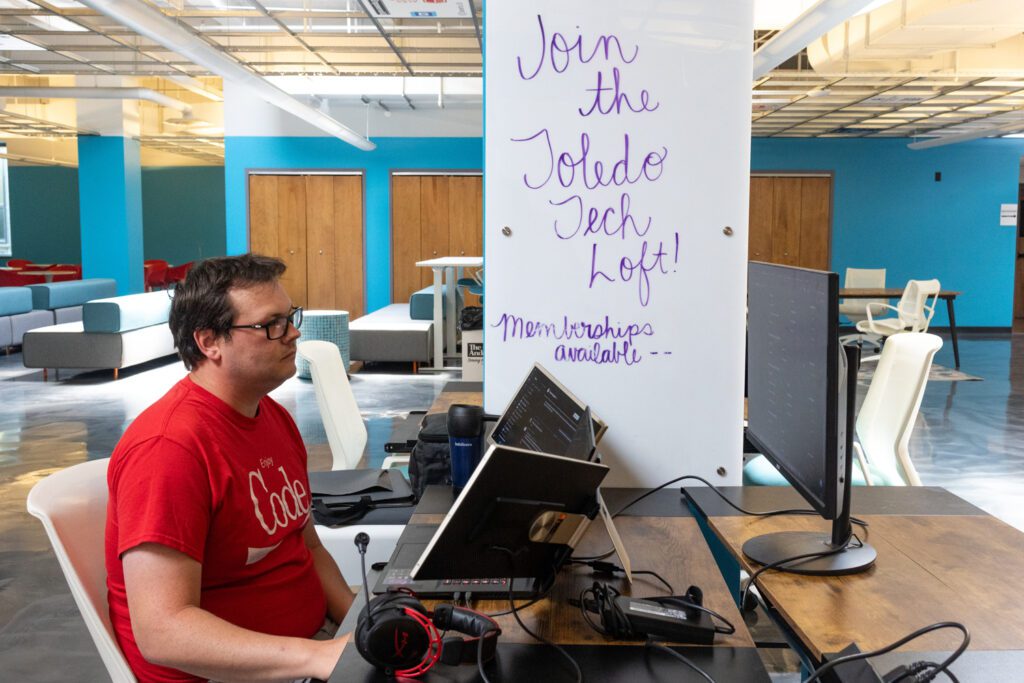
“We hosted some Capture the Flag cyber security events,” Eischen said. Buckeye Broadband supplied the internet, the University of Toledo supplied students and the Tech Loft supplied the space.
“In that collaboration of us all working together, we attracted this company looking at Toledo now to build a new center of operations around cybersecurity that would generate 200 new jobs in our region.”
Eischen and Ball wouldn’t speak to any specific company in the mix, but Ball corroborated Eischen’s claim about Toledo potentially getting some traction in cybersecurity.
“We already are having some really good conversations with some tech security companies from out of town that are considering Toledo as a as another location. I am already having those conversations with some significant people. Those things are already coming to the surface because of what we’re doing at the Tech Loft.”
In a couple months, August will see the end of the first subsidized year of the Tech Loft by Ball, who said he is still “all-in” on Toledo, “but at some point I got to have some help in supporting the financial side of this idea.”
JD Vance touts foreign policy, ‘big fat tariffs’, immigration

LIMA — With a political backdrop of U.S. strikes on three of Iran’s nuclear sites, immigration crackdown and an ongoing—and contentious—spending bill debate on Capitol Hill, Vice President JD Vance spoke to a sold-out crowd of Ohio Republicans on Tuesday in Allen County.
The vice president’s visit to Northwest Ohio was the center of the GOP Dinner event put on by the Ohio Republican Party, where attendees were served dinner and speeches from prominent state Republicans, including Secretary of State Frank LaRose (now running for auditor) and treasurer Robert Sprague (running to replace LaRose).

Vance began his opening remarks with anecdotes about his time in the White House thus far, while also lauding what he views as the administration’s successes.
On tariffs, Vance told the crowd, “On April the 2nd, he [President Donald Trump] said, ‘If you try to undercut the wages of American workers, if you try to bring in this crap, if you try to expose the American worker to an economic unfairness – that you don’t force your own countries to deal with – we are gonna slap a big, fat tariff on what you bring into this country.’”
He was referring to the “Liberation Day” tariffs that caused a steep drop across markets and sent bond yields up as a “penalty” on other nations that “has saved the American economy.”
Vance also received applause from the crowd when discussing a drop in illegal crossings at the southern border, an issue he and Trump campaigned on.
Sen. Sherrod Brown, Ohio’s three-term Democrat, lost his reelection to Republican Bernie Moreno in November. It put an end to a tradition of the state electing a Democrat and Republican to serve concurrently in the chamber.
“Sherrod Brown was a tough candidate; he always did better than national Democrats … the president was skeptical that anybody could beat Sherrod Brown.”
Vice President JD Vance
The vice president believes Brown’s loss in November was part of a larger political shift in the state.
“While we had a reputation for a very long time as a ‘purple’ state or even a ‘blue’ state, thanks to the hard work of people—many of whom are in this room—I think Ohio is now solidly ‘red’ and is gonna stay ‘red’ for a very long time.”
The issues
Tariffs: Ohio Republican Party chair Alex Triantafilou, in an interview with the Toledo Free Press, took an optimistic tone on the pressing policy issues of the second Trump administration.
In Northwest Ohio, a region in which agriculture is big business, tariffs are certainly a policy concern. When asked about his message to farmers, he stated, “Wait and see: This president has a plan. He’s working that plan. The plan here is to work better trade deals that help people in Northwest Ohio, help farmers, help our workers here in Ohio.

“With these tariffs, people just need to be patient. Let the president work his magic, and this is gonna work out for working class people in this state and every other state in America.”
But when it comes to one’s bottom line, patience doesn’t come naturally. When asked about a timeline as to when those promised results will become tangible, he answered that he “would argue that we haven’t seen the widespread inflation everybody threatened. We haven’t seen those things happen yet. I think what you’re gonna see is a president focused on helping them. I think once this bill passes, that’s pending, Americans are gonna get tax relief; you’re gonna see an explosion in the economy—you’re already seeing the economy begin to hop into overdrive,” he opined.
However, government data shows the economy did the opposite in the first quarter of this year, contracting by 0.3 percent. There was a notable increase in imports, which economists cite as the result of businesses front-loading ahead of tariffs.
The Middle East: Asked about the U.S. strikes on Iran’s nuclear program, which have created concern about another war in the Middle East, Triantafilou responded that “they [those concerned] should listen carefully to what the vice president and the president have said, and that is: We’re not at war with Iran.”
He added, “We’re not at war with the Iranian people. The goal here is limited … and that is to keep Iran from achieving nuclear weapons.”
Triantafilou asserts that the “consistent message” has been that this isn’t a repeat of what the general public has seen with Middle East policy. Defense Secretary Pete Hegseth told reporters on the Sunday following the strikes that “this mission was not and has not been about regime change.”
However, the president floated the idea on his Truth Social platform that same day, when he posted, in part, that “if the current Iranian Regime is unable to MAKE IRAN GREAT AGAIN, why wouldn’t there be a Regime change???”
In context: 2026
While priorities on the national level can change from day-to-day, those seeking elected office next year have to be in it for the long haul. Coinciding with this event is the run-up to next year’s midterm elections, in which three Republicans are vying to unseat Rep. Marcy Kaptur.
Included in that group: Air Force veteran Alea Nadeem, Sylvania-area State Rep. Joshua Williams, and former state representative and Waterville Mayor Derek Merrin (who ran against Kaptur in 2024).
There’s also the race for governor, in which Republican Vivek Ramaswamy—who was to co-lead the Trump administration’s Department of Government Efficiency (DOGE)—has been handed the state party’s nomination. He faces opposition from the lone Democrat in the race, Dr. Amy Acton, former director of the Ohio Department of Health.
On his level of confidence, in the face of these big races ahead, Triantafilou said, “I think the president is popular here in Ohio. We have a strong nominee for governor, Vivek Ramaswamy, so we feel very good about where we are in this country.”
Events, such as Tuesday’s with the vice president, don’t just play a role in fundraising. They have an underlying purpose: turning what party officials, such as Triantafilou, say is enthusiasm, into turnout by their registered voters.
Outside the event venue at Lima’s Veteran’s Memorial Civic & Convention Center, protestors held signs opposing Vance’s visit. They read “Stop pretending your racism is patriotism;” “This presidency has been anything but peaceful;” and “No sign is big enough for all the reasons we’re here.”
Speaking to the Toledo Free Press, protest lead marshal Seb Baughn said the Allen County Democratic Party led the charge in organizing it. Baughn works with the Ohio 50501 protest movement out of Columbus.
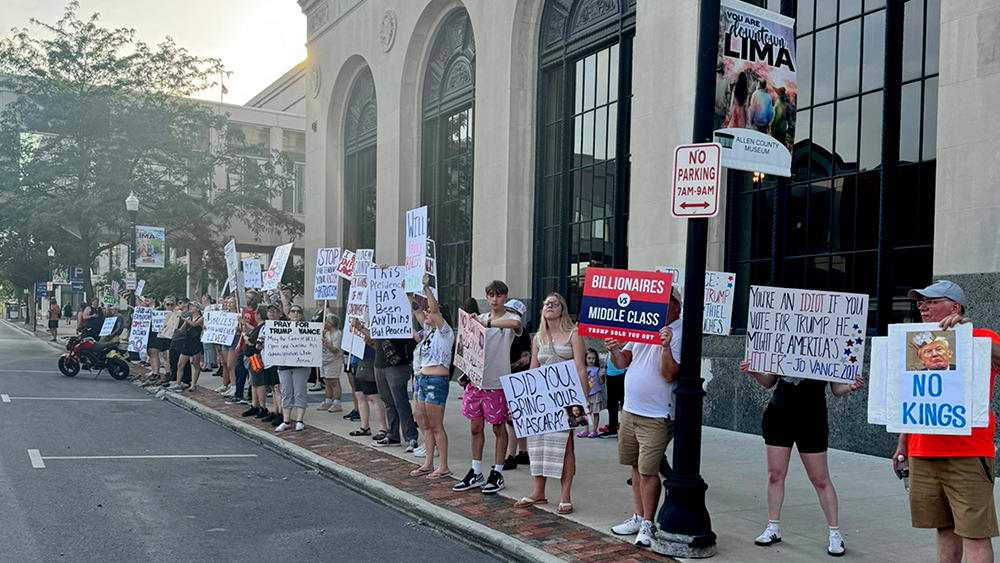
Asked what the group’s message was for Vance and those who came to hear him speak, Baughn said, “We’re trying to express our dissent for the way they’re treating people, like immigrants, LGBTQ people, people of color—they’re all being oppressed against.”
Baughn said that while some Republicans believe Democrats to be indifferent to the issue of illegal immigration, the reality is they just want due process before someone is deported.
“We want everyone to go to their court date, we want them to be allowed to speak to a judge, and enjoy their freedoms—like a lawyer—because they’re on U.S. soil, as the Constitution states,” he said.
April Welch: Toledo’s ‘champion’ of economic development
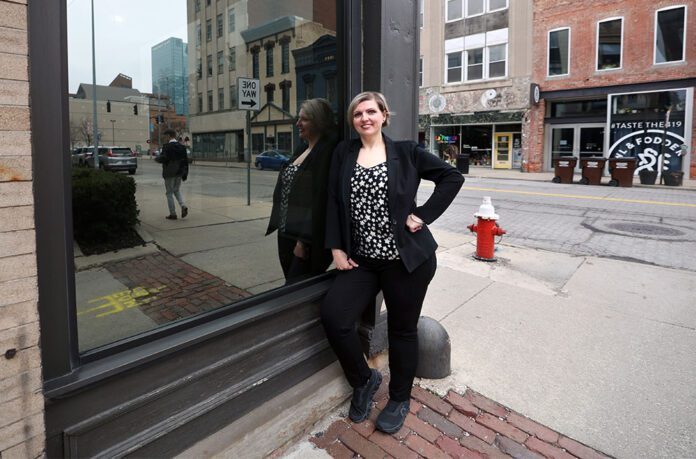
This week on Behind the Byline, host Jaden Jefferson talks with April Welch, deputy director of economic development for the City of Toledo.
Welch talks about how small businesses are shaping the city’s economy and neighborhoods, and shares how her team helps business owners navigate city processes, connects with free technical resources and taps into programs, like the White Box and Facade grants—designed to revitalize vacant buildings and strengthen local corridors.
Hear how she describes small shops as more than just employers—they’re key to community identity, neighborhood vibrancy, and long-term economic growth.
Welch highlights her office’s efforts to support small businesses through personalized guidance and resource connection. One major tool is The BEAT (Business Empowerment Alliance of Toledo), which provides no-cost technical assistance.
Listen as she emphasizes how small businesses create jobs, contribute to neighborhood identity and stimulate local economies through the multiplier effect, and how the city is actively addressing challenges, like vacant and outdated commercial properties through its Vibrancy Initiative.
Welch discusses the domino effect these investments have, inspiring neighboring businesses to upgrade their properties or launch new ventures. The programs also help improve property values and community pride. The city tracks job creation, business openings, and private investment spurred by these programs, and offers tax abatements for qualifying property improvements.
Welch also discusses:
- how the pandemic reshaped how local businesses reach their audiences
- the hidden gem helping them do it better: the Toledo-Lucas County Public Library’s business support team.
- how Toledo draws inspiration from other cities while shaping a unique identity through community feedback, grassroots ideas, and homegrown innovation.
📱 To learn more, go the City of Toledo’s Economic Development website.
New episodes of the Behind the Byline audio news podcast drop every week on the Pod Station.
Behind the Byline is a production of the Toledo Free Press.
(Recorded on June 24, 2025)
Measles cases rise as immunizations fall
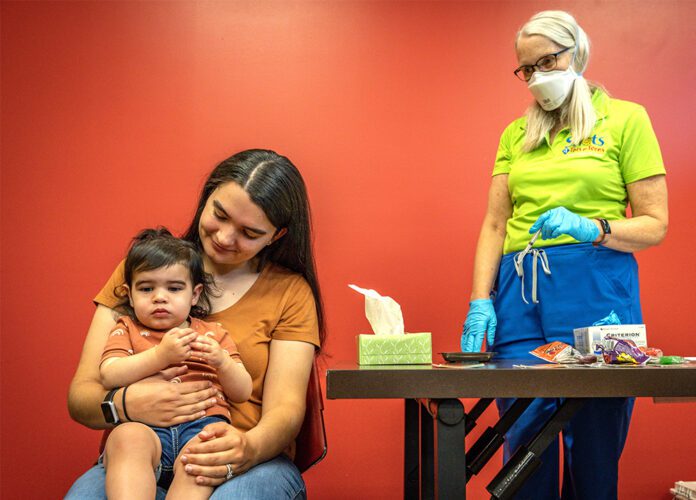
LUCAS COUNTY – Measles cases in the United States have reached their highest level in several years. As of June 5, 2025, health officials have reported 1,168 cases, including three deaths. This is the largest outbreak in a single year since 2019. The Ohio Department of Health reported 34 cases in six Ohio counties on May 8.
So far, Lucas County has not reported a case of measles.
Since we have not seen much of the disease since the ’70s and ’80s, most people are unaware of how severe measles can be or the harm it can cause. This lack of awareness undermines the motivation to get family members vaccinated. It puts people at risk, especially children and those who aren’t vaccinated.
Before vaccine availability in 1963, most children in the U.S. got measles by age 15. Between 3 and 4 million people were infected annually during that time. Each year, about 400 to 500 people died from the disease, 48,000 people needed hospital care, and 1,000 developed encephalitis, according to the Centers for Disease Control and Prevention.
Dr. Lawrence Monger, Jr., medical director at the Toledo-Lucas County Health Department (TLCHD), said in a March 11 WTOL interview that “it absolutely is a serious virus. It’s highly contagious. It can stick around in a room two hours after someone has been there with measles. So, it can stick around for quite a while. It’s a virus and causes all the viral symptoms.
“After the virus takes hold, you start to develop bumps, measles and red bumps. You can get a lot of complications. You can get encephalitis, which is swelling of the brain. You can get pneumonia, infection of the lung. So, it attacks [the] immune system. It attacks the memory cells that help you remember how to fight other viruses, and it partially destroys them so you can develop all kinds of other infections post-measles. So, it can be deadly. And we’ve already had two deaths: one in New Mexico, one in Texas. It is a very deadly, highly contagious virus.”
So, getting measles is not a trivial issue, which is why the MMR (Measles, Mumps and Rubella) vaccine is so important. The American Medical Association, the American Academy of Pediatrics and the Centers for Disease Control strongly support young people getting vaccinated for measles. Figure 1 shows how effective the vaccine has been in getting rid of the disease – up until recently.

The CDC reports that 96 percent of recent measles cases occurred in unvaccinated individuals or whose vaccination status was unknown.
According to the CDC, children need two doses of MMR vaccine – one at 12-15 months and the second at 4-6 years of age. To be fully protected, older children and teenagers should receive two doses of the MMR vaccine, given at least 28 days apart.
Most adults only need a single dose of the MMR vaccine. Two doses are recommended for
adults who face a higher risk, such as college students, people traveling abroad, healthcare
workers, or anyone exposed to outbreaks. If a second dose is needed, it should be given no
sooner than 28 days after the first to ensure complete protection.
The MMR vaccine has been proven to be very effective and safe and for stopping measles. After a single dose, about 93 percent of people are safe from measles. Getting both recommended doses bumps that number up to around 97 percent.
Unfortunately, according to CDC data, between the 2019–2020 and 2023–2024 school years, MMR vaccination rates for kindergartners in the U.S. fell from 95.2 percent to 92.7 percent. This drop in coverage is important because it has led to the breakdown of herd immunity, which is necessary to prevent outbreaks.
According to the Cleveland Clinic, herd immunity means that when enough people in a group are immune to a disease—thanks to vaccines or having been sick before—the illness has a harder time spreading. Herd immunity helps protect everyone, even those who aren’t immune, because the disease finds it tough to move from person to person. Since measles is so contagious, a vaccination rate of 95 percent is preferred for herd immunity.
Many U.S. jurisdictions have seen measles (MMR) vaccination rates fall below the 95 percent threshold. The Shots 4 Tots program’s goal here in Lucas County is to increase the childhood immunization rate to 90 percent.
At a press briefing on March 18, Dr. Bruce Vanderhoff, director of the Ohio Department of Health, reported a decrease in MMR vaccination rates across Ohio. The percentage of
kindergartners who received the MMR vaccine dropped from 89.2 percent during the 2023-2024 academic year to 88.3 percent in the current school year.
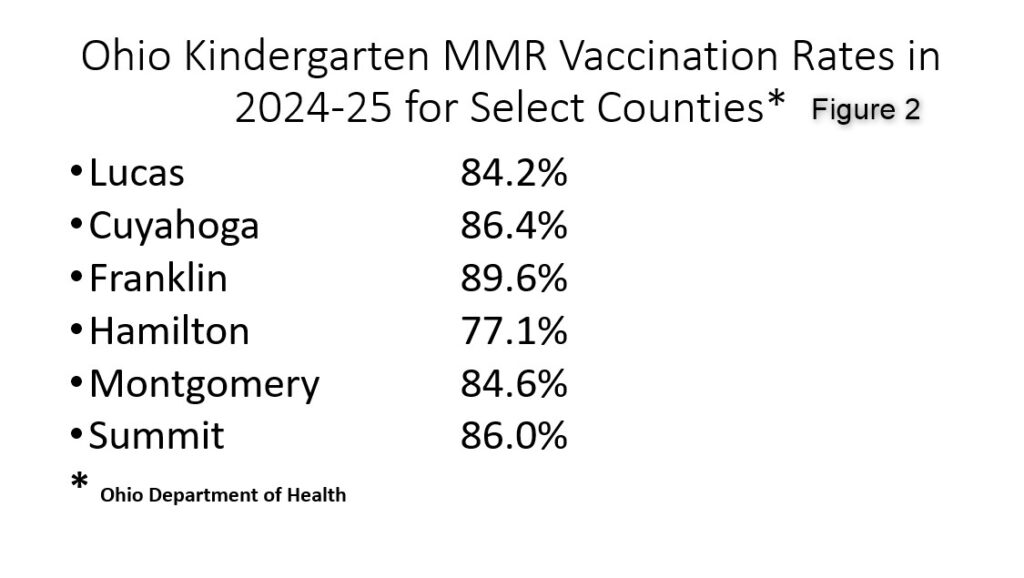
According to ODH, while several counties in the south and southeast are above 95 percent, many Ohio counties fall below 90 percent. (See Figure 2.)
This drop in immunization has been followed by a sharp rise in measles cases. In the first 16 weeks of 2025, the U.S. saw 800 reported measles cases—a 180 percent jump compared to all of 2024.
So, considering the seriousness of measles and the effectiveness of the vaccine, why have
vaccination rates gotten so low?

Angie Bauman MSN, RN, director of Nursing & Health Services at TLCHD, said, “I think there’s a lot of barriers, and it depends on things like how hard is it to get to the doctor’s office? It can start with, you know, do we have easy access? Do we have to take a bus to get to the doctor’s office to get our kids up to date on their vaccines? Do we have a provider that has got hours that are easy for us to work our schedules around? You know, just really basic social determinants of health factors that can impact whether or not
families get their children vaccinated.
“In addition to that,” she continued, “there are children who are immune compromised and aren’t able to get the vaccine for various health reasons. And then there are some people that have religious exemptions who prefer not to due to faith-based reasons. And then there are people who really just don’t have a trust in the vaccine and prefer not to have their children vaccinated. So, you know, we kind of have multiple barriers that can impact a family’s decision to vaccinate their children.”
Mary Apodaca, RN, a public health nurse with Shots4Tots, stated that “there’s a lot of
misinformation out there, and parents are bombarded with information from all different
sources, and they don’t know which to believe. So even some of our local doctors have a hard time getting parents to say yes to some of the vaccines.”
The staff at the Toledo Lucas County Health Department, through its Shots for Tots program, is working to get as many children vaccinated as possible.
Bauman emphasized the following points about vaccination delivery:
- If people have questions, they can talk to one of our nurses without making an
appointment. They can talk through their concerns and get good information from a
trusted, reliable source. - To get an MMR (measles, mumps, and rubella) vaccination at the Toledo Lucas County Health Department, schedule an appointment at 419-213-2013.
“We always focus on being easy to reach,” said Bauman. “That’s our top priority. If parents want to vaccinate their child but don’t have an appointment or can’t get to a doctor’s office,
they can come to us any day. Someone is always here to help. We see everyone, no matter their insurance or ability to pay.
“We try to make things even easier with late hours on Mondays and by holding clinics in
different places around town. We set up at local libraries, community centers and
YMCAs so people don’t have to travel far.
“When back-to-school time gets closer, we add more hours, bring in extra staff, and show
up in more locations. We want to be where families need us most. If you need a
schedule of our upcoming clinics, just ask,” Bauman said.

Toledo Lucas County Library steps up with community partnerships

TOLEDO — Public libraries offer recordings, newspapers, magazines—and of course, books. The Toledo Lucas County Public Library goes one step further.
Make that two.
“We’re taking advantage of the public infrastructure we have—our buildings, 20 strong across the county—to make not only our services available, but also other important health and social services available to the public,” said Allison Fiscus, the library system’s adult services coordinator.
That’s the first step further. What drove the library to take that step was fallout from the 2020 pandemic.
“In the wake of COVID, people were coming to the library with needs that we couldn’t fix,” Fiscus said. “Then we thought we’d act as a substantial referral service. We looked at the library buildings as community partners to help.”
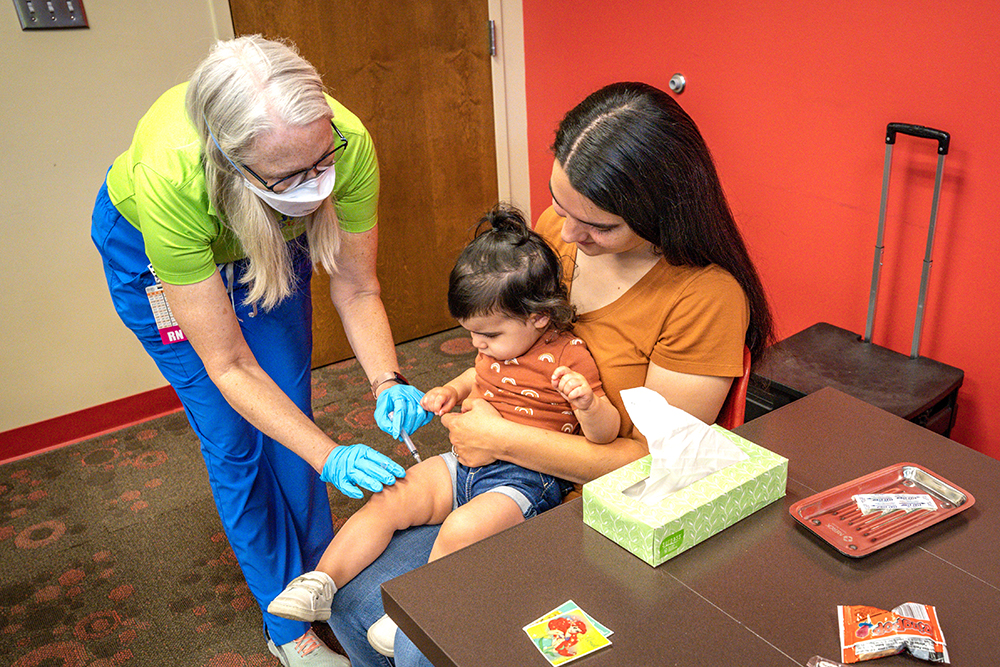
Fiscus said the library launched its first partnership with Mercy Health Community Nurses in 2022. The nurses set up in a handful of library locations to check blood sugar and cholesterol and administer flu shots on a monthly basis, then expanded it to be in more than half of the system’s sites.
“The first indication that this model would be successful was that the Mercy nurses reported double the amount of vaccinations given to the public because of the connection to the library. That’s a 100-percent increase,” Fiscus said.
From that one health agency, the partnership with others has snowballed, she said. “Every week we develop new community partners. We vet each of those and see how it fits with existing library services. Sometimes it’s a class, sometimes it’s a tabling opportunity. For me, the most exciting aspect is the health services we bring directly to people through our locations.”
The vetting process is the focus of the second step in what the library system offers: Trust.
“We live in a time when there’s a lot of mistrust in institutions,” Fiscus said. “The library has held the community’s trust for a long time. We want to essentially lend that trust to the partners who want to connect with people, and telling people you can trust these agencies to get the services you need.”
The library system has partnerships with more than 30 health and social service organizations and agencies.
“We have guiding principles when pursuing partnership with health-care providers,” she added. “We look at what are the more pressing health-care concerns.”
For example, she said a partnership was reached last year with Equitas Health, a regional nonprofit that serves the health-care needs of the LGBTQ+ community. Its representatives are at the Main, Reynolds Corners, Lagrange and Mott libraries monthly.
“An exciting partnership that we launched this year,” Fiscus said, “is Solace Health and Wellness, sponsored by UToledo Health. We positioned it at the Mott branch, which is in the area of our county that sees the greatest maternal mortality rates.”
Erin Martin, Solace’s executive director, said from 9:30 a.m. to 12:30 p.m. on the fourth Saturday of the month, she conducts free childbirth classes there. The partnership began in January.
“It’s been going really well,” Martin said. “The classes have been full—up to five couples, a good size, with a lot of hands-on techniques. The feedback has been great. The people are grateful.
“Health is one of the best ways to improve the community,” Martin continued. “Sometimes that gets overlooked. To me, it’s about making this accessible.”
She said partnering with the library system is good because “having knowledge empowers people, and it improves these [pregnancy] outcomes.”
As for social services, Fiscus said one of the most successful partnerships is with the United Way of Greater Toledo’s 211 program. Its representatives are at the Main Library every Tuesday and first Friday of each month to help people by referring them to the right agencies – 211 refers to the phone number a person can call for help, similar to dialing 911.
“It’s a great partnership,” said Sandra De Steno, 211 director. “It’s a great place to get in front of the clients we serve.” De Steno said 211 is accessible through its website and by phone, but not through walk-ins at its headquarters.
“This partnership has been pretty vital over the last two years,” said Emily Matthews, 211 program manager. “We are able to catch a lot of people who would slip through the cracks because they don’t have phones. It’s important to see the people we talk to, and it creates more trust in the community. They understand that we live here and care about the community. That is so important. We’re trying to meet people where they’re at.”

Fiscus said a new partnership has been developed with Advocates for Basic Legal Equality (ABLE), Inc., focusing on kindergarten through Grade 12 education issues.
With the current concerns about ongoing funding of libraries, Fiscus said, “I can’t speak for our partners, but from the library side, we do not charge the partners to be in our spaces, and we do not pay them. We’re just capitalizing on the infrastructure we’re stewards of. It happens regardless of the funding level.”
The infrastructure is more than a collection of books, materials, and now agencies. “I was at the library the other day,” De Steno recalled, “speaking with a woman who stopped by our table and said when she was homeless, the library was one of the safest places she could be. She could study and have quiet and safety and know no one would disturb her. It’s good when we can bring out services to the library and we’re able to make sure people have that safety.”
More information is available here.
Adult Education
Partners:
● Owens Community College
● Penta Career Center
● Read for Literacy
● TRIO
● United Way 211
Services available:
GED program referrals
Completing/processing college applications
Completing FAFSA applications
Student loan default resolution
Financial literacy training
Career exploration
ESOL classes
Food Help
Partners:
Maumee Senior Center |Connecting Kids to Meals | United Way 211
Health services
Partners:
Ohio Department of Health Breast and Cervical Cancer Project (BCCP)
State of Ohio
American Heart Association
Equitas Health
CareNet
Mercy Health Community Health Navigators
Mercy Health Community Nurses
Mercy Health Mobile Mammography Unit
Project DAWN (Deaths Avoided with Naloxone)
Ronald McDonald Care Mobile
Toledo Lucas County Health Department
United Way 211
UToledo Health Mobile Health Unit
Harbor Behavioral Health
YWCA
Legal Help
Partners:
Hospice of Northwest Ohio | Advocates for Basic Legal Equality (ABLE) | United Way 211
Social Services
Partners:
Cherry Street Mission
Goodwill Industries
Maumee Valley Habitat for Humanity
Northwest Ohio Pathways HUB
NeighborWorks® Toledo Region (NTR)
United Way 211
Republicans weigh in on Senate Bill 1
TOLEDO — Senate Bill 1, or the Enact Advance Ohio Higher Education Act, is scheduled to take effect on June 27 after passing in February. The sweeping legislation, sponsored by Sen. Jerry C. Cirino, aims to overhaul policies on public college campuses across the state.
A central provision of the bill is the elimination of diversity, equity and inclusion (DEI) initiatives at Ohio universities. According to the legislation, this includes the closure of DEI offices, using DEI-based job descriptions, and a ban on new institutional scholarships based on DEI criteria.
Ohio State Rep. Josh Williams, (R-Sylvania Twp.), says that existing scholarships will be honored for current recipients.
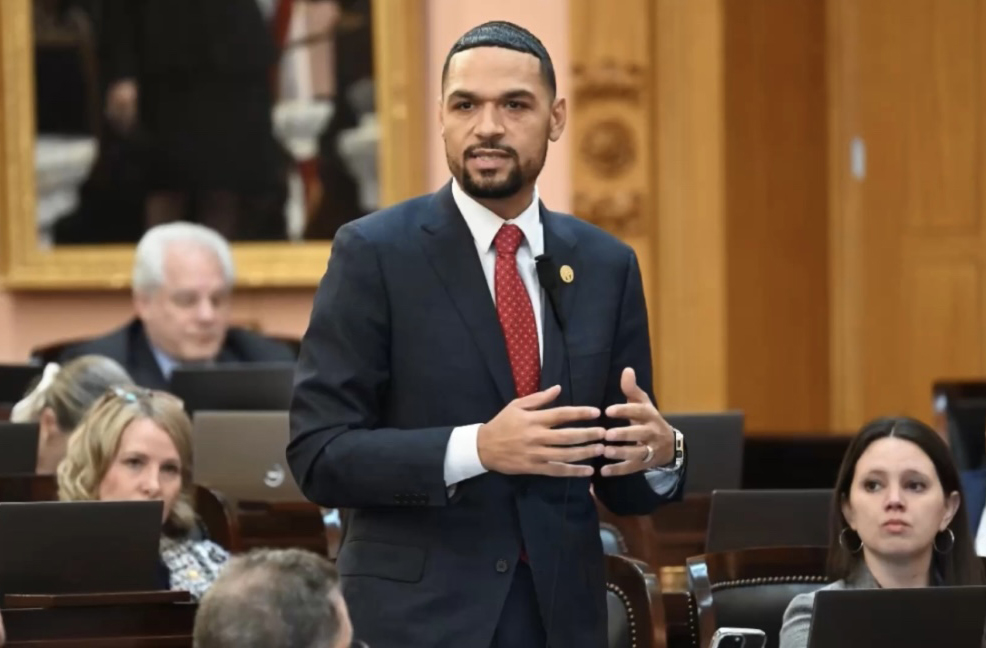
“The main point of Senate Bill 1 was to allow intellectual diversity and freedom of speech for students on college campuses,” Williams said. “We saw universities and professors attempting to require students to adopt a certain viewpoint and espouse that viewpoint in order to maintain academic excellence at a university.”
According to the Workforce and Higher Education Committee website, which contains students’ testimonies of Senate Bill 1, there were many students who felt discriminated against in Ohio universities, including Miami University senior Spencer Mandzak.
“Mandatory DEI training sessions often focus on teaching students and faculty that systemic oppression defines most human interactions, even when no clear evidence of discrimination exists,” stated Mandzak in his testimony. Mandzak, a senior public administrator major and history minor, is the program director of the College Republicans of America.
Students and faculty are sometimes encouraged to identify themselves and others primarily through the lens of race, gender, or sexuality rather than as individuals with unique thoughts, talents and experiences.
Spencer Mandzak | Miami University senior
Williams says that this bill is not to be confused with limiting free speech, but rather allowing students to reach their own conclusion about controversial beliefs. The bill classifies “controversial beliefs” as topics subject to political dispute, and it names climate policies, immigration policy, abortion, marriage, electoral politics and DEI policies as examples on Page 11. Faculty are required to allow open discussion of these topics, according to Section D(1), Page 14 of the legislation, so long as they express intellectual diversity.
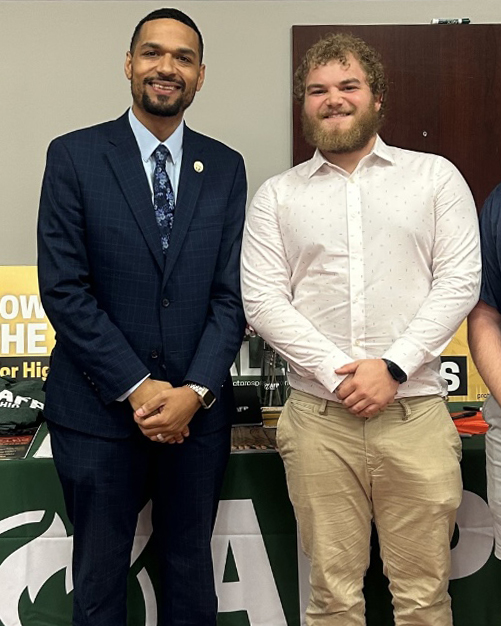
Chase Gillson, president of the University of Toledo College Republicans, says this bill allows students to receive justice and report political discrimination. Like Williams, he mentions that this bill will promote less indoctrination.
“There’s just too much room for the vast majority of university staff being one political party to discriminate against one student,” Gillson says. “The discrimination aspect seems to get a little more out of hand.”
While banning DEI initiatives, the bill also prohibits all policies designed explicitly to segregate faculty, students or staff based on race, ethnicity, gender and religion.
“You can’t make a Black-only graduation ceremony,” Williams said. “You can’t make a woman-only graduation ceremony. The universities are public; that means they’re a state agency, so the state is not allowed to discriminate based on race, gender, sex.”
The bill also mentions new requirements for education and curriculum: Students must take a civics course requirement based on the American economic system and capitalism, syllabi must be posted online for public access, and low-enrollment undergraduate degree programs should be eliminated (Page 20, Section C).
University professors, as well as public employees, would be also prohibited from striking, according to Page 36.
“I don’t think you should be able to strike to advocate for your working conditions,” Williams said. “We have other groups that are prohibited from striking, as well: Police, fire, emergency services, things that are considered essential governmental functions.”
The bill also reduces trustee terms from nine to six years (Page 25); mandates five-year cost summaries to be sent to the state (Page 22); and limits academic partnerships with China (Section E, Page 21).
“China is an openly hostile adversarial country,” Williams said as he continued to discuss a case of Chinese professors that allegedly attempted to bring an agricultural bio-weapon to destroy American crops. He also spoke about an alleged law that China enforces Chinese nationals to assist the Chinese Communist Party in espionage.
“So, with constant evidence of the Chinese government trying to influence and gain control within the United States, like buying farm land all over the nation, near military bases, and gaining our information to advance their own technologies, it just makes sense for us to have some safeguards to slow down that process in a responsible way.”
According to AP News, the Chinese professors were accused of shipping biological material into the U.S. for use at the University of Michigan on June 3. Senate Bill 1 was passed in February of 2025, making no correlation to this case.
“Federal authorities, so far, have not alleged that the scientists had a plan to unleash the fungus somewhere. Fusarium graminearum is already prevalent in the U.S. — particularly in the east and Upper Midwest — and scientists have been studying it for decades.” According to AP News.
The Toledo Free Press also looked into whether or not Chinese nationals must assist the Chinese Communist Party in espionage, and found that this is a misunderstood claim.
Under China’s National Intelligence Law, particularly Article 7, all Chinese citizens and organizations are legally required to “support, assist, and cooperate with national intelligence efforts” when asked by the government.
This doesn’t mean every Chinese national is actively engaged in espionage.
When asked about enforcement of Senate Bill 1, Williams said he was unsure of specific penalties for noncompliance.
“I don’t think there was any mechanism. I would have to look at the bill to see if there was any reduction in state share of instruction,” Williams said. “Right now we just require them to comply with state law in a week.”
If constituents would like to read students’ testimonies of being “required to adopt certain viewpoints,” they can look up “Workforce and Higher Education Committee,” go to the “meetings” tab, and click “Sub. S. B. No. 1.” The meeting on March 19 contains proponents’ testimonies.
House Bill 250: Ohio schools K-12 prepare for new cell phone policy

TOLEDO — A statewide cell phone policy known as House Bill 250 is set to take effect in Ohio public schools K-12 no later than July. The law requires every public district to implement an official policy limiting student cell phone use during school hours.
While the bill mandates limitations, it does not propose a total ban. According to Division (D) of the legislation, districts are not required to prohibit all cell phone use entirely. The bill was sponsored by former Rep. Jessica Miranda (D-Forest Park), Rep. Tracy Richardson (R-Marysville), and Sen. Andrew Brenner (R-Delaware). The bill passed unanimously in both the Ohio Senate and House of Representatives.
Gov. Mike DeWine signed the bill in May 2024, though he has also expressed support for a more restrictive proposal, Senate Bill 158, sponsored by Sen. Jane Timken (R-Canton), which would prohibit all student cell phone use during the instructional day. Both pieces of legislation reference the Rehabilitation Act of 1973, which allows use of electronic devices for educational or health-related needs, including for students with IEPs or 504 plans.
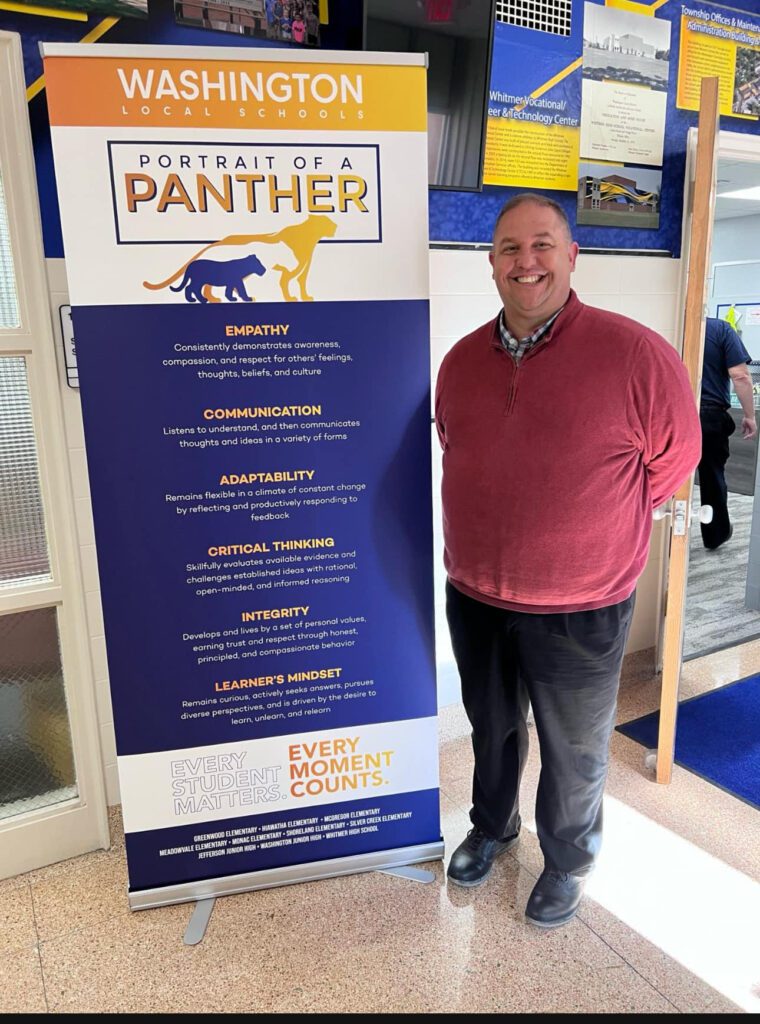
At Whitmer High School, principal Jerry Bell said the new law aligns with longstanding practices at the school.
“We certainly feel that it has benefited our students, not just academically but socially, as well,” Bell said. “We have seen students who were able to focus more and engage with their peers around them.”
He added that Whitmer’s current policy allows students to carry phones but keeps them “off and away” during class, which gives students the opportunity to learn how to be responsible with their cell phones.
“Removing them entirely, as Senate Bill 158 proposes, would decrease our opportunity to do that,” Bell said. “Even though phones are a distraction, I believe that with guidance, students can be responsible stewards of technology and also learn to prioritize their education.”
Mostafa Gamal, a 2022 Whitmer graduate, recalls the policy in place during his time at the school.
“I remember some classes where I had to put my phone away,” Gamal said, noting that whether or not phones should be allowed depends on the situation.
During his first year, Gamal used a translation app to support his English learning in class.
“90 percent of the teachers used to respect me for it,” he said. “If I say, ‘No, phones cannot be allowed,’ what about the international students, for example? How are they going to use Google Translate?”
Gamal expressed concerns over the stricter Senate bill, citing safety and communication in emergencies.
“There are so many points that you’re gonna have to have your phone with you at that moment,” he said. “I’m not gonna wait until the school calls my mom. No, I need to call my parents so they can do something about it.”
Parent Angela Mikolajczyk, whose child currently attends Whitmer, said the school’s current approach is reasonable.
“It’s not a horrible thing; it’s not like they aren’t allowed to bring them in the building,” Mikolajczyk said. “As an adult, when you are at work, you’re not on your phone. Kids can go through class without being on their phone, too.”
She added that banning cell phones entirely would be “a completely different story.”

