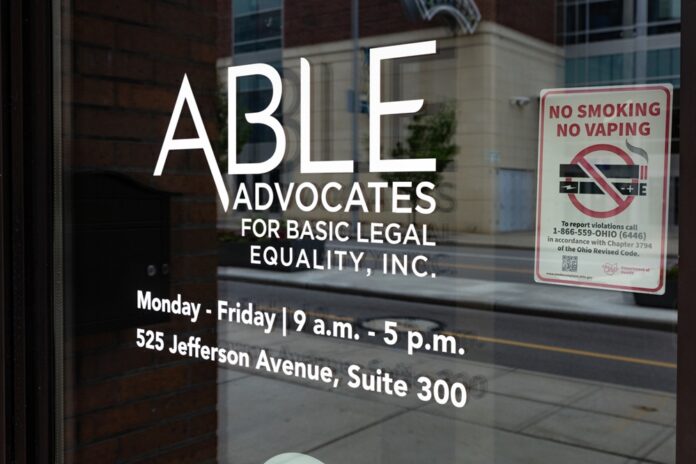
TOLEDO – Advocates for Basic Legal Equality, or ABLE, as it is better known, is a nonprofit law firm dedicated to representing underprivileged communities, but now ABLE employees are seeking to represent themselves at the bargaining table.
The organization boasts of helping people in poverty, refugees and immigrants, but grievances with management have led them towards joining the United Auto Workers (UAW).
“They sacrifice because they believe in things. But the sacrifice can only go so far,” said Lance Rhines, the Midwest Organizer for UAW Local 2320.
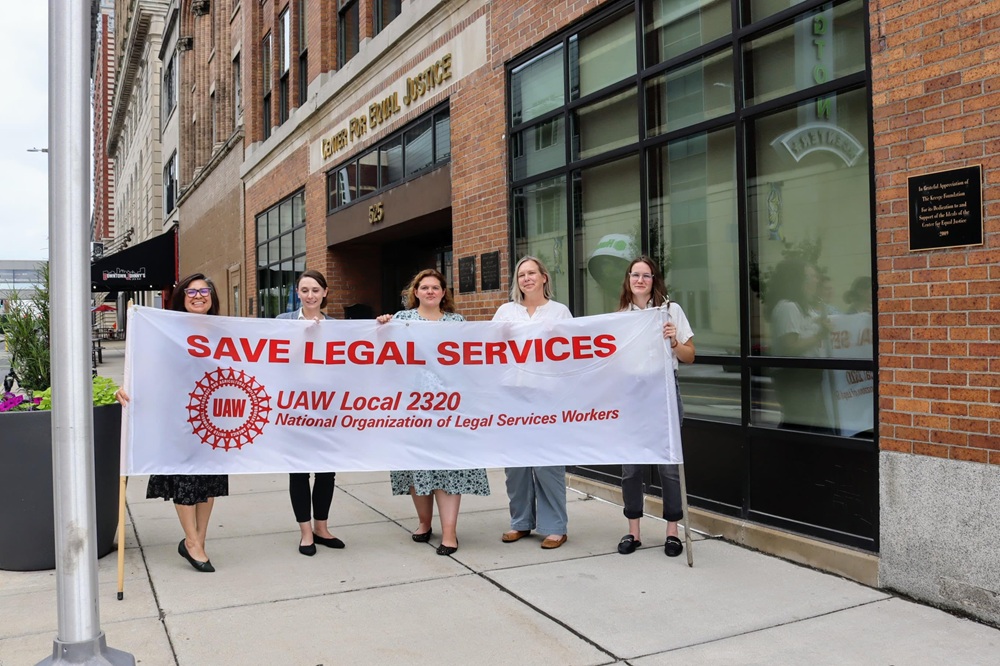
On the July 14, ABLE League of Justice (ALJ), the group hoping to become the newest chapter of UAW-NOLSW Local 2320 on behalf of ABLE employees, sent a letter to the nonprofit’s executive director, Makiedah Messam, asking her to recognize the union by today (Monday July 28).
78 percent of ABLE staff approved the move to unionize according to ALJ’s internal count and have given ABLE management until Monday, July 28 to recognize them formally.
The Dayton location of ABLE (ABLE is located in Toledo, Dayton and Defiance), filed four unfair labor practices with the National Labor Relations Board (NLRB) in March.
Current unfair labor practice allegations:
- 8(a)(1) Coercive Actions (Surveillance, etc)
- 8(a)(1) Interrogation (including Polling)
- 8(a)(1) Coercive Statements (Threats, Promises of Benefits, etc.)
- 8(a)(1) Coercive Rules
All listed allegations deal with attempts to hinder unionization.
“Despite feeling like they [ABLE management] did violate it [good faith] in the past, we are willing to drop those charges [the unfair labor practice charges] if they were to voluntarily recognize us,” said Kara Ford, a senior attorney with ABLE, on behalf of the ALJ.
“We are willing to move forward,” she said.
The Toledo Free Press reached out to ABLE’s management for comment concerning their workers’ desire to unionize, but did not hear back.
On Friday, July 15, Messam emailed employees the following: “I have instructed firm counsel to file an RM petition with the NLRB, securing your right to vote on this pivotal issue.”
Later that day the petition was filed, allowing ABLE employees to vote for or against unionization on a to-be-determined date.

The road to the vote
In her address to employees on Friday, Messam said she had received the formal request from a group “claiming to represent the interests of ABLE’s staff,” which showed a tone of skepticism.
Messam listed the ways she had responded to employee’s requests with action. In the e-mail, Messam said she revived the ABLE newsletter to keep employees informed, researched the best practices for managing caseloads in response to demands for more manageable caseloads, held open office hours for feedback and included spaces for employees to voice their opinions/concerns.
But employees said their concerns have not been adequately addressed.
“Issues from 2019, 2020 and from then to now, are the same. And they’ve worsened,” said Jen Behnfeldt, a non-attorney child advocate with ABLE who has been with the nonprofit for 12 years.
Difficulties with management began to ramp up around fall of 2024.
“I think it started with some proposed policy changes, such as a ‘Return to Office’ mandate. But definitely what sparked, I think, more fire and really started getting people motivated was when they rolled out the new pay band system,” Ford said.
Attorneys, paralegals, advocates and administrative assistants were allocated into different pay groupings, and began to find what they termed “gaps” between how individuals were compensated.
“Staff have never been thrilled that we might get like a 1 percent or 2 percent compensation increase sometimes,” Behnfeldt said. “But it was across the board, right?
“So everyone got the same crappy whatever it was, not until this most recent compensation.”
Ford shared her pay with her coworkers and encouraged others to do the same for transparency.
“That’s when people really started discovering: our attorney staff got 10 percent, 15 percent, 20 percent, 30 percent raises,” Ford said. On the other end of things, “Some of our lowest paid staff got like, 5 percent or a one-time 2 percent payment. A lot lower.”
“We’re all advocates here,” Ford said. “We’re all speaking up for our clients in poverty,” and went on to say that ALJ would be speaking up for their workers who were struggling financially.
Pay was the largest concern for the ALJ, but most of their other grievances stemmed from what Ford and Behnfeldt described as a corporatization of the company.
Corporatization was described as micromanagement, ignoring/rejecting feedback from workers and new probationary measures both women said were unequally implemented across the staff and a steady process of infantilizing workers of ABLE.
In public
ALJ attempted to unionize over half a year earlier, but were surprised at their employer’s response, waylaying them until now.
“They went public with their campaign, initially at the end of last year, asked for voluntary recognition, and then it kind of became a little bit of a dog fight with the employer,” said Ben Dormus, Northeast/Midwest servicing representative for UAW Local 2320.
Initially the ALJ asked for recognition in December, but then ABLE hired outside help including MPI Consulting and Bricker Graydon LLP.
“I mean, bringing in the outside consultant and saying we don’t need an outside third party was a bit ironic,” Ford said in reaction to management’s words against forming a union.
From that point on, the two said ABLE employees were heavily bombarded with anti-union sentiments leading up to a voluntary town hall. “But that’s really where things I feel like took a big turn at that meeting.”
“It was hostile,” Ford said, and went on to say she and others were verbally reprimanded for asking questions of management.
Behnfeldt said she was taken aback at the hypocrisy of ABLE considering the work they do. “It’s extremely hypocritical,” she said. “We organize people. We have organized a Dayton tenants union. We organize groups like that all the time.”
Between then and now, ALJ said the law and consulting firms hired to negotiate with the union had administratively obfuscated the objective of union recognition.
“The employer retained union busting counsel, initially, objected to the workers petition with the NLRB, because at the time, the NLRB didn’t have a quorum,” Dormus said.
“And so they kind of took the Amazon and Whole Foods line on that, and said that, because the NLRB doesn’t have a quorum the workers can’t file a petition for election. And then they just engaged in union busting.”
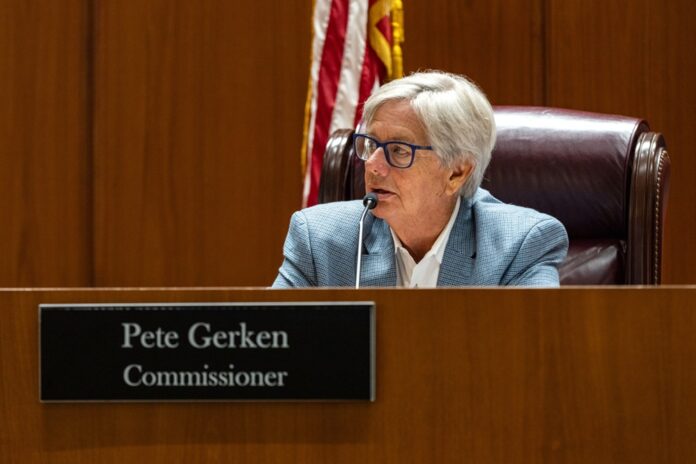
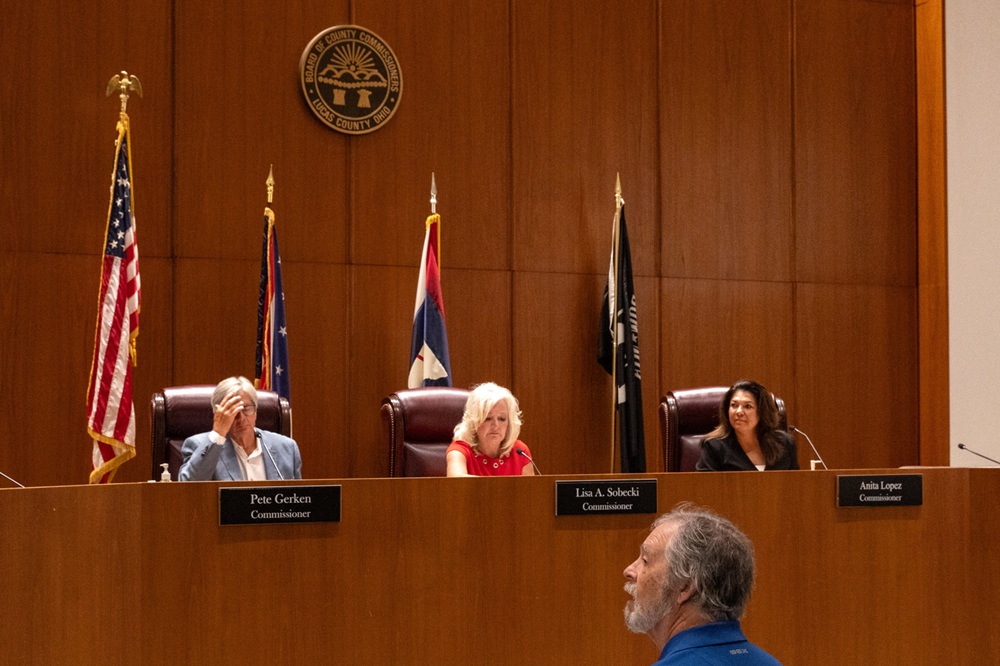
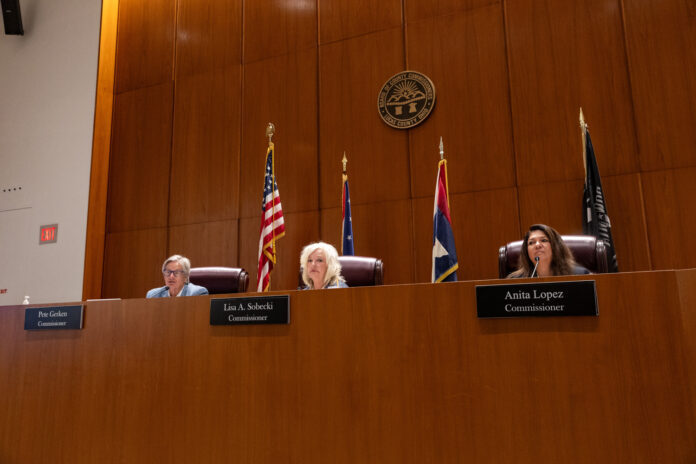
The ALJ has received a letter of support from all three Lucas County Commissioners, Wade Kapszukiewicz, the mayor of Toledo, Paula Hicks-Hudson, senator for Ohio’s 11th district, Erika White, representative for Ohio House district 41, Tony Totti, president of UAW Local 14 in Toledo, Theresa Gadus, Toledo City Council Member for District 3, Nick Komives, Toledo City Council Member At-Large, and from the Lucas County Democrats.