Home Blog Page 58

Basic Equality: ABLE’s fight to unionize

0
Advocates for Basic Legal Equality Toledo location in downtown Toledo, Ohio on Saturday July 26, 2025. (TFP Photo by Stephen Zenner)

TOLEDO – Advocates for Basic Legal Equality, or ABLE, as it is better known, is a nonprofit law firm dedicated to representing underprivileged communities, but now ABLE employees are seeking to represent themselves at the bargaining table. 

The organization boasts of helping people in poverty, refugees and immigrants, but grievances with management have led them towards joining the United Auto Workers (UAW). 

“They sacrifice because they believe in things. But the sacrifice can only go so far,” said Lance Rhines, the Midwest Organizer for UAW Local 2320. 

On the July 14, ABLE League of Justice (ALJ), the group hoping to become the newest chapter of UAW-NOLSW Local 2320 on behalf of ABLE employees, sent a letter to the nonprofit’s executive director, Makiedah Messam, asking her to recognize the union by today (Monday July 28). 

78 percent of ABLE staff approved the move to unionize according to ALJ’s internal count and have given ABLE management until Monday, July 28 to recognize them formally.

The Dayton location of ABLE (ABLE is located in Toledo, Dayton and Defiance), filed four unfair labor practices with the National Labor Relations Board (NLRB) in March. 
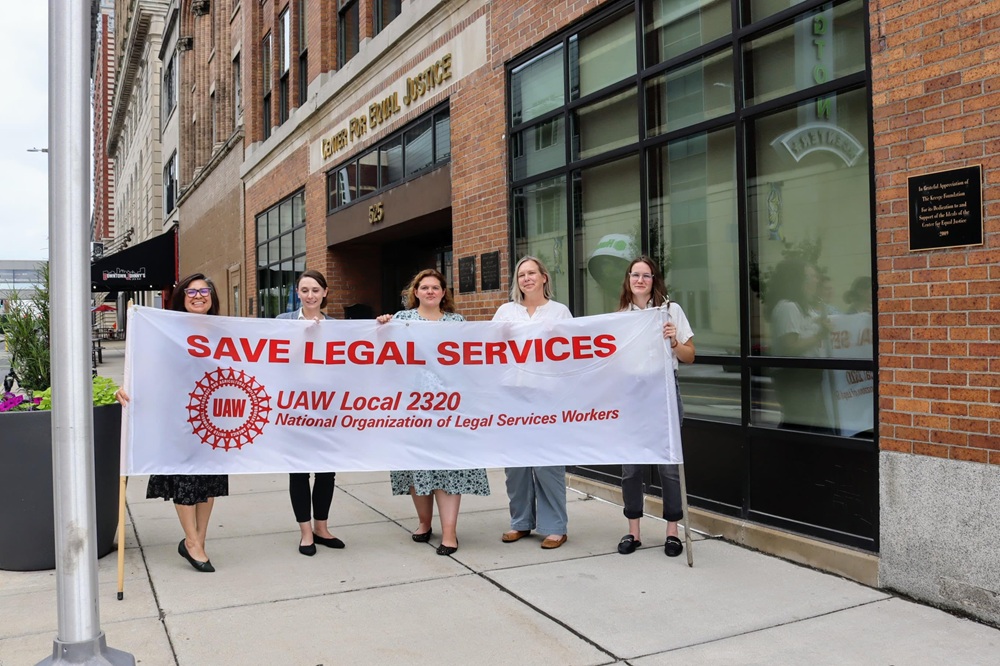
Members of the ABLE League of Justice trying to join UAW Local 2320 (Courtesy photo)

Current unfair labor practice allegations: 

  • 8(a)(1) Coercive Actions (Surveillance, etc)
  • 8(a)(1) Interrogation (including Polling)
  • 8(a)(1) Coercive Statements (Threats, Promises of Benefits, etc.)
  • 8(a)(1) Coercive Rules

All listed allegations deal with attempts to hinder unionization. 

“Despite feeling like they [ABLE management] did violate it [good faith] in the past, we are willing to drop those charges [the unfair labor practice charges] if they were to voluntarily recognize us,” said Kara Ford, a senior attorney with ABLE, on behalf of the ALJ. 

“We are willing to move forward,” she said.

The Toledo Free Press reached out to ABLE’s management for comment concerning their workers’ desire to unionize, but did not hear back.

On Friday, July 15, Messam emailed employees the following: “I have instructed firm counsel to file an RM petition with the NLRB, securing your right to vote on this pivotal issue.”

Later that day the petition was filed, allowing ABLE employees to vote for or against unionization on a to-be-determined date. 

Advocates for Basic Legal Equality Toledo location in downtown Toledo, Ohio on Saturday July 26, 2025. (TFP Photo by Stephen Zenner)

The road to the vote

In her address to employees on Friday, Messam said she had received the formal request from a group “claiming to represent the interests of ABLE’s staff,” which showed a tone of skepticism. 

Messam listed the ways she had responded to employee’s requests with action. In the e-mail, Messam said she revived the ABLE newsletter to keep employees informed, researched the best practices for managing caseloads in response to demands for more manageable caseloads, held open office hours for feedback and included spaces for employees to voice their opinions/concerns. 

But employees said their concerns have not been adequately addressed.

“Issues from 2019, 2020 and from then to now, are the same. And they’ve worsened,” said Jen Behnfeldt, a non-attorney child advocate with ABLE who has been with the nonprofit for 12 years.  

Difficulties with management began to ramp up around fall of 2024.

“I think it started with some proposed policy changes, such as a ‘Return to Office’ mandate. But definitely what sparked, I think, more fire and really started getting people motivated was when they rolled out the new pay band system,” Ford said. 

Attorneys, paralegals, advocates and administrative assistants were allocated into different pay groupings, and began to find what they termed “gaps” between how individuals were compensated. 

“Staff have never been thrilled that we might get like a 1 percent or 2 percent compensation increase sometimes,” Behnfeldt said. “But it was across the board, right?

“So everyone got the same crappy whatever it was, not until this most recent compensation.”

Ford shared her pay with her coworkers and encouraged others to do the same for transparency.

“That’s when people really started discovering: our attorney staff got 10 percent, 15 percent, 20 percent, 30 percent raises,” Ford said. On the other end of things, “Some of our lowest paid staff got like, 5 percent or a one-time 2 percent payment. A lot lower.”

“We’re all advocates here,” Ford said. “We’re all speaking up for our clients in poverty,” and went on to say that ALJ would be speaking up for their workers who were struggling financially.  

Pay was the largest concern for the ALJ, but most of their other grievances stemmed from what Ford and Behnfeldt described as a corporatization of the company.

Corporatization was described as micromanagement, ignoring/rejecting feedback from workers and new probationary measures both women said were unequally implemented across the staff and a steady process of infantilizing workers of ABLE. 

In public 

ALJ attempted to unionize over half a year earlier, but were surprised at their employer’s response, waylaying them until now. 

“They went public with their campaign, initially at the end of last year, asked for voluntary recognition, and then it kind of became a little bit of a dog fight with the employer,” said Ben Dormus, Northeast/Midwest servicing representative for UAW Local 2320. 

Initially the ALJ asked for recognition in December, but then ABLE hired outside help including MPI Consulting and Bricker Graydon LLP.

“I mean, bringing in the outside consultant and saying we don’t need an outside third party was a bit ironic,” Ford said in reaction to management’s words against forming a union. 

From that point on, the two said ABLE employees were heavily bombarded with anti-union sentiments leading up to a voluntary town hall. “But that’s really where things I feel like took a big turn at that meeting.”

“It was hostile,” Ford said, and went on to say she and others were verbally reprimanded for asking questions of management. 

Behnfeldt said she was taken aback at the hypocrisy of ABLE considering the work they do. “It’s extremely hypocritical,” she said. “We organize people. We have organized a Dayton tenants union. We organize groups like that all the time.” 

Between then and now, ALJ said the law and consulting firms hired to negotiate with the union had administratively obfuscated the objective of union recognition.  

“The employer retained union busting counsel, initially, objected to the workers petition with the NLRB, because at the time, the NLRB didn’t have a quorum,” Dormus said. 

“And so they kind of took the Amazon and Whole Foods line on that, and said that, because the NLRB doesn’t have a quorum the workers can’t file a petition for election. And then they just engaged in union busting.”

The ALJ has received a letter of support from all three Lucas County Commissioners, Wade Kapszukiewicz, the mayor of Toledo, Paula Hicks-Hudson, senator for Ohio’s 11th district, Erika White, representative for Ohio House district 41, Tony Totti, president of UAW Local 14 in Toledo, Theresa Gadus, Toledo City Council Member for District 3, Nick Komives, Toledo City Council Member At-Large, and from the Lucas County Democrats. 
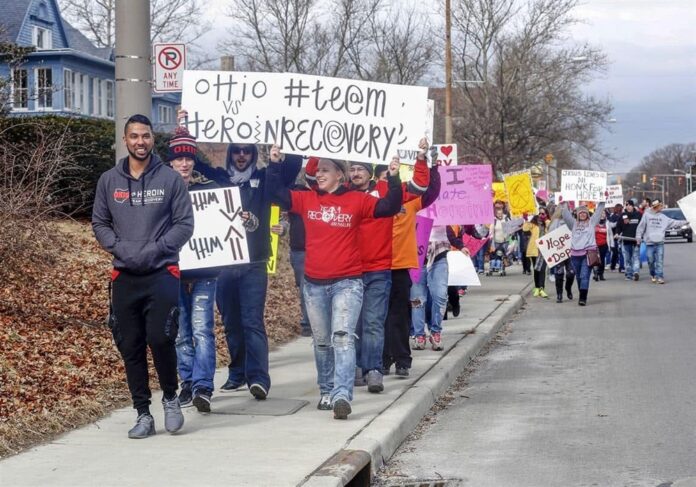
Budget cuts could impact overdose reversals nationwide

0
Matt Bell leads takes the lead in Team Recovery. (Courtesy photo)

TOLEDO — Local health officials and advocates are sounding alarms after a proposed federal budget threatens to eliminate a $56 million naloxone grant program, potentially scaling back access to the life-saving opioid overdose reversal drug across the country.

Under the plan introduced by the Trump administration and supported by Health and Human Services Secretary Robert F. Kennedy Jr., the First Responders-Comprehensive Addiction and Recovery Act (FR-CARA) could be eliminated and folded into a newly proposed entity called the Administration for a Healthy America. The restructuring would dissolve the Substance Abuse and Mental Health Services Administration (SAMHSA), the current overseer of FR-CARA.

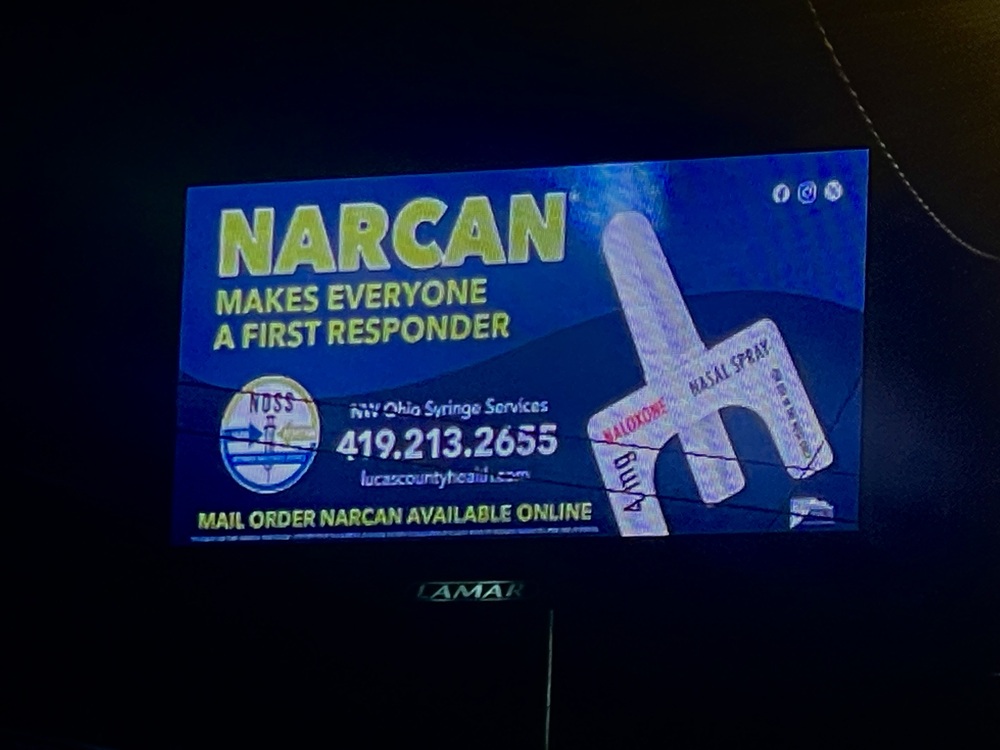
Toledo billboard brings awareness to Naloxone nasal spray (Narcan). (TFP photo by Neenee Lakatos)

Naloxone, sold under the brand name Narcan, is widely used by emergency responders, hospitals and community organizations to reverse opioid overdoses. In Lucas County alone, nearly 19,000 naloxone kits were distributed in 2024, resulting in more than 2,000 confirmed reversals, according to Joe Wood, the public health educator for the Lucas County Health Department. The same year, the county recorded 159 fatal overdoses—a 35 percent drop from 2023.

Wood said Ohio is currently protected by a statewide initiative that provides free naloxone via Project DAWN (Deaths Avoided With Naloxone), a program backed by Gov. Mike DeWine and RecoveryOhio

“Fortunately, Toledo is protected, and we will remain distributing naloxone for first responders in the foreseeable future.” Wood mentions this may not be the case for other states and counties.

“There are most certainly—probably—Ohio programs that get this federal funding, and if it’s cut, it would affect their access. And then, certainly in other states, the majority of the state’s funding could have devastating impacts on first responders being able to respond to an overdose.”

Wood emphasized that naloxone’s availability isn’t just preventative — it’s part of a wider accountability effort.

“It started from the mass distribution of oxycodone, and the pharmaceutical companies lying to the FDA about their medication not being addictive. That is why the opiate settlement funds were arbitrated.” Wood mentions that it is the government’s responsibility to fund the solution to the epidemic it helped create.

“How can we pull funding for an issue that we have already agreed the government and the pharmaceutical companies were complicit in creating?”

In July 2025, Purdue Pharma’s bankruptcy settlement was finalized at $7.4 billion, one of the largest corporate settlements of its kind. Legal documents tied the company’s practices to the national opioid epidemic, and distributors like CVS, Walgreens, and Walmart were also found liable. The settlement funds are now being routed to state and local governments to support treatment, recovery, and overdose prevention efforts.

Dr. Brian Kaminski, vice president of medical affairs for ProMedica Metro Hospitals, said Narcan is administered in local emergency departments nearly every day. He emphasized that the grant supports not only distribution, but training and post-overdose protocols.

“Over the course of the last two years, we’ve had a pretty significant decline in the number of fatal overdoses and also the number of Narcan administrations that occur in the hospital.” Kaminski mentions that scaling back now could reverse that progress.

For addiction recovery advocate Matt Bell, the issue is personal. The founder of Toledo-based Team Recovery said he struggled with opioid addiction for almost a decade, experiencing 18 overdoses and attending 28 rehab programs before entering recovery in 2015. Bell credits Narcan with saving his life multiple times.

“If it weren’t for Narcan, I wouldn’t be here,” Bell said. “I’m married. I have three beautiful children. I have a master’s degree in social work. I just graduated from the University of Toledo. I own an addiction treatment center. I employ 160 people. We have 250 beds that are almost full at all times.” Bell mentions that everyone deserves a second chance like him.

Matt Bell, founder of Toledo-based Team Recovery. (Courtesy photo)

Bell’s nonprofit includes a public naloxone vending machine in its lobby and hosts community events to fight stigma and promote recovery—including an annual rally held on October 17, officially declared “Team Recovery Day” by Toledo’s mayor. Participants hold signs reading “Honk if you hate heroin” and “Heroin’s killing our town.” in an effort to raise awareness and shift public perception.

“A lot of people think Narcan enables drug use,” Bell said. “It doesn’t — it enables breathing. And if people can continue to breathe and stay alive, they have another chance to experience sobriety and happiness and peace and making amends to their families and society and debtors.”

Wood and Bell also highlighted emerging concerns in local drug trends, including rising methamphetamine use and counterfeit prescription pills laced with synthetic opioids like fentanyl and xylazine. While opioid-related deaths are down, overdoses tied to nontraditional substances are climbing.

“Addiction doesn’t discriminate,” Wood said. “I walk into schools and meet 15 [and] 16-year-olds who have already seen overdoses. And when we recognize the environmental components of sometimes parents use drugs in front of their children…sometimes children grow up in neighborhoods where drug use is common in their community. We see a cycle of generational addiction, and this isn’t the children’s fault, and we need to provide the resources to save their lives as well.”

Bell added that recovery is possible, but only if life-saving interventions remain available. “People are not bad—they’re sick. Sick people need treatment,” he said. “You know, more recovery is needed. More love.”

For now, state funding in Ohio remains intact, but advocates and health officials urge policymakers to maintain federal support—especially in the shadow of nationwide litigation that confirmed the scale of corporate wrongdoing.

RELATED STORY: “Narcan installed in some S&G stores”

Swan Creek: higher tax burden to maintain ditch systems

0
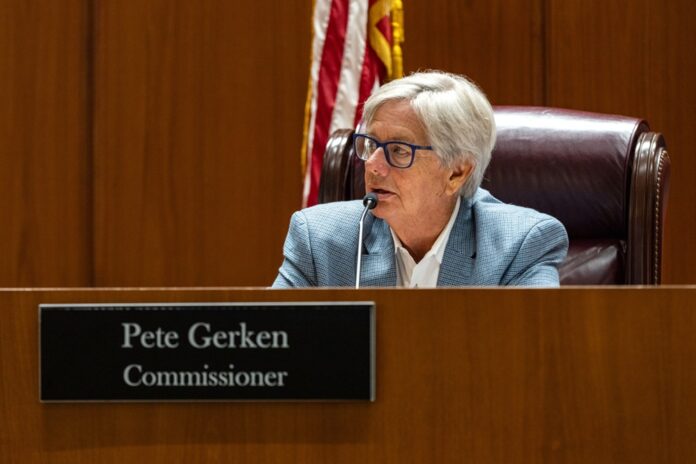
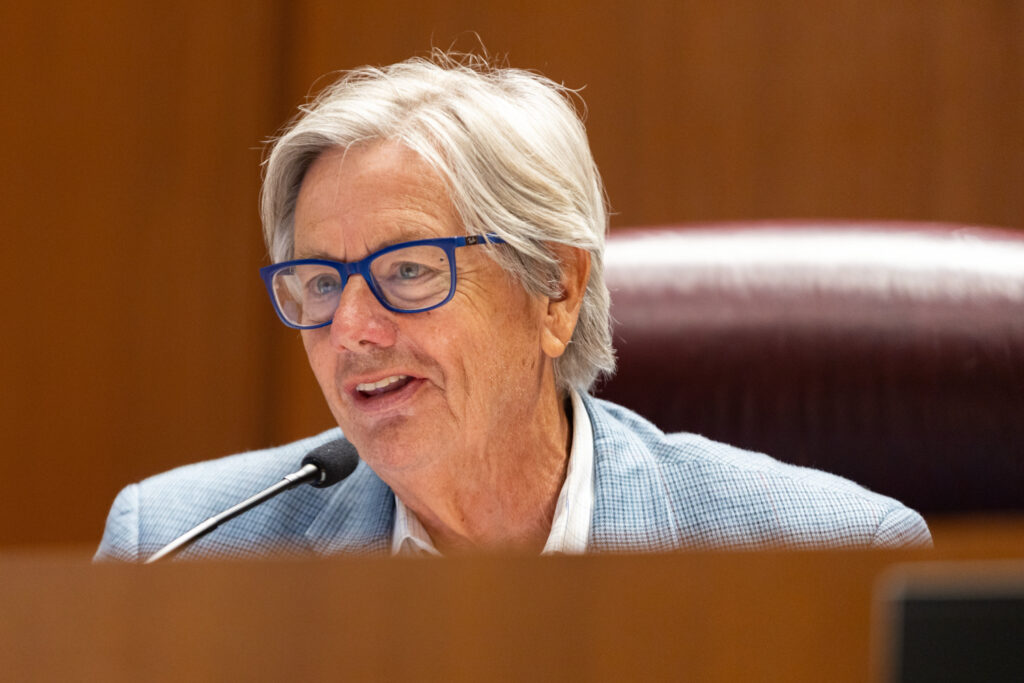
Pete Gerken, Lucas County Commissioner, addresses a speaker during a Lucas County Commissioners’ hearing concerning Swan Creek runoff ditch services in their Hearing Room at 1 Government Center in Toledo, Ohio on Tuesday July 22, 2025. (TFP Photo by Stephen Zenner)

LUCAS COUNTY – In an effort to follow up on concerns surrounding increased property taxes in Lucas County for maintaining the ditch systems associated with the Swan Creek watershed, commissioners held a second “Swan Creek” hearing on Tuesday afternoon. 

Three individuals signed up for the 2 p.m. to 3 p.m. time slot, but only one individual, William Roper of Waterville, showed up to speak with the county engineer, Mike Pniewski

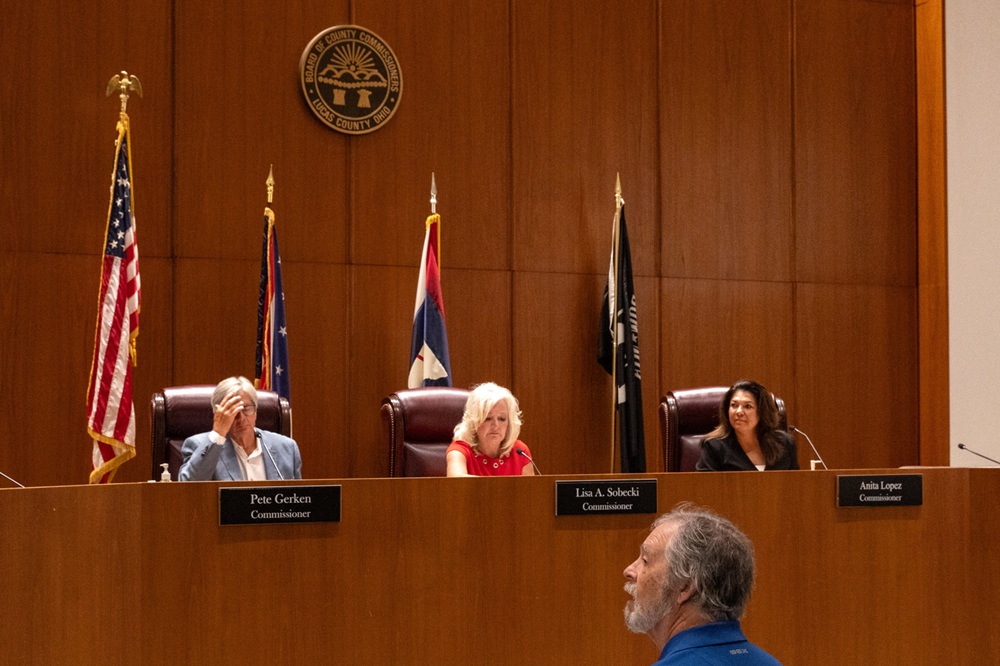
Initial efforts on remedying needed maintenance for the ditches began in 2021, but just last week, commissioners certified the new taxes, with Lisa Sobecki and Pete Gerken voting to approve the raised taxes on Lucas County residents and Anita Lopez voting against it. 

William Roper, of Waterville, sits before the Lucas County Commissioners before speaking during a Lucas County Commissioners’ hearing concerning Swan Creek runoff ditch services in their Hearing Room at 1 Government Center in Toledo, Ohio on Tuesday July 22, 2025. (TFP photo by Stephen Zenner)

All three commissioners lamented the heightened tax burden on residents, and over the course of the two-hour hearing, 34 citizens weighed in with their opinions on the record. 

Ultimately the report from Pniewski and the need for maintenance outweighed dissenters.

“Observations have indicated a reduction in the original drainage capacity of as much as 25 to 75 percent as a result of sedimentation in the watercourses,” Pniewski said in his report. “Reduced capacity in drainage watercourses has caused widespread flooding in areas of the watershed, especially during periods of heavy rainfall.”

Maintenance to be performed include the removal of log jams and dead/leaning trees, removal of excess sedimentation and the implementation of vegetated buffer strip.

Low attendance to this week’s hearing was anticipated as the vote had already gone through. 

After two missed appointments and 45 minutes into the hearing, Sobecki said, “We will stand at recess until our three o’clock appointments.”

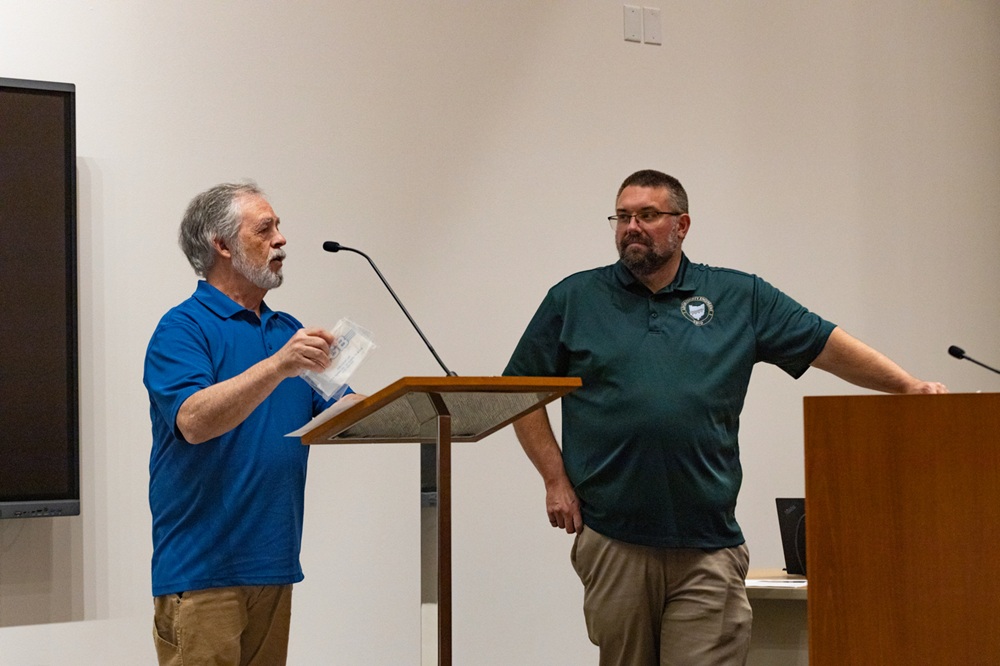
William Roper, of Waterville, addresses Lucas County Commissioners and Mike Pniewski, the Lucas County Engineer (right), during a Lucas County Commissioners’ hearing concerning Swan Creek runoff ditch services in their Hearing Room at 1 Government Center in Toledo, Ohio on Tuesday July 22, 2025. Roper wished to have his the soil on his property designated from soil type D to soil type B, which would reduce his total ditch service charge. (TFP photo by Stephen Zenner)

Roper, the lone attendee, came at 3 p.m. to dispute the ditch inspection grade on his property, asking for the county to bring his soil grade from a D rating up to a B rating. 

It was a brief and quick consensus Pniewski approved, which brought the total tax estimation on Roper’s property taxes down. 

“Our recommendation is to go with B, so there you go,” said Pniewski. “One of the factors to determine how assessments are partitioned is the type of soil type you have.”

U.S. Department of Agriculture soil maps are the basis for Pniewski’s data.

“They’re large scale [maps], so it’s hard, on a parcel-by-parcel basis, to know exactly what somebody has,” he said, adding that if “somebody feels that their soil is something different, then they have the opportunity to provide testimony and evidence to basically show what they have. And that’s what Mr. Roper did.” 

The B-grade soil on Roper’s land was more of a sand as opposed to the D rating (a clay). Less absorptive soil, like clay, means the land contributes more to the runoff, and therefore more to the overall problem of flooding. 

“You’re an example of how that exemption works,” Sobecki said, addressing Roper. “So thank you for doing that, and [I] think we have solved all the issues right here.”

Over the next 30 years, the total project cost for the Swan Creek ditch maintenance is estimated at $21,169,148.

This cost is “partitioned between the benefitting landowners by a series of calculations to approximate several factors to be considered under the Ohio Revised Code,” according to Pniewski’s report. These factors include parcel size, location, soil type and drainage ditch length. 

Initially, Lucas and Fulton Counties were going to share the cost, but as of July 15, Lucas County residents alone will pick up the tab for the maintaining the ditch infrastructure necessary to limit flooding from Swan Creek. 

Roper declined comment to the Toledo Free Press. 

Pniewski ended his report and said, “It is the opinion of the engineer that the proposed project is feasible, that it is conductive to the public welfare, that there is a sufficient outlet and that the benefits exceed the cost.”

Find more information at Lucascountyengineer.org.

Fastball takes the stage at the Toledo Zoo Amphitheater

0
(Left to right) Fastball's Tony Scalzo (vocals, bass, keyboards, guitar), Miles Zuniga (vocals, guitar) and Joey Shuffield (drums, percussion)

TOLEDO – Fastball, an alternative rock band widely loved for their catalog of hits from the 90s and beyond, will be playing at the Toledo Zoo Amphitheater on July 30. When we received an offer to interview someone from the band ahead of the show, I said that it had to be me. As an editor, I normally send assignments to other writers, but this one felt personal. 

Like many fans of Fastball, my first impression of them was while sitting in front of the TV, watching VH1 music videos in 1998, and finding myself suddenly transfixed by “The Way.” I was eleven years old, but I was taken in by the three bandmates facing a storefront, watching a throwback aerobics video of a woman doing pelvic thrusts on the floor. It’s at that point that lead singer Tony Scalzo – his face deadpan – begins singing the song, a long narrative about an old couple with dementia who drive off into the sunset only to never be heard from again.

Scalzo wrote the lyrics, inspired by a story circulating in the news about the elderly couple’s disappearance. Despite the macabre ending of the real story (the couple being found dead in their car at the bottom of a ravine), “The Way” was a surprisingly danceable hit. 

Miles Zuniga, vocalist and guitarist, spoke to me about the band’s beginnings in Austin, Texas, where he found himself drawing from the rich music scene there, with a strong infusion of midcentury British rock. 

“I moved there in ‘84, and when I got there, I’d been listening to whatever was on MTV,” said Zuniga. “Culture Club. Duran Duran. ACDC. Whatever was on the radio. But when I got to Austin, Stevie Ray Vaughan had just become a huge star. So out of every doorway there was blues coming out, like people trying to do that. And The Fabulous Thunderbirds, as well, had hit songs. All these guys had made really cool records, especially those first couple T-birds records were really, really great.

“So all of a sudden, I was just getting a double dose of blues music, and that was something I’d never encountered. So that influenced me quite a bit.”

Fastball on stage in Italy (courtesy photo)

Another huge influence on Fastball? The Beatles. The influence for so many. But not every band influenced by them has gotten to collaborate with Fifth Beatle Billy Preston, who played piano on Fastball’s “You’re an Ocean” (Harsh Light of Day, 2000). 

Zuniga and Scalzo are both songwriters, though they rarely co-write. Zuniga’s credits include early hits like “Fire Escape” and “Sooner or Later.” Aside from the Austin scene and midcentury British rock, Zuniga’s writing comes from a spiritual place: Buddhism.

“A man can’t enter the same river twice,” he said. “That’s one of my favorite quotes of all, because the man has changed. And the river has changed, so the circumstances are completely different. And I feel like that’s what life is. It’s just that most people don’t want to accept that, right? Life is impermanent. Everything’s always changing all the time in subtle, little ways. And that’s influenced my songwriting over the years.”

Those attending the show on the 30th will recognize Fastball’s older hits, but they’ll also be playing songs from their most recent album, Sonic Ranch (2024). One song that Zuniga has mixed feelings about playing from the album is “America,” a song he co-wrote with Scalzo. Its subtext is an indictment of today’s political climate. 

“We almost never write songs together, but sometimes we do, like one of my favorite songs, ‘America,’ we wrote together, and we’ve had other ones over the years,” Zuniga said. “It’s nowhere in the song [explicitly], but it’s about how media – once it became for-profit… once Ronald Reagan deregulated the industry – it was no longer boring news. Now, it’s got to be sexy, you know. It’s got to make money. And it’s the worst. I really feel like it has destroyed the world, because the actual news doesn’t have to be politicized, but it is. It’s politicized to death.”

Zuniga laughed and said, “Events have gotten so crazy I don’t want to [play it]. I don’t really feel like singing that one song. I want to escape as much as the audience does. It depends on how I’m feeling.”

To get a another sampling of their latest album, check out the music video for “Rather Be Me than You” below.

Purchase tickets to see Fastball, Barenaked Ladies, and Sugar Ray at Toledozoo.org/concerts. The show begins at 6:30 p.m. on July 30 at the Toledo Zoo, 2 Hippo Way.

RELATED POST: Enter to win Fastball’s latest album, Sonic Ranch here.

GOP bills call for districts to teach students the “success sequence” 

0
Image by Mohamed Hassan from Pixabay

TOLEDO — Is there a proven formula for achieving success in life?

Some Ohio legislators believe there is, and a pair of bills introduced this year would mandate school districts teach a formula known as the “success sequence” to middle and high school students. 

“Individuals who complete at least a high school education, obtain full-time work, and marry before having children are overwhelmingly less likely to live in poverty in adulthood” according to the success sequence described in Ohio Senate Bill 156

Sponsored by Sen. Al Cutrona (R-Canfield), the legislation had its third committee hearing in late June. It would require the Ohio Department of Education and Workforce to develop standards and a model curriculum about the “success sequence” for grades 6 through 12. Districts would be required to provide instruction on the sequence in at least one course required for high school graduation. 

Republican legislators also introduced a second bill requiring Ohio schools districts to teach the success sequence in the House at the beginning of June. House Bill 269 would require each school district to include instruction in the success sequence and character education for grades 7 to 12 beginning with the 2027-2028 school year. 

Under the House bill, the Department of Education and Workforce would develop a model curriculum that would teach about “character traits and fundamental values deeply rooted in the history and tradition of the United States,” in addition to the success sequence. 

This list of traits includes trustworthiness; responsibility; care for family; kindness and generosity toward others; respect and care for human life; respect for parental authority; respect for parents’ obligations to children; respect for the property of other people; respect for legitimate authority and law; respect for patriotism, service to the community, and concern for the common good; respect for religious faith, morality, wisdom and knowledge; respect for lifelong marriage, sexual fidelity within marriage, and sexual abstinence outside of marriage; gratitude; charity; and courage. 

TPS Board opposes mandating success sequence instruction

In his sponsor testimony, Cutrona called the success sequence “a proven formula to help young adults avoid poverty and achieve the American Dream.” He cited research claiming 97 percent of individuals who complete the sequence do not live in poverty in adulthood. 

“The success sequence works to empower individuals and families, and teaches the self-sufficiency and independence needed to succeed in today’s society,” Cutrona said.

While H.B. 269 has not yet received public testimony, S.B. 156 is backed by groups including the Heritage Foundation, the American Enterprise Institute and the Center for Christian Virtue, which is Ohio’s largest Christian public policy organization. 

In 2023 the Heritage Foundation released a model policy “blueprint” for states to require that districts teach the success sequence to high school students. The “success sequence” is also promoted by the Institute for Family Studies (IFS), which has pushed it as part of the organization’s “Get Married Initiative.” 

According to IFS, the success sequence was first identified by social historian Barbara Dafoe Whitehead and sociology professor Marline Pearson. It was later popularized by Brookings Institution researchers Ron Haskins and Isabel Sawhill

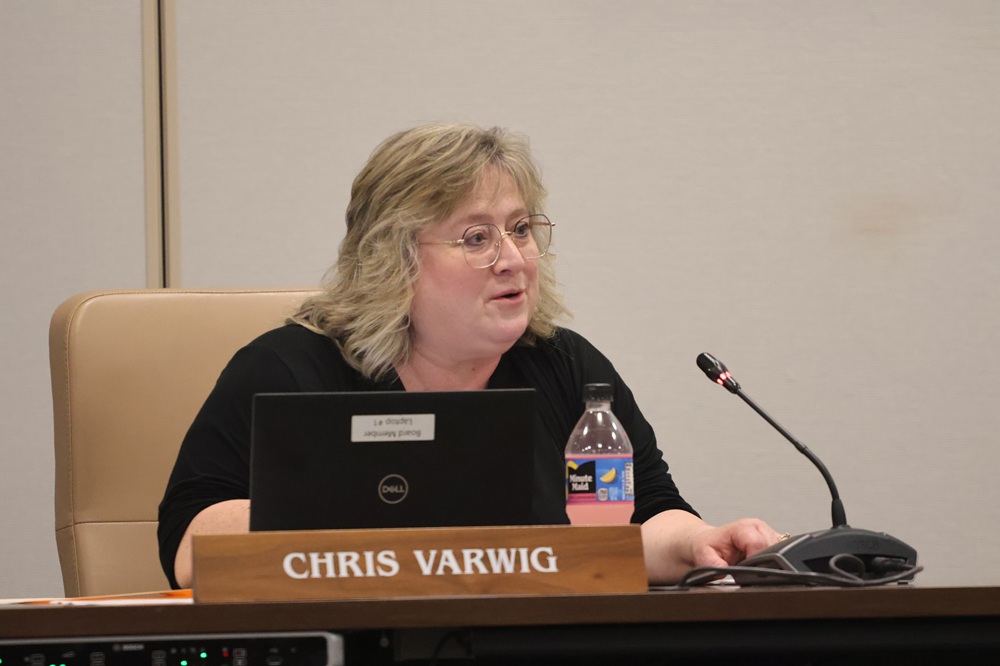
Not everyone is supportive of the push to teach the success sequence. At the third committee hearing for S.B. 156 on June 24, sixteen individuals and groups submitted opposition testimony including Chris Varwig, vice president of the Toledo Public Schools Board of Education. 

Chris Varwig, vice president of the Toledo Public Schools Board of Education (TFP Photo/Laurie Bertke)

“The TPS Board of Education feels that parents’ rights are violated whenever legislation dictates a formula for family values, rather than allowing parents to raise their children according to their own values,” Varwig wrote. 

“This bill undermines our students’ autonomy, promotes a narrow definition of success, and reinforces outdated social norms under the guise of ‘family values,’ ” Varwig added in her testimony. “Our educators are dedicated to helping all students succeed on their own terms, not through a state-mandated life formula.”

Varwig’s testimony echoed the sentiments of a resolution the TPS Board of Education passed unanimously at their regular meeting April 22 expressing opposition to S.B. 156.

The board’s resolution said the success sequence model “ignores systemic obstacles that certain groups face and hurdles that individual effort cannot necessarily overcome.” 

The bill also “threatens to enshrine Christian values in public school curriculum, stigmatize students for their poverty and induce students to internalize blame for failing to follow the success sequence rather than recognize that systemic barriers often limit the economic mobility of certain groups regardless of their individual choices,” according to the resolution. 

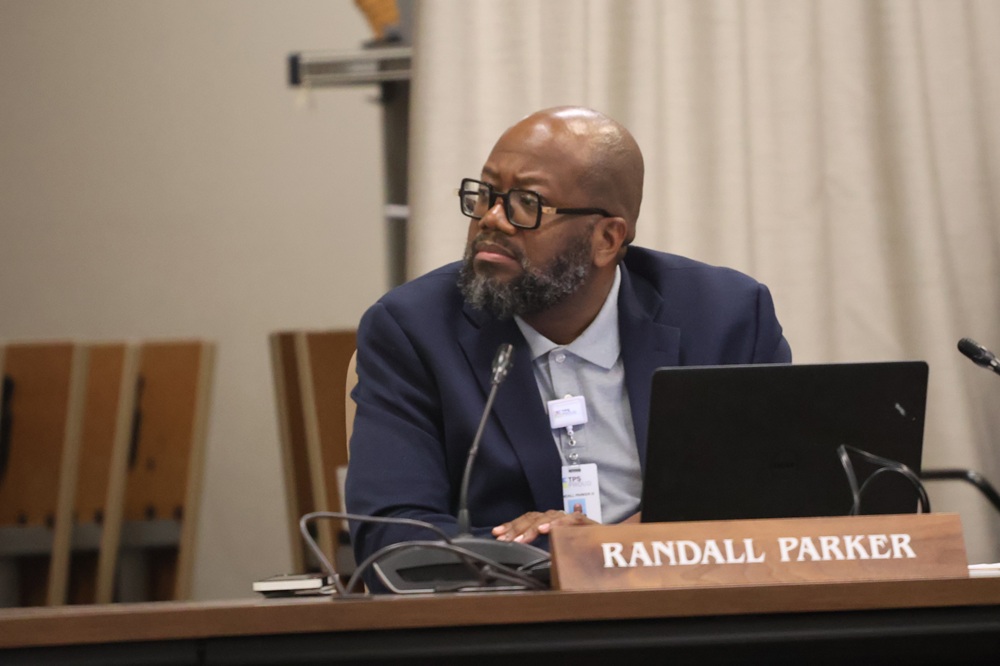
In comments regarding a resolution opposing Ohio S.B. 156, Toledo Public Schools board member Randall Parker described the “success sequence” as a “stress sequence” for students who are already dealing with many challenges. (TFP Photo/Laurie Bertke)

In comments regarding the resolution, board member Randall Parker said he believes the bill is more about control than it is about success. 

“This so-called ‘success sequence’ is no more in my opinion than a ‘stress sequence,’ for our students, because they’re already carrying so much,” said Parker. 

He said the success sequence ignores the realities of the poverty, trauma and systemic challenges that many students face. Parker, who serves as a pastor in Toledo, also said he was troubled at seeing a bill “that tries to smuggle traditional Christian values under the umbrella of legislation.”

“I follow Jesus. That’s my belief,” said Parker. “But I don’t believe in forcing him into a policy to meet an agenda. That’s not faith. That’s Christian nationalism. And I gladly and boldly oppose that. You can’t legislate love. You can’t mandate morality. And you can’t weaponize faith in a public school system that serves all children, regardless of their background. Regardless of their beliefs. Regardless of their circumstances.”

Success sequence bills similar to the ones in Ohio were recently signed into law in Tennessee and Utah and have been introduced in Texas, Kentucky and Mississippi.

Bad Homophones: Paralyze

0
"Paralyze" from Steven J. Athanas' Bad Homophones series.

Cartoon by Steven J. Athanas

Cartoons: “Of Course He’s Transparent!”

0
TFP cartoon by Don Lee

Cirque Italia wows Toledo

0
An aerialist with Cirque Italia performs a hoop routine high above the water-filled stage at the group’s aquatic circus performance in Toledo. (TFP Photo/Barrett Dorner)

TOLEDO – Kelly Evans choked up describing the memory-making performance of Cirque Italia in Toledo over the weekend.

She brought her adult daughter, teenage son and much younger niece (Marley) and nephew (Brayden).

“It makes me cry because he’s so big, and these are my…it was great,” Evans said, holding back tears as she still held her niece in her arms.

Cirque Italia performed six shows during their visit to Toledo, anchoring the big-top just outside Toledo Speedway.

The “Water Circus” had a 1950s theme, with music that resonated with the older members of the crowd and acts that wowed all ages.

Supporting a fellow performer by one strap, a member of Cirque Italia is locked in on the routine. (TFP Photo/Barrett Dorner)

Acrobatics and dancing kicked things off, with the stage then rising several stories into the air. A curtain of water flowed into a 35,000 gallon pool below. There were no nets, and the pool itself was only a few inches deep, making death-defying stunts that much more exciting.

“I loved it; it was amazing!” Sabrina Gruss, 9 (but soon turning 10, she was quick to point out), said of the show. She tagged along with her sisters and dad, Scott Williams.

Picking a favorite act was a tough decision.

“I liked the ropes,” Sabrina’s sister Breanna Williams, 16, said, describing the man and woman hanging above the stage on aerial straps. 

“Yeah, it was so romantic,” Sabrina agreed before getting a dig in on her sister: “It was like you and your non-existent boyfriend!”

The female aerialist also performed several mid-air hoop routines, with balancing acts, glow-in-the-dark juggling, and an archer providing a variety for oohs and aahs.

After popping several balloons with surgical precision, that archer pointed his arrow seemingly toward the crowd. When he fired, the arrow ricocheted off several metal targets before he quickly ducked out of the way, popping the balloon that had been behind his head milliseconds earlier.

And it wouldn’t be a circus without clowns. Two of them performed skits, recruiting sometimes-hesitant volunteers to co-star, as the stagehands worked to set up each event.

A live band performed some of “the far-out, fabulous ’50s” music, as described by the booming voice over the loudspeaker. Other tracks were favorites played in their original form from the likes of Elvis and the Beach Boys.

While the music may not have been familiar to the youngest attendees, the sisters said the acts were unforgettable – especially the “Wheel of Death.”

In that part of the show, an acrobat spins around inside a circle at the end of a 40-foot arm. When he then jumped outside the circle and performed on top of it with nothing to save him should the wheel live up to its name, the audience simultaneously gasped.

“That was amazing,” Sabrina said. “That was actually crazy. That was just…whoa,” Breanna said.

The audience gasped as this Cirque Italia member jumped to the top of the “Wheel of Death” without a safety harness or net. (TFP Photo/Barrett Dorner)

Cirque Italia plans to bring the Water Circus back to Toledo next year. In the meantime, this specific group of artists will be performing in Maryland, New Jersey, and Pennsylvania through the fall. Two other troupes will perform the same aquatic show across the Midwest and Canada.

The group’s other feature, Paranormal Cirque, will be in Toledo for six performances at Franklin Park Mall on August 8-11. That show requires attendees to be at least 13 years old, and anyone under 17 has to be with an adult. Tickets range from $20 to $65.

An aerialist with Cirque Italia holds on by a leg and a hand, high above the water-filled stage at the group’s aquatic circus performance in Toledo. (TFP Photo/Barrett Dorner)
A young circus-goer waves at the performers during Cirque Italia’s performance in Toledo on July 19. (TFP Photo/Barrett Dorner)
Kelly Evans of Toledo holds her niece, Marley, as she’s mesmerized by the performance of Cirque Italia in Toledo. Marley’s brother, Braylen, also joined them for a closer view. (TFP Photo/Barrett Dorner)
A Cirque Italia performer balances on several rollers during the group’s performance in Toledo on July 19. (TFP Photo/Barrett Dorner)
This trio of Cirque Italia performers ends their balancing routine with simultaneous backflips. (TFP Photo/Barrett Dorner)

Toledo City Council candidate weighs in on rezoning vote

0
Roberto Torres, Toledo City Mayoral Candidate, speaks with Bill Hoag, a local businessman with properties in South Toledo, and Blair Johnson, a Toledo City Council candidate, after Toledo City Council tabled Ordinances 223-25, 224-25 and 225-25 at 1 Government Center outside of City Council Chambers in Toledo, Ohio on Tuesday June 3, 2025. (TFP photo by Stephen Zenner)

Over the past few months, I have been proud to work alongside residents and business owners of South Toledo, as well as Mayoral Candidate Roberto Torres and Former Mayor Carty Finkbeiner, to bring attention to the mining operation threatening our neighborhoods.

Thanks to the persistence of the community and a unified effort, Toledo City Council voted to stop the rezoning and shut it down. I want to thank Council for doing the right thing and listening to the people. Now it is time to restore the land and work toward a future that reflects what South Toledo truly needs.

I also commend Council for approving the contracts for our firefighters and police command officers. These men and women have served our city with dedication and deserved to be treated with fairness and respect. It is good to see that recognized.

Last week was a big week for Toledo. We stood up for our neighborhoods and showed our public safety workers that they matter. That is the kind of progress we need more of.

Inside Lucas County Commissioners Meeting: July 15

0
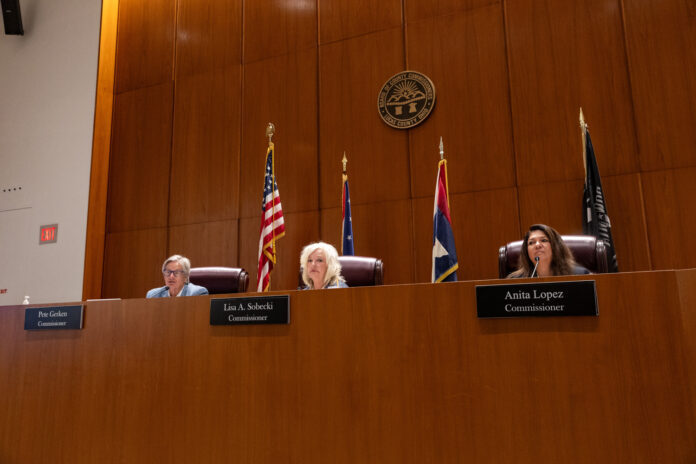
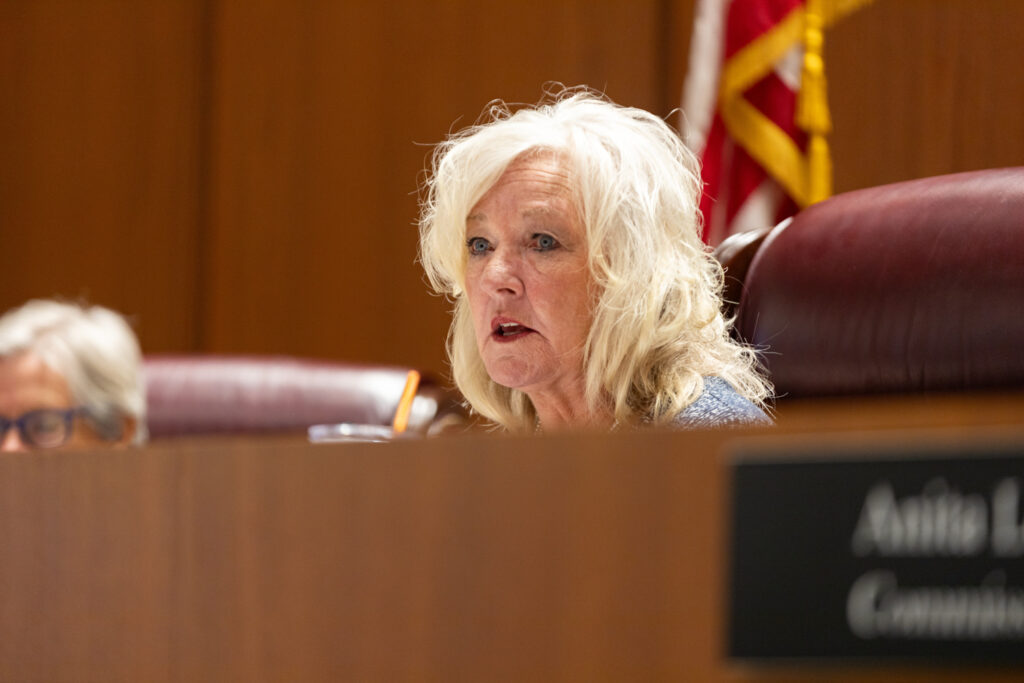
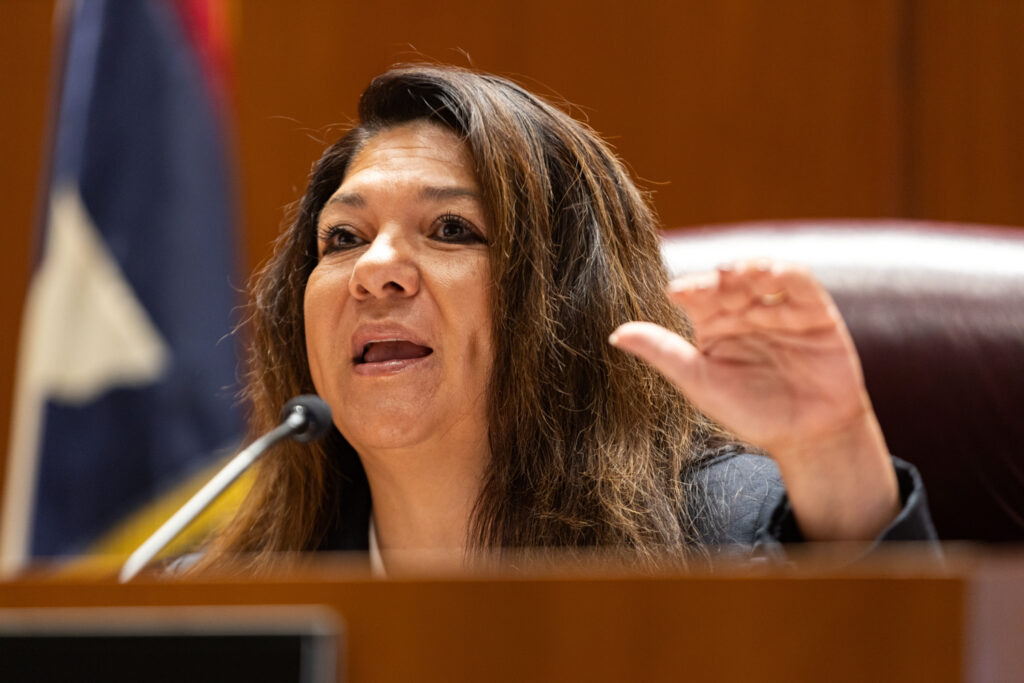
Pete Gerken, Lisa Sobecki and Anita Lopez, all Lucas County Commissioners during a Lucas County Commissioners’ meeting while they talk about a proposed new jail in their Hearing Room at 1 Government Center in Toledo, Ohio on Tuesday July 15, 2025. TOLEDO FREE PRESS/STEPHEN ZENNER

TOLEDO – Lucas County Commissioners resolved not to finance a new County Corrections Center on Tuesday, though Pete Gerken, Lucas County Commissioner, said it was something he had been pushing towards for the past decade. 

“Today is heartbreaking for me,” he said, but added that “it is unwise, at this point, to incur 300 million dollars worth of debt in an uncertain economy where federal and state supports are being pulled away and being attacked.”

Pete Gerken, Lucas County Commissioner, speaks on the proposed new jail for Lucas County during a Lucas County Commissioners’ meeting. (TFP photo by Stephen Zenner)

The Lucas County Management and Budget Director, John Wenzlick, presented the new jail project for the commissioners to discuss, and said the new facility would cost $273 million. Wenzlick said $54 million on the jail could be paid with cash and grants up front, but $219 million of the project would have to be financed over 35 years. Lucas County would pay a $15.7 million every year for the next 35 years, for a total cost of somewhere around $549.5 million, if the current new plan for the correctional facility went through. 

New Lucas County jail costs posted on a large television during a Lucas County Commissioners’ meeting in their Hearing Room at 1 Government Center in Toledo, Ohio on Tuesday July 15, 2025. (TFP photo by Stephen Zenner)

“One of the biggest challenges that we have is the impacts that the debt service for 35 years will incur on future generations and Lucas County as a whole,” said Jessica M. Ford, the county administrator. “This is the largest project that the county will undertake if we decide to move forward.”

Touting the savings a new jail would offer and lamenting the ills of continuing with the current facility downtown, Lisa Sobecki, Lucas County Commissioner, made convincing arguments for the new correctional facility. 

Lisa Sobecki, Lucas County Commissioner, speaks about the proposed new jail during a Lucas County Commissioners’ meeting. (TFP photo by Stephen Zenner)

“Without a new facility, our sheriff will be unable to implement the best practices in inmate management that we all know are safer and more cost effective,” she said. “This facility is old. Its systems are failing, and we cannot continue to live along with Band-Aid solutions.” 

Then Sobecki reminded those in attendance that the people who enter the jail could very well be innocent and guilty of no wrongdoing. 

But ultimately, the financial mountain of debt the new project would potentially incur was too great for any of the commissioners to fully embrace. 

“Right now, we’re operating in a deficit,” said Lucas County Commissioner Anita Lopez. “We are still operating in a deficit. So for us to again spend when our revenue is going flat and our population is decreasing, that means we’re going to have to make significant cuts.”

Anita Lopez, Lucas County Commissioner, speaks on the proposed new Jail for the county during a Lucas County Commissioners’ meeting. (TFP photo by Stephen Zenner)

“Cuts,” she elaborated, could be extended to county staff, and she anguished over the thought of letting go of county employees in this job market in order to build a jail. 

After considering the matter, Sobecki said, “We can and we should do better with the current conditions in our pre-trial detention facilities. I’m going to ask…that we embark on a plan to assess what it will take to rehabilitate and look at the current jail that we have to make it better than what it is.”

Following the commissioners’ meeting, Gerken said he grieved not having a new jail, but resolved to work in the new direction of improving the current Lucas County Corrections facility. 

Pete Gerken, Lucas County Commissioner, speaks to press after voting against funding a new jail during a Lucas County Commissioners’ meeting. Gerken expressed a desire for the new jail, but said it didn’t make financial sense to put forth $300M for a new jail at this time. (TFP photo by Stephen Zenner)
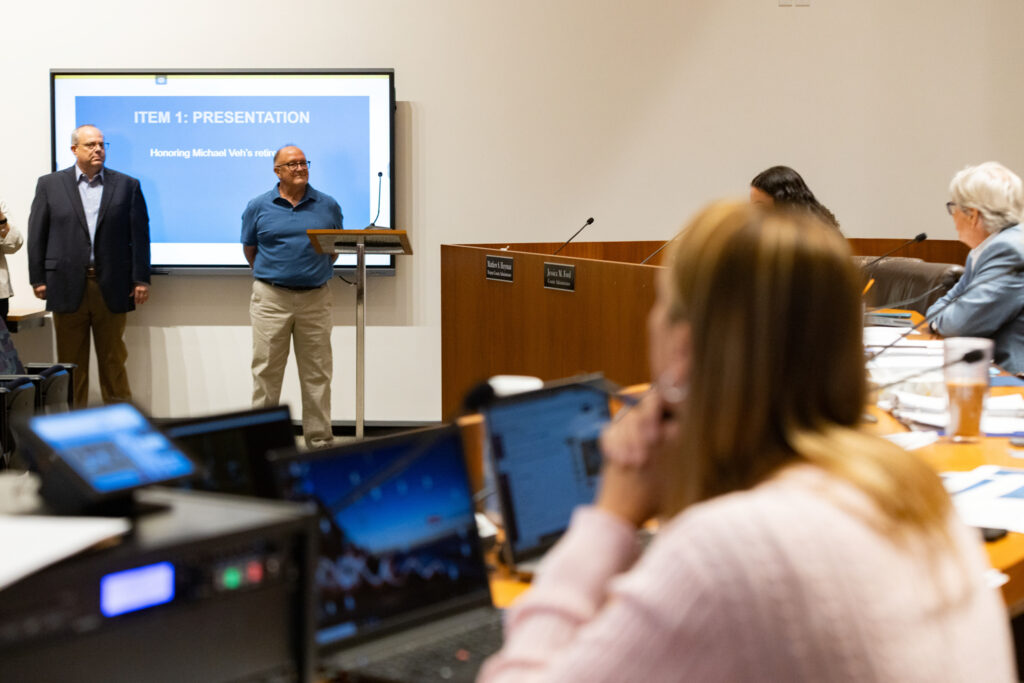
Lucas County Commissioners honor Michael Veh, the senior project liaison for Lucas County, as he enter into retirement from his position at the county. (TFP photo by Stephen Zenner)
Tom Kralovic, sanitary engineer for Lucas County, is honored by Lucas County Commissioners, as he retires from his position for the county. (TFP photo by Stephen Zenner)