Home Blog Page 57

Toledo guitar hero Chris Shutters pays homage to Clapton

0
Lead Singer and Guitarist Chris Shutters performs Eric Clapton originals at Oregon's Boomfest on Saturday, Aug. 9, 2025 in Oregon, Ohio. (TFP photo by Logan Migliori)

New band plays songs from through Slowhand’s career

SYLVANIA Chris Shutters’ musical achievements already qualify him for a Who’s Who listening in a book of modern rock. 

The Sylvania native is a two-time national blues guitar champ, tours nationally with Fleetwood Mac tribute band Fleetwood Gold, was the lead singer of Blood, Sweat & Tears, wrote and sang on Alan Parson’s latest album, played guitar in Mountain with Corky Laing, and toured with a Cream tribute band that featured relatives of two original Cream members — Kofi Baker, son of Ginger Baker, and Will Johns, nephew of Eric Clapton.

Shutters’ latest endeavor, the Eric Clapton Experience, circles back to the beginning of his interest in guitar.

Percussionist and vocalist Jerry Knott gives a warm salute to the audience at Boomfest 2025 on Saturday Aug. 9, 2025 in Oregon, Ohio. (TFP photo by Logan Migliori)

“Since Day One, Eric Clapton is the reason why I play guitar,” Shutters said in a recent interview.

Clapton, of course, is a guitar legend, from his early days with John Mayall and the Yardbirds to the power rock trio Cream, Derek and the Dominoes, to his lengthy and highly successful solo career.

Shutters remembers the date when he first picked up a guitar: November 17, 1998. 

He started out on piano, banging on the keys when he was 2 years old and taking lessons from age 8 to 12. 

Then he discovered his affinity for guitar.

“I was 12 years old, and I went into my brother’s bedroom and grabbed his guitar and gave it a shot,” he said.

He’s never stopped. The first chords he learned were to Clapton’s hit song “Wonderful Tonight.”

Even before that, he was drawn to Clapton’s music. When Shutters was 10 years old, he went into a karaoke booth at Cedar Point and recorded the vocals for “Tears in Heaven.” 

Shutters developed much of his own guitar style from listening to Clapton and reading interviews with Slowhand, as Clapton is known.

“He’s an amazing guitarist, and the best lesson I learned as a lead player was from him; it was an old interview he did, and he said he’s basically just singing [with the guitar].

“I can hear chords and melody or a rhythm section play, and I can come up with melodies left and right, doing basically what Clapton’s doing on a guitar. So you’re just singing a melody with your hands. And that’s how I’ve always done it.”

His Eric Clapton Experience made its debut on Aug. 9 at the Boomfest in Oregon, Ohio. Joining Shutters in the nationally touring band are Brian Albright on bass, Cy Winnie on keyboards, Ian Rowell on drums, and Jerry Knott on percussion and vocals.

“I am trying to focus more on his solo career, rather than the Cream stuff. Although ‘Sunshine of Your Love’ is in the set. ‘White Room’ sometimes is in the set. ‘Crossroads’ is always there if we need it. 

“We do a lot of his ‘80s stuff, everything from ‘Pretending,’ ‘Bad Love,’ and ‘70s stuff like ‘Rock and Roll Heart,’ and ‘90s stuff like ‘Change the World’ and ‘My Father’s Eyes.’ It’s pretty much a little taste of every decade of his career.”

Drummer and vocalist Ian Rowell in Chris Shutters’ Eric Clapton Experience at Oregon’s Boomfest on Saturday, Aug. 9, 2025 in Oregon, Ohio. (TFP photo by Logan Migliori)

Shutters continues to play solo shows at various Toledo-area clubs but his “main gig” is playing guitar and singing with Fleetwood Gold, playing 60 shows a year with the nationally touring band. 

They play songs from throughout Fleetwood Mac’s expansive career.

“There are a lot of different styles. I mean, you’ve got their blues songs with Peter Green, the more yacht rock Bob Welch stuff, and the pop rock with Lindsey (Buckingham) and Stevie (Nicks).

The sets include “Black Magic Woman,” written by Peter Green and popularized by Santana, “Hypnotized” by Bob Welch, and “Go Your Own Way” and “Landslide” from the Buckingham-Nicks era of Fleetwood Mac.

When he’s not performing, Shutters enjoys recording and working with other artists in his home studio.

“I’ve been working as a producer and recording engineer for over 20 years and I love it. One of my favorite things is to record and create and help people record their music. Honestly, I really enjoy that as much as I do being on stage in front of thousands of people. It feels good to me. I love it.”

One of his memorable projects was working with Luato Skerly, from the Democratic Republic of the Congo.

“We’ve never actually met because he can’t get over here. So we sent tracks back and forth. I’d get him studio time [in the Congo] and he’d record it and send it back to me. I talked to the engineers and we worked together. I did the mixing in my studio. We started during the COVID pandemic and it took us like three years to finish it. It’s Afro-pop music. The album is called ‘Love Magic.’ It’s a good one.”

Shutters, a graduate of Sylvania Northview High School, is a licensed hearing care practitioner and a dementia care practitioner, but he gave up that work because it was cutting into his family time with his wife and two children and putting stress on his music career.

“I was working 9 to 5, and I’d drive an hour each way from work and home. I’d get home at 6:15 and the kids would be up for an hour and then go to bed, then I’d have a gig that night. It was just too much. I was burning the candle at both ends.”

Now Shutters can focus on music, from his solo and band concerts to the Clapton and Fleetwood Mac projects to his recording studio.

Shutters’ recordings and tour schedule can be found on his website, chrisshutters.com.

Bassist Brian Albright of the Chris Shutters Band picks his guitar while providing back-up vocals at Chris Shutters’ Eric Clapton Experience at Oregon’s Boomfest on Saturday, Aug. 9, 2025 in Oregon, Ohio. (TFP photo by Logan Migliori)

Anthony Wayne High Class of ’75 Forms Four Bands for Reunion

0
Dirty Lies, including AW alumni (from left) Paul Bucher, Patrick McSurley and band member John Kuser, from Napoleon, will perform '90s hits during the August 23 reunion. (Photo courtesy of Dirty Lies)

WHITEHOUSE – Every weeknight in August, anyone who ventures near the Anthony Wayne High School campus can hear the Marching Generals playing songs that will be performed during the first home football game, scheduled for Friday, August 29 against St. John’s Jesuit High School.

A few miles away, in Paul Bucher’s Reed Road pole barn, a different group of seniors have been prepping since January for their own debut musical performance – the Class of 1975 reunion slated for Saturday, August 23 at The Bunker Bar in Holland.

Four unique bands made up of Anthony Wayne alumni will take the stage beginning at 7 p.m. in a show that’s open to anyone, not just alumni, said ’75 grad and retired nursing home administrator Paul Bucher.

Anthony Wayne Local Schools provided an impetus – either through band, choir or just hanging out with friends – to play and perform while growing up, Bucher said. He recalls his first gig in seventh grade, when he decided to switch to bass guitar because three drummers in a four-man band were just too many.

Anthony Wayne High School alumni have formed four distinct bands that will perform during the Saturday, August 23 Class of 1975 50-year class reunion at The Bunker Bar in Holland. The performances are open to the public. (TFP photo by Karen Gerhardinger)

“We played at the seventh- and eighth-grade graduation parties and cast parties after the plays,” said Bucher, who has continued to pair up with fellow musicians over the decades – including playing in the bands Motivation, Nobody’s Kidz and Dirty Lies.

Dirty Lies will be performing at the reunion. Joining Bucher in the ’90s rock band are John Kuser and ‘75 graduate Patrick McSurley. During the class reunion, Bucher will be joined by ’76 graduates Paul Rohen, Gil Noaker and Michelle LaBine Studebaker in the band Act 1, which will perform 1970s tunes by Crosby, Stills & Nash, Neil Young, Simon and Garfunkel, Van Morrison and Steve Miller.

Rohen earned a degree in electrical engineering from The Ohio State University and moved to San Diego, where he worked as a program director in the engineering field while playing drums in bands ranging from the blues and classical to country and western.

“Every once in a while, I come back to Ohio to visit and I’ll be asked to sit in with family members and bands,” said Rohen, who will serve as drummer for three of the alumni bands.

Anthony Wayne High School alumni have formed four distinct bands that will perform during the Saturday, August 23 Class of 1975 50-year class reunion at The Bunker Bar in Holland. Above, alumni (from left) Ken Fuller, Kit Heintschel, Greg Bowman, Paul Rohen and Eric Smith will perform the alma mater, fight song and Star-Spangled Banner.
(TFP photo by Karen Gerhardinger)

Noaker, who is in charge of maintenance for a nursing home, often plays guitar and keyboard in bands covering tunes from the 1950s and 1960s. While Studebaker played guitar and sang while growing up, she let it lapse while working as a massage therapist. After losing her husband to ALS last year, she decided to buy an electric acoustic guitar and rekindle her love of singing.

“I’m pursuing my dream. It’s a leap of faith,” said Studebaker, who also teams up with Bucher in The Motleys. The duo has been performing around the area this summer.

Act 3 includes alumni Kelly White, Matt McGilvery, Brad Binkley and Rohen, performing folk, classic rock and original songs by White.

“The musical talent has been fun to explore; we have been surprised at how quickly we have connected with our own talent and our classmates again,” said reunion committee member Katharine (Kit) Morris Heintschel

“The whole reunion planning has been a rekindling of friendships going back as far as kindergarten. We are lifting each other up!”   

Heintschel, along with Greg Bowman, Ken Fuller, Rohen and Eric Smith, will perform the Generals’ fight song, alma mater and Star-Spangled Banner. All five were in the Marching Generals in high school, and have fond memories of band director Robert Shoemaker, band camp and high stepping.

“He had the uncanny ability to take average dudes and dudettes and turn them into something special,” Fuller said.  “I remember us playing some fantastic music, and the reception from the audience was always good. I remember the camaraderie and the friendships we had.”

Senior year was especially exciting, with the band earning a trip to the Cotton Bowl in Dallas. That fall, they also played a prank: delivering a truckload of pumpkins to Shoemaker’s lawn, where they stood and played the fight song. Shoemaker laughed, then took them down the street for ice cream.

As their peers sat in Bucher’s pole barn recently, they listened and cheered as the five former Marching Generals practiced the fight song – minus any high-stepping moves.

“Most of us haven’t played in 50 years,” said Fuller, who continued playing trumpet while stationed in Germany with the Army after high school. “YouTube calls us ‘come back players’ – musicians who haven’t played in decades but are trying to come back.”

Smith, who retired after a career with Ohio Department of Job and Family Services, hadn’t picked up the instrument except for a few alumni band halftime performances in the ’90s. Bowman, who earned degrees in chemistry and biology, was a research chemist in the tire industry. Fuller’s career was in medical laboratory science.

“It seems like science and music go hand in hand,” Bowman said. 

Heintschel, who plays the piccolo and flute, earned a bachelor’s degree and master’s degree in English education, taught high school English for 36 years and now teaches college-level courses after earning an MFA from Ashland University. She has remained active in the Anthony Wayne Alumni Association over the years. 

On Friday, August 22 at 4 p.m., Heintschel will lead the Class of ’75 on a tour of the high school, which is followed by a bonfire and jam session at Bucher’s house at 7 p.m. All are welcome to attend the bonfire for music, memories and bonding.

For those interested in checking out the live music on Saturday, August 23 at The Bunker Bar, 1950 S. Eber Rd., tickets are $20.00 at the door.

JA awards $10,000 scholarships to 10 area students

0
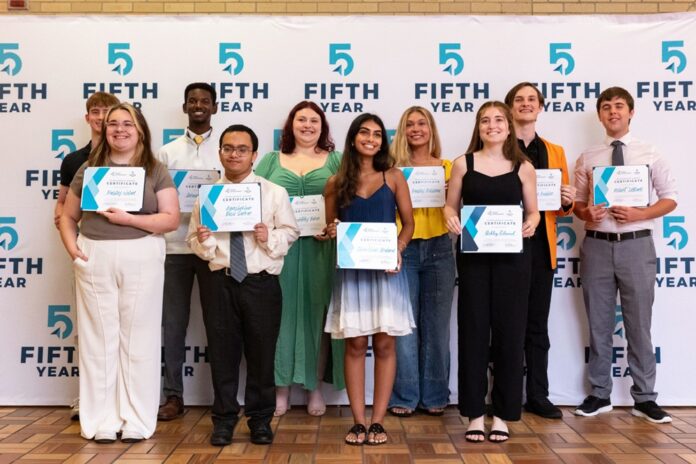
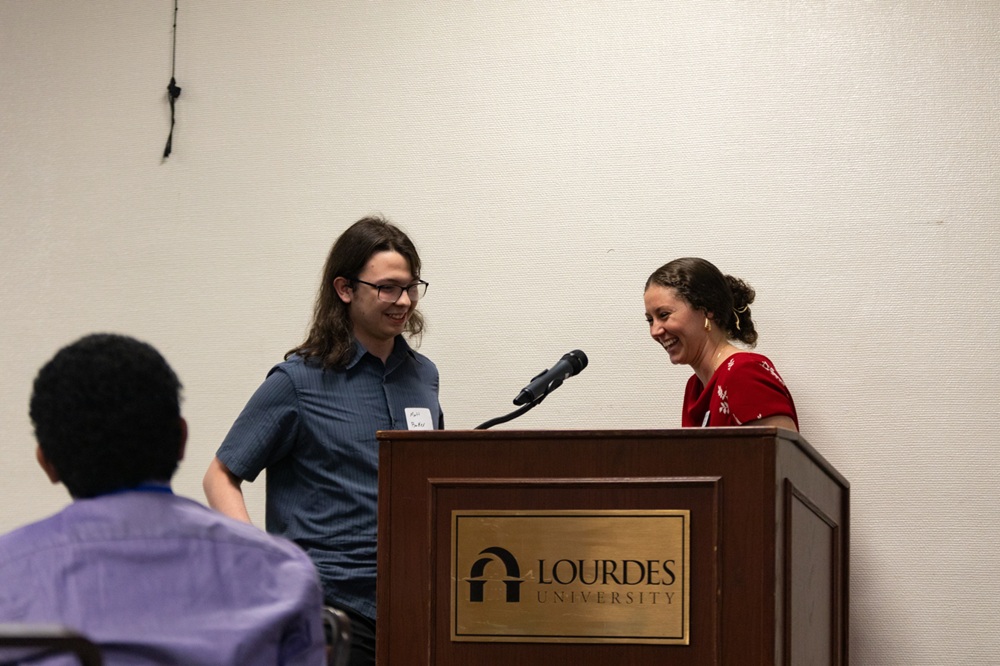
Scholarship recipients pose for a picture during a JA Scholarship Recognition banquet inside the Franciscan Center at Lourdes University in Sylvania, Ohio on Wednesday, August 6, 2025. (TFP Photo by Stephen Zenner)

Recipients rewarded for academics, program participation 

SYLVANIA About 80 percent of college students switch their majors at least once, according to national studies. That lack of direction is something Junior Achievement of Northwestern Ohio strives to prevent by helping students develop a clear vision for their future before graduating from high school.

Courtney Baker, 18, a 2025 graduate of Toledo School for the Arts, is an example of how JA can help young people reach their goals and get on track for college and career.

She spoke at an Aug. 6 JA scholarship luncheon at Lourdes University, where she and nine other students each received $10,000 college scholarships for their academic excellence, participation in JA programs, and written essays reflecting on their achievements and goals.

The scholarships are for $5,000 for each of the first two years of college.

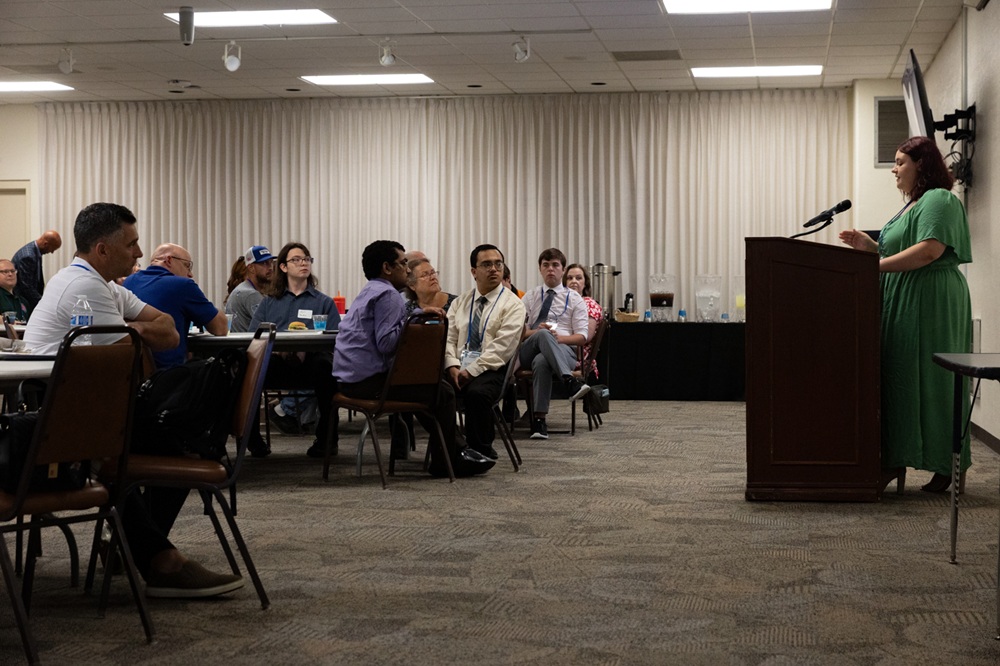
Courtney Baker, a JA scholarship recipient, speaks during a JA Scholarship Recognition banquet inside the Franciscan Center at Lourdes University in Sylvania, Ohio on Wednesday, August 6, 2025. (TFP Photo by Stephen Zenner)

“At the beginning of this 2024-25 school year, I knew one thing: I wanted to be a surgeon. But that path felt terrifying! It’s so big, so unapproachable. I was pretty ready to just take a year and figure it out later,” Baker said.

When she attended a JA assembly for high school seniors, “something just clicked.”

“Something was pulling me” to join the organization, she said, even though “I didn’t know what I would get out of it.”

Baker signed up for as many site visits as possible to Mercy Health facilities.

“That was the best decision I made. My first visit was mind-blowing. I got to stand in an actual surgery – which I brag about all the time. I loved every second of it. I loved the people, the hospital, the entire event. Yes, I loved wearing scrubs. I got to look at the surgical tools. I got to see how they set up the beds. All of that seemed so much fun. At that moment I knew that surgery was where I wanted to go.”

She has enrolled in Mercy College’s four-year program to earn a bachelor of science degree in biology. After that, Baker plans to continue her education for nine more years to become a surgeon. She also plans to continue her hobbies of theater and dance.

Also awarded $10,000 scholarships were:

  • Ryan Arnold, Tiffin Columbian High School
  • Agnishekhar Basu, Perrysburg High School
  • Shambhavi Brahme, Perrysburg High School
  • Paisley Dusseau, Perrysburg High School
  • Robert LeBlanc, St. Francis de Sales High School 
  • Luke Mohler, St. Francis de Sales High School
  • Paisley Nolan, Junior Achievement’s 5th Year Program
  • Sawyer Scheff, Perrysburg High School  
  • Jevaun Thomas, Perrysburg High School
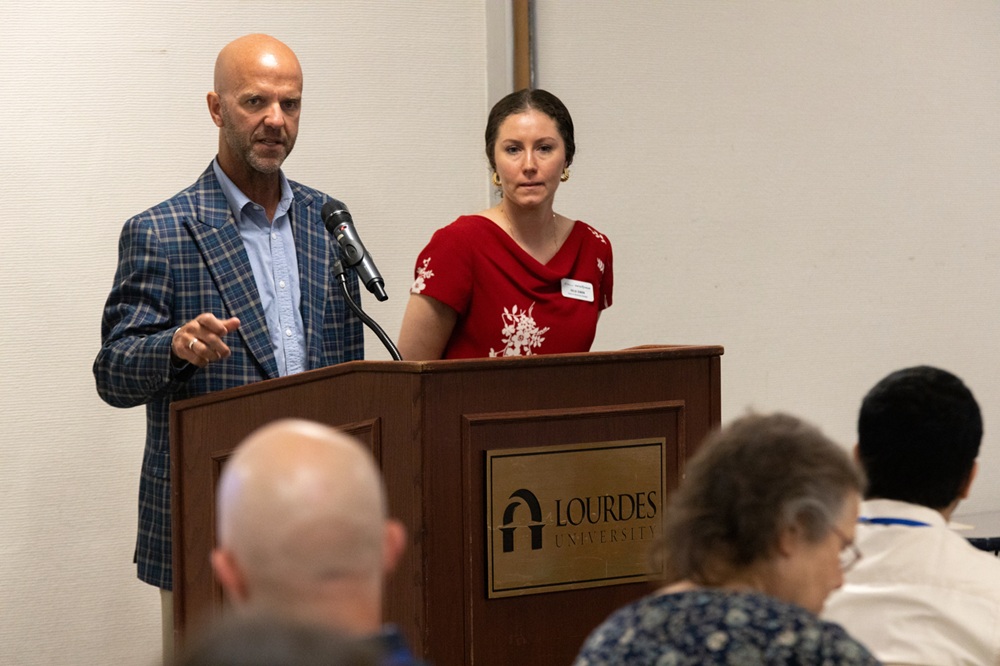
Jim Pollock, the president of JA Inspire, speaks with Julia Simon, the event and marketing manager for JA Inspire, during a JA Scholarship Recognition banquet inside the Franciscan Center at Lourdes University in Sylvania, Ohio on Wednesday, August 6, 2025. (TFP Photo by Stephen Zenner)

JA’s new 5th Year Program is the only one of its kind nationwide, with high school graduates living on the Lourdes University campus for a year while they “are deliberately discovering what they want to do next,” explained Jim Pollack, president of JA of Northwestern Ohio.

Students in the 5th Year Program spend a year participating in site visits, workplace experiences, and professional skill workshops with the goal of helping them refine their educational and career choices.

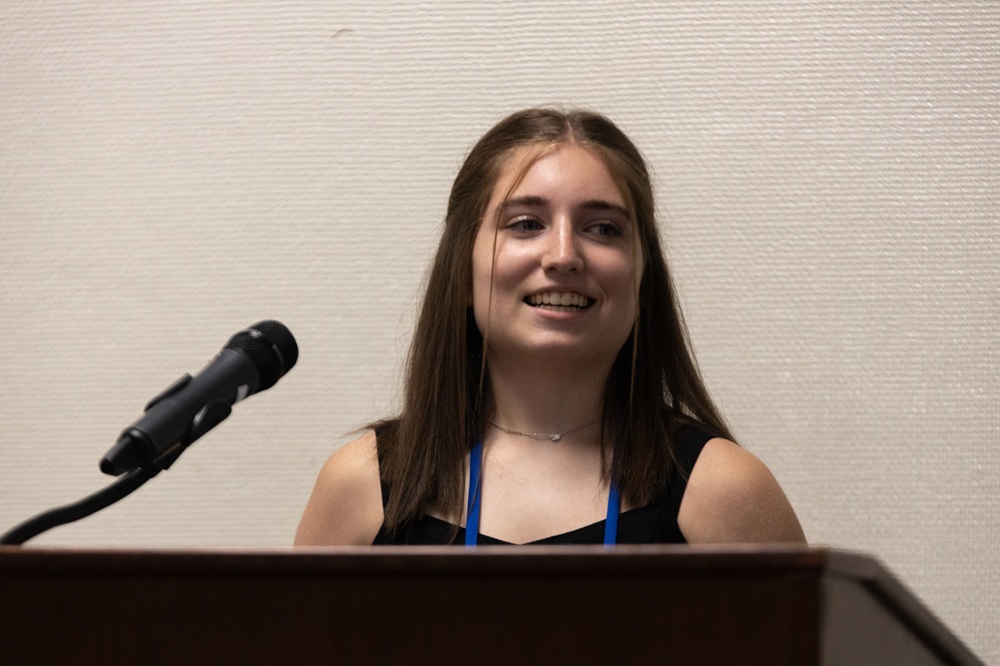
Ashley Edmond, a JA scholarship recipient, speaks during a JA Scholarship Recognition banquet inside the Franciscan Center at Lourdes University in Sylvania, Ohio on Wednesday, August 6, 2025. (TFP Photo by Stephen Zenner)

Ashley Edmond, a 2024 graduate of Tiffin Columbian High School, said at the awards ceremony that she participated in JA’s online stock market competition during her senior year and came in second in regional competition.

“At the end of the school year we thought we were done with it, but then we realized there was no Ohio team for the national competition,” she said.

Edmond’s team, which included new scholarship recipient Ryan Arnold, ended up winning the national competition. 

“The grand prize for winning that competition was to fly to Washington, D.C., and go to the student leadership summit that was held there by JA,” Edmond said. 

She said her experience going to seminars and participating in JA programs gave her the confidence she needed to pursue a career in business. She is now studying for an administration degree at Bowling Green State University.

Matt Baker, a JA scholarship recipient, walks to the podium, past a laughing Julie Simon, the event and marketing manager for JA Inspire, during a JA Scholarship Recognition banquet inside the Franciscan Center at Lourdes University in Sylvania, Ohio on Wednesday, August 6, 2025. (TFP Photo by Stephen Zenner)

Matthew Baker, a 2023 JA scholarship winner, is studying cyber security at Eastern Michigan University. He said when he was at Whitmer High School he had no plans to join JA, but his mother encouraged him to do so.

“I went to my first program, and I liked it,” he said. He participated in three internships and “now I’m doing cool computer things.”

Among his cyber security projects is devising ways to detect USB Rubber Duckies, which are hacking tools that “can really mess up your system.” 

Baker said one lesson he learned after joining JA really stands out: “Listen to your mother.”

To learn more about JA scholarship opportunities, visit janwo.org.

ABLE solidarity rally in Downtown Toledo

0

TOLEDO – On Thursday, July 31, the ABLE League of Justice and UAW-NOLSW Local 2320 gathered in front of ABLE’s office on Jefferson St. in solidarity with over 70 percent of the employees seeking to unionize. The group has experienced resistance from management. Read more about it here.

Party in the Park energizes Downtown Toledo

0
Venyx is one local band that played at Party in the Park in downtown Toledo. (Courtesy photo by David Cichocki)

The concert series is off to a rockin’ start

TOLEDO – Party in the Park has gotten off to a great start, drawing on average between 3,500 and 4,000 people downtown for each Friday night event. But organizer Cheryl Hardy of ConnecToledo is just getting started.

“I think everybody’s pretty excited about what’s happening, but as I say to people all the time, there are plenty of things we’d like to improve on in the future. There are things we can add, things we can do…but there’s also plenty to celebrate,” Hardy said. “Let’s not forget to celebrate the wins because we really are doing some incredible things that we have never done before.”

(Courtesy photo by Danny Woodcock)

The free concerts in downtown’s Promenade Park started May 30 and continue each Friday through Aug. 29, spotlighting local bands such as the Skittle Bots, Arctic Clam, and the Beef Carvers. The entertainment has also included popular annual invents such as Toledo’s July 4 Fireworks Show and Jeep Fest, which ran from Aug. 1-3. 

Keeping the local focus, beer and spirits from 10 local breweries have accounted for 50 percent of the sales at concerts, Hardy said.

A tribute to Elton John was featured Aug. 8 with Greggie and the Jets, and a drone show is scheduled for the final week along with a Garth Brooks tribute show. Hardy promised “a special delivery” from a skydiver to open the Aug. 29 event by carrying an American flag while descending into Promenade Park.

Nikki D and the Sisters of Thunder. (Courtesy photo)

For many Toledoans, the new downtown concerts bring back memories of the legendary Rally by the River series, which featured nationally known acts such as Foreigner, the Temptations, Jerry Lee Lewis, and Cheap Trick performing in Promenade Park from 1990 to 2007. 

For Hardy, one of the highlights of this year’s concert series has been witnessing the joy of the musicians as they walk off the stage. 

“All of our local talent, they just keep bringing it. They come down to the Party in the Park and are excitedly nervous about playing at that venue. And then when they get off the stage…” Hardy said, pausing because she was getting choked up. “…when they get off the stage they are hugging and they’re like, ‘We did it!’ They’re celebrating. And it’s so much fun to watch.”

Nicole Khoury, lead singer of Arctic Clam (and a Toledo Municipal Court judge), agreed that performing to thousands of music fans in Promenade Park was a very special night. 

“There’s no better feeling as a musician than watching a large crowd collaborate with your performance,” Khoury said. “We had a great night on July 11th and loved being a part of a rebirth of Toledo history. As a Toledoan, I hope this continues to grow back to the exciting time it was back in the day!”

While music is a key ingredient, there’s much more to organizers’ goals for Party in the Park.

“Not only do we need people to come downtown and go into the bars and restaurants — and we are doing a great job of that — but we need to spread that out around downtown. We need to get people to live downtown, and we need to get people to come back downtown to work,” Hardy said.

“So we have three key economic drivers, and we really truly only touched on one of them for the 2025 season. As we continue the seasons, we’ll be adding different layers to this activation program to help reach all three metrics.”

The success of the 2025 season has made future Parties in the Park more likely.

“I’ve been thinking about next year since last year,” Hardy said. “Because this is such a layered approach, you have to prove some things the first year. And now that’s it’s proven it works, this is something that should continue, and I think everybody’s starting to talk about that.”

Along with ConnecToledo, Party in the Park organizers include the City of Toledo, Lucas County, Destination ToledoMetroparks Toledo, and Downtown Toledo Improvement District, who invested a total of $320,000 in launching the series.

Inside Lucas County Commissioners Meeting: Aug. 5

0
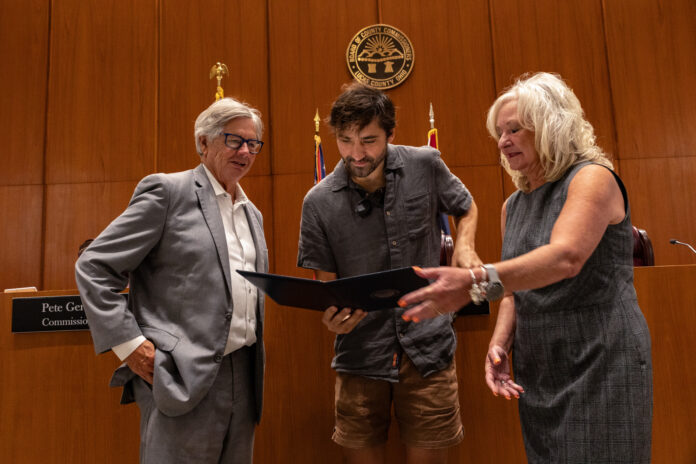
Lucas County Commissioners Pete Gerkin and Lisa Sobecki stand around Oliver Hazard frontman Michael Belazis, as he inspects the proclamation making August 16th Oliver Hazard Day during a Lucas County Commissioners’ Regular Meeting inside the Commissioners’ Hearing Room at 1 Government Center in Toledo, Ohio on Tuesday August 5, 2025. TFP Photo/STEPHEN ZENNER

A Hazardous Proclamation

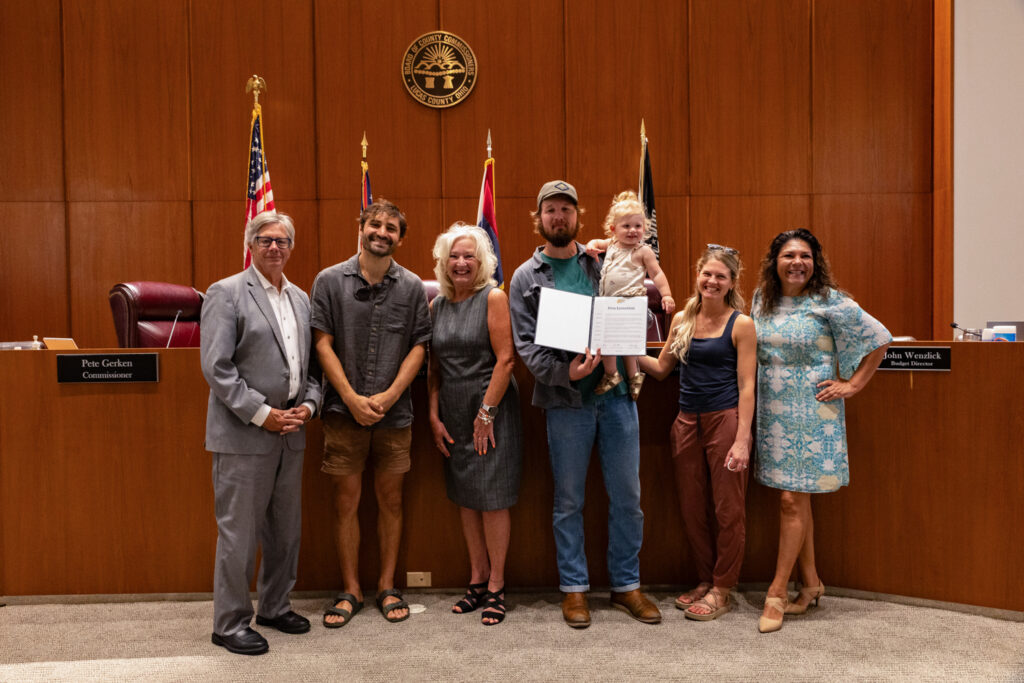
TOLEDO – Two of the three indie-folk band members of Oliver Hazard were present at the Lucas County Commissioners’ meeting on Tuesday to receive the official proclamation declaring August 16th Oliver Hazard Day. 

This day coincides with the music festival the band helped start in Waterville, where the band officially hails from.

Michael Belazis, frontman for the folk band Oliver Hazard, inside the Commissioners’ Hearing Room at 1 Government Center in Toledo, Ohio on Tuesday August 5, 2025. TFP Photo/STEPHEN ZENNER

“We tested out our first living room in Ottawa Hills, Ohio,” said Michael Belazis, the band’s frontrunner, as he gave a quick recap of Oliver Hazard’s first show. Belazis explained the band’s success as an organic growth caused by their fans’ initiative. “That one fan would turn into 35 fans,” Belazis said inside the Commissioners’ Hearing Room. 

The band who paid for their first guitar with an electric plug-in with an Accelerator Grant from the Arts Commission of Greater Toledo, since then has taken off. Initially they played in living rooms, local venues and eventually worked their way to Bonnaroo, as they carved a niche in the space of soft, breathy folk music.

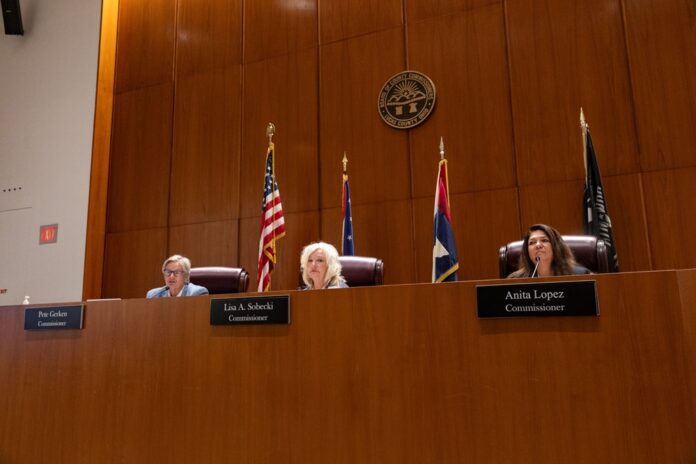
Michael Belazis, frontman for the band Oliver Hazard, crosses in front of Lucas County Commissioners Pete Gerkin, Lisa Sobecki and Anita Lopez during a Regular Commissioners’ Meeting inside the Commissioners’ Hearing Room at 1 Government Center in Toledo, Ohio on Tuesday August 5, 2025. TFP Photo/STEPHEN ZENNER

Lucas County Commissioner Pete Gerkin thanked the two members who were present, Belazis and Devin East, for remaining in the area after their success.

Oliver Hazard is short for Oliver Hazard Perry, also known as Commodore Perry. Perry was the Navy officer who led American forces at the Battle of Lake Erie in the War of 1812, and he is also the namesake of Perrysburg. The band was happy to receive support from local government, while admitting this was the first time they had interfaced in person with county officials.

More information on Oliver Hazard Day music festival can be found here.

Lucas County Commissioner Pete Gerkin, Michael Belazis, frontman for Oliver Hazard, Lisa Sobecki, Lucas County Commissioner, Devin East, band member of Oliver Hazard, Nova East (aged 1), Megan East and Anita Lopez, Lucas County Commissioner stand with the proclamation making August 16 Oliver Hazard Day during a Lucas County Commissioners’ Regular Meeting inside the Commissioners’ Hearing Room at 1 Government Center in Toledo, Ohio on Tuesday August 5, 2025. TFP Photo/STEPHEN ZENNER

Election Security

Lucas County then accepted a $10,000 grant from the Ohio Secretary of State, Frank LaRose, called the “2025 Elections Security Grant Award for Critical Infrastructure.” 

Deputy Director of the Lucas County Board of Elections, Tim Monaco, answers questions from Lucas County Commissioner Pete Gerkin during a Lucas County Commissioners’ Regular Meeting inside the Commissioners’ Hearing Room at 1 Government Center in Toledo, Ohio on Tuesday August 5, 2025. TFP Photo/STEPHEN ZENNER

Deputy Director of the Lucas County Board of Elections, Tim Monaco, was on hand to answer questions from the commissioners, but Gerkin seemed bothered by Monaco’s caginess. 

“I can’t get into too much of the specifics,” Monaco said when Gerkin asked what the grant would be used for. “It would be in violation of the security directive if I get into the specifics on what is in the security directive in a public meeting.” Monaco said he could tell the commissioners what the funding is used for during an executive session, but not in public. 

After a short while Gerkin relented. 

Pete Gerkin, Lucas County Commissioner, inquires about the 2025 Election Security Grant Award during a Lucas County Commissioners’ Regular Meeting inside the Commissioners’ Hearing Room at 1 Government Center in Toledo, Ohio on Tuesday August 5, 2025. TFP Photo/STEPHEN ZENNER

“I’m always curious when we take money, and we don’t really know where it goes due to security and privacy,” Gerkin said, especially since, he said, the “Secretary of State said there’s little to no voter fraud in Ohio.”

All Monaco would say in a public space was that it was for “physical security” and “cybersecurity” updates dealing with things like voter registration and the physical security of the office of the Board of Elections itself.

Other items

The rest of the Commissioners’ meeting passed without particular note, adjourning after about an hour, and then the next meeting began at 2 p.m.

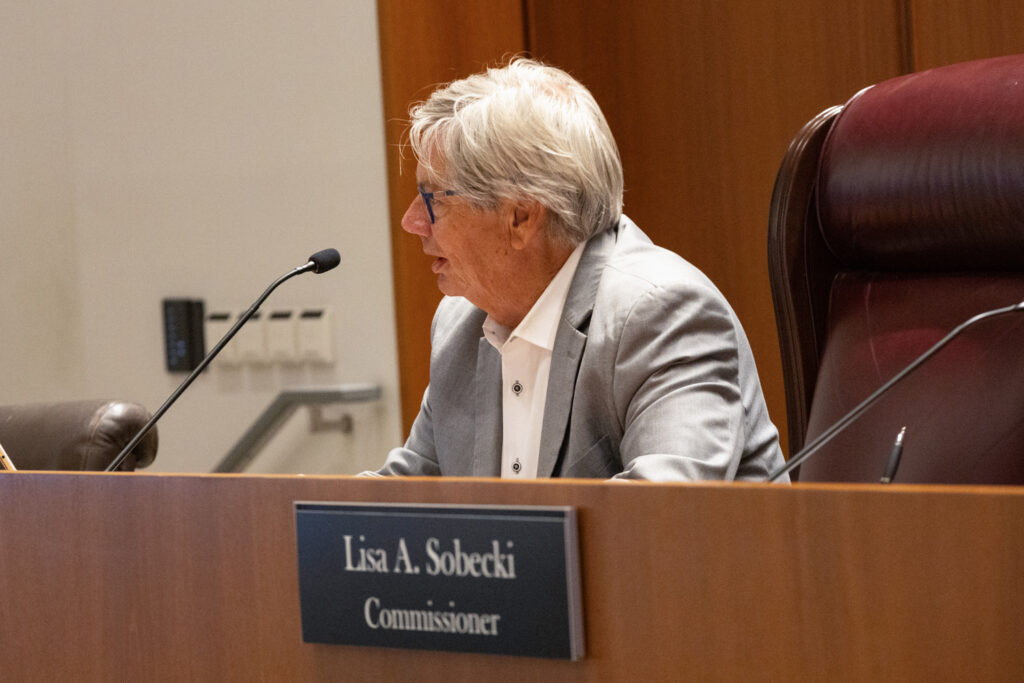
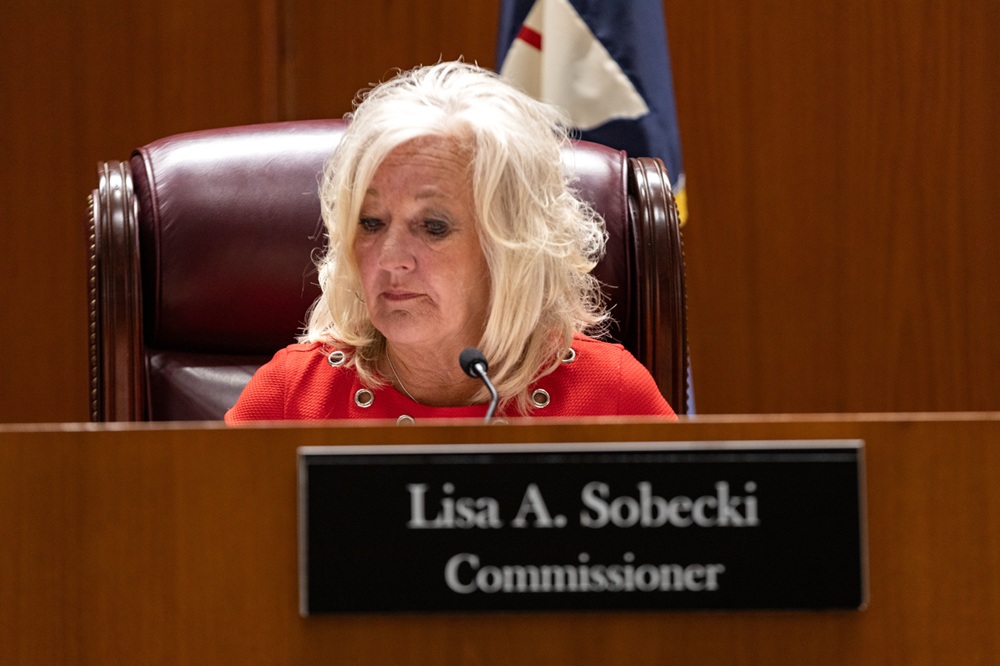
Lisa Sobecki, Lucas County Commissioner, starts a Lucas County Commissioners’ Regular Meeting inside the Commissioners’ Hearing Room at 1 Government Center in Toledo, Ohio on Tuesday August 5, 2025. TFP Photo/STEPHEN ZENNER

Early in the afternoon, only two of the Lucas County Commissioners, Lisa Sobecki and Anita Lopez, were present, and presided two agenda items, which were quickly finished. 

Lucas County Engineer, Mike Pniewski, briefly told the remaining commissioners that there no longer needed to be a vehicle weight limit on Gibbs Road Bridge No. 5, because the bridge, over Ten Mile Creek, was being torn down.

Then Commissioners approved a private agreement for Private Sanitary Sewer and Private Water Supply for Otterbein Sunset Village Phase V in Sylvania Township and adjourned. 

Scouts

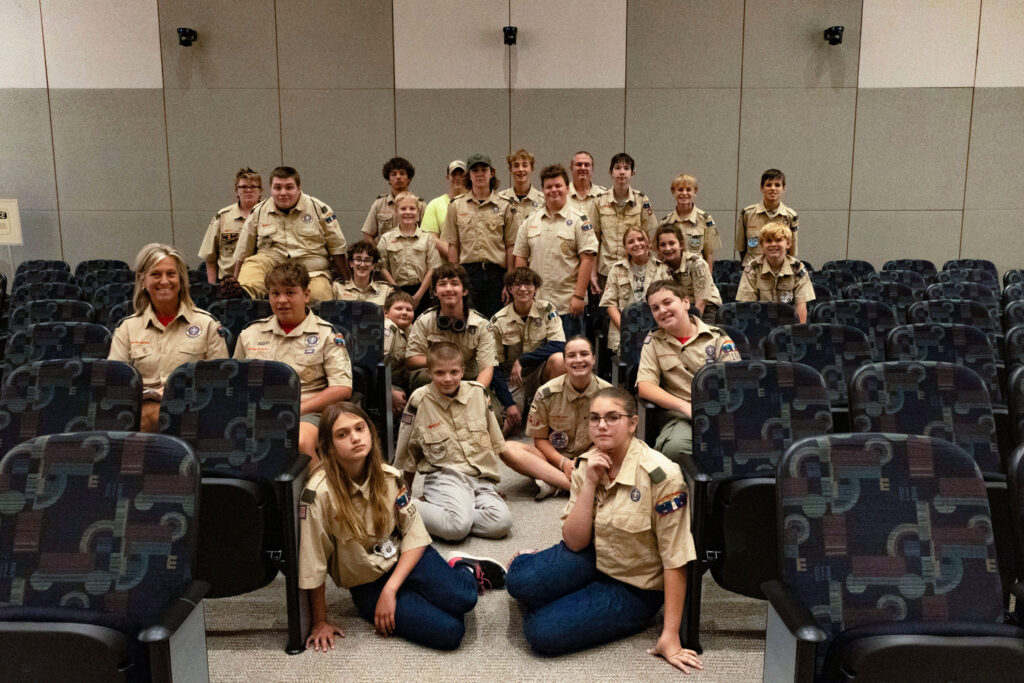
Both meetings were attended by special visitors led by Bob Neubert, scoutmaster for Troop 66. 

24 scouts were present on Tuesday to earn their citizenship in the community merit badge.

Scouts from all over Toledo led by Bob Neubert, scoutmaster for Troop 66, attended two Lucas County Commissioners’ Regular Meetings inside the Commissioners’ Hearing Room at 1 Government Center in Toledo, Ohio on Tuesday August 5, 2025. Scouts did this as part of the requirements for their Citizenship in the Community merit badge. TFP Photo/STEPHEN ZENNER

“I bring about 20 scouts in every June, and 20 scouts in every August,” Neubert said. 

“I do it at a Commissioners’ meeting,” he said. “Because I am a Lucas County employee. I work for the Lucas County Engineer.”

Part of earning the badge is an eight-hour service project. Neubert said, “We are going to be storm drain stenciling tomorrow, where they spray paint the catch basins that say dump no waste.”

Officials voice concerns on proposed property tax changes 

0
Pexels photo by Tara Winstead

TOLEDO — Homeowners may like the sound of lower property tax bills, but school and county officials are sounding the alarm that some reforms under consideration in Ohio could have a devastating impact on services. 

The dust has yet to settle on several property tax changes that were included in the state’s biennial budget bill. Ohio Gov. Mike DeWine exercised his veto power on the four such provisions in the bill, but the Ohio House of Representatives returned to Columbus for a special session July 21 so Republicans could attempt to override three of those vetoes.

These included:

  • A measure that would eliminate local governments, school districts or other entities’ ability to propose replacement or emergency property taxes levies
  • A measure that would require certain additional tax levies to be included when calculating the 20-mill floor calculation that the state takes into consideration when distributing school funding
  • A measure that would grant county budget commissions the authority to reduce millage of voter-approved levies that the commission believes would lead to unnecessarily excessive revenue

Ultimately, Ohio House Republicans were only able to muster enough votes to override the first proposal in this list, and that move still requires the approval of 60 percent of the Ohio Senate.

The Toledo Public Schools Board of Education sent a letter last month to Rep. Josh Williams, Majority Whip, expressing strong opposition to all three provisions. 

“These proposals would significantly erode local control, destabilize school funding, and override the decisions of voters who have historically supported strong public schools in their communities,” board members wrote in a joint statement. “If these provisions are allowed to take effect, districts like ours will face even greater challenges in delivering quality education to every student.”

The TPS Board of Education urged legislators to reject any effort to override these vetoes and instead collaborate with local leaders to protect the financial tools essential to public schools’ success.

The push for property tax reform

Several of the property tax reforms proposed in the state budget bill mirrored those found in House Bill 335, the Property Tax Relief Now Act that was introduced in June. 

“Ohio’s property taxpayers are at a tipping point,” Rep. David Thomas (R-Jefferson) said in sponsor testimony for the bill. Rep. Thomas pointed to a stalemate between the legislature and local governments over taking action to address spikes in what he described as “unvoted taxes” over the last five years.

One of the most dramatic changes HB 335 proposes is eliminating inside millage. Under the Ohio Constitution, each municipality is allowed to set this portion of property taxes without voter approval. By law, inside millage cannot exceed 10 mills, and none of the municipalities in Lucas County are at that maximum. A mil is $1 of tax for $1,000 of property value. 

The inside millage rate for Lucas County is 2.00 and Toledo City is 2.50. The Lucas County Auditor’s office provides a list comparing local inside millage rates

Outside millage makes up the other part of property taxes and usually represents the majority of a resident’s tax bill. Voters determine outside millage at the ballot box, and it includes levy support for schools, senior services, Metroparks, libraries and other entities. 

Ohio enacted property tax reform in 1976 under House Bill 920 that was meant to keep inflation from increasing voted taxes. This means that when property values increase, outside millage cannot exceed the dollar amount that was originally passed at the ballot box and the effective millage rate goes down. 

Inside millage is not regulated by House Bill 920 and does increase at a proportional rate to property values. 

In testimony for HB 335, Rep. Thomas said the bill would provide $3.5 billion in direct property tax relief to Ohioans by eliminating the unvoted inside millage property taxes that go to counties, schools, villages and cities. 

Representatives from TPS as well as the Lucas County Commissioners expressed alarm about the potential impact of this change in written testimony opposing HB 335. 

The commissioners described inside millage as a constitutionally authorized and long-standing component of Ohio’s local government finance structure that has been in place since 1934.

“This revenue is not a luxury. It is a necessity,” the commissioners wrote in their testimony. “It enables us to carry out our legal obligations and provide the public services that our residents expect, rely upon, and are entitled to receive.”

The passage of HB 335 would result in a cut of more than 15 percent to the county’s general fund. 

Lisa Sobecki, Lucas County Commissioner, ends a Lucas County Commissioners’ hearing at 1 Government Center in Toledo, Ohio on Tuesday July 22, 2025. (TFP photo by Stephen Zenner)

“You’re cutting $20 million from your budget. That’s huge,” Commissioner Lisa Sobecki told the Toledo Free Press. Sweeping cuts would result, spread across all county services including law enforcement, courts, elections, jail facilities and 911 emergency response.

Losing the assurance of inside millage as security could also result in a credit downgrade for the county, increasing borrowing costs for future debt-funded projects.

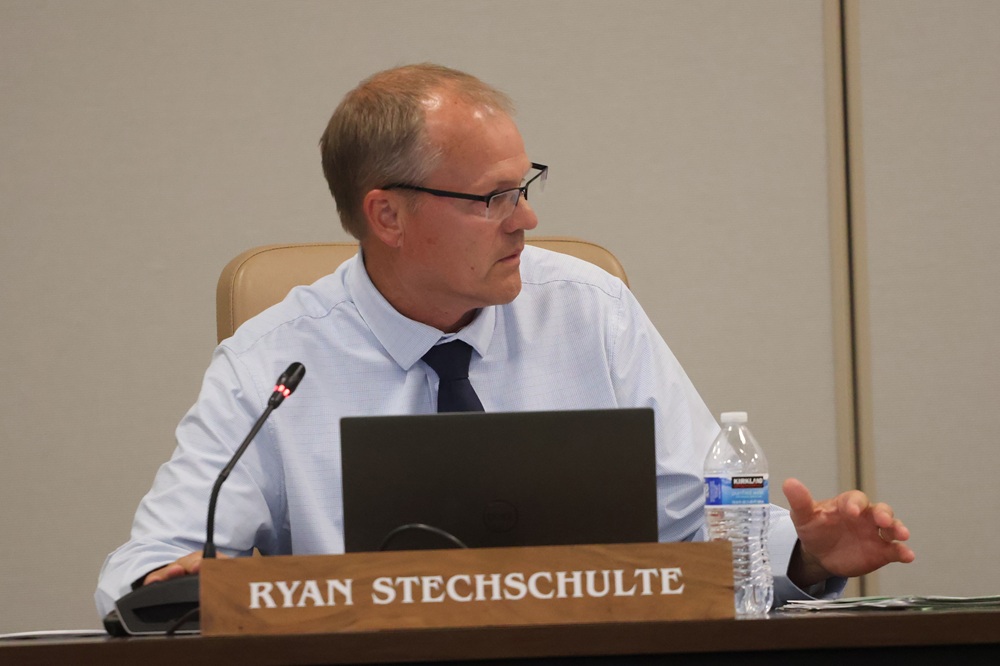
Ryan Stechschulte, treasurer and chief financial officer for TPS, and TPS Board vice president Chris Varwig also submitted testimony opposing HB 335. Stechschulte wrote that the district would lose $6 million in fiscal year 2026 and $12 million more the following year if the bill passed, requiring immediate and significant cuts. These would include closing schools, a reduction of 180 positions over two years and cuts to student services, intervention programs and extracurriculars. 

Ryan Stechschulte, treasurer and chief financial officer for TPS, warned in testimony opposing Ohio HB 335 that the district would lose $6 million in fiscal year 2026 and $12 million more the following year if the bill passed. (TFP Photo/Laurie Bertke)

In addition, the bill’s proposed ban on new emergency and substitute levies — which may pass as part of the state’s budget bill if the legislature’s veto override stands — would prevent TPS from renewing its current emergency levy, according to Stechschulte. He wrote that the district would be forced to place a new levy on the ballot in 2027. If that levy failed, the district would face an additional $15 million in cuts. 

“This bill strips away local control, introduces fiscal volatility mid-contract and mid-budget cycle and puts our most vulnerable students at the greatest risk,” Stechschulte wrote. He urged legislators to “take the time to develop a collaborative solution that provides meaningful tax relief while protecting the future of Ohio’s children.”

Finding the right balance

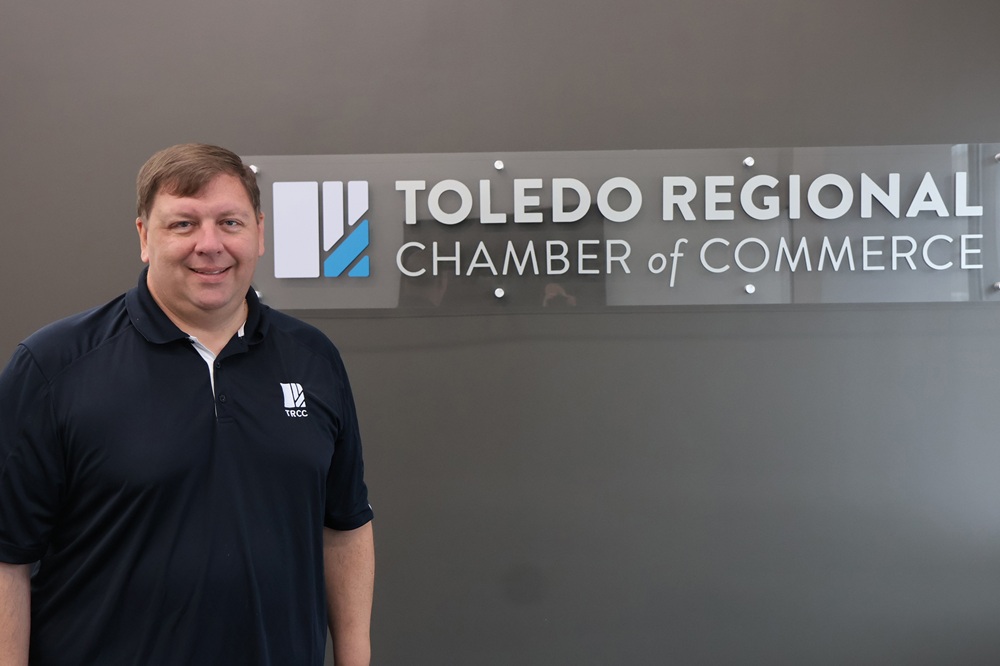
Why the strong push for property tax reform now? Brian Dicken, who serves a vice president for advocacy and strategic initiatives for the Toledo Regional Chamber of Commerce, speculates the movement is partly driven by recent increases residents saw from property reevaluations. 

“Property taxes in Ohio are incredibly complicated,” said Dicken. “At the state level, there’s probably close to 20 different pieces of legislation that deal with some aspect of property tax reform.”

Brian Dicken, vice president for advocacy and strategic initiatives for the Toledo Regional Chamber of Commerce, speculates the push for property tax reform is partly driven by recent increases residents saw from property reevaluations. (TFP Photo/Laurie Bertke)

In his role, Dicken coordinates interactions with elected officials and leads policy development on behalf of the chamber’s 2,000 members. From a business perspective, Dicken said making sure the tax burden is balanced is always important.

“We understand that if we want to have services like police and fire, we have to pay for that. But we also want to make sure that there’s not an overly burdensome tax structure that makes it difficult for businesses to be successful.”

The business community also takes an interest in entities that serve the greater public good such as schools. A local school system has a big impact on talent attraction and retention and workforce development. “Without a prepared workforce, our community suffers significantly,” Dicken said.

The chamber has not taken a stance on any of the specific reforms under consideration at this point, but Dicken said whatever happens needs to be clear and easy to understand.

“There’s a lot being discussed right now in terms of tax reform across the state,” he noted.

When Gov. DeWine vetoed the property tax provisions in the state budget bill, he announced a task force was to be created to study the property tax reform issue and make recommendations to the General Assembly. The group is expected to include lawmakers, state officials, school and community representatives and property tax experts. 

This comes on the heels of a bipartisan legislative task force that extensively studied property tax reform and issued a report with 21 recommendations last year.  

“I think the fact that there’s been so many studies shows the complexity around the issue,” said Dicken. 

He said local entities need to have time to react and plan if the funding formula changes. 

“We’ve got to make sure we’ve got the right balance,” Dicken added. “You don’t want to overtax your communities because that’s not good, but at the same time you’ve got to make sure that those basic needs are met so that way we have a safe, vibrant community. And that’s always the biggest question.”

Algal toxins in Maumee Bay State Park sand

0
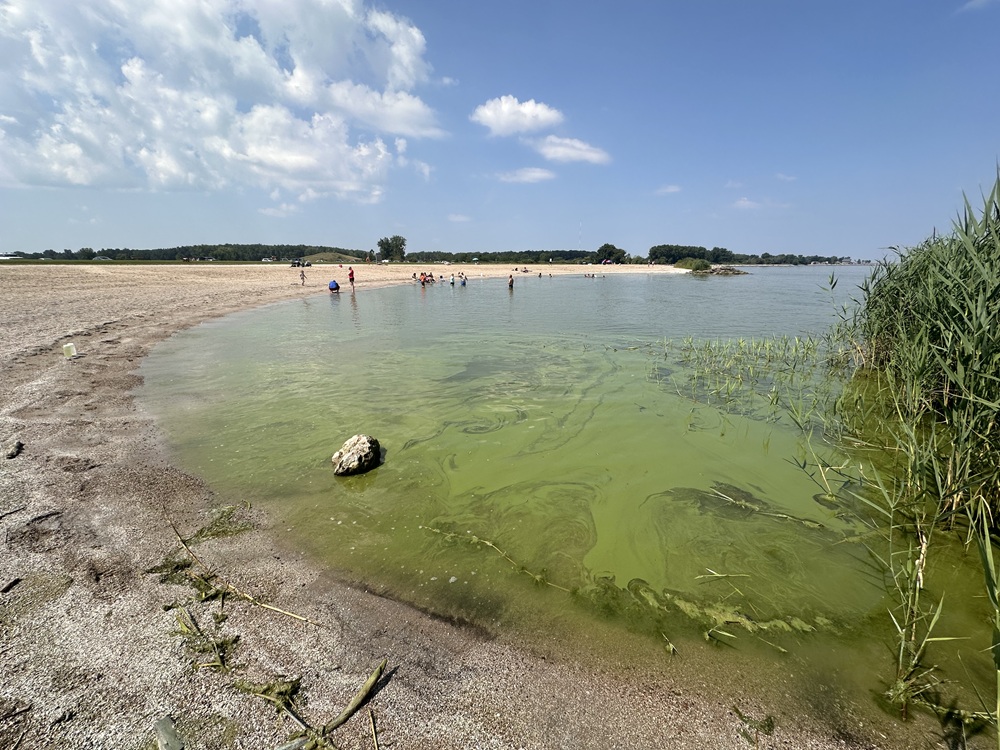
Garrett Moots collected water samples at the shoreline on July 5, 2024. Even with all the green foam on the beach, testing showed lower toxin levels than expected. (Courtesy Photo/Garrett Moots)

OREGON — We’re no strangers to algal blooms in Northwest Ohio. Most of us remember 2014, when a toxic bloom shut down Toledo’s water supply for nearly three days. Since then, all eyes have been on the water. But what about the sand?

That’s the question University of Toledo researchers asked — and the answer may surprise you.

“Everyone’s focused on the water, and for good reason,” said Dr. Von Sigler, professor of environmental microbiology at UToledo. “But we thought, if the water has toxins and waves are constantly crashing onto the beach, what happens to the sand?”

Sigler led the study, recently published in the Journal of Great Lakes Research. The research revealed that microcystin, a toxin produced by cyanobacteria during harmful algal blooms, can accumulate in the wet sand of Maumee Bay State Park and linger for up to three weeks.

Fieldwork, sampling and analysis were carried out by Garrett Moots, a Ph.D. student in ecology and organismal biology, as part of his graduate research under Sigler’s mentorship.

“We’re not saying don’t go to the beach,” Moots said. “But if there’s a ‘no swim’ sign, follow it. Those toxins in the water are likely in the sand too.”

On August 4, 2024, heavy accumulations of algal scum, mat, and wrack were photographed washing ashore in a Maumee Bay cove. These thick patches tend to pile up near the sides of the coves, where wind and waves push everything ashore.
(Courtesy Photo/Garrett Moots)

Digging into the sand

In summer 2022, Moots collected weekly sand and water samples from three man-made coves at Maumee Bay. The sites were chosen to reflect typical beach conditions while remaining manageable for a solo researcher.

Sampling occurred each afternoon around 3 p.m., during peak beach hours. “We’d scoop sand from the foreshore, where that wet strip where waves meet land, and take it back to the lab,” Moots said.

Using the same testing method as Toledo’s water treatment plant, the team measured microcystin levels in parts per billion. In over half the samples, toxin levels in the sand were higher than in the water — sometimes seven times higher. In a few cases, concentrations exceeded 29 parts per billion, more than triple the EPA’s recreational water threshold.

The study also found that shallow surface sand averaged twice the microcystin concentration of deeper sand, suggesting beach sand can serve as a toxin reservoir. But one of the most striking findings was just how much levels varied only feet apart, a challenge Sigler said stems from natural “heterogeneity,” which makes the issue harder to predict or monitor.

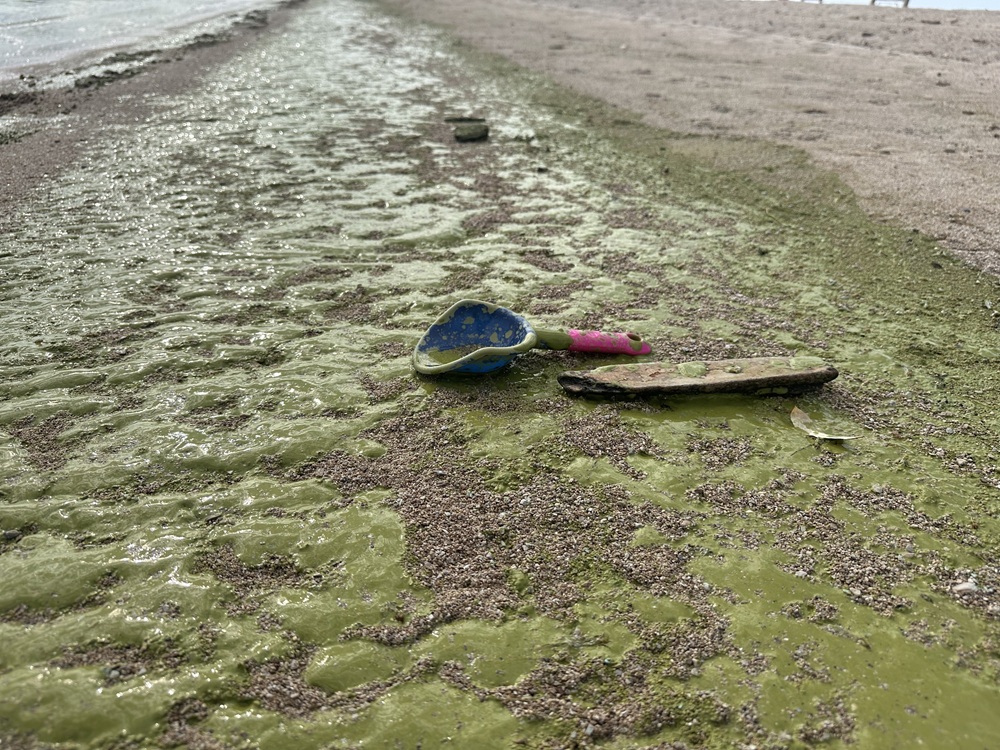
Captured on July 5, 2024, a dense algal mat lining the shoreline at Maumee Bay State Park. Despite the vivid green appearance, toxin levels that day were just above the advisory threshold, showing that what you see isn’t always what you get. (Courtesy Photo/Garrett Moots)

Should we be concerned?

Here’s the good news: microcystin doesn’t easily absorb through healthy skin.

“Unless you’re eating handfuls of sand — we’re looking at you, toddlers — the risk is low,” Moots said.

“The threshold for concern in water is eight parts per billion, assuming you’re accidentally swallowing about three tablespoons, or 100 milliliters,” he explained. “You don’t usually ingest sand the same way.”

Still, the team advises rinsing off after direct contact with wet sand — especially for those with scrapes, cuts or prolonged exposure. “The skin is a great barrier,” Sigler said. “Microcystin is a large molecule, too big to pass easily through; however, there are still chemical quirks we’re exploring. So as a precaution, wash up.”

If a rash develops, it’s likely mild and short-lived. “This isn’t putting you in bed for a week or sending you to the ER,” Sigler said. “It’s maybe some irritation, but there are no severe symptoms.”

More than just microcystin

Maumee Bay’s geography makes it especially prone to build-up. Its shallow, slow-moving waters and embayed coves can trap algae and toxins near the shore. Nearly 40,000 people visit the beach each year.

“There are only four to six weeks where this is even an issue,” Sigler said. “The rest of the year, Maumee Bay is a very pleasant place to be. It’s a gorgeous beach and a fantastic natural space.”

Moots agreed. “Lake Erie takes a lot of criticism,” he said. “But Maumee Bay has wetlands, open space and natural beauty that makes it really special.”

What’s next?

Now continuing his dissertation, Moots is studying how factors like sunlight, organic matter and wave action affect how long microcystin lingers in sand.

“This study is just the first step,” Moots said. “There’s so much more to understand about how these toxins behave in different conditions.”

While the current research focused on Maumee Bay State Park, the team may expand to other beaches such as Luna Pier and Sterling State Park if conditions allow.

Ultimately, both researchers want to raise awareness, not fear.

“This isn’t a public health crisis,” Sigler said. “We’re just shining light on something that hasn’t been looked at. You’re probably not going to get sick from beach sand. But a quick rinse after your visit? That’s just good practice.”

So go ahead — pack your towel, bring the sunscreen and enjoy the sand. Just keep an eye out for the signs.

Regional Growth Partnership: Building economic bridges

0
Courtesy photo

TOLEDO – When Italian Bowl XLIV was held at the University of Toledo’s Glass Bowl on June 28, Guelfi Firenze was not the only winner.

While the football team from Florence defeated the Ancona Dolphins 49-14 on the field, the Northwest Ohio Regional Growth Partnership was also scoring a big win. 

Bringing the Italian Football League Championship to Toledo for the second time (the first was in 2023) shows the global growth and outreach of the RGP.

“RGP and JobsOhio were the main sponsors for the entire (Italian Football) league for the last two years, and for very little money,” said Dean Monske, president and CEO of the Regional Growth Partnership. 

“We had big banners that ran like 40 yards along the field. Every single game was televised throughout the entire country and every commercial, every break, everything had the RGP Northwest Ohio logo up on the screen,” he said.

The goal was to promote Northwest Ohio and encourage Italian businesses to consider doing business in this area.

“The more connections you have, and the higher levels you have them, the more credibility you get and the more companies – which is our ultimate goal – are going to say, ‘You know what? I want to talk to those guys.’”

International firms building or expanding in Northwest Ohio make up about a third of the RGP’s success stories, while the other two-thirds come from investments by businesses in Ohio and across the United States.

“We average $3.2 billion each and every year in capital investment on 115 projects,” Monske said. “And capital investment on those 115 projects creates 4,200 new direct jobs – not spinoffs, not fuzzy math, those are direct jobs for those 115 projects.”

According to RGP’s 2024 Annual Report, 2,468 new jobs were created, 14,539 jobs were retained, $5 billion in capital investments and 125 new projects were built in Northwest Ohio last year.

Those numbers include $93 million in capital investments and 124 new jobs for National Electrical Carbon Products in Fostoria, and 50 new jobs and $9 million in capital investments for Creative Liquid Coatings in Montpelier, Ohio.

IBC Properties, a Toledo-area real estate developer, recently announced a $10 million renovation of the former Spicer-Dana manufacturing plant on Bennett Road. The historic  400,000-square-foot building had been vacant for decades and condemned by the City of Toledo before being saved by the RGP’s collaboration with IBC. 

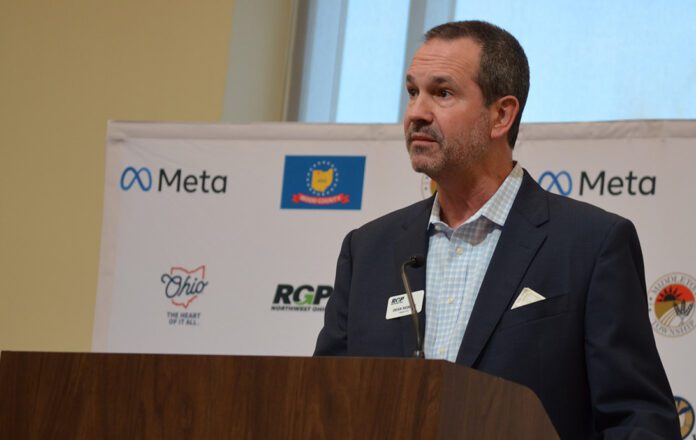
Dean Monske. (TFP Photo/David Yonke)

Another recent high-profile success story for RGP, working with JobsOhio, was landing an $800 million project with Meta – the parent company of Facebook, Instagram, and other social media platforms – to build an AI-optimized data center in Wood County.

“The guys from JE Dunn, the general contractors on that project, were invited to the ground-breaking announcement,” Monske said. “They said they had never been invited to one of those types of events. They were so excited. And it’s great because everyone is helping to make it all happen.”

The Regional Growth Partnership of Northwest Ohio has been around more than 30 years, starting as a government branch of the Toledo-Lucas County Port Authority. But the statewide and national economic development scene started to change in the early 1990s, Monske said, when RGPs started popping up all around the country.

In order to be competitive, the local RGP decided it needed to go private because businesses that were looking to build or relocate were could not afford to have their plans made public before the deals were completed.

Monske said $9.3 million in private funding was arranged for a five-year commitment to launch the new RGP in 2005-06.

Monske had been running the Oregon Economic Development Foundation for five years and was hired by the RGP as vice president in 2006. He has been the organization’s president and CEO since 2011. 

The local organization, which has 17 employees, receives a third of its annual funding from more than 100 private-sector companies in Northwest Ohio, and the other two thirds from JobsOhio, the statewide private economic development agency founded by then-Gov. John Kasich in 2011.

There are six other RGPs across Ohio, divided by regions.

Monske said the NW Ohio RGP reaches out to companies to promote local investment, but as its reputation grows, an increasing number of companies are approaching RGP officials each year.

“We’ve done a really good job of communicating the strengths and assets of the region to a national audience and an international audience,” he said.

Some of the larger corporations are conducting up to 70 deals a year, he said, “so we want to make sure we’re really good friends with them and that they know the assets we have in Northwest Ohio.”

The RGP keeps a list of sites that would be well-suited for various types and sizes of companies. All of the state RGPs get referrals from JobsOhio for companies that are considering a local investment.

“It’s a two-way street of people reaching out to us, and us being proactive in communicating what we have here,” Monske said.

“I think we always have to work harder than Cleveland, Columbus, and Cincinnati because they’re better known… We have to work a little smarter and a little harder just to get the same attention.”

The RGP’s sponsorship of the Italian Football League has opened doors for Italian companies to bring jobs to Northwest Ohio.

“We’re working on three specific projects with three Italian companies that have happened because of this the last two years,” Monske said. 

He credited the efforts of Paul Zito, vice president of international development at the RGP, for building relationships with Italian business and government officials. Zito makes about six international trips a year to promote Northwest Ohio.

More than 6,000 people are now employed by Italian companies operating in Northwest Ohio, and five more Italian firms are discussing local investments. 

In the last two years, RGP officials have given presentations to more than 100 Italian business representatives at forums held in Rome, Florence, Bologna and Varese, according to the RGP website.

“International work is hard,” Monske said. “It takes time to find something, to get someone interested, to make it happen. It’s a lot more work, time and effort.”

He said the RGP is apolitical, but the organization is keeping up with the recent tariff changes because they will impact economic development in Ohio and elsewhere. Tariffs affect the prices of imports and exports as well as the costs of equipment and tools.

“I don’t care what side of the aisle you’re on; we’re going to talk about things from an economic development standpoint…When things like this happen it really makes for some good dialogue to help those companies, to understand how they’re being affected and then look for tools to help them.”

Monske said tariffs are just the latest issue the RGP has had to deal with.

“This whole process is bigger than just the tariffs. That’s just one factor. Companies will always make the decisions, as we do, based on the rules they have to work with. And we’re going to make the best decisions we can.”