OREGON — We’re no strangers to algal blooms in Northwest Ohio. Most of us remember 2014, when a toxic bloom shut down Toledo’s water supply for nearly three days. Since then, all eyes have been on the water. But what about the sand?
That’s the question University of Toledo researchers asked — and the answer may surprise you.
“Everyone’s focused on the water, and for good reason,” said Dr. Von Sigler, professor of environmental microbiology at UToledo. “But we thought, if the water has toxins and waves are constantly crashing onto the beach, what happens to the sand?”
Sigler led the study, recently published in the Journal of Great Lakes Research. The research revealed that microcystin, a toxin produced by cyanobacteria during harmful algal blooms, can accumulate in the wet sand of Maumee Bay State Park and linger for up to three weeks.
Fieldwork, sampling and analysis were carried out by Garrett Moots, a Ph.D. student in ecology and organismal biology, as part of his graduate research under Sigler’s mentorship.
“We’re not saying don’t go to the beach,” Moots said. “But if there’s a ‘no swim’ sign, follow it. Those toxins in the water are likely in the sand too.”
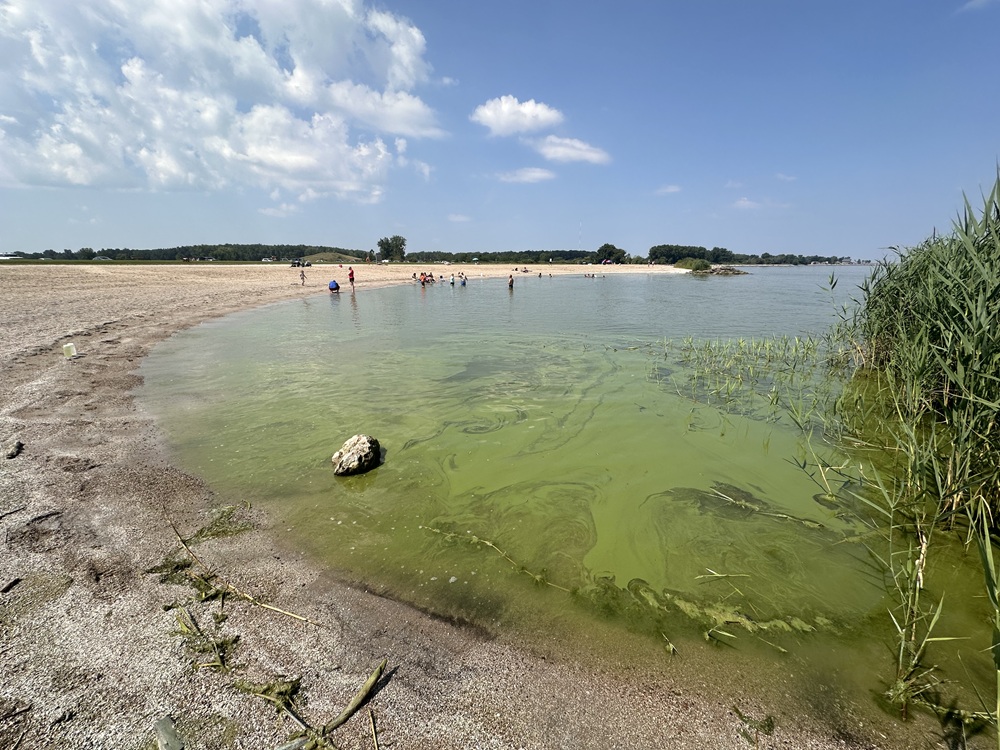
(Courtesy Photo/Garrett Moots)
Digging into the sand
In summer 2022, Moots collected weekly sand and water samples from three man-made coves at Maumee Bay. The sites were chosen to reflect typical beach conditions while remaining manageable for a solo researcher.
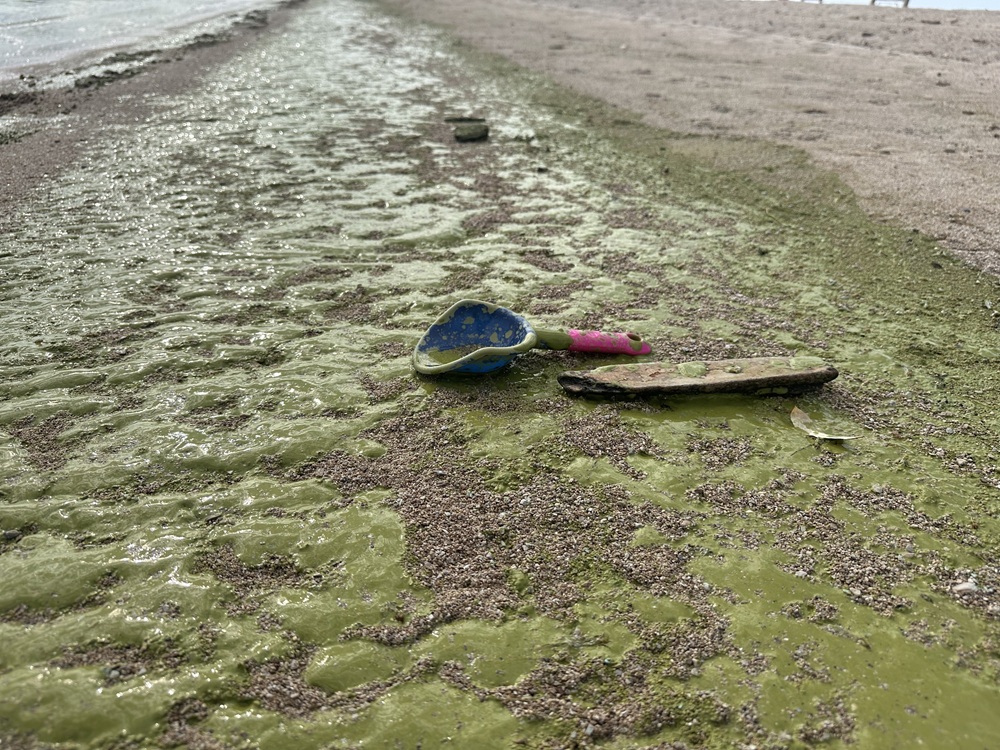
Sampling occurred each afternoon around 3 p.m., during peak beach hours. “We’d scoop sand from the foreshore, where that wet strip where waves meet land, and take it back to the lab,” Moots said.
Using the same testing method as Toledo’s water treatment plant, the team measured microcystin levels in parts per billion. In over half the samples, toxin levels in the sand were higher than in the water — sometimes seven times higher. In a few cases, concentrations exceeded 29 parts per billion, more than triple the EPA’s recreational water threshold.
The study also found that shallow surface sand averaged twice the microcystin concentration of deeper sand, suggesting beach sand can serve as a toxin reservoir. But one of the most striking findings was just how much levels varied only feet apart, a challenge Sigler said stems from natural “heterogeneity,” which makes the issue harder to predict or monitor.
Should we be concerned?
Here’s the good news: microcystin doesn’t easily absorb through healthy skin.
“Unless you’re eating handfuls of sand — we’re looking at you, toddlers — the risk is low,” Moots said.
“The threshold for concern in water is eight parts per billion, assuming you’re accidentally swallowing about three tablespoons, or 100 milliliters,” he explained. “You don’t usually ingest sand the same way.”
Still, the team advises rinsing off after direct contact with wet sand — especially for those with scrapes, cuts or prolonged exposure. “The skin is a great barrier,” Sigler said. “Microcystin is a large molecule, too big to pass easily through; however, there are still chemical quirks we’re exploring. So as a precaution, wash up.”
If a rash develops, it’s likely mild and short-lived. “This isn’t putting you in bed for a week or sending you to the ER,” Sigler said. “It’s maybe some irritation, but there are no severe symptoms.”
More than just microcystin
Maumee Bay’s geography makes it especially prone to build-up. Its shallow, slow-moving waters and embayed coves can trap algae and toxins near the shore. Nearly 40,000 people visit the beach each year.
“There are only four to six weeks where this is even an issue,” Sigler said. “The rest of the year, Maumee Bay is a very pleasant place to be. It’s a gorgeous beach and a fantastic natural space.”
Moots agreed. “Lake Erie takes a lot of criticism,” he said. “But Maumee Bay has wetlands, open space and natural beauty that makes it really special.”
What’s next?
Now continuing his dissertation, Moots is studying how factors like sunlight, organic matter and wave action affect how long microcystin lingers in sand.
“This study is just the first step,” Moots said. “There’s so much more to understand about how these toxins behave in different conditions.”
While the current research focused on Maumee Bay State Park, the team may expand to other beaches such as Luna Pier and Sterling State Park if conditions allow.
Ultimately, both researchers want to raise awareness, not fear.
“This isn’t a public health crisis,” Sigler said. “We’re just shining light on something that hasn’t been looked at. You’re probably not going to get sick from beach sand. But a quick rinse after your visit? That’s just good practice.”
So go ahead — pack your towel, bring the sunscreen and enjoy the sand. Just keep an eye out for the signs.