In this week’s episode of Behind the Byline, Jaden speaks with Dr. Joel Voss, an associate professor of political science at the University of Toledo, about the lecture series that kicked off early this month. The series includes foreign policy topics like climate change, AI, U.S. and China relations, and much more.
To hear Dr. Voss and Jaden talk about the importance of the series, give it a listen.
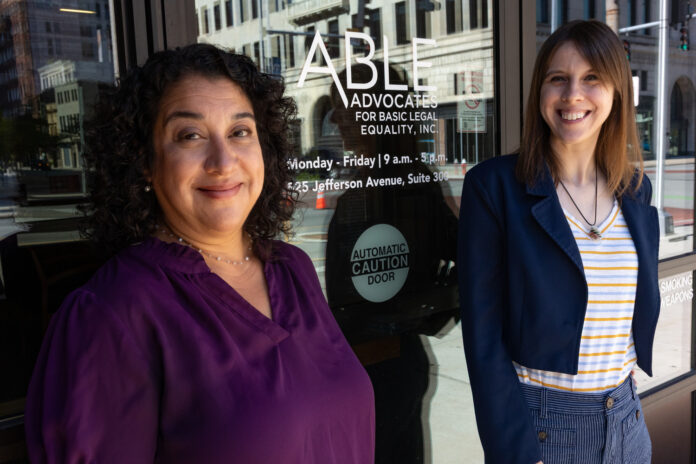
Jennifer Martinez, the supervising attorney with the education practice group, and Emily Desmond, the communications specialist for Advocates for Basic Legal Equality (ABLE), at the ABLE office in downtown Toledo on Wednesday Sept. 3, 2025. (TFP photo by Stephen Zenner)
TOLEDO – This Tuesday, Sept. 9, at the West Toledo Branch Library, the legal advocacy group Advocates for Basic Legal Equality (ABLE) will be hosting Education Legal Assistance Sessions for parents of children with disabilities.
ABLE is promoting the event as a “Know Your Rights” instructional presentation for parents.
Attorneys from ABLE will be present to answer questions about navigating the public school system with a child with a disability.
“We’re doing an overview of children’s rights in school systems, particularly related to discipline and students who have disabilities,” said Jennifer Martinez, one of the supervising attorneys with the education practice group from ABLE.
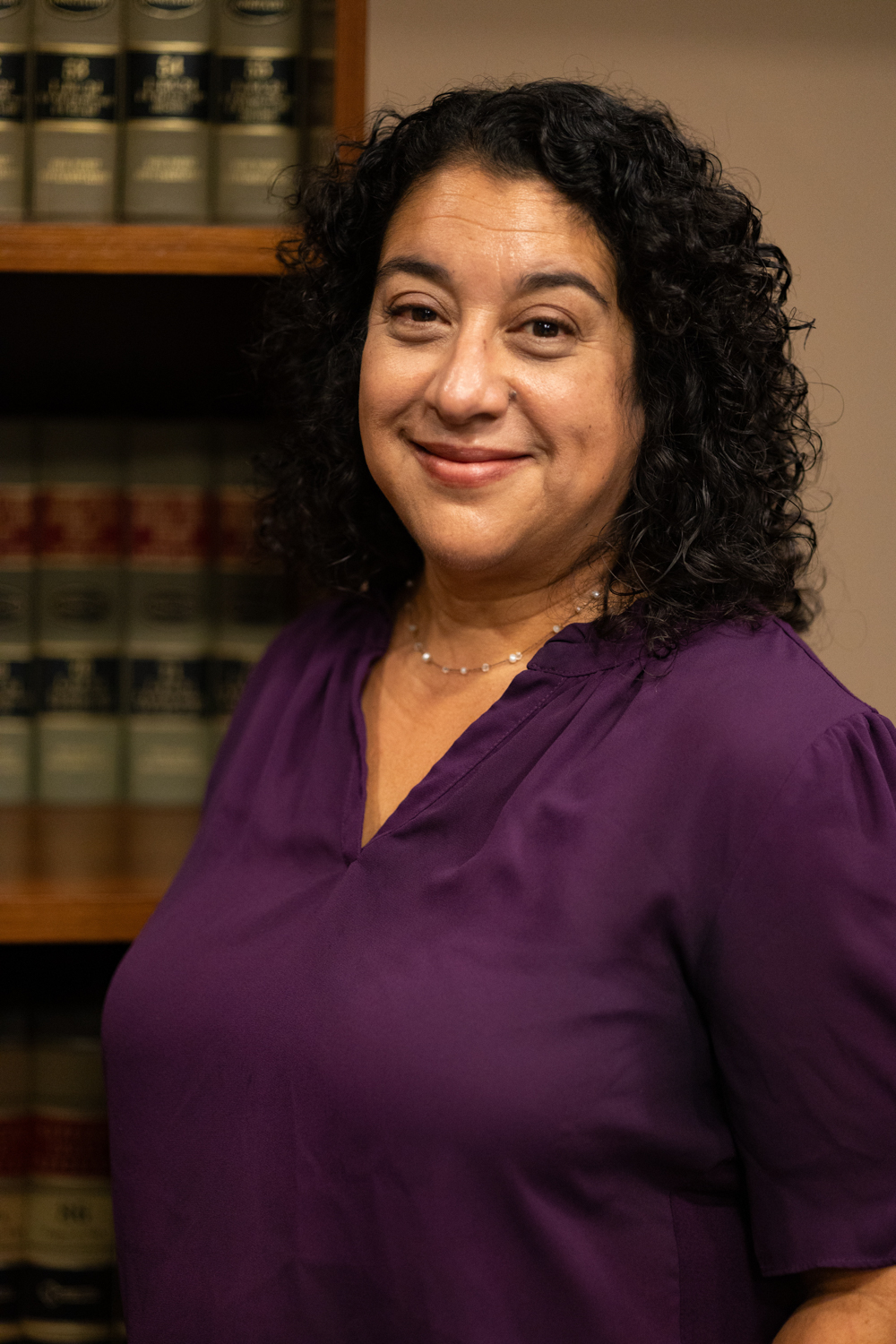
Jennifer Martinez at the office space for ABLE. (TFP photo by Stephen Zenner)
“We focus on making sure kids in lower economic communities have access to public education, that they are being identified properly when they have disabilities, and most importantly, if they’re being disciplined, that they [the school] are following the due process that they’re supposed to.”
Attorneys present will go over all the federal laws for children with disabilities, and will be available to help parents understand how to navigate the school system with their child.
“If your child does have a disability, the school has a duty to identify that they [the child(ren)] have that disability and then to provide them [the child(ren)] with an evaluation to see if they need further services,” Martinez said.
The latter half of the session will function similarly to a Q&A. The first half hour to 45 minutes Martinez said would be a presentation, “and then we open it up to questions.”
“We also explain to them [the parents] a little bit about what our office does, and the fact that they can get free legal representation through our office if they qualify,” Martinez said. If individuals have many questions or more in depth, “specific legal issues that they want to talk to us about further, we’ll probably have them schedule an intake appointment.”
These sessions, Martinez stressed, were for general advice/help specifically with children enrolled in the public school system. Private schools are not bound by the same rules as public schools, she said.
Emily Desmond at the ABLE office in downtown Toledo. (TFP photo by Stephen Zenner)
During these general sessions, Martinez said one of the main goals is to at least begin each parent or guardian on the right path for their situation.
ABLE leads two sessions each month at a different library, and has been rotating across Toledo to accommodate parents at their respective libraries.
ABLE Communications Specialist Emily Desmond said, “We were trying to reach out, move around the different neighborhoods to meet people where they’re at.”
These events do not require advanced notice for attendance, and are open to all parents, guardians and caregivers of students k-12.
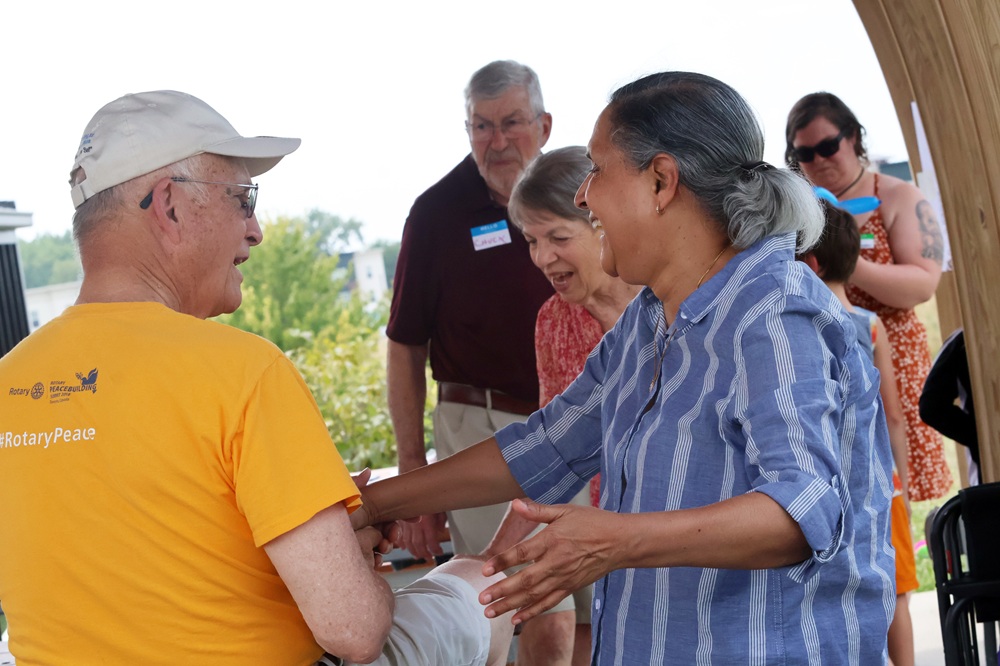
Brother Washington Muhummad of the Multifaith Council of Northwest Ohio greets Delise Brown and Amarrah Smith, 5, at Glass City Metropark. (TFP photo by Laurie Bertke)
TOLEDO— The gathering had all the vibes of a traditional church picnic. Guests mingled, greeting old friends with hugs while eagerly introducing themselves to strangers and sharing animated conversations over hot dogs, potluck sides and cold drinks under a park shelter at Glass City Metropark.
What made this annual picnic the Multifaith Council of Northwest Ohio (MFC) hosted in August unique was that those attending represented a cross section of religious traditions rather than one faith community. Members of the group share a commitment to cultivating friendships and finding common ground in shared values.
“What I like about the mission is that you see the unity in diversity. And that is one of the central tenants of my faith,” said Dipti Vyas, a member of the Hindu Temple of Toledo who serves as vice-chair of the MFC board. That ability is something Vyas said she feels is needed now more than ever, at a time in the country where more emphasis is often placed on differences.
Dipti Vyas, vice-chair of the Multifaith Council of Northwest Ohio’s board, greets other members at the group’s annual picnic. (TFP photo by Laurie Bertke)
Brother Washington Muhummad, a member of the Nation of Islam and the MFC’s advisory board, echoed that sentiment.
“As we live in a divisive world, the MFC has taken the counter approach that we’re not going to hate, we’re not going to exclude, we’re not going to believe the lies that are told to us about our neighbors,” he said. “And we’re going to fearlessly organize events based in peace, not based in religious dogma.”
Gesturing at the people chatting at picnic tables around him, Muhummad said members of the MFC put their “petty differences” aside to celebrate and appreciate humanity and hopefully take their experiences into other avenues of their lives.
“No one here is an evangelizer,” Muhummad added. “No one here is trying to convert somebody. You’d be hard pressed to find an ugly religious debate here.”
No proselytizing is an important rule of the MFC. “You cannot come to Multifaith Council and try to convert somebody else to your religion,” said Angie Fitzpatrick, MFC program manager. “We are here to share our own unique path, and we share it because we believe that all of our paths have value. No path is greater than another path or better than another path. And we share it to understand each other better, not to convert.”
Lauraine Carpenter, left, serves as board president for the Multifaith Council of Northwest Ohio and Angie Fitzpatrick recently joined the organization as its program manager. (TFP photo by Laurie Bertke)
Creating bonds of respect and friendship
Founded in 2001 amidst a wave of Islamophobia that followed 9/11, the MFC was incorporated as a nonprofit in 2003. The group has about 230 members and counts among them Christians, Muslims, Jews, Hindus, Buddhists, Sikhs, Sufis, Baháʼís, Unitarians, pagans and practitioners of Native American spiritual traditions. It also welcomes agnostics, atheists and seekers who do not claim a spiritual tradition of their own.
Leadership is predominantly driven by lay people and almost everyone involved with the group is a volunteer. Programming mostly revolves around education and service, and the council has sponsored prayer events, Habitat for Humanity builds, and men’s and women’s groups to develop friendships among people of different faiths.
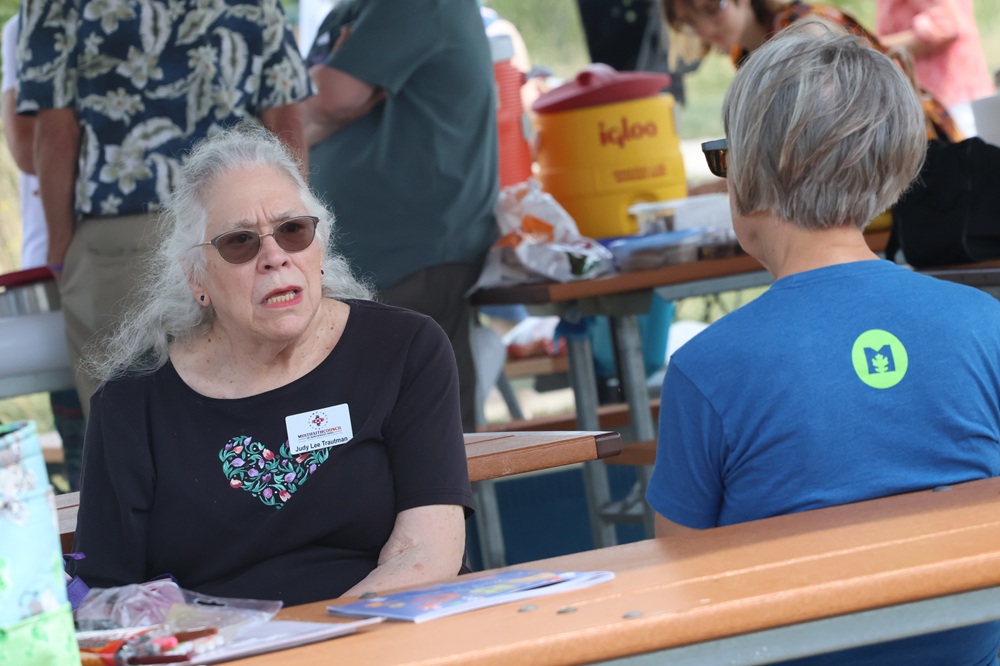
Judy Trautman, who co-founded the MFC with her late husband, Woody Trautman, said the original vision was to create bonds of respect and friendship among diverse faiths in order to work for the community. “It’s almost familial,” she said.
“We’re so lucky in this area, we have so many faiths,” Trautman added. “We learn so much from each other. It’s the best kind of education because people are engaged and are together.”
Judy Trautman at MFC Picnic. (TFP photo by Laurie Bertke)
For many years, the MFC has hosted a multifaith prayer service known as Blessings of Diversity, where representatives from various faith traditions share sacred writings, music and poetry around a different theme each month. The next service is to be held Sept. 21 at 6 p.m. as a local observance of the International Day of Peace, and will include local representatives from 10 different religions.
Lauraine Carpenter first got involved as a musician at the Blessings of Diversity services about 10 years ago at the invitation of Trautman. Her experiences there have been among the most enriching and educational for her.
“So many different religions share so many core values. And that’s not to say that we’re all the same. We’re not. We have our differences and they’re important,” said Carpenter, who took over as board chair for MFC about two years ago. “But when you go to a Blessings of Diversity service and you hear everyone’s perspective on love or on service or any topic, we’re so similar in our souls, in our hearts. And it brings us comfort. It brings us security, safety. It makes us feel like we can breathe. And that’s worth so much.”
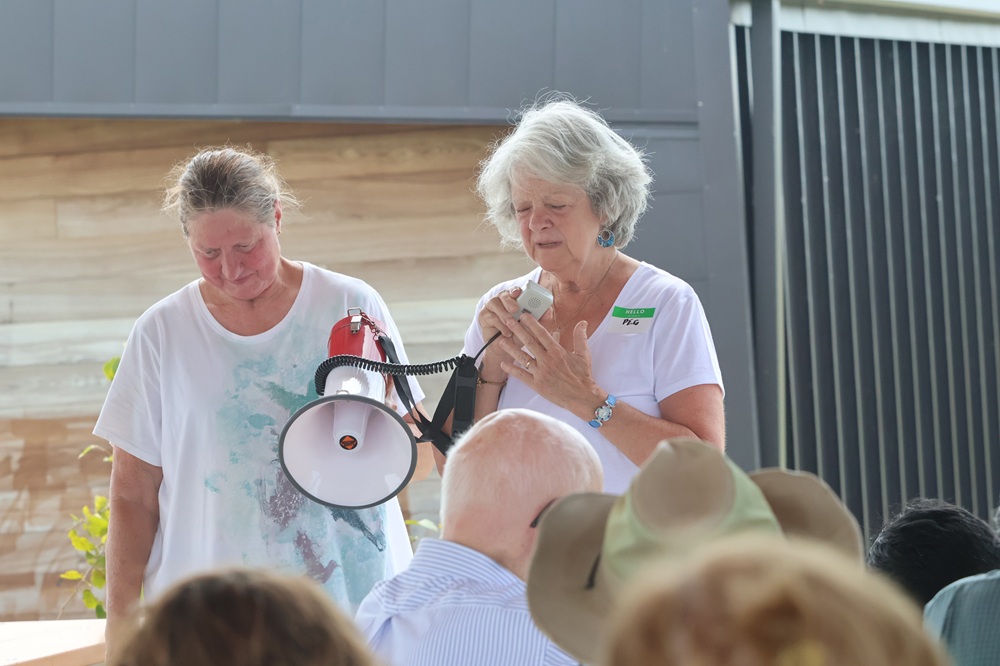
Lauraine Carpenter, left, and Peg Faulmann lead prayer at the Multifaith Council of Northwest Ohio’s annual picnic Aug. 10 at Glass City Metropark. (TFP photo by Laurie Bertke)
Planning for the future
The council has been in a period of transition since Trautman stepped down from leadership about two years ago due to health issues. She remains involved in an advisory role but said she doesn’t want to stymie fresh ideas. “I think we probably do need some new approaches,” she added.
Fitzpatrick recently came on board to help lead the MFC through a strategic planning process to reevaluate the MFC’s mission and vision and assess where they can make the most impact in light of the current religious landscape.
“I think she’s doing the right things, in that she’s really asking people where they want us to go as a council,” said Trautman.
With a background in higher education programming that included gender equity, social justice and diversity, equity and inclusion work, Fitzpatrick brings an interesting lens to the task.
Raised as an evangelical Christian, she said she left the Southern Baptist Church at age 18 because she disagreed with its teachings around people of other religions and people who were LGBTQ.
Despite those differences of opinion, she still expressed appreciation for the church community she experienced as a child and fondly recalled hanging out with other kids at Vacation Bible School and Sunday potlucks with watermelon, casseroles and iced tea.
“There’s something about the community of church that you can’t really find in other places. It’s a really unique, special thing. And that’s, I think, what makes it heartbreaking when people realize, ‘our values aren’t as aligned as I thought they were,’” she said.
She now describes herself as an agnostic who is “still in discovery mode,” and most recently began attending a Unitarian Universalist church. .
“I’ve been meeting more and more people — Christian, Muslim, Jewish, people of all faiths who are so welcoming. And I think that’s what the Multifaith Council represents, is people of all faiths who believe that regardless of your personal faith or spiritual journey, you have a place in this community,” said Fitzpatrick. “So it kind of feels like a spiritual home for me, too.”
When the MFC kicked off its strategic planning process with an all-member meeting in July, Fitzpatrick said some of the shared values that came up included compassion, diversity, inclusion, service and peace.
Those same values were at the heart of the council from the beginning, but Fitzpatrick said they are now looking at examples of activities other interfaith organizations are doing to reevaluate how they can respond to the current needs of Northwest Ohio.
Longtime council members expressed a desire to find new ways to engage younger generations.
“Woody was way ahead of his time because he always said ‘all faiths and none,’” said Trautman. “We have a growing number of young people who don’t identify with a particular tradition, but they call themselves spiritual.”
One of the statistics that most surprised Fitzpatrick from a recent Pew Research Center Religious Landscape Study was that 44 percent of 18-to-29-year-olds are religiously unaffiliated, compared to 22 percent of people ages 50 to 64. “That’s a massive difference,” she said.
Fitzpatrick noted that faith still ranked among the top five values across all age groups, though the place of it shifts between the generations. She was surprised to see faith ranks so high while church attendance continues to decline.
“One of the things that I’m interested in finding out through our strategic planning process is why aren’t people my age going to church, at least here in the Toledo area?” said Fitzpatrick, who at 44 describes herself as an older Millennial. “And if they are looking for some kind of spiritual home or spiritual community, could the Multifaith Council in fact provide that space?”
She suggested the MFC could play a role as a facilitator for helping people explore different churches, temples, mosques, synagogues and faith traditions.
“I think this organization is a wonderful space for people of all ages to celebrate the diversity of faiths in our community and to even explore their own spiritual path,” she added.
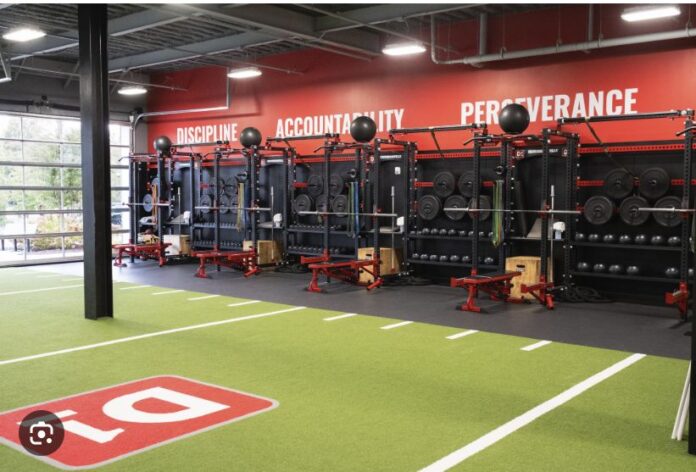
A D1 training facility is set to open in Toledo in November. (Courtesy photo)
Athletic training center comes to the Glass City
TOLEDO – For any aspiring athlete, physical fitness is crucial to achieving goals, whether that involves maintaining health or pursuing professional success. Many people benefit from extra coaching to reach their life or career ambitions.
One company aiming to provide that support is D1 Training, an athletic training facility offering a range of programs for athletes ages 7 and up. The company will open a new location in Toledo at 4400 Heatherdowns Blvd., Suite 2A, scheduled for November 17.
Founded in 2001 to train students striving to become Division 1 athletes, D1 initially focused on junior high and high school students. Since then, it has expanded to more than 170 locations nationwide. According to its website, D1 has trained over 100 NFL draft picks; 1,000 professional athletes; 3,000 collegiate athletes; 100,000 students annually; and more than two million people overall.
The Toledo location will be owned by Tyson and Sara Stoll, longtime residents who have lived in the city for more than 30 years. They will join franchisees like NBA star Chris Paul and Heisman Trophy winner Tim Tebow.
(Left to right) Sarah Stoll, Tim Tebow and Tyson Stoll. (Courtesy photo)
Tyson is an avid CrossFit athlete who has completed three full marathons. He credits fitness with transforming every aspect of his life.
With over three decades of automotive and operations experience at Chrysler, Mobis North America, and Amazon, Tyson has a wealth of automotive and operations leadership experience, while Sarah has been in sales management for 25 years and now serves as the national director for Soul Purpose and Bella Vita Network campus director at the University of Toledo. As a result of their experience, knowledge, passion for fitness, and commitment to Toledo, they entered the fitness industry.
The couple began pursuing the franchise in November 2024. After considering multiple sites and months of negotiations, they finalized the lease earlier this year.
D1 Training offers a variety of programs tailored to different ages and goals. For younger athletes, Rookie Training (ages 7–11) teaches the basics of athleticism, speed and healthy habits. The Developmental Curriculum (ages 12–14) and Prep Program (ages 15–18) progressively build on those skills with more advanced training.
For collegiate athletes, D1 can work directly with teams on their campuses. Adults also have options, from group workouts to one-on-one personal training. Whether participants are pursuing athletic performance, weight loss, or simply staying active, programs are designed to be customized to individual goals.
Pricing varies depending on training needs. Before costs are discussed, participants complete a free workout and consultation.
“This gives us a chance to understand your current fitness level and your goals—whether it’s weight loss, strength building, athletic performance, or injury recovery—and what kind of training structure fits you best,” Tyson said. “Only then can we recommend the right program and provide accurate pricing tailored to your needs.”
No pricing information is available on the website because, as Tyson explained, “at D1 Training, we approach fitness the same way a doctor approaches your health. A doctor wouldn’t prescribe medication or quote treatment costs without first understanding your symptoms, goals and overall condition. Similarly, we don’t offer one-size-fits-all pricing because every athlete’s journey is unique.”
Tyson said that D1 Training provides coaches trained to work with youth, adults and elite athletes. They hold NSCA-CSCS, NSCA-CPT, NASM-CPT/PES or USAW-Level 1 certifications. This is done to ensure that everyone will have expert guidance for every step of their journey.
Both Tyson and Sarah emphasized the community aspect they hope to foster with D1 Training.
“We love working in the community, and D1 gives us the chance to help people reach their goals, no matter how big or small,” said Tyson in a press release. “We fell in love with D1 Training because it serves all ages and gives people the opportunity to build the confidence they need to be successful on and off the field.”
While the location does not open until November, memberships can already be purchased on the D1 Training Toledo website.
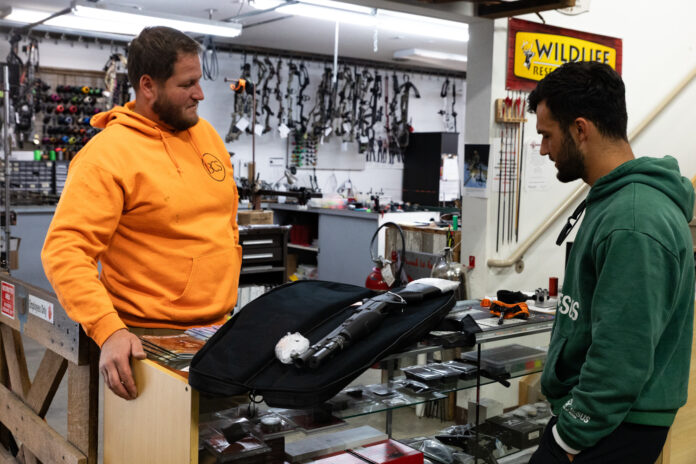
Josh Blausey, an employee at Bear Arms, evaluates Andrew Heck’s Benelli Supernova for a trade at Bear Arms in Swanton, Ohio on Friday August 29, 2025. (TFP photo by Stephen Zenner)
PERRYSBURG – Drew Blausey, owner and manager of Bear Arms Tactical on North Dixie Highway, had been pushing to expand the firearms store for years.
Then she heard that Cleland’s Outdoor World in Swanton was for sale.
The store on Airport Highway, a local landmark founded in 1950, had everything Blausey was looking for – and more.
“I always wanted to have a range, and where we are here [in Perrysburg], we’re not allowed to have a public range. And just the cost of the land and building [a new facility] was not in the realm of what we wanted to do.”
Blausey’s company purchased Cleland’s in November 2024, and recently changed the signage to reflect the Bear Arms name and logo.
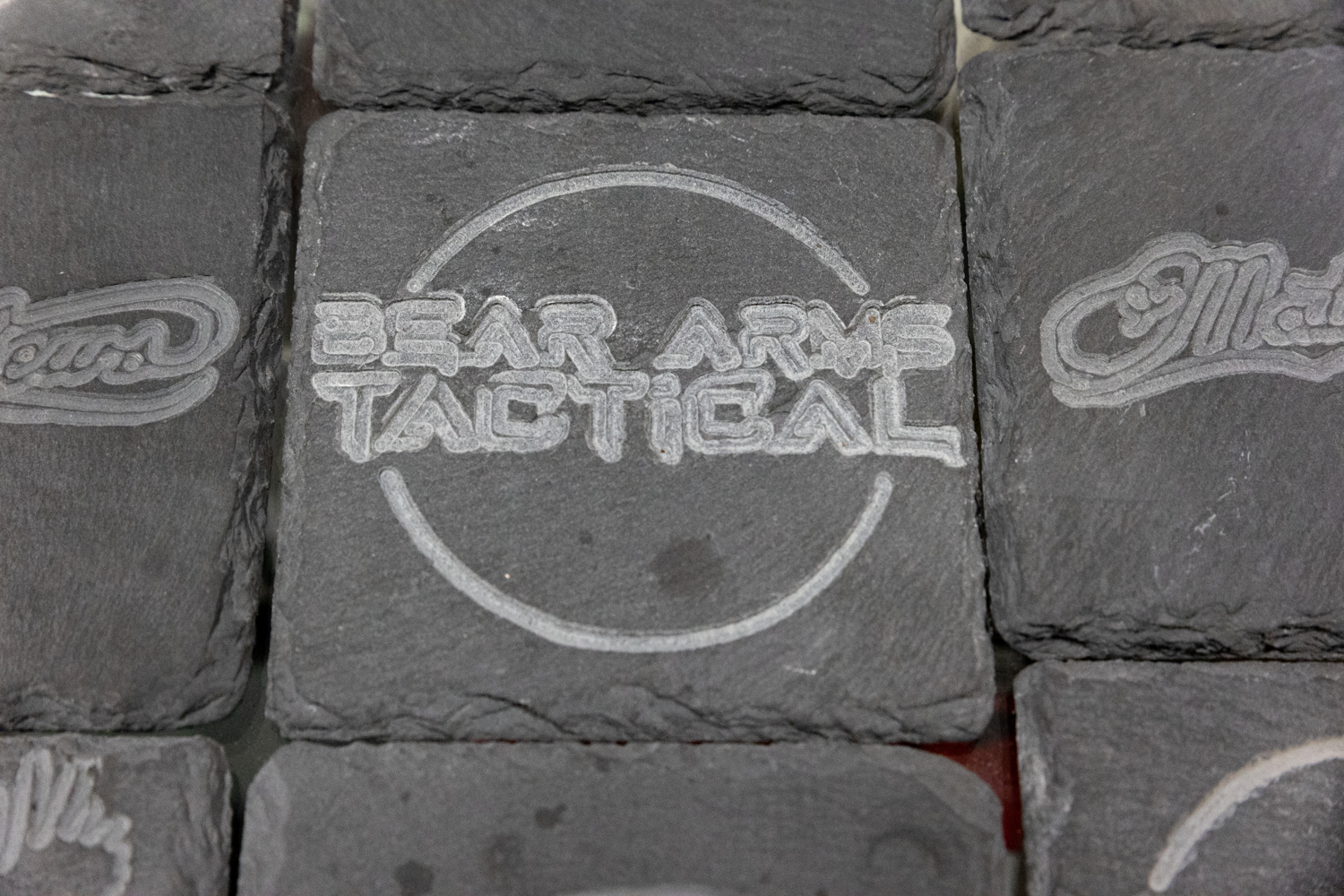
Bear Arms Tactcial coaster for sale at Bear Arms. (TFP photo by Stephen Zenner)
The newly acquired store not only has firearms ranges but it also features archery ranges and sells archery equipment.
Blausey has a degree in finance from the University of Toledo and prefers handling the business and office responsibilities. She was hired right out of college by Larry Davenport, a family friend and businessman.
She said her husband, Josh, is a gunsmith and since the purchase of Cleland’s, he has gotten deeply involved in archery and bow technology.
“When we bought Cleland’s, the archery part was really backed up, so Josh jumped in with both feet and started learning everything about archery. And he really loves it, which is great.”
On the other hand, she added, it was more demanding than the couple had expected.
“Poor guy, I don’t think we knew what we were signing up for,” Blausey said with a laugh.
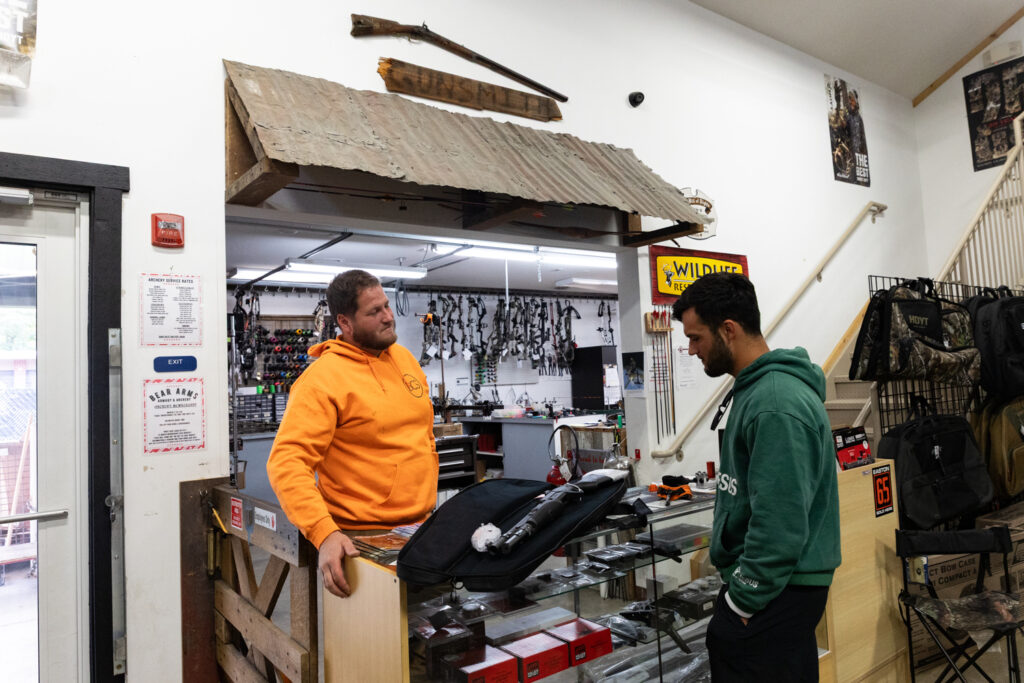
Jake Shank, of Woodville, resets a crossbow. (TFP photo by Stephen Zenner)
The Perrysburg store will continue selling a wide array of firearms, including pistols and long guns, and air rifles like the ones the Civilian Marksmanship Program uses for competitions at Camp Perry.
The North Dixie Highway store also sells ammunition and accessories, and it promotes firearms safety, including offering classes for Concealed Carry Weapon, or CCW, licenses.
In June, 2022, Ohio became the 23rd state to enact a permitless carry law, which allows residents to carry a firearm without a CCW. Blausey said there is still a need for gun owners to learn about safety and regulations.
“We still push people to take the class if they have the time and the money. It’s only eight hours and costs $100,” she said. “Just to know the basics and the rules and regulations, even if they don’t get their license, it’s for their own safety and for the safety of people around them.
“There’s a lot of people who have no idea of the regulations,” Blausey said. “Ninety-nine percent of the people have no basic knowledge of the Ohio constitutional carry laws. They think you can carry anywhere, but that’s not true. There are certain regulations for school zones, government buildings, and other places.
Firearms, bowhunting gear and accessories are available online at beararmstac.com.
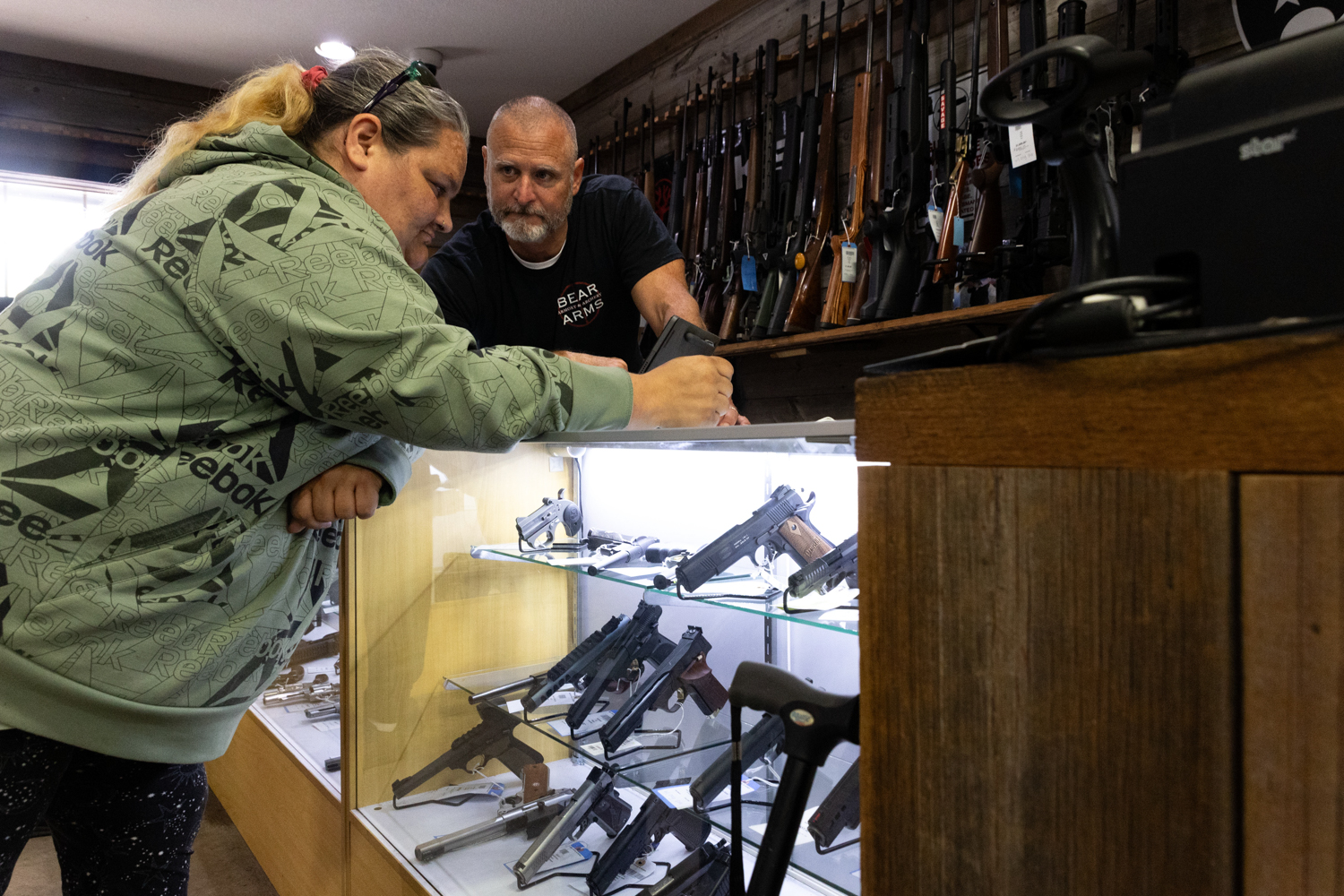
Jason Lankey, an employee at Bear Arms, helps a customer at Bear Arms. (TFP photo by Stephen Zenner)
Andrew Heck, looks over a gun at Bear Arms.Josh Blausey evaluates Andrew Heck’s Benelli Supernova for a trade.Drew Fox, Holland, Ohio, passes shooting course for hunting in the Metroparks at Bear Arms.Audrey Shank, Woodville, shoots a crossbow to pass the archery test for hunting at the Metroparks.
The Bellwether Farmstand menu will be available starting Sept. 4 at Toledo Spirits’ flagship cocktail bar at 1301 N Summit Street. (TFP photo by Allyson Ritchey)
TOLEDO – What does a turnip taste like? In a cocktail, the answer might surprise you. At Toledo Spirits Company, the earthy bite of a root vegetable is reimagined into something smooth, vibrant and unexpectedly delightful – part of an ongoing effort to blend local agriculture with craft spirits.
As “Toledo’s first distillery ever,” founded in 2013, the company has always embraced its local identity.
“We really embrace whatever we can from local culture, local produce, local flavor, and try to turn that into innovative, fun, delicious craft spirits,” said Andrew Newby, CEO of Toledo Spirits Co.
That philosophy is on full display with the distillery’s upcoming Farmstand menu, debuting Sept. 4 at its cocktail bar, Bellwether. Each drink is crafted with produce sourced directly from farms across the region, a delicious example of the broader “farm-to-table” movement that is reshaping the food and beverage world sustainably.
Andrew Newby, CEO of Toledo Spirits Co. (TFP photo by Allyson Ritchey)
A Taste of the harvest
The Farmstand menu is a sensory journey that brings the farm directly to the glass, featuring the distinctive flavors of Northwest Ohio’s harvest. For a taste of the familiar with a twist, the Child of the Corn reimagines the classic margarita in a distinctly Midwestern way. Created with local corn and the distillery’s Maumee Moonshine, it is a bright, tangy drink with a surprising nutty sweetness that feels both well-known and fresh.
The Strawberry Fields offers a lush and layered experience. Made with fresh strawberries from local farms, this cocktail balances sweetness, the herbal depth of basil and a touch of balsamic for a tang that truly feels like a farmstand in a glass.
According to Newby, the goal was to make these ingredients “a lot of fun” since they are not typically used in cocktails. For example, the Smash Sour is a revelation, turning the earthy character of turnips from Shared Legacy Farm into a cocktail that is silky smooth and surprisingly pleasant.
Likewise, a Celery Julep offers a refreshing twist on the classic Kentucky Derby cocktail, delivering a crisp, herbal quality that is both lighter and cleaner than a traditional mint julep, while still carrying the foundational nostalgia of a grandmother’s soup with the subtle depth of celery stock.
For a savory, garden-fresh experience, the Tomatotini captures the late-summer harvest in a martini with tomato water, celery syrup, lemon and a touch of basil.
“The Red Wheelbarrow”, a poem about the importance of agriculture, is printed on the Farmstand menus. (TFP photo by Allyson Ritchey)
From farm to glass
While the “farm-to-table” movement has long been a staple of fine dining, a new “farm-to-glass” philosophy is taking hold in the craft spirits world. A national trend with local roots, this shift is backed by data, and consumers are driving this shift.
A 2025 survey by L.E.K. Consulting found 68 percent of global consumers are changing their habits for sustainability reasons, while other research by ADM shows 73 percent feel more positively about companies that are transparent about their sourcing. Toledo Spirits brings this global conversation to the Glass City, using ingredients from the farms in its own backyard.
This practice is central to the company’s philosophy of using “meaningfully sourced” ingredients. This guiding principle, a core part of the distillery’s identity, means actively engaging in the “ecosystem of each component,” from the soil where a grain is grown to the hands that harvest it. By taking this hands-on approach, Toledo Spirits ensures its products are not only of the highest quality, but also support the local economy and reduce their carbon footprint through shorter transportation routes, according to Newby.
You’ll find this unique Smash Sour at The Bellwether. (TFP photo by Allyson Ritchey)Julep from Toledo Spirits Co. made with celery. (TFP photo by Allyson Ritchey)(TFP photo by Allyson Ritchey)
This focus on local ingredients is part of a larger conversation about where our food comes from and how to support urban agriculture. Newby described an initiative called Cultivate TOL, a partnership with the United Way, that aims to convert empty lots in the city’s urban core into “for-profit farms.”
Ultimately, what Newby hopes people take away from the menu is more than just a great cocktail. “There are a lot of people growing food, and not in giant farms here in the Toledo, Northwest Ohio area,” he said, “There are a lot of small farmers growing, and then that food is contributing to the local flavor, going into restaurants, going into grocery stores, going into food processing.” The menu aims to lift up that awareness to show that “anyone could become a farmer,” as Newby put it.
By creating a menu that is both innovative and socially conscious, Toledo Spirits is demonstrating how a business can support its community and raise awareness about important local issues. The partnership with urban farms not only results in delicious, one-of-a-kind cocktails, but also helps to build a more resilient and sustainable local food economy.
As Newby suggests, “Hey, come and try some cocktails, and try some of these flavors… We are growing these things, too.”
Many of us have watched with consternation as the Trump administration has upended policies over the past seven months. While I do not want to be an advocate for many Trump policies, it is also important that we consider how some of his policies may save money and years of wasted time for many students who are considering entering graduate school.
Over the past decade, we have all become aware of former students with crippling student debt of $200,000 and up. Much of this debt was accumulated while attending graduate programs to obtain a masters degree, a PhD or a professional degree such as law, veterinary, medical, etc. These large student loans are often obtained through the federal Grad Plus program that allows students to borrow up to $50,000 per year. Under Trump, this program will be terminated in 2026.
For years, reputable commentators from both left-leaning and right-leaning sources have pointed out the problems created by incentivizing borrowing for graduate programs. For example, in 2020, the liberal-leaning Center for American Progress (CAP) pointed out that Black students are much more likely to carry large student debt due to graduate programs than are white students.
The CAP report noted that an excess of students in “graduate school has the potential to hinder all the efforts at boosting mobility that come from undergraduate education.” It may be that encouraging too many undergraduates to continue studies in graduate programs diminishes the relative value of an undergraduate degree. This may make it more difficult for low-income students to become upwardly mobile.
The rapid development of Artificial Intelligence (AI) may also greatly diminish the value of many graduate degrees. Graduate degrees often take two to eight years to complete. It is not clear which of these degrees will have value when completed.
Recently, Dr. Jad Tarifi, who founded Google’s first AI team, discussed the value of entering a PhD program in today’s environment. He opined that many would-be PhD students should skip the “five years” and “a lot of pain” associated with earning a PhD. He suggests that those who skip a PhD will “move much faster” and “learn a lot more” by focusing “on just living in the world.”
As an educator, it may hurt to say it, but it is time for the federal government to stop encouraging too many students to take out up to $200,000 in graduate-school debt.
Douglas Oliver
While Dr. Oliver is a Professor Emeritus at the University of Toledo (UT), these views are his and not necessarily those of UT.
MAUMEE – What started with a broken left thumb led Matt Kutz on a journey of discovery and treatment of prostate cancer. To raise awareness of that cancer, there’s a journey of another kind upcoming.
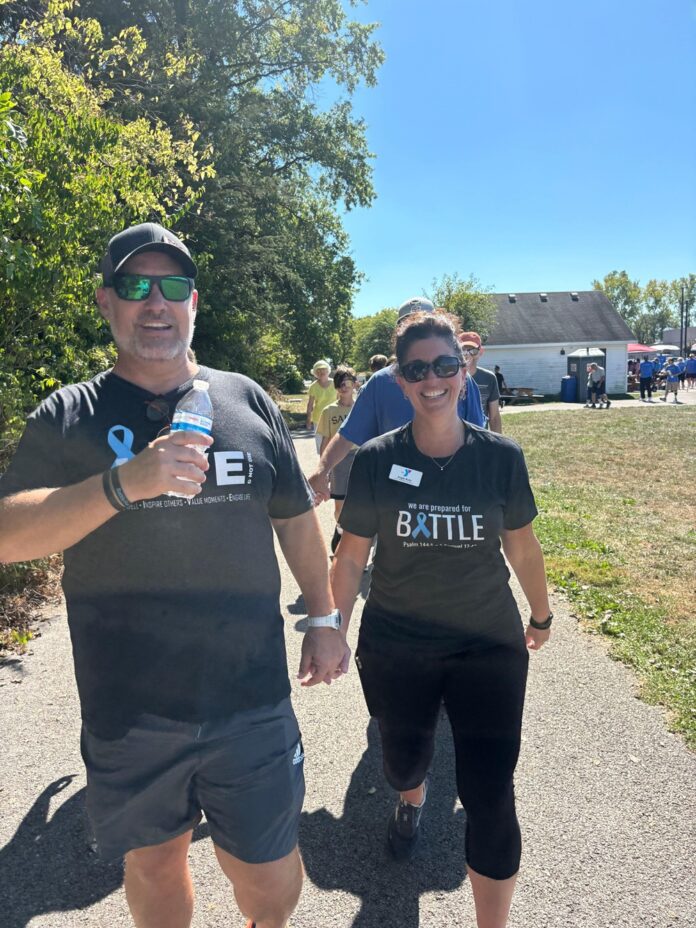
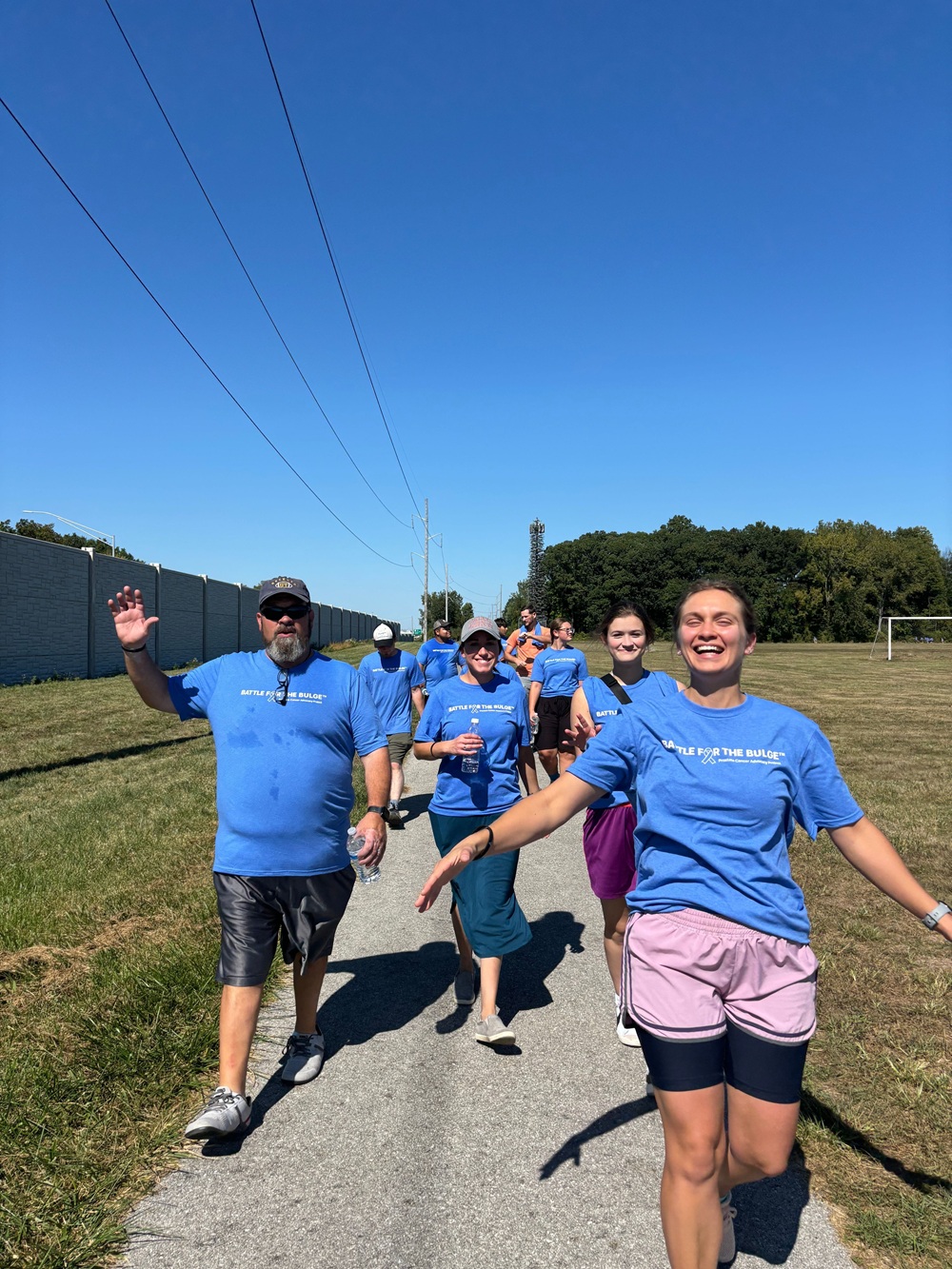
That journey is a 5K run/walk at 5 p.m. on Friday, Sept. 5, at Sidecut Metropark in Maumee. The event is called Battle for the Bulge. Battle is an acronym for Be Brave, Armor Up, Trust your Team, Triumph over Fear, Lean into your Faith, and Engage Life; the Bulge refers to an enlarged prostate gland.
It is a battle Kutz has fought and is fighting, and he wants everyone to know about it so that others won’t be as surprised as he was.
Matt Kutz, left, a prostate cancer survivor who founded Battle for the Bulge, a race and awareness campaign. (Courtesy photo)
In November 2023, Kutz, of Perrysburg, was training for a triathlon. He’d always been active, and had an academic background in athletic training and sports medicine, including having been a professor at Bowling Green State University.
Kutz crashed his bicycle on a training ride, breaking his left thumb. Following up with his physician, he was told he hadn’t had a routine checkup, which he should’ve had when he turned 50; he was 51 at the time. However, Kutz, now 53, said all the while he felt fine.
The bloodwork part of that checkup revealed that Kutz had a high prostate specific antigen (PSA) number: 52.4.
“That’s super high,” he said. “High is like 4 or 5.”
Kutz then was connected to a urologist, who told him new patients are usually scheduled six months out. “But when they heard my PSA number,” Kutz said, “the doctor got me in that day after the office was closed. He stayed late just to see me. That’s the first time I felt that this was serious.”
The high number was the sign that he had prostate center.
“I had zero symptoms,” which typically are needing to urinate more often and having trouble completely emptying the bladder, and having erectile disfunction. “That’s part of the surprise,” he said. “I was active and healthy. I was fine, and all of a sudden, I wasn’t fine.”
Kutz was told prostate cancer was quite treatable and slow growing. “So I thought it would be easy,” he said of the upcoming treatment. Then it was found that the cancer was advanced and had metastasized, starting to spread into his pelvis and groin lymph nodes.
“I went from it being fine to having the worst type of prostate cancer that you can have.”
He underwent a radical prostatectomy. “They cut me open arthroscopically, and used a DaVinci robot to cut the prostate into pieces because it was too large to pull out. It was a pretty intense surgery.” He also underwent radiation to kill the cancer cells.
He’s in the midst of a two-year treatment called androgen depravation therapy, which is a pill and an injection that eliminated the androgen – testosterone – in the male body. “Prostate cancer feeds on testosterone,” he said.
During the treatment, Kutz continues his profession, as a professor of athletic training at Florida International University, a position he began during the pandemic in 2020. He teaches online, and travels to the Miami-based school on occasion. “Travel is fine,” he said, “I just have to take my meds with me.”
In the meantime, he was looking for a support group. “I found a lot of cancer support groups for women,” he said, “but not a lot for men.” Then one of his wife’s friends said he should do an awareness walk for men, but it needed a catchy name. “She called it the Battle for the Bulge, and we laughed. But then we said, ‘That’s it.’”
(Courtesy photo)
Last year was the first such walk, drawing about 80 participants.
“This year we’re adding a 5K component and people can do a casual walk, we’ve added a children’s fun run,” he said. “We have food donations, a band, and there’s a playground at the park. This is more of a family evening thing,” which is why the start time is at 5 p.m.
His oncologist, Dr. Timothy Kasunic, and other medical professionals will be there to talk about PSAs and how to screen for prostate cancer.
The registration fee is $30, with proceeds going to the Taylor Cancer Research Center in Maumee.
A participant this year will be a friend who took part in last year’s event. Sherrie Periatt, a cardiac nurse with Bon Secours Mercy Health, said she knows what Kutz has been going through in a sense because she’s a cancer survivor.
“I had breast cancer, so this hits close to home,” Periatt said. While prostate cancer affects only men, “everybody has a dad,” she said.
Prostate cancer doesn’t receive the attention that breast cancer does, so it’s good that there are events like this to bring awareness to it. “It’s best to get checked out earlier rather than later,” Periatt said.
As part of his drive to educate people about prostate cancer, Kutz wrote and published a book, Diagnosed: It’s Not Your Battle to Fight Alone.
Kutz’s message: “The big thing is to get tested when it’s time, before age 50.” He said for those who have a history of prostate cancer in their families, that age for testing is 40.
Michael Vanderpool tests the first sign protype for Batting Cleanup. (Photo by Tiernen Rice)
TOLEDO – Before the Mud Hens’ opening game on Friday, April 10, 2026, Toledo will have a new maintenance system that swings for the fences.
Batting Cleanup is a community-driven initiative to install QR codes around Toledo, allowing individuals to report overflowing trash cans and the resulting litter.
Scanning the QR code automatically reports the issue; however, users can opt to provide their contact information and receive updates when the issue is resolved.
But Batting Cleanup is more than just a way to remove trash.
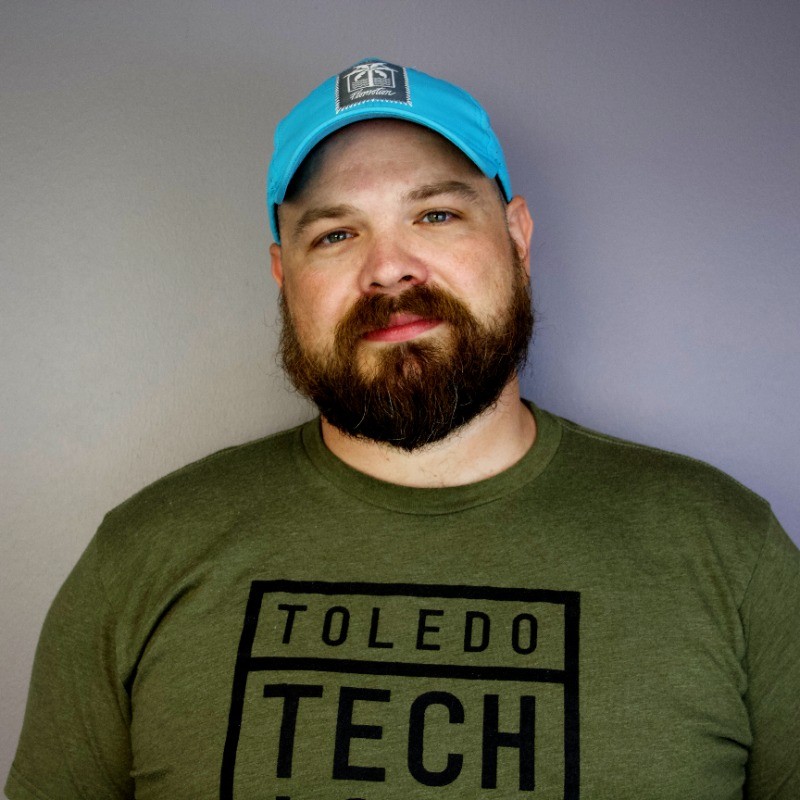
“I want to build the tech community here,” said head of app development for Batting Cleanup, Justin Beaudry.
Justin Beaudry, the head of app development for Batting Cleanup. (Courtesy photo)
Beaudry added that while creating the app is simple, he hopes the project can also achieve this secondary goal, a sentiment shared by the head of Anthony Wayne Innovation and Design, Michael Vanderpool.
“It’s not necessarily what we’re building that’s the goal here; the goal is to activate some of our own community to be embraced and encouraged as problem solvers,” said Vanderpool.
Toledo Codes is a student group from the University of Toledo started by Beaudry that aims to foster more tech meetups in the Toledo area. Students in the organization play a key role in Batting Cleanup, with learning opportunities and hands-on coding experience.
“We put them [students] through a mentorship program to teach them how to write software,” Beaudry said. “Effectively, how can we create creative problem-solvers who use tech, and keep them here in the city of Toledo? That’s the goal.”
By involving students and joining Toledo’s various tech organizations, Beaudry and Vanderpool hope Batting Cleanup will help turn the tide on Ohio’s brain drain issue while also making Toledo better.
Brain drain, the departure of a workforce from the area where workers were originally trained or educated, is an issue felt particularly keenly in Rust Belt states.
Batting Cleanup is a community cleanup initiative that involves scanning QR codes like this one to report when trash is overflowing. (Photo by Tiernen Rice)
“[Batting Cleanup] is a way for us to showcase some of the talents we have locally, showcase what we can do as designers, technologists, creative problem solvers…when we get mentors together with young people to solve some of our own problems with our own people, [it’s] a way to inspire young people primarily to make positive change in the community,” Vanderpool said.
The first QR code test receptacle was placed right outside Batting Cleanup’s headquarters, the Toledo Tech Loft, on Wednesday, Aug. 13.
As more QR codes are put in place and more tech connections made, Vanderpool hopes that downtown Toledo could become what he describes as an “innovation corridor.”
“Bringing all these different groups of people together to solve these problems, that’s what it’s going to take to create a really cool future here [in Toledo],” Vanderpool said.
Matt Aston speaks at a managers' meeting for his company, Ground Penetrating Radar Systems. (Courtesy photo)
How the wide-ranging radar business got off the ground
TOLEDO – Starting his own business wasn’t even on Matt Aston’s radar, but happenstance led him to found a company providing a needed service through, well, radar.
That was almost 25 years ago. Today, Ground Penetrating Radar Systems has annual revenue of $220 million, employs 900 people in 60 cities nationwide and remains true to its roots by continuing to be headquartered in the Toledo area.
GPRS also is true to its name: Its ground-penetrating radar shows where utility lines and other infrastructure is, so a client knows where to cut through concrete or dig to avoid costly peripheral damage.
Aston’s company has grown not only in scope, but also in technology services, leading to its latest offering about which he’s “bullish” for GPRS’s future.
It all started with a chance spotting of an ad in a trade magazine.
Toledo native Aston graduated from Toledo Christian Schools, enrolled at Hillsdale College, and later transferred to the University of Toledo, earning a finance degree. He began with a major Toledo-area auto parts company, but found the corporate world unappealing.
Thinking about starting his own company, he spoke with his father, Skip Aston, owner of Ohio Concrete Sawing and Drilling. “He encouraged me to go on my own,” Matt Aston said. But into what business?
Aston’s father gave him a trade magazine, in which the young Aston came upon an advertisement by a ground-penetrating radar company touting its services in finding electrical conduits before sawing through a concrete floor.
“I knew from helping my dad with jobs that this was a recurring problem,” he said, which led to chaos on the job site.
Thus, in the fall of 2001, GPRS was born.
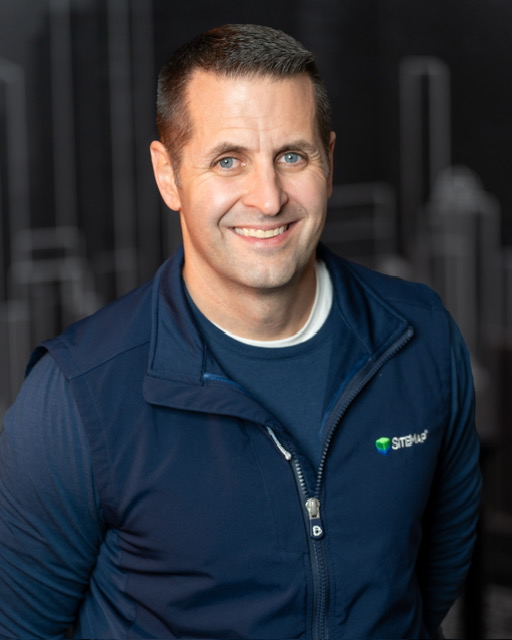
Matt Aston, founder of Ground Penetrating Radar Systems, a company based in Toledo. (Courtesy photo)
“It was a really, really slow start,” Aston said. “People often associated ground-penetrating radar with searching for buried treasure, not to assist with safety in a construction application.” He visited job sites, contractors, and engineers explaining how this technology can benefit them, with little luck.
Aston switched his focus to Detroit, which offered more opportunities. Then in the growing darkness of Dec. 23, 2001, on his way back to Toledo, he took a chance by driving onto an open construction site at Detroit Metropolitan Wayne County Airport. There he made his pitch to the site manager, who was tasked with a major project that would benefit from knowing where to drill.
“He said, ‘If you can do what you say you can do, we’ll keep you busy for a long time.’”
After the first of the new year, Aston gave demonstrations, was hired, and was busy for eight months. “That was my first big break,” he said.
Since then, GPRS has grown into the size and scope it is today. “We’ve grown into being the largest provider of these services in the world,” he said.
“Ninety-nine percent of our work is geared to facilities and construction sites. We work in hospitals, university campuses, manufacturing and entertainment venues,” he said. “We can give them an accurate picture of what’s underground and improve safety and knowledge for planning.”
He added, “Occasionally, we get that unique call for an application out of the ordinary. We’ve worked with historical societies, and we’ve assisted police looking for homicide victims.”
Aston said, “We’ve worked on high-profile sites – almost every stadium, the White House, Pentagon, Freedom Tower, Philadelphia Mint, Disney properties.
“We do 12,000 jobs a month. Sometimes we’re on site for a few hours, some jobs for months at a time.”
In the company’s nearly 25 years, “the principles behind the technology have not changed. What has changed is data collection. More significant is how we’ve integrated other technologies.”
Aston said his company offers four services: ground-penetrating radar, laser scanning, cameras run through pipes to assess conditions, and leak detection. “Water infrastructure is pretty old. A lot of domestic water lines have leaks. We can map them and narrow down where the leak is coming from.”
Those four services are combined into his company’s latest feature, Sitemap. “It’s a delivery system for our data.” He said a client can “pull out Sitemap and see where all the utilities are, where we found water leaks, see what the inside of their sewers look like, all in one place at their fingertips. We’re very bullish on Sitemap.”
Reflecting, Aston said, “We’ve been blessed. I did not have a vision of this when I started. I believe that as you grow, your potential grows as well.”