Home Blog Page 52

Appeals decision: Rocky Ridge notice of non-compliance upheld

0
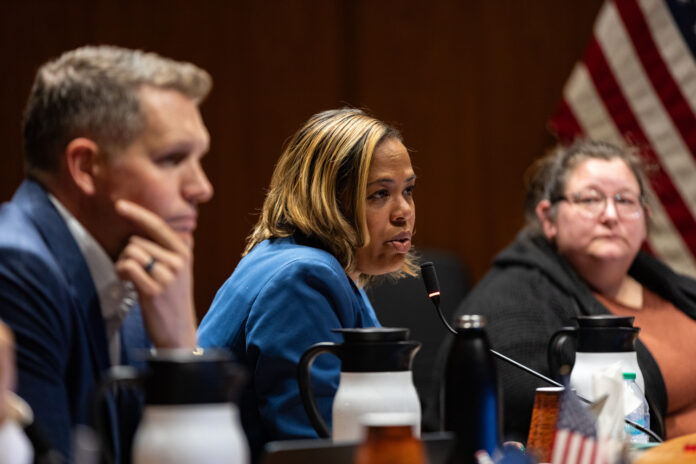
Chris Parker, an attorney for Rocky Ridge Development, speaks during a meeting of the Administrative Board of Zoning Appeals in City Council Chambers of 1 Government Center in downtown Toledo on Monday Sept. 15, 2025. (TFP Photo by Stephen Zenner)

TOLEDO – On Monday, Sept. 15, the Administrative Board of Zoning Appeals voted to uphold a notice of non-compliance against Rocky Ridge Development (RRD) for mining in a residential area near Angola Road and South Byrne Avenue. 

Ed Moore, the managing director of RRD, was the main voice on behalf of the company, who said the notice of non-compliance had many inaccuracies that needed to be corrected. 

According to Moore, the city issued a “blanket notice of non-compliance that does not reflect the actual conditions on the site.” Issued back in July, the non-compliance order forced RRD to cease activity on four properties, two that RRD did not own and one which Moore said had not been excavated. 

“Those three parcels were part of a planned expansion of the activity at 4004 Angola Road,” said Moore, adding that the “plan has since passed.”

Since Toledo City Council voted against changing the zoning to general industrial to accommodate mining near residential housing in the parcels near Byrne and Angola, Moore said the company had moved on with their plans. 

“We want to close the site, and get out of the neighborhood,” Moore said. “The fastest way to do that is just to prepare it for agriculture.”
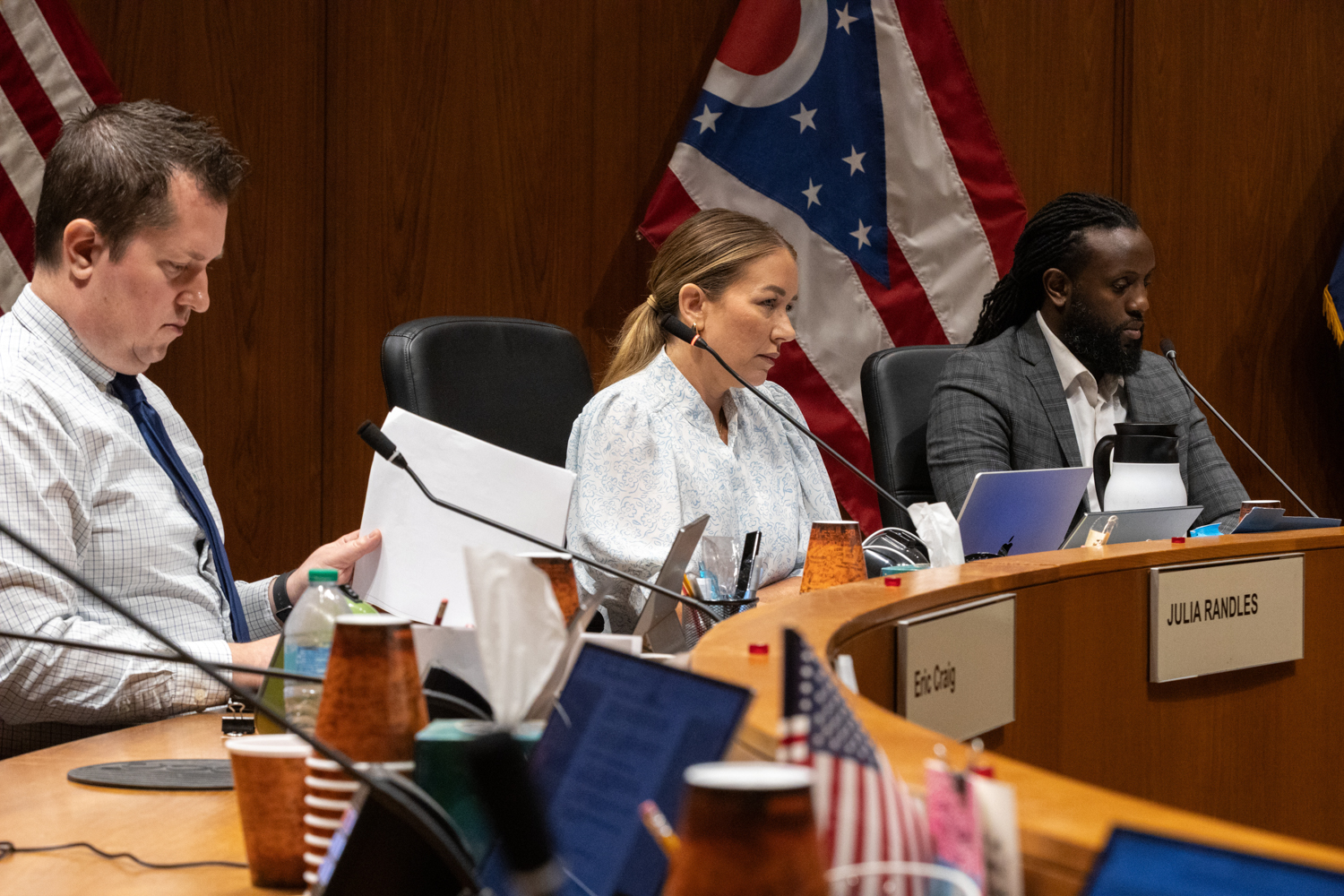
Eric Craig, Julie Randles, and Rob Pasker, all board members of the Administrative Board of Zoning Appeals, hear an instance during a meeting of the Administrative Board of Zoning Appeals. (TFP photo by Stephen Zenner)

Moore said that RRD would like to backfill the excavation on the land with drinking water treatment material (DWTM), and cease its activity on the property. 

Moore estimated this would take RRD 18-24 months to complete, and Moore offered to cover the top two feet of the land with topsoil. After this, Moore assured the board that the land could be used immediately for agriculture. 

Since bringing materials onsite to fill the excavation would not violate the zoning, RRD hoped the city would listen to their appeal. 

Unfortunately, Joshua Lewandowski, zoning compliance manager with the city’s planning department, said they issued the wetland permit that allowed RRD to fill the wetland with spent lime in error.

Because the spent lime came from the water treatment plant, Lewandowski said the area could not be classified as a wetland. “It should have been classified as a public utility and required a special use permit,” he said. 

“We would be asking that no additional spent lime be added to the property, and that the site be brought back to where it was originally.” This request would involve RRD starting a new civil process. 

Backfilling with spent lime “is allowed in residential; they [RRD] just need the special-use permits. They don’t need a zone change. But it gives the city some additional time to evaluate it and make sure that residents are fully aware of everything that’s happening,” Lewandowski said. 

Acquiring a special-use permit starts in the planning commission and then goes to city council for a vote. 

“We would have to regroup and think about that,” Moore said, and urged the board to rescind the order of non-compliance based on what he said was unspecific language. 
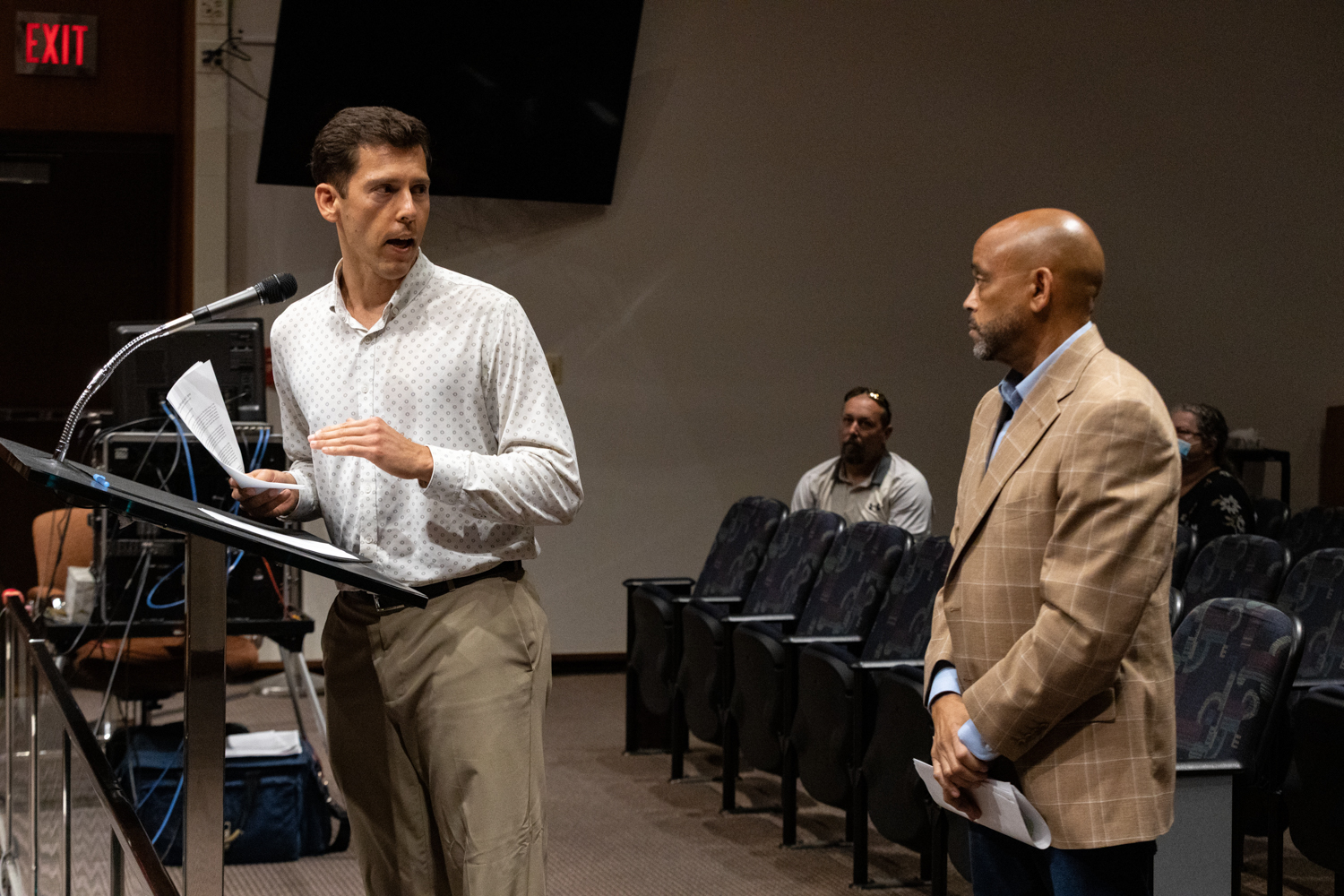
Joshua Lewandowski, zoning compliance manager with the city’s planning department, speaks to Ed Moore, the managing director of Rocky Ridge Development, during a meeting of the Administrative Board of Zoning Appeals. (TFP photo by Stephen Zenner)

At this point, the Board opened the appeal hearing up to comment, where a small group of individuals sat waiting to bring their complaints against RRD. 

“This mining, whatever this idea was, is an absolute nightmare,” said Cynthia McCadney-Lee, who lives on Springburn Avenue. “I’ve been there 23 years. I’ve never had a flood; all of a sudden…it’s flooded. It’s absolutely horrible. I’m not going to ever agree with this.”

McCadney-Lee said her whole house shook from “whatever it is they’re doing in my backyard.”

After this, Toni Thomas, a retired engineering technician with the City of Toledo, made claims that RRD had damaged the land they had excavated by not backfilling it with 50 percent spent lime and 50 percent clay. Thomas also claimed RRD had buried something on the land, to which Charles Stansley, the owner of RRD, laughed with those representing him.  

Quickly, after Thomas’ comments, Moore answered the accusation by assuring the board that the site at 4004 Angola Road is inspected regularly by the City of Toledo, the Ohio Environmental Protections Agency (OEPA) and the Ohio Department of Natural Resources (ODNR).

Lynn Adkins, of Fries Avenue, then advised the board not to trust RRD. “They’re wanting to stay and continue with their work, which destroys our neighborhood,” she said. 
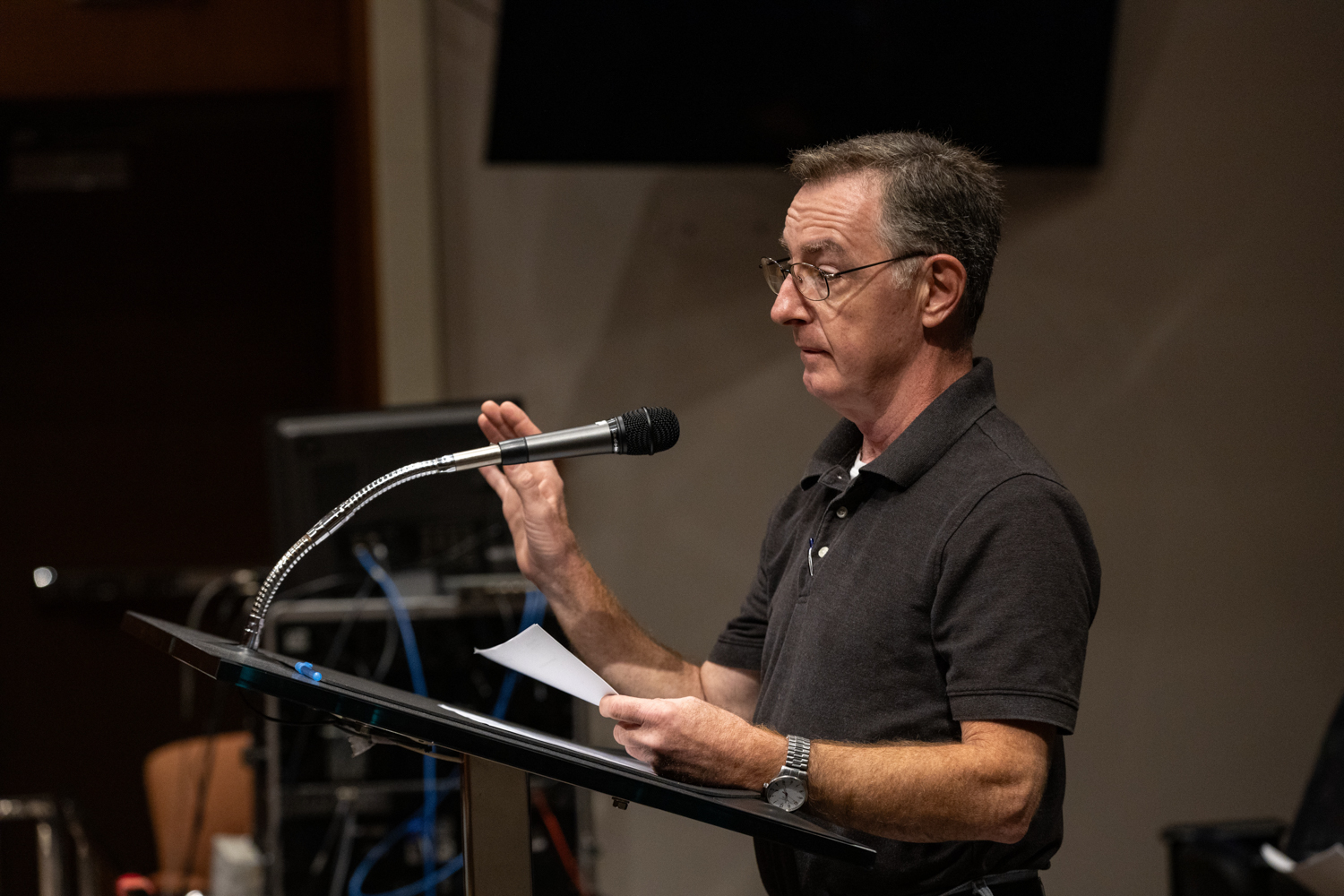
George Yakumithis is sworn in during a meeting of the Administrative Board of Zoning Appeals. (TFP photo by Stephen Zenner)

After another barrage of negativities spoken against RRD from south Toledoans, Chris Parker, an attorney for RRD, emphatically urged the board to strictly enforce the code and rescind the non-compliance order. 

“We want to be out of the neighborhood,” Parker said, and shared that the company had stopped mining. “We want the site reclaimed so that we’re in compliance with the State of Ohio consistent with the permit that was issued.” 

To this aggressive push, Lewandowski spoke of why RRD was still not in compliance even though RRD was not actively mining. 

“There was no authorization for a mine to happen at all,” Lewandowski said. “So any material that has moved from the site, even if there’s no activity currently, is still in violation. Because materials have left the site, it meets the definition of mining. We never authorized that.”

Furthermore, Lewandowski said any permits acquired with the State of Ohio were done so under the incorrect pretense that RRD was in compliance with the local municipality, and then circled back to his first point. 

“Material left the property, so until that is corrected, they [RRD] are still in violation of mining,” he said. 

Stansley and his crew looked confused. After the ruling against them, Stansley said he didn’t know what the next step was to rectifying the stop work order. 

At the end of Lewandowski’s time before the board he said, “I just want to let the applicant know that the city’s interpretation of any additional spent lime is going to require additional approvals from the city.”

A back and forth persisted for a few speakers between RRD representatives and members of the community, and eventually was halted for the vote in favor of upholding the non-compliance order. 

Moore initially gave no comment after the rejection of the appeal, but Stansley said he didn’t know what the company’s next moves were. “All we’re trying to do is close out,” he said. 

RELATED STORY: “Inside Toledo City Council: Sept. 9”

The 100 Mural Project paints Toledo’s story on city walls 

0
Art Tatum mural by Dean Davis on the side of the Brick Bar Building inside in downtown Toledo. (TFP photo by Stephen Zenner)

TOLEDO – What began as a conversation about the riverfront has blossomed into one of Toledo’s most ambitious public art movements. The 100 Mural Project, founded by local artist Dean Davis, is reimagining the city as a living gallery, one wall at a time. 

Initially, the scope was limited to Toledo’s riverfront. But with encouragement, the idea took shape. Davis expanded the vision to encompass the entire city. “We wanted to touch all areas of Toledo,” he said. 
For Davis, the most impactful mural is always the next one. Each new painting brings a neighborhood’s history and spirit into the open, transforming blank walls into canvases of pride and memory.

“Every time we do a mural, a new part of Toledo is born, and also new stories are rediscovered,” he explains. “It’s like opening up photo albums from the city’s past and putting them in public art.” 

Currently, Davis and his team are preparing to move their brushes to the parking garage at Madison and Erie. The forthcoming mural will center on gratitude, a positive message that Davis believes the city needs now more than ever. With an ever-changing world, one thing stays the same. The need for art. 

Mural by Dean Davis on the Amrize (formerly known as Holcim) Silos in downtown Toledo. (TFP photo by Stephen Zenner)

While every mural is unique, they share a common thread: storytelling. The Art Tatum mural pays homage to the legendary Toledo jazz pianist, with a piano key left unfinished to honor future local musicians. The playful Toledo Frog mural was designed simply to uplift spirits, while the Holcim mural stands as a beacon of belonging.

“It’s for all of us Toledo folk to know this is home,” Davis says.

The Patriot Park mural stands proud, depicting the American Flag alongside our everyday heroes. Fire fighters, health care workers, police officers and soldiers.

Mural in the Toledo Pickle Co. building by Dean Davis in downtown Toledo. (TFP photo by Stephen Zenner)

There are many stories and messages in each mural. Seeing them is truly a chance for personal discovery. Davis emphasizes that the imagery for each mural comes directly from the communities where they are created. He spends time listening to residents, letting their stories shape the final work.

“The spirit of those neighborhoods tells the murals what they should be about,” Davis notes. It is important to him to bring the voices of Toledo to life in vivid colors. Everyone has a story that deserves the chance to be told. 

To Davis, public art is more than paint on a wall, it is a reflection of identity. “As we move to be more progressive in the world, we need to show the world that we are a force,” he says. “Public art is like artwork for your home. When guests come, they can tell we have class and are proud to call Toledo home.”

Toledo is full of artists and creativity, and the murals signal that aspect of the city’s culture. The 100 Mural Project is more than art; it is a collective memory painted in bold color across the city’s future.

TFP Photos by Stephen Zenner

RELATED STORY: Toledo Pickle: Vistula Neighborhood Entertainment

Monclova Primary School welcomes Dunkin, a facility dog

0
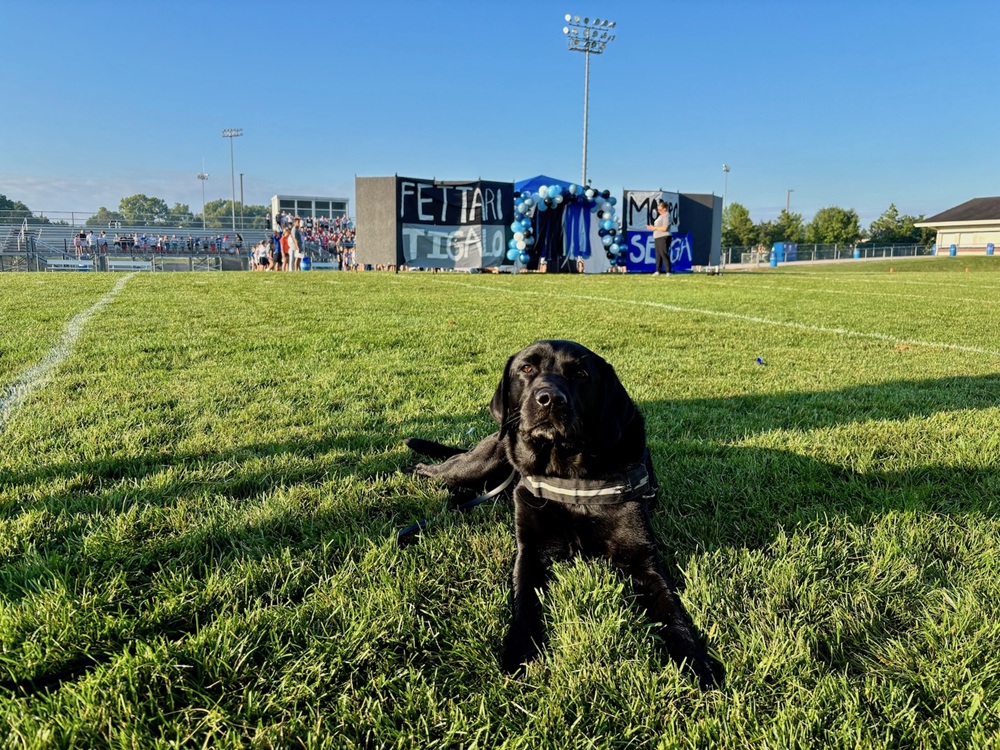
Dunkin is Monclova Primary School's new facility dog, trained by The Ability Center to provide support for students social, emotional and educational needs. (TFP photo by Karen Gerhardinger)

MONCLOVA – With his dark, searching eyes, floppy ears and wagging tail, 2-year-old Labrador retriever Dunkin is magnetic as he walks through the halls or greets students getting off the bus at Monclova Primary School.

“When he’s walking, he’s working,” said Jill Bigelow, dean of students at Monclova. “We taught students a secret tail wave with their pinkies so they can say hello to him when we pass in the hall.”

Dunkin joined Monclova last month as a school facility dog, replacing Laney – who served as a therapy dog at the school from 2017 until retiring in May. The difference between a therapy dog and a facility dog is that Dunkin is trained to do more than provide a lending ear and calming presence, said Bigelow and counselor Chris Buehrer. Unlike Laney, Dunkin will always wear his vest and a leash, and he will always be with a handler when he’s at school.

“Laney was old school. As the program has evolved, we have implemented different rules. Now there are so many neat new lessons. The team is phenomenal and so creative in the way they implement them,” said Stacie Baumbarger, director of assistance dogs for The Ability Center.

Dunkin was trained by The Ability Center to do a variety of jobs at school, including playing educational games with students and assisting in the classroom. Dogs provide assistance with many skills that students are learning, including curriculum, hygiene, social and mental health, she added.

In addition to Bigelow and Buehrer, speech pathologist Michele Wilson and intervention specialist Lindsay Harrigan are trained as handlers to work with Dunkin throughout the entire building. Opportunities for maximizing Dunkin’s service in the school are limitless. He can provide a calming presence for a child having a bad morning or resisting coming to school.

“It’s a way for kids to open up. A dog can break the ice and get kids in a state of mind to be ready for school,” Buehrer said.

In addition to playing games with students, Dunkin will be in the classroom during scheduled lessons, doing “down dog” and other asanas during classroom yoga, or listen to a child reading. Visits with Dunkin are also one of the most coveted rewards for positive behavior, Bigelow said.

The Ability Center is tracking data on pre- and post-placement of dogs through the Ohio Report Card. One Toledo Public Schools building showed their tardiness rate drop after welcoming a dog, Baumbarger said.

“We’re helping schools with gap-closing for things measured on the state report card. We really want to make an impact,” she added.

Astro, who joined Fallen Timbers Middle School as a facility dog in 2021, is one of five canines in the Anthony Wayne Local Schools. This year, the high school expects to welcome its first facility dog. (TFP photo by Karen Gerhardinger)

Anthony Wayne Local Schools welcomed its first dog in 2008, when Sara joined Waterville Primary School. She was replaced by Teila in 2019. Since then, the district has continued adding dogs, including Luna at Whitehouse Primary in 2019, Astro at Fallen Timbers Middle School in 2021, and Lorain in the junior high in 2023. The high school is expecting to welcome a dog during this school year.

“This will be the first district to have a dog in every building,” Baumbarger said, adding that having continual exposure throughout school to the dogs and the benefits they provide can help students overcome challenges.

Some students are allergic to dogs or have a fear of dogs, so the school has some dog-free zones. Often, however, Baumbarger said she’s seen children overcome their fear by gradually becoming acclimated to dogs.

“It depends on the kid and the counselor and how they approach it. Some of it is desensitizing the child to having a dog in the room, and seeing the dog on a leash in a controlled environment shows them that they’re safe,” Baumbarger said.

Some students with allergies can still pet Dunkin as long as it’s followed up with hand-washing. Others need to keep their distance in a dog-free classroom.

Dunkin was part of a litter named after coffee shops and, after training with The Ability Center, served two stints in a prison puppy-training program before heading to Findlay City Schools. He was fostered by Anthony Wayne High School science teacher Jennifer Naujock and her family – although she didn’t know at the time that Dunkin would be placed in the district.

As Monclova prepared to welcome Dunkin, the four handlers underwent training with The Ability Center, which sends staff to the school to provide additional training for specific needs. The Monclova Area Parents (MAPS) and families all pitched in to help buy supplies for Dunkin.

As with many of the kids, the start of the school year is an exciting time for Dunkin.

“He has a ton of energy. Bottling that energy and teaching the kids how to interact with him appropriately so his energy stays contained is what we’ve been working on,” Buehrer said.

While he has plenty of energy, Dunkin is more than happy for his designated hour of naptime each day – quickly sacking out and snoring under Bigelow’s desk.

Inside Lucas County Commissioners Meeting: Sept. 9

0
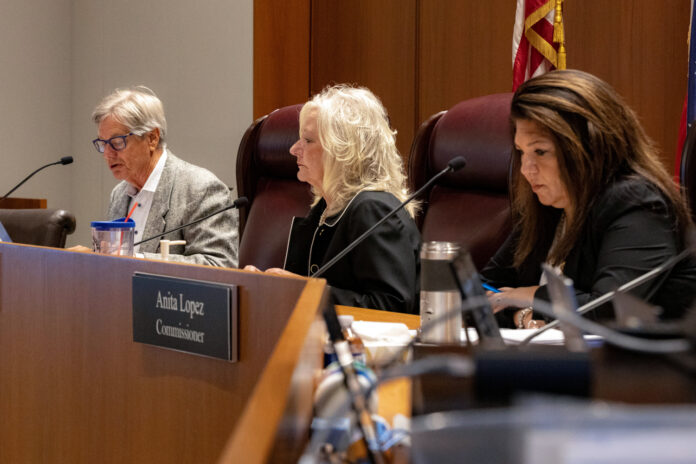
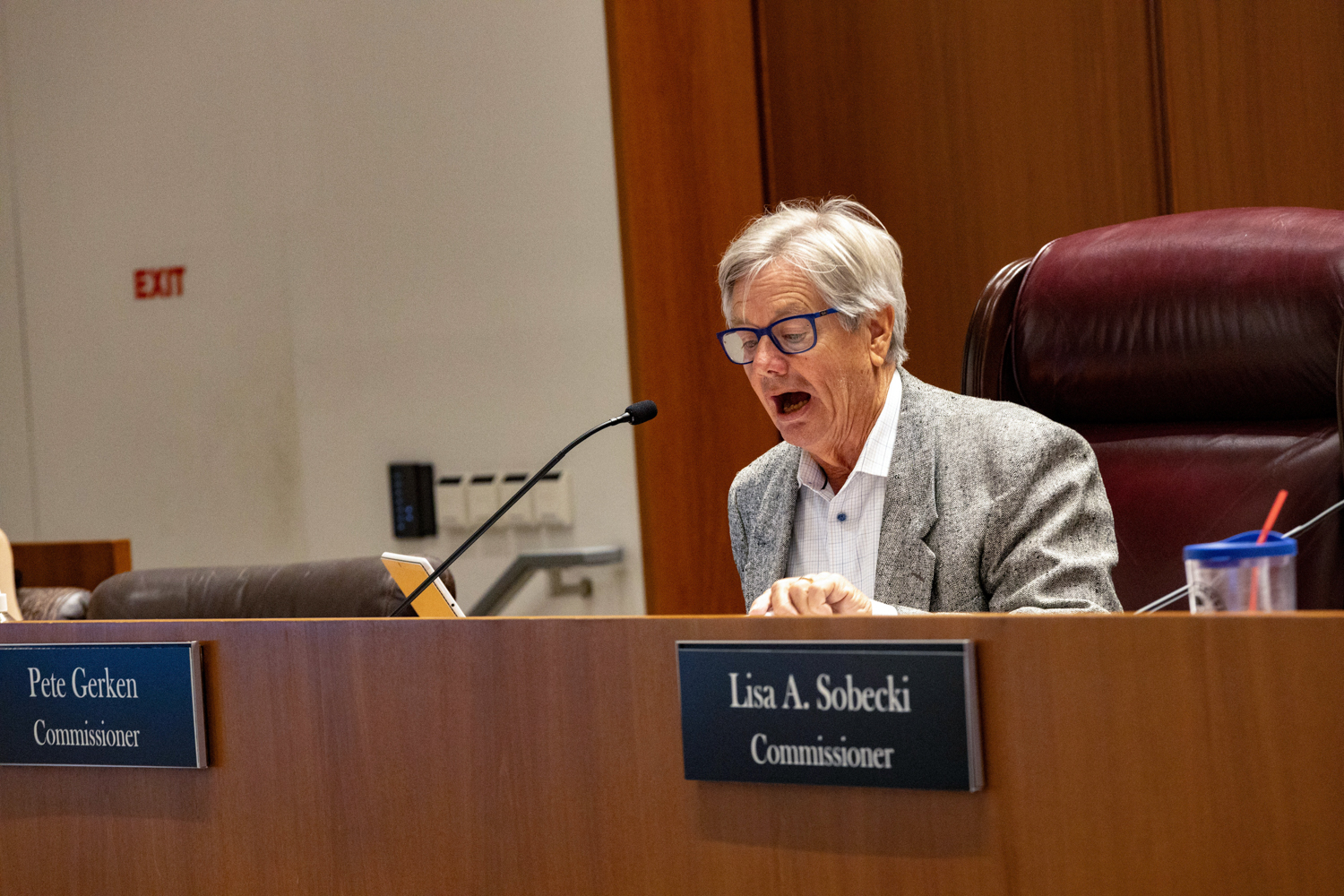
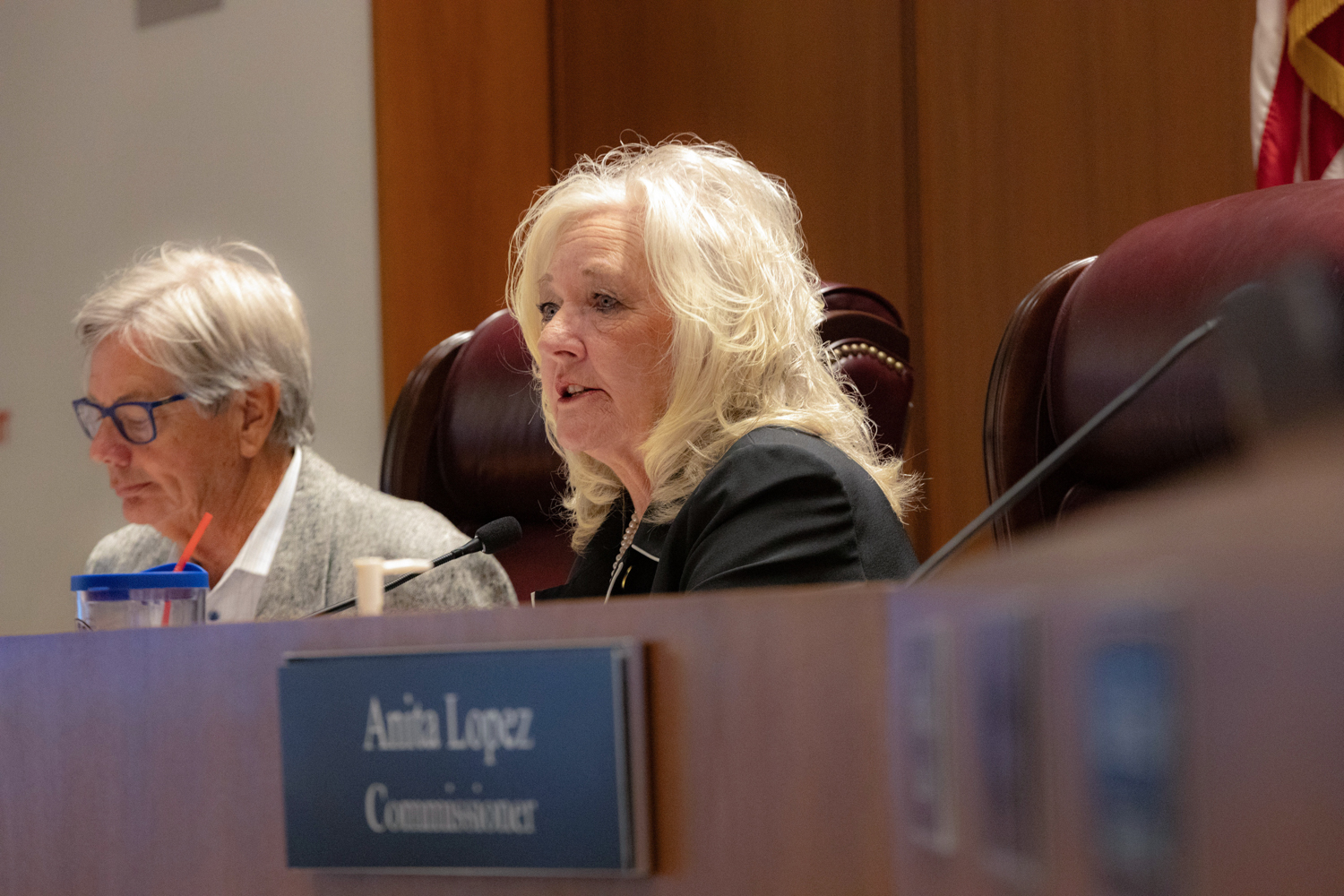
Pete Gerken, Lucas County Commissioner, speaks on adding $1.5 million in two separate voting packages to support a downtown hotel in which the county has a stake, along with Lucas County Commissioners Lisa Sobecki and Anita Lopez, during a Lucas County Commissioners’ regular meeting at 1 Government Center in downtown Toledo, Ohio on Tuesday September 9, 2025. (TFP photo by Stephen Zenner)

TOLEDO – On Tuesday, Sept. 9, Lucas County Commissioners had a split two-to-one vote on appropriating funds towards the downtown hotels in which the county has a $38 million stake. 

That $38 million has gone into the Hilton Garden Inn and the Homewood Suites, connected to the downtown convention center, The Glass City Center. And on Tuesday, Lucas County Commissioners voted to appropriate what Commissioner Pete Gerken called a $1.5 million “emergency fund” for the hotels. 

“We have to protect the money that we have in it [the hotel], and it’s our job to protect our money,” Gerken said. 

Pete Gerken. (TFP photo by Stephen Zenner)

Clarifying the use of the funds, Gerken referred to the $1.5 million as available funds to ensure the hotel stays open during an upcoming event schedule at the convention center. 

“We’re not cashing a $1.5 million check and handing it to anybody tomorrow,” he said, adding that the funds would act as a reserve balance “in case we need it.” 

Gerken said the hotels had struggled getting off the ground after COVID and that, at present, the hotels were in a lull, not in dire need. 

But Gerken believed this was a crucial moment where the hotels would begin to return on their investment. During the regular meeting and when speaking to the press, Gerken held a list of events to take place at the convention center, booked years in advance, and said these events would provide stability to the hotel investment.

All three commissioners agreed on providing contingency funds, but the commissioners diverged on the amount that should be set aside. 

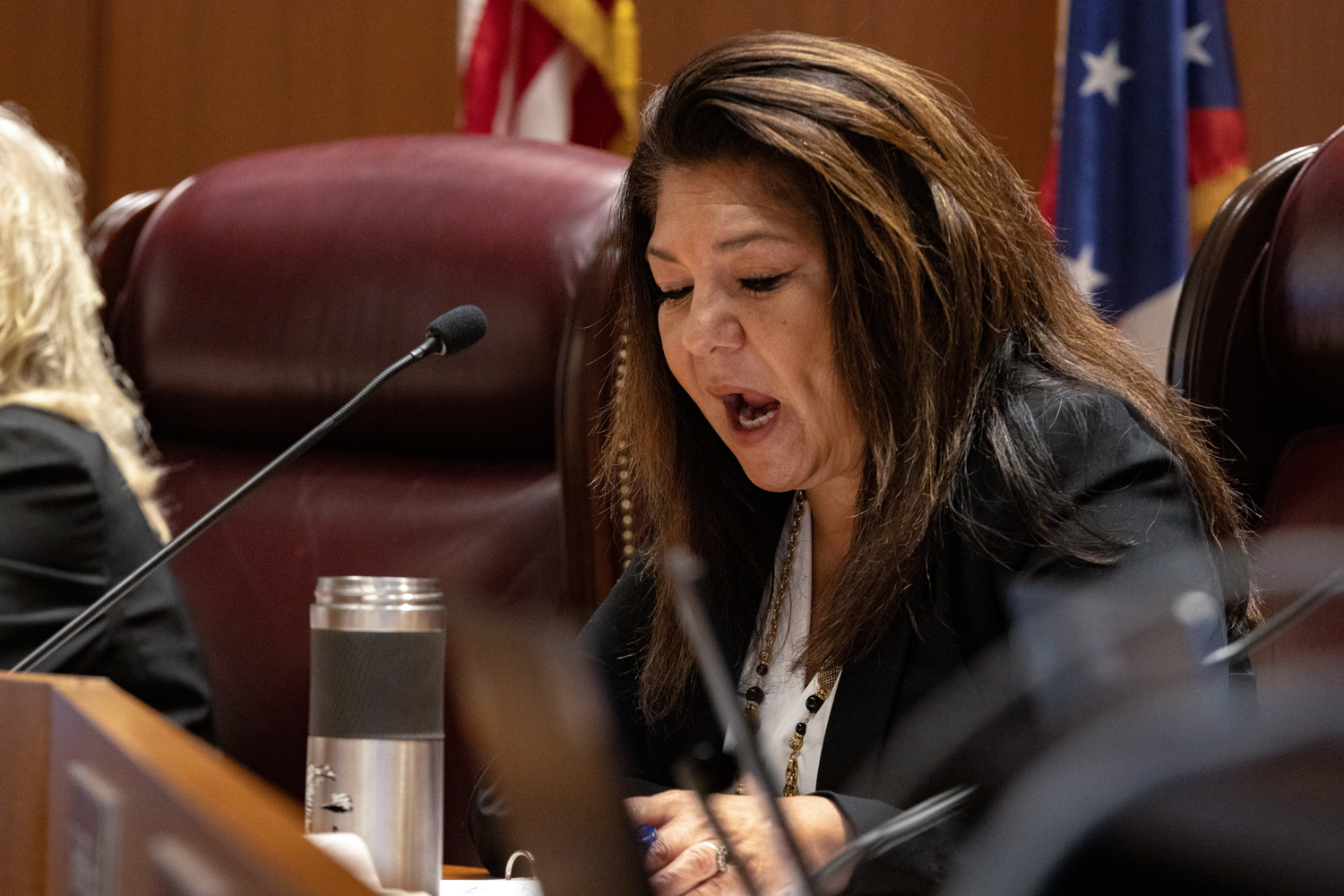
Anita Lopez. (TFP photo by Stephen Zenner)

The allocations were split into two amounts with two separate votes. One vote was for allocating $500,000, which all commissioners approved. The other vote was for adding another $1 million, which Commissioner Anita Lopez did not agree with.

“I believe we need to do a little bit more fine tuning on where those dollars will go,” Lopez said.

Supporting the hotel was important to Lopez, “We need to secure those future conferences that are coming to our area, but I don’t feel comfortable right now, based on the financial statements and the projections that the [$]1.5 [million] is necessary at this time.”

Regardless, Lopez was overruled by Gerken and Commissioner Lisa Sobecki’s votes for the full $1.5 million to be set aside for the hotel. 

Lisa Sobecki. (TFP photo by Stephen Zenner)

“This is taking the time to do it right,” Sobecki said of preparing money in case of an emergency. “Today we’re not going to be taking long for government to work. Government will have done the work and been proactive,” she said, and explained that allocating these funds ahead of time could save money in the future by allowing the hotel to act decisively instead of rushing a decision.

When asked why, Frank Kass, the majority owner in the hotels, hadn’t put up the money for the rainy day fund, Gerken said Kass had already invested in the upfront construction costs, riskier costs leading up to this point. But Gerken said that he was confident Kass would continue to support the hotel as long as the county was invested in it, and that he thought the hotels only needed a year and a half to two years to begin to flourish. 

Inside Toledo City Council: Sept. 9

0
Vanice Williams, Toledo City Council Member for District 4, speaks to the bravery of Justin Scott Slater, a west Toledoan recognized for extraordinary heroism, during a Toledo City Council meeting in downtown Toledo, on Tuesday September 9, 2025. (TFP photo by Stephen Zenner)

TOLEDO – Tuesday was a busy City Council meeting with a delayed action on kratom in Toledo, dissent in the council on approving amendments to the operating and capital improvement budgets and a failed attempt to repeal an ordinance from the year 2000. 

Recognitions

Before any of the local legislation was touched, Justin Scott Slater, a west Toledoan, was recognized for extraordinary heroism by council and the Carnegie Hero Commission. 

Justin Scott Slater, a west Toledoan, stands for a photo while he is recognized by City Council and the Carnegie Hero Fund. (TFP photo by Stephen Zenner)

Slater saved a woman from drowning in the Maumee River in July 2024, and now has been officially honored by his hometown and is a Carnegie Medal recipient. 

Afterwards, a council member’s mother, Kenyetta Gable-Jones, was recognized for retiring from General Motors after 40 years. Council Member Brittany Jones, At-Large, surprised her mother with the recognition that brought tears of joy to Gable-Jones’ eyes. Other council members spoke of Gable-Jones’ impact, but a heart-to-heart wrapped up the recognition as Jones and Gable-Jones expressed how much the family members meant to one another. 

Appointments

These two heartfelt recognitions led directly into appointments to two commissions and a corporation: 

Kwinlyn Tyler was appointed to the Human Resources Commission for one year from the appointment.

Elaina Hernandez replaced Sue Cuevas on the Latino Affairs Commission. Her appointment will end Oct. 9, 2027. 

And five individuals were appointed to the Toledo Community Improvement Corporation: Tyran Boyd, two years; Matthew Heyrman, two years; David Mann, one year; Julia Randles, three years; and Timothy Schlachter, four years.  

Kenyetta Gable-Jones, the mother of Brittany Jones (City Council At-Large) and an employee of General Motors for 40 years, is recognized by City Council. (TFP photo by Stephen Zenner)

Kratom

Then Resolution 350 and Ordinance 351 addressed how Toledo would classify and regulate the pain medication kratom, which Council Member Sam Melden, District 5, explained. 

According to Melden many people had come forward during the Public Safety Hearing on kratom to say that using natural leaf kratom was a way for them to manage pain.

“We hear that need, so let’s move towards the healthiest safest use of that pain medication, the way we would anything else,” he said. “So many pain medications are regulated, and it brings it online for more patients to use when they need it.”

The resolution introduced concerning kratom classified it as a Schedule I Controlled Substance, and was passed. 

Ordinance 351, banning kratom in Toledo, Melden held, because “We believe, following Gov. DeWine’s direction, that the state will take action, meaning we do not need to ban it locally.” 

If DeWine chose not to ban kratom, Melden said they would have to decide what happens in Toledo, “and govern ourselves,” but not indicating an outright solution.

Budget Amendments

$125,000 from the General Fund was approved for the consultant for local landmark designations in Ordinance 362. Council Member At-Large George Sarantou made the motion to amend, and was the only council member to oppose the amendment. 

Denied repeal

Likewise, Council Member for District 2, Adam Martinez, was alone in asking for the repeal of Ordinance 303-00. O-303-00 allows for the area around 0 South Byrne to be automatically rezoned to light industrial if certain criteria are met.

The current owner to the area concerning O-303-00, Michael Kott, attempted to have the area rezoned to light industrial in 2021. Back then, Kott wanted to move his business, Clean Wood Recycling, Inc., into the neighborhood. Clean Wood Recycling, located on West Bancroft Street, makes mulch, and the neighborhood opposed the attempted zone change, leading to its failure before council. 

This past summer, the same disputed area failed to get the same zone change for the company Rocky Ridge Development LLC to mine there. 

Bill Hoag, who owns houses near 0 South Byrne, noticed a house had changed hands over the summer. 

With the new ownership of this home, Hoag thinks Kott has what he needs to rezone the area automatically without bringing it before city council. 

Martinez explained his thoughts behind repealing the legislation. “You can put anything on there that falls in the guidelines of light industrial with no communication from the surrounding neighbors or businesses,” as the ordinance from the year 2000 stands.  

“All I was asking is to repeal a 25-year-old piece of legislation that no longer is relevant to what is existing now.”

At the last council meeting, Council Member John Hobbs III, District 1, said he took the repeal legislation, O-389-25, “as a strong form of disrespect,” since he was not consulted beforehand about legislation affecting his district alone. 

This set him up against Martinez, who pioneered the legislation and also said he had emailed and called Hobbs before the ordinance was considered in the previous meeting. 

11 “no” votes followed O-389-25, including Mac Driscoll, Council Member At-Large, who initially sponsored the ordinance along with Martinez. 

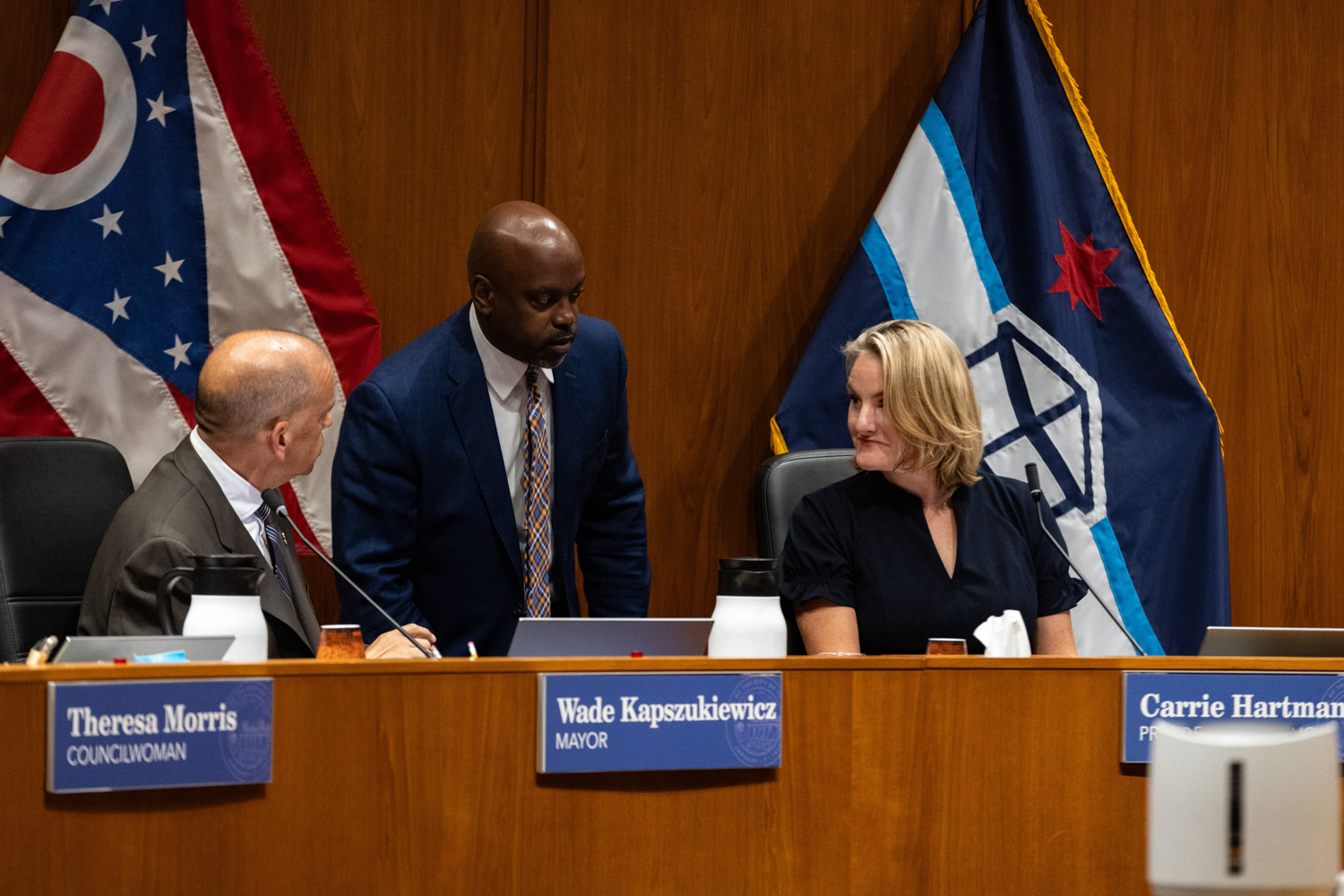
Wade Kapszukiewicz, the mayor of Toledo, speaks with John Hobbs III, Toledo City Council Member for District 1, and Carrie Hartman, Toledo City Council Member At-Large and President of Toledo City Council. (TFP photo by Stephen Zenner)

When council had finished, President of Toledo City Council and Council Member At-Large, Carrie Hartman, addressed the press on behalf of the majority of council: “That single ordinance will not be studied in zoning and planning, but a broader study of the past legislation will be studied instead.”

While Hartman said “It [O-303-00] does, in fact, allow for skipping of some zoning and planning processes and hearings. I’m not sure that’s a bad thing.”

She said the repeal legislation brought by Martinez was “too punitive to single out one property when we know that there are probably 200-300 properties that have had this [kind of] legislation passed back in the 90s.

“I am opposed to singling out one property owner, specifically based on, I think, faulty information; it feels punitive. It feels retaliatory, and I think we need to step back and study all of these parcels instead of just one.”

Without opening up the books on all properties and legacy legislations of this kind, Hartman said the city might run into a lawsuit for singling out a specific property owner.

Hoag had come to the meeting with residents of the south Toledo neighborhood and Toledo mayoral candidate, Roberto Torres

“That type of business going in there, that’s no different than Rocky Ridge. It’s actually worse,” Hoag said as he worried about the land being rezoned to light industrial without feedback from residents. 

The day before council, the plan commission told the Toledo Free Press there was no queued attempt on record to rezone the 0 South Byrne area to light industrial using 0-303-00. 

“I was hoping it [O-389-00] was going to go back to committee if the vote wasn’t going to fly,” Hoag elaborated. 

When asked why Martinez didn’t ask for the ordinance to go back to committee, Martinez said he didn’t have the votes.  

“It was 11-to-one vote, so at some point you got to lick your wounds and move on,” he said, and repeated that he wasn’t trying to “impede on anyone’s turf.”

“I seriously thought this was a non-issue,” Martinez said. “And I was trying to give a voice back to a neighborhood and community that have been ignored.”

Artomatic 419 returns to Erie Street Market

0
(Photo courtesy of The Arts Commission)

TOLEDO – Toledo is a city with art in its DNA. For years, the Toledo Museum of Art has anchored a thriving creative scene, but its heartbeat often pulses through more unconventional spaces. Artomatic 419, a beloved, grassroots festival that once drew a cult following, went quiet after 2015. Now, after a decade-long hiatus, the festival is returning to the Erie Street Market with its original mission: to transform an underutilized building into a vibrant hub of creativity and to fill the city with art once again.

(Photo courtesy of The Arts Commission)

The event’s unique, non-juried model is central to its enduring appeal. As Chloe Nousias, the festival’s marketing and communications manager, explains, the event is built on a culture of inclusivity and experimentation. 

“We really tried to make it clear that it’s for anyone and everyone, and we want people to get experimental,” she said. “It’s a place to try things you might not have tried before, have anywhere else to try them.”

This open-door policy has attracted a wide range of talent, from seasoned professionals to first-time exhibitors. With over 200 artists participating, the sheer volume and variety of work on display will be a testament to Toledo’s diverse creative landscape. The festival will showcase everything from painters and photographers to poets and filmmakers, all sharing a single space in what Nousias calls an embodiment of the city’s “fun, weird personality” and its “DIY culture.” The atmosphere is meant to encourage conversation and connection, helping to foster a stronger artistic community in Toledo.

Photos courtesy of The Arts Commission

The decision to bring the event back was a direct response to a demand from the community itself. According to Tess Healy, the Artomatic 419 & events manager, the festival’s grassroots feeling resonated deeply with local artists, many of whom credit the event with helping to launch their careers. 

This community-driven approach means the artists aren’t just exhibitors; they are collaborators and even laborers in the creation of the event. Healy, who is a working glass artist herself, understands this dual role well.

“I don’t have an official events management background,” she noted, “but as a background, as an artist, it really helps me with the installation side of stuff, and I can kind of realistically help them.”

Healy’s passion is unmistakable, especially when discussing the massive logistical effort required to transform the Erie Street Market. 

“We have walls for our event, so that’s very exciting,” she said, acknowledging the hard work involved. Her hands-on experience, honed partly at the Toledo Museum’s Glass Pavilion, gives her a unique perspective on the challenges and rewards of putting on a show of this scale.

Amy Beeler, an artist who will be at Artomatic 419, stands with her jewlery work at Black Swamp Arts Festival in Bowling Green, Ohio. (TFP Photo by Allyson Ritchey)

One of the most powerful testaments to Artomatic 419’s impact is the story of Amy Beeler. A well-respected fiber and jewelry artist with a current show at the Toledo Museum of Art’s Community Gallery, Beeler remembers the festival as a career launchpad.

“Artomatic is always so much fun and exciting to be part of,” she said. It was through the festival that she, fresh out of her BFA program at Bowling Green State University, met many of the people who are still part of her local community of artists today. 

“It’s not just visual artists. You’ll meet people that are working on film, you’ll meet the poets and the writers,” she explained.

For Beeler, the event’s return is a welcome chance to reconnect and to experience the creative energy firsthand. This year, she’s bringing a unique installation piece and hopes the event continues to be a source of inspiration for new artists and a beautiful way for the city to support its own. Her journey, from a first-time exhibitor to a featured artist, is a perfect illustration of the festival’s tenacious legacy.

While the art is the focus, the true magic of Artomatic 419 lies in its ability to bring people together. Healy hopes the event helps to build connections, especially in a world that has seen so much isolation. 

“We’re still seeing reactions from COVID where people were just like holed up in their houses and missing community,” she said. “Just having a space where people can connect, I think, just always has a lasting effect.”

Attendees can experience this firsthand throughout the weekend. Friday will serve as a relaxed artist mixer with a DJ, a perfect time for mingling and networking. Saturday and Sunday will be full of performances, with a constant flow of action. This vibrant atmosphere, paired with the free entry, ensures the event is accessible to everyone.

At its core, Artomatic 419 is more than a festival–it is an act of community building. It is a bold, artistic statement that celebrates not only the art itself, but the people who create it and the city that supports them. 

Location: Erie Street Market, 201 S. Erie Street

Dates & Times:

  • Friday, Sept. 19: 5 – 9 p.m.
  • Saturday, Sept. 20: 2 – 10 p.m.
  • Sunday, Sept. 21: 11 a.m. – 3 p.m.

Photos courtesy of Ben Morales

Latino Day to honor scholarship recipients

0

Latino Scholarship Day at the final Toledo Mud Hens home game of the season on Sunday, Sept. 14, will include pregame scholarship presentations to four Latino college students.

Four students of Latino descent received financial help in pursuit of the higher education: two $1,000 scholarships from the Spanish American Organization (SAO) and two additional awards from Lourdes University.

One of the SAO scholarship recipients is Selena Garcia, a junior at the University of Cincinnati majoring in marketing. The Oregon, Ohio resident carries a 3.4 GPA and has achieved the Dean’s List during three of four semesters of college so far. 

“My personal and professional goals are rooted in representation and impact,” Garcia wrote in her application. “I aim to build a career in marketing where I can elevate underrepresented voices and tell stories that matter. Eventually, I hope to work with organizations focused on community outreach, cultural empowerment or education.”

Garcia revealed she once struggled with her Latino heritage and embracing her identity. She admitted she would even go so far as to wear long sleeves and avoid the sun to feel like she fit in with her peers. But as she grew older, she learned to celebrate her heritage as she increased her cultural awareness.

“Now I see my Mexican heritage as one of my greatest strengths,” she wrote. “I celebrate my roots proudly and work to empower others to do the same. I’ve grown into a leader who wants to uplift younger students and remind them that our culture is something to be proud of. As efforts around DEI begin to fade on college campuses, I am more committed than ever to being part of the solution—through advocacy, visibility, and action.”

The second scholarship recipient is Toledo native Emerson Castillo, now a sophomore at Miami University in Oxford, Ohio. The Central Catholic High School graduate carries a 3.4 GPA while majoring in pre-med and psychology with the goal of becoming a forensic psychiatrist upon graduation.

Castillo played lacrosse and volleyball while in high school but suffered two ACL tears as a student athlete. But she told the scholarship selection committee that those serious injuries taught her valuable lessons she has carried into her college academic success so far.

“I learned discipline and dedication. I also learned that it’s okay to fail, as long as you get back up and try again,” she wrote in her application. “Finally, I learned to never give up.”

Two Lourdes University students of Latino descent also will receive scholarships through the school. Jordy Rengifo-Poma and Mariah Shirey will receive ceremonial checks near home plate alongside the SAO recipients during pregame festivities.

Latino Day will begin with a parade outside Fifth Third Field at noon on Sept. 14. The game that day coincides with the start of Latino Heritage Month, which runs September 15 to October 15. The ballgame between the Mud Hens and Louisville Bats will follow the pregame scholarship presentations at 2:05 p.m. Latino Day tickets are $20 each and can be purchased here. Those game tickets also gain participants entrance to a 4 p.m. postgame concert at Hensville featuring Grupo Motivo.

Waterville Township approves data center language

0
Waterville Township trustees (from left) Kim Anderson, Kyle Hertzfeld and Julie Theroux approved the addition of language to the zoning resolution that would allow data centers to build in agriculturally-zoned land with a conditional use permit. (TFP photo by Karen Gerhardinger)

And other news from the Anthony Wayne area

The Waterville Planning Commission recommends approving a preliminary site plan and conditional use permit for Meijer to build a new store. Waterville Township approves adding language that would allow data centers in agriculturally-zoned areas. Whitehouse is teaming up with Hope United Methodist Church to provide an Anthony Wayne Community Senior Connection program every Saturday. Finally, Monclova approved the rezoning of property on Monclova Road to C-1 Commercial. These are a few of the updates from the Anthony Wayne area meetings over the past month.

WATERVILLE – Meijer Plans To Break Ground on Waterville Store In 2025

(Rendering courtesy of Meijer)

For over a decade, Meijer has owned 25 acres on the southwest corner of S. Pray Boulevard and S.R. 64 in Waterville, and they’ve been waiting for the right time to build.

If Waterville City Council approves a conditional use permit and site plan, Meijer may break ground on a new 159,935-square-foot store by the end of the year.

During a September 3 Waterville Planning Commission meeting, Brian Smallwood, a project engineer with Woolpert, and Courtney Magaluk, a project engineer with Meijer, presented a preliminary site plan and requested a conditional use permit for the store.

Meijer’s plans include grocery and home goods areas, a pharmacy with a drive-thru, garden center and an online pickup area, as well as a 3,660-square-foot gas station and convenience store. Another outlot is being marketed by Meijer to attract a sit-down restaurant.

“We’re anticipating, hopefully, to move dirt this year – mainly to fill in that pond in preparation for larger earthwork,” Smallwood said, referring to a 57,000-cubic-yard pond that is up to 25 feet deep in the middle. Once the site is ready, he expects the construction on the building to begin in the spring, with an opening by mid-2027.

The planning commission members, including Dennis Birkemeier, Will Burns, Dave Kerscher, Doug Parrish and John Wasserman – along with administrator Jon Gochenour and law director Kati Tharp – reviewed the plans, traffic study and suggestions from the city’s engineering firm, Proudfoot Associates. 

Parrish suggested increasing the number of landscaped traffic islands in the parking lot and asked detailed questions about setbacks, the turn radius in the gas station and connecting the shared use path from the intersection to the store. He also homed in on the exterior look, which currently includes three different gray colors, textured concrete and a weathered wood look. The commission agreed that adding more accents to the exterior, especially on the pick-up side that faces S.R. 64, would be beneficial. Magaluk agreed to ask the architects to add accents before presenting a revised site plan.

The commission and Smallwood also discussed working with Ohio Department of Transportation on changes to the U.S. 24/S.R. 64 interchange and adding right-turn only lanes in and out of S. Pray Boulevard, before unanimously recommending approval of the site plan and conditional use permit. 

During the August 25 meeting, Waterville City Council:

•Denied a request to rezone 9 acres at 9055 Waterville Swanton Rd. (S.R. 64) from A-1 Agricultural to C-4 Highway Commercial for a QuikTrip convenience store and semi-truck center. 

•Held a second reading on a change that would allow data centers in M-1 Light Industrial districts with additional setback requirements from residential areas.

•Approved a memo of understanding with the firefighters union to increase wages by 5 percent – matching the same increase granted to the police in November 2024.

•Listened to Waterville Area Chamber of Commerce executive director Michelle Smith outline plans for the Saturday, Sept. 27 Roche de Boeuf Festival. The city will contribute $7,000 for the festival, which will have a children’s area with a rock climbing wall and other activities in Parker Square, live music on N. Third Street, vendors and a 10 a.m. parade.

•Heard Dave Weber, of the Save the Bridge Association, ask for the city for assistance in efforts to save the Roche de Boeuf Interurban Bridge.

Waterville Township

Waterville Township trustees unanimously approved the addition of data centers to its zoning resolution during its August 27 meeting.

“We want to get this in the zoning book so that if or when it happens we would have the ability to control the process,” said trustee Julie Theroux. “This would protect us as a township.”

Data centers are now permitted on agriculturally-zoned property with a conditional use permit. To obtain that permit would require at least three public hearings and allow the township to stipulate setbacks, landscaping, lighting and other factors. Currently, the township does not have a request for a data center but is preparing for the eventuality, trustees said.

“We know the buzzards are circling,” trustee Kim Anderson said of the interest in sites for data centers. 

Residents Tony and Janice Braida and William Walborn shared concerns about potential impacts of data centers.

“We came to say that we think it’s a bad idea; it opens a Pandora’s box,” Janice said, citing instances in other states where residents are impacted by a constant hum from rooftop fans and generators. She also cited concerns about light pollution, electrical shortages and potentially higher property taxes. 

“Just because other communities are trying to make way for data centers doesn’t mean it’s right for us,” Tony Braida said.

Evan Morrison, a representative from the International Brotherhood of Electrical Workers (IBEW) Local 8, touted the benefits of bringing a data center to the area, including the opportunity to employ 400 to 800 electricians and other trades workers in the construction process. He applauded the township’s decision to put language into place now, rather than when a developer’s attorney is at the door. He also noted that developers of data centers are committed to being good neighbors.

Walborn asked why anyone would want a data center in a small township, other than for the economic benefits. 

“At what price to get the tax base? What I see in Middleton Township is atrocious. I’m in favor of taxes and economics, but do we need it here? And how long do one of these complexes last? Someone will tear it up when it is antiquated,” Walborn said.

Morrison said the taxes will benefit the schools and the township, using PILOT (payment in lieu of taxes) agreements. For Waterville Township, which hasn’t been able to pass a levy to support its General Fund and police, this could be a benefit.

“This is about making the right decision for the township,” Morrison said.

Janice Braida said that she wished more community members had come to the meeting to share input before the trustees made a decision. 

During the meeting, the trustees also:

•Heard that residents have been sent postcards to take a survey about the township as it prepares to update its land use plan. A link is available at watervilletwp.com and on the Township of Waterville Police Facebook page.

•Appointed Steve Reinbolt as an alternate to the Board of Zoning Appeals and Jonathan Poponak as an alternate to the Zoning Commission.

•Heard that the Lucas County Planning Commission recommended approving a zoning change for the Jenny Rogers property – land north of Dutch Road between Coventry Glen and U.S. 24. –with 28 conditions. The township zoning commission will review the rezoning request for Walden subdivision and forward it to the trustees.

Monclova

Monclova Township trustees approved the rezoning of 4.4 acres at 6740 Monclova Road from Agricultural/Residential to C-1 Commercial. During the Sept. 2 meeting, trustees noted that the property is across from Rolled Alloys, which is zoned industrial, and near the Friendship Store and other commercial uses. 

“It is in an area that has grown commercially around it,” said trustee Barbara Lang of the farmland, which is currently being marketed for sale.

During the meeting, the trustees also:

•Voted 2-1, with Trudy Vicary dissenting, to hire Kendall Linnenkugel as a firefighter/EMT. She currently works as an EMT and as a color analyst for Toledo Walleye hockey.

•Set a public hearing for Monday, Sept. 15 at 5:30 p.m. for a request to rezone 8350 Stitt Road from Agricultural to Suburban Residential.

Whitehouse

Whitehouse is partnering with Hope United Methodist Church for the Anthony Wayne Area Senior Connection – a program that will be held every Saturday from 9 a.m. to noon at 10610 Waterville Street in Whitehouse, beginning on September 20.

Open to all area senior citizens, Senior Connection will include a continental breakfast, wellness checks and weekly activities that will be announced on the Whitehouse and Hope Facebook pages. 

419 MusicFest rocks out for first responders

0
The Ziehr family—Fire Chief Jonathon, Annie, Stella, and Sophia—with Tim Croak, CEO of Croak Capital, at the 2024 419 MusicFest in Springfield Township's Community Homecoming Park. (Photo courtesy of Kristina White)

HOLLAND — This year’s 6th annual 419 MusicFest is set for Saturday, Sept. 20, at Community Homecoming Park on Angola Road. As the grand finale of Springfield Township’s Summer Series 2025, the free event will offer a day of music with a lineup of 11 vibrant local artists. Beyond the stage, the festival is a critical lifeline for the community, with all proceeds going toward two vital causes: funding firefighter mental health initiatives and supporting the H.E.R.O. (Health, Education, Resources, and Outreach) Program.

For Springfield Township Fire Chief Jonathan Ziehr, the mission is deeply personal. He describes the fire department’s personnel as their #1 asset and highlights the growing mental health crisis in the profession. 

“Firefighter suicides are now more likely than dying in the line of duty,” Chief Ziehr said.  “That’s an unacceptable statistic to me personally.”

The trauma firefighters endure daily is a contributing factor. From responding to car accidents to witnessing the aftermath of fires and other emergencies, these experiences have a compounding effect on their mental health.

The funds raised at 419 MusicFest go directly to the Springfield Township Firefighters Union Local 3544. This 501(c)(3) nonprofit helps cover out-of-pocket co-pays for counseling sessions, which can range from $40 to $100 per visit. “We need to do something to combat these negative effects on our personnel,” Chief Ziehr emphasized.

The festival also continues its support for the H.E.R.O. program, which helps elderly community members who need assistance to live safely and independently in their homes. The program allows the department to provide crucial support beyond emergencies, from installing grab bars to providing slip-resistant mats. “This allows those individuals to continue to have their own independence, and live at their residence of their choice,” he said.

This year’s event marks a new chapter, with Springfield Township taking the lead on operations. Founder Todd Boatfield remains actively involved, and his dedication was instrumental in creating a festival where “you can party with a purpose,” as event organizers Kristina White and Rachel Geiger have noted. The event is a chance for the community to connect with its first responders. 

As White said, “The fire department is not an entity. It is a family.” 

Township residents enjoying 419 Music Fest at Community Homecoming Park, Summer 2024. (Photo courtesy of Kristina White)

419 MusicFest also supports the families of the Springfield Township Fire Department’s personnel. For over two decades, the department has provided scholarships to the children of its personnel. Chief Ziehr proudly shared that his small department has given out over 50 scholarships in the past 20 years, with three to four students awarded annually. The scholarships can be used for any career path, reflecting the department’s investment in the future of their families.

The MusicFest promises a day of non-stop entertainment with a full lineup of 11 top local artists. Attendees can bring blankets, lawn chairs, and small pop-up tents to enjoy the music. The theme of community and family will be on full display. The music kicks off at noon and features sets from fan favorites like Piggyback Jones and the beloved Leadfoot Granny, who will close out the night at 10 p.m.

The roster also includes a special performance from Thee Andi Jo Experience, led by Springfield High School alumni, Andi Jo Taylor. Taylor is both a singer and an actress, having recently played the role of Emma in The Lifeguards (2024), a movie filmed in Toledo. Her performance is a special full-circle moment for now-Trustee Chair Rachel Geiger, who handed Taylor her high school diploma when Geiger served on the Springfield school board. Geiger is proud to see a former student thriving as a Glass City star.

With free admission, free parking, and a variety of food trucks, the 419 MusicFest is a chance for the entire community to come together. Attendees can support the cause through beverage and merchandise purchases, as well as easy QR code donations available throughout the park. Digital screens set up throughout the park will ensure a great view of the stage from anywhere. With nearly 70 sponsors and a dedicated team, the 419 MusicFest is set to be a powerful and memorable day of community, music, and giving back.

Mercy Health et al. weigh in on mediation efforts with ProMedica

0

Mercy Health and Nationwide have recently agreed to participate in mediation to build a productive and inclusive path forward for comprehensive pediatric care in the Toledo community. ProMedica indicated it is not inclined to participate in mediation while claims against it remain pending.

Compassionate healthcare for every child and every family requires meaningful collaboration, shared accountability, and a collective commitment to putting children first. While the path to partnership has not always been easy, the growing complexity of pediatric care makes it clear that working together is essential.

Since 2019, collaboration between Mercy Health and Nationwide Children’s Hospital has helped improve pediatric care within our community in meaningful ways. Families in our region have seen expanded access to care, new pediatric specialists, and broader services that meet children where they are. These outcomes are proof that when institutions align around a common purpose, real progress is possible.

At the same time, recent tensions have raised concern and threatened to slow the momentum of this important work. As a greater community, we recognize those concerns. We also know that no single organization can meet the needs of our children alone. It will take a unified approach to move forward. That approach must be grounded in transparency, cooperation and the inclusion of all.

We are encouraged that dialogue has resumed. We thank Lucas County Commissioner Pete Gerken, Toledo Mayor Wade Kapszukiewicz and Tina Butts of The Movement for their leadership in bringing stakeholders back to the table. Their efforts show what is possible when trusted voices step forward with courage and clarity to keep the focus where it belongs: on the children and families of this community.

Now, with that foundation reestablished, we call on ProMedica Health System to join Mercy Health and Nationwide Children’s Hospital in charting the next phase of pediatric care in northwest Ohio. A stronger future is within reach, but only if we continue this work together.

We stand united in support of a renewed, transparent, and inclusive partnership that places children at the center of every decision. Let us move forward as one community, committed to a shared vision of building a better community.

Through sincere collaboration and with transparency among all three health systems, our entire community stands to benefit. The time is now.

Michael Alexander AFL/ CIO / UAW Community Services
Balhinder Brar, M.D. Nephrologist Chief of Staff Elect, Mercy Health – St. Vincent Medical Center

David Fleetwood
President, Northwest Ohio Building
Trades, Business Manager Laborers Local 500, President, Northwest Ohio AFL-CIO

Paula Hicks-Hudson
Ohio Senator, 11th District

John Leskovan, D.O.
Chief of Staff, Mercy Health – St. Vincent Medical Center
Trauma Director, Mercy Health – St. Vincent Medical Center

Miguel Morillo, M.D.
Pediatric Anesthesiologist
Chief Medical Officer, Mercy Health – St. Vincent Medical Center

Susan Pratt R.N.
President Local 2213
Professional Registered Nurse

Vanice Williams
Council Member
Toledo City Council, District 4

Robert Baxter President Mercy Health Toledo
Tina Butts President The Movement

Pete Gerken
Lucas County Commissioner

David Johnson, M.D.
Emergency Room Medical Director
Mercy Health – St. Vincent Medical Center

Anita Lopez, Esq.
Lucas County Commissioner

David Paolini, M.D.
Vascular Surgeon
Section Chief, Vascular and Cardiovascular Surgery

Gina Skolmowski
Chair, Mercy Health North Board &
Executive Vice President, Enterprise Strategy, Risk and Quality, NAMSA

Benjamin Boothby, D.O. Orthopedic Traumatologist Assistant Orthopedic Surgery Residency Program Director, Mercy Health St. Vincent Medical Center
Kevin Dalton President Toledo Federation of Teachers, Local 250
Dave Green
Region 2B Director
United Auto Workers (UAW)

Wade Kapszukiewicz
Mayor – City of Toledo

Doni Miller
Chief Executive Officer
Neighborhood Health Association

Seth Phillips, D.O.
Orthopedic Traumatologist Orthopedic Surgery Residency Program Director, Mercy Health St. Vincent Medical Center

Lisa Sobecki
Lucas County Commissioner