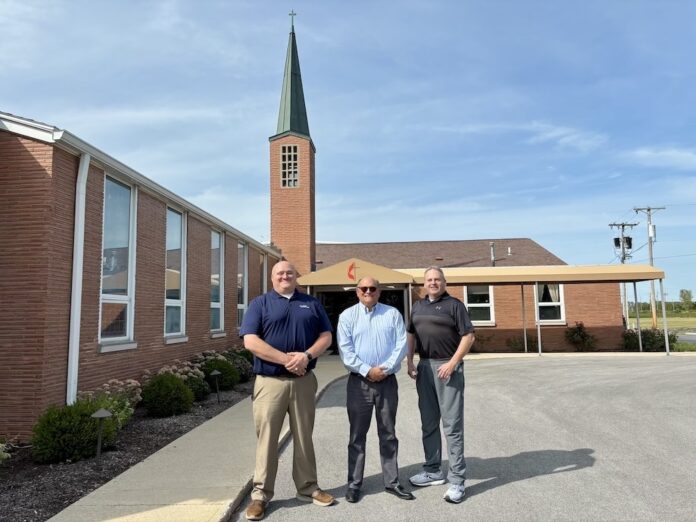
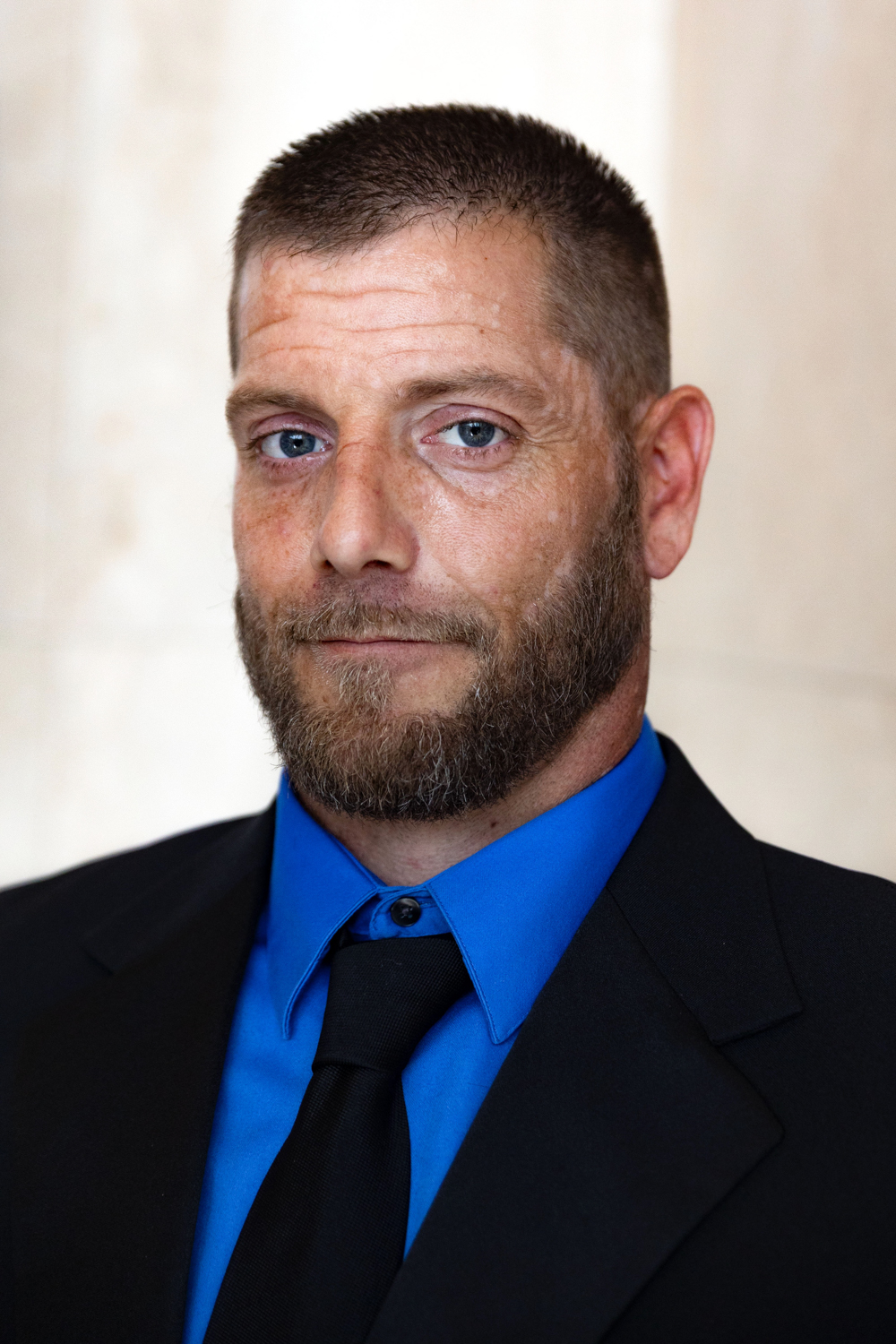
Whitehouse Chief Operating Officer Josh Hartbarger, Hope United Methodist Church Discipleship Director Steve Winters and Whitehouse Mayor Richard Bingham stand in front of the church at 10610 Waterville Street in Whitehouse - where a weekly Anthony Wayne Area Senior Connection program is set to launch on Saturday, Sept. 20. (TPF photo by Karen Gerhardinger)
WHITEHOUSE – Anthony Wayne-area seniors now have a reason to rise a little earlier on Saturday mornings, as a new program beginning Saturday, Sept. 20 offers a free breakfast, informational programming and plenty of time for socializing with peers.
The Anthony Wayne Area Senior Connection program, hosted by the Village of Whitehouse and Hope United Methodist Church, will debut this weekend and run every Saturday from 9 a.m. to noon at the church, 10610 Waterville Street in Whitehouse.
“This is a chance for people to get out and get together with friends and meet new people,” said Steve Winters, Hope’s director of discipleship.
The morning begins with a continental breakfast, such as bagels, pastries, yogurt and fruit, and time to socialize. At 10 a.m., the program begins, with guest speakers, games and hands-on activities.
“We’re still developing the calendar, but so far we have a lot of positive feedback,” said Village Chief Operating Officer Josh Hartbarger, who is working with the Area Office on Aging and local businesses and organizations for programming. He expects to share the rest of the 2025 calendar of speakers at whitehouseoh.gov in the coming days.
Mayor Rich Bingham is the first speaker, discussing “What’s New In Whitehouse.” Among the new projects he’ll discuss will be plans for a new Whitehouse Library, which Toledo-Lucas County Public Library is planning to build at Blue Creek Metropark along Waterville Street within the next two years.
“We’ve asked the Library to consider including space for a senior center in that new building,” Bingham said.
When he was first on Village Council eight years ago, Bingham said he teamed up with council member Louann Artiaga to explore ways to bring a senior center to the village, as it’s one of the top requests on village surveys.
While Anthony Wayne-area residents have access to the Maumee Senior Center and its programming, often people prefer to stay closer to home, with an opportunity to socialize with people they know, he said.
“This is a connection to your community, with people that you trust,” Bingham said. “Seniors need something to do, especially those who are widowed and single.”
Hope is also familiar with the need for a senior gathering, as the church previously hosted well-attended Wednesday luncheons for many years before the pandemic, Winters said. He saw how seniors flocked to those lunches not just for the food but for an opportunity to visit with others. While those labor-intensive lunches are no longer held, Winters said members of his discipleship group were recently brainstorming ideas for a way to serve the community and all arrive at the same idea: programming for seniors.
“The partnership between local government and the nonprofit church is the perfect fit, and will give us a way to bring back that connection we lost during Covid,” Hartbarger said.
By hosting the Anthony Wayne Area Senior Connection on Saturday, guests will also have access to the Hope Chest, the church’s resale shop that is stocked with reasonably priced clothing, housewares, toys, books and games. This is open every Saturday from 9 a.m. to noon as well. In addition to built-in time for socializing, programming and shopping, volunteers with medical backgrounds will offer simple health checks as well, Winters said.
For information on programming, contact the village at 419-877-5383 or visit whitehouseoh.gov.
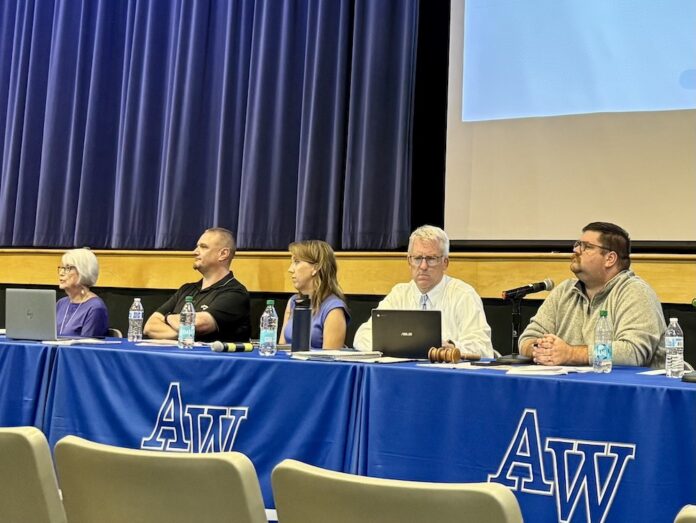
The Anthony Wayne Board of Education held a special meeting on Sept. 18 to consider disciplinary action against board member Shellie McKnight. (TFP photo by Karen Gerhardinger)
ANTHONY WAYNE – Anthony Wayne Board of Education member Shellie McKnight will resign effective Dec. 31, Board President Kyle Miller announced during a special meeting on Sept. 18.
The board also voted to censure McKnight, following criticism of a laughing emoji she used in response to an article on activist Charlie Kirk’s shooting, posted on her personal Facebook page on Sept. 11. McKnight stated during a Sept. 15 meeting that the emoji choice was an accident – a result of not using prescription glasses while perusing Facebook out in the sun.
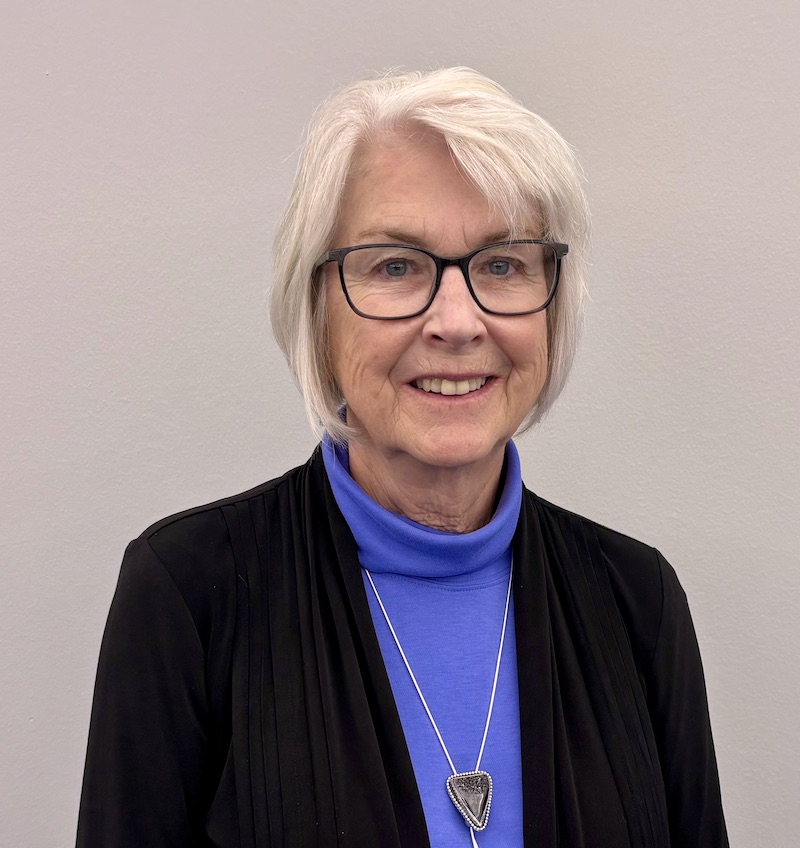
Shellie McKnight, a retired educator, has served on the board since Jan. 1, 2024. She will resign on Dec. 31, 2025. (TFP photo by Karen Gerhardinger)
The board members, including Miller, Jeff Baden, Lindsay Hoipkemier and Mike Stamm, voted in favor of the censure, while McKnight voted against it. A school board censure is a resolution that officially reprimands a member for policy violation, misconduct or unprofessional behavior, according to a release from district Superintendent Kevin Herman.
“It’s a public display of ‘we don’t approve of what she’s done on her social media,’” Miller said.
The censure, McKnight said, was inappropriate.
“What they are accusing me of had nothing to do with my actual work while I was on the board, doing board work…and that work has been exemplary,” she said.
The board asked her to step down from the policy board committee, and she agreed, but McKnight will remain on the curriculum committee until Dec. 31. Hoipkemier is also on the curriculum committee, and said it’s given her a chance to connect with McKnight over the past year and a half.
“I have no ill feelings toward Shellie about the situation. It’s not a personal matter,” Hoipkemier said during the meeting. “I just truly feel that the resignation…should be effective today. I would prefer it would be effective immediately.”
After the meeting, McKnight said she was the one to call for the executive session to explain her reasons why she’s resigning.
“It had nothing to do with the Charlie Kirk fiasco,” said McKnight, explaining that she was already planning to speak with Herman about resigning in October, because of “personal and private health and family issues.”
She pushed to remain on through the end of the year to tie up loose ends, including work on the curriculum committee – where she has utilized her experience as retired educator. On the board, and on the committee, McKnight said she plans to continue to promote the school, the teachers, the students and to work to maintain the district’s reputation as being in the top 5 percent in Ohio.
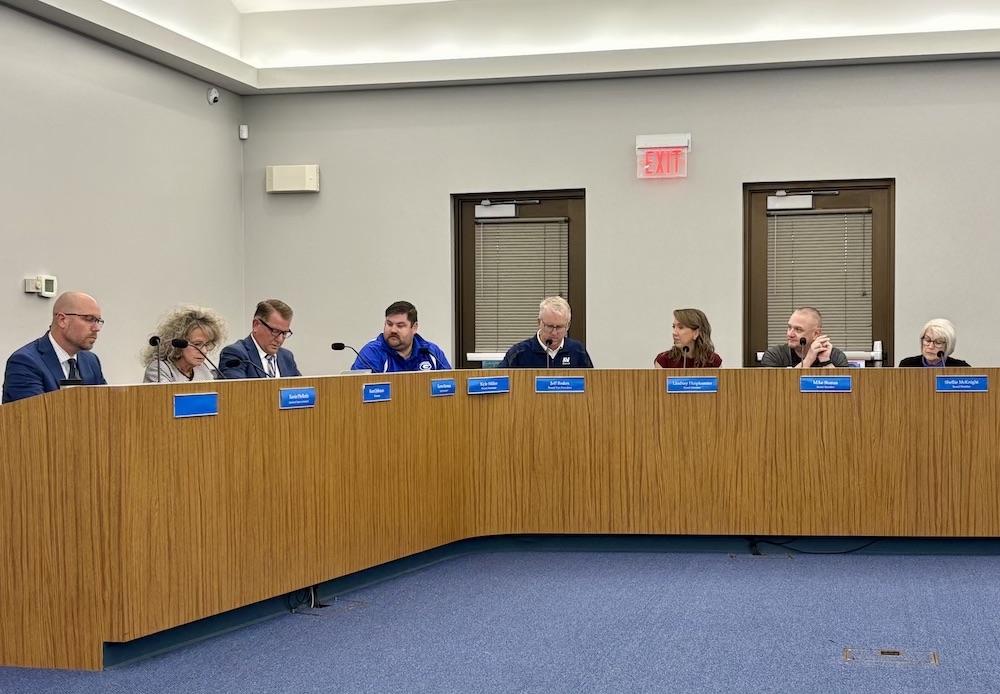
The Anthony Wayne Board of Education met on Sept. 18 and voted to censure Shellie McKnight (at right). McKnight also announced plans to resign effective Dec. 31. Pictured are (from left) Assistant Superintendent Kevin Pfefferle, Treasurer Kerri Johnson, Superintendent Kevin Herman, Board President Kyle Miller, and board members Jeff Baden, Lindsay Hoipkemier, Mike Stamm and McKnight. (TFP photo by Karen Gerhardinger)
“I am extremely sorry that any of this has happened to affect the Anthony Wayne school district, its excellent, fantastic teachers and the great kids,” she said.
With McKnight’s resignation, the board will take applications and go through an interview process to fill her position, similar to one used when Andy Prine resigned in June 2022 to move out of the district for work.
“We would as a board decide on a fitting candidate to fill the rest of her term,” Miller said.
McKnight took office on Jan. 1, 2024 and her term ends Dec. 31, 2027.
“We’ll look for somebody that’s not so active on social media,” Miller said, adding that he expects the board to review its policy on social media use.
McKnight advised that any new school board member should learn about how a board functions by reading and going to classes in Columbus, staying focused on school issues and keeping in touch with community members.
TOLEDO – An Issue Box Theater production, She Kills Monsters, a drama comedy based around the cult classic tabletop game Dungeons and Dragons, premieres at theUniversity of Toledo this weekend.
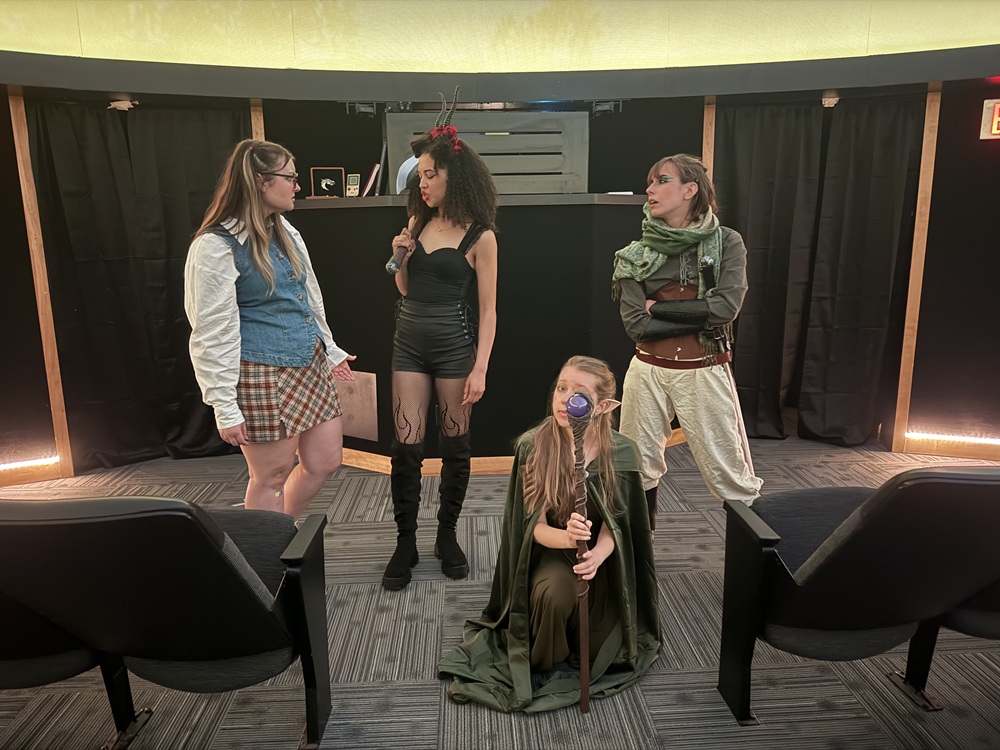
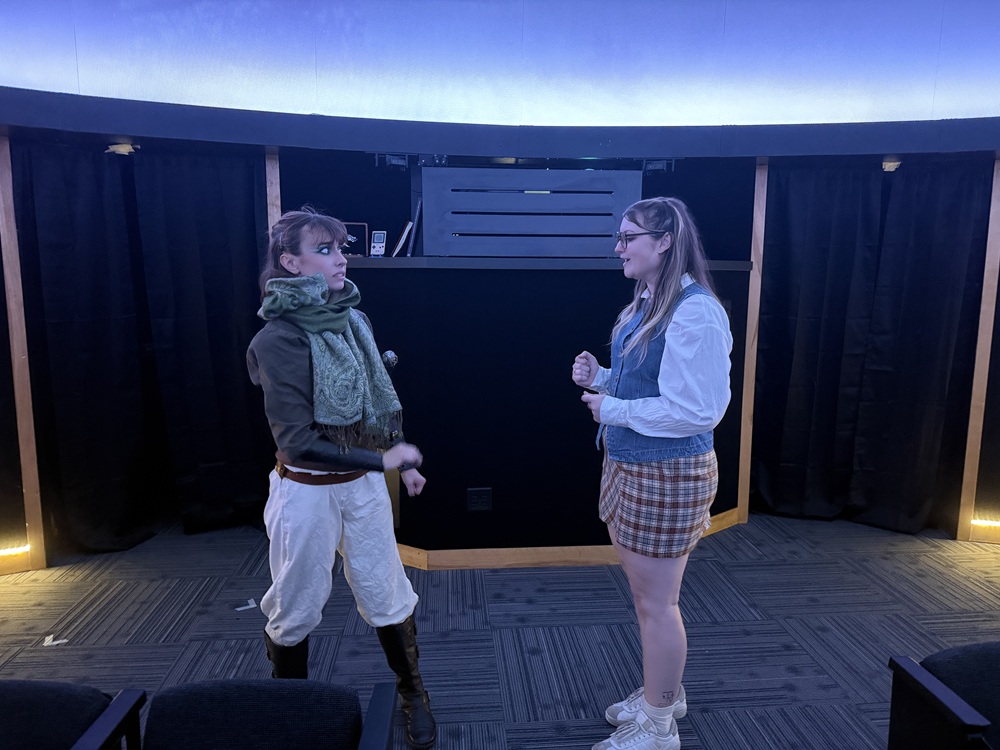
The play, written by Qui Nguyen, weaves together fantasy action alongside a heartfelt coming-of-age storyline as Agnes Evans (played by Mikayla Trimpey) tries to reconnect with her deceased sister, Tilly Evans (played by Marian Marlatt).
Agnes embarks on an exploration of a D&D storyline that her sister made before her passing; however, as Agnes progresses in her storyline, it becomes clear that there was much more to her sister than she previously knew.
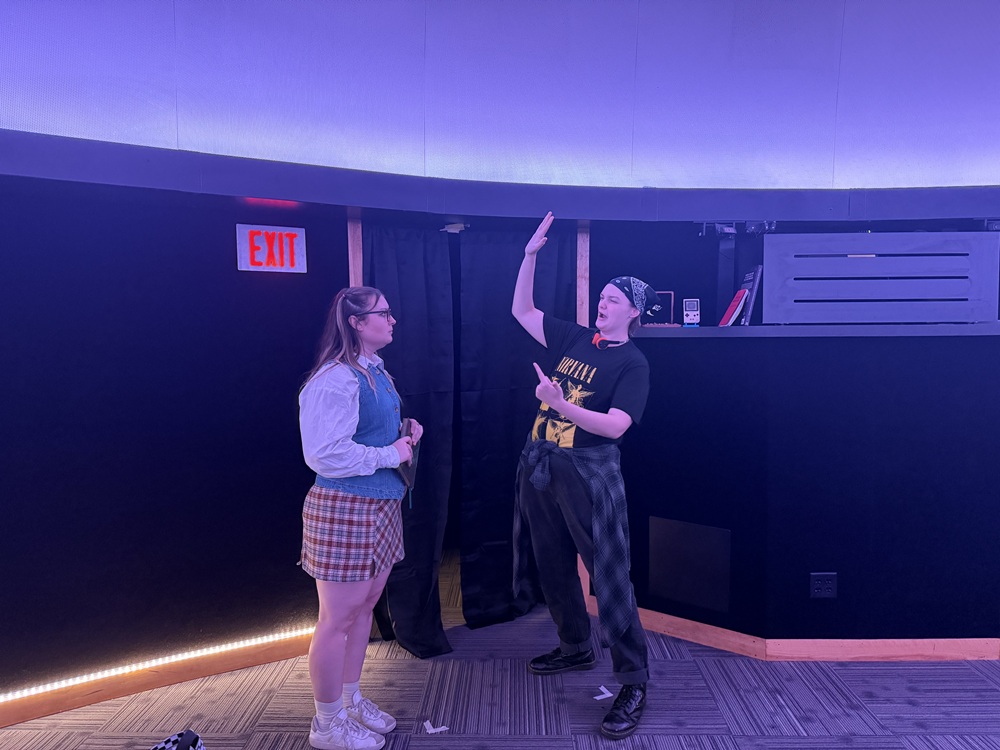
Held at the University of Toledo’s Ritter Planetarium, the story will utilize a state-of-the-art projector roof and surround sound to bring an immersive experience to the audience as the actors surround them.
“We venture into the center aisle a lot, which is fun,” Trimpey said. “It’ll be interesting in that it’s not a traditional proscenium style.”
(Rehearsal photos courtesy of Riley Runnells)
She Kills Monsters is also the directorial debut for Riley Runnells. She has been in the field mostly as a choreographer in the production teams before, but this story puts her at the helm.
“I’m very excited about this show; it’s very special in the sense that our audience will leave with such a poignant message” Runnells said. “It deals with grief, love, loss and many other heavy themes, but it’s told through a lens that is easily relatable and digestible for most ages and audiences to enjoy.”
The play will premiere at University of Toledo’s Ritter Planetarium on Sept. 19 and 20 at 7:30 p.m., and on September 21 at 2:30 p.m. To purchase tickets for the event, visit the Issue Box Theatre website.
TFP photos by Quinn Cooper
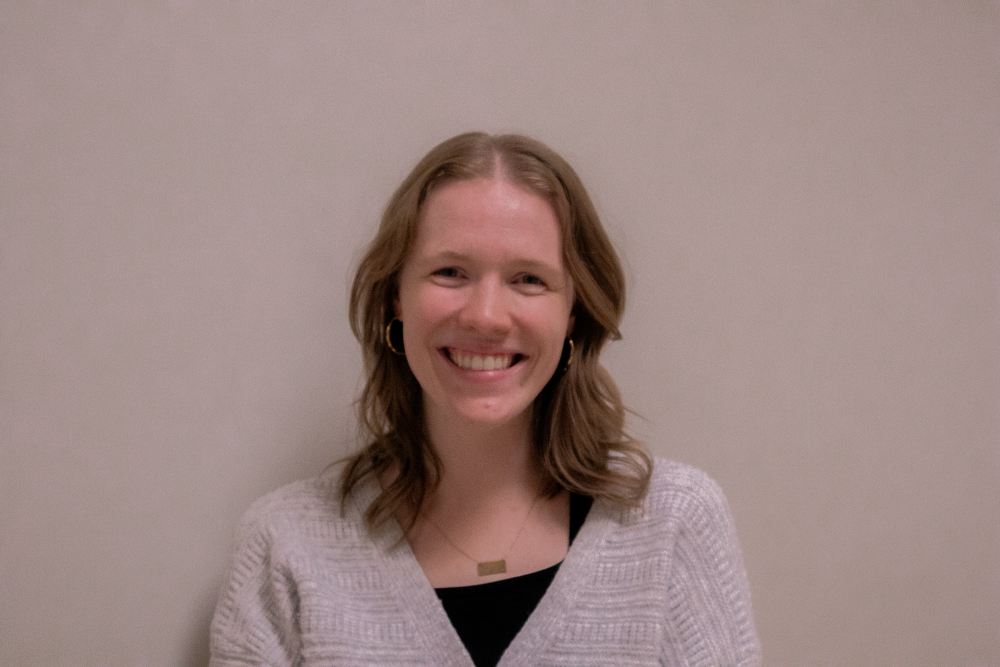
Director Riley RunnellsMarian Marlatt (as Tilly Evans)Mikayla Trimpey (as Agnes Evans)University of Toledo’s Ritter PlanetariumThe show we be held in the Planetarium, creating a uniquely immersive experience.
The island reconstruction team celebrates a job well done after cutting the ribbon (TFP photo by Gaven Hafner).
Photos and video by Gaven Hafner
TOLEDO- Since June 2023 of finalizing planning for the restoration of the Delaware/Horseshoe and Clark Islands, many hands have helped to make the project a reality. After much work the islands have been built up and restored.
On Monday, Sept. 15, a ribbon cutting was held to mark the momentous occasion. Many people that helped in the project came out to celebrate and speak on the accomplishment of the restoration.
(From left) Director of the Department of Natural Resources Mary Mertz, Toledo Mayor Wade Kapszukiewicz, President and CEO of the Toledo-Lucas County Port Authority Thomas Winston, and Vice President of Business Development for the Port Authority Joe Cappel cut the ceremonial ribbon at Walbridge Park on Sept. 15, 2025 (TFP photo by Gaven Hafner).
Joe Cappel, the vice president of business development for the Port Authority, said “the project is wrapping up. They’re doing a little bit of dredging out there and doing some invasive species control treatment over the next year or so, but other than that, it’s built and doing what it’s supposed to be doing by all accounts.”
The completion of the island restoration provides a habitat for animals like birds, fish and even microorganisms that live on the bottom of the river. Mayor Wade Kapszukiewicz, one of the speakers at the event, told the audience, “This is the largest known habitat restoration in the history of the Maumee River, and as long as the Maumee River has been around, there’s never been the amount of money spent restoring any part of the habitat, anywhere along this river.”
However, the project wasn’t just about benefiting the area’s habitat. The goal is also to help improve the water quality of the Maumee River. Cappel explained that the islands were designed to capture and filter the water flowing down the river.
Mary Mertz, the director of the Department of Natural Resources, said, “What we’ll see is restored acres of habitat, restored acres of wetland, and a restored complex that will trap water, hold it for a while; hopefully, the sediment and the phosphorus will either be absorbed into the soil or into the plants that are out there, slow the flow of water and promote cleaner water.”
With the reconstruction efforts, many native plants and trees were also added back to the islands. Along with adding native plants, many invasive species on the islands were removed. Laurel Blackwell, senior national resources manager at GEI Consultants, explained, “We did around 1400 trees, all natives. 200,000 plugs of native plants. We also put down 16,000 pounds of shoreline seed, Aqua black shoreline seed, 300 pounds of emergent wetland seed.”
Blackwell also talked about the team’s experience with the invasive species originally overtaking the islands.
“When we first got here, there were 29 acres of phragmites, which is the really tall invasive grass that you see growing in a lot of wetlands. So, we treated all of that before we started planting and we’re still working on knocking it back.”
With the reconstruction now complete, the GEI team plans to continue maintenance of the islands for a few more years, along with the continued removal of the phragmites and other invasive species on the islands.
People gather outside to prepare for the ribbon cutting ceremony.Mayor Wade Kapszukiewicz, Councilwoman Cerssandra McPherson.GEI Construction team in conversation at the event.(From left) Laurel Blackwell, Matt Spoor, Zach Brooks, Morgan Sundberg, Alyssa Amos, Lizzie Friday, and Carly Kerkstra pose in front of the Maumee River and islands.
The Anthony Wayne Board of Education moved its meeting to the high school auditorium on September 15, as dozens of residents weighed in on board member Shellie McKnight's use of a laughing emoji on article about Charlie Kirk's death. Pictured are, from left, McKnight and board members Mike Stamm, Lindsay Hoipkemier, Jeff Baden and Kyle Miller. (TFP photo by Karen Gerhardinger)
ANTHONY WAYNE AREA –Shellie McKnight doesn’t dispute that, while reading an online Daily Mail post about a shot being fired at political activist Charlie Kirk last week, she reacted with a laughing emoji.
McKnight, a member of the Anthony Wayne Board of Education, said she was sitting outside in the bright sun, without her prescription reading glasses, and accidentally hit the laughing emoji rather than one that shows compassion. Alerted by friends the next morning, she immediately changed her post, issued an apology and notified fellow board members of her mistake.
“It was never my intention to make light of or condone the murder of this man…I would not do this. That level of violence is never acceptable,” she told an audience gathered during the Sept. 15 board meeting. “I admit my mistake. I corrected it. I apologized. I trust that we can put this unfortunate incident behind us.”
Instead of putting the incident to rest, dozens of district residents yelled out for McKnight to resign, or called her a liar. Others called for the board to remove or censure McKnight.
“By law, our powers are limited. We cannot remove a sitting board member unless certain legal requirements are met,” board president Kyle Miller told the crowd. “You hold the power.”
In Ohio, the public can ask to have board members removed for gross neglect of duty, gross immorality, drunkenness or other misconduct in office. The process includes submitting valid signatures to the court of common pleas – something that a group of citizens is currently undertaking. The school board could pass a resolution of censure or disapproval, which is symbolic and doesn’t affect the position.
“I’m disappointed this issue has been a distraction for the school,” said board member Jeff Baden, noting that McKnight’s emoji was overshadowing the news that the district placed in the top 5 percent of all Ohio schools on its most recent report card from the state. “We will follow the procedure and the law and will address them. None of us wants to see this community divided. Open discussion is the best option.”
During the public comment portion of the meeting, 13 residents spoke – some urging to turn down the temperature, others supporting McKnight’s assertion that it was a mistake, and several stating that McKnight doesn’t reflect the community.
“Shellie made an honest mistake,” said Bill Tucholski. “I believe Christ has something to say about our enemies…about casting stones…He said something about forgiveness.”
David Blythe, who said he’s known McKnight for years, said she would never purposely post anything that would make light of someone’s death.
“It’s pretty simple: an old lady didn’t have her glasses on while posting something on social media and hit the wrong emoji button. She was sick at heart about it and has been apologizing about it continuously since it happened,” Blythe said. “Give her the benefit of the doubt.”
Jim Schlievert said he doesn’t buy it.
“You have a history of lying and fabrication. One time is a mistake. You’re a pattern,” he told McKnight.
Sara Smith agreed and told McKnight that she should resign, ‘save face’ and move to a more liberal area. Jamie Hanifan, Cody Griffith, Colin Thornton and Karen Schneider weighed in with similar sentiments, telling McKnight she doesn’t represent all of those who live in the district, including conservative Christians.
Steve Timms said McKnight should recuse herself when voting on whether to allow a charter for Turning Point USA’s high school group, Club America, in the district. Kirk was founder of Turning Point USA, and a local representative, Mia McDougal, was in the audience during the board meeting. Board member Mike Stamm encouraged those interested in learning more about Club America to speak with her.
“What do you think Charlie would do?” asked Bryan Knepper, urging the audience to actively have a discussion with those who have different opinions – not attack and try to get someone fired.
“Let he who is without sin be the first to come up and stone this woman for her perceived transgression,” Knepper said, paraphrasing the Bible. He noted that Satan focuses on stoking division through conflict, and that can lead to never-ending retribution.
He also quoted Dr. Martin Luther King Jr.: “Darkness cannot drive out darkness; only light can do that. Hate cannot drive out hate; only love can do that”
Other parents noted the impact of gun violence on America. Roy Collaco paraphrased a recent social media post he made about how if “you’re only against gun violence when it affects you or someone you identify with, then you’re not against gun violence.” He noted that Kirk’s death is a heinous act and a tragedy not just for Kirk’s family but for America, and it is representative of the decades-long issue of gun violence.
Tiffany Eckert asked how children are being helped to make sense of Kirk’s death.
“Some have seen the footage, often without warning and context and the emotional tools to process it. That’s where our focus should be,” Eckert said.
While she endorsed McKnight for the school board two years ago, Eckert said she now walks back that support, because “there is never a time to celebrate someone’s murder.”
“When adults in a position of authority respond to violence with mockery or indifference, it sends a message, and our children are watching,” she said. “There is no place for personal agendas and no place for hatred. Our children deserve better.”
After nearly two hours, the board exited into executive session to consider the investigation of charges or complaints against a public official. Board president Kyle Miller said he didn’t expect any decision to be made for at least a few weeks.
During the meeting, the board also:
-Congratulated the students, teachers, staff and families for the work that resulted in achieving a 4.5 out of 5 star rating on the state report card, placing the district in the top 5 percent in the state. Superintendent Kevin Herman urged residents to look at the website for the latest Quality Profile report that outlines other achievements beyond the report card.
-Heard that the district will receive $2.3 million in back pay and $3.1 million annually from a Nexus pipeline property valuation settlement.
-Learned that the AW Athletic Boosters donated $6,410.50 for the purchase of championship rings for the baseball team; and that Zion United Methodist Church and food pantry donated $1,297.45 for unpaid lunch balances.
-Approved an early graduation for Madison Dorsey, Class of 2026.
-Approved the retirements of Jim Huddleston, who has been with the district for 32 years, and Mike Tolles, who has been with the district for 20 years.
-Agreed to hiring Brian Benefield, food service worker; Sarah Marx, cafeteria/playground aide; and custodians Cyerah Sielski and Thomas Clayton.
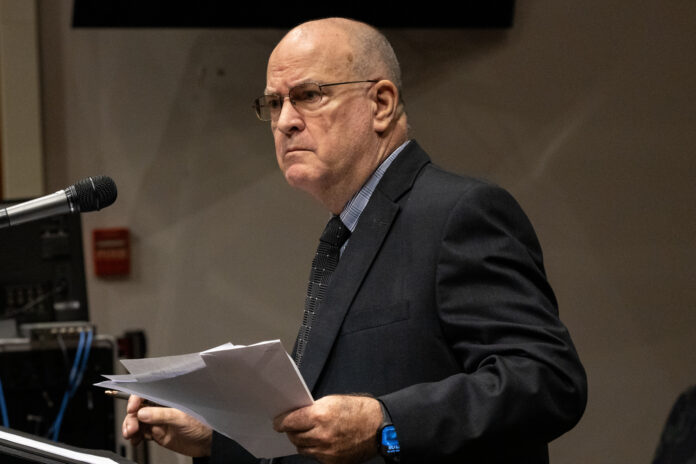
Chris Parker, an attorney for Rocky Ridge Development, speaks during a meeting of the Administrative Board of Zoning Appeals in City Council Chambers of 1 Government Center in downtown Toledo on Monday Sept. 15, 2025. (TFP Photo by Stephen Zenner)
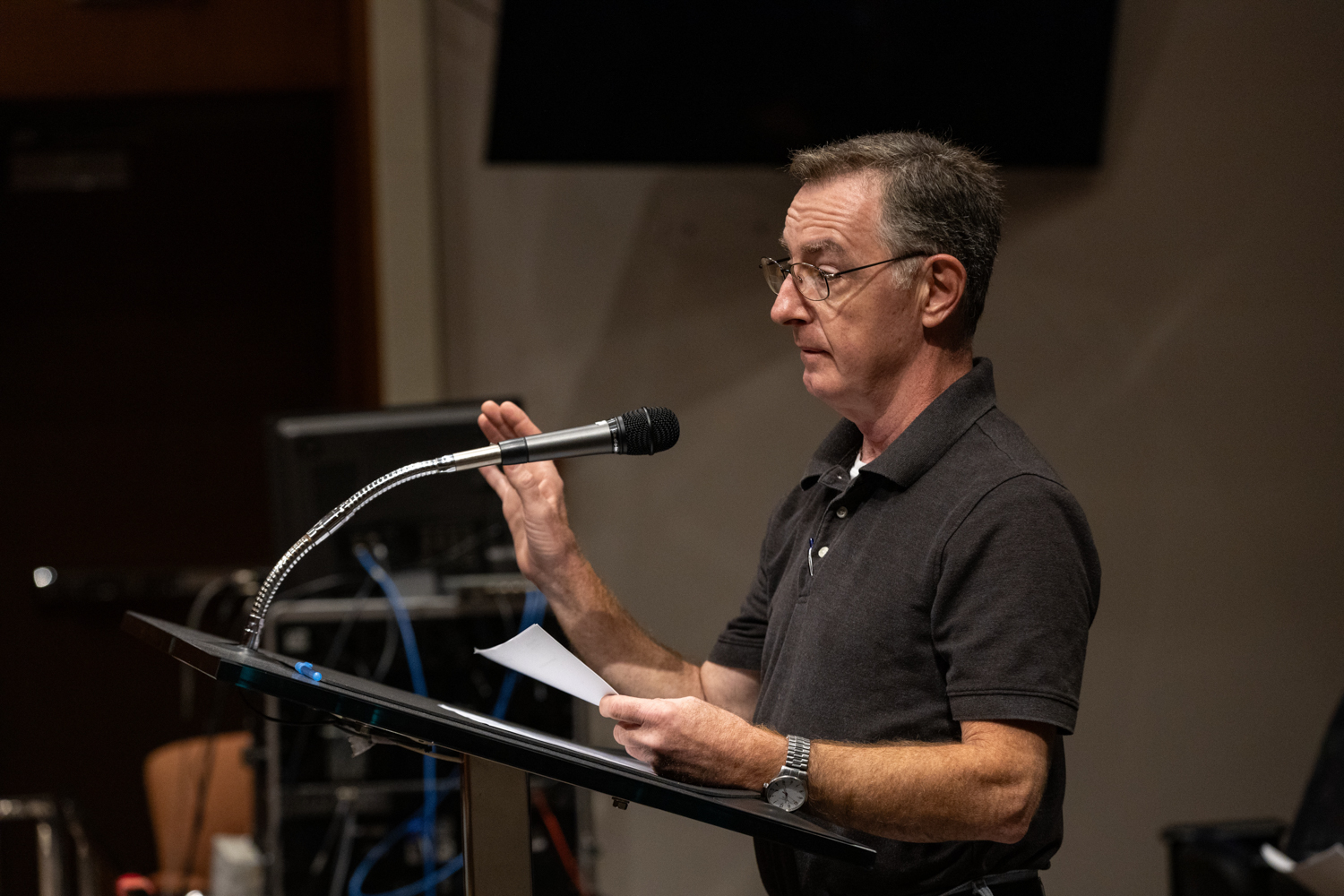
TOLEDO – On Monday, Sept. 15, the Administrative Board of Zoning Appeals voted to uphold a notice of non-compliance against Rocky Ridge Development (RRD) for mining in a residential area near Angola Road and South Byrne Avenue.
Ed Moore, the managing director of RRD, was the main voice on behalf of the company, who said the notice of non-compliance had many inaccuracies that needed to be corrected.
According to Moore, the city issued a “blanket notice of non-compliance that does not reflect the actual conditions on the site.” Issued back in July, the non-compliance order forced RRD to cease activity on four properties, two that RRD did not own and one which Moore said had not been excavated.
“Those three parcels were part of a planned expansion of the activity at 4004 Angola Road,” said Moore, adding that the “plan has since passed.”
Since Toledo City Council voted against changing the zoning to general industrial to accommodate mining near residential housing in the parcels near Byrne and Angola, Moore said the company had moved on with their plans.
“We want to close the site, and get out of the neighborhood,” Moore said. “The fastest way to do that is just to prepare it for agriculture.”
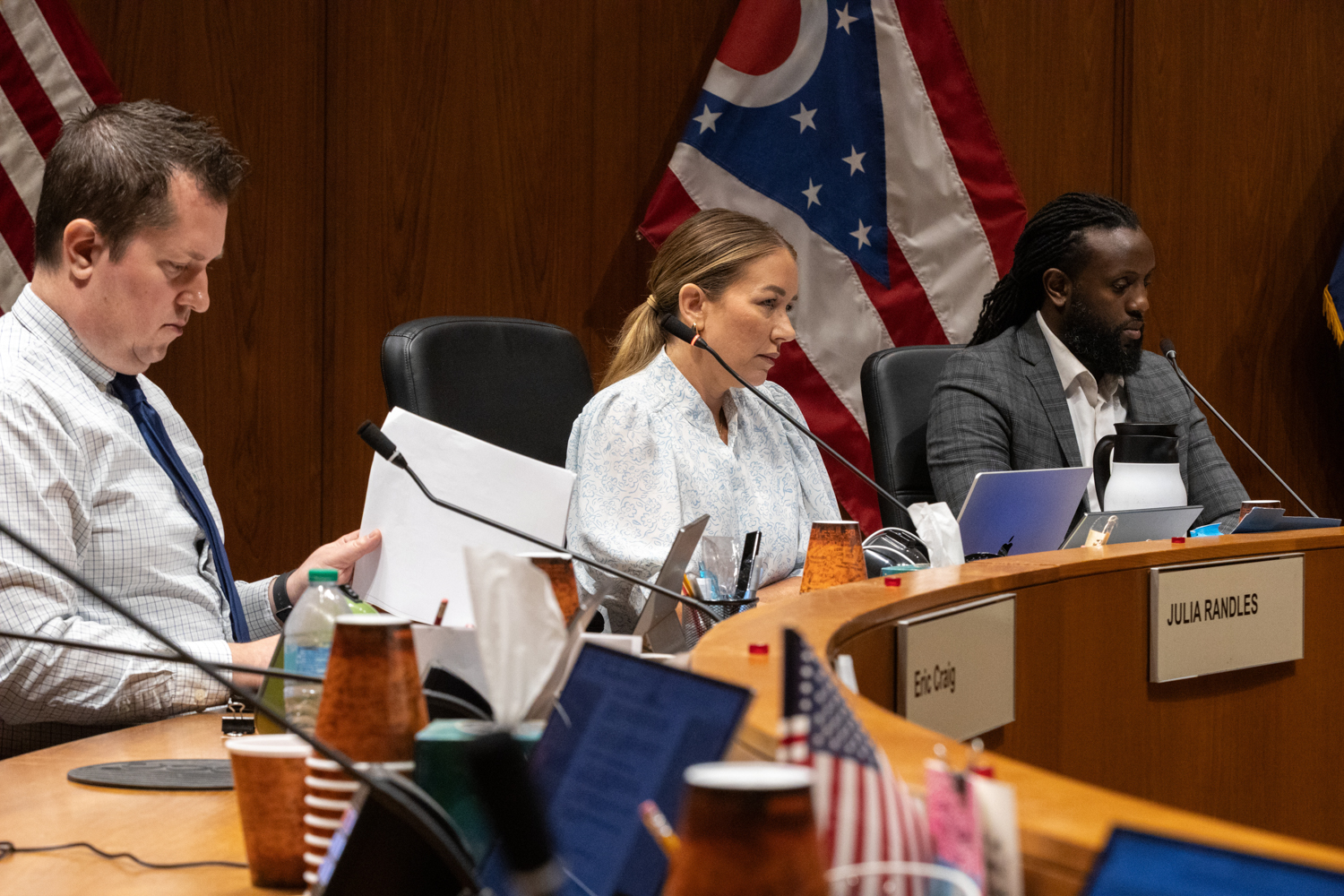
Eric Craig, Julie Randles, and Rob Pasker, all board members of the Administrative Board of Zoning Appeals, hear an instance during a meeting of the Administrative Board of Zoning Appeals. (TFP photo by Stephen Zenner)
Moore said that RRD would like to backfill the excavation on the land with drinking water treatment material (DWTM), and cease its activity on the property.
Moore estimated this would take RRD 18-24 months to complete, and Moore offered to cover the top two feet of the land with topsoil. After this, Moore assured the board that the land could be used immediately for agriculture.
Since bringing materials onsite to fill the excavation would not violate the zoning, RRD hoped the city would listen to their appeal.
Unfortunately, Joshua Lewandowski, zoning compliance manager with the city’s planning department, said they issued the wetland permit that allowed RRD to fill the wetland with spent lime in error.
Because the spent lime came from the water treatment plant, Lewandowski said the area could not be classified as a wetland. “It should have been classified as a public utility and required a special use permit,” he said.
“We would be asking that no additional spent lime be added to the property, and that the site be brought back to where it was originally.” This request would involve RRD starting a new civil process.
Backfilling with spent lime “is allowed in residential; they [RRD] just need the special-use permits. They don’t need a zone change. But it gives the city some additional time to evaluate it and make sure that residents are fully aware of everything that’s happening,” Lewandowski said.
Acquiring a special-use permit starts in the planning commission and then goes to city council for a vote.
“We would have to regroup and think about that,” Moore said, and urged the board to rescind the order of non-compliance based on what he said was unspecific language.
Joshua Lewandowski, zoning compliance manager with the city’s planning department, speaks to Ed Moore, the managing director of Rocky Ridge Development, during a meeting of the Administrative Board of Zoning Appeals. (TFP photo by Stephen Zenner)
At this point, the Board opened the appeal hearing up to comment, where a small group of individuals sat waiting to bring their complaints against RRD.
“This mining, whatever this idea was, is an absolute nightmare,” said Cynthia McCadney-Lee, who lives on Springburn Avenue. “I’ve been there 23 years. I’ve never had a flood; all of a sudden…it’s flooded. It’s absolutely horrible. I’m not going to ever agree with this.”
McCadney-Lee said her whole house shook from “whatever it is they’re doing in my backyard.”
After this, Toni Thomas, a retired engineering technician with the City of Toledo, made claims that RRD had damaged the land they had excavated by not backfilling it with 50 percent spent lime and 50 percent clay. Thomas also claimed RRD had buried something on the land, to which Charles Stansley, the owner of RRD, laughed with those representing him.
Quickly, after Thomas’ comments, Moore answered the accusation by assuring the board that the site at 4004 Angola Road is inspected regularly by the City of Toledo, the Ohio Environmental Protections Agency (OEPA) and the Ohio Department of Natural Resources (ODNR).
Lynn Adkins, of Fries Avenue, then advised the board not to trust RRD. “They’re wanting to stay and continue with their work, which destroys our neighborhood,” she said.
George Yakumithis is sworn in during a meeting of the Administrative Board of Zoning Appeals. (TFP photo by Stephen Zenner)
After another barrage of negativities spoken against RRD from south Toledoans, Chris Parker, an attorney for RRD, emphatically urged the board to strictly enforce the code and rescind the non-compliance order.
“We want to be out of the neighborhood,” Parker said, and shared that the company had stopped mining. “We want the site reclaimed so that we’re in compliance with the State of Ohio consistent with the permit that was issued.”
To this aggressive push, Lewandowski spoke of why RRD was still not in compliance even though RRD was not actively mining.
“There was no authorization for a mine to happen at all,” Lewandowski said. “So any material that has moved from the site, even if there’s no activity currently, is still in violation. Because materials have left the site, it meets the definition of mining. We never authorized that.”
Furthermore, Lewandowski said any permits acquired with the State of Ohio were done so under the incorrect pretense that RRD was in compliance with the local municipality, and then circled back to his first point.
“Material left the property, so until that is corrected, they [RRD] are still in violation of mining,” he said.
Stansley and his crew looked confused. After the ruling against them, Stansley said he didn’t know what the next step was to rectifying the stop work order.
At the end of Lewandowski’s time before the board he said, “I just want to let the applicant know that the city’s interpretation of any additional spent lime is going to require additional approvals from the city.”
A back and forth persisted for a few speakers between RRD representatives and members of the community, and eventually was halted for the vote in favor of upholding the non-compliance order.
Moore initially gave no comment after the rejection of the appeal, but Stansley said he didn’t know what the company’s next moves were. “All we’re trying to do is close out,” he said.
Art Tatum mural by Dean Davis on the side of the Brick Bar Building inside in downtown Toledo. (TFP photo by Stephen Zenner)
TOLEDO – What began as a conversation about the riverfront has blossomed into one of Toledo’s most ambitious public art movements. The 100 Mural Project, founded by local artist Dean Davis, is reimagining the city as a living gallery, one wall at a time.
Initially, the scope was limited to Toledo’s riverfront. But with encouragement, the idea took shape. Davis expanded the vision to encompass the entire city. “We wanted to touch all areas of Toledo,” he said.
For Davis, the most impactful mural is always the next one. Each new painting brings a neighborhood’s history and spirit into the open, transforming blank walls into canvases of pride and memory.
“Every time we do a mural, a new part of Toledo is born, and also new stories are rediscovered,” he explains. “It’s like opening up photo albums from the city’s past and putting them in public art.”
Currently, Davis and his team are preparing to move their brushes to the parking garage at Madison and Erie. The forthcoming mural will center on gratitude, a positive message that Davis believes the city needs now more than ever. With an ever-changing world, one thing stays the same. The need for art.
Mural by Dean Davis on the Amrize (formerly known as Holcim) Silos in downtown Toledo. (TFP photo by Stephen Zenner)
While every mural is unique, they share a common thread: storytelling. The Art Tatum mural pays homage to the legendary Toledo jazz pianist, with a piano key left unfinished to honor future local musicians. The playful Toledo Frog mural was designed simply to uplift spirits, while the Holcim mural stands as a beacon of belonging.
“It’s for all of us Toledo folk to know this is home,” Davis says.
The Patriot Park mural stands proud, depicting the American Flag alongside our everyday heroes. Fire fighters, health care workers, police officers and soldiers.
Mural in the Toledo Pickle Co. building by Dean Davis in downtown Toledo. (TFP photo by Stephen Zenner)
There are many stories and messages in each mural. Seeing them is truly a chance for personal discovery. Davis emphasizes that the imagery for each mural comes directly from the communities where they are created. He spends time listening to residents, letting their stories shape the final work.
“The spirit of those neighborhoods tells the murals what they should be about,” Davis notes. It is important to him to bring the voices of Toledo to life in vivid colors. Everyone has a story that deserves the chance to be told.
To Davis, public art is more than paint on a wall, it is a reflection of identity. “As we move to be more progressive in the world, we need to show the world that we are a force,” he says. “Public art is like artwork for your home. When guests come, they can tell we have class and are proud to call Toledo home.”
Toledo is full of artists and creativity, and the murals signal that aspect of the city’s culture. The 100 Mural Project is more than art; it is a collective memory painted in bold color across the city’s future.
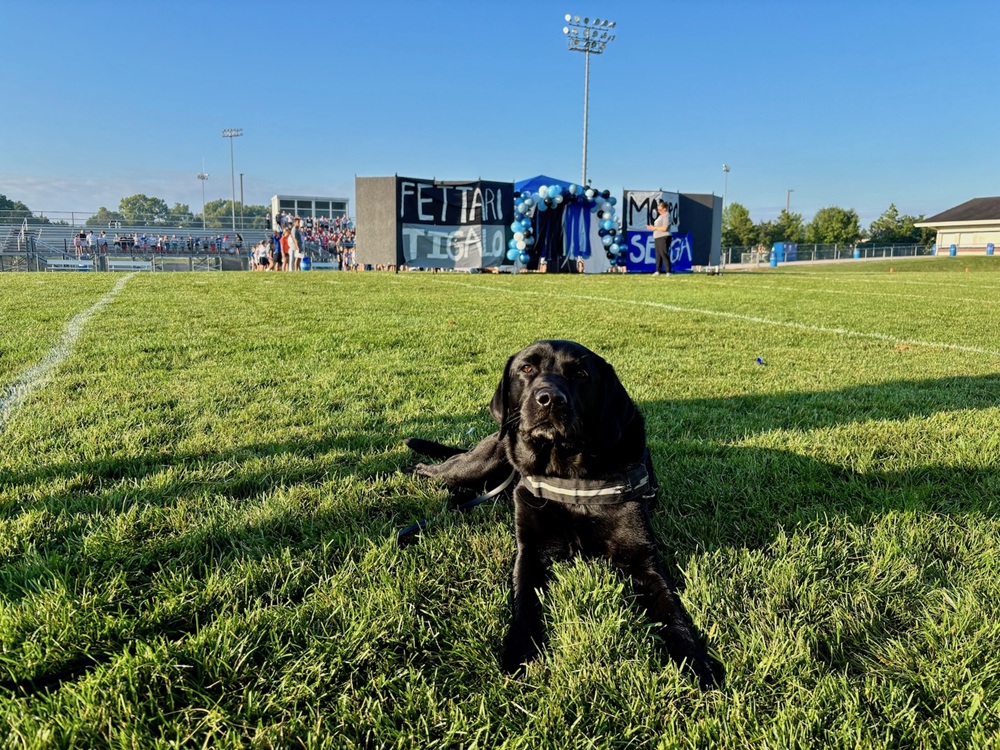
Dunkin is Monclova Primary School's new facility dog, trained by The Ability Center to provide support for students social, emotional and educational needs. (TFP photo by Karen Gerhardinger)
MONCLOVA – With his dark, searching eyes, floppy ears and wagging tail, 2-year-old Labrador retriever Dunkin is magnetic as he walks through the halls or greets students getting off the bus at Monclova Primary School.
“When he’s walking, he’s working,” said Jill Bigelow, dean of students at Monclova. “We taught students a secret tail wave with their pinkies so they can say hello to him when we pass in the hall.”
Dunkin joined Monclova last month as a school facility dog, replacing Laney – who served as a therapy dog at the school from 2017 until retiring in May. The difference between a therapy dog and a facility dog is that Dunkin is trained to do more than provide a lending ear and calming presence, said Bigelow and counselor Chris Buehrer. Unlike Laney, Dunkin will always wear his vest and a leash, and he will always be with a handler when he’s at school.
“Laney was old school. As the program has evolved, we have implemented different rules. Now there are so many neat new lessons. The team is phenomenal and so creative in the way they implement them,” said Stacie Baumbarger, director of assistance dogs for The Ability Center.
Dunkin was trained by The Ability Center to do a variety of jobs at school, including playing educational games with students and assisting in the classroom. Dogs provide assistance with many skills that students are learning, including curriculum, hygiene, social and mental health, she added.
In addition to Bigelow and Buehrer, speech pathologist Michele Wilson and intervention specialist Lindsay Harrigan are trained as handlers to work with Dunkin throughout the entire building. Opportunities for maximizing Dunkin’s service in the school are limitless. He can provide a calming presence for a child having a bad morning or resisting coming to school.
“It’s a way for kids to open up. A dog can break the ice and get kids in a state of mind to be ready for school,” Buehrer said.
In addition to playing games with students, Dunkin will be in the classroom during scheduled lessons, doing “down dog” and other asanas during classroom yoga, or listen to a child reading. Visits with Dunkin are also one of the most coveted rewards for positive behavior, Bigelow said.
The Ability Center is tracking data on pre- and post-placement of dogs through the Ohio Report Card. One Toledo Public Schools building showed their tardiness rate drop after welcoming a dog, Baumbarger said.
“We’re helping schools with gap-closing for things measured on the state report card. We really want to make an impact,” she added.
Astro, who joined Fallen Timbers Middle School as a facility dog in 2021, is one of five canines in the Anthony Wayne Local Schools. This year, the high school expects to welcome its first facility dog. (TFP photo by Karen Gerhardinger)
Anthony Wayne Local Schools welcomed its first dog in 2008, when Sara joined Waterville Primary School. She was replaced by Teila in 2019. Since then, the district has continued adding dogs, including Luna at Whitehouse Primary in 2019, Astro at Fallen Timbers Middle School in 2021, and Lorain in the junior high in 2023. The high school is expecting to welcome a dog during this school year.
“This will be the first district to have a dog in every building,” Baumbarger said, adding that having continual exposure throughout school to the dogs and the benefits they provide can help students overcome challenges.
Some students are allergic to dogs or have a fear of dogs, so the school has some dog-free zones. Often, however, Baumbarger said she’s seen children overcome their fear by gradually becoming acclimated to dogs.
“It depends on the kid and the counselor and how they approach it. Some of it is desensitizing the child to having a dog in the room, and seeing the dog on a leash in a controlled environment shows them that they’re safe,” Baumbarger said.
Some students with allergies can still pet Dunkin as long as it’s followed up with hand-washing. Others need to keep their distance in a dog-free classroom.
Dunkin was part of a litter named after coffee shops and, after training with The Ability Center, served two stints in a prison puppy-training program before heading to Findlay City Schools. He was fostered by Anthony Wayne High School science teacher Jennifer Naujock and her family – although she didn’t know at the time that Dunkin would be placed in the district.
As Monclova prepared to welcome Dunkin, the four handlers underwent training with The Ability Center, which sends staff to the school to provide additional training for specific needs. The Monclova Area Parents (MAPS) and families all pitched in to help buy supplies for Dunkin.
As with many of the kids, the start of the school year is an exciting time for Dunkin.
“He has a ton of energy. Bottling that energy and teaching the kids how to interact with him appropriately so his energy stays contained is what we’ve been working on,” Buehrer said.
While he has plenty of energy, Dunkin is more than happy for his designated hour of naptime each day – quickly sacking out and snoring under Bigelow’s desk.
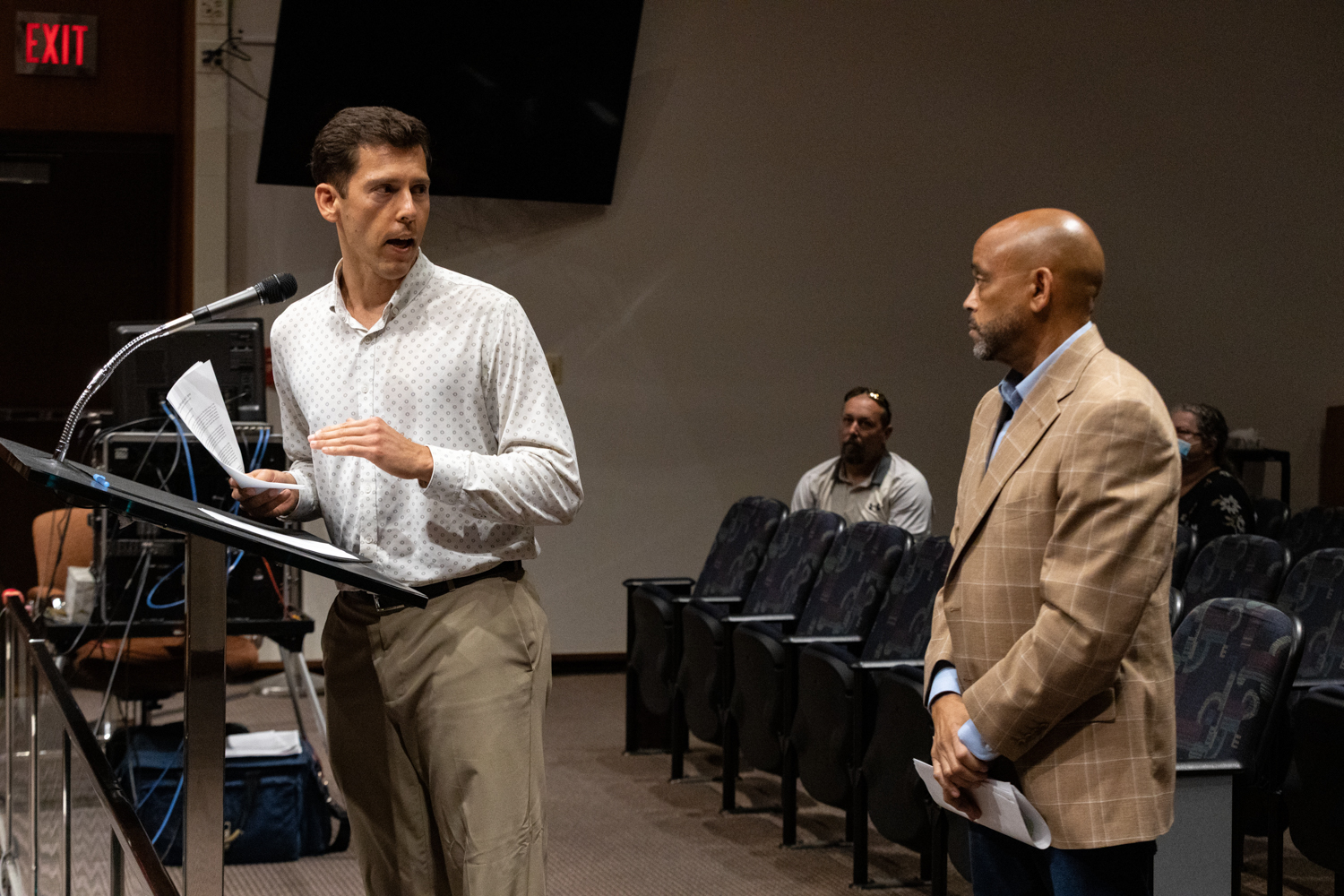
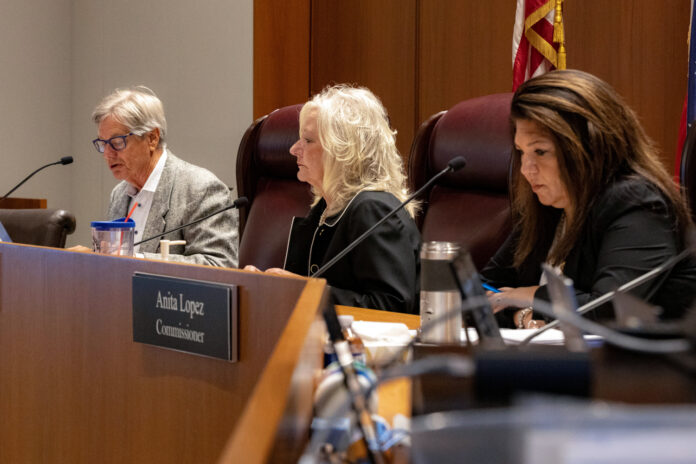
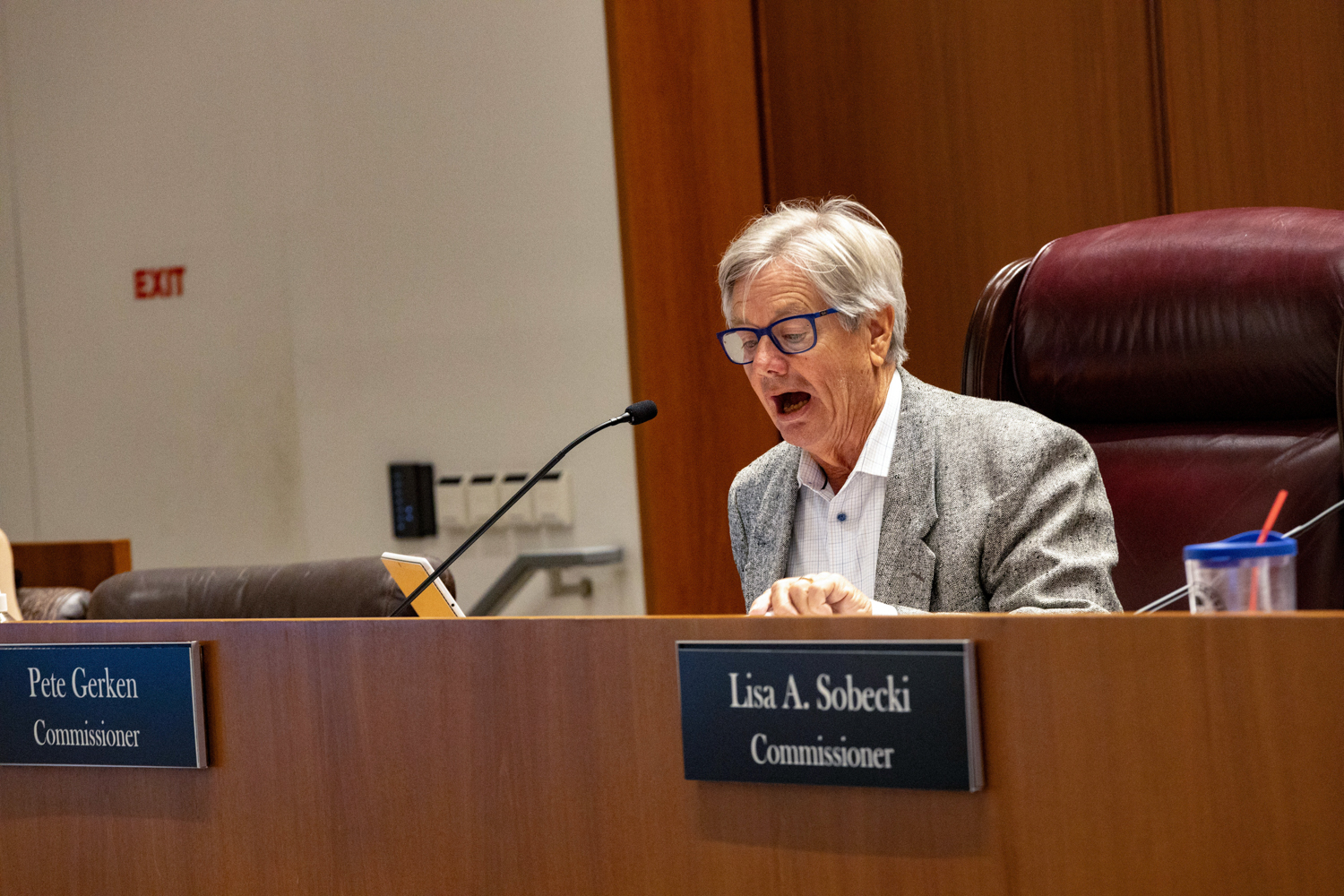
Pete Gerken, Lucas County Commissioner, speaks on adding $1.5 million in two separate voting packages to support a downtown hotel in which the county has a stake, along with Lucas County Commissioners Lisa Sobecki and Anita Lopez, during a Lucas County Commissioners’ regular meeting at 1 Government Center in downtown Toledo, Ohio on Tuesday September 9, 2025. (TFP photo by Stephen Zenner)
TOLEDO – On Tuesday, Sept. 9, Lucas County Commissioners had a split two-to-one vote on appropriating funds towards the downtown hotels in which the county has a $38 million stake.
That $38 million has gone into the Hilton Garden Inn and the Homewood Suites, connected to the downtown convention center, The Glass City Center. And on Tuesday, Lucas County Commissioners voted to appropriate what Commissioner Pete Gerken called a $1.5 million “emergency fund” for the hotels.
“We have to protect the money that we have in it [the hotel], and it’s our job to protect our money,” Gerken said.
Pete Gerken. (TFP photo by Stephen Zenner)
Clarifying the use of the funds, Gerken referred to the $1.5 million as available funds to ensure the hotel stays open during an upcoming event schedule at the convention center.
“We’re not cashing a $1.5 million check and handing it to anybody tomorrow,” he said, adding that the funds would act as a reserve balance “in case we need it.”
Gerken said the hotels had struggled getting off the ground after COVID and that, at present, the hotels were in a lull, not in dire need.
But Gerken believed this was a crucial moment where the hotels would begin to return on their investment. During the regular meeting and when speaking to the press, Gerken held a list of events to take place at the convention center, booked years in advance, and said these events would provide stability to the hotel investment.
All three commissioners agreed on providing contingency funds, but the commissioners diverged on the amount that should be set aside.
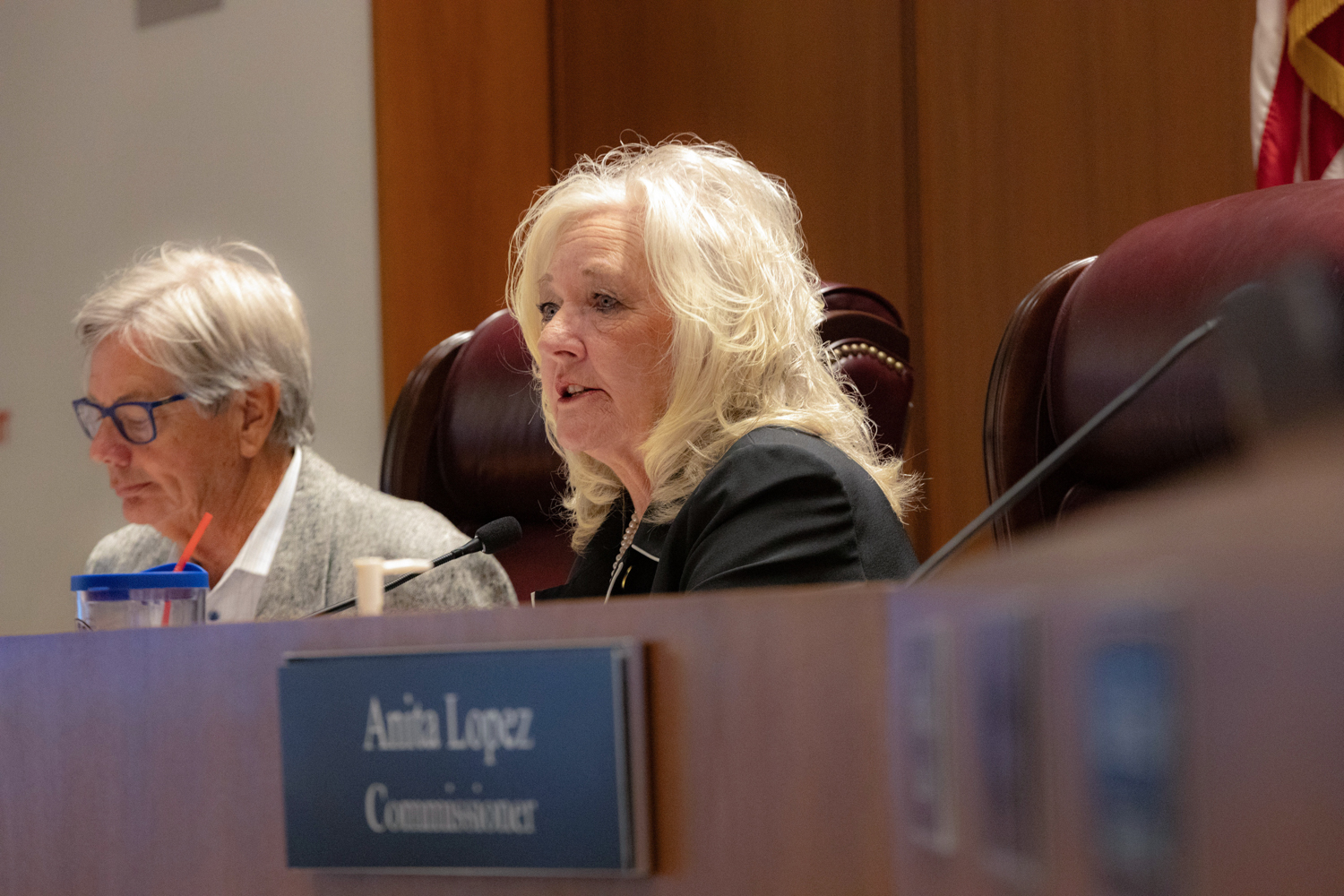
Anita Lopez. (TFP photo by Stephen Zenner)
The allocations were split into two amounts with two separate votes. One vote was for allocating $500,000, which all commissioners approved. The other vote was for adding another $1 million, which Commissioner Anita Lopez did not agree with.
“I believe we need to do a little bit more fine tuning on where those dollars will go,” Lopez said.
Supporting the hotel was important to Lopez, “We need to secure those future conferences that are coming to our area, but I don’t feel comfortable right now, based on the financial statements and the projections that the [$]1.5 [million] is necessary at this time.”
Regardless, Lopez was overruled by Gerken and Commissioner Lisa Sobecki’s votes for the full $1.5 million to be set aside for the hotel.
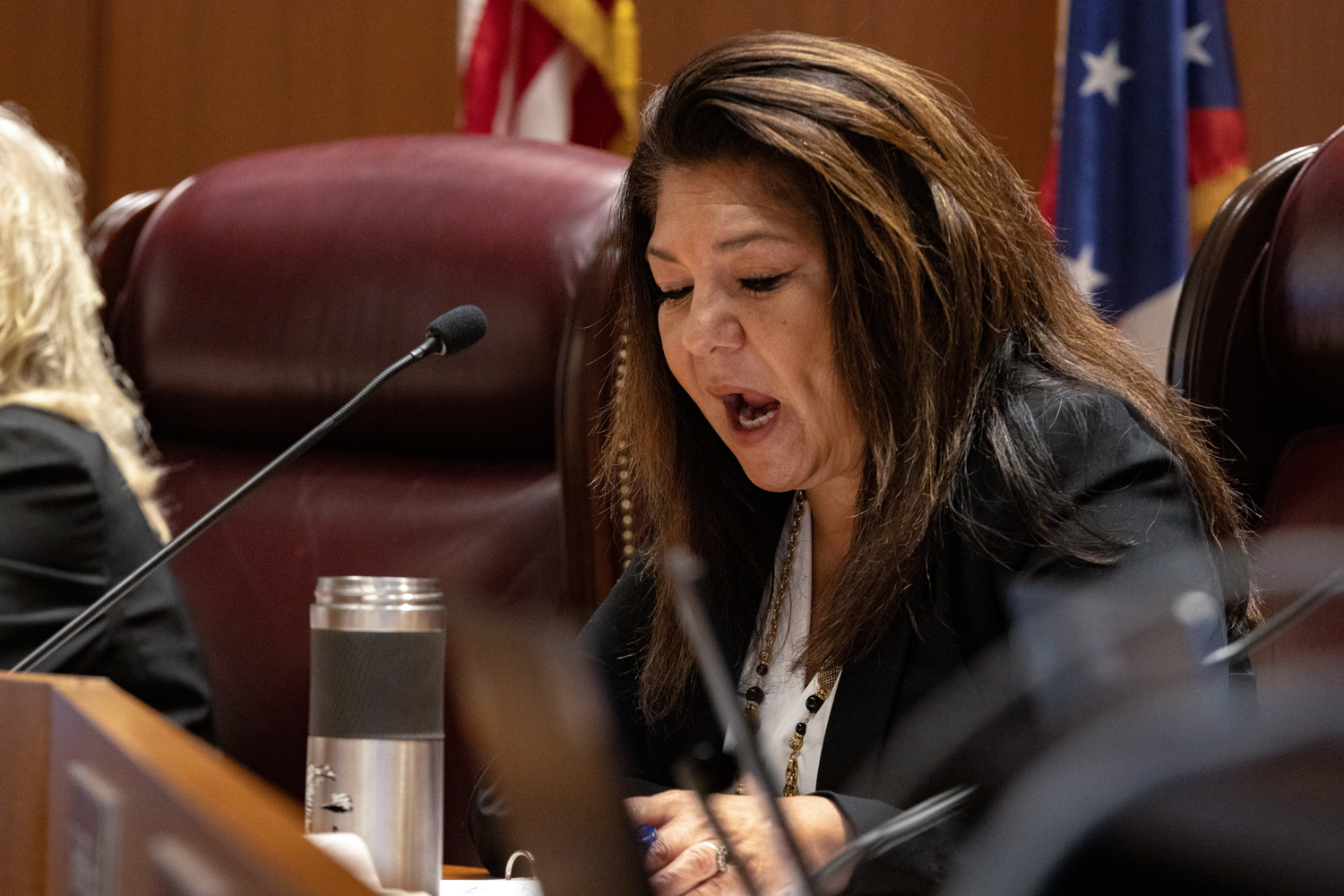
Lisa Sobecki. (TFP photo by Stephen Zenner)
“This is taking the time to do it right,” Sobecki said of preparing money in case of an emergency. “Today we’re not going to be taking long for government to work. Government will have done the work and been proactive,” she said, and explained that allocating these funds ahead of time could save money in the future by allowing the hotel to act decisively instead of rushing a decision.
When asked why, Frank Kass, the majority owner in the hotels, hadn’t put up the money for the rainy day fund, Gerken said Kass had already invested in the upfront construction costs, riskier costs leading up to this point. But Gerken said that he was confident Kass would continue to support the hotel as long as the county was invested in it, and that he thought the hotels only needed a year and a half to two years to begin to flourish.
Vanice Williams, Toledo City Council Member for District 4, speaks to the bravery of Justin Scott Slater, a west Toledoan recognized for extraordinary heroism, during a Toledo City Council meeting in downtown Toledo, on Tuesday September 9, 2025. (TFP photo by Stephen Zenner)
TOLEDO – Tuesday was a busy City Council meeting with a delayed action on kratom in Toledo, dissent in the council on approving amendments to the operating and capital improvement budgets and a failed attempt to repeal an ordinance from the year 2000.
Recognitions
Before any of the local legislation was touched, Justin Scott Slater, a west Toledoan, was recognized for extraordinary heroism by council and the Carnegie Hero Commission.
Justin Scott Slater, a west Toledoan, stands for a photo while he is recognized by City Council and the Carnegie Hero Fund. (TFP photo by Stephen Zenner)
Slater saved a woman from drowning in the Maumee River in July 2024, and now has been officially honored by his hometown and is a Carnegie Medal recipient.
Afterwards, a council member’s mother, Kenyetta Gable-Jones, was recognized for retiring from General Motors after 40 years. Council Member Brittany Jones, At-Large, surprised her mother with the recognition that brought tears of joy to Gable-Jones’ eyes. Other council members spoke of Gable-Jones’ impact, but a heart-to-heart wrapped up the recognition as Jones and Gable-Jones expressed how much the family members meant to one another.
Appointments
These two heartfelt recognitions led directly into appointments to two commissions and a corporation:
Kwinlyn Tyler was appointed to the Human Resources Commission for one year from the appointment.
Elaina Hernandez replaced Sue Cuevas on the Latino Affairs Commission. Her appointment will end Oct. 9, 2027.
And five individuals were appointed to the Toledo Community Improvement Corporation: Tyran Boyd, two years; Matthew Heyrman, two years; David Mann, one year; Julia Randles, three years; and Timothy Schlachter, four years.
Kenyetta Gable-Jones, the mother of Brittany Jones (City Council At-Large) and an employee of General Motors for 40 years, is recognized by City Council. (TFP photo by Stephen Zenner)
Kratom
Then Resolution 350 and Ordinance 351 addressed how Toledo would classify and regulate the pain medication kratom, which Council Member Sam Melden, District 5, explained.
According to Melden many people had come forward during the Public Safety Hearing on kratom to say that using natural leaf kratom was a way for them to manage pain.
“We hear that need, so let’s move towards the healthiest safest use of that pain medication, the way we would anything else,” he said. “So many pain medications are regulated, and it brings it online for more patients to use when they need it.”
The resolution introduced concerning kratom classified it as a Schedule I Controlled Substance, and was passed.
Ordinance 351, banning kratom in Toledo, Melden held, because “We believe, following Gov. DeWine’s direction, that the state will take action, meaning we do not need to ban it locally.”
If DeWine chose not to ban kratom, Melden said they would have to decide what happens in Toledo, “and govern ourselves,” but not indicating an outright solution.
Budget Amendments
$125,000 from the General Fund was approved for the consultant for local landmark designations in Ordinance 362. Council Member At-Large George Sarantou made the motion to amend, and was the only council member to oppose the amendment.
Denied repeal
Likewise, Council Member for District 2, Adam Martinez, was alone in asking for the repeal of Ordinance 303-00. O-303-00 allows for the area around 0 South Byrne to be automatically rezoned to light industrial if certain criteria are met.
The current owner to the area concerning O-303-00, Michael Kott, attempted to have the area rezoned to light industrial in 2021. Back then, Kott wanted to move his business, Clean Wood Recycling, Inc., into the neighborhood. Clean Wood Recycling, located on West Bancroft Street, makes mulch, and the neighborhood opposed the attempted zone change, leading to its failure before council.
This past summer, the same disputed area failed to get the same zone change for the company Rocky Ridge Development LLC to mine there.
Bill Hoag, who owns houses near 0 South Byrne, noticed a house had changed hands over the summer.
With the new ownership of this home, Hoag thinks Kott has what he needs to rezone the area automatically without bringing it before city council.
Martinez explained his thoughts behind repealing the legislation. “You can put anything on there that falls in the guidelines of light industrial with no communication from the surrounding neighbors or businesses,” as the ordinance from the year 2000 stands.
“All I was asking is to repeal a 25-year-old piece of legislation that no longer is relevant to what is existing now.”
At the last council meeting, Council Member John Hobbs III, District 1, said he took the repeal legislation, O-389-25, “as a strong form of disrespect,” since he was not consulted beforehand about legislation affecting his district alone.
This set him up against Martinez, who pioneered the legislation and also said he had emailed and called Hobbs before the ordinance was considered in the previous meeting.
11 “no” votes followed O-389-25, including Mac Driscoll, Council Member At-Large, who initially sponsored the ordinance along with Martinez.
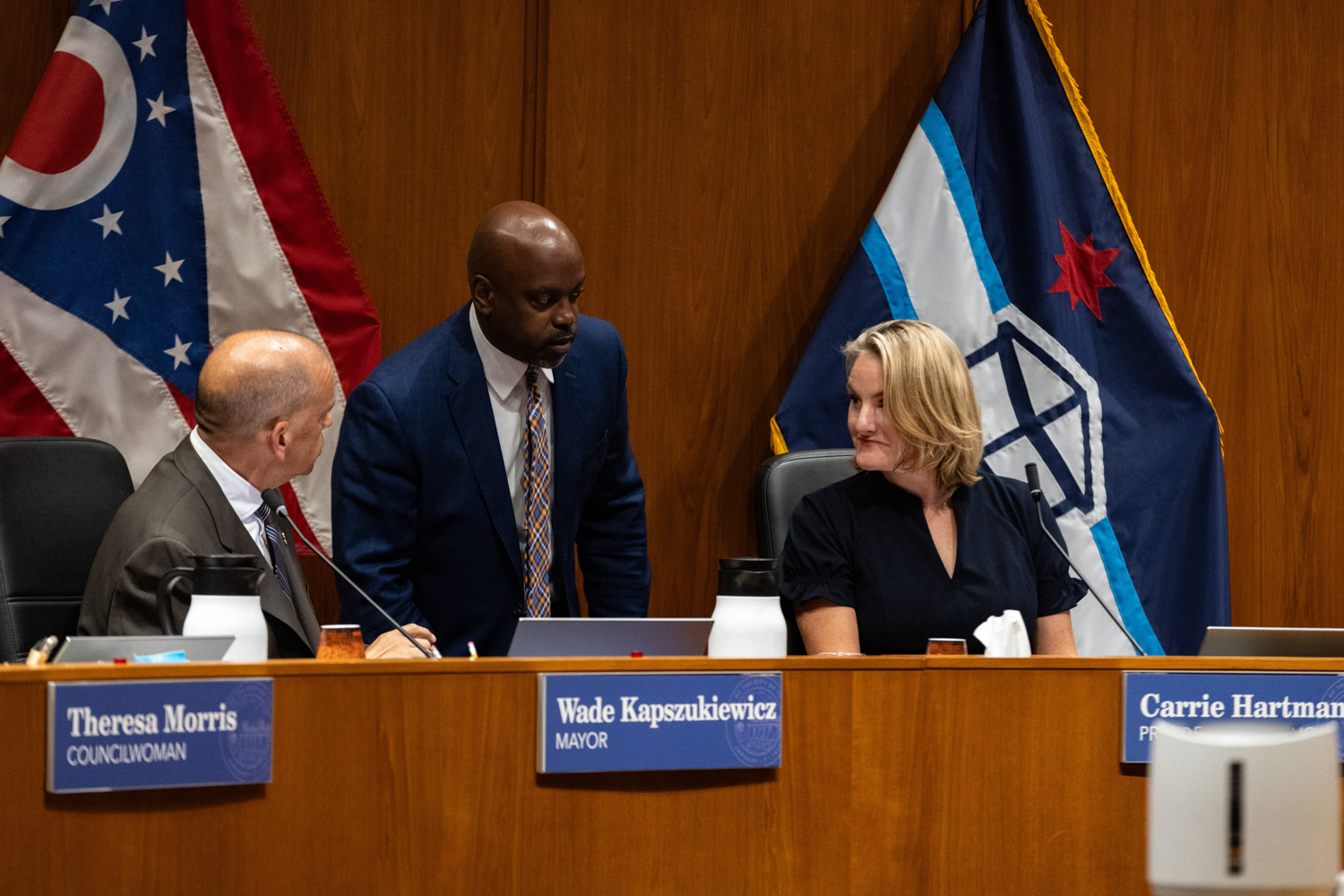
Wade Kapszukiewicz, the mayor of Toledo, speaks with John Hobbs III, Toledo City Council Member for District 1, and Carrie Hartman, Toledo City Council Member At-Large and President of Toledo City Council. (TFP photo by Stephen Zenner)
When council had finished, President of Toledo City Council and Council Member At-Large, Carrie Hartman, addressed the press on behalf of the majority of council: “That single ordinance will not be studied in zoning and planning, but a broader study of the past legislation will be studied instead.”
While Hartman said “It [O-303-00] does, in fact, allow for skipping of some zoning and planning processes and hearings. I’m not sure that’s a bad thing.”
She said the repeal legislation brought by Martinez was “too punitive to single out one property when we know that there are probably 200-300 properties that have had this [kind of] legislation passed back in the 90s.
“I am opposed to singling out one property owner, specifically based on, I think, faulty information; it feels punitive. It feels retaliatory, and I think we need to step back and study all of these parcels instead of just one.”
Without opening up the books on all properties and legacy legislations of this kind, Hartman said the city might run into a lawsuit for singling out a specific property owner.
Hoag had come to the meeting with residents of the south Toledo neighborhood and Toledo mayoral candidate, Roberto Torres.
“That type of business going in there, that’s no different than Rocky Ridge. It’s actually worse,” Hoag said as he worried about the land being rezoned to light industrial without feedback from residents.
The day before council, the plan commission told the Toledo Free Press there was no queued attempt on record to rezone the 0 South Byrne area to light industrial using 0-303-00.
“I was hoping it [O-389-00] was going to go back to committee if the vote wasn’t going to fly,” Hoag elaborated.
When asked why Martinez didn’t ask for the ordinance to go back to committee, Martinez said he didn’t have the votes.
“It was 11-to-one vote, so at some point you got to lick your wounds and move on,” he said, and repeated that he wasn’t trying to “impede on anyone’s turf.”
“I seriously thought this was a non-issue,” Martinez said. “And I was trying to give a voice back to a neighborhood and community that have been ignored.”