Photos and video by Gaven Hafner
TOLEDO- Since June 2023 of finalizing planning for the restoration of the Delaware/Horseshoe and Clark Islands, many hands have helped to make the project a reality. After much work the islands have been built up and restored.
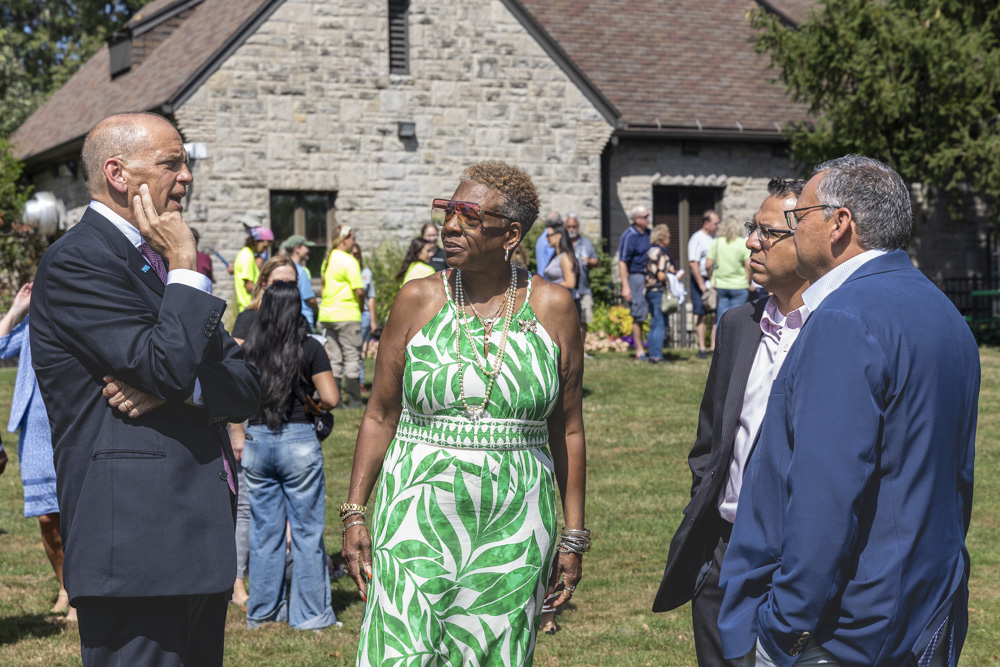
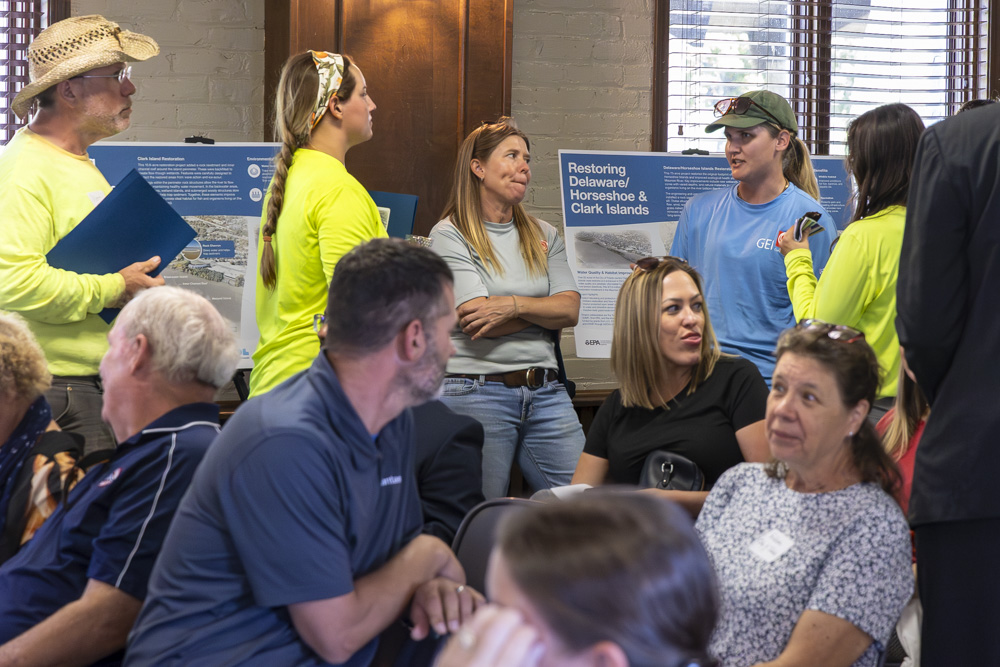
On Monday, Sept. 15, a ribbon cutting was held to mark the momentous occasion. Many people that helped in the project came out to celebrate and speak on the accomplishment of the restoration.

Joe Cappel, the vice president of business development for the Port Authority, said “the project is wrapping up. They’re doing a little bit of dredging out there and doing some invasive species control treatment over the next year or so, but other than that, it’s built and doing what it’s supposed to be doing by all accounts.”
The completion of the island restoration provides a habitat for animals like birds, fish and even microorganisms that live on the bottom of the river. Mayor Wade Kapszukiewicz, one of the speakers at the event, told the audience, “This is the largest known habitat restoration in the history of the Maumee River, and as long as the Maumee River has been around, there’s never been the amount of money spent restoring any part of the habitat, anywhere along this river.”
However, the project wasn’t just about benefiting the area’s habitat. The goal is also to help improve the water quality of the Maumee River. Cappel explained that the islands were designed to capture and filter the water flowing down the river.
Mary Mertz, the director of the Department of Natural Resources, said, “What we’ll see is restored acres of habitat, restored acres of wetland, and a restored complex that will trap water, hold it for a while; hopefully, the sediment and the phosphorus will either be absorbed into the soil or into the plants that are out there, slow the flow of water and promote cleaner water.”
With the reconstruction efforts, many native plants and trees were also added back to the islands. Along with adding native plants, many invasive species on the islands were removed. Laurel Blackwell, senior national resources manager at GEI Consultants, explained, “We did around 1400 trees, all natives. 200,000 plugs of native plants. We also put down 16,000 pounds of shoreline seed, Aqua black shoreline seed, 300 pounds of emergent wetland seed.”
Blackwell also talked about the team’s experience with the invasive species originally overtaking the islands.
“When we first got here, there were 29 acres of phragmites, which is the really tall invasive grass that you see growing in a lot of wetlands. So, we treated all of that before we started planting and we’re still working on knocking it back.”
With the reconstruction now complete, the GEI team plans to continue maintenance of the islands for a few more years, along with the continued removal of the phragmites and other invasive species on the islands.