Home Blog Page 43

Twenty-five apply for Anthony Wayne School Board seat

0
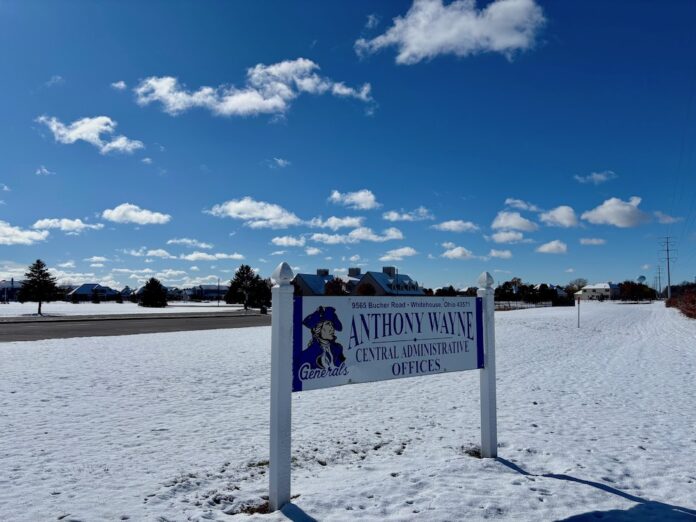
The Anthony Wayne Board of Education will review applications from 25 district residents who are interested in filling a position that will be vacated by the end of the year. (AWFP photo by Karen Gerhardinger)

ANTHONY WAYNE – Twenty-five candidates submitted applications to be considered for an opening on the Anthony Wayne Board of Education. 

After learning that member Shellie McKnight planned to resign by the end of the year, the board asked for community members to submit letters of interest by Nov. 3. A special meeting will be held in executive session in mid-November to review each application and select up to five people to interview, said board Vice President Jeff Baden during the Nov. 3 meeting.

“In the December 8 regular board meeting, we will invite the top candidates to introduce themselves so the entire public is aware of who these people are,” he said. “Then we will conduct a regular board meeting and an executive session to interview candidates.”

The board will not take action at that time, but will ideally name the top candidate in order to hold a vote during the required January 10-30 time frame.

The candidates will be evaluated on five areas, including: 

•Relevant experience and qualifications in career or community, knowledge of the district and commitment to learning.

•Vision and goals, including the future of the district, specific priorities, budget and finance, and a data-driven approach to support proposals.

•Temperament and collaboration, including the ability to work constructively with the board and district staff; approach to conflict; and focus on all students and the community rather than a single issue.

•Transparency and engagement, including communication style, relationship with the community, campaign conduct and accountability.

•Motivation – the candidates’ reason for running and ability to commit the significant time and energy to the board.

In the submitted applications, candidates answered questions relating to their reasons for running, as well as what they see as the top three priorities for the district. What emerged were several themes, including financial stability, academic performance, mental health, transparency, facilities planning, school board culture and staff morale. 

The candidates who submitted applications, listed in alphabetical order, include:

Jessica Baker, of Waterville, is a 1998 Anthony Wayne graduate with a bachelor’s degree in sports communication, radio and television production. She works for O-I in communications and marketing. 

Amy Barrett, of Waterville, is a self-employed grant writer. She has a bachelor’s degree in communications and public relations and is active in several local nonprofits.

Stephanie Bell West, of Monclova Township, is a self-employed licensed independent social worker who has a master’s degree in social work from the University of Toledo.

Kent Buehrer, of Monclova Township, is the president of Buehrer Group Architecture and Engineering. He holds bachelor’s degrees in ocean engineering and electrical engineering.

Katie Carollo, of Monclova Township, is an assistant dean of student affairs for the University of Toledo College of Law. She earned degrees from The Ohio State University and the University of Toledo College of Law.

Matthew Culling, of Waterville, is an audit director for Hillebrand, Inc. He holds a degree in accounting from University of Toledo.

Tiffany Eckert, of Waterville, is a congressional aide and military and veteran liaison for the Chief Administrative Office. She has a master of public administration from Bowling Green State University, where she is working on a doctorate of organization development and change.

Matthew Fillhard, of Waterville, is a paint sales representative and coatings inspector with 21st Century Paints. He is active in professional organizations and Folds of Honor.

Leon Forystek, of Monclova Township, is a health, safety and environment corporate specialist for Kirchhoff Automotive. An Army and Navy veteran, Forystek has a master’s degree in business and accounting and a B.A. in criminal justice.

Christina Fulton, of Waterville, is a registered nurse for Veterans Affairs. She holds a B.S. in nursing and is involved with Jack and Irene’s Wish House and the Spina Bifida Association of Northwest Ohio. 

Gregory Guzman, of Monclova Township, is a higher education administrator for American Public Education. He holds a Ph.D. in higher education cognate – human resources, a master’s in public administration and a bachelor’s degree in journalism.

Jaclyn Haines, of Monclova Township, is an Anthony Wayne graduate with an associate’s degree in accounting from Owens Community College. She currently serves as administrator for Heritage Church of God.

Dennis Kennedy II, of Whitehouse, is currently the Fulton County administrator. He has a bachelor’s degree in interdisciplinary studies and communication from the University of Toledo.

Linda Lake, of Monclova Township, is a University of Toledo graduate who did substitute teaching before taking on positions at Owens Corning. She has been in leadership roles for two area skating clubs.

Sara Lucid, of Whitehouse, is a reading specialist for Bowling Green City Schools. She holds a master’s degree in elementary education and a bachelor’s degree in public relations and advertising. 

Elliott Nickeson, of Waterville, is an associate director of institutional compliance and chair of the University Threat Assessment Team at the University of Toledo. He is an Army National Guard and U.S. Marine Corps veteran and holds degrees in music performance and curriculum and instruction.

Andrew Pilcher, of Whitehouse, is an applications director for Bowling Green State University. A 2007 Anthony Wayne graduate, he earned both his undergrad and MBA from BGSU. 

Jacob Rands, of Waterville, is a firefighter/paramedic with Perrysburg Township and Monclova Township fire departments. He earned his bachelor’s degree in fire administration from Bowling Green State University and is currently a member of the Ohio Army National Guard.

Dennis Recker, of Whitehouse, is retired from the U.S. Army and holds a master’s degree in administration from Central Michigan University. He previously served as administrator for the city of Northwood and the Village of Whitehouse.

Troy Schalitz, of Providence Township, is general manager at Midwest Terminals/Ironville Rail and Transfer. A 2017 Anthony Wayne graduate, he studied accounting at Otterbein University.

Ryan Schmucker, of Waterville, is a self-employed medical device sales rep for Universal Medical Products. He holds a B.S. from Taylor University.

Andrew Sherman, of Waterville, is a self-employed professional housing provider who studied business management operations at the University of Toledo. He is an Army National Guard veteran.

Steven Timms, of Waterville, is a self-employed mental health counselor. He holds an M.A. in clinical counseling and a B.A. in youth ministry. 

Shane Thornton, of Whitehouse, is a registered nurse with the University of Michigan Hospital. He holds a master’s degree in nursing.

Ralph Whalen, of Monclova Township, is a retired vascular surgeon. An Anthony Wayne High School graduate, he earned his B.S. in Biology and M.D. from the Medical College of Ohio at Toledo. 

The Anthony Wayne Board of Education will hold a special meeting on Thursday, Nov. 20 at 6:30 p.m. to go into executive session to review the 25 applications and select three to five finalists for interviews that will take place after the Monday, Dec. 8 meeting.

Toledo’s own Happyland Fragrances

0
The late EJ Wells, founder of Happyland Fragrances. (Courtesy photo)

Daughter undertakes late father’s fragrance ‘hobby,’ adding health component

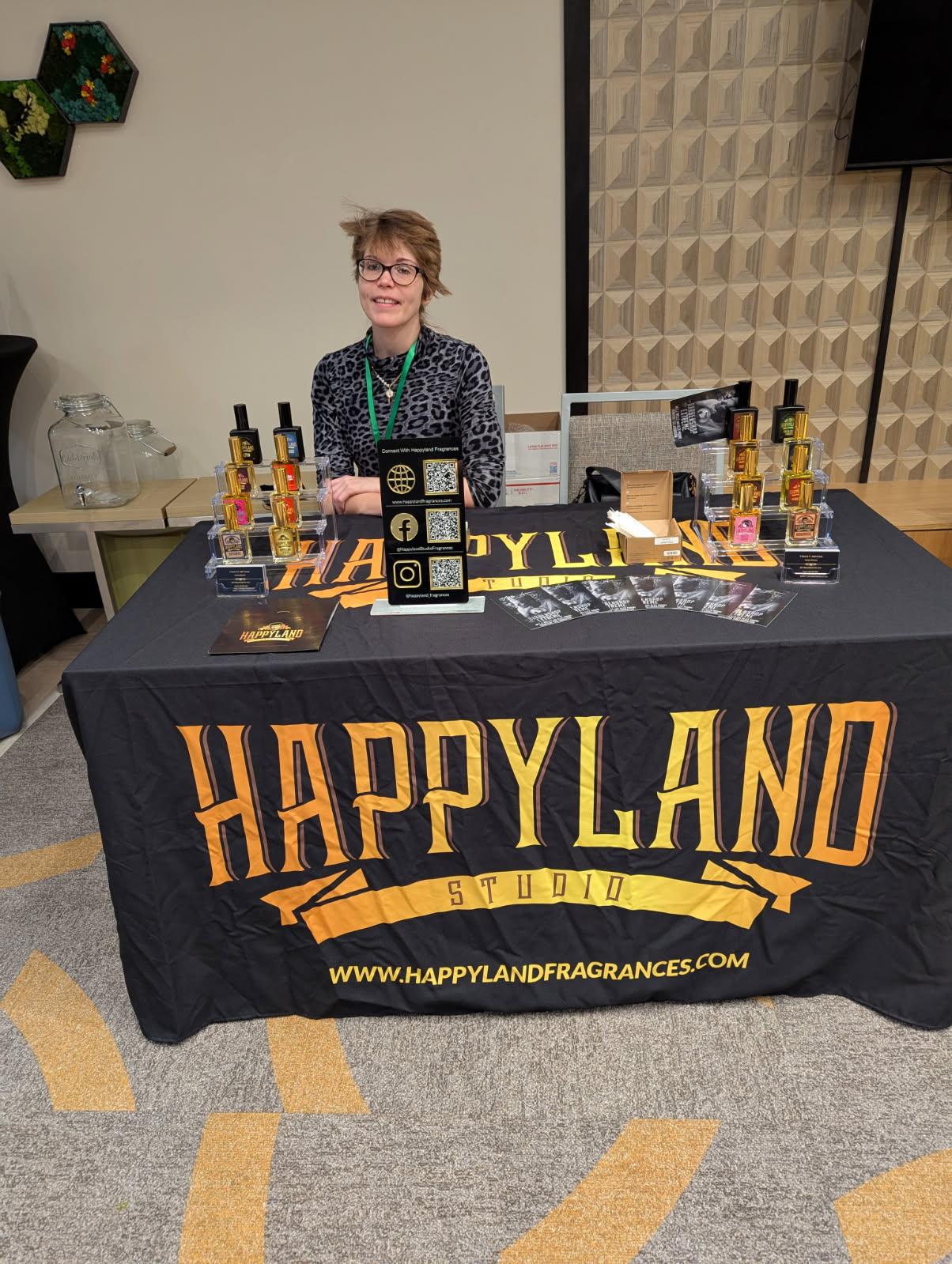
TOLEDO – Happyland Fragrances could be the best-kept secret in Toledo. Ever hear of it? Likely not, unless you’re a patron of perfumes, a connoisseur of colognes, or a fan of, well, fragrances. 

Its products – in bottles of an ounce or ounce and a half-plus – are nowhere to be found in stores in northwest Ohio. Or anywhere in the country, for that matter. But buy them you can, and in a recent development, by doing so you’ll help promote addiction recovery and suicide prevention.

The essence – so to speak – of Happyland was EJ Wells, who dabbled in the fragrance business from his basement lab in Perrysburg. 

“Dad was always interested in fashion and music,” said his daughter, Chloe Michael. “He worked odd jobs all his life. He got into hobbies; one was perfume. He was interested in how to make it and sell it. He had a serious perfume collection.” 

Michael said he began developing and selling fragrances in 2019 under the name Happyland, which was what he called his recording studio. 

Michael said her parents had divorced and her mother had custody of her. As a young adult, Michael visited Wells and got to know his enterprise.

“He had about 300 ingredients on shelves, beakers, packaging products, measuring tools and instruments,” she recalled.

She added that her father battled health problems, including addictions to narcotics and alcohol. He had been in recovery, and was a strong advocate of Alcoholics Anonymous, and acted as a mentor and sponsor to others. 

He also had a bad back. In September 2023, while in a rehabilitation center for physical therapy and undergoing pain management, he went into cardiac arrest and died. He was 66.

“My stepmom approached me a few months after dad passed away,” Michael said. “She didn’t know what do to with the business and didn’t want to liquidate, so she asked if I could try to take it over.”

Michael, working in finance and with a business degree and an MBA from the University of Toledo, said, “I’d been thinking of starting my own business, and I always loved fragrances.” Her dad’s hobby, she said, “was an element I thought I could work with.”

Work with it she did, pouring over her father’s paperwork. “Dad was not a guy for organization,” she said, “but he had notes.”

She also learned the extent of his “hobby.”

“I didn’t know he was known in the fragrance community. He’d been connecting with perfumers and boutique owners, including one in Beverly Hills,” she said. 

Chloe Michael, Wells’ daughter, promoting Happyland at an event this year in Los Angeles. (Courtesy photo)

In January of this year, she officially took over the company as its creative director, while maintaining her full-time job in finance. Fragrance production was shifted to South Toledo and is on the rise.

Michael said using her father’s notes, she developed three new fragrances this year, making 38 total offered by Happyland. One of those is Sol Orietur, Latin for “the sun will rise.” Michael said, “It’s a warm kind of fragrance, with vanilla and spicy notes.”

She said the name is to evoke an image of hope and new beginnings, important in the message to those battling addiction or contemplating suicide, which leads to the component Michael has added to the business.

Some proceeds go toward local agencies that focus on addition and recovery treatment and mental health, specifically the Zepf Center, Team Recovery Toledo, and the American Foundation for Suicide Prevention. She added that she lost a friend to suicide last year.

Michael said she’s made small donations and is saving some income from fragrance sales to make larger awards in the upcoming colder months and next year.

Giving to such agencies “is not something my dad made it about, but I think he would’ve been on board with it. He gave to charity and helped people in AA.”

Michael said her fragrances are available in bottles of 1 ounce and 1.6 ounces through the company’s website, happylandfragrances.com. She said she tries to keep them affordable and offers discount coupons.

“We definitely have a lot of exciting things planned,” Michael said, including attending fragrance events and trade shows. “I want to raise awareness of the brand. My dad did a lot of good things with his life. He would’ve wanted to see Happyland continue. That’s the motivation behind this.”

The Flying Joe: Where Becky Ohm’s story of service still soars

0
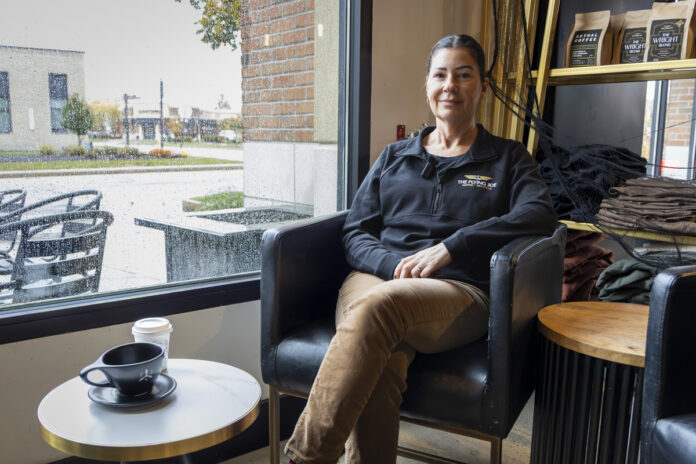
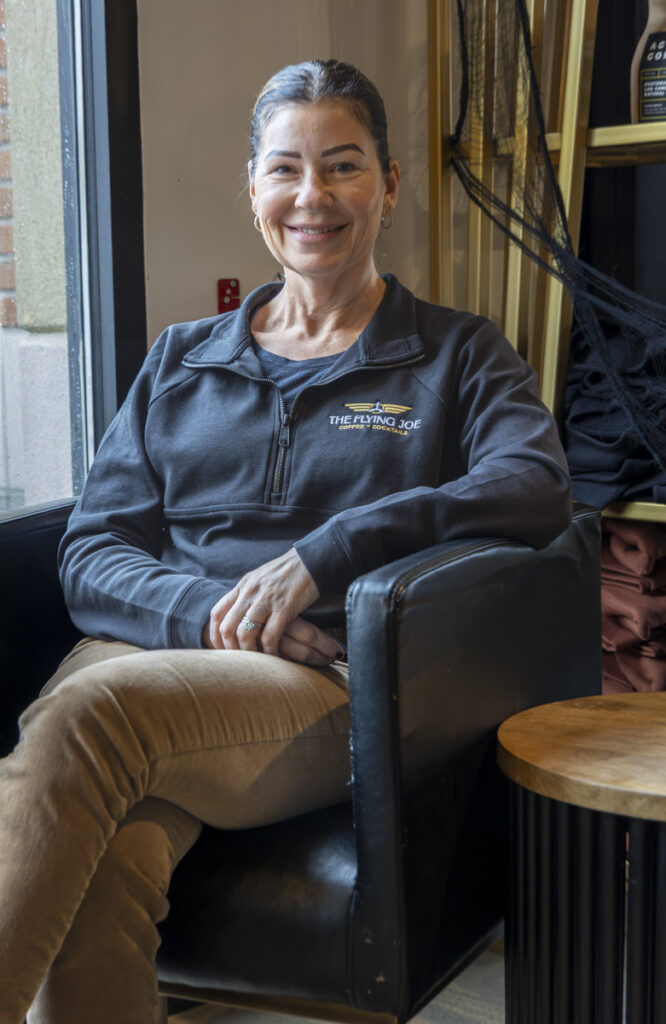
Beckey Ohm, owner of The Flying Joe, served in the Air Force for 25 years. (TFP photo by Gaven Hafner)

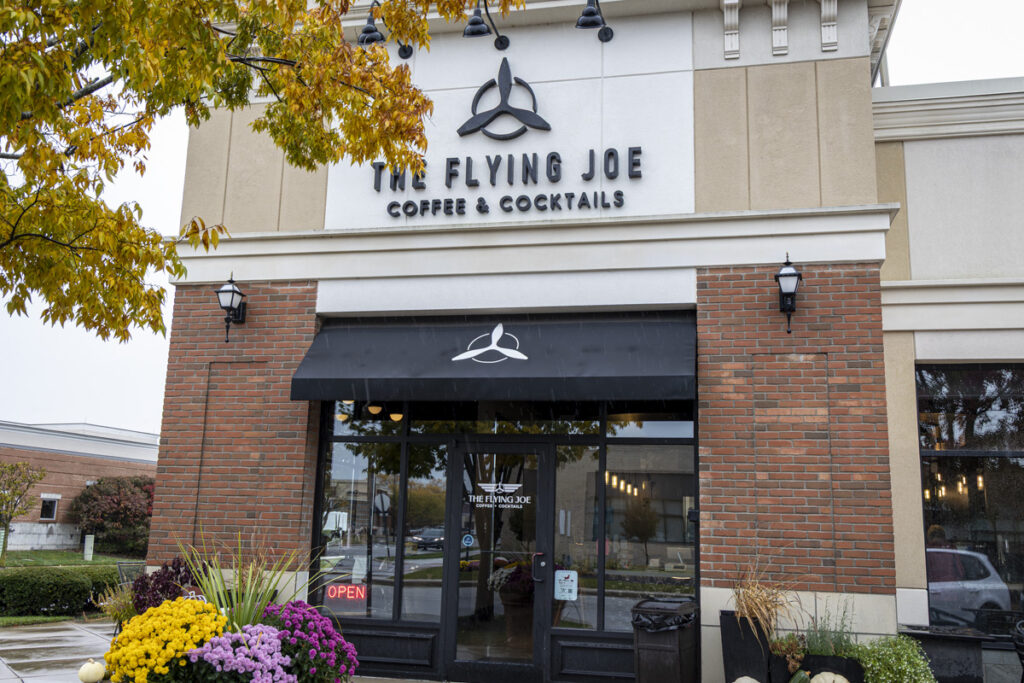
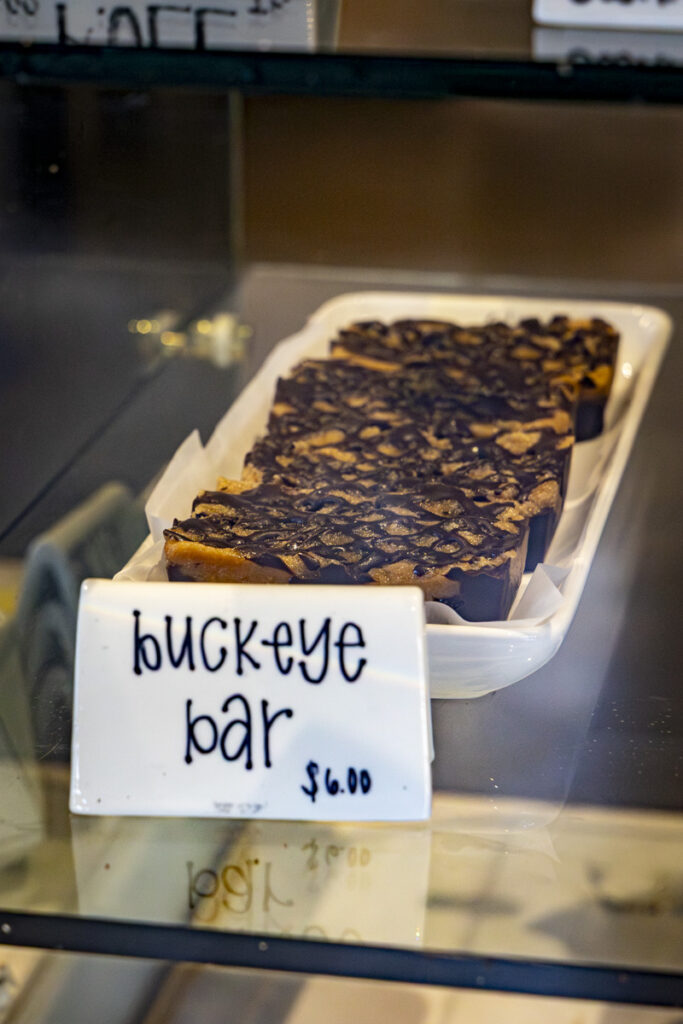
PERRYSBURG- For 25 years, Becky Ohm soared through the skies with the Air National Guard, piloting F-16 fighter jets. Today, her flight path has taken a new direction, landing her behind the counter of The Flying Joe, a coffee shop located in Perrysburg that is known for its handcrafted drinks, homemade pastries and welcoming environment.

“I was in the Air Force, and I was an Air National Guard,” Ohm said. “I served at the 180th Fighter Wing… I started as a crew chief, so I was a mechanic on the F-16, and then I got selected for pilot training, so I went on to be an F-16 pilot instructor.” 

Her military career began in 1993 and included several overseas deployments, for Operation Provide Comfort and Operation Iraqi Freedom. During Ohm’s time in the military, she found it to be very rewarding. 

“There were just so many parts of it but just being able to serve my country and feeling like I was doing some good,” Ohm said. “It’s always good to know that in the military the civilians and the people you protect are so thankful.”

Her military journey began with a spark in high school. “When I was a junior in high school, I was talking to some of my friends, and then they had an Air Force Academy recruiter come in,” Ohm recalled. “I knew I wanted to fly at that point.” That passion led her to Bowling Green State University, where she discovered the Air National Guard and began her military journey while still in college.

When joining the Air National Guard, Ohm became the first ever female fighter pilot in Toledo. “Being the first of anything is difficult, and no one knows what to expect,” Ohm said. “I just remember going into that situation and just trying to be myself and not expecting any favors or any different treatment; and I feel like just having that sort of attitude was able to get me to the point where I became just one of the guys.”

Transitioning out of the military, Ohm didn’t slow down. With her husband, also a pilot, she turned her energy toward a dream that was inspired by a small café they frequented while stationed in Oklahoma. 

“We always wanted to serve the community and be involved,” Ohm said. “When we finally got back to Perrysburg, we remembered that time in Oklahoma that we talked about possibly opening a coffee shop, and we talked about it for a little bit and did our research. We thought that would be a cool way to be involved with the community.”

That dream became The Flying Joe, which first opened its doors in January 2007. What started as a cozy café has since grown into a vibrant gathering spot offering espresso-based drinks, fresh pastries, and a variety of breakfast food items. 

“All our breads are locally made, and we have Sur Le Pouce. They’re a French bakery in Perrysburg. They make our breads for our breakfast sandwiches,” Ohm said. “Our sweet potato hash is made from scratch, and we make cheese quiche; as far as our food items, it’s the number one sought after.”

Over the years, the business has grown to include seasonal menus, cold pressed juices, cocktails, and an event space for gatherings, birthdays, and community events. The Flying Joe also withstood challenges like the 2014 Lake Erie water crisis and the COVID-19 pandemic. 

The Flying Joe is a coffee shop that has a main focus on esspresso based drinks like lattes and cappuccinos. (TFP photo by Gaven Hafner)

“I remember thinking the business was going to fail,” Ohm said. “I remember the first day they dropped that injunction where people could now sit inside and all those customers that would come to us everyday, and they walked in that day, I think we all started crying of happiness.”

Being a veteran-owned business, Ohm finds joy in the recognition that comes with that title. “I’m very proud to be a veteran-owned business,” she said. “I think when people find that out, they are like, ‘Oh I want to support that business even more now.’”

Looking ahead, Ohm hopes The Flying Joe continues to have a strong future in the community. “I just hope that if my kids take it over, or we sell it, or whatever ends up happening, that it continues to have a great name where people know they can come in here and have a really nice environment and really quality service and know that we support our community,” Ohm said.

From fighter jets to fresh pastries, Becky Ohm’s dedication to service remains the core of her mission and stands as a reminder that service doesn’t always end with a uniform.

From service to sweets: the journey of Air Force veteran Cat Kania

0
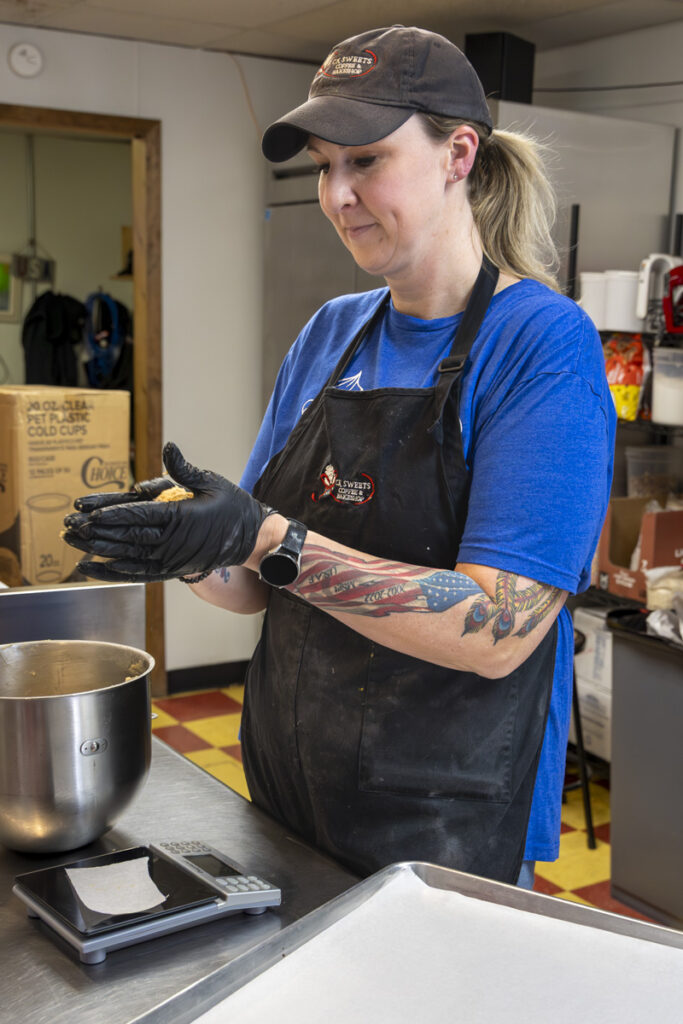
CK Sweets Coffee and Bake Shop started in 2020 and has been going strong ever since. (TFP Photo by Gaven Hafner)

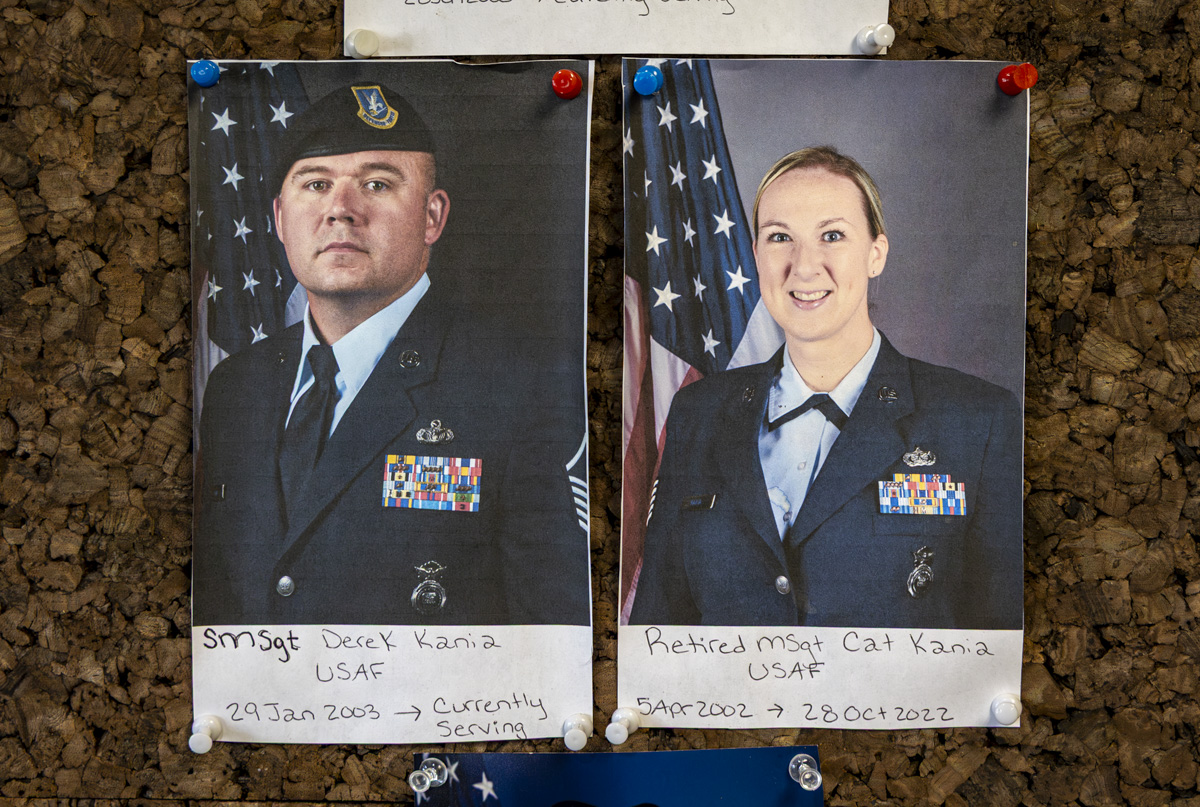
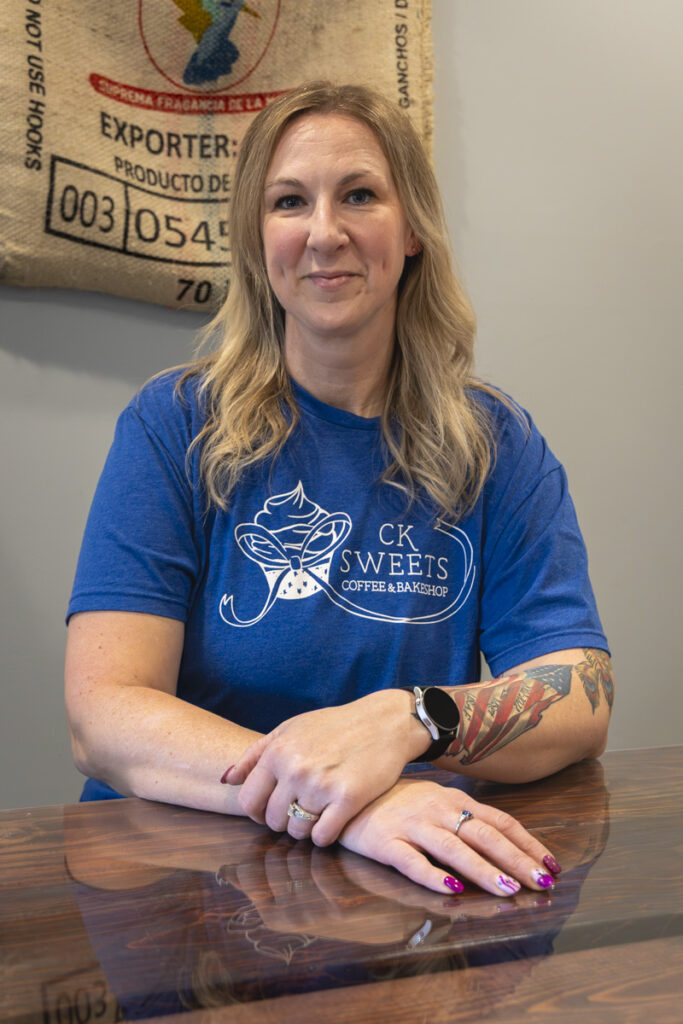
SWANTON– After more than 20 years of military service, Cat Kania traded in her Air Force uniform for an apron; however, her commitment to serving others never wavered. Today, Kania is the proud owner of CK Sweets Coffee and Bake Shop in Swanton, where she channels her discipline, creativity, and compassion into every dessert and cup of coffee served.

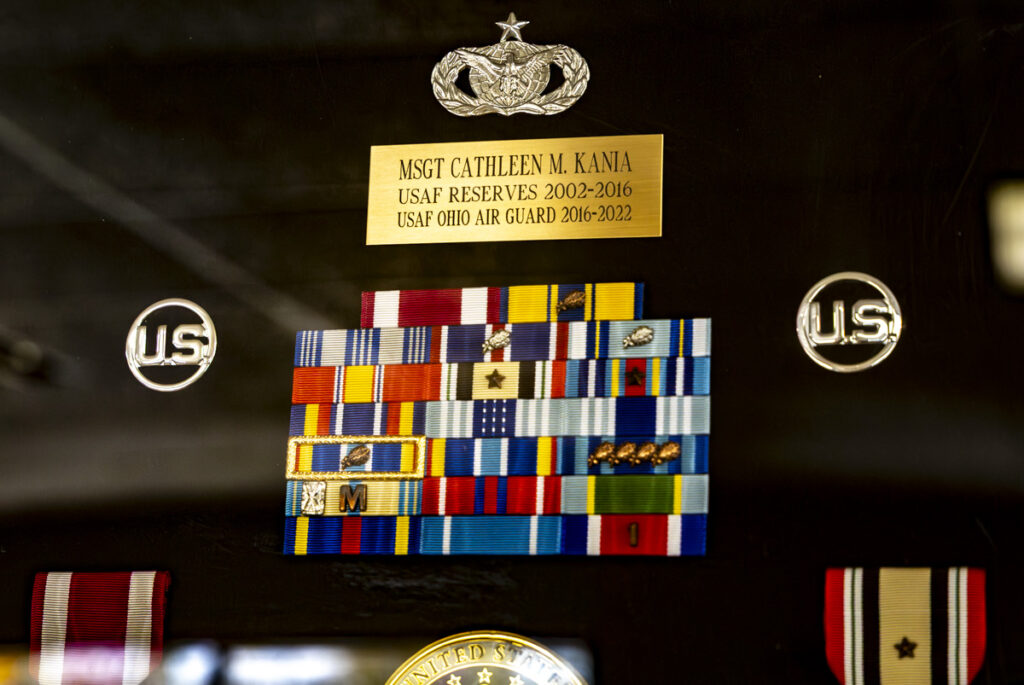
“I served in the Air Force,” Kania said. “My rank was Master Sergeant E7, and I was in the Security Forces Squadron, which is kind of like the Air Force equivalent to military police.”

Kania enlisted on April 5, 2002, motivated by the tragic events of September 11, 2001. 

“I lived in Niagara Falls, New York at the time,” Kania said. “I remember coming downstairs into the living room, and as I came in, the second plane hit the other tower. So, watching that was very impactful. It was terrifying, being in New York, you know, not necessarily close, but close enough. And then I just kind of decided after that that I wanted to do something so that something like that would never happen in our country again.”

Throughout her time in uniform, Kania’s work took her to bases around the world. 

“I traveled to a bunch of different bases. I deployed a few times, but basically our job was base security and making sure that everybody that was coming on the base was authorized to be on the base, and then also protecting assets, like the planes and things like that,” said Kania.

Her service also led to one of the most significant moments of her life. “One huge pivotal moment in my life was I actually met my current husband in Iraq,” Kania said. “We both deployed to Iraq in 2007, and that was how we met. And so that was a big change in my life, and we’ve been together ever since.”

While she’s proud of her career, Kania admits that it came with challenges. “Once we got married and had kids and we were both still in the military, one of us was deploying constantly, so it’s hard to balance that when you’re a dual military couple.” Kania said. “And then just being away from my parents…I’m really close to my parents, so that was always hard, and they were always worried.”

When Kania retired on Oct. 22, 2022, the transition was difficult. 

“It was tough,” she said. “I felt like a part of me was missing. It was not an easy transition. I think it helps a little bit that my husband’s still active duty, so I kind of have a little bit of a foot in the door still and a connection to it, but I struggled for a really long time, even before submitting for retirement, if it was going to be the right idea, if I was going to be able to do something beyond that…and that’s kind of where the shop came in.”

CK Sweets Coffee and Bake Shop opened in Jan. 2020. 

“I’ve always had a passion for baking. I used to bake with my mom and my aunts and my grandma when I was a little girl, and it just became something that I enjoyed,” Kania said. “As I got older and through all the moves of the military, it kind of became therapy for me. I would bake and put all my energy into creating and decorating something and making it beautiful, and it just became something that I relied on to get me through tough times.”

Kania was part of the USAF Ohio Air Guard from 2016-2022. (TFP Photo by Gaven Hafner)

The first year tested her strength. 

“We made it through the first year we were open, which was during COVID,” Kania said. “So, I felt like, if we can keep the shop open and running during that year, then we can pretty much get through anything. And so that was the determining factor of when I retired.”

CK Sweets offers a full espresso bar and a variety of baked goods all made by Kania herself. 

“I make everything from scratch that’s in the display case every day. I’m the only baker here, only decorator here. So, I do all of it,” she said. “We have over 40 different types of cookies, 30 different types of cupcakes. I make muffins, scones, Rice Krispie treats, brownies, chocolates, macarons. I pretty much do a little bit of everything.”

Kania’s shop has quickly become a local favorite. “The day we opened, there was an ice storm outside, and we had a line out the door for hours,” Kania said. “I’m very thankful for the community we live in. We have a great community in Swanton, and they definitely rally around small businesses and support them.”

In addition to the bakery, there is a mobile dessert trailer Kania named Zelda. “Zelda goes pretty much anywhere in the state of Ohio,” Kania said. “It’s a mini version of our shop. So, if you’re not from this area, but you want to have CK Sweets at a party or something, that’s an option.”

Between the early mornings and long hours Kania admits it’s all worth it. “If I see somebody take a bite of a cookie I made, and they’re just so excited about it, and say, ‘Oh my gosh, this is so good,’ it just makes me so proud to be doing what I’m doing,” she said. 

For Kania, each smile is its own small victory; a sweet reward after years of military service.

Photos by Gaven Hafner.

Juncos signal the coming winter in northwest Ohio

0
This junco was photographed last winter after a nice snowfall by Metroparks Toledo nature photographer Art Weber.

Each year, it’s a jump ball which will arrive first, the first snowflakes or the first wave of juncos. Juncos are small songbirds that spend summers up north and usually return to our area just about the same time the first significant snowflakes start to fly. The coincidence has earned it the nickname of “snowbird.”

It was a tossup again this year with the juncos getting the winning nod. If you haven’t seen one already, it’s a safe bet you’ll be seeing one soon, especially if you maintain a bird feeder.

Black Frog Brewery: A veteran’s passion turned profession

0
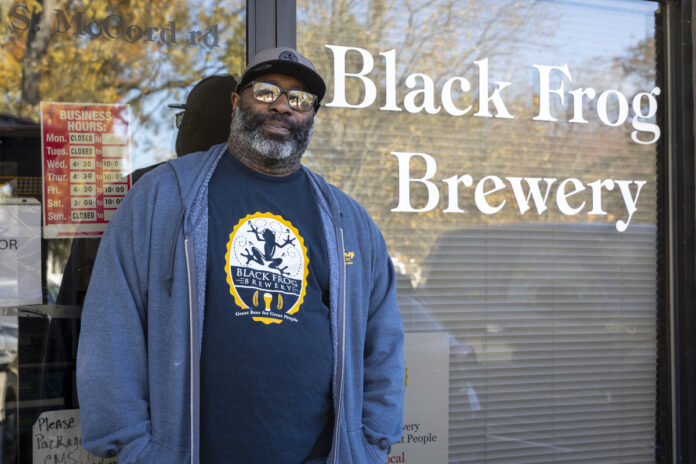
Christopher Harris owner of Black Frog Brewery served as a mechanic in the U.S. Army. (TFP photo by Gaven Hafner)

HOLLAND – At Black Frog Brewery, what began as a hobby for Toledo entrepreneur Christopher Harris has evolved into a community cornerstone, one built on the values of hard work, structure and camaraderie that he carried over from his years of service in the U.S. Army.

Beginning in 1989, Harris served in the U.S. Army for ten years as a mechanic, a time during which he took part in the first Persian Gulf War. 

“Where I grew up, in the inner city [Toledo], everybody was getting into trouble, and it was just kind of a dead end, and I just knew that there was something better,” he said. “And so, I knew the army would provide that structure, stability. It probably turned out to be one of the best choices in my life. I want to say it just made me a way better person than when I was a kid.”

Harris described his time in the military as something both challenging and rewarding. 

“I was really proud to serve during the Persian Gulf War,” he said. “Even though, during the time that it happened, you’re scared and you don’t know what’s going on, but when it’s all said and done, you served your country, and what better honor could there be than to serve your country during a war time?” 

After leaving the military in 1999, Harris used his GI Bill to attend college before working at the Social Security Administration, where he remained until retirement. What began as a simple hobby after work became something more. 

“I was really just looking for a hobby to do,” Harris said. “Initially I tried to make wine. I was really bad at making wine, so I was like, ‘Oh, let me try and make beer.’ And I found I had a knack to making beer, and then that hobby just really grew into a passion.”

That passion and love for beer making evolved into Black Frog Brewery. Harris first operated out of his garage in 2014, before opening a retail location in 2016. 

“When we first started out of our garage, the state hadn’t seen anything like that. There wasn’t anybody that had started a brewery out of their garage in the state of Ohio,” he said. “And so, once everything was done, the state approved me to run the brewery out of my garage, and I did that for two years.”

Today, Black Frog Brewery operates in both Holland and Cleveland. The brewery offers a range of American and European style beers. 

“We pretty much serve almost every style of beer there is,” Harris said. “I have a philosophy in beer making: If I really don’t enjoy drinking a style of beer, I don’t make that style of beer.”

Black Frog Brewery sells a variety of beers. “85 to 90 percent of our beers are American styles,” Harris said. (TFP photo by Gaven Hafner)

The Holland location has become a place for the community to gather. “This place has really turned out to be the Cheers of Holland,” Harris said. “A lot of people that didn’t know anybody, or that didn’t know people in Holland, became friends because of this location.”

In addition to running the brewery, Harris serves as a board member of the National Black Brewers Association. In 2023, the cities of Toledo and Cleveland, along with Lucas and Cuyahoga counties, recognized Oct. 10 as National Black Brewers Day. “That made me pretty proud,” Harris said.

Looking ahead, Harris hopes to expand distribution and eventually pass the business on to his family. “I have two children, and so I’m really just trying to build this up, to be able to leave that behind for them,” he said. “If we can start distributing throughout the state, it would just be fantastic.”

Black Frog Brewery stands as a testament to Harris’ passion for brewing and the core values he carried from his years in the military.

Photos by Gaven Hafner

From old facility to new: What’s changed at LC4

0
The new facility has a grooming room with fun wallpaper.

TFP photos by Allyson Ritchey

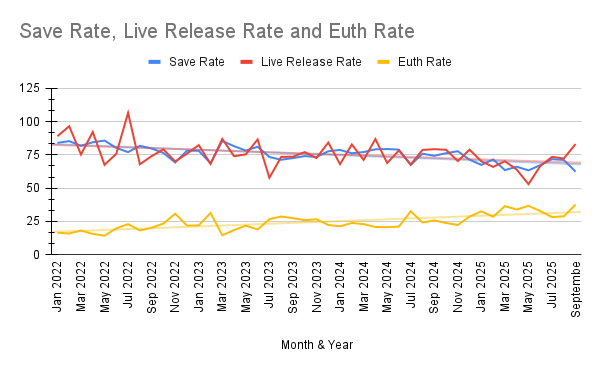
TOLEDO–For community members who find a stray dog in Lucas County, the decision to call animal control is an ethical dilemma with a stark statistical reality. According to publicly available kennel statistics, a dog entering the Lucas County Canine Care & Control (LC4) system during the period of January 2024 to September 2025 had an average 26.71 percent chance of being euthanized—meaning approximately one in four dogs was put down.

The crisis peaked in September 2025, the final month of operations in the old 410 S. Erie St. facility, when the euthanasia rate hit a record high of 37.65 percent.

Using publicly available kennel statistics from LC4’s website, these graphs show an overall upward trend in euthanasia and a downward trend in live releases and saves. (TFP graphic by Allyson Ritchey)

Now, LC4 has moved into a new $31.9 million, 39,300-square-foot facility that opened Oct. 4. The physical transformation is undeniable—modern kennels, outdoor play yards, natural light streaming through large windows. Leadership has changed too, with a new director appointed in March 2025, though he stepped down in October. The volunteer program, suspended after a 2024 abuse scandal, has been reinstated with stricter protocols.

The facility now uses QR codes for everyone to document animals’ behavior.

But for community members like Katie – a Toledo resident who preferred to use only her first name, and whose experience with LC4 predates these changes – and Kevin Clapper, whose recent encounter occurred just last month, one question looms: Have operational practices truly evolved, or just the facility itself?

One year ago: Lucie’s story

In late October 2024, nearly a year before the new facility opened, a brindle pit bull began appearing in Katie’s backyard. Over nearly a week, the dog built trust, eventually taking treats from Katie’s hand and following her around the yard. Katie claimed the dog, whom she named Lucie, showed no aggression toward squirrels, her neighbor’s outdoor cats, or people. Katie and her neighbor suspected the dog had been abused and dumped, but they saw a gentle animal in need of help.

When LC4 wardens arrived with a catch pole, Lucie panicked. “Oh, I can still see it now, like I felt so bad,” Katie remembered. “She freaked, you know, she just panicked. And, like, what else do you do? Like, this was… We thought we were getting her help.”

That was a Friday. Katie had told LC4 staff she wanted to adopt Lucie if no owner came forward. By Tuesday—just four days after intake, with only three business days for an owner to claim her—Lucie had failed her behavioral evaluation. According to Katie, an LC4 employee called to say the dog could not legally be adopted out to the public and would be placed on a waitlist for euthanasia.

“They said that they would call local shelters and see if anyone would take her, and if not, she would be put on a wait list for euthanasia,” Katie said. One week later, when she called back, Lucie was dead. According to Katie, the facility claimed no shelter would take her. Lucie was only a year and a half old.

All dogs undergo an intake exam with the facility’s vet.

When Katie obtained Lucie’s file through a public records request, she found details that troubled her. Lucies’ intake notes from Oct. 25, 2004 described her as “very fearful in field” but noted “I think she will get better.” By the next day, staff reported she was “much less fearful at building” and “walked nicely.”

On Oct. 29—four days after intake—the behavioral evaluation was conducted. The notes describe Lucie being walked to a play yard when “a dog already in a different yard was at the fence barking at her.” Lucie responded with stiff posture and barking. The evaluation form states she was “stiff, piloerection, hyper focused, ears forward, weight forward, attempted to mount, would not listen to verbal correction or spray bottle correction.”

Lucie was euthanized that same day. The reason listed: “FBE: dog agg.”

Katie said an LC4 employee had assured her multiple times over the phone that Lucie “was not aggressive”—yet the file listed dog aggression as the reason for euthanization.

“It was only natural, Lucie being in an unknown place, faced with unknown people and dogs, not to listen to their verbal commands,” Katie said. “We don’t know if she had any training. I suspected she had been abused or neglected and was dumped.”

Inside the exam room.

The euthanasia checklist shows signatures from two staff members as required by LC4 policy. However, one question on the form remains unanswered: “Did two employees decide euthanasia was the best course of action for this animal, one of which is the Veterinarian or Behavior Coordinator and the second a member of Management?” Whether this represented a conscious decision that Lucy was not transferable, or an oversight, is unclear from the documentation.

Katie’s assessment remains cautious nearly a year later: 

“You can’t put lipstick on a pig and expect it to be anything but a pig. Until we see more proof that they’re being properly cared for and all the bad apples have been removed, I just can’t trust it.”

While her experience occurred under previous leadership at the old facility, her concerns about rushed evaluations and inadequate decompression time remain relevant as the organization transitions into its new space.

The new facility has better sanitation and cleaning machines for their dishes and toys.

A pattern repeats

Nearly a year later, Kevin Clapper, another Toledo resident, found two friendly stray dogs running loose near Broadway and South Avenue. He brought them to LC4, assuming they’d be reunited or adopted. Days later, when he called to check, he learned one had already been euthanized for being “aggressive towards other dogs”—despite having been found with the other dog and the two animals riding calmly in his car together.

“When you put dogs under a high stress situation like that, things happen,” Clapper said. The fact that one dog was a female with visible signs of having had puppies led Clapper to suspect the decision was based on adoptability, not aggression.

The patterns highlighted by Clapper’s Sept. 2025 experience—occurring in the final month at the old facility before the move—raise questions about whether LC4’s behavioral evaluations adequately account for the extreme stress dogs experience in a shelter environment, particularly in the critical first days after intake.

LC4’s Response

Cassie Bloomfield, LC4’s Community Outreach Coordinator, said the facility has implemented significant changes, especially with the move to the new building. She emphasized that behavioral evaluations are never conducted by a single person.

“It’s never just one person saying, ‘Well, I didn’t like the way that looked,'” Bloomfield said. “It’s from start to finish, and lots of opinions of lots of people who have laid eyes on the dog.”

The facility employs a dedicated behavior coordinator who meets every dog daily and reviews QR code-based behavior reports submitted by staff and volunteers. “Every single day that she’s here, she walks around. She meets everybody,” Bloomfield said of the behavior coordinator. “She meets every dog that has come in.”

A curious dog plays outside in the rain.

The new building’s design—with smaller, separated sections—allows fearful or reactive dogs to decompress away from the general population. Staff sometimes use short-term behavioral medications “as a tool” to reduce stress.

Bloomfield defended dog-on-dog evaluations as essential for public safety, noting that dog-aggressive animals can cause serious injuries even if they are not aggressive toward humans—from people getting hurt breaking up fights to owners being pulled into dangerous situations.

A stray dog at the new LC4 facility.

“We live in a society where kids exist, so if we know that a dog has a problem with children, that’s not a safe dog for us to adopt out,” she said, adding that transfer partners can work with dogs who have specific issues but that LC4 focuses on dogs who will “make good neighbors and good breed ambassadors.”

Most dogs at LC4 fall under the pit bull umbrella, Bloomfield noted. “We’re trying to break that stereotype that says that they’re aggressive, because you just saw all these dogs here, and they’re not.”

Birdie, an 8-month old mix breed, poses for a photo in her bandana.

When asked about the upward trend in euthanasia rates, Bloomfield attributed it partly to increased intake and partly to irresponsible breeding practices that create dogs with behavioral or medical problems.

“If we keep breeding dogs that are not social with other dogs, they’re not okay with people, they’re not being appropriately socialized when they’re young, unfortunately we’re going to continue to have to say goodbye to dogs,” she said.

LC4 doesn’t maintain a target euthanasia rate, Bloomfield explained, because the population constantly changes. “We don’t want to keep dogs around to keep our numbers good,” she said.

She acknowledged LC4’s “checkered past” but insisted standards have evolved significantly. “We would never agree with hurting or mistreating what’s in our care,” she said. “We don’t want to warehouse dogs if it is affecting their quality of life or putting people in danger.”

Bloomfield said rebuilding trust after the 2024 abuse scandal remains a priority. “It’s really hard for people to ask us for help because of the negative publicity and how they were treated in the past,” she said. “Even if I’m going to give you an answer that you might not like, I’m still going to give it to you. Honesty is the best policy and education.”

Evaluations and Decompression Time Under Review

A central tension emerges from cases like Lucie’s from 2024: how much time is appropriate for behavioral evaluation? Lucie was evaluated and euthanized four days after intake under the old facility’s operations. LC4’s position is that multiple staff members observe dogs over their stay and that evaluations reflect genuine safety concerns. Katie’s perspective is that four days was insufficient time for a fearful, potentially traumatized dog to decompress.

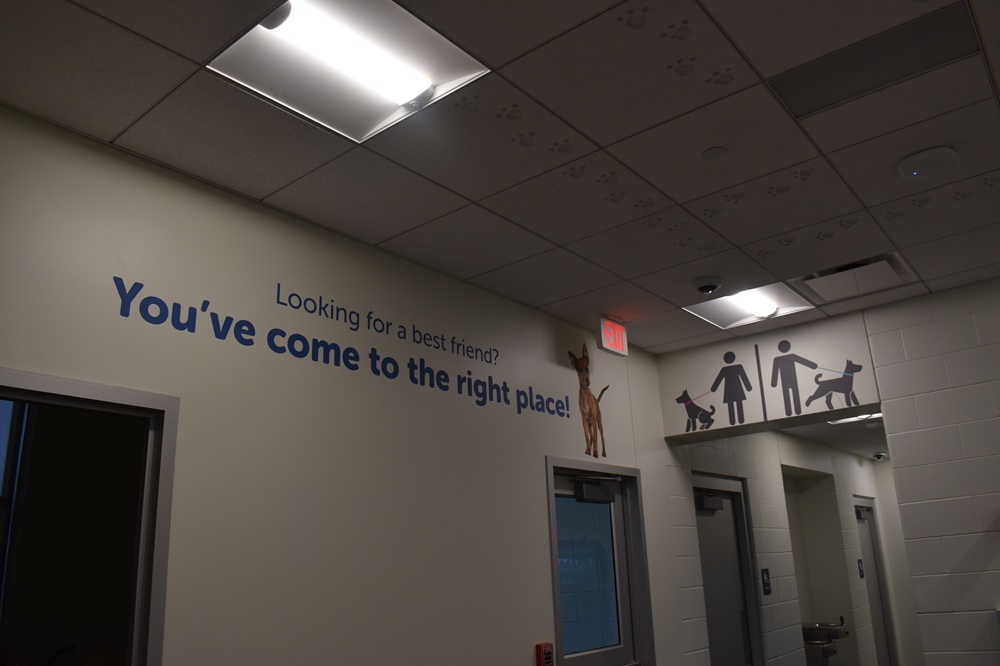
The ceiling features paw prints around the new facility.

Bloomfield, speaking about current operations in the new facility, acknowledged that the improved environment provides more opportunities for dogs to settle in.

“Especially now that we’re in a more appropriate facility and we have the means and the space and the people to give dogs a little bit more time, we don’t willy nilly run through,” she said. She shared that in the new facility, staff can now sit “crisscross on the grass with the dog” off-leash, which was not possible before.

The volunteer program has been reinstated with stricter protocols, and the “Dogs on the Town” field trip program just resumed last month. LC4 also offers a pet food pantry and vaccination clinic, which Bloomfield explained is part of the department’s goal to “stop that before we get to the point where it’s an emergency” and an owner is forced to surrender their dog.

But for Katie, the question remains whether the facility’s improvements will translate into different outcomes for dogs like Lucie, dogs who show fear-based reactivity in their first days but may have potential given more time and specialized support.

“If I had known this was what was going to happen, she never would have gone there. My neighbor and I both…we completely failed her,” Katie said of Lucie. The new building provides the opportunity. The challenge now is whether the organizational culture can shift fast enough to regain the trust of the community.

EBE Hall of Fame ceremony honors business leaders

0
EBE Hall of Fame hosts its 37th annual induction ceremony to celebrate its new EBE Hall of Fame members. (TFP photo by Gaven Hafner)

MAUMEE – The Entrepreneurial & Business Excellence Hall of Fame celebrated its 37th annual induction ceremony on Nov. 6 at The Pinnacle, honoring a new class of outstanding business leaders and innovators. Amber Patterson of Auni Allergy & the ILIT Learning Network was honored with the Rising Star Award, while Don Feller of Feller, Finch & Associates and Brad Morrison of Maumee Bay Turf Center each earned a Business Excellence Award. Mike Deye of Hale Performance Coatings was recognized with the Excellence in Family Business Award, and Joe Napoli, President and CEO of the Toledo Mud Hens and Toledo Walleye, was honored with the prestigious Davenport Longenecker Lifetime Achievement Award.

Phil Tottenham honored at Lucas County Commissioners meeting

0
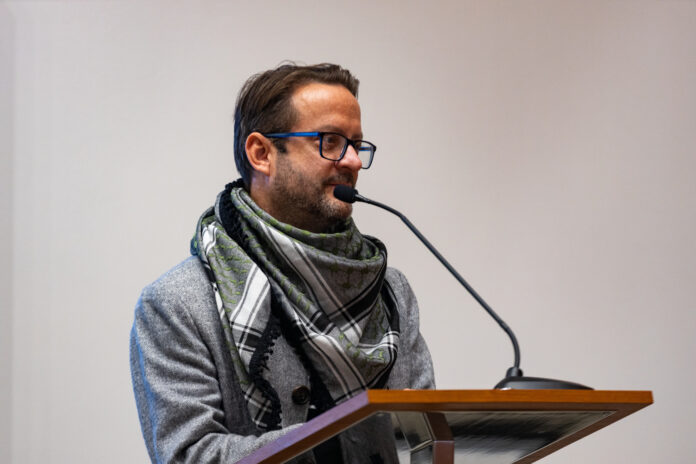
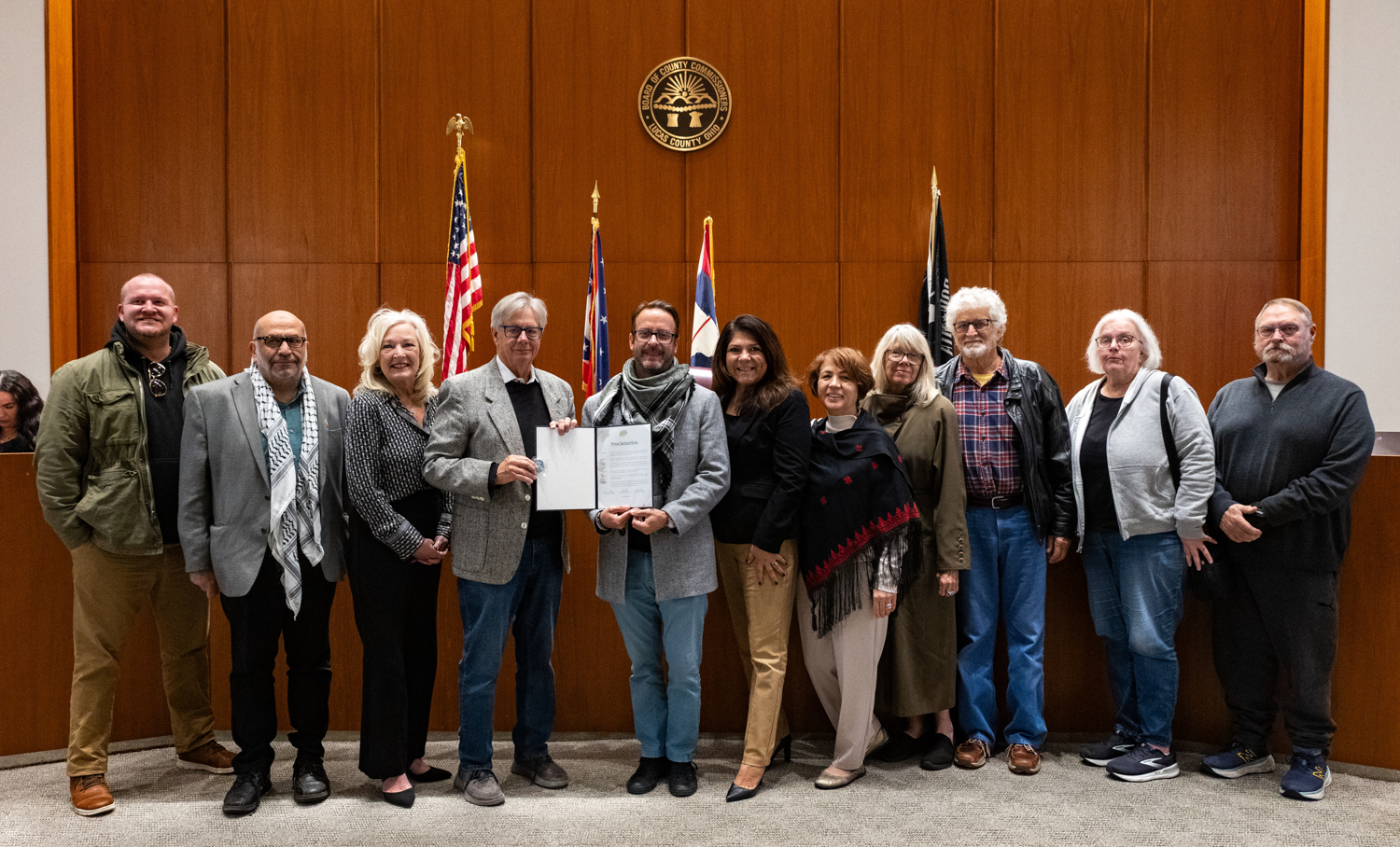
Philip Tottenham, an activist and marine corps veteran, speaks before being honored for his role in the Global Sumud Flotilla, trying to bring humanitarian aid to Gaza, during a Lucas County Commissioners meeting at 1 Government Center in downtown Toledo on Tuesday, Oct. 28, 2025. (TFP Photo by Stephen Zenner)

TOLEDO – Before Phil Tottenham was honored, Lucas County Children’s Services (LCCS) kicked off the Oct. 28 County Commissioners’ meeting.

Jeffrey Chesser, an Independent Living Youth Advocate, was awarded the 2025 Child Protections Support Advocate of the Year by the Public Children Services Association of Ohio (PCSAO), a statewide recognition. 

All three commissioners sang Chesser’s accolades along with the director of LCCS, Randall Muth

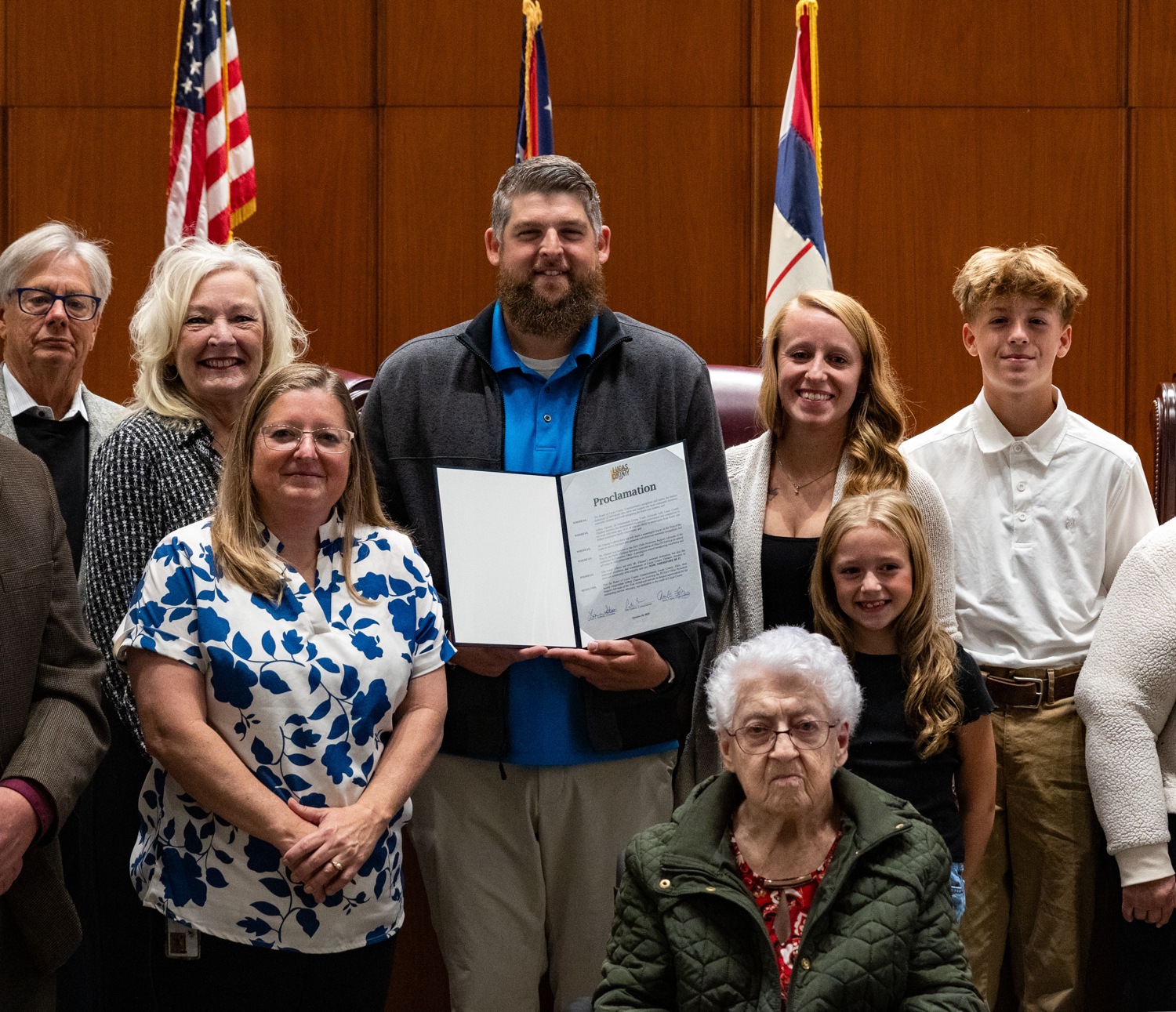
Before he recognized his accomplishment, Chesser chose to introduce the family, including his 101-year-old grandmother, who had come to support him before speaking on winning the award.

“I don’t look for recognition or all that fun stuff,” Chesser said, but appreciated the award. And he went on to say he derived motivation from trying to speak up for kids who had told him they didn’t feel like they had a voice or an advocate. 

Jeffrey Chesser, an Independent Living Youth Advocate with Lucas County Children Services (LCCS), was awarded the 2025 Child Protections Support Advocate of the Year by the Public Children Services Association of Ohio (PCSAO), a statewide recognition, and here he is being honored by the Lucas County Commissioners for his work with LCCS. (TFP photo by Stephen Zenner)

Philip Tottenham speaks on Gaza

On a more politically charged note, commissioners recognized a local Toledoan and activist, Philip Tottenham, for his part on the Global Sumud Flotilla, an international activist effort to get aid to Gaza and create a humanitarian corridor. 

All boats that were a part of the group were interdicted before being able to share aid with Gazans. 

“Bravery and courage wrapped in humility,” is how Lucas County Commissioner Pete Gerken described Tottenham before Tottenham, a Marine Corp veteran, stepped up to the podium. 

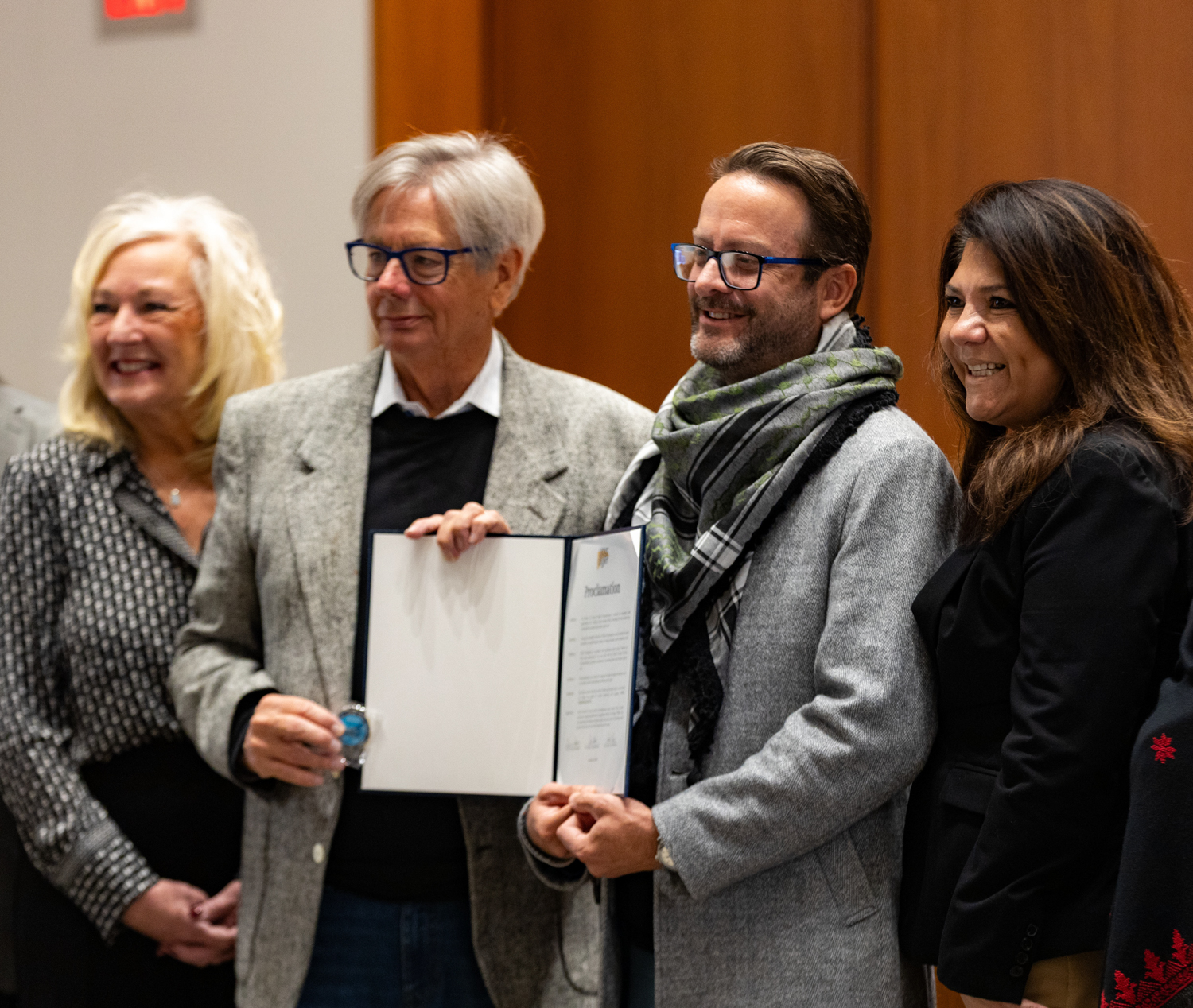
Philip Tottenham stands with Lucas County Commissioners, as he is honored for his bravery in trying to open up a humanitarian corridor to Gaza. (TFP photo by Stephen Zenner)

Tottenham spoke with a soft voice on harsh subjects. 

“We’re a small voice among the veterans who have seen through the lies of war and the propaganda of war and the war machine,” Tottenham said, and continued to speak about Gaza, calling what Israel is doing there a genocide.

Almost as if he was preaching, Tottenham jumped from subject to subject, touching on the nature of unconditional love: “…we have to remember to see through the pride and the hate that nationalism causes,” he said.   

“I don’t feel deserving of this award. I’m here to advocate for the end to this genocide, but also, one specific, immediate ask is to get an American 16-year-old boy, Mohammed Ibrahim, who is from Florida,” out of Israeli custody, Tottenham said. 

Ibrahim, a Palestinian-American born in Florida, was arrested while in the West Bank this past February, and has been held without a trial in Israel since then. 

Israeli forces claim the 15-year-old, at the time, was throwing rocks at Israeli vehicles, which the boy denies. But Ibrahim has not had a court date, and Tottenham pushed to get the word out in hopes that Ibrahim would be released. 

“He has been held hostage for over eight months without a trial. His cousin was beaten to death by settlers…we’re trying to make a call and a push to get this poor child home,” he said. 

Fellow activist and veteran Mike Ferner was present to support Tottenham with others in the anti-war community. 

Lucas County Commissioners Lisa Sobecki and Pete Gerken stand next to Philip Tottenham, an activist and marine corps veteran, alongside Anita Lopez, Lucas County Commissioner. (TFP photo by Stephen Zenner)

Other items of interest from Oct. 28

Item 3. Commissioners approved a 2025 autopsy contract with Allen County, where Allen County requested the services of the Lucas County Coroner. 

“Allen County desires that Lucas County perform certain necessary autopsies,” the contract read, and provided different Ohio codes that refer to the circumstances where one county might make use of another county’s coroner.

Juvenile Court

Item 4. Juvenile Court may receive reimbursements of up to $2,000,000.00 from the Ohio Department of Children and Youth over the period of the agreement based on actual, allowable expenditures. These reimbursements are part of a grant.

Item 5. The Board hereby approves the memorandum of understanding providing Behavioral Health Juvenile Justice (BHJJ) funding to the National Youth Advocate Program to provide Family Functional Therapy for youth and families for an amount to not exceed $97,190.34 for the time period of July 1, 2025 through June 30, 2026, and $97,190.34 for July 1, 2026 through June 30, 2027.

Job & Family Services

Items 6-10 were approved, and Gerken abstained from item 8 because he is on the Toledo Lucas County Homeless Board. 

6. Permission to Enter into an Intergovernmental Revenue Agreement with Lucas County Children Services for Kinship Navigator Services

7. Permission to Enter into an Agreement for Kinship Services with the Area Office on Aging

8. Permission to Enter into an Agreement with Toledo Lucas County Homeless Board for Homeless Services

9. Permission to Enter into an Agreement with Harbor, Inc for CareerLink Program Services

10. Permission to Enter into an Agreement with Harbor Behavioral Healthcare Inc. for the Provision of Work Experience Program (WEP) Services

Support Services

Item 11. Mary Kunckel, director of support services, asked for approval to travel to Florida, so that she could attend the 2026 National Association of State Procurement Officials (NASPO) March 9-12. 

Kunckel reported the conference is designed to strengthen relationships between government, procurement specialists and suppliers. She received a scholarship covering registration, hotel accommodations and reimbursement up to $700 in travel expenses. Commissioner Anita Lopez asked how much it would cost Lucas County, and Kunckel said she thought the whole cost would be covered by the scholarship. 

It was approved. 

Administration

Item 13. The Regional Combined Health Board intends to vacate its current premises located at 635 N. Erie St., Toledo and move into the old diocese, 1933 Spielbusch Avenue. Approved. 

Office of Management & Budget

Item 12. An approved appropriations resolution. 

Domestic Violence: $1,628.00 1st half 2025 disbursement for Bethany House

Senior Services: $609.00 2nd Half real estate Homestead and Rollback

Prosecutor: $50,000.00 salaries and benefits 

APPROPRIATIONS FROM UNAPPROPRIATED FUND BALANCE

Budget Hearings

14. Economic Development

15. Lucas County Economic Development Corporation (LCEDC)

16. Arena/Convention Center

Legends Global presented upkeep for the Glass City Center and the Huntington Center.

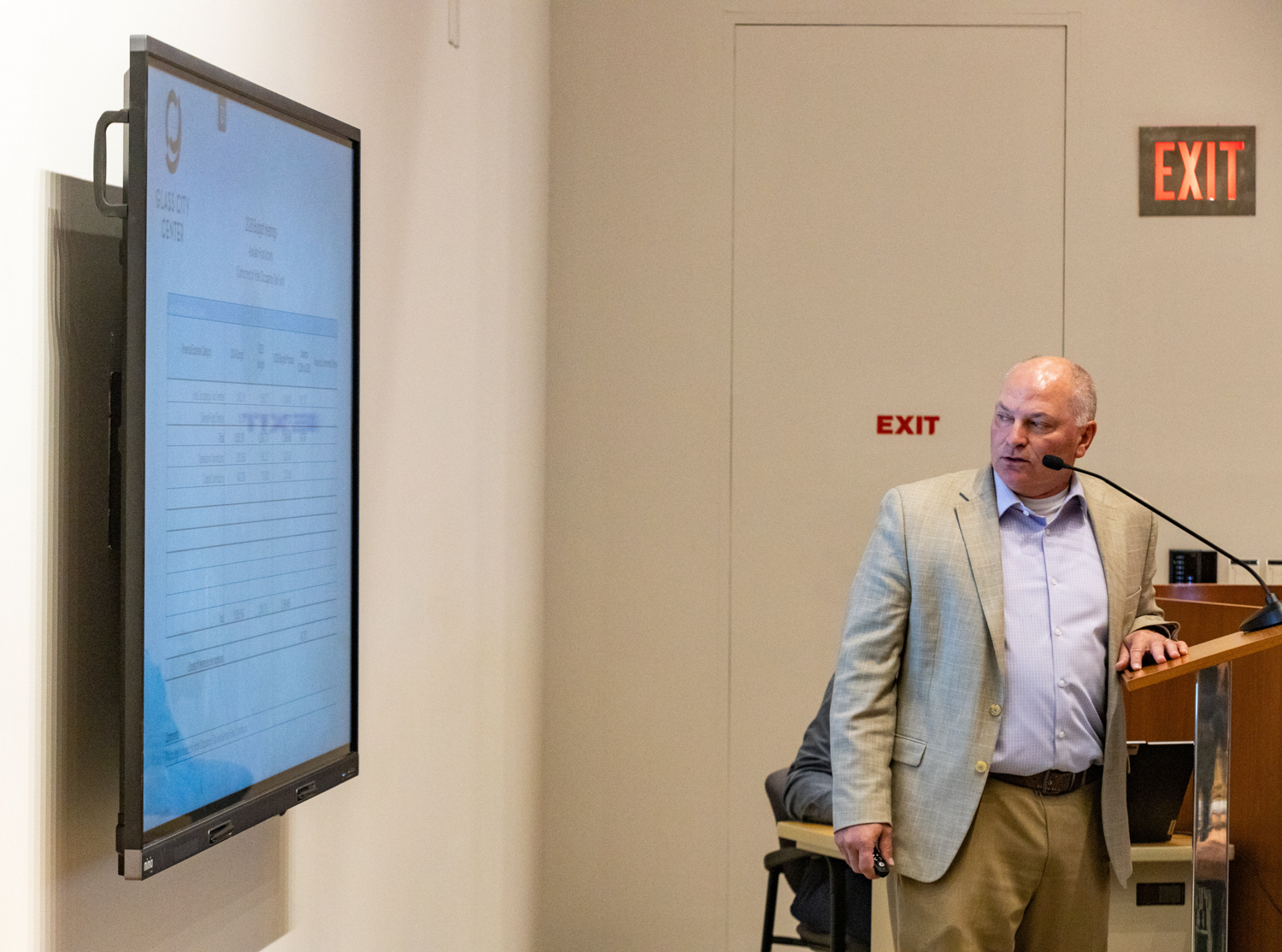
Steve Miller, the regional general manager for Legends Global, presents upkeep and repair options for the Glass City Center and Huntington Center ahead of the 2026 budget. (TFP photo by Stephen Zenner)

Steve Miller, the regional general manager for Legends Global, was on hand to present a laundry list of repairs and upkeep costs for both structures. 

The commissioners have been asking for most departments to keep their budgets flat this year. Miller said they are doing their best to meet the request. 

$275,850 was put on the 2026 budget for the Glass City Center with an additional $161,800 requested for less imminent repairs/projects. The Huntington Center’s budget for 2026 was marked at $679,205 with an additional request for $787,400. Both buildings deferred modernizing their elevators, projects that alone would cost over a million dollars each. 

Gerken approached the situation hopefully, and said that for every repair need he thought there could be a revenue-based solution, citing catering opportunities and unused parts of the buildings that could generate more money. 

17. Recorder

Presentation

18. Lucas County Recorder’s Technology Fund Proposal.

Ohio Revised Code Section 317.321 allows money from fees collected from county recorders recording documents to be funneled back into the county recorder’s technology fund. 

“$6.00 of the fee collected for recording a document be placed in the county treasury to the credit of the County Recorder’s technology fund for the calendar year,” reads the summary from Resolution No: 2025-795.

Third-term Mayor Wade K: Father of the Golden Pitch

0
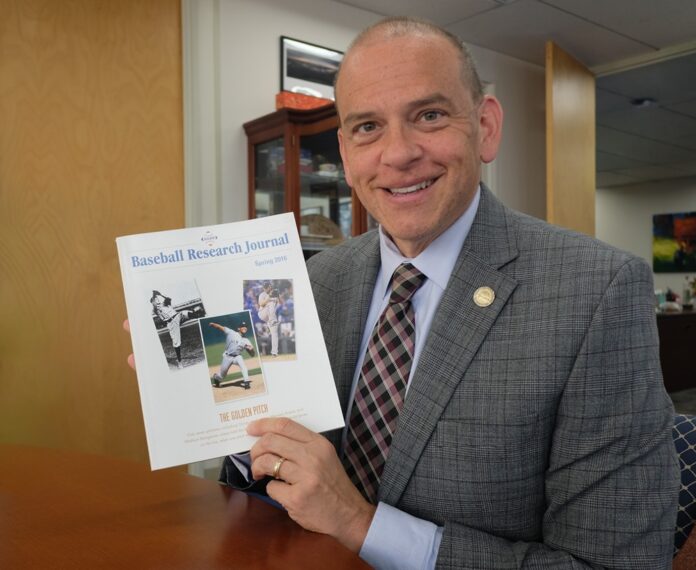
Toledo Mayor Wade Kapszukiewicz holds a copy of the Spring 2016 prestigious Baseball Research Journal, where his conceptualization of "The Golden Pitch" first took root in the collective psyches of baseball fanatics. (TFP photo by George Tanber)

TOLEDO – Three days after his unprecedented reelection to a third term, Toledo Mayor Wade Kapszukiewicz sat in his office on the 22nd floor of One Government Center talking….baseball.

To those who know the man, they wouldn’t be surprised. Next to politics, sports is passion 1B. 

We tabled the campaign-wrap discussion while the mayor explained how the most important post-election message he received was not from his defeated opponent Roberto Torres

Instead, it came from the National Baseball Hall of Fame in Cooperstown, N.Y.

While the mayor runs the country’s 86th largest city, he’s Top 10 in the eyes of a select group of baseball writers and analytics nerds for conceiving a concept called the “Golden Pitch,” which loomed large in the just-completed 7-game World Series won by the Los Angeles Dodgers over the Toronto Blue Jays. 

On Nov. 3, the day before the election, the mayor woke to a stack of text messages alerting him to an article posted that morning in The Athletic by its senior baseball writer, Tyler Kepner. Using four criteria, Kepner determined that Game 7 of the Dodgers/Jays series was the best ever played. 

Criteria No. 4 was the Golden Pitch. Kepner identified Mayor Kapszukiewicz as its inventor. 

He then explained the concept to his readers:

“Simply put, a Golden Pitch is the most dramatic situation possible in the sport, the rare instance when either team can win the World Series on a given pitch.”

The mayor was more impressed with Kepner’s description than the instant national notoriety he gained from the article.

 “He described it better than I ever could – the rarest thing that could ever happen in a baseball game,” he said. “And he’s right.”

The origin

On Oct. 26, 1997, 24-year-old Wade Kapszukiewicz was tuned into Game 7 of the World Series from his West Toledo apartment. His team, the then-Cleveland Indians, stood three outs away from winning its first championship in 49 years. As the inning progressed and the tension grew almost unbearable, the game reached a point where any one of seven pitches thrown by Cleveland’s pitcher could have ended the series for either team.  Somehow, Kapszukiewicz understood what was happening.

“It popped into my head at that time,” he recalled. “I don’t know why.”

The seventh Golden Pitch resulted in a long fly ball by an opposing player for the Florida Marlins, which scored a run from third and tied the score. Cleveland lost the game – and the series – in extra innings. 

In 2001, Kapszukiewicz witnessed six more Golden Pitches in a Game 7 featuring the New York Yankees and Arizona Diamondbacks. This time, since his team was not involved, he viewed the circumstances with less emotion, but felt he was on to something. 

The next time it happened, in 2014, in a Game 7 between San Francisco and Kansas City, he was so excited he woke his wife, Sarah, from a dead sleep.

“She told me to quit talking about it and do something,” he said.

So, Kapszukiewicz spent the next several months researching and writing an article that became the Spring 2016 cover story in the prestigious Baseball Research Journal.

Finally, the Golden Pitch was in play. He named it after the Golden Goal, a soccer term for a game-ending, extra-time score.

Nine years later, on Halloween night, the mayor tuned into the Dodgers/Blue Jays Game 7. As the innings moved along and the game grew tighter, he could feel a Golden Pitch situation develop.

When it arrived, the mayor was not alone in recognizing the fact. 

“This officially is a Golden Pitch scenario,” tweeted a New York radio sports broadcaster, announcing the first of seven such pitches in a row.

Soon after, the mayor noticed that baseball geeks around the country referenced the term on social media forums such as X and Reddit. Some gave a shout out to him and his Baseball Research Journal article.

The reaction surprised Kapszukiewicz, who previously downplayed the Golden Pitch as nothing more than “having some fun.”

“I knew there were a handful of baseball insiders who knew about it,” he said. “But I didn’t realize until this game and seeing some of the tweets that were happening…what a big deal it had become,” he said.

Next question: “How did you have time to watch the World Series three days before the election?”

The campaign that wasn’t

Kapszukiewicz’s re-election carried none of the drama of the Golden Pitch. Toledo voters last year approved a referendum allowing mayors to serve three consecutive terms, paving the way for his third race.

[RELATED STORY: Toledo Free Press Voter’s Guide: Interview with Wade Kapszukiewicz]

In Torres, he was facing a novice opponent who had created little buzz during his campaign. So, during his pre-election weekend, he watched two World Series games, the Ohio State football game and, on Sunday, his Detroit Lions playing Seattle. Sunday evening. 
The results were as predicted: Kapszukiewicz smoked Torres 60.5 percent to 30.2 percent. Four years earlier, he trounced an 82-year-old former mayor, Carty Finkbeiner, by an even greater margin. 

Kapszukiewicz noted that incumbent mayors lost re-election races in New York City, Dayton, Youngstown and Oregon, Ohio, and that half of the members of Maumee City Council were turned out of office.

“Yet, in Toledo, Ohio,” he said, “not only did voters re-elect me by a 2-to-1 margin, they re-elected every single member of Toledo City Council. I see that as a sign Toledo is moving in the right direction.” 

What Next?

 During Kapszukiewicz’s initial run for mayor, in 2017, a more spirited campaign against incumbent Paula Hicks-Hudson, candidates staged a talent show. Some sang. A few played instruments. Kapszukiewicz had a different shtick. He stood in front of the audience and asked them to name a year, any year. When they did, he ticked off the best movie, U.S. president at the time and champion of every major sport. His score: 100 percent.

Eight years later, when asked what’s the No. 1 goal for his final term, the numbers guy quickly threw out a figure: 10,112. 

That’s how many new housing units the city needs to guarantee population growth of 10,000 or more. It’s a longstanding part of his platform, but the mayor re-affirmed his belief that it’s vital for the city’s future for a number of reasons, including increased revenue from taxes.

“Yes, there is a limited amount of space,” he said. “But 70 housing units here, 70 there. You don’t need a ton of land to do that. It would get our city growing its population again. That would be a heck of a legacy.”

Speaking of legacy, the creator of the Golden Pitch has led a golden life as a politician. From his first race at 23 for the Lucas County School Board and including campaigns for Toledo City Council, Lucas County Treasurer and mayor, Kapszukiewicz holds a perfect 11/11. 

He’ll turn 57 on Oct. 30, 2029 – still young for a politician – and facing life out of elected office soon after. What’s next?

The mayor, who enjoys touting his nerdy side and lack of charisma as a badge of honor, responded in sports-speak.

“I’ll be an unrestricted free agent, and I’ll have the ability to choose,” he said. “No one will believe me when I say this…but I don’t know what I’ll be doing four years from now.”

Congress? The Senate? Educator? The last one drew a maybe.

“I’m actually the happiest when I’m teaching,” he said.

Our discussion returned to baseball. The mayor said the recent Game 7 and the one played in 2016 included nine Golden Pitches, meaning he needs to update his research article.

He did some quick math and figured that in 122 years of baseball and 41 Game 7s there have been only 49 or 50 Golden Pitches thrown in nine of those games. Those Golden Pitches are out of a total of more than 50 million thrown in baseball since 1903, the year of the first World Series.

The rarity of it and the buzz on social media triggered the contact from the Hall of Fame. It said they are considering creating a display detailing the history of the Golden Pitch and including the ball from the Dodgers pitcher who threw seven of them on Oct. 31. 

“I don’t know if they’re going to do anything about it,” he said. “And even if they do, there’s no guarantee they’ll give me credit for it.”

Considering the winning streak he’s on, it’s hard to imagine he’ll lose.