Home Blog Page 41

Anthony Wayne Board of Education: 4 candidates to interview

0
Pexels photo by Pixabay.

ANTHONY WAYNE – Four candidates were selected to move on to the interview phase as the Anthony Wayne Board of Education seeks to fill a position that will be vacated on Dec. 31.

After Shellie McKnight announced plans to step down, the board solicited applications from interested community members. Of the 25 who applied, the board selected four candidates to interview: Amy Barrett, Katie Carollo, Matthew Culling and Troy Schalitz.

“We sincerely thank all 25 individuals who showed interest in serving on the board and took the time to apply,” said Board Vice President Jeff Baden. “We had many talented candidates to choose from and truly appreciate their effort and dedication to Anthony Wayne Local Schools.”

The four finalists will be publicly introduced during the Monday, Dec. 8 regular board meeting, then interviewed in an executive session after the meeting. The board does not plan to make a final decision at that time, as the state requires a vote be held between Jan. 10 and Jan. 30. The newly appointed member will serve the remaining two years of McKnight’s term.

Below are profiles, in alphabetical order, based on the applications submitted to the board.
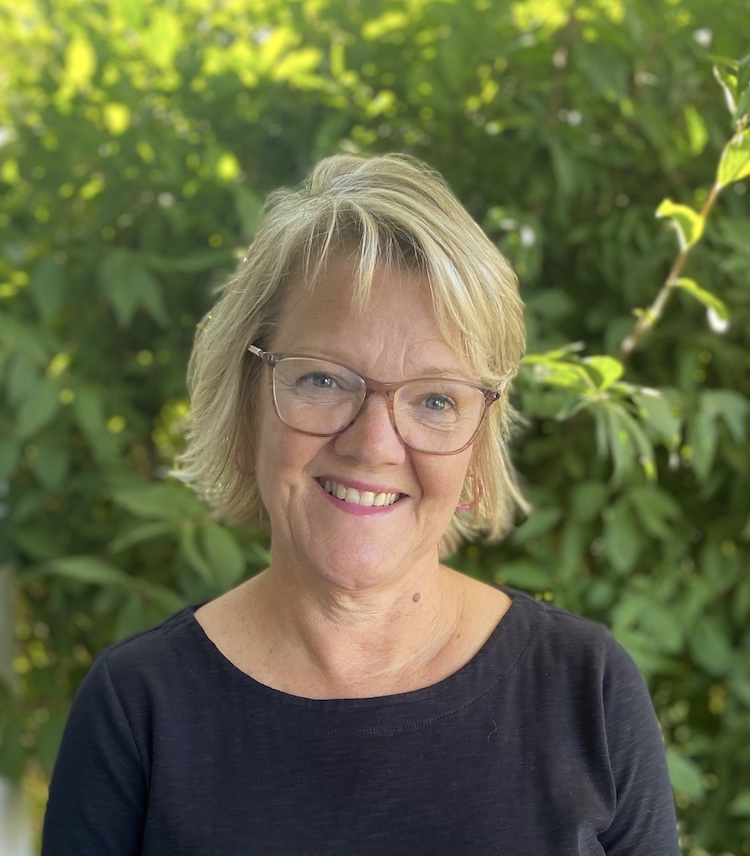
Candidate Amy Barrett. (Courtesy photo)

Amy Barrett is a self-employed grant writer who served for several years as executive director of Awake Community Coalition, coordinating the district’s drug prevention education. Previously, she was a substitute teacher in the district, where she has spent 28 years in school-parent organizations. She holds a bachelor’s degree in communications and public relations from the University of Toledo and was a corporate marketing/project manager consultant for Lutheran Homes Society.

Currently she is the volunteer coordinator for Anthony Wayne Neighborhood Bridges, which ensures that students have food, clothing and other resources. Barrett is the founder of the weekend bag food program – which provides take-home supplies of food and snacks for students to eat over the weekend or holidays. She is a board member for the Anthony Wayne Community Food Ministry and has served as a deacon at Waterville Community Church. 

“I’m interested in becoming a board member because I am very passionate about our school district,” said Barrett, who previously ran for the board in a crowded 2023 election. “My motivation stems from a desire to give back in a meaningful way.”

She lists her top three priorities as: school funding; making sure all students and families feel welcomed, valued, respected and represented; and facility needs.

For students, the district should continue to focus on offering a high quality, well-rounded education with academic programs that prepare students for college, careers and lifelong learning – and ensure equity in educational opportunities regardless of background, ability or learning style.

“The district should also continue to support the social-emotional and mental health of our students by providing resources and safe environments that support our students’ well-being, resilience and mental health,” she said.  

Giving students opportunities to engage in leadership opportunities – in school and with civic organizations – is also a priority. So is keeping the community informed, managing taxpayer funds wisely, collaborating with community partners, and offering adult education workshops and community programs that encourage engagement for all residents.

“I believe fostering collaboration begins with building trust both among other board members, the school community and the community as a whole,” she said. “That means listening actively, respecting diverse perspectives and ensuring every voice has a space at the table, especially when discussions are difficult.”

Barrett said she approaches collaboration with a learner’s mindset of shared purpose – united in a commitment to do what’s best for the students, staff and administration.

“In my various positions, I have found that when differences arise, it has been important to look for areas of common ground and focus on the principles by asking clarifying questions to identify core needs, and then look for solutions that honor the intent of all parties. Our goal should be to put any personal agendas aside and make decisions on what is best for our students so that they are provided with the best learning experience possible, and to support our staff and administration.” 

Candidate Katie Carollo. (Courtesy photo)

Katie Carollo is assistant dean of Student Affairs at the University of Toledo College of Law, where she previously served in leadership positions since 2019. An Ohio State University and University of Toledo College of Law graduate, she has served as an associate attorney and other related positions. Carollo is a member of the Toledo Bar Association and American Bar Association.

Currently, Carollo is an at-large board member for the Anthony Wayne Youth Foundation, where she is also flag football president. 

“I am dedicated to public service and to making a difference in the community,” Carollo said. “With the Anthony Wayne Youth Foundation, I can see the direct impact that my involvement is having with children in our community.”

The parent of three children – in middle, junior high and high school – Carollo said she would like to combine her experience in education and passion for public service to make the district the best for all children.

During her time at the University of Toledo, Carollo said she’s seen how following a core mission and working with a dedicated staff and faculty can overcome obstacles such as budget constraints and community criticism. The school board is no different, she said.

“Even though there are challenges, the board consists of a group of people who are highly dedicated to the students,” she said, noting that she believes her experience and passion for public service will help AWLS achieve its goals.

One of the top priorities is to help the district pass a levy.

“Our district is growing and we need the financial support of our community in order to continue providing the services the community expects,” she said. “Ensuring financial security is of the utmost importance.”

A second issue is the political climate, including attempts by the Ohio legislature to limit academic freedom and dictate what is taught. Community members are becoming increasingly vocal and intolerant towards people who don’t hold their views, she said.

“Turning down the temperature is key,” Carollo said. “The focus needs to stay on what is best for the kids, and all decisions should be viewed through that lens.”

Her third priority is ensuring that the district has the facilities to handle a growing student population.

“The district should make sure all students’ academic, social and emotional needs are met by providing a safe and supportive environment for learning and leadership,” she said.

Carollo said the key to fostering collaboration is to listen to ideas with an open mind but with a goal of making the district the best it can be.

“Active listening and allowing open dialogue are the keys to fostering collaboration. Occasionally, if a topic is particularly divisive, it can be helpful to take a more structured approach (using time limits or a facilitator). I find that reaching consensus with others is one of my strengths, and one of the reasons I’ve been successful in my current role as dean of Student Affairs.”
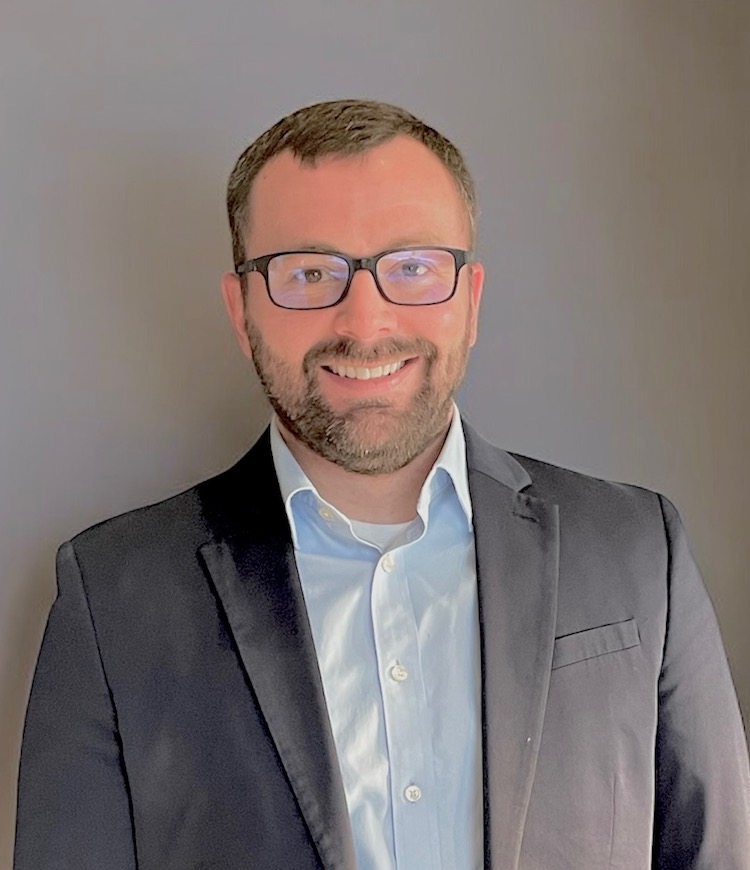
Candidate Matthew Culling. (Courtesy photo)

Matthew Culling is an audit director for Hillebrand, Inc. and previously served as a business risk services director, controller and audit manager and senior accountant. He has a degree in accounting from the University of Toledo and is a Leadership Toledo graduate. 

As a licensed CPA, Culling said he has a understanding of accountability, governance and fiscal responsibility – skills that are valuable during times of navigating funding challenges and long-term planning.

“My work requires precision, integrity and collaboration across diverse stakeholders, all of which translate directly to the responsibilities of a school board member,” said Culling, who describes himself as detail-oriented in operations and finance, but people-centered when it comes to leadership and policy.

“I understand how to ask the right questions, assess risk and keep big-picture goals in focus while staying grounded in the needs of families and students,” he said. “I believe school boards are stronger when they include the voices of parents, professionals and community members who lead with integrity and prioritize outcomes over optics. I want to build a culture of transparency, accountability and trust. One that brings people together and keeps our focus where it belongs, the students.”

As a parent with students in the system, Culling said he’s familiar with the needs of families and students and understands the importance of a district that is responsive, transparent and forward looking. 

The top three priorities he sees for the district: financial health and future funding; capacity, growth and classroom experiences; and trust, communication and board governance culture.

For each of those priorities, he provided a suggested course of action.

For financial health, Culling would make budget transparency a prime effort, letting taxpayers see exactly where the money goes and how it supports students. Funding requests can be tied to student-impact outcomes such as class sizes, programs and teacher retention.

When it comes to capacity growth and classrooms, Culling suggests an audit of actual classroom sizes, growth forecasts and teacher workloads to see where pressure is greatest – and use that information to build trust, enhance communication and build the board governance culture. He also wants to see the board adopt a listening mode through parent/teacher forums, community surveys and open dialogues. 

Overall, the district must continue encouraging students to succeed not only academically but to thrive as responsible, thoughtful and engaged citizen, he said. This is done by supporting all students, regardless of ability or background, to reach their full potential. High standards, effective teaching, early intervention  and strong support systems for enrichment and remediation are a priority, as are developing the whole child through the arts, athletics, STEM, service and emotional learning.

“I believe the school district is a cornerstone of the community. Strong schools attract families, strengthen property values and foster a sense of shared identity. As such, I believe the district should serve both as an educational institution and as a community partner,” he said.

Candidate Troy Schalitz. (Courtesy photo)

Troy Schalitz is a 2017 Anthony Wayne High School graduate who serves as general manager of Midwest Terminals/Ironville Rail and Transfer. He studied accounting at Otterbein University and previously served in other finance and accounting positions.

Schalitz first became interested in the board in 2023, but didn’t want to resign from his position as assistant varsity basketball coach for Anthony Wayne. As his family grew, Schalitz said he put coaching on the back burner and is now ready to become more involved in the community where he was raised.

“My K-12 experience at Anthony Wayne was bar none,” Schalitz said. “My deep, interconnected roots within the community motivated me to apply for the open position. Anthony Wayne Schools has consistently propelled excellence.”

The top three issues facing the district, he believes, are: an increasing expense profile, a downward trend in community trust, and deterioration of identity.

“Everyone can agree that the price to operate anything from a school district to an ice cream stand has risen over the last five years; however, that does not limit our creativity in countering rising costs,” he said.

“Seeing the downward trend in community trust has been truly difficult to witness. Growing up, I recall our levies passing consistently, and our district growing fruitfully as a result,” he said. “Nowadays, speaking in support of our levies seems to carry an undertone of controversy. I’d like to solve this. We have the power to restore trust between the school and constituents by developing better ownership and transparency in our district. We need to own the mistakes and learn from them.”

Schalitz said he’d like to continue the board’s work in inviting public interaction and open forums.

“We’re all active shareholders within this school district and want our children to be educated in a sound and well-ordered manner,” he said.

The district’s “deteriorating identity” stems from the last three to five years, where arguments over trivial items have blurred the bigger picture.

“Anthony Wayne does not exist to be some political battleground or only welcome like-minded staff and students. Educational institutions exist to engage students from diverse backgrounds in meaningful exchanges of ideas and beliefs; to tell them how to think critically rather than what to think,” he said.

Schalitz uses as an example his high school FFA teacher and history teacher.

“I’m certain they had vastly different ideologies, yet they were both exceptional educators, never allowing their personal beliefs to dictate my own learning experience,” he said. “I’d like to create an Anthony Wayne united around core doctrine, rather than divided by every minor disagreement.”

He cited the Portrait of a General core competencies: leader’s mindset; critical thinking; collaboration and communication; adaptability and flexibility; and empathy as a great foundation for every student.

“Our district breeds high caliber individuals; let’s bring them together to reignite the passion for unity, distinction and character.”

The Dec. 8 board meeting begins at 6 p.m. in the Central Administrative Office, 9565 Bucher Rd. in Whitehouse. It will also be livestreamed at anthonywayneschools.org.
What’s new in Anthony Wayne: Data centers dominate discourse

0
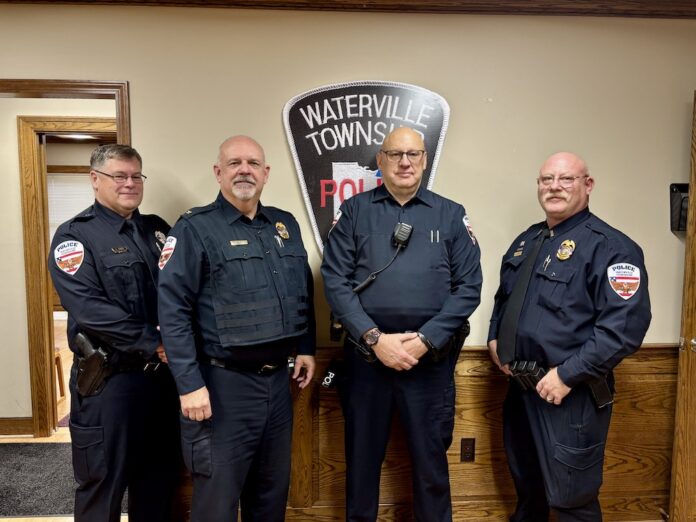
Waterville Township Police swore in new part-time officer James Waltmire (second from right). Pictured are officer George Roush, Chief Kevin Smith, Waltmire and Lt. Marty Przybysz. (AWFP photo by Karen Gerhardinger)

ANTHONY WAYNE – Data centers continue to dominate the conversations in local meetings, including those held in Monclova Township, Waterville Township, Whitehouse and Waterville in the second half of November.

Waterville

Dozens of residents filled the Waterville City Council chambers to capacity and waited outside on Nov. 24, as a data center moratorium discussion – but not a vote – appeared on the agenda. 

Mayor Tim Pedro announced that legislation on a moratorium had not been prepared for review early enough for the required three days to allow citizens and council to review it. Instead, he said it would be up for a vote during the Monday, Dec. 8 meeting.

Wayne Wagner, who brought forth the request for a moratorium, said he just wanted a year to take a pause and do more research on data centers.

“Eight weeks ago, I asked for a resolution to be put on the agenda,” Wagner said, adding that he followed it up with emails and documents to the law director. “I did my part and it was rejected. This is not democracy, and honestly I’m just ashamed to be up here at this point.”

Rod Frey said he, too, expected to see a resolution, but since Waterville doesn’t have enough land for a data center, he’s not sure why it would be needed.

“We’re spending all this time and we need to get other things done in this city,” Frey said, adding that a moratorium might send a wrong message to potential investors in the city – those other than data centers.

Three residents spoke about data centers. Chris Celusta said he took a data center site visit and has concerns about water and electric usage, diesel fumes from generators, a 24/7 humming noise and the impact on the quality of life. Celusta also noted that data centers could be the target of terrorism. Scott Jahns said he doesn’t have an opinion on data centers and understands both sides, but wondered why a moratorium is needed if the city doesn’t have the land. 

“It was reported that Waterville does not have enough land to accommodate a data center,” Pedro said, adding that the available land is too close to blasts from the quarry and railroad lines, which data centers want to avoid.

“We’re still going to be studying this. Perhaps a smaller data center could come online. We haven’t gotten there yet because we have not received an application.”

Lisa Haberstock said she’s concerned that if a vote doesn’t happen on a moratorium sooner, then a permit request from a data center could slip through. Resident Rachelle Balenger asked each of the council members whether they knew when they voted on on the data center that Pedro had been in talks with the city.

Several council members noted that Pedro’s job is to meet with potential investors, including regional and national brokers, to look for opportunities. That might include a discussion about data centers, although Pedro reiterated that the city doesn’t have the available land.

“The point of all these meetings is for him to be involved and tell us if there’s anything relevant,” Rozic said. “Nothing nefarious has taken place.”

Wagner said he doesn’t know everything the mayor does, but would expect Pedro and any council member to share those discussions in a memo with Council at the least.

Frey said meetings with potential developers and investors can’t always be disclosed in order to maintain trust.

“That’s economic development. You have to lay the groundwork before it comes in here and gets exposed,” Frey said.

Council agreed to make sure that legislation for a moratorium will appear on the Monday, Dec. 8 ballot for a vote.

During the meeting, council also:

-Heard that the city closed on the purchase of the former Sunoco station at the corner of Farnsworth and Anthony Wayne Trail, and will be applying for funds from the Lucas County Land Bank to take out the old tanks, demolish the building and get the site ready for redevelopment. Pedro said he’s received calls of interest in the property. The city is also eyeing options for the former Valero gas station at the corner of Mechanic Street and the Anthony Wayne Trail.

-Congratulated Lt. Cameron Solis for graduating from the Police Executive Leadership College.

-Heard that applications for two positions on council – those currently held by Anthony Bruno and John Rozic – are being accepted through Friday, Dec. 5.

-Listened to Terri Massucci thank those who donated toys for the toy drive competition between Waterville and Whitehouse. Toys can be dropped off anytime in the city hall lobby, or at the YMCA, Mad Anthony’s, Subway, First Federal of Delta and Waterville Bodyworks by Wednesday, Dec. 10.

-Encouraged residents to attend the Light Up Waterville event on Sunday, Dec. 7 from 5:30 to 7:30 p.m. in Parker Square. The event includes live music, Santa, a tree lighting and horse and wagon rides.

-Awarded a $1,584,130 contract to Helms and Sons Excavating to expand a section of Waterville-Monclova Road between Michigan Avenue and Pray Boulevard to include continuous middle left turn lane for both directions. The city has a $1.1 million federal grant and $293,285 state grant to help cover the cost.

-Heard Wagner suggest that Kati Tharp, who stepped down as law director effective Nov. 24, be replaced by John Rozic, who is an attorney and term-limited from running for another seat on council. Tharp said she decided to resign in order to pursue other opportunities.

Waterville resident Scott Jahns addresses Waterville City Council during its Nov. 24 meeting. (AWFP photo by Karen Gerhardinger)

Monclova Township

During the Nov. 17 Monclova Township trustees meeting, Waterside resident Risa Sindel said she contacted State Rep. Josh Williams (R-Sylvania Twp.) and a Maumee representative whom she would not name about her concerns that a data center might locate on or around the Shops at Fallen Timbers.

“All arrows from Maumee and Josh Williams point back to you,” Sindel said, suggesting that the trustees and administrator Harold Grim were “pursuing” data centers.

Trustees Barbara Lang and Chuck Hoecherl reminded Sindel that the township has no control over the Maumee land east of Black Road. If a data center were to utilize the 200 acres on the west side of Black Road – owned by Monclova Properties LLC and in the township – at least the township would have some control.

“We are in a vulnerable position because the property owner can petition the county to annex the property on the west side of Black into Maumee. We’re walking a tightrope here,” said Hoecherl, adding that the owner could nab up to $30 million for the 200 acres. 

“Josh [Williams] can change the annexation laws so Maumee can’t annex us,” Lang said. “We don’t have a say over what Maumee does.”

Black Road property owner Ryan Bauman suggested that the township at least investigate the possibility of buying the 200 acres to prevent it from being annexed. That would cost $39 million over 10 years, Hoecherl estimated, but asked Grim to seek out more information.

In the meantime, the township will continue to compile residents’ emails and meeting comments in the public record in the event that an application for a data center does come in, Hoecherl said.

During the meeting, the trustees also:

  • – Passed a resolution honoring the late Gary Kuns Sr., who served as a township trustee for over 20 years.

– Welcomed Anthony Wayne High School senior Lila Hippert, who is working on a project with her Community Engagement class to install Little Free Libraries stocked with children’s books to encourage literacy in the township, Waterville and Whitehouse.

– Heard that Monclova Township Fire and Rescue responded to 189 calls in October, for a year-to-date total of 1,920. 

–Approved an automatic mutual aid agreement with Maumee Fire. The township already has automatic mutual aid agreements with the Air National Guard, Waterville and Springfield Township fire departments. With these agreements, crews automatically respond to a structure fire in sections that are closest to their jurisdiction, to ensure that adequate staffing is on scene for the 201 businesses and 5,000 residents in areas along the boundaries of the township.  

Waterville Township 

Waterville Township citizens with data center concerns spoke during the Nov. 17 Zoning Commission and Nov. 19 trustees meetings.

“The people of the township want to have the opportunity to be a part of the decision making,” said Russ Schifferly, whose family has been in the area for 166 years. “This does not fit in Waterville Township. There is no benefit to the community other than tax money.”

Zoning Commission member Keith Moosman, noting that his family has also been in the township for generations, said he understands the concerns.

“We made every precaution that a zoning board can take to make it right if they [data centers] were to come to the township,” he said. “We didn’t hide anything. We’re not back pocket people.”

The township has not received a request for a conditional-use permit for a data center, but if it does, the public would have two opportunities to speak, said Zoning Commission member Bill Burkett. First would be with the Lucas County Plan Commission, then the Zoning Commission, which would make a recommendation to the Board of Zoning Appeals, which would have its own public hearing. 

During the trustees meeting, residents asked about the potential for a moratorium and concerns about annexation by Waterville or Whitehouse if the township turned down a data center request.

Resident Jill Lipinski noted that one farm family has agreed to sell land if such an offer would come forward – a move she understands is a landowner’s right.

“I can see both sides of it,” Lipinski said, explaining that having an offer of $200,00 an acre would be life changing. 

Lipinski said she wants to see restrictions put in place for data centers to ensure that they follow the rules, and she questioned whether a moratorium would give the township a pause to iron out more details.

That’s a better question for the law firm that the trustees hired, Albers and Albers, said trustee Kyle Hertzfeld

During the meetings, township officials also:

-Learned that a public hearing for the trustees to consider a zoning change for 8346 Dutch Rd. has been moved to Wednesday, Dec. 3 at 6:30 p.m. The owner wants to change the land from Agricultural to R-A Suburban Residential with a Planned Unit Development for Walden subdivision.

-Heard that a survey for the land use plan update survey, posted at watervilletownship.com, is still open for comments. 

-Heard that James Waltimire was sworn in as part-time officer with the police department. Waltimire has a master’s degree in criminal justice/law enforcement administration and over 40 years of experience. He is also an ordained minister and serves as a substitute teacher for Springfield Local Schools.

-Heard that Waterville Senior Lofts has been issued a permit to build on Kay Drive off Waterville-Monclova Road just north of U.S. 24. 

-Listened to Hertzfeld thank the community for passing a levy for the General Fund.

Whitehouse

Downtown, the S.R. 64 corridor, community connectivity and branding are the four core areas that Whitehouse has identified as priorities for growth, Kleinfelder engineer Greg Telecky told Whitehouse Village Council during its Nov. 18 meeting.

A meeting is being scheduled with downtown property owners to get insight on ideas including the formation of a historic district, redevelopment district and funding mechanisms to enhance the downtown, Telecky said. 

The S.R. 64 corridor is of interest to some industrial developers, Telecky said, noting that he’s had indirect dialogue through a third party but needs to keep the information confidential for now. He’s also working on funding options for a pedestrian bridge over S.R. 64. 

The third area of focus is community connectivity, and plans to apply for a Safe Routes to Schools grant and funding for a study are underway. A connectivity master plan will show gaps in the village between multi-purpose trails and sidewalks. Right-of-way acquisition and preliminary engineering will be underway soon for a multi-use trail that will extend along Weckerly Road.

The fourth focus is community branding, which includes signage and landscaping throughout the village. 

During the meeting, the council also:

-Agreed to a 2.8 percent cost of living increase and a one-time additional 2 percent bonus payable in January for employees, as well as merit service pay based on years of service.

-Heard that the Whitehouse holiday celebration is planned for Saturday, Dec. 6 in the downtown area, with holiday crafts, venders, a visit with Santa, a holiday parade and tree lighting. The event kicks off with a Christmas Village 5k.

-Asked residents to donate new, unwrapped toys for a competition between Waterville and Whitehouse. The Whitehouse toys will go to Toys for Tots while the Waterville donations will benefit Anthony Wayne Neighborhood Bridges.

-Heard Mayor Rich Bingham say that he heard a complaint that the village didn’t notify residents about a Tier 3 sex offender who moved to Whitehouse. The state no longer sends out notifications, but residents can sign up for alerts through the state. The Lucas County Sheriff’s Office handles notification of neighbors. The 28-year-old male who moved to Whitehouse served 10 years for gross sexual imposition with a victim under 13. He was released in August 2024.

-Heard that the village is waiting for electric wholesale rates to dropped before locking in an electrical aggregation rate. Currently the rates are higher than the standard market price.

-Learned that the fire department has responded to 975 calls for service this year.

-Listened to resident Leslie Harper ask about conversations that council and the mayor have had about data centers. She requested and received one document related to data centers: a map of utilities in the area.

Fight Songs for the Underdogs: Dan Denton turns struggle into art

0
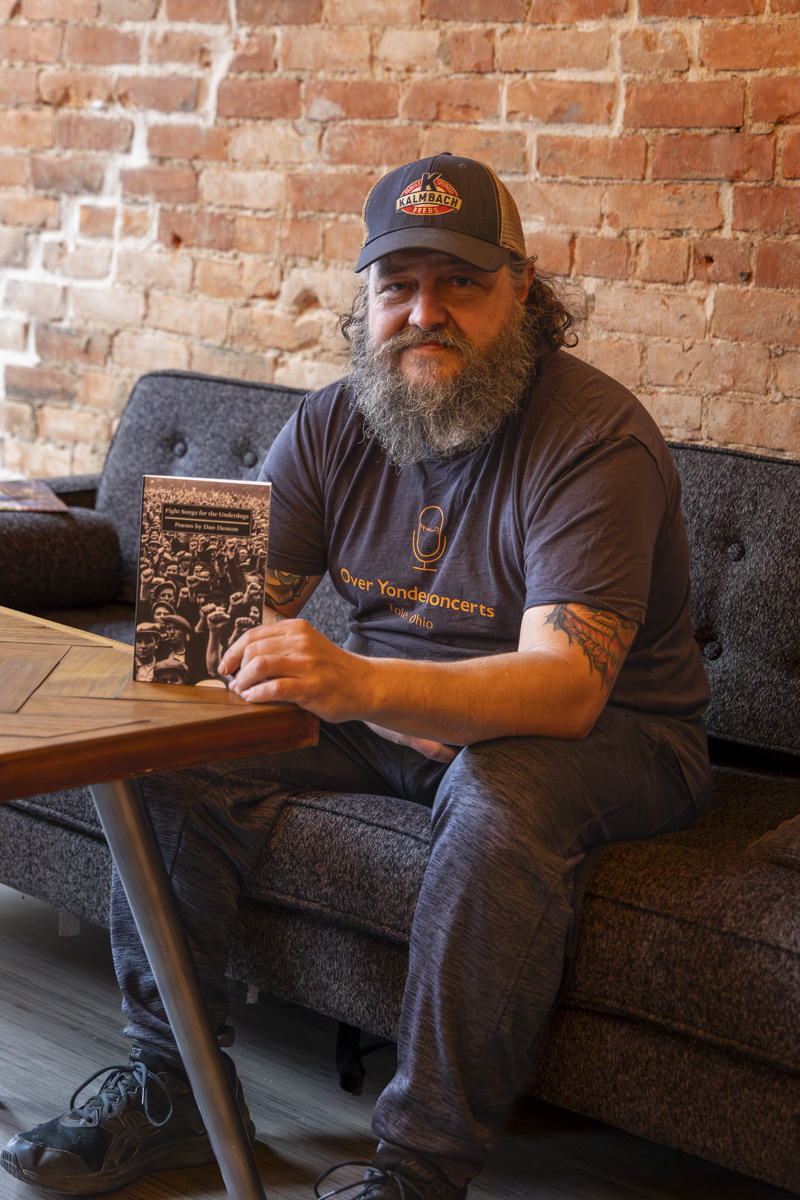
The book Fight Songs for the Underdogs takes inspiration from Dan Denton’s life and the struggles of dealing with drugs, poverty, mental health, and homelessness. (TFP photo by Gaven Hafner)

TOLEDO– Local writer and former Jeep union steward Dan Denton has released a new poetry collection titled Fight Songs for the Underdogs, a book that captures the lives, frustrations, and endurance of America’s working class through Denton’s signature raw, conversational style.

Denton’s journey to becoming a published writer was far from easy. Growing up in poverty in a small Midwestern town in Illinois, Denton dealt with a lot of hardships.

“We were like the poorest family in town… I grew up in the projects, and when I got to my teenage days, I got into drugs. But still, books were always a part of my life,” Denton said.

Addiction and homelessness marked his early adulthood, shaping the raw honesty of his writing. It wasn’t until Denton got sober in his 20s that he began writing consistently.

Dan Denton, a retired Jeep union steward turned full time published writer, has released his fourth book, Fight Songs for the Underdogs. (TFP photo by Gaven Hafner)

 “When I got sober 19 years ago, I started writing pretty much every day then,” Denton said.

Even as a factory worker and union steward at Jeep, Denton continued to nurture his writing. In 2013, Denton joined Jeep and spent a decade working there, where he also served as a union steward. During his time at Jeep, Denton would write down poems any chance he got. “It wasn’t uncommon for me a lot of times to write a poem while I was on the assembly line,” he said.

Over the years, Denton has published four books. His newest book, Fight Songs for the Underdogs, is a compilation of various poems that include selections from his self-published “chat books.” 

“This poetry collection isn’t all just my very best work; it’s a collection of 10 or 12 of those homemade chap books I’ve made over the years for gas money on my road trips and tours. Over the years, Jason Ryberg from Luchador Press had said, ‘Hey, man why don’t you put a group of those books together? Let’s publish it as a book.’ And so finally, this year – it took me about six months – I finally put together the ones I like and sent them to him,” Denton said.

The poems take inspiration from Denton’s life experiences, struggles with drugs, poverty, mental health and homelessness. 

Denton’s new book, Fight Songs for the Underdogs, a collection of poems, was released in October of this year. (TFP photo by Gaven Hafner)

“That’s kind of like my signature poem from the early days. It’s called “Bury My Heart in the Gutter.” And that poem has actually been covered by other poets who have also performed that poem in poetry slams and won awards,” he said. “It honors my life of addiction and homelessness and my mental health, and how I grew up in the gutters and the projects, and how, even though I’ve gotten beyond that, that was the first place where I learned to love, and I learned value of work. So it kind of honors that,” Denton said.

Denton chose the title of the book based on one of the poems of the same name in the book. “It’s called “Fight Song for the Underdogs.” And I felt like that poem encapsulated what I try to do as an artist. You know, it’s a poem about…a fight song or an anthem. [About] pretty much everybody who’s been left behind or overlooked. The underdogs,” Denton said.

Denton’s poems stand as a testament to endurance, each line a small rebellion against despair. For the underdogs still out there fighting, Denton’s words are a rally cry: keep going, keep writing, keep living.

Local author debuts newest book: On the Air with Dr. Doodlebug 

0
Illustration from On the Air with Doctor Doodle Bug (Art by Susan E. Goodman).

PERRYSBURG – Swanton native Merrill Rainey remembers the moment he first understood the magic of bringing a story to life with pictures. What began as a look through a senior art show at Kent State University, became a profound discovery of the importance that illustrations hold for a child’s imagination. 

Rainey most recently published his children’s book On the Air with Dr. Doodlebug, which is about how different bugs can call into a radio show to talk about their problems, and Dr. Doodlebug always has an answer for them. 

“This story is co-created with Susan E. Goodman, and we both kind of worked with the same editor over the last couple years on different projects: Jill Davis,” Rainey said. 

Author Merrill Rainey

As of this year, Rainey has eight published books. 

On Nov. 7, the bookstore Gathering Volumes in Perrysburg held a release party for Rainey’s newest children’s book. 

“For storybook style books, like Dr. Doodlebug, we always do a read aloud. Then, we did a draw along. I had an activity specifically towards nature journaling because Dr. Doodlebug draws out all of his answers to the bugs in his journal,” Rainey said. 

The inspiration for this book came from Rainey’s love of radio shows. 

“I had the idea of the radio show, it seemed to fit in a little bit more of a modern fashion, as opposed to, written letters. But I am a big fan of radio and I listen to a lot of talk shows. In a recent interview, I talked about how this one is kind of inspired by the evening radio show “Delilah” where people call in and ask for advice,” Rainey said. 

On the Air with Dr. Doodlebug took four years to complete. 

“For a single illustration, it could take up to a week or more, depending on the complexity of the artwork. Traditionally, to finalize a picture book is about two years,” Rainey said. 

Rainey takes his inspiration for his books from the world around him.

“I’m a big observer of the world around me. I just keep my eye on different things and I read a lot that comes into play as well,” Rainey said. 

Rainey said while producing this book, he had to do a lot of research about different species of bugs. 

A piece of advice that he provides to young writers is the importance of practice, discipline and having motivation. 

“First and foremost is to learn to write and spell well so that you have that good foundation of how those things work. Once you are solid with that, then just practice every day with your writing. You only get better the more you do it. Reading other people’s work and how they write their stories will help you to understand how to write your own stories as well,” Rainey said. 

“A lot of the time, when you tell a story, it’s about something that’s happened, has already happened to you or happened to somebody that you know. When you’re creating stories, you’re telling stories,” Rainey said. 

There are a limited number of signed copies of On the Air with Dr. Doodlebug available at Gathering Volumes. You can also find copies of the book at major online retailers like Amazon.

Helping kids with Sanfilippo Syndrome: Fundraiser deadline Dec. 1

0
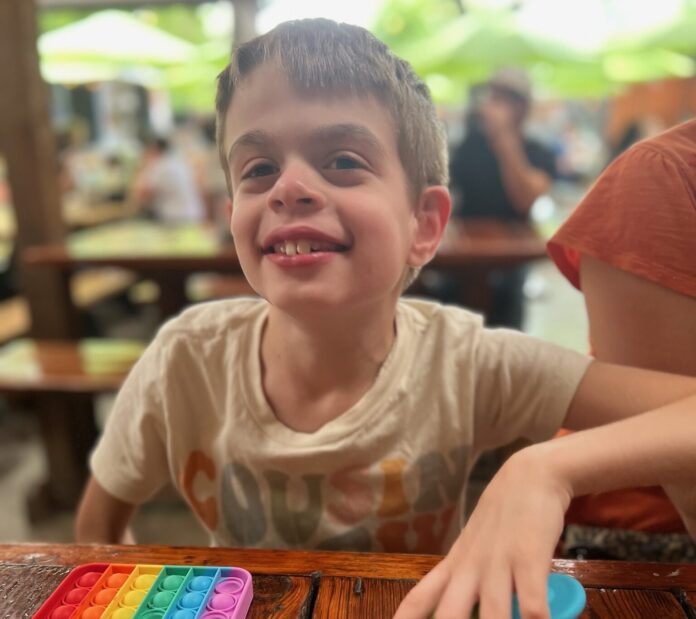
Simon has a rare, genetic condition called San Filippo Syndrome.

TOLEDO – Alina Gorniak and her husband, Jeremy Croke, both native Toledoans, were about to be parents to a brand new baby boy they planned to name Simon.

It was May 15, 2016, and the delivery went as planned. Soon after, Gorniak, a well-educated woman, could feel that some things were not adding up.

“I have that momma sense,” Gorniak said. “As soon as he was born, I thought something was not right. The initial sign was breast feeding. It was like a square peg in a round hole. Something was not working. Then, he wasn’t meeting his milestones: is he rolling over, is he babbling, is he taking his first steps?

“During that first year, going to wellness checks at the pediatrician’s office, they would say he could be on the tail end of the bell curves,” she continued. “We held onto hope for that until about 10 months.”

Around that time, Gorniak said Simon was gifted a tambourine by his uncle. It wasn’t long before Simon “started spinning the tambourine on the ground, almost like he had been doing that the previous 10 months,” Gorniak said, recalling Simon’s instant knack for the activity.

“We thought maybe he was on the autism spectrum,” she said. “The pediatrician said Simon was too young for them to make that diagnosis. By 12 months, he was just not hitting milestones.”

Ultimately, Simon was diagnosed with a rare genetic disease called Sanfilippo Syndrome (Type B). Google this disorder to learn about the disease – there are several types. It “is a form of neurodegenerative disease that typically begins showing symptoms in early childhood, such as developmental delays, behavioral problems, and sleep disturbances. That is then followed by severe cognitive decline, loss of motor skills, and a shortened life expectancy.”

Alina Gorniak is the primary caregiver and mother of Simon. A cancer survivor herself, she has learned to navigate the complexities of the healthcare system and fundraising to help find a cure.

Children diagnosed with Sanfilippo Syndrome Type B have a life expectancy of 12-17 years.

Simon, who is non-verbal, wears a Boston brace, which is primarily used for scoliosis, 16 hours a day. He attends 20-plus therapy hours and/or medical appointments a week – from geneticists to ophthalmologists, to ear, nose and throat specialists, audiologists, and orthopedic specialists.

Simon also wears hearing aids because he cannot hear high-frequency sounds. On a side note, Simon also loves blueberries, and his favorite TV show is Signing Time!

Toledo natives move to Texas

Gorniak, 49, and Croke, 46, graduated from Central Catholic and Northview high schools in 1995 and 1998, respectively. They have lived in Austin, Texas, since 2007.

“We go back to Toledo approximately six weeks each year, definitely in July and for two weeks at the end of December,” Gorniak said. “Both sets of our parents live in the Toledo area.”

Gorniak has a Master’s degree in Education from the University of Toledo and a Bachelor of Science degree in Dietetics from Bowling Green State University. She is Simon’s primary caregiver. Jeremy works in sales with NetSuite.

“We knew we had found each other after two months of dating, and then he said he’s moving to Austin,” Gorniak said of their relationship. “I told him, ‘I can’t tell you what to do, but if you hold off a while I might move with you.’ I was a teacher at Springfield High School at the time.

“We went to Austin and he proposed and we moved within a few months.”

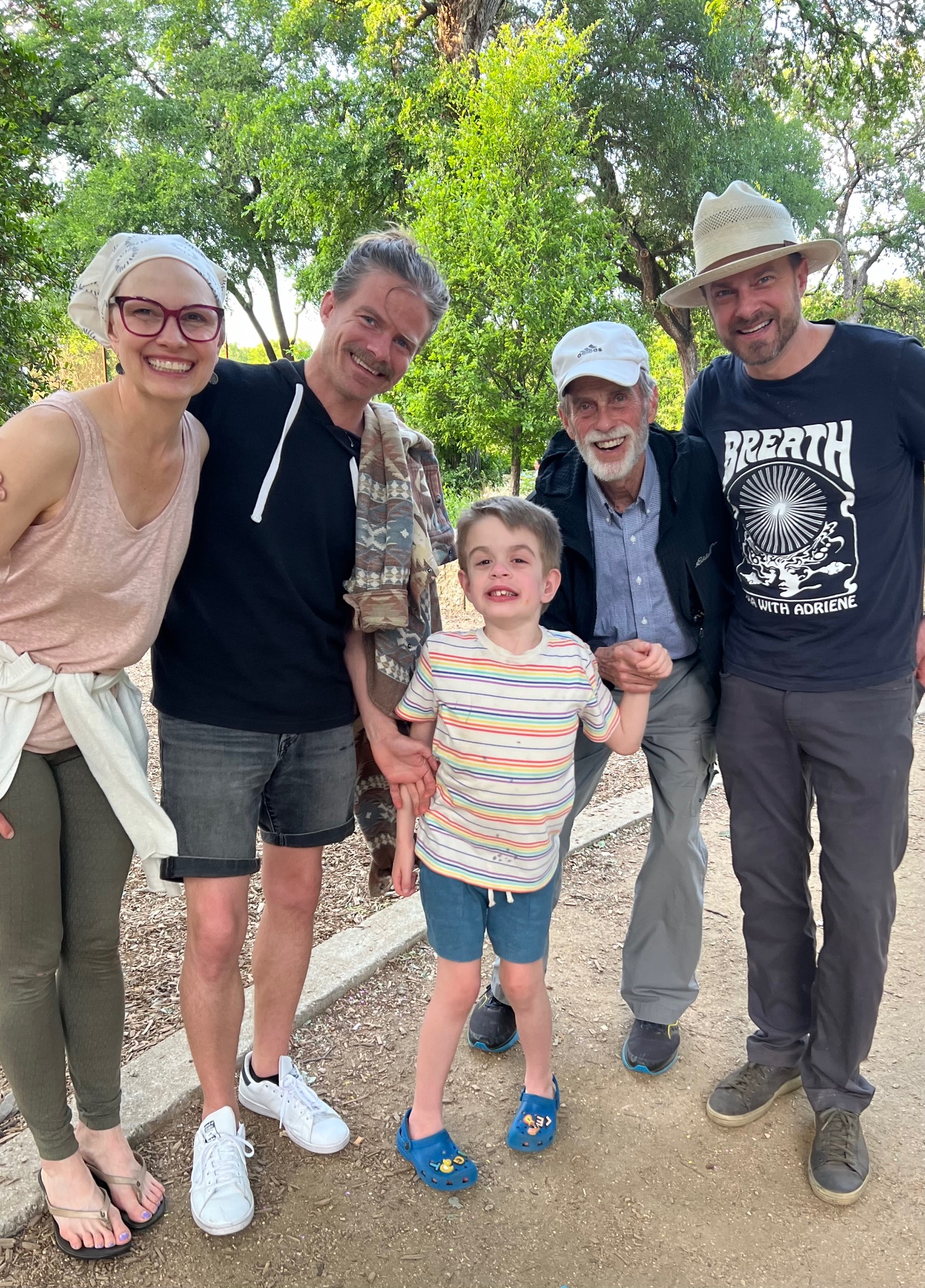
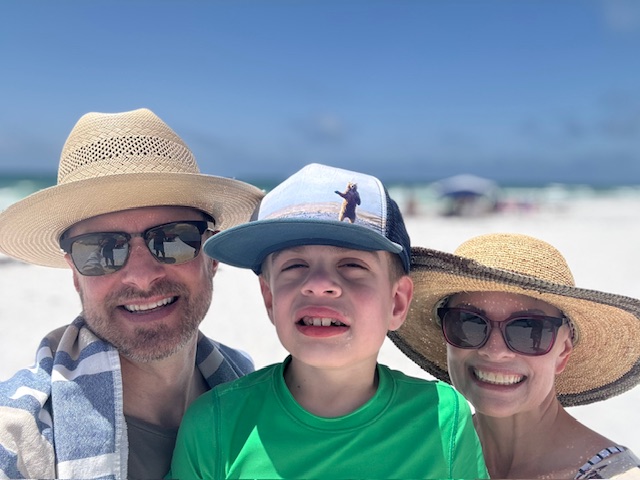
The family, now based in Austin, Texas, still comes to Toledo for at least six weeks out of the year to see family.

Gorniak said their family is blessed to have a one-parent income and still be able to care for their son at home.

“Fortunately, my husband’s income can afford me to be to Simon’s primary caregiver,” she said. “The role I have, how expensive it would be to hire someone to take Simon to all these medical appointments…He’s 100 percent dependent on us.

“Looking at him, if you didn’t know he had this condition, you wouldn’t think about it,” she said. “He has a great smile, engaging eye contact … Unless he’s in significant pain, he’s a happy guy. We do everything we can to maintain his skills or anything he can do independently. We want to maintain that, as well as his dignity, with the absolute hope that as research catches up to the condition, it can hold him where he is, if not regain some aspects he has lost over the years.”

One painful aspect of Sanfilippo Syndrome is the fact that the disease is genetic, meaning it can be passed down from generation to generation. Gorniak and her husband did not realize this until their son was diagnosed and they were tested.

“We are carriers of the condition, a genetic condition, but we didn’t know that,” Gorniak said. “We had no symptoms that showed we were carriers of the condition; the chance of having a child that has Sanfilippo Syndrome, when both parents are carriers, is only 25 percent.”

Sanfilippo Type B fundraising deadline is Dec. 1

Alina Gorniak and Jeremy Croke, along with several other families across the country who have children with Sanfilippo Syndrome Type B, are part of a fundraising effort to reach a goal of $3.8 million that would go to fund the production of the tralesinidase alfa, an investigational enzyme replacement therapy.

The fundraising effort ends Dec. 1.

“We’re not naive that there’s going to be anything miraculous,” Gorniak said. “This is a treatment, not a cure. This is the best thing available and it is proving to be safe and effective in phase 1 and 2 clinical trials for enzyme replacement.”

“Simon has been waiting nine years – his entire life – for FDA approval for treatment. This program is within reach. We are so close to our $3.8 million goal to reach by the end of the month. We only need $600,000 to reach that goal.”

Gorniak said as many as 14 children would receive treatment if the five-week fundraising goal is reached.

“If we do not make the deadline, the biopharmaceutical company won’t have the funds to help 14 kids, so the money will be held for some some future opportunity,” Gorniak said. “I am so optimistic we will make this goal. I don’t forsee that this is not going to be an option for us. I just feel we are going to hit our goal.”

Anyone wishing to donate to the fundraiser can go online to HelpSimon.com, which leads to a Go Fund Me page. Donations are tax deductible.

Lamar Advertising Company, which has offices in Toledo, is donating five billboard advertisements around Toledo for the fundraising effort. Gorniak said Lamar has also put up billboards in Austin, New York, Pennsylvania and Louisiana.

“Lamar has been so generous and amazing for us and other parents around the country,” Gorniak said.

To learn more about Sanfilippo Syndrome visit curesanfilippofoundation.org.

Celebrating a Wild Turkey Day

0
These big gobblers were photographed in January strutting their stuff in Oak Openings. (Photo by Metroparks Toledo nature photographer Art Weber)

Wild turkeys are big beautiful birds, and they are also our largest upland bird. It wasn’t so long ago that there were no turkeys in Northwest Ohio. They disappeared from Ohio over 100 years ago, but have made a comeback thanks to an aggressive Ohio Division of Wildlife effort to reintroduce them. They’ve thrived locally since they were reintroduced in Oak Openings Preserve Metropark in 2000.

Look for them in Metroparks Toledo, especially the Oak Openings Region.

Jon Richardson: 33rd rector of Trinity Episcopal Church

0
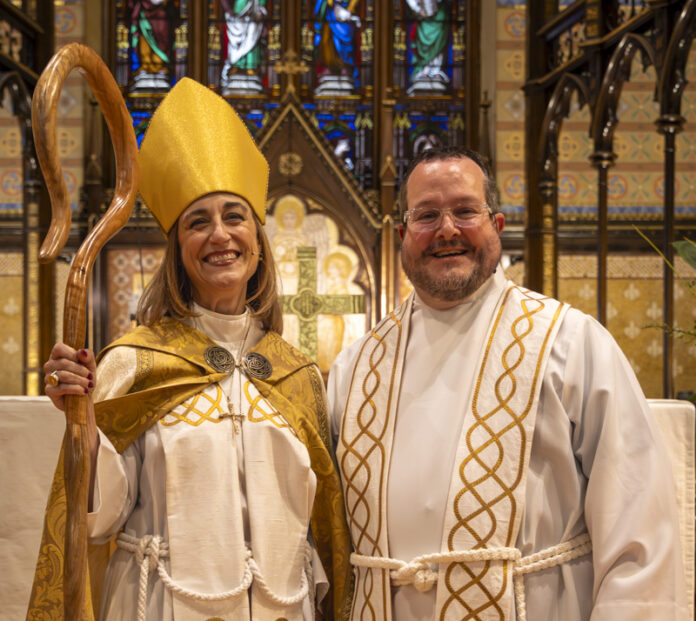
Bishop Anne B. Jolly installed Jon M. Richardson as the 33rd rector of Trinity Episcopal Church (TFP photo by Gaven Hafner)

TOLEDO– Trinity Episcopal Church marked a historic moment for the 183-year-old church. On Nov. 8, faith leaders and the local community gathered for the formal installation of the Rev. Jon M. Richardson as the church’s 33rd rector. The celebration, rooted in long standing Episcopal tradition, served as both a milestone for the congregation and a reflection of the church’s identity of being progressive and inclusive.

The installation marks a new chapter in the church’s long and evolving history. From 2018 to 2023, the congregation was led by the Rev. Dr. Lisa Tucker-Grey, whose departure left a significant transition ahead.

“When our previous priest left, they [the bishop’s office] were very tuned into this and wanted to make sure that we weren’t essentially a ship without a captain,” said Trinity’s operations manager, Heather Meyer.

To guide the parish through that period, the Rev. Dr. Stephen H. Applegate served as interim priest from 2023 to 2025, providing stability and leadership until a permanent rector could be appointed. “He transitioned everything beautifully for Jon,” Meyer said.

(TFP photo by Gaven Hafner)

Richardson, who began his ministry at Trinity on Mar. 16, explained the significance of the ceremony.

“It is the tradition in the Episcopal Church when a priest begins a new ministry that the congregation celebrates their ministry, and particularly as it relates to having a new priest, the bishop will be present… One of the roles of the service is that she officially makes me the rector, he said. Though symbolic, the service carried weight by involving nearly 70 participants, from clergy and bishop Anne B. Jolly to musicians and choir members.

Richardson explains the Episcopal Church as “reformed Catholic,” noting that it is “very much like our Roman Catholic siblings, but we are independent and autonomous.” He adds that Episcopal dioceses are “sort of like regions,” led by bishops who are “elected by the congregations.”

Music, a defining element of Trinity’s culture, played a prominent role in the celebration. Before the event, Richardson said the program would include “all kinds of really fun things, not limiting ourselves to sacred music. We find the sacred in the secular, and we’re gonna have all kinds of music, from old fashioned hymns to a song by Jewel.”

Meyer, who has been with the church for seven years, noted that this eclectic musical identity is nothing new. “Music has always been such an incredible pillar here at Trinity… and it’s something that Trinity’s been known for,” she said.

Rev. Jon M. Richardson and Bishop Anne B. Jolly pray (TFP photo by Gaven Hafner)

Founded in 1842, Trinity Episcopal Church has long been a part of downtown’s architecture. Even during decades of urban decline, the congregation chose not to relocate.

“Back in the ’70s, the congregation had to make some tough choices as to whether they wanted to stay downtown… and they took a vote, and it was a unanimous vote that they were going nowhere,” Meyer said.

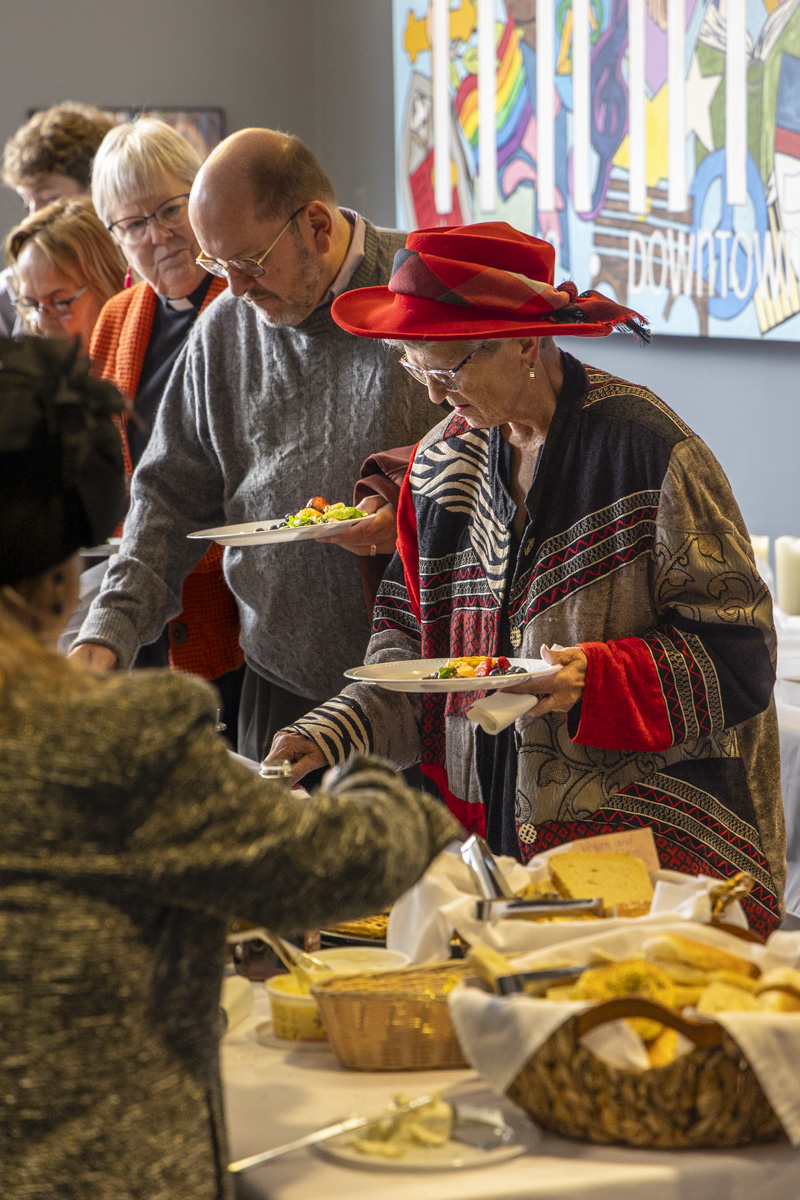
Today, much of the church’s energy centers on community and outreach. After the events ceremony, the church provided food and refreshments. Every Sunday, Trinity serves a hot breakfast to anyone in need.

“We’re averaging, I want to say, about 95 people a week. There’s no strings attached. You don’t have to come to church,” Meyer said. 

Even more important than the meal, Meyer noted, is the dignity offered through personal connection. “We ask them their name… And so when somebody comes back, the ability to be able to call them by their first name….it may be some of the only interaction some folks get in a given time,” Meyer said.

After the ceremony the congregation enjoyed a meal to celebrate the momentous occasion. (TFP photo by Gaven Hafner)

For Richardson, one of the congregation’s most meaningful strengths is the diversity within worship itself. “One of the things I get most excited about is when we welcome our less secure neighbors in worship… I love the diversity that shows,” he said.

Trinity collaborates with several organizations, including Toledo Streets Newspaper, Actors Collaborative Toledo, Food for Thought pantry, and local artists and musicians who use the space for performances. 

Richardson’s path to Trinity began with a search for a community that reflected his values. He recalled first reading the church’s profile. “The first words I saw were progressive, inclusive, creative…and I was like, ‘Ah, these are my people. This is who I should be with.’”

With the Rev. Jon M. Richardson now officially in place as the new rector, Trinity Episcopal Church enters its next era.

Toledo Refining Company’s commitment to fighting food insecurity

0
(Photo by Doug Hinebaugh)

During the monthly Food for Thought pantry distribution, Toledo Refining Company (TRC) announced a $50,000 commitment to four local organizations to help fight against food insecurity.

“We know our neighbors here in East Toledo and Oregon alike face food insecurity daily,” said Erica Halada, the community relations advisor for Toledo Refining Company. But that was before the holidays, before the government shutdown. “We knew by talking to our partners…all of those who serve the community in that way have really been emphasizing that need.” 

“And so we, as a company, decided that this was something we had to do for our neighbors in addressing that [food insecurity],” she said. “And a $50,000 investment came out of that conversation.”

(Photo by Doug Hinebaugh)

Monetary assistance was given to four organizations: Oregon Senior Center, East Toledo Senior Center, ProMedica Bay Park Hospital’s Food Clinic, and Helping Hands of St. Louis.

“TRC’s recent commitment to us and the other local organizations shows that they are in the community. It is not just about the donation; it is truly about making a difference for the families that we serve on a daily basis,” said Jodi Gross, the executive director for the East Toledo Family Center.

The donations affect the 43605 and 43616 area codes, Northwood and Oregon, Ohio. 

Gross confirmed the rising challenges facing the area. “We have seen an increase in serving our families; this funding will allow us to meet the needs.”

ProMedica Bay Park Hospital’s President Matt Hammond also weighed in on food insecurity as reported by The Sojourner’s Truth. “Access to healthy food is as important as access to medication,” Hammond said. “Food insecurity is not just a social issue; it is a health issue.”

One day shy of a week after this commitment was made, the federal government shutdown ended on Nov. 12.

In a public statement recorded on WTOL 11 Scott Hayes, the director of Midwest government relations and strategic communications for PBF Energy, the overarching company for TRC, said of food insecurity, “It’s not just happening some other place, it’s happening right here, and we’re all just a few paychecks away from food insecurity.”

In an Instagram post, the City of Oregon, Ohio @oregonohio thanked both Hayes and Halada for their community support. 

“It’s one thing to say you care about the community. It’s another to show up the way this team does,” the post read, and then thanked the two representatives of TRC. 

Opinion: How virtual education helps Ohio’s military families 

0
Pexels photo by August de Richelieu

Every November, as the nation honors the service and sacrifice of its veterans and military families, it also serves as a reminder that the life of a military family is unlike most others. Frequent moves and deployments can disrupt friendships and routines. It can also affect academic continuity. 

Ohio Virtual Academy (OHVA) recognizes the unique challenges that come with being part of a military family, and we are proud to be designated as a Purple Star school for our commitment to supporting military-connected students. The Purple Star designation is awarded by the Ohio Department of Education and Workforce and recognizes schools that demonstrate a major commitment to students and families connected to the nation’s military. 

Adapting to military life starts with understanding 

Military families know what it means to adapt because their children have often attended multiple schools before high school. Many times, that also includes moving mid-year due to relocations or new assignments.  

Virtual education also provides students with a sense of consistency at a time when their lives may be filled with constant change. Instead of starting over at a new school every time their family receives new orders, the education they receive at OHVA moves with them.

Students can continue their classes, keep their routines, and stay connected to their teachers and classmates even if they relocate across the state or transition through temporary housing. This continuity helps reduce the academic and emotional disruptions that often come with frequent moves, giving military-connected students a stable learning environment no matter where they go. 

How OHVA honors service 

OHVA’s Purple Star recognition is also part of a broader culture of respect and appreciation. The school employs several veterans on its staff, and their experiences have helped shape the empathy and insight behind the program.  

Many of the staff who have served in the military frequently share their stories of sacrifice and what military life actually looks like. That perspective has helped the school better understand the need for stronger support.  

In addition, those veterans on staff also play a hands-on role in the school’s programming. For example, they often lead Veterans Day assemblies and speak directly to students about service, leadership and gratitude. That type of involvement helps bridge the gap between classroom lessons and lived experience. It also helps to inspire students to appreciate the values of commitment and community. 

Celebrating those who serve as well as those who aspire to 

Support at OHVA extends beyond current and former military families. The school celebrates students who plan to enter the armed forces through its “Wall of Honor.” By featuring this wall, OHVA highlights its commitment to recognizing students’ dedication to service and honoring their decision to pursue military careers. 

OHVA’s recognition of military service extends to other outreach projects run by the school. Each year, members of OHVA’s Middle School National Honor Society lead a service initiative to send hundreds of thank-you cards to veterans and active-duty servicemembers. A simple gesture like that really resonates deeply with those who receive the cards and is another way students learn the importance of giving back.  

A full circle of support 

OHVA’s Purple Star programming has evolved to embrace even more of the extended military community. It began as a resource for active-duty families, but now includes veterans, future servicemembers, and students recognized by the daughters of the American Revolution for their academic achievement and civic engagement.  

This full network of support is reflective of the school’s commitment to ensuring that every student feels seen, supported, and set up for success. For military families especially, that means helping them feel connected no matter where they are. 

As we celebrate National Veterans and Military Families Month, OHVA is proud of its commitment to those who serve and sacrifice for their country. By offering a flexible and stable virtual learning environment, military-connected students can learn, thrive, and succeed, from anywhere. 

Letter to the editor: A time for the greater good

0

I have always been fascinated by John Fitzgerald Kennedy’s 1961 inaugural address when he stated, “Ask not what your country can do for you, but what you can do for your country.”

Most historians agree this was President Kennedy’s call for Americans to do what is right for the greater good of country and community. His statement is compelling because it strongly suggests that individual Americans can and do make a significant difference in the cultural fabric of American society.

As a professor and researcher of leadership, I have had a career of exploring how to take words and translate them into actions. With that backdrop, for the past six months, I have done an informal survey of over 120 people from all walks of life asking them this important question: “What is your responsibility to make our community, and by extension our country, a better place?”

What started out as a philosophical question quickly turned into a very practical set of responses. Some were pretty obvious, while others really made me think because of their personal nature. Let’s open with “the big three do’s” mentioned by virtually everyone. 

  • Be an informed voter and take the time to vote. Yet, U.S. voter turnout for local elections hovers around 20 percent; off-year national elections 40 percent, and around 60 percent for presidential elections. Room for improvement as a society.
  • Pay your taxes (as painful as that might be). We all know taxes provide revenue for federal, local, and state governments to fund essential services that include highways, police, education, the justice system, social services, and national defense, among others. We all benefit from these manifold services that we could not efficiently provide for ourselves.
  • Know and obey the laws. Obeying the law ensures social order, protects individuals and property, and provides a framework for resolving disputes, preventing harm, and upholding fundamental rights. Obeying vehicular laws keeps our roads safer. When people obey the law, our country is a better place for everyone.

But then responses shifted from the “big picture” to our individual lives. 

  • Keep your marriage strong. Research shows that strong and stable marriages improve financial stability, physical/mental/emotional health, health in old age, overall longevity and healthier kids.
  • If you have children, intentionally nurture them. Research shows that the future of most societies is dictated by how well parents raise their children physically, emotionally, educationally and spiritually. Healthy children are our country’s future!
  • Practice common courtesy and be kind. Whether driving, shopping, out to eat, or in your home, common courtesy or being polite and respectful of others fosters a sense of mutual caring, cohesion, and well-being. Most people truly respect, need, and appreciate kindness, including grace or being given the benefit of doubt, which is more important today than ever. And it is free.
  • Help those less fortunate than yourself. Lending a helping hand to a neighbor or stranger in need or regularly volunteering to help others in our community are important/meaningful ways to share our time, talent, and treasure to serve others. This service makes the community stronger while providing us with great personal satisfaction.
  • Be neighborly to your neighbors. Being friendly, helpful, and respectful to those who live nearby creates a greater sense of community, neighborhood ownership, safety, and a willingness to look after each other. Friendliness is also free.
  • Respect diversity of opinion. Living in the information age, our society has become polarized and we have lost our ability to listen to each other and have respectful dialogue. To solve real problems and build real solutions requires open minds and meaningful discussion, whether at home, work, or in the community.
  • Don’t litter. Do recycle. These simple actions offer numerous environmental and social benefits, including reducing pollution, conserving natural resources, promoting a cleaner healthier environment, protecting property values and encouraging safety for everyone while requiring very little effort.

In the end, many would say that these “societal do’s” are simply common sense. But I would add if people collectively engaged in these individual activities their community would be a safer, friendlier, stronger, and more attractive place for people to live and work.

At your next family gathering, ask JKF’s question and see what you might learn. I am confident that you will have a very meaningful conversation benefiting not only the people in your circle, but also our community as a whole when we take action on these important practices.  We all have the wonderful power to be better doers.