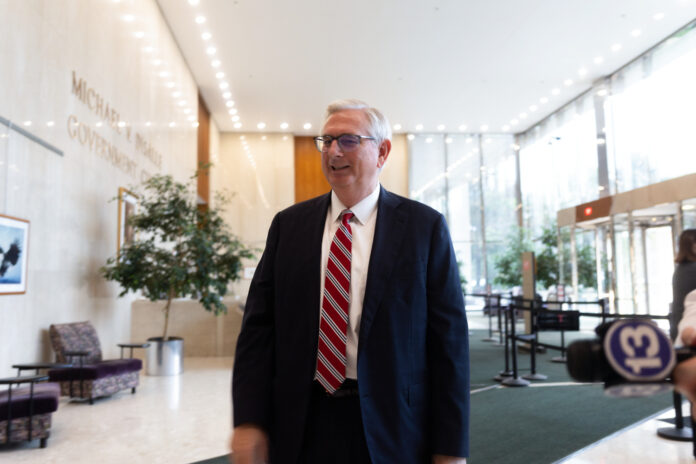
LUCAS COUNTY – “The old deal was 6.3 cents a kilowatt hour,” said Mark Frye, the president of Palmer Energy Company and the consultant for the Northwest Ohio Aggregation Coalition, pointing out the differences between electricity rates at a Lucas County Commissioners meeting on Oct. 7. “The new deal is at 9.75 [cents per kilowatt hour], so it’s about 3.3 cents.”
3.3 cents per kilowatt hour may not make a whole lot of sense on its face, but Frye explained that “an average customer uses about 9,000 kilowatt hours a year.” For the average customer, that extra 3.3 cents per kilowatt hour will turn into “$250 to $300 a year. So it’s not nothing. This is real.”
The “new deal” for the Northwest Ohio Aggregation Coalition is only for one year, while the previous deal spanned three years. Frye explained that the set rate was agreed upon at a good time, saving Lucas County and its residents roughly $70 million compared to the wholesale market rate. Unfortunately, he said, the deal securing that rate ended in May 2025.
Frye said the price jump was because of a number of conditions concerning the energy market and infrastructure, and pointed, in dressed down terms, to a stagnant market jolted by the new demand caused by artificial intelligence (AI).
“Artificial Intelligence is augmenting and will eventually create productivity, but the unfortunate reality is they’re also massive consumers of electricity, those data centers,” he said.
Over the past 18 years, Frye said there was about 3 percent growth in demand for electricity. Starting in 2023, data centers started to strain the electrical grid in the area, which had not needed to increase its capacity in a major way for over a decade.
That is no longer the case.
“A single data center, a large AI data center, will consume more electricity than the entire Lucas County would consume on an annualized basis…the refineries, the Jeep plant, everybody,” Frye said. “So think of it, you have one data center connected only to Davis-Besse [Nuclear Power Station], and it’s gonna’ take all of the electricity just from that power plant.”
New forms of renewable energy, like wind and solar power are on their way Frye said, but by their very nature are intermittent. “The wind isn’t always blowing, and the sun’s not always shining,” he said. On the other hand, the data center usage is 24/7.
According to Frye, the market did not anticipate how quickly the energy demand from AI became reality. Microsoft has paid $1.5 billion to restart Three Mile Island, a nuclear power plant in Pennsylvania, for their data center needs, and Frye anticipates the Palisades Nuclear Plant in Michigan to be up and running soon.
Coal, he said, was not a viable option due to the destruction of coal plants, and due to air pollution restraints. Realistically, Frye said the energy for data centers is likely to come from natural gas.
Because of this, he said companies building data centers are looking for areas along natural gas pipelines; Lucas County has many.
“Unless we are all willing to put our cellphones in a shredder…we are going to need to respond to this in a productive way,” he said. Regardless of where the data centers are built, the energy costs will affect Lucas County regionally and nationally, even if the centers are not specifically in Toledo, Maumee, or elsewhere in our region.
In the future, Frye expects the data centers to create their own power plants, but for the next 2-5 years, he told the Commissioners that electric costs will be more of a burden on consumers as infrastructure and the amount of electricity is strained.
Since the data centers will inevitably strain the electric infrastructure, incurring costs on everyone, Frye said it was probably a better option to get the creators of data centers to invest in the community via jobs by allowing companies to build data centers in Lucas County.
There are more minute details Frye went into with the limitations of the electrical grid, as it moves from a hub and spoke, centralized system, to more of a decentralized system, where renewables can easily connect. But overall, he said that for the next 10-15 years, consumers should expect to pay more for electricity than they have previously.
Lucas County Commissioner Pete Gerken summed up the presentation for those who get their power from the county, calling it a “perfect storm,” and saying they’re “waiting for the field to play out a little bit,” before signing a longer contract with electricity suppliers.
Gerken called the present time, a “waiting period,” and said, “I think your bills are going to be difficult for a while,” likening the current electricity market to high interest rates.
“The point is, it’s not the fault of the aggregator,” Gerken said, and Frye agreed with him as counsel for the aggregator.
Once again agreeing with Frye, Gerken said Lucas County should take advantage of data centers. “They’re here,” he said. “We should take advantage of it. They’re paying for this infrastructure.”
While construction jobs and a limited number of upkeep jobs will be created by data centers, there have been downsides in regards to environmental costs and strains on resources, specifically fresh water.
Toledo Mayor Wade Kapszukiewicz, does not believe data centers will pop up in the city of Toledo proper, because there is not enough space for what developers are requiring for those types of projects.
“There’s power lines here, there’s natural gas pipelines here, we’ve got lots of labor available, lots of great construction companies…we can build data centers up here,” Frye said about the region/county. Already there is a data center being built in Bowling Green, Ohio, and plans for one in Oregon, Ohio are being discussed.
In other County business:
Item 2. Commissioners proclaimed Oct. 9 Children’s Environmental Health Day.
Children’s Environmental Health (CEH) Day was created by the Children’s Environmental Health Network, and the proclamation was presented by Ben Pushka, an executive assistant to the Lucas County Commissioners.
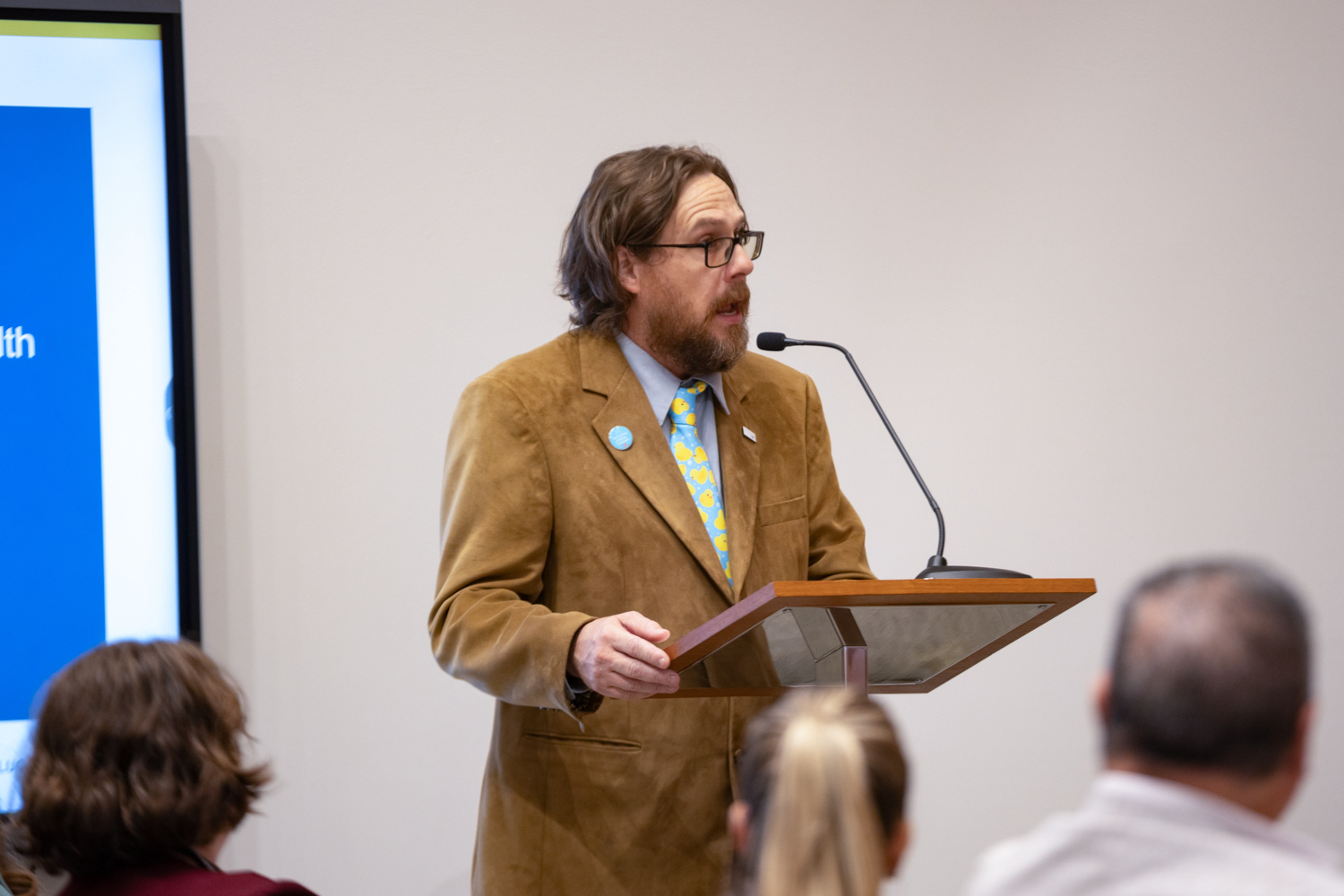
The day is meant to highlight the vulnerability of children to an array of toxic materials from lead paint to plastics. Included with the commissioner’s proclamation/resolution were a few informational handouts provided by Toledo-Lucas County.
Item 3. Permission to Accept Cost of Living Increase to Community Corrections Act
Ashley Richardson, the director of the Lucas County Adult Probation Department, asked for permission to receive a grant for $249,834 more than the county generally receives from the Ohio Department of Rehabilitation and Correction. The total amount of the grant was $3,643,122.
Richardson said this was the first cost of living increase the county had received for these funds in about 20 years.
Item 4. Title: Acceptance of Funds from Ohio Secretary of State, Frank LaRose, 2025 Voter
Registration Data Integrity Grant in the Amount of $4300 to Cover Expenses Associated with Implementation of Directive 2025-52
The acceptance of these funds was approved.
Lavera Scott, the director of the Lucas County Board of Elections, said the funding would cover the implementation of new software to secure elections in Lucas County, and that an additional $12,000 would be needed to complete the full security protocol required by the state.
These updates, passed in 2023, require the board of elections to link with the Department of Homeland Security, the Social Security Administration and the Bureau of Motor Vehicles.
Item 5. The county renewed their $56,701.70 contract with EverBridge, which provides the countywide emergency notification system.
Item 6. The county approved the Biennial Prevention, Retention and Contingency (PRC) Plan beginning Oct. 1, 2025 for Lucas County Department of Job & Family Services.
The contracts and services in the plan must be individually approved by the Lucas County Commissioners, but the approved plan provides an outline of services provided to the state.
Item 7. September Then and Now Certificates were approved.
A list of various day-to-day charges associated with running the county for the month of September.
Item 8. Approved “Increase Super Blanket Purchase Orders”
Similar to item 7, item 8 requires that “…expenditures requests meet one or more of the required categories of accountant, architect, attorney at law, physician, professional engineer, construction project manager, consultant, surveyor, or appraiser by or on behalf of the subdivision or contracting authority; fuel oil, gasoline, food items, roadway materials, and utilities; and any purchases exempt from competitive bidding under section 125.04 of the Revised Code…”
Item 9. Approved the Adoption of the 2025-2029 Ohio Workforce Area #9 (Lucas County) Workforce Development Strategic Plan Adopted by the Lucas County Workforce Development Board on Aug. 20, 2025.
Item 10
The Coroner’s Office presented their budget before the commissioners, and asked for a 2.59 percent increase to their budget, roughly an additional $85,000. The county budget director noted that the Coroner’s Office is projected to be slightly under budget this year.
Tom Blomquist, the Lucas County Coroner, said he tried to keep things as flat as possible, as per the request from the commissioners.