Home Blog Page 30

Mayor shares “Waterville Forward” message

0
Waterville Mayor Tim Pedro delivered his state of the city address during the Jan. 20 Waterville Area Chamber of Commerce meeting. (AWFP photo by Karen Gerhardinger)

A new Meijer store, an expanded business park, a financing mechanism to improve downtown, and the Anthony Wayne area’s only official America 250 celebration – these are just a few of the projects that are moving “Waterville Forward,” to borrow the theme of Mayor Tim Pedro‘s state of the city address.

“The state of our city is strong, and I look forward to a new year, which brings the change for new goals, new hopes and new opportunities – to forget about the negativities and think about the positives for a more prosperous Waterville in 2026,” he told Waterville Area Chamber of Commerce members during a Jan. 20 luncheon.

The most long-awaited project is Meijer, which purchased 25 acres on the southwest corner of Pray Boulevard and S.R. 64 in 2014. The 160,000-square-foot retail store will have a 3,600-square-foot gas station and convenience store, along with two out lots. Site work is under way, and the store is slated to open by early 2027, according to Meijer External Communications Manager Erin Cataldo

Site work is underway for construction of a 160,000-square-foot Meijer store on Pray Boulevard.

“The Meijer project will bring some buzz to that corner. We’ve already heard from some developers who have commercial projects they’re looking to place there,” Pedro said. “This represents an investment in Waterville of well over $32 million.”

While Meijer is in the spotlight, it’s not the only project in the Waterville Landing area. Plans call for a 538-unit self-storage facility to the west of Steedman Apartments. Mercy Health and Huntzinger, a dental practice, both own land along N. Pray Boulevard, but no plans are yet in place to begin work on those sites.

Residential growth in Villages at Waterville Landing continues to be steady, with 44 lots available in Fiddler’s Green Plats 3 and 4, said City Administrator Jon Gochenour. The city typically sees an average of 30 new homes built each year; last year that dipped to 25.

“Hopefully the housing market stays strong and we continue to see new housing,” Gochenour said.

While Waterville has been predominantly a bedroom community, the city now receives 76 percent of its income tax revenue from non-residential taxpayers, such as commercial and industrial.

“This positive trend continues to validate the city’s efforts to grow and diversify our tax base by adding jobs and investment through responsible, balanced investment,” Pedro said.

Several projects are underway to spur that business growth, including an expansion to Farnsworth Business Park. Kaufman Engineered Systems, a designer and manufacturer of production line automation equipment, is completing a 52,000-square-foot addition to its existing 66,000-square-foot facility on Waterville Monclova Road – an investment that will add $1 million in payroll with 16 new full-time jobs to a current staff of over 160. This includes research and design engineers and sales and production associates.
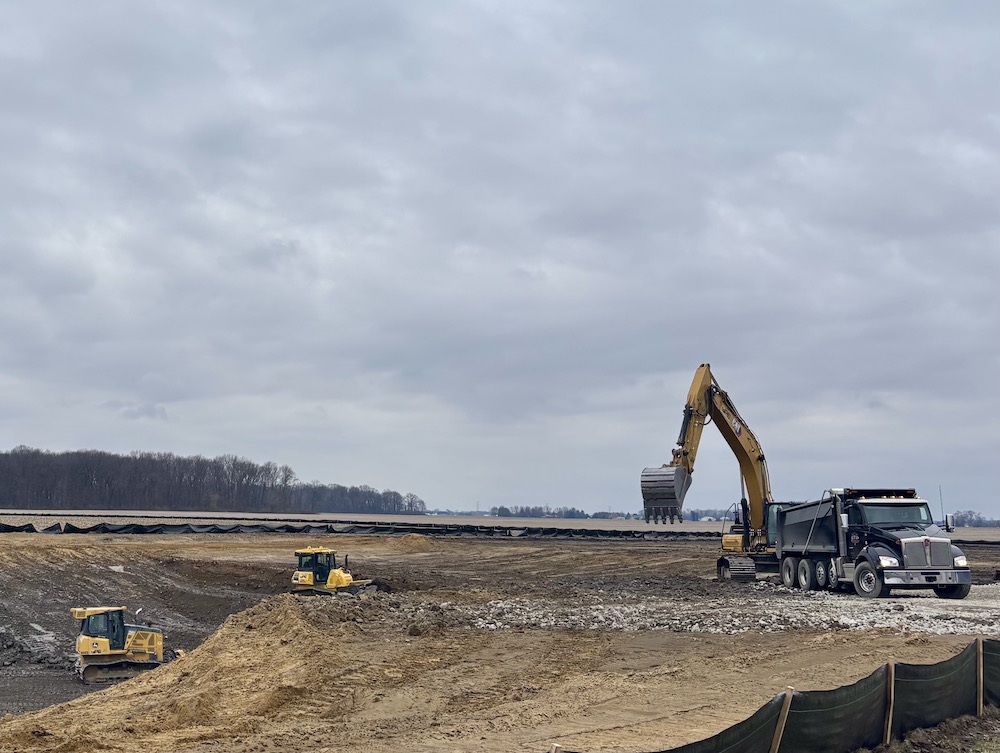
Site work on an expanded Farnsworth Industrial Park began last month. A 1,100-foot road extension will provide access to the 48-acre property, which the Toledo Lucas County Port Authority is marketing to potential industrial and manufacturing operations. (AWFP photo by Karen Gerhardinger)

Those are the types of employees that the Toledo Lucas County Port Authority is looking to attract as it invests $2 million into the construction of an 1,800-foot roadway to access the 48 acres it purchased just to the west of the existing Farnsworth Business Park.

Pedro was familiar with the Port’s success in redeveloping the former Overland industrial site, which now has several businesses and over 1,000 new jobs, said Joe Cappel, vice president of business development for the Port Authority. 

The Port obtained a $1.2 million grant from the Ohio Department of Development to work on the road and utilities, prepping the site to allow the existing Waterville Monclova Road businesses to expand to the west, or to welcome new entities. The site is flexible enough to divide up as needed. The Port is working with Regional Growth Partnership and Jobs Ohio to market the sites, such as a food manufacturing facility that recently showed interest. 

“A major advantage of working with the Port Authority is we can provide a turnkey solution for the end user – not only offering land for sale or lease but providing financing for construction of the building itself,” Cappel said, noting that the Port has a variety of programs to help companies save on materials, pay for construction, or finance equipment.

Browning Masonic Community CEO Scott Buchanan, City Administrator Jon Gochenour and Vice Mayor Todd Borowski chat during the Jan. 20 chamber meeting. (AWFP photo by Karen Gerhardinger)

“We’re aiming for companies that create great-paying jobs. We will make sure that they are projects that fit well within the environment,” he said, adding that any proposed project would come before city council and the residents before being approved.

Another opportunity for business expansion is the Riverbend Flex-Industrial Park, on Choctaw Drive behind Duvall Woodworking. Last year, the city approved replatting the 17-acre property for the developer to divide into seven lots for light industrial and commercial uses. Site work and a new entryway were completed last year.

Further south on Choctaw, the city owns over 100 acres that it at one point thought about rezoning for light industrial, but neighbors in Bridgehampton and Waterville Meadows opposed the change. Instead, Gochenour sees the land being used for residential and possibly recreational space under the power lines.

The downtown area will see some improvements in the coming years as well. Last summer, the city paid $750,000 to purchase the gas station at the southwest corner of the Anthony Wayne Trail and Farnsworth Road, and is waiting to hear the result of a $428,000 Department of Development grant that would cover the cost of remediating the site. That would include removing the gas tanks, piping, canopy and the 65-year-old building.

“We’ve also talked to the owners of the Valero station,” Gochenour said, referring to the vacant gas station at the Trail and Mechanic Street. “We view this as a reinvestment in downtown and the city’s desire to encourage other property owners to redevelop their properties.”

The city has worked for years to launch a Downtown Redevelopment District (DRD) to generate funds that will go back into grants or loans for downtown property owners to improve their buildings. The state finally approved that plan last year.

Similar to Tax Increment Financing, the DRD will take the increased amount of taxes paid as property values increase due to improvements, and invest that into a fund for those loans and grants. Normally those funds would go to the county and some levies –  although Gochenour pointed out that the schools and some entities, like the county board of developmental disabilities, will still receive funds based on the increased value.

“This is dedicated revenue that can only be spent in the downtown area,” Gochenour said, explaining that historical properties are eligible for a grant while non-historic properties can apply for a low-interest loan. These funds will be used for facade improvement, handicap accessibility, roof repairs, window replacements and other enhancements.

Waterville Animal Group owner, Dr. Theresa VonAlmen, plans to utilize funds through a Downtown Redevelopment District to put a new roof on the building that houses her growing veterinary practice and The Dazzled Dog. Pictured are (from left) VonAlmen, Clinical Administrator Olivia Contat and registered veterinary technicians Kylee Drewes and Cody Koch. (AWFP photo by Karen Gerhardinger)

Dr. Theresa VonAlmen, who opened Waterville Animal Group (WAG) at 210 Farnsworth last March, is looking into using the funds to replace the roof on the veterinary practice. The Dr. W. Suter Building was constructed in 1937 for a doctor’s office and a post office. After purchasing the building in 2024, VonAlmen refurbished the interior and freshened up the landscape, but plans to replace the roof and siding.

“I want it to look as cute on the outside as it does inside,” VonAlmen said.

So she’s looking into using DRD funds, as well as Toledo-Lucas County Port Authority PACE (Property Assessed Clean Energy) funding.

“Grants are really helpful. Those are big projects with big dollars,” she said.

Up the hill, the Waterville Historical Society and the city applied for a grant to pave the parking lot to the circa 1881 Wakeman Hall, in order to provide easier access to visitors to the exhibitions, events and archival research center. It will also add more parking for downtown events like Oliver Hazard Day, the Roche de Boeuf Festival and outdoor concerts, Pedro said.

Also within the city limits are two other projects taking advantage of existing spaces. In 2025, Seagate Plastics purchased the former Crum Manufacturing building and adjacent land to renovate and utilize. And Family Dollar purchased the old Rite Aid building at the southwest corner of Michigan and Waterville Monclova.

“It’s probably not what everyone hoped for, but it’s filling up a vacant building and bringing it on the tax rolls,” Gochenour said. “It will be well-used, and it’s a good location.”

Like other communities in the area, Waterville doesn’t have a lot of newer, vacant commercial space, and ever fewer spaces for industrial use.

When J&R Contracting was looking for a new home in 2015, it took over the original Kroger store in Waterville Plaza – filling a space that some worried would be vacant for too long. In 2023, J&R sold to BluSky, a national fire and water damage restoration company. In the two years since, BluSky has exceeded expectations, said Vice President Tom Peternel.
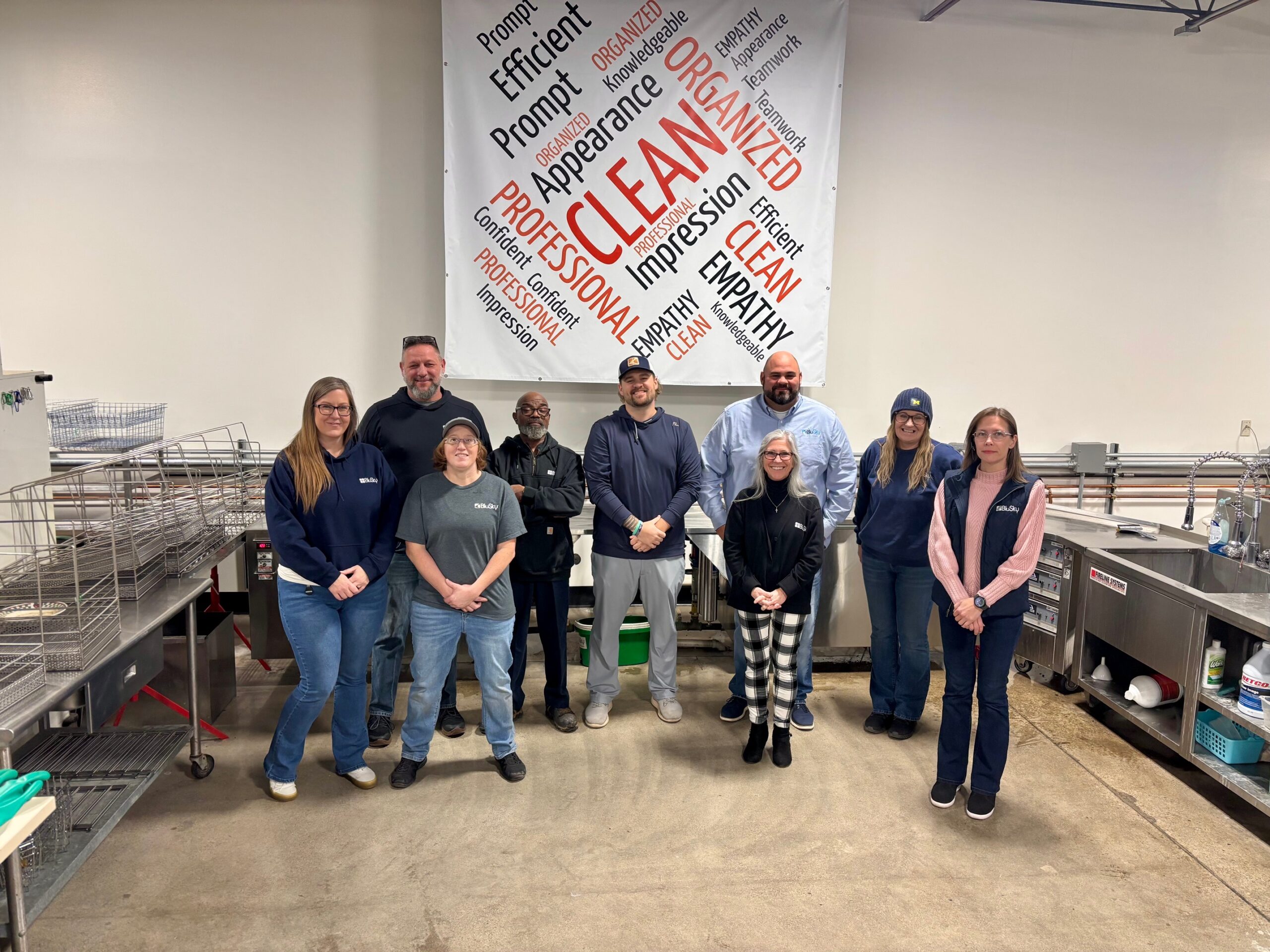
BluSky restoration in Waterville Plaza has grown to 50 full time employees. (AWFP photo by Karen Gerhardinger)

“We’ve exceeded every sales and revenue goal and added to our headcount,” he said, noting that the full-time staff has increased from 30 to 50. In addition, the company uses temps and contractors such as electricians and drywallers, who arrive at the headquarters daily.

Based on anonymous employee surveys, BluSky has been named a top workplace by The Blade and received a Better Business Bureau Torch Award as a great place to work.

“People are valued here. We try to keep it a friendly culture,” Peternel said.

BluSky recently expanded its marketing team to include Chad Hunt and Brittany Bostdorff. Along with Peternel and five project managers, he expects the business to continue growing.

“We love the location, but unfortunately we’re outgrowing it already, and have been for a year,” Peternel said. To make space, they’re renting a storage building in Waterville.

Making Waterville a destination for businesses, residents and visitors is an ongoing goal, Pedro said. Consulting the newly-updated Comprehensive Community Plan, the city continues to prioritize improvements and maximize grants.

A grant is covering the cost of a project to widen Waterville Monclova Road between Pray Boulevard and Michigan Avenue to three lanes, along with extending a multi-use path. Funds are also available to assist with a $100,000 sidewalk replacement project. 

Meijer is paying to extend turn lanes along S.R. 64, as well as to install a light at the eastbound U.S. 24 ramp before opening next year. The city is also investing in services, including police and fire equipment, as well as enhancements to parks. Plans continue to move forward to build an inclusive playground in the city. 

Pedro spoke of the relationships the city has with organizations like the Anthony Wayne Rotary Club, the Waterville Area Chamber of Commerce, the Waterville Historical Society, Waterville Community Foundation and churches, as well as regional groups like the Port Authority, Ohio Department of Transportation and the Lucas County Land Bank. All come together to improve life in Waterville, he noted.

The Anthony Wayne Area Arts Commission, with a grant from the Waterville Community Foundation, has hired muralist Dean Davis to paint an 18-foot by 80-foot mural on the wall of 217 Mechanic St. – welcoming motorists entering town from across the river. The AWAAC is also looking at installing three kinetic wind structures in Parker Square.

Parker Square. (AWFP photo by Karen Gerhardinger)

As Waterville grows within its boundaries, Pedro and Gochenour also spoke about strengthening relationship with nearby communities, including Whitehouse, Waterville Township. Monclova Township and Maumee, to work on improving the area for residents and visitors alike. Already, that cooperation has benefitted the three communities of Whitehouse, Waterville and Waterville Township in the form of the W3 fire co-op and the Fallen Timbers Union Cemetery District, Gochenour noted. 

This summer, the city expects to see an increase in visitors from the AW area as Waterville hosts an America 250 celebration that will include cultural events, kids activities, music, a speakers series, Fallen Timbers Battlefield tours and numerous 250-year themed events hosted by the Library, AWAAC, chamber and Waterville Primary School.

Toledo area mental health services threatened with funding cuts

0
Pexels photo by Vitaly Gariev

Coping with on-again, off-again federal funding

The whole chaotic mess was over in two days. But it threatened the consistency and security of critical services across the nation (and here in northwest Ohio), forcing social service agencies to rethink the basics of how they’re funded.

The first letter arrived very late on Jan. 13 without warning and with no explanation of what led up to it or what its repercussions might be. The federal Substance Abuse and Mental Health Services Administration (SAMHSA), an agency within the Department of Health and Human Services, cancelled up to 2,000 grants nationwide (valued at more than $2 billion) to mental health and drug addiction program providers, representing as much as a quarter of SAMHSA’s annual budget. Termination letters sent to nonprofits indicated the grants “no longer align” with the Trump administration’s priorities and would no longer be funded, effective immediately.

Deacon Dzierawski, President, Epiphany Community Services. (Courtesy photo)

The SAMHSA program cuts represented almost $1.7 million in funding for programs in northwest Ohio. “These cuts are at the heart of our mental health and substance abuse safety net,” explained Deacon Dzierzawski, president of Epiphany Community Services in Swanton. “Communities would lose effective, evidence-based programming that is critical in addressing mental health and substance abuse issues. And the way HHS (the U.S. Department of Health and Human Services) went about it was abhorrent. People will die because of this.”

Program cuts threatened all types of mental health and drug programs, including screening services, referral services, recovery houses and treatment programs. In addition to Epiphany Community Services (a national firm that helps communities to mitigate the local impact of mental illness and substance abuse), the cuts came to such local programs as Harbor, the Zeph Center and Sylvania Prevention Alliance

The Zepf Center’s CEO Deb Flores said the cuts would have a projected loss of approximately $1.2 million, and “would have a devastating impact.” The Sylvania Prevention Alliance would be losing its STOP (Sober Truth on Preventing Underage Drinking) Act Funding of $60,000 annually (with two years remaining) to curb underage drinking. 

Deb Flores, LSW, MPA, Chief Executive Officer, Zepf Center. (Courtesy photo)

“My first thought was to reach out to staff (three full-time and three part-time employees), telling them we’d continue our services and they’d be safe in their jobs,” explained Torri Daggett, executive director of Sylvania Prevention Alliance. “Next was reaching out to our funders and board members.”

The second letter came the next day (Jan. 14), announcing that “termination of the funding communicated Tuesday [Jan. 13] is hereby rescinded. Your award will remain active under its original terms and conditions.”

“The decision initially induced fear of what do we do when it happens again,” said Dzierzawski. “The role of government is to meet the needs of its citizens where they are – and be consistent in doing so. Right now, the government is not being consistent.”

Dzierzawski said that the grant programs targeted for SAMHSA cuts are multi-year commitments, typically lasting four to five years. Programs funded by the organization are granted based on the purpose, goals and aims of the funding agency (SAMHSA), and were approved after a peer review process.

Within hours of the announced cuts, providers nationwide mobilized, distributing information to supporters, media and the community. National and local organizations impacted by the decision made the broad impact of cuts known. “These cuts would have disrupted staffing, housing supports, community education, and access to mental health and substance use disorder services,” said Flores.

At Sylvania Prevention Alliance, staff began planning for which programs they would keep going and which they’d have to put aside for a bit. “It was a shock, but it kick-started us to thinking how we move forward,” said Daggett. “I’m very proud of how we reacted. I’m sure it has made us stronger.”

Long term impacts

But long-term considerations are a bit more intangible. Dzierzawski explained that funding is a three-legged stool, relying on local, state and federal funding that is consistent and reliable. “People expect these services to be there,” he said. “For us, communication is front and center all the time. We have to be better advocates for our consumers, relating the value and need to all the people, and how we are leveraging funding at all levels.”

Flores said, “We will continue to work with the local mental health board and state association to safeguard this vital care and ensure it remains available for the individuals and families who rely on it.”

Torri Daggett, OCPS, Executive Director, Sylvania Prevention Alliance. (Courtesy photo)

Once funding was secured, “you didn’t have to worry about whether you’d lose it. Now there is uncertainty moving forward, waiting for the ‘shoe to drop’ and losing our funding,” explained Daggett. She expects that nonprofit funding may change because of this, including more diversification, local fundraisers and relationships with local organizations. 

Dzierzawski is concerned about future efforts. “Could we be forcing providers into doing only the bare minimum of services?” he asked. “Could we be less apt to add programming that meets an emerging need, or more cautious to innovate?” Daggett is concerned about the workforce in the future too. “I hope it won’t stop anyone from building a career in this field,” she said.

“The level of uncertainty in the current federal administration should not be overlooked,” Dzierzawski said. “We can’t take what we were promised for granted.”

Wild Side: Happy Groundhog Day

0
Our groundhogs are still deep in hibernation, so they're not active right now and likely won't be for weeks. This photo by Art Weber, who is the nature photographer for Metroparks Toledo. This photo was taken in August several years ago.

Groundhog Day is a fun notion, as well as the title of an entertaining movie. It’s highly unlikely our wild groundhogs will see shadows because they’re still in hibernation. It will likely be weeks before they emerge from their burrows and take a look around.

Cartoons by Don Lee: It’s starting to feel normal

0
Cartoon by Don Lee

Wild Side: Best feed for wintering birds

0
A blue jay enjoying a peanut. (Photo by Art Weber, who is the nature photographer for Metroparks Toledo)

We bundle up for the bitter cold that sometimes comes to us in the depth of winter, or perhaps just stay indoors and avoid it altogether. Our winter wildlife has no choice but to face it head-on.

For those birds who have chosen to stay here and weather the cold, survival becomes a challenge, a challenge that grows exponentially when temperatures and wind chills plunge below zero. It’s times like these that the backyard feeding stations we enjoy become extra important to our active winter wildlife.

For those who put out a single feeder, the best seed to fill it is black oil-type sunflower seed, which is favored by the widest variety of species. Other excellent choices include thistle seed, suet, and roasted unsalted peanut pieces (or those in the shell).

Lucas County Sheriff’s Office: expenses and updates

0
Pete Gerken, Lucas County Commissioner, speaks on getting funding to the sheriff, inside the Lucas County Commissioners Hearing Room at 1 Government Center in Toledo on Tuesday, Jan. 27, 2026. (TFP photo by Stephen Zenner)

Four resolutions were passed in association with the Lucas County Sheriff’s Office during the Lucas County Commissioners meeting on Tuesday, Jan. 27

“The sheriff’s having a pretty good day at the commissioners’ today,” said Lucas County Commissioner Pete Gerken. “You have a car, you have a roof, you have a jail facilities assessment and you get money to do law enforcement in western County.” 

Commissioner Gerken may have misspoken, as the sheriff and other commissioners have spoken of appropriated money being used for Jerusalem Township, on the eastern side of the county. 

“Who said we can’t cooperate with the sheriff?” he said, end-capping his statements on the matter. 

Lucas County Commissioner Anita Lopez. (TFP photo by Stephen Zenner)

Commissioner Gerken pointed out resources going towards the Sheriff’s Office to juxtapose against last week’s meeting, where Gerken and his fellow Lucas County Commissioner, Anita Lopez, chose to rescind funding to the Sheriff’s Office from the Department of Homeland Security (DHS). 

This decision was made impromptu, during the last meeting, on Jan. 13, as Gerken railed against the behavior of Immigration and Customs Enforcement (ICE) during their heightened presence in Minneapolis, Minn. 

These statements were made in reaction to ICE agent Jonathan Ross shooting and killing 37-year-old Renee Good on a neighborhood street in Minnesota. 

Gerken ended his moral tirade on ICE by calling the DHS agency a “terrorist organization,” and then Gerken and Lopez voted to rescind a grant from DHS on the 13th.

This grant has been received by Lucas County for decades, and is in support of Operation Stonegarden (OPSG), with the stated objective of securing the border between Lucas County and Canada across Lake Erie.

Previously, Lucas County Sheriff Mike Navarre spoke out against rescinding the grant, stating that it was mainly used for overtime for deputies in Jerusalem Township, and didn’t bring federal agents into the area.

But on Tuesday, Gerken was happy to say the commissioners were able to “make the Sheriff whole,” by appropriating $68,250, the amount the sheriff would have received from the DHS grant, from the General Fund.

“I think the last 14 days have borne out that was probably a wise decision [not to take money from DHS],” Gerken said. 

Since the last commissioners’ meeting, tensions over ICE’s deployment to the Twin Cities have escalated. These escalations have included the detaining of 5-year-old Liam Ramos by ICE – drawing outrage – a large anti-ICE protest endorsed by labor leaders that some have called a general strike in Minneapolis on the Jan. 23, and then a second U.S. Citizen, Alex Pretti, being shot to death by DHS Agents on Jan. 24. 

Sheriff Navarre stood by his initial statements against rescinding the money, and called the move “illogical.” 

“Moving money from one pot to another pot doesn’t eliminate the fact that, that’s $68,000 that we won’t be getting from the [federal] government,” Navarre said. 

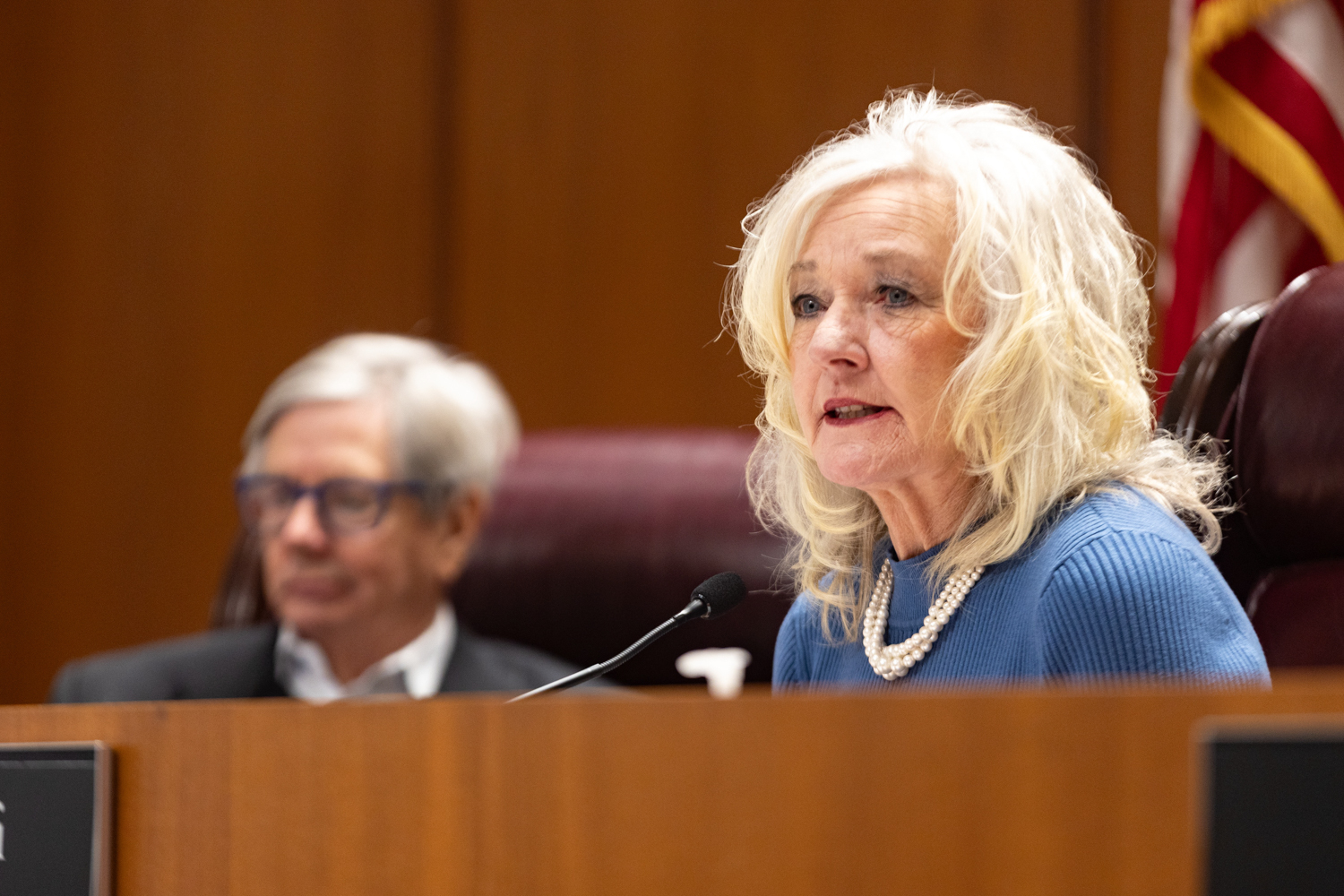
Lisa Sobecki, president of the board of Lucas County Commissioners, speaks on funding the sheriff. (TFP photo by Stephen Zenner)

All three commissioners spoke about what is happening in Minneapolis during the most recent meeting, with Lisa Sobecki, the only dissenting commissioner on rescinding the funding from DHS, calling what is happening in Minneapolis a “tragedy.”

After the meeting, Sobecki said, “We were able to come up with the resources available to be able to allow the the sheriff to do the mission out there in Jerusalem Township,” but did not speak on any objections to rescinding the funding from DHS. 

When asked about financial concerns for the appropriation, she pushed back on language that insinuated the $68,250 appropriation may contribute to a strain on county’s budget projections, and said she had talked with the sheriff about his needs.

Navarre mentioned this meeting was with Sobecki and Gerken before the funds were rescinded.

Gerken and Lopez spoke of the need to differentiate the County Sheriff’s Office from the actions of ICE, to uphold trust between county law enforcement and county citizens. 

Aggressive tactics used by DHS agents during the second Trump administration were condemned by Gerken and Lopez, with considerable concern specifically pointed at ICE agents’ recent and sweeping use of masks to hide their identity during their official capacity as federal agents. 

The funding measure to replace the OPSG grant passed unanimously among the commissioners, and Gerken made light of funds appropriated in scope of the entire General Fund. 

“Our General Fund is about $210 million a year,” he said. “I’m very confident; I’ve been doing budgets for 20 years in the county, I think we can find $68,000 in salary savings or cost benefit savings over the next year to do it.”

Appropriating the funds was worth it to Gerken, “not to get tangled up with a law enforcement that is acting inappropriately and un-American-ly,” he told press after the meeting, and pointed to the fact that DHS was not living up to the community standards in place in Lucas County, referencing the sheriff’s own Code of Conduct document signed by community organizations.

The Code of Conduct was signed by the Sheriff and other organizations in Toledo, most notably, FLOC, NAACP, Gerken himself, on behalf of the Lucas County Commissioners and the Northwest Ohio Peace Coalition. 

Referencing the code of conduct, Navarre mentioned that anyone taken into county custody would require an order by a judge to transfer them into ICE custody. 

Previously, Sheriff Navarre mentioned his duty to coordinate with ICE, and reaffirmed that during his communications with the federal agency, he has not been warned of an escalation of their presence in Lucas County. 

He then posed this question: “Is it better to be there and and keep the peace, while ICE officers do what they’ve been charged responsibly to do? Or is it better to sit back and wait for all hell to break loose and then respond?”

Explorer for Cherokee

Further business with the sheriff involved trading a 2023 Jeep Grand Cherokee for a 2026 Ford Explorer, and the Sheriff paying the difference, $28,285.00 (Agenda Item 6).

What drew attention to the replacement was the newer Jeep trade-in, as well as higher priced features on the Explorer like “Lux Leather Package” a line item feature costing $1,695 and BlueCruise, Ford’s automatic driving software, adding $2,495 to the total cost.

“The money did not come out of the county general fund,” Navarre said. “The money came out of the sheriff’s Furtherance of Justice fund (FOJ).” This fund is designated by Ohio Revised Code 325.071, is given to the sheriff from the county’s General Fund, to use in service to his duties as sheriff, and is equal to half his salary. 

After the meeting, commissioners did not push back on the purchase. Navarre mentioned he did not need the commissioners approval for the cost, but for trading in the Jeep, which was unanimously approved.

“Replace current vehicle,” was the reason written on the purchase request filled out by Sheriff Navarre. The Sheriff said he would not say anything bad about Jeep, and instead praised the company and vehicles. 

“I’ve driven Jeeps for at least 25 years, maybe longer,” Navarre said. “My personal vehicle is a Jeep.”

Navarre explained that the county didn’t have the budget this year for new vehicles for the Sheriff’s Office, so instead of buying a new vehicle outright, he traded the Jeep to lower the cost of buying a new vehicle. And then he used money from his FOJ fund to split the difference. 

“I wanted a nice out-of-town vehicle,” he said, and explained he travels to the Buckeye Sheriff’s State Association meetings every month, he goes to Columbus three or four times a year, he goes to statewide conferences, and employees go out of town for training in London, Ohio. 

In terms of the BlueCruise and leather he said, “BlueCruise is a nice safety feature, because it has an active lane management that keeps you in your lane. It makes for safer travels. As far as leather goes, I haven’t driven a car in 25 years that didn’t have leather seats. It’s just my personal preference.”

Jail updates

Agenda items 13 and 14 dealt with the Lucas County Corrections Center at 1622 Spielbusch Avenue. 

The former allowed the county to advertise for people to do the work of repairing the jail’s roof, with an estimated repair cost of $1.4 million, and Agenda Item 14 allowed the county to contract with DLZ Corporation to assess the jail facilities condition, with the assessment costing $58,500.00.

In reaction to Gerken’s comments about the sheriff getting a new roof and jail assessment, Navarre said, “This is a Lucas County building, and he’s not putting a roof on for me. He’s putting a roof on this building for the residents of Lucas County…it’s in serious disrepair, and we’ve had water infiltration for a number of years.

“If you don’t stop the water of infiltration, then it doesn’t make sense to tackle the other problems. So the DLZ group is going to come in, and they’re going to do a very thorough review on what is needed in terms of plumbing, electrical infrastructure.”

Letter to the editor: The hidden world of human trafficking in Ohio

0
Pexels photo by Tima Miroschnicher

Every year since 2010, the President of the United States has dedicated January as National Human Trafficking Prevention Month. In 2015, the Ohio Advisory Committee to the U.S. Commission on Civil Rights on which I serve issued a report on human trafficking in Ohio. The testimony of one particular human trafficking victim has haunted me ever since. Indeed, her heart-wrenching account touched me so deeply that I felt compelled to write a novel about the god-awful subject. That novel is The Trafficker, and it was published this month.

I chose to write a novel—a legal thriller, in terms of genre—rather than an academic book about human trafficking because I strongly believe that fiction can often educate in a more compelling fashion than nonfiction. To Kill a Mockingbird is the classic example of how fiction can teach. In the incisive words of historian Joseph Crespino, “In the twentieth century, To Kill a Mockingbird is probably the most widely read book dealing with race in America, and its main character, Atticus Finch, the most enduring fictional image of racial heroism.”

Although I am neither foolish enough nor arrogant enough to suggest that The Trafficker is a twenty-first century To Kill a Mockingbird, like Harper Lee before me, I wanted to reach people at an emotional level to wake them up; in my case, about the horrors of the hidden world of human trafficking. The novel is not graphic in the physical sense of that word, but it is upsetting as, unfortunately, it has to be.

The novel is set primarily in Toledo, Ohio, a city that I was shocked to learn during the Ohio Advisory Committee’s investigation is a hub for human trafficking. The story is told from three alternating points of view: that of Cameron Warren, a law professor appointed by a court to serve as the trafficked girl’s guardian ad litem; that of “Jane Doe,” the traumatized teen victim who refuses to reveal her name; and “the middle-aged man,” the anonymous trafficker after whom the novel is named.

Cameron Warren, a happily married man with three wonderful children, has dedicated his life to eradicating human trafficking. He went so far in his professional life as to draft, and help get enacted into law, a federal statute punishing human trafficking. In his personal life, he frequently volunteers as a court-appointed guardian ad litem to try to save one child at a time.

Jane Doe has grown up in an abusive family environment, as many trafficking victims have, and that has led her to a series of terrible choices from which she is trying to extricate herself. She does not trust anyone, including Cameron Warren, who has more than earned her trust.

Every legal thriller needs an antagonist, and “the middle-aged man” serves that role in The Trafficker. He is driven by money, as most traffickers are, especially the large sums of money that some depraved people are willing to pay for the so-called premium product, a thirteen- or fourteen-year-old girl.

Although The Trafficker is a work of fiction, it is based in fact: the Ohio Advisory Committee to the U.S. Commission on Civil Rights’s report on human trafficking, information provided by anti-trafficking groups and law enforcement officials, and material I discovered when researching the book like a January 2024 (National Human Trafficking Prevention Month) Rolling Stone article on the subject that a friend sent me.

Does the novel have a happy ending? I will leave it to readers to find out for themselves. In the meantime, I hope as many people as possible will take National Human Trafficking Prevention Month to heart and help end what the lawyer who chaired the Ohio Advisory Committee called “an insidious scourge unfolding inside seemingly ordinary homes and neighborhoods.”

Letter to the editor: Kudos to Coach Ryan Donley

0
Photo by Kevin Finnigan

The Anthony Wayne community is fortunate to have Ryan Donley as an educator and coach. His commitment to our youth extends far beyond the baseball diamond, and I felt compelled to share a recent experience that exemplifies his remarkable character.

During Winter Break, Coach Donley and his talented high school baseball players organized a youth baseball clinic. My 7-year-old son Beckett participated, and I volunteered to help. This was my first time meeting Coach Donley, and what I witnessed left a lasting impression.

From the moment I entered the gymnasium, I noticed something extraordinary about the high school athletes. They communicated with genuine mutual respect—not the performative kind that adults sometimes coach into kids, but the authentic variety that only develops when young people are led by someone who models it consistently. The athletes clearly respected their coach, and the respect Coach Donley showed his players was equally evident.

But what happened next truly amazed me.

Coach Donley commanded the attention of dozens of energetic 7- to 14-year-olds—a feat any parent or teacher knows borders on miraculous. Then I noticed he was calling each child by name. I initially assumed he must have known these kids or their families beforehand.

My assumption changed when I heard him shout across the gymnasium, “Hey, great contact there, Beckett!” I looked over. That was MY Beckett in the batting cage. They had met just once— an hour earlier during a brief check— in when dozens of other young athletes were simultaneously introducing themselves. No name tags. No clipboard. Just Coach Donley, greeting each child personally and apparently inscribing every name into his memory.

He did this throughout the clinic, addressing every single child by name.

A youth camp led by Coach Donley. (Photo by Russ Acino)

The impact was palpable. The kids stood taller. They listened more intently. They felt seen.
After the clinic, I approached Coach Donley to thank him. Before I could speak, he looked up and said, “Hey BJ! Thanks for helping out! How do you think we did?”

He remembered my name too.

When I asked how he managed to remember everyone, his response was refreshingly honest: he makes it a point to commit each person’s name to memory because it’s one small thing he can do to show respect and demonstrate that he truly listens.

That simple gesture speaks volumes about Coach Donley’s character as an educator, coach, community leader, and person.

Our community undoubtedly has countless other wonderful educators and mentors like Coach Donley. But this personal experience moved me to publicly recognize someone who is quietly making a profound difference in the lives of our children—one remembered name at a time.

We are lucky to have him.

Wild Side: Tufted titmouse in Oak Openings

0
This bird was photographed in the Oak Openings Region by Metroparks Toledo nature photographer Art Weber.

This tufted titmouse may look like its dreaming of warmer weather but it’s actually keeping a close eye on a hawk soaring overhead in search of a meal. It’s taking meals of black sunflower seeds offered at a wildlife feeding station in the Oak Openings Region.

It is amazing that a small songbird like this can survive the bitter cold we’ve experienced in recent days, but it’s well-adapted, provided it has adequate food and a tree cavity or similar cover for protection, especially overnight. This bird is fluffing its feathers, trapping a layer of warm air in its down, just as we do with a down jacket. Like many species, titmice will anticipate the winter by hiding seeds and nuts for food, though well-maintained backyard feeding stations can make an important difference, especially in the depths of winter.

Monclova students get a Kickstart

0
Sisters Savannah and Violet Oliva work with Kiki Amstutz to create a house. (AWFP photo by Karen Gerhardinger)

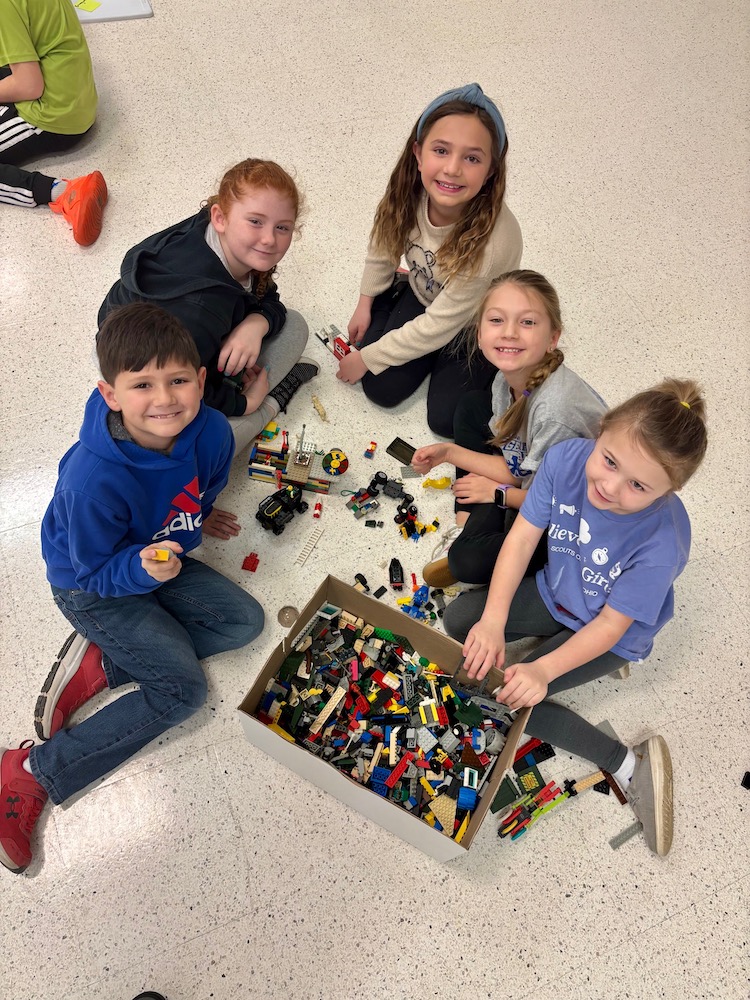
MONCLOVA – Sitting on the floor in Monclova Primary School’s community room, sisters Savannah and Violet Oliva collaborate with Kiki Amstutz to create a house with a swimming pool.

“This has a medical box,” said Violet, opening up a tiny cabinet to display a Lego block with a first aid sign.

“This is our swimming pool,” Kiki said, pointing to a line of Legos.

Nearby, Savannah Jackson, Tess Snyder, Janie Harrigan, Charleigh Flemming and Luna Crable construct a wall out of giant blocks. Cousins Ethan Bergner and Quinn Koch, along with siblings Jordan and Kylie Garcia, focus on building two houses.

While building with Legos is a favorite pastime for many students, getting together in free play before school is a rare occurrence – but one that provides multiple benefits, said fourth-grade teacher Brianne Black and intervention coach Rachel Birt.

Paraprofessional Kelli Kilpatrick watches as students construct with Legos. (AWFP photo by Karen Gerhardinger)

It was during a break in a water aerobics class last summer that the two educators came up with Kickstart, a once-a-month, before-school free play time. Black and Birt had each been reading The Anxious Generation, How the Great Rewiring of Childhood is Causing an Epidemic of Mental Illness, by Jonathan Haidt. The two began discussing ways to facilitate rewiring brains that have been increasingly reliant on using electronics. 

Birt, who helps out with the arrival of students each morning, noticed that often parents were in the parking lot at 8 a.m. waiting for the doors to open at 8:30 a.m. Parents often drop off older students at the Finzel Road campus and then head to the primary school to wait for the doors to open. It’s not unusual to see students using electronics to pass the time.

“The thought was, if we could get these kids out of their cars and doing something, then the parents could drop them off and go,” said Principal Betsey Murry.

Cousins Ethan Bergner and Quinn Koch join siblings Jordan and Kylie Garcia in play. (AWFP photo by Karen Gerhardinger)

The goal is to have students get their bodies moving while learning to socialize in an unstructured environment – whether on the playground or doing activities like December’s dance party or next month’s plans to color on giant butcher paper or posters. The staff members who volunteer take a hands-off approach, letting the students play in groups of their own choosing while ensuring their safety.

“This gives students unstructured time to play before learning in order to get the wiggles out or to get the neurons firing for the morning,” Birt said. “This way, they’re not coming in here zombified. They’re more engaged, and they’ve already had an opportunity to be social.”

Because of the structure during the regular school day, students are rarely able to play with students in different grades, or even other classes, Black noted. Often she sees siblings in different grades teaming up together or with other students to play during Kickstart.

Working together are (from left) Luca Catrera, Addison Farah, Vivian Schlageter, Faith and Paige Carder. (AWFP photo by Karen Gerhardinger)

“This also provides an opportunity for them to learn self-advocacy. They make up the rules and have to talk and bargain on what they want to play,” Birt said. “It’s the soft skills that become big skills in real life.”

Staff members volunteer their time before school but don’t intervene or lead play. Many have also provided suggestions for activities, which may incorporate yoga – as Birt is a certified yoga instructor – but when the weather is nice, free play on the outdoor playground will be a priority.

Already, the teachers have seen an improvement in the 45 to 50 students who sign up to participate each month.

“I’ve seen my students come back ready for the day. They feel special, and they’re excited. They’re more alert instead of coming in tired,” Black said. “We really want our parents to know that we care about the whole child.”

For the students, it’s also a break from waiting in the car, riding the bus or hanging out with a parent at work before school.

“I like coming in before school. All of the activities are really fun,” said Ethan Bergner.