Why workers and veterans in northwest Ohio need lifetime exposure records
Northwest Ohio has been a crossroads of American industry where generations of skilled workers fueled energy generation, automotive manufacturing, transportation, logistics and distribution, and defense. Unfortunately, for a large number of this workforce, among the most drastic impacts of their dedication is measured not by what they built, repaired, or produced, but by diseases that may not appear long after the job is done. And asbestos-related lung cancer is among the clearest examples.
Unlike other workplace injuries that can be recognized immediately, this illness—and several more stemming from frequent exposure to the toxic mineral—often remain undetected for up to four decades. As such, when symptoms eventually emerge, establishments may have closed, ownership may have changed, and the records documenting hazardous conditions may have faded.
Veterans face an even greater challenge, as many were exposed during military service before continuing into high-risk civilian careers. Consequently, that mismatch exposes a fundamental flaw in occupational health policy, which northwest Ohio—and the entire country—can no longer afford to overlook.
Northwest Ohio’s industrial success left an enduring asbestos burden
For much of the 20th century, the same industries that propelled northwest Ohio’s prosperity also relied on one component that was once considered a miracle material: asbestos. Praised for its resistance to heat, fire, and corrosion, asbestos was woven into factories, power plants, rail equipment, commercial buildings, military facilities, and myriad other industrial products—exposing countless workers in the region.
It took decades before the health hazards of asbestos became widely recognized. Once inhaled, asbestos fibers can embed deep within the lungs, where they may cause debilitating illnesses such as lung cancer. And to this day, the consequences of this issue continue to unfold and impact numerous Buckeyes—including those residing in the northwest region.
An interactive map revealed that just between 1999 and 2017, Ohio witnessed nearly 12,700 residents succumb to asbestos-related diseases, with over 9,400 lung cancer deaths. Lucas County alone—home to the state’s fourth-largest city, Toledo—logged roughly 640 cases, which signifies how this problem can be illustrating the substantial impact, especially for major urban centers.
More concerning, many of northwest Ohio’s more than 86,100 veterans may face an even greater risk because their asbestos exposure often spanned both military service and civilian employment. Many veterans were first exposed to asbestos during their service in military installations like the Wright-Patterson Air Force Base, approximately 155 miles from Toledo. And rather than ending with discharge, their exposure may have accumulated across multiple workplaces over the course of a lifetime, making long-term occupational records especially important decades later.
However, this is not a challenge unique to workers and veterans in northwest Ohio. Across the country, an estimated 27 million American workers were occupationally exposed to asbestos from 1940 to 1979, and the consequences continue to surface decades later. Consistent with this, one study reported deaths from occupational asbestos-related diseases increased by 20.2 percent between 1990 and 2019—emphasizing that the toxic mineral remains an ongoing public health concern and not just a relic of the nation’s industrial past.
Building asbestos exposure records that last as long as the risk
Northwest Ohio’s experience illustrates a challenge that extends well beyond one region or one generation. Asbestos-related lung cancer often emerges decades after exposure, yet the records needed to trace where and when that exposure occurred are still treated largely as temporary employment documents—and not long-term public health resources. And that disconnect leaves workers, veterans, physicians, researchers, and even authorities struggling to reconstruct occupational histories long after the evidence has been fragmented.
For veterans, on the one hand, this challenge has gained greater attention as the nation has begun confronting the long-term consequences of toxic exposures connected to military service. In fact, the Honoring Our PACT Act—enacted in 2022—marked a significant expansion of federal recognition and support for veterans affected by hazardous substances. Yet even with this effort, preserving accurate exposure histories that can connect individuals to the risks they encountered remains a problem.
Addressing that gap will require rethinking how occupational exposure is documented throughout a person’s working life. Whether through stronger record-retention requirements, a secure lifetime exposure registry, improved coordination between military and civilian employment records, or another practical approach, the objective should remain the same—ensuring that exposure histories endure for as long as the diseases they help explain.
Such records could strengthen medical evaluations, improve occupational health research, support public health surveillance, and provide workers with a clearer understanding of the risks they may have faced over decades of employment. After all, the workforce in northwest Ohio—and the country—has spent generations building industries that powered the nation. The least the nation can do in return is ensure that the history of hazardous workplace exposures is preserved long enough to protect the people who helped build it.
Saturday, Sept. 12 – The Providence Township Community Day and Fire Department’s Chicken BBQ, hosted by Neapolis Volunteer Fire Association – 10 a.m. to 3 p.m. at 8149 Main St. in Neapolis. The event will include a craft show, kids activities, the fire safety trailer, Happy the Clown with balloon animals and face painting, aqua ice and opportunities to check out the fire trucks. Chicken dinners will be served beginning at 11 a.m. and include a half chicken, potato salad, baked beans and a roll for $15.
Haunted Waterville Tours – Visitors will meet a ghost hunter or medium in Robbins House Museum for the first half of the program and will then board a horse-drawn trolley to travel through old Waterville hearing tales of hauntings both old and new. Tours last for an hour and a half. Tours begin at 5:15, 6, 6:45, 7:30 and 8:15 p.m. Tickets are $30; kids receive a free t-shirt.
The tours are held on:
Saturday, Sept. 12
Thursday, Sept. 17
Thursday, Sept. 24
Thursday, Oct. 1
Thursday, Oct. 8
Saturday, Oct. 17
Thursday, Oct. 22
Saturday, Oct. 31
Saturday, Sept. 19 – Swing for a Cause Charity Golf Outing supporting Tim Montion fighting ALS. Join the community in supporting Tim in his fight against ALS with a fun day of golf at Fallen Timbers Golf Course, Waterville. 7 a.m registration. 8 a.m. start. $75 per golfer; $300 per team. There will be a 50/50 raffle with door prizes, and sponsorship opportunities are available.
Saturday, Sept. 19 – Courageous Community Services (CCS) is inviting motorcycle enthusiasts, community members, and supporters to hit the road for the Courageous Community Services Poker Run 2026, an annual fundraising event benefiting programs and services for individuals with intellectual and developmental disabilities. The event will take place at 6910 Providence St., Whitehouse. Registration is 10a.m. and kickstands up at 11: 30 am.
Participants will travel along a planned route with stops along the way to collect playing cards, with the best poker hand at the end of the ride winning the grand prize. The event will also feature raffles and 50-50 drawing, ending with BBQ at American Legion 384, making it a day of fun, fellowship, and community support. $30 per rider, $15 per passenger. Register here: ccsohio.org/poker-run/
For sponsorship opportunities, registration information, or additional details, contact Alissa Hunt at [email protected].
At Farnsworth Metropark, Erin Holden speaks to Dr. Megan Cranor about an actual prescription for using the Metroparks system called NatureRx.
This is the eighth episode of A Walk in the Park with, a WGTE Public Media and Metroparks Toledo collaboration hosted and produced by Erin. Join her as she explores everyday life in Toledo’s Metroparks. In each episode, Erin interviews different park visitors – runners, teachers, artists, parents and more – revealing the many ways people connect with nature. You’ll hear personal stories about people’s relationships with our parks and the activities they cherish. Erin also documents her journey along the way, reflecting on the insights she gains from each experience.
As Anthony Wayne Local Schools staff gathered for the beginning of the school year in August, Superintendent Kevin Herman named Christine Young as Certified Staff Member of the Year and Jen Gross as Classified Staff Member of the Year. Below are profiles of the two women, both of whom will be recognized during the Monday, Sept. 14 Anthony Wayne Board of Education meeting.
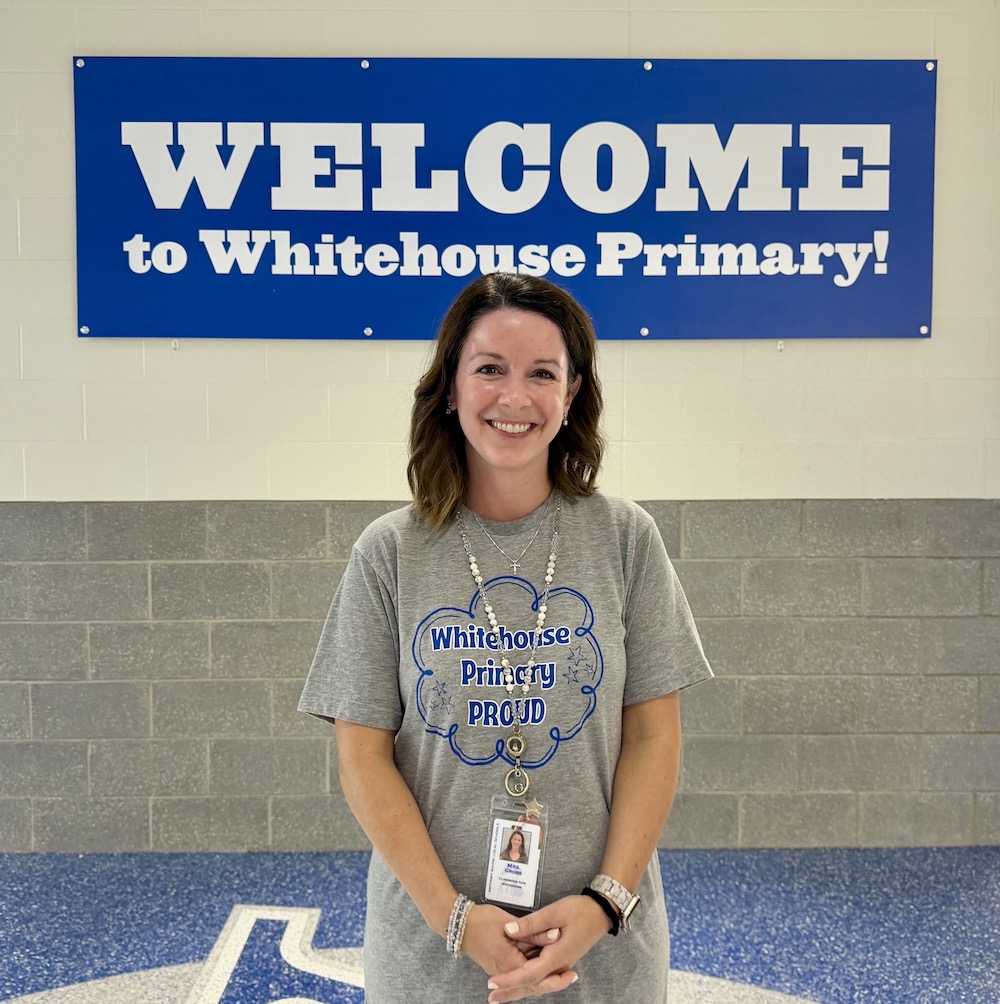
Jen Gross
Classified Staff Member of the Year
Jen Gross. (AWFP photo by Karen Gerhardinger)
As a special education aide at Whitehouse Primary, Gross supports student learning for students in kindergarten through fourth grade, helping them strengthen their academic skills, navigate expectations and build confidence as learners.
Gross’ path to Whitehouse Primary began outside of education. While she considered becoming a teacher, she earned a degree from The University of Toledo in business, finance and marketing and worked in that field for several years. It was during her nine years as a full-time mom and volunteer at Whitehouse Primary that she developed a strong appreciation for the school environment and the collaborative culture among staff.
“I loved working with the teachers and staff, so when a position opened up for a special education aide, I applied for the position,” she explained. “Now I love my co-workers, and it’s an honor to work alongside them.”
As a special education aide, Gross works with students either in their classrooms, one-on-one or in small-group settings, supporting intervention in reading and math. She also models good learning and study habits, supports independence skills, reviews classroom and school-wide expectations, and provides consistent encouragement as she advocates for her students.
Throughout each day, Gross moves through the building and collaborates with grade-level teachers and intervention specialists who provide specific skills or goals for each student to work on. Gross tracks their progress and coordinates with teachers on strategies that would be most effective to meet those goals.
“Together we can discuss trying a different model based on what we are all seeing,” she said.
A key focus of her work is literacy intervention. Gross supports students through fluency practice, phonics and sounding out words using the Fundations curriculum.
“We review sight words and read together, sometimes practicing passages multiple times,” she said. “We smooth out the stumbling blocks through repetition which help them become faster and more fluent readers.”
In math, Gross focuses on helping students slow down and understand what a problem is asking. She teaches strategies such as CUBS – circling the numbers, underlining the question, boxing key words and then solving.
“It helps them focus on what the problem is asking and makes it easier for them to solve,” she explained.
She also helps students manage assignments by breaking tasks into smaller steps.
“We do a lot of chunking and breaking down their learning into smaller, more manageable segments,” Gross said. “That might mean cutting a worksheet in half or covering up other problems so we can focus on one at a time. Those visual strategies are really important.”
Gross emphasizes patience, humor and consistency when supporting students, even on difficult days. She also recognizes the importance of taking a break.
“Learning is hard work,” she said, “Sometimes we all just need a little reset, even as adults. So we take a short walk to help us refocus.”
Building relationships with students is central to her work. Understanding each student’s personality, interests and work ethic helps guide how she supports them.
“Some students will embrace the challenges and power through; others need more encouragement,” Gross said. “It’s important to discover what makes them tick so I can be in tune with them and support their needs.”
Meeting students where they are is what keeps Gross invested in the work. While the role can be challenging, she is motivated by the progress she sees each day.
“I really love helping kids navigate their days. It is very rewarding to be that cheerleader and be someone who is there to say, ‘You’ve got this, and I will help you,’” she said. “It’s a reward to see their progress and know that I am a champion of their learning.”
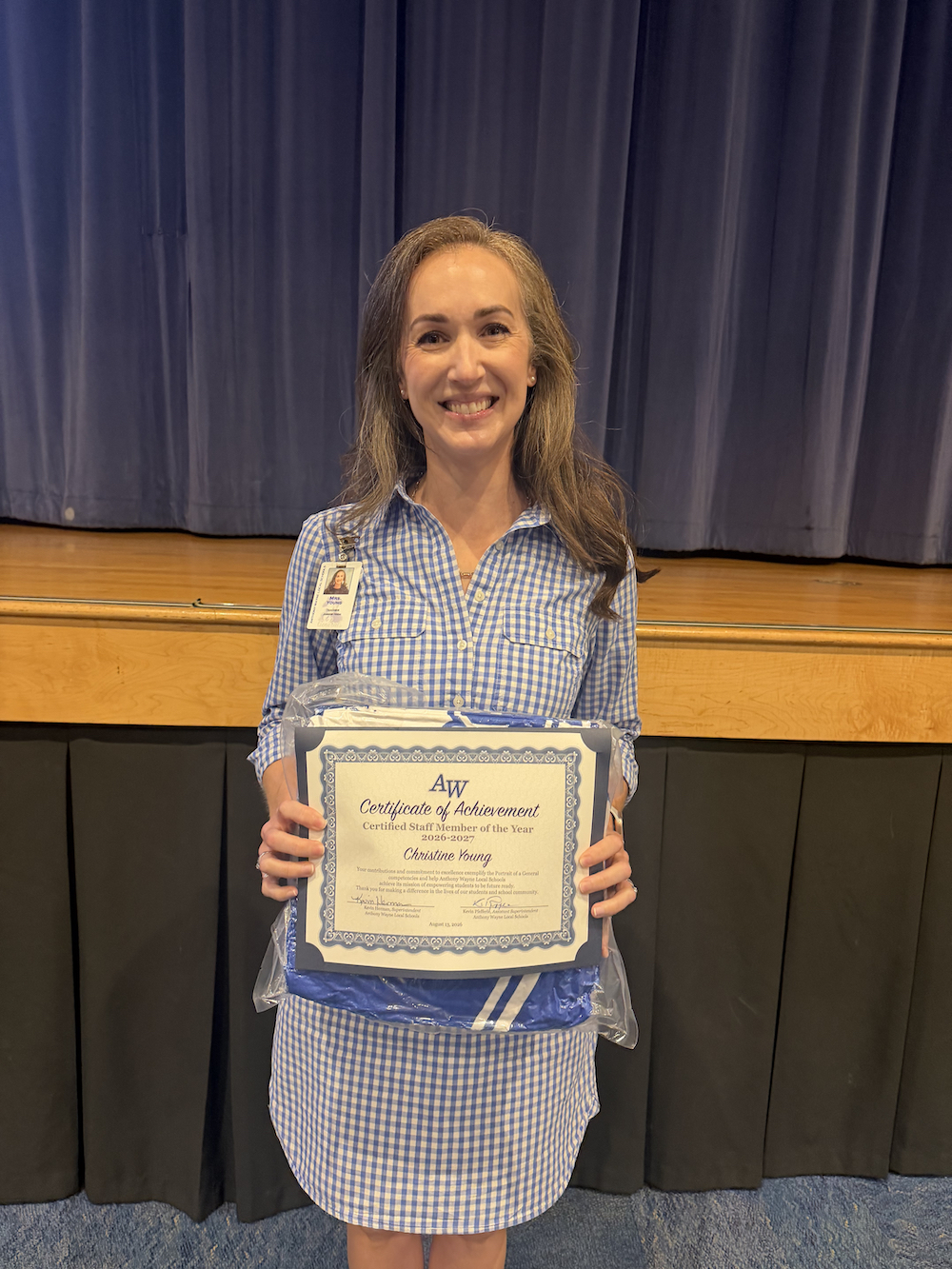
Christine Young
Certified Staff Member of the Year
Christine Young. (AWFP photo by Karen Gerhardinger)
Young, a seventh-grade social studies teacher and Purple Star liaison, is marking her 20th year in the district and her 18th at the junior high.
An Anthony Wayne High School graduate, Young first considered a teaching career as a fifth-grader, with encouragement from her teacher. Though shy and uncomfortable with public speaking at the time, she discovered a love for helping others. In high school, Young got involved with student council, which built her confidence. Teacher Jon McAfee was also an inspiration, she said.
“He actually showed up on my first day as a teacher and presented me with a plaque he made and gave me some advice,” Young said. “It still hangs in my classroom, and we reconnect from time to time.”
Her first two years in teaching were at the high school covering world history, U.S. history and sociology in 2006-2008. While Young enjoyed the high school level, she found her home in teaching junior high students.
“This age group fits my personality better,” she explained. “It’s more project-based and we can get some pretty good critical thinking going in our discussions. There is also something special about the innocence and quirkiness that comes with working with students this age that I really like.”
In addition to her teaching responsibilities, Young supports students who have a loved one serving in the military as the military families school liaison for the junior high. She also serves at the state level as an Ohio Purple Star Advisory Board member and Ohio MIC3 Council member.
Young’s compassion for military-connected students stems from her grandfather – who served during World War II – as well as friends and classmates who deployed after Sept. 11, 2001 or were involved in the global war on terror and Operation Iraqi Freedom. At one time, she considered a career in the military, but the timing wasn’t right.
“I explored the ROTC program when I was at BGSU, but there wasn’t as much recruiter support at that time,” she explained. “I probably could have accomplished it if I had just thrown myself into it, and I still regret not doing it.”
Young didn’t realize that she would later end up supporting military-connected students in such an impactful way.
“I grew up here and never really made the connection about the 180th being in our district and how many parents worked there until I became an adult,” she said. “Now I try to find ways to support students whose parents serve and to raise awareness about the challenges that they serve.”
In 2019, Young launched the Purple Star Generals program at the junior high, taking the lead from Waterville Primary School Principal Dr. Jamie Hollinger, who introduced the program in the district. Today, the district’s Purple Star Generals program supports 144 students with a parent, guardian or sibling who is active duty or in the National Guard or Reserves – 30 of whom are currently deployed – and 285 students who have identified has coming from veteran households. Identifying families remains a challenge, but Young makes it a priority.
“Not everyone wants the extra attention, and we sometimes learn of students who could use the extra support in passing,” she said. “We reach out and remind them that we are here to help however we can.”
Over the years, the Purple Star Generals has grown to offer a range of projects and support from M&M Deployment Jars – a student-inspired idea that helps families count down days of deployment with M&Ms – to family bingo nights and general awareness activities.
Purple Star Generals also host a Military Signing Ceremony – a way to honor graduating seniors who made the decision to enlist upon graduation – with help from recruiter and AW parent, TSgt. Xavier Graciani.
On Friday, Sept. 4, the district will host its fifth Military Appreciation Night, which gives veterans and active duty military an opportunity to get into the game for free.
“It’s a small thank you to the one percent of the population that protects the other 99 percent,” she said.
The community is encouraged to wear red, white, and blue to the game. At AWHS, T-shirts are being sold to support the Purple Star Generals.
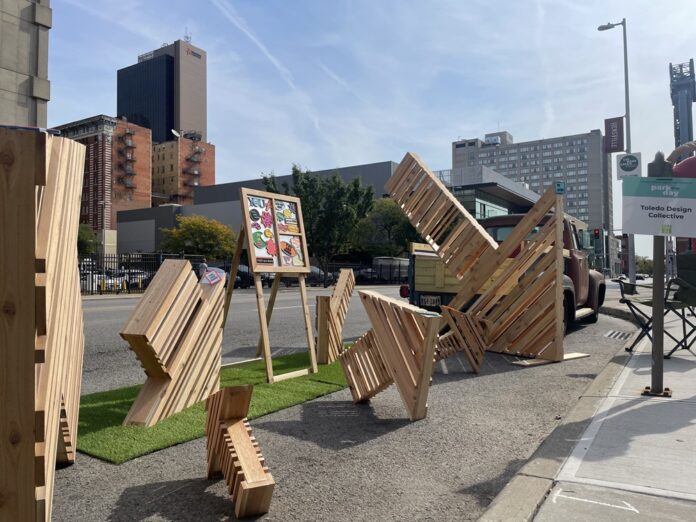
Installation by artist and designer Mike Stevens, PARK(ing) Day 2025. (Courtesy photo by Doug Hinebaugh)
TOLEDO – McAullae Baker, a Toledo native and current resident, is a graduate student majoring in urban planning at Wayne State University in Detroit.
“I went into urban planning after really reflecting on inner-city neighborhoods and the lack of investment in many of them,” said Baker, 37. “When neighborhoods lack amenities and experience blight and disinvestment, it can have a huge impact on residents’ quality of life.
“On the other hand, the right investments can greatly improve quality of life. My goal with the degree is to use planning to help create stronger communities and improve quality of life for the people who live in them.”
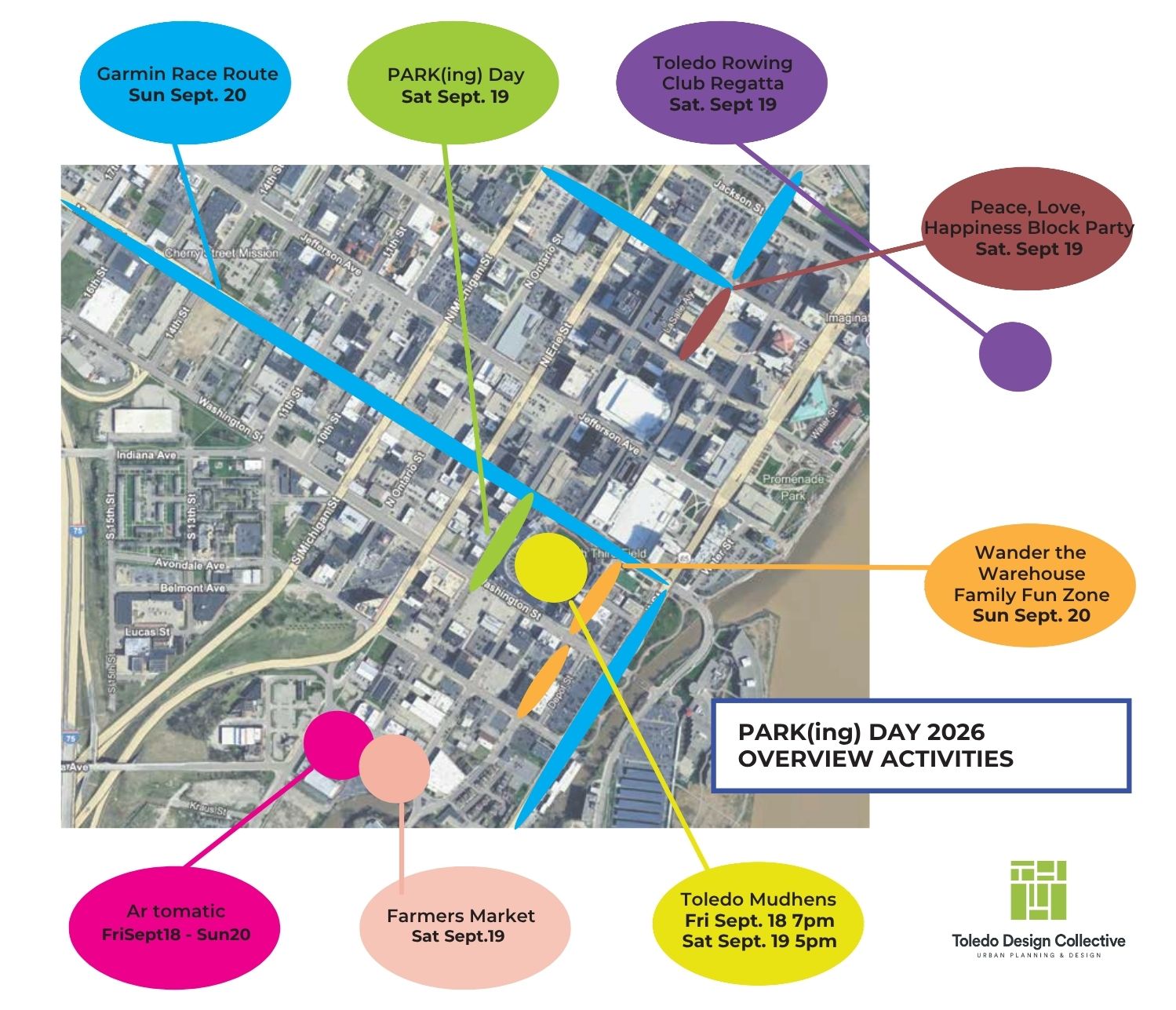
Baker said she is excited to participate in the fifth annual PARK(ing) Day on Sept. 18-19 in downtown Toledo. The event begins with a kickoff party on that Friday and continues Saturday from 12-6 p.m. on North Huron street.
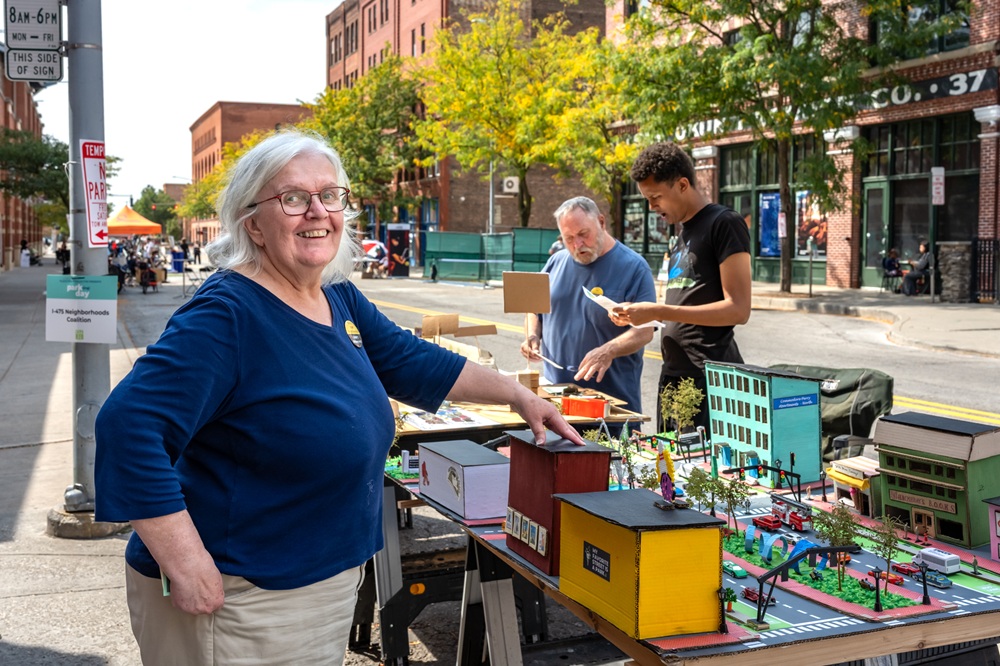
Peggy Daly-Masternak of the I-475 Neighborhood Group showcasing a maquette promoting people-centered planning and design over highways, PARK(ing) Day 2025. (Courtesy photo by Doug Hinebaugh)
“PARK(ing) Day combines so many things I’m interested in, including urban planning, history, creativity, storytelling and community engagement,” Baker said. “It also gives me an opportunity to take ideas I’m learning about in planning and turn them into something people can actually experience.”
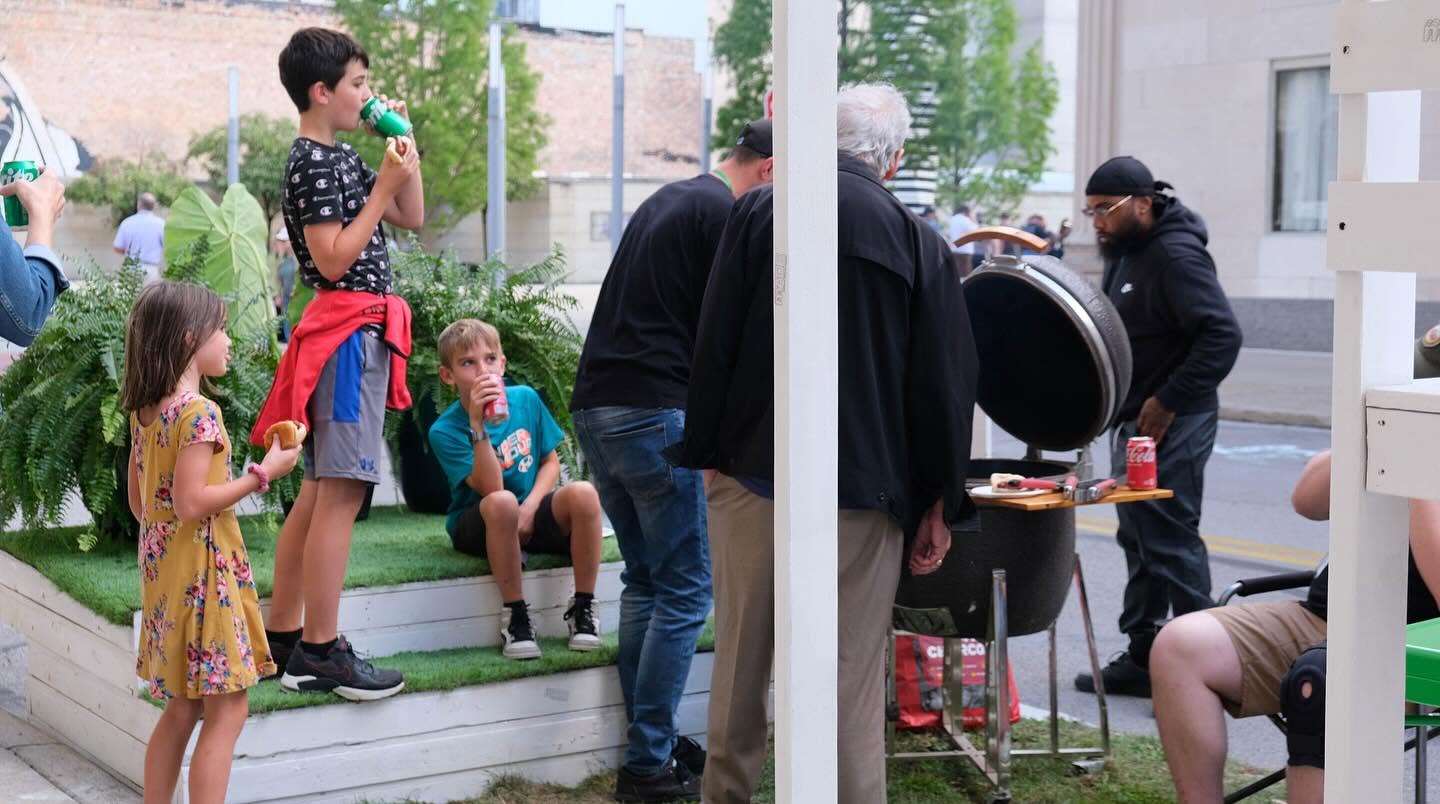
PARK(ing) Day, which is organized and hosted by The Toledo Design Collective, turns parking spaces into creative, welcoming places for people. The 8×20-foot community-focused “parklets” explore ideas around planning and design, public transit, greening, arts and culture, activities, sports, advocacy or simply creating a space to relax, connect, and have conversations.
TDC, founded in 2001, is a 501(c)(3) non-profit urban planning and design organization based in Toledo. Its mission is to improve the aesthetic and functional quality of the Toledo region through low-cost community planning, conceptual design, and active public engagement.
“A ConnecToledo parking study found that nearly half of downtown parking spaces go unused during weekday afternoons,” said Cathy de Haan, outreach and development manager at TDC. “Taking advantage of these alternate options [parklets], the biggest thing is it activates the urban streetscape.”
“More of this kind of stuff that exists in downtowns, in cities, brings about a different level of involvement that otherwise might not be there. The premise is we take over parking spaces and show what it could be if it was designed for the community and not designed for cars.”
Parklet design by Graphite Design + Build, PARK(ing) Day 2023. (Courtesy photo by Doug Hinebaugh)
Each of the 27 PARK(ing) Day participants will receive one parking space as their parklet. This year’s theme is “ToD, transit-oriented development,” and TDC is working with TARTA on this year’s event.
“PARK(ing) Day fits with our mission,” de Haan said. “It’s really about designing our cities for people, not just cars. America has largely been built around car use, and that’s what we’re working to push back against. PARK(ing) Day is one way to show what’s possible when spaces are designed for people first; a parklet is just one example, but the same thinking applies to plazas, sidewalks, and streets across the whole city.”
TARTA participated in PARK(ing) Day last year and will do so again on Sept. 19.
Kwinlyn Tyler, community affairs manager at TARTA, said TARTA will design its own parklet in front of Fifth Third Field on Monroe Street.
“We will design of one of our parklets similar to what we have in Rossford, which is also transit-oriented,” Tyler said. “It will have a picnic table, activities and some information on how spaces like this can exist with transit and develop transit spaces and open up public spaces to be better gathering places for us.
“PARK(ing) Day highlights a few things, especially in public transit. It shows what cities look like with pedestrian design and less car activity. It brings a lot of community organizations together and gives people an opportunity to learn about these parklets in unique ways. This is a great event. It’s one of those things that helps make Toledo unique and something we want to see more of to develop our downtown as well.”
PARK(ing) Day 2026 activities. (Courtesy image)
mADE, a company that started in 2022 and has offices in Perrysburg, will construct its third parklet in downtown Toledo on Sept. 19.
“We are primarily an architecture firm,” mADE Co-Founder JakeMiley said. “This will be our third year of involvement with PARK(ing) Day. We were involved in 2023, and we used some reclaimed material from our warehouse and had an A-frame structure and built a terrace and a bar counter.
“As a result of that in 2023, Mac Driscoll, who is now [an at-large] Toledo city councilman, reached out and asked if we wanted to design a parklet for the city. Two of our parklets are downtown now, one on Adams street and one on St. Clair, with some outdoor seating. This gives two businesses outdoor patio seating that they wouldn’t have otherwise. This opens that up for them.”
Miley said one of mADE’s architects, Jake “JT” Blasko, is working on a parklet design that uses “paper tubes and some connectors.”
“It’s kind of like a perimeter framework that will enclose a space,” Miley said. “This structure could never be a permanent structure, but it might create for us some additional thoughts on how to do something permanent. It could be the start of a bus stop shelter design, but it has more of an emphasis on design.”
Visitors enjoying the parklet design by mADE, PARK(ing) Day 2023. (Courtesy photo by Doug Hinebaugh) .
Baker said her parklet is called “Can You See the Village?” and it will be an immersive walk-through experience centered on Toledo’s historic Polish Village.
“I grew up in North Toledo just off Lagrange street,” Baker said, “so I was naturally drawn to telling this neighborhood’s story. The structure of the neighborhood has always reminded me of a small city’s downtown, and I wanted to create an experience that allows people to see what was there before, what has changed, and what still remains.
“PARK(ing) Day allows people to be creative and share their ideas in a unique way. Events like this help keep the conversation going about Toledo and the future of our neighborhoods. I hope people come out and take the time to experience all of the different parklets.”
Whitehouse Village Council will look a little different by next month, as Louann Artiaga has
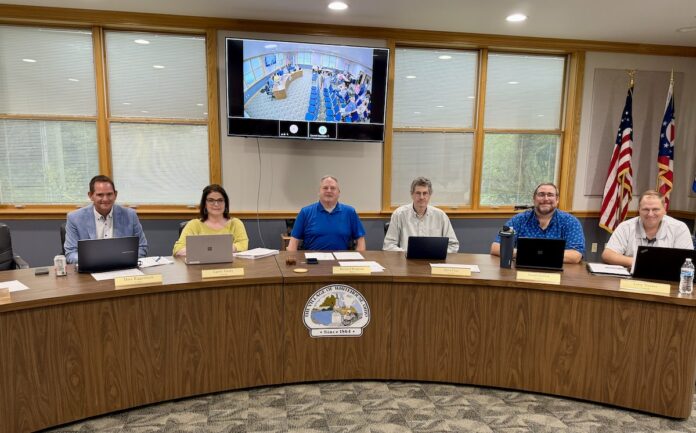
departed and Larry Yunker announced his intention to turn in a resignation notice when he moves out of the village later this month. Pictured are (from left) Dave Riggenbach, Carrie
Tuohy, Mayor Rich Bingham, Council President Steve Fine, Joe Bublick and Larry Yunker. (AWFP photo by Karen Gerhardinger)
WHITEHOUSE – While Whitehouse Village Council is preparing to interview candidates to replace Council Member Louann Artiaga, who resigned Aug. 11, another council member – Larry Yunker – announced his intention to resign his position sometime in September.
“If things go according to plan, I will be moving later this month and it will take me just outside the village limits. As a result, I will have to forfeit my position on council,” Yunker shared during the Sept. 1 council meeting.
While Yunker expects his last council meeting to be Tuesday, Sept. 15, he acknowledged that it might change, depending on the closing date for a home that he described as “just seven houses outside village limits.”
Once Yunker officially turns in his resignation, council can decide on a procedure for replacing him, said Council President Steve Fine. Seven candidates turned in their applications showing interest in filling Artiaga’s seat. Those candidates included Nikki Hartbarger, Jeffrey Heaney, Jake Heilmann, Melissa (Lisa) Morrison, Thomas Teknipp, David Urbanowski and Alyssa Noel Vossen.
Since the Sept. 1 meeting, Anthony Wayne Free Press was made aware that four of those candidates are advancing to the next interview phase to fill a vacant seat on Whitehouse Village Council: Hartbarger, Heaney, Heilmann, and Morrison.
Larry Yunker was elected in November 2023 and his term expires at the end of 2027. (AWFP photo by Karen Gerhardinger)
Interviews will be held at the end of a Committee of the Whole meeting scheduled for 6:30 p.m. Tuesday, Sept. 8, according to Whitehouse Village Administrator Jordan Daugherty. A possible appointment could be made that same night. Whether council will pull from that pool of candidates to select Yunker’s replacement has not been determined.
While Yunker has only been on council for three years, he’s been involved with the village for much longer, including more than 15 years as a volunteer firefighter. In that role, he wrote grants that netted the police and fire departments over $750,000. He ran for office in 2023 after successfully overturning – through a citizen referendum – a council decision that would have rescinded a .75-percent income tax credit given to residents who work and pay income taxes out of the village. Yunker said it’s been an honor to represent the citizens of Whitehouse.
During the meeting, council also:
-Listened to questions from residents Joyce Petrie, Bruce Robertson and Lisa Sanford about the future Whitehouse Branch of the Toledo-Lucas County Public Library. They noted concerns about traffic and the ability of the library to sustain operations in a new building when funds have been cut.
Library representative Stephanie Elton, who was in the audience, explained that the funding for the new building is set aside for capital projects and cannot be used for operations – and these funds were approved in November 2024, before the Ohio Legislature made steep cuts to the Public Library Fund in 2025.
The TLCPL identified a need for a branch in Whitehouse in 2017, because of the growing population and the inability for the landlocked Waterville Branch – which has the second highest circulation numbers – to expand to meet that need.
A series of public information sessions are being planned to get input on a design, and a site plan, along with a traffic study, will be required before moving forward. Elton said she expects the building to be over 10,000 square feet, with spaces for meetings and kids programming. Council is expected to approve the $620,000 sale of six acres of village-owned land to the TLCPL during its Sept. 15 meeting.
-Listened to Council Member Dave Riggenbach talk about how he’s spent the past week walking around the village, checking out all the neighborhoods, parks and downtown, and it reminded him about how lucky he is to live in such a beautiful town with residents who support the village staff’s hard work to make it a great place to live.
-Approved the Anthony Wayne High School homecoming parade, on Friday, Sept. 25 at 5 p.m. The route departs from the high school and progresses down Grover Drive, Cemetery Road and Rupp Road before ending on Finzel Road in front of the campus. The public is encouraged to attend to watch school groups and homecoming attendees, along with fire trucks and other organizations.
-Approved the use of village streets and waived fees for Whitehouse Parents Club’s Saturday, Oct. 3 Whitehouse Primary 5k and 1k fun run. For information, visit runsignup.com.
-Approved the use of the Whitehouse Park Pavilion on Saturday, Oct. 24 for a Worship Night led by CedarCreek Church. All are welcome.
-Approved the use of village streets for the Saturday, Dec. 5 Whitehouse Village 5k and kids race to benefit Hospice of Northwest Ohio’s Path Finders Camp.
-Heard an update on the Fallen Timbers Union Cemetery District, which has a cash balance of $533,039. Funds were used to purchase equipment and remove trees from Whitehouse and Wakeman cemeteries. The district and City of Waterville are working on a solution to drainage problems at Wakeman Cemetery. And the board approved a raise, from $22.00 to $25.00 an hour, for cemetery worker Frank Kyser.
-Learned that Whitehouse Mayor Rich Bingham and Waterville Mayor Tim Pedro will participate in a 7th grade government day program at Anthony Wayne Junior High on Friday, Sept. 18.
-Heard that the unlimited bulk pickup is set for Saturday, Sept. 26.
-Heard Daugherty say that he has been working with staff to find ways to fill responsibilities after Operations Director Josh Hartbarger left. Staff members will take on additional roles, but he is set to advertise for an administrative assistant to help with finances.
-Learned that the Public Works Department is hiring DGL Consulting Engineers to work on plans to install hybrid pedestrian crosswalk beacons on S.R. 64 intersections with Indianapolis Ave. and Whitehouse Square Boulevard.
-Added a fence around a retention pond to an ordinance that would change the Planning Commission’s approved site plan for Country Meadows South – a subdivision planned for rezoned land just west of Oak Brook subdivision. A third and final reading will be held on Tuesday, Sept. 15 at 6:30 p.m.
-Held second readings on several ordinances, including; changes to an approved site plan for Country Meadows South; the sale of 6 acres of land at the roundabout to the Toledo-Lucas County Public Library for $620,000; the purchase 2.3 acres at 10125 Waterville St. for $200,000; and amendments to policies regarding vacation, pay classifications and comp time.
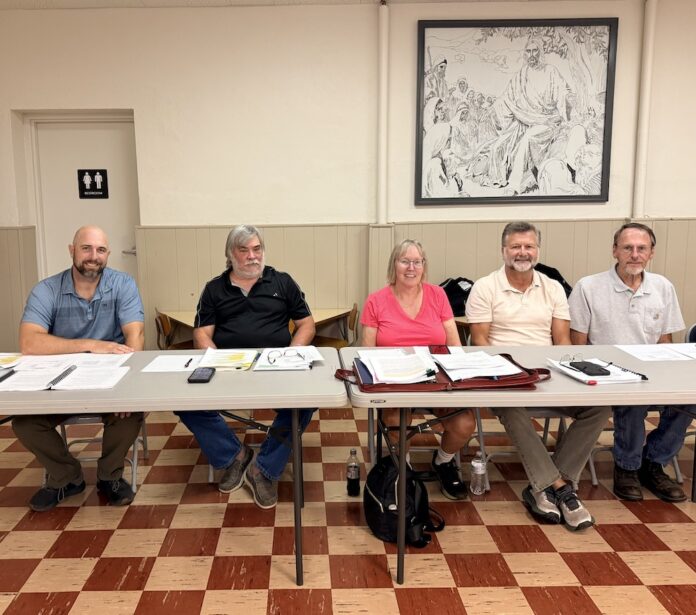
The Waterville Township Zoning Commission includes members Jon Poponak, Keith Moosman, Catherine Vorst, Bill Burkett and Robert Long. The commission held a public hearing on August 31 to receive input on a proposed change to its zoning regulations for billboards. (AWFP photo by Karen Gerhardinger)
WATERVILLE TOWNSHIP – A proposed change to Waterville Township’s zoning regulations – one that would allow two electronic billboards along a two-mile stretch along U.S. 24 – elicited comments from community members, who cited concerns about the impact of a 672-square-foot sign on driver attention, neighboring residents, the environment and the tranquility of the township.
“I don’t think we need to have the Las Vegas kind of flashing lights,” said Russ Schifferly during an Aug. 31 Zoning Commission public hearing. He called billboards an unnecessary distraction, and one that would impact the future of the township.
Anita Conley noted that the stretch of U.S. 24 between Dutch Road and S.R. 64 has a curve where semi drivers in particular either hit the brakes or go over the rumble strips on the side of the roadway. Lyn Cox shared research on how high intensity electronic messaging may cause dangerously long gazes, temporary glare or night blindness, driver drift and delayed braking action.
“This board is tasked with guarding the health, safety and rural character of Waterville Township. A text amendment that invites unprecedented visual pollution and roadway distraction does the opposite,” Cox said.
Mark Phillips, who lives just east of the Dutch Road Storage facility where such a sign is proposed, noted that the billboard wouldn’t just affect his quality of life, but that of the residents of Waterville Loft Apartments, a 70-unit, 55-plus community set to open on Kay Drive, just across the highway, in April.
Debra Reed, who lives on Tournament Drive, also pointed out the impact to future Waterville Lofts residents. She’s previously complained about light coming from Dutch Road Storage, and believes that a billboard would only further impact the area.
“Outdoor lighted advertising and electric signs are not conducive to our community,” she said.
Preserving the community was a common theme in the comments.
“We’re changing so much about ourselves as Waterville Township. I get it that progress is progress. But I think it would be wise to save just a little bit of what we’ve got left,” said Phillips.
Terry Beam wondered who would monitor the sign to make sure that it wasn’t exceeding the limits on brightness, and wondered if that would require additional resources in terms of equipment or personnel. He noted that the township has been busy trying to protect residents from a potential data center, and asked the commission to do the same with a billboard.
“I think we need to keep the township the way it is: a nice community without all the bells and whistles. Why do we want to allow this?” he asked.
The Zoning Commission began looking at a change to the zoning language last fall, when the owners of Dutch Road Storage began asking about the possibility of erecting an off-premise sign on their property at 7750 Dutch Rd. The term “off-premise” means that it would be used to advertise businesses not located on the property. Currently, billboards are limited to 15 feet in height and 72-square-feet of signage face. Nothing in the resolution addresses electronic signage.
Faced with a nonrefundable $10,000 application to ask the Board of Zoning Appeals (BZA) for a conditional use permit – an amount that could be seen as a punitive measure to prevent billboards – owners Dan Bollin and James Moline, along with attorney Jerry Parker, asked the township to look at updating the language.
Over several months, the Zoning Commission drafted proposed language that sets the number of electronic billboards allowed in the township to two along the township’s portion of U.S. 24. The language sets limits on distance from intersections, interchanges and homes, brightness and images, which would stay up for at least 8 seconds at a time cannot include animation, scrolling, flashing, videos or profanity. The operator must allow up to 10 percent of its display time for community messages requested by governmental and emergency management agencies.
These regulations are among the most restrictive he’s seen, said Parker, who has represented outdoor advertising companies for decades. While many other townships have regulations on billboards, they don’t limit the number and don’t require a percentage for community messaging, he said.
“Our purpose is not to affect property owners adversely but to help the township with a civic-minded sort of proposal,” he said.
Providing that service will allow the township to promote itself and the opportunities for businesses to locate in the area and bring jobs, Bollin said. And while residents might not want to see the township change, that’s already happened with U.S. 24 cutting through.
“Billboards are everywhere. This is just two billboards, not like Toledo where you see them every 400 feet,” Bollin said.
Once in place, the electronic billboard would be programmed to meet the strict requirements, so no additional enforcement would be needed, he added.
After the township put together the proposed zoning language, it was sent to the Lucas County Plan Commissions staff, and Senior Planner Molly Maguire wrote in her recommendation to the Planning Commission to deny the change, calling billboards “visual blight” that has a negative impact on the community and can create a visual hazard. Lucas County Engineer Mike Pniewski agreed. But the rest of the commission recommended moving forward with the change.
Trustee Toby Miller said the new language would allow the township to put in tighter regulations on billboards, because the current process through the BZA would open the door to more signs. Any decision by the BZA is considered an administrative action, and could not be challenged by a citizens referendum.
“The reality of the current zoning book is they can apply for an off-premise billboard as it stands. If a variance is granted, it’s opening the door. You can’t grant a variance for one without doing it for all, and that could occur anywhere in the township, not just along U.S. 24.,” Miller said.
The fee for applying for an off-premise sign has been under review by the Zoning Commission and the trustees, said Commission Chair Keith Moosman. He expects the trustees to discuss the topic during their Sept. 23 meeting. The commission, in the meantime, will take the information about the zoning language change and make a decision during their next regular meeting, on Monday, Sept. 21 at 7 p.m.
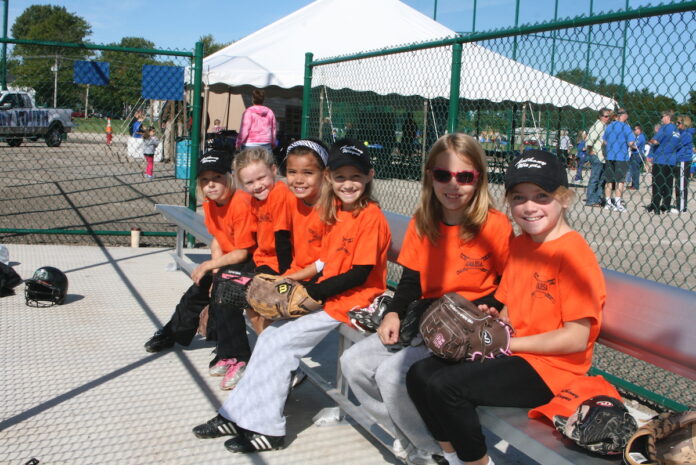
Members of the orange softball team gather at the new ball diamonds in 2012. (AWFP photo by Karen Gerhardinger)
In the early 2000s, as the Anthony Wayne area was rapidly growing, a small group gathered around an idea: forming an organization to support existing youth sporting groups and expanding those offerings so that all kids would have an opportunity to get out and play.
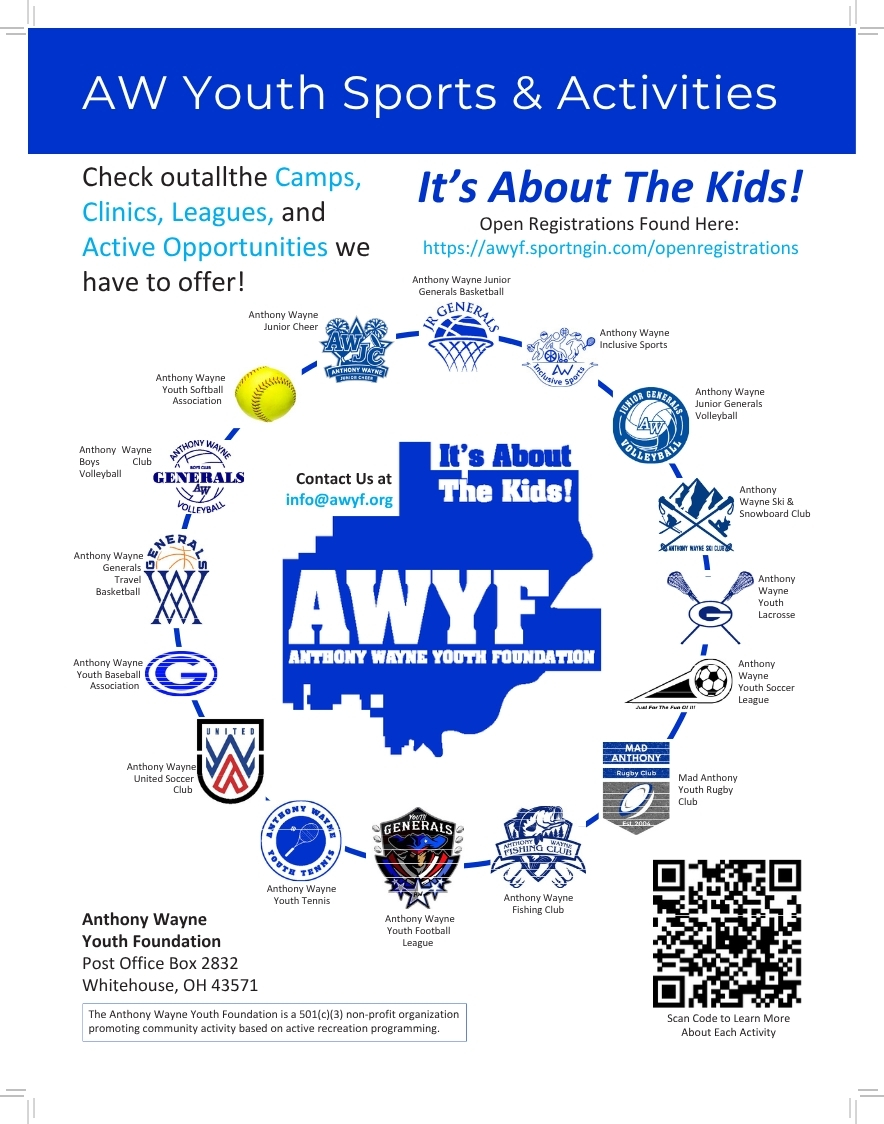
Now, 20 years after its 2006 formation, the Anthony Wayne Youth Foundation (AWYF) offers 17 different activities on fields and in gyms throughout the area, serving over 1,200 families a year, without taxpayer funding.
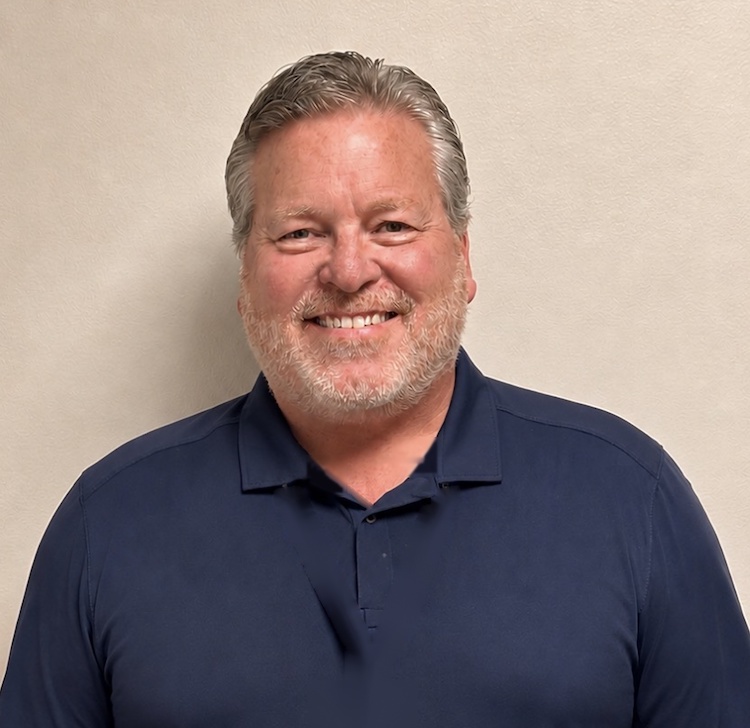
Todd Frendt. (Courtesy photo)
“To see what it’s grown into today is beyond what our vision was,” said AWYF Founder Todd Frendt. “It warms my heart.”
As a coach and board member for the Anthony Wayne Youth Soccer League (AWYSL) in the early 2000s, Frendt noticed that the soccer league and other youth sports organizations were experiencing some of the same challenges: managing a nonprofit, recruiting and training coaches, finding places to practice or hold games, and funding it all with player fees.
“From a business standpoint, we looked at what we could do to provide administrative assistance so coaches could do what they love: teach kids,” Frendt recalled.
Initially, Par Ricketts and Cal Whewell worked to pass a tax levy to create the Anthony Wayne Area Recreation District, modeled after Sylvania’s Pacesetter Park model, with the intention of providing outdoor recreation space to the community.
After back-to-back levy failures in 2003 and 2004, Frendt joined the picture with a core group of individuals representing each local organization and took a different approach: creating a nonprofit organization that united the Anthony Wayne Youth Soccer League (AWYSL), Anthony Wayne United Soccer Club (AWUSC), Anthony Wayne Youth Football League (AWYFL), Anthony Wayne Area Baseball Softball Association (AWABSA) and Anthony Wayne Junior Generals Baseball Club (AWJRGBC).
Today, the AWYF encompasses these original five activities, plus basketball, cheer, fishing, inclusive sports, lacrosse, off-season training, rugby, ski/snowboard, tennis and volleyball.
“Our job is to get as many kids out and doing some sort of physical activity as possible – whether it’s travel or rec,” said Taylor Kervin, who became the nonprofit’s full-time executive director in 2021.
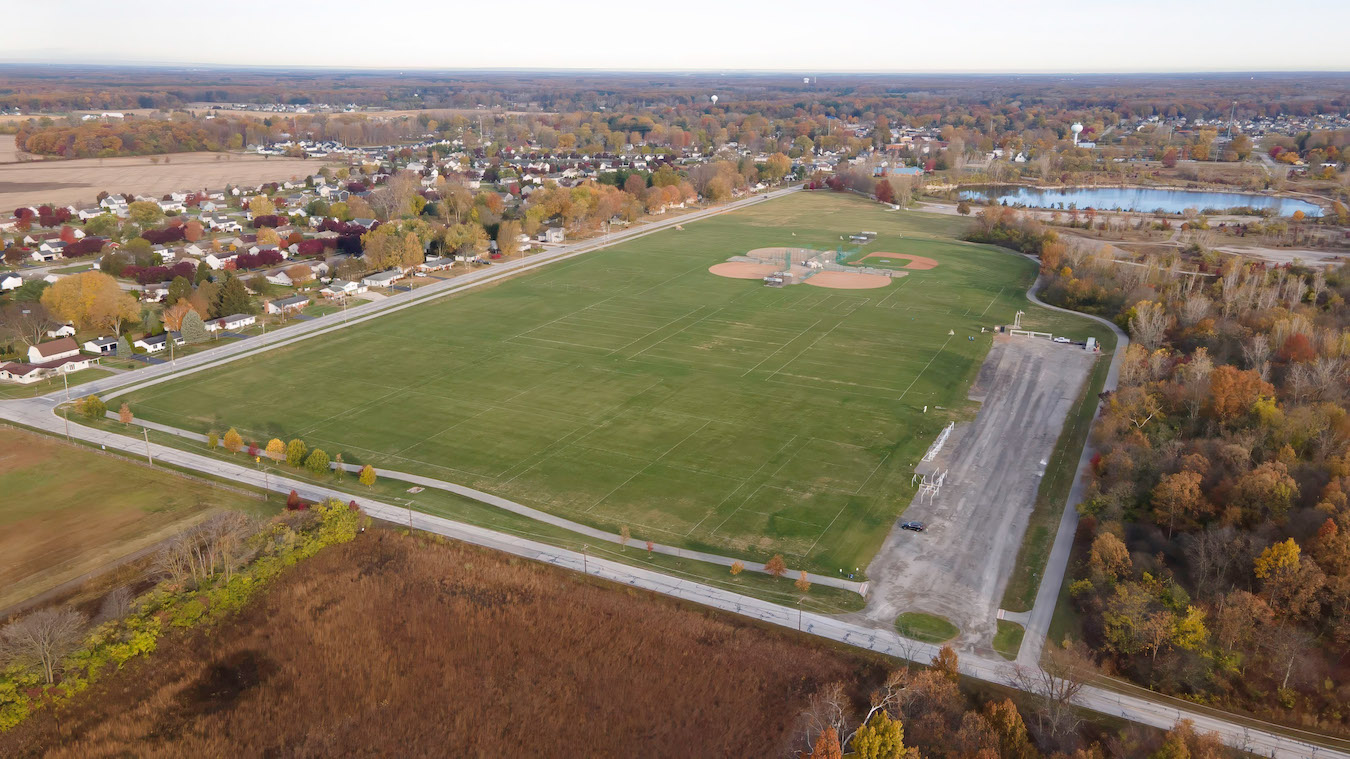
This aerial shot shows Blue Creek Recreation Area in fall 2025. (Courtesy photo)
She was 13 in 2006 when the AWYF was formed, and was heavily involved: not only playing soccer and basketball but mowing the practice fields at Blue Creek, working the concession stands and setting up basketball games. After earning undergraduate and master’s degrees in athletic training, and working for Toledo Public Schools and St. Francis de Sales, Kervin gained a broader perspective on just how much AWYF impacts youth and the community.
“Seeing all the other schools, I realized that what we have out here is special,” Kervin said, noting that often in other districts, students could join high school teams with little or no prior sports experience. “It was shocking to see these kids starting later and not having the opportunities that we give these kids. It made me love and respect this even more.”
Flag football is one of 17 activities offered through the Anthony Wayne Youth Foundation. (Courtesy Photo)
While the goal of the AWYF is not to serve as a feeder to high school sports, that’s certainly been a byproduct. Lori Williams, one of the original AWYF board members, is the high school girls’ soccer coach. The youth soccer programs have been pivotal in shaping the success of the high school program, she believes.
“Many of our players start their journey in the Anthony Wayne recreation program, where they first discover their love for soccer, before growing further through Anthony Wayne United Soccer Club,” she said. “The benefits of these programs extend far beyond just technical skills. By the time our players reach high school, they come equipped with years of coaching, an understanding of the game, and, perhaps more importantly, strong connections with teammates.”
“The success of our high school program is built on the solid foundation laid by the recreation and club teams over the last 20-plus years. We are genuinely grateful for the many dedicated volunteers, coaches and families who have poured their time and energy into nurturing not only skilled soccer players but also remarkable young individuals.”
Chris Chisholm, treasurer for the AWYF, first got involved when his daughter, Alaina, was playing rec basketball. In 2015, he received an email at the end of the season stating that unless someone stepped up to join the board, the program might not be able to continue next year. So, he joined the basketball league’s board, then stepped into the AWYF treasurer position in 2018.
“I’m a big proponent of sports and what it teaches kids: teamwork, a common goal, celebrating success and navigating defeat and disappointment,” Chisholm said.
Another benefit of a district-wide organization is that it brings kids from all the communities together on one team, he noted. Sometimes parents want to create teams with the same friend groups year after year, but Chisholm explained that teams are designed to provide parity in terms of skill levels, and in bringing kids together who might not otherwise meet until at least middle school.
Flag football is one of 17 activities offered through the Anthony Wayne Youth Foundation. (Courtesy photo)
Landon Heeres, whose teens Silas and Eliana are homeschooled, noted that the AWYF was a leader in welcoming homeschoolers even before public schools permitted them on teams. His wife, Emily, was homeschooled but played softball and other sports through AWYF when she was growing up.
“We love the community coming together and cheering on the players at our local venues like Blue Creek. Youth sports have the potential to bring out the best in a community,” Landon said.
With the growth in the number of AWYF activities, the numbers of participants has grown as well, and that poses a challenge: finding enough practice and game space. While Anthony Wayne Local Schools allows youth teams to utilize school gymnasiums and outdoor spaces, the school teams get first priority in facility scheduling, Kervin said.
“It’s a constant discussion of what the future looks like, and what can we do for more space,” she said.
Unlike Pacesetter Park in Sylvania, or the Wauseon recreational facilities, AWYF does not receive any taxpayer dollars or funding from the school district. Instead, families pay a yearly membership fee, plus a fee for each activity. Grants and fundraising events – like the “golf inning” at XGolf Toledo every winter and the purse bingo at The Stables every spring – help raise funds to cover the organization’s areas of greatest needs and to keep costs low for families.
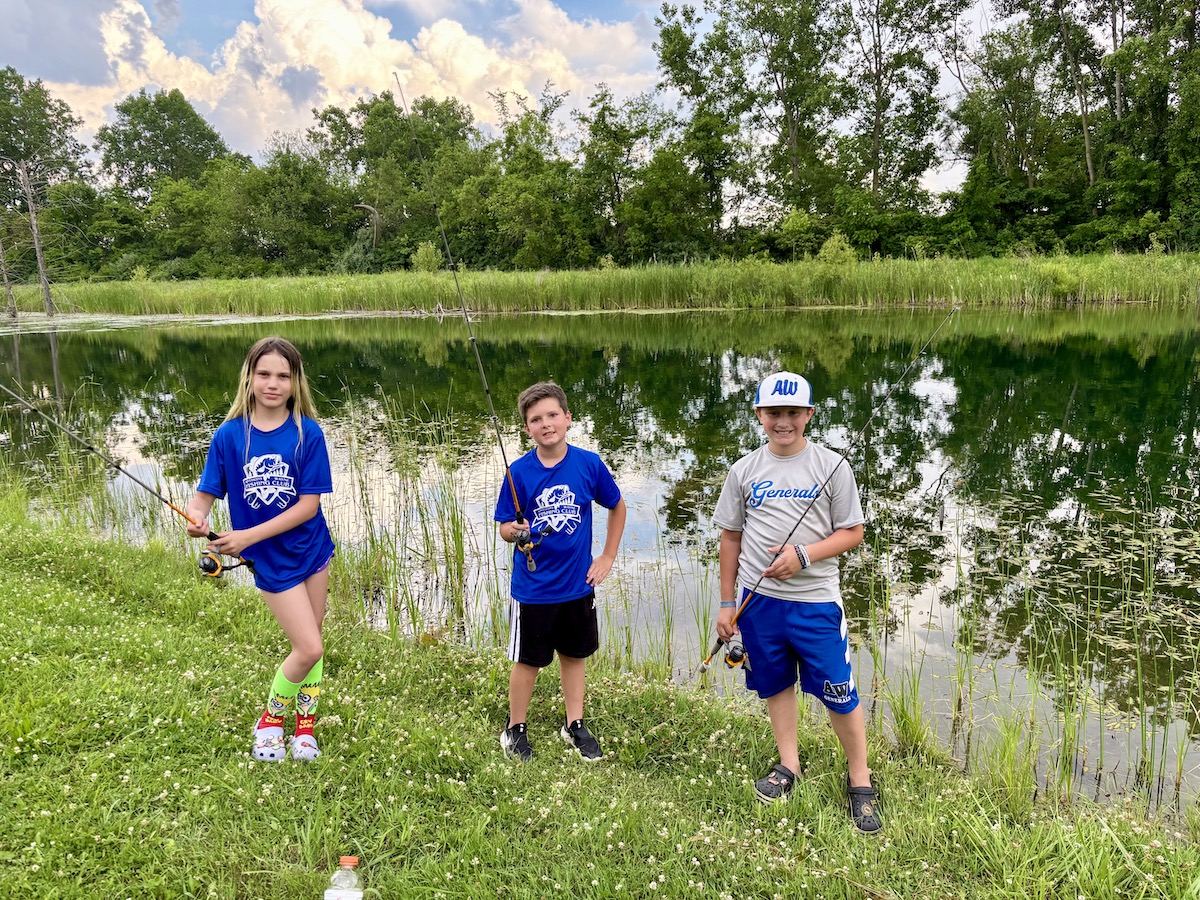
The Anthony Wayne Fishing Club is one of 17 activities offered by the Anthony Wayne Youth Foundation. (AWFP photo by Karen Gerhardinger)
The AWYF has a long-term lease agreement with MetroparksToledo to utilize the fields at Blue Creek Metropark, but must invest its own money in upgrades and maintenance. The Blue Creek Recreation Area (BCRA), as the fields are known, was once part of Nona France Quarry, and later owned by the village of Whitehouse. The Operating Engineers used the area for training future operators, who removed rocks and leveled the grounds. But it was a $675,000 grant from the White Paper Committee of Ohio that provided the initial boost to prepare the land for future field development, a process that took three years.
That included bringing in 250 truckloads of dirt to grade the fields, adding drainage tiles, a well and sprinklers, and electrical conduit to plan for future restrooms and other facilities that have yet to be built.
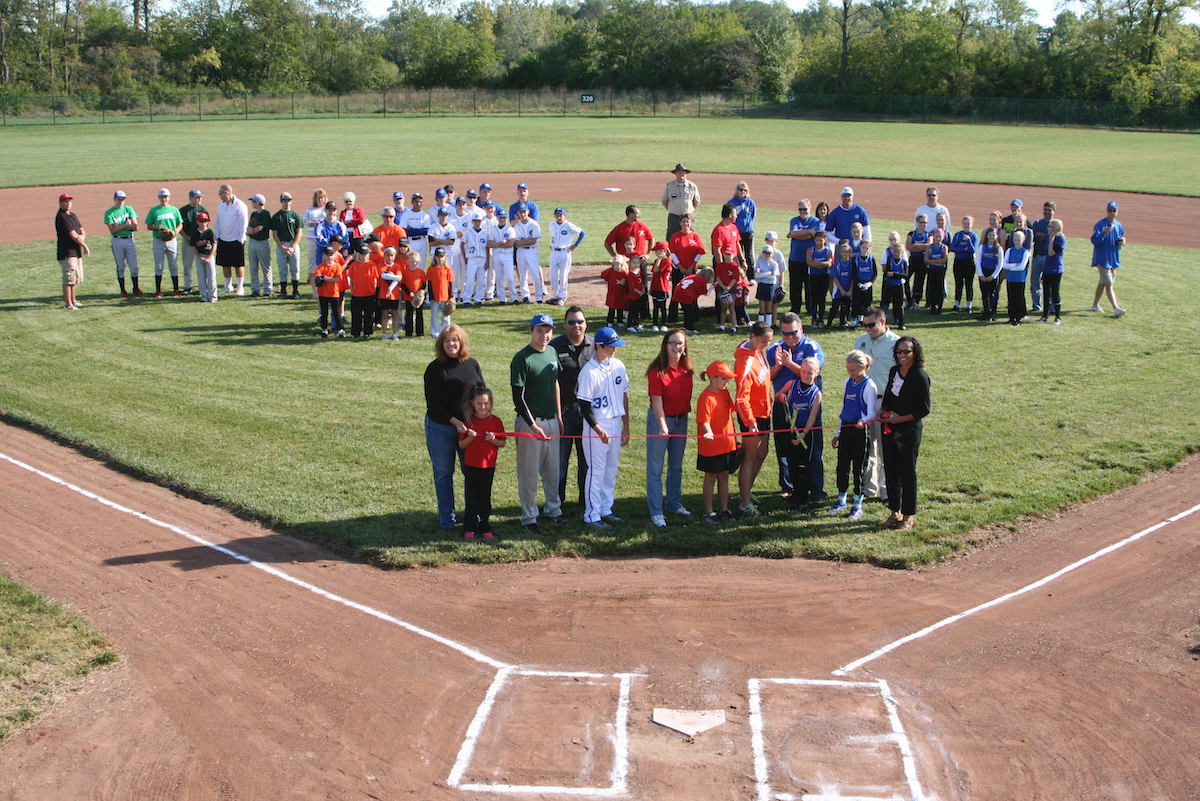
“People were asking us where the money was going, because they didn’t see any goals or backstops,” Frendt recalled. “It was all underground work. Then in 2012 we built the baseball fields.”
Jeff Schwerer joined the AWYF after retiring as a teacher and athletic director for Anthony Wayne Local Schools. He serves as the field service manager. Initially, he was asked to get the four baseball fields at Blue Creek and Tom Allen Field behind Whitehouse Inn prepped for games. Now he and a team take care of 35 acres at BCRA and Tom Allen Field, and assist with local community fields including the two softball fields at Whitehouse Park, two ball fields at Monclova Community Park and two at Keener Park. They not only prepare the baseball and softball fields but mow grass at Blue Creek and paint the soccer, lacrosse and football fields.
“Prior to us doing that, the coaches had to do it all,” he said of the volunteer coaches, who are often parents with full-time day jobs. “If they had a game at 5 p.m., they’d have to show up at 4 pm. It’s not always easy.”
The Anthony Wayne Youth Foundation celebrated the opening of four ball fields at Blue Creek Recreation Area in 2012. (AWFP photo by Karen Gerhardinger)
Behind the scenes, there are a lot of working parts, Kervin said. And some are details that parents often don’t think about, such as insurance. Jake McVicker of Savage McVicker Associates handles the three different policies that cover AWYF, including coverage for the coaches, volunteers and medical practice. Every time a travel team hits the road, that requires additional insurance, he noted.
Kervin focuses on operations, logistics, back-end support, field usage, contracts, legal, bookkeeping and taxes. Olivia Hanifan, the development and partnerships coordinator, joined the team in June and focuses on AWYF and activity fundraising, sponsorships, and donations, as well as community partnerships.
Administrative Assistant Sam Whitmore manages coaching credentials, registrations, field scheduling, and support to families and volunteers. The AWYF ensures that all volunteers have background checks to ensure high safety standards for the kids, Kervin said. And having all the activities on one website, with one scheduling app, streamlines communications and signups so those volunteer coaches can just show up and do their job, she added.
Often Kervin will hear concerns about affordability, and about 30 of the 1,200 families that participate each year take advantage of an opportunity to sell raffle tickets to cover their fees. Some of the activities offer scholarships to help families, and the Anthony Wayne Neighborhood Bridges program also links families in need with community members willing to help out with costs.
“We’re running as lean as we possibly can,” Kervin said, noting that 92 percent of the income goes back into programming.
Long term, the AWYF would like to add restroom facilities at BCRA, as well as a maintenance storage area so that equipment currently housed under a tarp in a fenced-in area can be kept out of the elements, Chisholm said.
Another goal is to expand the offerings for youth sports, so all the activities are available for K-12, Kervin said, explaining that currently rec soccer and boys rec basketball are the only activities for all grade levels.
“We want to keep kids involved as much as possible,” she said.
For the kids who do participate in AWYF activities, the benefits are obvious. Silas Heeres, now 16, started playing soccer at a young age.
“I’ve made a lot of friends, and it also gave me a good foundation to continue playing the game that I love at a higher level,” Silas said.
This summer, Silas organized a summer soccer program every Friday morning for anyone who showed up. He also continues to referee soccer games while his sister, 13-year-old Eliana, has played several sports over the years.
“It’s been fun. It helped me get better at sports that I like, especially flag football and basketball,” Eliana said. “It definitely helped me make a travel flag football team and now I’m playing basketball for Anthony Wayne Junior High.”
She has fond memories of winning the Junior Generals basketball championship her fifth grade year, and credits coaches Andy and Jackie Szymanski for making it “super fun.”
For Kervin, hearing these positive reviews shows her just how much AWYF is making a difference in the community, and she’s thankful for the volunteer coaches, volunteer board members, community partners, and most importantly, the families who have been a part of making it a success for the past 20 years.
For Frendt, his goal for the next 20 years would be to see more kids involved, buildings completed, additional sports programs, and acreage for future facilities to serve the community. But for now, he has the joy of seeing his granddaughter, Charleigh, playing soccer.
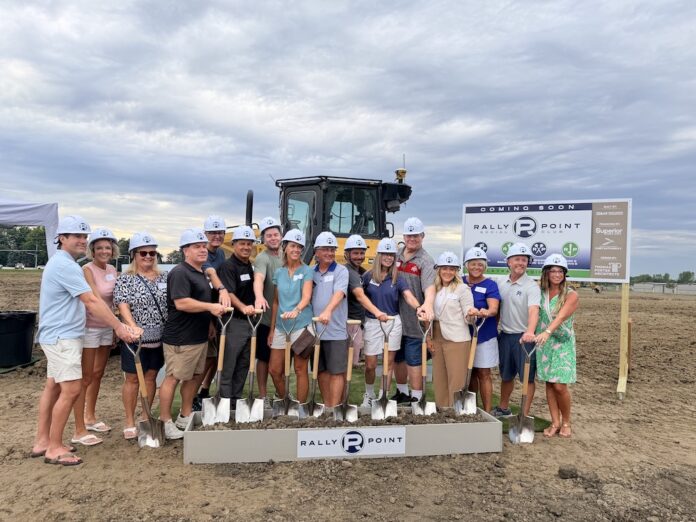
Ron and Becca DeLeeuw, at right, were joined by investors during an Aug. 31 groundbreaking for Rally Point Social Club. (AWFP photo by Karen Gerhardinger)
MONCLOVA TOWNSHIP – When Rally Point Social Club opens next spring, it will not only provide much-desired indoor and outdoor pickleball courts for Monclova Township and surrounding communities, but a community gathering spot where all ages and abilities can gather to play no-skill games, eat, drink and get to know one another.
“It ultimately comes down to community,” said Rally Point Founder Ron DeLeeuw. “The community needs to feel it belongs to them. Rally Point is a social club built around activity, competition and connection. We want to give people a place to play, eat, drink and spend time together.”
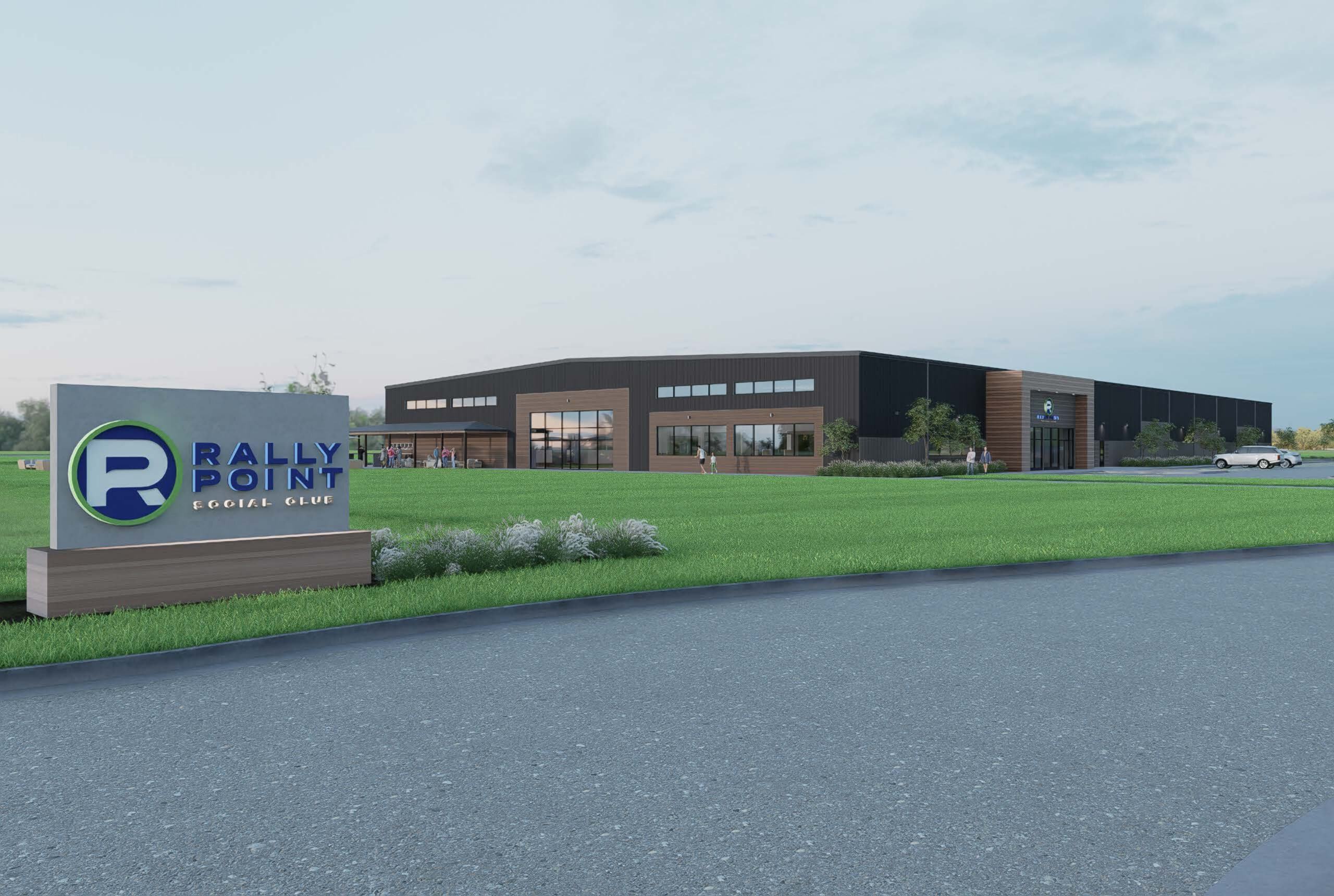
On Aug. 31, DeLeeuw and his family, investors and local leaders gathered on the 8.6-acre property on the northeast corner of Jerome and Monclova roads for a ceremonial ground breaking – although site work has been under way for the past few weeks. He expects the frame for the 48,000-square-foot steel structure to be up within the next few weeks.
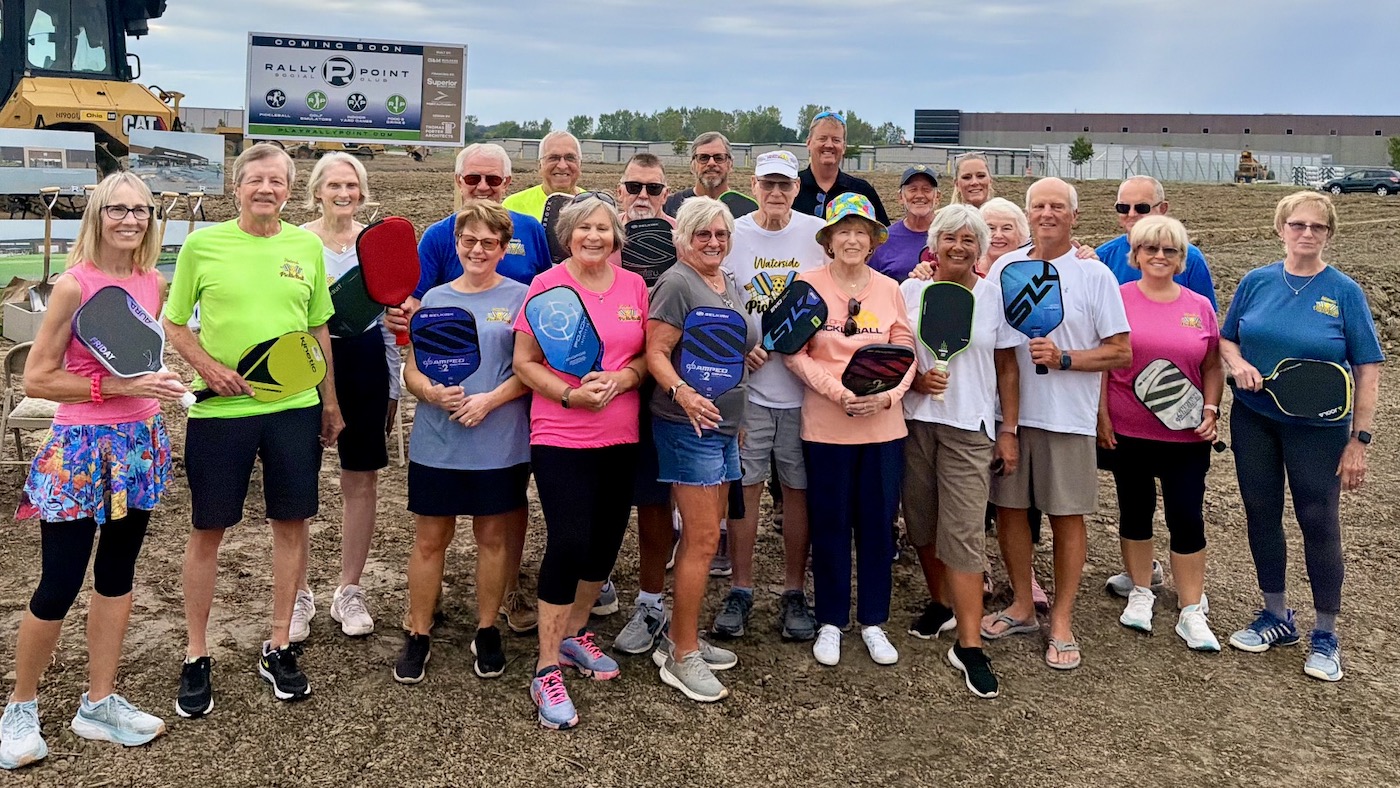
Pickleball players from Waterside community came to support Rally Point Social Club during the Aug. 31 groundbreaking. (AWFP photo by Karen Gerhardinger)
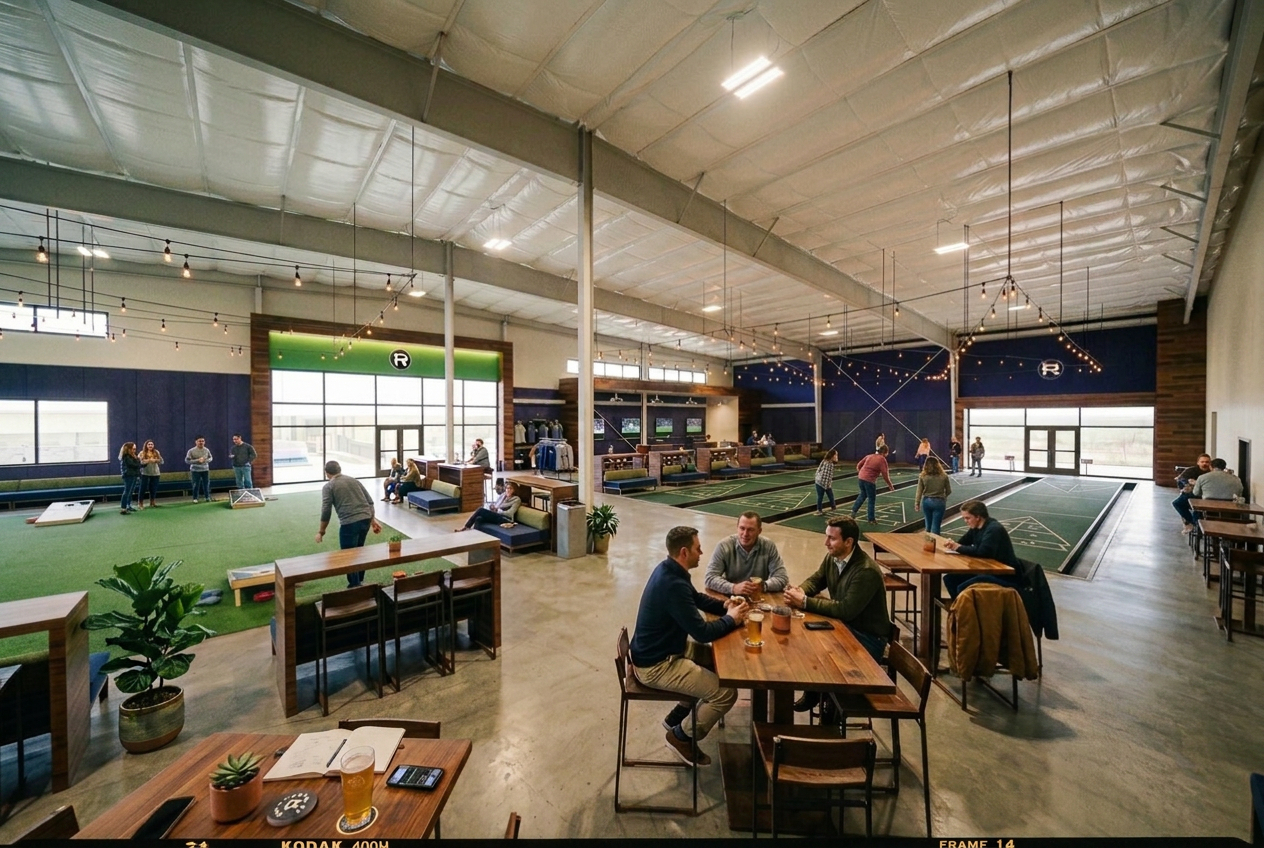
When finished, Rally Point Social Club will have five outdoor and 10 indoor pickleball courts, four golf simulators and spaces for playing games like bocce, cornhole, shuffleboard and virtual reality darts. The indoor courts will have rounded corners to allow for a walking track around the perimeter, and a nearby space with stationary bikes and exercise bands will give pickleball players an opportunity to warm up. A mezzanine overlooking the first floor will include spaces for groups to meet for euchre, trivia nights and reunions – or to just watch the pickleball games below.
“Every activity is based on what is working around the country,” said DeLeeuw, noting that shuffleboard bars and restaurants are gaining in popularity. “People are just looking for something to do together. Shuffleboard is not only good for the younger generation but the senior population. It’s a traditional sport that you can do even with limitations.”
In addition to pickleball courts, Rally Point will feature indoor yard games, a tap wall and plenty of space to socialize. (Rendering courtesy of Thomas Porter Architects)
While food trucks will be on site in warmer months, serving customers using the outdoor patio and its many activities, an indoor kitchen will serve up breakfast, lunch and dinner year-round, with everything from pizza, wings and pretzels to salads and wraps. An indoor and outdoor self-serve tap wall will provide dozens of brews – many of them local – for tasting by the ounce.
“We hope to team up with local breweries, to bring as much of Toledo as we can into this building,” DeLeeuw said.
Technology will be used throughout the customer experience, with an app for reserving a lane or court, or paying for food and drinks, but ambassadors will be on site to help through that process and to check IDs for alcohol sales. That self-serve model works well for those who don’t want to be tied down to a table or a waitstaff member, but instead roam through the building while on a date, a family night out or a morning gathering, he noted.
A mezzanine at Rally Point will include areas for groups to host social gatherings. (Rendering courtesy of Thomas Porter Architects)
Memberships will be offered for pickleball, giving members the ability to book courts a few weeks out, but are not necessary for booking a lane or just hanging out. DeLeeuw envisions Rally Point Social Club as a place where people can come in at 7 a.m. and play a game and use one of the two showers on site before heading into work. Retirees like those he met in Waterside community might take the next shift, playing pickleball mid-morning and staying for lunch. Parents might meet up with other families while kids play with balls in an open-turf area throughout the morning. And he expects that the two conference rooms with AV capabilities will be used for corporate retreats or social gatherings.
Typically in the afternoon is when sports venues see a lull, but DeLeeuw plans to offer an after-school rate of $1 per game for students to play pickleball from 3 to 5 p.m.
“Our No. 1 focus is value. We want to keep the prices at a value level so that we keep the building busy all day,” DeLeeuw said, explaining that his goal is to keep lane rental under $10 an hour. “If the price is right, people will come all day and the building will have great energy from 7 a.m. to 11 p.m.”
During the groundbreaking, several Waterside residents who play pickleball regularly came to show their support.
“It will be a lot of fun. There will be a lot of us out here. We’re all looking forward to it,” said Dianne Stroshine. “I’m so excited to have something close. We just need to hop on the bike path and come here.”
Rally Point Social Club’s pickleball courts are lined just for the sport, which makes a difference. Other courts often have lines for other sports like tennis, Stroshine said.
(Rendering courtesy of Thomas Porter Architects)
Lori Schroeder, who organizes the Waterside pickleball group, said about 105 residents of the 602-home senior community play pickleball. DeLeeuw came to visit the group last week to get feedback.
“The community itself will be using this to come down for easy dinner or the games that the kids have. It seems like a real family oriented place. He’ll have a lot of us here in the winter playing,” Schroeder said.
While the new structure will utilize just an acre of the property, plus space for the outdoor patio and parking, DeLeeuw is keeping his options option for future facilities on site, based on feedback.
For DeLeeuw, the groundbreaking represents more than two years of planning. In October 2024, Monclova Township turned down his initial request to build an inflatable dome for pickleball, volleyball and baseball/softball, because such structures are not permitted in the Monclova-Maumee-Toledo Joint Economic Development Zone – of which his property is an anchor. But going back to the drawing board just gave him more time to research and come up with a plan that will appeal to more than just pickleball enthusiasts, he said.
The facility is expected to employ directors for pickleball, operations and food and beverage, as well as a marketing/promotions manager, kitchen staff and ambassadors. DeLeeuw did not receive any tax incentives or abatements for the project, but did work with Superior Credit Union and the Port Authority to obtain a loan.
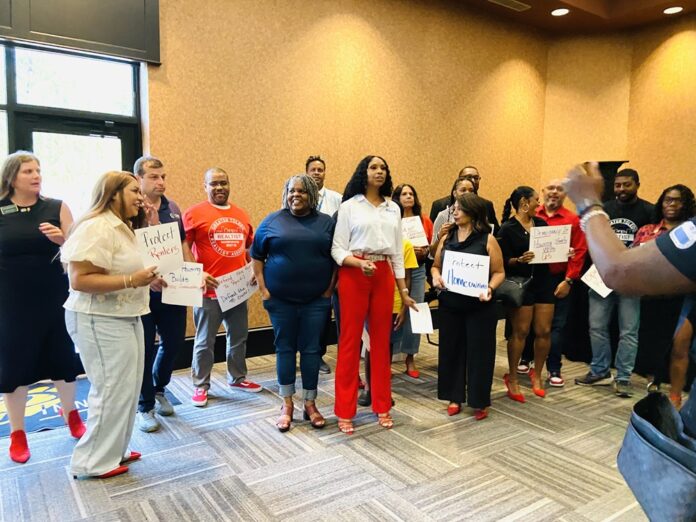
Greater Toledo Realtist Association flash mob. (Courtesy photo)
On behalf of The Fair Housing Center (TFHC), we want to thank the Toledo-area community for making There’s No Place Like Home on Aug. 18 a magical celebration of fair housing and the community we all call home.
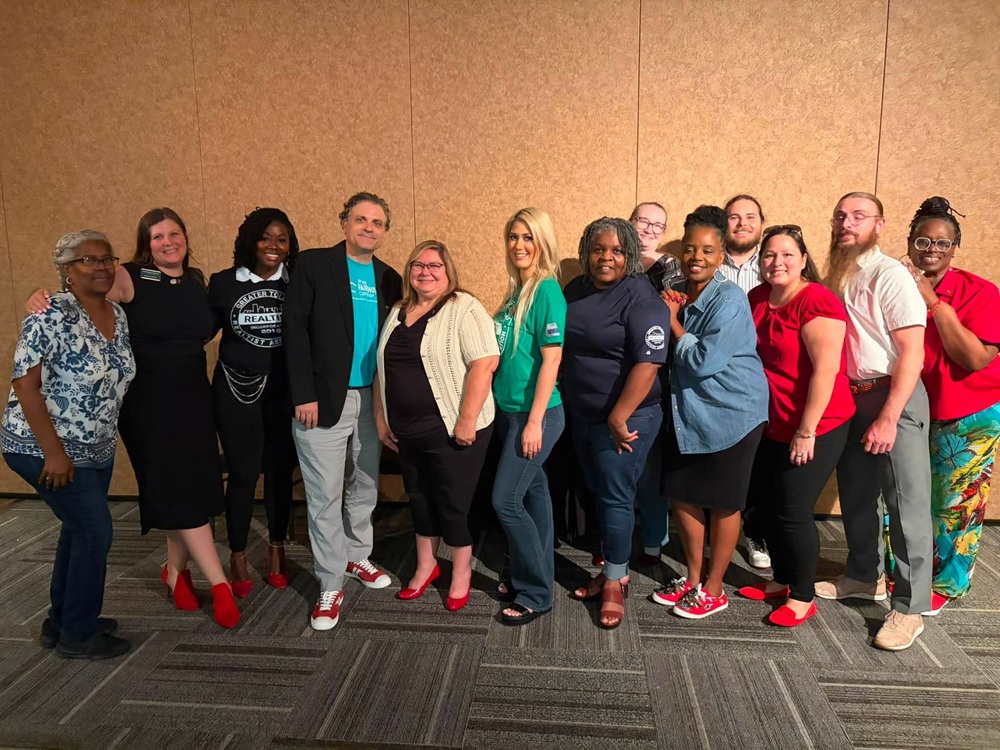
The Pinnacle was filled with red shoes, music, and an outpouring of support for our mission. The Greater Toledo Realtist Association (GTRA) brought energy and enthusiasm with a surprise flash mob, while Howard Hanna of Northwest Ohio made an already generous moment even more meaningful by donating its 50/50 raffle winnings back to TFHC. With generous sponsorships from GTRA, Key Realty, and the Lucas County Commissioners, the event helped us raise $3,000 in ticket sales and donations.
TFHC staff with supporters from GTRA and Howard Hanna. (Courtesy photo)
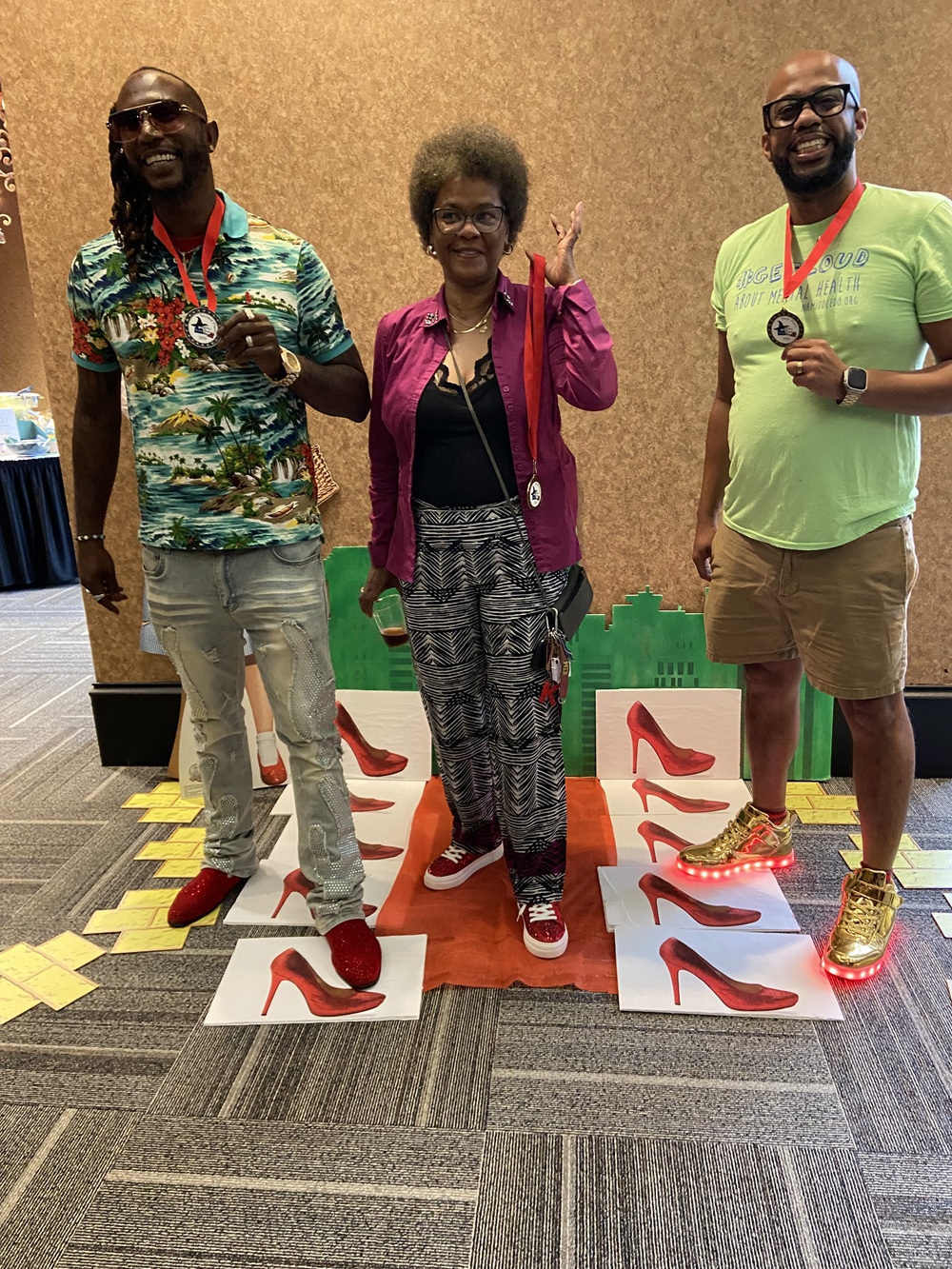
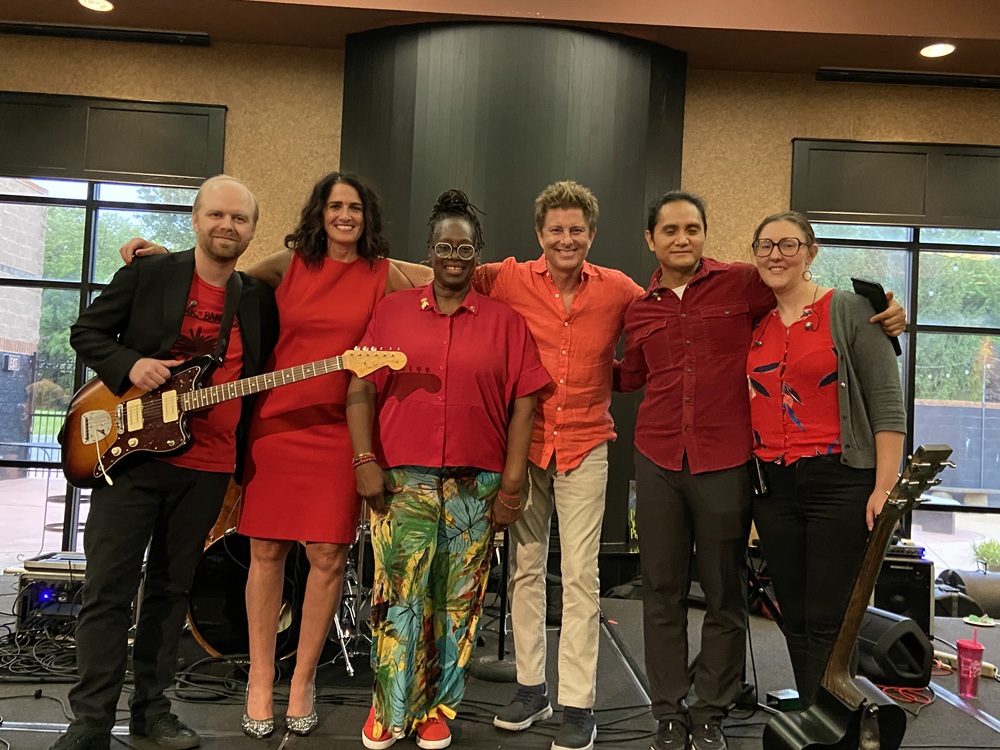
Guests also enjoyed live music from Toledo’s own Arctic Clam, original Wizard of Oz-themed artwork by local artist Brian Lowe, and the extremely popular Red Shoe Contest. Winners Gabriel Garcia, Chris Keller, and Kimberly Dixon won first, second, and third place, respectively by the crowd’s applause.
(Left to right) Chris Keller, Kimberly Dixon, and Gabriel Garcia, winners of The Red Shoe Contest. (Courtesy photo)
Events like There’s No Place Like Home are more than just having a good time; they bring people together around the belief that everyone deserves a fair opportunity to find a safe, stable place to call home. As TFHC Development Coordinator Audrey Johnson puts it: “No Place Like Home is an accessible, welcoming event that brings our mission to life. When I looked around the room and saw people of all backgrounds, Black, brown and white, young and old, coming together, I knew we were getting it right.”
Audrey Johnson of TFHC with Arctic Clam. (Courtesy photo)
While it had been a few years since we held There’s No Place Like Home, we look forward to hosting this community gathering for many years to come. We are grateful to everyone who attended, participated, donated and helped make this year’s event such a success. None of this would have been possible without the generosity of the Toledo community.
There truly is no place like home, and we are proud to call northwest Ohio ours.
-Emily Desmond Toledo Fair Housing Center, Director of Communications