Home Blog Page 22

Whitehouse wins grant for pedestrian hybrid beacons

0
Two pedestrian hybrid beacons, such as this one in front of the Toledo Museum of Art, will be installed in Whitehouse along S.R. 64 in 2028, thanks to an Ohio Department of Transportation grant awarded to the village. (Courtesy Photo/Ohio Department of Transportation)

WHITEHOUSE – With concerns about pedestrians and cyclists crossing S.R. 64 – especially after an injury accident last summer – Whitehouse applied for Ohio Department of Transportation funding to install pedestrian hybrid beacons (PHB) in two locations.

During the May 5 Whitehouse Village Council meeting, Public Service Director Mike Hill shared that ODOT awarded the village a grant that will cover 90 percent of the $417,000 cost to install these signals where S.R. 64 (Waterville Street) meets Whitehouse Square Boulevard and the multi-use path in front of the Whitehouse Library. 

Both intersections currently have flashing yellow beacons that can be activated at the press of a button, but motorists only need to stop if someone is already in the crosswalk. This has caused confusion, for both those using the crosswalk and motorists, despite an educational campaign by the police department last year.

“I think that the PHB is going to eliminate a lot of driver and pedestrian confusion,” said Police Chief Allan Baer. The current yellow-only flashers are helpful, but we have had some close calls and near misses due to uncertainty as to ‘right of way.’ The proposed PHB should make crossing S.R. 64 much safer for pedestrians, cyclists and vehicle operators.” 

With the PHB, two red lenses are set above a single yellow lens. These lenses remain dark until a pedestrian pushes the call button to activate the beacon, which initiates a yellow to red lighting sequence of flashing, then steady lights to direct motorists to slow, and then come to a stop for a solid red light. This provides a right-of-way for pedestrians to enter the crosswalk and safely cross the roadway before the lights go dark again. 

According to ODOT, 74 percent of pedestrian fatalities occur at non-intersection locations, and vehicle speeds are often a major contributing factor. In both locations, the speed limit is 45 mph. The average daily use of S.R. 64 in that stretch is 8,300 vehicles per day, according to 2025 data from ODOT.

Once the new signals are installed in 2028, the existing flashing signals placed in those intersections will be saved for use in other areas of the village, Hill said.

During the meeting, council also:

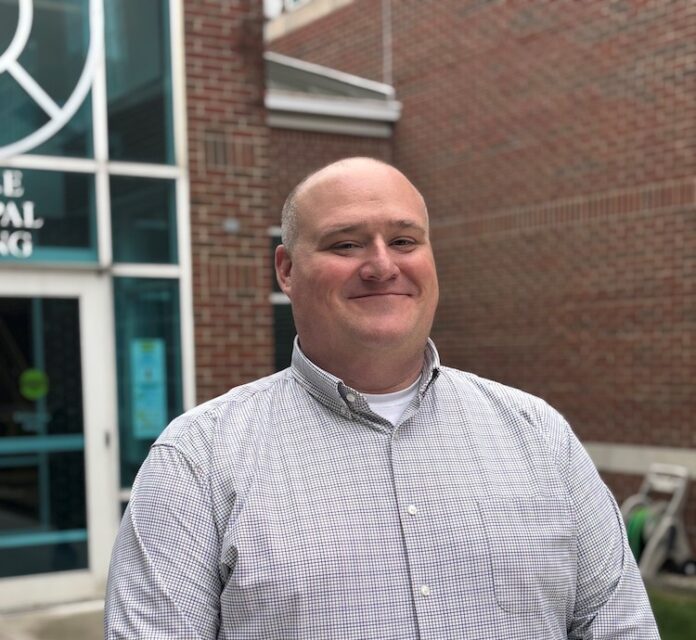
-Thanked Whitehouse Chief Operations Officer Josh Hartbarger for his 25 years with the village, beginning as a volunteer firefighter. Hartbarger was named the new administrator for the City of Maumee, and his last day working for Whitehouse is June 1. Hartbarger thanked the village and the many mentors who helped him throughout the years. 
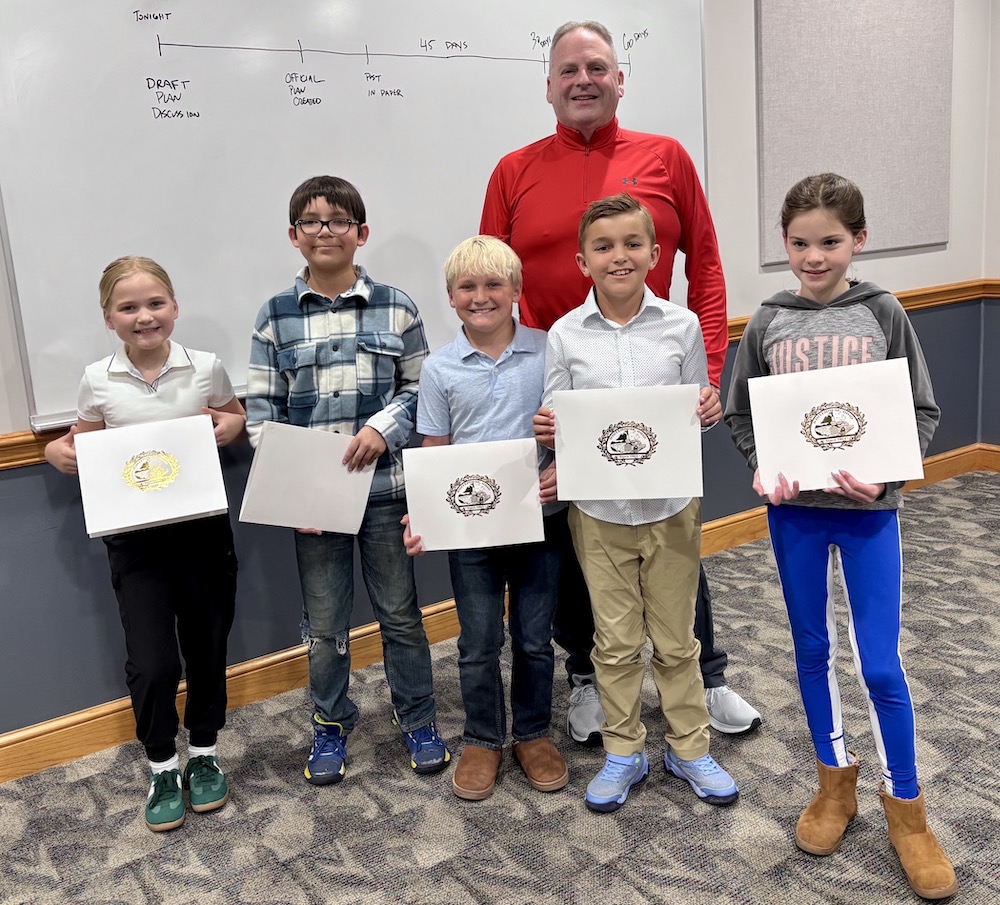
Whitehouse Mayor Rich Bingham welcomes Whitehouse Primary School kid mayor (from left) Addison Kozek and council members Linkin Rusch, Tyson McGill, Ashton Villhauer and Nora Lindsay to the May 5 meeting. (AWFP photo by Karen Gerhardinger)

-Congratulated the members of the Whitehouse Primary School Kid Council, including Mayor Addison Kozek and council members Nora Lindsay, Tyson McGill, Linkin Rusch and Ashton Villhauer. The students will represent their peers during a May 15 Kid Council meeting at the school with Whitehouse Village Council members. Judge Daniel Hazard will swear in the council members, who will select a design for flags to hang throughout the village. 

-Approved the use of village streets for The Distinguished Gentleman’s Ride, a worldwide motorcycle event in which riders dress in classic, dapper attire and ride vintage style bikes, on Sunday, May 17 from 10:30 a.m. to 12:30 p.m. The ride raises funds for the Movember Foundation, which raises awareness of men’s health issues, such as prostate cancer, testicular cancer, and men’s suicide, said David Ludwig, owner of Ludwig Clock and Watch Repair.

-Learned that the Anthony Wayne Community Chamber of Commerce is hosting a farmers market on Sundays from 1 to 4 p.m. between June 14 and August 30. In addition to produce, the market will feature artisans and vendors, all set up in the Whitehouse Park pavilion, said organizer Stephanie Phillips.

-Appointed Joe Urenovitch to the Spencer Township Joint Economic Development Zone Board. He is an attorney with an office in Whitehouse.

-Congratulated the three new businesses in the Shops at Blue Creek: Green Alchemy, Turner Martial Arts and Top Me Off Refill Shop.

-Listened to Mayor Rich Bingham share how he met with representatives of the Sister Cities program during a recent event in Toledo. He asked if Council would be in favor of exploring having a sister city for the village, and, if so, which continent or country they would be interested in.

The program strengthens business ties and enhances cultural learning, he noted. Law director Kevin Heban said that cities or villages named Whitehouse exist in Jamaica, Malaysia, South Africa and other countries. Bingham said he would ask a representative to come to a meeting to answer questions.

-Heard Public Works Director Hill say that he spoke with ARS about options for canceling trash pickup on windy days. ARS advised that any resident who wished to delay pickup could call and ask to leave extra trash out the following week. 

-Learned that the AW Senior Connection program is working with Maumee Senior Center on partnering for programming. The center offers meals each Friday at Waterville Branch Library. The center will offer a sign-up event for the Ohio Department of Aging’s Senior Farmers Market Nutrition Program on Wednesday, May 13 from 10 a.m. to noon in village hall. 

-Heard that Cherry Fest is June 11-13 and council members, along with Kid Council and mayor, will be on a float during the Saturday parade.
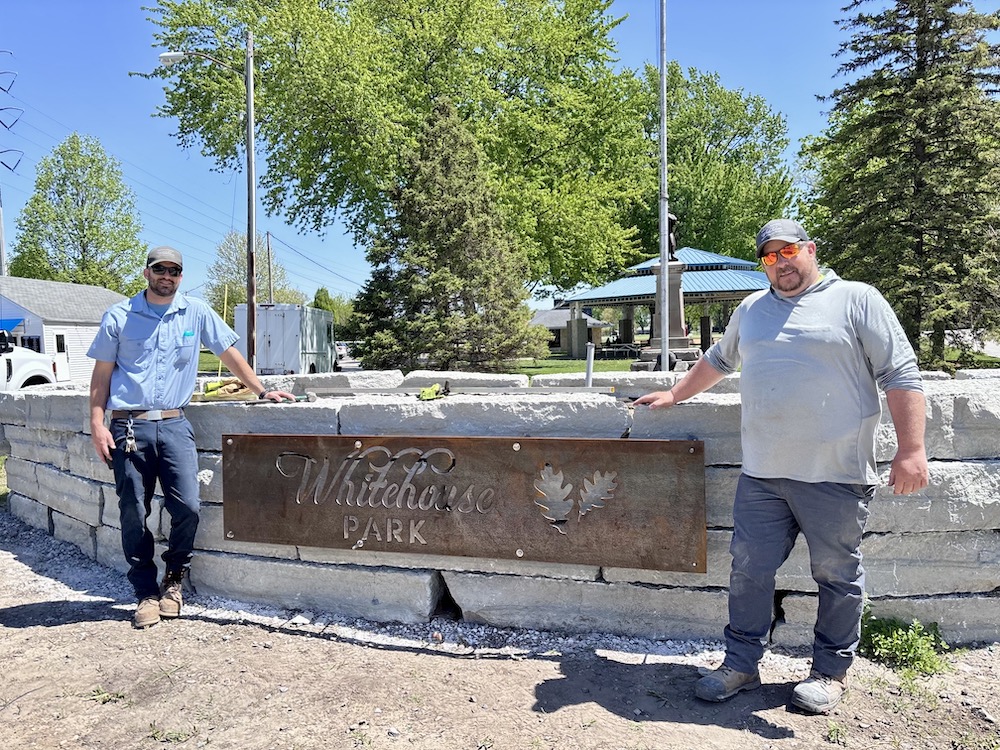
Public Works Supervisor Jordan Connor and worker James Forrest finished installing the etched metal sign on a new entryway to Whitehouse Park on May 4. (AWFP photo by Karen Gerhardinger)

-Learned that the etched metal Whitehouse sign was placed at the park on May 4.

-Heard that the fire department has provided CPR training to 52 citizens so far this year.

-Listened to Council Member Carrie Tuohy ask that the mayor and council president share with all council members any information from meetings they have outside of council.

-Heard Cuncil Member Dave Riggenbach ask for details on the process for filling the chief operations officer’s position. 

-Welcomed FalconForge AI representative Brandon Elliott, who shared how his company is working with area communities to prepare for HB 96 compliance and manage its cybersecurity.


Youth Essay Contest: Anthony Wayne Free Press 250 Project

0

The Anthony Wayne Free Press – a new online newspaper covering local businesses, government, schools, events, organizations, and community issues in the Anthony Wayne area as part of the nonprofit Toledo Free Press – is publishing a printed commemorative edition marking the 250th anniversary of the United States of America.

We are running stories on local festivities, area civic organizations, local historical societies, and the significance of Gen. Anthony Wayne, as well as a series of community member-authored perspectives on the five freedoms guaranteed in the First Amendment. Copies will be available for free around the AW community as well as published online.

We also would like to run essays submitted by young people in our area, including students from Anthony Wayne Schools, local homeschool students, and AW-area residents attending area parochial schools, academies, or online schools. The topics are:

What does it mean to be an American and how is that reflected in our local area?

What will our local community look like in another 50, 100, or 250 years from now?

The best essay on each topic from each grade/age category will be featured in the printed edition; others selected would run online at anthonywaynefreepress.com.

Grade/age categories are, by the end of June 2026: 

  • Middle/Junior High (approx. ages 10-14)
  • High School (approx. ages 14-19)

Deadline is May 22, 2026. Target length is 500-600 words; essays will be lightly edited for newspaper publication. Submissions should include: topic question, author’s full name, age, grade level, school/homeschool, address, and parent contact phone number and email address. Only student name, grade/age, school, and town will be published.

Send completed essays with above information to Rebecca Conklin Kleiboemer, Trustee, Toledo Free Press Board of Directors, at [email protected]. Questions? Call/text Rebecca at 419-429-9152.

The Post-Primary Picture: How five key contests played out

0
4K: Ohio Primary Results | May 6, 2026 - 4K: Ohio Political Insight | March 11, 2026

TOLEDO — Ohio’s May primary election is now behind us, kickstarting what will be months of campaigning ahead of November’s general election. While a number of important issues and races were on the ballot, here are five contests that’ll be worth keeping an eye on into November.

Race 1: Ohio’s 9th Congressional District

Marcy Kaptur, who currently represents Ohio’s 9th Congressional District, ran unopposed in the May 2026 primary.

Ohio’s 9th Congressional District is currently represented by Rep. Marcy Kaptur (D-Toledo). While she ran unopposed in the Democratic primary, the field of challengers in the Republican primary was vast. It included Sylvania-area State Representative Josh Williams, former state representative and ex-Waterville Mayor Derek Merrin, former deputy director of Immigration and Customs Enforcement (ICE) Madison Sheahan, veteran Alea Nadeem, and Anthony Campbell.

Ultimately, Merrin prevailed, winning with just over 44 percent of the vote. Williams came in second, Sheahan third, Nadeem fourth, and Campbell fifth. Merrin’s win in the GOP primary sets up a rematch against Rep. Kaptur, who he lost to by just 2,382 in November of 2024.

Republican and former Waterville Mayor Derek Merrin won in Ohio’s May primary, so he will go up against Kaptur in the November 2026 election for Ohio’s 9th Congressional District.

While the Republican at the top of the ticket back then, Donald Trump, managed to carry the district by nearly seven points, that “red wave” year simply wasn’t enough to carry Merrin to victory. However, last year, Ohio had its legally-required mid-decade redistricting process, in which the 9th was redrawn to have an even stronger Republican advantage than it did in 2024.

While Kaptur’s climb is steep, in a district that would have voted for President Trump by just over 11 points in 2024, The Cook Political Report rates this race a “toss up.” A key reason for Kaptur’s resilience has been the strength of her name recognition, connection to voters who would otherwise view Democrats unfavorably, as well as — in the case of her 2024 victory —  strong support in the cities of Toledo, Fremont, and Sandusky. Kaptur’s new district no longer includes Fremont, though a strong showing in the Toledo & Sandusky areas could put her over the line once again.

Race 2: Secretary of State

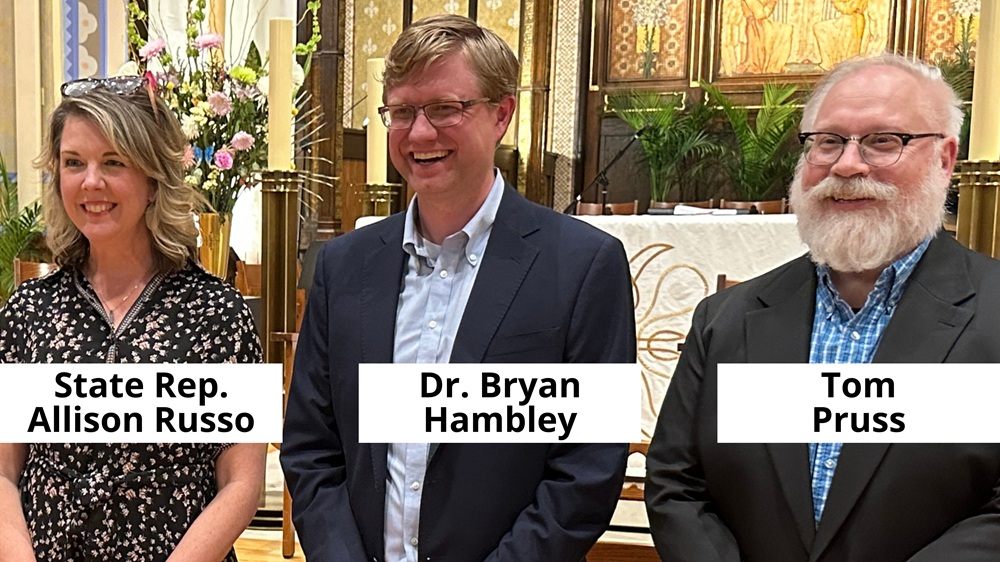
Secretary of State Candidates (TFP photo by Jaden Jefferson)

Also on Tuesday: the Democratic and Republican primaries in the race for Ohio Secretary of State. On the Democratic side, State Representative Allison Russo (D-Upper Arlington) faced a primary challenge from Dr. Bryan Hambley, a Southwest Ohio oncologist. While on the Republican side, Ohio Treasurer Robert Sprague faced a primary challenge from veteran Marcell Stribch. Unofficial results show Russo will face Sprague in November. Tom Pruss is running as the Libertarian nominee.

Race 3: Attorney General

In the Democratic primary for Ohio Attorney General, attorney John Kulewicz defeated former state representative Elliot Forhan. Kulewicz will go on to face Republican Keith Faber, who currently serves as state auditor, in November.

Amy Acton is the democratic nominee for Ohio governor. (Courtesy photo)

Race 4: Governor

Dr. Amy Acton, Youngstown native and former director of the Ohio Department of Health, faced no Democratic primary challenger. She advances to face Republican entrepreneur Vivek Ramaswamy in November. Ramaswamy, a Cincinnati native, handily won the Republican nomination. He faced a primary challenge from Casey Putsch.

Republican gubernatorial candidate Vivek Ramaswamy walks to the podium during a campaign stop in Toledo in 2025. Ramaswamy won the May primary and will face Democrat Dr. Amy Acton in the November 2026 election for Ohio governor. (TFP Photo/Scott W. Grau)

Race 5: U.S. Senate

Sherrod Brown won the democratic primary and will face Republican Senator Jon Husted in November. (Official U.S. Senate photo by Rebecca Hammel)

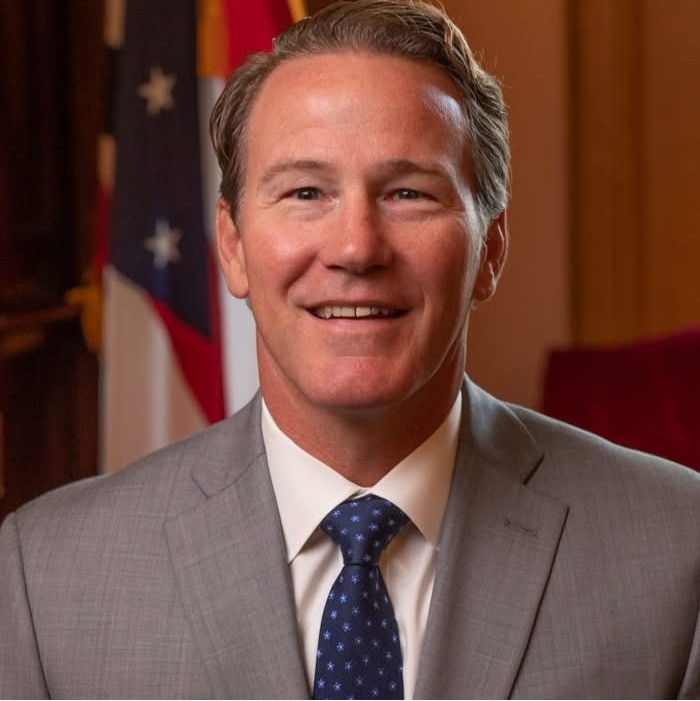
In the Democratic primary, Sherrod Brown, who represented Ohio in the U.S. Senate from 2006-2024, easily defeated his primary challenger, Ron Kincaid. Brown goes on to face Republican Senator Jon Husted in November.

Husted, Ohio’s former lieutenant governor, was appointed to the senate seat by Governor Mike DeWine, as JD Vance’s replacement, upon his election to the vice presidency. Brown lost his 2024 reelection bid to Republican Bernie Moreno by just 3.6 points. The close result suggests Brown was unable to overcome the “Trump wave” of 2024, which gives some Democrats confidence his fortunes will be better this year, as Trump won’t be on the ballot. 

Republican candidate to represent Ohio in the U.S. Senate, Jon Husted. (Courtesy photo)

The Context: Democrats need to flip four seats in the U.S. Senate in order to gain a majority in the chamber. One of the party’s most likely paths to doing that requires flipping one of Ohio’s, which is why the Democratic-aligned Senate Majority PAC is committing $40 million to support Brown’s campaign. In comparison, the Republican-aligned Senate Leadership Fund is providing $79 million to back Husted’s campaign.


Wild Side: Wild for warblers

0
A magnolia warbler at Magee Marsh. (Photo by Metroparks Toledo nature photographer Art Weber)

It’s an especially exciting time to be out and about in Metroparks Toledo and other premier natural areas of our region. It’s time to welcome the huge numbers and varieties of warblers that will pass through on their way to more northern breeding territories. Some will remain here to raise their young, while others belong to a group known as the overflight, warblers and other species that come a bit further north than they prefer and will head southward.

Serious birders understandably get carried away looking for the rarities, but in truth, many of the most colorful warblers are fairly common. That’s what this Wild Side is all about.

Whitehouse COO named as new Maumee administrator

0
Joshua Hartbarger, who has served as Whitehouse COO, will be the city administrator and public safety director for the City of Maumee. (Courtesy photo)

MAUMEE – After more than two decades of leadership with the village of Whitehouse, Josh Hartbarger is ready for the next chapter – as city administrator and public safety director for the City of Maumee.

“Mr. Hartbarger has extensive experience in public safety, leadership and public administration, and will be an asset to the city of Maumee,” Maumee Mayor Chelsea Ziss stated in her May 1 letter of recommendation to City Council, which approved Hartbarger’s hiring during its May 4 meeting.

In that role, Hartbarger will supervise the chief building official, fire chief and police chief, oversee the director of public services and director of finance, and report to the mayor and council. His annual pay is set at $147,385.56.

Hartbarger grew up in the Whitehouse community, but he also spent plenty of time in Maumee, where his mom ran a day care facility on River Road.

“I fondly remember going to Penguin Palace on hot summer days. Some of my best childhood memories were in the great city of Maumee,” Hartbarger said. 

In addition, his first full-time job was with his father’s distributorship business in Arrowhead Park.

“Maumee has wonderful and diverse residential and commercial areas, all while maintaining the small town charm. I’ve always been drawn to this community and see a great future ahead for Maumee,” he said, noting that he feels grateful to have the opportunity to be a part of its growth.

An Anthony Wayne High School Class of 2000 graduate, Hartbarger was named to the Anthony Wayne Alumni Association Hall of Fame in 2024. After graduation, he earned an associate degree in government and political science from Owens Community College, a bachelor’s degree in fire administration from Bowling Green State University, and a master’s degree in public health from Ohio University. 

While working on his associate’s degree, Hartbarger joined the Whitehouse Fire Department as a volunteer firefighter, eventually becoming a paramedic and certified trainer. In 2006, he served at the McMurdo Station in Antarctica as a fire lieutenant, returning to Whitehouse to become the department’s fire inspector, then deputy chief and finally, fire chief.  

During his tenure as fire chief, Hartbarger collaborated with Waterville Fire Chief Doug Meyer to create a unique solution to problems both departments were facing, including funding and staffing. The results was the W-3 Co-op to pool resources while serving the residents of Waterville, Waterville Township and Whitehouse. The co-op earned Hartbarger and Meyer the Ohio Fire Chiefs Association Foundation Award in 2022.

“The lasting effects it will have and seeing Whitehouse Chief Jason Francis and Chief Meyer carry the torch and make it better has been fulfilling,” he said of the co-op. 

In 2023 he was named chief operating officer for the village – a newly created position during an administrative restructuring. In that role, he oversees the operations and activities of all the departments, handles municipal matters for the village at large, and represents the village with businesses and civic organizations. With IT and cybersecurity knowledge, Hartbarger ensures the village’s network safety. And, working with the mayor and administrator, he collaborates on multiple projects, including economic development.

“I’m leaving a great position but know the next person will make it theirs and take it further. I’m grateful for the opportunity to have served the residents of Whitehouse. I will miss the employee and leadership team of Whitehouse, but I am ready for the next chapter with Maumee,” he said.

While Maumee is triple the size of Whitehouse, Hartbarger said the residents all share one commonality – an expectation for excellent services. He plans to approach his new role with the same calm and steady manner that he has with the village, relying on top-notch directors and employees to solve challenges creatively as a team.

His first priority as he enters his new office is to listen.

“It’s imperative for administrators to listen to residents, businesses and employees. Especially for the new guy coming in, I don’t know what I don’t know, and the only way to solve this is making the time to listen and learn,” Hartbarger said. “In this process, I’ve met some amazingly talented directors. They need to be supported and empowered to do the job they love to do. And, I’ll be working with and supporting the goals and objectives of the mayor and council.”

Maumee is in a unique position for growth, Hartbarger said, with a phenomenal business park and areas that other communities probably envy. 

“Positioning Maumee to be ready for responsible and right economic growth is an amazing opportunity,” he said.

Throughout the years, Hartbarger has developed relationships with leaders in other communities, and he sees opportunities for collaboration with neighbors, the county and the state. 

“These relationships lead to opportunities that wouldn’t be available without collaboration and communication,” he said, noting that his focus will also be on expanding and retaining existing businesses. “Being visible and engaging in the current business community can assist in that. Sometimes just being present for a conversation can spark ideas and connections that present opportunities.”

After Dr. Patrick Burtch‘s retirement from the position in August 2025, the city formed a committee that includes administration, council members and citizens. Hartbarger was among 38 applicants for the position. Over the past few months, he’s interviewed multiple times with the committee.

He will be joined by another new hire in Maumee: new Urban Planning Manager Dana Reising, who brings decades of experience from the City of Toledo in sustainable development, zoning and community planning. She will be responsible for planning and zoning services with a heavy focus on economic and community development.

As he prepares to take the helm on June 1, Hartbarger will turn in his notice to Whitehouse Village Council.

“I’m leaving a great position, but I know the next person will make it theirs and take it further,” he said. 

Hartbarger is married to Nikki, and together they are raising two daughters: Valerie and Josie.

 Ostrich Towne anchors Vistula neighborhood

0
A colorful mural at Ostrich Towne. (Courtesy photo)

The development is a festive revival that brings new tenants

TOLEDO – Toledo is famously known as the Glass City, and its pro baseball team is the Mud Hens. Now, there’s a new, catchy moniker distinguishing the city: Ostrich Towne.

Breathing new life into the Vistula Historic District is the mixed-use development that after a fitful start is taking off running like its namesake. An ostrich is the world’s largest bird – flightless yet fast. 

The development’s name comes from a longtime street named Ostrich Lane that the city vacated, and now is the common space for restaurants, shops, and offices, with adjacent apartments.

And while an ostrich is speedy, the pace of the development hasn’t been. In fact, it’s been deliberately slow.

“Rather than a rush to tenancy,” said Cheryl Hardy, who handles public relations for Ostrich Towne, “the developers have taken their time to get the right tenants. For the neighborhood, and the future of Vistula, it’s just the right tenant mix. It’s all local. Every single one that has a business here works in that business.”

Hardy, with experience in multi-use developments, added, “Whenever you bring a development in and take over a historic property, there’s always that question: ‘How is that going to work?’ In this case, it works so well. They’ve taken the time to get the right tenants, they’ve not rushed, and they’re working to offer some different residential options in and around. It’s been such a good mix.”

Molly’s Irish Pub, one of the tenants in Ostrich Towne. (Courtesy photo)

The tenants: 

*Riverside Barbecue, featuring central Texas barbecue and Southern comfort food.

*Molly’s Irish Pub, with live music and authentic Irish drinks.

*The Power Bar, with wellness-focused shakes.

*Restore 419, historic restoration and construction experts.

*DBD Studios, luxury salon suites and event space.

*One of Each Wine, a wine bar for varied tastes and budgets (coming soon), and

*Nemsys, an IT support and cybersecurity business – and the genesis of Ostrich Towne.

“Nemsys is the original reason why we came to this spot,” said Joe Nachtrab of the Northaven Development Group. Owned by his son and his son’s business partner, Nemsys moved into the former Westminster Presbyterian Church at Superior and Locust streets in early 2019. 

The building, dating to 1874, had long since closed as a church. The Toledo Catholic Diocese took over the building to be the center of its Catholic Youth Organization basketball league until 2002. 

The decision to base Nemsys at the Vistula landmark was “to really do something special for Toledo,” Nachtrab said. “This is our giveback to Toledo for the years and years of support. The original intent was to redevelop Vistula and create an entertainment, apartment campus.”

Nachtrab, who became involved as a managing member of the project with his son and business partner in late 2022, said the development hit difficult times during COVID-19 and a legal dispute with a general manager. 

Those delays and problems were overcome, and now, under the direction of Toledo Metropolitan Development LLC, Ostrich Towne is off and running. Per its website: “Ostrich Towne is a collection of updated warehouse spaces offering contemporary retail, office, and loft-style interiors. With flexible layouts and custom build-outs, we can create one-of-a-kind spaces to meet your vision — from restaurants and galleries to boutiques and creative workspaces.”

Bingo night at Ostrich Lane. (Courtesy photo)

Ostrich Towne offers indoor and outdoor venues for meetings or just plain fun, including bingo on Thursday nights. The common space that is the vacated Ostrich Lane between the buildings has a canopy of lights for a festival feel. 

Parking is free and plentiful. “Parking is never going to be an issue,” Nachtrab said.

Not readily apparent but an important component of the development is housing. There are 11 apartment units available, mostly with two bedrooms, but some with one and another with three. “We completely redid the second floor of a building on Locust Street, and we’ve purchased two apartment buildings adjacent to Nemsys,” Nachtrab said.

The development’s name comes from a longtime street named Ostrich Lane that the city vacated, and now is the common space for restaurants, shops, and offices, with adjacent apartments. (Courtesy photo)

The future will follow what’s worked so far: finding the right tenants. Nachtrab said there’s about 40 percent of leasing space available in the 75,000 square-foot development. Other plans are to continue the residential buildup.

Another highlight for the near future comes courtesy of Metroparks Toledo. Work will begin this summer on extending the Glass City Riverwalk, on the south bank of the Maumee River, to connect with the Vistula neighborhood, on the north bank, by way of a trail on the Martin Luther King, Jr., Bridge. There also are plans for a Vistula Metropark.

“The timing is hitting just right because of Riverwalk and momentum downtown,” Hardy said. “Vistula is starting to get extra attention. I like the way it’s coming together.”

“This is a good thing,” Nachtrab said of Ostrich Towne. “And it’s just beginning.”

Zoning inspector reports on Arrowhead Lake

0
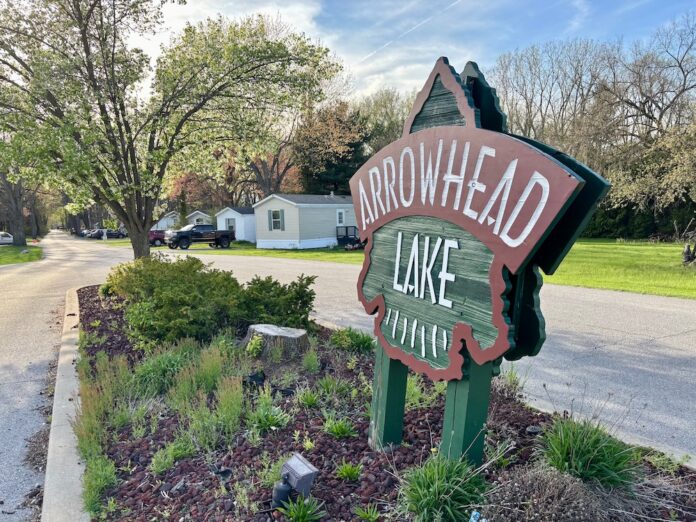
Swanton Township zoning inspector Ben Mooney is following up on zoning violations at Arrowhead Lake Mobile Home Park. (AWFP photo by Karen Gerhardinger)

SWANTON TOWNSHIP – When Ben Mooney took the position of zoning inspector for Swanton Township last month, he knew about one big project he needed to tackle: addressing multiple zoning violations at Arrowhead Lake Mobile Home Park, as outlined in a December 2025 letter from his predecessor, Kim Middleton.

For his first report to the Swanton Township trustees during their April 14 meeting, Mooney shared that he met with the park’s manager, Colton Reed.

“We had a productive meeting. I let him know that I’m not out there to drop the hammer, but we need to see some progress,” Mooney said, referring to issues with blight, trees and vacant homes. “Clear communication would probably solve some of the problems. His upper management needs to reach out.”

The morning of the meeting, the vice president of maintenance contacted Mooney, and they discussed the company’s plans to hook up to city water, but she was unaware of plans for connecting to city septic. 

“I did speak frankly with her, and said that when I pull in and see homes with moss and green and discoloration, it looks unkempt,” Mooney said. “They’re losing people when they come in to look to buy. They don’t even [stay to] go through the application process.”

He learned that the company is going through the court process of clearing the titles of abandoned homes, but that takes time and money to file. Once ownership goes back to the park, these can be demolished.

As far as trees, Reed said arborists have been on site to evaluate. Some can be addressed, but others are too close to the lake. Toledo Edison will need to get involved with other trees. Funding may also be an issue. Reed told Mooney that any resident who wants to report a problem tree needs to fill out a formal written complaint with “liability tree list” on it. This should be dropped off to the office. 

Because Reed is in charge of four mobile home parks, he is only on site three times a week. In the meantime, he is getting ready for an inspection. 

While the park residents await city water, the current system has continued to have issues and the owners have been cited by the EPA for not providing residents with the minimum amount of bottled water. 

“They are trying to keep the water potable. That’s taken a lot of their money. They are going to spend a lot hooking up to city water, but it will help,” Mooney said. “I will continue to go in and document all the parcels, blight, trees and take a bunch of pictures and take a bunch of notes. “

Trustees did contact the Lucas County prosecutor about what can be done, since the park owners failed to take action within 30 days of that December 30 violation letter.

One option would be for the township to hire someone to correct the blight issues, and then put it the cost on the county’s taxes as an assessment, Trustee Mike Nowicki said. 

“We are doing everything we can legally do,” Nowicki said.

Resident Marc Hawkins has been at the park for 14 years and shared his frustration about having his water bill and rent raised again, and promises to correct issues go unmet.

“A lot would be better if they would sit down with residents,” he said.

Nowicki said he was glad that at least Mooney has been able to open lines of communication – something that hasn’t happened before. 

During the meeting, the board also:

-Learned that trustees are investigating options for fire coverage, as a contract with Whitehouse is set to expire and the renewal reflects the increased costs that department is incurring. The last time voters approved levies was in 2001, Trustee Matt Beil said. The 1.4 mill fire levy brought in $106,998.13 in 2025, and the 1-mill EMS levy collected $76,427 last year.

-Heard that all draft minutes from meetings will be posted on the website within a few days of each meeting. The website is being updated with new features and to be ADA-compliant.

-Agreed to open a township Facebook page to post information about meetings, alerts and other township information. Comments on the page will be turned off. Trustees approved a social media policy.

-Approved a policy to pay $150 a year for maintenance workers to buy steel-toe boots.

-Agreed to pay $32,450 to the Lucas County Engineer for the 2026 residential assessment for Swan Creek Watershed ditch maintenance. 

-Discussed the Board of Zoning Appeals, which has not met in at least four years. This group meets if a zoning commission decision is challenged. Fiscal Officer Mindy Curry said she couldn’t find any notes or minutes in the records about the group, so trustees agreed to post openings for the BZA to see who is interested in being on the board.

-Agreed to hire Dawn Sanderson as legal counsel, at a rate of $190 for an attorney and $90 an hour for assistant work. 

-Agreed to join the Swanton Area Chamber of Commerce.

-Heard an update from FalconForge AI founder John Crisp on work they are doing for the township to meet the requirements of House Bill 96, anew state cybersecurity law, which goes into effect July 1. Trustees also agreed to hire TrioTech of Whitehouse to manage IT for the township for $184 a month.

-Listened to Springfield Township Fire Chief Jon Ziehr share that the department responded to 24 calls in the northern half of the township in March, including 15 EMS and nine fire-related, especially due to high winds. The fire department is now fully staffed with the addition of seven new part-timers, bringing the total to 82. Whitehouse Fire covers the southern half of the township.

-Heard Curry say that she contacted Norfolk Southern about the $13,500 per year that the township receives for economic development – an agreement made when the railway closed off Scott Road and made 2.5 acres inaccessible. Curry learned that the company only pays if invoiced by the township, and that wasn’t done for the last three years.

-Discussed the value of the Ohio Township Association and the Lucas County Township Association in providing valuable information, and agreed to renew membership.

-Listened to Beil say that the improperly placed 25 mph signs on Reed Road were removed, and the county engineer could conduct a traffic study for Reed between Girdham and Waterville Swanton roads to determine the proper speed limit. He also noted that horse crossing signs in the same area are now missing, and a police report will be filed.

-Heard Mooney say that he is working with a Reed Road resident, the county prosecutor’s office and the Michigan secretary of state to determine how to remove a boat that was placed in the yard by another person years ago, then left abandoned. The boat can’t be donated because it doesn’t have a title.

-Discussed the zoning for 12656 Airport Highway, which was grandfathered through to be a mixed use with residential and C-2 in order to run an auto sales and service shop. The current owner is running a C-4 zoned business that involves heavy equipment for sale and vehicles, with lights on and semi trucks running overnight. Mooney is working with the county and the business owner to resolve the issue.

-Listened to Trustee Bill Anderson outline options for software that could be used to digitize burial records going back to 1836 – making them available for those doing research on family history. Currently the records are on notecards in boxes and in books. Anderson said he gets calls daily from people seeking information about the cemetery.

BGSU grad & professor find innovative ways to optimize crops

0
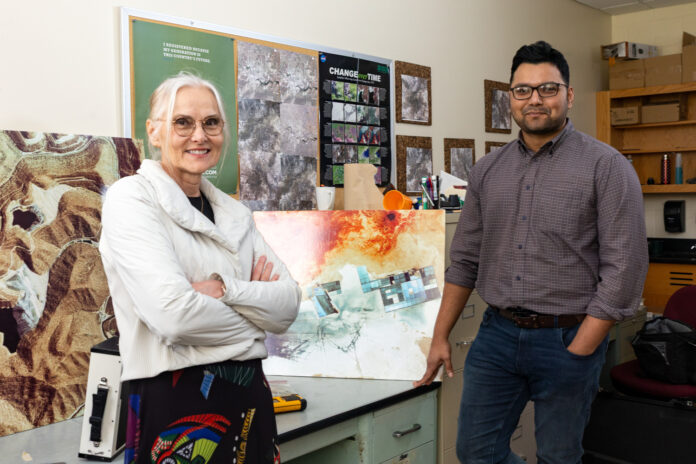
Anita Simic Milas, PhD, professor at the School of Earth, Environment and Society at Bowling Green State University (BGSU), stands with her student, Mir Md Tasnim Alam, a BGSU former grad student in the computer lab at Overman Hall on April 28. Through the use of satellites and drones, Alam was able to provide data on key agricultural factors, particularly nitrogen levels. (TFP photo by Stephen Zenner)

Local researchers boost farm efficiency through satellite data and AI

BOWLING GREEN – A local research scientist and his former professor have taken a project that began in academia and developed it into real-world applications that can help farmers.

Mir Md Tasnim Alam of Perrysburg said the research he did for his master’s thesis at Bowling Green State University involved designing systems that combine satellite and drone imagery, direct measurements of crops, and geospatial analytics to provide data on key agricultural factors, particularly nitrogen levels.

The research yielded precise real-world information in a timely matter that can help farmers optimize their usage of fertilizers and other chemicals — improving agricultural production and profitability while also reducing potential environmental harm, Alam said in an interview.

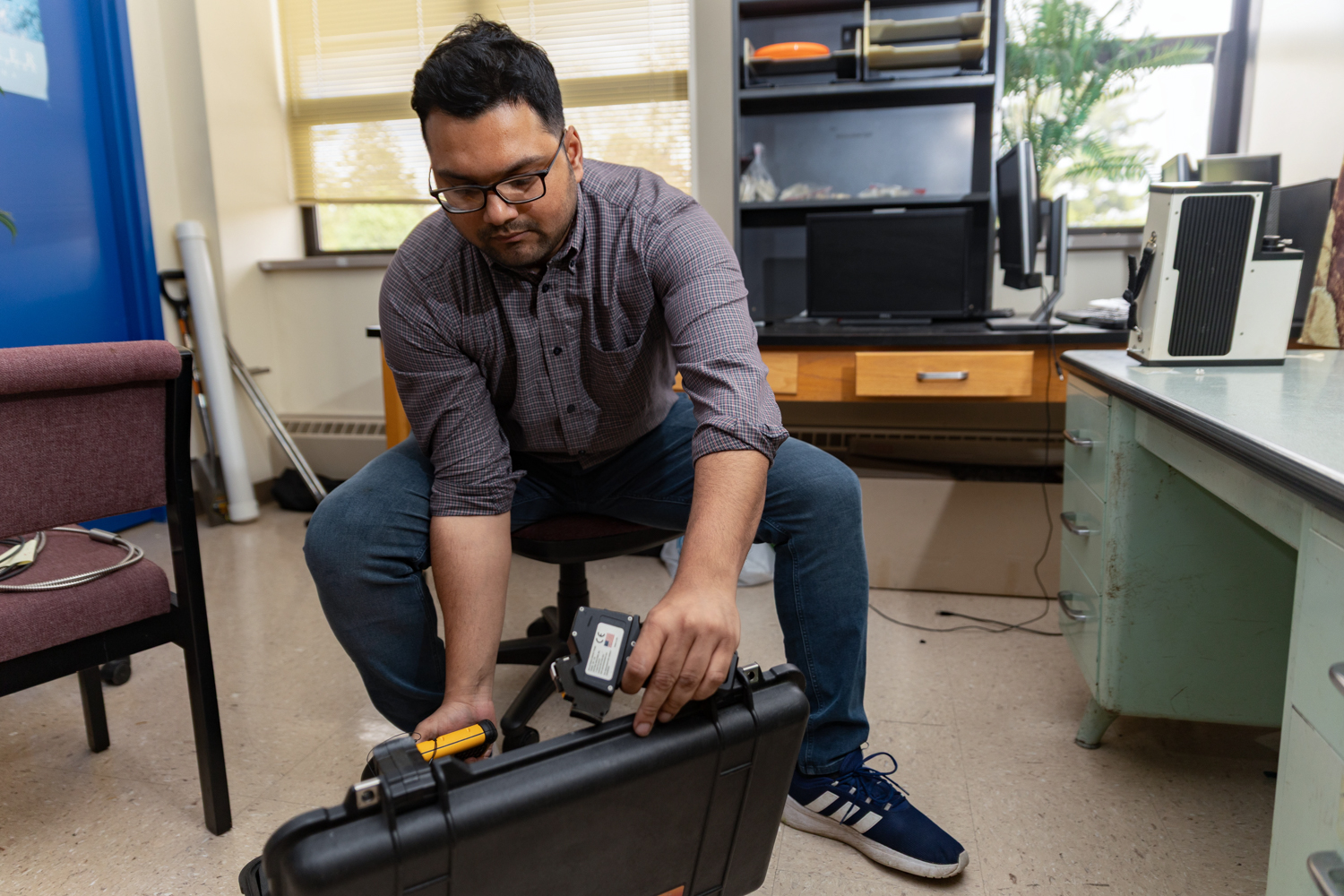
Mir Md Tasnim Alam pulls out GPS tools. (TFP photo by Stephen Zenner)

“My goal was to derive chlorophyll, nitrogen, and phosphorus levels of the corn from space,” Alam said. “What do farmers usually do? They take a leaf from their corn plant, send that leaf to the chemical lab to be analyzed, and then get the results.” 

It takes time for the labs to analyze the plant and determine if it has enough nutrients or if more fertilizer or other chemicals are needed. And the data is limited because the sample size is so small. 

That’s why Alam was inspired to devise a way to provide faster, more precise analyses of the crops. 

Sending a leaf to a lab “takes a lot of time and you can’t tell much from one single leaf,” he said. “If you have a huge agricultural land, you’d have to go check leaves everywhere, and that is not an efficient process.” 

Anita Simic Milas, PhD in her office at Overman Hall on BGSU’s Main Campus. One of Milas’ graduate students, Mir Md Tasnim Alam, published his masters thesis, which uses satellite and drone technology to help farmers produce better yields. (TFP photo by Stephen Zenner)

Satellites and drones, by contrast, are able to photograph large agricultural areas, and, using specialized equipment such as near-infrared imaging, provide a wide range of precise data quickly and efficiently, according to Alam and his former professor, Dr. Anita Simic Milas of BGSU’s School of Earth, Environment and Society.

“These data sources can capture subtle changes in plant health, including estimating key crop properties like chlorophyll, nitrogen, and phosphorus,” said Milas, who oversaw and collaborated with Alam on the research. 

“[Alam] also incorporated newer data products, such as satellite embeddings available through platforms like Google Earth Engine — compressed, AI-generated representations of satellite data that combine large amounts of optical and radar (SAR) information into a consistent set of features,” she said.

Alam noted that the human eye can see only three basic colors – red, green, and blue and their various combinations — but satellites can provide 217 bands of color that can show specific levels of chlorophyll, nitrogen and phosphorus for crops in each section of a large agricultural field.

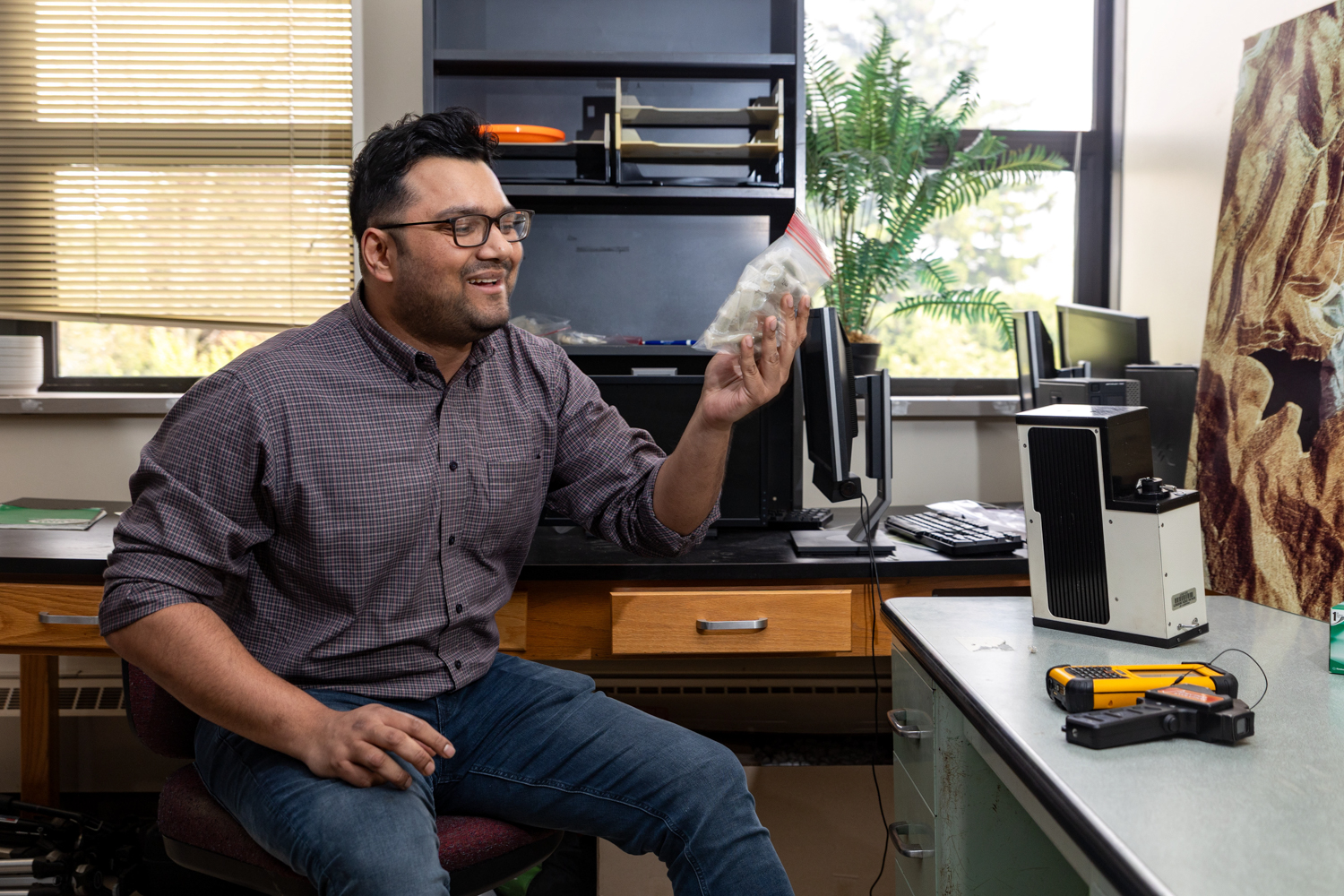
Mir Md Tasnim Alam shows a bag of plant samples taken from across a crop yield to determine the levels of chemicals in the crops so farmers can better monitor their crops. (TFP photo by Stephen Zenner)

Alam, who now works for Perrysburg-based Satelytics Inc., said he spent a lot of time, including his summer break, researching his thesis for a master’s degree in geology, in collaboration with Dr. Milas.

“What makes Mir’s work stand out is that it brings together several types of data, each telling a different part of the story about a field,” Milas said by email. “Instead of relying on just one type of satellite sensor, he used a combination of satellite imagery with different properties — ranging from multispectral to more advanced hyperspectral data — along with drone observations collected closer to the ground.”

Alam said they applied advanced mathematics and field data, advanced statistics, machine learning and deep learning to the satellite and drone images to produce specific nutrition values for different pixel images.

“In the final result of our modeling,” Alam said, “we got an image with each pixel’s value of chlorophyll, nitrogen, and phosphorus.”

Milas said their research can provide specific, timely, and practical information for farmers.

“These data sources can capture subtle changes in plant health, including estimating key crop properties like chlorophyll, nitrogen, and phosphorus,” she said. “(Alam) also incorporated newer data products, such as satellite embeddings available through platforms like Google Earth Engine — compressed, AI-generated representations of satellite data that combine large amounts of optical and radar [SAR] information into a consistent set of features.”

(TFP photo by Stephen Zenner)

The information enables farmers to identify which areas of their land are in need of more tillage, more herbicides, more pesticides, or other factors to optimize their yields.

It also helps them avoid using too much fertilizer, which reduces the potential for chemical runoff that has been linked to harmful algal blooms in Lake Erie and its watershed.

Alam, who earned bachelor’s and master’s degrees in geology in his home country of Bangladesh before moving to Bowling Green, pointed out that knowing where to use and not use herbicides, fertilizers, and pesticides can be a substantial cost saving for farmers.

Milas said Alam went to great lengths to make sure his academic research could be used by real-world farmers.

“Mir was the one who really drove the work forward. He took that foundation and turned it into a functioning system with real-world applications. None of this would have come together without his ability, work ethic and efficiency. It was a true collaboration, but one where he showed exceptional initiative and follow-through,” Milas said.

Waterville to add 15 mph limit on shared-use paths

0
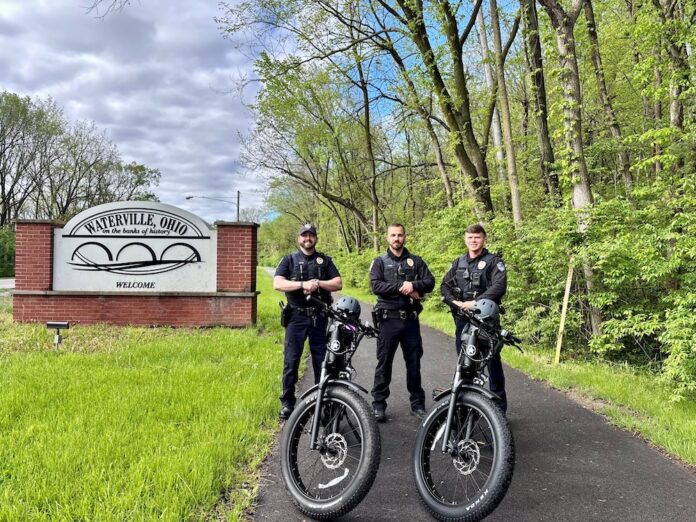
Waterville is considering adding a 15 mph speed limit on all shared use paths to address concerns about e-bikes and speeding. Waterville Police has two e-bikes that are used for patrolling the city. Pictured are officers (from left) Wyatt Saylor, Austin Gunn and Zach Schmiltz. (AWFP photo by Karen Gerhardinger)

WATERVILLE – With the increased presence – and speeds – of e-bikes on shared-use paths, Waterville City Council will decide on whether to enact a speed limit of 15 mph.

Council held the first of three readings on an ordinance during its April 27 meeting, when Administrator Jon Gochenour shared that the city has received complaints about motorized e-bikes.

“Setting a standard speed limit will ensure the safety of all residents using the shared-use path system, which was originally designed for use by walkers, joggers and bicyclists, not motorized vehicles,” he said. “The speed limit would apply to all shared-use path users including conventional bicycles and scooters.”

E-bikes are classified in three categories. Class 1 and 2 e-bikes reach speeds of up to 20 mph and are permitted on shared use paths, according to Ohio Revised Code (ORC). Class 3 e-bikes are prohibited on the paths and – because they reach speeds of up to 28 mph – require the operator to be at least 16 years old and to wear a protective helmet. 

“Due to the weight and potential speed of an e-bike, a collision with a pedestrian has the potential to cause a significant injury,” Gochenour said. “Setting a standard speed limit will ensure the safety of all residents using the shared use path system.”

Police Chief Joe Valvano said the officers’ primary objective will be to educate and inform path users if they observe a speed infraction or cyclist operating an e-bike recklessly. While radar or laser enforcement will not be conducted regularly, he expects that some e-bike speeds will be picked up on paths that run adjacent to roadways. 

“We intend to install and document speed limit signage so that enforcement can be applied when necessary—particularly in cases involving excessive speed or reckless operation by shared-use path users, including e-bike riders,” Valvano said.

“If we are unable to obtain a radar reading of a cyclist who is speeding recklessly, we will not issue a speeding citation, consistent with the same standards applied to motorists. However, if a rider is clearly traveling well above the speed limit, officers will make contact and provide educational materials. In the event of an accident on a shared-use path, a rider may be cited for reckless operation.”

The goal, Valvano said, is to maintain positive interactions with residents while appropriately addressing violations. In cases of repeated or habitual noncompliance, or when a rider’s behavior poses a safety risk, enforcement may escalate to the issuance of a citation.

“We encourage all users to enjoy the shared-use paths as intended, while exercising good judgment and respecting others by following proper path etiquette,” he said.

During the April 27 meeting, council also:

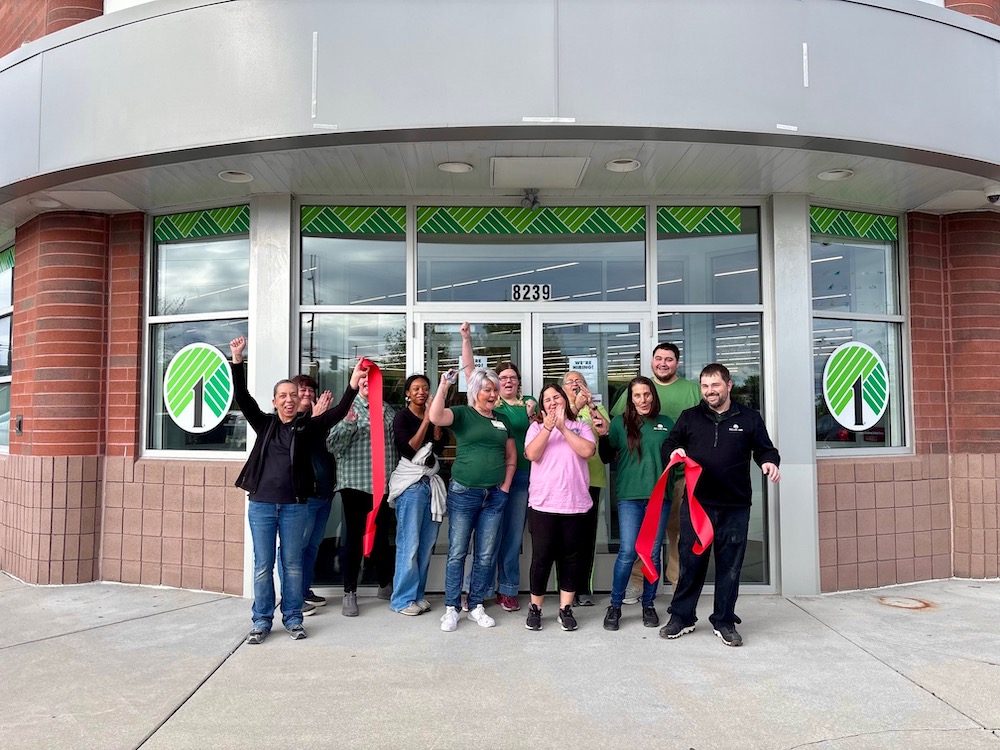
Dollar Tree staff cut the ribbon on the new store prior to opening on April 30. (AWFP photo by Karen Gerhardinger)

-Invited the public to an April 30 ribbon cutting at the new Dollar Tree store, at the corner of Michigan and Waterville Monclova.

-Heard Council Member Wayne Wagner note that the six-month moratorium on data centers ends in early June. “It was never my intention to ban smaller data centers,” he said, referring to edge data centers that are smaller, distributed facilities placed physically closer to the end users or the devices generating data. Wagner said he would like to see changes in zoning that would govern data centers – such as distance from residential properties and hours for construction. “I think we can make improvements to the existing zoning and still allow data centers of a certain size.”

Mayor Tim Pedro said he would like to discuss options during the May 11 meeting.

-Heard that council might hold a special meeting on Monday, May 4 at 4:30 p.m.

-Welcomed Anthony Wayne High School student Taylor Hankins, who was attending the meeting to learn about governmental branches and fiscal policies.

-Learned that the city plans to replace or level 268 sidewalk panels and install 16 new ADA compliant ramps. A bid opening is scheduled May 5 for the $100,000 project, for which the city has a $90,000 grant. Council Member Mary Duncan said she’s been contacted by residents about specific sections of sidewalk that may be delayed on replacement because of the need to do sewer repairs before the sidewalk can be done.

-Heard that the city ended March with a $13.2 million balance and that income tax collections were up 3.25 percent for the month.

-Learned that Waterville Police collected 40 pounds of over-the-counter and prescription drugs during the most recent Drug Take Back day, bringing the total for the year so far at 130 pounds. A deposit box for unwanted medications is located in the police department lobby.

-Heard that Safety City will be held June 22-26 at Waterville Primary School for incoming kindergarteners. Registration forms are available at the city offices or at waterville.org.

-Read a letter from a resident thanking the police officers who responded to his home during a crisis situation. The resident thanked the officers for the care and compassion expressed in a difficult time.

-Heard an update on the ISO inspection of the fire department. Fire Chief Doug Meyer said he expects the rating to be the same or better than previously. The results will be shared in November.

-Heard that the annual fishing derby will be held on Saturday, August 29. Registration forms are available on the web site.

-Learned that the city is purchasing brackets and hanging baskets for flowers to be placed on the poles on Farnsworth Road. Next year the city will expand the hanging flowers to include Third Street and possibly other areas of downtown.

-Learned that the Waterville Library will host a 100th birthday celebration on Saturday, June 6 from 11 a.m. to 3 p.m.

-Approved, in a third and final reading, the transfer of two pieces of city owned property  – at 6730 and 6824 Anthony Wayne Trail – to the Waterville Community Improvement Corporation. The WCIC will market it for sale for residential development. These properties are off Choctaw Drive and zoned agricultural. Any development would require a rezoning process that will include the Planning Commission and city council, as well as public hearings.

-Passed a resolution to purchase two aerial drones and related equipment from Ohio Drone Repair of Akron for $44,000. The city received a $40,000 donation from Waterville Community Foundation for the drones, which will be used by fire, police and public works departments.

-Approved the transfer of $725,000 from the General Fund to the 5-year Capital Fund to cover the cost of the former Sunoco station at 300 Farnsworth Road, since it was not included in the 2025 budget.

Dollar Tree hosted a ribbon cutting on Thursday, April 30 for its new store at the corner of S.R. 64 and Waterville-Monclova Road in Waterville.

Among the first customers at Dollar Tree are Providence Township residents Ashley Huber and her son, Harvey. (AWFP photo by Karen Gerhardinger)

Let’s get crafty: Local art classes for adults

0
Pexels photo by Vitaly Gariev.

TOLEDO – Whether you are looking for a new hobby or to improve your existing artistic skills, there are plenty of businesses and organizations in the Toledo area that offer art classes for adults. We’ve curated a list of places where you can find workshops to get crafty, along with all the information you need to find the right class for you. 

Toledo Museum of Art 

A museum visitor views the sculptures on display at the TMA Glass Pavilion. The museum hosts glass art workshops, jewelry casting, glassblowing and jewelry fabrication, among many other classes. (Courtesy photo)

2445 Monroe St. 
419-255-8000 
Price: $23 to $1,055 per class 

The Toledo Museum of Art offers many classes and workshops for adults that range from beginner to advanced. The museum has glass art workshops, jewelry casting, glassblowing and jewelry fabrication. Prices can differ for members versus non-members. Adults can apply for and earn scholarships from the museum that will cover 100 percent of their registration fee for most classes. Some classes allow a combination of kids and adults. Visit the Toledo Museum of Art’s website for more information. 

Vod’s Here, Sewing & Crafting Emporium 

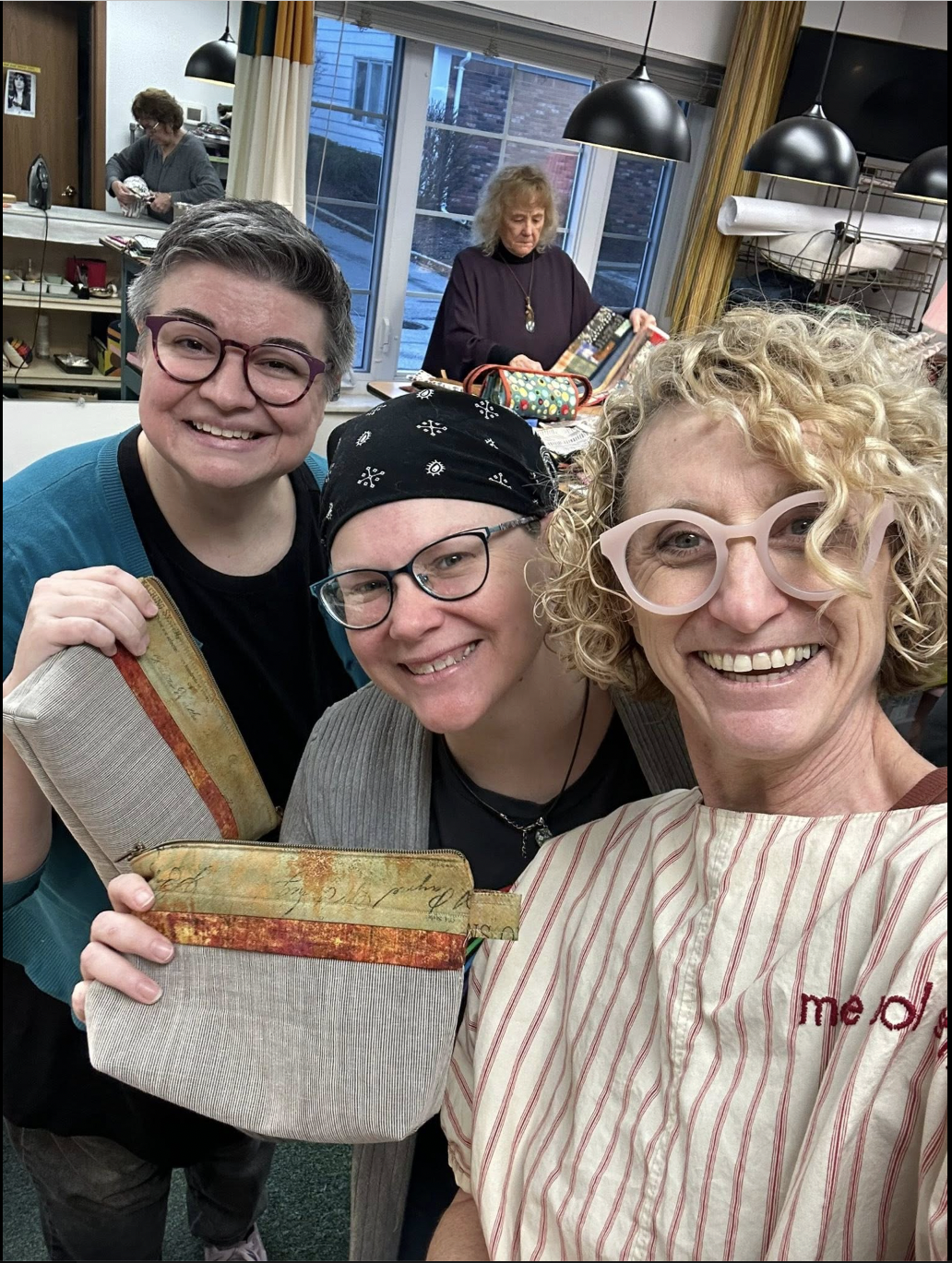
Attendees at a sewing workshop showing off their zippered pouches at Vod’s. (Courtesy photo)

5800 Monroe St., Building D, Unit 2 
567-343-1133 
Price: $10 to $125 per class 

Vod’s has upcoming workshops from April through June. There are multiple sessions offered for each class, and age recommendations vary, with the lowest being ages 10 and up. Vod’s has workshops for crochet, knitting, embroidery, needle felting and beeswax food wraps. Materials are provided for all workshops, with the exception of the BYO Crafty Hangs.

For the majority of the workshops, no previous experience is required. Visit Vod’s website for more information. 

Handmade Toledo 

Handmade Toledo. (TFP photo by London Dennie)

1717 Adams St.
419-214-1717
Price: $0 to $80 per class 

Handmade Toledo is offering seven different workshops from now until June 20. Age varies, with the lowest being ages 8 and up. Community members can sign up for workshops such as ethereal life drawing with The Contaminator Crew, hand-building mugs with charmed ceramics and DIY after dark. Materials are provided for each workshop, and all skill levels are welcome, except for the ethereal life drawing workshop. Visit Handmade Toledo’s website for more information. 

Huron Street Studios 

Items made from a date night glassblowing workshop at Huron Street Studios. (Courtesy photo)

23 N Huron St.
419-262-5501 
Glass Workshop: $60 to $475 per class 
Pottery Workshop: $85 to $250 per class 

Huron Street Studios offers both glassblowing and pottery classes. Glass and pottery workshops are different in age and price, depending on the workshop booked. Workshops such as small group, public and date night are offered for glassblowing. There are pottery workshops such as wheel throwing, a six-week course and date night. Visit Huron Street Studios’ website for more information. 

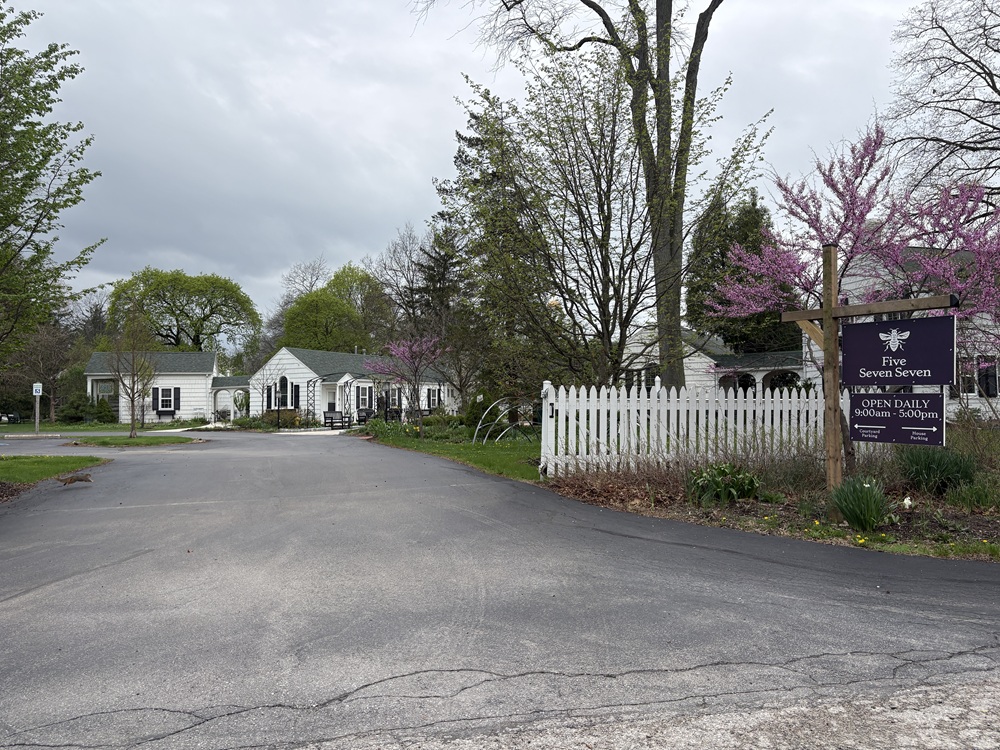
577 Foundation

577 Foundation in Perrysburg. (TFP photo by London Dennie)

577 E. Front St. 
419-874-4174  

The 577 Foundation offers classes for pottery, fiber arts and studio arts. Pottery classes are for adults 18 years and older, while the other classes are for ages 16 and up. Community members can register for classes such as stained glass workshops, adult pottery and knitting or crocheting. Some classes require prerequisites before moving on to the next. Visit the 577 Foundation’s website for more information. 

Toledo Lucas County Public Library 

Toledo Lucas County Public Library, Main branch, downtown Toledo. (TFP photo by London Dennie)

325 Michigan St. 
419-259-5200 
FREE

TLCPL is offering adult classes up to July 11. There are many classes to choose from, and anyone who is a beginner or experienced crafter is welcome. Adults can sign up for classes such as altered bookmaking, a knitting and crocheting club, a planter pot workshop and resin tile coasters. To register, adults must have a library card. Visit the Toledo Public Library’s website for more information.