Home Blog Page 2

A Walk in the Park with a Fisherman

0

Erin’s dad tags along for a discussion with fisherman Mario Campos at Side Cut Metropark to talk about all the benefits of fishing our local waterways.

This is the ninth episode of A Walk in the Park with, a WGTE Public Media and Metroparks Toledo collaboration hosted and produced by Erin. Join her as she explores everyday life in Toledo’s Metroparks. In each episode, Erin interviews different park visitors – runners, teachers, artists, parents and more – revealing the many ways people connect with nature. You’ll hear personal stories about people’s relationships with our parks and the activities they cherish. Erin also documents her journey along the way, reflecting on the insights she gains from each experience.

Community Day in Neapolis is Sept. 12

0
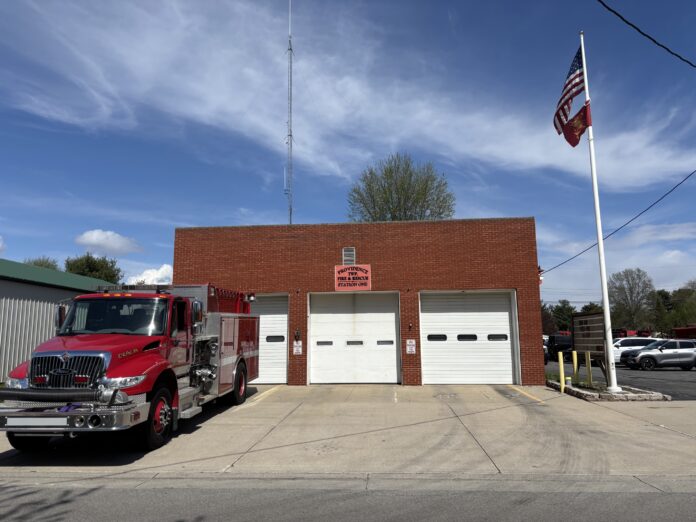
Neapolis Volunteer Fire Association is hosting its annual Community Day and Fire Department Open House on Saturday, Sept. 12 from 10 a.m. to 3 p.m. at the fire station, 8149 Main St. in Neapolis (AWFP Karen Gerhardinger)

NEAPOLIS – Providence Township residents will have an opportunity to come together as a community on Saturday, Sept. 12, trustees shared during their Sept. 2 meeting. 

Neapolis Volunteer Fire Association is hosting its annual Community Day and Fire Department Open House that day from 10 a.m. to 3 p.m. at the fire station, 8149 Main St. in Neapolis. The event features dozens of local vendors and artisans, fire station tours, a safety trailer and Happy the Clown doing face painting and balloon animals. The fire association members will grill chicken halves for $15 meals that will be available from 11 a.m. until sold out.

Just a block south on Main Street, the annual gathering of Wheel Horse tractor aficionados will take place, with tractor owners bringing models of all years for the public to admire. And across the road, Good Shepherd Animal Sanctuary will host an Open Barn Day from noon to 4 p.m., with free kids activities, tours and an opportunity to see the goats, chickens, cows, horses, pigs and other animals who reside at 8339 Providence Neapolis Swanton Road. Enter near the Ferrell Gas Co.

During the meeting, the trustees also:

-Discussed options for adding regulations on data centers to its zoning book, specifically a planned district M-3 like that being considered by Waterville Township. Trustees welcomed Monclova Township resident Mike Tyson, who submitted a copy of “Data Centers – The Impact on Public Health Zoning for a Safer Future & Smart Growth,” which he researched and compiled for Monclova trustees. 

Trustee Chair Steve Kendall is moderating an upcoming data center town hall meeting on Tuesday, Oct. 13 from 6:30 to 8:30 p.m. in the Veterans Memorial Building at City Park, 520 Conneaut Ave. The free event will include five speakers on data centers, including representatives from Grand Rapids, Mich., Maumee and Ohio Township Association. The event is free and will seat up to 250 people. Trustees agreed that this would be a good source of information for the township and its residents.

-Learned that construction of a roundabout at Providence-Neapolis-Swanton Road and Archbold Whitehouse Road will begin on Monday, Sept. 14 and result in a 45-day closure with a detour. 

-Heard resident Gail Perry ask about the status of a home at 13614 Meredith St. in Neapolis. The Toledo Lucas County Health Department began investigating the home a few years ago. The owner was asked to move out because of the home’s condition, but has remained on site. The case was handed over to Maumee Municipal Court nearly two years ago but no action has been taken. Several agencies have offered to work with the homeowner, but he has not followed through on getting help. The township is limited on what it can do with the property because it is in a nonzoned area.

-Heard Road Superintendent Kevin Keifer say that he is installing a new catch basin on Manore Road and running a tile 100 feet south to another tile that drains to Iron Ore Ditch.

-Agreed to ask the county to have signs made to post on Manore and Patton roads, explaining how those projects were funded with a combination of Ohio Public Works Commission and township money.

-Agreed to contact the Hartman Road property owners who planted rose of Sharon bushes that have grown into the right of way, causing a line of sight issue for drivers on Patton Road.

-Heard Keifer say that he’s working with the fire marshal to resolve the issues with the township’s fuel tanks.

-Approved the hiring of Antonio Genito as a volunteer firefighter. He is currently taking the firefighter 1 course in Swanton and is a probationary hire with Whitehouse Fire Department.

-Discussed bids presented by Ryan Grant and Fire Chief Rick Triggs for replacing the ambulance that was severely damaged in an accident earlier this year. While the three bids were thorough, they did not follow the standard process, so trustees asked that Triggs and Grant advertise the specs and seek bids and set a bid opening. The department is currently using a vehicle with 200,000 miles on it, and the lead time to get a new vehicle is up to two years, Grant noted.

Pickle 4 Purple tournament helps Alzheimer’s Association of Ohio

0
(courtesy image)

TOLEDO – Time for a little amateur sports trivia.

What is officially the fastest-growing sport in the United States, with roughly 20-24 million active regular players and over 68,000 tracked courts nationwide? The answer is pickleball.

For those unfamiliar with pickleball, it can be played indoors or outdoors, and competitors use a racket/paddle to hit a hollow perforated ball over a 34-inch-high net. The sport, which resembles tennis and ping pong, was invented in 1965.

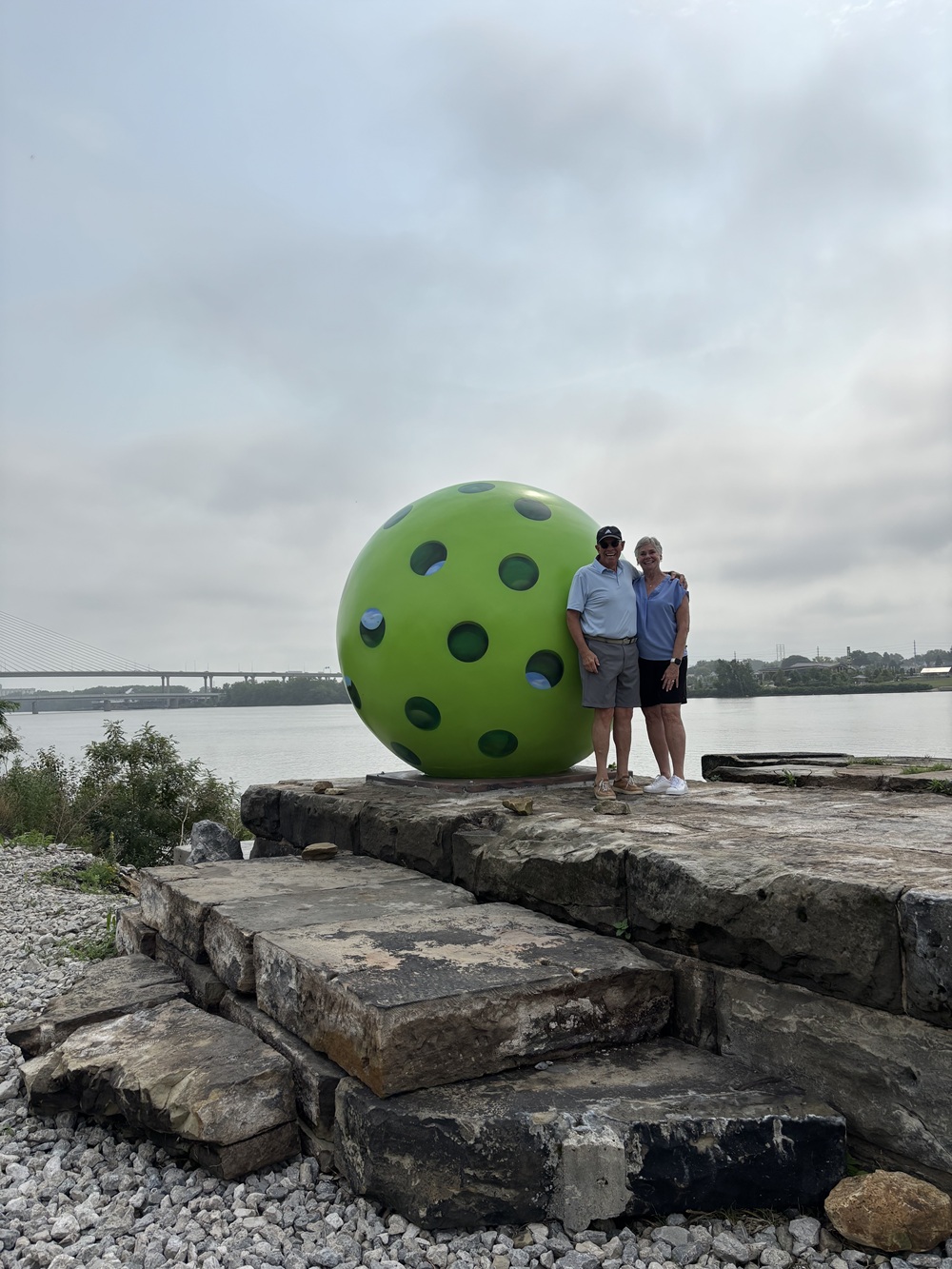
Mary Beth DeMatteo, 74, and her husband, Bob, 71, who lived in Waterville for 25 years and now reside in Chandler, Ariz., and Holland, Ohio, are certainly hooked. They play pickleball 3-5 times a week.

“It really is that one game where you hear so much laughing, even when you make a bad shot,” Bob said. “It has been an incredible integration of community. There is a camaraderie that goes along with pickleball. We were invited to go out to the court that was built in Holland. Mike Younker brought the game back from Florida and built the first two courts in Holland.

“It had a lot to do with being familiar with ping pong, and we played a lot of tennis,” Bob added. “At the ages we were approaching, it was a chance to get a good workout where you change directions, move your arms … What kept me [in the sport] were the great people who gathered to play pickleball.”

Mary Beth DeMatteo, 74, and her husband, Bob, 71. (Courtesy photo)

Mary Beth and Bob DeMatteo are currently organizing and promoting a local pickleball tournament, scheduled for Sept. 18-20 at Toledo Pickle Company, 1030 Water St. in downtown Toledo.

The event, called Pickle 4 Purple – Ohio, will serve as a fundraiser for the Alzheimer’s Association of Ohio.

“We live in a golf resort community in Arizona and a friend of ours, her mom had Alzheimer’s and decided to start a pickleball tournament,” Mary Beth said. “They had a Pickle 4 Purple tournament for eight years, so we decided we could do it [here] on a large scale.

“I was following the Toledo Pickle Company, but I decided if I was going to do it, I wanted to do it at this new indoor facility if we could afford to rent the facility. I cold-called the Toledo Pickle Company and told them what we were doing.

“The owner, Mike Gibbons, had just gotten back from Florida. I introduced myself and thanked him for the facility and told him about the Pickle 4 Purple tournament I wanted to hold. Mike said he would love to be on our leadership team. I don’t know if we could have had this tournament on this scale without him and his staff.”

According to the Alzheimer’s Association, an estimated 7.4 million Americans age 65 and older are living with Alzheimer’s. One person is diagnosed with the disease every 65 seconds.

Mary Beth and Bob’s son-in-law, Joe, was diagnosed “six or seven years ago,” Mary Beth said. Joe was married to the DeMatteo’s daughter, Becky, and they lived in Sylvania. Joe had one child, a daughter named Katie.

“Joe probably had [Alzheimer’s] symptoms before he was diagnosed,” Mary Beth said. “I remember the day [Joe and Becky] came over and they said, ‘We need to talk to you. We have some very bad news.’ Joe had been mentioning that he was forgetting his words, and he was a very intelligent man. Very accomplished.

“His sister also died of Alzheimer’s. It was very hard on Joe. He went to see his sister before she died and he said to my daughter, ‘Don’t let me get like this.’ He knew he had Alzheimer’s.”

Joe passed away of Alzheimer’s on March 16, 2026, at age 69. Last fall, Mary Beth and Bob DeMatteo relocated back to the Toledo area to help Becky with her daily needs and care for Joe.

“In November I realized it was getting worse for our daughter,” Mary Beth said. “She said we came home just in time. She was afraid to leave Joe at the [care] facility by himself. She would sleep at the facility, come home, let the dogs out, go to work, feed the dogs, change clothes and go back to the facility.

“We flew here in November and I never went back. Bob went back to Arizona to close up the house. We are going back after the Pickle 4 Purple event.”

Mary Beth said she and her husband came up with the idea to hold a pickleball tournament fundraiser “long before Joe died.”

“He was still able to talk, and we said we were going to have a tournament to benefit the Alzheimer’s Association,” Mary Beth said. “He just said, ‘You are amazing!’

“I told him, ‘Joe, we can’t cure you, but maybe we can make a difference for somebody else.’ It has been such a journey.”

The tournament will feature all-doubles teams competing in men’s, women’s, and mixed events. The tourney kicks off at 3 p.m. on Sept. 18.

Visit stopalzheimersllc.com to register to compete in the tournament or make a donation. More than $70,000 has been raised so far with the help of 34 sponsors, but the DeMatteos said their goal is $100,000.

“Mary Beth and I have been blown away by the actual generosity and graciousness of our sponsors,” Bob said. “They have been absolutely amazing. Any net proceeds from the tournament – after all the bills are paid – will go to Alzheimer’s, and we will have some raffles and T-shirts designed by [local artist] Dean Davis.”

Mary Beth added, “We are not trying to take anything away from the Alzheimer’s Walk in Toledo. This is just something different and extra. Something new. We are excited.”

Block Communications intends to sell Blade’s assets

0

Moments ago, Block Communications announced its intention to sell the Blade’s assets. If they are unable to do so, the final edition of the paper will be published on Dec. 31.

The news that The Blade could potentially close its doors – after 190 plus years of being the paper of record in Toledo – would have a monumental impact on local journalism. The Toledo Free Press is here to ensure local journalism stays alive. We need community participation to make that happen. If you are passionate about keeping local news alive, reach out about ways you can help:

*As a donor

*As an organization who would like to become a sponsor

*As a journalist/editorial team member who can contribute to our body of work

Please fill out this form if you are interested in helping us with our mission: https://docs.google.com/…/1FAIpQLSdwmRxe_oJu…/viewform

Local news coverage is not a luxury; it is a necessity. According to a recent report by Rebuild Local News, a decrease in local news coverage leads to less civic engagement, more waste in government spending, and tax increases as a result. Lack of accountability has measurable results. Read more about the study here: https://toledofreepress.com/loss-of-local-news-is-making…/

Thank you, as always, for your support of our free nonprofit news source.

The Paper Season Two: Show creators share their thoughts

0
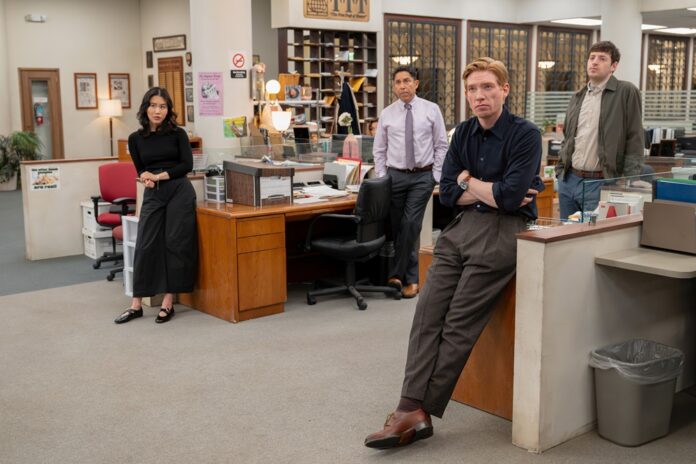
THE PAPER -- Episode 207 -- Pictured: (l-r) Ramona Young as Nicole, Oscar Nuñez as Oscar Martinez, Domhnall Gleeson as Ned, Alex Edelman as Adam -- (Photo by: John P. Fleenor/Peacock)

The opening credits to The Paper, a show about an underdog effort to revive a floundering newspaper in Toledo, are filled with iconic images representing our city in a way that gives many local viewers the feels. When TFP hosted a release party last year at The Blarney, every landmark – the “Toledo Loves Love” mural on Adams Street and “Greetings from Toledo” mural on the East Side – elicited an excited response from the audience. 

For those not familiar with the premise, The Paper is a spin-off of The Office and shot in its predecessor’s mockumentary style that showrunner Greg Daniels (of The Office and Parks & Rec fame) has perfected. Its anchor to The Office universe is the presence of Oscar Martinez who now works as an accountant at the Toledo Truth Teller.

TFP had a chance to chat with one of the lead actors, Domhnall Gleason (Ned Sampson), Michael Koman (co-creator, showrunner, writer, executive producer) and Daniels (co-creator, showrunner, writer, executive producer and director) at a Peacock virtual press conference.

Season Two of The Paper is available to stream on Peacock on Wednesday, Sept. 9. (Courtesy photo)

The second season of the show, which premieres in its entirety on Peacock tomorrow, Sept. 9, begins with Editor-in-Chief Ned Sampson essentially getting everything he wanted. The accolades. The validation. And a budding romance that had been steadily brewing in Season One with reporter Mare Pritti (played by Chelsea Frei). 

“All of his dreams come true at the same time,” said Gleeson. “And that’s not always good for a person. You might have everything you always wanted, but what the hell do you do with them now? I think he’s sort of challenged by that and not able to handle as much as he thought he was able to handle. I think he thought could handle a throuple, you know? With Mare and the paper. And I think the reality of the situation is a little more complicated than that.”  

Season Two builds on the character establishment and development by giving all of the ensemble cast members a hilarious thread to follow, and they throw in a very kooky HR director that is a real departure from Toby in The Office, but who is equally funny. 

Though The Paper is a comedy series, Gleeson, Koman and Daniels expressed their respect and concern for today’s journalists.

Gleeson noted that journalists who have seen the show “seem really thrilled that there’s something that takes what they do seriously, that understands that it matters. We don’t take ourselves too seriously, but we understand that journalism is a very serious thing.”

There is a general emphasis in the show that local journalism is not exactly thriving, but that it is vital work. Ned’s blind optimism is endearing, and it also takes the Truth Teller away from simply reprinting whatever they are fed through the wireservice. He empowers their team to get out in the community and report on what they see, and that inexperience is not necessarily a barrier to doing that.

Koman added, “If nothing else, if it [the show] was just a little reminder that people have local news, and there are people in every – not every community – but the ones that are lucky enough to have it, people trying to keep track of what’s going on in the government and their schools…if people remember to check that out, it would be a lovely thing.” 

After visiting local newsrooms in Toledo while developing the show (you can read about that in our initial coverage of the show here), the creators’ respect for journalists in Toledo only grew. 

“It was inspiring that people cared so much about what they were doing,” said Gleeson. “There were a lot of young people from a few of the different newspapers who really cared about it and were working super, super hard in journalism. That’s what I loved about it. I think the show provides the humor. All I found was just amazing positivity and commitment and hard work. And I took a lot of that for Ned. That was my experience.”  

The Paper also touches on serious issues news outlets face, like conflicts of interest; the investigative coverage of the Glass Club is an example of that in Season Two. The push-pull dynamic of reporters trying to do their jobs and some powers-that-be not wanting to rock the boat likely hits home for many journalists. 

Daniels seemed to reference this when asked about one of his favorite character arcs in the show.

“At the beginning of the writers’ room, we were reading about this scandal at USC that was summarized in a book called Bad City. And there were forces to try and squelch the story inside The LA Times and they had to have a secret team of journalists working on it. So we incorporated some of those things; we hope we have kind of an exciting journalism story towards the second half of the season.”  

He also shared a bit about how some of the characters were inspired by real people he met in Toledo, particularly Mare.

“We ran into a woman that felt like Mare a lot who was the compositor at The Blade. It reminded me of doing research for Parks and Rec when I had a thought that it’d be funny if there was a guy who hated government who was Leslie Knope’s boss, and we found a city manager in Burbank who was a libertarian and didn’t believe in government, and I was like, ‘Yes!’” Daniels is, of course, referring to the beloved Ron Swanson.

The wholesome optimism of The Paper was based on the pre-existing respect for journalists that the team brought to the project, and they found that same optimism and work ethic in Toledo’s newsrooms. 

Koman said, “I didn’t feel like anybody there was burnt out or not genuinely enjoying the fact that they got to do this every day for a living, despite the overall atmosphere, you know, what’s happening in the country with journalism. So to me, it really reaffirmed the sense that the story is accurate in terms of what people are getting out of the work they put into this field.”  

When TFP noted references like the “Macaroni Barn” in the show (unconfirmed, but – come on – it’s Spaghetti Warehouse), we also wondered if there were other Toledo references that local viewers can look for in upcoming seasons. Koman said that Jamie Farr, the Mud Hens, Hollywood Casino, and the Old West End are all contenders in the future.

“I’ve written the words ‘Old West End’ into many scripts and I don’t know if they’ve ever reached the final edit,” said Koman. “For some reason that neighborhood really made an impression on me.”  

Make sure to check out Season Two of The Paper on Peacock beginning tomorrow, and let us know in the comments what references to Toledo you find.

Built in Toledo: The UAW’s long fight for work, dignity and a future

0
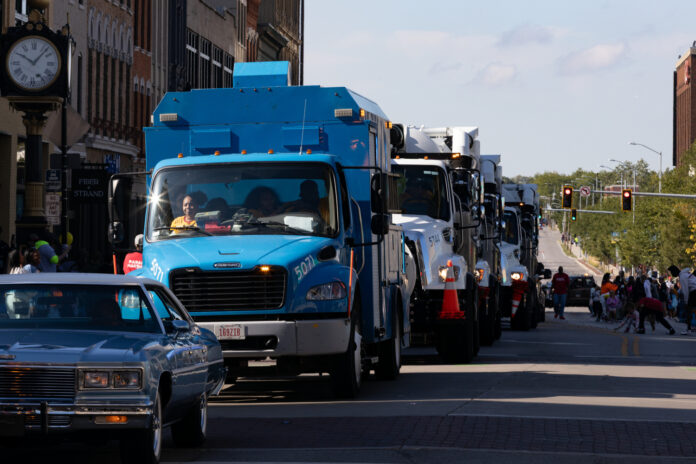
Labor Day Parade on Summit Street in downtown Toledo last year. (TFP photo by Stephen Zenner)

This article was originally published in the Toledo Streets Newspaper.

In Toledo, the history of the United Auto Workers is not confined to a union hall or preserved in photographs of old picket lines. It can be seen in the neighborhoods built by factory wages, the families supported by generations of auto workers and the Jeep vehicles rolling out of the Toledo Assembly Complex. For more than 90 years, UAW Local 12 has helped shape what work means in this city – not simply as a way to earn a paycheck, but as a source of dignity, security and collective power.

Today, Local 12 is entering a new era. Brian Sims, elected president in 2025, is the first Black president in the local’s history. He succeeded Bruce Baumhower, who led Local 12 for 32 years and became one of Toledo’s most recognizable labor advocates. Sims inherited an organization with a proud history but also a demanding future, as automation, shifting consumer tastes, international competition and the transition toward electric vehicles continue to transform the auto industry.

Sims called his election “a wonderful achievement,” but he also acknowledged the history behind it. His rise represents more than a change in leadership. It reflects the changing face of Toledo’s workforce and the continuing effort to make sure workers from every background have a voice at the table.

Born in a citywide labor battle

Local 12’s history reaches back even further than the UAW itself. The local developed from Federal Labor Union 18384, an organization of Toledo automotive workers chartered through the American Federation of Labor in 1933. The following year, Toledo became the site of one of the most important labor conflicts of the Great Depression: the Electric Auto-Lite strike.

Auto-Lite workers walked off the job in April 1934, demanding union recognition and better working conditions. Their struggle quickly grew into a community cause. Unemployed workers and labor activists joined the picket lines, while thousands of Toledo residents gathered outside the factory. When police and members of the Ohio National Guard attempted to break the strike, the confrontation became known as the Battle of Toledo. Two workers were killed and more than 200 people were injured during days of violence.

The deaths were a terrible price, but the workers ultimately won union recognition and a contract. The victory helped make Toledo a national symbol of industrial unionism and contributed to the momentum behind the Wagner Act of 1935, which established federal protections for workers seeking to organize. When the International Union, United Automobile Workers of America was formed later that year, Toledo’s federal union became UAW Local 12.

That beginning matters because Local 12 was not created by corporate generosity or political favor. It was built by workers who took tremendous risks because they believed employment should provide more than survival. They wanted fair wages, reasonable hours, safer factories and the right to challenge arbitrary treatment without standing alone.

Local 12 and the rise of the middle class

As Toledo’s automobile and parts industries expanded, so did Local 12. The union organized workers at factories producing automobiles, glass, transmissions, automotive components and other manufactured goods. It became an amalgamated local, representing workers at many different employers rather than at a single plant. Local 12 currently represents dozens of bargaining units, including employees in automotive production, parts manufacturing and several nonautomotive workplaces.

The most visible Local 12 members have long been the men and women who build Jeep vehicles. Toledo’s relationship with Jeep began during World War II, when Willys-Overland produced the military vehicle that became one of the most recognizable machines of the Allied war effort. After the war, civilian Jeeps helped establish the brand’s reputation for durability and gave generations of Toledo workers steady employment.

UAW contracts turned many of those factory jobs into gateways to the middle class. Workers who might not have had college degrees could earn enough to buy homes, raise families, send children to school and retire with some security. Health insurance, pensions, paid vacations, overtime rules and workplace grievance procedures were not gifts handed down by employers. They were benefits negotiated across decades by workers acting collectively.

The union’s influence reached well beyond its membership. When union wages increased, nonunion employers often had to improve pay to compete for employees. When UAW contracts established better health coverage or time off, those benefits helped raise expectations throughout the local labor market. The strength of Local 12 also supported neighborhood businesses, churches, charities and community organizations that depended on the spending and volunteer work of union families.

Former Local 12 president Baumhower often described Jeep as inseparable from Toledo. During his tenure, he worked with elected officials and community leaders to persuade Chrysler and its successors to continue investing in local production. Those efforts were especially important during the 1990s, when questions arose about the future of Jeep manufacturing in Toledo. The Toledo North Assembly Plant opened in 1997, helping secure the brand’s local future and preserving thousands of direct and supplier jobs.

Concessions, crises and corporate change

The decades that followed were not easy ones for auto workers. Globalization moved manufacturing to lower-wage regions, while automation allowed plants to produce more vehicles with fewer employees. Toledo workers watched other factories close and saw companies repeatedly change ownership. Jeep passed from American Motors Corporation to Chrysler, then through DaimlerChrysler and Fiat Chrysler Automobiles before becoming part of the multinational corporation Stellantis in 2021.

The 2008 financial crisis brought the American auto industry to the edge of collapse. Union workers accepted painful concessions as Chrysler and General Motors entered bankruptcy and received federal assistance. UAW members gave up wage increases, agreed to new work rules and saw the expansion of a two-tier pay system under which newer employees earned significantly less than veteran workers doing comparable jobs.

Those sacrifices helped keep the companies alive, but resentment grew as automakers returned to profitability and executive compensation climbed. Many workers believed temporary concessions had become permanent expectations. The two-tier system was especially divisive because it placed workers performing similar labor on different economic tracks, weakening the sense of equality that unions are supposed to protect.

By 2023, that frustration had reached a breaking point. Under International UAW President Shawn Fain, the union launched its “Stand Up Strike” against Ford, General Motors and Stellantis. Instead of closing every plant at once, the UAW targeted selected facilities and expanded the strike as negotiations continued. Toledo’s Local 12 was chosen as one of the first three locals to walk out.

Approximately 5,800 workers at the Toledo Assembly Complex left their jobs when the national contracts expired in September. Their strike also affected thousands of employees at suppliers whose operations depended on Jeep production. For weeks, picketers gathered outside the plant, supported by family members, other unions and Toledo residents who understood how much was at stake.

The eventual Stellantis agreement included a 25 percent increase in base wages over four and a half years, cost-of-living adjustments and a faster path to top pay. It also improved retirement provisions and converted many temporary workers to permanent status. Although Local 12’s Jeep workers initially rejected the tentative agreement in their local vote, the contract was ratified by Stellantis workers nationally. The rejection demonstrated that Toledo workers remained willing to challenge both the company and their own union leadership when they believed an agreement did not go far enough.

The uneven road after the strike

A strong contract cannot eliminate the instability of the automobile market. In 2024, Stellantis announced that it planned to eliminate a shift at the Toledo Assembly Complex and indefinitely lay off approximately 1,100 employees. The company pointed to declining sales and excessive vehicle inventories, particularly for the Jeep Gladiator. Although Stellantis later reversed the planned mass layoffs, some workers still faced periods of uncertainty, temporary shutdowns and reduced schedules.

The episode underscored a hard truth about modern manufacturing: even well-paid union workers can feel vulnerable when decisions are made in distant corporate offices. A vehicle’s sales can change, a production line can be moved and a new executive team can reverse the strategy of the one before it. The union cannot control every market condition, but it can negotiate protections, challenge broken commitments and make sure workers are not treated as disposable expenses.

Local 12 also carries the responsibility of serving workers outside Jeep. Its many bargaining units include parts suppliers and workplaces where wages, benefits and job security may differ sharply from those at the assembly complex. Organizing those workers and maintaining solidarity across such a varied membership will be one of Sims’ central challenges.

The UAW itself continues to rebuild trust following the corruption scandal that sent two former international presidents and other officials to prison. Members subsequently voted to elect international officers directly, leading to Fain’s victory in 2023. A federal monitor continues to oversee the international union, while internal disputes have raised additional questions about financial controls and leadership. Local unions must therefore demonstrate through their own actions that dues are being used responsibly and that leaders remain accountable to the membership.

A new product and renewed hope

The outlook in Toledo improved considerably when Stellantis announced a nearly $400 million investment in the Toledo Assembly Complex. The company plans to add a new Ram midsize pickup truck – since identified as the revived Dakota – to production alongside the Jeep Wrangler and Gladiator. Production is expected to begin in 2028, with the investment projected to create more than 900 jobs.

For Local 12, the announcement means more than another vehicle model. Adding a third product gives the plant greater flexibility and reduces its dependence on the performance of the Wrangler and Gladiator alone. It also offers a path back for laid-off workers and creates opportunities for a new generation seeking stable employment.

“There were a lot of smiles in that plant; what fuels them is great news,” Sims told 13 Action News after the investment was announced. “Not only job security, but they know they have union brothers and sisters who were laid off will be coming back into the plant.”

Sims has emphasized that the benefit will extend beyond the assembly line. “I feel like we’re all family,” he told WTOL11 while discussing the investment’s effect on workers, suppliers, dealerships and the wider Toledo economy. That interconnectedness explains why production decisions at the Jeep plant ripple through the entire region. One assembly job supports work in parts production, transportation, restaurants, retail stores and other local businesses.

The challenge now is making sure the promised investment becomes reality and that the new jobs are good union jobs. The UAW’s 2023 contract expires in 2028, the same year the Dakota is expected to begin production. That timing will place the product launch, corporate investment commitments and a new round of national bargaining on the same horizon.

More than a paycheck

The future of the UAW in Toledo will involve issues earlier generations could scarcely have imagined. Electric and hybrid powertrains require different components and potentially fewer labor hours. Robotics and artificial intelligence are changing inspection, logistics and assembly operations. The union must fight to ensure that new technology improves safety and productivity without becoming an excuse to eliminate workers or weaken their bargaining power.

Yet the fundamental questions remain familiar. Who benefits when productivity increases? Who absorbs the cost when markets decline? Do workers have a meaningful voice in decisions that shape their lives, or are they expected simply to accept them?

Local 12’s history offers one answer. From the Auto-Lite picket lines to the 2023 Stand Up Strike, Toledo workers have repeatedly shown that dignity at work is rarely guaranteed without collective action. The union has not won every fight, nor has it been free of mistakes, divisions or disappointments. Its lasting importance rests in the principle that no worker should have to face a powerful employer alone.

For Sims, that inheritance brings both honor and responsibility. As the first Black president of a local born during the defining labor battles of the 1930s, he represents change within an institution devoted to protecting what earlier workers built. His task is to preserve those gains while preparing Local 12 for jobs, technologies and challenges that are still emerging.

The vehicles may change, the company names may change and the factory floor may look different from one generation to the next. The central purpose of the union, however, remains remarkably consistent: to make sure that the people who build Toledo’s most famous products can also build secure and dignified lives.

The Battle of Toledo: How the Auto-Lite Strike changed American labor

Before the United Auto Workers became a national force, Toledo workers helped demonstrate what organized labor could accomplish. The 1934 Electric Auto-Lite strike – often called the Battle of Toledo – became one of the most consequential labor struggles of the Great Depression.

The dispute began when workers at the Electric Auto-Lite Company sought union recognition, higher wages and improved working conditions. About 1,000 employees walked off the job in April 1934, supported by members of Federal Labor Union 18384 and the Lucas County Unemployed League. The participation of unemployed Toledoans was especially important because it prevented the company from easily replacing striking workers.

As the conflict continued, thousands of supporters surrounded the Auto-Lite factory on Champlain Street. The company obtained a court order limiting picketing, but workers and their allies refused to abandon the demonstration. Tensions erupted in late May when police fired tear gas and attempted to disperse the crowd. Protesters fought back with rocks and bricks, and Ohio Governor George White called in the National Guard.

For several days, the factory district resembled a battlefield. Guardsmen armed with rifles and machine guns confronted an estimated 10,000 strikers and supporters. On May 24, troops fired into the crowd, killing Frank Hubay and Steve Cyigon and wounding others. More than 200 people were injured during the larger confrontation.

The deaths intensified public support for the strikers and brought Toledo close to a general strike. With other unions preparing to shut down work across the city, federal mediators intervened. Auto-Lite ultimately recognized the union, agreed to wage increases and rehired most of the striking workers.

The victory reverberated far beyond Toledo. Together with major strikes in Minneapolis and San Francisco that year, the Battle of Toledo demonstrated the strength of industrial workers organizing across job classifications. It also helped build public support for the National Labor Relations Act, commonly called the Wagner Act, which Congress passed in 1935 to protect collective bargaining and workers’ organizing rights.

Federal Labor Union 18384 later became UAW Local 12, linking the Auto-Lite struggle directly to Toledo’s continuing labor movement. Although the Auto-Lite factory closed in 1962, the strike’s legacy remains visible in every local contract that guarantees fair wages, workplace protections and a grievance process.

The Battle of Toledo was ultimately about more than one factory. It established a principle that continues to define organized labor: Workers acting together possess power that individuals standing alone do not.

Letter to the Editor: Gloria Steinem and a path for working women

0
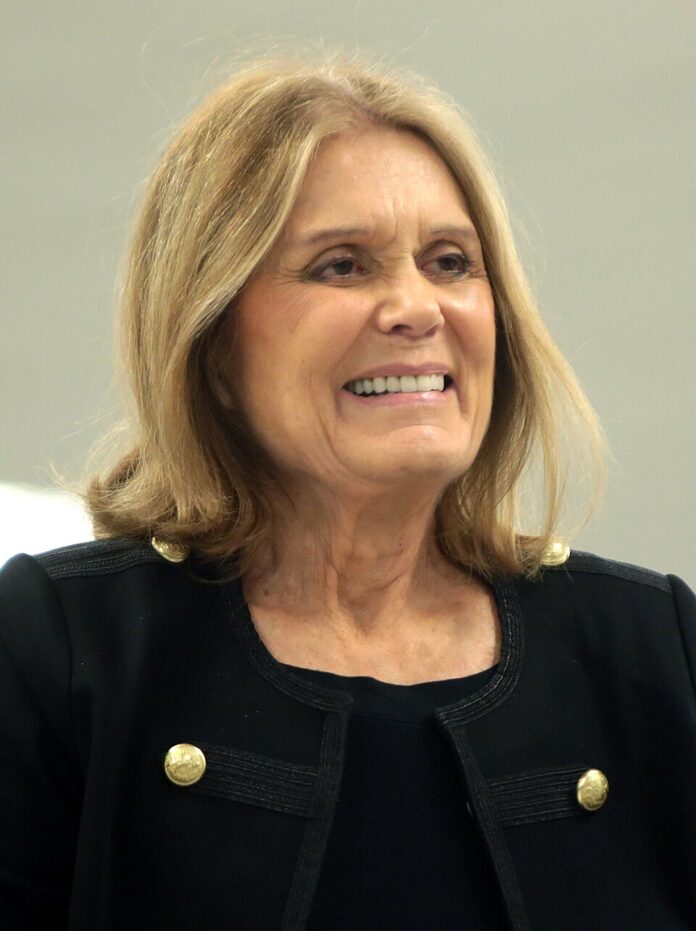
Gloria Steinem speaking with supporters at the Women Together Arizona Summit at Carpenters Local Union in Phoenix, Ariz. in 2016. (Photo by Gage Skidmore)

The recent death of journalist and social activist Gloria Steinem has brought to light her decades of accomplishments, including her ability to galvanize generations of women with her courage, charisma and passion.  

On this Labor Day weekend, the lives of women like Toledo native Steinem, Dolly Parton and a handful of other successful women show how women walk a tightrope in the workplace as they negotiate issues like unequal pay, sex discrimination and achieving work-life balance. 

I interviewed Steinem in 1999 for a book I was writing about another powerful Ohioan, Charlotte Curtis, who rose to become the first woman top editor at the New York Times. How did Steinem think Curtis, a Columbus native, was able to thrive in the male-dominated Times of the 1970s, when she was usually the only woman in a roomful of men? Curtis was ambitious and particularly adept at knowing how to “act” and persuade in the male-dominated work environment, Steinem said. And she knew when to speak up and when to remain silent when surrounded by a group of men. 

In my recent book about Jane Fonda, I show how Fonda’s ability to succeed as an actor and activist stemmed from her belief in the importance of collaboration, her flexibility and her refusal to back down when hitting roadblocks. She was one of only a few women producers in Hollywood when she made the drama Coming Home (1978); it took five years to get funding and outside support for the film because most people in Hollywood thought making a film about the aftermath of the war in Vietnam was a terrible idea.

Ultimately, Coming Home was a hit that earned Oscars for its two stars, Fonda and Jon Voight, as well as a Best Picture nomination.

Fonda also produced the comedy, 9 to 5 (1981), which she initially envisioned as a serious drama about workplace inequality and harassment.

Her co-stars, Dolly Parton and Lily Tomlin, persuaded her that the film would draw bigger audiences if it were a comedy. And, indeed, it was the humor in 9 to 5 – as well as Parton’s iconic hit song by the same name – that ultimately brought women’s rights and workplace sexism to the mainstream.

In fact, humor was Parton’s ace in the hole throughout her career – she knew from an early age about the value of self-deprecation and timing. “It costs a lot of money to look this cheap,” was one of her most often-quoted lines.

There is little question on this Labor Day that women in the workplace still face some of the same obstacles as their mothers and grandmothers, but role models and trailblazers like Steinem, Parton, Curtis, Fonda and others, through their determination, creativity and vision, have inspired those of us who follow them.

Toledo Area Announcements

0
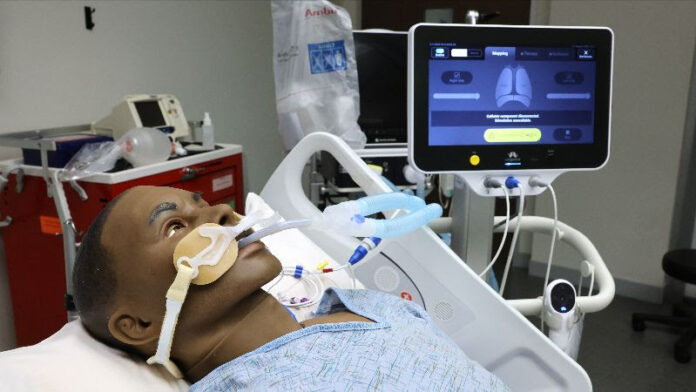
The FDA-approved LungPacer AeroPace® System uses targeted neurostimulation to strengthen the diaphragm of ventilated ICU patients, helping them breathe on their own faster and reducing the risk of serious complications. (Courtesy photo)

(All announcements are 100% compiled from press releases, or otherwise shared by our media partners as credited)


Health & Environment


  • UToledo Health is first in the region to offer the LungPacer AeroPace® Neurostimulation System, an FDA-approved therapy proven to get critically ill patients off ventilators faster.
  • The AeroPace System addresses an issue seen in intensive care units daily. When a patient is on mechanical ventilation, their diaphragm, the primary muscle responsible for breathing, is no longer working. Because the diaphragm is a muscle in constant use, it atrophies rapidly, sometimes within 12 hours of ventilation.
  • Environment – On Aug. 24, the National Oceanic and Atmospheric Administration (NOAA) issued a bulletin stating that the algal bloom in Western Lake Erie had reached 480 square miles in size, the largest it has been this summer. People are advised to keep pets away from water where scum has formed. (Courtesy of This Week in Toledo)

Education news


Bowling Green State University

The Idea welcomes a new generation of thinkers to BGSU – New public artwork celebrates curiosity, creativity and the spark behind every new idea.

The Idea, created by BGSU alumni Jeremy Link, Douglas Kampfer, Jason Karas and Jonny Natole of Toledo’s Graphite Design + Build, transforms one of the most recognizable symbols of creativity, the lightbulb, into a large-scale (45 foot long) suspended sculptural installation.

Rather than presenting the lightbulb as a finished object, the artists have opened it up. Its familiar form is deconstructed into individual components, suspended in space as an exploded view. Loose, sketch-like lines connect the elements, while an illuminated filament glows at the center.

In other news at BGSU, the Falcon Marching Band has grown to a record 600 members, becoming the largest collegiate marching band in America and the largest in BGSU history.

In other back-to-school news, BGSU undergraduate students who achieved grade point averages of 3.5 or higher during the Summer 2026 Semester have been named to their respective college’s Dean’s List.

The names of current Dean’s List honorees are available online. Student names are listed by state and county, and results are downloadable in Excel or Word formats.

University of Toledo

JR Blackburn. (Courtesy of UToledo)

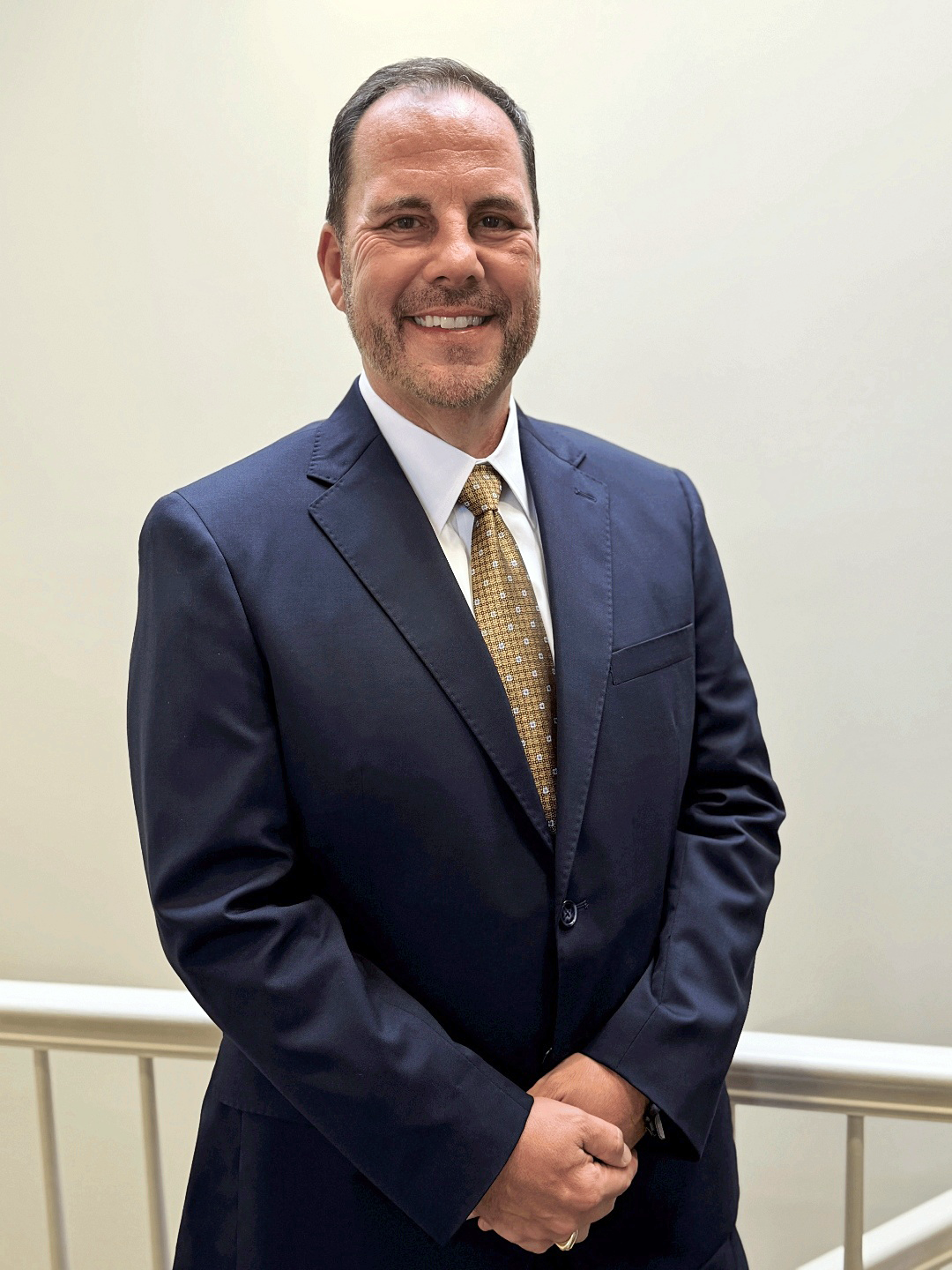
The University of Toledo Foundation today announced that JR Blackburn has been named president and CEO, effective Oct. 12. Blackburn will succeed Brenda Lee, the Foundation’s inaugural president, who has been serving in an interim capacity since May. Lee previously announced her retirement from the Foundation in June 2025.

In other news at UToledo, applications are now open for the Summer 2027 cohort of The University of Toledo’s Doctor of Nursing Practice in Nurse Anesthesia program, with applications being accepted through Sept. 30, 2026. The newly accredited program continues the nurse anesthesia education previously offered at Lourdes University, now under UToledo’s College of Health and Human Services.

Owens Community College

(Photo courtesy of Owens Community College)

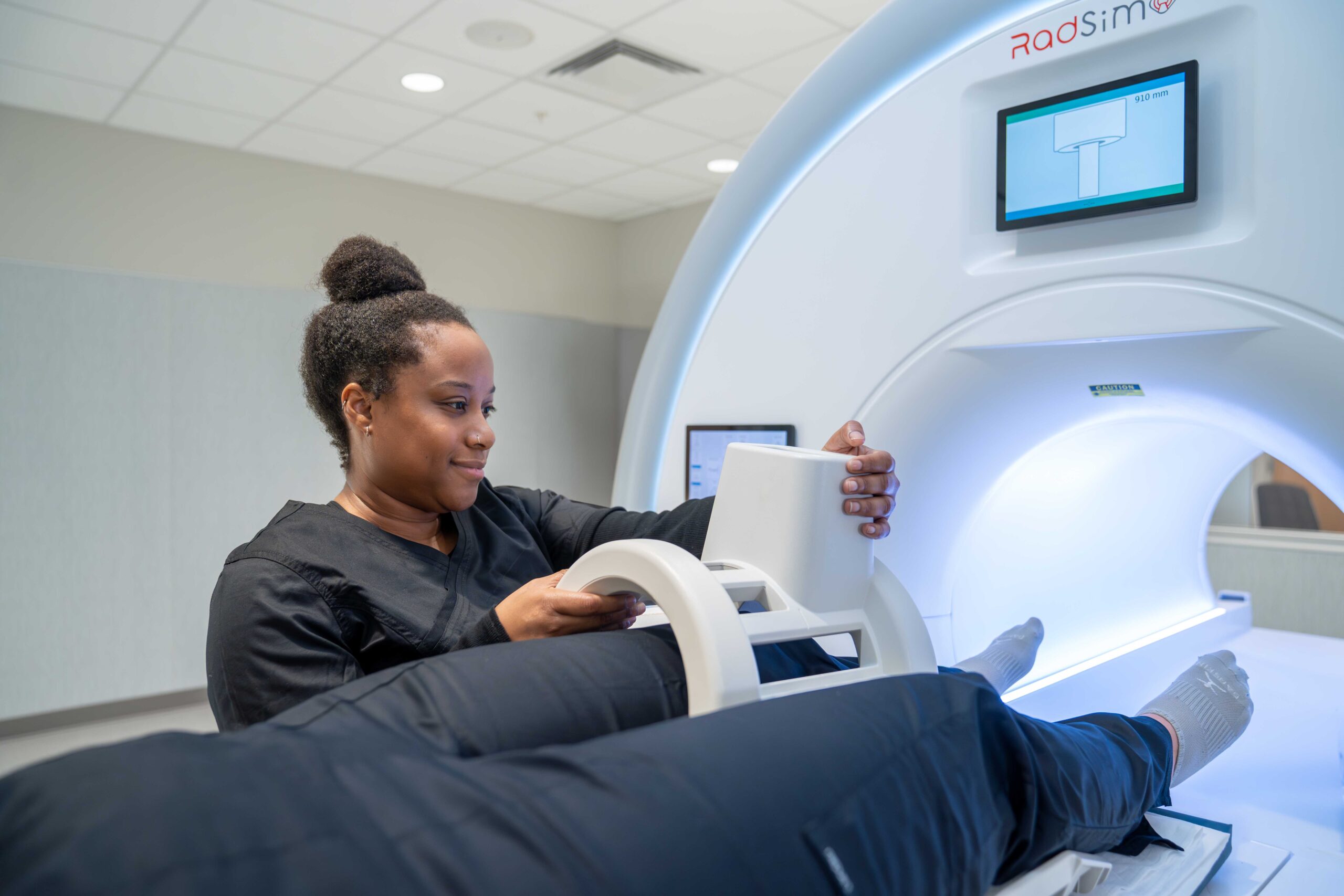
The Owens Community College Magnetic Resonance Imaging (MRI) program has received an eight-year re-accreditation from the Joint Review Committee on Education in Radiologic Technology (JRCERT), the maximum term the agency grants. Owens remains the only Associate Degree MRI program in the country to hold JRCERT accreditation.


Government & Politics news


  • On Aug. 25, the Lucas County Commissioners voted to reissue $25.85 million in bonds for the downtown Hilton Garden Inn hotel, as well as to pay off $12.4 million in principal on the hotel’s debt using a $10.1 million transfer from the general fund to the Capital Project Fund, which already had $2.3 million. Lucas County’s economic development corporation owns 20 percent of the hotel, while Continental Development Ventures and First Hospitality Group owns the remaining 80 percent.
  • On Aug. 25, Toledo City Council voted 11-0 to approve $16 million to complete phase two of sewer repairs on Arlington Avenue; voted 10-1 to approve a seven-year lease at 1640 Sylvania Ave. for a new police substation in West Toledo, with Martinez dissenting and Driscoll absent; and deferred a vote on expanding Flock camera usage in and around schools in District 2 to the council’s public safety committee for a future hearing. (Courtesy of This Week in Toledo)

On Aug. 26, Mayor Kapszukiewicz announced that the City of Toledo would receive $20 million from the U.S. Department of Transportation’s Better Utilizing Investments to Leverage Development (BUILD) fund for infrastructure improvements as part of its “Connecting Toledo Neighborhoods to Opportunity” project.

On Aug. 26, Republican candidate for Ohio House District 43 David Karmol filed a taxpayer lawsuit alleging that Lucas County Probate Judge Jack Puffenberger, a Democrat, spent $60,000 in public funds on television ads promoting his family name while his son, Tom Puffenberger, is on the ballot to replace his father as Probate Judge. The ads, officially described as an educational campaign explaining the functions of the probate court, repeatedly reference “Judge Puffenberger”.

(All content above in this section is courtesy of This Week in Toledo)

Derek Merrin. (Courtesy photo)

Stand With Crypto hosted a roundtable discussion with former state representative Derek Merrin on Sept. 1 at an empty storefront on Monroe St. as part of the group’s national tour titled “On The Block: The Future of Finance for Mainstreet.”


Business & nonprofit news


The Arts Commission is now accepting applications for the 2026 Merit Awards, which recognize outstanding work by established and mid-career artists in the literary, performing, and visual arts.

Three artists will receive $4,000 awards to support their continued artistic practice. Eligible artists must have maintained a creative studio or home within 30 miles of downtown Toledo for at least two consecutive years.

The deadline for applications is Sunday, Sept. 27 at 11:59 p.m.

More information and application materials are available at theartscommission.org/artists/merit-awards.


Maumee – CMS Corporation announced that CMS K.K. (CMS), a wholly owned Japanese subsidiary of CMS Corporation, has been awarded a $1.3 million Design-Build project to provide radon mitigation systems across Kadena Air Base, as well as multiple U.S. Marine Corps installations, throughout Okinawa. 


Chick-fil-A Oregon will open Thursday, Sept. 10. at 2850 Navarre Ave., Oregon. The restaurant will be locally owned and operated by Albi Kadiu. It will also bring approximately 100 jobs to the Oregon community. 

Moove-In Party: Guests of all ages who arrive dressed in cow spots or sporting a cow-spotted accessory on opening day can redeem one free entrée or kid’s meal in the restaurant or drive-thru.


Community


Press Club of Toledo Announces 2026 Touchstone Community Award Honorees; Tickets Now on Sale – The 2026 Touchstone Awards will take place Thursday, Sept. 10, from 5–9 p.m. at WGTE Public Media, located at 1270 S. Detroit Ave. in Toledo. The evening will bring together journalists, communications professionals, students and community leaders for an evening of networking, recognition and celebration. This year’s honorees include Tom Troy, Christina Rodriguez, Dan Cummins and Sean Hegarty. Touchstone tickets are $45 for nominees and students, $75 for Press Club members and $100 for nonmembers. They can be purchased at press-club-of-toledo.square.siteSponsorship opportunities are also available.

For more information about the 2026 Touchstone Awards, visit toledopressclub.com.


Sports


Walleye News – The Toledo Walleye have agreed to terms with forwards Nolan Hutcheson and Johnny Waldron, and with defenseman Jack Duff for the 2026-27 ECHL season, their first full seasons as professionals. 

They have also agreed to terms with forward Greg Smith for the season, his first in Toledo, and fourth as a professional.

Mud Hens News –

Letter to the Editor: Missing trail of asbestos-related lung cancer

0
Pexels photo by Sonny Sixteen.

Why workers and veterans in northwest Ohio need lifetime exposure records

Northwest Ohio has been a crossroads of American industry where generations of skilled workers fueled energy generation, automotive manufacturing, transportation, logistics and distribution, and defense. Unfortunately, for a large number of this workforce, among the most drastic impacts of their dedication is measured not by what they built, repaired, or produced, but by diseases that may not appear long after the job is done. And asbestos-related lung cancer is among the clearest examples.

Unlike other workplace injuries that can be recognized immediately, this illness—and several more stemming from frequent exposure to the toxic mineral—often remain undetected for up to four decades. As such, when symptoms eventually emerge, establishments may have closed, ownership may have changed, and the records documenting hazardous conditions may have faded.

Veterans face an even greater challenge, as many were exposed during military service before continuing into high-risk civilian careers. Consequently, that mismatch exposes a fundamental flaw in occupational health policy, which northwest Ohio—and the entire country—can no longer afford to overlook. 

Northwest Ohio’s industrial success left an enduring asbestos burden

For much of the 20th century, the same industries that propelled northwest Ohio’s prosperity also relied on one component that was once considered a miracle material: asbestos. Praised for its resistance to heat, fire, and corrosion, asbestos was woven into factories, power plants, rail equipment, commercial buildings, military facilities, and myriad other industrial products—exposing countless workers in the region.

It took decades before the health hazards of asbestos became widely recognized. Once inhaled, asbestos fibers can embed deep within the lungs, where they may cause debilitating illnesses such as lung cancer. And to this day, the consequences of this issue continue to unfold and impact numerous Buckeyes—including those residing in the northwest region.

An interactive map revealed that just between 1999 and 2017, Ohio witnessed nearly 12,700 residents succumb to asbestos-related diseases, with over 9,400 lung cancer deaths. Lucas County alone—home to the state’s fourth-largest city, Toledo—logged roughly 640 cases, which signifies how this problem can be illustrating the substantial impact, especially for major urban centers. 

More concerning, many of northwest Ohio’s more than 86,100 veterans may face an even greater risk because their asbestos exposure often spanned both military service and civilian employment. Many veterans were first exposed to asbestos during their service in military installations like the Wright-Patterson Air Force Base, approximately 155 miles from Toledo. And rather than ending with discharge, their exposure may have accumulated across multiple workplaces over the course of a lifetime, making long-term occupational records especially important decades later. 

However, this is not a challenge unique to workers and veterans in northwest Ohio. Across the country, an estimated 27 million American workers were occupationally exposed to asbestos from 1940 to 1979, and the consequences continue to surface decades later. Consistent with this, one study reported deaths from occupational asbestos-related diseases increased by 20.2 percent between 1990 and 2019—emphasizing that the toxic mineral remains an ongoing public health concern and not just a relic of the nation’s industrial past.

Building asbestos exposure records that last as long as the risk

Northwest Ohio’s experience illustrates a challenge that extends well beyond one region or one generation. Asbestos-related lung cancer often emerges decades after exposure, yet the records needed to trace where and when that exposure occurred are still treated largely as temporary employment documents—and not long-term public health resources. And that disconnect leaves workers, veterans, physicians, researchers, and even authorities struggling to reconstruct occupational histories long after the evidence has been fragmented.

For veterans, on the one hand, this challenge has gained greater attention as the nation has begun confronting the long-term consequences of toxic exposures connected to military service. In fact, the Honoring Our PACT Act—enacted in 2022—marked a significant expansion of federal recognition and support for veterans affected by hazardous substances. Yet even with this effort, preserving accurate exposure histories that can connect individuals to the risks they encountered remains a problem.

Addressing that gap will require rethinking how occupational exposure is documented throughout a person’s working life. Whether through stronger record-retention requirements, a secure lifetime exposure registry, improved coordination between military and civilian employment records, or another practical approach, the objective should remain the same—ensuring that exposure histories endure for as long as the diseases they help explain.

Such records could strengthen medical evaluations, improve occupational health research, support public health surveillance, and provide workers with a clearer understanding of the risks they may have faced over decades of employment. After all, the workforce in northwest Ohio—and the country—has spent generations building industries that powered the nation. The least the nation can do in return is ensure that the history of hazardous workplace exposures is preserved long enough to protect the people who helped build it.

Anthony Wayne Events

0
Pexels photo by Ylanite Koppens.


Saturday, Sept. 12 – The Providence Township Community Day and Fire Department’s Chicken BBQ, hosted by Neapolis Volunteer Fire Association – 10 a.m. to 3 p.m. at 8149 Main St. in Neapolis. The event will include a craft show, kids activities, the fire safety trailer, Happy the Clown with balloon animals and face painting, aqua ice and opportunities to check out the fire trucks. Chicken dinners will be served beginning at 11 a.m. and include a half chicken, potato salad, baked beans and a roll for $15.


Haunted Waterville Tours – Visitors will meet a ghost hunter or medium in Robbins House Museum for the first half of the program and will then board a horse-drawn trolley to travel through old Waterville hearing tales of hauntings both old and new. Tours last for an hour and a half. Tours begin at 5:15, 6, 6:45, 7:30 and 8:15 p.m. Tickets are $30; kids receive a free t-shirt.

The tours are held on:

Saturday, Sept. 12

Thursday, Sept. 17

Thursday, Sept. 24

Thursday, Oct. 1

Thursday, Oct. 8

Saturday, Oct. 17

Thursday, Oct. 22

Saturday, Oct. 31


Saturday, Sept. 19 – Swing for a Cause Charity Golf Outing supporting Tim Montion fighting ALS. Join the community in supporting Tim in his fight against ALS with a fun day of golf at Fallen Timbers Golf Course, Waterville. 7 a.m registration. 8 a.m. start. $75 per golfer; $300 per team. There will be a 50/50 raffle with door prizes, and sponsorship opportunities are available.


Saturday, Sept. 19 – Courageous Community Services (CCS) is inviting motorcycle enthusiasts, community members, and supporters to hit the road for the Courageous Community Services Poker Run 2026, an annual fundraising event benefiting programs and services for individuals with intellectual and developmental disabilities. The event will take place at 6910 Providence St., Whitehouse. Registration is 10 a.m. and kickstands up at 11: 30 am.

Participants will travel along a planned route with stops along the way to collect playing cards, with the best poker hand at the end of the ride winning the grand prize. The event will also feature raffles and 50-50 drawing, ending with BBQ at American Legion 384, making it a day of fun, fellowship, and community support. $30 per rider, $15 per passenger. Register here: ccsohio.org/poker-run/

For sponsorship opportunities, registration information, or additional details, contact Alissa Hunt at [email protected].