TOLEDO – Early research by the University of Toledo shows promise for identifying new compounds effective in reversing opioid overdose, specifically fentanyl.
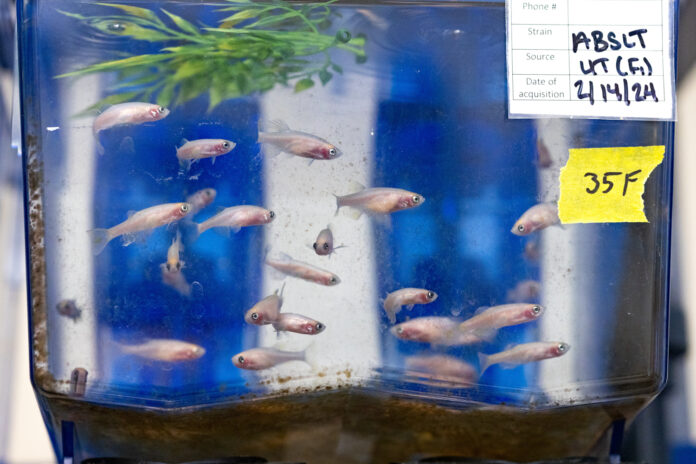
“This might not work, but if it does, it’ll have a huge impact,” said Isaac Schiefer, professor and vice chair of Medicinal and Biological Chemistry for UToledo.
Schiefer is the project leader for the university’s research dealing with opioid overdose reversal, and secured the grant from the National Institutes of Health (NIH).
“Drug discovery is what I do, but ultimately what I work on is dictated by my ability to get money to pay for my research,” he said.
“What they [NIH] were looking for is first novel countermeasures for first responders,” Schiefer said, adding that “there’s certain types of molecules that they list as being chemical threats, and the idea is that, if something was to get aerosolized on the subway in Chicago, is there anything we can come up with, as a countermeasure, that first responders could use in a mass casualty event.”
Synthetic opioids were listed as molecules to test, and Schiefer came up with a model to test for new compounds using zebrafish as test subjects.
Fishing for compounds
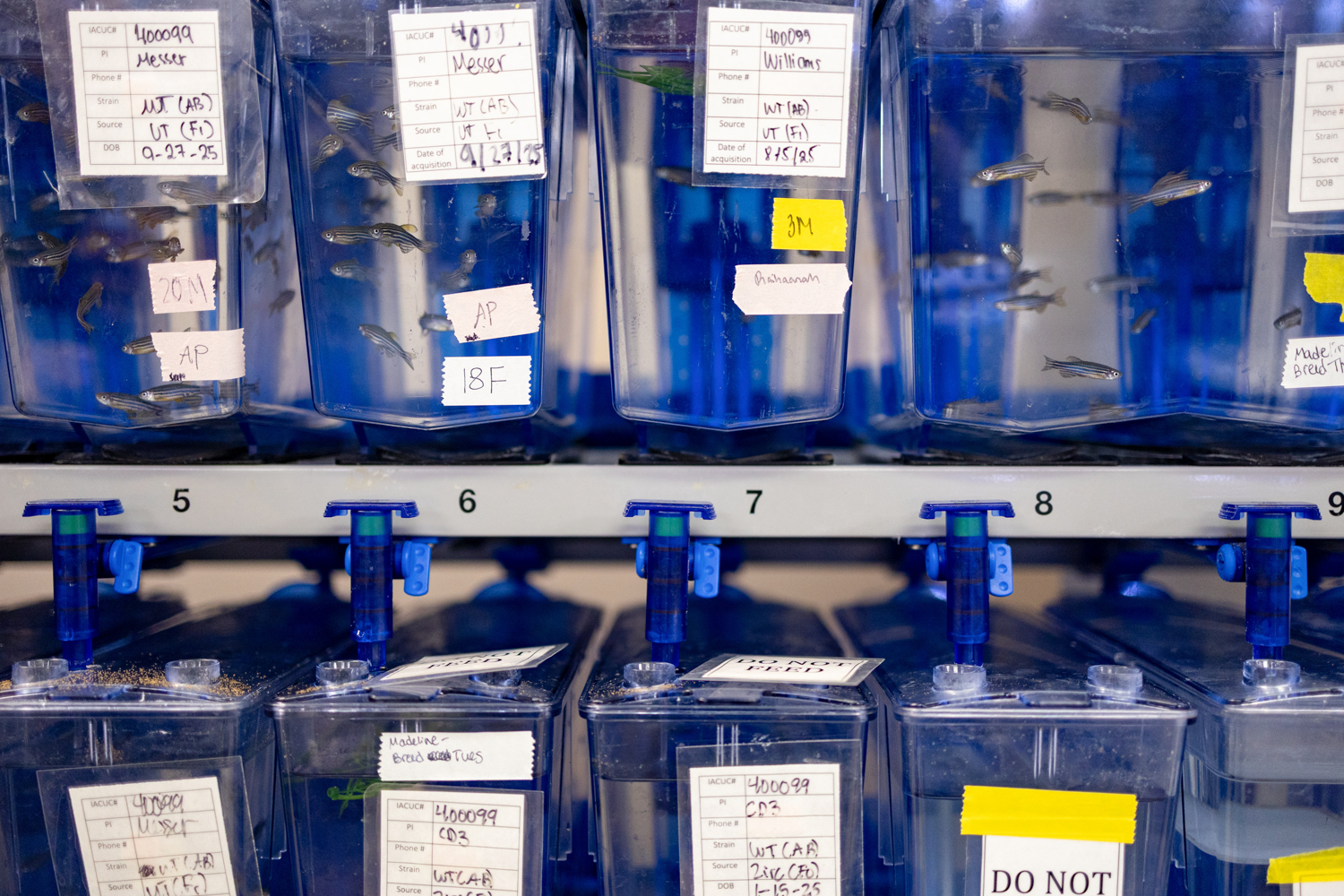
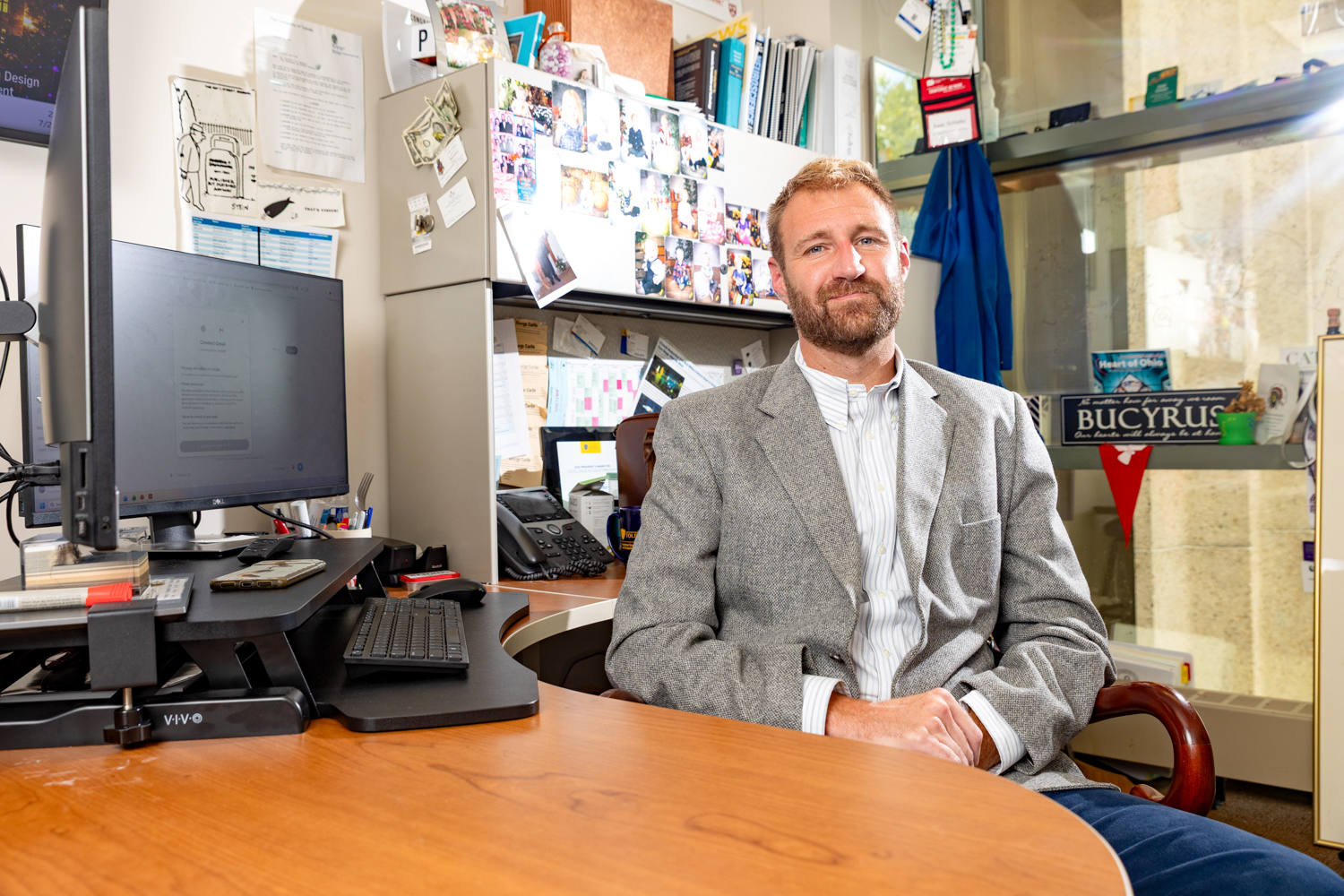
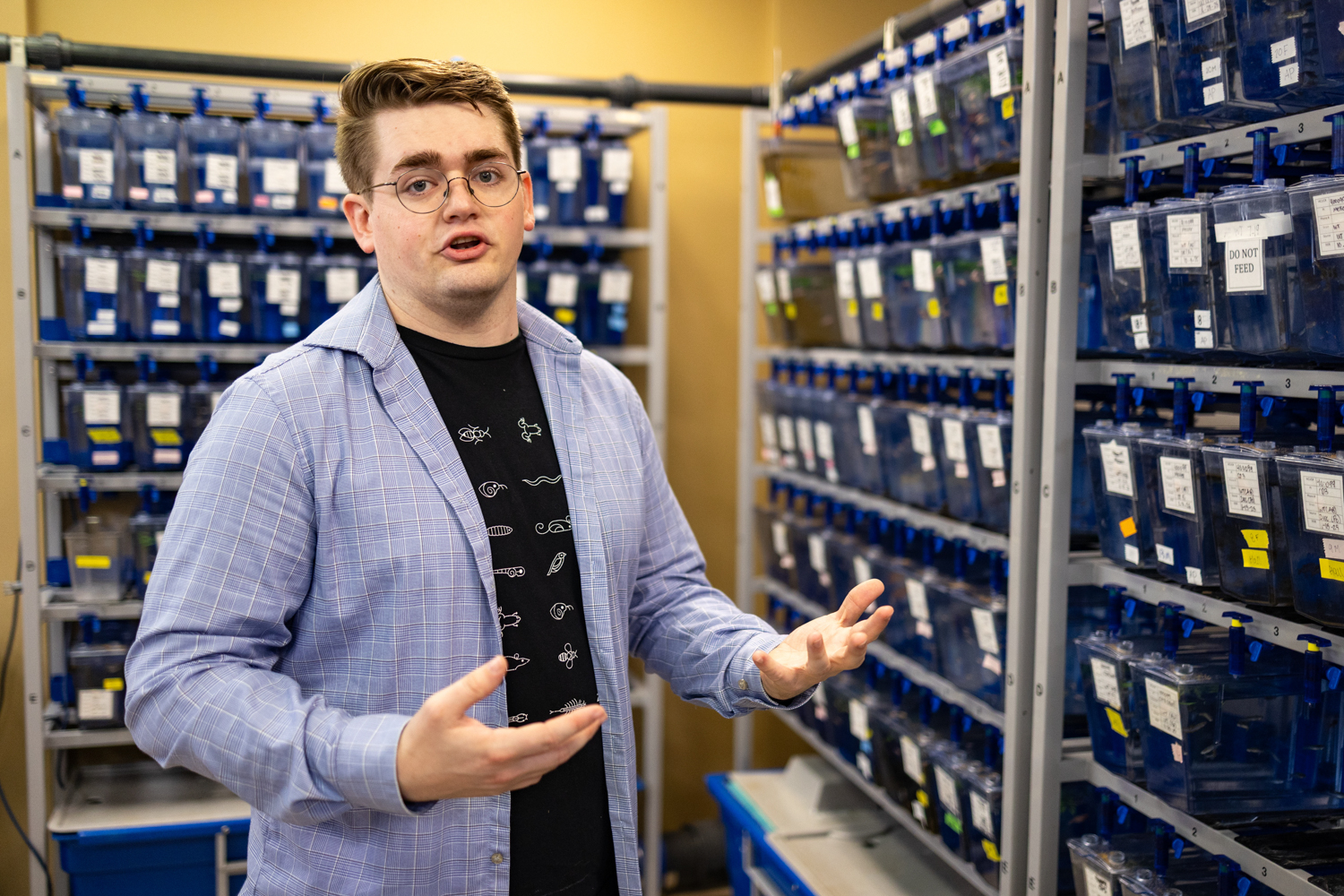
In the basement of the College of Pharmacy and Pharmaceutical Sciences, 3000 Arlington Ave., rows of aquariums filled with zebrafish are bred for various tests and experiments.
“I test mine at seven days,” said Medicinal Chemistry Doctoral Candidate Henry Stalnaker, who is there testing compounds to find one that will reverse the effects of fentanyl overdose on zebrafish. Other candidates in his cohort test different classifications of drugs on zebrafish, and are currently working with dimethyltryptamines and cathinones.
“Most of it is just measuring their movement,” Stalnaker said, peeling back a bit of the veneer on the experiment.
“A normal [zebra]fish, they move around like crazy, but when I give them fentanyl, they don’t move as much,” Stalnaker said. “When I give them fentanyl and naloxone, that movement is recovered a little bit.”
Zebrafish have been identified as a useful test species in scientific research for decades, because of their quick reproductive and maturity rates, the ability to observe the fish’s internal body parts with clarity and their diploid genetic organization.
In the early 1970s, George Streisinger of Eugene, Ore. identified zebrafish as a good species to assist in the study of genetics, and in 1981 cloned a zebrafish, the first cloned vertebrate.
Since then, scientists have been discovering different uses for zebrafish, and – for the purpose of Stalnaker’s tests – zebrafish contain the same receptor fentanyl binds to within humans, the mu-opioid receptor.
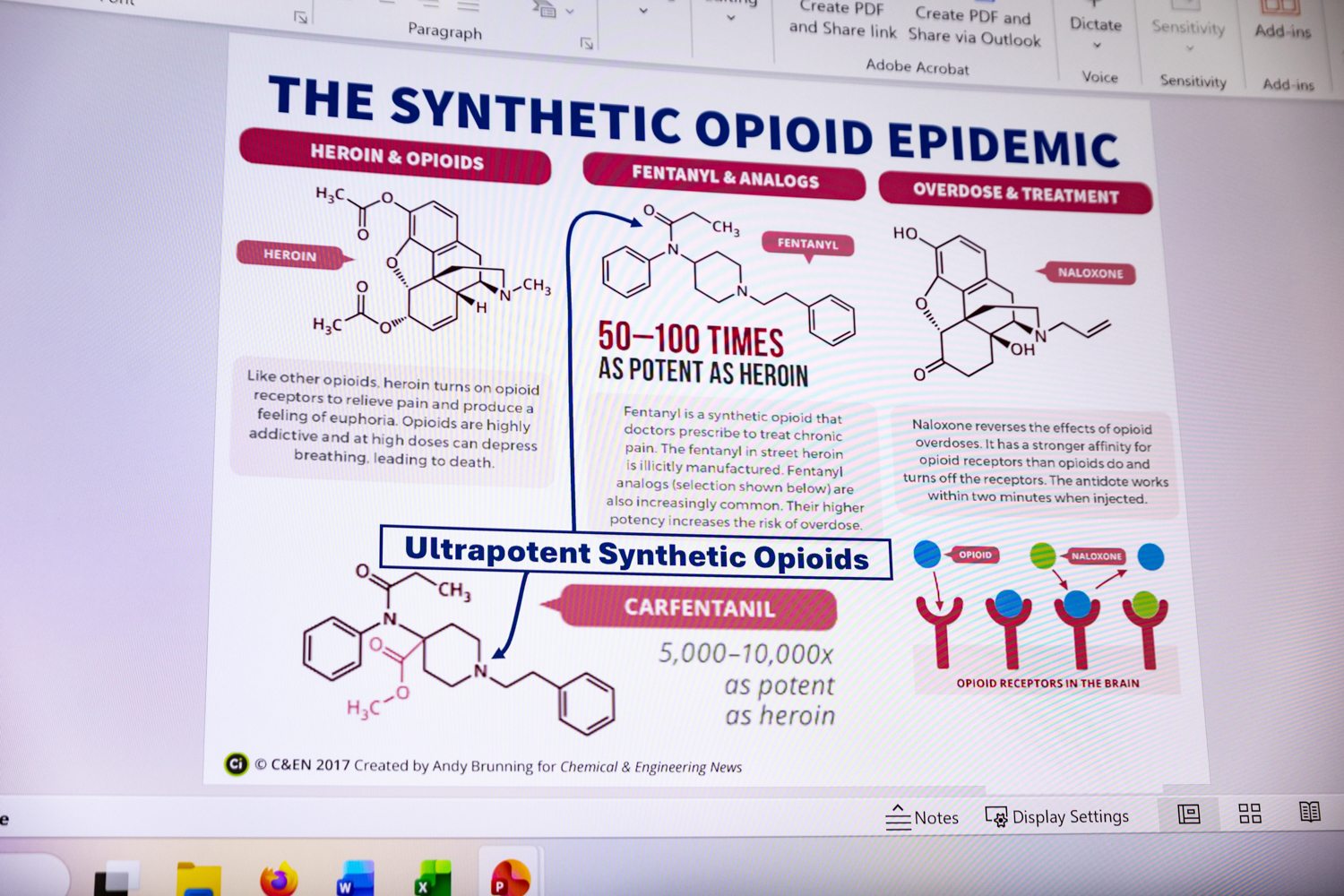
“The mu-opioid receptor is responsible for that euphoric feeling,” Stalnaker said. When the active ingredient in Narcan, naloxone, is employed to reverse opioid overdose, it binds with the mu-opioid receptor, and begins to reverse fentanyl’s effect.
The problem with narcan
“Naloxone works really well,” Stalnaker said. “But there’s one issue, one main issue, I guess I should say.”
Fentanyl has a longer half-life than naloxone. “So it gets into your brain, or it gets into your body, binds to the receptor, and it’s going to be there for a set amount of time, like a few hours,” Stalnaker said.
“So while fentanyl’s still there, naloxone left, and now you can just re-overdose again.”
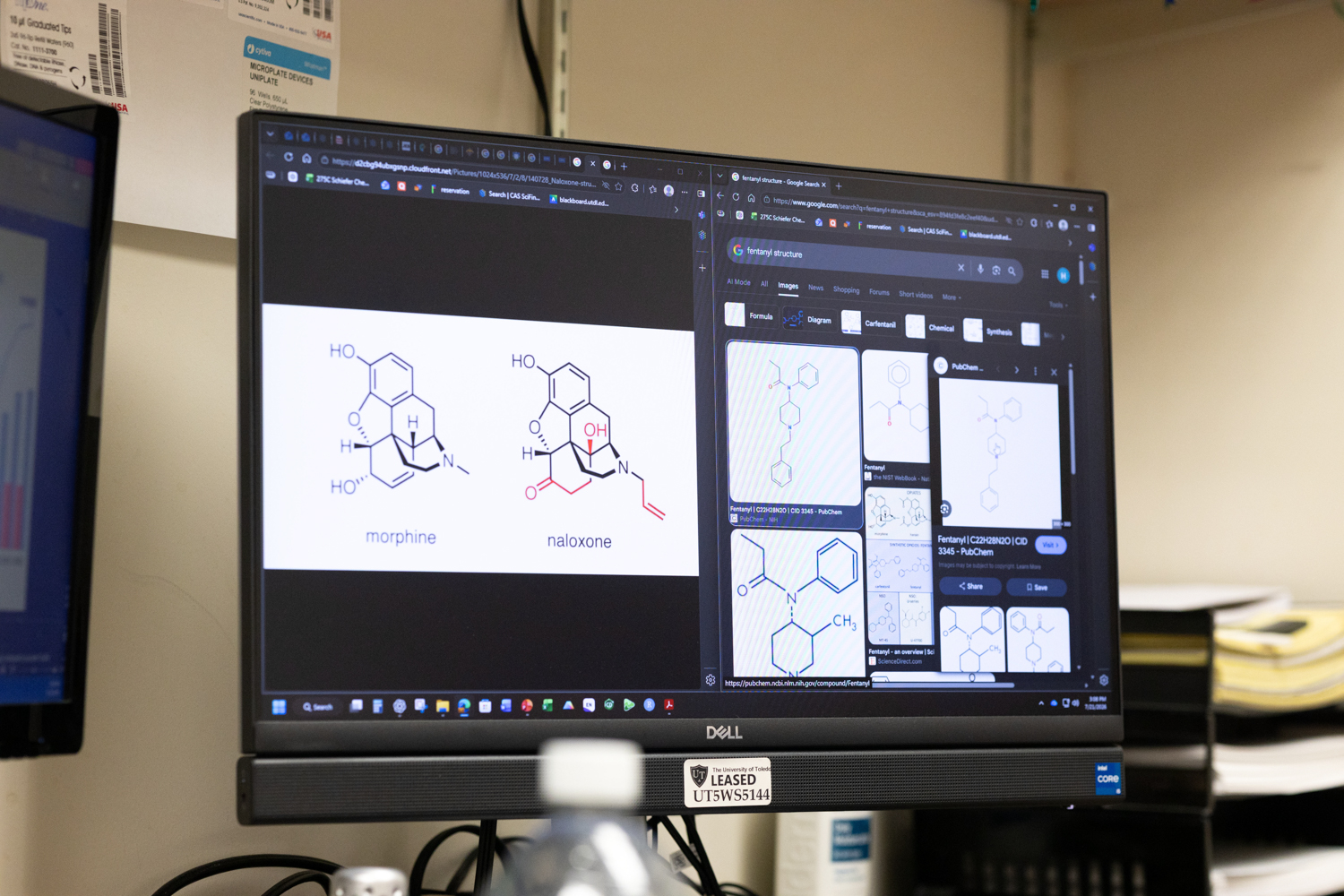
As a substance, naloxone is a synthetic derivative from morphine, a compound developed to reverse opioid overdose, but fentanyl is about 100 times stronger than morphine and isn’t as perfectly tailored for fentanyl.
Because naloxone is derived from morphine, the two substances share similarities in their chemical structure, but fentanyl has a different composition.
Stalnaker and Schiefer are less interested in the effectiveness of a one-off molecule that happens to work, and more interested in a pattern that reveals a chemical structure underlying a potential fentanyl reversal agent.
To discover molecules that might be suitable, Stalnaker tests thousands of novel compounds. “The bottleneck is just physical labor,” he said.
Testing
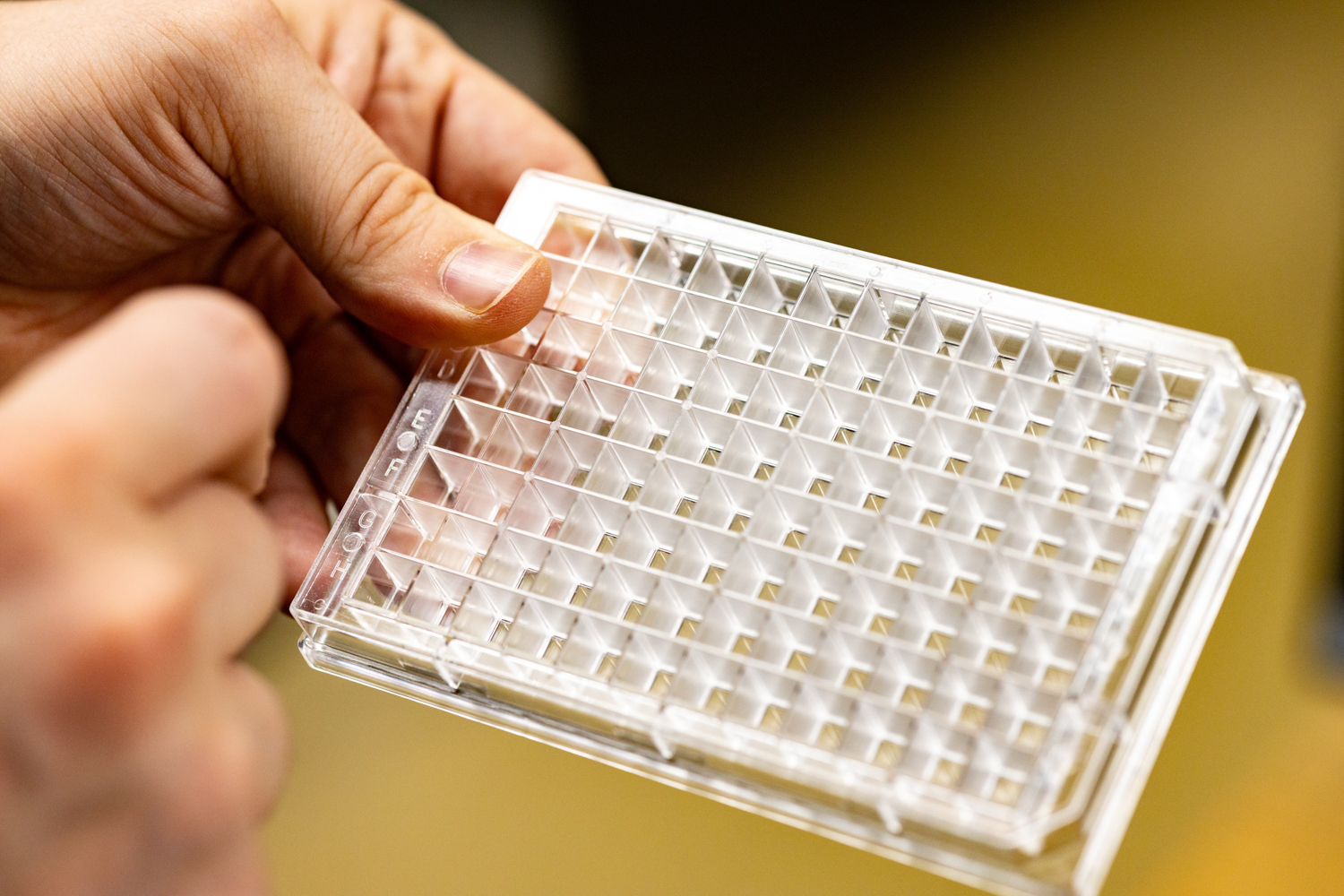
“I’ll put a fish in here, and then I’ll put it into that machine; I have a system that tracks them,” Stalnaker said. From there, he observes a batch of fish’s movements after exposing them to one of the compounds.
When light is shone on the fish, they stay still, regardless of the chemicals they’re exposed to, but in the dark the fish move around quite a bit.
Fentanyl significantly reduces movement of the zebrafish, and the compounds Stalnaker is looking for in the study will bring the fish back to zipping around.
“A lot of these [chemical] libraries are just molecules that people can make easily, but they really don’t have much drug potential,” Schiefer said. “So you screen 1400 molecules, and you have these…looks like there’s about six things that work.”
From there, Schiefer said the process is an analysis of the molecular structures of what seems to get the zebrafish moving again. “Let’s say you take the best four of those [six molecules]…three of them look very similar to each other.”
“Maybe that’s a type,” he said. “We call this rigor. It’s the amount of evidence.”
“Finding one molecule that reverses the effects of fentanyl might not be a big deal…If you find several that are very similar that reverse the effects, it lends more evidence to it,” Schiefer said.
And while the two scientists weren’t specific about how many compounds/molecules they identified as effective or more effective than naloxone at reversing fentanyl overdose, they ranged the effective molecules somewhere between five and ten.
But more importantly, both scientists said they had identified a chemical structure they were investigating. This structure might eventually lead to a drug patent, and for this reason, they asked the Toledo Free Press not to publish it in the meantime.
Long road to rigor
With an idea of what the chemical structure might look like to reverse fentanyl overdose, the two worked backwards from that point.
“In the 9,000 [compounds] we purchased, how many had this kind of structure? It was like 32,” Schiefer said. “So Henry went back and pulled from our library all the other ones and tested them. Some of them work, some of them don’t. And then he has started re-synthesizing them and making new derivatives.”
Schiefer called this process compound design.
“We slowly develop what’s called a structure-activity relationship, where we try and understand how does the activity of molecule change when you change its structure,” he said.
Naloxone is effective for reversing overdose, because it outcompetes other opioids for their place on the mu-opioid receptor. Deaths from fentanyl result from respiratory failure, which is caused by an activation of the mu-opioid receptor in the brain.
When naloxone is introduced it takes up space on the mu-opioid receptor, does not activate it, stopping the overdose by allowing the brain to regulate breathing.
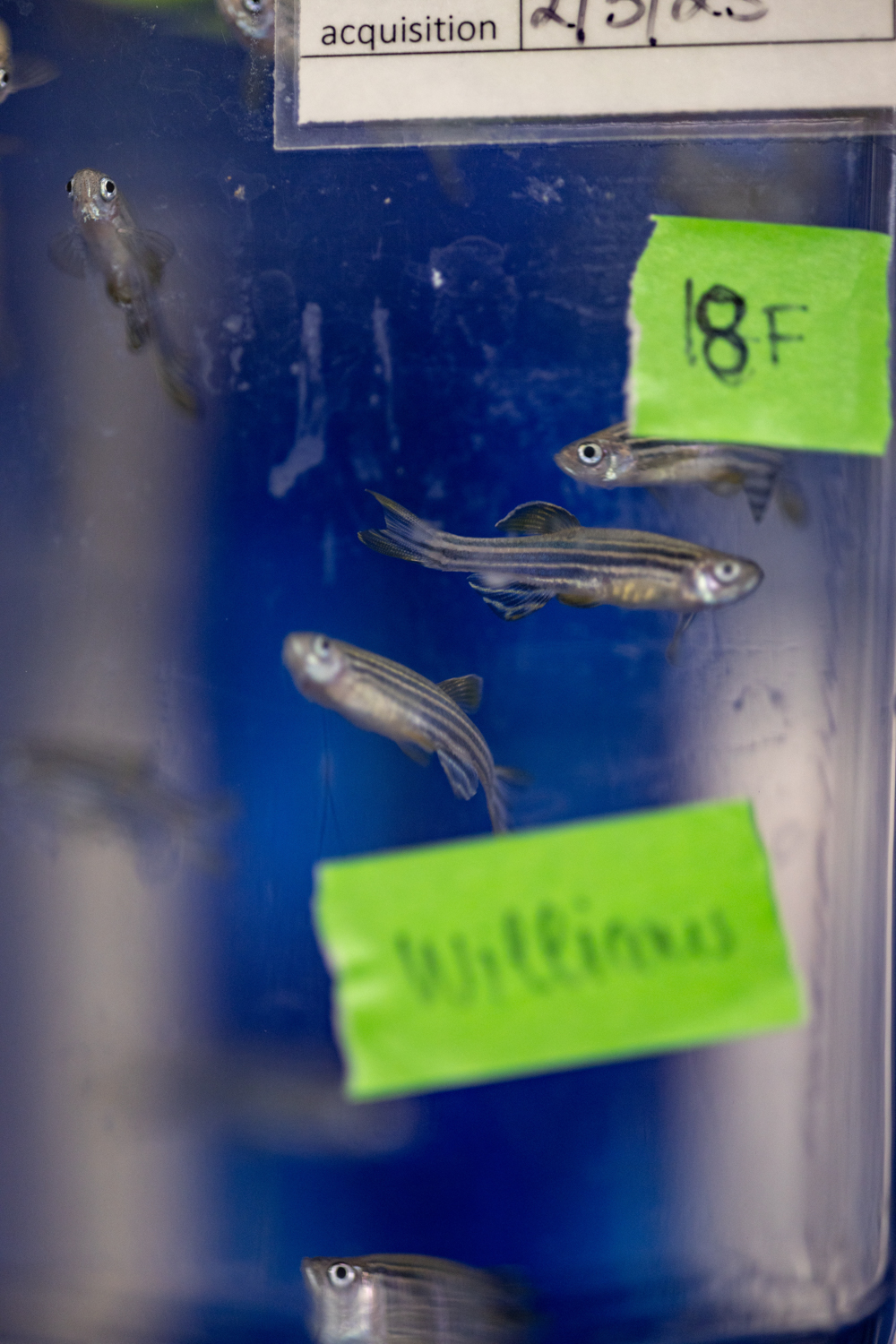
Locomotion has been the main variable Stalnaker has been observing, so it’s unclear what is causing the zebrafish to resume movement after being exposed to fentanyl, just that the fish are moving again. The movement of the fish is suppressed due to fentanyl, but the mechanism that allows them to move again is unknown.
Truly Stalnaker cannot say the compounds he has found have “reversed” fentanyl overdose, only that they have allowed zebrafish to resume their movement after being exposed to fentanyl.
Heart rate and respiration will be the next variables Stalnaker will observe in tests, as orthogonal assays. If things go well with those studies, tests will continue on other animals, like mice and rats, but both Stalnaker and Schiefer were clear that this was only the beginning of the research on these possible reversal agents.
“For me to say my research is going to go to clinical trials, that’s 20 years,” Stalnaker said, while the Principal Investigator (PI) on the research, Schiefer, was more optimistic, estimating seven years with good fortune or more realistically 10 years.
Assay it ain’t so
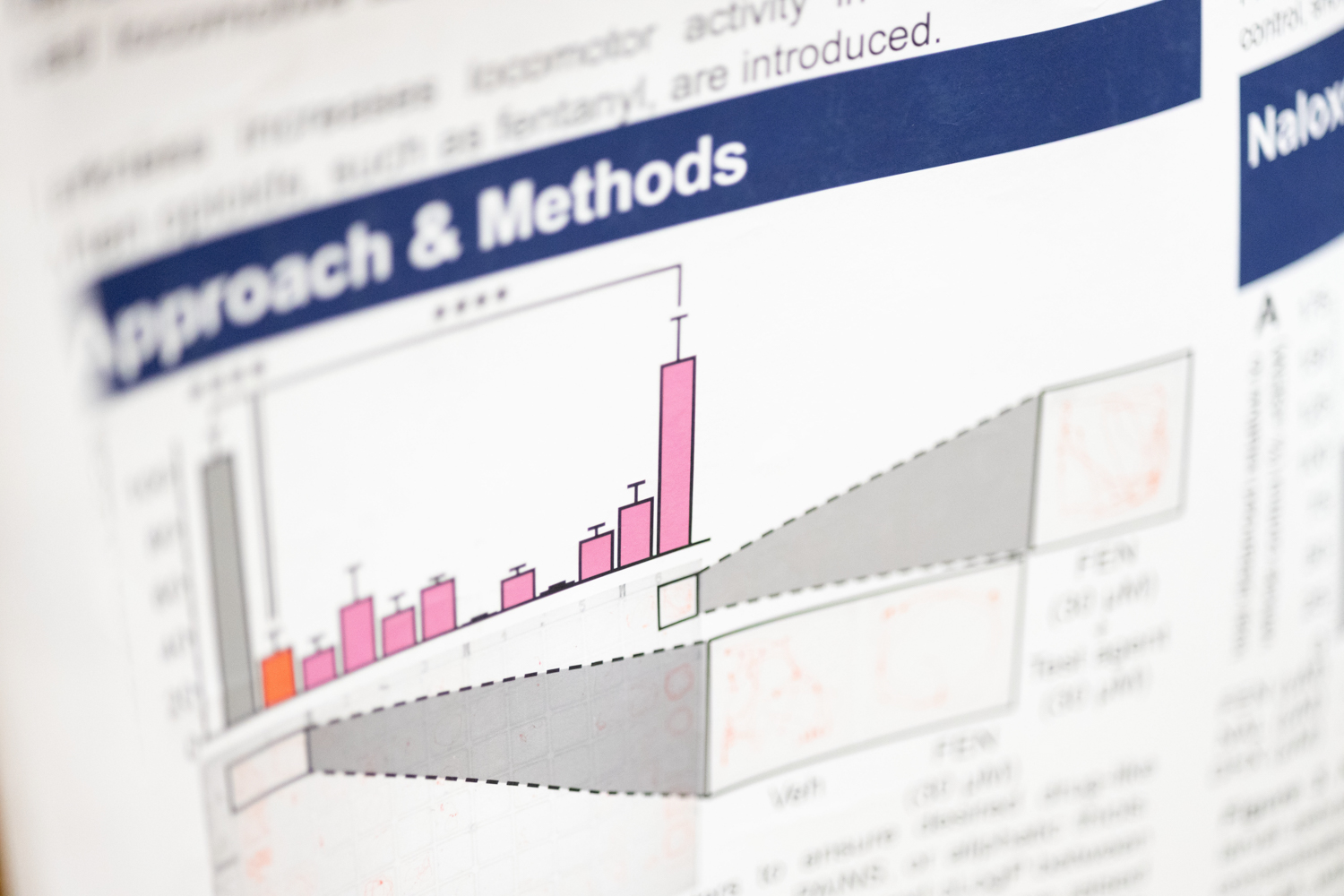
“The novel thing is trying to use them [zebrafish] as a screening assay,” Stalnaker clarified, and talked about how the research was able to happen much faster with the use of zebrafish. “It’s just cheaper. You can get more test subjects with very minimal work, so it’s just a really good model to test.”
“For me to do what I did with mice, it would have taken me years to do. I would have had to [have] a whole facility for it.”
Zebrafish, as stated before, have been used for a number of things, but never in this way.
“People had demonstrated that the fish respond to fentanyl, but they’d never went to try and use it to discover novel fentanyl reversal agents,” Schiefer said. “The implementation and the way we’re doing it is kind of our brainchild.”
Clarification is still required to find how the compounds are actually achieving the limited desired effect in the fish, and part of that ambiguity revolves around not being able to see what the compounds are binding to.
“We’ll have to study, like do these molecules bind to the mu-opioid receptor?” Schiefer said, or do they work in a different way entirely.
But the movement of the fish is a good start. Already Schiefer and Stalnaker are working on improving the zebrafish model with what they call casper fish, fish with skin permeable to ultraviolet (UV) light.
“If you hit them with UV light, the light can get through their skin because they don’t have pigmentation, so you can actually tag certain molecules inside of the fish,” Schiefer said.
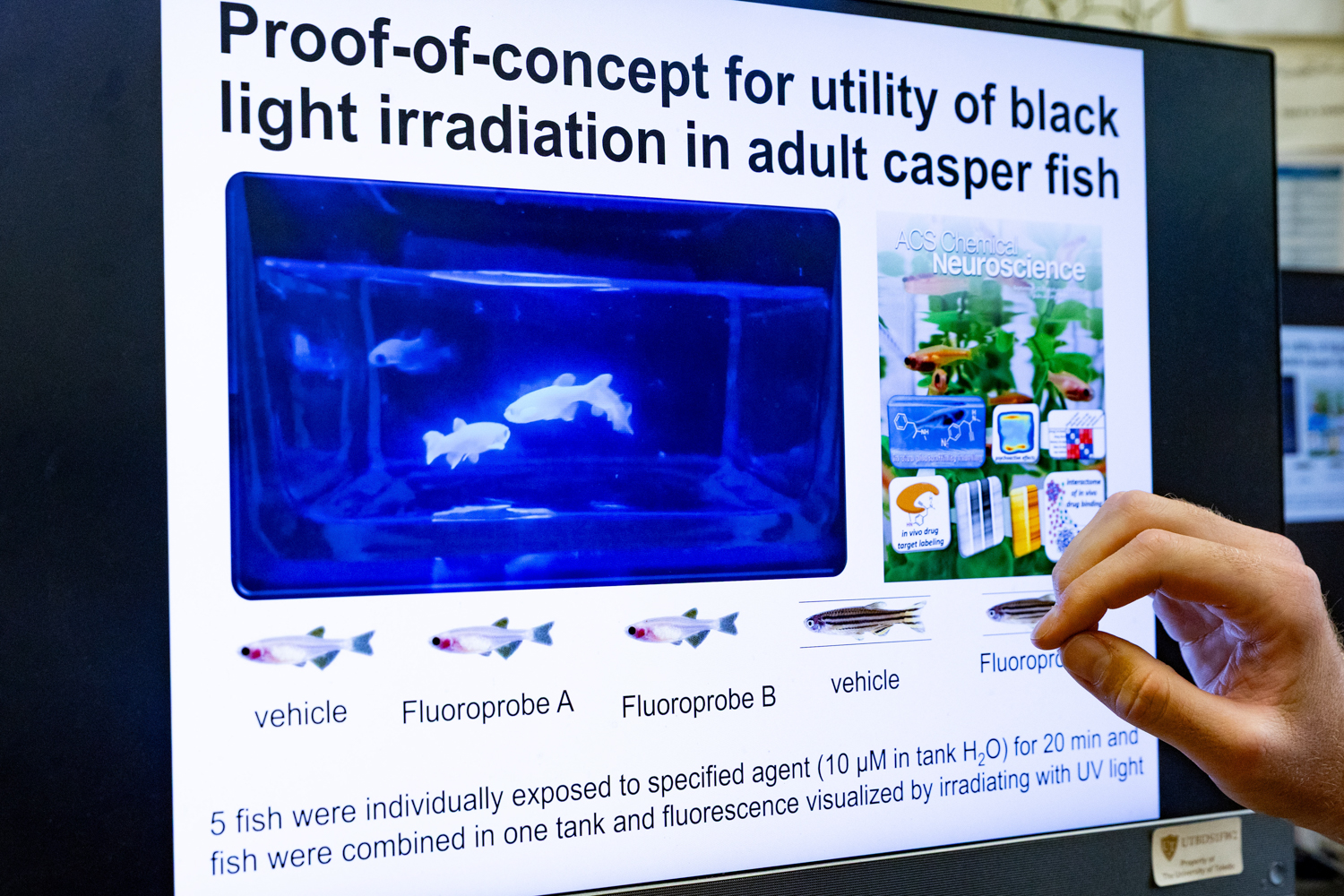
Molecule variants with a photo affinity have already been custom made, so that they can track the molecules through the casper fish to more accurately see what they are binding to.
These molecules do not bind inside the fish until they are exposed to UV light.
Schiefer’s hope is that with an acceptance of a grant authorizing the use of casper fish, the assay process might move quicker and with greater accuracy.
“There’s a couple instances where people, there’s not many, but there’s a few instances where people have taken drugs from academic settings and made big bucks with them. And that’s ultimately my goal,” Schiefer said.
In the event that Schiefer’s drug went to market and were to be patented, he clarified the patent percentage split would be 60 percent to the university, for bearing all the upfront costs, and 40 percent to the team that helped create the patent.
“I want students to join my lab knowing that if you do well and produce things, your names go on patents, if I can justify it,” he said.