This article was originally published in the Toledo Streets Newspaper.
In Toledo, the history of the United Auto Workers is not confined to a union hall or preserved in photographs of old picket lines. It can be seen in the neighborhoods built by factory wages, the families supported by generations of auto workers and the Jeep vehicles rolling out of the Toledo Assembly Complex. For more than 90 years, UAW Local 12 has helped shape what work means in this city – not simply as a way to earn a paycheck, but as a source of dignity, security and collective power.
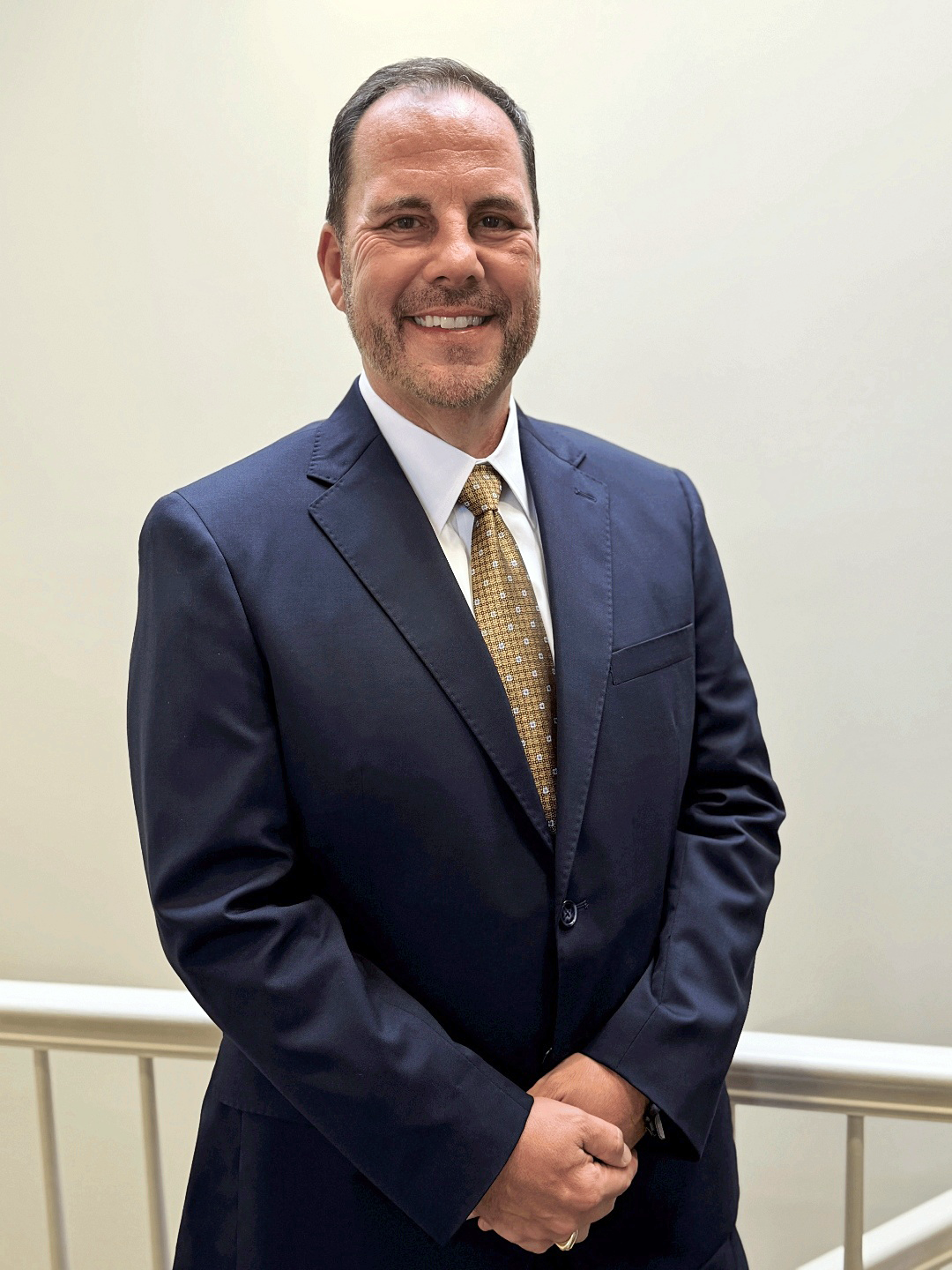
Today, Local 12 is entering a new era. Brian Sims, elected president in 2025, is the first Black president in the local’s history. He succeeded Bruce Baumhower, who led Local 12 for 32 years and became one of Toledo’s most recognizable labor advocates. Sims inherited an organization with a proud history but also a demanding future, as automation, shifting consumer tastes, international competition and the transition toward electric vehicles continue to transform the auto industry.
Sims called his election “a wonderful achievement,” but he also acknowledged the history behind it. His rise represents more than a change in leadership. It reflects the changing face of Toledo’s workforce and the continuing effort to make sure workers from every background have a voice at the table.
Born in a citywide labor battle
Local 12’s history reaches back even further than the UAW itself. The local developed from Federal Labor Union 18384, an organization of Toledo automotive workers chartered through the American Federation of Labor in 1933. The following year, Toledo became the site of one of the most important labor conflicts of the Great Depression: the Electric Auto-Lite strike.
Auto-Lite workers walked off the job in April 1934, demanding union recognition and better working conditions. Their struggle quickly grew into a community cause. Unemployed workers and labor activists joined the picket lines, while thousands of Toledo residents gathered outside the factory. When police and members of the Ohio National Guard attempted to break the strike, the confrontation became known as the Battle of Toledo. Two workers were killed and more than 200 people were injured during days of violence.
The deaths were a terrible price, but the workers ultimately won union recognition and a contract. The victory helped make Toledo a national symbol of industrial unionism and contributed to the momentum behind the Wagner Act of 1935, which established federal protections for workers seeking to organize. When the International Union, United Automobile Workers of America was formed later that year, Toledo’s federal union became UAW Local 12.
That beginning matters because Local 12 was not created by corporate generosity or political favor. It was built by workers who took tremendous risks because they believed employment should provide more than survival. They wanted fair wages, reasonable hours, safer factories and the right to challenge arbitrary treatment without standing alone.
Local 12 and the rise of the middle class
As Toledo’s automobile and parts industries expanded, so did Local 12. The union organized workers at factories producing automobiles, glass, transmissions, automotive components and other manufactured goods. It became an amalgamated local, representing workers at many different employers rather than at a single plant. Local 12 currently represents dozens of bargaining units, including employees in automotive production, parts manufacturing and several nonautomotive workplaces.
The most visible Local 12 members have long been the men and women who build Jeep vehicles. Toledo’s relationship with Jeep began during World War II, when Willys-Overland produced the military vehicle that became one of the most recognizable machines of the Allied war effort. After the war, civilian Jeeps helped establish the brand’s reputation for durability and gave generations of Toledo workers steady employment.
UAW contracts turned many of those factory jobs into gateways to the middle class. Workers who might not have had college degrees could earn enough to buy homes, raise families, send children to school and retire with some security. Health insurance, pensions, paid vacations, overtime rules and workplace grievance procedures were not gifts handed down by employers. They were benefits negotiated across decades by workers acting collectively.
The union’s influence reached well beyond its membership. When union wages increased, nonunion employers often had to improve pay to compete for employees. When UAW contracts established better health coverage or time off, those benefits helped raise expectations throughout the local labor market. The strength of Local 12 also supported neighborhood businesses, churches, charities and community organizations that depended on the spending and volunteer work of union families.
Former Local 12 president Baumhower often described Jeep as inseparable from Toledo. During his tenure, he worked with elected officials and community leaders to persuade Chrysler and its successors to continue investing in local production. Those efforts were especially important during the 1990s, when questions arose about the future of Jeep manufacturing in Toledo. The Toledo North Assembly Plant opened in 1997, helping secure the brand’s local future and preserving thousands of direct and supplier jobs.
Concessions, crises and corporate change
The decades that followed were not easy ones for auto workers. Globalization moved manufacturing to lower-wage regions, while automation allowed plants to produce more vehicles with fewer employees. Toledo workers watched other factories close and saw companies repeatedly change ownership. Jeep passed from American Motors Corporation to Chrysler, then through DaimlerChrysler and Fiat Chrysler Automobiles before becoming part of the multinational corporation Stellantis in 2021.
The 2008 financial crisis brought the American auto industry to the edge of collapse. Union workers accepted painful concessions as Chrysler and General Motors entered bankruptcy and received federal assistance. UAW members gave up wage increases, agreed to new work rules and saw the expansion of a two-tier pay system under which newer employees earned significantly less than veteran workers doing comparable jobs.
Those sacrifices helped keep the companies alive, but resentment grew as automakers returned to profitability and executive compensation climbed. Many workers believed temporary concessions had become permanent expectations. The two-tier system was especially divisive because it placed workers performing similar labor on different economic tracks, weakening the sense of equality that unions are supposed to protect.
By 2023, that frustration had reached a breaking point. Under International UAW President Shawn Fain, the union launched its “Stand Up Strike” against Ford, General Motors and Stellantis. Instead of closing every plant at once, the UAW targeted selected facilities and expanded the strike as negotiations continued. Toledo’s Local 12 was chosen as one of the first three locals to walk out.
Approximately 5,800 workers at the Toledo Assembly Complex left their jobs when the national contracts expired in September. Their strike also affected thousands of employees at suppliers whose operations depended on Jeep production. For weeks, picketers gathered outside the plant, supported by family members, other unions and Toledo residents who understood how much was at stake.
The eventual Stellantis agreement included a 25 percent increase in base wages over four and a half years, cost-of-living adjustments and a faster path to top pay. It also improved retirement provisions and converted many temporary workers to permanent status. Although Local 12’s Jeep workers initially rejected the tentative agreement in their local vote, the contract was ratified by Stellantis workers nationally. The rejection demonstrated that Toledo workers remained willing to challenge both the company and their own union leadership when they believed an agreement did not go far enough.
The uneven road after the strike
A strong contract cannot eliminate the instability of the automobile market. In 2024, Stellantis announced that it planned to eliminate a shift at the Toledo Assembly Complex and indefinitely lay off approximately 1,100 employees. The company pointed to declining sales and excessive vehicle inventories, particularly for the Jeep Gladiator. Although Stellantis later reversed the planned mass layoffs, some workers still faced periods of uncertainty, temporary shutdowns and reduced schedules.
The episode underscored a hard truth about modern manufacturing: even well-paid union workers can feel vulnerable when decisions are made in distant corporate offices. A vehicle’s sales can change, a production line can be moved and a new executive team can reverse the strategy of the one before it. The union cannot control every market condition, but it can negotiate protections, challenge broken commitments and make sure workers are not treated as disposable expenses.
Local 12 also carries the responsibility of serving workers outside Jeep. Its many bargaining units include parts suppliers and workplaces where wages, benefits and job security may differ sharply from those at the assembly complex. Organizing those workers and maintaining solidarity across such a varied membership will be one of Sims’ central challenges.
The UAW itself continues to rebuild trust following the corruption scandal that sent two former international presidents and other officials to prison. Members subsequently voted to elect international officers directly, leading to Fain’s victory in 2023. A federal monitor continues to oversee the international union, while internal disputes have raised additional questions about financial controls and leadership. Local unions must therefore demonstrate through their own actions that dues are being used responsibly and that leaders remain accountable to the membership.
A new product and renewed hope
The outlook in Toledo improved considerably when Stellantis announced a nearly $400 million investment in the Toledo Assembly Complex. The company plans to add a new Ram midsize pickup truck – since identified as the revived Dakota – to production alongside the Jeep Wrangler and Gladiator. Production is expected to begin in 2028, with the investment projected to create more than 900 jobs.
For Local 12, the announcement means more than another vehicle model. Adding a third product gives the plant greater flexibility and reduces its dependence on the performance of the Wrangler and Gladiator alone. It also offers a path back for laid-off workers and creates opportunities for a new generation seeking stable employment.
“There were a lot of smiles in that plant; what fuels them is great news,” Sims told 13 Action News after the investment was announced. “Not only job security, but they know they have union brothers and sisters who were laid off will be coming back into the plant.”
Sims has emphasized that the benefit will extend beyond the assembly line. “I feel like we’re all family,” he told WTOL11 while discussing the investment’s effect on workers, suppliers, dealerships and the wider Toledo economy. That interconnectedness explains why production decisions at the Jeep plant ripple through the entire region. One assembly job supports work in parts production, transportation, restaurants, retail stores and other local businesses.
The challenge now is making sure the promised investment becomes reality and that the new jobs are good union jobs. The UAW’s 2023 contract expires in 2028, the same year the Dakota is expected to begin production. That timing will place the product launch, corporate investment commitments and a new round of national bargaining on the same horizon.
More than a paycheck
The future of the UAW in Toledo will involve issues earlier generations could scarcely have imagined. Electric and hybrid powertrains require different components and potentially fewer labor hours. Robotics and artificial intelligence are changing inspection, logistics and assembly operations. The union must fight to ensure that new technology improves safety and productivity without becoming an excuse to eliminate workers or weaken their bargaining power.
Yet the fundamental questions remain familiar. Who benefits when productivity increases? Who absorbs the cost when markets decline? Do workers have a meaningful voice in decisions that shape their lives, or are they expected simply to accept them?
Local 12’s history offers one answer. From the Auto-Lite picket lines to the 2023 Stand Up Strike, Toledo workers have repeatedly shown that dignity at work is rarely guaranteed without collective action. The union has not won every fight, nor has it been free of mistakes, divisions or disappointments. Its lasting importance rests in the principle that no worker should have to face a powerful employer alone.
For Sims, that inheritance brings both honor and responsibility. As the first Black president of a local born during the defining labor battles of the 1930s, he represents change within an institution devoted to protecting what earlier workers built. His task is to preserve those gains while preparing Local 12 for jobs, technologies and challenges that are still emerging.
The vehicles may change, the company names may change and the factory floor may look different from one generation to the next. The central purpose of the union, however, remains remarkably consistent: to make sure that the people who build Toledo’s most famous products can also build secure and dignified lives.
The Battle of Toledo: How the Auto-Lite Strike changed American labor
Before the United Auto Workers became a national force, Toledo workers helped demonstrate what organized labor could accomplish. The 1934 Electric Auto-Lite strike – often called the Battle of Toledo – became one of the most consequential labor struggles of the Great Depression.
The dispute began when workers at the Electric Auto-Lite Company sought union recognition, higher wages and improved working conditions. About 1,000 employees walked off the job in April 1934, supported by members of Federal Labor Union 18384 and the Lucas County Unemployed League. The participation of unemployed Toledoans was especially important because it prevented the company from easily replacing striking workers.
As the conflict continued, thousands of supporters surrounded the Auto-Lite factory on Champlain Street. The company obtained a court order limiting picketing, but workers and their allies refused to abandon the demonstration. Tensions erupted in late May when police fired tear gas and attempted to disperse the crowd. Protesters fought back with rocks and bricks, and Ohio Governor George White called in the National Guard.
For several days, the factory district resembled a battlefield. Guardsmen armed with rifles and machine guns confronted an estimated 10,000 strikers and supporters. On May 24, troops fired into the crowd, killing Frank Hubay and Steve Cyigon and wounding others. More than 200 people were injured during the larger confrontation.
The deaths intensified public support for the strikers and brought Toledo close to a general strike. With other unions preparing to shut down work across the city, federal mediators intervened. Auto-Lite ultimately recognized the union, agreed to wage increases and rehired most of the striking workers.
The victory reverberated far beyond Toledo. Together with major strikes in Minneapolis and San Francisco that year, the Battle of Toledo demonstrated the strength of industrial workers organizing across job classifications. It also helped build public support for the National Labor Relations Act, commonly called the Wagner Act, which Congress passed in 1935 to protect collective bargaining and workers’ organizing rights.
Federal Labor Union 18384 later became UAW Local 12, linking the Auto-Lite struggle directly to Toledo’s continuing labor movement. Although the Auto-Lite factory closed in 1962, the strike’s legacy remains visible in every local contract that guarantees fair wages, workplace protections and a grievance process.
The Battle of Toledo was ultimately about more than one factory. It established a principle that continues to define organized labor: Workers acting together possess power that individuals standing alone do not.