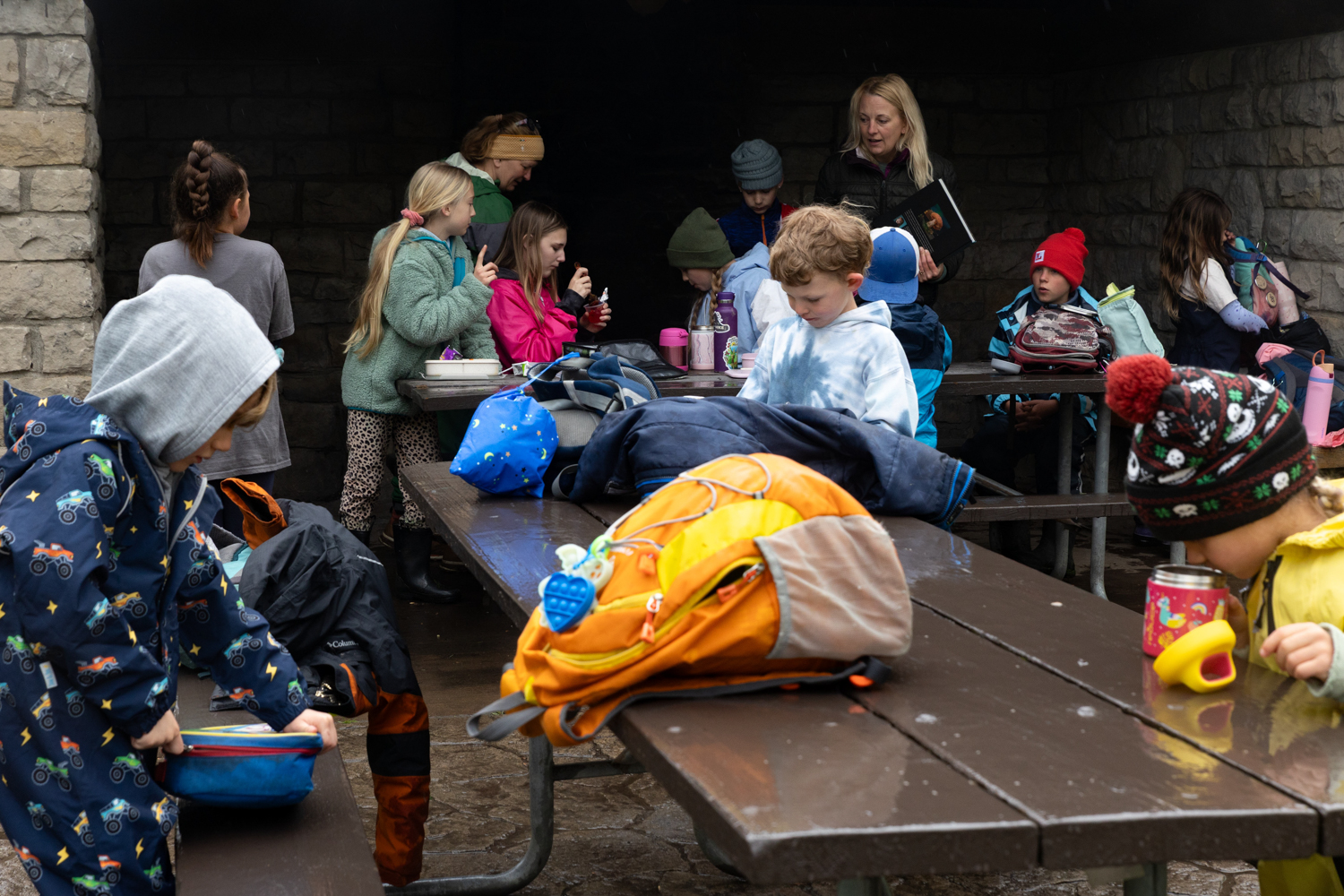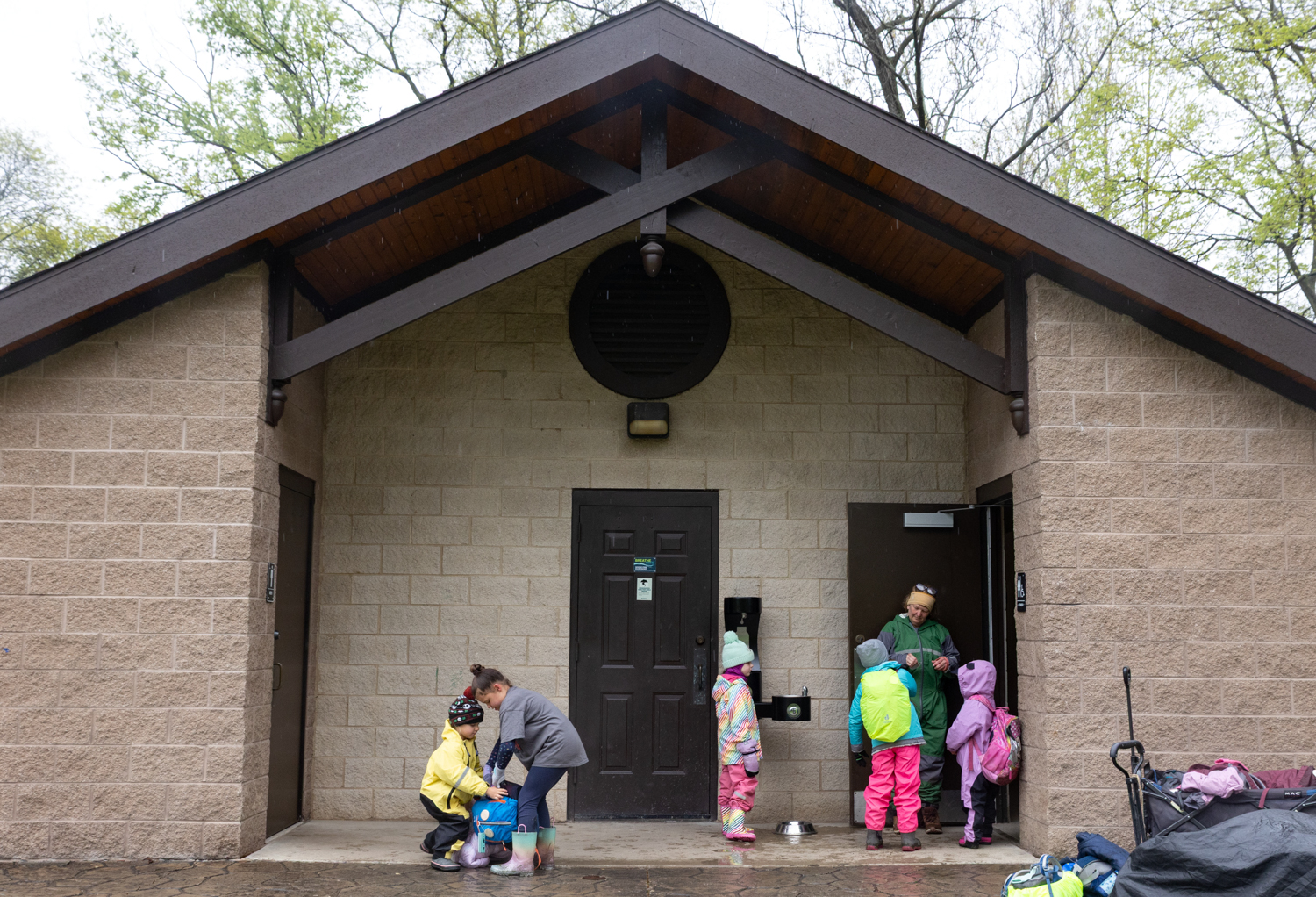
TOLEDO – Huddled in a circle at Side Cut Metropark, a score of children and three adults loosely plan their next five hours together in the park.
“Fridays is our forest school group, and they never not want to come,” Lauren Sells said of her son Parker, 10, and daughter Paisley, 8.
Sells never saw herself homeschooling, but opted for it after learning her son was often confined to a bench in a formal school setting for his hyperactivity.
“It was just like a really big red flag for me,” she said. “Why in kindergarten, for two-and-a-half hours a day, is he sitting on the bench constantly?”
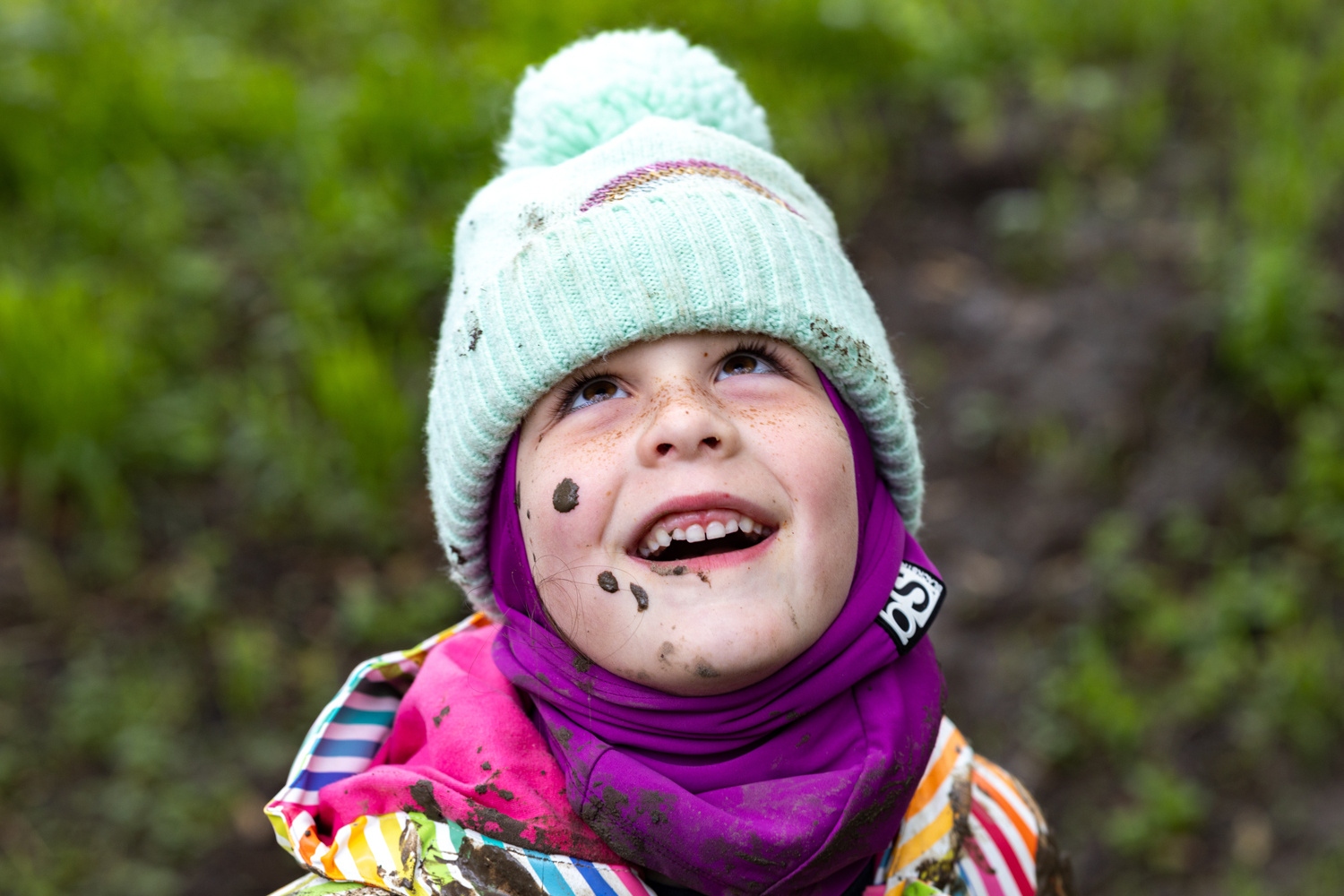
Questions like these led Sells to opt for more alternative approaches to learning, including home school, a Wednesday “Wild and Free” group, and a Friday Forest School group.
For Sells, these changes provided a consistent community for her kids and time outside, something essential for her son.
“He is his best self outside, daily. I mean, he asks to go outside,” she said.
An unexpected journey
Building shelters, playing in puddles and finding worms are nostalgic parts of childhood, but most people wouldn’t equate those memories with a school curriculum.
At Forest Time Kindergarten, Sherri Dauer is trying to change how parents and children approach learning.
“They’re more curious when they’re discovering something on their own, and if they’re allowed space and time and a little bit of quiet to figure it out,” Dauer said. “Their curiosity will drive them further if they want more information, and then they’re able to retain it a whole lot longer.”

Dauer, a mother and grandmother, was no newcomer to supervising children.
“I was a paraprofessional through Perrysburg schools, and my whole life, I was either a volunteer with children or Sunday school teacher, Girl Scout leader, those kind of things,” Dauer said.
But when she became a grandmother, she noticed something missing for her granddaughter, “so the focus was on what we were doing with my 3-year-old.”
The newest generation just wasn’t getting the same experiences she and her daughter had growing up.
“They don’t have enough time to play and [don’t] have a lot of time to get bored,” she said.
And while play and boredom may not seem like the most important parts of life, Dauer could tell something important was getting lost in the 21st century.
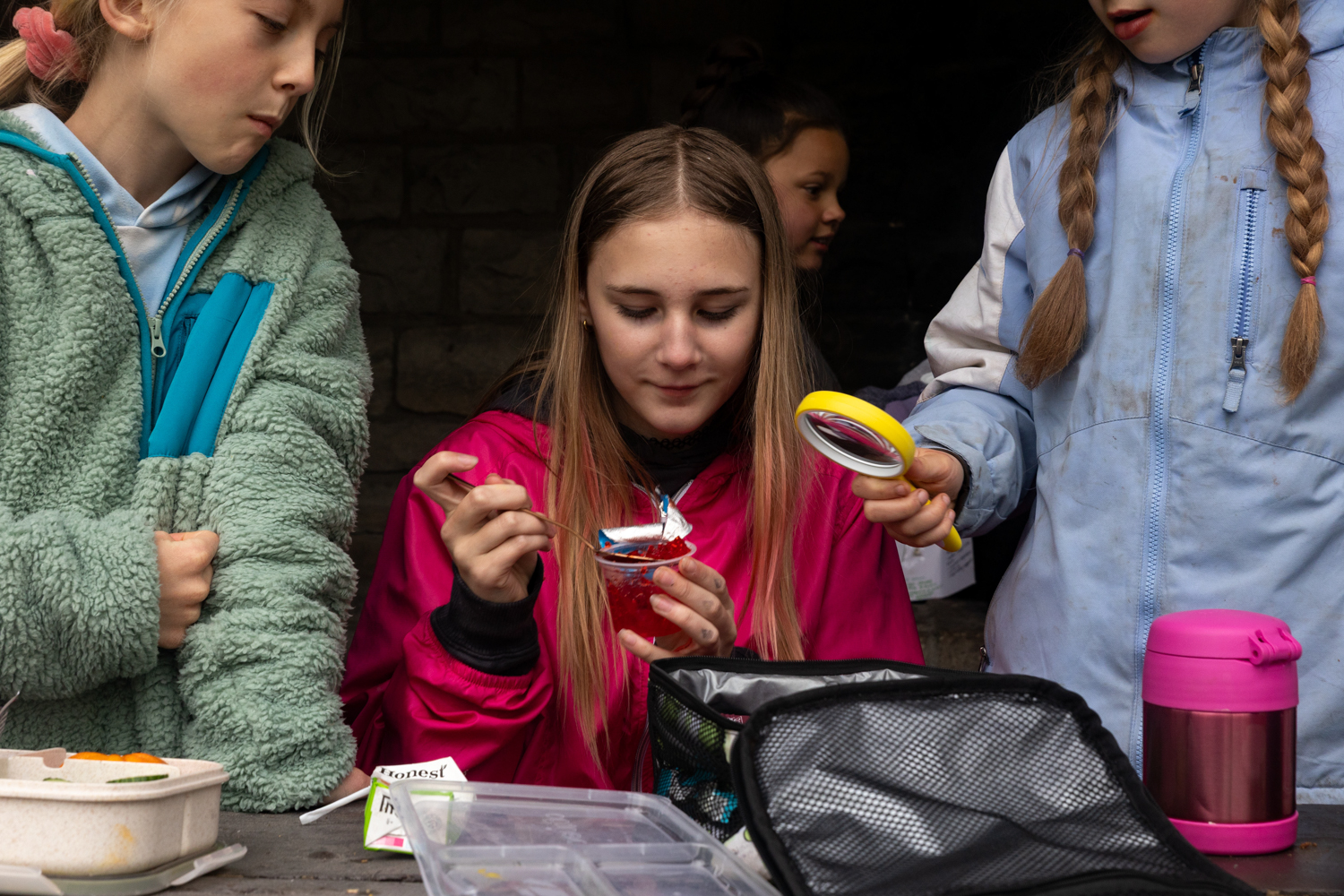
According to Dauer, kids were not being given opportunities to test their own competency, they were not being taught skills giving them independence, and instead were being pulled away from regulating their bodies and trusting themselves.
“I think a lot of parents are too busy. Kids, especially in the last 10 years, have a lot more access to screen time and a lot more access to being carted around to 10 different activities,” she said describing a general busyness that has distracted parents from passing on the basic skills of being human.
“I wanted to be able to take children out in the forest, and really let them climb on things and explore,” she said.
Following that urge, Dauer looked at some formal approaches to teaching kids what they might learn in the natural world.
“It’s called the Association of Nature-Based Educators (ANBE),” she said. Dauer went on to get three levels of certification in ANBE teaching practices.
Dauer said a lot of the first certification revolved around keeping kids alive in nature, as a supervisor. But a lot of what she had in mind was letting kids figure things out on their own.
There wasn’t anything in northwest Ohio that mirrored what Dauer was trying to do, so in 2018 she opened her own program, Forest Time Kindergarten.
Forest School
“[Forest School] is a long-term program that supports play, exploration and supported risk taking,” from the Forest School Association.
Eight years on from its start, Dauer’s kindergarten operates Tuesdays through Fridays, teaching kids ages 3-13 years-old with six staff members.
“Our parents trusted us to be outside, but they also taught us how to be outside,” Dauer said. In this same manner, her school teaches kids to be unafraid of being in nature, including rain and snow, with a few caveats for dangerous circumstances. But the school does not shy away from getting kids layered up in less than optimal conditions.
Required readings for teachers include There Is No Such Thing As Bad Weather by Linda McGurk and Balanced and Barefoot by Angela Hanscom, two books that emphasize the benefits of free outdoor play for children.
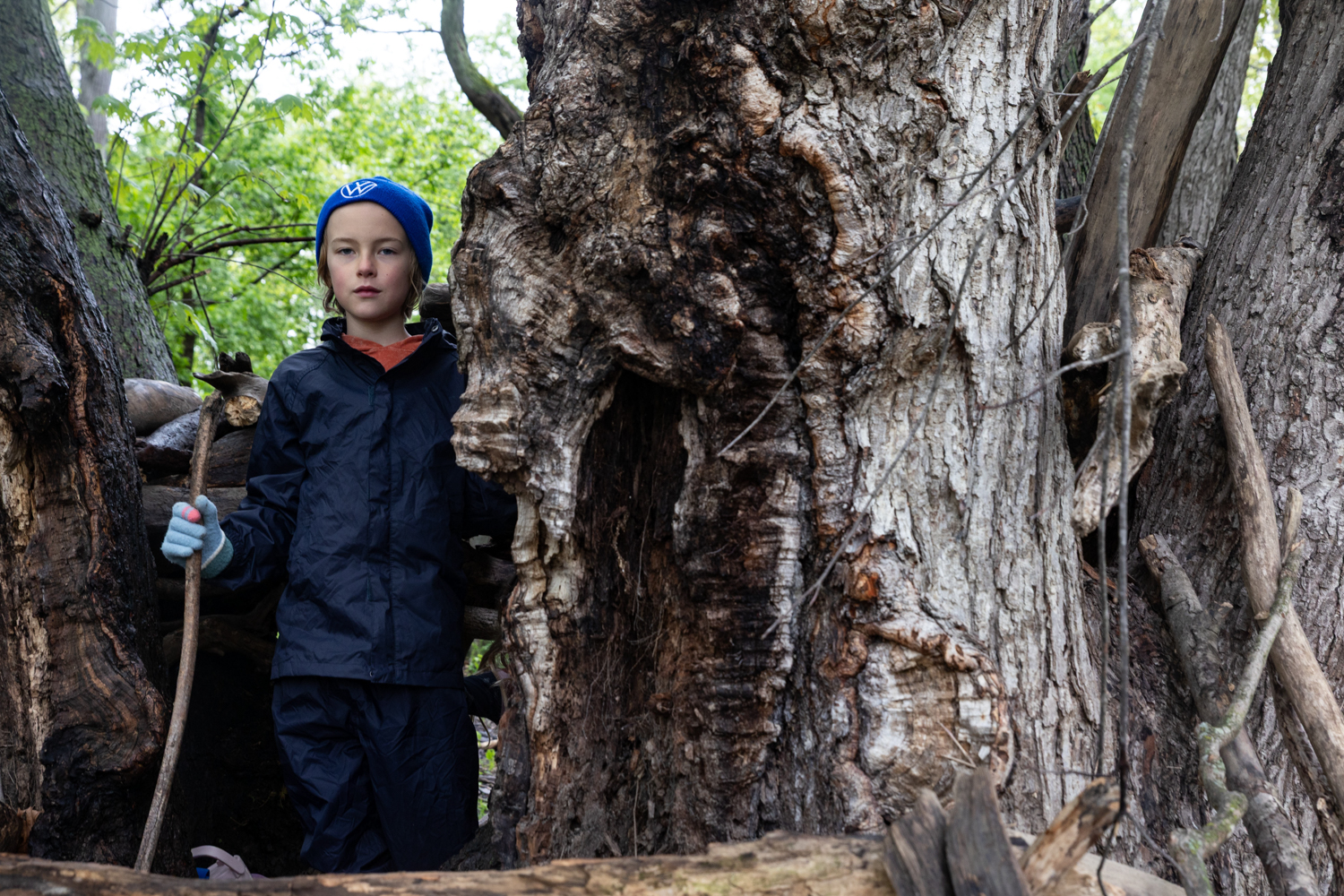
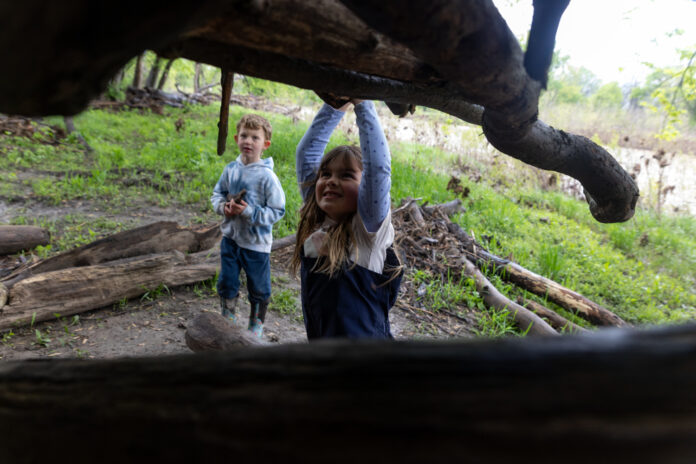
The facilitated groups of school children break off into self-directed activities, where kids are encouraged to lean on their own ability, their peers and older children, with teachers only intervening after exhausting their other resources for ability and knowledge.
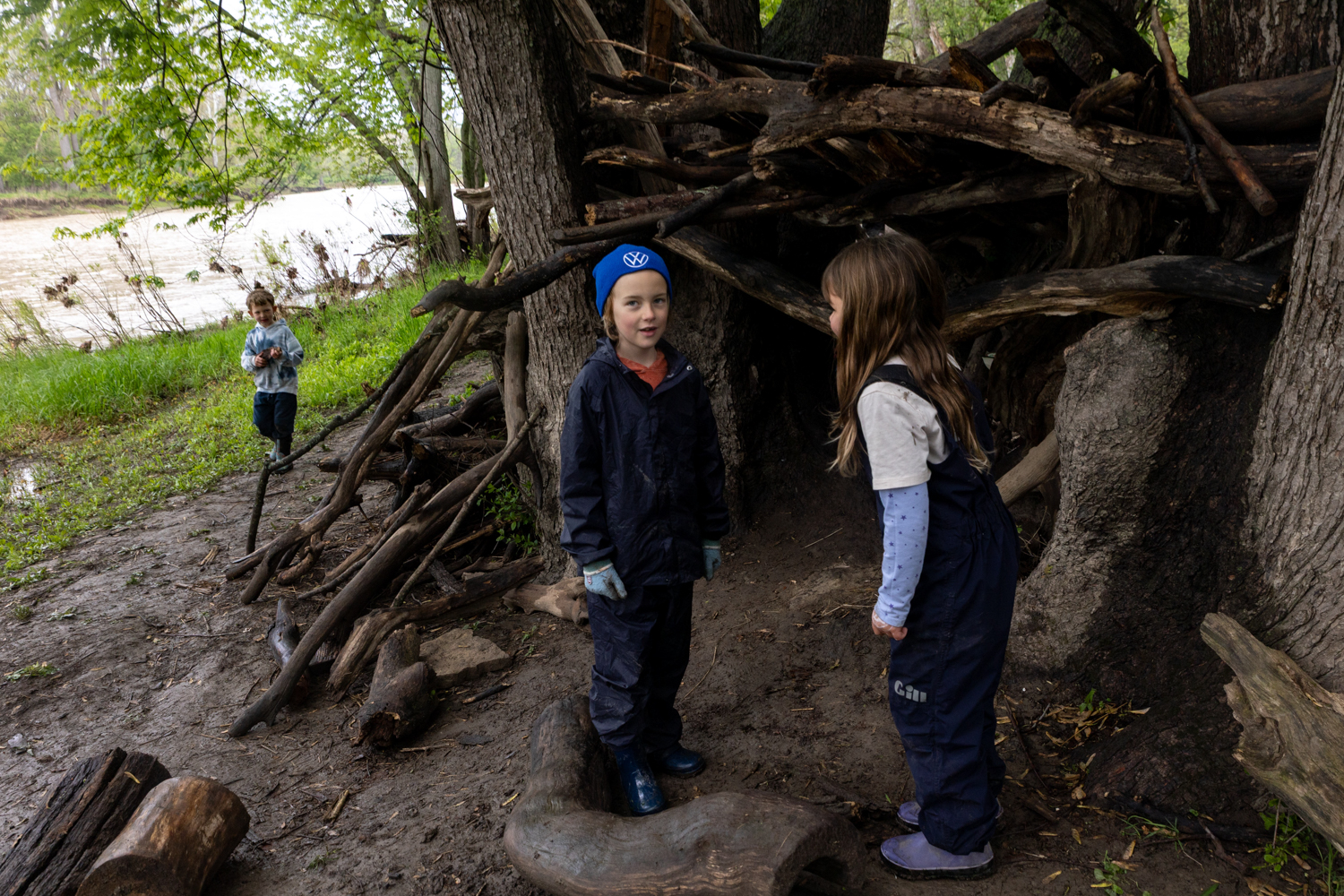
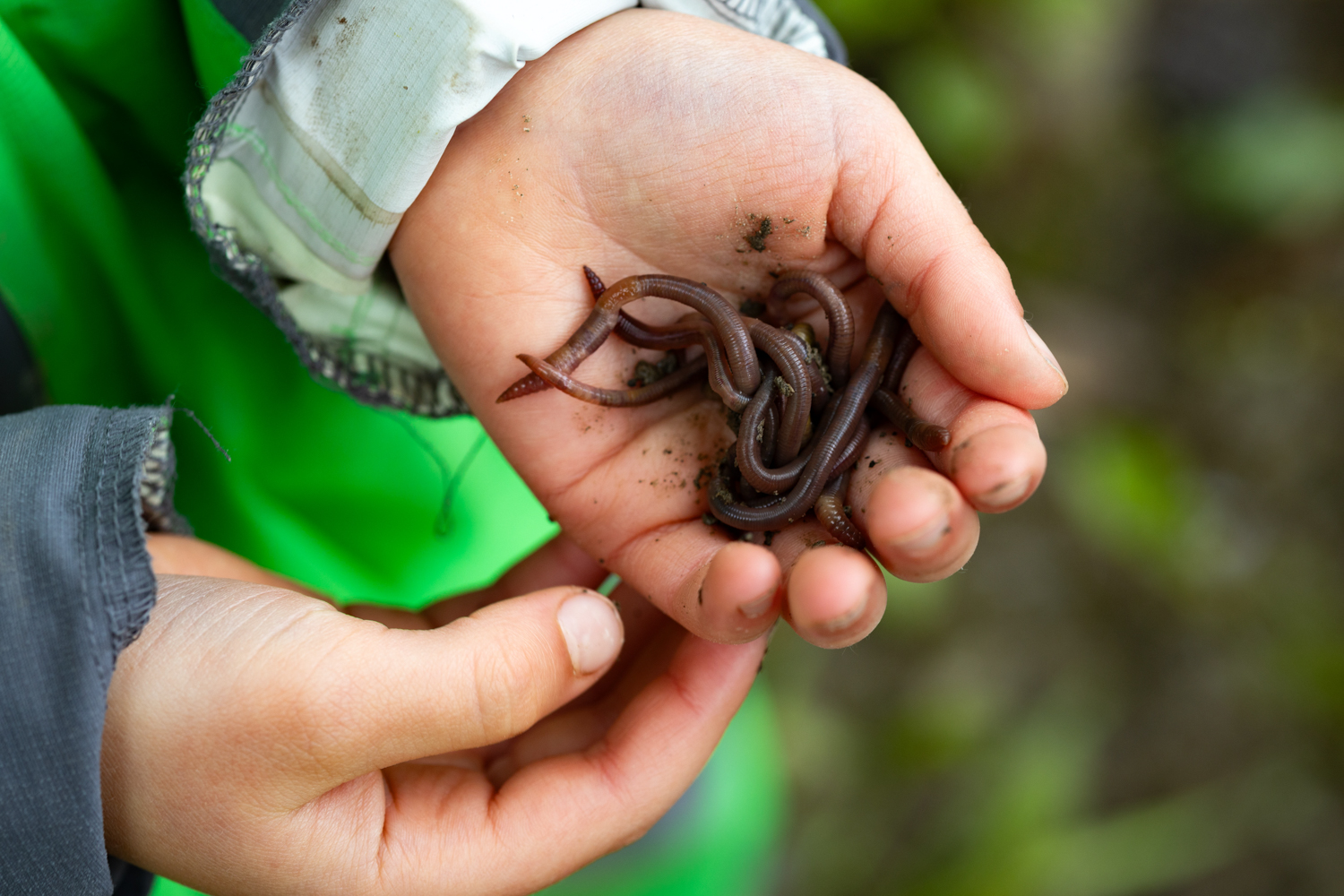
When the Toledo Free Press observed a Friday session, kids built a fire in wet conditions, worked on building a shelter made from found branches, rolled in the mud, built their own cantilever, looked at a specimen through a microscope, took photographs, collected water samples and went on a hike.
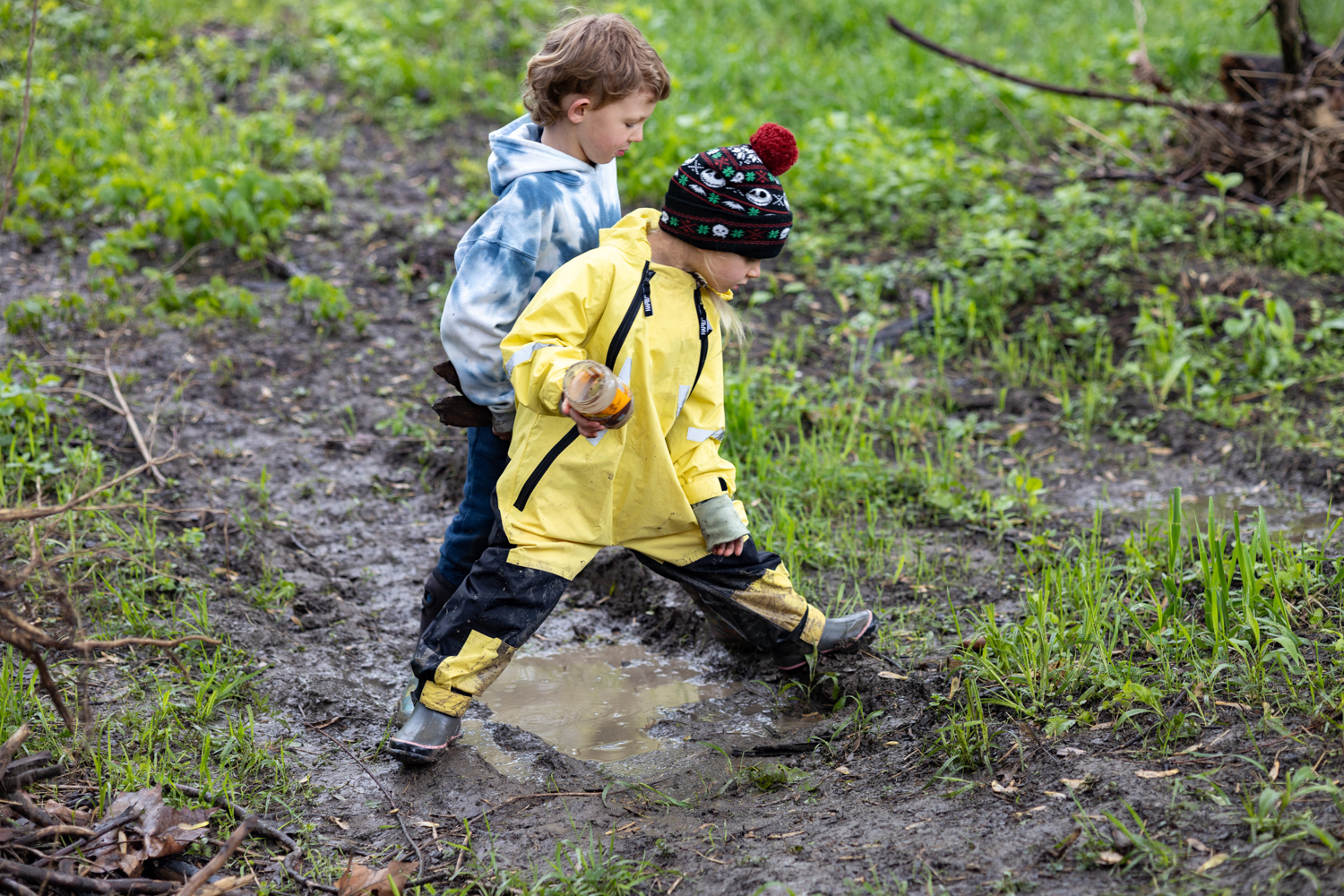
Opportunities for lessons under this school of thought are as diverse and seemingly random as a 5-year-old might be.
Open-ended play is learning, according to Dauer. “If they find it or discover it or figure it out, they’re going to learn more about whatever that is, much more than if we were just to hand them a book or a lesson, because they figured it out in their time when they were ready,” Dauer said.
When asked what the kids learned throughout the day Dauer said, “Leadership, problem solving, patience, following through…like if we tell one child to tell another child [something], and they’re able to tell it completely, then we know that first child has learned it.” Then she continued the list: “Boundaries, self control, self regulation, compassion, empathy.”
Much of the teaching practice deals with kids learning emotional intelligence, connecting with themselves, connecting with others and their surroundings, but there are practical skills and take-aways too.
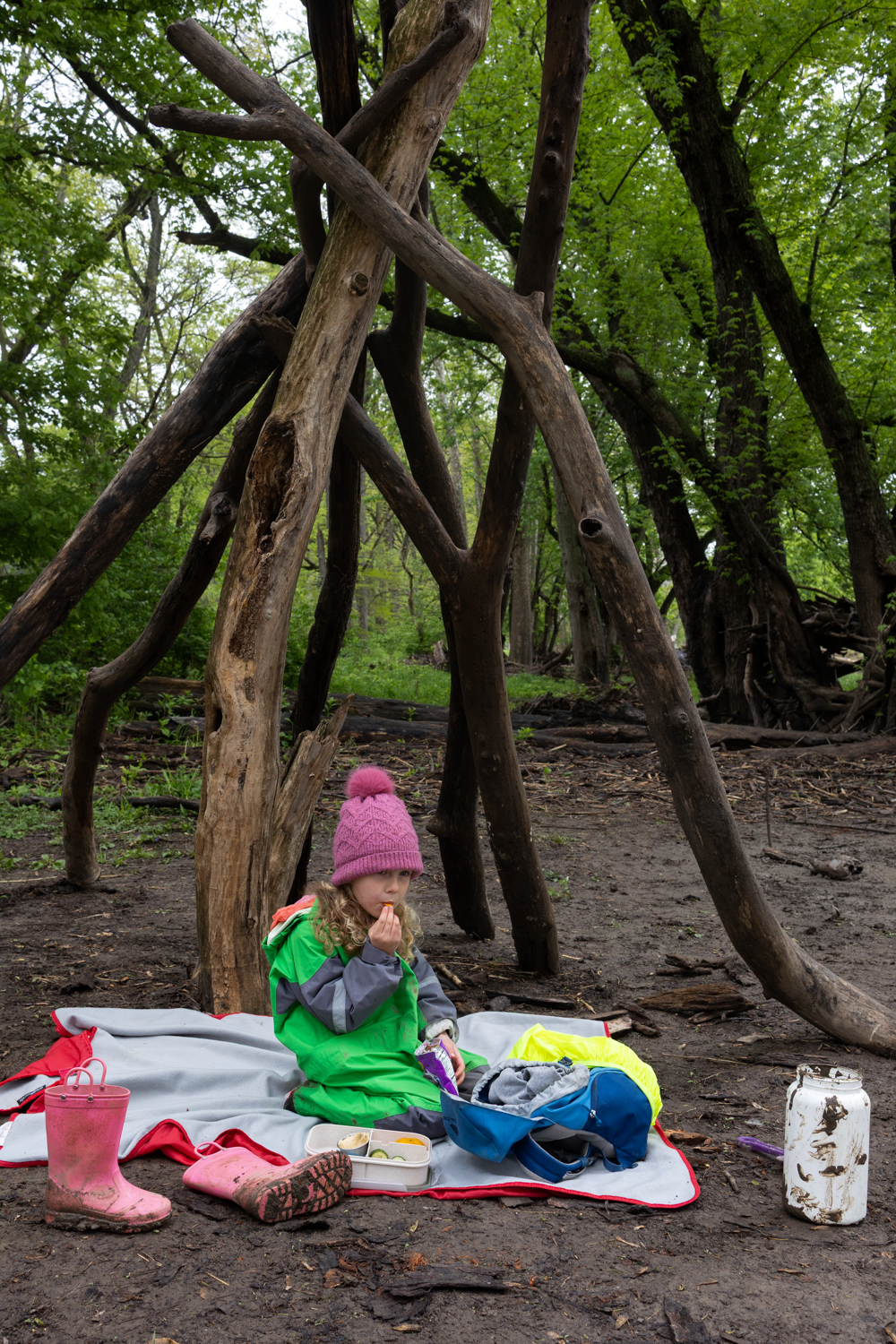
“We teach four-year-olds how to sew…how to mend things they use. The older kids will use an ax to chop wood. We start out with vegetable peelers for the little ones…so that they can they start by scraping pieces of wood, just taking the bark off. And then they can graduate to potatoes and carrots,” she said.
“The older kids have learned how to make a fire from scratch by using flint and steel, and they tend to the fire, and then they make lunch or soup for the younger kids.”
From the free-form self-direction to applicable skills, “They go from being such a tiny human being full of wonder to, ‘Wow! Look at some of the stuff I know, and I’m more independent, and I can feed myself, I can build a fire and take care of myself,’” Dauer said.
One of the teachers at the school, Victoria Devitt, used to teach preschool, but turned to the Forest Time Kindergarten as a more natural learning environment for kids in that age bracket.
“I feel like before, I was kind of by the book, just following the curriculum,” Devitt said about her time in a traditional preschool. “It was just more forced and more stressful, whereas here I get to observe what the children want to do and want to learn…and it just feels like they learn better that way.”
There are themes for different weeks, but Devitt said the curriculums are more suggestive. “Instead of just like teaching the ABCs or teaching the numbers, we do it outside with natural items and things like that. Just seems to work better,”
Forest Time Kindergarten is entertaining the idea of a program for adults and is accepting students for their summer session:
Short days, Tuesday and Thursday 9 a.m. to noon. Longer days, Wednesday and Friday 9 a.m. to 2 p.m. Learn more here.