Taco Bell is testing its new Quesalupa in the Toledo market. If it sells well here, it will be sold in restaurants nationwide. Photo courtesy Taco Bell.
Just as it did with the Doritos Locos Taco in 2011, the future of a Taco Bell menu item rests in the hands of Toledoans.
On Jan. 29, 36 Toledo Taco Bell locations began serving the Quesalupa, a flaky, crispy shell stuffed with melted pepperjack cheese layered with seasoned beef, lettuce, cheddar cheese, sour cream and tomatoes. The item costs $2.99.
Taco Bell is testing its new Quesalupa in the Toledo market. If it sells well here, it will be sold in restaurants nationwide. Photo courtesy Taco Bell.
Toledo is the only market testing the product at this time. If it sells well, it will be added nationwide.
“No pressure, Toledo,” Taco Bell spokesperson Matthew Prince said in an email. “We’ve had great success in Toledo testing the Doritos Locos Taco in 2011, and we felt it only fitting to return to the birthplace of the DLT to launch such an innovative product.”
The test will run for four weeks. During that time, Prince said locals can give national attention to the food item only available in Toledo. Locals are encouraged to tweet their opinions of the Quesalupa in hopes of sparking interest from people all over America.
“Toledo is a great representative of the national market and we fully buy into the city’s mantra: ‘You’ll do better in Toledo,’” Prince said. For more information, or to join in the conversation about the new product, visit tacobell.com/quesalupa.
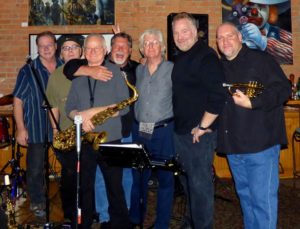
The Grape Smugglers are among the acts set to perform at the Dine 419 Kickoff Party Feb.19 at Hollywood Casino Toledo. They will be joined by Candice Coleman, the Gray Devils and the Homewreckers. Dine 419 benefits Veterans Matter, a national charity founded and based in Toledo. The audience can donate to the cause at the free concert. Photo Courtesy The Grape Smugglers
The Dine 419 Restaurant Kickoff Party at Hollywood Casino Toledo on Feb. 19 will benefit Dine 419, a new weeklong restaurant fundraising event.
Among the Northwest Ohio artists scheduled to appear in consecutive hour-long sets starting at 7 p.m. are Candice Coleman, the Gray Devils, the Grape Smugglers and the Homewreckers. The concert is free.
The Grape Smugglers are among the acts set to perform at the Dine 419 Kickoff Party Feb.19 at Hollywood Casino Toledo. They will be joined by Candice Coleman, the Gray Devils and the Homewreckers. Dine 419 benefits Veterans Matter, a national charity founded and based in Toledo. The audience can donate to the cause at the free concert. Photo Courtesy The Grape Smugglers
“It’s so wonderful for the entire community to come together like this to support our homeless veterans,” said Ken Leslie, event organizer and founder of Veterans Matter. “The restaurants in Toledo have always had compassion for those in need.”
Dine 419’s proceeds go directly to Veterans Matter, a national charity founded and still based in Toledo. Leslie started the charity in 2012, with the goal of helping house homeless veterans.
Several area restaurants are participating during the seven-day event, giving patrons a chance to show their support for the cause.
The Kickoff Party’s first performer will be Coleman, who burst into the national spotlight on the second season of “American Idol” in 2003, and remains a popular and in-demand artist.
Pat Lewandowski and Tom Kornacki make up the Gray Devils; the men have both played roots and blues music for 30 years, including the last three together.
The Grape Smugglers is a seven-piece band that covers hits from acts like Chicago, the Doobie Brothers and Stevie Wonder, and brings a general Motown sound.
“I’m going to put together an hour set that should be really kicking,” said Dave Stella, guitarist and vocalist. “I love doing benefits, because you’ve got to give back.”
The Homewreckers will close the evening’s event, and bring a bluesy sound that’s been heard in and around Toledo since the group’s first gig at Rally by the River in 1988.
A concert is a fitting way to start Dine 419’s inaugural event, as it was Veterans Matter that received initial support from musician John Mellencamp in 2007.
Word of mouth then spread to others in the entertainment industry, and before long, Leslie had connections with and financial support from many celebrities, including Susan Sarandon, Katy Perry, Kid Rock, Ice-T, Stevie Nicks and Willie Nelson, among others.
Veterans Matter connects local communities, foundations, corporations and veterans groups with Housing and Urban Development and the Veterans Administration to move homeless vets off the streets and into permanent, supported housing.
Once housed, services are lined up to help veterans and their families recapture their lives and return to domestic autonomy. Veterans Matter has been able to house more than 500 veterans to date.
Those in attendance at the Kickoff Party will be able to make donations to Veterans Matter.
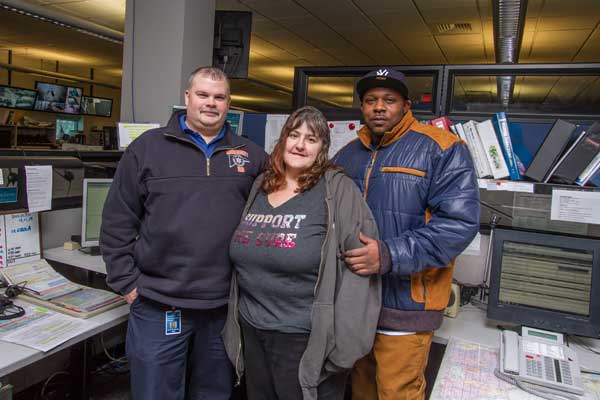
Lucas County EMS Lead Dispatcher Brian Dempsey, left, talked Evelyn Johnson and Andra Crisp through Assisting Toledo Mayor D. Michael Collins after his cardiac arrest and accident Feb. 1, including performing CPR until paramedics arrived. Neither had formal CPR training and neither realized at the time that the man they were helping was Mayor Collins. The three met for the first time Feb. 4 at the Lucas County EMS building. Toledo Free Press photo by Christie Materni
Evelyn Johnson was headed to work at Rally’s and Andra Crisp was on his way to Walmart to restock his mom’s shelves before the big storm when both noticed a vehicle off the road, still idling, against a pole in South Toledo shortly before 2 p.m. Feb. 1.
Johnson, 42, of South Toledo drove by at first, but something nagged at her and she turned around at the first opportunity, her 5-year-old goddaughter in the back seat.
“There was smoke coming out of the back, from the driver’s foot still being on the pedal,” Johnson said. “I said, ‘That’s just odd. There’s got to be something wrong.’”
Crisp, 39, also of South Toledo, said at first he thought the vehicle was just stuck in the snow so he stopped to help it dig out, pulling up right behind Johnson on Parkside Boulevard near its intersection with Hill Avenue.
As they approached the SUV, they saw an older man inside the locked vehicle, seat belt on, slumped over the steering wheel.
The man was Toledo Mayor D. Michael Collins, though neither of them knew it at the time.
Lucas County EMS Lead Dispatcher Brian Dempsey, left, talked Evelyn Johnson and Andra Crisp through Assisting Toledo Mayor D. Michael Collins after his cardiac arrest and accident Feb. 1, including performing CPR until paramedics arrived. Neither had formal CPR training and neither realized at the time that the man they were helping was Mayor Collins. The three met for the first time Feb. 4 at the Lucas County EMS building. Toledo Free Press photo by Christie Materni
Johnson called 911 at 1:49 p.m. and was transferred to Lucas County Emergency Medical Service (EMS).
“We’re banging on the windows and he’s just not responding to us at all,” she told Lead Dispatcher Brian Dempsey.
Johnson grabbed a hammer out of her trunk and Crisp used it to break open the rear driver’s side window. Johnson crawled into the backseat, turned off the car and unlocked the door.
“After he hit it, it was like something came over me,” she said. “I sprang into action. I had no gloves, but I was clearing the glass and only ended up with a teeny scratch. I jumped in the backseat and started shaking him. My adrenaline was pumping even faster.”
Toledo Mayor D. Michael Collins
Together they got Collins out of the vehicle and onto the ground. At this point, it was 1:53 p.m., four minutes since Johnson called 911.
Brain damage can start at four minutes without oxygen, said Toledo Fire & Rescue CPR instructor Nicole Knight Zmijewski. That’s why citizens willing to step in and give CPR are vital, as the average response time for paramedics is six minutes, she said.
“He’s dead,” Johnson said 40 seconds later. However, Dempsey instructed her to start CPR.
“OK, well, we’re going to try and help him,” he told her.
“OK,” Johnson responded. Neither she nor Crisp had formal CPR training, but Johnson started chest compressions around 1:54 p.m., with Dempsey talking her through the steps. After a bit, Crisp took over.
“We didn’t panic,” Johnson said. “But I would not have been able to do any of that without [Dempsey’s] help.”
Paramedics arrived by 1:55 p.m. One can be heard on the 911 audio saying, “That’s the mayor.”
“When we heard that, it was like, ‘Oh, my God,’” Johnson said. “We couldn’t believe it. We were both looking at each other like, ‘Oh, my God.’ But I would have done it for anybody.”
At that point, Johnson and Crisp went their separate ways. Crisp continued on to Walmart, only to find it closed due to the pending Level 3 snow emergency. Johnson left to drop off her goddaughter and clock into work about a half-hour late.
What happened
Paramedics radioed a diagnosis of cardiac arrest at 1:56 p.m. A life squad arrived at 2 p.m. A second EMS crew was dispatched to the scene at 2:06 p.m., arriving at 2:12 p.m.
Cardiac arrest is not the same as a heart attack. Cardiac arrest is an electrical issue, where the heart suddenly stops beating. A heart attack is a circulatory issue, caused when blood flow to the heart is cut off, usually by a blocked artery.
At 2:17 p.m., Collins, 70, was transported to University of Toledo Medical Center, where he remains in “very critical condition” in the intensive care unit as of Feb. 5.
“At this point it is too early yet to establish the timing or likelihood of his recovery,” cardiologist Dr. Christopher Cooper said in a statement from the City of Toledo on Feb. 2.
At a news conference Feb. 1, Cooper gave credit to an unnamed citizen — at the time officials only knew of Johnson — who initiated CPR at the scene.
That night, Johnson met Collins’ wife Sandy Drabik at the hospital; she brought her back to see Collins.
“Her and I just cried,” Johnson said. “But it was the best feeling. It gave me a lot of satisfaction to see him, that he was breathing, even though he’s hooked up to machines.”
Meeting
Johnson, Crisp and Dempsey met for the first time Feb. 4.
Dempsey, 38, of Northwood has been a Lucas County EMS dispatcher for 13 years and lead dispatcher since May. He’s also a firefighter with the Northwood Fire Department.
“Normally I don’t get to follow up on these kinds of things, so it’s nice to be able to follow up and actually see the people on the other end of the phone,” Dempsey said.
The call Feb. 1 came toward the end of Dempsey’s eight-hour shift, which ended at 4 p.m.
“I’m just there doing my job. I’m just doing what I’m trained to do,” he said. “These guys are the ones who stopped. They stepped up to help a stranger they just thought was broke down on the side of the road and once they found out it was much more than that, they still didn’t think twice about doing what needed to be done to help.”
Dempsey said he was also surprised to learn the man they were helping was Mayor Collins, but all three said it wouldn’t have made a difference had they known.
“It was a little bit of a shock to find that out, but then again, he’s just another person to us when we’re trying to treat him,” Dempsey said. “Whether it’s the mayor or your average Joe off the street, it doesn’t matter. We’re going to treat you the same and get you the same amount of help.”
Crisp said he feels good about the part he played in trying to help.
“Maybe God sent me that way for a reason. Maybe I’m an angel in disguise,” Crisp said.
“It felt good to help somebody,” he added. “I don’t consider myself a hero. Everybody needs help before they leave this world. If I was in the same position, I would hope somebody would do the same for me.”
Johnson agreed.
“I’m proud of what I did, but I don’t feel like a hero. I just feel like it was the right thing to do,” she said. “I’m going to help people. That’s just me. That’s how my mom raised me, to help someone in need, and to the day I pass away I will help people in need. My theory is I would want the next person to help my family.”
Johnson said she’s grateful Crisp stopped, too.
“As a team, me and him worked great,” Johnson said. “We worked together like we’d worked together forever. If it was by myself it would have been a lot harder to do.”
Both said they’d do it all over again.
“Everything happens for a reason. I don’t believe in coincidence,” Johnson said. “I truly believe I was put in his path to help him.”
What’s next
Toledo City Council President Paula Hicks-Hudson was sworn in as acting mayor on Feb. 1. Council member and former Toledo mayor Jack Ford is serving as Council president in her place.
Schoolchildren have been making cards and banners for Collins. Churches have held prayer vigils. The owner of Toledo Flags arranged for a Get Well flag to be sewn and signed.
On Feb. 3, Councilwoman Lindsay Webb led a prayer at the start of the first City Council meeting since the accident.
“We know that miracles are possible. They are possible,” Webb said.
If Collins were to die or be unable to fulfill his duties as mayor, Hicks-Hudson would become mayor until a general election is held in November.
Hicks-Hudson, a lawyer who has served on City Council since 2011 and as its president since 2013, said she doesn’t plan any major changes, at least in the short term.
The major projects Collins was working on include talks with Fiat Chrysler over the future of the Jeep Wrangler in Toledo, ProMedica’s move Downtown and the search for an end user for the former Southwyck site, said Matt Sapara, development director for the city.
“There’s a lot going on and we just want to keep heading in that positive direction,” Sapara said. “My marching orders are clear: Keep going in the direction we’re going.
“I have confidence in [Hicks-Hudson]. I know she has the best interests of the community at heart. That is very obvious and that’s something she shares with Mayor Collins.”
As a CPR educator for Toledo Fire & Rescue (TFD), I provide CPR training to not only Emergency Medical Services personnel and hospital personnel, but also to the general public.
The public is a key component to CPR training. Nothing I or any of my co-workers do will matter if the person who has suffered a cardiac arrest is without circulation for a significant period of time. Irreversible brain damage begins at the four- to six-minute mark of no circulation.
It is imperative for citizens to understand what an important piece they are in this puzzle. At least 88 percent of cardiac arrests take place outside of a hospital setting. This means the average citizen is most likely the first person who can begin to make a difference in the person’s life.
In the event of a cardiac arrest, you as a citizen have to identify the person as unresponsive, call 911 and act. When you call 911, our dispatchers have to receive the call and relay it to crew members, who have to get into their vehicles and drive to your location. Add to that traffic, weather conditions, etc., and four minutes really is not that long. Four minutes is so brief yet so vital to the victim.
For years, CPR involved mouth-to-mouth resuscitation as well as chest compressions. Many people shied away from jumping in to perform CPR on strangers due to the fear of infection via mouth-to-mouth. Others were intimidated by the complexity of the “old” CPR method. Trying to remember the ratio of compressions to breaths, while keeping it effective, is a nerve-racking process. I certainly can understand their fears.
However, the American Heart Association over time has made changes to its CPR protocol and mouth-to-mouth is no longer the standard. Now the theme is “push hard, push fast,” simplifying the procedure to just chest compressions.
We live our lives with our hearts continuously beating. In a sudden cardiac arrest, the heart abruptly stops. The human body is not made to take breaks. It is important to recognize sudden cardiac arrest and begin chest compressions, which allow the heart and brain to continue receiving blood circulation when the heart is no longer pumping.
Studies have shown people who receive chest compressions alone during cardiac arrest have the same survival rate as those who received traditional CPR. Educating citizens makes them more confident in their compression skills, making them eager and able to jump in and begin CPR on someone in a sudden cardiac arrest.
CPR steps
1. Determine if the person is responsive. Tap the victim and shout, “Are you OK?”
2. If there’s no response, call for help. If you are alone, call 911; if not, send someone to call for you.
3. Make sure the person is on their back, on a firm surface. Kneel at the side of the victim.
4. Push hard and push fast. Perform chest compressions with the heel of one hand on the breastbone, between the nipples and the other hand directly on top of that hand. Keep your elbows locked and begin compressions at a depth of two inches.
Save the Beat is one upcoming opportunity for area residents to learn CPR. The event was organized in honor of Toledo Mayor D. Michael Collins, inspired by the two civilians who called 911 and performed CPR after he suffered a cardiac arrest while driving last week. The free, two-hour classes, set for Feb. 14 at SeaGate Convention Centre, will cover the basics of CPR as well as automatic defibrillators and the Heimlich maneuver.
I know that I am an educator, a firefighter/paramedic and a nurse. It is my duty to make sure my patients receive high-quality CPR and advanced life support. Outside of this, I am also a mom, daughter, wife, friend and citizen. I can only hope that if I, a family member or friend suffered from a sudden cardiac arrest that someone would be willing to take the initiative to push hard and push fast to save a life. I know I would.
Nicole Knight Zmijewski is a firefighter/paramedic and CPR instructor with Toledo Fire & Rescue and a nurse at Mercy St. Vincent Medical Center. Email her at [email protected] to set up a CPR training.
In Inspired by the two citizens who stopped to help Toledo Mayor D. Michael Collins after his cardiac arrest and car accident Feb. 1, Toledo Free Press columnist Jeremy Baumhower, right, with the help of Toledo Fire & Rescue firefighter/paramedic and CPR instructor Nicole Knight Zmijewski, organized a free CPR training event. Save the Beat will take place Feb. 14 at Seagate convention Centre. Toledo Free Press photo by Christie Materni
As Toledoans and people across the state pray for Mayor D. Michael Collins’ recovery after his recent cardiac arrest, one local man jumped into action.
Jeremy Baumhower, a Toledo Free Press columnist who operates the blog IHeartGlassCity, is friends with the mayor and said Collins’ hospitalization hit him hard.
Baumhower approached Toledo Fire & Rescue (TFD) about helping to organize a CPR education event.
The result is Save the Beat, two free two-hour CPR classes to be offered Feb. 14 at SeaGate Convention Centre, 401 Jefferson Ave. ProMedica is sponsoring the event. Toledo Free Press is a media sponsor.
A morning class will be offered 8:30-10:30 a.m. and an afternoon class will last from 11 a.m. to 1 p.m. Registration is a half-hour before each class.
Save the Beat is a reference to a heartbeat as well as to the police beat Mayor Collins worked during his 27-year career with the Toledo Police Department, Baumhower said.
In Inspired by the two citizens who stopped to help Toledo Mayor D. Michael Collins after his cardiac arrest and car accident Feb. 1, Toledo Free Press columnist Jeremy Baumhower, right, with the help of Toledo Fire & Rescue firefighter/paramedic and CPR instructor Nicole Knight Zmijewski, organized a free CPR training event. Save the Beat will take place Feb. 14 at Seagate convention Centre. Toledo Free Press photo by Christie Materni
Collins, 70, went into cardiac arrest Feb. 1 while driving a city-owned vehicle and crashed into a pole in South Toledo. Two people, Evelyn Johnson and Andra Crisp, both of South Toledo, noticed the vehicle off the road and stopped to help. They called 911, broke his window and administered CPR while waiting for help to arrive.
“I think Toledo wants to help,” Baumhower said. “We’re sitting there praying. We’re that type of people who will roll up their sleeves and give blood and reach into our wallets and give money. With Mayor Collins, with how he was rescued — two people who didn’t know who he was breaking glass and administering CPR — his entire career has been helping others and the moment he needed it, someone broke the glass.”
Nicole Knight Zmijewski, a firefighter/paramedic and CPR instructor with TFD, will lead the training at Save the Beat.
She has enlisted 30 volunteers from TFD as well as help from area departments, including Whitehouse, Perrysburg, Northwood, Oregon, Washington Township and more. ProMedica Toledo Hospital and Mercy St. Charles Hospital are also sending volunteers.
Dozens of CPR dummies — at least 70 — are coming from miles around, Zmijewski said. Five to six people can use each dummy for the training.
CPR is a lifesaving technique used when someone’s breathing or heartbeat has stopped. Participants will be trained in the basics of CPR, automatic defibrillators and the Heimlich maneuver. A full CPR certification lasts eight hours, but these sessions will give participants a good basic understanding, Zmijewski said. Each participant will get a certificate of attendance.
Lucas County EMS Lead Dispatcher Brian Dempsey, left, talked Evelyn Johnson and Andra Crisp through Assisting Toledo Mayor D. Michael Collins after his cardiac arrest and accident Feb. 1, including performing CPR until paramedics arrived. Neither had formal CPR training and neither realized at the time that the man they were helping was mayor collins. The three met for the first time Feb. 4 at the Lucas County EMS building. Toledo Free Press photo by Christie Materni
“I think education is key to everything,” Zmijewski said. “It’s important for the layperson to know CPR. You notice a friend or family down. That’s time for the call to get out.
“We can get to any point in the city in six to seven minutes, but brain damage starts before then, around four minutes. [Chest compressions] aren’t as effective as the heart pumping itself, but it’s better than nothing and it preserves brain function.”
Many people are turned off or intimidated by the mouth-to-mouth component of CPR, Zmijewski said, but the American Heart Association has made changes to their CPR protocol and mouth-to-mouth is no longer the standard. A “push hard, push fast” theme has simplified the procedure to just chest compressions, she said.
As of Feb. 5, Collins remains in critical condition at University of Toledo Medical Center. Toledo City Council President Paula Hicks-Hudson is serving as acting mayor.
Despite the seriousness of his condition, Zmijewski said Collins had everything go in his favor, from the good Samaritans who reacted quickly to the quick response time from first responders.
“That’s what’s supposed to happen,” she said. “Everything was perfect.”
Getting the word out is the biggest goal for Zmijewski. The more people who learn CPR the better it is for the public, she said.
Baumhower said he would like to see at least 1,000 people come through the course. He plans to invite local celebrities to participate, including TV personalities and Toledo Walleye hockey players.
ProMedica is covering the cost of the venue, Baumhower said. A ProMedica representative was unable to be reached for comment.
“Save the Beat will make for a memorable Valentine’s Day that has meaning,” Baumhower said. “It’s about saving a heart. It’s a nice way to support and do something as we wait to see what happens with Mayor Collins, as we watch his fight.
“Every second counts when it comes to these situations. You just don’t know who’s behind the glass. It could be your mom or your neighbor or a mayor.”
For more information or to register, visit www.savethebeattoledo.com. Registration is preferred, but walk-ins are also welcome.
Clifford the Big Red Dog will be among the pets from
children’s books featured in the Toledo Museum of Art’s
‘Best in Show’ exhibit from Feb. 13 through July 5. Photo courtesy Toledo Museum of Art.
A new exhibit at the
Toledo Museum of Art (TMA) will display illustrations from children’s books which
focus on pets, including originals of Clifford the Big Red Dog, Walt Disney’s
Pluto and Bad Dog Marley, inspiration for the motion picture, “Marley &
Me.”
“Best in Show: Animal
Illustrations” runs Feb. 13 through July 5, and will feature 54 original works
on loan from the University of Findlay’s Mazza Museum, home to the world’s
largest collection of original art by children’s book illustrators.
“There’s just
something so wonderfully creative about children’s books, and even if you don’t
have children, they’re wonderful to look at,” said Carolyn Putney, chief
curator and curator of Asian art. “When I read about (the illustrators’)
background, every single one of them started drawing when they were children
and couldn’t stop, and they just all seemed like the happiest people.”
In addition to
Clifford, Pluto and Marley, visitors will enjoy cover illustrations from 1930
to the present, including “Mrs. Huggins and Her Hen Hannah” by Lydia Dabcovich,
and In Bed by Margot Tomes from the book “Lysbeth and the Fire Kittens.” In
all, the exhibit includes 22 dogs, 14 cats and other animals, including hens
and horses.
The work from some
Ohio native illustrators will even be featured.
“Best in Show” is the
second TMA partnership with the Mazza Museum, the first was in 2009. Mazza
draws over 11,000 visitors a year to its museum, and the collaboration helps
even more discover what Mazza has to offer.
“The Toledo Museum of
Art contacted us to see if we would be interested in doing another show with
them,” said Ben Sapp, Mazza director. “Of course, we were excited about doing
that, primarily because (TMA) is one of the finest museums in the country, but
also because we’re within an hour of each other. It’s really a win-win.”
Mazza possesses over
9,000 original book illustrations and displays 350 a time in its five
galleries, changing the works every June.
“What goes into
creating a children’s picture book is something that you don’t truly understand
or appreciate it until you see it in person,” Sapp said. “(Illustrators) have
to be concerned about how the left page is going to look against the right
page, so there’s so much that goes into creating the whole book, and it’s a
true work of art from cover to cover.”
Located in TMA’s Gallery
18 near the main entrance, the gallery will have a reading area, allowing
visitors to enjoy the art, and then read the very books for which they were
crafted. A hands-on section will invite children to make their own drawings,
and take part in an “I spy” game to find animals in other galleries.
The Toledo-Lucas
County Public Library also has involvement, where works from its Robert L. and
Posy Huebner Collection will be featured.
Once the weather warms,
TMA is even looking to host an outdoor public program which will allow visitors
to bring their own pets as part of the program.
The show has special
meaning for Carolyn Putney, chief curator – it’s the last the Florida
transplant will have organized for TMA after 37 years of employment, including
a brief stint as museum interim deputy director in 2010.
“I just wanted to
come up with something for families,” said Putney, who plans to remain actively
involved in the industry via an art travel business and consulting. “I don’t
have any pets, but my sister has a dog, and he’s just the nicest dog. He’s part
of the family.”
Putney will give a
free talk about the exhibition on Feb. 27 at 7 p.m. in the lower level’s Little
Theater.
“It wasn’t until the
French, who in the 17th century thought that children should be
treated differently,” said Putney. “Those first books were educational, and in
the 18th and 19th century, they became more children
friendly. Some of the earliest books were Aesop’s Fables and the Brothers Grimm
fairy tales.”
TMA is open every day
except Monday, and admission to both the museum and the new exhibit is free.
Copies of some the featured books are available for purchase in the museum
store. More information is available at www.toledomuseum.org.
Opponents
of a planned natural gas pipeline through northwest Ohio are getting their
legal ducks in a row and picking up support among neighbors and local public
officials.
They’re
accusing planners of the NEXUS high-pressure gas pipeline of using
high-pressure tactics to get property rights from landowners along the route,
which crosses northern Ohio toward a planned linkup with a pipeline network in
Michigan and Canada.
Meanwhile,
the group formed to oppose the pipeline’s passage through Eastern Fulton county
is working with other opponents along the route and getting the attention of
state lawmakers and other officials.
Terry
Lodge, a Toledo lawyer representing five advocacy groups — two of them formed
to oppose the pipeline route — said in a letter to the Federal Energy
Regulatory Commission that FERC is, by the wording of its public notification
to landowners allowing pipeline companies to start negotiating with landowners,
including the threat of eminent domain, before the the companies are properly
authorized to begin work.
“Pipeline
companies are threatening property owners in their study corridors (strips of
land identified as possible pipeline routes) that FERC will be vesting them
with eminent domain powers, and waring that FERC’s licensing decision is a
given. They are trying to bully owners into conceding easements,” Lodge wrote.
Spectra
Energy, the principal company behind the NEXUS project, “pre-filed” this month
with FERC, starting a year-long process in which affected parties can have
public input into the project. Spectra, which is working with the DTE public
utility in Michigan on the NEXUS pipeline, hopes to have the 42-inch pipeline
in place by late 2017 and carrying 2 billion cubic feet of gas a day from the
Marcellus and Utica shale fields.
It’s not
the only pipeline planned; the Rover pipeline, also linking the shale fields
with the Michigan pipeline grid, is planned for a route heading west to
Defiance before swinging north into Michigan.
Opponents
say the pipeline will offer no benefit to the property owners whose land it
goes through, as it carries natural gas to a pipeline network in Canada for
export overseas.
NEXUS
spokesman Arthur Diestel has said in public meetings and in e-mailed answers to
reporters’ questions that Spectra and NEXUS want to hear public input and are
willing to work with landowners to lessen the impact the pipeline has on their
homes and farms.
Meanwhile,
a local group against the pipeline route continues to pick up support.
About 150
people crowded into the sales room Wednesday night at Johnston’s Fruit Farm
near Swanton to hear what Neighbors against NEXUS had to say.
NAN,
formed late last year to fight the pipeline’s planned route through eastern
Fulton County, is not against the idea of a pipeline but wants the route
shifted to the south and west, away from farms, concentrations of people, and
public forest land including Oak Openings Preserve.
“And if a
farmer doesn’t want the pipeline on his land, we should respect that,” said Liz
Athaide-Victor, a Swancreek Township resident who is spearheading NAN.
“We’re
not against pipelines. We just want it done safely,” said Fernando Mora, owner
of Johnston’s. Mora, disputing pipeline companies’ claims that farming could
resume almost immediately on land in which a pipeline was buried, said it would
take several years to re-establish fruit trees — and land-use agreements would
prohibit trees being planted over a pipeline anyway.
Athaide-Victor
told people at Wednesday night’s gathering it’s necessary to “stay on your
elected officials” and insist all dealings with the pipeline company be public.
She said pipeline officials meeting last week with commissioners of
Fulton, Lucas and Wood counties were reluctant to recognize lawyer Lodge when
he wanted to ask a question, but she did notice pipeline officials were looking
at alternate routes proposed by NAN and other groups.
NAN and
pipeline opponents in eastern Ohio have been successful in getting the
attention of state officials.
Athaide-Victor
said Gov. John Kasich’s energy policy people “are talking back and forth with
us” after a meeting in Columbus earlier this month organized largely by
pipeline opponents in Medina County.
There’s
also a meeting scheduled with representatives of U.S. Sen. Sherrod Brown,
D-Ohio, 1:30 p.m. Jan. 30 at Swanton Public Library, Athaide-Victor said.
Locally,
three townships have come out in opposition to the pipeline: Swancreek, in the
southeast corner of Fulton County; Providence, in the southwest corner of Lucas
County, and Waterville Township in Lucas County.
Trustees
in Amboy Township, in the northeast corner of Fulton County, considered a
resolution Jan. 19 but have not yet decided.
Several
townships south of Cleveland, along with commissioners in Summit County, have
also approved resolutions against the pipeline through their territories.
The
resolutions might have little legal weight, because the ultimate authority is
federal, but Athaide-Victor and Swancreek Township trustee Rick Kazmierczak
said the resolutions’ influence will add up.
“They
(FERC) have to respond to everything that’s sent to them,” Athaide-Victor said.
According
to the FERC web site, NEXUS has scheduled several mandatory public open houses
at various locations. Locally, they are:
* 5-7:30
p.m. Feb. 5 at Terra State Community College, Fremont;
* 5-7:30
p.m. Feb. 11 at Swanton High School, 601 N. Main St., Swanton;
* 5-7:30
p.m. Feb. 12 at Central Park West, 3141 Central Park W. Drive, Toledo;
* 5-7:30
p.m. Feb. 17 at Adrian Tobias Center, Adrian College, Adrian, Mich.; and
* 5-7:30
p.m. Feb. 18 at Lincoln High School, 7426 Willis Road, Ypsilanti, Mich.
Sustainable Local Foods, commercial hydroponic growers currently leasing space at the Erie Street Market, made an offer to the City of Toledo to buy the property. The City is accepting bids through Feb. 13. Pictured here is Sustainable Local Foods CEO Nicholas Bloom.
Sustainable Local Foods, commercial hydroponic growers currently leasing space at the Erie Street Market, made an offer to the City of Toledo to buy the property. The City is accepting bids through Feb. 13. Pictured here is Sustainable Local Foods CEO Nicholas Bloom.
With a financial track record as varied as its checkered history, the Erie Street Market has been put on the market by the City of Toledo.
On Jan. 23, the city issued a formal request for proposals (RFP) seeking interested parties. It had already received an offer from Sustainable Local Foods, a Columbusbased produce grower with a Toledo growing space currently located inside the Erie Street Market.
“What I want to do is ensure that the largest possible economic impact for the city is in that location,” said Matt Sapara, director of the city’s department of development. “The market is going to decide that. The RFP was very broad, and if someone wants to put in retail — terrific. If someone wants to go in there that can create jobs and other economic impact, that’s great too. It’s whatever is best for the city.”
Sapara declined to disclose the price offered by Sustainable Local Foods.
The Erie Street Market is located in the Warehouse District, immediately south of Downtown. The area has seen significant growth particularly since the arrival of Fifth Third Field in 2002.
The building originally opened in 1908 as a food distribution center for wholesale fruit and vegetable farmers, then was redesigned in 1927 when an auditorium was added for exhibitions and entertainment — a precursor to today’s SeaGate Convention Centre. Formerly known as the Toledo Civic Auditorium, the venue’s stage was once graced by icons like Elvis Presley and boxer Joe Louis as well as host to numerous auto, bridal and flower shows.
The outdoor farmers’ market was added in the 1940s, and the indoor wholesale portion was eliminated in 1966 when the city converted it into a warehouse for the Natural Resources Department.
Its latest reincarnation in 1997 turned the building into an ultimately unsuccessful retail center with a food, craft and antique market, all anchored by the still-present Libbey Glass Factory Outlet.
Starting in 2010, the city tried to operate two event spaces at the building. But by 2012, all retail ventures aside from the Libbey Outlet
Representatives of the Toledo Warehouse District Association believe a return to retail is what’s needed.
Last year, Lucky’s Market, a Colorado-based grocery chain, expressed strong interest in the Erie Street Market but those plans did not come to fruition.
“We’re still wanting to see retail, specifically, a grocery in that location,” said Diane Keil-Hipp, Toledo Warehouse District Association president.
“We don’t have anything in the works, but that’s still our desire. While the city owns it, we’re working with them to try and recruit different markets. We brought Lucky’s to the city to work with, but if it’s sold to an individual or business, we’ll attempt to forge a relationship with them.”
Keil-Hipp said interest in the Warehouse District remains strong, and she hopes for something more than a corner market, but not necessarily a large-scale supermarket.
“Kind of a neighborhood market,” Keil-Hipp said. “There’s still tons of interest in living in the Warehouse District. We get requests all the time [asking] what’s available down here, and in October we had 2,400 hits on our website. Living here is in great demand.”
Sapara said interested groups have until Feb. 13 to submit proposals. Bids will be opened Feb. 17.
The sale of the site would not include the Farmers’ Market or the parking lot, Sapara said.
“Other people have expressed interest, but nothing written yet,” Sapara said. “When we get those proposals back, we’ll put together an analysis.”
The contention that Downtown Toledo is unsafe and the proposed Downtown ProMedica office needs a private parking garage is specious. If this is the perception of ProMedica and Lindsay Webb, who recently visited the Valentine Theatre and “did not feel safe” while in the area (Toledo Free Press, Jan. 11), then the reality of the situation needs to be investigated by the Toledo Police Department. The TPD keeps records and statistics on crime in the city and is in the best position to dedicate its limited resources to address the concern, if it even exists. Safety should be afforded to all that visit Downtown Toledo. Public parklands should not be sacrificed to deeppocket oligarchies to quell unfounded perceptions. Private parking garages are an impractical solution to parking in a congested Downtown area. It is a shame Toledo Free Press publishes and popularizes such fear propaganda. It casts aspersions on my police department and is a disservice to Downtown Toledo tourism.
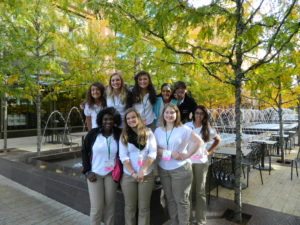
Pilar Athaide-Victor, back left, and some of her Girl Scout friends. Photo Courtesy Pilar Athaide-Victor
This year, I will be entering my 13th year in Girl Scouts. Now, as a junior in high school, I often get quizzical looks and mountains of questions like, “You’re still in Girl Scouts?” or, “What do you guys even do?” Well, the answer is simple for me.
.
Girl Scouting opens so many doors for girls. Even when we’re really young, Girl Scouts learn how to safely use tools, cook for ourselves and become strong leaders. One of my earliest memories is collecting sticks with my friends at our first campout so we could build our own fire and make s’mores. Being with a group of supportive friends is so important at a young age. We can laugh together, play together and tell each other secrets. Simple things like going for a short hike or telling stories around a fire might seem small, but they can seem like the world to little girls.
The best part about it is that we grew up together. I can shuffle through my summer camp photos, picking out the chunky eyeglass frames, the braced smiles and the turned-backward-baseball-cap phases of all of my friends until I reach the photo of the loving, confident counselors-in-training that I know today. A short week at camp could change a little girl’s life. It definitely made a difference in mine.
Girl Scouts has helped me and so many other girls in so many ways. I can easily say that I consider my Girl Scout sisters to be my closest friends. I have an insanely active troop, in addition to the lovely ladies I work with, and I am so grateful for them.
Pilar Athaide-Victor, back left, and some of her Girl Scout friends. Photo Courtesy Pilar Athaide-Victor
We’ve been everywhere from Put-in-Bay to Salt Lake City to Europe. A few summers ago, I went backpacking with a few friends of mine in the Porcupine Mountains in Michigan’s Upper Peninsula. I have to admit, we were all a little nervous, considering none of us had backpacked for more than one night. In the end, it was incredible. We learned to carry all of our supplies on our backs and work with one another to get from one camp to the next. It was hard climbing, but the view from the top was simply breathtaking.
Just this summer, we took an educational tour of London, Paris and most of Italy. While we knew this trip would be expensive, that didn’t stop us. We started planning when most of us were in eighth grade. Every year, we relentlessly sold cookies, held car washes, organized babysitting events and did anything else we could to help us raise enough money. Traveling with my troop was such an incredible experience. We met guides and scouts from around the world. It was so cool to meet and talk with them. It was almost strange; since we all were scouts, we shared a bond that was beyond language.
We give back to the community, too. A few years ago, my troop collected and delivered funds to our Japanese sister Girl Scouts in the wake of the 2011 Fukushima disaster. One friend of mine is traveling to Costa Rica and doing community service there using the money she earned from selling cookies. Another friend of mine is doing a community service project that involves creating a hiking trail for the National Park Service in honor of the founder of Girl Scouts.
We help more than just individual girls. Girl Scouts change the entire world for the better.
Pilar Athaide-Victor is a student at Toledo School for the Arts and a Girl Scout with Girl Scouts of Western Ohio.