Home Blog Page 157

Tai chi offers physical, mental health benefits

0
Barb Colvin leads a Tai Chi class at the Maumee Center, 406 Ilinois Ave. Colvin, a nurse by trade, has over 20 years experience in Tai Chi. The Taoist Tai Chi Society in Toledo offers classes at six locations in the area. Toledo Free Press Photo by Christie Materni

Maintaining a healthy lifestyle takes a knack for balance — both physical and mental. For those seeking improvement in these areas and better overall well-being, a traditional Eastern martial art may provide just the right avenue.
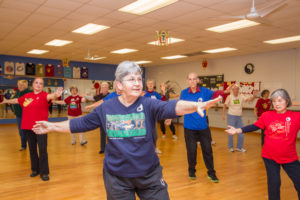
Barb Colvin leads a Tai Chi class at the Maumee Center, 406 Ilinois Ave. Colvin, a nurse by trade, has over 20 years experience in Tai Chi. The Taoist Tai Chi Society in Toledo offers classes at six locations in the area. Toledo Free Press Photo by Christie Materni

Tai chi has been practiced for hundreds of years, and has roots in both Taoism and Buddhism. Though sometimes practiced as a form of self-defense, many schools teach tai chi as a means to improving health and balance.

Tai chi has made its way to the West, and there are numerous opportunities for one to embark on a tai chi journey in Toledo.

Barb Colvin is an instructor with Taoist Tai Chi Society in Toledo. She is a nurse by trade and has over 20 years of experience in tai chi. Colvin is a breast cancer survivor, and she began tai chi because she knew she would be prone to conditions such as osteoporosis.

“That was what kind of got me into it to begin with,” Colvin said. “Now I stay for the well-being that I get from it.”

Colvin explained that tai chi promotes strength in the legs and other parts of the body, stretches the spine, feet and hands and improves joint movement.

She added that tai chi geared toward promoting health can be effective in combating a wide variety of maladies or conditions.

“We have a lot of people with a lot of different health issues that come in — Parkinson’s, stroke, multiple sclerosis, hypertension, arthritis and fibromyalgia. What they find [over time] is that they are starting to feel a lot better.”

Colvin said students in her classes work on the external parts of the body to begin with, and eventually work on the inner parts of the body, as well.

“Classes help people understand how to move, where the hands need to be and how to shift weight from one place to another.

“It’s not an aerobic exercise —there’s no impact, and you stay on your feet. That’s the attraction for some people.”

Rebecca Rahe is an instructor and manager for the Dr. Paul Lam Tai Chi Workshop. She said tai chi is a multifaceted art form that integrates the mind, body and spirit.

“Tai chi has many layers, but kept at a basic level and practiced most days of the week, people notice an improvement in health and well-being. [It is] an affordable way to treat chronic conditions, and it empowers us to manage our own health.”

Rahe said tai chi is something that can be practiced by people of practically any age, and it is recognized by the Centers for Disease Control as an effective way to promote fall prevention for seniors.

“Tai chi can be done seated, standing or even lying in bed. All you need to practice tai chi is loose, comfortable clothing and an effective teacher,” Rahe said.

Colvin also said tai chi is making its way into mainstream Western medicine as a legitimate means to improving one’s health.

“I think there is more of a growing interest in tai chi because doctors are starting to recommend it to patients,” she said.

Colvin said new students begin slowly, learning one movement at a time by repetition.

“You pick up what you can, you do what you can. We don’t expect people to go home and remember it, but the more we repeat, the more the body recognizes how to do it.”

The Taoist Tai Chi Society is a nonprofit, so donation amounts for classes vary, but the amount can be managed or reduced for those who are on limited incomes.

Beginner classes for the Taoist society began in January at various locations.

For more information, visit toledo.ohio.usa.taoist.org. For the Dr. Paul Lam Tai Chi Workshop, visit www.tchi.org.
Plumb-Ruiz: Train yourself to stop smoking

0

I’m a personal trainer and chef here in Toledo. I have led a mostly healthy lifestyle for several years now, after a monumental weight loss of 150 pounds six and a half years ago. But there was always one thing standing in my way of being truly healthy: smoking.

.

I smoked cigarettes for 22 years. It was my deep, dark secret as a trainer and health professional. It was one thing I could not beat, the only goal on my list I couldn’t reach. I had quit over a dozen times. I tried everything — patches, lozenges, cold turkey, medications, you name it. I just wasn’t ready, emotionally, to let go of my addiction to cigarettes. The truth was, I didn’t believe I was strong enough to overcome my chemical addiction to cigarettes. I was afraid I would fail.

A friend told me about electronic cigarettes and “vaping.” She had quit smoking traditional cigarettes several years before. I decided to give it a try.

Quitting smoking, like almost everything in life, requires a game plan. I had to be ready to quit.

I had to decide that going to the store and buying a pack of cigarettes was not an option. I had to quit for me and only me this time. All my friends and family have been harping on me to quit for years, and obviously that negative motivation didn’t work, or I would have quit years ago. I had to do this for me, for my health, for my life.

For me, using an e-cig made quitting tobacco a real possibility. I felt like it was actually going to be manageable.

On average, a pack of cigarettes costs $6 (not on sale, no coupon, with all the sin taxes added on). That’s $2,190 a year if you smoke one pack a day. An average electronic cigarette starter kit is $11.99-$75.

Alternately, health insurance companies have cessation programs to help you purchase nicotine gum, lozenges, patches, etc. Find out how much reimbursement you can get and at the same time when you can change your health/life insurance policies from a “smoker” to a “nonsmoker.”

I have a new lease on life. I feel amazing. I don’t have to stand out in the cold to smoke anymore. Also, my tastebuds have begun to return to normal, which as a chef is really important. My performance at the gym has also improved. I set a new personal record (and made it on the gym scoreboard) for rowing after I quit. I feel an immense pride in myself for quitting smoking and for sticking to it. Jan. 25 was my 90-day mark. I’ve made it three months!

My family and friends are proud of me, which feels amazing.

I track my progress on a free phone app called Smoke Free Beta. It shows me in real time how long I’ve gone without smoking, how much money I’ve saved ($833.63), hours of life regained and so much more!

Tracy Plumb-Ruiz is a personal trainer at Trainer Tracy 419 and executive chef/owner of Boutique Chic Chef. Contact her at [email protected] or at trainertracy419.com.

Patel: When your heart begins to fail

0

Congestive heart failure is a serious condition that affects millions of Americans and their families. Yet, many don’t fully understand this deadly disease where the heart is unable to effectively pump blood to meet the body’s demands.

.

People with congestive heart failure may find it difficult to do everyday activities like walking or carrying groceries because the body’s cells are not getting the oxygen and nutrient-rich blood they need. They may have fatigue, shortness of breath, an irregular heartbeat, swelling in their legs, ankles and feet, weight gain, and chest pain. When a person has a heart that is weak (your doctor may call this systolic heart failure) or stiff (referred to as diastolic heart failure), a portion of the blood that was destined for the body and vital organs may back up into the lungs and cause trouble breathing.

To fully understand congestive heart failure, it’s helpful to know how the heart works:

  • The heart is a muscular pump with built-in valves to keep blood moving in a one-way circuit.
  • The heart’s main job is to take blood from the lungs that is bathed in the oxygen we breathe in and distribute it to the body with each beat.
  • The heart needs its own constant supply of blood to work properly. This blood is supplied by the coronary arteries.

There are a number of causes of congestive heart failure. They include:

  • Coronary artery disease: If one or more of the arteries that supply blood to the heart becomes partially or completely blocked, the heart muscle itself can weaken, causing congestive heart failure.
  • High blood pressure: Elevated blood pressure makes the heart work harder. The heart is a muscle so the harder it has to work, the thicker and stiffer it becomes.
  • Faulty heart valves: Leaky or tight heart valves can make the heart work harder to keep blood flowing properly through the heart.

Treatment of congestive heart failure is tailored to each patient’s individual situation.

Surgery to repair or replace a defective valve or clear a blocked artery can improve or even cure heart failure in some patients.

Others may need a combination of medications to manage high blood pressure, lower cholesterol, improve blood flow, reduce heart rate and/or increase the frequency of urination.

Lifestyle changes such as eating a healthy diet, exercising and quitting smoking can help lessen the symptoms of congestive heart failure and improve quality of life.

For patients with advanced and end-stage congestive heart failure, treatment options include:

  • Implantable cardioverter-defibrillators implanted in the chest to monitor a patient’s heart rhythm and deliver an electric shock to restore a normal rhythm when the heart begins to beat dangerously fast or stops.
  • Biventricular pacemakers to send electrical impulses to the lower chambers of the heart so they pump more efficiently.
  • Ventricular assist devices implanted into the abdomen or chest to help the heart pump blood to the rest of the body.
  • Heart transplantation.

Patients who are struggling to manage the symptoms of heart failure can seek assistance through programs such as the Heart Failure Clinic at ProMedica.

Heart Failure Clinics are located at ProMedica St. Luke’s Hospital and ProMedica Toledo Hospital. For more information, call (419) 291-7577, (419) 897-5437 or visit www.promedica.org/heartfailureclinic.

Dr. Ronak Patel is a physician with ProMedica Physicians Cardiology. For more information, call (419) 842-3000 or visit www.promedica.org/heart.

Toledo native helps other women in Go Red campaign

0
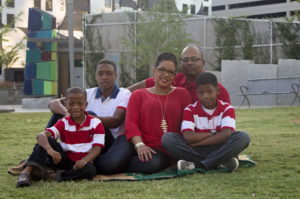
Toledo Native Julia Allen poses with her husband troy and their children at a family picnic. Allen, who now resides in North Carolina, suffered a heart attack in 2013 at the age of 44. She is now a spokesperson for the American Heart Association’s go red. Photo courtesy Hope Allen for Women Campaign.

Toledo native Julia Allen didn’t know what a heart attack felt like until she had one.

On April 15, 2013, the then-44-year-old started to feel tightness in her chest while at work. She ignored it until she became short of breath and nauseated and felt a tightening in her jaw. It was then that she knew what she was feeling wasn’t normal.

Toledo Native Julia Allen poses with her husband troy and their children at a family picnic. Allen, who now resides in North Carolina, suffered a heart attack in 2013 at the age of 44. She is now a spokesperson for the American Heart Association’s go red. Photo courtesy Hope Allen for Women Campaign.

“We all go to health fairs and read stuff or watch ‘Dr. Oz’ and that stuff kind of sticks in your head,” she said. “Inherently I just knew something wasn’t right.”

Allen fought the idea of calling an ambulance because of the cost. After calling her husband, he tried to talk her into going to the hospital. She compromised, saying she would call her doctor. He told her to go to the hospital.

“I was in denial,” she said. “Up until this point, I had been the picture of health. I had never really had anything major. I was that person that went to the doctor every year, I got my physicals, I did everything … just like I was supposed to.”

She said she thought her husband and doctors were overreacting the day of her heart attack. She was almost convinced that she would get to the emergency room to find out she had the flu. She even stopped home on the way to the hospital.

Allen, who now lives in North Carolina, is a spokesperson for the American Heart Association’s “Go Red For Women” campaign. It’s the same campaign she turned to when she was suffering her heart attack.

“They had women out there doing what I’m doing now,” Allen said. “The women actually tell the story of what was happening to them, what they felt, what they experienced.”

She said the website saved her life.

Her outlook on life changed the day she had a heart attack. While in the hospital, she made a deal with God, asking for her time not to be up yet.

“I think you get to the point of desperation,” she said. “I am a Christian, I’ve given my life to Christ … so if he had taken me that day, I feel like I would’ve gone to heaven. But I wasn’t ready to not be a part of my children’s lives. I wanted to see them grow up.”

She promised if she survived, she would make changes in the way she treated herself.

Before her heart attack, Allen said, she always put everyone else’s needs before her own.

“I was trying to be that perfect mother and perfect wife,” she said.

Since her heart attack, Allen has reduced stress, started listening to her body and begun exercising during spare time. She said showing kindness and appreciation is another way she’s changed.

“All those things that we take for granted … make people realize that you care about them,” she said.

Having a heart attack proved to Allen that tomorrow is never guaranteed.

“I try to slow down now and definitely spend more time with my kids and my husband,” she said. “Now I have more family nights.”

Allen said heart disease runs in her family. She said her son, an avid athlete who eats well, has high cholesterol because of his genes.

“Family history plays a very strong part in your risk of disease,” she said.

Heart disease is the leading cause of death in America and 48.9 percent of African-American women ages 20 or older have cardiovascular disease, Allen said.

“In my situation, before the heart attack, I remember having chest pains here and there years before,” she said. “It would come and go and [I would] ignore it.”

Through her efforts as a spokesperson, Allen meets other women and hopes to inspire them to take better care of their hearts.

Allen also encourages everyone to wear red for the nationwide Wear Red Day on Feb. 6. The day serves as a reminder for women to be aware of their health. For more information, visit goredforwomen.org.

ProMedica program rehabs ‘broken’ hearts

0
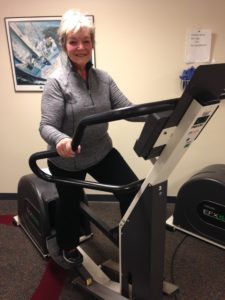
Linda Shaw of Perrysburg has been exercising through ProMedica St. Luke’s Hospital’s Cardiac Rehab program since 2011 when she suffered a heart attack at the age of 59. Since 1983, the center has helped patients lead healthier lives after heart events through exercise, education and support. About 300 patients currently receive care through the program. Toledo Free Press photo by Joel Sensenig

Linda Shaw thought she had the flu.

Four years ago, while visiting her sister in Valparaiso, Indiana, the Perrysburg woman awoke at 4 a.m. with the feeling of not being able to lie down any longer. Shaw, who had not been feeling well for some time prior to that, just wasn’t feeling “right,” by her own admission.

Her sister told her she was taking her to the hospital.

There, Shaw learned she didn’t have the flu.

She had had a heart attack.

Linda Shaw of Perrysburg has been exercising through ProMedica St. Luke’s Hospital’s Cardiac Rehab program since 2011 when she suffered a heart attack at the age of 59. Since 1983, the center has helped patients lead healthier lives after heart events through exercise, education and support. About 300 patients currently receive care through the program. Toledo Free Press photo by Joel Sensenig

“I had that kind of [flu] ache. Muscle aches in my arms, across my back,” Shaw said. “No chest pain, no jaw pain. None of the earmarks of a heart attack.”

But inside Shaw’s body were the indicators of a heart attack. That Friday, the doctor told her she had three blocked arteries: one at 98 percent blocked, another at 100 percent and the third at 97 percent. She had triple-bypass surgery the following Monday.

Now 62, Shaw can be found first thing in the morning three days a week in the lower level of ProMedica St. Luke’s Hospital in Maumee. She’s a regular at the hospital’s Cardiac Rehab program, which aims to help those who have suffered a heart event regain their health.

“Recent studies show those who get in rehab after a heart event live on average five years longer,” said Karen Sherman, a nurse and cardiac rehab coordinator at St. Luke’s. “Time is muscle. The heart is a muscle.”

The hospital’s cardiac rehab program began in 1983. Through exercise, education and support, the program aims to provide healthier lives for patients who have had a heart attack, bypass surgery, valvular surgery, heart transplant, angina, stents or heart failure.

The program consists of three phases. Phase 1 begins with light education and exercises while the patient is still admitted in the hospital. Phase 2 is a three-month program of monitored exercise and education, with patients coming in three to five times per week. Phase 3 is a maintenance phase for those who want to continue the exercise portion of the program in the hospital setting. Up to 300 people are regularly in the Phase 2 or 3 portion of the program, with more in ProMedica’s other hospitals throughout Northwest Ohio.

Sherman said the hospital encourages patients to start the rehab program within one to three weeks of being discharged.

“The quicker we can get to them and start educating them and exercise them, the better they do,” she said.

After recovering in Indiana for a month following her surgery, Shaw was eager to begin exercising at St. Luke’s. She’s been in Phase 3 for more than three years.

“I’m here because this is my lifestyle, this is where I belong and it’s a comfort to me,” Shaw said after one of her two-hour workouts, which begin as soon as the center’s doors open at 6:15 a.m. “While I don’t worry about it on a daily basis, if something would happen, they’re here for me. In a second, they’re here. … [The center] deals with the whole compass of heart disease. Not just the nutrition and exercise, but the emotional support. We have a great camaraderie here because we’re all here for a reason.”

The communal spirit of the program is beneficial to many patients, who may be experiencing the “cardiac blues” following their heart event, according to Sherman.

“Some people are socially isolated, and they’re depressed after an event,” she said. “Getting them out and interacting with others improves their quality of life.”

Each patient’s exercise program is catered to his or her ability, said Kristin Easter, an exercise therapist in the program.

The patient’s background, risk factors and any health problems they may be experiencing are reviewed during their first day in the program. Because participants may be as young as their 20s to as old as their 90s, there is a wide range in exercise routines.

“That’s a big part of the program — making sure we can provide them with an exercise routine that they feel comfortable with, so it’s all individualized for a patient,” Easter said. “We kind of act as a liaison between the doctor and patient. They may see the doctor once every three to six months but we’re here to keep the doctor updated and let them know how their patients are doing.”

Shaw said the program has helped improve the quality of life for not only herself, but also the lives of her daughters and grandchildren, who say grandma had a “broken” heart. Because Shaw had a heart attack prior to the age of 60, her family is considered at-risk for a heart event.

“It’s hard, I won’t deny. Nothing’s ever laid me out like that,” Shaw said of her heart attack. “But I think what you do is just keep pushing forward. It’s been a blessing for my family. … Since then, my girls, who never had a weight problem, are very conscious now of what they’re putting in their bodies.” Her 10-year-old grandson recently told her, “I’m not going to have a second helping of this, Grandma, because it’s a better choice if I don’t.”

Although Shaw knows she doesn’t “have” to keep showing up three times a week, she has no plans on stopping.

“I’m not done. This is the lifestyle now, and this is something that you have to do for yourself,” she said. “I want to be an example for my grandchildren, so they continue this better lifestyle of being healthier for themselves — so they know it’s their responsibility to be the best that they can be.”

For more information about the program, call (419) 897-8440.

Groups unite to stage Opera Ain’t No Drag

0

Opera singers and drag queens are alike in more ways than one: the extravagance, the big wigs, the shiny dresses.

“It’s all performance,” said Toledo Pride Marketing Director Kelly Heuss. “It blends more than you think it does.”

Both types of performers will be part of the Opera Ain’t No Drag event at 7:30 p.m. Feb. 7 at the Collingwood Arts Center, 2413 Collingwood Blvd. The event is a collaborative effort between Toledo Pride and the Toledo Opera Association.

“It’s just kind of a ridiculous, fun evening,” Heuss said.

Toledo Pride Executive Director Lexi Staples has done wigs and makeup for the opera for a few years, which is how the connection between the two groups was first made.

The idea, brainstormed by Staples, was put into effect two years ago to much success. More than 500 people attended the event and Heuss said the crowd was diverse.

“You get the opera guild members and then you get the younger generation that hangs out at the bars and watches the drag queens,” she said.

Heuss said the two types tend to mesh well.

“I just love that it’s a fun event that really brings together different parts of the community,” she said.

The event will include live performances by opera singers and lip-synced performances by drag queens and a drag king. The songs included during the event will include some well-known numbers.

The local performers include Jenny Cresswell, Micah Graber and Madeline Harts from the Toledo Opera Association; drag queens London Asia, Empress Fontaine, Amber Stone and Sugar Vermonte; and drag king Santana Romero.

Tickets for the event cost $15 or two for $25, available in advance or the day of the show. To purchase tickets, or for more information, visit toledopride.com.

SilverSneakers: Helping seniors get physically active

0

What do you think of when you hear the word SilverSneakers?

.

Many people think of the 16-year-old program that gives seniors a free membership at many area gyms. This program came about after a study showed seniors who exercise spend $1,000 less per year in medical costs than ones who don’t exercise.

In January 2013, the program saw some major changes. Surveys showed  that seniors often could not get to the gym; that they didn’t feel comfortable in the gym setting; and they didn’t want to work out with the younger crowd. For these reasons the FLEX program was developed. This program gives seniors a more convenient way to work out and stay fit.

In July 2013, American Mobile Fitness collaborated with the FLEX program to provide seniors group fitness class at parks, churches, 55+ communities, senior centers, assisted living facilities and nursing homes.

Currently, there are 33 locations hosting 150 classes per week in Toledo and surrounding areas.

Seniors can take advantage of a wide variety of classes that are led by a certified group of fitness instructors or certified personal trainers. Some of the classes include aqua aerobics, senior stretch, chair aerobics, circuit training, strength and balance, yoga and Zumba.

As we age, our metabolism decreases, which often causes weight gain in the senior population. Many seniors also have a number of ailments to deal with from arthritis, diabetes, COPD, osteoporosis, stroke and high blood pressure to Parkinson’s and heart disease.

Many times after a surgery or an injury, physical therapy is limited to working and rehabbing the specific injury. We find that people still need rehab not only for that specific injury but also the entire body.

After someone has been released from therapy, they still need to continue exercising to avoid losing the gains they have made. Group fitness classes offer a great opportunity to avoid regression.  The next step in your continuum of care is a certified professional to lead you in classes specifically designed to make seniors stronger.

Many times, seniors are caught in a cycle of regression followed by physical therapy where they progress to a certain point before being released to regress again. We have found that this program has helped seniors to continually progress and lead a much stronger, healthier and happier lifestyle.

To find out more about the program and how to bring it to your facility or to see if you qualify, please go to www.AmericanMobileFitness.com or call us at (419) 351-1381.

Gregg Schwartz is owner of American Mobile Fitness.

Mud Massacre II: Radio host unites 34 local rappers in music video with anti-violence message

0
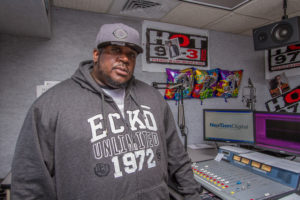
Eddie Bauer of Hot 97.3 WJZE organized “Mud Massacre II,” an anti-violence music video featuring 34 local rap artists. Toledo Free Press photo by Christie Materni

To promote the message that violence is wrong, local radio host Bigg Eddie Bauer created a YouTube video of 34 local rap artists who rap about ending gang violence, dispelling negative images and uplifting the poor.

Eddie Bauer of Hot 97.3 WJZE organized “Mud Massacre II,” an anti-violence music video featuring 34 local rap artists. Toledo Free Press photo by Christie Materni

The video, “Mud Massacre II,” was a monumental effort, said Bauer, of “Toledo’s Blazin’ Hip-Hop and R&B” station Hot 97.3 WJZE. Many of the artists have gang affiliations, Bauer said, and part of making the video was to put those rivalries to rest.

“As you know, the city is filled with violence, gang-banging and negative images of the poor and impoverished, but I was able to put together a project where artists, who may have problems with each other due to rivalries, worked together to shine a positive image and collaborative spirit on the music scene in Toledo,” he said.

The video was modeled after a similar video, called “Cincinnati Riots,” made in Cincinnati, where Bauer is originally from.

That led to “Mud Massacre,” which featured 20 artists and was released in October 2013. “Mud Massacre II” was released in December and features two parts, “Chuckie” and “Zion.” Bauer decided on the beats for the video and enlisted two producers from Toledo, Yung Chuck and duo Derrick Holcomb Jr. and Chuck “da Deuce” Browne aka The Beetz.

The project took two to three months to complete. The song “Chuckie” features 16 artists and “Zion” features 18.

“It was totally my creation from the ground up,” Bauer said. “After [the artists] sent the verses back, I spent many hours and days listening until the song was completed. Then we shot each person’s individual scenes.”

Bauer said at one time he wanted to be a rapper, but had no luck in the music industry so he went into broadcasting. His show “#GIMMEMYSHINE” airs 2-6 p.m. Monday through Saturday. He hopes his video gives rap artists in the city their moment to shine.

“If I’m not going to be an artist, the least I can do is give artists a platform,” he said.

Some of the artists in the video include Stink Bomb, whom Bauer called the “hottest artist in the city,” Cuntry, Thee Untouchable, Mike Wit da Goldz, Yung Chuck, G5Juan, 7 Diamond, Prophet Mocmoud, Geech, Jimmy Paid and Kane.

“Mud Massacre” has 56,000 views on YouTube. So far, “Mud Massacre II” has gotten 10,000 hits in its first month.

“It’s called ‘Mud Massacre’ because Toledo is known as the mud and they’re killing the rap,” Bauer said. “That’s where it came from. … They’re killing it. They’re doing their best to get their shine on.”

Yung Chuck, the architect of “Chuckie” who boasts a national fan base, said he got involved with the video to showcase Toledo’s talent and to emphasize his core message. Yung Chuck said he had a difficult beginning in life; his mother did drugs and he moved in with his grandparents.

“I had a crazy life,” he said. “My whole movement is about uplifting, doing for yourself. When people say you can’t do anything, you can do it.”

Yung Chuck has been in the industry for two years and rapping for 10. In 2012, he went national with the group Educate Portege and can be seen in many of their videos.

Artist Mike Flamez has been a part of the rap scene in Toledo for 12 years. He contributed the first verse in “Zion.”

“It’s just an amazing thing Eddie put together,” Flamez said. “There’s not a lot of DJs in the area that take the time to do something like this. From my perspective, it is very well-appreciated. You just have to do everything for yourself in Toledo. Eddie is putting in his own money and time. It’s just a beautiful thing really because around here there is a lot of negativity, so it’s good we have something more positive to be about.”

Area restaurants, residents deliver meals to firefighters

0

Last year, in the wake of the deaths of Toledo firefighters Pvt. Stephen Machcinski and Pvt. James Dickman, a group called Feed Our Toledo Firefighters arranged for meals to be delivered to local fire stations for six months, at first every day, then on the 26th of each month.

Machcinski, 42, and Dickman, 31, died from injuries sustained while fighting a North Toledo apartment fire on Jan. 26, 2014.

During the anniversary week, the group again stepped up to organize meal deliveries to fire stations, an initiative called A Week of Feast.

Area restaurants, schools, organizations and individuals volunteered to donate and deliver food to each station Jan. 26-31.

“It was really just a continued effort,”  said Week of Feast organizer Larry Cready. “As we got near to the one-year anniversary … I suggested we see if we can get them fed on Monday and it just blossomed from there.”

On Jan. 26, 18 fire stations and the 911 dispatch building received delivered meals as part of the group effort.

“It’s just a collaboration of people who have gotten together,” Cready said. “I may be organizing it and trying to coordinate the effort here, but I certainly couldn’t do this by myself.”

Tony Packo Jr. of Tony Packo’s Cafe was among the restaurant owners who donated meals to local stations. Packo’s At The Park delivered to Station No. 5 on Jan. 27 and the Original Tony Packo’s delivered to Station No. 13 on Jan. 28.

Packo Jr. said it was an easy decision to get involved, not only because of the close proximity of his restaurants to fire stations, but also to show support for Toledo’s firefighters, many of whom are regular customers.

“We’re obviously very close to the fire stations in a lot of regards. A lot of firefighters, including the chief, patronize our restaurants,” he said. “We appreciate their dedication and their sacrifice to say the least. We just wanted to show our support.”

Cready said local firefighters have been humbled by the meals and the outpouring of support is something they appreciate.

“They don’t ask for anything from us,” Cready said. “They get up every morning and they put their lives on the line for us because that’s their job. …  For us to come together to show them that we’re Toledo Strong [gives] them a pat on the back and [is] showing them some love.”

Toledo Fire Chief Luis Santiago referenced the meals as part of his thank you to the community during a public memorial service Jan. 26.

“It’s just another gesture of kindness,” Santiago said afterward. “I am ever so grateful to them that they take time out of their day to do that because they don’t have to do that.”

Pvt. Mike Eck of Fire Station 14, a member of Dickman’s graduating class, agreed.

“It’s very welcome just for the fact that people are bringing us hot meals,” Eck said. “They care. They want to take care of us. The support is very humbling.”

The group’s reach extended even down South — 1,000 miles from Toledo in Gainesville, Florida.

University of Florida student and Toledo native Stevie VanAusdale participated in the feeding last year and was so moved by the city’s response, she jumped at the idea to participate for the anniversary.

VanAusdale, who is working on her master’s degree, delivered food to a fire station in Gainesville in honor of the fallen heroes in Toledo.

“I have a friend who is a Detroit firefighter who was injured while fighting an arson fire and it felt like the city really turned their back on him and the others who were injured,” VanAusdale said in a Facebook message. “It was really important for me to help out after Jamie and Steve passed away. I think we so often forget about firefighters and the life-threatening work they do.”

Since the initiative began last year, VanAusdale, her family and some neighbors they rallied have donated meals each month.

“It really isn’t that difficult to make a little extra food once a month, so we figured it was the least we can do,” she said. “I am still Toledo Proud 1,000 miles away.”

Toledo Free Press Editor in Chief Sarah Ottney contributed to this report.

Bennett Management marks 50th anniversary

0

Bennett Management Corp. celebrated 50 years in business Jan. 24.

The family-owned, Maumee-based business was founded by Bob Bennett, who recognized the potential of Burger King when it was 11 years old and opened a franchise in Kalamazoo, Michigan. At the time of his death in May 2013, Bennett had grown the business into 26 Burger King locations across Michigan, Ohio and Indiana.

His widow, Emily Bennett, who now owns the business, credited great management, an excellent team and a great brand for the company reaching the milestone.

“He was an attorney and a CPA and he had a brilliant business mind,” Emily said of her late husband. “I’m sure a lot of planning and experience went into creating such a great business model.”

During his life, Bennett spoke highly of the Toledo area and sought ways to improve the quality of the city through its business economy, she said.

Bennett Management remains involved in Toledo as well as the other communities it serves, supporting organizations such as The Boy Scouts of America, Easter Seals, Lucas County Children Services, and Historic Church of St. Patrick’s Food Pantry, she said.

While its founder may not get to witness the business’s continued growth, Emily said she is looking ahead to Bennett’s next 50 years.

“I think it’s absolutely incredible we’ve made it this far, and it’s all thanks to the wonderful people we’ve had involved,” she said. “We’re looking forward to many more years serving the communities in which these store are located.”