Home Blog Page 143

Osburn: Obamacare back before Supreme Court

0

Earlier this month the Supreme Court heard arguments for and against the controversial Patient Protection and Affordable Care Act. King v. Burwell, expected to be decided this June, will be the third time the Supreme Court will decide on the law in its brief five-year history.

In 2012, the court narrowly upheld the law’s individual mandate, while last year it decided that not all businesses are required to cover contraception for their employees.

    .

.

In King v. Burwell, the issue at hand is whether or not the IRS has the authority to provide subsidies for people to buy health insurance who do not live in states with exchanges of their own. Health care exchanges are marketplaces, mostly via the Internet, where people who do not have insurance can shop for plans. They can be run either by states or the federal government. As of now, only 16 states have opted to run their own insurance exchanges. This means all others must rely on the federal exchange to receive “Obamacare” plans. Supporters of the case say that the way the law is written, the IRS does not have the authority to provide subsidies to people who don’t live in states with exchanges — roughly 70 percent of the country. The 2012 rule, challengers say, was created by the IRS in order to ease fears that states would not create their own exchanges before the 2014 deadline.

The case involves four Virginians, all eligible for health insurance subsidies, who are trying to deny such subsidies. Should the subsidies not exist, they would not be required to pay the individual mandate penalty due to their low incomes. The plaintiffs, backed by the Competitive Enterprise Institute, a libertarian think tank, essentially believe that the government is unlawfully coercing them to buy health care they do not want.

Obama administration officials counter that this case is politically charged. They claim that an accurate reading of the law makes clear that subsidies are to be made available in all exchanges, regardless of who is running them. To them, the IRS subsidies are just a way to meet the law’s goal: to insure as many people as possible in America.

Much is at stake should the IRS rule be overturned. Every state without an exchange could be affected. Estimates say that nearly 8 million people may lose the insurance they have now: tens of thousands of whom live here in Ohio. In a statistic released by the Department of Health and Human Services, nearly 250,000 Ohioans have signed up for “Obamacare.” A majority of people at risk will be low- to middle-income Americans, many of them healthy, leaving the sickest patients to pay much higher rates. As it stands now, the subsidies provided are directly paid to health insurance companies, and then the savings are passed on to consumers. This translates to about a 75 percent decrease in premiums for recipients. Should the subsidies be rescinded, health insurance companies may not have the money to cover people with pre-existing conditions, or be able to cover young adults who stay on their parents’ plans until they are 26.

A quick fix to the rule being overturned will be an uphill battle. Congressional opponents of the law say Congress may provide financial relief to those losing subsidies, but such a measure would only be temporary and details are sketchy. States could still set up their own exchanges, ensuring their enrollees would get federal subsidies, but it would be an expensive and politically difficult process.

The verdict in the case is expected to be close. Eyes will be on Chief Justice John Roberts, who is considered to be a swing vote. He played a key role in the court’s decision to find the law’s individual mandate constitutionally legal. The court did accept to rule on this case rather quickly, a fact that further proves how contentious the law is.

Ben Osburn can be reached at [email protected].
Hebert: The springtime of our discontent

0

Finally springtime is at our doorstep — but don’t let it fool you. For this delightful season of crocuses in our gardens brings with it the dreaded season of craters on our roadways. Yes, I’m talking potholes, the perennial plague of pockmarks on the pavement spawned by the wear of traffic and the wrath of winter’s crushing freeze-thaw cycle. And ready or not, they’re here.

.

.

Bump-bump-thump-whap-bang-thud-kerunck! That’s what it was like driving down a stretch of the Anthony Wayne Trail last week. And there’s little escape from it. It’s pervasive. Detroit Avenue and Monroe Street. Jackman and Douglas roads. I-475 and Front Street. All streets now feel like a relief map of the Andes Mountains, offering big thrills for drivers and big bills from the scores of tire and alignment shops who repair our tires, wheels, shocks, axles, front ends, suspensions and brake systems that fall prey to this annual failure of road construction.

So I ask: Why? Seriously, do we really have to put up with this lunar landscape that is gouged into our roadways every spring? Is this our fate? Our karma for some unknown sin we committed against mankind? Did our ancestors also contend with this annual insult or is this a recent development on the bumpy road of civilization?

Apparently it is nothing new. Using my trusty Google search box and a few minutes between TV shows, I was able to find a plethora of stories from decades ago about this springtime of our discontent. I confirmed it, in black and white. We are not the first generation to curse the roads we drive on. It appears that our parents, grandparents, great-grandparents and most everyone on our DNA chain over the past century have uttered blasphemous oaths at these voids and potholes, chuckholes and craters, kettles and cave-ins.

They indeed have been a long and ubiquitous part of the driving experience from Tacoma to Toledo, the first one likely surfacing somewhere on Monroe Street shortly after the city’s first delivery truck, owned by Lamson’s department store, took to the muddy streets, splashing people on the sidewalks back in 1899. A few years and a few thousand cars later, the potholes became so bad that a local chapter of the national “Chuckhole Club” was formed, which invited groups of regular folks to get together for pothole-filling parties. It was a bring-your-own-shovel affair and the clubs supplied the buckets of gravel. By 1910, they even had a club insignia featuring a depiction of a shovel and a bucket.

A review of local historical records reveals that in Toledo, the early pothole plague was also frequently tackled by disgruntled vigilantes who took matters into their own hands and filled the holes without asking for city help. Imagine that. It surely must have been a different time and mindset. In 1912, Spokane, Washington, was so plagued by holes in the highways that the governor declared one day in April 1912 as “Good Roads Day,” and urged: “If you own an auto, climb into it with a pair of overhauls on April 12th and ride out into the country and when you get to that chuckhole or rut you cussed out the last time you ran into it, fill it up and level it over. If you can afford to own a car, you can afford to do this.”

One can only wonder what type of beating a politician would take this day and age if this “fix-it-your-own-damned-self” solution were to be decreed or even suggested again?

One hundred years later, though, we do still employ the chuckhole club technique as the primary quick-fix solution, only now we pay city and state street crews to do the dirty work as opposed to setting up volunteer brigades. But the fact remains: the basic technology for pothole repair really hasn’t changed dramatically over the last century. It’s a sort of “whack-a-mole” solution that defies what should be the sensibility of (oxymoron alert) responsible government. C’mon, let’s stop the madness. With today’s great technology, it would seem that we could fix this problem once and for all. And at the risk of being arrested by the cliché police, I’ll dare to say it: We can send a man to the moon, so why can’t we build a road that doesn’t fall apart in the winter?

Perhaps it’s not really viewed as the problem it really is. You see it comes and goes. We gripe and groan, but then by fall, the problem is paved over (pun intended) and then another crisis intervenes and the furor dies down. Policymakers know this and easily brush it aside when it’s no longer front page news.

Time to change that.

I think everyone needs to frame this as more than just a seasonal nuisance or mere inconvenience. First and foremost, the situation is dangerous. Potholes are another one of nature’s ways of trying to kill us. Drivers that dodge or run into the big potholes too often lose control or slam into other cars. And those flying chunks of concrete or asphalt sent airborne by the tires of an 18-wheeler can deliver more than a mere wet spot in your shorts when they hit your windshield.

And then let’s talk money. That reason alone is why drivers all across America should surround their state capitols with pitchforks and signs demanding a solution. Incessant road resurfacing and rebuilding is one of the biggest money sucks in government and from our wallets. We’re not talking millions of dollars. We’re talking billions. Billions, with a “B.”

Every year in just Ohio, the state highway folks at ODOT (Ohio Department of Transportation) shell out well over $2 billion on a wide variety of projects. Lots of that money has to be spent to resurface or replace the pocked pavement that too often crumbles away like week-old toast. It’s a costly scenario that is repeated every year at the city and county levels. And while I fully understand there is a lot to do at ODOT and the agency is charged with taking care of millions of “lane miles” of highway, are any of those billions of dollars in the budget being spent to specifically study and prevent the problem of potholes on our roadways?

Are we really looking for long-term answers and solutions? How many engineers are tasked with finding this elusive Holy Grail of surface material to end this pestilence of potholes? It would be a solution that could save billions of dollars and thousands of lives. Where is the Bill Gates or Stephen Hawking of road construction? We need them desperately, for whatever money is spent to find the ultimate answer may be the best public investment in years. Ironically, when Ohio’s state highway department was started back in 1905, they had four employees, and their only mission was only to study the state roadways and the science of road construction. The annual budget was $10,000. As I drive down the Anthony Wayne Trail, dodging the divots and the dips, I wonder aloud if we are spending even that much today.

In the meantime, look out, big pothole on your left!

Lou Hebert can be reached at [email protected].

Six-string celebration: Electric guitar takes center stage at BGSU conference

0
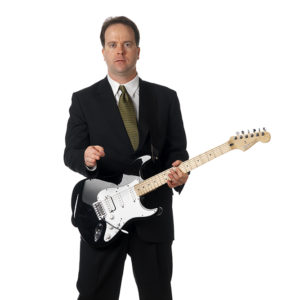
Matt Donahue of Bowling Green State University’s Department of Popular Culture has organized a conference on the electric guitar March 27-28. Photo Courtesy Matt Donahue

It’s strange when you think about it. For the single most important instrument in the history of pop music, the basic structure of the most popular electric guitars has been remarkably consistent.

Matt Donahue of Bowling Green State University’s Department of Popular Culture has organized a conference on the electric guitar March 27-28. Photo Courtesy Matt Donahue

“What is fascinating compared to some other aspects of popular culture in terms of design, three of the classic electric guitar brands have not changed — the Fender Telecaster, the Gibson Les Paul and the Fender Stratocaster,” said Matt Donahue, lecturer in Bowling Green State University’s Department of Popular Culture, in an interview with Toledo Free Press.

“Interesting as we have seen so many other designs of popular culture items change over the years and the decades, but not these three classic designs. Of course there are now so many different companies and designs, but the three mentioned have stood the test of time.”

Of course, as with so many tools of art, it’s not just how it’s made — it’s what you do with it. And ever since its debut over 80 years ago, artists as varied as Jimi Hendrix and Prince have left their mark on music using the dulcet tones of the six string.

Now, in celebration and analysis of the instrument, the Department of Popular Culture will be hosting a two-day conference, “The Electric Guitar in Popular Culture,” March 27-28 at the school’s Bowen-Thompson Student Union. Featuring a wide variety of speakers, panels and performances, the event is set to shine a light on the instrument and its impact in a wide range of cultural settings.

“I had the idea of putting together a conference about it a few years ago,” Donahue said. “Then one of the student organizations affiliated with the Department of Popular Culture — the Popular Culture Scholars Association, who have been putting on popular culture-themed conferences in the memory of the department’s founder Dr. Ray Browne — two of the leaders in this organization, Becky Denes and Jacob Brown, and I discussed the idea of putting on this conference. Thanks to their hard work and efforts, the conference is taking place.”

The conference in many ways is a labor of love for Donahue, who has a lifetime of experience with the instrument.

“I got into the electric guitar at first, by being introduced to music played around the house by my parents. Then when my brothers started playing their rock ’n’ roll records around the house such as Black Sabbath, Deep Purple and Led Zeppelin, I continued my interest in popular music and worked and worked to save up enough money for a guitar and amp, both of which I still own!”

Donahue has been a regular around the Northwest Ohio music scene for the past 30 years, playing and singing in a variety of punk and rock bands while growing in prestige as a scholar. He will be performing during the conference along with artists such as Toledo’s own Chuck Stohl, Skip McDonald (Little Axe), Kelly Richey and Chris Buzzelli from the BGSU Department of Music.

“We have tried to highlight a variety of different performers and genres related to the electric guitar and also tie that in to a connection that many of the performers are based out of Ohio or have had a connection to Ohio,” Donahue said.

In addition, keynote speakers such as journalist Martin Popoff and Ken Haas from Reverend Guitars will bring their own history and experience with the instrument, and panels focusing on the intrument’s impact on a wide variety of cultures promise to bring attendees new perspectives on the fabled six-string.

“I do think that the electric guitar and its reach worldwide has been underestimated,” Donahue said. “I think a lot of it is the connection to popular music and how popular music is so heavily guitar-based and has been at the forefront of so many different genres that have gone on to be popularized throughout the world. And in doing so, the guitar has become popularized throughout the world.”

The Electric Guitar in Popular Culture conference will begin at 9:30 a.m.  March 27 at the Bowen-Thompson Student Union. Registration is encouraged but not required.

For more information, visit www.bgsu.edu/egpc.

Hays: Happy 10th birthday!

0

Ten years ago, when Toledo Free Press published its first edition, I was five years into what will be a lifelong recovery from a traumatic brain injury. In 2005, I celebrated three years of being able to read again, although not with the prowess I once had. Something I could not even have imagined back then was being a columnist for a newspaper.

.

.

While TFP was finding its legs as a weekly paper in this city, I was learning to use my legs again. While the brains behind Toledo Free Press came together to offer a different view, I was trying to figure out my life with a brain so severely damaged that I barely recognized myself.

Fast-forward to 2009, when my search to find a purpose in life beyond my amazing children and grandchildren led me to a calling to work with veterans who found themselves in a similar position to my own — trying to live their lives after devastating, and often invisible, wounds.

Once my nonprofit, The Arms Forces, had positioned itself as a bridge between veteran issues and the community, I began to wonder how I could get the message out to a greater audience that civilians matter in the lives of veterans. They have a significant role to play and, for them to see that, they needed a way to understand more fully what it means to be a veteran, especially one with traumatic brain injury and post-traumatic stress. Education reduces stigma. Reduced stigma opens more doors for our veterans.

In August 2013, I asked for a meeting with then-TFP Editor in Chief Michael Miller and then-Managing Editor Sarah Ottney. I approached them about a way to help me with my mission at The Arms Forces to reduce the divide between civilians and veterans. Both saw the benefit to first our military and veterans and also for the readers of their newspaper. They were familiar with my writing style, which is quite like having a conversation with me in person. They gave me some tips and in September 2013, my first column was published. I have been honored to write a column every month since.

I have received many phone calls and some written messages from people who tell me my columns have opened their eyes to what many of our veterans go through. The writings helped them feel more connected with veterans and less like outsiders who could never make a difference in their lives. I have also received calls from veterans (some in tears, which of course brought me to tears) who told me it meant so much to them that someone cared enough to talk about things in a way many could finally understand. Some even told me their families read the column and now understand more about the veteran’s life than they have in years of living.

Those are powerful words and powerful reasons to support what can seem to be a “touchy-feely” type of column. I choose to approach the column in a way that brings humans together. I choose to look for what unites not what divides. That is a rarity in opinion columns we find in newspapers today. TFP management has supported me by giving me space in its newspaper. Our community is why I continue to write for them. They informed me if the community did not react to the column in a positive way, it would not be good business to continue. So, I thank YOU, the community, for the opportunity to have a voice as a civilian to share about those who have become my dear friends and extended family, our veterans, our military and their families. I thank Toledo Free Press for always putting community first. I believe that is why they are around to celebrate their 10-year anniversary and have won numerous awards at all levels.

We can do our part by sharing TFP stories online and picking up the printed version. We can support the advertisers who allow TFP to be available at no cost to readers. We can let the columnists know when we like an article, when we don’t ,or when we disagree with something the writer has expressed. Constructiv

e criticism can only add to our craft. Offering a different perspective is the American way!

Congratulations to all the staff and writers over the past 10 years! The freedoms included in every issue of this paper are the ones veterans sacrificed to protect. Please keep our military and veterans in mind when you read TFP each week.

Pam Hays is president and founder of The Arms Forces, thearmsforces.org; (419) 891-2111.

FranNet offers franchise options for area entrepreneurs

0

Do you dread waking up to your alarm clock in the morning, just to pick yourself out of bed and trek off to a job you dislike? Well, you’re in luck!

Although that sounds like a cheesy advertisement for a fake job opportunity, it could be the truth. FranNet is hosting a small business seminar, Small Business – Big Potential: Toledo, March 25 and is actively seeking entrepreneurs interested in opening up their own franchise in the Toledo area.

FranNet is “like eHarmony for business owners,” said Tracy Rickman, president and owner of FranNet Northern Ohio. As a franchise network, it works with a group of franchisers and potential franchise owners to make a perfect match.

“FranNet is like eHarmony for business owners.”— Tracy Rickman, owner of FranNet Northern Ohio

“Most clients have been in corporate America for a long time,” Rickman said. “If it makes sense for them to open a franchise and start a small business, we will help them research different opportunities.”

Rickman adds that her staff gets compensated from the franchisers, therefore prospective small business owners do not pay for FranNet’s services and can ensure that they are making the best decision while seeking the most options with little effect on their own finances.

“It gives entrepreneurs a chance to see options they wouldn’t have seen on their own,” Rickman added.

When a majority of people think about franchises, restaurants come to mind, but Rickman said there is much more to the network than grub. FranNet works with more than 3,000 different franchises in multiple networks — in fact, there will not be any food franchisers at the seminar.

Jared Jensen, Director of Franchise Development at Floor Coverings International, is one of the 11 franchisers who will be the seminar. Jensen said that he loves working with FranNet because he believes they really care about their local environment.

“They’re local and they represent really good franchise systems that are looking for the right franchisees,” Jensen said.

“Because they are local, they really want to find the right kind of business for their environment.”

In addition, Jensen is thrilled to search for a prospective franchise owner in Toledo and cannot wait to meet the eager entrepreneurs at the seminar.

“Toledo will be a great market for our business,” Jensen said. “We target to a female consumer who is the driver of the decision of the flooring decision in the home.

“The business model of our franchise really does well in a city like Toledo,” he said, adding that a mid-size city with great suburbs bodes well with a custom flooring company like Floor Coverings International.

Rickman hopes a diverse group of individuals attend the seminar. She said FranNet’s typical client is about “48 years old, coming out of corporate America and ready to be in control.” But that doesn’t mean younger entrepreneurs should skip this seminar. Rickman said she’s worked with many millennial entrepreneurs in recent years. According to Rickman, parents are starting to wonder if they should send their kid to college or assist them with opening a business instead.

“Quite honestly, I hope that trend goes somewhere,” she said. “There is a lot more opportunity to buy a business and run it how you want to. Owning a franchise really helps to and gives you the backbone to get started.”

FranNet is hosting its seminar at the Hilton Garden Inn at The Town Center at Levis Commons in Perrysburg from 6:30-9 p.m. March 25.

This is the fifth year FranNet’s hosted the seminar in Toledo and according to Rickman, it’s the largest.

“There are more and more folks interested coming to the Toledo area and growing here,” she said.

Toledo Free Press is a media sponsor of the event.

To register for the Small Business – Big Potential: Toledo seminar, head to http://bit.ly/1AHSvxv. There is also more information on FranNet’s Facebook page, FranNet of Northern Ohio.

MVCDS hosts student art exhibition featuring 230 works from nine counties

0

More than 230 pieces of art by students from nine local counties are on display at Maumee Valley Country Day School (MVCDS) from now until April 30.

“The purpose of the show is to honor and share the talents of our young artists in our community,” said LouAnn Glover, the exhibit’s coordinator. “The art works are colorful, reflective, creative thinking and are well-crafted. The artists and their families are so proud to see their work displayed in a gallery. It is joyful.”

Maumee Valley Country Day School is sponsoring the 2015 Northwest Ohio Regional Youth Art Show, featuring more than 230 pieces of student art from nine counties. Photo Courtesy Melissa Kuhl

For the past 36 years, the Northwest Ohio Art Education Association (NWOAEA) has hosted a regional art exhibit for students in grades K-8. The venue changes over the years and this year MVCDS, 1715 S. Reynolds Road, is sponsoring the 2015 Northwest Ohio Regional Youth Art Month Show in its Wolfe Gallery.

Organizers said the exhibit will draw hundreds of visitors to the campus of MVCDS. Patrons can expect to see colorful drawings in pencil and paints, fabrics, self-portraits and animals.

“Young students from across Northwest Ohio submitted colorful designs and prints, charming portraits, and dramatic landscapes. [There are] sculptures exploring faces, figures and animals to drawings inspired by cultures, history and imaginations,” according to a news release.

Art teachers selected the art work for display. Students created the art in their classrooms, although not specifically for this exhibit.

Art teacher Ani Geha of Whiteford Elementary in the Sylvania School District selected eight pieces of artwork from a pool of 500 students. Choosing submissions was a challenge due to so many worthy pieces, she said.

“I tried to mix it up,” Geha said of the process she used to whittle down her selections. “I tried to get a representation of boys and girls and every grade.”

Fifth-grader MaKenze Blackburn used oil pastels to create “Scream,” a replica of “The Scream” by Edvard Munch in 1893. Blackburn learned about Munch and his painting while creating her version in Geha’s class. Students also learned about cultural references to “The Scream,” including the movie “Scream” and scream emojis, Geha said.

“They began using oil pastels in kindergarten and every year they’ve used them,” Geha said. “It’s a hard media to work with. They are messy but they blend so you can mix them.”

Geha has been teaching for 12 years — 11 at St. Joseph Catholic School in Sylvania and this past year, her first at Whiteford Elementary.

“It’s a great community of art teachers and they all give a helping hand to the show,” Geha said. “On the day (art teachers) dropped off their art (to the Wolfe Gallery), we all helped hang it.”

The NWOAEA is part of the Ohio Art Education Association, a professional development group for art educators, Glover said. The group organizes a state conference every year for art teachers.

MVCDS’ Wolfe gallery hosts this exhibit every other year. Last year the show was held at the Perrysburg Board of Education building and next year it will be held at Defiance College.

It also hosts a variety of professional artist and student shows.

The gallery is open from 8 a.m. to 4:30 p.m. weekdays.

Aldean gets hot: Country superstar brings tour to Huntington Center March 26

0
Jason Aldean’s single “Burnin’ it Down” reached the top of Billboard’s Hot Country Songs chart in just two weeks last year. PHOTO BY Jim Wright

he first single off Jason Aldean’s album “Old Boots, New Dirt” has become one of the biggest hits of the country superstar’s career.

“Burnin’ It Down” took just two weeks to reach the top of Billboard Hot Country Songs chart, ending 2014 as the year’s No. 2 single on that chart with sales of more than 1.4 million. But “Burnin’ It Down,” was far from a unanimous choice for the lead single.

“That’s a song where I got a lot of sort of resistance from the label and from even from my management and a lot of people on my team,” Aldean said in an early February phone interview.

Jason Aldean’s single “Burnin’ it Down” reached the top of Billboard’s Hot Country Songs chart in just two weeks last year. PHOTO BY Jim Wright

The reason? “Burnin’ It Down” was not the typical Aldean song. A simmering ballad, its rhythm track is built around a loop, and other programmed percussion mixes with drums and the traditional instrumentation of the song. In fact, one could easily argue that it draws more from today’s glossy pop and hip-hop production than country.

“They wanted something that was a little more safe,” Aldean said. “But to me, I felt like, my career hasn’t become what it is by me playing it safe, ever. The biggest songs we’ve had are things that were a little left of center and things that we sort of stuck our neck out on a little bit and took some chances. And I felt like this was one of those songs. Plus, it was just a great song.”

Aldean said he thought it was an obvious single from the start.

“I felt like it was something that was really different and something that we really needed for the album, and something that wasn’t going to be confused with any other song,” he said. “It wasn’t going to just blend in to the 39 other songs that are on the radio. It’s like it was something that was really different and sort of unique.

“There was no doubt when you heard that song, and still when you hear it, you know what it is, you know who sings it, what the song is, and that, to me, is half of the battle. So to me it was a no-brainer, but it was one that I really had to go to bat for pretty hard for this record.”

As Aldean said, “Burnin’ It Down” isn’t the only time he’s gambled on a song that tested country radio’s status quo. “Dirt Road Anthem,” which featured a pair of rap segments with its easygoing country sound, is another shining example of the adventurous side of Aldean’s music. The 2010 single also generated mixed opinions before being green-lighted as a single.

The song, co-written by Aldean and fellow star Brantley Gilbert, went on to became Aldean’s biggest single to date.  It sold more than four million copies and remains the biggest-selling song in digital history for a male country solo artist.

Aldean sees plenty of upside in pushing the envelope on country radio.

“I think a song like that is going to reach a lot more people just because you’re reaching out into maybe the pop world and grabbing some people over there — not that I want to be a pop singer by any means,” the Macon, Georgia, native said.

“But I also think when you record music, you want as many people listening to it as possible. If you’re able to go out and grab a few people that normally wouldn’t listen to country music and sort of draw them in to what we’re doing over here, I think that’s a good thing.”

It’s not just the choice of singles that has given Aldean a reputation as a bit of a risk-taker. With each of his six studio albums, he has walked the line between maintaining his signature sound and cutting songs that take him in new stylistic directions. He feels “Old Boots, New Dirt” is his most adventurous album yet.

“I think you just kind of want to grow a little bit with each album, and I feel like this was one of those albums that probably shows it more than any other album that we’ve done probably,” Aldean said.

Obviously, “Burnin’ It Down” is a prime example of a song that was a stylistic stretch for Aldean. But he feels he pushed forward in other ways on the album.

The rocker “Just Gettin’ Started” uses some synthetic percussion to give its quieter moments a modern feel. “Sweet Little Somethin’” pairs a pulsing synthesizer and banjo as primary instrumentation in its verses — a move that helps make this bouncy rocker a true collision of pop and country.

In a larger sense, Aldean also feels he dialed back on the kind of turbo-charged rockers that have been his musical signature.

“The one thing that’s not on this album that we’ve typically had a lot of over the years is those big, big uptempo ‘She’s Country,’ ‘Hicktown’ kind of things,” he said. “There are a couple of big tempos, but not a lot. I think from a song standpoint, some of the coolest songs that we’ve ever recorded are on this record, if you believe in songs like ‘Two Night Town’ and ‘Burnin’ It Down’ and also ‘Too Fast,’ [ballads] things like that. They’re just really good songs. So I think it’s a little bit about showing some maturity as far as an artist.”

Maturity is one thing, but sounding fresh doesn’t hurt, either. And when Aldean released his self-titled debut album in 2005, his brand of rocked-up guitar-based country was something new — and a bit risky — for the genre.

But the sound caught on quickly, and Aldean is often credited with creating the template for today’s popular “Bro Country” sound, with its rocking tunes and male-oriented, just-having-a-good-time lyrics. For his part, Aldean chafes at the “Bro Country” label because it represents only one side of what is a multi-faceted catalog of music. But whatever you call his sound, it’s connected in a big way.

“Old Boots, New Dirt,” has become the latest in an unbroken string of platinum-selling albums for Aldean that began with his self-titled album and continued with each of his succeeding releases: “Relentless” (2007), “Wide Open” (2009), “My Kinda Party” (2010) and “Night Train” (2012). Those successes have made him a bonafide arena act, able to headline outdoor stadium shows.

Aldean will be back out filling arenas this spring and summer, and between his summer dates, Aldean has sprinkled in about a dozen co-headlining stadium shows with Kenny Chesney. The show Aldean is taking out figures to be a visual as well as musical treat.

“It’s called the ‘Burn It Down’ tour, so obviously we’ve incorporated a lot of fire, a lot of flame, a lot of heat coming,” Aldean said. “Obviously you want it to sound as good as possible, but visually you want it to look great, too. I think from that standpoint, this is by far the coolest thing we’ve ever had on the road.”

Aldean plays the Huntington Center 7:30 p.m. March 26 with special guests Cole Swindell, Tyler Farr and Dee Jay Silver.

Baumhower: Jeremy after dentist

0

I never knew how much stress I was carrying with my smile.

  .

.

An incident occurred during a basketball game when I was 12 years old. My face ate the wood floors at the Catholic Club; the contact instantly broke my front tooth in half, leaving the exposed nerve hanging — and I still finished the game.

This is the only story in my history that shows any toughness on my part.

My family dentist fixed the tooth with a cap, which didn’t match in color. At the age of 13, I became aware I had an off-colored smile, with newly matching blue gums above the formerly healthy tooth. I don’t remember smiling a lot before this incident because our home was never overly loving, and my father was battling alcoholism. The dental work that was done made it nearly impossible to smile afterward.

Fast-forward 20 years to when I moved my family back to the area. I found a dentist office that worked with my insurance, filled with a friendly staff. My first visits were amazing with courteous and compassionate dentists who were great with my children.

Then something unexpected happened. They sold the practice to a firm outside the city. Most of the support staff stayed, but new dentists were shipped in.

During my next visit, I was convinced my 20-year-old front tooth/cap could be replaced and covered by my insurance company at little cost. And, while they were replacing it, the dental staff wanted to make it a brighter shade of white, which of course I agreed to. I had little knowledge about dentistry, except I know I hated the sound of the drill.

I later learned the new replacement tooth was affixed to my jaw with a single metal post.

Imagine something skinnier than a toothpick, being the only thing holding a front tooth in place. They wanted to make money off the teeth whitening, having no other reason to replace the 20-year-old cap.

Being a man who values food and eating proved one thing — the replacement job did not work. Over the course of six years, my front tooth broke off completely more than 10 times. Each time another new dentist would remark on how surprised he/she was on the technique of replacing the front tooth — and that the new fix was only temporary. Eventually, they said, I would need some procedure that would cost over $3,000, with insurance unlikely to cover it.

That, my friend, creates some deeply buried stress.

In January 2014, my tooth broke for the final time. I was told it could no longer be reattached, there was no more quality bone to connect the tooth to. Having no dental insurance at the time, and a family of four to feed, I had only one option. The only fix I could afford was to wear a “flipper” — a sportier way to say and describe a denture. It’s something hockey players wear until they retire and have their teeth permanently fixed. For over 14 months I was buying Fixodent and pasting my front tooth into my mouth.

I told no one. To make matters worse, the flipper broke and I started fixing it with some form of Super Glue

So as I was making TV appearances, getting married, growing my public presence — I was wearing a ghetto-rigged, Super Glued, front tooth flipper.

This is the reason why I smirk and express my face in ways other than smiling. It probably explains the eyebrow … possibly.

I cannot understate the amount of subtle and deeply buried stress one carries with a bad smile. It’s embarrassing, it made my heart sad and was my Achilles’ heel.

Then, something unexpected happened.

In early February, I received a message from a friend on Facebook. Marcia Kozy stated she read my columns and posts, she told me her husband was a dentist and they were curious as to why I rarely smiled.

I agreed to come in and we scheduled a meeting. A couple of minutes into the appointment, I felt an urge to get something off my chest. I admitted something that I rarely had before – I hated my teeth and despised my smile.

It was at this very moment, I saw Dr. Paul Kozy’s heart. I never met the man before, but learned so much in a short amount of time. Paul immediately put me in a chair, ordered X-rays and examined my situation. Turns out, he is one of a few dentists in the world who does the exact procedure my mouth needed.

Serendipity.

Jeremy Baumhower with Dr. Paul Kozy minutes after his dental work. Photo Courtesy Jeremy Baumhower

As I sat in the chair, this man who looks like a cross between Woody Hayes and Carty Finkbeiner examined my mouth thoroughly and excitedly. I learned about his practice: it’s truly family-owned and operated. His two daughters, Bridget Kozy Snyder and Jackie Kozy Baither are both dentists and joined the family business. I also learned about his 5-year-old grandson, who, like my child, has a beautifully gifted mind. One in 68 makes the world extra small.

Recently, I underwent a three-hour surgery to fix a problem I’ve lived with since I was 12. I was sedated with a bag of Valium, conscious and making jokes throughout the procedure.

At noon, Paul handed me a mirror and allowed me to see his work. I was confused, most likely from the drugs, but it was the weirdest thing to see. My teeth looked beautiful.

There is a video coming soon, including this moment where you can see how completely amazed and mesmerized I was. You will also see me on drugs, where at the time I described how I was feeling as “noon on St. Patrick’s Day.”

I did not shed a tear in front of Paul, but I have shed many since.

Baumhower

Paul gave my kids a gift that day. He gave their dad a smile. Something we all are getting used to.

If you are unhappy with your smile, carrying that deeply buried stress, I strongly suggest calling Kozy DentalCare. Dr. Paul, Dr. Jackie and Dr. Bridget make people smile better every day.

Paul played baseball at the University of Toledo, his daughters both went to Ohio State and they are an old-school family dentistry business. It felt like home in their office.

For me, the hardest part is trying to learn how to smile. My kids all have beautiful smiles and take perfect pictures in one take. That’s a skill set I would like to have.

My face has been sore, not from the procedure, but from stretching in ways it wasn’t used to — from smiling.

Thank you Dr. Paul and Marcia – I deeply appreciate the work you’ve done and heart you’ve shown.

Jeremy Baumhower can be reached at [email protected].

City Council passes operating, CIP budgets

0

Toledo City Council passed the 2015 operating budget and the 2015-19 Capital Improvement Program (CIP) Budget at a special meeting March 19.

All combined, the budget is for more than $600 million. The operating budget was approved by a 10-1 vote, with Councilman Mike Craig providing the lone dissenting vote. Councilman Jack Ford was absent. The CIP budget was approved 9-2, with Councilmen Craig and Tyrone Riley voting against the budget.

After the meeting, Council president Steve Steel said there was no room in the operating budget for pool operations, but noted Mayor Paula Hicks-Hudson is committed to finding private sponsors to fund city pools.

Little was discussed at the meeting, although Councilwoman Lindsay Webb did address concerns she had in a line item for the public utilities department.

“I have been working as hard as I possibly can on righting the ship for the public utilities department,” she said. “One of the problems we’ve had is we’ve had more directors in that department over the last eight years than I can count on two hands over three administrations. I’d like to see some stability returned to that department. I’d like to see that department have a strategic plan, have an open and transparent process with this Council, and I believe those things are possible with this administration.”

She asked Chief of Staff Bob Reinbolt, Director of Public Utilities Edward Moore and Abby Arnold, commissioner of utilities administration, to come to the microphone.

“One of the things I’m really concerned about is the safety of our workforce,” Webb said. “I want to make sure the workers we have are safe, and that we have a culture of safety in the department of public utilities. Families’ lives depend on that culture. … Tell me specifically, if I agree to the $350,000 cut, what positions you are prepared to hire,” Webb said.

Arnold said that would allow the department to hire a safety trainer and fill two vacancies in both the billing and customer service units.

Webb asked if hiring the four positions in billing and customer service would get the department closer to making online billing possible.

“Yes, we’re very close to launching online billing,” Arnold said.

Webb said she would then support the $350,000 commitment for personnel to the utilities administration fund.

Former NWO rivals now ‘best friends’ try for Final Four

0
Whitmer High School graduate Nigel Hayes along with University of Wisconsin teammate Vitto brown, a bowling green high school graduate, are part of the No. 1-ranked Badgers squad headed to the NCAA tournament. Photo Courtesy University of Wisconsin Athletics

Nigel Hayes said his University of Wisconsin teammate Vitto Brown has a unique skill that has nothing to do with basketball.

“He always goes to sleep with his phone in his hand, mid-text, then wakes up and finishes the text,” Hayes said. “Then he drops the phone and goes back to sleep. I’ve seen him do it at least 50 times.”

Whitmer High School graduate Nigel Hayes along with University of Wisconsin teammate Vitto brown, a bowling green high school graduate, are part of the No. 1-ranked Badgers squad headed to the NCAA tournament. Photo Courtesy University of Wisconsin Athletics

Hayes also has a non-hoops gift:  visit YouTube and search, “Nigel Burgundy Hayes,” where he playfully channels Will Ferrell’s “Anchorman” character.

Both Hayes and Brown play on Wisconsin’s men’s basketball team, solidly poised to make another deep run in this year’s NCAA Tournament as a No. 1 seed.

Both Hayes and Brown proudly hail from Northwest Ohio high schools, Whitmer and Bowling Green, respectively, where they perfected their trade amid hotbeds of hardwood talent. Sharing more than locale — and a dorm room as freshmen — they’re both sophomore forwards, and measure the same height and weight (6 feet 8 inches, 235 pounds).

Neither considered playing locally, although Brown received his first offer from Bowling Green State University during his freshman year. He also turned down Ohio State. Hayes looked at Stanford, Ohio State and Minnesota before eventually choosing Wisconsin.

It must have been the forces of basketball destiny which brought them together as teammates some six hours away, because they hardly considered themselves friends while playing on separate Amateur Athletic Union teams here in the area.

“We were actually rivals to be honest,” Brown said. “We always seemed to meet in games. If there was one player I didn’t like, it was him. Even though we didn’t like each other at the time, we became best friends here.”

Brown said he learned some of Hayes’ tricks that referees didn’t notice back then, and applied them to his game.

A rigorous schedule usually keeps them away from home, but both have training routines when they do return. Brown works out with his family, which includes a brother who plays basketball at The College of Wooster. Hayes still looks up his high school mentor Bruce Smith, who coached for 22 seasons at Whitmer, and now coaches at Sylvania Southview.

“[Smith] is the reason I am who I am today,” Hayes said.

“[Hayes is] definitely the best player I’ve coached,” Smith said. “As a whole package, it’s not even close. He’s the best guy that I’ve ever had. I wish there were a few more like him. Guys like him make you a better coach than you are.”

Hayes draws similarities between Smith and his current coach, “Bo” Ryan.

“[Ryan] is just like Bruce Smith from Southview,” Hayes said. “Whatever you say for Bruce Smith goes for William Francis Ryan.”

Smith said Hayes isn’t home much, but they text two or three times a week.

“He knows I’ll let him in the gym,” Smith said. “We have a great relationship. He knows I’m in his corner. He’s not one of those guys that has to bring an entourage [to work out]. He wants to turn his weaknesses into strengths. He’s very tunnel-vision into what he wants to accomplish, and he wants to be an NBA player.”

As a No. 1 seed, Wisconsin has a strong chance to make a return trip to the Final Four, having lost to Kentucky in last year’s national semifinal game.

“I know we have the ability to, and it would also be good to have that rematch with Kentucky,” Brown said.

Being three states away hasn’t made them homesick, especially living in a vibrant town like Madison, but they do miss family — who only make about five games a year — and friends, and Hayes particularly misses Gino’s Pizza.

Some consider Hayes, last year’s Big Ten Sixth Man of the Year, an NBA prospect, and perhaps Brown in time, but both are planning for life after basketball. Hayes wants to work for Nike, or start his own casual and dress clothing company. Brown is majoring in broadcast journalism, and may pursue a music career. Brown and his family even have their own group, Shades of Brown, that has performed the National Anthem at the team’s home, the Kohl Center, twice.

For now, the Badgers are depending on the Northwest Ohio duo to help them advance in the Big Dance. Hayes has started all 29 games and averages 12.1 points per game with 6.3 rebounds per game. Brown has started 28 games and averages 2.1 points per game.

So, as great as their sleep-texting and celebrity impressions might be, their on-the-court contributions validate what Smith has known all along, which means we may see more of Ryan’s staffers scouting a gym near you.

“I think the city of Toledo and Northwest Ohio is extremely under-recruited,” Smith said. “I think there’s a lot of talent here, and there’s a lot of kids here that could play college basketball that are overlooked.”