Finding fun in the “house” rules
WHITEHOUSE – Bursting through a tunnel of balloons and streamers, Kelen Rouser yelled in excitement as members of his house rushed forward to greet him.
Kelen was one of more than 672 Fallen Timbers Middle School students gathered on the football field at Anthony Wayne High School on August 22 for a “house reveal” party that included upbeat music, cheering crowds and an announcer in the press box.
“This is a way to welcome fifth-graders, to cheer them on and tell them how fun it is here,” said sixth-grader Cora Komisarek.

Each year, hundreds of students from Monclova, Waterville and Whitehouse converge for the first time at Fallen Timbers Middle School (FTMS). The move can be a little daunting, but the Harry Potter-like house system introduced last year by Principal Matt Smith has made that transition easier.
Students in both grades are placed into one of four houses – Fettari, Tigalo, Modero and Setega – that each have their own characteristics, color and symbol. As a team, each house works to earn points while displaying the school’s seven behavior expectations, including listening; utilizing excellent conversation skills; using manners; working hard; supporting, respecting and encouraging others; being honest and taking responsibility; and taking pride in the school and themselves.
Sixth-grader Peyton Altenburger saw a lot of benefits to the house system last year, and noted that she especially liked the games and competitions between houses.
“It think it brought a lot of teamwork and working together,” Peyton said.
Smith and Assistant Principal Leigh Pancoast both previously were principals at Swanton Middle School, where they saw the house system’s impact on the learning environment.
“It creates a sense of community and belonging across grade levels. It helps break down barriers between classrooms and grade levels, and we see students taking pride in something bigger than themselves,” Pancoast said, adding that she saw other long-term impacts while using the system in Swanton.
“Over time, we saw students encouraging each other to make good choices, not just for personal benefit, but because it impacted their whole house. That kind of peer accountability is powerful and often more effective than adult reminders.”
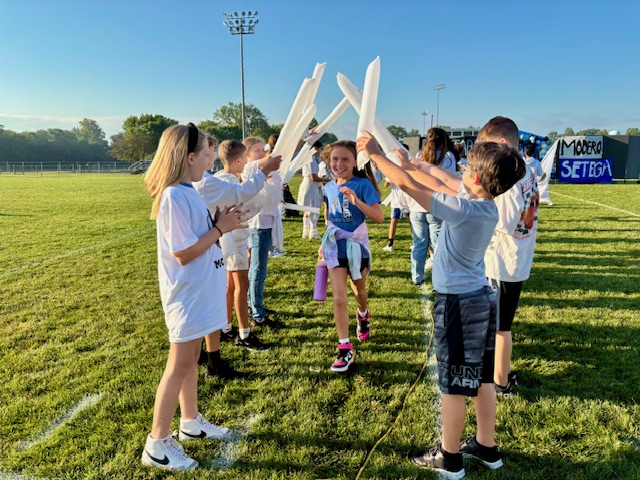
Having the 330 fifth graders mixed into teams with the 342 sixth-graders helps the younger students learn the FTMS culture and expectations while giving older students opportunities for leadership, Smith said.
“We teach the fifth-graders what we do in the house, and have team meetings and competitions,” explained sixth-grader Tate Conner.
Each day, students can earn points for the house through positive behavior, and each week houses have competitions and games, such as relay races, trivia games, dodgeball and scavenger hunts.
“Activities that require teamwork and allow different strengths to shine tend to be the most popular. They also really enjoy earning surprise points through acts of kindness or school spirit,” Pancoast said.
The excitement is palpable not just among the students, but for the teachers and staff as well, Smith said. The house system gives teachers a chance to connect with students outside their classroom and grade level, and collaborate with other staff members to plan house events.
“I think it helps them with classroom expectations and can also motivate students through healthy competition throughout the year,” Smith said.