





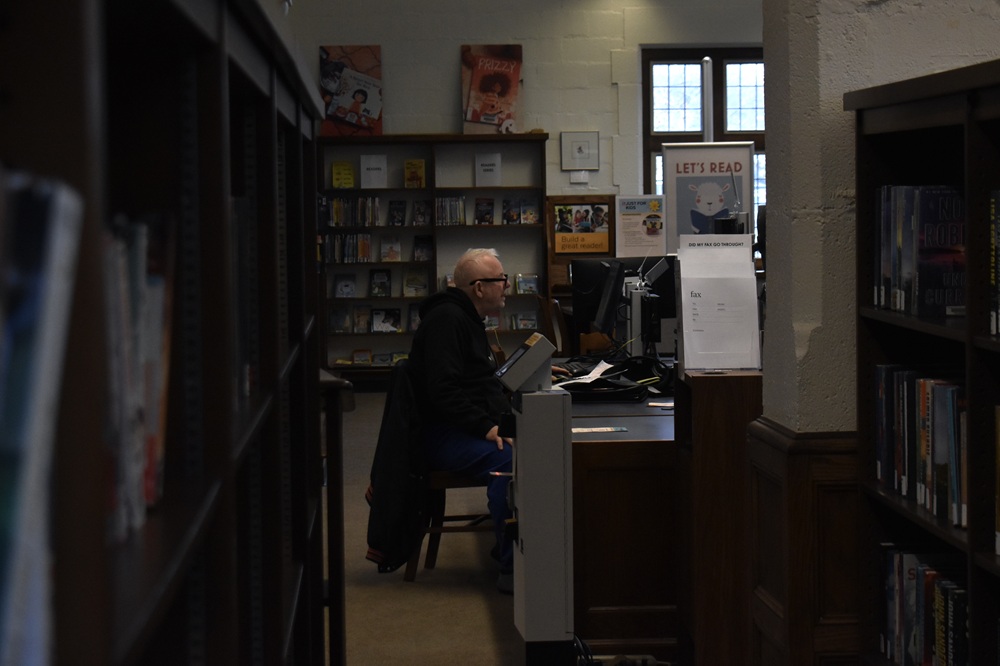
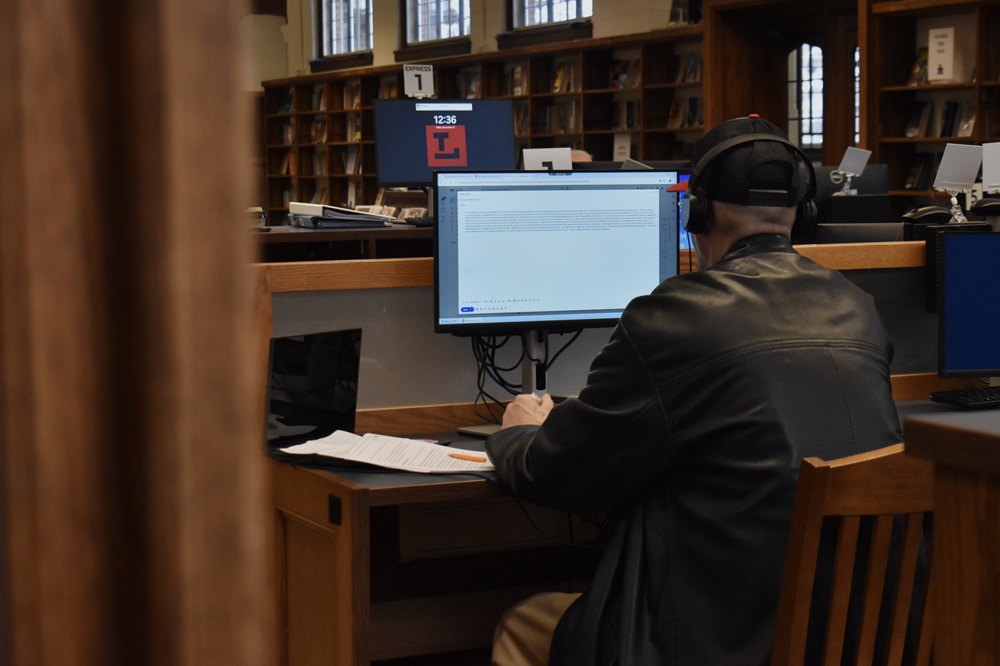
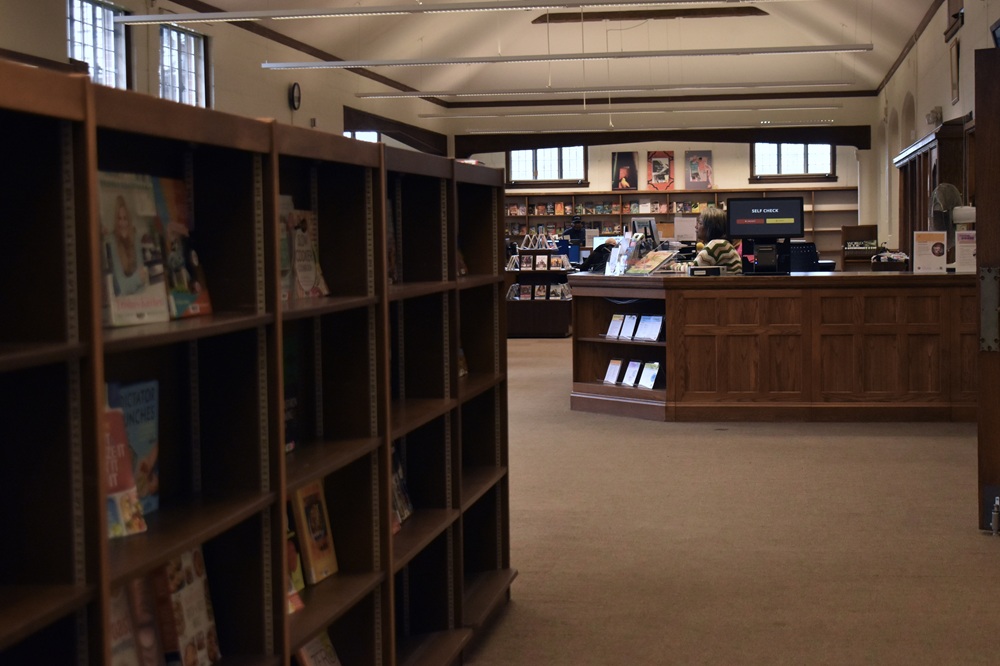
TOLEDO–The Toledo Heights Branch doesn’t quite have the hushed atmosphere one might expect at a library, especially one closing at the end of the year. Instead, it resonates with activity—keyboards clicking, phones connecting and greetings exchanged between staff and patrons the moment the front door opens. It’s an atmosphere the neighborhood will soon be without.
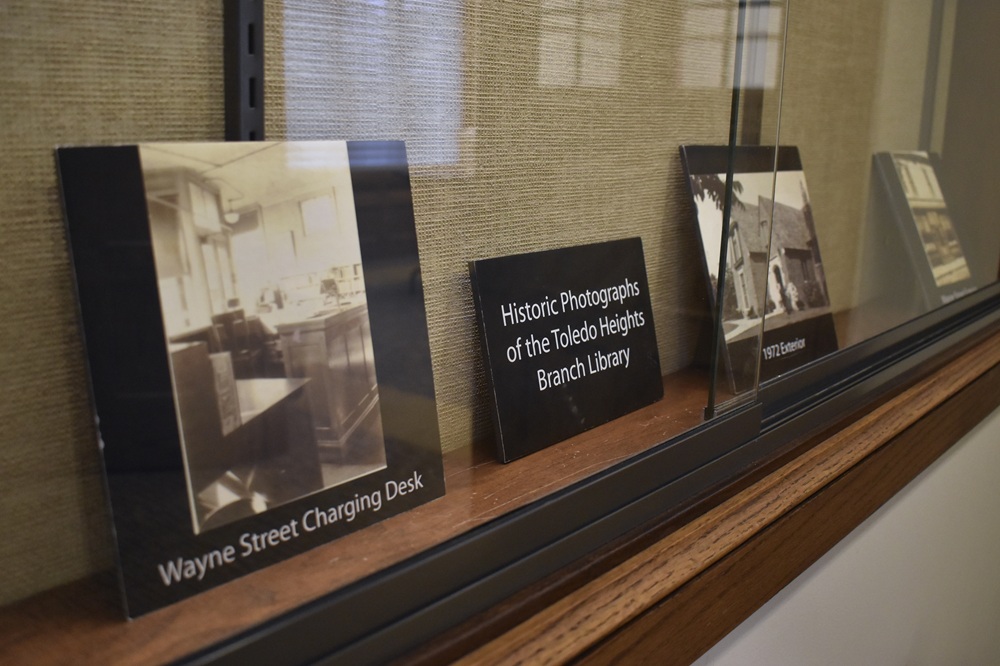
This community connection began nearly a century ago when the library first opened in rented quarters in 1926 and was solidified in 1935 when the current structure on Shasta Drive was built under the federal Public Works Administration (PWA). Now, that nearly 90-year history of service in a historic building is coming to an end as the Toledo Lucas County Public Library (TLCPL) has confirmed the branch will permanently close its doors on Dec. 30, 2025.
The decision, officially passed by the Board of Trustees, is driven by the immediate need to close a $2.8 million operational deficit and avoid an estimated $6 million in structural repairs necessary for the aging, PWA-era facility. But for lifelong residents, this closure represents a loss of a neighborhood institution.

What the library means to the community
For residents of the Toledo Heights neighborhood, the branch serves as a social and digital hub.
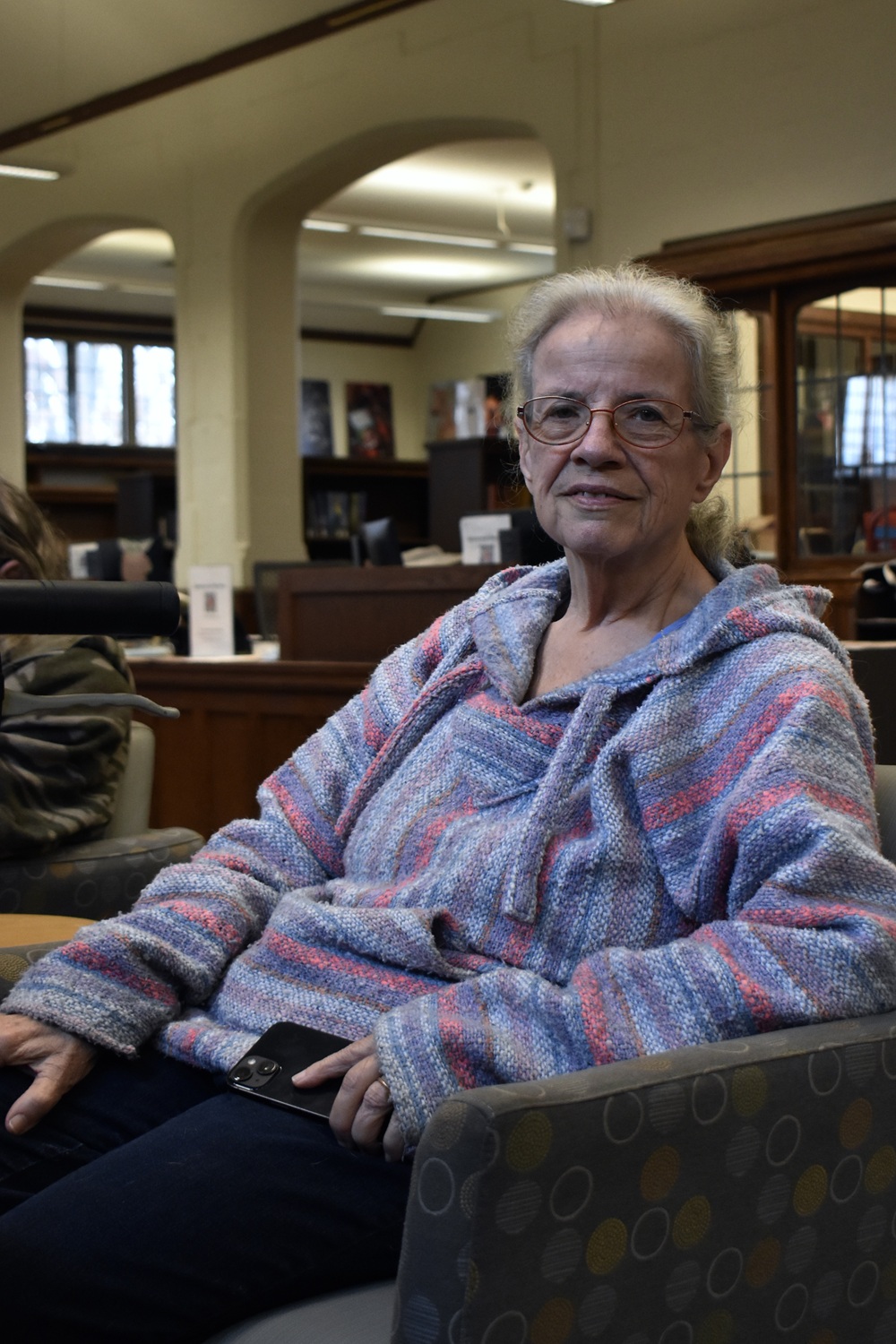
Judy Scott, a long-time patron who walks to the branch, is concerned about the coming change. “It means a lot to a lot of people in this area,” she said. “With it moving, it’s going to be farther away, and I have a bad hip, so, I mean, it doesn’t… losing this branch will be kind of lonely.”
Patrons like Scott rely on the free Wi-Fi and computers. “I talk to my friend down in Columbus, because I don’t have internet at home,” Scott said, describing her library use. This access allows patrons to complete essential tasks like job searching, applying for government services and accessing health information.
Beyond digital access, the branch regularly hosts Connecting Kids to Meals, a program providing hot, nutritious meals at no cost to children after school and throughout the year. The program often runs alongside activities like the Nintendo Gamers’ Guild, where young patrons use the branch’s Switches and iPads to play games like Super Smash Brothers and Mario Kart. The combination ensures children have access to meals, a safe space and digital resources after school.
The branch is also a center for adult literacy and community meetings, providing essential meeting space for local groups like book clubs.
Donald Mullen, a local who has used the branch since the 1960s, closed his library account on Friday, Nov. 21. “None of the stuff I went to in this town is here anymore. Most of my churches are gone. Most of my places I lived are disappearing, and now this building’s gonna disappear,” he said. “It’s like, why am I staying here?”
TLCPL’s strategy
Library administration maintains that the closure is necessary to protect the fiscal health of the system while expanding access for the wider community.
Communications strategist Stephanie Elton confirmed the TLCPL faces a $2.8 million operational deficit and must contend with a $1.6 million reduction in state funding. Director of Public Services Cathy Bartel cites accessibility issues of the 1935 building, which requires $6 million just to be brought up to modern standards.
“If you’ve gone to Toledo Heights and have tried to open those front doors, you know that’s not… accessible,” Bartel said. She noted the lack of an elevator to the basement meeting room, lengthy paths without handrails to the entrance and insufficient restrooms. Bartel said the new facility will address these issues and serve patrons currently unable to access the outdated structure.
The Library has stated that the commitment among the staff remains high. All of the staff members have been reassigned to other branches within the TLCPL system, a process managed according to contract agreements. Bartel indicated that staff mobility is not unusual, as most employees have worked at multiple locations before coming to the Toledo Heights branch, allowing them to remain dedicated to serving the public.
Bartel also stated the branch’s poor visibility and low traffic contribute to consistently low usage metrics, stating that the new, high-visibility facility is expected to attract more users.
The closure is the first phase of a new strategy to create a centralized “super branch” to serve South Toledo.

Services will be consolidated into the existing Heatherdowns branch, 3 miles from the Toledo Heights location, until the new facility opens. On Oct. 28, City Council approved the rezoning of a 15-acre parcel on Detroit Avenue near WGTE for the new building. The goal is to open the consolidated, fully accessible branch in 2028. The new branch will be located 1.5 miles from both the current Toledo Heights and Heatherdowns branches.
The gap between the Toledo Heights closure in December 2025 and the new branch opening in 2028 creates a service disruption. Bartel acknowledged the closure “will be a disruption” to patrons and said replicating specialized programs at an already busy branch presents a challenge.
Furthermore, the loss impacts food security. The Toledo Heights branch currently serves as a location for the Connecting Kids to Meals program. Following the closure, families will have to travel to the next closest location, such as the Heatherdowns Library or the South Toledo Library, for meal access.
For those without personal transportation, the lack of a local library during this three-year period presents challenges. Patrons like Scott, who already anticipates mobility difficulties, and families who depend on programs like Connecting Kids to Meals, will need to find alternative arrangements until the new building is completed.
As the Toledo Heights branch prepares to close on Dec. 30, the library continues its regular operations and programming, including this year’s final Winter Wonderland celebration. The TLCPL maintains the closure is a fiscally necessary step toward a modernized, accessible system, while residents prepare for the loss of their neighborhood branch and the three-year gap before the new facility opens in 2028.

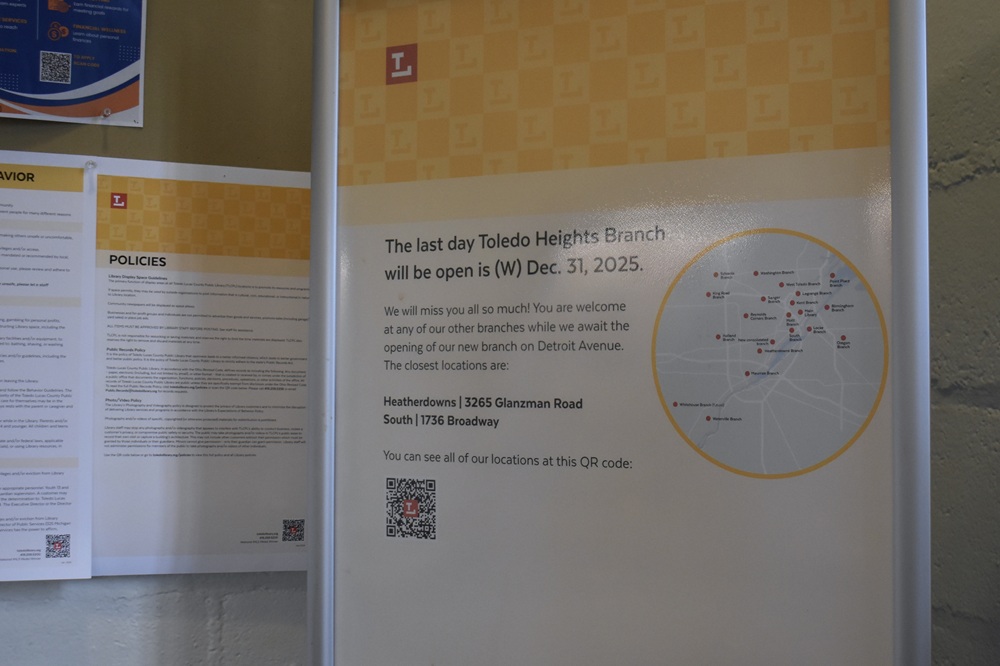






 has confirmed the Toledo Heights branch will permanently close its doors on Dec. 30, 2025.)