WHITEHOUSE – Just the facts – that’s what many community members were seeking as they prepared to listen to a panel of experts during the Nov. 20 “Data Centers In Our Backyard” forum.
“I’m going to keep an open mind and listen. It’s easy to come up with notions…when you haven’t read all the facts,” said Matt Reed as he sat in the Anthony Wayne High School auditorium awaiting the start of a panel discussion hosted by WGTE, Regional Growth Partnership and Lucas County Economic Development Corporation.

data centers. (AWFP photo by Karen Gerhardinger)
Matt and his wife, Meghan Reed, moved from South Toledo to Monclova Township in March, and a few months later heard about data centers being proposed in the area.
“It’s so hard to differentiate fact from opinion. I was hoping this would have more unbiased fact,” said Meghan, noting that she has no preconceived notion on data centers.
Dale Knepper has seen, during the 18 years he served as Waterville’s finance director, how emotional issues can prevent people from seeing the facts.
“When it comes to financial issues, sometimes you can lay the facts in front of people, but if they have their mind made up, there’s nothing you can do,” he said. “We have to look at everything. If a data center isn’t here, and moves to Fulton County, it’s still using the water and electrical sources, but we’re not going to get the benefits.”
“I heard some rumors, but I want to get clarification,” said Waterville Township resident Steve Eberly, who has property along Noward Road, noting that he was particularly interested in the impact of data centers on water and electricity – especially since he has a well.
“Right now, I’m not holding up a sign protesting, but I’m more than a little interested in what that could mean.”
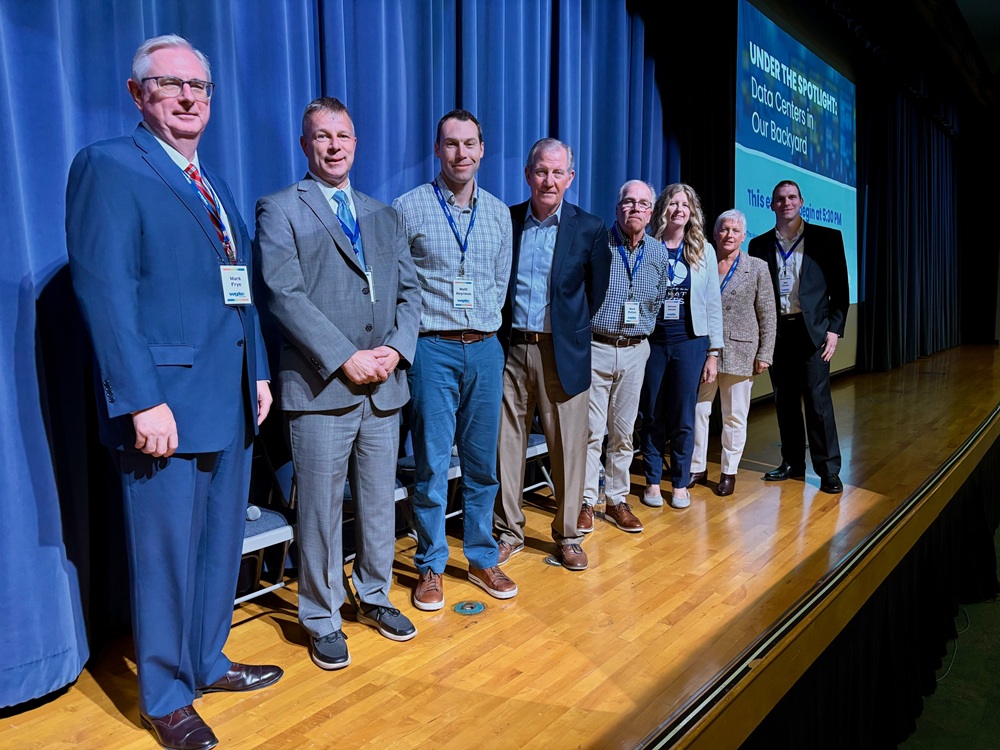
While opponents of data centers have hosted town halls and crammed local municipal meetings to voice their opinions, the Nov. 20 forum was the first of its kind to include representatives sharing multiple perspectives: Mark Frye, Palmer Energy; Gary Thompson, Regional Growth Partnership (RGP); Matt Heyrman, Lucas County Economic Development Corporation (LCEDC); Will Turner, a site selector for data centers; Helena Volzer, Alliance for the Great Lakes; Karen Winn, a Richfield Township property owner; and Middleton Township resident Mark Patton.
The forum was emceed by former WTOL11 anchor Jerry Anderson, a Bowling Green resident who often drives by the giant Meta data center development taking a square mile on S.R. 582 between S.R. 25 and I-75 in Middleton Township. The community wasn’t aware of the project until dirt was being moved, Anderson said.
“We didn’t have forums like this one,” Anderson said.
During the 90-minute meeting, Anderson asked questions about the impact data centers would have on the electrical grid and bills, water quality and sustainability, home values, farmland and the economy.
When it comes to water, Turner said the older model data centers used millions of gallons a day, but the centers in development will use just 20,000 to 30,000 gallons a day.
“When you look up data centers and water, you’re getting old technology – water guzzlers. There’s a tremendous advantage in closed loop systems. They’re more efficient, and quieter.”
At least two members of the audience remain concerned about water – especially upon hearing Volzer say that more studies are needed to see the long-term impact of data centers on the Great Lakes.
Christina Egan, a Monclova Township resident, said Taylor’s explanation of a closed loop water system didn’t assuage her concerns about the need to have enough clean water for future generations. Water is also on the mind of University of Toledo sophomore Kylie Woodward.
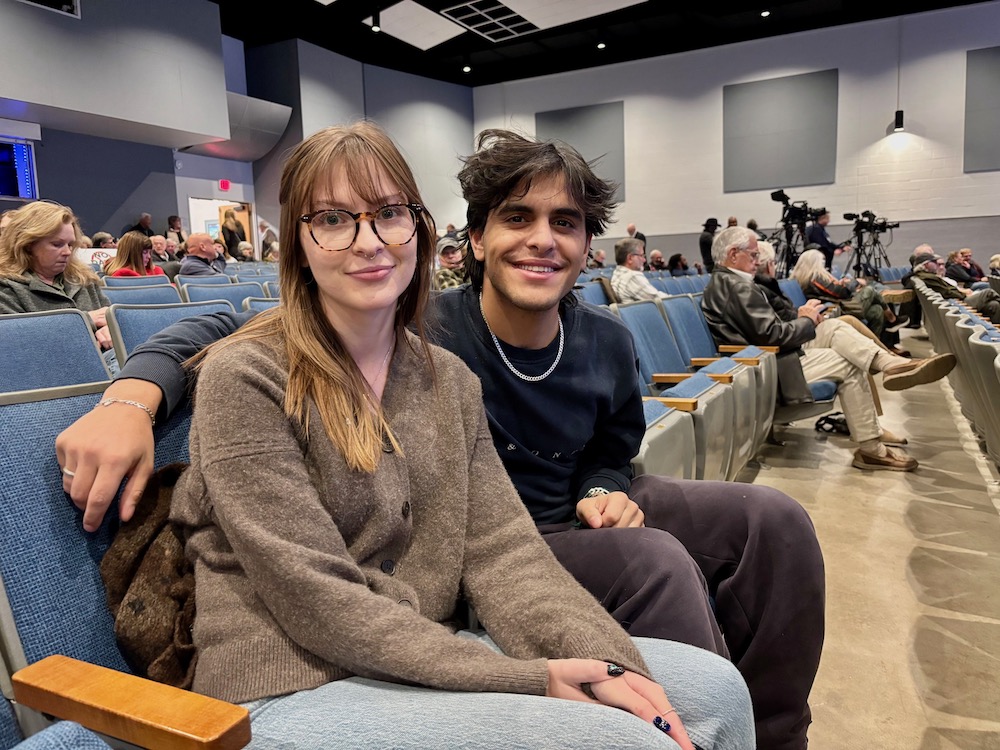
about the impact of data centers on the Great Lakes. (AWFP photo by Karen Gerhardinger)
“I’m against AI to begin with. It’s threatening the Great Lakes if we build a data center near it,” Woodward said. “Once it’s gone, it’s gone. It’s not an infinite source.”
Data centers need water for cooling the servers inside, but also to cool the turbines that generate power to run the data centers, Volzer said.
“Every Great Lakes state is adding data centers,” she said, noting that other high tech industries and agriculture are the biggest users of water. “Whether we have enough water to sustain them is a good question. Demand studies are a good way to look at the question. We need more research.”
Data centers use a lot of electricity, said Frye, explaining that a hyper-scale center could use up to 500 megawatts, or the amount needed to power 500,000 homes. Most of the existing data centers are connected to the grid, but the trend now is BYOG – bring your own generation. Before connecting to the grid, data center developers need to go through detailed load studies to determine if the project will adversely impact other users on the grid.
American Electric Power (AEP) in Columbus asked the Public Utilities Commission of Ohio (PUCO) to create a data center tariff to pay for transmission infrastructure, and Frye suspects that First Energy will do the same.
“This is part of the protections being built into the regulatory infrastructure,” Frye said.
Anderson cited a detailed Ohio Chamber of Commerce report on the economic impact of data centers in 2024: supporting 95,000 jobs and contributing $11.8 billion to Ohio’s GDP. The industry is projected to support over 132,000 jobs and contribute $20.2 billion to the Ohio economy by 2030.
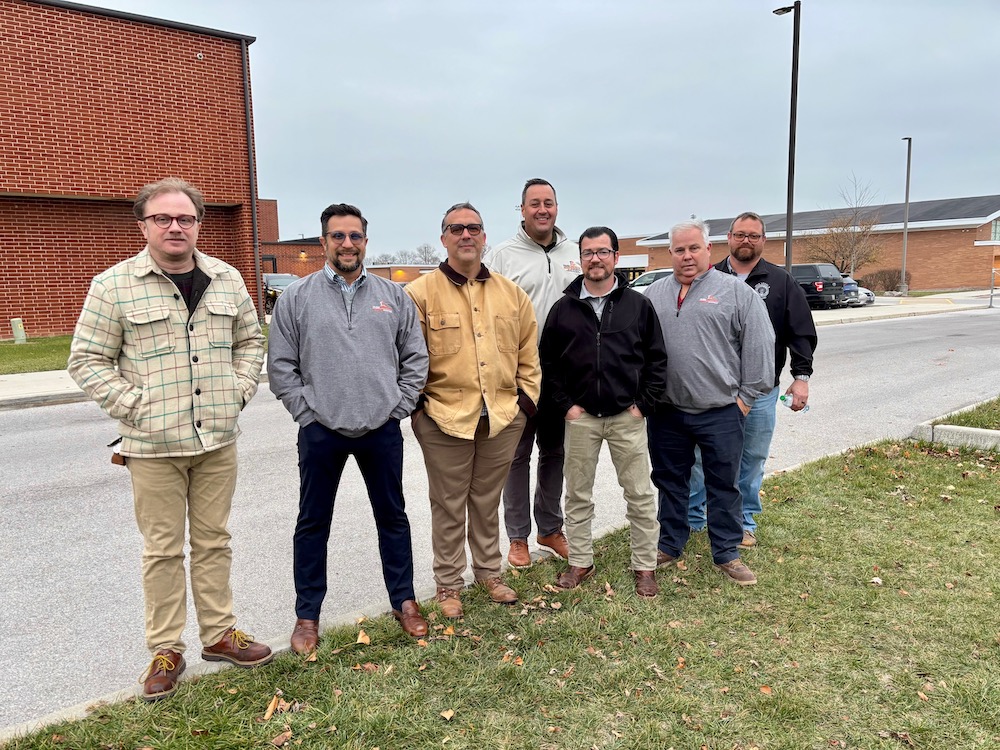
forum, where they sought confirmation that any large project would use union labor. (AWFP photo by Karen Gerhardinger)
Terry Short, a 2000 Anthony Wayne High School graduate and an electrician with the IBEW Local 8, said he’s dismayed when he reads people who dismiss those jobs as just temporary.
“We choose these careers. It’s what we do for a living. We’ve all made a career out of a temporary job,” Short said.
Short was joined by several members of the IBEW, including Tom Enright and Josh Abernathy, who sat in the front row to listen to the presentation. Finding projects for new apprentices and experienced electricians is a priority, they said. The Meta project, as an example, employees 300 to 400 electricians and 280 low voltage workers – those who install cabling, fire alarm and camera systems, for example.
“This will allow us to take in more apprentices and give them a great job, a great education and great benefits,” Enright said.
As the economy ebbs and flows, so do opportunities for apprentices, Abernathy said.
Is there a way to grow jobs in a state with a declining population – Anderson asked – one that’s heavily reliant on the automotive and agricultural sectors?
“It’s really up to the community,” Thompson said, noting that data centers will not locate where they’re not welcome. That comment brought jeers from the audience members holding ‘No Data Center’ signs.
“Society and the economy is changing. We are a manufacturing society. All manufacturers are putting AI into their process. They need computation power to do that,” Thompson continued. “Manufacturers need data centers or we will lose our manufacturing base.”
The county and RGP work with communities to look at how to balance quality of life with wealth creation, Heyrman said. That can be done with proper zoning and negotiating an agreement that ensures tax benefits come to the community.
For Winn, who is part of a six-generation farm family in Richfield Township, even a $200,000 an acre offer couldn’t pay for the value of rich farmland and a sense of family and community.
Richfield Township is now moving away from zoning to allow data centers and advanced manufacturing, but several local jurisdictions have adopted language to allow and regulate the projects. The final decision comes down to township trustees, boards and councils.
To watch the town hall, visit wgte.org/livestream.
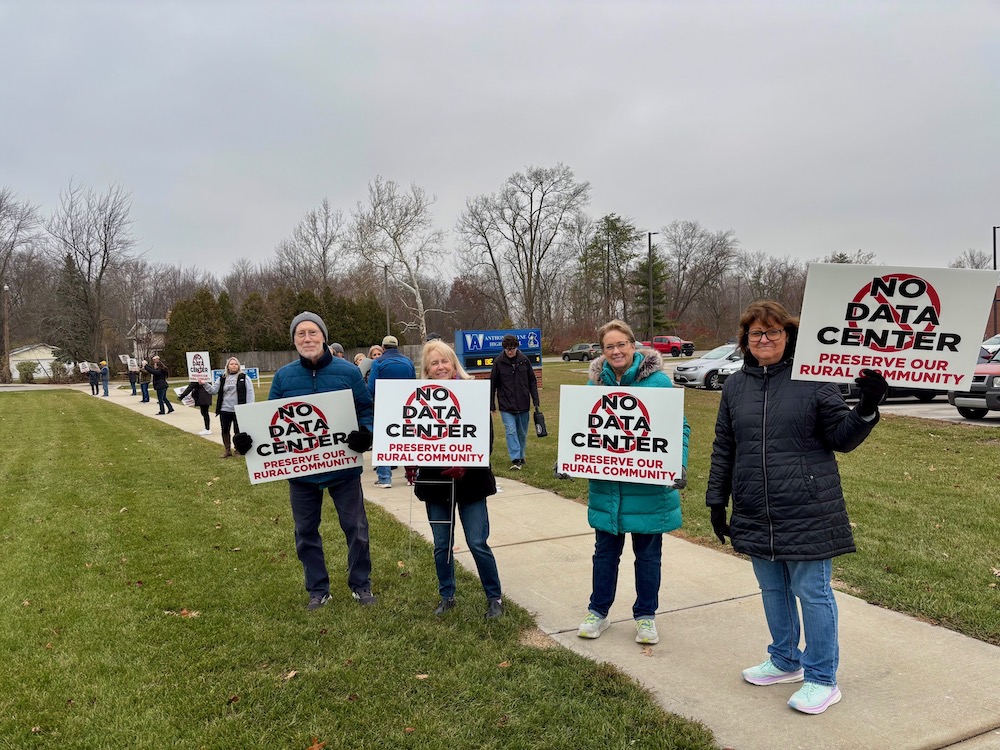
Debbie Rinker. (AWFP photo by Karen Gerhardinger)