LUCAS COUNTY – In an effort to follow up on concerns surrounding increased property taxes in Lucas County for maintaining the ditch systems associated with the Swan Creek watershed, commissioners held a second “Swan Creek” hearing on Tuesday afternoon.
Three individuals signed up for the 2 p.m. to 3 p.m. time slot, but only one individual, William Roper of Waterville, showed up to speak with the county engineer, Mike Pniewski.
Initial efforts on remedying needed maintenance for the ditches began in 2021, but just last week, commissioners certified the new taxes, with Lisa Sobecki and Pete Gerken voting to approve the raised taxes on Lucas County residents and Anita Lopez voting against it.
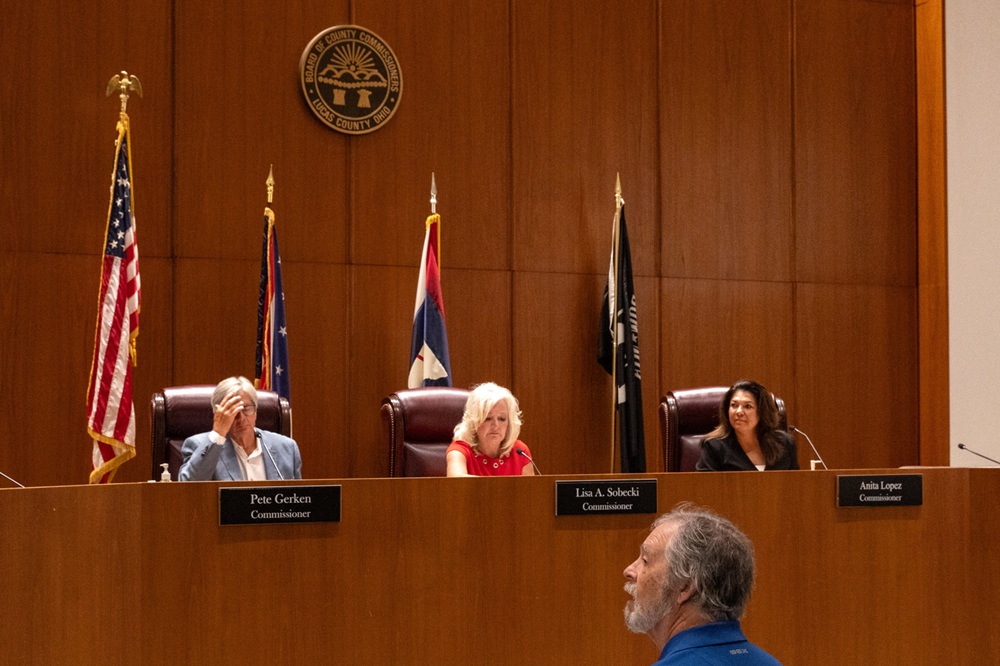
All three commissioners lamented the heightened tax burden on residents, and over the course of the two-hour hearing, 34 citizens weighed in with their opinions on the record.
Ultimately the report from Pniewski and the need for maintenance outweighed dissenters.
“Observations have indicated a reduction in the original drainage capacity of as much as 25 to 75 percent as a result of sedimentation in the watercourses,” Pniewski said in his report. “Reduced capacity in drainage watercourses has caused widespread flooding in areas of the watershed, especially during periods of heavy rainfall.”
Maintenance to be performed include the removal of log jams and dead/leaning trees, removal of excess sedimentation and the implementation of vegetated buffer strip.
Low attendance to this week’s hearing was anticipated as the vote had already gone through.
After two missed appointments and 45 minutes into the hearing, Sobecki said, “We will stand at recess until our three o’clock appointments.”
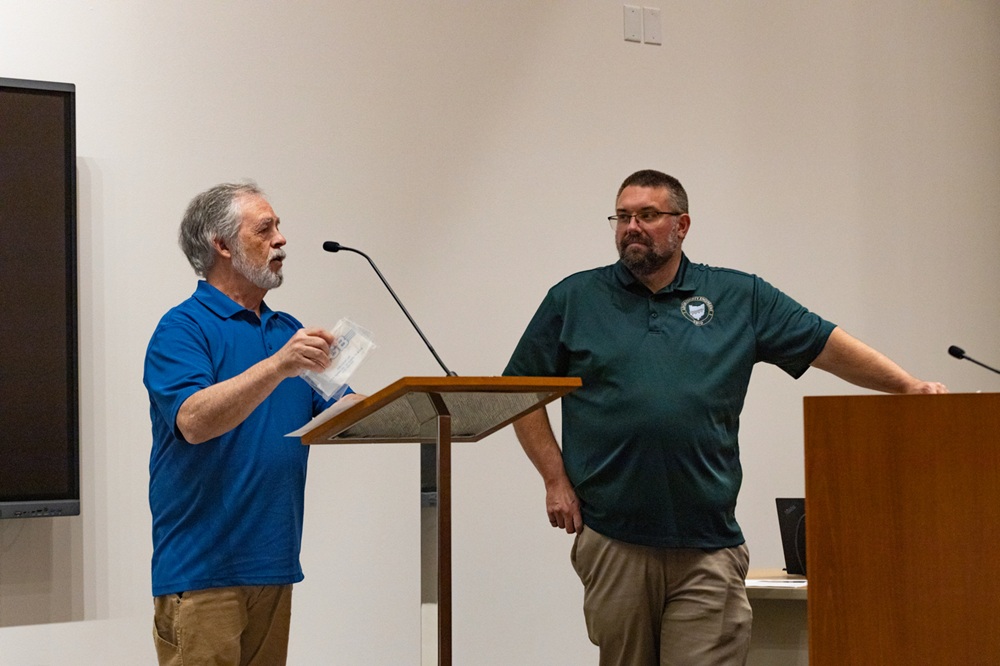
Roper, the lone attendee, came at 3 p.m. to dispute the ditch inspection grade on his property, asking for the county to bring his soil grade from a D rating up to a B rating.
It was a brief and quick consensus Pniewski approved, which brought the total tax estimation on Roper’s property taxes down.
“Our recommendation is to go with B, so there you go,” said Pniewski. “One of the factors to determine how assessments are partitioned is the type of soil type you have.”
U.S. Department of Agriculture soil maps are the basis for Pniewski’s data.
“They’re large scale [maps], so it’s hard, on a parcel-by-parcel basis, to know exactly what somebody has,” he said, adding that if “somebody feels that their soil is something different, then they have the opportunity to provide testimony and evidence to basically show what they have. And that’s what Mr. Roper did.”
The B-grade soil on Roper’s land was more of a sand as opposed to the D rating (a clay). Less absorptive soil, like clay, means the land contributes more to the runoff, and therefore more to the overall problem of flooding.
“You’re an example of how that exemption works,” Sobecki said, addressing Roper. “So thank you for doing that, and [I] think we have solved all the issues right here.”
Over the next 30 years, the total project cost for the Swan Creek ditch maintenance is estimated at $21,169,148.
This cost is “partitioned between the benefitting landowners by a series of calculations to approximate several factors to be considered under the Ohio Revised Code,” according to Pniewski’s report. These factors include parcel size, location, soil type and drainage ditch length.
Initially, Lucas and Fulton Counties were going to share the cost, but as of July 15, Lucas County residents alone will pick up the tab for the maintaining the ditch infrastructure necessary to limit flooding from Swan Creek.
Roper declined comment to the Toledo Free Press.
Pniewski ended his report and said, “It is the opinion of the engineer that the proposed project is feasible, that it is conductive to the public welfare, that there is a sufficient outlet and that the benefits exceed the cost.”
Find more information at Lucascountyengineer.org.