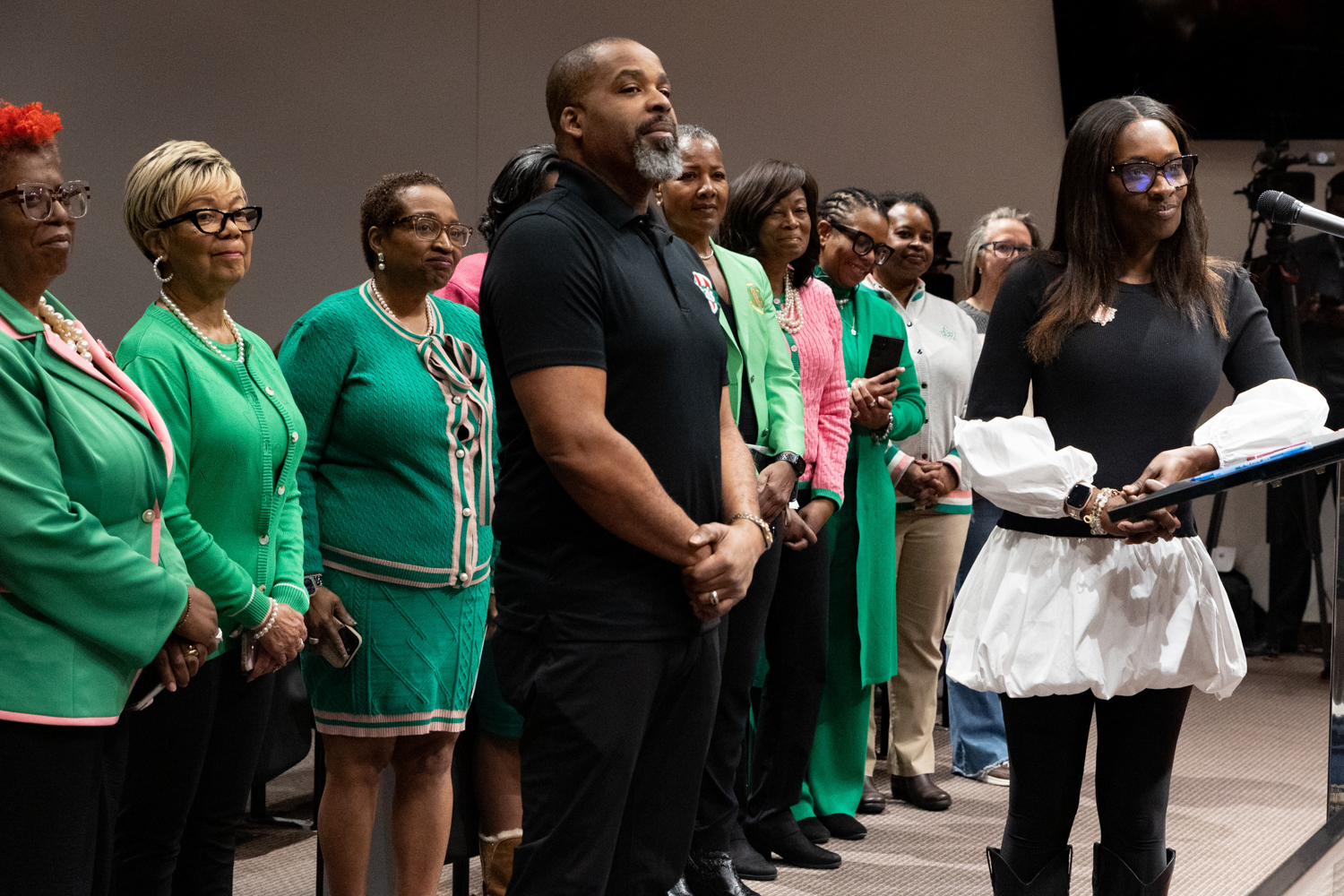
Toledo City Council met Tuesday, St. Patrick’s Day, with a few highly anticipated resolutions and ordinances concerning the role of the City of Toledo in federal immigration enforcement.
“We just really focused on making sure that we set some parameters and policies around the ways that the City of Toledo works with ICE, otherwise known as Immigration and Customs Enforcement,” said Nick Komives, Toledo City Council member At-Large.
“There is an agency, ICE, that has more money than God,” he said. “They do not need more resources from the City of Toledo. We believe that the limited resources that we have are already dedicated to important work, so we just made sure to outline exactly how we will spend our resources and what any type of alignment with ICE looks like.”
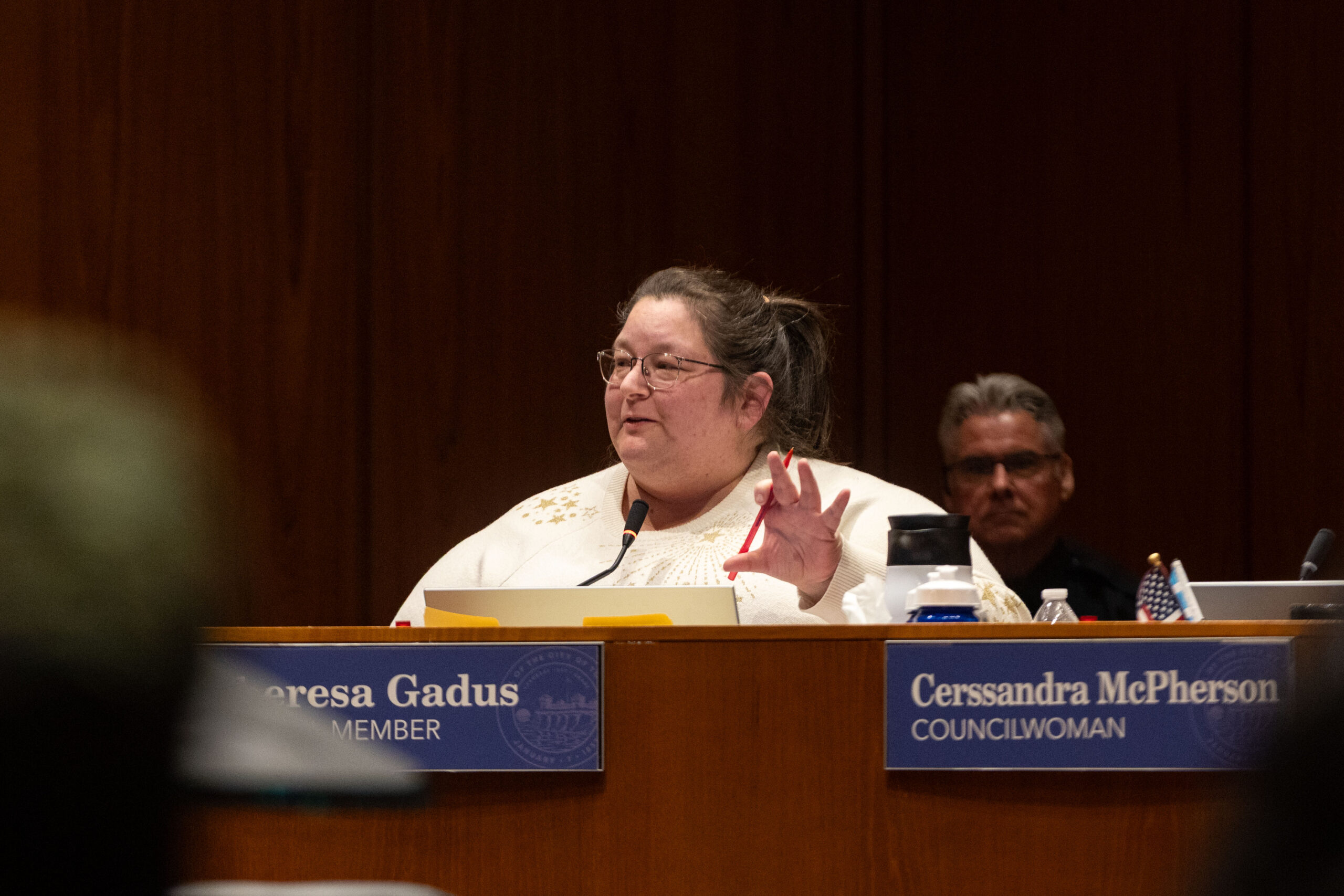
Resolutions 093-26,094-26 and Ordinance 095-26 passed unanimously without issue, while Theresa Gadus, Council Member for District 3, said Ordinance 096-26 was held for more community feedback. Ordinance 096 dealt with protections for schools and childcare centers from immigration enforcement actions.
Council Members Mac Driscoll (At-Large), Gadus, Brittany Jones (At-Large), Komives, Erin Kramer (At-Large) and Adam Martinez (District 2) sponsored the five legislative measures surrounding federal immigration enforcement referenced during the Committee of the Whole a week prior to this council meeting.
There was one proposed ordinance, dealing with biometric data security, which did not have a drafted appearance during the city council meeting.
Komives was available to give a brief summary of the two resolutions and one ordinance that passed.
“I’m just really proud of this community for stepping up. We did something that I think is quite brave,” he said about the three passed measures that day.
“We just don’t want to see them [ICE] coming here and violating people’s constitutional rights,” he said. “It is our job at the local level to do what we can to protect our residents, so we will continue to take a look at policies and procedures to make sure that we’re doing just that.”
A brief summary from Komives listed the some of the steps in place with the new resolutions and ordinance.
“We also requested that they properly identify themselves, no more of the hidden badges or wearing face coverings, things of that nature. We also made it very clear that our city employees are not going to be sharing the immigration status of individuals and residents who live here in Toledo,” he said.
“In no way is this us telling anything to ICE about what they can and cannot do. They have their legal parameters. We’d like them to especially stick to what those are. But more importantly, this legislation really touched on how city employees interact with ICE, and so we won’t be sharing immigration status, we won’t be providing them any data. We won’t be accompanying them on any raids or anything like that, unless they have the appropriate judicial warrant.”
Immigration legislation for Toledo
093 clarified the procedure and standard of detention facilities within the city.
Since detention facilities “require a unique set of public services,” the resolution recommended to the Plan Commission that a special use permit should be required for detention facilities. Special use permits are obtained by a vote by City Council, so a detention facility would not be authorized without a vote by city council.
The resolution requested a public hearing when this resolution is proposed to become an ordinance.
Resolution 094 formally asked the federal government to adhere to a certain set of standards when conducting immigration enforcement in Toledo.
Part of this standard was providing identification and transparency for themselves and their vehicles, including not wearing face coverings, except for medical reasons, while agents are conducting official immigration enforcement.
The resolution asked that Department of Homeland Security (DHS) agents deployed in Toledo and nationwide to have completed 22 weeks of training, the former standard before the onset of ICE surges across United States cities.
And finally, the resolution asked that DHS agents adhere to local, state, federal and constitutional law, maintain a civility when interacting with residents, refrain from lethal force and urged federal law enforcement to comply with the city’s ordinances for the safety and security of residents.
At the end of February 2026 DHS put out a statement clarifying the changes in their training practices.
“New ICE recruits receive 56 days of training and an average of 28 days of on-the-job training. No training requirements have been removed. Training increased from five days a week, eight hours a day to six days a week, twelve hours per day. It is the same hours of training officers have always received,” the statement said.
Regardless, the behavior of federal agents under the second Trump administration has been widely criticized for their unprofessionalism, including aggressive escalations against immigrants and United States citizens alike. Most prominent of the criticisms has been agents’ use of lethal force against Minneapolis, Minn. residents Renee Good and Alex Pretti.
Ordinance 095 lays out rules surrounding immigration enforcement and the City of Toledo’s personnel and resources.
It prohibits city employees and officials from restricting city services based on immigration status, except where required by law or court order.
It stops the city from using its resources to investigate individuals for suspected immigration status, except if required to by court order, a warrant, a criminal violation or during an arrest.
It stops city employees from holding secondary employment with Immigration and Customs Enforcement.
It requires Toledo City Council approval before local law enforcement assists in the enforcement of federal immigration law as defined by 287(g) Agreement, and prohibits city funds to be used in coordination with the 287(g) Agreement, federal immigration enforcement.
Unless given authority by the 287 (g) Agreement, and transitively city council, local law enforcement cannot “stop, arrest, or detain a person” based solely on an immigration detainer request, an administrative warrant for civil immigration enforcement or suspicion of unlawful presence/immigration violation.
The ordinance prohibits the use of city-controlled/city-owned areas like parking lots and garages for use as staging areas or processing locations for immigration enforcement.
If city employees are aware of city property used for immigration enforcement they are required to report the unauthorized use.
The mayor will put up signage to inform federal law enforcement of the area’s prohibited use.
Lastly, the ordinance restricts non-public and semi-restricted areas of city property from immigration enforcement, except in cases with a judicial warrant.
And the ordinance says that the mayor, or someone designated by the mayor, is the only one with the authority to consent to an immigration search or enforcement without a judicial warrant.