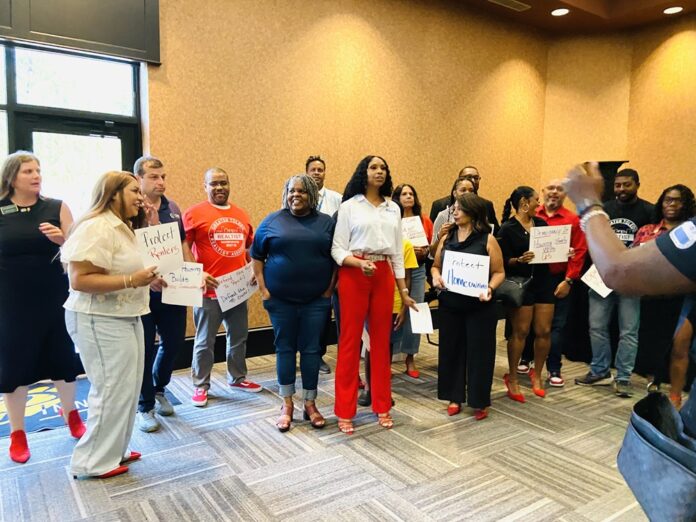
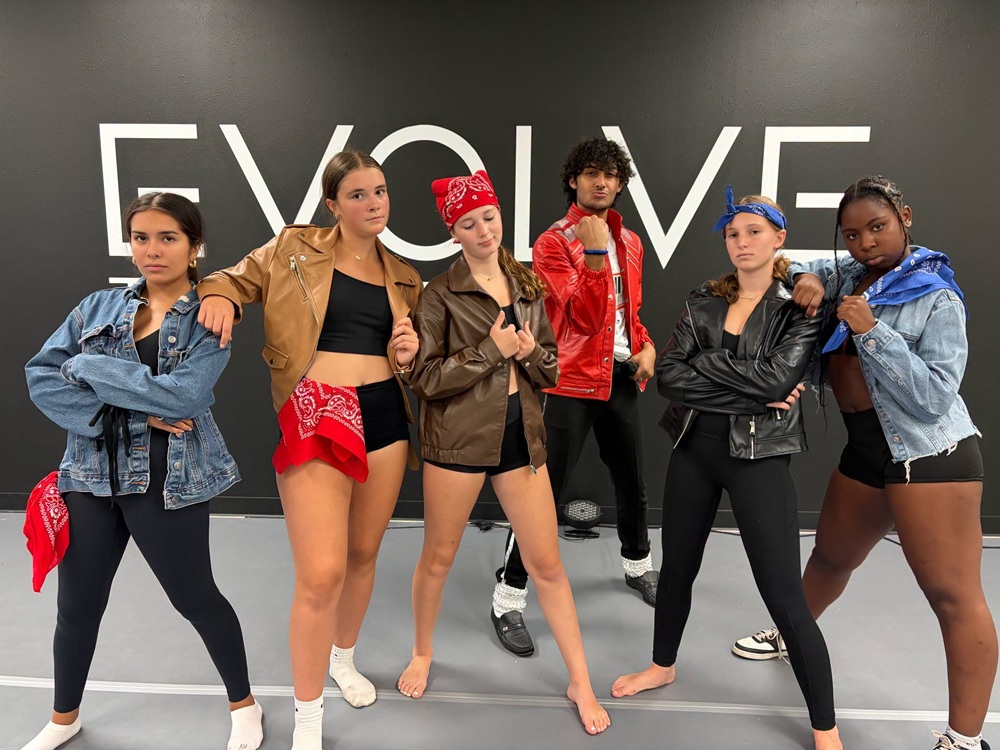
Greater Toledo Realtist Association flash mob. (Courtesy photo)
On behalf of The Fair Housing Center (TFHC), we want to thank the Toledo-area community for making There’s No Place Like Home on Aug. 18 a magical celebration of fair housing and the community we all call home.
The Pinnacle was filled with red shoes, music, and an outpouring of support for our mission. The Greater Toledo Realtist Association (GTRA) brought energy and enthusiasm with a surprise flash mob, while Howard Hanna of Northwest Ohio made an already generous moment even more meaningful by donating its 50/50 raffle winnings back to TFHC. With generous sponsorships from GTRA, Key Realty, and the Lucas County Commissioners, the event helped us raise $3,000 in ticket sales and donations.
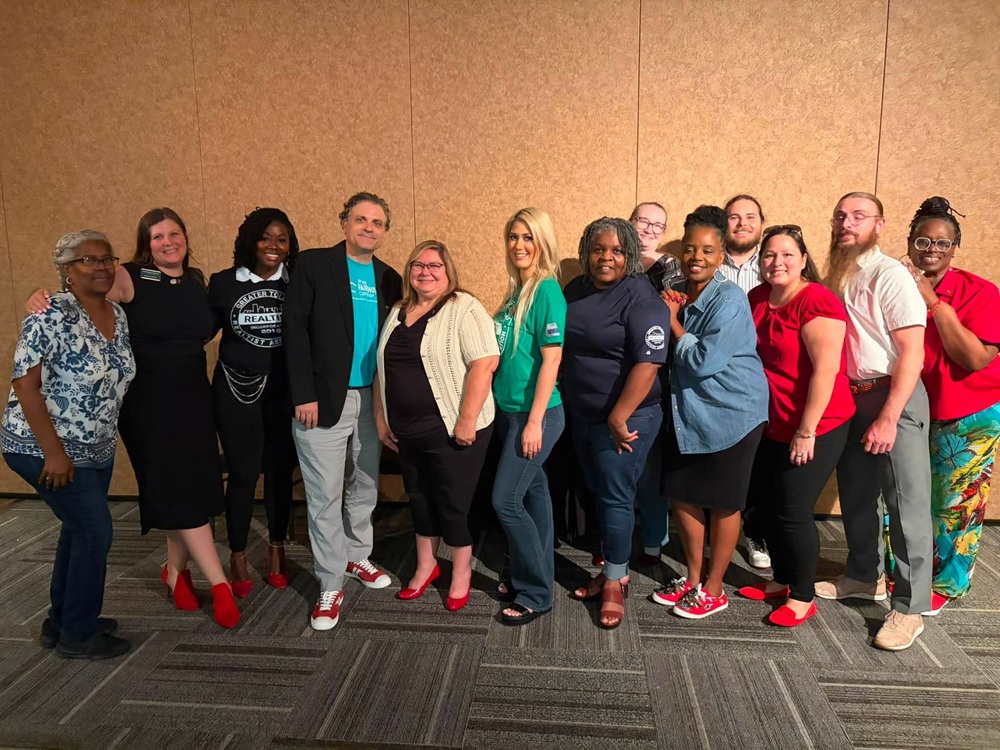
TFHC staff with supporters from GTRA and Howard Hanna. (Courtesy photo)
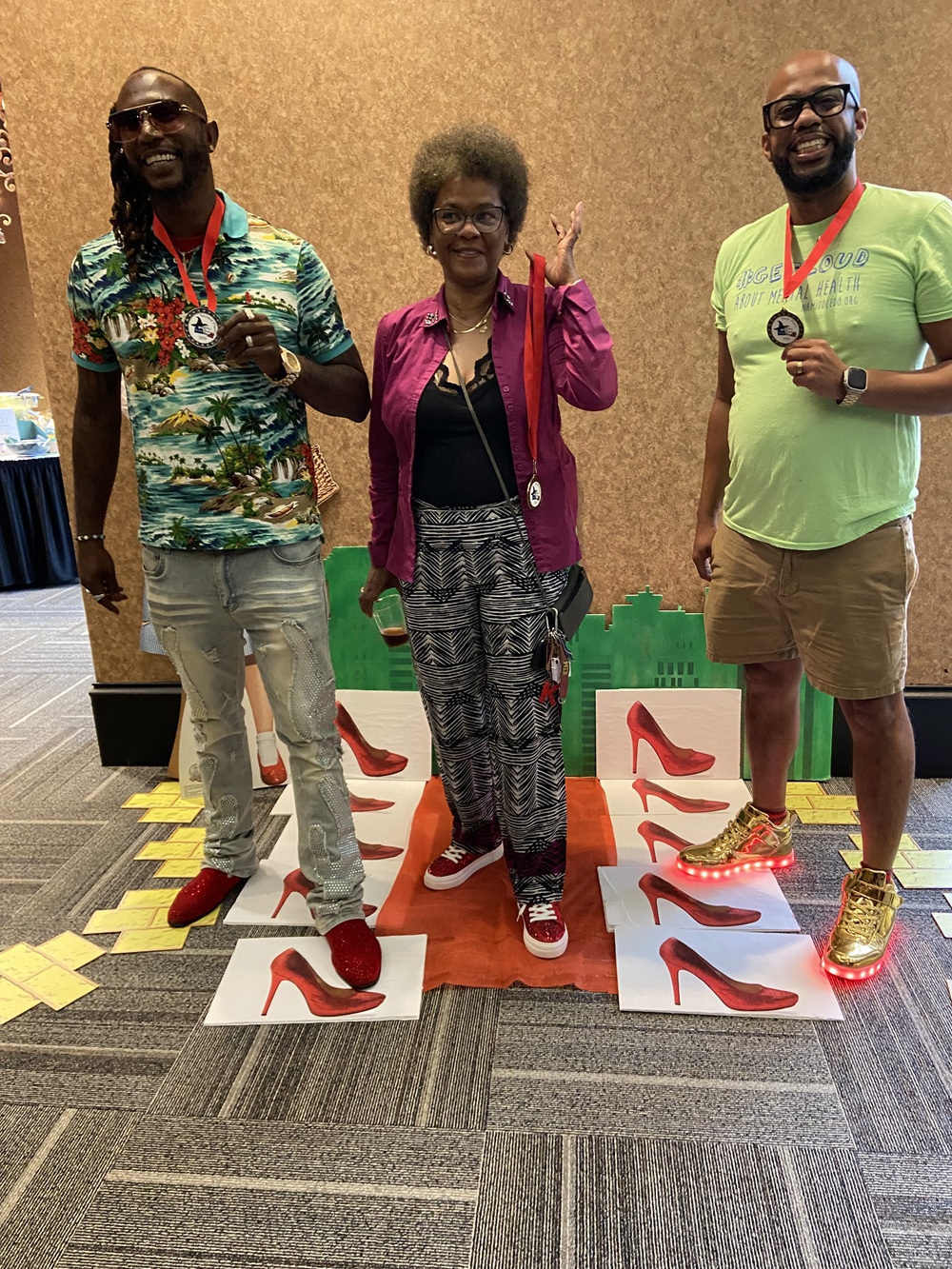
Guests also enjoyed live music from Toledo’s own Arctic Clam, original Wizard of Oz-themed artwork by local artist Brian Lowe, and the extremely popular Red Shoe Contest. Winners Gabriel Garcia, Chris Keller, and Kimberly Dixon won first, second, and third place, respectively by the crowd’s applause.
(Left to right) Chris Keller, Kimberly Dixon, and Gabriel Garcia, winners of The Red Shoe Contest. (Courtesy photo)
Events like There’s No Place Like Home are more than just having a good time; they bring people together around the belief that everyone deserves a fair opportunity to find a safe, stable place to call home. As TFHC Development Coordinator Audrey Johnson puts it: “No Place Like Home is an accessible, welcoming event that brings our mission to life. When I looked around the room and saw people of all backgrounds, Black, brown and white, young and old, coming together, I knew we were getting it right.”
Audrey Johnson of TFHC with Arctic Clam. (Courtesy photo)
While it had been a few years since we held There’s No Place Like Home, we look forward to hosting this community gathering for many years to come. We are grateful to everyone who attended, participated, donated and helped make this year’s event such a success. None of this would have been possible without the generosity of the Toledo community.
There truly is no place like home, and we are proud to call northwest Ohio ours.
-Emily Desmond Toledo Fair Housing Center, Director of Communications
Chorus members rehearse songs from Guiseppe Verdi’s “Aida” at the Toledo Opera offices on Jefferson Avenue downtown. (Photo courtesy Toledo Opera)
TOLEDO – From pop-up performances with resident artists to fun-filled gatherings at local pubs, Toledo Opera is planning several community events to enhance its 2026-2027 season of fully staged productions of Aida and H.M.S. Pinafore.
“With free performances around the region with Opera ’Round Town to chorus rehearsals for Aida, exciting things are happening both on and off the stage,” said Rachael Cammarn, director of marketing and communication for Toledo Opera.
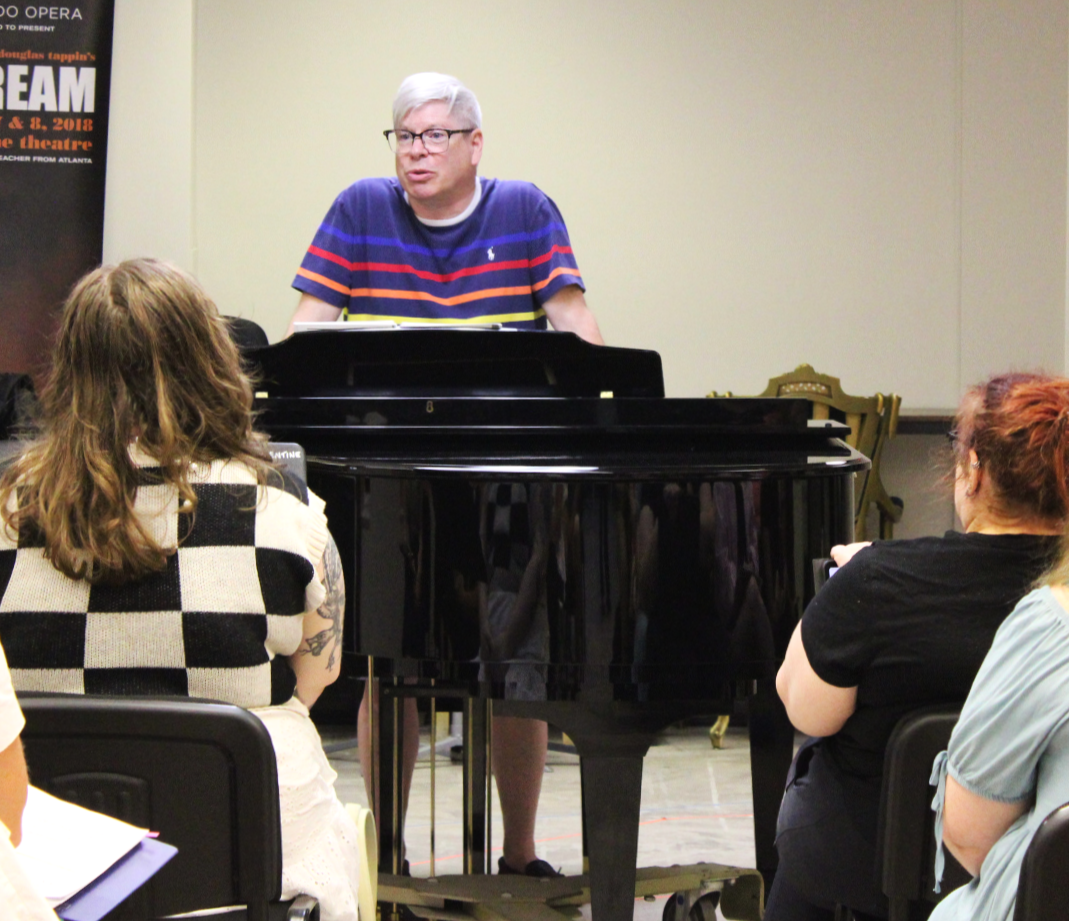
Kevin Bylsma, artistic director for Toledo Opera, stands at the piano as he leads Aida chorus members in rehearsal. (Photo courtesy of Toledo Opera)
The epic tale of love, loyalty and impossible choices in Giuseppe Verdi’s Aida will turn the Valentine Theatre in Toledo into an Egyptian royal court this fall, with performances Oct. 16 and 18. Audiences will set sail with Gilbert & Sullivan’s delightful H.M.S. Pinafore in the same historic downtown venue on Feb. 19 and 21.
At the heart of Aida is an Ethiopian princess, captured and enslaved in Egypt, who finds herself caught between two worlds: the man she loves and the homeland and people to whom she belongs.
Love takes a lighter turn in H.M.S. Pinafore, with mischievous sailors, scheming relatives, and bumbling ship passengers mixing up identities and stretching the boundaries of social classes.
The northwest Ohio regional opera company operates as a nonprofit and offers several opportunities for the community to learn more about the story and music of the season’s operas, with free pre-performance lectures at the Valentine and extensive synopses, audience guides, and audio clips on its website at toledoopera.org.
Companion programming throughout the year includes prelude dinners and special events such as Aida: Get into the Spirit, a casual event with signature cocktails and cast performances from 5:30-6:30 p.m. on Oct. 1 at Bellwether at Toledo Spirits Co., 1301 N. Summit St. Admission is free with drinks and food available for purchase.
Set throughout the distinctive spaces of TolHouse, the event Aida: Homelands will feature traditional Azmari music, an Ethiopian buffet from Taste of Ethiopia in Detroit, and a presentation by musicologist Dr. Ryan Ebright exploring Ethiopia’s role in the opera and some of the historical and cultural context surrounding Verdi’s iconic work. Tickets are $75 for the event starting at 6 p.m. at the club (1447 N. Summit St.) and must be purchased in advance.
The Toledo Opera Guild, a volunteer group dedicated to spreading awareness of the artform and supporting Toledo Opera, is planning an Aida luncheon Oct. 1 in the Malawi Event Center at Toledo Zoo. Attendees get to meet principal performers and production leaders from the opera as well as opera staff, and they will be serenaded with a special selection from Aida.
The Guild also plans special events throughout the season, including Tip the Opera meals at local restaurants, with the next one slated as a Halloween Booooozy Brunch on Oct. 31. Guild membership is open to the public with three different levels and can be registered on the opera website, which also has details of other Guild events.
Toledo Opera resident artists are the backbone of the company’s melodic and harmonic offerings the whole year, with Opera ’Round Town outdoor performances and Opera Is a Story and Opera on Wheels programs brought to area schools.
Sponsored by iHeart Media Inc. and presented in partnership with Metroparks Toledo, Opera ’Round Town features Jenna Grissom (soprano), Caroline Friend (mezzo soprano), Jeremy Do (tenor), Timothy Krueger (baritone), and Charles Lingus (pianist), who were selected from an international pool of more than 150 applicants for a one-year residency in Toledo. Together, they will perform iconic vocal selections from the classical repertoire, along with musical theater and other American standards.
The first of seven scheduled Opera ’Round Town performances will be held at 6 p.m. on Sept. 9 at The Manor House at Wildwood Metropark, 5100 W. Central Ave.
Student Night at the Opera invites middle and high school students to come to the final dress rehearsal of the main stage productions, at 7 p.m., Oct. 14 for Aida and at 7 p.m., Feb. 17 for H.M.S. Pinafore at the Valentine Theatre. Tickets are $10 per student and teacher. As in the public performances, English captions will be projected for both operas. (Aida is sung in Italian, while H.M.S. Pinafore is sung in English.)
An all-access ticket to the Friday, Oct. 16 performance of Aida will include an Operatizer, a pre-performance gathering starting at 5:30 p.m. at the Toledo Club, and Afterglow, the opening night cast party following the performance. Hosted by the Toledo Opera Audience Development Committee, transportation between the club and theater will be provided. Tickets are $100 per person.
Curtain rises at 7:30 p.m. for the Friday night performances and at 2 p.m. on Sundays for both Aida and H.M.S. Pinafore.
Single-seat opera performance tickets range from $59-$149 while season subscriptions from $99-$349 offer bundled discounts and all-inclusive perks. Information and tickets for opera performances, community events, and volunteer and donor opportunities can be found online at toledoopera.org or by calling the Toledo Opera office at 419-255-SING (7464).
Rebecca Conklin Kleiboemer serves as president of the Toledo Opera Guild and is a trustee of the Toledo Free Press Board of Directors.
Below you’ll find the latest news from the Anthony Wayne area, compiled from Anthony Wayne Free Press coverage, along with press releases we receive from community members:
The Roche de Boeuf Bridge is undergoing selective demolition, with Kokosing operators carefully removing dirt from on top of the arches of the 118-year-old concrete structure. The goal is to remove the dirt and take down the falling spandrel walls in order to save the arches and piers as a base for a future pedestrian and bike bridge, Save the Bridge Association’s Rex Childers said at an Aug. 24 Waterville City Council meeting. Read the latest here.
When Waterville Township trustees learned during their July meeting that Police Chief Kevin Smith plans to retire effective Nov. 1, they decided in executive session to begin a search for a new chief.
But during the trustees’ Aug. 26 meeting, several officers urged them to instead consider promoting Lt. Marty Przbysz (pronounced shibish) to the position. Read more of the story by Karen Gerhardinger here.
Anthony Wayne Alumni Association welcomed five new Hall of Fame inductees following an Aug. 22 luncheon in which four graduates and one retired teacher shared how the lessons they learned as Generals have stayed with them throughout their lives. Read more here.
During an Aug. 20 Providence Township meeting, the trustees heard solicitor David Chamberlain report that the county will not write zoning resolution changes to regulate data centers, but will provide input on any proposed language submitted. Trustees agreed that the best option would be to look at what neighboring communities are using in order to create their own. Read more here.
Adventure Spirits Distilling Announces Leadership Transition – On Aug. 1, the company announced this month that Co-Founder and Co-Owner Barry Beale transitioned out of his ownership and operational roles with the company.
While Beale is exiting his ownership and operational role, his legacy will live on through Gin Barry Gin, which will continue to be proudly produced unchanged and remain a flagship spirit in the Adventure Spirits portfolio. Co-founder Joe Carter will continue his leadership of distillery operations.
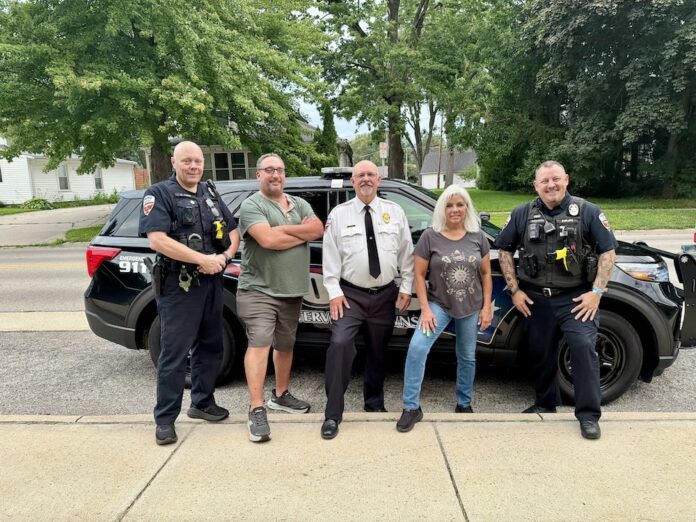
Waterville Township Police Chief Kevin Smith (center) plans to retire Nov. 1. Officers (from left) David Terry, Jim Schlievert, Diana Trevino and Gregory Westrick are urging township trustees to promote Lt. Marty Przbysz as the next chief, rather than doing a full search. (AWFP photo by Karen Gerhardinger)
WATERVILLE TOWNSHIP – When Waterville Township trustees learned during their July meeting that Police Chief Kevin Smith plans to retire effective Nov. 1, they decided in executive session to begin a search for a new chief.
But during the trustees’ Aug. 26 meeting, several officers urged them to instead consider promoting Lt. Marty Przbysz (pronounced shibish) to the position.
“I’m here to throw my lot behind Marty as the new chief. He’s dedicated more than half his life to law enforcement and public safety. He knows the policies and procedures. He could seamlessly take over Kevin’s spot,” said Diana Trevino, a retired Toledo Police detective who Przbysz recruited to join the township. “I think it would be a better transition. He doesn’t need to be trained. And he’s very dedicated and committed to the safety of the officers and the safety of the public.”
Officers Jim Schlievert, David Terry, James Waltimire and Gregory Westrick also shared their appreciation for Smith and Przbysz.
“I want to express my gratitude for Kevin’s leadership and commitment to the department and to the residents we serve – that’s a big thing he pushes on the officers, that it’s about the residents and how we treat them,” Terry said. “Lt. Marty stands behind the officers. Anytime we have a situation arise, it doesn’t matter what time of day or night, he calls us back. We are never outside of the loop.”
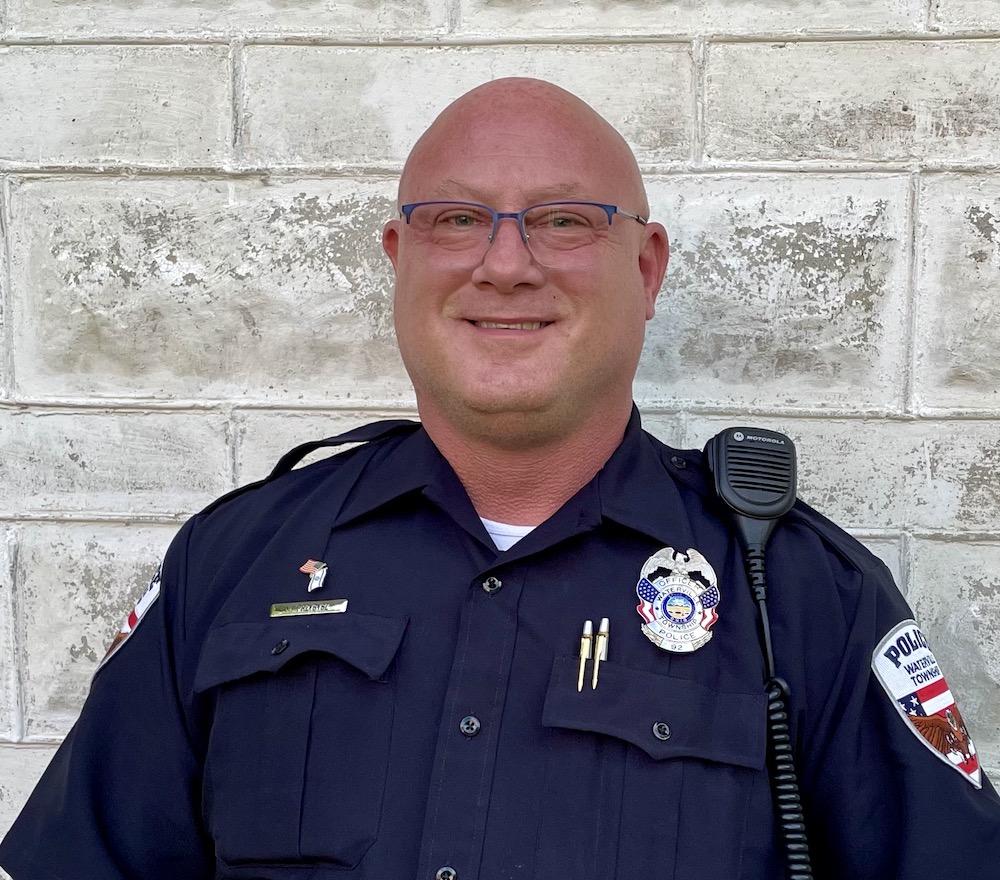
Waterville Township Lt. Marty Przbysz has been with the department since August 2023. (AWFP photo by Karen Gerhardinger)
Waltimire noted that Przbysz knows the department and the officers well, along with the policies and procedures.
“I think if you go outside the department, that causes chaos, because you don’t know who you are bringing in, if they are going to match together, and if they are going to be a team leader,” Waltimire said. “Marty’s in place, he knows what’s going on, and he knows how to do his job.”
The officers pointed out that the department had a high turnover rate before Smith arrived, and said Przbysz has recruited more experienced officers who arrive with specialized training, including grant writing, accident reconstruction, detective work and crisis intervention. Having well-trained, experienced officers also means the township is less likely to be involved in litigation, Schlievert said.
“I am asking you to consider that a good candidate is already in place, so no search is necessary – no time, no money, no effort, and that candidate already works for you,” Schlievert said.
After hearing the officers, Trustee Julie Theroux said she would like to revisit the conversation about doing a search.
“It’s my opinion that 100 percent of the officers are supportive. That says we have the right person. We don’t have to do a search,” Theroux said. “I’m all in favor of not going through that: the interview process, the time, the money, the posting. We could have someone in place who could take that position seamlessly.”
While Trustees Kyle Hertzfeld and Toby Miller agreed, they said they would first like to meet and speak with Przbysz in the next few weeks.
The trustees then approved a motion recognizing Smith for his service and to wish him well. Smith was hired as chief in August 2023 after 27 years as a sergeant with Toledo Police Department (TPD). Przbysz was hired a few weeks after Smith, and worked for TPD for 28 years.
During the meeting, the board also:
-Discussed two upcoming Zoning Commission meetings: on Monday, Aug. 31 at 7 p.m. to hear about proposed changes to the zoning language that would allow electronic billboards along U.S. 24; and on Monday, Sept. 14 at 7 p.m. to review proposed changes to language governing data centers and other campus-style developments. Both will be held at Waterville First Presbyterian Church, 611 Farnsworth Rd.
-Agreed to Fiscal Officer Jeanne Taylor‘s request to hire Eric Walker, of Quality Computer Services, at a rate of $75 an hour for up to 20 hours, for ongoing maintenance and IT support services.
-Learned that the police department responded to 88 calls for service last month, including assisting Waterville, Whitehouse and the Lucas County Sheriff’s Office, plus making 50 house checks at three locations and 837 business checks at 11 locations.
-Discussed how to handle residents’ concerns about lighting originating from Dutch Road Storage. Miller suggested that Fischer talk to the owners about finding a way to mitigate the issue before spending township money to hire someone to measure several aspects of lighting listed in the zoning resolution.
-Discussed issues with Spectrum installers cutting into Noward Road and leaving residents’ yards with holes, ruts and rocks after laying new fiberoptic cable. The Lucas County Engineer issued a stop work order, but the installers were out late at night trying to fix the issue – but made it worse. The company has a month to return all of the properties to the state it was prior to their work.
-Agreed that trail cameras and “no dumping” signs need to be posted on Moosman, Kay and Fischer drives – all dead-end cul-de-sacs where dumping has been an issue recently.
-Listened to Monclova Township resident Lyn Cox ask questions about the changes to the M-3 zoning resolution proposed for regulating data centers and other large developments. She also asked to see a copy of those proposed changes prior to the meeting.
-Approved, in public hearing before the meeting, lighting districts for Village on the Green plats 1, 2 and 3 and Coventry Glen plats 5 and 6. The cost for street lights is put on the property taxes for each parcel.
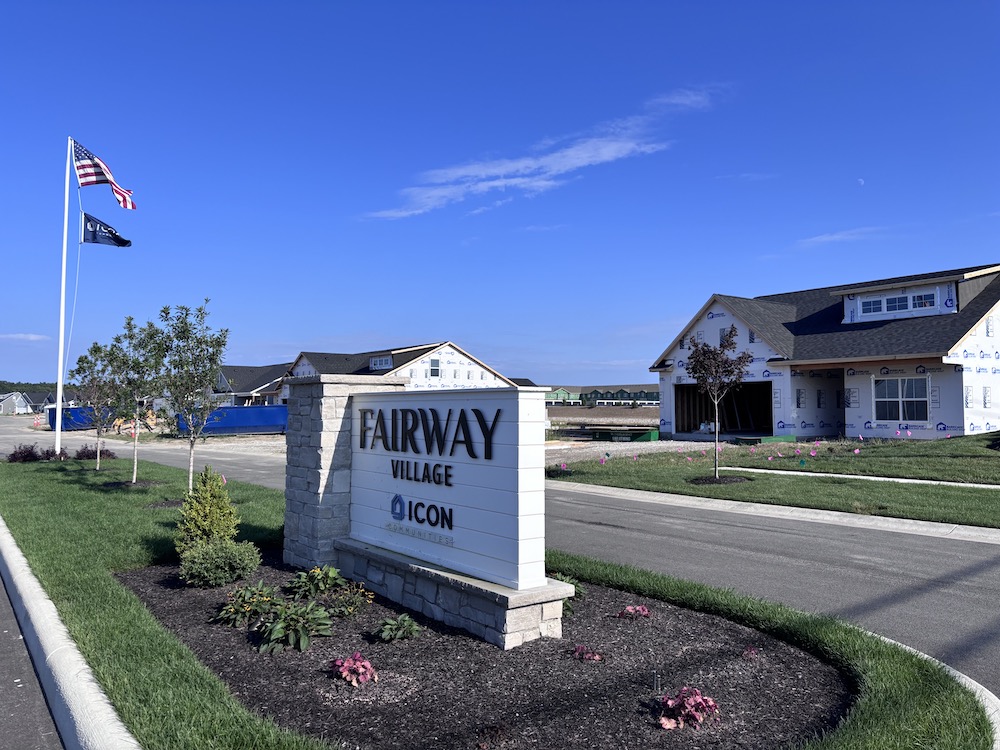
Fairway Village is one of two developments experiencing growth in the township. Trustees approved lighting districts for Fairway Village and Coventry Glen. (AWFP photo by Karen Gerhardinger)
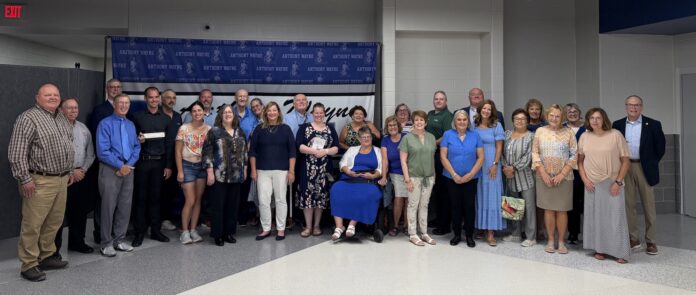
Anthony Wayne alumni of all ages gather for a photo after an August 22 luncheon welcoming five new Hall of Fame members. (AWFP photo by Karen Gerhardinger)
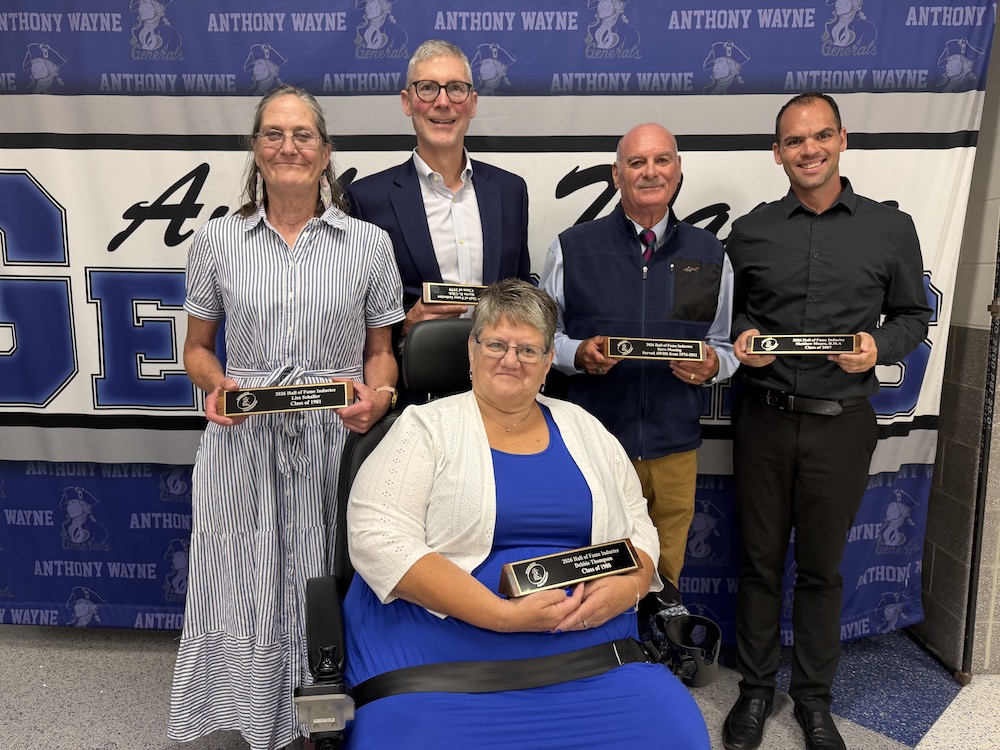
Five new faces now appear on the Anthony Wayne Alumni Association’s Hall of Fame, following an Aug. 22 luncheon in which four graduates and one retired teacher shared how the lessons they learned as Generals have stayed with them throughout their lives.
Kevin Click, Class of 1979, spoke about the teachers, Scout leaders and others in the community who inspired him to give back to others. While big issues like food insecurity and housing affordability might seem daunting, Click said making a difference starts by helping one family at a time.
“If everyone does that, the world would be a better place,” said Click, who is involved with an Asheville, N.C. food bank and volunteers with Habitat for Humanity.
He thanked the alumni association for inspiring the next generation of leaders by providing scholarships to graduating seniors, and noted that his years as AW helped shape his future.
Five graduates and one retired teacher were into the Anthony Wayne Alumni Association Hall of Fame on Aug. 23, including Debra Thompson (front) and, back row, Lisa Schaller, Kevin Click, Steve Mossing and Matthew Mauro. Not pictured is Charles Wiedie, who works in Hawaii and was unable to attend. (Anthony Wayne Local Schools/Rebecca Sanford)
Debra Thompson, Class of 1980, was overwhelmed with emotion and asked Charlene Hansen for help in reading her speech. After seeing how a diagnosis of multiple sclerosis spurred Thompson into action, Hansen nominated her friend for the Hall of Fame.
Riding around in a power wheelchair in downtown Bowling Green, Thompson began seeing things from a different perspective, and then got to work making a change so that others with mobility issues – or anyone pushing a walker, wheelchair or stroller – could safely navigate their community.
“My different perspective gave me a choice: to advocate for improvements. Making a difference doesn’t always have to be something huge,” said Thompson, whose service on committees in Bowling Green has led to change. “Show up. Get involved. Help where you can. And don’t assume someone else will do it.”
Rev. Melissa Hart, class of 1987, gave an invocation. (Photo courtesy of Anthony Wayne Locals Schools/Rebecca Sanford)
Lisa Schaller, a 1981 graduate, shared stories of growing up along Dutch Road, with neighbors who showed her early on what it means to be community: Les Disher coming to help in the middle of the night when a pack of wild dogs attacked the lambs that were her 4H project; and Don Woods getting food from his grocery store to deliver to people stranded during the Blizzard of ’78.
“Community has shown me in my rearview mirror what I need to portray in my front windshield. From there I started giving back completely,” said Schaller, who serves on the Anthony Wayne Alumni Association, which was founded by her father, Don Schaller and other AW supporters.
Schaller also focuses on STEM education, hosting every Whitehouse third-grader each year for a day of hands-on lessons with her Bowling Green State University Construction Management students.
Charles Wiedie‘s father – also Charles – spoke on behalf of his son, a 1986 graduate who is serving as an attorney advisor to the U.S. Marine Corps Defense Services Organization in Hawaii.
“From the first day he set foot on the campus here in Whitehouse, he was warmly received by all the Anthony Wayne family. Some of the friends he made during those high school years have become lifelong friends. His experience here…helped make him the man he is today. His mother and I are so proud of the son, the father and the husband he has become and the many years he has devoted to serving his country.”
Ralph Whalen, class of 1965, is president of the AW Alumni Association. (Photo courtesy of Anthony Wayne Locals Schools/Rebecca Sanford)
Matthew Mauro, Class of 2007, is now a performer and teacher of music in the Cincinnati area and throughout Ohio. He credits the teachers who pushed and demanded more of him: preschool teacher Melissa Bergfeld, Brad Rhodes, Jane Yates, Valerie Sido and Jim Burda.
“They really challenged and inspired me to think more deeply and creatively on a daily basis. The teachers at Anthony Wayne molded my life for the better. To this day I – consciously and unconsciously – mimic the habits and investment of these teachers in my own teaching every day,” he said.
Mauro also noted that he had many bright, driven and inspiring peers, as shown by the fact that the Class of 2007 had 15 valedictorians.
“Many of my colleagues are now leading impressive lives and impressive careers. Part of my work ethic and drive can be attributed to the fact that I grew up around those other people who are incredibly brilliant,” he added.
Steve Mossing, who spent his 35-year teaching career in the district, retiring in 2011, shared how he was welcomed into the district by leaders including Dick Albaugh, Mark Knerr, George Donnelly, Tom Jennings and George Schoonmaker.
Through his career, Mossing served as high school physical education teacher and coach, serving as a golf coach for more than 30 years.
“I loved being a small part of the success. That success starts at the top: administration, board of education, staff, students and community support. There’s a phrase that teachers make a difference. I would add that good teachers make a big difference. I witnessed firsthand that AW had, and to this day has, a lot of teachers that make a big difference.”
Alumni association board member Karen Wiggins summed it up.
“We learned about showing up, lifting up, giving back, committing to improve life, rooting for your family, passion for the community…It’s simply what one does to be a General for life,” she said.
Patton Road paving was recently completed, using Ohio Public Works Commission funding. (AWFP photo by Karen Gerhardinger)
PROVIDENCE TOWNSHIP – Roads and data centers were the focus of the Providence Township trustees’ Aug. 20 meeting.
The township has been working with Sarah Rowland, an engineering manager with the Lucas County Engineer’s office, on applying for funding with the Ohio Public Works Commission (OPWC). Part of the OPWC includes a round of funding for small governments with populations under 5,000 – including townships.
Trustees agreed with one option suggested by Rowland: to widen Bailey Road from Providence-Neapolis-Swanton Road to Manore Road. If awarded, the work would be done in 2028 and the cost to the township would be $133,051, or 35 percent of the total cost, taken out of the gas tax fund.
The township recently completed work on Manore and Patton roads, using OPWC funds approved for this year, and approved payment of $188,646.94 to Gerkin Paving.
After hearing concerns from residents about a need for better drainage on Manore, Trustee Jeremiah Floyd and Road Superintendent Kyle Keifer investigated the drainage tiles and ditches leading to the area and discovered several that are plugged. The county maps, dating back to the 1930s, don’t reflect the existing tiles, so the two plan to dig back more to better assess the situation, then talk to the county engineer to see if the ditch could be cleared as part of the county ditch petition, Floyd said.
Trustee Steve Kendall said that with Manore Road repaved, some motorists believe it is now a two-lane road, but that it isn’t wide enough to pass without someone getting near the edge of the berm. Rowland and the other engineers are working on options for mitigating that issue, which may include signage to alert that it is a single-land road.
Trustee Lee Bialecki suggested that the township inform citizens of how much the road work is costing the township, possibly sharing the breakdown on the township website.
The trustees also discussed issues with line of sight restrictions on westbound Hartman Road at Patton Road, and the need to cut back rose of Sharon trees that were planted under the power lines and have since grown much larger.
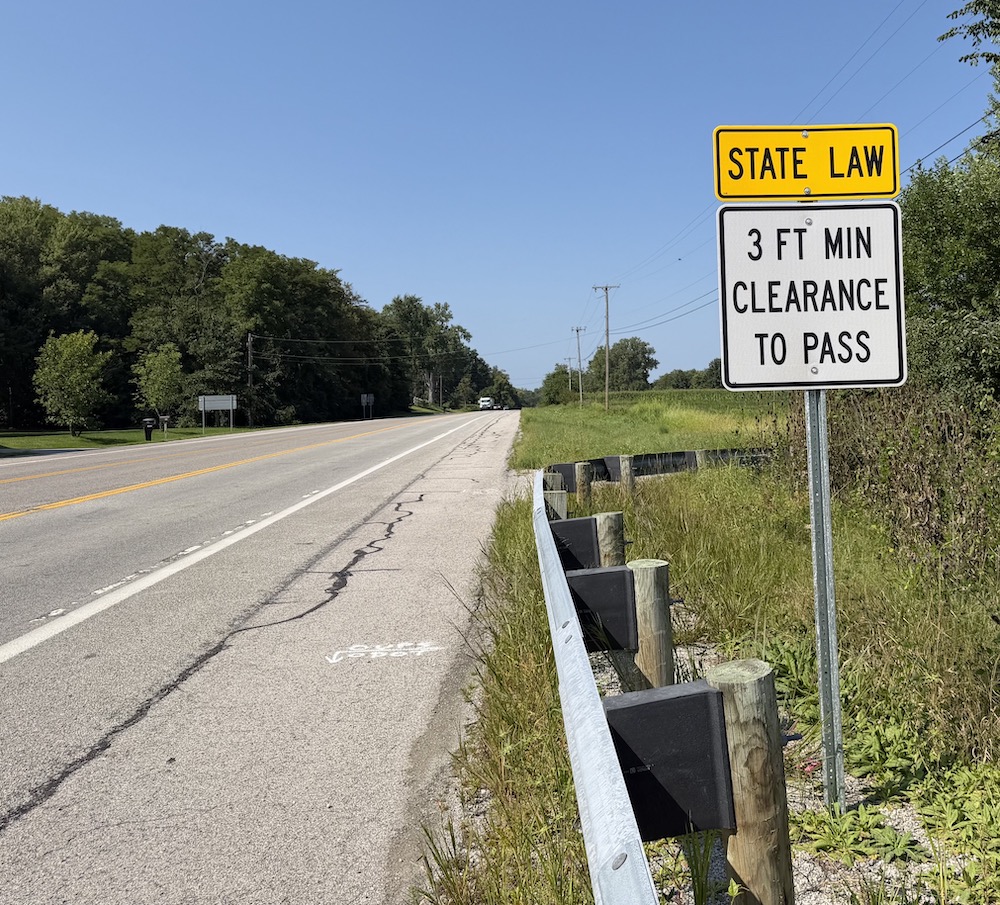
Just feet away from a roadside memorial for Roseann Marie Peiffer, who was killed last year while cycling on S. River Road near 295, the Ohio Department of Transportation has installed a sign reminding motorists to allow at least three feet of clearance to pass. Another sign is located near the entrance to Providence Metropark. (AWFP photo by Karen Gerhardinger)
Ohio Department of Transportation recently installed “Share the Road” signs on South River Road near Providence Metropark and near S.R. 95 to warn motorists that cyclists use the roadway. This is in response to the May 2025 accident in which a Maumee woman was killed by a driver while cycling with two others on a Saturday morning.
During the meeting, the trustees also heard solicitor David Chamberlain report that the county will not write zoning resolution changes to regulate data centers, but will provide input on any proposed language submitted. Trustees agreed that the best option would be to look at what neighboring communities are using in order to create their own.
Ann Aguirre's novle is a fantasy romance that follows Thea Winter, a changeling who was stolen from the mortal world as an infant and raised by a pragmatic hobgoblin. (Courtesy image)
TOLEDO – When the real world feels overwhelming, author Ann Aguirre wants readers to have somewhere else to go.
The fantasy romance follows Thea Winter, a changeling who was stolen from the mortal world as an infant and raised by a pragmatic hobgoblin. She is caught in an unwanted marriage of convenience, but when her spouse runs away, she has to find him. Her search pairs her with Kerboros, a reserved enforcer known as the Winter’s Hound.
The resulting story combines fae courts, wildcraft magic and a slow-burning romance between two characters who could hardly be more different.
For Aguirre, however, the book’s world was not something she meticulously planned before writing. Instead, she said, her characters taught her about the world as the story unfolded.
“Everything I learn about my world comes from my characters,” Aguirre said. “So I just start writing, and they tell me things.”
This approach became particularly important with Kerboros.
Aguirre initially intended a different romantic dynamic for Thea, but eventually realized she was forcing the story in a direction that it didn’t want to go.
“I wrote the entire first act pushing the wrong dynamic, and I had to eat the first act of the book because I just had it so wrong,” Aguirre said.
Once she stopped pushing the story in that direction, Kerboros took over.
“He stole the book,” Aguirre said.
Novelist Ann Aguirre, who said she is particularly excited to return to Toledo where she previously appeared for a signing roughly a decade ago. (Courtesy photo)
Kerboros and Thea eventually developed the kind of contrasting personalities familiar to romance readers: Thea is energetic and outgoing, while Kerboros is quiet and reserved. Aguirre said the slow-burn relationship was one of the most enjoyable parts of writing the book.
But the romance is only one piece of the story.
Found family has been a recurring theme throughout Aguirre’s work, and she said it resonates because people can choose the relationships they build outside of their biological families.
“No matter how much you love your biological family, you did not choose them,” Aguirre said.
The book also explores what it means to be an outsider. Kerberos is a Native Fae who has become powerless and isolated under the control of the Winter Court, while Thea is an outsider by birth who nevertheless considers the fae realm her home.
Aguirre described Thea’s story as, in many ways, an immigration and naturalization story.
“She is not Native Fae,” Aguirre said. “So, for people to say you’re not one of us, you don’t look like us, it’s just kind of heartbreaking for her because this is her home, and this is all she knows.”
Those themes ultimately connect to what Aguirre hopes readers find in her books.
“I hope that when they finish the Hocus Pocus Handbook, that they feel seen, and they feel safe, and they feel a little happier than they were when they began,” she said.
Aguirre said she wants her books to be a “soft spot” for readers – a place where they can step away from the intensity of everyday life and find comfort in a story.
“I just really want people to feel that my books are a safe space,” she said, “and that the happy ending is not optional.”
Aguirre said she has always had a strong connection to libraries.
Growing up in rural Indiana, she recalled walking along a four-lane highway to reach her local library, carrying a backpack full of books to return for more.
She said she is particularly excited to return to Toledo where she previously appeared for a signing roughly a decade ago.
“Everyone was just so nice and so welcoming and so friendly,” Aguirre said. “So I am excited about the warmth and chatting with readers again.”
Aguirre will appear at 7 p.m. Sept. 3 at the Toledo Main Branch Library. The event includes a 45-minute presentation followed by an audience Q&A. Each ticket includes a first-edition hardcover copy of The Hocus Pocus Handbook. Aguirre will also be available for a limited book signing following the presentation. General admission seating begins at 6:30 p.m. Tickets are available online through the library’s Authors! program.
Jackson Price has made a name for himself in his Michael Jackson tribute performances. (Courtesy photo)
MAUMEE –Michael Jackson was six years old when he took the stage as the lead singer of the Jackson 5, launching a solo career that made him one of the top artists of all time.
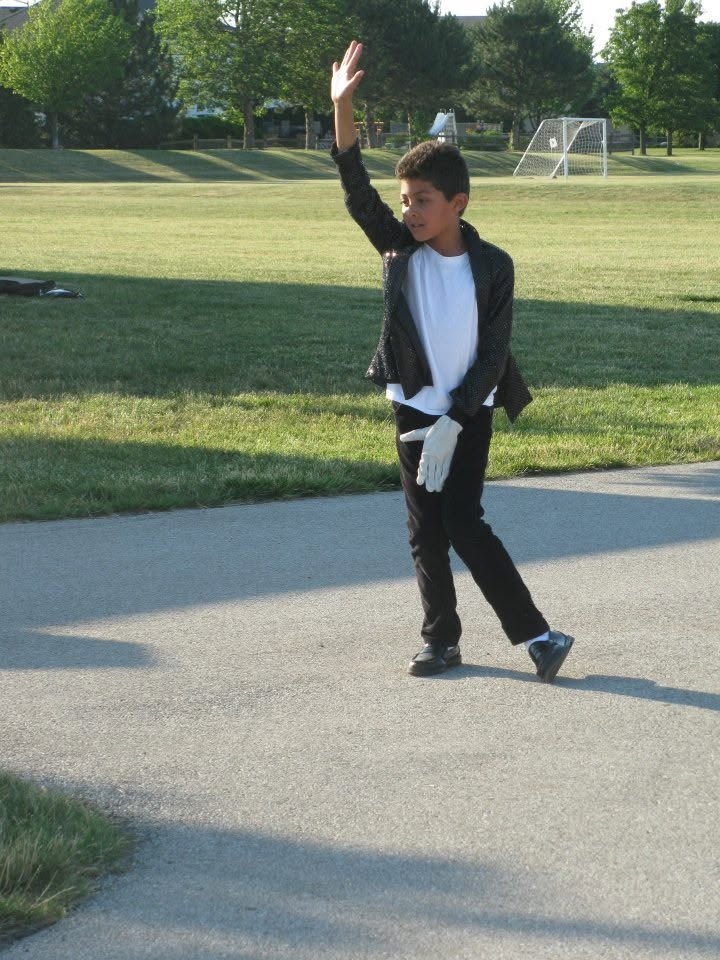
Jackson Price was six years old when he made his first public debut, dancing to Michael Jackson’s music during a Relay for Life event, and has continually widened his fan base.
Now 23 and a recent graduate of Bowling Green State University, Price is known as “that Michael Jackson kid,” having performed the King of Pop’s signature moves hundreds of times – from impromptu dancing in the Whitehouse Park pavilion and in his hometown of Waterville, to OSU basketball halftime shows, festivals, birthday parties and solo events.
Jackson Price’s first public performance as Michael Jackson was as a six-year-old at Relay for Life. (Courtesy photo)
On Aug. 29 – Michael Jackson’s birthday – Price will take to the stage at the Maumee Indoor Theater to a sold-out show of 490.
“When I was younger, I never would have thought that the Maumee Indoor was something I could do,” he said.
In 2021, after graduating from St. Francis de Sales, he hosted a graduation party performance at the Maumee Indoor for his friends and followers, and counted about 100. After earning his education degree from BGSU this spring, he decided to keep the tradition going by booking the Maumee Indoor again. But this time, he has dancers from Evolve Dance Studio – Elliot Worthington, Kennedy Worthington, Italia Burciaga, Jayla Garland and MaKayla Cox – backing him up. Elliot taught him some new dance moves and helped him up his game. And that’s what he wants.
“Michael said to study the greats and be greater. I’m trying to learn new stuff and put myself out there,” Price said.
Jackson Price is performing with dancers from Evolve during a sold-out August 29 show at Maumee Indoor. (Courtesy photo)
The show will also feature lighting and sound like he’s not had before, as 2025 Anthony Wayne High School graduate Devin Schroeder has joined the team.
“Devin has added a performance dimension I’ve not had before,” Price said.
For those who didn’t get tickets in time for the Maumee Indoor, Price promises that he’s already got his sights set on offering bigger shows. His goals include filling the 900-seat Valentine and the 2,400 seat Stranahan. But his motivation to go bigger isn’t for the fame or fortune, but rather to spread what he sees as Michael Jackson’s message.
“I take every day as an opportunity to be there and be present and be grateful for the opportunity that God’s allowing me to do this,” he said. “It’s using the power of dance to spread love and to unite people. Michael’s music is so powerful. His music touches people around the world – young, old and fans that haven’t even been born yet.”
Most of Jackson Price’s moves were self-taught by watching videos and then practicing in front of a mirror. (Courtesy photo)
Growing up, Price’s family listened to Michael Jackson music, but the first time he saw the “Thriller” video, he was hooked.
“I remember looking at that video and thinking that it was me – because he was brown and had the same hair. It was something about seeing a person of color doing something so encouraging and uplifting. I wanted to be just like him,” recalled Price.
While he took a few dance lessons as a kid, most of his moves were self-taught by watching videos and then practicing in front of a mirror.
“I taught myself how to dance and learned all of Michael’s moves – his facial expressions, how he moves his shoulders, and even where to point my finger,” he said.
As a student at Lial Catholic School, he would urge his friends to get on the counter in the bathroom and make beats. On the playground, he preferred working on his dance moves to playing games. As a freshman at St. Francis, he was in the locker room with members of the basketball team, and they were talking about what each of them had gotten for Christmas.
“I told them I got a new Michael Jackson jacket. They all started laughing,” he recalled. “I told them that I do Michael Jackson performances. They didn’t believe me, so I did a move. The coach saw and said, ‘You should do that at the varsity halftime.’ That was the biggest game of our schedule, playing our rival to a packed house. Ever since then I started getting gigs. I became ‘that Michael Jackson kid.’ The rest has led to here.”
The foundation of his shows was in busking – setting up a portable screen to serve as a changing room, and performing in public areas, then birthday parties, weddings, fundraisers, nursing home and schools. Later, he added bigger shows, like Hollywood Casino, the Novi, Mich. BBQ Fest and a gig in Florida that’s come up on Halloween weekend.
Preparing for a show as big as the Maumee Indoor has meant working even harder to perfect each move. Michael Jackson was a perfectionist, and was clean and precise in every move.
“I run through it so many times until it’s second nature. Every time I find things that I can do better. I want to be the best that I can be. And I want it to show on stage.”
While he has his sights set on Toledo venues, Price said his hope is to one day get to Las Vegas or Broadway or Hollywood, especially now that he has an agent.
“I want to keep inspiring people. The main reason I dance is to help people find their dream. To tell them that you can do what you want to do. If you love it, you will become it.”
Buckeye tree, photographed by Art Weber, nature photographer for Metroparks Toledo.
Buckeye trees are getting ready for football season as well. And by the look of these thick bristled husks, it appears that they will open and our buckeye nuts will drop in plenty of time for Ohio State’s first coin flip on Sept. 5.
Commonly referred to as nuts, like the acorns of our oaks, botanically speaking, buckeyes are actually seeds. They are distinctive, large, shiny dark brown seeds with a cream-colored spot. That spot, it’s said, gives the seed the appearance of a buck’s eye.
Buckeyes aren’t edible. They’re toxic for humans, pets, and most wildlife.
Look for buckeye trees in bottomlands along our rivers and streams where they’re among the first to get their leaves in spring and to change color in fall. Those attractive buckeye seeds float, which means they can be carried downstream and take root in new locations.
Clay McLeod Chapman will bring his horror-romance - Devil Inside - to Toledo on Thursday, Aug. 27, when he appears at the Toledo Main Branch Library’s Authors! Series. (Courtesy image)
TOLEDO– For horror author Clay McLeod Chapman, there may be nothing more frightening than falling in love.
That idea is at the center of his newest novel, Devil Inside, a horror-romance Chapman describes as a “horrormance”- a blend of two genres that, despite their differences, have more in common than readers might expect.
Chapman will bring that story to Toledo on Thursday, Aug. 27, when he appears at the Toledo Main Branch Library’s Authors! Series.
“I think there isn’t anything scarier than love,” Chapman said. “When we talk about falling in love, we’re talking about making ourselves vulnerable, kind of letting our defenses down, bringing somebody else in.”
Devil Inside, released Aug. 11, opens with Jordan, who – dying in a traumatic accident – spends about two-and-a-half minutes in hell before being resuscitated. When he returns to the living, he begins questioning what is real – and what may be happening inside his own mind.
Then he meets Lilith.
The two form an immediate connection, but Lilith is not exactly who she appears to be. After she disappears following a passionate night together, Jordan searches for her, only to encounter another woman claiming to be Lilith, one who looks different but knows intimate details about him.
As Jordan tries to understand the mysterious woman and his own increasingly distorted reality, the story explores possession, desire, bodily autonomy and the risks of allowing another person to grow too close.
“Love is really scary,” Chapman said. “This idea of – am I going to find my soulmate? Am I going to be alone for the rest of my life? Is there someone else out there for me?” (Courtesy photo)
For Chapman, putting horror and romance together was not necessarily a radical idea.
“Romance in horror has existed since the dawn of storytelling,” he said, pointing to stories such as Dracula and Frankenstein.
Instead, Chapman said he was interested in what happens when the familiar beats of a romance are placed inside a horror story.
The novel follows the structure of a romance, including a happily-ever-after ending. But Chapman said that doesn’t necessarily mean everyone in the story gets a happy ending.
“Happily ever after for our main characters doesn’t necessarily mean it’s a happily ever after for anybody else in the book,” he said.
“I feel like this book is essentially a horror story embedded in the structure of a romance novel,” he said.
That tension also allows Chapman to explore the darker side of wanting to be loved.
Chapman said the book also asks questions about obsession, toxic relationships, consent and bodily autonomy.
“Love is really scary,” he said. “This idea of – am I going to find my soulmate? Am I going to be alone for the rest of my life? Is there someone else out there for me?”
Even after writing multiple horror novels, Chapman said love remains one of the things that scares him the most.
“Human connection is such a kind of fraught territory,” he said.
That does not mean Devil Inside is entirely bleak.
Chapman also uses comedy throughout the novel, something he said can give readers a moment to relax before the horror returns.
“If horror is just completely opaque and suffocating, your readers start to lose a certain momentum,” he said.
Comedy gives readers a chance to exhale, Chapman said – and then lowers their guard.
“That’s when the really spooky thing happens,” he said.
The novel is also grounded in a place Chapman knows well: Richmond, Va., where he grew up.
Chapman said setting the story in a familiar place gave him a sense of security while writing about characters and situations that were anything but safe.
“I wanted Richmond to feel like just as much of a character as the actual people are,” he said.
Chapman, whose previous books include Ghost Eaters, What Kind of Mother? and Whisper Down the Lane, said he is looking forward to bringing Devil Inside to Toledo and meeting readers in person.
He said getting people to leave their homes and attend an author event is meaningful in itself.
“Anybody asking people to come out to anything is such a big ask,” Chapman said. “Who wants to leave the comfort of their own home when they can just Netflix and chill?”
For readers willing to take a chance on the genre mashup, Chapman said he hopes they will come away questioning the people – and perhaps the demons – around them.
“I hope they walk away from this with this idea of giving everybody they pass on the street a little side eye,” he said. “Is there maybe a little demonic something or a little devilish something inside that person?”
“And watch out for your own kind of inner demons,” he said.
Chapman will appear at the Toledo Lucas County Public Library Main Library at 7 p.m. Thursday, Aug. 27. The event includes a 45-minute discussion followed by a brief audience Q&A. Each ticket includes a copy of Devil Inside, and Chapman will participate in a limited book signing following the presentation.