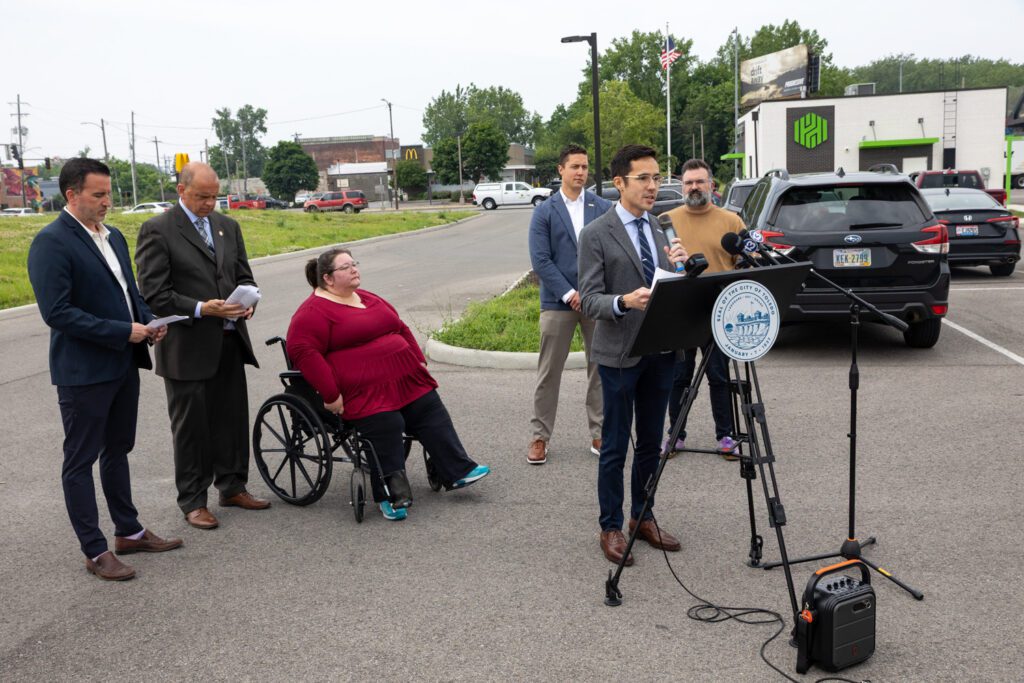
A blank lot at the corner of Front and Main streets in East Toledo would be the main area developed through the Neighborhood Access and Equity Grant Program awarded to the City of Toledo. (TFP Photo/Stephen Zenner)
TOLEDO – Toledo’s largest federal grant may be rescinded if the One Big Beautiful Bill Act is passed into law.
By just one vote the One Big Beautiful Bill successfully passed through the House of Representatives and is now on its way to the Senate. If the bill remains in its current form, it will not deliver the $28.5 million awarded to the City of Toledo to recreate the entrance to East Toledo, near Front and Main streets.
During a press conference at the site on June 12, Simon Nyi, the commissioner of grants for the City of Toledo, who was instrumental in winning the competitive grant, said that “the residents of this neighborhood have been clear. If we want our historic Main Street business corridor to once again thrive, we need to invest in its infrastructure.
“And, if we want downtown revitalization to bring jobs, investments and economic opportunities to the east side,” he continued, “we need to make Front Street safer for everyone who uses it.”
Simon Nyi, grants commissioner for the City of Toledo, addresses the media concerning $28.5 million in federal funding that may be cut. (TFP Photo/Stephen Zenner)
Front Street is the bridge between the Garfield neighborhood, which includes Waite High School, and the Glass City Metropark, the newest and most popular metropark.
In coordination with the multi-step Riverwalk project, pioneered by Metroparks Toledo, this grant would connect the Glass City Metropark with International Park and Downtown Toledo more holistically by revitalizing and beautifying Front and Main Streets.
In March 2024, the city was awarded the $28.5 million from the Department of Transportation through the Reconnecting Communities and Neighborhoods Grant, which was a subsection of the Neighborhood Access and Equity Grant Program.
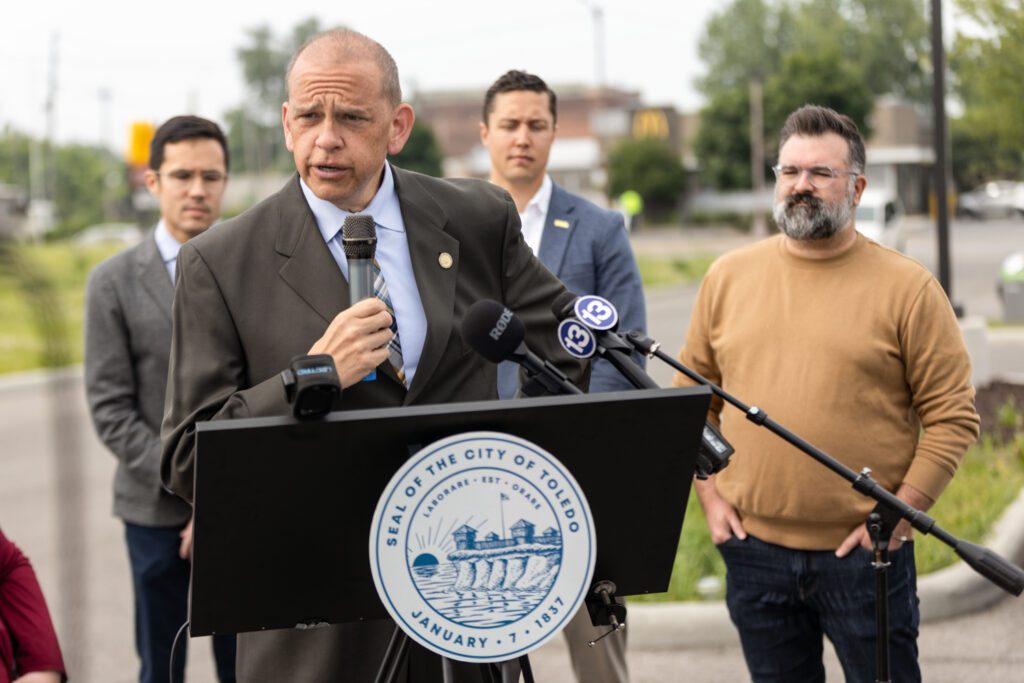
Thinking the grant was cut because it was confused for a Diversity, Equity & Inclusion (DEI) initiative, Toledo Mayor Wade Kapszukiewicz thoroughly explained that there is nothing about this grant or its uses that is partisan.
Toledo Mayor Wade Kapszukiewicz addresses media in the Huntington Bank parking lot off of 75 Main St. (TFP Photo/Stephen Zenner)
“I can’t imagine a single citizen of our country objecting to a program that would calm traffic to make life safer for pedestrians, for bicyclists, for motorists,” he said, and expounded that the only reason he could think of for the funding cut was the words used to describe the program.
I honestly believe that someone sitting at a computer terminal in Washington saw the word ‘equity’ and must have misunderstood.
Toledo Mayor Wade Kapszukiewicz
The mayor stressed the 225 construction jobs that would be lost by cutting the revitalization initiative, set to begin in 2027, and the $2 million the city had already poured into prepping the project through engineering the streetscape and roadway changes.
The city’s website includes drawnschematics of what the city hoped to build with the grant: a mixed use path for cyclists and pedestrians alongside two two-lane streets for cars, a sidewalk on the other side of the road and ample space to plant trees.
Justin Lorenzen. (TFP Photo/Stephen Zenner)
Nyi stressed the importance of the redesign for public safety. “This corridor is less than a mile long, yet in the past 10 years traffic crashes here have tragically taken five lives and left 34 more with life-changing injuries.”
Both the mayor and Nyi said there would not be an easy way to replace the $28.5 million if the funding is rescinded.
Even if the funding could be secured in the future, Nyi emphasized that “we don’t have 10 or 15, 20 years if we want to capture all the momentum and great things that are happening right now.”
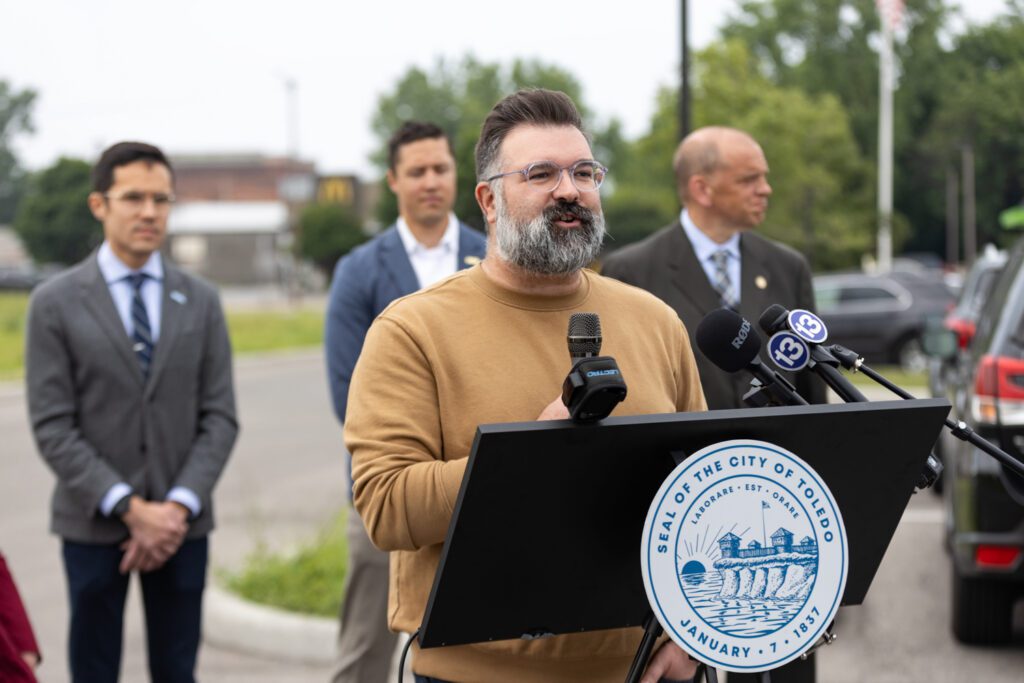
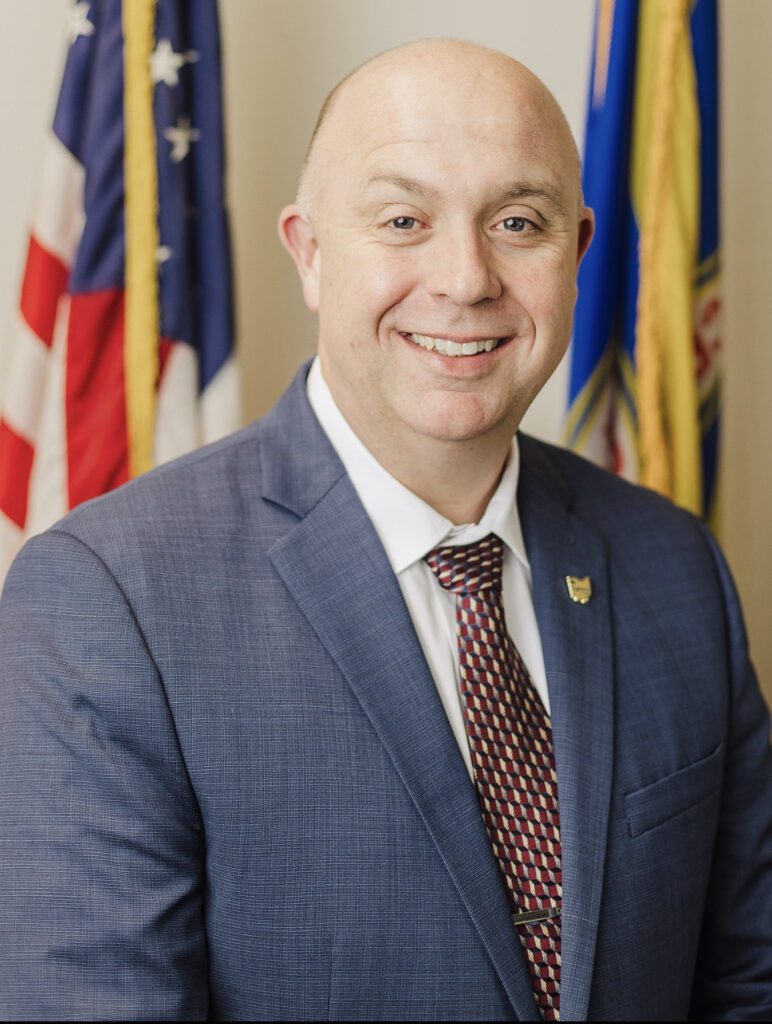
Justin Lorenzen, owner of the Webber Block building at the intersection of Main and Front Streets, talked about the progress the city was making near the entrance to the east side.
“Over the past few years, we’ve seen real, tangible progress: a beautiful new Metropark, the Marina Lofts apartments and renewed interest from investors and developers,” he said, but caveated, “East Toledo is in real need of well-designed streets equipped with new sidewalks, better lighting, green space and safer crosswalks.
“There are a lot of kids crossing the street for the Metropark, so safer crosswalks are definitely in need.”
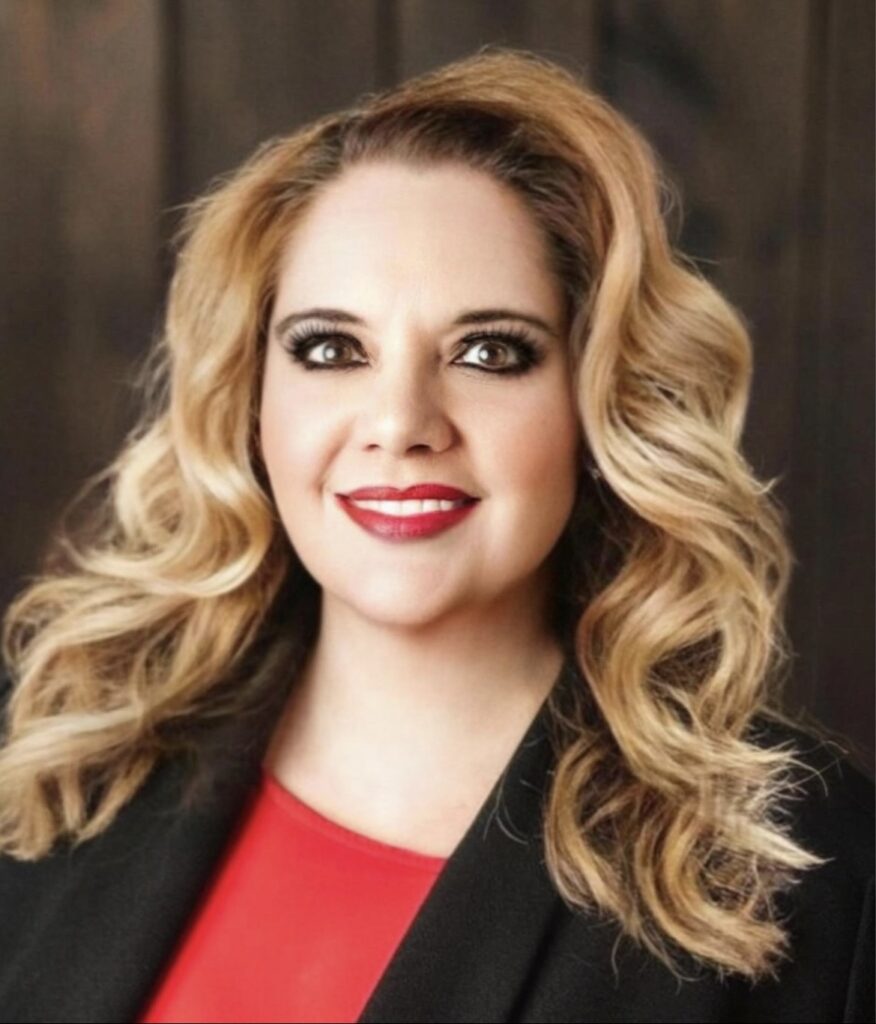
Residents, community leaders and stakeholders all had input on the Front Street redesign, said Theresa Gadus, Toledo City Council member (District 3), who said they’ve been working on this project since around 2020.
Theresa Gadus. (TFP Photo/Stephen Zenner)
“Front Street is a five-lane highway,” she said. “We’ve done traffic studies that clocked people going up to 90 miles per hour. There’s schools, there’s lots of schools, in the neighborhood, and if we want them to be able to utilize the Metroparks, they have to feel safe crossing.”
In a last ditch effort, as the bill heads to the Senate, Kapszukiewicz and the other city officials asked Toledoans to appeal to Republican Senators Bernie Moreno and Jon Husted to amend the bill, allowing for the Reconnecting Communities and Neighborhoods Grant to be fulfilled for this street project.
“Let them know how important this project is for our economy, for our neighborhoods and for our shared future. Thank you,” Kapszukiewicz said, finishing off a press conference.
It is unclear when the One Big Beautiful Bill will be voted on in the Senate.
The Toledo Free Press reached out to Senators Moreno and Husted for comment. Husted replied the morning of June 13th saying he voted for a budget amendment to protect Medicaid, but did not comment on this particular grant.
Toledo city officials said they also reached out to both senators concerning the Reconnecting Communities and Neighborhoods Grant, but have not heard more than that their messages were received.
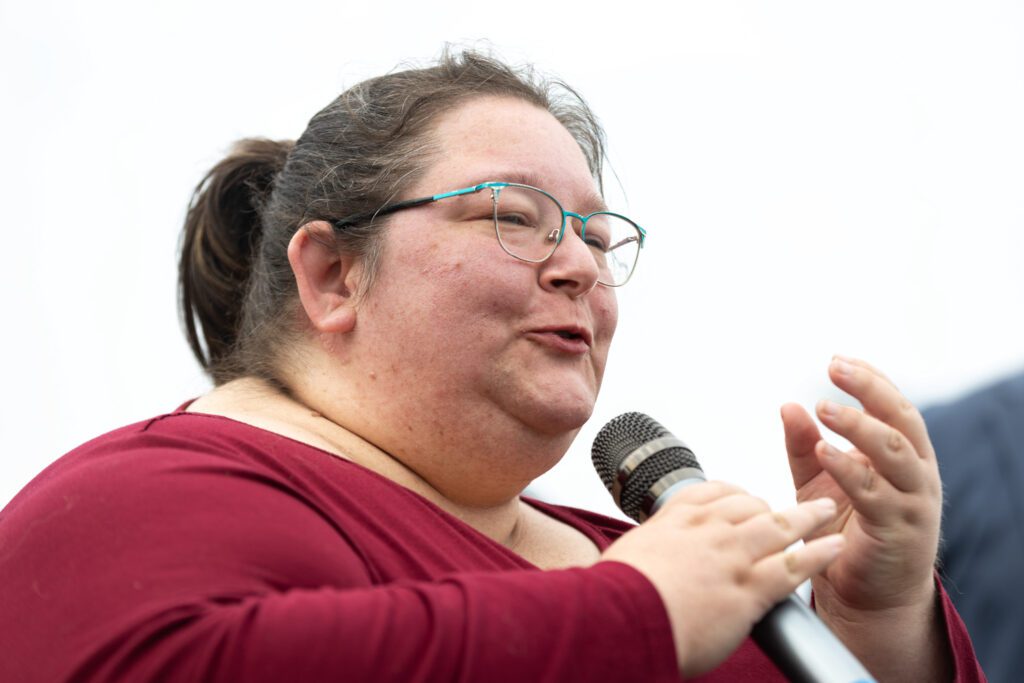
Nick Komives, Toledo City Council member at-large, addresses the press concerning $28.5 million in federal funding that may be cut from development on the east side. (TFP Photo/Stephen Zenner)
A blank lot at the corner of Front and Main Streets in East Toledo. (TFP Photo/Stephen Zenner)
Mega-site outline of First Quality Tissue facility in Defiance, OH. (Courtesy Photo/John Gibney)
DEFIANCE— First Quality Tissue, a paper product manufacturer, is set to open a 1.6-million-square-foot production facility in Defiance County in 2025, a $985 million investment.
Erika Willitzer, executive director of Defiance County Economic Development, noted that this facility will bring 407 new jobs to the region over an eight-year ramp-up period.
The decision to expand to Defiance was largely influenced by existing infrastructure and the availability of a contiguous 1,000-acre mega site.
The site is conveniently located right off U.S. 24, adjacent to CSX’s mainline, and in close proximity to two transmission gas lines, Willitzer noted.
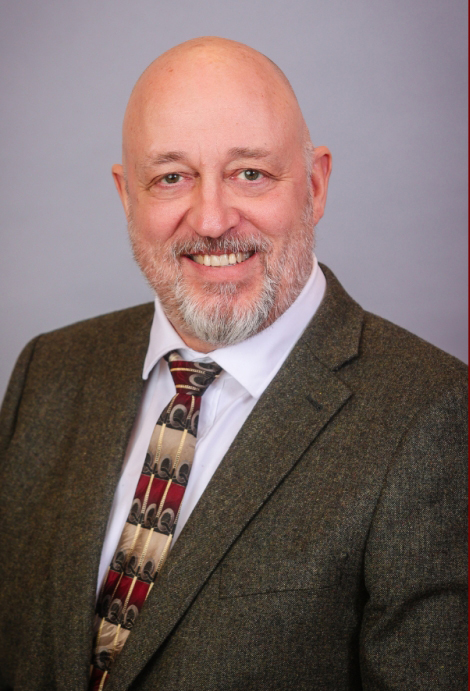
John Gibney. (Courtesy photo)
John Gibney, chief marketing officer at Regional Growth Partnership (RGP) in Toledo, said that having the First Quality facility is critical for Defiance, and that this location is within 60 percent of the U.S.-Canadian marketplace. This makes it an easier task for businesses to reach their customers.
Local officials and economic leaders worked extensively to attract First Quality Tissue to the area, including multiple site visits and a delegation trip to Lock Haven, Pennsylvania, where company representatives operate another facility.
“It is literally a team effort,” said Defiance County commissioner Dana Phipps. “Defiance County commissioners have worked with Defiance County Economic Development, Defiance City, Utility Partners and Regional Growth Partnerships/JobsOhio.”
Despite enthusiasm surrounding the project, officials acknowledged several challenges that nearly derailed negotiations.
“There were many times this project came to a boiling point, where we thought it wouldn’t be announced or the project would die,” Willitzer acknowledged. “It truly took the state and locals, along with First Quality, working together to come up with creative resolutions to issues that would arise.”
Dana Phipps, Defiance County)
The company is in the process of purchasing landbetween Krouse and Whetstone roads, Phipps said. Truck traffic will enter via County Road 424 (formerly U.S. 24), while employee access will be from Krouse Rd.
Products that the First Quality Tissue will produce includes toilet paper, paper towels, adult incontinence products, feminine hygiene products, baby wipes, adult washcloths, and consumer paper products, according torgp.org.
The arrival of First Quality Tissue is expected to spur regional economic growth, with developers already expressing interest in building homes and businesses in the area.
“It’s going to be an economic boom!” Willitzer said. “Already, we are seeing housing developers coming in and other businesses wanting to establish themselves in Defiance County.”
Phipps said that several industries will benefit, from construction and excavation companies to restaurants and stores.
Additionally, more than 800 construction workers will be involved in building the facility, prompting local leaders to work with hotels, campgrounds and long-stay facilities to ensure adequate accommodations.
Defiance County commissioners agreed to participate in the Ohio Governor’s All Ohio Future Fund, committing $16 million to bring water and sewer infrastructure to the site. The county will take out a $7 million loan, with half forgivable upon meeting project benchmarks.
Erika Willitzer. (Courtesy Photo)
In addition, local schools have also agreed to a 100 percent tax abatement with school donations for Phase 1 and Phase 2 of First Quality’s build-out, Phipps said, as well as a substantial incentive package from the state.
“Locally, the Defiance County Commissioners are the biggest reason this project is happening,” Willitzer said.
Phipps added that this development will shape the region’s long-term growth.
“When a facility of this size comes to an area, others will follow,” Phipps said. “We have already been approached by others seeking opportunities.”
Gibney emphasized that it’s the perfect opportunity for the people of Northwest, Ohio, as well as for local graduates who want to get involved in the workforce.
“They’re trained, they’re educated and they’re willing to work hard,” Gibney said. “Northwest, Ohio has an outstanding workforce, and this work ethic that’s built in our DNA. You go to other parts of the country, you won’t find that.”
While an official groundbreaking date has not been announced, First Quality aims to begin construction this year, with expectations of hitting job creation targets ahead of schedule.
For more details, visit the First Quality Tissue project FAQ.
David Young, Toledo Excel director. (TFP Photo/Lori King)
In this episode of Behind the Byline, host Jaden Jefferson sits down with David Young, longtime program director of Toledo Excel, an academic and leadership development initiative at the University of Toledo.
Now in its 37th year, this unique college-prep program supports local students from 8th grade through college with academic enrichment, leadership development and community engagement. Young shares how the program fosters global awareness, civic responsibility, and career readiness—and how its alumni are shaping fields from medicine to media.
Founded to serve high-potential students from historically underrepresented backgrounds, Toledo Excel is more than just a pre-college program—it’s a launchpad.
You’ll hear how Excel adapted during the pandemic, how alumni now return as teachers and mentors, and how the “Excel family” culture continues to shape lives across generations. From local roots in Toledo Public Schools to global travel experiences in South Africa and Ghana, this program helps students see the world—and their place in it—through a wider lens.
Young also reflects on partnerships that power the program, including its flagship Conference for Aspiring Minority Youth, which draws dynamic speakers like journalists, artists and entrepreneurs to inspire the next wave of change makers.
With dreams of expanding global travel and cultivating more community-driven leaders, Young shares his vision for the future of Excel—and how the seeds planted today are shaping Toledo’s tomorrow.
More than 50 people turned out for the National Day of Protest in front of the Government Center in Toledo on President’s Day. (TFP Photo/Lori King)
This story was originally published by Signal Statewide. Sign up for free newsletters at State Signals. Statewide is a media partner of the Toledo Free Press.
By Jake Zuckerman | Signal Ohio
OHIO – Ohio’s Medicaid program could not by law cover the costs of gender affirming mental health care for transgender adults under the currently proposed version of the state budget.
Medicaid, the state and federally funded health insurer for 3 million low-income Ohioans, would be unable to pay for any mental health services that “promote or affirm social gender transition” if the budget becomes law as written.
The Senate still needs to finalize its version of the legislation, negotiate its changes with the Ohio House, and win approval from Gov. Mike DeWine, who can veto individual line items at his discretion.
The provision marks a significant escalation in the Republican supermajority’s years-long campaign of restricting rights, recognition and health care access of transgender people. Republicans have focused their rhetoric around the bills in terms of “protecting” children from “experimental” health care or unfair athletic competition involving transgender people.
But the latest budgetlanguage goes as far as restricting widely accepted health care options for consenting adults.
Both the Medicaid program and the private companies that provide care to its enrollees must follow state and federal laws, according to department spokeswoman Stephanie O’Grady.
“Current policy and billing codes do not indicate mental healthcare for social gender transition is being covered by Ohio Medicaid,” she said.
She didn’t respond to follow up questions.
Gender affirming mental health care is similar to traditional therapy, with the caveat that practitioners encourage patients to define their own gender identity without judgment or efforts to change it. A 2022 study of 104 transgender youths (aged 13-20) from the Journal of American Medicine found gender affirming mental health care was associated with lower odds of depression or suicide, findings that align with prior research. The practice is accepted by, among others, the American Psychiatric Association and the American Psychological Association.
A spokesman for Equitas Health, a major provider serving the LGBTQ community in Ohio, declined an interview or specific questions about Medicaid coverage of mental health care. But he provided a statement from CEO David Ernesto Munar.
“We ask everyone who supports our patients and communities to immediately raise their voices,” he said in the statement. “Tell elected officials that our communities need the services that organizations like Equitas Health offer. We cannot afford to turn our backs on the patients and clients who need us most.”
Budget also cuts shelter funds for transgender youth
The new health insurance rules come within a budget that contains at least five separate provisions that either limit transgender people’s access to social services, block them from legal recognition, or sequester books “related” to them.
The budget prohibits any state funds flowing to homeless shelters for children “that promote or affirm social gender transition.”
The language doesn’t specify which specific facilities might lose funding to house the estimated 25,000 homeless students enrolled in Ohio schools. The LGBTQ Center of Greater Cleveland advertises homelessness response and housing services on its website. A spokesperson there couldn’t be reached for comment.
Kaleidoscope Youth Center provides a range of social services for LGBTQ kids in Columbus, including behavioral health and housing. Director Erin Upchurch said the organization is currently housing 19 people, but unrelated budget cuts are set to decrease that figure to 10 by the end of the month. She doesn’t believe Kaleidoscope will be affected (its clients are usually aged 18 to 24) by the youth homeless shelter rules.
Regardless, she said the budget is a showing of “unchecked extremism” and a rising tide of anti-transgender legislation from the statehouse.
“It’s cutting off lifelines to basic human needs, housing and medical care,” she said in an interview. “We’ve seen over the years how this is escalating.”
Government ID, adults-only reading sections for LGBTQ titles
The budget contains a grab bag of other anti-transgender provisions.
For one, it requires all public libraries in Ohio to place material “related to sexual orientation or gender identity or expression” into a section of the library that’s not open to minors.
The language is vague enough to potentially wrap classic literary titles into its folds. For instance, “The Color Purple” by Alice Walker, involves a romantic relationship between two women; “And the Band Played On” is a critical nonfiction account of state and federal governments’ failure to prevent the AIDS epidemic among gay men in the 1980s; and the main character in the teen classic “Catcher in the Rye” has a brief, nonsexual interaction with a young prostitute.
Under the budget, some librarians may feel obligated to remove these works from general circulation sections and tuck them away in adults-only rooms. Critics of the idea say this suggests to children there’s something wrong or lewd about depictions of gay or trans people.
Michelle Francis, executive director of the Ohio Library Council, asked that it be removed from the budget.
“We feel parents know what is best for their children and consider this an unfunded mandate,” she said in written testimony to lawmakers.
Lastly, the budget requires that driver’s licenses or birth certificates reflect transgender people’s sex assigned at birth, not any assumed gender identity. And more broadly, the budget states that it “establishes state policy recognizing only two sexes, male and female, which are not changeable and are grounded in fundamental and incontrovertible reality.”
Dwayne Steward, executive director of Equality Ohio, said Republicans are using the budget to push an agenda of “erasure and control” against gay and trans people.
“These policies threaten free access to information, the mental health of houseless and vulnerable youth, and even the ability of trans people to access medical care and social support,” he said.
Restricting transgender children’s health care and sports
Republicans realized their first major policy win in terms of targeting transgender people in early 2024 with the passage of the “Saving Adolescents from Experimentation Act.” This required overriding a legislative veto coming from DeWine, a Republican.
For children, the law prohibits doctors from administering a broad range of gender affirming care. Specifically, it blocks gender reassignment surgeries, prescribing puberty-blocking drugs and other treatments, all of which are generally accepted medical practices by physicians’ groups such as the American Medical Association.
The law contains legislative findings expressing interest in “protecting the health and safety of its citizens, especially vulnerable children.”
Along with the health restrictions, the new law also prohibits male-to-female transgender athletes from playing for any women’s high school or collegiate teams.
Two transgender children, backed by legal support from the ACLU, have challenged the health care provisions of the legislation. At first, lower courts froze enforcement of the law while that lawsuit played out. Judges with the 10th District Court of Appeals deemed it violated two constitutional provisions, including the Republican-backed Healthcare Freedom Amendment, an Obama-era measure that says no law shall “prohibit the purchase or sale of health care.”
The Ohio Supreme Court reversed the decision, allowing the law to go into effect while the legal process unfolds. The court hasn’t issued a final ruling on the merits of the case.
It requires all K-12 schools, colleges and universities to offer only single-sex facilities based on one’s assigned sex at birth, not any assumed gender identity.
That took effect in February 2025.
(This article was updated Tuesday morning with comment from Equitas Health.)
Signal Statewide is a nonprofit news organization covering government, education, health, economy and public safety.
Kurt Landis is the executive director and a therapist at the Center for Greater Healing. (TFP Photo/Allyson Ritchey)
TOLEDO – House Bill 68, in effect since April 24, 2024, has dramatically changed how both patients, healthcare workers and schools approach medical care and sports participation for trans-identifying youth.
Gary Click. (Courtesy Photo)
According to Bill Track 50, the Enact Ohio Saving Adolescents from Experimentation (SAFE) Act, sponsored by Gary Click (R-Vickery), prohibits physicians from performing gender reassignment surgery or prescribing cross-sex hormones or puberty-blocking drugs for the purpose of assisting minors with gender transition, with limited exceptions; requires mental health professionals to obtain parental consent before diagnosing or treating a minor for a gender-related condition, and to screen for other potential underlying issues; prohibits Medicaid coverage for gender transition services for minors, with exceptions.
The bill also enacts the Save Women’s Sports Act, which requires schools, state institutions of higher education, and private colleges to designate separate single-sex teams and sports for each biological sex, and prohibits individuals of the male sex from participating on female sports teams.
Since the bill has been in effect, practices and programs that seek to treat patients have sought legal counsel and direction from organizations like the National Association of Social Workers (NASW), which has helped organizations define how their programs can move forward after new regulations from HB 68.
Kurt Landis, executive director and therapist at Center for Greater Healing, said his practice has participated in training sessions with NASW. “They’ve been extremely helpful in navigating changes from this bill. They’ve come into our office to train staff on changes and how to best move forward.”
According to Mary M. Wesley, of Rainbow of Hope Counseling, the help provided by NASW has allowed her to keep the doors of her practice open.
“I’ve had to work with the NASW and other lawyers [concerning liability] to have the wording in my consent form that allows me to do my job.”
Welsey’s practice touts itself as a safe place for LGBTQ+ patients. Because minors need to receive permission from their parent or guardian(s) to attend therapy, most of the patients she sees have already come out to their parents. Despite this demographic, she said she has had to go to great lengths to educate herself on how to run her program safely.
Patient safety is paramount to these practices, making the bill a grave concern in its requirement that healthcare programs out their patients.
“It quite literally goes against our code of ethics,” says Wesley. “It’s not my job to out patients. They’re scared to come to therapy because they may say something that outs them to their parents, who may or may not be abusive. It’s a safety risk for someone to be out.”
Because Ohio and Indiana have prevented the request of hormones from minors’ physicians, patients receiving testosterone or estrogen supplements sometimes need to travel to other states in order to receive their medication.
“Depending where you live, you will need to go out of state to receive hormones,” said Wesley as she describes how her patients lives have been changed since the bill’s enactment.
“There are other ways people can get hormones that aren’t so safe. People will go to extremes if they need to because it’s that important to them. It’s important to be themselves and not be forced to live in a way they’re not comfortable [with], and, in some cases, it can make them not want to live.“
Having to travel upwards of 45 minutes to seek medical care that may or may not be covered by their insurance incurs more costs and accessibility barriers. To address this, some organizations have started funds for individuals to get to appointments and medication, though this is a temporary solution.
The NW Ohio LGBTQ+ Coalition is working on implementing a program to address patient concerns surrounding safety and health when seeking a provider. The program addresses changes and concerns in the wake of the bill, creating a certification that identifies a medical practice or program as having gender identifying care.
Landis volunteers for the Coalition and describes what the rating system entails. “We look at things like what kinds of bathrooms are available, the layout of the space, and we also talk with staff of the facility regarding steps they take in their practice.”
Wesley is also a volunteer for the Coalition and looks forward to the positive impact the gender affirming certification will make. “I get so many clients that have been just treated like crap, whether that be mental health professionals or medical doctors. This program will be such a huge help to people looking for safe healthcare.”
There’s no current standard of certification that healthcare programs could accredit themselves with as LGBTQ+ affirming practices. The one certificate option available is exorbitantly expensive. The Coalition’s approach to identifying healthcare programs that are LGBTQ+ affirming is low-cost and relatively easy to implement.
Despite the fear and constant change the trans community is facing, programs and mental health practices, like those mentioned here, are working to help mitigate negative impacts.
“With the changes going on, patients are expressing concern with maybe this space not being here or our practice shutting down,” says Landis. “I reassure them, we’re not anywhere near that right now; we’re dedicated to be here and keep doing what we’re doing.”
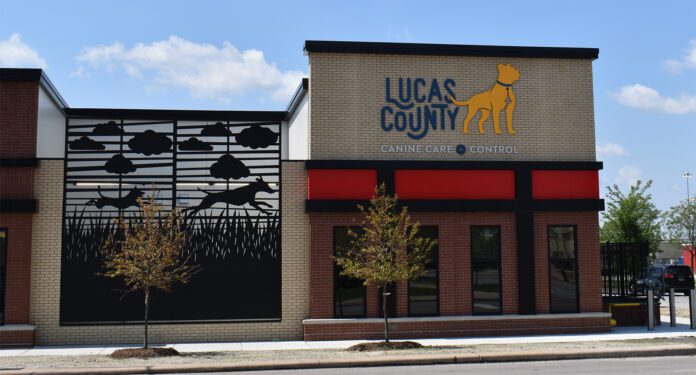
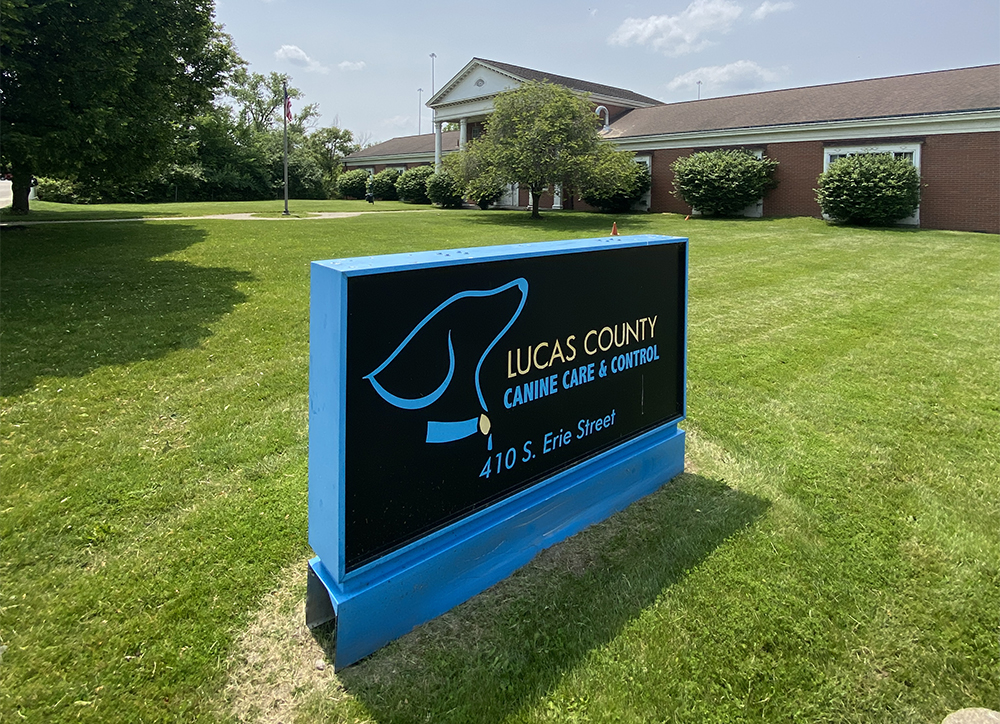
The new Lucas Canine Care & Control in Toledo. (TFP Photo/Allyson Ritchey)
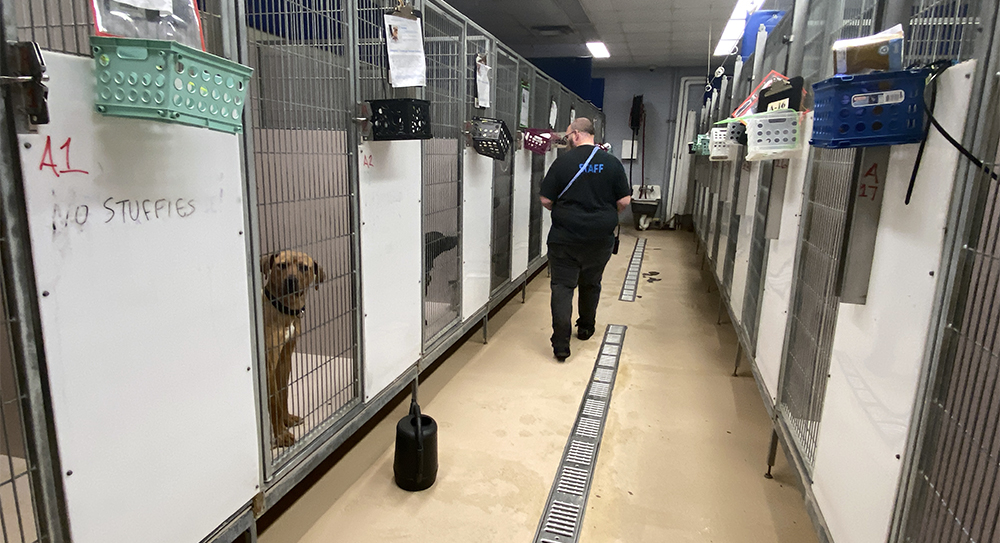
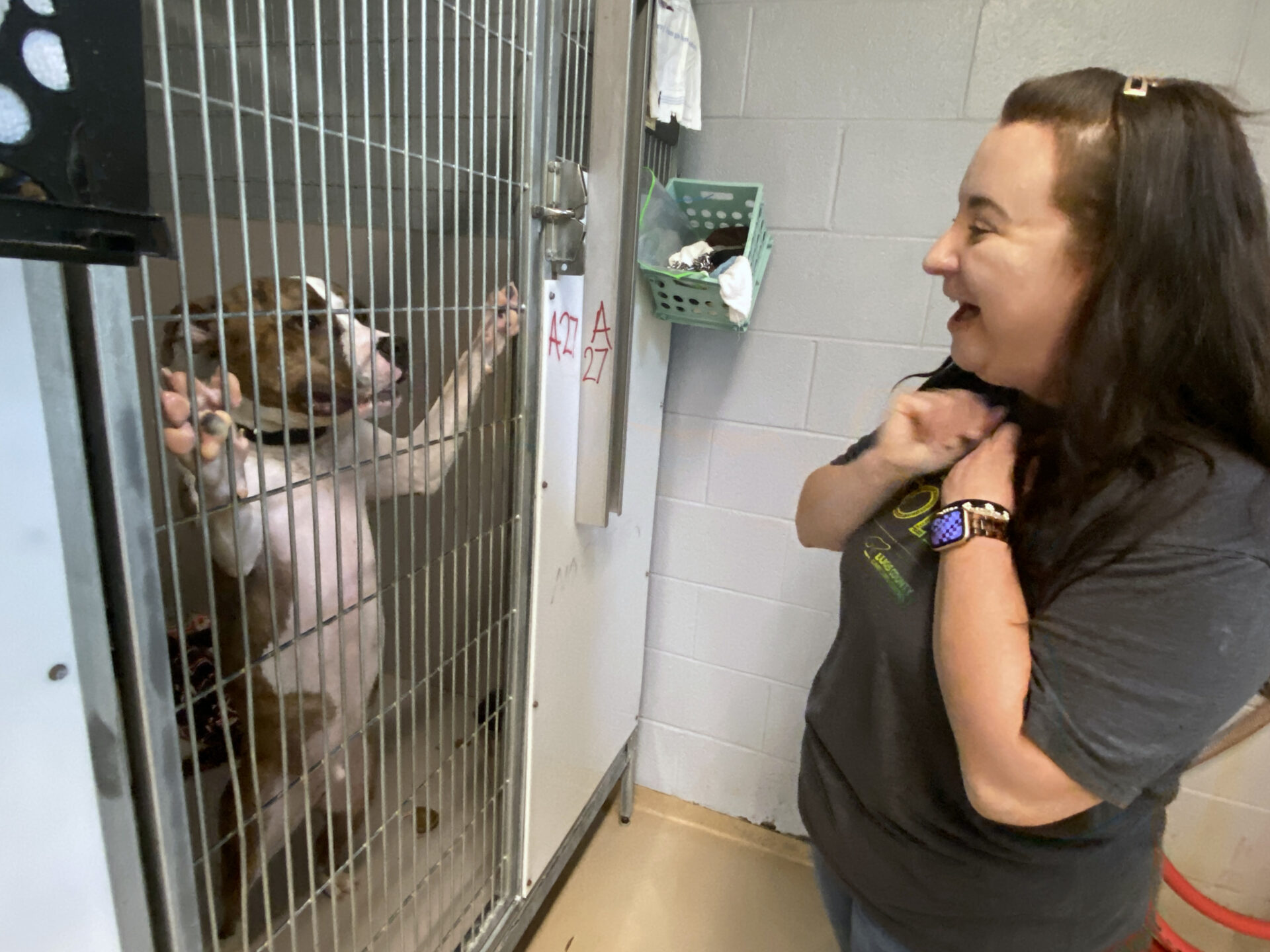
TOLEDO – The clang of tools and hum of machinery at 1301 Monroe St. will soon be replaced with barks and tail wags as construction on the new Lucas County Canine Care & Control (LC4) facility nears completion. What’s being built here isn’t just a shelter—it’s a reset.
Designed with both humans and animals in mind, the $35 million, 40,000-square-foot project facility will replace the current Erie Street building and bring a host of long-overdue improvements.
The building includes 177 total kennels divided between adoption and intake wings, along with 23 play areas and a garage for animal transport. Each kennel is double-sided, allowing dogs to relieve themselves on one side and sleep on the other, promoting cleanliness and comfort. The dogs will be housed in small pods of no more than 10 with separate ventilation and outdoor access to reduce stress and minimize the spread of illness.
The new Lucas Canine Care & Control in Toledo. (TFP Photo/Allyson Ritchey)
Play area at the new LC4. (TFP Photoc/Allyson Ritchey)Double-side kennel at the new LC4.
According to LC4, the new space offers more natural light, expanded outdoor play areas, larger kennel rooms, an expanded vet clinic, better laundry facilities and modern ventilation systems. For the staff, it means safer workspaces and a layout designed for efficiency and care.
“Our little furry friends will not be so cramped and stressed out,” Lisa Sobecki, Lucas County commissioner, said of the upgrades. “This is going to be just a great environment for them to be in.”
At the helm of the facility’s next chapter is Dave Blyth, whom the Board of Lucas County Commissioners appointed as director in March 2025. Blyth previously worked at the agency as a deputy dog warden from 1981 to 2008 before moving on to a role with American Federation of State, County and Municipal Employees Ohio.
“So, I got a call from a commissioner. ‘I want to talk about LC4,’ and we did–we talked,” Blyth recalled. ”They described the problems as they existed. I said, you know, I have a few ideas. And what it boils down to is, with my experience level as a deputy dog warden for Lucas County and with my law enforcement background, I think, they felt that that would be a good fit as we move into the new building.”
LC4’s Dave Blyth, left, and Terra Bundy watch the media tour the new LC4 facility. (TFP Photo/Allyson Ritchey)
Blyth’s appointment, alongside the selection of Terra Bundy as LC4’s inaugural deputy director, follows the firing of the previous director and the suspension of the shelter’s volunteer program amid multiple complaints of poor treatment of both staff and animals, as reported by WTOL.
“We’re here to move forward,” Blythe said.
The key to moving forward? Outreach. Blyth is particularly interested in expanding community-facing programs that get dogs out of the shelter and into public view, even if just for a few hours. One such initiative is Dogs on the Town, a short-term fostering program that allows residents to take adoptable dogs on day trips for socialization.
In fact, this is how his daughter got her dog. “They brought it back and paid for it,” Blyth said.
He also hopes to continue growing LC4’s network of rescues and nonprofits, like Friends of LC4, who support adoption efforts.
“Before they go to a dog breeder or a pet store, please come down to LC4,” Blyth encouraged. “We’ve got some great candidates down here.”
Crews have been working on this project for over a year, and it is expected to be completed in August. LC4 hopes to open to the public in September.
Construction workers build the foundation for the new LC4 building. (TFP Photo/Allyson Ritchey)
While the facility represents a fresh start, it also follows a period of public scrutiny. Allegations of mismanagement and mistreatment in recent years have put LC4 under the spotlight. Blyth acknowledges that history but emphasizes a focus on what’s ahead.
“I have an open-door policy,” he said. “If there’s a problem, we deal with it. There’s no need to take anything to extremes.”
Sobecki echoed that sentiment, saying Blyth’s deep knowledge of the agency and its mission made him the right leader for the moment.
“He really does understand the mission of this program, and he understands the importance and the care for our dogs,” she said. “So, he’s just really been the perfect fit for this opportunity. I’m excited for him. I’m excited for Terra. But most importantly, I’m really, really excited for our furry friends.”
The current LC4 facility
Photos by Lori King
An LC4 employee monitors the large dogs.
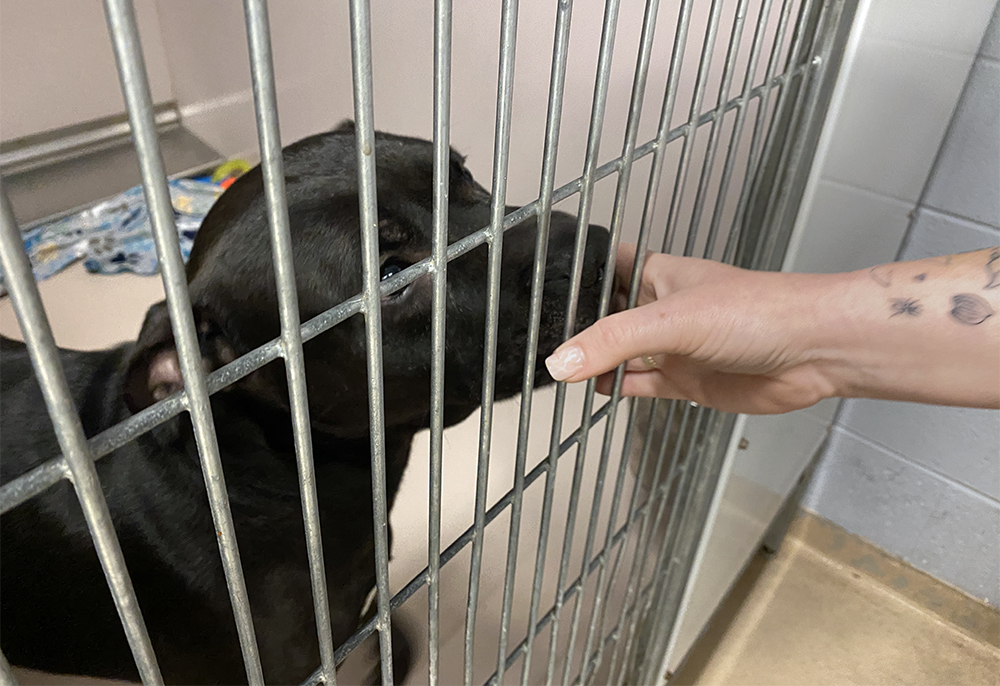
Cassie Bloomfield, LC4 Community Outreach coordinator, interacts with Judo, a male neutered Pit Bull. The staff predicts the stray is eight months old. He’s been waiting for a home since Christmas Day.
Cassie Bloomfield gives attention to Charm, a 7-year-old neutered male Pit Bull. Charm has been waiting for a new home since Jan. 28.
Sphynx is available for adoption. Sphynx is a 4-year-old spayed female Pit Bull mix who has been waiting for a home since April 12.
A husky howls for attention.
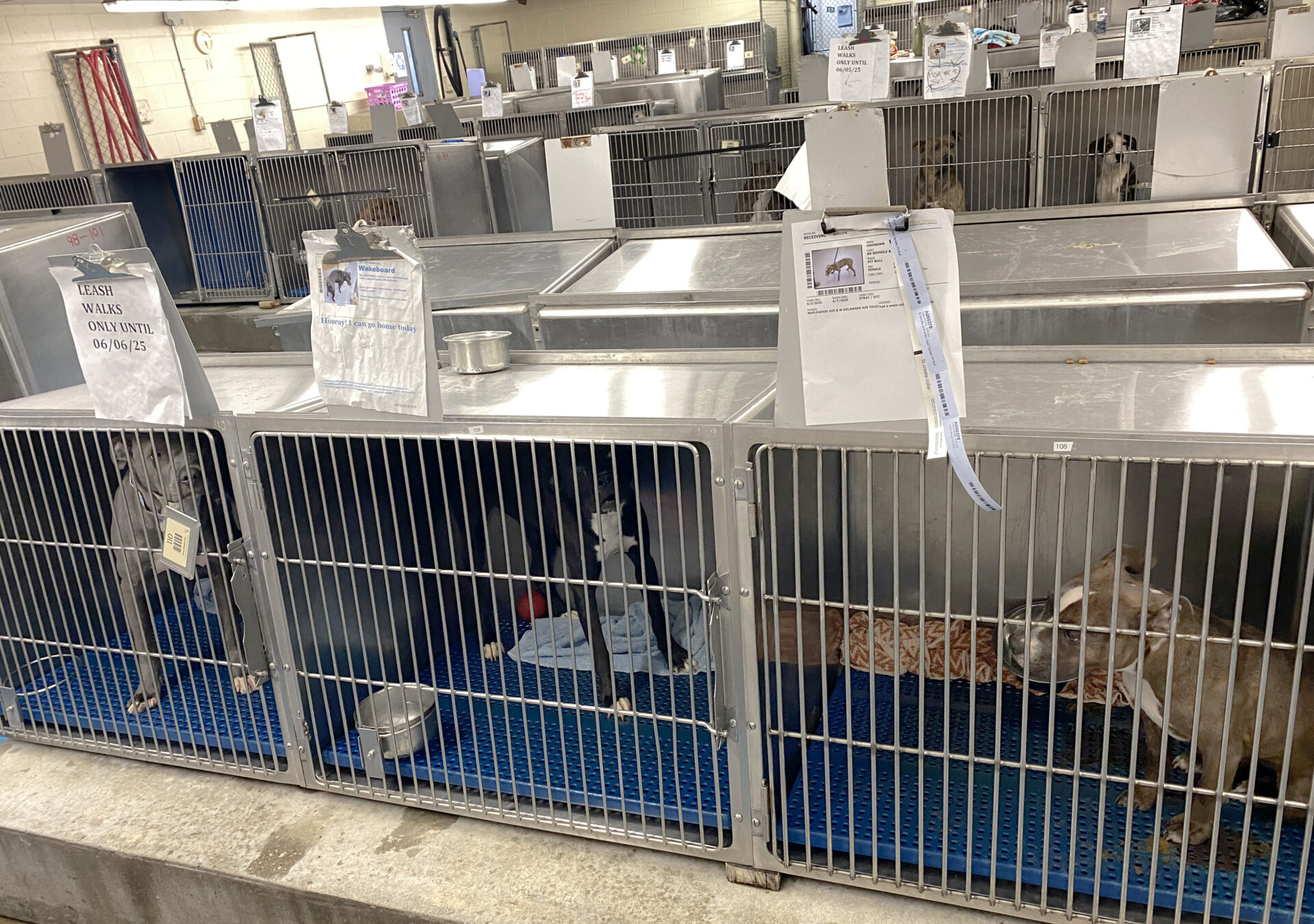
Dozens of dog cages fill a room inside LC4.
The current Lucas County Canine Care & Control facility in Downtown Toledo.
Toledo starting pitcher Nathan Leininger delivers a pitch during the game between the Michigan Wolverines and the Toledo Rockets on April 15. (TFP Photo/Scott W. Grau)
TOLEDO – On this episode of the Flyby Sports Podcast, host Max Alfonso is joined by Toledo head baseball coach Rob Reinstetle, recorded last week after the Rockets wrapped up a thrilling season.
Reinstetle reflects on the team’s impressive late-season surge, reaching the MAC Championship game after swinging the bats exceptionally well and finding their rhythm on the mound. He opens up about a pivotal moment in the season—the tough loss to Michigan at Fifth Third Field—and how the team bounced back with a renewed mindset and a sweep of Western Michigan.
Reinstetle also shares insight into the midseason coaching shakeup that brought in two new hitting coaches, and gives a candid look behind the scenes of a resilient squad that found its identity just in time for a memorable postseason run.
Rob Reinstetle. (Courtesy Photo)
The coach also talks about:
how the Rockets found their rhythm after a turbulent start of the season
the positive impact of a grueling non-conference schedule, the mental grind of the MAC Tournament and pivotal moments that shaped Toledo’s run to the MAC Championship game.
the Rockets’ pitching success in 2025. With the MAC’s best ERA and a staff built on returning talent and strategic additions, Reinstetle breaks down how new pitching coach Ethan Landon helped the group thrive.
He also reflects on the challenges and opportunities of the transfer portal era, how exit interviews now double as recruitment pitches, and why depth and seeding are critical in a grueling MAC Tournament. Plus, we get a look at Toledo’s future: upcoming scheduling shifts, portal strategy and how the Rockets plan to take the next step in 2026.
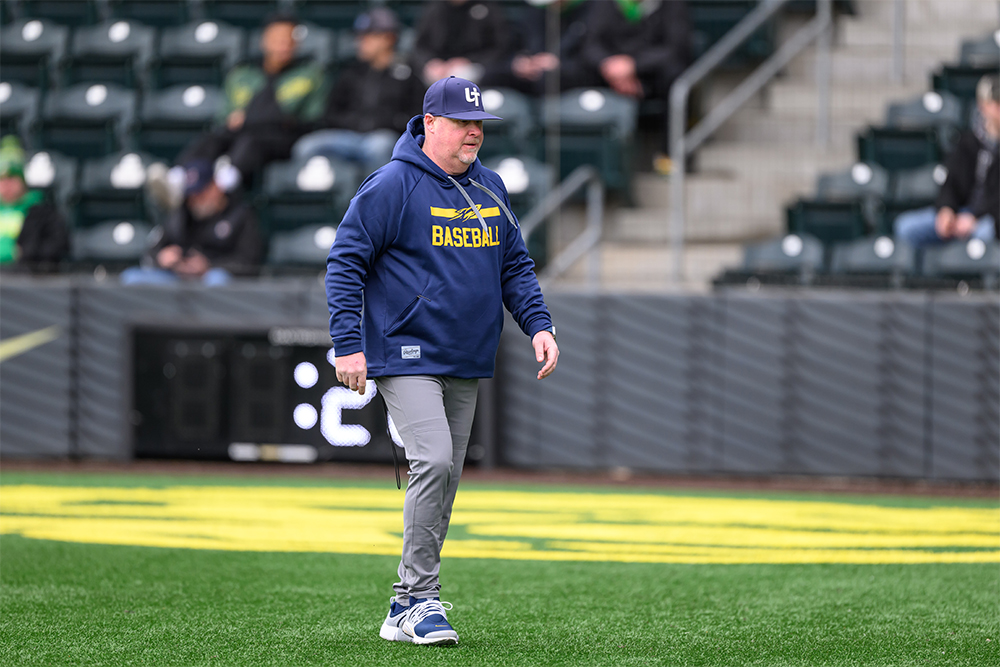
Coach Rob Reinstetle on the field during the Toledo vs. Oregon NCAA baseball game at PK Park in Eugene, Oregon on Feb. 15. (Courtesy Photo/Craig Strobeck-Toledo Athletics)
Pro-life advocates attend the March for Life win Washington D.C. on Jan. 24. (Courtesy Photo/Toledo Catholic Diocese Office of Life/Sophia Bauer)
This is the third of a limited series about reproductive healthcare options and care for women in the Toledo area.
The pro-life/pro-choice debate goes back as far as most of us can remember. As political polarization increases in the U.S., so does the gap between members of these conflicting ideologies.
In his book, Persuasive Pro-Life, pro-life advocate Trent Horn explains why the stakes are so high for people on either side.
“If pro-choicers are correct, and abortion is a routine medical procedure, then pro-lifers oppress women and falsely accuse them of homicide. But if pro-lifers are correct, and abortion ends the life of a human being, then pro-choicers are guilty of defending the killing of millions of people.”
While this debate is certainly a hot topic, for many of the pro-life facilities in Toledo, the issue is less about partisan politics and more about caring for a pregnant woman in need and safeguarding a life.
Heartbeat of Toledo
Executive director ofHeartbeat of ToledoGina Borino said the nonprofit has brought together employees and patients of all different backgrounds, religions and political ideologies.
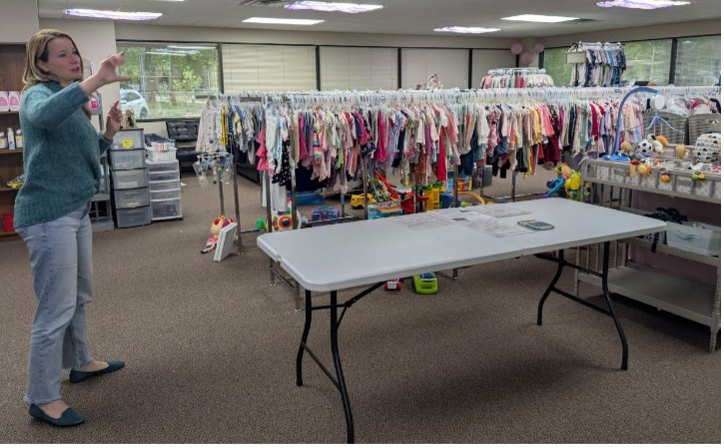
Gina Borino, executive director of Heartbeat of Toledo, touts the Heartbeat’s resource store. (TFP Photo/Mary Helen DeLisle)
Heartbeat is a pro-life organization in Toledo that provides free, confidential services to those who are pregnant, think they may be pregnant or have a child under the age of two. It has three programs:Your First Look, Heart to Heart and Catalyst.
Your First Look provides free and confidential pregnancy testing, ultrasounds and STI testing
Heart to Heart offers prenatal and parenting education, including free classes that can be taken in-person or online, and can explain changes to the body during pregnancy, the delivery process, self-care postpartum and childcare postpartum
Catalyst is a program that targets younger demographics and teaches individuals how to build self-worth and cultivate healthy relationships.
These various programs all have a different focus, whether medical or personal.
“Some women will come in and say, ‘I want this baby, but it’s the finances, the relationship, housing, childcare.’ Those reasons keep her from feeling like she can go through the choice that she really wants to make. So, it’s not about changing her mind. It’s about meeting the resources that allow her to have that choice,” Bonino said.
Heartbeat provides free clothing and other resources for clients, such as formula, baby bottles, nursing pumps, blankets, shampoos, toys and more.
Bonino said clients who come to Your First Look can choose to see their ultrasound photos and hear the fetal heartbeat, or to decline both.
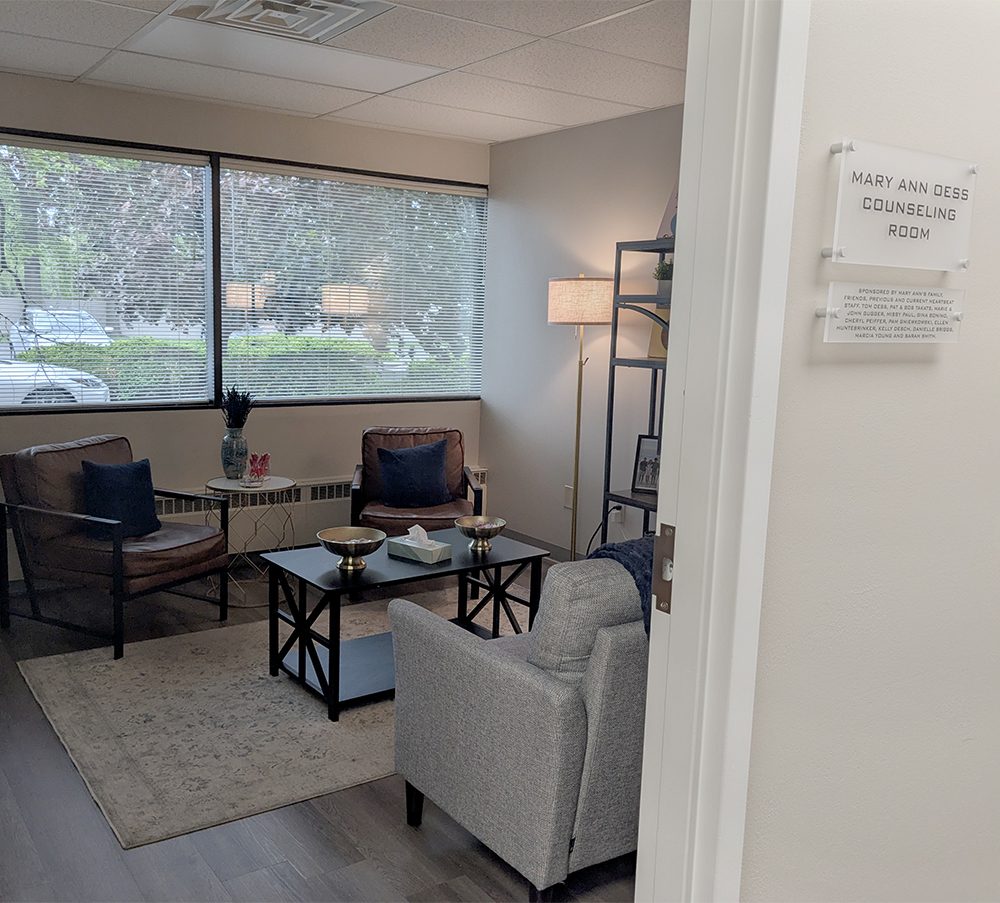
Heartbeat of Toledo’s counseling room provides a place to talk clients through their options. It even has complimentary saltines, peppermints and ginger chews. (TFP Photo/Mary Helen DeLisle)
In addition to these services, Heartbeat also offers counseling, which presents their clients with all three options once a positive pregnancy is confirmed: parenting, adoption and abortion.
“We have a very come-as-you-are, non-judgmental, non-coercive space,” Bonino said.
She emphasized that, unlike other pro-life pregnancy centers, Heartbeat is not affiliated with a religious group.
“That does not mean that we don’t have faith-filled people here, or that we don’t view it as important,” Bonino said. “I kind of view this [Heartbeat] as the safety net that catches those women that may fall through the cracks, that won’t go to an organization because they know they’re religious.”
Clients are welcome regardless of income or relationship status and can come at any point from suspected pregnancy to having a child up to two years of age.
Heartbeat also recently opened a location in Maumee, which they rent fromSt. Joseph Catholic Church, where the Heart to Heart program offers classes (like cooking classes), and there is an extension of Heartbeat’s store, which has free supplies for clients.
With so many women feeling challenged and alone in their pregnancy, Bonino hopes Toledo can continue to grow in support for women in need.
“One day, we can get the childcare covered, we can get housing covered. What other ways can we, as Toledo, come together to help these moms and support them when they are in these situations?”
Laurie’s Place
Laurie’s Place is another pro-life resource center in Toledo that helps fill one of those care gaps.
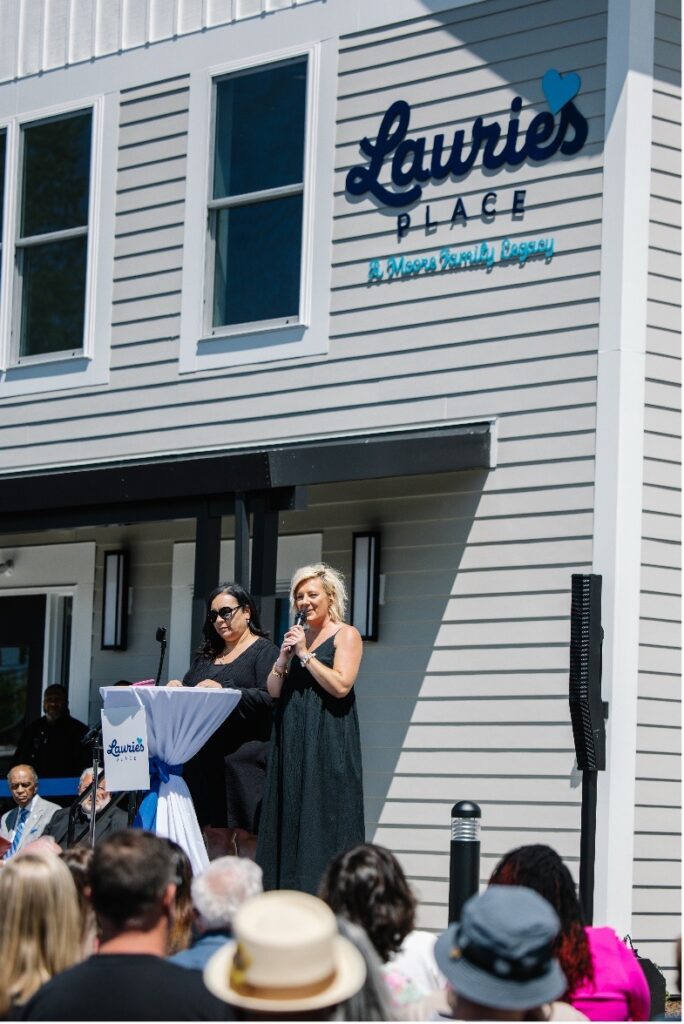
Savannah Marten, right, speaks at the Laurie’s Place grand opening on May 9. (Courtesy of The Pregnancy Center)
Laurie’s Place opened on May 9 with more than 500 people attending the grand opening. The facility is a collaboration betweenThe Pregnancy Center andMom’s House that helps provide free childcare for low-income women pursuing any level of school degree.
The goal of Laurie’s is to make keeping and raising a child easier for women with lower incomes, and to reduce their burden as they finish their schooling.
Programming for Laurie’s begins in August, with applications currently available for the start of the school year.
In addition to childcare, Laurie’s also offers pregnancy and parenting classes and mental health counseling.
Executive director of the Bella Vita Network, Savannah Marten, said Laurie’s Place was first conceptualized during a meeting between Marten and the director of Mom’s House.
“We kind of talked about it in the context of, ‘How do we make the path to parenthood sustainable?’” Marten said. “We [The Pregnancy Center] wanted to reach out and actually form partnerships with these other amazing agencies in our community and build a really great referral network so that we could easily help our moms navigate this.”
The heart of the movement
“In a polarized world over a polarized topic like abortion, we are led to believe that it is impossible for us to cross religious boundaries, political boundaries. And we saw at the grand opening that people of different faiths, different denominations, different political associations, all came together.
“And we believe that’s actually what brings change in the community, is when we’re willing to say there’s more that we agree on together. We live in a world that wants to pit us and leave us in separate corners. And I think Laurie’s Place proves that our community is better when we work together,” Marten said.
In 2023, there was a 26 percent decrease in the number of abortions performed in Lucas County compared to the previous year,according to the Ohio Department of Health. Lucas was also the only county in Ohio that decreased its abortion numbers from 2022, compared to other counties that also regularly perform abortions.
For40 Days For Life sidewalk counselor Joan Stowell, this means the pro-life movement in Toledo is doing its job.
Joan Stowell prays outside of the Toledo Women’s Center. (TFP Photo/Lori King)
Joan Stowell, left, prays with the mother of a woman who entered the clinic. (TFP Photo/Lori King)
“I believe that all life has value and it’s a gift that our creator gave us. The decision of abortion, I’m sure, is one of the hardest decisions any mother made,” Stowell said. “It’s a very painful process and very difficult. And we just want them to know that they are loved and there’s help out there, and if they want it, we will be there for them.”
Stowell has been a sidewalk counselor for the past seven years and is present at theToledo Women’s Center about 90 percent of the time it’s open.
“[We] pray and offer love and hope and assistance to people that are contemplating abortion. We feel that they are our neighbors, our brothers and sisters that need help and so we offer a loving presence out there for those that want our assistance,” Stowell said.
She’s not the only one who prays outside, however. 40 Days For Life has a group of about 80 other volunteers who come to pray outside the clinic and counsel clients entering, whenever the Toledo Women’s Center is open, rain or shine.
“We want to make sure that people that need assistance, whether it’s financially or emotionally or spiritually, they have somebody to talk to. We like to slow them down enough to know that there is a free ultrasound and a free consultation at our pregnancy resource centers, and that there are plenty of people that want to help; they don’t have to do this alone,” Stowell said.
To mothers without vehicles, parents who can’t pay rent and families struggling to get by on food stamps, Stowell said the pro-life volunteers help in any way they can to make supporting a child easier.
“The world would be a different place if we learn to help each other instead of judge them or accuse them. And a lot of people have a false perspective of what we do out there. We’re not there to judge them,” Stowell said. “We’re there to offer help and love and prayer and assistance if they need it. And if they don’t want it, ultimately that’s their choice.”
Joan Stowell prays near a vehicle at the Toledo Women’s Center in Toledo. Stowell considers herself a sidewalk counselor and offers “love, support and prayer” for women who arrive at the clinic. (TFP Photo/Lori King)
A testimony
“I hope resources like this don’t go away under the current administration,” said Heartbeat of Toledo client Brittnay.
Despite being personally pro-choice, Brittnay emphasized the benefits of local life-affirming pregnancy centers.
“Heartbeat is a really good program with people who really care,” Brittnay said. “They’re dedicated.”
When she first discovered she was pregnant, Brittnay called pregnancy centers in the area, hoping to be set up with resources and connected to an obstetrics nurse (OB).
“Everything was really quick paced,” Brittnay said.
From her first appointment to the approach of her daughter’s first birthday next month, Brittnay said Heartbeat has been there to provide her with the resources she needs.
“When I run out of diapers, my Heartbeat appointment comes up,” Brittnay said.
Not only have free pregnancy and parenting resources benefited her financially, but she said these services have also helped her be a better parent and increase the quality of her daughter’s childhood.
“Heartbeat cares, and it’s really kind of them to do so,” Brittnay said.
Though many think of pregnancy resource centers as political in nature, for the staff and clients, they are community resources that exceed partisan politics.
Pro-life advocates attend the March for Life win Washington D.C. on Jan. 24. (Courtesy Photo/Toledo Catholic Diocese Office of Life/Sophia Bauer)
There are four types of abortion procedures: Medical/chemical abortions, vacuum aspiration, dilation and evacuation (D&E) and labor induction abortions. Information about all four types, including advantages and disadvantages, can be found on theMedical News Today website.
The 2022, Dobbs v. Jackson Women’s Health Organization Supreme Court case ruled that abortion is not a constitutional right, leaving the decision to legalize abortion up to the states. Clickhere for more information.
[abortion] Complication rates depend on the procedure type, gestational age, patient comorbidities, clinician experience and, most importantly, whether the abortion was performed in a safe or unsafe manner.
The majority of complications associated with abortion are minor, but major complications can occur including severe hemorrhage, endometritis, non-uterine organ injury, and disseminated intravascular coagulation. A study evaluating 54,911 abortions found an overall complication rate of 2.1 percent. Medication abortions had a 5.2 percent complication rate (4.9 percent minor, 0.3 percent major), with rates of 1.3 percent in the first trimester and 1.5 percent for the second trimester. First-trimester aspiration had a complication rate of 2.3 percent.