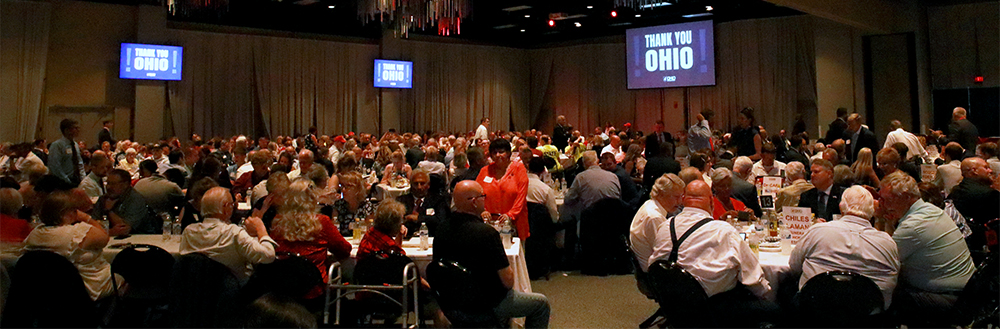
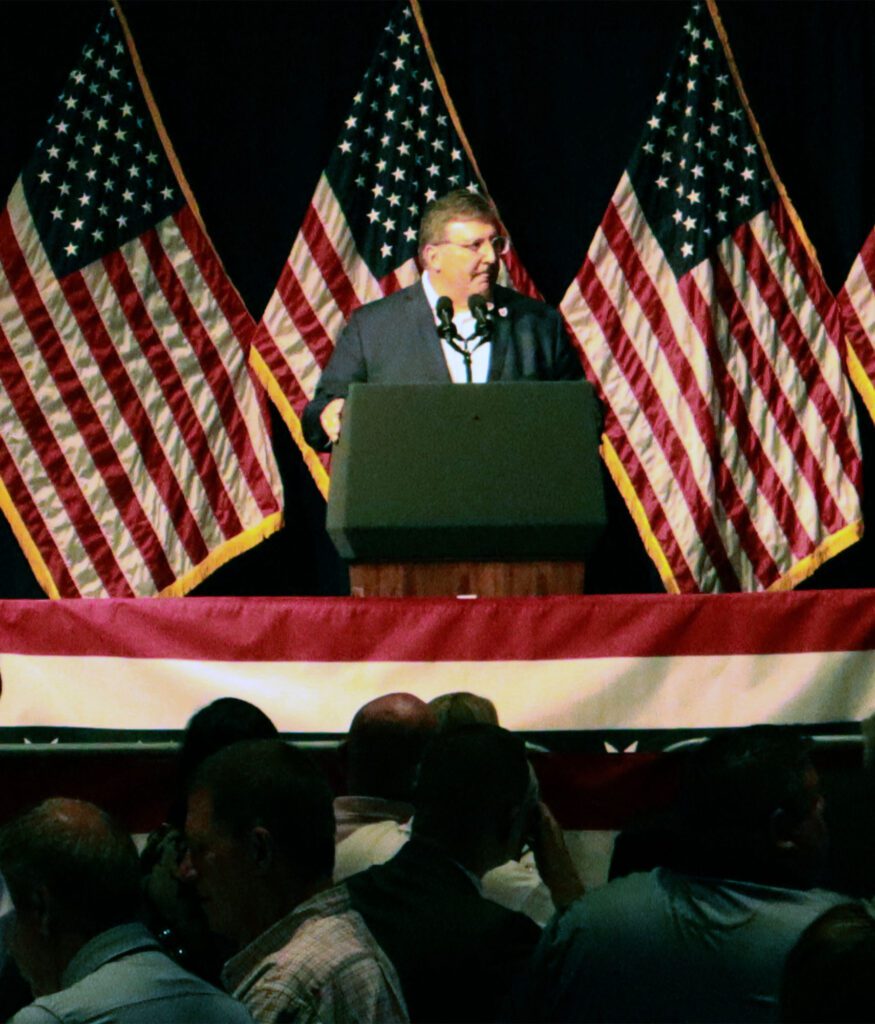
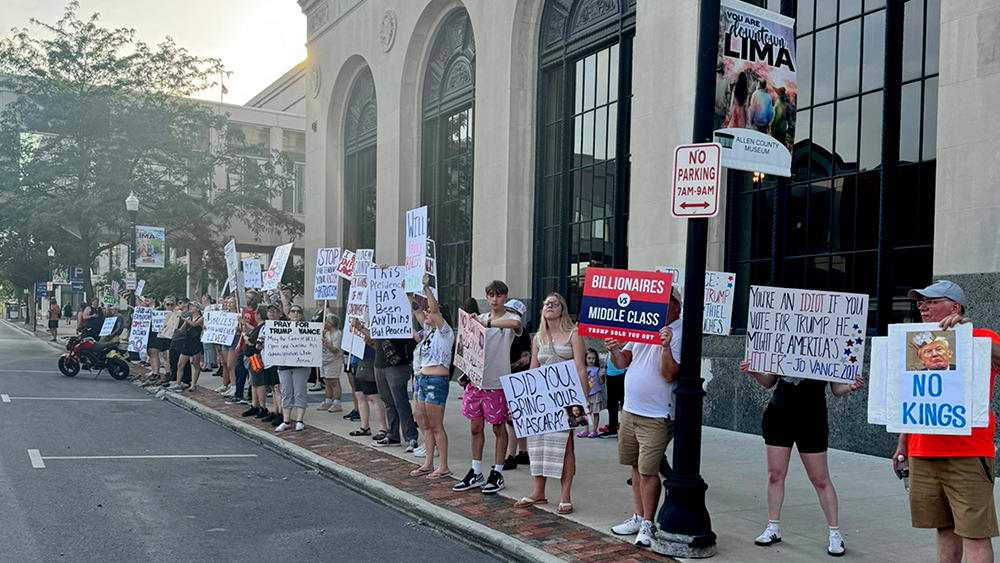
DEFIANCE – Rev. Dr. TK Barger, of First Unitarian Church of Toledo, made a case for the spiritual side against the Correction Center of Northwest Ohio’s (CCNO) contract to house federal immigration detainees.
“Jesus and the Buddha did not stay in their childhood homes to perform their ministry,” he told the regional jail’s board at its meeting on Wednesday. “They were immigrants.”
The response to his plea – and that of three others who spoke at the facility’s board meeting – was disappointing, he said.

“It was no way a conversation or a dialogue; it was simply ‘Let’s get this over with.’”
The board voted down a motion to cancel the contract and steamrolled a secondary proposal to alter it.
Melissa Portala is a self-described activist from Toledo. She said she understands why the board approved the contract in February, based on the federal government’s statements that they would round up and deport violent criminals.
But now there is no excuse for letting the contract continue, she said.
“I can only hope they are surprised that they’re not seeing gang members, rapists and criminals – that they’re seeing day-laborers and gardeners and restaurant workers,” she said. “People that are part of the fabric of our everyday lives are being basically kidnapped off the street and imprisoned there.”
She was the first to address the board during the public comments at the beginning of the meeting.
“Now that you know that many of these innocent people are being sent to notorious foreign prison camps without due process, do you regret your vote?” she asked the board.
Evidently, they don’t.
CCNO, located in Stryker, which is about 62 miles west of Toledo, is overseen by representatives from Defiance, Fulton, Henry, Lucas and Williams counties. It includes one sheriff and one county commissioner from each county. These counties jointly fund its operations.

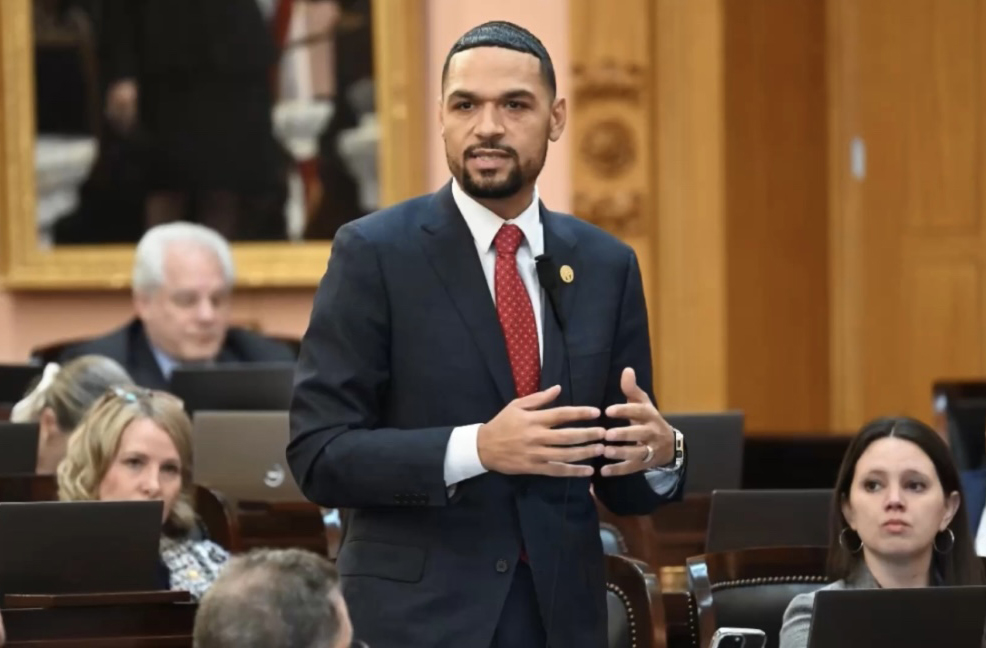
After the public comments, Lucas County commissioner and CCNO board member Pete Gerken motioned to cancel the contract within 90 days.
The vote was 6-2 against the idea, the same split as the vote that approved the contract in February. Gerken and a deputy representing Lucas County Sheriff Mike Navarre were the two who voted against it.
After the board’s regular business, Gerken once again made a motion–or attempted to. This time he suggested they modify the contract to limit it to violent offenders.
“Are we beyond motions?” another board member asked.
“Yeah, we’re done,” board chairman and Fulton County Sheriff Roy Miller replied.

No chance for a second, and no vote.
“There certainly felt like a little bit of an eyeroll moment,” Liam Walsh said. The Rossford native also spoke directly to the board to ask them to reconsider.
“I’m disappointed that they don’t know Robert’s Rules of Order and tried to say I can’t make a motion,” Gerken complained. “They could have tabled it.”
Barger pointed out another departure from standards.
“They did not have a vote to adjourn, they just adjourned,” he said. “They said, ‘We’ve had enough.’”
The money
U.S. Immigration and Customs Enforcement pays the jail $117 dollars a day per person, plus mileage for transportation and some personnel costs.
“They’re making a profit off this; let’s be clear,” Gerken said. “I don’t think it’s the business of a regional jail to be in the for-profit business of detaining our citizens… because they don’t have documented papers.”
After the meeting, Barger said, “It’s wrong to be looking at the bottom line rather than considering the people,” In his address to the board, he argued the money the contract brings is far less than the economic effect of losing workers to detainment.
While ICE is providing this additional funding, Toledo city council candidate Erin Kramer said most of the money that keeps CCNO running comes from Lucas County.
“So, it would be nice if we had more of a say in terms of the detainees…but we have to rely on the rules that are in place,” she said after the meeting, in which she also made public comments.
“Even independent of who’s paying the most, who’s here the most, who has the most votes — I think at the end of the day, it’s still a human rights and a humanity issue,” Walsh said.
In at least one aspect of humanity concerns, all of those who pushed for change agreed that the detainees are being treated with dignity in the jail. Many of them, along with all three Lucas County commissioners and several immigration attorneys, toured CCNO a few weeks ago.
The chance to visit and have some questions answered demonstrated the cooperation and professionalism despite the differences of opinion, Gerken noted.
“[But] being nice around making a bad decision doesn’t mean it’s not a bad decision.”
The detainees
Of the 78 detainees being held at CCNO at the time of the meeting, 73 are considered minimum security, Gerken said. One detainee has been held since March 10 – more than 100 days, and the longest of them all.
In its contract, ICE estimated the average stay would be around 40 days.
The reason for their lock-ups are a national security issue, according to ICE, and board members are not privy to those charges – if there are any. An attorney for the Lucas County Commissioners plans to file Freedom of Information Act requests in an attempt to get that information.
“It’s a misdemeanor to… enter into the U.S. in a non-official border entry,” said Toledoan Dar Goatley, who wrote letters of support to detainees.
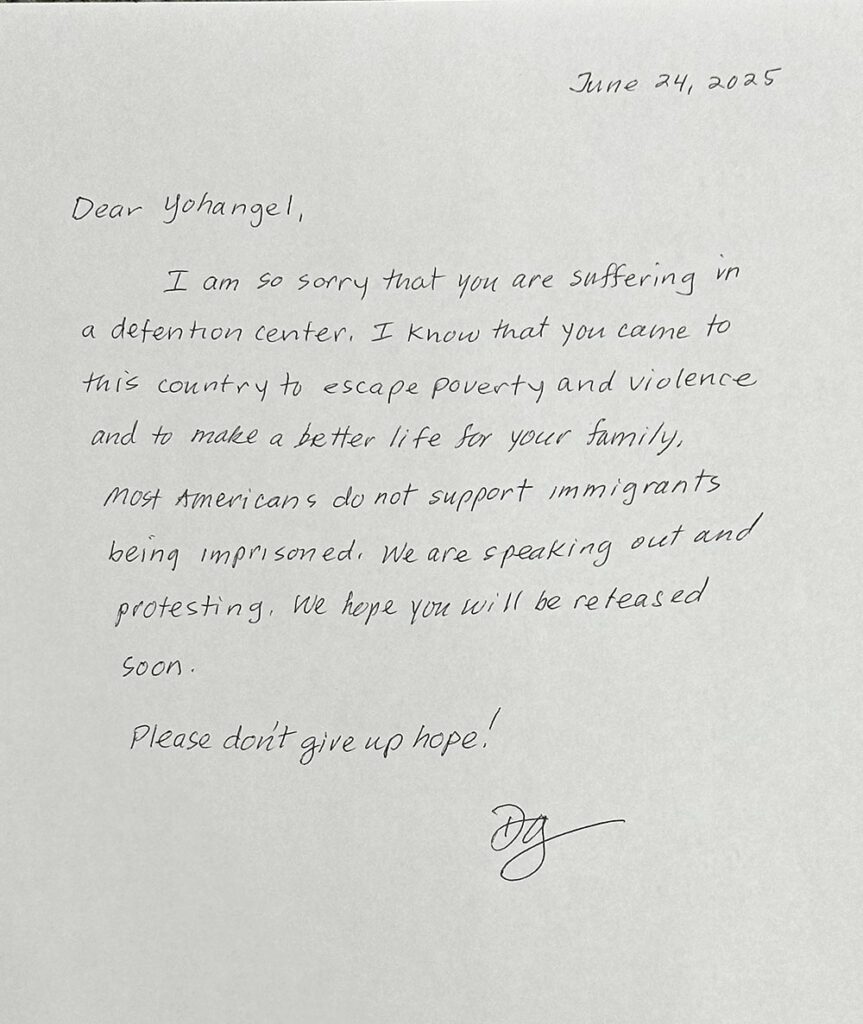
She recently moved back from Arizona, where she saw the immigration crisis from the frontlines and worked with organizations to help immigrants.
Being a misdemeanor, “it’s similar to a traffic violation,” she said. “So we’re pretty much all criminals, if that’s what you’re going to call a criminal.”
Walsh is especially concerned that federal enforcement policies hurt those trying to address issues with their citizenship status.
“Maybe they’re trying to go through the correct process; they’re gonna go to immigration court, but if you go to immigration court, you’re going to get picked up,” he said. “So what is the best way to go about it and do this ‘legally,’ if that’s even a thing anymore?”
Like the charges, details on where the detainees were taken into custody are not being shared.
“It’s difficult to know if their families have even found out that they’ve been taken and imprisoned there,” Portala said.
That’s one of the reasons she and others wrote more than 170 letters, cards and postcards to the detainees during a group gathering on Tuesday at the Downtown Toledo library. The letter writers checked names off the official list as they addressed each envelope.
“It’s important for the detainees to know that we know they’re there, we care about them, they’re not alone, and there’s people out here fighting for them,” Portala explained.
She was hoping the board would accept the letters at the meeting and deliver them right away, but jail procedures require them to be screened at an out-of-state facility. There, the messages will be scanned so the detainees can read them on issued tablet devices.
What’s next?
The community speakers all agreed: the plan is persistence.
“This may take years,” Portala said. “Every social justice movement is a long haul. You cannot expect miraculous results when you first start.”
“People are mad,” Kramer said, citing her discussions she’s had as a council candidate. “We need to keep registering our disgust with how things are happening. And hopefully, eventually, change will happen.”
One-on-one conversations with the board members are on Gerken’s agenda.
But will any of it change the other board members’ minds?
“I don’t know, honestly,” Kramer said.